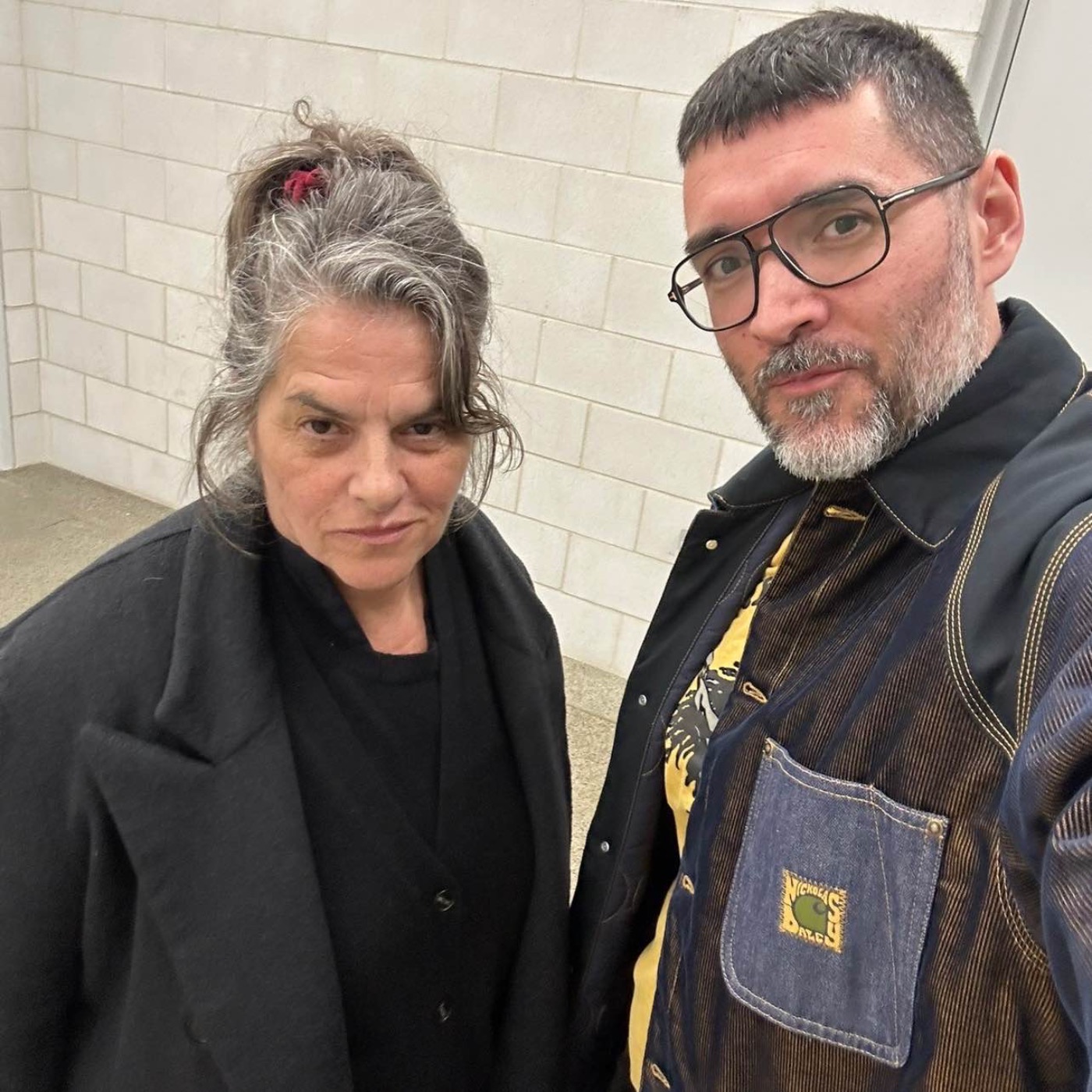
Robert Diament curates "Crossing Into Darkness," a powerful exhibition at the Karl Friedman Gallery in Margate that challenges visitors to confront the emotional and physical depth of the town’s winter—its winds, cold, and storms—contrasting it with the usual image of sun-soaked tourism. The show, which Diament curated over several years, brings together a diverse range of artists, from global icons like Anthony Gormley and Edvard Munch to local and emerging figures such as Jo-Leen Quackenboss and Anna Packosh. Central to the exhibition are works that explore inner turmoil, identity, and existential crisis—self-portraits with unsettling or fragmented forms, body-based imagery, and raw emotional intensity. Diament emphasizes the cathartic power of art in times of global crisis, noting how viewers often feel deeply moved, even weeping. The gallery’s dark, immersive environment enhances this emotional experience. Notably, the exhibition includes works that reflect personal relationships, artistic friendship, and community connections, ensuring inclusivity and authenticity. Artists like Louise Bourgeois and Herman Nitch are featured for their exploration of trauma, the body, and ritual. Diament highlights how art serves as a vital tool for emotional honesty and collective reflection, especially during turbulent times. The show’s success is evident in its high attendance—over 2,000 visitors on opening weekend—demonstrating public engagement with art in a provincial setting. Ultimately, "Crossing Into Darkness" is not just an art exhibition but a profound meditation on human vulnerability, resilience, and the enduring search for meaning in chaos.
Good afternoon, good evening, good morning, wherever you are in the world. I am Robert Diament
and you're listening to Talkart. Welcome to Talkart. Today I am feeling like I'm longing
for renewal. And it's partly because we are in this transition from winter, the depths of winter
into spring. And every time it gets to March, I'm always feeling like some sort of longing
that I just want all the flowers to open up and, you know, metaphorically speaking to have
some sort of sense of renewal. And we are currently here in Margate and today has been a very windy
day and very, very icy cold, actually, which feels odd for March. But we are here in Karl Friedman
Gallery and I am with someone who in many ways has helped me to renew myself and my life over
the past two decades through our friendship. She's a mentor to me and to many others in the community
of Margate and obviously a world-class artist who has currently got a solo show at Tate Modern
in London as well. But rather than being in Tate, we felt like we wanted to be here in Margate,
which is both of our homes, but also a gallery called Karl Friedman Gallery where I work.
And it's a show curated by today's guest. It's called Crossing Into Darkness and I'm really
looking forward to exploring this show with the one and only Tracey Eman. I'm laughing. I'm really
laughing. It's like, you know, keep it close to home or literally on the street where we both live.
What brought about this exhibition is interesting thinking of Tracey Eman as the curator.
There's a few things, one, if anybody knows me really well, they know that I love curating
anything and everything. So I love organising and I like looking at things. I like thinking about
things and I like to have complicated visual problems. That's what excites me and stimulates me.
So curating is an obvious thing which I enjoy doing and so I said to Karl Friedman a few years ago
that I'd like to curate some shows and we decided that I curate three shows. The first show I
curated was a solo show by artist Laura Furtz who was an artist working at my studios in Margate
TK Studios. That was last year and then this year I've curated Crossing Into Darkness which
was an idea that I had about Margate. The fact that I wanted to celebrate Margates not just like
the summer and the sunsets and the tourism and the beach and the kiss me quick hats. I wanted to
celebrate Margate's sort of darker side, the sort of black clouds, the 20-foot waves, the howling
winds. You'd get off the train and it's freezing cold and the wind is howling and I grew up here
and we used to have these sort of gale-force wind warnings before we went to school
and knowing how windy it was going to be whether we should cover up to stop the
warriors from swelling up and things and I thought this is the side of Margate I want people
to know and see so decided to do this show in the winter called Crossing Into Darkness
and the idea is to bring people to Margate in the winter so that was my original.
It really has worked as well because on the opening weekend I think on one day we had 2000 people
and every day we've been getting like 200, 250, 300 like crazy visiting figures for winter.
Yeah I know but also the other weekend you had like about a thousand people over the weekend
and also the gallery's only open from 12 to 5 or something so that is a phenomenal amount of
people for a provincial gallery you know not in a city you have to get on a train to come here.
Most of people in Margate who are interested not saw it weeks ago and still the figures are great
but also we've got really big artists in this show we've got local artists we've got young artists
we've got dead artists and we've got massive super super international artists that's really
unusual thing especially in a provincial town like Margate it's pretty incredible that you can go
to your local art gallery and you can see in Edvard Munch and you can see a Mark Mander so you can
see Louise Bourgeois altogether in the same room. Yeah and I think it's got a real ambitious scale
as well like it's got really significant works and we had one of these international leading artists
you're talking about actually come to the opening which was Anthony Gormley and I thought
it'd be interesting to start the discussion of all the artists in the show with him because I know
this is a work called Home of the Heart number two and it's from 1992 and it's a concrete
block one of his famous kind of concrete sculptures and it's really interesting thinking about you
because your career obviously began in the 90s in terms of critical reception and exhibitions
and things like that so how did you first see this work from 1992? Back in the 90s I went to
Anthony's studio in the early 90s when he was making the Angel of the North and his studios
in Peckham then and it seemed like a giant studio to me but now I know in where Anthony works it
wasn't really and in this studio was just a giant firt from the Angel of the North the biggest
firt you could ever imagine I'm saying Christ Anthony how big is it going to be and Anthony said
you know I didn't really like big giant monumental sculptures most he's gone off his rocker his
light you know what is he doing and I've always been friends with Anthony but for me the works
Anthony's are like the ones that are much more obscure more subtle Anthony is always poetic
but Anthony is an artist for the people the people love his work people relate to it like we've
got I call it man in the sea but we've got this man in Margate and the tide comes in and goes over
his head and then the tide goes out and it's really lovely to watch people wait him for this man's
head to appear this is the work that people know of Anthony Gormley and celebrate but for me I always
talk about these encarsment pieces for me they're really brutal and it's like the body form is inside
and there's a concrete mass surrounding the body on the outside and it's just like a block
of concrete with their holes for the head and the arms and the legs and there's something so
almost sinister about it as like as if it was the most awful way to die or the most awful way
to live to be incarcerated in a concrete block to be that track to be that heavy but yeah there's
something sort of poetic and beautiful and if I could own any piece of this work it would be
this particular one I absolutely love it and it's minimal it's unapologetic and it's
really really hardcore and this work is the first work I thought of for the show before I had
the title of the show I just knew I wanted one of these works 100% absolutely and it was the work
that started off my idea for the whole show so it's good that it's the first work that you see
when you enter the gallery. For me having seen it for the past few months it's really changed my
understanding of how a sculpture can kind of present what's inside of our bodies so the the
kind of inner world and the consciousness in a way and I feel like his work is so much about
the human body as a place almost as a location and this work really does seem to sort of bring all
those themes together. Yeah I mean it's incredible and also how it's made as well it's so scary it's
just too much it's just too heavy it's dark dark dark yeah I absolutely love it to me it's just
so fantastic. Thinking about inner worlds it takes me to some of the other works in this room
actually it's really interesting selection because you have one of your own works which is a
self-portrait which is interesting because when I first knew you there weren't that many images
of your face in your works at that time because a lot of it was like a pleakay you know text works
like you can see in the tape modern exhibition or drawings and things like that but the drawings
never really had your face whereas this is a really confrontational piece in the way as a viewer
like you're presented with you kind of life size a bit larger than life size but it's your face
staring out and it's called like I vanished and reappeared and it's a work that you made here in
Margae after you've survived cancer and can you speak about this because I see this as a kind of
introspective inner portrait. Well it's really funny because it's a giant monoscreen print
and a screen print a monoscreen print you paint on the screen and then you pull the printing
through but by the time you finish painting on the screen you have no idea what you've got underneath
so you never really know how it's gonna turn out so as I was painting myself I thought it looked
like me and then how it came out it strangely didn't look like me at all but yeah of course it
was still me and that's how it is with ourselves the other day I did a talk did a talk on stage to
about 800 people and before I went on stage I back combed my hair a bit and I put quite a lot of
eye makeup on and I felt really good much better than I normally feel and I liked what I was
wearing I was just wearing a jumper and trousers and I felt cool and casual I thought yeah I look
really good and I went out on stage and I felt really good and I gave this really good talk and
and I felt really positive.
Later on when I saw film of myself, I didn't look very good, fat, didn't look good at all.
I looked quite disheveled and kind of a bit tired and a bit knackered and quite plump
sitting in the chair, but the point is I felt good, I felt brilliant.
My friend said to me it's better to feel good and look bad than it is to look good and
feel bad, and that is a lot like this portrait, because it is me, it was me, but it does
not look like me.
Not because I can't draw, it's because of the way that it's all come out and the way
the ink's worked and everything, but yet it definitely is me, so maybe it's me when
I was angry when I was 35, maybe it's me in 10 years' time, maybe it's me if I had been
a mother, maybe it's me when I'm asleep dreaming, maybe it's me when I can't see myself, it's
still me, so it's a bit like Anthony's work, Anthony's work is him, but you don't see
anybody form in it, or is this, it's me, it's a self-portrait, but it's not me.
No, it's almost like a palimpsest as well as something, it's got all these kind of layers,
it feels like it's had lots of lines over lines, like sort of ancient, it could be like
an ancient you, do you know what I mean, like a past life you or something, almost like
Egypt or something?
Well, not that is yes, Anthony could be a past life me, that's what I'm saying, it was
definitely me, so why doesn't it look like me, but a past life me wouldn't look like
me necessarily, would it?
No, of course not, yeah, it's interesting, and I was also thinking a lot about how it
feels, so the idea of making a self-portrait, and obviously you have your famous film called
how it feels, but I know that phrase kind of recurs in your work, but I was really interested
in this idea of making a portrait without a mirror, so it's kind of how you imagine
yourself to look.
Yeah, so this is what I was talking about when I put the makeup on and did my eye fault
really good, I thought, I feel like really good, but I didn't know what I looked like.
Yeah, yeah.
Yeah, it's really interesting.
So the direct connection in this room with that black and white monotype is actually
the work by Edvard Munk, which I have seen before because it's actually in your private
collection.
Yeah, it's actually in my house most of the time in my library, so it's a self-portrait
by Edvard Munk and he's got this skeletal arm below him.
It's not a particularly big print, it's a lithograph, and it's about like maybe 20 inches
by 15 inches, and the frame is much bigger in the mouth, and I treated myself to this
and decided I was going to hang it above my bed in my bedroom, and I went in and I was
stood it above the bed and I just thought that looks weird, and we put it in another part
of the room, I was thinking, oh my God, he's looking at me.
And then we realized it was like one of those paintings for the eyes move, for real.
This scared me when it was in my bedroom, and this is Munk, my man Munk, but the vibrations
and the sort of like, it was like it was a living entity, this image, and it's a very,
very famous Munk image, and it isn't because I know the image or have seen the image, it
was when I put it into my intimate space, I realized I couldn't live with it.
He made this in 1895, and for some reason, because it's on paper, you sort of are more
aware of his hand in a kind of, I don't know, you can really feel his presence in this,
like the paintings of course are incredible and they wear his hand, but there's something
so personal about this, I think because it's a lithograph, like maybe the lightness of
his line in it or something, but it does feel really intimate.
It is really intimate, it's totally intimate, and you can see his face and his eyes are
so somehow lost and sad and everything, and I know this skeletal arm is well coming across,
it's like as if he's fading away, and it does go really well with mine totally.
Yeah, and it got me thinking as well about in the times we're in right now, I felt like crossing
into darkness as a title for a show and works like this over a monk one, there's such a kind
of, I don't know, like a search for meaning, it's like he's trying to work out what is the
meaning of life, like what is my existential, you know, like that is not the happiest picture
I've ever seen in my life, and he is really thinking like what is it all about, why are we
here, what is happening, what has happened, who am I, where am I, where am I going, and my
life and my dead, should I be dead, can I feel anything on my feelings, on my emotions,
all of this comes out in this image, which is pretty incredible, and as for the times that we're
living in, you know, I wonder what it was like for him, back in 1895.
I know, and it's interesting thinking about, again, like the body and, you know, the skin and
bones that make up us all as humans, and he's just literally put the bone there, you know, like
the skeleton hand, there's something so kind of poetic about it, I think.
Yeah, it's quite funny, because I know this image, it's really young, really young, 19 or something,
and if you had asked me before what was there, I would have said sperm, really?
Yeah, because I'd mix it up with one of his other images, but it's not, it's bone.
Yeah, bone.
With no flesh, with nothing, just bone.
Yeah.
Where sperm is like life, the beginning of life, everything.
Yeah.
And then this is like death.
Yeah, and it's quite almost brutal as a viewer to like stand in front of this work and actually
face it, and that's how I felt with your work over there, your portrait too.
They're both very like confrontational in a weird way, and it's a powerful thing for an artwork
to do that.
Yeah, I know, and also before I put the monoprint in here, I know, I couldn't even make that connection
with them both, which sounds a bit silly, hey curator, but I was thinking munch, and I was
thinking work of traces, but oh my god, you can see how influenced I am by him.
Even now, it's phenomenal, and I'll find it interesting and beautiful that I'm still
looking at him, still subconsciously thinking about him.
His works are still reveling around in me, it's a good positive thing.
You can see it in this show, so that's another aspect about the connections between the works,
well, we've on now, there are three very large self-portraits in here by a local artist
who moved to Margate about a year and a half ago or so, two years ago.
Yeah, two years ago, and she's Dutch, called Jo-Leen Quackenboss.
How did you come across Jo-Leen's work?
We sent out a thing on Instagram and everything, saying that we had a spare studio go and apply,
and Jo-Leen was one of the people who applied. We gave her an interview, she came over from Holland,
we gave her the studio, and there's been no turning back, so she's a Dutch artist, young,
Dutch artist, and she makes all these images of herself in these sort of like costumes and
kind of theatrical, I'm not making it sound what it looks like, and the painting I'm looking
at the moment is really gory, and it's like a paintbrush with blood spilling between her legs,
and she's got this pair of blue, satin shoes on, and white socks, and she looks like a sort of
18th century artist, but she's surrounded by her own blood and by self-portraits,
that are little red drawings, which she makes, millions of these little red pencil drawings,
and in this painting they're all on the floor, and she's got blood oozing from between her legs,
it could be period blood, it could be a miscarriage, it could be, I don't exactly know what it is,
but her gaze looks directly at us very confidently, and the blood that's coming off of her paintbrush
is matter-effect, she's done her work, she's done her business, and she's aligned with us visually,
mentally, and staring at us, and it's really, really, fantastically fascinating, it has like art
history, it has costume, it has feminism, it has many things, yeah, and also it has life, there's
something so vital about these three paintings, they feel like she's living breathing right in
front of us right now, and that could obviously be to do with her age, because she's an emerging
artist in many ways, like probably 30-ish, and I don't know, they feel very present and alive,
yeah, and there's lots of references to our history in them as well, it's really funny, some really
famous well-known collectors came to Margate and they saw her work and they said she's done,
she's obviously so influenced by Van Gogh, and I had to explain, no, actually she's doing it on
purpose, yeah, she's working with that, she's working with all these references, saying that
she's not cynically post-modern, it's quite raw and very emotional and evocative, yeah, and I think
quite honest, she's not sort of shy to share her influences, but also just to even the outfits
that she wears, she collects vintage clothing and often makes clothes or adapts clothes that she's
found, so the whole kind of presentation of her as the self, as the artist, is a really interesting
one too, yeah, it's very singular, yeah, and I think she's starting to make films now and do all
kinds of things, so it's really interesting, but I'm also fascinated in this one where there are
three kind of green shadows of the central figure, so it's almost like this shadow cell for a
spirit cell or herself, you know, splitting up into different people. It's complicated,
but you can look at it ranges and think what is it about, what's happening, is she pregnant or is
that look at time.
tiny joeline inside her, her shorts sort of half fallen down. She's holding a breast
to represent for quantity and milk and mother's milk and all that kind of thing. So there's
all these references taken from history, yet I've never seen a picture like this before
in my life.
Yeah, I also just love her use of colour, all the greens and the purples and the pinks.
There's a lot of colour, but it doesn't look like it. Oh, I'm talking about colour, we
should say, the walls in here are a dark, dark, dark, faram ball blue and it's really kind
of cave-like and dark and dream-like. It's not like going into normal exhibition and it's
even much darker than my show at the tape at the moment. Yeah, it's related, but it's
a darker blue. And also the lights in here feel very museum-like as well and that itself
creates a sort of level of intrigue when you walk into the gallery space.
Especially as Marguerite, even if it's very, very stormy, can be really bright-like because
we've got some amazing north lights, like fantastic. We're not in the south, we're on the
north, north-east side, so we have this blinding white line and then you come into this gallery
and it's all dark and sort of cozy.
So now we're stood in front of a sculpture which is of a head which looks sort of very
lifelike but also completely handmade, like it's a really baguiling, strange sort of
uncanny experience looking at this. How did you come across this side? This is David
outmatched.
I love David's work. I've been friends with David Adam at for a long time and I used to
often see his work at Artfers because I always thought his work was quite dark and quite
sinister and this work is like a small head, not that small. Well, it's sort of life-size
actually like the shape of the head and then the face has just become a big hole and inside
the hole is just about a thousand crystals. And so you look at, especially if you put
a light near it and you see it's so medicine, it's so torturously aggressive and scary.
It's like a nightmare and then to the side of these beautiful little ears which are like
perfect. And then on top of the skull is like this scratch marks and these sort of indentations
and writings they look sort of like some sort of like Coofix script or whatever it's telling
us a message or if you found this object you would be afraid.
Yeah, for sure.
When I first saw the text, it says be the haze. I spent ages trying to work out what
it said.
And it made me think actually weirdly of like Jimmy Hendrix. Well, not weirdly because
the haze because he had that in his lyrics and stuff. Be the haze, but it's also in multi-colored
text, but it's almost like a tattoo or something. And then I started thinking like who is
this person with this tattoo on their forehead? Like it's really intense.
It's sinister and dark and it's funny. It's not like witchcraft. It's not like the occult.
It's nothing like that. It looks so primal. It looks like it could be three, four, five
thousand years old or something. It looks like something you can dig up or find in it
in a cave somewhere. It's mine as well.
Oh, yeah. It's from your collection. It's quite collection. And I find it scary.
I first learned about his work, thanks to you because you invited me to Venice in 2007
for your Venice Biennale when you represented Great Britain and you were in the neighboring
Pavilion to Canada and he was representing Canada at the same time. And I remember walking
into his room and it was so polar opposite to your work, because it was all sculptural
and like an intervention in a way, like a huge kind of immersive installation. But there
were so many crystals and like tree roots and trees and nature, you know, brought in with
these kind of physical sculptures, really, really trippy. I spent a few hours in his studio
in New York once and he was doing a basket of me out of clay and I sat there for a few
hours while he worked and we chatted while he made this. Busts gave me of my face and
the top of my body and everything and it was really long time. And then finally he said,
"Finish. Danna!" And he spun it around and when I looked, it was like the face of an alien.
Just an alien and I'd been sitting there for like three hours. I was like, "Oh, all right,
hmm, yeah, okay." So it kind of had the shape of my head and slightly me but it wasn't,
it was definitely like aliens as in flying sources, as in UFOs, as in extraterrestrial.
And he was so serious. And apparently he said to Zabia Huffkins, he said, "I don't think
Tracy liked it." And I said, "I was shot. I was shot." But that's how his mind works.
Yeah. That's what he really saw. He's a really, really interesting artist.
Well, he can see things we can't see. Obviously.
Maybe that's why you like cats so much. Because I'm an alien. Yeah, because cats are connected
to other worlds. Can I say one more thing about this room? What I really thought about as
well right now is how interesting it is that three of the artists in this room are actually
friends of yours and Ed Fobmanck, I mean probably would have been a friend of yours
if you'd both been alive and in a way you have had a kind of friendship without ever
meeting. But how important is having artists' friendships when being an artist yourself
as such a solitary pursuit? So I have a lot of friends that are artists. So I could have
put on a huge show of my friends. Can I just say that I actually curated the show with
the work? Because I could have done a completely different show with friends with completely
different work. And there is some people in this show that I only met through doing this
show. And there's one artist that I've never met. I just followed their work on Instagram
and liked them and asked them to be in this show. In fact there's two artists like that.
So there's some dead artists in this show who obviously I haven't met, not yet. And
to me having artists' friends, especially in Margates, really important because I love
art. And also the other thing about this show is not nepotistic. This is what I'm trying
to say because also there's some really big artists in this show who I asked about and
they lent the work to the show. So it's pretty incredible. Well let's go through to the
next room. Because in here we actually have a lot to say, all artists are big. I don't
mean it like big little. I mean like, you know, it's amazing that these top international
artists would lend a work to this show. Well, yeah, someone who's really established
is Marlena Dumas, for example. And this is just the most exquisite painting. It's so
sad as well, it just sort of radiates just a real sort of grief in a way. And this was made
in Norway, wasn't it? Yeah, it was. And she made this off to, what's it called, the
shooter shot all the kids on the island. And it was her reaction to that event and how
she felt at the time. And it's really beautiful. It's like a black seascape landscape with
a black moon coming down over light with sad blue. It's looked quite mong light because
mong did these moon paintings with water shadows, water light shadows. And this is like that
but it's black and it's blue and the colors are very sad. You can see it's the sad painting.
You feel it. And Marlena's known for like a lot of her figurative works and the women
and the prostitutes and the street women and all these kind of things. But this is something
else. And it shows when an artist is great, when they do a painting and you immediately
understand the emotions and the feelings behind it without actually knowing what it's
about. Yeah, it feels very, again, like a search for meaning, I guess, at a time when
there is no meaning. And you can't make sense of something, you know, after such an awful
massacre, it's also interesting thinking just how, you know, she's not from Norway, but
she was there at the time. But how we globally can feel, you know, the weight and sadness
of all the kind of oppression that happens to others. And I think it's an amazing thing
to create something from that position. But that goes back to the show crossing into
darkness. I don't think we've ever been in such dark times in our lifetime, ever, ever,
and everybody wants an explanation and everybody wants us to speak up and say how we feel
about it. I could scream how I feel about it, but is it going to change the situation?
No, it's not. Me putting on this exhibition, people come and see it, people releasing their
emotions by looking at art. That is at least helping in some way. I don't know what is going
to happen in terms of the future. But for me, art is really important. Art to me is
a way of us dealing with our souls, definitely. I was in your show and take modern recently
and there were people crying at the show. And I remember thinking, like, how amazing
that as a visitor, you can go and experience art and have a really cathartic, genuinely
moving, purging, maybe, experience with art. And I feel the same in this show, like there's
just a depth to it and a seriousness to it. Each and every work in this show, like, has
a kind of power that will connect with you. Do you think that is like a purpose in art
or is that just something that happens? No, I think art has many rooms. So you can
have art that is about humour. You could have art that is about mateys, beauty, beauty,
and make us feel good by looking at something beautiful. But you could also have art like
Edward Monk, or Louise Bourgeois, or Egon Chiello, someone that provokes another emotional
response. And for me, I need heightened emotions. I need to have feelings. So when I'm looking
at art or painting, I can say, yes, this is beautiful.
that beauty makes me feel good, but I actually prefer to be shaken. I want to be emotionally shaken,
I want to have to recalibrate and rethink how I feel about certain issues, certain things.
So this is the kind of show that I would like to see and that's also I curated it.
This room particularly has a real sense of material in terms of like the handmade and
this idea of like as an artist you create something from nothing like before you made the work,
it didn't exist and I love that idea that you can just sit at like a kitchen table and make a
drawing and suddenly the idea becomes bigger than the initial impulse. If you look at a work like
this Mark Mander's bronze here, that's such an interesting work. If you think of like collage
or assemblage or like, I don't know, brickallage, whatever the words are, it's so interesting
because I could not believe this was a bronze, it looks like on fire clay. He really wanted to put
this work in the show. He said, I've got the perfect work for it. This is the right work for it
and so beautiful, so beautiful and it goes so well with my painting, connects so well with everything
in the room and I was just talking about beauty but this for me is beauty but there's something so
definitely about it. Yeah and it's got a bandage. I mean literally wrapped around its neck and out of
the bandage or what could be rocks or even like, I don't know, something like pouring out from
within you. You know what I mean? It's pretty hardcore. Yeah and also the expression on the face,
this is sort of like silence and this sort of peaceful silence with this face but it's like one of
like no resistance, like it's time to go. And it looks like it's sort of on a platform of what could
be wood or books or I don't know, it's very kind of like almost my all just fall apart. When you
round the back and you see the neck and it's lump of wood, you go, oh my god, because you've been
looking at this beauty from the front, so it's quite shocking. And Mark Mantis' work is shocking,
it shocks me but Mark is one of my Instagram friends. Oh really? Yeah, Mark is someone's work that
I found on Instagram and then don't behold my colorist in Brussels, every half can skin,
we're showing him and then I'm like, oh wow, I love this person's work, I love this person's work.
And he makes giant, giant work as well, which is really interesting. When you see images of it,
you don't know what the scale is and then you see someone standing next to it and it's a head that's
about eight foot high or something. I also really appreciate the kind of the very, it's very
sort of handmade and this real expression of something of like something that you know,
it's like a mad genius or something he's just like with his hands, but then the idea it's been
put into bronze and then it's painted bronze, but it sort of looks like clay, it's just really
intense work. It's brilliant. And then there's a group of very small paintings which are newts,
and this is an artist called Janis Noinsky, how did you discover this artist? On Instagram again.
Really? Isn't that cool though? Instagram like introduces us all to new people.
And then when I was going to New York, I contacted her and said, well, I'm coming to New York. I'd
love to, if it was possible, visit your studio. And I did. I really love these paintings. She paints
very small in a delicate way, but it's not delicate. There's a sort of roughness to it and a
rawness to it, but the paintings, these painters I'm looking at, they're like six centimeters,
ten centimeters, tiny, and they're of a figure, bathing. And there's something about her work, which is
very old school from a time long gone, but then again not. So she's just works very privately in her own
world. She's extremely focused. And that's what I like so much about the work, because when you look
at it, you enter into her world. I'm also really into her work, because there's some kind of
like erotic charge as well. And I feel like she's, because when we went to her studio in Brutland,
I remember her having lots of found imagery as well, and was kind of looking at the history of the
nude in, you know, ancient paintings or modernist paintings. So it's quite interesting thinking about
those body positions. It's sort of like a bit daygarish as well. You know, we've got this sort of
figure that looks like she's sort of bathing or looks like she could be in a mirror or looks like
she's washing off. She's had sex or it's something definitely going on before and after, and you
sense it from these tiny, tiny paintings. They're evocative and they're very much alive as well.
Yeah, and they kind of radiate colour too. So you might initially look at them and see the browns
or this kind of graze or, you know, very muted palette, but actually the closer you look,
they almost like radiate some kind of, yeah, I'm looking at red screens, pink purples.
Yeah, and as you look at it, they come out. It's very, very beautiful, and the face is as well,
it's just like a sort of smudge. Yeah, somehow there's just all this expression in it.
Some artists are so good as well at just having like a sensitivity with the paintbrush,
and it is their language, and you immediately know it's theirs, and I feel like she has that.
Like it's almost like an identifying thing, isn't it? Like a DNA.
Yeah, I love them. Of course I love them, but I still wouldn't be in the show.
Yeah, yeah, yeah. What about the Louise bourgeois?
Well, I was friends with Louise, and I am connected, still with Louise, through Jerry Gorovoy,
and Philip Laritz-Smith, who's the curator for Louise's work, and I asked for a work,
and I was amazed to be given like this fantastic cloth, soft sculpture, head,
bass, and either choice of which ones I wanted. And strangely, instead of going for the much darker ones,
I went for this pink white one, which is sort of still incredibly intense and ugly.
And what I love about some of Louise's work is you don't have to make beautiful work to be a
great artist. You can make some of the most ugliest, intentional, painful things to look at,
and this is like a figure screaming, having a nightmare. Eyes pinched and closed, mouth open,
but it's all sewn together with cloth, like this crazy, crazy sewn stitches.
And it's quite big as well. The head is much bigger than life size.
Yeah, it's almost bulbous or like bulging, you know, from within. Just with the anguish or ecstasy,
or agony, you can't quite work out what the emotion totally is, but it's definitely,
it feels sort of dark or at least a cry for help or a cry for something. And she made it in 1998,
which is actually quite early for this kind of series of work, I think.
Yeah, I mean, I've seen some really tortured ones, you know, this isn't as tortured as some of the
others. And the fact that it's pink and white means that it's pretty light colors,
but for some reason it makes it even more darker and more menacing.
Yeah, it's disturbing for sure. It's very disturbing.
But there's an echo in the show of that as well, this kind of undercurrent of anguish or agony,
or because even in the Lindsey Mendeck works, which are facing the Louise Bourgeois,
they sort of reference like maybe horror or at least some sort of female strength of having
to be a fighter or a survivor of some kind. Also, so Lindsey's work is a sort of, it looks like
sort of 18th century bask of a woman with it like a sort of Romanish sort of Greek cloth over her,
over one of her breasts. And the other breast looks like it's just rotted away and fallen off.
And the flesh has been eaten, but yeah, it still looks actually very sexual and very much alive.
And then there's a head on the other side, but it's really good in this room, by the way,
it's three heads, which is kind of like, I've got four heads in the show altogether,
but that Lindsey's head is definitely like something which has rotted away. The flesh has fallen
off, it's rotted away and it sounds a bit like a horror film situation, but it isn't. Well,
it is. It's kind of like something really gothic. Yeah. Like the next book that Mary Shelley wrote,
my rotting self or something. Yeah, yeah, yeah. It's good with the body and with the head.
Yeah, and I love how the body's on that pedestal as well. It's like this sort of handmade pedestal
for it as well, sort of positions that somewhere. And she's spoken to me before about Mary Shelley and
how she was a female writer right in Frankenstein. And it's really interesting. I think within Lindsey's
practice, the way she always looks at these hidden histories of like women. That's not really that hidden.
No, not that one, but yeah, but I mean, the fact that from the greatest horror stories of all time,
Frankenstein was written by a woman is pretty incredible. And what about this painting here by
Danielle McKinney? Another of someone whose work I came across on social media and really loved,
I just couldn't work at how the paint worked, how it was done while looking at images and I just
really loved a subject matter. I really loved the deepness of it all. And also the way it's painted
is like so beautiful and unusual is yet again, incredibly simple paint, but so charged up. It's real,
real painting for me. I really liked this interior domestic space within the context of the show.
I think it adds something so different. And it's, it really got me thinking about funnily enough
through social media, how we're sort of live streaming so many tragedies and horrific injustices.
And how the domestic and even just, I don't know, having a chair that you can sit in and feel safe in
and to protect that kind of private intimate place of rest, you know, whatever that might be for each person.
but there was something about that, that domesticity that I just thought was really powerful.
Yeah, but I see it like the figure's crying, you know, it's kind of like her, I know something
really pervious happened, definitely. Yeah, and she's smoking a cigarette, I think I drink,
but she looks really sort of serious, doesn't she? No, to me, she looks like she's crying. Yeah.
Really crying, and then you've got the figure behind that's like this sort of Matisse cut out.
But yeah, it definitely looks like, oh yeah, like a figure from the sort of like 1960s or
something like a sort of, you know, the whole thing is the kind of slightly broccoli as well,
the whole image like the light or whatever, but it isn't that. And it's, we've got this sort of
coffee table book, which tells you that there's books, there's some intellectual going on as well,
or is it just a book for show and then the painting, the more you look at it, the more you sort of
really wonder what is going on. And then there's lots of cushions on this sofa, and you've
then start seeing things in the cushions, and the painting starts to really, really talk to you.
It's a very small painting, like maybe 30 inches by 15 inches, and the longer you look at it,
the more you see in it. Yeah, and also Danny on the Kinney's body of work that I've seen.
It's so much about light as well. And I think that's another theme in the show, like if you think
of Janusz Lewinsky, Molina Dumas, all of this kind of looking and painting at light. And
Celia Hempton, who's painted these demolition sites, they almost look like kind of contemporary
francaure back related, I don't know, intense abstract painting, but actually they, they're very
like figurative, because they're actually of, of a place. Yeah, I know. I mean, like,
imagining, you know, I'm going to paint that demolition site, I'm going to paint that JB,
whatever was it called, you know, like a bulldozer thing. Bulldozer, yeah. Yeah. And yeah, I'm
just going to get in there before everything's bulldozed and do a few sketches. It's kind of
insane in a way. And I like these images, because unless you know the titles, unless you know
what they are, you don't know what the images are, they really, really abstract. And I like it
because they work so well as paintings. And the idea of destruction, everything being destroyed,
everything being smashed to pieces, it goes so well with the show. Yeah. And also the idea of
renewal. And I think there's sometimes like a fake promise in gentrification or money's being
made through that process. So it's like a sad, there's always a sadness to it as well. So
all this idea of hope, it's kind of a duality, isn't it? Yeah, totally. I also love the fact
that I read that the paint itself has debris in the paint. So like mixed into it is actually mud
and dirt. And I haven't asked where that debris is from, but I love that as a materiality again.
You know, if you think about the material, see the sculptures in the room, even this painting's
got a real materiality. Yeah, but I also, I like her early works, those screenshots of men,
master, or she did Chechi painted them, which was watching them masturbating or whatever.
Yeah, on like chat, random websites or something, like a Skype thing. Yeah, really hardcore.
And then she's out here doing these, what's she called?
Oh, like planar paintings almost, yeah, of like demolition sites.
Yes, of demolition sites. And also she went up on top of Mount Suvius,
and painted Mount Suvius from as high as she could get or whatever.
It's like Turner being tied to a mask or something like that.
Yeah, she's very much like an artist in the world.
Yeah. Like right now. Yeah, yeah, doing it. Yeah, yeah, yeah.
Seeing it, living it. Yeah, exactly. Yeah, and there's an urgency to her work as well, I think.
And then we have a work by one of your students who is in the Tracey.
I'm in artist residency here in Margate called Anna Packosh.
And this is a really intense painting that makes me weirdly the first time I saw it,
I thought of Turner and slightly of cave paintings too.
Yeah, it's hardcore. It's the hardest work in the whole show.
It's Anthony Gormel's favorite work. Yeah, he loved it. Yeah, he really loved it.
And other people really loved it. And some people come, what is that?
You know, it's like some old oily rag or something.
It's unstretched canvas and the painting on it is made up not just of paint,
but of scars and soiled messes and being dragged through and chemicals and different
things happen into that piece of cloth.
It ceases to be a canvas and becomes a cloth with stains of life and emotions put into it.
And it's kind of like gone too far. You know, you could say, well, a truck drove over this and
something happened. You don't have to know it's a work of art. You don't have to know it's painting.
And you do need to know that it is just full of emotion because it's just like something
happened to her and she expressed it on that canvas.
Yeah, and I mean, this work to me feels very cathartic.
Like it feels like she's gone from one position to another in the making.
Yeah, and all the time I look at it, I can sometimes see a figure.
Then I can see this. Then I can see that.
And then all the red, it looks like fire is like a fire going on or something.
There's a level of absolute anger and despair in here.
It's not like an artist made it. It's someone who is so angry, so immersed in their emotions.
And that's why I like it so much. And that's why it's in the show.
There's a painting of yours in the room, which is a brand new painting.
And this is the first time it's been seen. It's called I Am Protected.
And it's a portrait of you in bed with your cat, pancake.
And there seems to be what I once thought was an angel, but it could also be kind of a medicine ghost.
You're not quite clear in the sky.
And the frame of the bed really echoes at Bob Monk's skeleton arm.
I noticed that the leg on the left hand side of this painting almost looks like a skeletal bone.
Yeah, but I mean, I didn't do that on purpose. I did it by accident, but my God, you're right.
So quickly underneath this painting was another painting of a woman really sexy
laying on the bed sort of masturbating. And then I painted over it and then painted this
curled up little fat trappy figure that's much more like me.
And she's laying there sleeping dreaming and she's been protected by pancake.
Not she I am being protected by pancake who is warding off this sort of apparition from the side.
So the painting areas of it are quite unfinished to look at, but there's been
too lots of paintings on here. And you just see one and it just looks like a casual
black drawing of a figure. But underneath that was another figure.
You can still see a bit of the red or whatever and a bit of the other feet and things.
I know. And the red kind of radiates through your body. So there's this kind of, I don't know,
like vibration through the body as well. And it really got me thinking about the sea and the ocean,
obviously, just not because of the colour palette, but more because I saw it as you, like,
maybe dreaming about the sea or dreaming about Marguerite. I know that's sometimes a theme in the work.
Yeah, I have these dreams with giant tidal waves as well that rush over me and then go back then.
But also there's something quite not sexual, but there's some for kundity in it. There's a lot of
visual sort of live sort of like energy in it underneath in the canvas, but not her. She looks,
I look very much asleep and just cold up and dreaming. And what I like is, like, my tummy is fat in
it. It's like poor chill fat. My legs are a bit chubby. It's much more how I am except the face
looks quite pretty. So that's kind of unusual. There's another recent painting that's in the
tape show. I think it's in the third room where you've got the kind of rollercoaster sculpture,
the giant installation, the wooden sculpture. And there's a film of the ocean of you in the water
being filmed by, I think, your dad wasn't. Yeah. And you're talking to your dad from the ocean.
But that painting felt like a kind of, almost like a related work to this somehow.
The painting that's next to that is this large figure rolling in the sea, yeah, definitely.
So it is a, is a recurring theme. You're right. But anyway, that's enough of mine.
Okay. Let's just sort of mention it because I've got painting.
So I'm acutely aware as well as a curator. I think you get a real joy out of it because of
your love to communicate and share ideas. Is that, is that true?
Yeah, definitely. I mean, the idea of crossing into darkness and the idea of bringing all these
artists together and connecting them, that gives me a thrill. If it gives me a thrill, I'm sure
that the people who come and look, it gives them a thrill as well. So like, behind you, you've got
Goya. Yeah. Friends, just go Goya. Yeah. Yeah. And these are really intense. I think the one on
the right is like pulling teeth or something. It says Akaza, the de enters. No, I think it's got
fingers in a mouth. It's like really. I think that he's hung. He's hanging. And she's trying to
touch him and bring him back to life. That's what I think. I think he's dead. And I think she loved him.
But that's how I relate to that. Yeah. Yeah. And the middle one's called Love and Death.
Yeah. And he's, he looks like he's dead and she's trying to get, but it also looks like he could
be drunk and she looks like she's been carrying him, unholding him and it could be a couple that have
been drinking all night and they just perched on these stones. But then also it looks like she's
sort of pulled him up out of the graveyard like she's dug him up and she's carrying him off.
I'm just telling you what they look like to me, not necessarily what they're supposed to be.
And then this one is definitely a bit of grave robbery going on. That's like a tomb that's
been pushed up and this strange sort of like childlike bone like creatures are coming out.
It's very, very dark. And these were made in the 1880s and it's just so wild how vibrant and like
alive.
his line is, like they feel so, like he's just made them.
You really feel the urgency of the line, don't you?
- Yeah, yeah, totally.
I love them and they sort of seemed so relevant.
And the ones that I've chose, I chose these
because I felt like it told a little story.
And I think what's great about Goryeo's work
is that it is telling us something always.
It's not just a visual image to look at.
It's the story in itself as a beginning and middle and end.
- And these are actually yours now?
- Yeah, they will be here.
- Yeah, so they're also going to be part of--
- My collection.
- Your collection, yeah, very cool.
So we're now stood in front of a four panel work
by the artist Laura Fertz.
And this is really, really amazing painting.
- Yeah, it is.
It's like a boardroom meeting with these figures
sitting at it, one, two, three, four, five, six, seven,
where she is like six and a half figures and they're shadows.
And it's like the city skate with a river
to one side and then the shadow of a castle
and a human castle on the other side with tariffs.
And you can just tell, it's almost, to me,
it feels like what's happening in the world right now.
- Totally.
- It's like the boardroom of hell.
Everything's been decided by a certain amount of people
making decisions for us about us without our control,
without anything.
And there's nothing we can do about it.
And it's dark and it's oppressive.
And it's evil.
- Yeah, and it's called castle and the citadel.
And to the left, there's like a city
it could be maybe New York or it could be,
I don't know, London or something.
And the streets look like the cars are moving so fast
that almost does become like a running stream or something.
When I first saw this, I thought it was kind of like
some reference maybe to like how all our rights
are being taken away, particularly women's rights.
Because there are two women in this meeting.
One is on the left hand side in the back
and then one is in the foreground to the right.
And she's got her head in her hands,
the woman on the right.
And it got me thinking about the way abortion rights
were taken away in America.
And I don't know, yeah, all of that kind of hideous progression
that's been happening, largely at the hands of powerful men.
- Yeah, but also in this boardroom there's a picture,
a painting on the wall, it's this sort of like acidic landscape
that's everything's burnt out and there's like a dead tree
and it's just like this acidic yellow
as if it's representing like the end of the world,
like some sort of nuclear holocaust or something.
- I think it's such an impressive work as well
'cause Laura's work is often known for images
with herself in them.
And while this will somehow be a self-portrait,
I'm sure maybe she even knows this space or something.
I'm not quite sure.
- I think Laura looks like they've figured this figure here.
- Really, yeah, that could be her maybe, yeah.
- Half of her, yeah.
I think it's a masterful work actually
and the color palette is insane.
- It's brilliant for this show
because it also really looks like
the other idea of the crossing into darkness
about what's happening to us all globally, social media,
all of these kind of things and how we're all being pulled
and controlled as well.
So one of the reasons I wanted to do this interview
in this show and not at the Tate
was because of the work we stood in front of right now,
which is Herman Nitch.
And I had never really thought about Herman Nitch
in relation to Tracey Amman.
And the more I looked at it,
it kind of was the one work that slightly baffled me
not because I didn't think it suited the show,
but how you chosen it 'cause I'd never really thought
about the V&E's actionist group
when I think about your own work,
but then I saw your show at the Tate
and the final room with your death mask in it,
has these paintings, which are single figures
a lot of the time, I think they're kind of,
it's almost like a religious room in a way,
but it really got me thinking of this.
And then of course, all of his blood works,
the way he would like pour blood over the canvas
or over the picture plane in relationship to your paintings,
which have, you know, red paint.
Where did you first see this?
How did you discover this work?
- Where this work belongs to collectors
Andy and Christine Hall, who have a lot of Herman Nitch
and I really wanted him in this show,
I had to have him in this show.
And I thought, maybe if I asked them, they'll lend me one.
And so they sent me different images
and this was just like fantastic
because it's like this map of the body,
this map of light, it looks like an ancient cave drawing
or something, I know, I can't,
and then with the blood at the top
and the blood on the heart and all these patterns
and then this sort of like the world
on the head and like a sort of halo
in a strange way.
And it's different from his, some of his other paintings,
some of his painters are just blood,
just gashions of blood
and they just always drips in everything.
And to me, I can't believe how people don't say,
oh, obviously you really must love Herman Nitch.
And no one says it to me,
but by me being able to put him in this show shows it.
And I just absolutely love his work.
I love the energy behind it.
It shocks me as well.
And all the art performances, everything.
I don't obviously like everything
that the V&E's actionist group did
because it was too hardcore.
And for me, you know, I find it effortfully wrong.
But he is an amazing artist.
Yeah, and I was blown away when this arrived
because it's actually on a kind of clay board almost.
It's almost like a fresco.
When you get up close, the materiality of it is so strange.
It's like, it's almost like a kind of clay.
Yeah, well, like a fresco or something.
It's like it could be in a cave wall
and it's been scratched too and things have been put in.
You just can't understand what you're looking at.
But also, if someone told you this was a thousand years old,
you'd believe it. - You'd believe it, yeah.
And it reminds you a bit of things like the cheering shroud
and the other way that images appear
or I don't know, some kind of transformation.
And they described it as a relic as well.
And it got me thinking about how his work
was often relics of performances.
And this was from 1983, but he finished it in 2007.
So, yeah, I just love it.
And make sure you get up close
if you ever get to see these works.
How come you decided to choose
these intimate kind of human scale works
by Anselm Kiefer as well?
- Well, I definitely wanted Anselm in the show.
He's definite.
- So, I think Anselm is a strange artist
because he works huge.
And when I say huge, I mean, he could make a work
that's four times the size of this room.
He makes his giant, closhal towers.
He makes whole worlds.
He makes underground bunkers and tunnels.
And he uses industrial materials put together
to make these like incredibly personal sculptures as well.
The reason why these ones are in the show
is because they're small enough to get in the show.
Number one. - Yeah, yeah, yeah.
But number two is they are perfect as well.
I couldn't have been more lucky
with how they work with the other works,
what they represent.
And there's an intimacy with them
that people don't usually see with his work.
- Exactly.
- So originally, I didn't think I'd be able to have sculptures
'cause I didn't think I'd be able to get any
that would fit through the door.
But I was thinking about a certain painting,
some early paintings.
And then when these came out of choice,
I went, oh, well, I'll take all three of them.
And there's the corn, the wheat, there's this anvil
and this sort of like heavy iron.
What is that thing?
- It's almost like a hammer or something.
- Yeah, do I mean, that's a hammer,
but it's this giant sort of anvil thing.
- But it also made me think of train tracks,
the shape of it somehow.
You know, those kind of old fashioned metal train tracks.
- Yeah, but also reminds me of something
like beyond ancient from the Bronze Age or something.
And a lot of his references are to the war
to like Nazi Germany.
- Yeah, to World War II.
- World War II.
And questioning why it happened, how it happened,
what happened, questioning the relics,
the things that were left behind,
the thoughts, the memories.
And he was a war child, war baby.
And so he grew up in Germany carrying that girl
and he didn't let it rest.
He questioned it and he showed it
and he made work about it,
which meant that the subject should be continued
to be spoken about.
And never is the time more relevant
than to talk about what happened in Germany in the 1930s.
- Yeah.
- Then now, because it's happening now,
the far right is taking over everywhere.
- No, and it really is a global thing
as in so many different locations.
It's just mind blowing.
I was really struck by the intimacy of the scale of these,
but also because they're like visual poems,
they're almost like feel like they're warning you.
You actually have handwritten very ominous looking text
and black ink on the glass of these the trains.
I was really struck by the kind of storytelling
of them through that visual poetry.
- Seeing them on the scale and in this room
got the not huge for Gilbert and George, right?
But a very, very large Gilbert and George on the back wall
and this Gilbert and George is the barry.
And the reason why I chose this is it,
to me, it looks like the gates of hell, definitely.
And it holds the whole room together.
And when you look, when you walk into the room,
what I call the gates of hell, the Gilbert and George work,
pulls you like a vortex,
like you could be pulled all the way through
and out the other side.
And the uns and keepers go towards that and it all pulls you.
And then to my left side,
you have these photos by Johnny Shankid
from a series called Ramshot.
And that's the village where he lives in Norfolk
and every morning.
takes his dog for a walk and it's the images just things that he sees and he photographs on a very
beautiful format large format camera and they're all hand printed and they're really poetic and
really beautiful and they are all very deafly and when you read his writing which accompanies the book
which goes with his photos it's all about death it's all about the transition from life to death
and all of these images are lighter for me as well and they go so well with the other works that
are in this room it's like a sort of mirror to the whole show yeah totally they really struck me when
I saw them because I was so familiar with his portraits of people and in a way young people you
know it's a generation that you were growing up of artists and friends in the 90s and London and
I saw an installation in a museum recently of his where it's like a projection like a film
projection of all these people but these are so different and these are really for me they're
so spiritual but also got me thinking a lot about reincarnation and kind of the cycle of nature
and the cycle of life and almost that question of like where do we go like what happens
to our souls when we go similar to that monk image you know there's this real sort of question
of like yeah it's meant to be a common thing I think on people's deathbeds they often say
you know where am I going like yeah my mum said that to me I really my mum said am I die entry
am I going to die and I said I think so mum she said but where am I going to go
I couldn't answer I didn't know I couldn't even reassure I couldn't even say anything actually
I did say something I said Istanbul did you because I thought she'd like that yeah rich she didn't
oh she actually like one of the last glances she ever gave me was like what the hell are you saying
so that taught me yeah but anyway maybe that's deviating well let's talk about let's talk
about art the basilettes this is so basilettes is one of my favourite artists yeah I mean I think
he's amazing yeah and basilettes was a big influence on me when I was very very young student
because I read an article about him in a Sunday supplement this was like really long time like 30
more years ago 40 years ago whatever and this article was about this artist who lived in a castle
and I remember thinking how fucking cool is that it's a live in a castle how amazing
and that I found so inspiring and it was around time when his paintings were just going upside
down as well and this one isn't upside down and this one to me looks quite Picasso-ish in a
strange kind of way yeah and it's almost like it's got a kind of woodcutter again so there's that
theme of the axe yeah but he is also the woodcutter I wrote essay on him but being a woodcutter
actually yeah so I love his work and this painting is so it's really really look at the day
on him yeah it's 1967 yeah I mean that's a long time ago I'd actually never seen a 60s painting by
him and I absolutely love it and it's made me kind of look at his work differently as well like uh
it's interesting to think about people at different points in their careers but particularly when
they're in you know yeah but also George he gets a bad rap because some of the things he said people
find really controversial but he's a controversial artist and like Asmond he grew up in the war in
Germany a lot of his works were questioning that you know he he didn't like what happened he
questions it he makes work about it and people find that quite confrontational the way that he
creates the body in this image as well it's almost like a pile of stones or like rubble or something
every joint is like a separate sort of square or shape yeah it's a really amazing way of creating
that body and there's a kind of bell on the left side yeah I think the bell yeah but there's
another kind of work of art like many of the works in the show you can look at it for ages and ages
and think different things about it makes you feel different makes you think different it's not
one-dimensional at all one of the darkest works in the whole show I think is probably this final
piece which is by an artist who is based in New York and America called Juanita McNeely and she
died in 2023 and this is an amazing monoprint of a skeleton yeah and it huddled up almost like
holding her legs in or something yeah but also it's got this strange penal clitoral strange thing
with this skull head and then we go back to the munch you've got the skeletal arms and you've
got the whole thing is connected within the show and you know I've got three artists that are
dead in this show her actually four four for your niche it and munch and and Louise yes five yeah
well that's a lot of dead artists in the show yeah this image is just like when I first saw it I
went wow I've got to have that for the show I definitely want I want it for the show and James
Swinter's who works with her estate made it possible so really pleased and it's so great to have
this right at the end next to the Gilbert and George which to me is like as I said before is the
gates of hell it sucks the whole show through it and it also works like a mirror and for me Gilbert
and George the reason why they're in the show is I think they represent for me artist who have
always made work which question society which holds mirror to society and they're unafraid
they're unapologetic and they have their own focus and they are the artist Gilbert and George
and they make work purely for themselves as a mirror for society and it works so well for now for
the times that we live in and I think people aren't looking at Gilbert and George's work from that
perspective and they should yeah but the photographic presentation of the heads in this as well
is so intense with this like screaming heads yeah it sort of makes me think of at Bob Munks the
scream and like also the echo in this whole show of anguish and despair and anger and you know
almost like violence it's really prodding you this work yeah it brings the whole show it pulls
all in when you come you know it's good you're coming through the whole show and you end up on this
like boom this big work that is as I said is a mirror and also like a vortex and these gates that
are there that are going to open up and take you to hell yeah I was also really happy you included
one item it nearly as well because I discovered her through James's publication he made this
little book about her it's got a purple front cover and both of us have that book and when I
discovered her work I saw a real connection to your own work because of her tireless kind of
investigation into disability into abortion rights there's an amazing piece in the Whitney
Museum now in their permanent collection um that she made when abortion rights were challenged
like I think in the 70s I don't know I just think the physicality and this idea of the body and
how challenging it can be just to be alive in her work really resonates a lot with the work
in your tape show obviously and works you've made a number of the artists are dealing with that
in this show I didn't choose them because of that but they do and that's because they're dealing
with the self they're dealing with emotions they're dealing with a high questioning of society
and they're doing it through a personal intimate journey and so it speaks to everyone thank you
so much Tracy for this hour and 20 minutes together walking around the show I think people are going
to be so happy we recorded this because not everyone around the world will be able to see the show
and for everyone listening you can visit Karl Friedman Gallery until the 12th of April in Margate
to see crossing into darkness um with 17 artists and we've spoken about each and every one today
and also make sure you go to take modern and see Tracy M in solo exhibition it's not a retrospective
and it's not a survey it's actually a curated exhibition and it is running until August
yeah the end of August the end of August yeah and it could say I told those 21 artists in the show
oh is there 21 yeah one more thing how many times have I been on tour cart this is your fourth time
yeah but this time is a bit different because it was just me and you
just me and you with lots of artists lots of artists yeah well thanks for listening everyone we'll be
back very soon bye you've been listening to talk art with Robert Dyer-Ment follow us on Instagram
at talk art where you can view images of all artworks discussed in today's episode with music
by Jack Northover please subscribe rate and leave us a comment wherever you get your podcasts
and tell your friends about us too thanks for listening
Podcast Summary
Key Points:
The exhibition "Crossing Into Darkness" celebrates Margate’s darker, stormy side, contrasting its famous summer tourism with winter’s winds, cold, and emotional depth.
Robert Diament curated the show to highlight Margate’s hidden emotional and physical realities, drawing inspiration from personal experiences and local history.
The exhibition features a diverse range of artists, including major international names like Anthony Gormley, Edvard Munch, Louise Bourgeois, and Mark Mander, alongside local and emerging talents.
Key works evoke intense emotions—confrontational self-portraits, bodily references, and visceral depictions of suffering and survival—challenging viewers to engage with inner turmoil and existential questions.
The gallery’s dark, cave-like atmosphere and immersive installations amplify the emotional intensity of the artworks, creating a transformative experience.
The show emphasizes artistic friendship, collaboration, and inclusivity, with artists personally connected to Diament or discovered through social media, reflecting a non-nepotistic, community-driven approach.
Art is positioned as a vital emotional and spiritual outlet, enabling catharsis and shared reflection during times of global darkness and uncertainty.
The curatorial vision ties together themes of renewal, destruction, and identity, showing how art bridges personal experience with broader social and historical struggles.
Summary:
Robert Diament curates "Crossing Into Darkness," a powerful exhibition at the Karl Friedman Gallery in Margate that challenges visitors to confront the emotional and physical depth of the town’s winter—its winds, cold, and storms—contrasting it with the usual image of sun-soaked tourism. The show, which Diament curated over several years, brings together a diverse range of artists, from global icons like Anthony Gormley and Edvard Munch to local and emerging figures such as Jo-Leen Quackenboss and Anna Packosh. Central to the exhibition are works that explore inner turmoil, identity, and existential crisis—self-portraits with unsettling or fragmented forms, body-based imagery, and raw emotional intensity.
Diament emphasizes the cathartic power of art in times of global crisis, noting how viewers often feel deeply moved, even weeping. The gallery’s dark, immersive environment enhances this emotional experience. Notably, the exhibition includes works that reflect personal relationships, artistic friendship, and community connections, ensuring inclusivity and authenticity.
Artists like Louise Bourgeois and Herman Nitch are featured for their exploration of trauma, the body, and ritual. Diament highlights how art serves as a vital tool for emotional honesty and collective reflection, especially during turbulent times. The show’s success is evident in its high attendance—over 2,000 visitors on opening weekend—demonstrating public engagement with art in a provincial setting.
Ultimately, "Crossing Into Darkness" is not just an art exhibition but a profound meditation on human vulnerability, resilience, and the enduring search for meaning in chaos.
FAQs
The exhibition explores Margate's darker, less visible side—such as gale-force winds, icy cold weather, and emotional depth—contrasting with its well-known summer tourism. It reflects on inner turmoil, existential questions, and the human condition through powerful, often unsettling artworks.
She wanted to celebrate Margate’s unique, often overlooked winter atmosphere and local identity. The exhibition aims to bring people to Margate in winter, showcasing its emotional and physical intensity in a way that feels authentic and grounded to the community.
Artists like Anthony Gormley, Edvard Munch, Louise Bourgeois, and Mark Mander are included for their deep exploration of the human body, emotion, and inner psyche. Their works provide a powerful dialogue on suffering, survival, and existential meaning, aligning with the show’s dark, introspective theme.
This self-portrait reflects Tracey Eman’s personal journey through cancer and transformation. It challenges the viewer’s perception of identity—showing a face that doesn't look like her, symbolizing how identity shifts through time, emotion, and memory.
Munch’s skeletal self-portrait, with its haunting, melancholic presence, evokes existential dread and a search for meaning. Its inclusion mirrors the show’s exploration of mortality, vulnerability, and the inner life of the human body in darkness.
Her work is raw, theatrical, and deeply personal—featuring gory self-portraits, blood, and historical references. It embodies themes of feminism, trauma, and life force, creating a powerful, visceral connection with the viewer.
Chat with AI
Loading...
Pro features
Go deeper with this episode
Unlock creator-grade tools that turn any transcript into show notes and subtitle files.
 PodcastTranscript AI