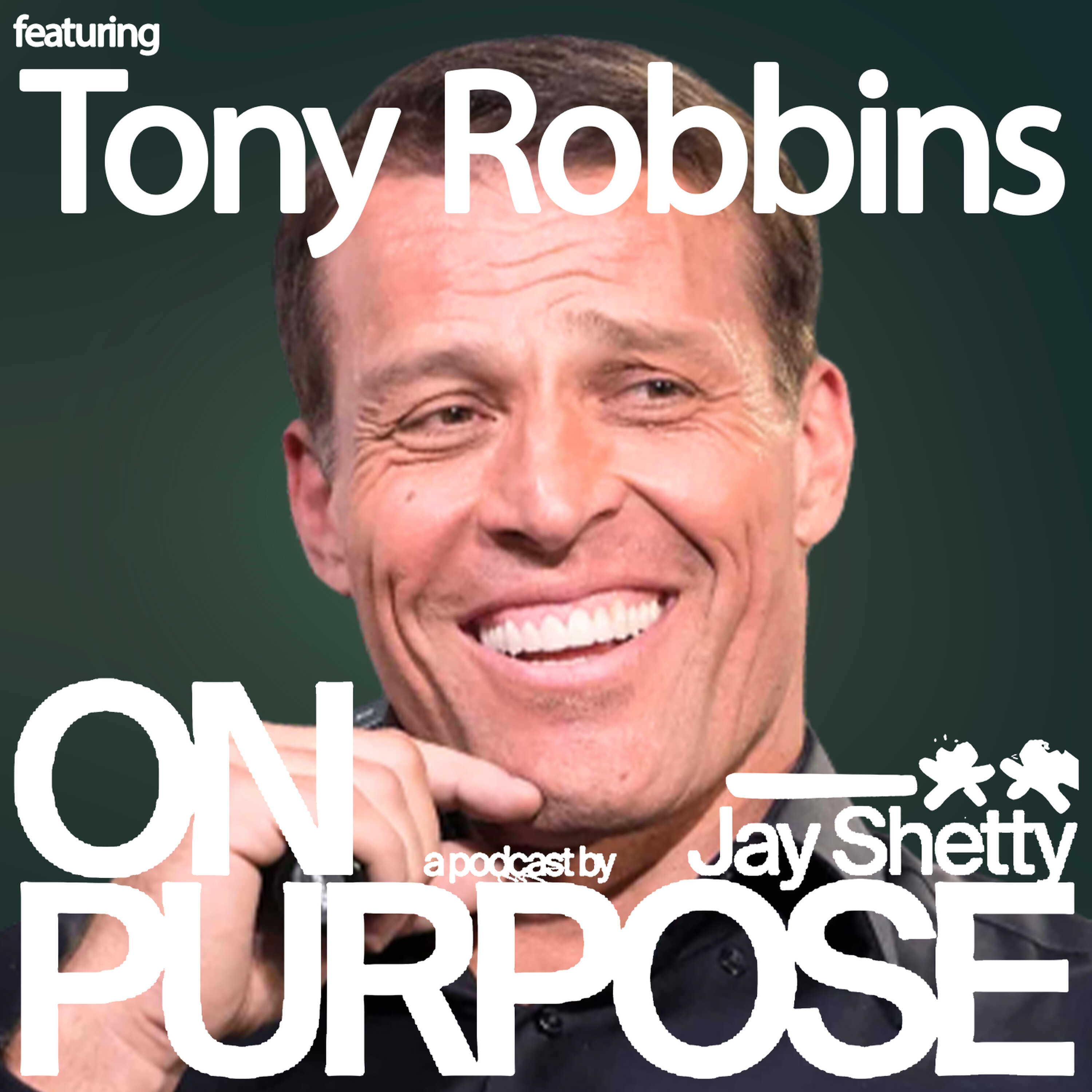
Tony Robbins: The Fastest Way Out of Feeling Stuck! Use THIS 6-Part Decision Making Framework to Take the First Step and Start 2026 With Clarity
76m 11s
Today, Jay sits down with Tony Robbins, world-renowned life and business strategist, bestselling author, and one of the most influential voices in personal development, for a conversation that goes far beyond motivation and into the mechanics of real change. Together, they explore why so many people feel stuck in their lives, emotionally, professionally, and spiritually and how that feeling is often rooted not in lack of ability, but in delayed or avoided decisions. Jay and Tony challenge modern ideas around comfort, self-care, and success. Tony shares why growth, not ease, is the true source of confidence and...
Transcription
18408 Words, 97899 Characters
This is a iHot Podcast. Guaranteed Human. Hey, I'm CalPen. And on my new podcast, here we go again. We'll take today's trends and headlines and ask, "Why does history keep repeating itself?" Each week, I'm calling up my friends, like Bill Nye, Lily Singh, and Pete Buttigieg, to talk about everything from the space race to movie remakes to psychedelics. Put another way. Are you high? Look, the world can seem pretty scary right now. But my goal here is for you to listen and feel a little better about the future. Listen and subscribe to Here We Go Again with CalPen on the iHot Radio app, Apple Podcasts, or wherever you get your podcasts. Hi, friends. Sophia Bush here, host of Work in Progress. This week, we had such a special guest, a mentor, a friend, a wife, a mother, an author, attorney, advocate, television producer, and now she adds podcast host to the list. Michelle Obama is here. Sophia, I'm beyond thrilled to be able to sit down and chat with you. Listen to Work in Progress on America's #1 podcast network, iHeart. Open your free iHeart Radio app, search Work in Progress, and listen now. Hi, I'm Danny Shapiro. We were in the car, like a Rolling Stone came on, and he said, "There's a line in there about your mother." And I said, "What?" What I would do if I didn't feel like I was being accepted is choose and identity other people can't have. You, something can happen to me in the middle of the night, but I couldn't hold on to what had happened. These are just a few of the moving and important stories on my 13th season of Family Secrets. Listen to Family Secrets on the iHeart Radio app, Apple Podcasts, or wherever you get your podcasts. Most people are stressed because stress is usually measured but how much you feel you control events versus events control you. Smartest people usually are terrible investors. The smartest people want to know everything before they decide. Not deciding is the worst decision. But the interview, the man himself, the interview and viral. It broke so many records across audio and video. And today I have them back in the studio. I'm speaking about the one, the only Tony Robbins. Number one, New York Times bestselling author, entrepreneur, and the nation's leading life and business strategist. Over the last four decades, Tony is empowered more than 100 million people across 195 countries through his books, seminars, and coaching. He's leading the 100 billion meals challenge to help end hunger worldwide. This January, he'll host the time to rise summit. A free virtual event, which I want you to sign up for, bringing together people ready to transform their lives and businesses. We're going to put the link all over this. Make sure you go and subscribe and sign up and don't miss out. Please welcome to on purpose, Tony Robbins. Tony, it's great to be back with you. I've been an introduction Jay. Almost embarrassed by the way. You have to live it. You have to live it. It touches me when I hold you 38, 38. Yeah, so many 38 comes in. I've been listening to you for 25 years or 20 years. I'm like, how old are you? I've been around that long. But it's a pleasure to be with you. And I really love what you do. You're an introduction. But I want to mention, his intention for all of you listening was that his guests, whoever they are, that their message will be received. People in their understanding of that person. And also, they're careful of that person and vice versa. And I think it's a beautiful intent. The whole on purpose podcast, bringing happiness and joy and healing. It's my mission as well. So I'm happy to be with you. Well, thank you so much for leading the way and paving the way for so many of us. And continuing to be such a great torch bearer for so many. Tony, I want to start with, you know, with you, there's so many things we can talk about. And you've been doing this work for decades. I feel like your ability to learn what's at the root of things is second to none. And I feel powerful for you to know. And I feel today, since even when you started, people are still stuck. The thing I hear the most is, I'm stuck in a relationship. I'm stuck in a dead end job. I'm stuck in life. And I feel like I can't move. I don't know what I need to do. What's the first thing people need to do if they feel stuck? They got to make some decisions, right? I mean, and what stops people make decisions? You and I do what does this fear? People are afraid of making the wrong decision for you to not being perfect fear of the consequences of their decisions. But let's chunk it up a little bit. What do people really want? We started out. We were all here created by something. I like God is the term. Some people like the universe. I'm not here to argue with that whatsoever. But we have to agree that something created us. And that something gave us choices. And choices are how we create. We co-create our basically our lives. It's not your conditions. It's your decisions that determine the quality of your life. I had pretty rough conditions growing up, say at least. But I turned those into good conditions because of a mindset, because of certain psychology, because of certain decisions. And if you think about your life, most people are stressed because they stress is usually measured. But how much you feel you control events versus events control you. The more you feel events are controlling you, the more overwhelmed you feel, the more stressed, the more anxiety, the more fear. And we live in a culture where mental health is that record lows in terms of quality and happiness and joy and fulfillment and depression and anxiety are through the roof. And it's not because the world is so much more stressful. It's because of the way we process the world. We have more information coming out of us than any time in history, obviously. We're drowning in information. We're starving for wisdom. But in order to go from being stressed to not, we understand that I think the single most important tool is decision making. Because I think that's been the skill that took me from, you know, barely surviving in a family that had tremendous pain, a tremendous angst was the nicest word to say and know finances and four different fathers and a lot of physical and emotional abuse to being able to serve literally hundreds of millions of billions of people. It's been decisions long the way. So if you look at your own life, yours, mine, anyone's life, anyone listening or watching. You have to be honest and say, I'm a creator. And if I don't like what I have, I've gotten here by the decisions that have created that. And look, there's lots of little decisions we call day long. And I know you talk about decisions. I'm writing a whole book on it right now. And most people, you know, don't understand that most decisions are easy to change, right? You know, I think you give an example. I give the example of Bezos as well as Amazon and type two decisions. And once you can change the reason, type one or significant. Like, they're going to be hard to change. Focusing on those big decisions is really important in life. But I think most people, they're afraid. And then the second thing is they think they don't have enough information, which is really just fear again. Because, you know, I wrote an entire book where I interviewed 50 of the most incredible financial people in the world. All people started with nothing. It became billionaires. The best investors in history. The Ray Dallee is the Carl Iconz, the Warren Buffets. And one thing I learned over and over again from them is the smartest people usually are terrible investors. Is that how can that be? Yeah. They said because the smartest people want to know everything before they decide. And if you wait to know everything, the opportunity's gone. And that's too not just in finance. I think that's true in life. Yes. We wait till we have absolute certainty. There's no absolute certainty in life. The only absolute certainty is faith. You know, it's like, how do you drive down a street with nothing but a yellow line separating you from crazies coming driving at you at 65 miles an hour. And every single day in every country in the world and every city in the world. Someone will cross that line and kill someone because they were drunk because they fell asleep because they're texting. And yet, how do you get out there every day without fear and do it? You use a gift that God gave us. It's called faith. It's not what you learned faith. I'm not talking about a religion. I'm talking about the capacity to see beyond the present moment and have a sense of certainty, right? And so why do you do it? Because the alternative is to live at home and do nothing. Go back to the COVID days and be trapped. Right. We know what that did to people psychologically emotionally because they felt completely at the effective things. So the fastest way to change your life is start making some real decisions. And I know it's hard initially. The other part is it's just that the more you make decisions, the more decision making muscles you get. You know what I mean? It's like, well, you've barely some people have weak decision making muscles. They, uh, you've ever been to dinner with somebody or group of people. And there's always one person is hanging on to the last moment. Still can't decide. You see the waiter wait just trying to be nice. You see him kind of losing their vision, right? It's like, just freaking decide. Help this lady out, right? And they finally decide. Well, that's the habit of a lot of people. And it can't make this one to eat for dinner tonight. How they make a life decision, right? So the first step is to make some maybe make some small ones that you can do and get some momentum. But the more decisions you make, the faster it gets. I think the whole idea that I have to make the right decision is the wrong way to look at it. My whole view has been not deciding as the worst decision. I need to consciously decide if I don't want to feel like things are affecting me. If I'm going to shape my world, I'm going to get a decision. And if I'm wrong, I'll find out quicker. I give you a real life example. I don't know if you remember General Swordskopf. I got to know him pretty well. Those are younger probably don't even remember his name. But the first war that was done over, you know, in with Iran, I guess, with Iraq, rather. He ran the allied forces. And this is a brilliant guy. And he was very powerful. He could talk to guys that were from the barrio. And he could talk to guys from Princeton incredibly well. And I was really lovely, lovely human being. But I asked him what the most important skill was of a leader. And he said decision making, which I agreed with, obviously. And I said, well, what do you think he's going to make in decisions? And he said, I'll tell you a story. So you told me the story. I tell you the short version of it briefly. When he was a private, he represented a general. And the Pentagon had worked for almost, I think he said more than a decade and a half, analyzing this strategic decision they had to make. And there were people on both sides. And they argued in both sides fully. So strongly that no one made a decision for over 10 years. And they knew they had to make the decision. If they didn't make it now, it could cost the country our security. It's a big decision. And so, keeping the private organized the team that had to read all these volumes of materials so they could summarize it so the general would have the information. And he said, then the meeting got pushed up. And even with a group of eight people, they could not gather all the information and fully summarize it. Meanwhile, the general is called overseas during this time when he should have been prepping. It wasn't his fault, but he had to deal with it. Flew back the night before they're loading up with all this information. He didn't get back to 10 o'clock at night, the meeting was eight in the morning. Right? Most important decision in the Pentagon's history was how it was framed. He said, he came in the meeting. He said, give me your arguments. One person stood up for 20 minutes and gave this full-blown argument. This is direction to go. All right, give me your 20 minutes, full blast, their argument. He said, okay, do this. And he all saluted, and he walked out the room. And he said, Schwarzkopf said, he's a private, not a general, right, at that time, right? He said, I don't know what the hell to do. He couldn't possibly know all this information. He couldn't possibly know what to do in this situation. And he was totally stressed by it. And so he worked up enough courage. They knocked on the general's door and said, general permission to speak freely. He said, he's, he's, he goes, general, I've worked on this for four weeks with eight people. I said, you weren't even here last night. This is one of the most important decisions ever. How could, I know you don't have all the information. How could you possibly make that decision? And he said, young man, because the decision need to be made. And he said, in both sides are equally strong. So I picked the one I believe is right. If I'm wrong, we'll find out quicker. It won't take a dictate, you know, 10 years to bind out. And if I'm right, we'll continue. If I'm wrong, we'll make a shift. And he said it, he said it just was outside of his world. It was so simple. And then he told me one other one that I thought was really good. He said he was leaving one time and he left him as a private in charge of things. He said, you're in charge. You make these decisions. You do these things. It's a general general. I don't know. How do I know what to do? He said rule 13, because rule 13, sir. He started off the door. He says, what's rule 13? You can figure out rule 13 was when putting command take charge. Yes. Okay. It goes. But how do I make the right decision? It goes rule 14. It goes rule 14, sir. What's rule 14? Do what's right. Right. And those simple approaches, I think, can guide us. And I really believe decision making is the most important thing. So if you don't like your body, change it. If you don't like your relationship, change it. Maybe change you first. Otherwise, you'll straight people in the same problems. Right. You don't like your career, change it. But for things to get better, we got to get better. For things to change, my teacher, Jim Rohn said, you've got to change. Right. But it all begins with a decision. So maybe start with small decisions or maybe attack a big one. Because when you do, you get momentum. And by the way, it's only decision if you act on it immediately. And so I have a rule. It's like anytime I set a goal, anytime I make a decision, I make sure that within a few minutes of making it, I do something that commits me to follow through. Because here's the other problem. Have you ever done this? Have you ever made a decision that not follow through? Yeah. Why? Because I was maybe, maybe because I made a decision and I was uneasy about it afterwards. Or there was some fear that crept in or I didn't, I didn't have a plan to execute it on it properly. Yeah. All those are the typical answers to your spot on in your experience. But the biggest reason is people think decision is a one step process. And I found it's three. Right. You can decide in the moment. The reason I make that commitment that when I'm in the moment, I do something that commits me when I leave that moment. You get in state. You get inspired enough or you get pissed off enough. Something moves you and say, not under the day, not an hour, I'm changing this, right? But then when you leave that moment and you get caught up with some meeting or something with your family or something in your social media email or whatever it is, gradually earned a different state and then you don't fall through and what you said is true. Something else comes up as you weren't prepared for. Right. So a real decision, the word decision comes from incision in Latin. It means to cut off from. When you cut off any other possible except what you committed to, you'll find the way. It's always tell people if you want to take the island, burn your boats. As long as your brain has a way out, it'll go back. And it's amazing what you'll do when there's no option to go back. Most of my career has been because I had no net. You know, where's Serena Williams? And I got to turn around right now. She can't get on her sister died. She can't get into the US. So she can't get on stand up. She can't get up to do anything. Everybody knows I'm working with her. I don't get her up. All things over. I get her up. I turn the president around. I do whatever I've got to do. No matter who it was, with no net, you find a way. So I think the biggest thing is once you decide you want to go to the second step is commit. In fact, I hear women say this to me all the time. I know you have a large female audience. They'll say, you know, men don't commit. And I said, has he even decided? Because there are different steps. Women jump to commitment very quickly. Men not as quickly. And so deciding is like a war sometimes. I've figured out, okay, I've decided. But then commitment, if I ask your audience to ask them, what's the difference? Let me ask you, what's the difference to deciding committing to you? I feel like the side is, I know it's direction I want to do. Go in. Commitment is, I want to stay in that direction for a long period of time. Yes, you just added that exactly what it is. A commitment takes it into the future. Decision is the moment and that moment can change. Which is why so many people make a decision legitimately and don't fall through. That's why you need to take action immediately that commits you to fall through. Meaning book the meeting. Enroll in the class. You know, call the person and set it up. Organize so you can have that conversation you haven't wanted to have. And put it on the calendar so that there's momentum going out of it. But then committing, deciding is really rough. Committing is not that rough. It's just creating enough compelling reasons to follow through even though it might be tough right now. But there's a third step. And after you decide and commit, there's resolve. What's the machine decided commit resolve for you? What's the emotional difference? Resolve to me, at least from the way I'm hearing it is. Just in your own experience. Yeah, there's a sense of, I feel a sense of confidence that I made the right decision. So I can recommit and reconnect or I get a sense of now's the time to pivot. And so there's a resolution of am I continuing down this road or are we going to pivot? Yes. I understand you're evaluating with something new came, but to me resolve is whatever you did in that moment. It's done. Right. I know Jim had told me one time that he was speaking about resolve to this audience of young people. I think it was like a nine year old girl. He said, who's got definition resolve and this young girl stood up and she said, I think it's promising yourself you will never give up. That was a beautiful example. When you resolve, you're at peace. Deciding like a war, right, committing choirs energy and taking into the future as you describe. And then resolve. It's amazing. It's like it's done. It's done in me. I may not be done in the world, but it's done in me now. I'll find the way or I'll make the way. And there's no uncertainty. There's no fear. There's no anxiety. There's no. It's like when you get to that psychological emotional place, that's the place and what you get results. If you look at an athlete, athlete to perfect examples this, I'm sure you've seen a time where you watch an athlete walk up to. Shoot a free throw or let's say a kicker and football and you think it's going to miss it. Yeah. And then they do. Yeah. How did you know they're going to miss it? Yeah. Physiology, where the head was, where the rise was. Yes. You could see in their state a lack of certainty. When someone, when you see like, you know, something like LeBron take the ball to go straight ahead and go over some top of somebody's head and put it through. There is not he didn't just decide he didn't just commit he has resolved that every ounce of the board is going to go. Right. So I think just to summarize, I think there isn't a more important skill than decision making. And if you're not good at all, you got to start making some decisions. What would you, my question would be, instead of just listening us today. If nothing else came out of this, what's one little decision you could make that would crease the quality of your life that honestly, you know you should make. Maybe you're putting it off because it's inconvenient. You got lots of the stressful things in your life or you're not really comfortable. But if you're really committed and you follow through, you decided committed and follow through, right. Resolve. Where would you be a year for now? What would your life be like? And I would take a little decision. And what action would you take today? Make that decision now. And then if you're bold, what's a big decision? What's a tough decision? What's a decision you've been putting off or you know and you got it's right. It might be about a relationship, you know, it might be about how you're dealing with your kids. It might be around your career or your business or your finances. But that's how life gets better. That's how you start creating life as opposed to being a manager of circumstance. And I think when people are maintaining when they're managing their circumstances, when they're surviving, they're miserable. Like we are made to grow and we're made to give. When we grow, we have more to give. And so I think decision making is the pathway. One of them certainly to getting there. Yeah, it's so powerful listening to you talk about it because I feel a lot of us, the second mistake we make is that after we make a decision, we hope that that decision solved everything. So it's like you make one decision. And then you're like, all right, well, I quit my job or I left that person or I got a new job and that should solve it. And the reality is what you're saying is no decision making is a continual process. So you ask that in time and time again, you don't get to make one decision and your life is solved. That's right. Life is made up of lots of little and big decisions along the way. You know what the biggest problem is that people have? They think they're not supposed to have them. Right. Yeah. Problems are a sign of life. I remember I interviewed, uh, uh, who has a name. Norman Vincent Peele, Dr. Peele, wrote the original Power Puzzle in the book. When I was 32, he was 92. And he invited me because my career was growing. He invited me up to Toronto to meet him at an event he was doing. So I came backstage and we spent about an hour in advance. And I remember asking him and said, you know, I'm curious. I said, why is he still doing these events? He goes, well, Tony, there's still a few negative people around. And 92. I said, what's the most thing? Think about 92. He's what men's horse and carriage to rockets. Right. You know, nothing to computers. I just, the changes in his lifetime were just unbelievable. And I said, what do you think is the most important thing people need to understand? And he said the power of problems. And I said, what do you mean by that? He goes, well, the only people out problems are in cemeteries. And I said, I think I heard that somewhere. I said, 1947. And I said, he said that they never finished my quote. I said, the only people out of problems are in cemeteries. So if you don't have any, you've been going to need some prey for some. Because he said, problems are a sign of life. And when I found his problems, call us. He, he said he was sitting one time at this day as he was at a speaking day. I said, it was like a luncheon. And beside him was the heavyweight champion of the world. And it was back in the 40s, right. And he said that he looked at him. His name was Jean Tunney. He's a pretty famous guy. And he said, Jean, how do you get muscles like that? And Jean said, do you really want to know? He just asked it. And he said, he told me in a set, he goes, I was thinking, I was just asking. But not really want to know because we were so intense about it. He says, no, I really want to know. He goes, every day I push against unbelievable resistance. And that's what sculpts these muscles. That's how you build muscle. And he said, I thought about a long time afterwards. And he said, I think that's how we develop spiritually. We push against problems. And that's what sculpts our souls. And so I think to think you shouldn't have problems, you can call them challenges. It feels better. But this part of life is part of the journey. And solving them makes you bigger, more alive, more spiritually developed, more human, more caring. Pain and suffering, you don't have to suffer long. But we're all going to experience some of it, right? But decision-making is how we get out of it. And you're so right because one of the biggest challenges today is overthinking. Right? We're exposed to more information or so we think. And I was reading a study that was saying we now consume 72 gigabytes of data per day. I know much of we have truly consumed absorbance of everyone. But it's just like face to buy it. And you think like that's a lot. I remember when you were lucky enough to get one gigabyte on your iPhone. And I remember talking about 72 gigabytes coming at you. So decision-making is the kind of arrow that cuts through that. 100%. Because that's the only way to get out of overthinking. Yeah. And so if someone's spiraling, if they actually listen to you and say, hey, if I just make one decision off of this. Yes. That will actually create a shift for them. I can tell you too, I had too long in a conversation like this to describe in detail. But I can give you how I make important decisions. Please. I have a six-step process. And if people want to jot it down, I call it O-O-C-E-M-R. Those are the trigger letters for what I do, O-O-C-E-M-R. And I developed this years ago because I only had one business. Now, unfortunately, I have 114 companies we do over $10 billion in business. I have no business back on all decision-making, learning skills, et cetera. But the way back then, I had a small business. These decisions were just, it was tough. They were important decisions. They felt like they were life-and-death decisions for the business. And I knew that know how smart I am, you're better with a group of people around you. Because even if you have more information, they have another perspective. And so I was trying to find a decision-making model. And I thought, well, all decision-making is really value clarification. What's most important to you? What you decide with someone else's side may be different, but maybe right. Because it's about what do you value most, right? So I thought, I should start with decision-making. Not by all the emotion that I may have of either anxiety or fear or excitement or passion. One can lead you astray. It's like, what do I want? What's the outcome? That's the first, oh. So I get you. And by the way, I tell people, do not do this in your head. The reason people get overwhelmed is they ask multiple questions too fast to answer. It's like, what am I going to do? I don't know what to do. What if she says this? What if he did this? But what if it doesn't do that? And you're asking 20 questions. And you don't have the processing power to answer them. So you're just going to overwhelm. Slow it down. One thing at a time, right. But start with not what you're afraid of. Start with what you want. Because that's how the human nervous system is designed. It's designed to make things happen to create. So if you become a creator, you start with the idea. So what are your outcomes? And this is the reason it's hard to make decisions for most people is they have multiple outcomes. They're trying to get from the same decision, right. They want to make everybody happy. And they want to make a million dollars. And they want to have more free time. And you know, all simultaneously. So you have to say, which of those things is most important to you? Is it the free time? Is it the family time? Is it the make more money? Is it what's most important for you? Right. So I have people right now on their outcomes. And if they're having a hard time, it's because there's multiple outcomes. And then I also say, don't ever do this in your head. Because you can't manage all you had pictures worth a thousand words. So you're right down the outcomes and then you put them in order. And then you put the why. Because the why is what matters. Like, what is the reason? What's the emotion behind this? What is it? Even though I say this is what I want. What I want out of this. What's it going to give me? It's going to give me joy. It's going to be happening. It's fulfillment. Spiritual development. What is it? Right. So now when you're crystal clear what you want. And the order. And that's critical. What's the number one? You've got to be rigorous. Now you can make decisions by going into second or what's what are your options? And I always tell people one option is no option. Two options is dilemma. You need at least three choices to be a choice. Right. And so and when you get to three, you usually find this four or five. Now, I mean, I like them all. But you shouldn't lie to yourself and say, this is the only option that will stress you out. Or these two of the options, you just get stuck in a dilemma. So I write out all the options. Then I go to OOC is consequences, which is what you're doing the decisions for. What's the upside and the downside of each of these decisions to the best of my knowledge? The upside could be this list. Now it could be that now. I've converted the first half. Okay. Now, you know what exactly you want? You know what your options are. And you know, upsides and downsides of each. And now we're going to go to the last three stages. I'm going to evaluate, mitigate, and resolve. E evaluate. Now I'm going to evaluate. What's the probability of those consequences? Because you might have something that's like, oh my god, if this happens to the worst thing on Earth, but the probability is next to zero and you're all stressed out. Unless you evaluate probability, you're wasting your time. You might have some go, oh my god, if this works out, it's going to be the greatest thing in the history of the world. But the likelihood of happening is zero, right? You can't let those extremes get you. So you start to see by evaluating what's there. And then the last two steps are fast. It's mitigation. Mitigation means, okay, I've seen what I want. I know my options. I know the upside down. I know what's probable. Now, can I take something from this option and mix it with this one? Is there a way to mitigate the downsides? And almost always there are. And at this stage, your brain gets really creative because it's not in fear or uncertainty or anxiety. Because you're not in your head. It's right in front of you. And the last part is resolved. And I give you a million stories. It was too late to do. But I can just tell you, I've made, personally, $400 million in one decision I made from this personally. I'm just trying to give you an economic piece. What the spiritual emotional value has been on things is priceless. And I can honestly tell you by using the system that I'm writing this book right now called The Power of Decision. Because I want people to have that skill. And I show them my business decision making skills. I teach people everybody's format. But this is my format for doing it. And I found it to be incredibly valuable, especially when you had commit resolve to it, not just decide to the process. So I hope that that's helpful for people. That's a great system. That's the best way I've had it explained. I really appreciate that model because I think too much of what decisions making is based on today is, if you really want something and you go after it and you organize it and you have a plan, you'll get there. And it's like, well, you didn't evaluate the probability. You didn't look at it from a systematic point of view. Or the other side of it is like, all right, you made a decision. You get some good insight. Get some good advice. Get some good mentorship. You pivot, you pivot. But the point is you can save yourself so much time by doing what you just shared. Huge amounts of time. Money and energy. Despite when you mix 1950s Hollywood, a Cuban musician with a dream and one of the most iconic sitcoms of all time, you get Desi Arnes. A trailblazer, a businessman, a husband, and maybe most importantly, the first Latino to break prime time wide open. I'm Wilmer Valderama and yes, I grew up watching him probably just like you and millions of others. But for me, I saw myself in his story. From planning canary cages to this night here in New York, it's a long ways. On the podcast starring Desi Arnes and Wilmer Valderama, I'll take you in a journey to Desi's life. The moment he has overlapped with mine, how he redefined American television and what that man for all of us watching from the sidelines, waiting for a face like ours on screen. This is a story of how one man's spotlight laid the path for so many others and how we carry his legacy today. Listen to starring Desi Arnes and Wilmer Valderama. This is part of the Microtuda Podcast Network available on the I Heart Radio App, Apple Podcast, or wherever you get your podcast. On this week's episode of the next chapter, I, D.D. Jakes get to sit down with Oprah Winfrey, a media mogul, philanthropist, and global trailblazer. My life, although it may look like an anomaly, it has only been possible because I was obedient to the call. This episode dies deep into how overturned fame and the purpose and what it really means to evolve with everybody watching. Every decision I have ever made has come from sitting with the spirit and asking God what would you have be do first. Whether you're rebuilding, reimagining, or just trying to hold it together, this one will speak directly to you. Listen to the next chapter on the I Heart Radio App, Apple Podcast, or wherever you get your podcast, episodes drop weekly. A combat surgeon with secrets, a world built on power and privilege, and the most unexpected creative duo of the year. As an actor for so many years, I would always walk into other people's stories and they thought, well, why don't I give it a shot? You know, and try to write it myself. This week, bookmarked by Reese's Book Club goes live from Apple Soho in New York City, with Reese Witherspoon and Harlan Coban, the powerhouse team behind Gone Before Goodbye, now a New York Times bestseller. I think we both knew right away that this was going to happen. It's a conversation about fear, ambition, and what happens when two master storytellers collide? I've never seen a woman in kind of a James Bond world come for the chills and stay for the surprises. And find out why readers can't put it down. Listen to Bookmarked by Reese's Book Club on the I Heart Radio App, Apple Podcast, or wherever you get your podcast. I was going to ask you, Tony, you have such a systematic brain. When I've learned from you, listen to you, everything is so process oriented, which I love. But at the same time, you have this deep faith, this deep spirituality, and you brought it out there. You said, I made $400 million, and at the same time, the emotional and spiritual benefits are off the charts. Talk to me genuinely, because I think today we all hear about, oh, you can manifest this and you can get that and this. I feel like you have a really pragmatic and process-driven approach to both. How does faith, how does energy, how does spirituality correlate with a very systematic process-driven approach? That's a great question. No one's really asked me that question. That's nice. It's a reflection of your qualities as well, which I think you look at both sides as well as I do. I think there's nothing more important in spirits, so there's nothing more important than your spiritual development. Anything else is a joke. Maybe the best way to describe this, think about it as East and West. We both have experiences of both. I go to India at least once a year on average, and I've been going since I was in my 20s, because I was fascinated by the cultural differences. As a gross generalization, the East is more about internal development. If you go to a place like Verinasi, which is one of the oldest cities on the planet, you know, 3800 years old. They have fires that have been burning for 38 straight years and nonstop, and for people who don't know it in that culture, you know, everyone has different perceptions of God or belief of what God is. But in that particular culture, it doesn't matter what kind of Hindu you are, if there's some belief you should give up all your clothing, everything but your clothes. Some people believe it's studying the Vedas. Some people believe it's to yoga. Different ways to get to God. Millions different ways. And there's more than 300 million different God, your own personal God in that culture, right? Very different. But they have a belief there that if you die in Verinasi, because the only thing you have unified, then you don't come back, because the belief is reincarnation. So they want to, you know, not come back, which would be Nirvana, right? And they burn these fires, and when someone dies, they try to get to Verinasi, no matter what they do, because they believe that they die there, they won't come back. And the city is filled, you've been there, haven't you? Yeah. Fill the people that are dying and joyous. Like I remember, we went to Mother Teresa's facility, and there's a woman there that was, you know, tiny little lady, and she was like in her 90s. And she was talking with her, she broke in English, and she was mad as hell. She was dying, and she was mad, they scooped her up the streets, and they're helping her. She came here to die, because this was her, I mean, really pissed off, right? And then most Americans have said, you know, they burn the bodies, I watch them burn the bodies, I'm on this boat, and I'll never forget the first time I do this. And I watch this little boy who's flipping this, look like stick or twig, and it was his grandfather's leg. No one is crying, no one is sad. They believe that the body is the t-shirt, you burn it, and it goes away. So the spiritual side of life is all that is seen there, and yet people live in squalor. You come to America, and people get stressed about they didn't get the special burger on the sauce on their burger, right? And you see people that live with tremendous economic opportunity who spoil it, and don't take advantage of it. And people have tremendous economic opportunity, but they're not fulfilled in their relationships, they're not who's to say they're not spiritually developed, but looks on the outside by the way they treat people, they're not spiritually developed. And so I don't believe you have to pick one or the other. I believe that they go together. I've always believed when I originally was learning constantly listening to albums that's hold I am and cassette tapes and real the reals that's hold I am, eight tracks, various professors, speakers, I was just immersing myself in things. You notice almost everybody specialized in either how I can look at his philosophy or strategy, right? Philosophy is critical. It determines the quality of your life, it determines whether you're happy or not happy, fulfilled or not fulfilled. Strategy is how, how do you get it done? And strategy is critical because you could save a decade with the right strategy in business and your personal life with your body, the wrong strategy, and you're going to be ill, right? And so early on I decided you need both, so I teach both, and I don't think that's anything but intelligent to do both. So that's how I look at it. But if you think like what creates, you know, when you look, I try to look at what does everybody want and we're all different. And I think the best example I can give is that people want an extraordinary quality of life, but that definition is different for everybody. Like some people's idea of an extraordinary life is, you know, three beautiful children and husband or wife that they adore, some people's is to write poetry or write music or to build a farm or garden, some people's as a grow business. Everyone has completely different eyes with this. I don't pretend that my life should be your life or I'm the example for you, but I'm an example of how you can take what you believe you want to create and make it real by combination and enjoy it because how many know of achieved and they want and then said, is this all there is because they never a philosophy or they were trying to achieve something they thought would need a need for significance and they missed love. You know, the more important pieces of life. So I believe that there's two primary skills to have an extraordinary quality life, which I would define is life on your terms. So the first one is the science of achievement. That's a skill. So when I wrote my financial books and writing three of them, I never intended that, but after 2000, I was so angry because I worked with Paul Tutor Jones, one of the top 10 traders in the history of the world. And I knew this was coming. I tried to warn people. And all a few number of people almost destroyed the world economy. And then we punished them by giving more of our money. This is the most crazy thing. So I don't have a lot of power, but I have the power to convene. And so I brought together 50 of the best financial people in the world and kind of dug into their brains and figured out what's the common pattern. They're all different that it made them go from nothing financially to financially free. And I want to show people I'm still doable because I think most especially young people, they don't think that's possible. And they're wrong. The system's rigged is what everybody says. It is rigged to some extent, but it's still totally winnable. Life isn't always fair, but it's still magnificent, right? You can still make it magnificent. So the skill sets is like, it's a science. If you do certain things, you're going to have too much month at the end of the money. You're going to have stress. If you certain other things financially, you're going to be free. That's a science. Your body is a science. Every one of us is slightly different. But there's certain patterns that if you violate them, you're going to have illness. You're going to have disease, right? That's what it is. If you surround yourself or apply them, you're going to have a high level of energy, high level of health. That skill is the one that most human beings in the Western world are pursuing. They want to achieve more and the whole focus is, let's get more and we're a consumer culture. And so as a result, a lot of people do that and they're still unhappy, right? That's because the second skill is more important and is not promoted in Western culture very much. And that is the art of fulfillment. And notice they said, aren't not science. Because what fulfills you and I continue a dear friend and what fulfills your best friend and what fulfills your kids, maybe really different even though we love each other and you're all part of the same family, so to speak. We're all unique in that way. It's like, what does God love? Go to a forest and take a look around. Everything's different. It's ultimate levels of variety of shapes and directions. It's not supposed to be one thing. I think that's the biggest challenge in our culture. We've experienced all this pain and these shootings and so forth about people who want to shoot other people because they believe something different than them. Man, what we've really lost it when we can't have a conversation anymore or we can't learn to agree to disagree. You know, that's part of, you can love somebody and still disagree with him. I know in Congress, I have friends who were, you know, worked at vice president level and worked at the presidential level and worked in Congress and Senate. And they would fight like hell three or four decades ago and they go up a beer together. Now they don't even talk to each other. It's a crazy thing. But my point is, fulfillment is an art and fulfillment is as different as you and I are. There are no laws to fulfillment, but there are some principles. And one is growth. If you're going to be fulfilled, you got to grow. In fact, the whole self-care mentality, which I think was important. It was like the antidote to the, what they called the hustle, hustle. And people are stressed. You know, they're stressed. They're hustling just to make money. There's no meaning. When there's no meat, you can work your ass off and be so fulfilled. If it's meaningful to you, if you're doing it for a higher purpose, then just money. I'm not saying you shouldn't have money. You should. It's part of a master's skill of being alive and take care of your family. But if that's the only thing you're doing it for, you're going to stress out and burn out. I mean, stress comes to make things more important. They really is failure comes to making things less important than they really are. It's an art, right? But the fulfillment side is finding what it is that allows you to grow because when you grow, you feel alive. I always tell people, people ask me all the time, they say, what is it that makes people happy? You travel the world, you make millions of people. What is what's the common key to happiness? And I say progress. Progress equals happiness. When you're making progress, you're happy. Even when you achieve it, like, can you think of a goal you've achieved that you're really proud of? And then, after we're satisfied, is this all there is? No. Oh, good. I'm so happy. You're more purposeful. Of course. The purpose. No, you too. No. But I think that's because that's because you know it's about progress. Yes. No, no, I'm agreeing with you. Yeah. Have you ever had the goal where you achieved it and you're out of your mind, like about your mind and good like you celebrate? Probably not either. Oh, interesting. Yeah. Well, most people have had some celebration. Yes. And when they celebrate that, what I always ask people is, you're really celebratory. It was great you achieved it. You're proud of yourself. I say, how long do that feeling last? Not long. And I said it last six years. No, six months, six weeks, six days, six hours. And most people, somewhere between six days, six hours and six weeks max, because you know, why, why does it go away? Because we're not majors to achieve goals were made to grow. We're made to become more. Because when we grow, we make progress. We have something to give. We have more to give. So it's like everything in the world either grows or dies. If your relationships are not growing, don't be us yourself. It's dying. If your business is not growing, it's dying. If you're not growing, some part of you is dying inside. So, but I found that when people really grow, they're happy and then they want to share and they have something worth sharing, right? So if you look at somebody like, you know, Robin Williams, and Robin Williams, I think was one of the gifts of our country to the world. You know, he, he made people laugh all over the earth. He came here to Hollywood where we are right now. He had almost no resources except creativity. And he said, I'm going to start my own TV show. Everybody says that. Nobody does it. He did it. Then he said, okay, I don't want to knowledge star my own TV show. I want to make it the number one show at least five countries. He did it nine, right? Then he said, I don't want to do TV anymore. I want to make movies. That's more dramatic. And he did. Then he said, I want to win an Academy Award for not being funny, a dramatic Academy Award. And he won. He said, I want a family that totally loves me and I love me. He did it. He said, I want more money than I could ever spend. And he did it. And he hung himself in his own home. How to explain that? I hope you say I had Louis bodies in his brain, but he abused alcohol and cocaine and drugs is entire life staying hyped up. He worked to make everybody as happy except himself. So I really believe that success without fulfillment is the ultimate failure. And you do not have to separate them because if what you're doing is designed to try and serve something more than yourself, you're not going to be stressed. I mean, when you're trying to serve your kids or you're trying to serve your community or your country. When there's something you care about more than yourself, there's an energy that you have. All suffering comes focused on the self. And ironically, again, I started to mention self-care. I'm not being dragatory towards self-care because I think it's important to take care of self. So if you take care of others and take care of yourself. But it's become the new, it's, it's the new hustle culture. Self-care means you're doing something directing your mind, soul, and spirit to become more, not just checking out, right? And so many people are doing it now. And I think that's a huge reason why I don't know if you saw I looked it up the other day. I was actually brought in, I want to make sure I had the right numbers of blue my mind. Yeah, 61% of Gen Z has been diagnosed with anxiety disorder. 61% of a generation, 54% of Gen Z women report diagnosed mental health conditions by American psychological association. 34% of Gen Z are currently taking prescription medication. And there's been a 129% increase in the trajectory use of antidepressants among teenage girls since the pandemic. I mean, it's like, there's something wrong here. This mental health crisis is because we think we should do less and we're going to be happier. There was a study done right in the middle of COVID by one run article in the New York Times and she took people who are miserable and angry and sad and said, we're going to do a time management course for you for nine weeks. And I'm going to ask that you do more during these nine weeks. And at the end of nine weeks, just by feeling control of their lives, right, 20% increase in life satisfaction, 18% increase in productivity by doing five times more than what they were doing when they kept because the problem with pulling back and taking care of yourself when it's the extreme side, not what you or I would do. And that's one of the meds thing you talk about right in terms of meditating and eating well and diet and sleep right with the one you couldn't agree more with you on that. But when people make it like just let and go and doing nothing. I am bound to value that. But the weaker we get, the harder it gets, it doesn't like you don't hit a bottom and now you're okay. You just get weaker and weaker now little things are stressful. It's just like the decision making the more you don't make decisions, the more anxiety you have, the more you start making decisions, the stronger you feel you feel like you're in control of your life. And all it takes is a few good ones for you to start getting momentum. So I think those two skills are the key to great life master the science of achievements. You can study how people did it get the same thing with your body or your emotions or your relationships or your finances. But then when it comes to fulfillment, you have to discover what will help you to grow and what will help you to give more and what taps you. All you want to find a little example is this humorous to me. Steve, when is a good friend of mine who built most of Las Vegas about half of Las Vegas. Beautiful. I prefer hotels. Yes. Beautiful, beautiful. And Steve is quite a philanthropist, great human being. I do good friend of mine. So we both have vacation homes in Sun Valley, Idaho for the snow. And I arrive one morning and one night, night four. And I got there like two or three in the morning and phone rings at 8 a.m. I'm gonna four or five hours sleep. Who could possibly call me in this home, right? It's Steve Tony. It's my birthday. I want you to come over today. It's Steve. I know, but it's when 815 830 in the morning. I just got here. He goes, listen, I got this new piece of art. He said it's unbelievable. I've coveted this piece of art for the last 13 years. He said, I outbid everybody of soft abuse and literally they delivered it late last night for my birthday. You must come and see this painting. I'm sorry, Steve. I have one question. How much should I set you back? 86.9 million dollars. 87 million dollars. So I said, Steve, screw lunch. I'm coming for breakfast. I got to see what an 87 million dollar painting looks like. And I'm picturing God crashing through the clouds. Some Renaissance image and everything else. I get there and he takes me there when you go see and I look at it and I understand what it is. It's a Rothko, but it's an orange square. If you ever seen a Rothko, it's literally an orange square orange your red square. And I said, Steve, they missed a few spots because this isn't filled in right. He got a little and I said, this is a Rothko. I said, I know what it is. He goes, yeah, but I said, Steve, I said, give me $100 with the red paint. Give me a piece of paper. Give me 20 minutes. I think I can do this again. It stirred him up a little bit. He knows I was teasing him. He goes, Tony, you understand, he committed suicide. Start telling me the whole story of the guy. I said, well, for suicide, you should be as blood for 87 million dollars. I mean, come on. Right. But the reason I tell this story is he can barely see, but he got almost an orgasm looking at that. Because he finds meaning in everything. Like he knows what every stroke means. I'm looking at IC and orange square. I'm unsophisticated. So what makes you feel fulfilled depends on what you focus on. And you know, so what do you do that? It should have given that money away. It's given millions of millions of millions of millions of dollars away. That's just everybody's judgment. I think you should figure out what it is that fulfills you because if you don't find fulfillment, you're going to be miserable. More stress comes because you're not fulfilled. It's not because you're not achieving. It's because you're not making progress on what matters to you. It's because you feel at the effective events versus your affecting events. So many breakthroughs there. I just want to flag for people that I think are huge. The first point being this breakdown of the science of achievement and the art of fulfillment. It's so important because I think today what people are getting confused is that they think if they're more fulfilled, they'll be better at the science. And that doesn't work that way. And you won't stay fulfilled either because their idea for fulfillment is what feels good in the moment. But what feels good in the moment is what feels good long term. What feels good long term is when you grow. Yes. And then when you give the two things that make us feel like is growing and giving. Yes. And you grow so we have something to give. Yes. And then same back the other way, the science of achievement won't make you more fulfilled, which you made. No. One big breakthrough. Second one is what you just said now. This idea that self-care is promoting this idea that we all want more comfort. Yes. That we should all have more comfort in life. And if we have more comfort in life, then we'll be happier. And you're completely kind of uprooting that and going, well, actually the discomfort makes you experience progress, which equals happiness. That's correct. Because that's the algorithm that we want to be a part of. And that's the hard choice because that hard choice is choosing the discomfort, choosing the discipline, choosing the decision that may feel hard but is right. But the one that's the hardest one is regret. Not making the decision almost always leads to regret. If you make a decision as wrong, you can change it. Make another one. Even those type one decisions, you know that Jeff Bezos talks about. Most of them are still possible to change. This just takes a lot. So it's always possible to shift. What's what will screw your life up is not deciding is living on the fence because the brain does not do well with uncertainty. That's one of the human needs is the need for certainty and the fastest way to certainty is just makes some decisions and act on them and discover what's real. So I appreciate your metacombs about that because I think I think it's really important to master both skills. I know so many people have achieved so much and they're so in fulfillment. There are so many people that are trying for fulfillment and they, you know, never last. It's because like you got to think about it. Everything in life is calling us to grow. And if you want to know what doesn't work, the pop psychology of self-care is not working anymore than the hustle culture did. They're both extremes. Life's a balance. Right. And if you want to see what the results are, look at the medication and, you know, and millennials are known as the Rx, not the X generation, the Rx generation. Right. So it's like that is not solving it to feel good. Not feeling good. This part of what gives you drive either destroys you or drives you. You have to make those choices. Most of us will not let it destroy us if we don't medicate ourselves. If we don't, we find a way to push through. But if, if you don't have to, people go for comfort and comfort will never make you proud. Comfort won't make you strong. Comfort will not allow you to inspire your kids or your community or your friends. But there's a greater thing than comfort comes from fulfillment by pushing through. And I hear the other parts like I hear the where the other pop culture element drives me crazy self-esteem. Oh, I don't any self-esteem because when I was a child, people said these horrible things to me. And how can we only remember the horrible things they said to you? Right. They said lots of things. But the truth of the matter is what people said to you makes no means whatsoever as to whether you feel like you have high self-esteem or not. Self-esteem is earned by yourself with yourself. Someone say your whole life, you're beautiful, you're gorgeous, you're so smart, and you can fear you're not. Right. I mean, people like that all the time, right? They have all this anxiety because they thought there's the best in the world and they find out they're not. The parents over blue, who they were at that stage, they didn't teach them to develop it or to push through or develop the muscle that would make them the best in the world of what they do. On the other hand, you can be told by people, your piece of worthless piece of junk, you'll never be this year piece of that. And that person say, screw you, I'll show you I am. So what people have said has zero impact on your self-esteem and telling people they're great or not great does not change it teaching them to have grit, teaching them to push through the way you develop a steam for yourself is by doing difficult things that you know are right. When you do something you know is right, even though it's difficult, you're a steam for yourself grows and no one can take that. We then take away money or material things. No one can take away who I become as a man. And my path or you as a man or anyone else is a woman. And I think it's really important to know that if you want to feel good about yourself, it's not by relaxing. Don't get me wrong. I know how to relax and take time and I have beautiful family, I have five kids and five grandkids. So I certainly have to be able to do that. And one of my kids is thanks to COVID, I have a 51 year old daughter and I have a four year old daughter. So I have quite a spread at 60 when I'm going to be 66 pretty soon. So to give you a sense. So my life is full, but it still has to have growth in it. It still has to have progress. And that's what makes it fulfilling. Yeah, what's the difference between growth and hustle meaning? Well, yes, exactly hustle. I'm just doing it to try to make money. If I'm busting my tail, but man, I know what I'm doing. The unit is this. I always people I measure people's lives. Again, I have to give zeros 10 score on their body, not compared to someone else. Like your idea for 10 when I was 20 of that washboard abs was a 10 and they had them in my back. I mean, so I was out of balance, right? You know, everything else is screwed up big biceps and week and otherwise. Then so I asked people, were you zero to 10 in your life today based on what you want for your life? Is it energy? Where you zero to 10 in the level of meaning and emotion? Because if you don't measure something, you can't manage it. I'm giving zero to 10 in the little description. Give me zero to 10 where you are in your relationships. And the most important one, your intimate relationships is friendships are easy. And where is that? And if you don't have one, that's zero. And you want to see that. So it pushes you, right? Where are you in, you know, your, and this the one that led me to it is your work. Or is it for you career or is it, you know, calling or a mission? And I already know who people are based on which word they pick. If it's work, it's work. If it's a career, they work at it and they're pretty fulfilled that. But if it's mission, like, I know you and I are both called. I don't have to do this in a day of my life. I do it because it's my mission. It's my purpose. I believe it's what I made for. There is no matter work that can wear you down when it's mission zero. And if you haven't found that, I'm caution against one of the thing, if I may. You've stirred me up with some different questions. It's good. I think it's important to understand. A lot of people are trying to find their purpose. What's my purpose? What's this big purpose? Who said you had one? Who said you had one for a lifetime? If you write down a purpose statement as long mission statement, it sounds real good and you read it. It's never going to cover all of who you are way for. You know, I have a different purpose when I'm sitting down with my daughter, my youngest daughter, then I am with my oldest. I have a different sense of purpose and what I'm doing in this businesses for that. I have a different purpose in our conversation today. Purpose is what gives life meaning. But you don't have to have one giant purpose that you're struggling to find. Life will evolve. And if you just keep moving forward in a purposeful manner, like whatever you do, there's some meaning to it. Then I think you're going to find you're much more fulfilled. And those measurements, by the way, I would do them on your finances. And I do them on the spiritual side of life. Not religious, but like. Religion means celebration. Most people in religion don't have a lot of celebration. And I just a bunch of rules. So it's like, okay, I divided it is between how much are you celebrating your life? Because isn't this an unbelievable gift that we're sitting here breathing this heart's beating. We're not to work at it that we're at the skins working that we got a conversation that we can feel that we live that we can have our children. That's a miracle. We forget what a miracle is just to be alive, right? So are you celebrating? And then are you contributing? Because celebration without contribution doesn't last. So I say measure those things. But to answer your question specifically, I think it's critical that you understand stress comes from having activity without purpose is the drain on your emotional well being. Yeah, and that's and that's what we're struggling with. Yeah, that makes sense. Hey, I'm Kelly. And some of you may know me as Laura Winslow. And I'm Tellama, also known as Aunt Rachel. If those names ring a bell, then you probably are familiar with the show that we were both on back in the 90s called Family Matters. Kelly and I have done a lot of things and played a lot of roles over the years, but both of us are just so proud to have been part of Family Matters. Did you know that we are one of the longest running sitcoms with a black cast? When we were making the show, there were so many moments filled the joy and laughter and cut up that I will never forget. Oh, girl, you got that right. The look that you all give me is so black. All black people know about the look. On each episode of Welcome to the Family, we'll share personal reflections about making the show. Yeah, we'll even bring in part of the cast and some other special guests to join in the fun and spill some tea. Listen to Welcome to the Family with Tellama and Kelly on the iHeartRadio app Apple Podcast or wherever you get your podcasts. I'm Evelyn Goria and I'm Mike. And on our podcast Hungry for History, we mix two of our favorite things food and history ancient Athenians used to scratch names onto oyster shells. They called thisostercon to vote politicians into exile. So our word ostracized is related to the word oyster. No way. Bring back theostercon. And because we've got a very Mikasa is su casa kind of live on our show friends always stop by pretty much every entry into this side of the planet was through the goal for the Mexico. No, the American. No, the American. The goal for the Mexico continue to do so forever and ever, especially the person. It blows me away how progressive Mexico was in this in this moment. They had land reform. They had labor rights. They had education rights. The mustard seeds were so valuable to the ancient Egyptians that they used to place them in their tombs for the afterlife. Listen to Hungry for History as part of the MyPultura podcast network available on the iHeartRadio app Apple Podcast or wherever you get your podcasts. Hi, I'm Radee Devleuk here and I am the host of a really good cry podcast. This week I am joined by Anna Runkle, also known as the crappy childhood fairy. The creative teacher and guide helping people heal from the lasting emotional wounds of unsafe or chaotic childhoods. We talk about how the things we went through when we were younger can still show up in our adult lives, in our relationships, our reactions, even in the way we feel in our own bodies. And Anna opens up about her own story, what helped her notice the patterns she was stuck in and how she slowly started teaching her body that it is safe now. So when I got attacked, it was very random. Four guys jumped out of a car and just started beating me in my friend and they broke my jaw on my teeth. I was unconscious. Then I woke up and I screamed. And I screamed because even though I didn't know who I was or where I was, something in me was just like, hold on, wait, they could kill me and I'm not going to let that happen. I'm not going to let that happen. I'm going to get through this and I did. Listen to a really good cry on the iHeartRadio app Apple Podcast or wherever you get your podcasts. [Music] You just mentioned that you have a child who's 51 years old and one that's four and a half. I don't, I want to call her a child now she wouldn't appreciate that. Yeah, yeah, yeah, yeah. Have a daughter. You have a daughter. You have a daughter. Sorry, yeah. You said you have a daughter who's 51 years old. And you probably still see her as a child in some ways. Yes, you might have. My mom always does. My mom can't stop seeing me as a child. But yes, you have a daughter who's 51 years old. You have a daughter who's four and a half years old. Talk to me about what being a dad at that age was like in your 20s. Yes. To what being a dad in your 60s looks like. Like what is, what's different? What are the different challenges? What are the different lessons? It's my favorite stage of life as a stage of life. I would say that first for everyone listening, you know, I look at life in seasons. You know, it's like, I'm a big believer that the three skills we need to teach our kids or ourselves, especially in a world that, in the next five to 10 years, will have more change than any time in human history. Between nanotechnology and AI and, you know, robotics and everything else. The world is going to change like never before. So how do you have an advantage there? You have to master three skills. You have to matter in pattern recognition so that you're not fearful. Yeah. A lot of fears, because you think this is the only time this happened politically. Well, it will never have been this way. It's bullshit. I can show you stuff that makes Republicans and Democrats look nice to each other from the past. You know, when you recognize a pattern, you go, okay, this has happened before. And seasons are one of those patterns, right? And then you're not fearful. And then the second part, it's not random. The second skill is mastering really pattern utilization. That's what gives you power in your life. Because now, a baby can't get out of this room until they recognize almost all rooms have an exit. And if I look around there, it's shaped a certain way. And there's a handle that if I push polar, I can get out of here. If you don't, you're trapped. So pattern recognition is power at a little level. Get out of the room at a big level. If you look at somebody that's great in business, like how do I have all these companies? I couldn't even run one company with five employees. I was trying to do a million dollars in business. I wasn't eating it. And I was stressed out of my mind to now have 114 companies doing 10 billion. The difference is pattern recognition. It's like understanding and then learning how to use those patterns in those situations. So if you're good in business, there's certain patterns. If you're good at investing, there's certain patterns. If you've got good mental health, there's certain patterns. If you're physically well, there's certain patterns. If you know somebody's a good dancer, they recognize how to use patterns to produce a specific result. Spielberg has made movies for 40 years. He knows if I move in slowly like this. If I go fast, what will happen? If I pull back, if I bring the music up here. So anyone you know that you probably respect and like, don't just recognize patterns. They got great at using them. But the third level for me is pattern, you know, where you, a creation. Well, you really, it's like if you've played music, you did it usually by playing someone else's music. Big Toven Bach, whoever you did, you lived someone else's patterns. And you did that long enough, you could use it. And then one day you start to come through. You started to become a creator. Right. We stand in the shoulders of the people before us. And so those three skills are how you can compete or do well. And I want that for my 51 year old and I want my four year old. Having said that, you don't recognize as many patterns when you're 25. That's your question. And I'm proud of the father I was. I mean, I got married in my first marriage to a woman that was 12 years my senior. And she'd been married twice before me. She had kids from both husbands. And she moved in with me and she was so unhappy. And I was like, bring him here. And I adopted all those kids. So if you can imagine, I was 24, just turning 25 years old, I had a 17 year old son. I know I have a year old daughter, a five year old. And then shortly after, a blood child of my own coming on board. And so I was out to change the world. I had a look, learn how to manage my life and who I was. And these kids I felt totally in love with them and the joy of my life today. And that marriage lasted 14 years. And when I grew up, I really, I was there for the kids, honestly, more than anything else. We weren't the right match for each other. We're still good friends. I'm here with my wife now. I've been together 25 years. The greatest gift of my life. But my wife didn't think we could have kids. The doctor told her point blankly couldn't. So we ended up doing it with a surrogate. And it was COVID. And I'm normally going on road 225 days in a year, 200 days in a year with COVID. They shut down every arena in the world. I mean, I went from doing 15,000 people to them saying I could put 100 people in the arena. So we pivoted. And I started doing digital seminars. I did the biggest ones in the world, 1.3 million people in three days. And really made it an experience that was amazing. So there was time. So we got our daughter. But the answer question specifically, I think in my 20s and 30s, I was still trying to figure out completely who I was. And all I knew was I want these kids to be loved. I want them to know that they're not here to demand from life. Life is expecting something from you. And then if you're here to be a contributor, you'll always be happy. And I really accomplished that. I'm proud of all my kids. They're all contributors. They're all contribute time, energy, money, resources to help people who are not as well off as they are. They're all great parents. And they're all just good people. But with my daughter today, it's, you know, I had her at 61. So certainly not what I planned for. It brought more joy to me than anything else because you know so much more. You have so much more wisdom to share. You have more time to just experience things versus when you're running, trying to make it all happen. And I think someone like yourself at 30 in our, we talked off the air here at some point. You'll probably have children. I think in that 38, 39, 40, you have more wisdom to, because you're still, you know who you are now. To a great extent. You'll continue. I'll continue. Especially you. I'll continue. I'll continue. But I think there's just more to give at that stage. But I also tell anybody that I wouldn't, if someone would told me, if you think a zero to 21 is being a pattern of seasons, like when I say, pattern recognition, the pattern that has changed humanity the most, the first recognized pattern that we changed and started to use with seasons. Until then, we were hunter gathers and starving to death, unless we could find the right food. It's total stress. Way more stress than we have today. Right. But then what happened? We realized, wow, there are these seasons. And if I plant in the spring, I protect it during the summer. I get to reap in the fall, have enough for winter. I can do the whole thing again. Well, if you do the right thing at the wrong time, you get nothing. It doesn't matter how hard you work. So I'm a big believer in looking at what season you are in your life, what season you are in history, right? What season I'm in with my family. And so I think a zero to 21 is springtime. Everything grows in springtime. It's easy to grow in springtime. If you start a business in springtime, you think you're a genius. You're a genius. You're just in the right season, right? But then summer comes and things are tested. And God or the universe, whatever you want to call it, has made it so we have an easy time, and then we have a tough time to test this to make us grow. An easy time rewards and a tough time. So summer think of it as like 22 to 42 roughly zero to 21. You're taking care of. I had a child who was a little tough, but you know, it's 13 to 14. I had to work to support the family. But I still I didn't have to make all the money for the food. Someone else housing me. Someone else is taking care of me. At that stage of life, you're taking in information. 22 to 42. Now you go test it, right? Now you go say, well, I've thought of the stuff. Auto I believe, you know? And in the early stages of that season, you think you're invincible. You think you're going to be a multi billionaire president states and have a hundred relationships simultaneously and everyone will be happy, right? And by time you're 32 or three or something like that, you start going, I'm not a billionaire. I'm not the president state. And I can't even one person happy with a relationship. What the hell is going on here? And that's usually when people start to look out for people like you and I, who are looking for some wisdom about how to live life in a way that's happy and fulfilling and growing and expanding, because they know they're not invincible. That stage, if you're listening, if you're in that 22 to 42, it is the most painful stage across all studies, most unhappy stage. If you're happy right now, that is awesome. And anyone can be, but most aren't fully happy at that stage. It's the most trying stage. It's the testing time. And if you didn't grow during spring and take care of yourself summer, then you won't reap in the fall. You're going to weep. But if you grew in both of those stages, now you go to the third stage. That's, you know, basically 43 to 63. And both these numbers are round, right? Some people are early, some people are late. But in that stage of life, you've accumulated enough skill and knowledge if you've grown. You know the people. I'm sure you're already experiencing it now. Like, I was increased and I got stuck. I'm fortunate enough to have a private plane and I'm supposed to fly to Germany. And I want to drop my family in Italy so I can have a good time. And they, you know, we had two weeks in advance, they told us what the times would be. And then they changed the times and said I couldn't get out. So after my seminar started with 13,000 people in 54 countries, right? And I'm like, and they were movable. And so like, okay, my only option is find some other way to get to Athens and fly it somewhere else. And it's like, no, you know, at this stage of my life, there are very many people planted. Who do I know that knows, you know, the prime minister of Greece? First, GPD, Tony Robbins. Who does he know? It gave me a list. It's like Mark Manyoff of Salesforce and my dearest friends and human operators. Peter Dimon is one of my partners in business. He's, you know, he's from Greece and he knows and went through the whole list. There's like nine of them. So I called three of them and you know, the poor prime minister got about nine calls. And the next thing I know, no problem. They moved the time and everything else. There's a stage of life that if you've done your job and contribute enough to society, that you know most of the players or you know most of people in the industry, and you have, you've got relationships that are 20 years long or maybe 30 years long. And the talent pool is not elastic. There's only so many people that keep growing. And so you usually know those people have a role in that. So that stage is where most people have, that stage we can think of as, as autumn is the fall, the reward stage. That's where most people earn the most. That's where most people tend to grow the most. That's when you start to really become a leader and that stage obviously can happen earlier. And then 64 to 84 24 to 124, which is the oldest living humans, is the winter stage, which is there's a graduate of the client in the body, no matter what you do at some stage. And you have to make sure you keep your mental facilities up. But it's also the most magnificent stage because you could make not only a phone call to get your playing out, but you are able, you have 30, I have 40 year relationships now. I've got five kids and five brand kids. You know, I've got people that I love with my soul that I would do anything more, do anything for me. I don't know many things in life. I feel closer to God in the universe than I've ever felt in my life. I feel like my life is such a blessing. If my life ended tomorrow, I'll be the most blessed man on earth. I like to continue contributing. But that's not in my hands. Whenever I go, it'll be the right time. So it's like, I want people to know. And all the studies by the way show, if you stay healthy, this stage I'm talking about is the most fulfilling stage. And it's the stage where you get to become, you know, an elder statesman. And you're not trying to prove to somebody who the hell you are, you know, you don't play the social media game. You know who the hell you are. If people know, you like people, though, you're a good person, but if they don't, you don't really care, right? You just go deliver what you heard to deliver and do what you're going to do. So those stages of life, I think, are useful because we're all different, but there's a racetrack to life. And you're not there yet, but there's a stage in your life when your brain will go, there may be more days behind me than ahead of me. That's usually mid life, whatever age that is and people's heads, it's different for everybody. And there's a, there's a beauty. There's a massive increase of the beauty of life when you begin to realize it's a limited racetrack. It's you value every moment, every relationship, every experience you have, even more. And I'm at a stage of life where I have so many friends that are 20 years my senior. I've had a lot of friends in their 80s and my age has passed away just in recent years. And I just remind you that it's a limited racetrack. It's, but I think that's valuable. I remember I read a Ray Kurzweil sent me one time. Ray Kurzweil is a brilliant futurist once in the world, right? And one day sent me this little story goes to, I think, you didn't appreciate this. And it was a write up about a story from a TV show that was done years ago. And in the TV show, which has a little twist, it's about a man who is a gambler and he goes to heaven. And his diet day of heaven is staying at the win hotel in the presidential suite, right or the encore presidential suite. And he wakes up and have any wakes up at the top of the art and coronate opens his closet. There's all these suits and outfits and opens the drawers and there's cash and there's jewelry and watches and all these things. And he goes downstairs and every woman notices him and he goes and he's blackjack you win 21 you win you win, you know. And all of a sudden he's playing craps you win you win you win and he's like lit up like a Christmas tree. And he goes home that night with more than one person and he thinks it's the greatest experience of his life. And he wakes up the next day and it's the whole thing again. The next day does the whole thing again. After three weeks of this, he's sitting at the table, he's playing blackjack and goes 21 you win. He goes, of course, they win. I always win. He's getting angry because there's something wrong here. He goes, I want to speak to the head angel. There's something wrong here. And so the head angel comes over. He looks like Guy Lombardi in this tuxedo and says, can I help you sir? He says, yes, he goes, I win every single time. He goes, there's there's a mistake here. I don't belong in heaven. I'm not the kind of guy that should be in heaven. And the angel looks at him and said, who said you're in heaven? Oh, wow. If we always got everything we wanted, if time was unlimited, would you value life as much? So I'm here to make sure we make every moment matter with meaning and the love. It's beautiful. Love that story. Love that story. And I mean, you've dedicated so much to this and you keep doing it time to rise some it. Time to rise is coming up at the end of this month. Yes. And it's another opportunity for people to get better at making decisions. Yes. To decide, to commit, to act, to resolve, to have that angel. Everything we've been talking about today. Plus, there's something about the calendar that's so funny. It's totally arbitrary. But a new year is like a new life. It's like a fresh start. And we all need a fresh start. But the problem is most people set a bunch of New Year's resolutions and you know 90% they don't fall through on them. So this is about, hey, let's figure out what you really want. What's getting the way? What's the plan? It's only three hours a day. So think of it like a great movie only you're in it and you're actually changing your life three days in a row. So it's January 29th through the 31st and you can go you can attend from anywhere on earth. We had 1.3 million people last year 10 from 193 countries. Every country on earth that exists, at least that the UN recognizes. And it's an experience I promise you will forget. Plus, there's a community of people and there's zero charge. It's not like partial pay or there's zero charge. Once a year, I do this just to give back to people all over the earth and it's really, really dynamic and people create incredible changes and they share them on the community on Facebook. I look forward to it every year. So I hope people join us. And then the other thing I hope you'll join me for that because it's an immersion and it's beginning of the year and you set yourself up to win and meet some great people. But then also I've actually now created a partnership with Paramount where I'm doing the 20 Robins Network, which we've just launched and it'll be all over the world. They're going to actually translate it in every language. I'll use AI so I'll be speaking with my own voice in there. It's amazing technology we have today. But it's literally 24/7 channel of nothing but we've got dozens of programs we developed on how to improve your body, your emotions, your relationship, your finances. And there's no charge for it at all. So anybody can get in and have an experience there as well. Well, that's fantastic. I mean, what I love about Time to Rise is that that few days, those two to three days that people spend with you, it will create a shift. There's no question. We all need those moments where we just immerse, we get absorbed, we get focused because some of us maybe will do 10 minutes of thinking about our life here and 30 minutes over there and maybe you'll spend an hour if you're lucky. But to have three days of three hours each, it's it's colossal. What could happen in your life? I really believe in immersion. The reason I do live events in there, you should be 12 hours a day to give you an idea. And people who won't sit for a three hour movie will go 12 hours and say this greatest experience in my life is immersion is the way to learn. Like if you're going to learn a language and you learn a little bit at a time, most people learned in high school college. You don't speak the language years later. But if I dropped you in Rome for 90 days with no teacher and pick you up, you're going to be speaking because you're seeing it, feeling experiencing it. For three hours isn't quite that level of immersion, but it's enough to really create momentum, make some real choices and really change your life for the better and it'd be my privilege to serve anyone who wants to join us. And again, there's no charge for it. Last question, Tony. Before we end, you mentioned there that and you've talked about in your seminars, I've seen you talk about it, your relationship with God, the universe. Yes. And I wanted to ask you about that because I think we often refer to a relationship with God, a relationship with the universe. What does a relationship with God and the universe look like? How does one match of that? It's more of what it feels like to me than what it looks like. It feels like I feel like I've been guided in my life because I've asked for guidance and I believe I've been created. I think we're all created for different purposes and my own personal belief, which may be wrong is that I'm here to make things better. I mean, I have a, I wear these silly baseball caps all the time, just fun, but if you read them on the side, it says be a blessing and you'll be blessed is what it says underneath. And that's my whole philosophy life, be a blessing. And I think I know my, one of my sons, Josh, I remember when he became a Christian, I'm of the Christian faith personally, but I'm quite broad in my approach and not restrictive in my thinking. And I don't believe everyone should be what I believe to believe. So if you have a spiritual belief, I hope you follow it because whatever it is, if you don't follow it, you probably not going to be happy. And I'm not a proselytator of people to have to be or think a certain way. But I remember my son, he, he became Christian and when people, you know, find God in whatever way they find it, they often think no one else has that. It's only their way, you know, and he became very, very rules driven about this is how it is and that's how it is. And I was quite concerned, but rather than trying to push into be a certain way, I told my wife, say, I said, I, we were in Fiji and I said, you know, I've got a few days. I said, I'm going to go in a fast for the next four days, maybe five, four or five days, just drink juice. And I read the whole Bible from cover to cover. And I said, because I've never read it that way. I've never done total immersion, like I talked about. I read the whole Bible and literally about 18 hours a day and I was struck at the end by an overall pattern. So I went to my son, he's been very devout and very, right wrong, good, bad. And in any time you make things extreme, I think it creates problems, right? And I didn't try to make him wrong the way I said, God's best and God's means to ask, and this, this is what Christ did. And this is how it is. And I said, okay, Josh, I said, just, I have one question for you. I said, I just read the entire Bible from cover to cover. And his jaw dropped open. I said, I'm dead serious and sage with me to go, he did it. I said, one thing that comes out of my read, the Old Testament and God seems like a selfish bastard who's mean and vindictive. And I read the New Testament and God seems incredibly loving and supportive of all. So I said, if that's true, does God grow? And there's this long pause, he felt like he was being trapped. You're like, you're trying to trap me. And I said, I'm not trying to trap you. I'm asking an honest question. I mean, everything university that grows or dies. So this God wrote, if the Bible is a real reflection of God and there are many other books that are reflection of being inspired by the divine. But let's say that's the book, does God grow? Because it sure looks like it in the book. And if that's true, all the reason I'm bringing that up is I know what you're fearing is that you can't have absolute certainty about how things are, which is what everybody wants. But you could have faith. And I said, he goes, well, God knows everything. God knows what you're going to do before you can do how it's going to be. And he gave me this rattle. And I said, okay, I believe all that, but the question is does God grow? And he couldn't give me an answer either way because he felt like he's been trapped, but eventually he loosened up. And I could say today is much far balanced, you know, in that area. He's not trying to make everybody else believe that he believes. But I think, I think the universe grows. I think God grows. And I think it's our job to grow. And I think that when I look at the spiritual side of life, the relationship I have is one that's more emotional than visual. I feel like when I get up to serve, God comes through me. When God, when I stand, when someone stands up and I never say it's a date with destiny, you've been a date with destiny. You never know who's going to stand up. They could say, you know, I'm suicidal or they could say, you know, I'm considered killing myself and my five kids. I mean, I've had that come up, I could say, I made $400 million and I'm depressed and people want to slap him. And just you never know what somebody's going to say. But the minute they stand up inside me, it's already done. Not because I'm so smart because I know they stood up in this moment. Because this is all by design. And the right answers will come through me. And they do. I mean, I've never lost the suicide knock on wood and, you know, 48 years. And, you know, I'm sure you people have seen some people may have seen. I'm not your guru on Netflix. It's a piece. But you see it. Fantastic. You see people six years later, like the woman that was there that was suicidal that was in that cult where they make you have sex with the adults. And she's got out. She's not psychologist. She's asking all these other kids. She doesn't have an ounce of depression or suicidal thoughts, you know, I'll stand for did a study that shows that. So I guess what I'm trying to say is that the spiritual side of life is critical. But when I said to my son is this, I said, I want everyone's relationship to be God if I had a choice, which I don't. But if I had a choice, it should be as unique as your signature. Why should everybody copying everybody else? You should have an individual relationship with God. So I said, I really appreciate. If you read the Bible, or you read any great spiritual book, a person Christian, but read any of them. And let God speak to you. Don't just take it from another man or woman standing on a stage, telling what to believe. I would tell me my events. I'm not here to tell you how to be. How would I be to do that? I'm just sharing with you insights and tools and strategies that can help you guide yourself to who you want to be. And hopefully to ask you, who do you want to be in this lifetime? Because in the end, what you get's not going to make you happy. Who are you going to become? That's going to make you happier, sad. So I think I think it's an individual decision. And I think it evolves for people over time. But I think it's one of the most important things. Because for those who believe that there's nothing, you know, nihilistic, but this moment, or this, this body. I think that's a big mistake. It's like saying whipsters, dictionaries, there's also an explosion of print factory. It all came together perfectly in balance. I just don't buy that even logically. And I think you're missing out on life. If you don't think there's something more than you and also something more to serve than you. And that gives me personally a great sense of meaning. Tony, thank you for your work, your tools, your insights, your life service. Thank you for your time and energy today. Thank you for all of you. Do I appreciate it so much? I'm so grateful for our friendship. Honestly, it's been a real gift. And I want to push people to time to rise summit.com. It's time to rise summit.com. That's where you can subscribe. But remember, you can sign up for absolutely free to join the time to rise summit. It can be a part of it with all of the seminars, the insights, three hours a day. It's very rare that we get to do a podcast and I get to direct you to something which will exactly solve what we've been talking about. Today we get to do that. Get to give you this summit as a gift. It's absolutely free. That Tony's doing with him and his friends. Time to rise summit.com. Please go do yourself a favor. It's a gift. It's free. Start your year off right. Get into that great season in the first quarter of this year. And remember, I'm forever in your corner and always rooting for you. Tony, thank you so much. Thank you bro. Really, thank you. Appreciate it. Thank you so much for listening to this conversation. If you enjoyed it, you'll love my chat with Adam Grant. On why discomfort is the key to growth and the strategies for unlocking your hidden potential. If you know you want to be more and achieve more this year, go check it out right now. You set a goal today. You achieve it in six months. And then by the time it happens, it's almost a relief. There's no sense of meaning and purpose. You sort of expected it and you would have been disappointed if it didn't happen. Somey Hante, it's Anor team. And I'm Mark and Delicato. Might know us as Hilda and Justin from Agli Betty. Welcome to our new podcast, Viva Betty. Yay! We're rewatching the series from start to finish. And talking to iconic guests like Betty herself, America Ferrera. There was this moment when the glasses went on. And it was like, this is our Betty. Listen to Viva Betty on the iHeartRadio app, Apple Podcasts, or wherever you get your podcast. What happens when Reese Witherspoon calls up the King of Thriller's Harlan Coban and says, "Let's write a book together." I was asking him basically to let me into his secret thriller writing world. This week, bookmarked by Reese's book club goes live from Apple Soho in New York City for the ultimate storytelling mashup. Reese Witherspoon and Harlan Coban on their new thriller, Gone Before Goodbye. Can you think you're going to read for 10 minutes? And next thing you know, it's four in the morning. Get the story behind the season's most addictive read, already a New York Times bestseller. Listen to bookmarked by Reese's book club on the iHeartRadio app, Apple Podcasts, or wherever you get your podcast. This week on Dear Chelsea with me, Chelsea Hammer. Nicholas Sparks is here. I would imagine that you've gotten a lot of feedback about setting a standard of romance that a lot of men can't measure up to. I have heard stories. At the same time, I've had seven marriage proposals in lines to sign my book. I'll get up to the table. Doodle dropped his knees and I'm like, "Dude, you're in a Walmart and Birmingham, Alabama." Listen to Dear Chelsea on the iHeartRadio app, Apple Podcasts, or wherever you get your podcasts. This is an iHeart Podcast. Guaranteed Human.
Podcast Summary
Key Points:
Summary:
Chat with AI
Loading...
Pro features
Go deeper with this episode
Unlock creator-grade tools that turn any transcript into show notes and subtitle files.
 PodcastTranscript AI