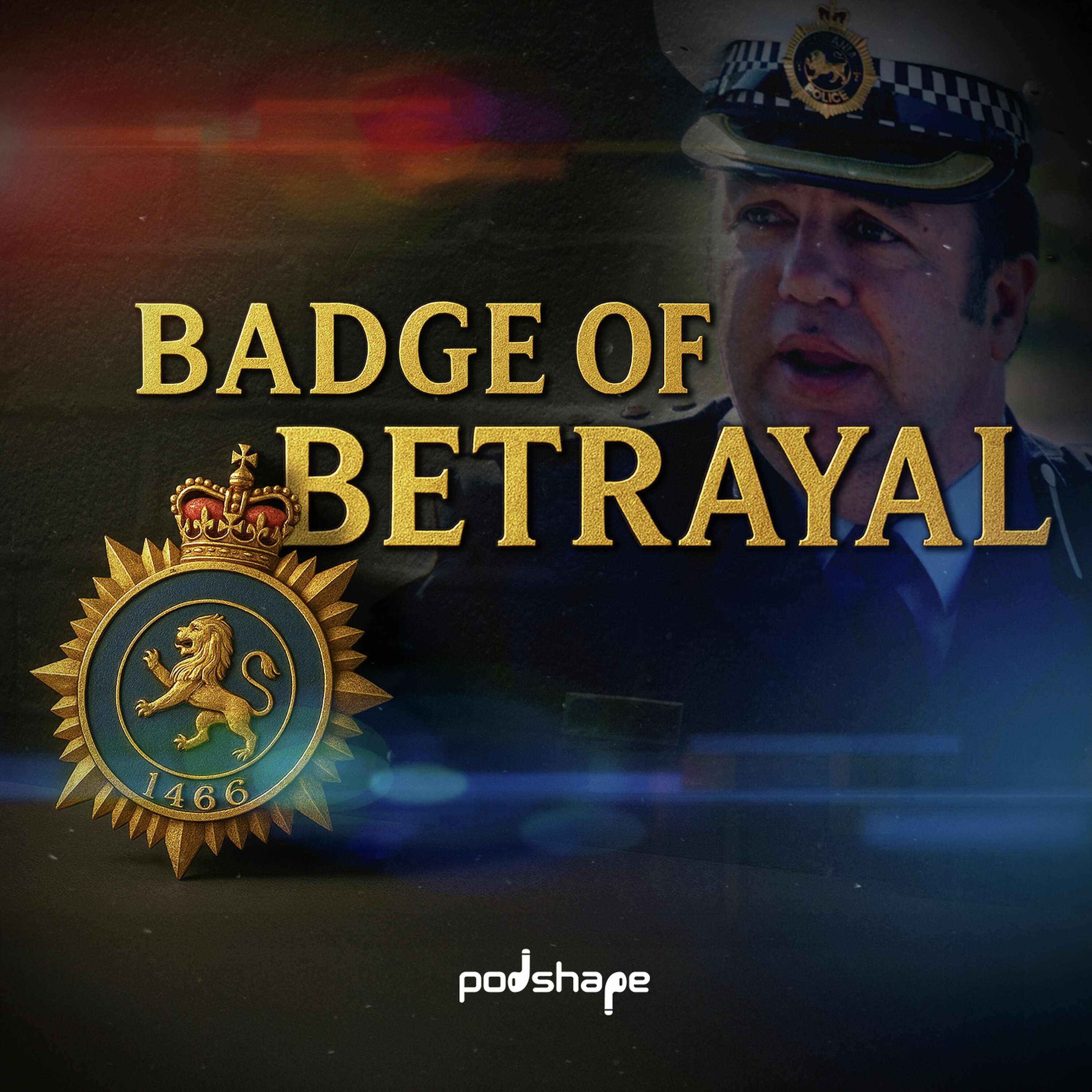
Tom Speaks Again: What Happens Behind Closed Doors.
33m 16s
A senior Tasmania Police officer, known as Tom, has shared critical insights into systemic misconduct and hidden investigations within the force. His revelations highlight a long-standing culture of off-book investigations—unreported, unrecorded, and conducted outside official procedures—used to avoid accountability and protect senior leadership. These practices have enabled serious allegations of sexual offences, including against children, to persist for over two decades, with known misconduct beginning in the early 2000s. Despite being aware of these issues, senior officers reportedly failed to act, often moving offenders to different roles to avoid scrutiny, a pattern similar to institutional cover-ups. The podcast's exposure has encouraged more officers to speak out, particularly at lower ranks, though high-level misconduct remains unaddressed. The parliamentary inquiry has been welcomed for its broad scope, focusing on systemic failures, procedural flaws, and cultural issues within Tasmania Police. Tom, citing personal risk, remains reluctant to reveal his identity due to potential disciplinary consequences, though he believes full transparency is essential. The inquiry has received submissions detailing previously unheard allegations, and the public trust in police is seen as dependent on systemic reform. The investigation underscores a deeper crisis in accountability, where institutional protectionism and lack of independent oversight have allowed serious misconduct to go unchecked for years.
A potay production.
Look, I think, like I was pretty nervous at the time and I guess I'm still nervous, but what I'm really happy with is that
it sparked a lot of discussion and maybe some more transparency within Tasmania Police.
A lot of people are talking about and maybe having more courage to come forward and talk about the things that they know.
So I think it was all worth it, but yeah, as always, remain a little bit nervous.
That's Tom and that's not his real name and it's also not his real voice.
You'll remember him from our first three episodes. He was really the reason we began this investigation in the first place.
The information he shared with us helped us understand what was going on inside Taspole because Tom is a current serving high-ranking officer.
Recently, we've had another interview with Tom and he was forthcoming on more information that helps this investigation.
If you're interested in learning more about our process and some of the behind the scenes investigative work on this show and others, you can join us on Patreon.
Our channel is called Podshape True Crime and I've placed a link in the show notes.
Back when I first spoke to Tom, he was worried not just about the repercussions but more about speaking out.
He told me back six months ago that you were apprehensive because speaking publicly felt like stepping outside the police family, did you still feel that way?
To a degree, but I guess I've been pretty happy to start to hear that others are now talking more openly about these things and probably been willing through your podcast even to come forward.
And I guess in some ways validate some of the things that were being said.
So yeah, it still feels that way.
I think that's probably something I won't ever get past but I think it's important.
These things are important and they've got to come out. They've got to be in the open.
Do you believe anybody inside Taspole suspects that you are Tom?
That's hard to say. I think it's been a lot of speculation about who it might be.
I'm not concerned about what eventually being known because I think it's the right thing to do.
Until it all comes out and there's full transparency, I think the focus should be on how the system went so wrong, so many ways and what the failings were, not necessarily who's talking about it.
Has anyone ever directly or indirectly asked you whether you've spoken or listened to the podcast?
Yeah, look, I've been asked if I've listened to the podcast or heard it or did I know anything about the things in the podcast.
I've even had people speculate to me who Tom could be. So yeah, it's sparked a bit of discussion.
When we first spoke, you said Taspole had serious misconduct and criminal allegations involving officers that you've ever had seen six months later, do you still stand by what you told me six months ago?
Yeah, I think there's been even more stuff.
There probably shows that that was accurate and still remains accurate, even as recently as last week, we had a number of police officers stood down facing allegations of serious offending. Now they're entitled to the presumption of innocence until they found to be guilty of something.
But I am seeing a bit of a change in behaviour. There's a little bit more transparency of people, the allegations, people are making against police.
Coming out in the open a bit quicker in the last six months. But I remain concerned that this is mainly for officers at the lowest level.
And I've not seen any changes about allegations that have been made about people that hold really high office in Tasmania Police.
You're a senior officer in Taspole and you still are. One of the questions I guess is and it goes to what you've just said. At that higher level, why do you think that is? Why do you think senior police aren't as quick to react as junior?
I think it's because they have to deal with the consequences of both public perception and the questions that come.
Lower ranked officers can just watch it and watch it unfold and probably feel the sad or upset that, you know, the people they work for, the agency they work for is getting a bit of a bruised image.
But at the upper levels, they have to deal with the consequences of it and they're complex, they're difficult, they have relationship issues, they have consequences.
And I think that's the problem that they feel really conflicted about how to even admit fault and deal with it without there being a lot of fallout.
And there's a lot of protectionism that starts to kick in.
And what does in your view, what does that protectionism look like? It's pressure, it's unspoken, it's almost whispered in the corridors that you don't break ranks and you don't talk about anything that could reflect badly on the senior executives or the agency.
It's almost a rallying call to say we're all in this together so let's all make sure we're all okay rather than at the first and primary position where all should be the most ethical people.
I think even some of the stuff that happens is misguided and ends up with outcomes that aren't great rather than ethics being right at the forefront of every decision.
There's a really significant groundswell that I'm hearing through the people that I know, that I work with, that I'm friends with at all different ranks.
There's a divide between the way the lower level officers see and perceive they're being treated from allegations of misconduct compared to those who are in the highest paid and the most accountable jobs.
And to think there's two processes that exist and they're sick of it. They think that part of all the fuss that's happening is entirely preventable because they didn't do it and that somehow someone else has been responsible for it and should be held accountable to it.
So it's really difficult. There are more and very serious allegations of matters that I think are just as serious as the Reynolds matter are starting to come to light now as well.
In our latest episode of Badger Betraya, we talk about a senior officer who, and we've spoken prior to this call and you know of the officer I'm talking about, these allegations of fairly serious.
What we've reported on so far, do you believe some of those allegations to be true in your view?
Yeah, I have spoken with and know people that were directly involved in the case you're talking about and they're openly talking about it which I think is one of the things I said earlier about people coming forward now because of the previous podcast and stuff and what they're saying.
Absolutely gives me confidence that these new serious allegations are a very accurate 100% accurate. When I say that not everyone has all the knowledge of all the things that happen but they're so involved in this and doing ethically the right thing.
And some of these people I'm talking about as observers and reporters of misconduct from years ago that have been told stories that they were witnessed to certain things and they've never been interviewed and never been asked to make a statement.
They can talk accurately about events that have really serious serious offending involved and the investigation store didn't go ahead for years and were largely covered up and and the offending is actually my viewers serious if not more serious than the than the allegations made against Reynolds.
That's a big thing and when we learnt of these allegations we felt exactly the same these sort of surpass you know which is hard to say because Reynolds's offending was disgusting over a long time.
These new allegations that have come forward that we're investigating and no doubt will form part of the commission are completely shocking but to you not surprising I'm guessing.
Sadly they started around the same time so some of the procedural failings that are now known in the Reynolds one.
It's not surprising those proceed.
procedural failings evident in this new line of allegations.
The allegations against Reynolds were shocking because the scale of grooming and number of
people involved, these new allegations are more shocking because he involved contact
based offending actual sexual offences being committed beyond grooming.
So, this is actual offences against people, grooming of people over the same sort of length
of time and then involving non-police officers.
Some people that were children at the time were actually sexually offended against, according
to the allegations, made against this senior officer.
Do you believe rank or relationship influenced those allegations?
I think both.
And I think at the very core of some of these things is the desire to cover up and protect
for the reputation of the agency and make things not come to light so the agency doesn't
have to deal with the consequences to avoid things like a full-blown commission of inquiry
has taken priority over what should have been the primary goal, which is to identify and
prosecute offenders and where possible prevent them from committing further offences.
And in this case, it's clear that the offender and their offending were known as early as
the early 2000s.
And despite that offending being known, no effort, legitimate effort was put into investigating
the matter completely and thoroughly.
And it really has removed a lot of victims' rights for this matter and this offender to
be prosecuted and brought to light.
What's normal in any major criminal investigation, whether it's for sex offences or others is,
often there will be a call for victims so common across every jurisdiction striker.
What's clear in both the Reynolds case and this case is there was never any calls for
witnesses to come forward until their offending got discovered 20 years later.
And in the most recent case, how many victims are out there having suffering and have suffered
and continue to suffer, thinking that they were the only ones and that they were powerless
to do anything when all it might have took was someone to say, we know about this, others
have complained about this, we're doing something about this, if you're a victim or if you have
information or if you are a witness, come and tell us how many opportunities have been
missed because those simple things were not done in preference to slowing this investigation
down, not ever declaring it publicly and allowing the person to continue to offend.
And the evidence shows that not only did they offend really significantly in the early
2000s, that they continued to offend over a long period of time.
Is it was this widely known, do you think, in senior police about this alleged offending?
It's hard to say, but what I can say is because of the people I'm speaking to now, it can't,
it's inconceivable that it wasn't known across most of the senior, senior top echelon within
the department, because they would, they would have been in control of managing that person,
if that person worked in their area of responsibility, they might have been involved in transferring
that person to move them away, I mean, we do know over history that one of the greatest
complaints against religious institutions is when they become aware of allegations of
sexual improprietry of priests and clergy, they simply move them from one location to another
to avoid having to deal with the matter.
That's evident in this case.
So senior officers would have to have known that they were moving people for, or that were
under investigation.
The reasons they wanted them moved to start with and by rights, they should have alerted
the person that was going to become the manager of those people, or the senior officers,
the commander, or the superintendent, or the assistant commissioner in charge of those
people, that they were receiving someone that was subject to an investigation or at least
allegations of serious misconduct to avoid, you know, to make sure the appropriate protections
and workplace safety mechanisms were put in place.
None of these, based on any of the people I'm speaking, do ever happen, but it's inconceivable
that the senior managers didn't know about the investigation and the extent of the offending.
After my first conversation with Tom at the end of 2025, we agreed that we wouldn't speak
again until it was right.
This was largely due to Tom wanting to protect his identity.
Once the government inquiry was launched into Tazpole and Paul Reynolds, Tom reached out
and said, "It's probably time we speak again."
We spent a couple of hours across the few days on the phone, not recording, just understanding
what we could and couldn't talk about, again to protect Tom's identity for now.
In those chats, Tom told me about what he termed an off-book investigation was, and I wanted
to know more.
Yeah, for all of my policing career and nearly everyone that's still a serving member
would know that there are really established procedures that should happen when a complaint
of misconduct is made against a police officer.
Those procedures get reviewed from time to time.
They do change from time to time, but largely those procedures are updated to ensure they
remain best practice for dealing with what are complex and sometimes really serious allegations
of misconduct for police officers.
Of course, police officers can and should be held to a high standard of account because
of the role that we play in the public and the powers and authority that we have.
What's clear, and I think it came about from, although not the introduction of the Integrity
Commission in Tasmania around, I think, 2010, 2012, for the first time Tasmania Police
had to report all instances of serious misconduct to the Integrity Commission who had a role
to oversight those investigations.
In the instance of every senior officers, any allegations of misconduct, whether it be
serious or not, were reported for oversight to the Integrity Commission, and they report
on those and do review both quality of the investigation and the outcome of each of
those matters, and that's publicly reported by them in the annual reporting.
What an off-book investigation is, is an investigation that's conducted into police
misconduct that isn't reported through our police misconduct framework.
Remember the view that it would be assessed and managed outside of the framework and to
do two things.
Avoid the reporting to the Integrity Commission and external scrutiny.
Of course, if it is of such a significant matter that requires discretion, that they were able
to do that by holding it at a higher level, but again, completely to avoid the declaration
of it and the scrutiny of both the reporting, the investigation, how the investigation
was conducted, the quality of the investigation and the outcomes and whether the results, including
penalty or otherwise, were justified.
Am I right in saying, then, that an off-book investigation does that mean anything's
recorded?
Like, if a statement's taken, is that written down anywhere or is it just conversations?
Well, that's a thing, unfortunately, it's freeform, so on certain occasions, it could be conducted
as discussions and chats, and it may or may not result in anything being recorded somewhere.
On other occasions, it could actually be a high quality investigation conducted at the
commensurate standard of an internal investigation, but just not reported through that way.
So, that's a problem, then, with an off-hook investigation, it's got no parameters, it's
got no guidelines, it's got no rules, and it's used, in some cases, weaponized to ensure
that certain matters can't embarrass either the commissioner of the day or the executive
or damaged or, you know, turn each the reputation of Tasmanian police.
So it's a deliberate management decision, really, based on what the consequences for the
executive are as to whether it would be reported and investigated through the proper normal
channels or whether, in fact, it would be effectively hidden and managed off the books,
as that said, now, the term off the books is just a term for what it is.
It's not the name, there's nothing or no folder or file anywhere that says off-book investigation,
so there's no way, then, when it comes to things like journalists or enquiries knowing what
they should ask to receive, because normally, if you were applying for the Reynolds matter,
you would ask where the investigation was, if it was recorded in a particular complaint
recording system that existed in the day.
you would know to be able to do that.
And off-book investigation allows this all to be,
you know, less than transparent, hidden away,
not disclosed if you know someone has a desire
for it not to be, depending on whether they're there,
they've got an exposure or what you know,
what the mood of the day is.
I'm assuming that when we reach out for an RTI
release on a particular instance,
let's use Reynolds as the example.
And, you know, there are a couple of things
that, you know, sort of for me,
highlighted in this conversation around off-book investigations.
The first is the 2008 incident in the Academy Bar
and the second is the funeral.
There are documented conversations that we've seen
as part of an RTI declaration that we're able to get to,
but there's a lot of gaps.
Is it possible, but some of those gaps are filled in
in an off-book way?
Yeah, yeah, 100%.
They're likely to be,
so the Reynolds matter and what we know about that now, though,
the couple of inquiries that have never really got
to the heart of it is that the allegations that were made
from the police academy overheard in the police academy
bar in 2008 should have been reported
in a formal complaint reporting system
in the first instance.
And the Tasmania Police Manual,
even back then, made it very clear
that anyone receiving a complaint,
whether it was for a serious matter or otherwise,
has an obligation to ensure that evidence
is taken as soon as possible and is not lost
or to avoid it to prevent its destruction or loss.
They should get those things
and they should report them formally into a system.
The Reynolds matter was never reported that way.
It was informally transferred
and what is,
well, now has been admitted,
is the investigation back then wasn't up to standard.
What that is not really saying is that it actually wasn't reported
and reviewed in the way any normal professional standards
investigations would have started
or internal investigations would have started back then.
Normally, what would happen is a formal investigation
or sorry, formal allegation would be written down
and the evidence to support that,
whether it's a statement or other evidence
would be gained as quickly as possible.
That would be assessed by the commander
of professional standards
who would do that on behalf of the Deputy Commissioner.
And the reasons the Deputy Commissioner
is the largely the highest person
that has the operational span to deal with those things.
What we know about the Reynolds matter,
it was never done that way.
It was assessed by an assistant commissioner,
professional standards were never involved.
It was never written down and documented
and no statement was ever taken.
So they refer to that as that.
There was an assessment undertaken.
Well, there wasn't.
There was an off-book process
that really wrote the inquiry off without investigation.
That's really what they're saying.
Who has the authority to initiate something like that?
No one has the authority to initiate something like that.
What it is is an accepted practice
that has emerged over time.
And as I say, it has become almost a management decision.
Other consequences of declaring this,
carrying with it both reputational
and perhaps personal consequence that people would start asking,
well, what the hell's going on with the management
in Tasmania Police, if this could happen?
So they make conscious choices
to run these things outside of normal reporting.
Very mind, I think.
And I don't know when it started,
but it certainly was a long time ago.
Every year the Commissioner puts out an annual report
and in that annual report we declare
how many internal investigations have been undertaken.
If you go back and have a look,
this isn't only a case that these things were run off-book,
they were not reported in things like annual reports.
So when you ask who could authorize something like this,
I think the question goes further is,
well, who also allows a process
to ensure that it doesn't get discovered
in normal reporting is just as important.
That says a lot about culture
that there are these parallel systems
that can't possibly make it into other types of reporting.
So Tom, if this parliamentary inquiry
wanted to establish whether these investigations exist,
what sort of documents and systems and emails
should they be looking at?
Unfortunately, they would have to go broad brushware,
that have to say any reports, any allegations,
any communications, and nominate the names
of the persons or the victims or the series of behaviors
that came up.
Because if you simply, like anything,
if you nominate a system such as the complaint management system
called Abacus, and it's not in there, they won't give it to you.
They won't declare they've got it elsewhere.
They'll just simply say, well, you ask for what's in the complaint system,
and that's not in the complaint system,
so we have no record in the complaint system of that.
So it's really hard, this, you know.
Let's talk about the parliamentary inquiry.
When we first spoke, he said you wanted it inquiry into an inquiry
and it needed to be broad enough.
The terms of reference in particular,
what was your feeling like
when you heard the parliamentary inquiry was announced?
Well, look, I was amazed.
And look, when I first heard about it,
I wasn't able to see or I wasn't aware of what the terms of reference were.
So my immediate thought was, I was really happy to hear that there was an inquiry,
but then I wanted to make sure that the terms of reference weren't so narrow
that it couldn't get to the heart of the matter.
And I was really stoked when I did read the scope of the parliamentary inquiry.
Well, what's Reynolds is certainly a very strong matter
that needs a lot of inquiry.
There's a lot of questions left,
and a lot of things left unanswered.
And it's very prominent in their terms of reference.
The terms of reference are good enough that it talks about
what is the systemic failures, the systems and procedural issues,
and culture of Tasmania police
for dealing with allegations of serious misconduct.
And that is broad enough then to understand why these things continue to go wrong
and what cultures and cultural aspects and systems are in place that allow this.
And I think we just talked about off-book investigation and that's one of them.
I'm not sure how police can even maintain the confidence
of the public if they run secretive investigations into themselves
that they never declare and there's no independent scrutiny.
Police need that.
We need to be trusted by our community because we work for the community.
And I want to make it really clear that there are so many police out there
doing their best all day every day.
These things reflect on their professionalism,
even though they're not the offenders,
and they've not had any role in the mismanagement of these things.
And they are the ones that I'm hearing from that are really keen
for all these things to get exposed for things to change
and then to be able to move on and rebuild that trust
and get on and do their job because they all want to do their job.
They join the job to help the community that they live in,
be that they're a part of and that's what they want to do.
And these things are a great distraction.
But the people I'm talking to agree that they're so important
that we can't maintain trust or can't continue
unless these things are all dealt with and we understand why
and we put processes and procedures in place
to never, never allow these things to happen again.
What would need to happen for Tom to actually finally wear his real name badge?
Well, it's an interesting question.
Don't believe anyone can do this unless they have the courage
to eventually come forward until what they know and how they know it.
So I'm keen to do that, but unlike others,
one of the dangers that I face is that first coming forward to you
and your podcast has exposed me to potential discipline reaction.
If the agency wanted to view it that way,
and even if I was to put the name badge on
and walk into the parliamentary inquiry,
I may open myself up to other actions
that the parliamentary inquiry are offering as protection
to anyone else that comes forward.
Unfortunately, I may put myself in the position
of not being able to rely on that protection
because of my previous engagement in the podcast.
Now, I say I haven't done anything wrong
because I haven't disclosed anything that I knew in my official capacity.
I've gained all of the knowledge that I said
and the things I told you through private discussions
with my colleagues and my friends
and even people outside of policing.
But it doesn't mean that the people
that feel affected by that don't have the power to launch an investigation and
make my life as a police officer very difficult and wield some powers and stuff
over me and they could, you know, they could take action against me. Although I
think in the end I would be able to defend that. It's just one of those strange
things and I'm glad to see the parliamentary inquiry are giving that
protection to anyone that wants to come forward. I do always hope that this would
always or that this would have continued to have been questioned and that we we
do know that parliamentarians outside of me speaking with you had had been
calling for further inquiry into this. So I had hoped regardless of whether I'd
come forward or not that that would probably have ended up in the same
position. I think maybe my role in it might have just expedited that but I do
believe that there's so many questions that are unanswered. There's so many
half-tolled truths and no transparency in who who played what role in the
Reynolds matter and other senior senior misconduct allegations. I think an
inquiry whether it be a parliamentary inquiry or later on a commission of
inquiry was inevitable at some stage and it's hard to say but I think that's
probably also necessary to change the culture because it appears that the
management culture isn't changing regardless of the scrutiny today. The
parliamentary inquiry submissions into TASPOL have now closed. I can say that I've
placed a submission into the inquiry on behalf of the podcast. It contains six
high-level allegations that have been put to us across the last nine months.
Most have never previously been aired. For now I can't go into detail on what
those submissions are. As you know once you submit to the inquiry you can't talk
about them publicly. The next step to the inquiry is to approve the submissions
that have been made and then start the lengthy investigative process that will
follow. We promise that we will follow this story until the end. If you'd like to
support our independent investigative stories like this one and our little
lady you can head to our Patreon page just search Podshape through crime in
Patreon or you can click the link in the show notes. Thanks for listening.
[Music]
[BLANK_AUDIO]
Podcast Summary
Key Points:
A current senior Tasmania Police officer, known as Tom, has provided new information about systemic misconduct and off-book investigations within the force.
The podcast has sparked greater transparency and courage among police officers to come forward with allegations, especially at lower ranks, though senior officers remain largely silent.
Off-book investigations—unreported, unrecorded, and conducted outside standard procedures—have been used to avoid public scrutiny and protect senior leadership reputations.
Serious allegations of sexual offences, including against children, have been revealed involving a senior officer, with evidence showing the misconduct began in the early 2000s and was known to senior management.
Failures in procedural accountability, such as no formal complaints, no witness calls, and no investigation by professional standards bodies, have allowed offenders to continue offending for years.
The culture of protectionism and fear of fallout within Tasmania Police has prevented accountability and led to a parallel system of covert management.
The parliamentary inquiry’s broad terms of reference include examining systemic failures, culture, and procedural gaps, which are seen as essential for rebuilding public trust.
Tom remains cautious about revealing his identity due to potential disciplinary actions, but believes full transparency and an independent inquiry are necessary for cultural reform.
Summary:
A senior Tasmania Police officer, known as Tom, has shared critical insights into systemic misconduct and hidden investigations within the force. His revelations highlight a long-standing culture of off-book investigations—unreported, unrecorded, and conducted outside official procedures—used to avoid accountability and protect senior leadership. These practices have enabled serious allegations of sexual offences, including against children, to persist for over two decades, with known misconduct beginning in the early 2000s.
Despite being aware of these issues, senior officers reportedly failed to act, often moving offenders to different roles to avoid scrutiny, a pattern similar to institutional cover-ups. The podcast's exposure has encouraged more officers to speak out, particularly at lower ranks, though high-level misconduct remains unaddressed. The parliamentary inquiry has been welcomed for its broad scope, focusing on systemic failures, procedural flaws, and cultural issues within Tasmania Police.
Tom, citing personal risk, remains reluctant to reveal his identity due to potential disciplinary consequences, though he believes full transparency is essential. The inquiry has received submissions detailing previously unheard allegations, and the public trust in police is seen as dependent on systemic reform. The investigation underscores a deeper crisis in accountability, where institutional protectionism and lack of independent oversight have allowed serious misconduct to go unchecked for years.
FAQs
An off-book investigation is a misconduct inquiry conducted outside the official police reporting and oversight systems. It avoids formal documentation, reporting to the Integrity Commission, and external scrutiny, allowing the agency to manage sensitive cases without public disclosure or independent review.
They lack transparency, accountability, and proper procedural standards. By bypassing formal complaint systems and oversight, they prevent public scrutiny, protect reputations, and undermine victims' rights, potentially allowing serious misconduct to go uninvestigated or unpunished.
Based on the testimony, it is inconceivable that senior officers were unaware of serious allegations, especially given known patterns of moving officers to avoid investigation—similar to how religious institutions have handled priest misconduct in the past.
The 2008 Academy Bar incident and the funeral allegations were never formally reported or investigated through the required complaint system. No statements were taken, no formal assessment occurred, and there was no professional standards review—violating standard police procedures.
The inquiry has broad terms of reference that examine systemic failures, procedural gaps, and cultural issues within Tasmania Police. It aims to uncover hidden investigations, assess accountability, and ensure transparency to rebuild public trust.
The Integrity Commission is responsible for receiving and reviewing all serious misconduct complaints against police officers, assessing investigation quality, and publishing annual reports to ensure accountability and transparency.
Chat with AI
Loading...
Pro features
Go deeper with this episode
Unlock creator-grade tools that turn any transcript into show notes and subtitle files.
 PodcastTranscript AI