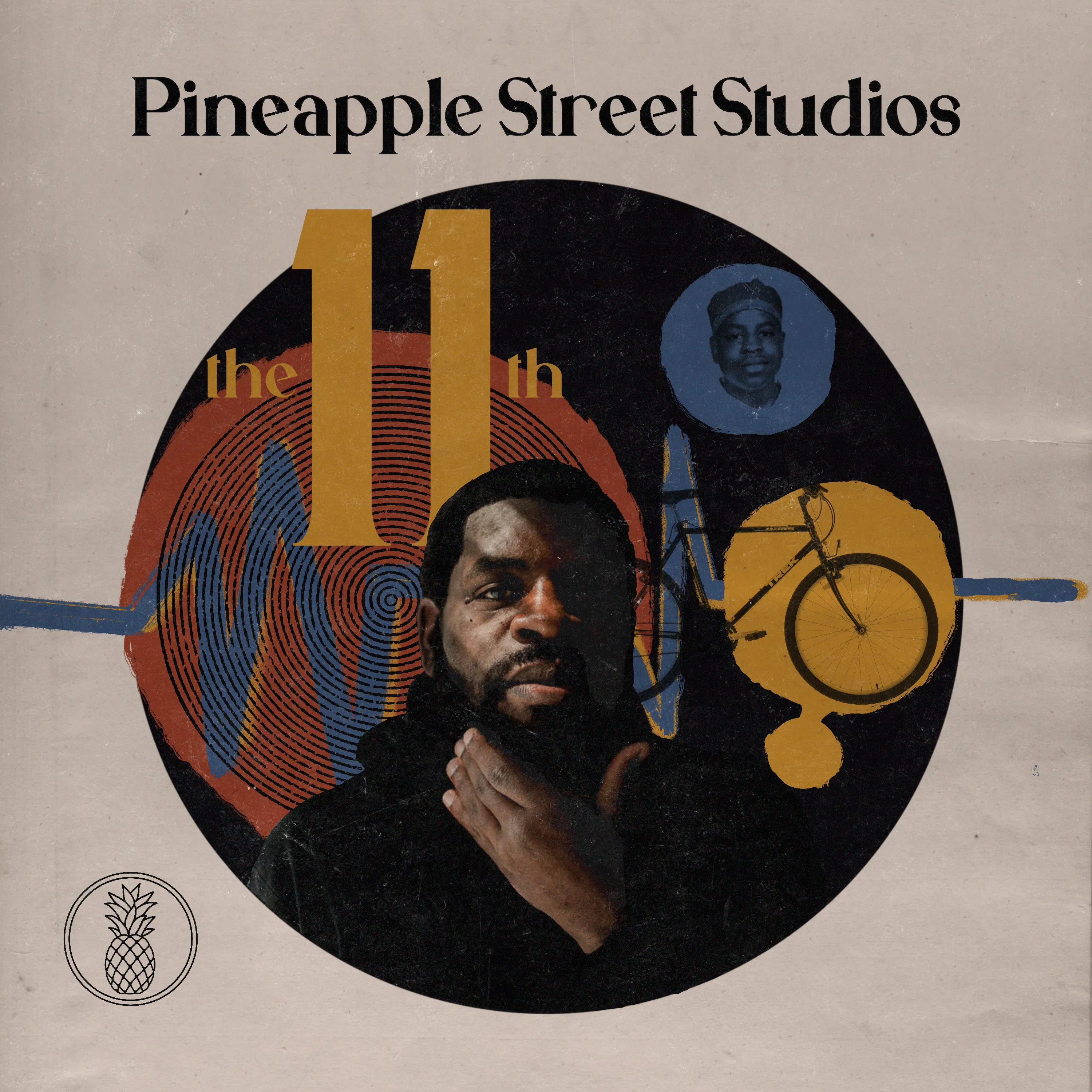
This narrative reflects on the profound impact of Fuji's *The Score* album, released in 1996, on a young listener's formative years. Growing up in Columbus, Ohio, the narrator recalls how the album became his soundtrack during a pivotal summer when he lost his bicycle, leading to introspection and a deep connection with the music. He describes how the song "Ready or Not" resonated with themes of solitude, search, and societal fear around hip-hop’s content. Central to the album’s creation is the "Book of Basement" in New Jersey—a makeshift studio where the group freely experimented, recorded, and forged a creative culture rooted in improvisation and mutual support. The album's sampling techniques, including its use of the song "I Only Have Eyes for You," showcase innovation and controversy, with financial and legal repercussions. The iconic album cover, inspired by cinematic and immigrant imagery, symbolizes Black heroism and resilience, with Lauren Hill's gaze evoking mystery and strength. For the narrator, sampling becomes a spiritual and memory-based practice, linking personal experience to broader cultural history. Ultimately, *The Score* is not just a musical work but a living document of identity, creativity, and belonging, shaping how one sees themselves and their place in the world.
[Music]
From Pineapple Street Studios, it's the 11th.
I'm Alexis Moore, one of the producers on this month's show.
Penife of Derrick Heave is a poet, essayist, and critic.
If you're familiar with his work at all, you know he spends a lot of time thinking about music.
When Heneath and our team here at the 11th would meet and talk about a possible collaboration,
our conversations always circle back to one year and to one album.
The year? 1996. The album? The score by Fouji's.
[Music]
The score is a single best-selling album by a hip-hop group and one of the greatest-selling albums of all time.
Those are the official numbers, but there's no telling how many kids dubbed it onto cassette unofficially.
Kids like a 12-year-old Heneath growing up in Columbus, Ohio.
What you're about to hear is an album of our own, a concept album.
It's composed of eight tracks on two sides, essays, interviews, observations,
all meditating on the score and what it meant to Heneath as he was coming of age.
So, for this month, on the 11th, we give you Heneath of Durkey with Time Machine, the score.
[Music]
Track one on bicycles.
In my neighborhood, the bike was a type of passport.
The bike was a show of power. The bike was a mode of freedom and a tool for romance.
There are endless stories of first cars or teenagers who sped off into the night to defy whatever flimsy curfews were set for them.
There are far fewer stories about the freedom of the first bike and I am talking the real bike with gears and tall wheels.
[Music]
The summer of 1996 was the best summer to have a bike.
I was 12 on the verge of 13 on the verge of 8th grade, which meant some level of superiority.
It felt like the summer where everyone was growing into a sort of fun house mirror of pre-adulthood.
The person they dreamed themselves to be finally coming to life a bit through a lone, scraggly facial hair or a voice cracking itself into depth.
The core of my crew consisted of Josh, Kenny, Mario, and Brandon.
Josh lived one house down from me and a pink crib was siding that was immaculately cared for.
Kenny lived around the block. Mario and Brandon, two brothers, lived about five houses down and an older,
bluer spot.
Our plans were off in the same.
We'd meet somewhere on our bikes and then take to the neighborhood.
We passed the girls we'd liked but never hung out with all that much.
We'd see the older kids, the ones we wanted to be like one day, outwashing their cars,
and we'd annoy them for a bit until they shoot us away.
That summer of 1996, me and my pals were obsessed with the Olympics.
It was the summer of Michael Johnson, the fastest man in the world in his golden 90th.
Michael Johnson, right in front of him, and in front of him, and in front of him.
The summer of American women dominating in gymnastics and soccer.
The United States of America.
Muhammad Ali lighting the torch with trembling arm and carry strugged,
landing a final vault on a fragile ankle.
It was the summer of Kool-Aid, pictures and pictures of it.
The sugar propelming us back outside, back on our bikes, and into the streets.
On those rides, we'd do tricks like ghost riding the bike, getting it up to full momentum,
jumping off, and letting it crash.
My crew and I knew our families didn't have much money,
but we still lived with the type of reckless disregard for ourselves and for our things.
One day, my bike's inner tube was damaged, and so there was a gap of time where I was bikeless,
and it was hard to be bikeless and roll with a crew on bikes.
So, for about a month, I was on my own.
Because I was on my own, I spent a lot of time doing what I imagine a lot of other bikeless kids
were doing in places like Columbus, Ohio, dubbing music off the radio.
In April, Maxwell's Urban Hang Suite came out.
It was one of those rich, serpy R&B albums that constantly made me feel older than I was.
All I knew was that the adults, the older kids, they were all playing it,
and so I copied it on my cassette and listened in my headphones,
and surely dreamed about what I thought love was at the time.
Later that summer, Outcast planted a flag for Southern hip-hop with ATL end.
And if you had older siblings who got you in the college radio, like mine did,
you might snag the odd song by weezer or back off the air and onto a cassette.
And then, late in summer, I heard for the first time what would become a seminal album in the history of hip-hop.
The score by a new Jersey trio called Fuji's.
The score is exactly 60 minutes and 52 seconds in its bass form.
And so, a standard 60 minute blank tape wouldn't cut it,
unless you lose a tail end of the outro, which was absolutely unacceptable.
So I had to get a 90 minute blank cassette to do it.
This was both a challenge and an opportunity as a 90 minute cassette left you with unused minutes on the back end.
I did a trick I would do often.
I dubbed my favorite song from the album "On Repeat" to fill the space.
This was easy for the score, because three of my favorite songs were "How many mics?"
Ready or not, in zealots, all back to back.
With my bike out of commission, this customized edition of the score became my walking soundtrack.
The third track on the album is one that sends me back to that summer, perhaps quicker than any other.
The song opens with a sample from Anya,
which, and perhaps this goes without saying, was not a conventional move in the hip hop of the mid-90s,
and the hook, a Delphonic's line, turned upside down when taken out of the hands of men.
My favorite convenience store, the United Dairy Farmers,
was exactly a six minute walk from my house, at a slow and even pace.
I knew this because I could listen to Ready or Not, about one and a half times before arriving.
And I knew, when I opened the door to the store, I'd most often be right back in the heart of Lauren Hill's verse.
It would become a game. I would try to make it to the front of the store, right as Lauren got to,
I can do what you do, easy.
Ready or not is a take on hide and seek, a children's game, a game built on solitude.
And searching, searching for small corners to fit yourself into as a means of protection.
When I think about the summer of 1996, my 12th summer,
and my first and some time without a bicycle to get me around,
this is what I think of, solitude, searching.
But I also think of the moral panic around hip hop,
of the feeling that I needed to hide my music,
that the authorities were literally coming from my doves, ready or not.
I am deeply concerned about the violence, misogyny, hatred of women, and the lyrics.
I also think of the violence of that year.
Of the genre, losing its greats before I even really knew loss.
I think of my broken bike, and my time at home,
and my learning what solitude was.
It was an era of lessons learned.
If you can't keep up, then we can't carry you.
It was an era of things coming into their own,
whether they were ready or not.
It's been 25 years since that summer,
and I'm still thinking about all the things it, and the Fuji's,
and their album gave to me.
My name is Hanif Abdurakib, and this is Time Machine, the score,
a consideration of a moment in one of its greatest albums.
Track 2 on Basements.
If you live in an old house with more than two floors worn down by the years, it is hard
to hide the sound of movement.
Each footstep is a conductor for a chorus of creeks and the size and mones of floorboards,
even under thick carpet.
Growing up, if my parents were in their bedroom and their parents had come down the steps, I knew
it.
If I came into the house and ran down the hallway without greeting my mother, she could
hear me from miles away.
But what I realized now, even if I didn't explicitly know it then, was that the basement
was a cavern of secrecy.
There is no floor below the lowest floor, and so the alarms of sound tucked themselves
away and rest.
I'd play DJ and scratch up my dad's old records on the old, barely working turntable.
We'd play rap tapes on the stereo at a low enough volume to not flaunt the miracle sounds
failure to make its way upward.
The era where my parents exiled rap music from the house was brief, but I remember it,
because the basement was where my brothers and I would watch rap videos.
I remember the first time I saw the Fuji's.
I was in the basement.
It was 1994, two years before the score.
They were on YoMTV Raps.
My older brother and I were up past our bed times, and we crowded close to the screen so we
could hear their words, the TV turned down low so that it wouldn't alarm anyone upstairs.
Sitting on a stage was Lauren, Wyclef and Pras.
All of them decked out in oversized t-shirts, summoning a type of improvisational magic,
freestyling in the purest sense.
You could tell by the way Lauren's eyes wandered as she was rhyming.
As if she were seeking the poor language out of the air, while she extended the final
syllable on her last word.
You could tell by the way Pras did the old trick of stalling, shouting out the people in
the room in the nuances of the physical location, while stumbling towards a type of delightful
coherence.
And yes, you could tell by the way Wyclef, playful and animated, struggled to find his way
around the beat.
They were young, they were raw, and they were clearly gifted.
Lauren and Pras had met in high school in Jersey.
They started making music together and Wyclef joined shortly after, and in 1996, they released
their landmark album.
The score had a singular impact on my life.
It was such a moment in time that I found myself wanting to get closer to it, to some
of the people who were there at the creation.
Jerry Wanda is one of the most legendary producers in hip-hop.
One might call him the fourth member of Fuji's.
He's Wyclef's cousin, and it was in Jerry's parents' basement that the band took up residence
in 1995.
They would eat there, sleep there, and, most importantly, record there.
This particular basement became so important to New Jersey hip-hop that it had to have a name,
like a castle, or in a state.
That name, the Book of Basement.
Book of Basement was the place where any bad kids, any good kids, the drug village, you
know what I'm saying?
Everyone just be there, and once you were there, it was about being creative, it was about
love.
They knew it was safe, because everybody was about the music.
The legend goes that Sony gave the Fuji's $135,000 to make an album.
They spent a good chunk of it to build themselves a studio, the basement.
And by all accounts, it wasn't much to behold.
The Book of Basement was a small underground space with carpet and dark, paneled walls.
That basement, if you were too tall, you couldn't get, you couldn't stand up in there.
It wasn't much, but the Book of Basement became the stuff of legend.
When you get to the Book of Man, you could see Lion Hill chilling, sitting on the floor,
just chilling, you know, people would just come for the food.
Let me, have you tried Haitian food?
Oh, yeah, absolutely.
It was the right food, and there was nobody vegan at the time.
The chicken was good, everything was good.
Everyone was there.
Salam Remy, John Forte, Diamond D, the outsiders, and a young Acon.
For me, it's like the Motown, you know what I mean?
It was like tough gun, you know what I'm saying?
You have music, you rap, you sing, you come to the Booga.
The score has a feeling of an album made by McGiver.
A piece of incredible craftsmanship pulled together from bits and bobs lying around.
Anything the group could get their hands on.
We made everything work, you know, we had to make it work.
Whatever we got to do, the Book of Basement was a lab where we created things, where we
tried things.
It works.
It was, it doesn't work.
I was feeling like, no, we don't like it next.
The environment had a lot to do with it, because everybody was free.
It was free form, do whatever you want.
There was no way about it.
How much money we paid for the studio time, and trying to be at one song and get out
and you get cake out of it.
We was 24 hours, man.
For example, when we did killin' me softly, remember, we caught that bass, I was like 11
o'clock at night, you know?
So we'd be in the studio till like three, sometimes six a.m.
We was able to try things, you know?
The Basement was a place where one could be both brilliant and foolish, depending on
the hour, minute or second.
It can summon low stakes experimentation with high stakes results.
The Basement is where you might go to feel like you are getting away with something, and
if you get away with something enough times, you'll chase the next forbidden thing until
everything feels like an unlocked door.
At some point, during the making of the score, Sony wanted the foodies to record in the
label studio.
They decided to try.
They actually say, "Oh, let's go to the big studio.
Let's go to Sony Studio, the Michael Jackson.
That's what Michael record.
We went there, and Lauren trying to, we sing the hook.
It didn't sound good, so we went back to straight up the Booga Basement.
We went right back.
I was like, "Thank you, big studio.
We went right back to the Basement, and we brought all the top engineer to come.
We at Basie Bob, he was one of the top mixer and came to the Booga Basement.
We request that.
He makes it at the Booga."
Without the Booga Basement, it would still be the foodies, but I don't think he would have
been a score.
I think having that own kind of space to foster your creativity is essential.
It takes you back.
It transports you, right?
It can be a spaceship, and I think with the Booga Basement, with the foodies, that was
basically their spaceship, alchemical cauldron.
Jeff Weiss is a writer and music critic, NLA.
He was just a bit older than me when the score debuted.
It's just so light that album, even though it has a darkness to it.
It's not.
It's not a soft album, certainly not.
But it's light, right?
They're floating on air.
Gravity is no match for them at the time.
And you see it in no woman no cry.
You see it in ready or not.
It just floats.
And I don't know if a rap album had ever floated quite like that at the time.
You know, it was maybe the first rap album to defy gravity.
This image of the foodies, all on a couch in their basement, underground, freestyling, tinkering
with tracks, trying ideas out, trying to tap into something, trying to find flow.
And it bumps right up against a memory of me and my two brothers, freestyling in our
basement.
To call this "fun" was maybe not accurate.
It was an exercising community, but also an exercise in language.
I read a lot as a kid.
I felt reality and its pull on me fade when I was reading.
I got lost in books the way I got lost in lyrics.
And this was very much my parents' intention.
My mother would shove books into my hands.
My father would have me write small book reports on things he'd leave me to read.
I realized now that they were teaching me to think, to question, to critique.
They knew the doors that might open for me.
I read books the way I sampled the radio, recording the words, reading them again and
again, trying to understand.
and how sequence and rhythm could build these feelings inside me.
'Cause I wanted to do that too.
I thought I could become anything I wanted.
My parents taught me that.
Nothing was stopping me.
Innerlood, the ingredients.
- You like to cook, Heather? - I love to cook.
Okay, right, right. Pras is the onions and the garlic of the foodies.
You have to have the onions and the garlic, you know,
you're frying the oil, you put it in a bit over the chili or whatever.
But to those who are really paying attention, they'll be like,
"How did you fatten out the sauce?"
And it'll be like, "It was pras.
Pras is the onions and the garlic."
They're definitely a West Indian dish.
The three dishes are like a rampant stew.
The meat is like samosas.
An Asian stir fry type meal.
Maybe it's like a paella.
You know, it gives me like, styrofoam platter and like, you know, a mixed plate fives in.
And it pras, that potato is new.
Pras definitely will be the potato in this situation.
It pras is taking care of the garlic and onions and all that.
Y-class would be the meat.
And Y-class would be like the rice.
Y-class would probably be the rice.
I would say that Y-class would be the crushed, you know,
'cause that's like the package of bringing everything together.
But then the more you listen, you're like, "Wait a second!"
And then Lauren's just like, some jumbo shrimp.
Lauren is the ram, because that's what you get.
You come here for you.
You come here for the ram.
Lauren's the spice.
She just takes every dish that she has added to another level.
Lauren would be the chili.
And I'm taught like intense chili.
When you eat a really spicy stir fry, I think the chili is the first thing you notice.
Like, her voice is so resonant to me.
It's the first thing that clicks.
And sometimes it's too much for some people to handle.
But that's not her role.
If they were this, I would say Lauren's the restaurant,
because she could just do so much.
But you don't want to just drink straight ram or at least I don't like.
It's so true.
So you're like, "Oh, but I need these other juices and fruits and flavors."
And that's what smooth it out.
It's layers on top of layers.
It's like you start off with a piece.
Oh my god, this is so spicy.
Then you add a little flavor.
Oh my god, no, there's other umami.
And you hit it with a little substance?
Oh my god, wait.
But there's sweetness here.
That's when you get that samosa.
No, I'm hungry.
Track three.
On sampling.
My first experience with sampling had nothing to do with drum machines or instrumental tracks.
I just knew how to replicate sounds I'd heard with my body.
In school, this meant primarily, beating on lunch tables.
Doing it loud enough to gather a small crowd.
But not so loud that it might draw the attention of teachers or the watchful eye of the hall monitor set.
In my younger years, I didn't think about this as sampling.
I'd hear the stuff my older brother played in his car.
Old school, boom, bat, east coast hip hop.
And I felt like I could replicate it.
What fascinates me looking back on this is that form of expression acted as the purest type of sampling.
Simple replication echoed forward for the sake of another's enjoyment.
My oldest brother had some beat tapes that he'd play and we would kick foolish rhymes.
But mostly, the beat making had to be replicated by our bodies, by our hands and our arms.
You know, I heard about the Fuji's maybe two years prior to the school.
You know, the refugees, the Fuji, something like that.
This is Heather, one half of the legendary New York hip hop duo, MobD.
MobD had just gone platinum for the first time.
The same year the score came out.
When I first heard it, I was impressed.
You rockin' loud, but you ain't sayin' nothing.
Having was inspired by the score.
The approach the Fuji's took to sampling was totally new.
So it was, to him, on a whole other level.
I love to listen to other production, you know, and try to reverse engineering in my brain.
Sometimes I feel bad for myself because I can't listen to a record without deconstructing it.
I'm always separating the tracks in my head.
You know what I'm saying?
For instance, let's take. They had a song where they sampled, "I only have eyes for you."
My love must be a kind of blind love.
Done by. A full big girl.
The flamingos, right?
Zealots, I believe it was.
Another MC loses life tonight.
How did they sample it first of all?
They threw it in there.
They threw a nice bass on there, and then they threw a nice little boom-bad beat over it.
So I'm deconstructed in my mind.
It's like, "Okay, I got that part.
I got the drums.
I got the bass."
The song structure, the flamingo song, "I only have eyes for you."
It's not in such a format that it's obvious to rap to.
Who in hip-hop was sampling something like that?
But it's a dope song.
You hear it, and you go, "Okay, if they could sample that,
now you're not restricted to just sampling obvious records.
You could actually go anywhere now.
Once you see those kinds of things work."
Zealots was produced by Jerry Wanda.
I'm a vinyl collector.
I have, of course, like, 30,000 vinyls.
Jerry's use of samples and in psychopedic knowledge of music is in the albums DNA.
When I was torn with the Fuji's, I Germany, China, Japan, wherever I was,
and I would buy vinyls and send them to my house.
Jerry spoke with me from his home studio, surrounded by crates and crates of vinyl.
It's how I imagine Duma or Tolstoy would have looked if, instead of books,
they cared about recorded music.
The texture of the score is something special.
Something built on the backs of more than 40 samples.
I love chopping up samples, man.
And it brings something very great to a song.
Like I was playing, like you go right here, you know?
That stings 1993 song "Shape of My Heart."
This rocket came on out.
You know what I mean?
It's not.
In 1998, Nas is the message produced by Trackmasters.
And from that rocket?
Lucid Dreams by Juice World, produced in 2018 by Nick Moore.
Same rocket.
Or we go "Ania."
This sample, I should say, notoriously got the Fuji's in a little bit of trouble with Anya's people.
Because what happened with the Fuji's?
Nobody thought it was going to be like, got big, you know?
Who cares?
They put this song out.
By the time radio night came on, Anya's people was like, "What the hell?"
And Anya's people sued.
This is Rough House Records co-founder Chris Swartz.
You know, because it's never good to do this stuff after the fact, right?
But I think after what's said and done, we paid out.
It was probably well over like 1.2 million went out in getting the samples.
For satellites.
1.2 million just for the samples.
Yeah.
Well, when you're clearing in Anya's song, after the fact.
It tends to cost a little bit of money, you know?
It was a lot of money.
I became more connected to the music of my parents through sampling.
Some songs that I'd heard them play before showing up in a new way.
Funk, and jazz, and soul.
Like Roberta Flack.
Like Headhunters.
And Lafayette Afro Rock Band.
When I look back on that now, it seems to me like sampling is at its best
when it can act as a tool of memory activation.
A way to carry me back to the record collections of loved ones by way of confirmation.
What did that sample sound like before?
It was slowed down, sped up, or otherwise dissected for new use.
Here's how it began.
If you listen to the album, it's like a Tom machine.
If you want to know how the 90s sounded, you go listen to the score.
It's a beat carried from the back of the bus to your first house party,
to your dorm room, to the front seat of your hatchback while you're driving
to pick the kid up from school.
Sampling is a practice that carries me throughout all modes of life.
When I write, I sample.
I read Tony Morrison or Virginia Hamilton, and I take notes,
and I carry those notes back to the page with me.
In this way, sampling is also a somewhat spiritual practice.
Almost as if the ancestors are using you as people.
vessel.
Track 4 on cover art.
I'm not one for looking in mirrors, even now.
I tend to see a rendering that, in my case, doesn't often look the way I imagine myself
to look, much like the way my voice doesn't sound as I hear it in my head.
This was the case for me early on.
To be clear, no one really told me I was ugly, at least not in a way beyond the dozens
or a crack on a school bus.
I don't even know if my aversion to mirrors stems from any insecurities about physical attractiveness.
Just be alarming nature of being alive and ever-changing.
A thing I think about all of the time is the gratitude I have for the very specific
era of music packaging I grew up with, the imagery.
In the time before CDs, the cassette cover art was small, condensed, hard to appreciate
in its full form, but a pile of mine had gotten his hands on a promotional poster of the
score's album cover.
The image is iconic, a black backdrop with just the faces of the three members of the
group arranged in a pyramid.
Cleft on the left, facing the left, eyes closed, bras on the right, angled to the right,
eyes hidden behind sunglasses, and at the top, the only member with her eyes visible, looking
just offstage right, Lauren Hill.
In the top left corner in a yellow-type face reminiscent of the Godfather, it says Fuji's.
In the bottom right-hand corner, the score.
The image always reminded me of black exploitation films, of black heroics.
It stuck with me since I was 12 years old.
It was just such a cool, simple, striking photo.
At that age, I was first learning how stories could be told without language, how photos
themselves could offer up an entire world without sound.
And for the longest time, I wondered about its origins.
Who made that image?
Hey, Brian, how you doing?
Good.
Good.
The core team was three people.
The first was Brian Freeman.
In '96, Brian was an art director, working for Sony.
That's when he was handed a new account, a sophomore album by a hip-hop group from Jersey,
Fuji's.
How was your role communicated to you and what was your role in terms of execution?
My role was to give the client what they want.
Sony in particular, we had like budget tears, so A, B, and C.
The budgets were everything, most things, very little.
And they were in the B category, so we could afford a good photographer, someone reputable.
Enter Mark Baptiste.
My name is Mark Baptiste.
I'm the photographer for the school that we shot in 1995.
We could afford X person for styling.
I'm Esteo Choa, and I am a photographer, writer, in 1996.
I had just become a freelance stylist.
At the time, Este had a column in Vive Magazine, forecasting style trends.
In Mark was a photographer who'd eventually go on a photograph just about every black
icon of the last 20 years.
Spike Lee, Barack Obama, Misty Copeland, Maveron Cox, Mark Brian Este.
They all met with the group.
I remember everything like it was yesterday, I know it was 25 years ago.
They say, Mark, we want something that feels like an Al Pacino movie plus energy.
They want it to be cinematic, I do remember they were influenced a lot by cinema.
And Lauren had, she requested to sort of emulate the spirit of Lauren Bacall.
Yeah, she was into old cinema.
She wanted to elevate, you know, she wanted to be classic.
So this was the idea, cinematic, a little Al Pacino.
We needed to find a way to mel this with the label's requirements.
All the label wanted was a simple image that would sell.
They wanted to have the artist on the cover.
So we had to find a way to put them on the cover and give them the context that they were
looking to be in.
By then, we were completely different.
There's no mood board, let's see what you're going to do, none of that shit.
Just go and every shot got a potential to be an album cover.
Today of the shoot was supposed to start at 9 AM, the group showed up at 11.
It was broken up into two parts.
First, they'd be in a studio, then they'd head out into the city.
All the label care at that time is do we have publicity images all together?
That's all they care about, that shit is boring.
Get that out of the way so I could do my images.
Let's go to the concrete jungle.
I think Marquette did his scouting and we settled on Williamsburg, which I don't know if
you know what it looks like in Williamsburg, Brooklyn now.
Yeah, it's a different thing.
Yeah, it's an entirely different beast.
Oh, it was dazzling, industrial.
At the time, Williamsburg was no man's land.
And it was badass cold out there, I remember that too.
It was like doing around that time, the end of January, early February, we shot this.
And it was in digital.
So he was out analog, so he talked in over 500 roll of film.
Five hundred rolls?
Yes, sir.
I don't play.
When I think about the score's album cover now, I think about Lauren's eyes and how they
strike this perfect balance between appearing concerned and menacing.
Her eyes are the only ones visible on the cover and she's in the middle, slightly above
the other two members, and she looks like she knows something bad is coming.
But she also looks like she's ready to face whatever it is.
One shot should be able to tell you story.
That's what the score is so magical because it speaks to tell you that story.
The fact that Lauren wasn't looking at her in the camera, that was intentional because
I don't want her to connect directly to the audience.
I want her to look into the beast so people would wonder, what is she looking at?
If you open up a dual case of the score, there's a whole shoot worth of photos.
The vibe is gritty and grayscale.
This is not a group projecting itself as on top of the world.
I asked Mark Baptiste about this.
Why was that the vibe?
Like, why do you think that was the mood?
What do you think they're trying to capture?
Because both people was getting a bad rap.
The immigrants, Baptiste said, refugees coming to America shores.
Whenever I say boy, people, I know Cubans take boat, Asian take boat, but the Haitians get
the shot and have the stick.
They get put in jail.
So I wanted to tell us about our boat people.
That's what we call it the score.
That's settled the score.
I've looked at the score as album art a hundred times, and it always struck me as a reference
to the Godfather.
But there was this whole other part of the Fuji's identity wrapped up in the name itself.
Wyclef, Mark Baptiste, Jerry Wanda, they were from Haiti.
Process parents were from Haiti.
But you know, if you remember scoppers, they came by boat.
The whole idea is to really to dignify whether you come by boat, whether you walk, whether
you take the plane, whether you cross the border, you know, immigration is immigration,
you know, is by choice.
You're looking for a better life.
And I think it's to be celebrated, not degraded.
Thinking about that cover image of Lauren, Wyclef, and Praas, there's this memory that
comes back to me, a conversation that happened on a road trip I went on with photographer André
Wagnon.
He told me this thing about street photography, about how black people are almost always
ready to be photographed.
They just needed to see a camera and get some space and opportunity.
I laughed at the time, but then I watched him work, and it was true.
He'd walk up, smiling, camera and hand, and poses with just unfurl, even before he asked
sometimes.
People would cross their arms, lean into a friend and smirk, or squat down in an old school
rap pose, or gesture with hands while grinning widely.
I think, perhaps, this is something black folks simply carry with them, ready to go at
all times.
Estelle Choa again.
There was one memory that has stood out in my mind forever.
It was a moment when we were in the trailer, and they had just gotten dressed for their first
set up and I remember being at the
at the front of the trailer and looking back
and they were all standing in front of separate mirrors
and they were really, really feeling themselves.
I mean, they were just in awe of themselves.
And I just remember at that moment,
it was so important to me
because it made me realize why I loved what I was doing,
helping these talents realize their potential visually.
And it was that moment that they were really,
they were really feeling it.
- And I think that's what I most feel
about the Fuji's and the scores cover image now.
A sort of awe at how much a single image could achieve.
This was an immense effort.
A spotlight shined on people it is maybe easier to ignore,
a work of black heroics.
(upbeat music)
- End of side A.
(upbeat music)
Podcast Summary
Key Points:
The album *The Score* by Fuji's, released in 1996, became a cultural touchstone for the narrator, shaping his identity during a formative summer of youth and solitude.
The narrator recalls using a customized 90-minute cassette to dub the album, replacing a missing outro with a favorite track, symbolizing both a personal ritual and a deep emotional connection to the music.
The song "Ready or Not" evokes themes of secrecy, search, and moral panic around hip-hop, reflecting the era’s tension between creativity and societal fear.
The basement in New Jersey, known as the "Book of Basement," served as a creative sanctuary where the group recorded, experimented, and fostered a free, improvisational culture that defined the album’s soul.
The album’s production and sampling techniques, including a controversial use of the song "I Only Have Eyes for You," demonstrate innovation and risk, with legal consequences and financial costs that highlight the complexity of music ownership.
The iconic album cover, with its pyramid of faces and Lauren Hill’s enigmatic gaze, draws on cinematic and historical imagery to represent immigrant resilience and Black heroism.
Sampling is portrayed not just as a technical act, but as a form of memory, connection, and spiritual practice that links personal history to broader cultural narratives.
Through personal stories of childhood, music, and community, the work reflects on how a single album can become a lifelong companion, shaping identity, language, and perception.
Summary:
This narrative reflects on the profound impact of Fuji's *The Score* album, released in 1996, on a young listener's formative years. Growing up in Columbus, Ohio, the narrator recalls how the album became his soundtrack during a pivotal summer when he lost his bicycle, leading to introspection and a deep connection with the music. He describes how the song "Ready or Not" resonated with themes of solitude, search, and societal fear around hip-hop’s content.
Central to the album’s creation is the "Book of Basement" in New Jersey—a makeshift studio where the group freely experimented, recorded, and forged a creative culture rooted in improvisation and mutual support. The album's sampling techniques, including its use of the song "I Only Have Eyes for You," showcase innovation and controversy, with financial and legal repercussions. The iconic album cover, inspired by cinematic and immigrant imagery, symbolizes Black heroism and resilience, with Lauren Hill's gaze evoking mystery and strength.
For the narrator, sampling becomes a spiritual and memory-based practice, linking personal experience to broader cultural history. Ultimately, *The Score* is not just a musical work but a living document of identity, creativity, and belonging, shaping how one sees themselves and their place in the world.
FAQs
The 1996 album 'The Score' by Fuji's is central to the story, serving as a cultural touchstone that shaped the speaker's coming-of-age experiences in 1996. It influenced their music taste, sense of identity, and understanding of creativity and freedom.
Without a bike, the narrator spent more time indoors and began dubbing music from the radio, which led them to discover and deeply connect with the Fuji's album, especially the song 'Ready or Not'.
The basement was the creative hub where Fuji's members recorded their music, symbolizing a space of freedom, experimentation, and artistic collaboration, free from commercial pressures and industry constraints.
The cover art, with its stark black backdrop and stylized faces, reminded the narrator of black heroics and cinematic images, evoking a sense of mystery and power, especially through Lauren Hill's closed eyes and focused gaze.
The basement is described as a creative spaceship because it was a place of free expression, experimentation, and innovation where ideas could be tested and transformed, much like an alchemical process turning base materials into something new.
Sampling became a way for the narrator to reconnect with family and cultural music, activating memories of their parents’ records and allowing them to experience music as a form of storytelling and emotional continuity.
Chat with AI
Loading...
Pro features
Go deeper with this episode
Unlock creator-grade tools that turn any transcript into show notes and subtitle files.
 PodcastTranscript AI