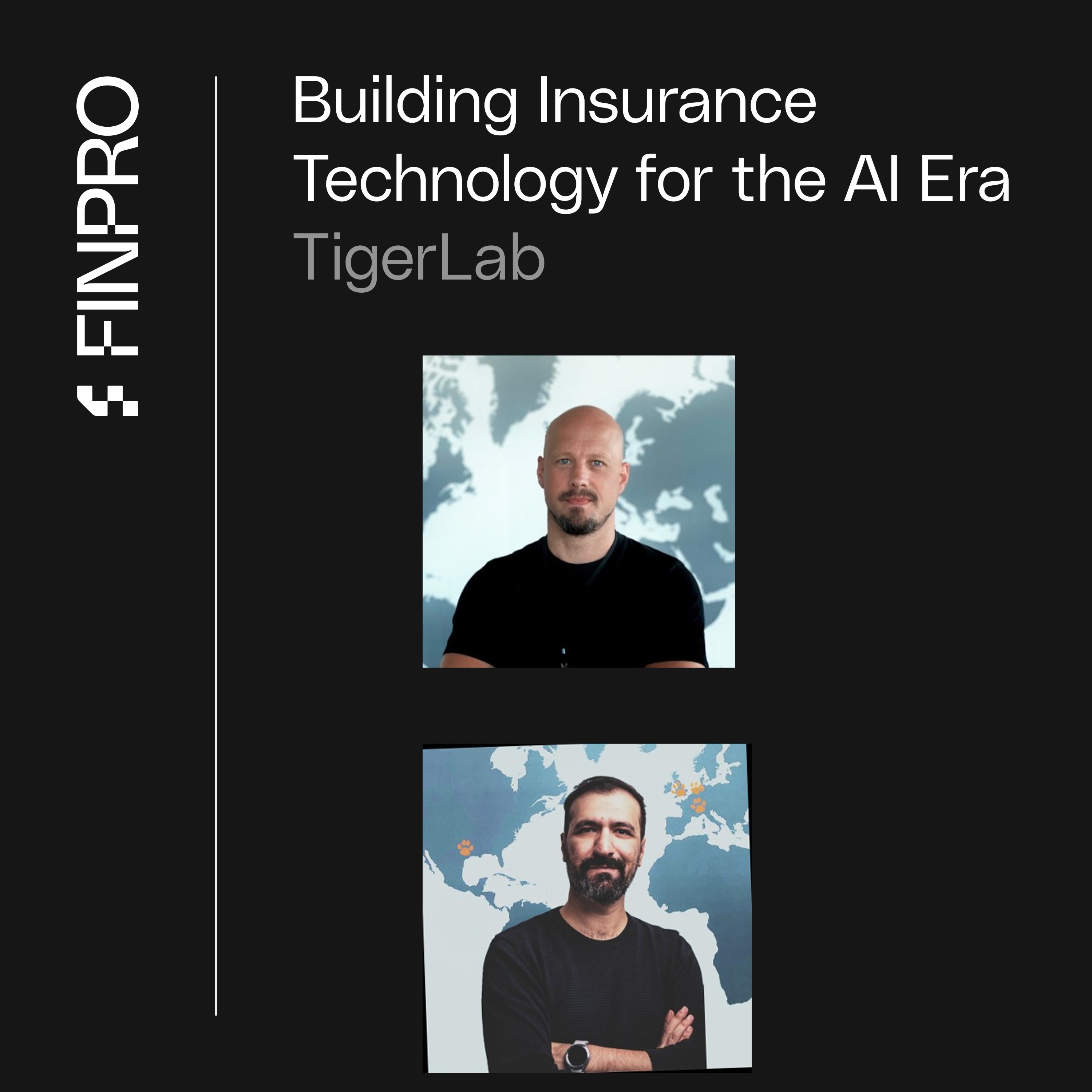
TigerLab's Blueprint: Building Insurance Technology for the AI Era
from The Leadership in Insurance Podcast - Insurtech & Innovation
37m 1s
The podcast features Dan Brisbane hosting Buzz Hammondy and Tobias Bergman of TigerLab, discussing AI's role in insurance. TigerLab, founded in 2007, entered insurance after spotting digitalization gaps, initially building core systems for markets like Southeast Asia before shifting to a global, product-driven model serving MGAs and startups. The conversation highlights the industry's uneven transition to 3.0, where AI and real-time data are hyped, but many carriers lag behind in foundational digitization. Practical AI applications, such as automating document processing, email triage, and translation, deliver ROI, while end-to-end automation remains risky due to hallucination issues and regulatory demands for human accountability. TigerLab mitigates this by having AI surface information for underwriters and adjusters to verify, preserving human touch in client relationships. The competitive landscape includes low-code startups offering quick demos, but TigerLab leverages two decades of insurance expertise and bespoke solutions to stand out, predicting a market consolidation. Looking ahead, TigerLab is expanding into the US, attracted by its faster decision-making and innovation appetite, despite complex multi-state regulations. The episode underscores that AI enhances, rather than replaces, human intelligence, and that success hinges on balancing innovation with domain knowledge and trust.
This is the Leadership and Insurance Podcast brought to you by FIMPRO search partners.
Insurance companies are businesses and they need to look for the long term and be sustainable.
We went from zero to one and now it's going from one to a hundred.
Insurance is as a concept, as a kind of service, it's brilliant.
The execution is what we're looking at now.
I think the companies that are going to succeed are the ones that are going to understand and master the art of intent.
When we talk about innovation, we lean too heavily to think about technology and we don't think about creating a culture of innovation.
I think innovation is essentially a continuous improvement of existing processes and platforms and product.
Right, it's got to be easy, it's got to be seamless.
Welcome to the Leadership and Insurance Podcast.
I'm Dan Brisbane, your host from FIMPRO.
I'm joined today by Buzz Hammondy, Head of Innovation and Tobias Bergman, CEO Founder of TigerLab.
Guys, welcome to the podcast. Good afternoon.
Good afternoon.
Thank you.
How are you doing today?
Everyone good?
Oh, yes. The weather's getting better, so generally good.
Yeah, fantastic.
Same here.
Yeah, UK's brightening up a little bit.
It's good to have spring and summer on the horizon, so I'm glad to hear it's nice where you are.
Really keen to get into the conversation today.
Obviously, AI is a huge topic amongst everyone in the insurance industry at the moment.
I'm looking forward to hearing a bit more about TigerLab.
How the business came around and the journey that you've done on so far.
There's a few sentences, guys.
If you can just introduce yourself, eat your rolls and tell me a little bit more about TigerLab.
Okay, my name is Tobias Bergman. I am the CEO and Founder of TigerLab.
Yeah, the TigerLab story started already 2007.
We set up our company in Malaysia.
I was at that time, I had a project to do.
And I realized the opportunities to get skill developer engineers
on site to build some software.
Was a moment for me to say, okay, let's do some entrepreneurship.
So, between 2007 and 2014, I have many ideas.
Some of them failed. Some of them made some profit and some.
So, beside that one, we did also some implementation for some global enterprises.
And one of the projects lead me into the insurance space in 2010-2012.
We was assigned to a project there in the German market.
So, I realized the digitalization in the insurance space wasn't there.
And it was not as explored.
It was also exposed as it should be.
Therefore, I said, okay, here's maybe a chance to build a product in the insurance space,
which can be much more modern that the current core systems are looks like.
And that was the start of the insurance industry
to get into the space, you know.
So, yeah, we worked together with Hanoveri in the South Asia
to build a core system.
So, there was helping us quite a lot, you know, to understand
because I was new to into space to understand a lot about what is needed.
And so, we come up with a good idea.
And since then, we are there.
Yes, it sounds like it was somewhat more active than to be as in the sense of,
you know, you gave, you was given this opportunity and you spotted,
you spotted that there's a real gap in this market.
What's changed in that timeframe?
Obviously, that's what, you know, over the course of a decade,
I imagine the technology available to insurance companies
and the demand for different things be that core systems or otherwise.
What's the evolution being like of demands from insurance carriers
for your services?
Yeah, I mean, in the beginning, it was a very challenging
because what is it, every, you build something from scratch, you know.
And you, I mean, you don't have tools like we have it now, you know.
You build with engineering power, it takes always a quite a while,
you know, to have certain things build up, you know.
And then, yeah, I mean, yes, the head of innovation
Tiger Lab, joined Tiger Lab at 2017,
which I think was a big transition from just building a core system
with a big re-insurer specific to their needs.
And it was serving the market in Southeast Asia.
And I think what changed when I came in, what I noticed,
is that the change of Tiger Lab from being a specific market
to serving global market, something with Europe going to
like kind of building that particular systems.
And I think the most, what we so change is the fact
that instead of a company requires a system that just, you know,
distribute policies and manage policy is I want to do things fast.
I want to do things on my own.
I don't want to spend months to get a product set up
or six months or something of that sort.
So we saw that transition from being an agency
that is building an insurance software for a specific market
to building a product which could serve multiple markets.
And that introduced the business case
where you have now to build a better business model,
you have to have, you have to work with a lot of startups
and MGA's because these requirements come usually
from the MGA boom, right?
They want to move fast, they want to create products.
And I think this is where we saw this change
from the beginning of the software being a core system
to be a more product driven by our clients kind of requirements.
So you're building, as you said, like Tainer, the spoke stuff
that allows companies to move their pace, you know,
depending on which markets they're in
and where they're based in the world.
That's really, really interesting stuff.
You must have seen then the transition,
which is, I mean, everyone's talking about insurance three point now,
but obviously you would have seen that over the last decade
of companies upgrading their software,
changing the way that they manage everything
from sort of like office operations
through to underwriting claims.
But now we're seeing so many companies coming into the market.
And the big hot topic is obviously insurance three point now.
What does that look like with AI injected
into every single workflow?
Yeah, we'd kind of love to know your thoughts
on that and how, how insurance ideas.
Yeah, it's interesting that you see the move to insurance 3.0
while a lot of companies haven't gotten to 2.0.
So it seems like every industry has just jumped.
The insurance spent the last 10, 15 years
just crossing miles and miles instead of just like facing.
And that came to be interesting.
So like the way we see like 2.0 is like when you digitize, right?
You were a carrier or a broker or an MGA working with documents
and printed files, submissions and applications
and doing the underwriting on an excel sheet or something like that.
Now you're more into systems.
You're putting your platform on the cloud
instead of the old core system which was like built
for a previous generation, right?
On desktop apps or something like this.
So we saw this transition.
It took a long time for the insurance industry to jump on it.
But now you can see a lot of jump towards 3.0.
And you can see a lot of companies going from traditional business to 3, right?
So this is where they are seeing more value.
And I think there is a lot of AI in it.
Definitely there is a lot of there is the hype and there is the reality
as in the AI in every industry.
But there is a lot of other stuff which is kind of I would consider
necessary base, integrations with or composable systems, right?
You have your APIs, you have your real-time data streaming,
you have your on-demand analytics and instead of being it like a batch
processes that's happened over time.
So I think distribution channels and how they are different
and how can a system support different distribution channels.
So all of these come to mind as three.
But mainly the main topic would be how AI can enable all of those features.
Yeah, I think it's an interesting one, isn't it?
Because a lot of people as you said, diving straight into AI technology,
if you haven't even got your core infrastructure set up properly,
it's quite troublesome because I imagine it's sort of like you need that
foundational technology to be working in the background
so that you can actually get meaning for benefit from AI.
And there are so many people talking about like what is the actual ROI
that this is delivering. So I imagine you've probably seen quite a few
different use cases of companies that have maybe
Friday AI and it hasn't quite worked out for them.
So you're kind of unpicking that versus companies that have maybe got
some sort of reticence because there's an anxiety around
or we don't know what this will do good or bad for our business.
Yeah, I mean, we saw a lot of benefit using AI,
which I would like to say.
I would say the reality of things,
which is like if we wanna separate it into two things,
there's the nice demos of the future,
which is still necessary in our kind of field in tech.
We wanna push the industry forward,
and this is what I call the hype.
It's like automating everything in 10.
You don't have to have a human,
you don't have to have anything, everything gets done.
Different UIs of interaction, conversational UIs
or interactive UIs in your AI assistant,
or on your phone assistant,
all of this is great and nice.
And I think it has some use cases in personal lines,
like simple embedded insurance, personal lines,
insurance, something like that.
But if you go to it in reality,
the usage of AI boils down to automating the boring stuff,
which was taking up a lot of time.
I mean, underwriters work with a lot of documents, right?
And they need to ingest these documents into their systems.
80% of the time is going into investment, triaging,
evaluating those information.
And I think AI can be very helpful here.
And this is where we see a result on ROI, right?
We haven't yet, I mean, from our experience with our client,
we haven't seen an end to end, for example, underwriting,
being done, that's for many reasons, right?
Not only its end capability of being consistent,
because there's a lot of issues that currently AI introduced,
which hasn't been resolved,
AI can be very confidently wrong.
I think that is worse than saying no to an application, right?
So there are barriers that we need to pass
before going full AI.
But I think the 80% which we can leverage AI
and which is, let it do the boring stuff.
That is we see a way of ROI on.
- Yeah, definitely.
I mean, we see the same.
Document process is huge.
That's where people are getting a lot of value.
Underwriting dashboards, analytics,
that's obviously really helping to kind of,
as you said, like triage and manage the traffic
of that process and really streamline there.
What else do you see that's like working today?
Is there anything else that's not really having value?
- So highlighting inconsistencies in submissions
and in a lot of the underwriting,
we see this very needed.
Sometimes you have inconsistency in applications or claims.
So we try to avoid recommendation and suggestion
and we try to surface information.
Humans are gonna just rub stamp everything AI says,
"Oh, I recommend do that, okay, I'm gonna do it."
Because it becomes a habit, but instead of this,
we would just like, okay, there is an inconsistency
in this claim, maybe there is a fraud
or there is an inconsistency in the submission,
maybe you need to look at it.
So the underwriter or the claim adjuster still need
to do that human job of looking at it
and making a decision because that's what the regulation wants.
And before that regulation change,
it's hard to over, like I said, a demo can provide it,
but when an auditor comes, why did you make that decision?
How are you gonna, oh, AI did it?
We can't give an AI reasoning at this stage, right?
So I think this is surfacing issues.
Document extraction is a very important.
We see email, like email is still one of the biggest channels
of in the commercial insurance and in communication
between brokers and underwikers, summarizing emails, triaging them
is extremely important as well, tagging, figuring out
which is a claim, an email, which is a submission,
what is the carrier appetite on a specific,
is that submission, or that email missing some documents,
so instead of me having to go and manually do everything,
at least I get a first pass triage, right?
So prioritize my email inbox,
which we have a huge interest in,
because we've built something around that,
and it's interesting, and we see a lot of ROI
on those kind of spaces, translation, I mean,
this is, we have a global program,
we're working with multiple kind of languages,
and I think receiving an email that happened
or to translate it can type an email
and have it verified and translate it to the language,
this works, many places where we do support,
and claim support, it's interesting,
so I think this is great value there,
you still need to write the email,
I don't want it to write it for me,
but it would probably translate it,
it would probably highlight errors,
suggest from a context, so receive an email,
it will try to find which policy,
or which claim does that email relate to in the system,
giving you a summary based on that email,
what you should probably look at, something like this.
- Yeah, absolutely, I can technically see
that those are really valuable use cases,
you touched on it briefly,
but that AI being confidently wrong,
which is very, very worrying
when you're dealing with insurance policies.
- So yeah, curious to kind of know a little bit more
about like the hallucination side of that,
obviously data governance, and how you guys,
how do I go about actually approaches that problem,
'cause I imagine that probably does come up with clients
a lot that are a little bit concerned
about how that might play out.
- Yeah, and this relates to another issue
which we see now, the economic of AI as well.
So from that point, there are two main ways
to run these models, or multi, that three, I would say,
is you either host a model locally yourself,
which requires a hardware,
which is expensive, requires a team and maintenance.
You can offload it to one of the AI companies,
like Anthropic and OpenAI,
and this works to a certain degree,
and there is the other one which is hosting
on AWS, AWS provides those.
And I think most of the organization would go
the AWS factor, or even Google Cloud,
or any of those platforms.
But the reason is, the platforms are already deployed there
on the same data center.
There is a lot of regulation, they follow,
a lot of policies, they follow for compliance.
So companies differ or kind of push towards that type.
But again, there is the high cost related
to the best models, and the economics of that
and how it works.
If you are choosing a different type,
so hosting it locally might have an high upfront cost
and then the utility bill, right?
But if you are hosting on AWS, how different it is,
which model do you use for which features, right?
That would have a different cost.
So this is something that many of the companies,
or most of the major companies are trying to deal with.
Now everybody's talking about talking consumption,
how much do you consume and how much the bill
is gonna come at the end of the month.
And it is now because it's experimental, it's doable.
You can spend, you can invest in it.
We are still left with time to decide,
how does that economic work?
Is it worth it or not based on the time saved
on the, yeah, the cost saved, et cetera.
But yeah, this is something that's gonna come with time.
So we actually just defer,
the infrastructure is built within our platform,
but the model itself is applicable.
You get to choose which model do you wanna use.
And we will just plug into that model,
depending on the feature.
We do have guardrails in place in AWS,
provide their layer of guardrails to make sure we mask
or redact or like kind of protect the data
that is then sent to the models.
And this is a plug-able thing.
So if you're hosting it locally, it's your own model.
There are really good open-weight models now.
So you can actually disable these guards and process the data
'cause it is not being shared.
So you can train your model on this data
and find you endorse models.
Yeah, so it's mostly making sure that
users of our system are compliant
and that is a cooperation.
Everybody is still trying to discover that space.
So we're trying to discover with our customers
while trying to provide the best solution
that we can for them.
Yeah, and so how do you sort of attack the question
of sort of hallucinations,
so you're actually using games around?
Yeah, so there are certain ways on technical level
that AI, whether it's from prompt engineering,
whether it's given it tools to actually look into the data
before giving an answer.
All of this is available, but it's still a problem, right?
There is still, it's something that we haven't solved 100%,
or generally the AI companies who couldn't have solved,
but there are ways that we can try and minimize it.
So we try to minimize that as much as possible,
and we see good results.
Like we haven't had in the way we are serving the features.
We haven't had issues because again,
we are not trying to make the AI make the decision.
We're trying it to make a surface information
and be helpful in the underwriter, or the adjuster,
or the user to be able to check themselves
and verify that information.
Makes a complete sense.
There's a lot of hype isn't there around AI and robots,
taking it on jobs and us, you know, all being out of work
at some point, but I think it's mostly hyperbolic.
I think you're always going to need a human,
especially in these situations.
So what we're definitely seeing,
and I'd love to get your view on this,
is teams are looking leaner.
That makes absolute sense.
You wouldn't need so many bodies on the ground,
but actually the human intelligence part
of that decisioning process is ever more important.
So yeah, we're just kind of like--
- I mean, I mean, even before AI, like,
we've had so many ways to automate stuff previously.
AI is just another way of doing automation.
And we noticed, like, the simplest part,
where when a submission comes,
you want to send back a notification for the broker
or the producer, you have received your submission,
and it's assigned to an underwriter.
Most of our clients do not want that automated.
They still want a human to go.
You want the template of the email ready,
but you still want to go in and type a message for the broker
that is personalized from you,
like checking on how was your weekend,
or hope you have to keep that human touch, right?
It's a relationship.
In that sense, if it is automated,
you lose that relationship.
It's AI talking to AI, so it's not--
I don't think this is something,
even if the capability is there,
I don't think it's something that we are going to see,
at least not in the short or midterm.
I agree. I think we're some way off of that.
I think there's a lot of talk that I'm seeing
and hearing about orchestration.
So the concept of having multiple agents
doing various different things,
running those very monotonous, repeatable processes.
But ultimately, somebody conducting
that whole process, being the human,
making sure that they are the point of failure
in that kind of change.
Yeah, and there is a generational phase we have to go through.
I still, until now, when I have a problem with the bank
and I go to the support and I start typing
and AI reply to me, at some point,
if it is not a simple issue that's just open a ticket
or something, I would still be mad.
I want a person, I want to talk to a human,
so I can get that problem at least results, right?
And I come from a technical background
and I build those technologies to automate things.
But I still think, at some stage, human interference,
human relationship is necessary.
Really, especially when you come to the claim side
when you're actually interacting with people
that are going through something that is probably
very stressful and very time-consuming.
Exactly.
Exactly.
Yeah.
Exactly.
We were talking a little bit more about,
I mean, the market itself is changing.
The landscape of technology is becoming broader.
Companies have got more capacity to build technologies
and tools themselves off the shelf,
based on what's available.
You've got more AI SaaS products coming into the market
that are best in breed.
There's innovators in core systems.
How do you think about that?
I know that Tiger Lab is very much about tailoring solutions
that where of those use cases come up,
where there is friction with the current flux in the market
or how do you compete in that space?
Yeah, and I truly think there is a market
for the build yourself.
And I think it's a good market for the providers
or the vendors of core systems
and even providers of bigger systems.
Like the idea here is you always have--
you want the whole industry to be digitized
and you want the whole industry to want to be more driven
to AI and technology.
And we can see that now we have so many smaller MGAs
or startup MGA, smaller brokers.
They can't afford an off-the-shelf system,
but they can automate simple stuff.
We do this internally in our company, we used to have--
we still use, for example, a ticketing system
to manage our internal tickets for developers
and project managers.
Though we do have a dashboard that we built internally
that just surfaces the information that we care about instead.
So something like this will drive smaller businesses
to go digital and then they're going
to need to improve on that.
What I think most companies is not going to do built
unless it's a smaller system is--
you want to defer the responsibilities to domain knowledge.
People worked in the industry for enough time
that they gathered all that information.
You want them to be compliant.
You want them to have those compliance certificates.
So you want to make sure the security is managed on your behalf.
You want to make sure that the whole system as a core system
is trusted and trustworthy.
I'm not saying in the future, we're not going to see that.
It's unknown for anyone in the industry.
What's the future is going to be like, right?
Especially with how models are becoming better and better.
Again, I don't think this is something
that we are going to see not even in the near future
that the companies are going to go like,
oh, I'm going to build my own policy management system.
Where you would see that is those organizations
who already have a huge internal IT team
that now, with the help of AI, can finish their work easier.
So they might try an experimental opening
their core system to be integrated with their ecosystem.
Maybe that is something that we might see soon.
But I think the way we are working
is kind of that's what differentiates us.
Tiger Lab is we have the core product, which
is the core system of Tiger Suite.
But at the same time, we have this partnership
or we work with our customers, our partners,
to build bespoke solutions on top of the system.
So we have something like a marketplace
where we build these customization, these bespoke needs
to fit customers use case.
So instead of thinking of it, if you're
working with one of the big players,
you open a ticket because you need something,
you wait six months, three months, depending
on their availability and triage of the ticket
and the feature, what is the market need.
Instead, we take that as we are helping
our customers accomplish their needs.
So we work in partnership with them
and we develop those bespoke solutions for them.
So you're getting exactly what you need instead.
Thanks a lot, Sam.
Sorry, I mean, when I look at the sales aspect,
when previously when you had an opportunity,
you compete against three or four of your competitors.
So nowadays, you compete against 20 or 30 companies
and to be frank, the majority of them
are startups who have just three or four people
who have coded the application.
And voila, there's a brand new application.
Very good.
I have to say some of the competitors
I have seen myself, which have wipe code applications,
I mean, brilliant applications.
I mean, therefore, it's difficult for you
to compete and have a USP on certain things, you know?
So where we are, I mean, IP is not a USP anymore
because previously, you need a lot of investment.
You need a big team to build software.
Nowadays, you just need two or three people
to understand the business and can wipe code application.
I mean, where we put our card on it
is right now as expertise, I mean, of insurance.
Because it's not so easy to gain this expertise
and enjoy this market.
I mean, we have now done this for two decades.
There's this business, you know?
We now understand edge cases, you know?
We understand the process from a to set, you know?
And when you wipe code something,
it's one or two or three people,
you know, they come at on the limitation, you know?
They've always said, we are the expert in this area.
We know how digitalization works.
You know, we are two, two, three, two, three, two, three,
so they weigh the path codes, how it works, you know?
So we trying to play this Trump, you know, in the market.
So saying this one, what I said, yes, it's getting difficult,
you know, because so many players now,
but what I said, and we think in the next three to five years,
you will see the strongest will survive on this market, you know?
Some of the new players definitely will be there,
but a lot of players will be gone of the market as well,
because what I said, they think it's too easy, you know,
the insurance market to come and just bringing a wipe code it,
application to the market and it works.
I mean, therefore what I said,
they have also not the cost attached,
they will say they will come with a very cost efficient way
into the market, they say, okay, this is my prize, you know?
And by two to three people,
there's not much cost attached, you know?
They have what I said, they're having a huge advantage,
but what I said, long term,
they need to show their expertise in this one,
that is difficult, or I guess some companies
because there's a lot of,
a lot of processes and joints which are very complex,
and if this is the way of,
where is it different between the companies
who already belong on the market
or a company who just come up as recently in the market?
So expertise is really definitely something
which is important in the insurance business.
- Absolutely agree.
- Yeah, it's all about that.
Like bottom-up approach,
been there in the trenches on the standing,
you know, you can't really,
you can't really beat the main expertise.
So we often see, as you said,
people coming into this market,
you know, trying to lock in the insurance space,
they've never really understood it
other than sort of from a thesis.
And then when we look at it on the ground,
they realize actually it's far more complex
than they once thought it was.
And then we see a lot of influx of them
hiring in insurance advisors
and really sort of building out their team
of the insurance process.
So that domain expertise helps you get
for me to be a lot quicker.
And I guess to your point earlier about, you know, you're looking to work with scale.
creating MGA's or businesses that really want to get their product to market, they don't
have time to wait for things to happen, wait for ticketing systems to kick out a response
in three to six months. That three to six months from their business cycle is actually really
critical to them, so I can imagine pace speed expertise to get them from A to B as quick
as possible is super, super valuable to them.
We have a few projects that one of the main properties of the systems they need is the
ability to kind of react to change of the market really quickly, so they do updates to their
products and their rates and in real time as it goes, they work with aggregators for example,
so you need to be very competitive and these kind of things, you need to provide the experience
for the user to be able to react to those events. This is something you can probably demo in a
prototype by coded, but to get proper results with confidence, that is I would say still scary,
for now I would say demo would work. I've seen amazing demos of things, you look under the hood
and yes it's not scalable, it has some degree of security vulnerabilities, it has some issues,
so I wouldn't trust it now, but I think like you mentioned with time those systems are going to
pick up some knowledge or expertise, they're going to be developed, but again the market always
diversion and kind of settles on a few players, so yeah I'm sure it's going to be different in five
years on the street than today, just like it was different 10 years to today, but yeah.
I think that's what makes it exciting there and yeah definitely about this for a long time,
but that does definitely feel to be there's a lot of investment and I was talking a bit more
about the the minute re-innovation report, there's a lot of things that have gone from like
very nascent pilots to adoption now, and that says in the last two to three years, so there's
clearly a huge appetite to change technology to innovate and to grow, so I think actually we're
just done this like really critical point where in the next five years things will look vastly
different just in terms of the general insurance landscape, so yeah fascinating to see how things
will play out of course we don't have a crystal ball, but I am really curious about what what
what both of you think is next for for Tiger Lab because there's lots of opportunities of expansion,
growth be that international you know moving further afield, how do you see progress of the business
going and what are you most excited by next? Time backside about it, where the speed is going you know
I mean when you started the business and so my competition they were saying okay we built
products by 15 to 18 months, then we said okay we come in and we said okay we can build
products already in three months now, and that was that time for 15 years was a good thing,
now as I'm saying okay they can build products in on a day you know I mean so now we already
come up to the where everything can be very fast so support is very fast you know so I'm
I'm so I think now the transition of all this industry will take quite a while now because
was that the industry the insurance industry is an old school business you know as an old industry
therefore the transition is not as fast as everyone thinks of it you know so it will still take
five years for a lot of companies to move to this way to this fast pace how things are going you
know I mean sometimes when we're doing the demos for our system they are you can see their eyes
like wow this is possible I mean they never expect them like that they're thinking and they coming
from one but zero they've always said sometimes they people we have customers who maybe totally
missed the digitalization you know and then they see already they I I advance to the features you
know so it's it's so I think this is now for us there's a lot of space right now so now next step
for us is the US entry so we are we are now in Europe already very stable in this country so
what we are doing now is the expansion to the US so we are setting up currently on offense vs so
it's for us on a great but we need to to grow it in this market so we have a good partner now to
ever go to market strategy to help us a lot to understand the regulations to understand okay what
is what is there they need what is different to the European market so and about it we are not
afraid because what is in our days the amendments to do this is in a very high space yeah and we've
been I mean I mean the expansion to the US is part of a proven record in the US we have
clients in the US and we've worked with them for a few years it was just it's a different market
and we noticed from those rollouts that we had in the US that we need we need a lot of work especially
in the US being multiple states and each state has its own regulation and its own policies
so yeah it was it's I'm very excited about this part having a foot there see how how that
would go and I one thing which is good about the US market is there are more risk taker than a
European market is and then you can see more opportunities there when it comes to innovation
yeah absolutely there's there's the the pace of movement or decision making in the US is
definitely faster exactly so I think there is a bit more appetite to fail faster or at least
experiment with new ideas which is which is obviously both well for you as a new competitor in
that market brilliant well that really interesting conversation guys I really appreciate you coming
on I think there's a lot more that we could certainly cover but I think this is a really good
overview of your experience of transforming insurance companies and learning a bit more about
your view of the state of the kind of technology landscape in the market right now so I really
appreciate both coming on fascinating conversation uh bars thank you thank you so much and let's keep
in touch.
(upbeat music)
Podcast Summary
Key Points:
TigerLab was founded in 2007, entering the insurance space in 2010-2012 after identifying a gap in digitalization, evolving from a Southeast Asia-focused core system builder to a global, product-driven platform.
The insurance industry is transitioning from 2.0 (digitization) to 3.0 (AI, APIs, real-time data), but many companies haven't fully embraced 2.0, creating challenges and opportunities.
AI's practical value lies in automating "boring" tasks—document extraction, email triage, translation, and surfacing inconsistencies—rather than replacing human decision-making, which remains critical for compliance and relationships.
Hallucinations and AI's "confidently wrong" outputs are key concerns; TigerLab mitigates this by using AI to surface information for human review, not to make final decisions.
The market is crowded with low-code startups, but TigerLab differentiates through deep insurance expertise, bespoke solutions, and a partnership approach, predicting a market shakeout in 3-5 years.
TigerLab's next growth phase is US expansion, leveraging its existing US clients and adapting to multi-state regulations, with excitement about the US market's risk-taking culture.
Summary:
The podcast features Dan Brisbane hosting Buzz Hammondy and Tobias Bergman of TigerLab, discussing AI's role in insurance. TigerLab, founded in 2007, entered insurance after spotting digitalization gaps, initially building core systems for markets like Southeast Asia before shifting to a global, product-driven model serving MGAs and startups. 0, where AI and real-time data are hyped, but many carriers lag behind in foundational digitization.
Practical AI applications, such as automating document processing, email triage, and translation, deliver ROI, while end-to-end automation remains risky due to hallucination issues and regulatory demands for human accountability. TigerLab mitigates this by having AI surface information for underwriters and adjusters to verify, preserving human touch in client relationships. The competitive landscape includes low-code startups offering quick demos, but TigerLab leverages two decades of insurance expertise and bespoke solutions to stand out, predicting a market consolidation.
Looking ahead, TigerLab is expanding into the US, attracted by its faster decision-making and innovation appetite, despite complex multi-state regulations. The episode underscores that AI enhances, rather than replaces, human intelligence, and that success hinges on balancing innovation with domain knowledge and trust.
FAQs
TigerLab is an insurance technology company founded by Tobias Bergman in 2007 in Malaysia. It started with software development projects and later focused on building modern core systems for the insurance industry.
The evolution has shifted from building bespoke systems for specific markets to creating scalable products for global markets. There's also a move from traditional digitization (Insurance 2.0) to more advanced, AI-driven solutions (Insurance 3.0), with a focus on speed and product-driven requirements from MGAs and startups.
AI is most effective for automating repetitive tasks like document extraction, summarizing and triaging emails, highlighting inconsistencies in submissions, and translating communications. These use cases deliver clear ROI by saving time and improving efficiency, rather than fully automating decision-making.
TigerLab minimizes hallucinations by using AI to surface information rather than make decisions, with guardrails and prompt engineering. For data governance, they offer flexible model hosting options (local or cloud) and use AWS layers to redact and protect data, ensuring compliance with regulations.
No, AI is not expected to replace humans in the short or midterm. It automates monotonous tasks, but human touch remains crucial for maintaining relationships and handling complex, stressful situations like claims, where personal interaction is valued.
TigerLab differentiates itself through deep insurance expertise gained over two decades, understanding complex edge cases and processes. While new competitors may offer quick, low-cost solutions, they often lack this domain knowledge, and TigerLab expects the market to consolidate around experienced players.
Chat with AI
Loading...
Pro features
Go deeper with this episode
Unlock creator-grade tools that turn any transcript into show notes and subtitle files.
 PodcastTranscript AI