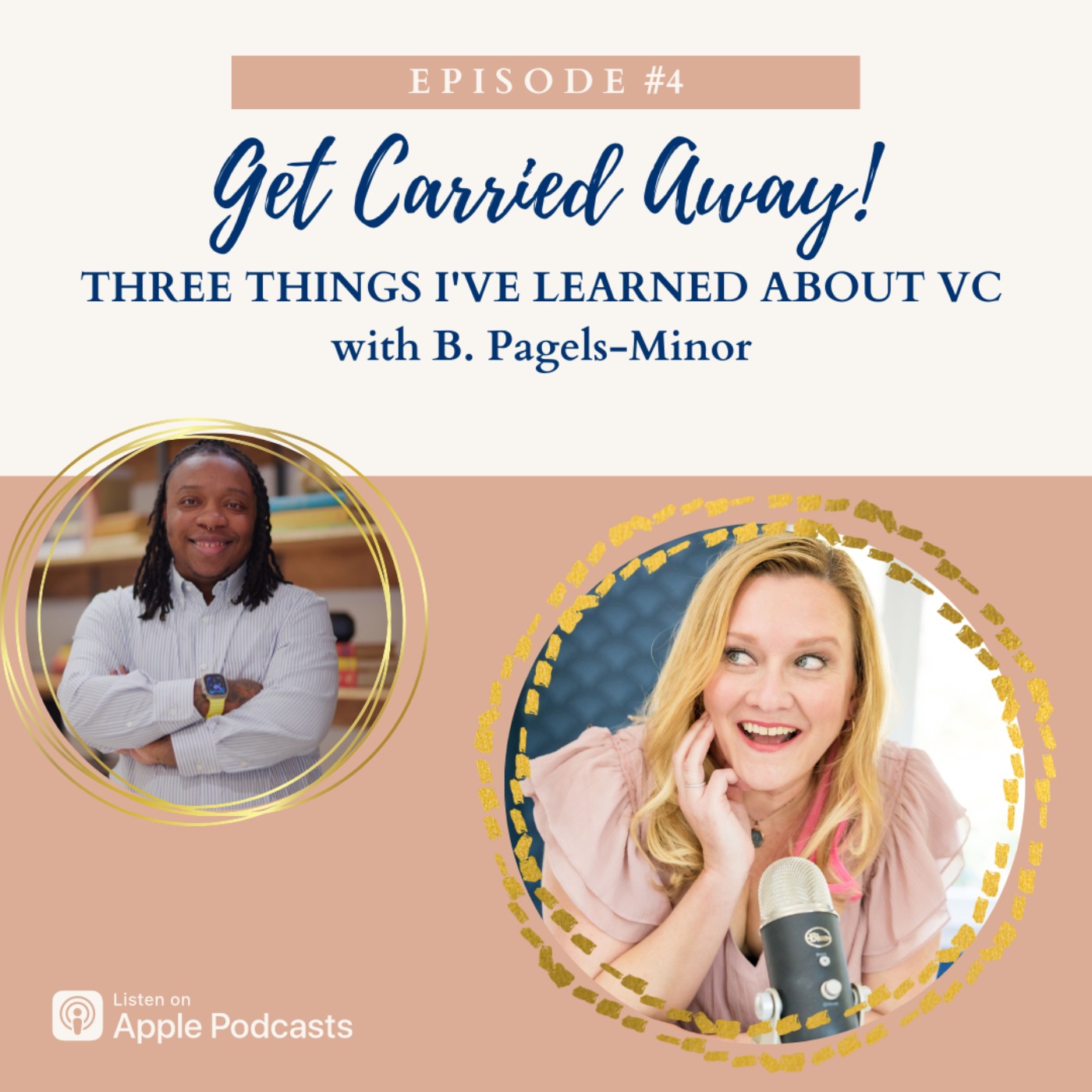
Three things i've learned about VC with B.Pagels-Minor
from Get Carried Away
57m 42s
In this podcast episode, the host interviews B-Pagels Minor, founder of Divergent Ventures, an award-winning product strategist and venture capitalist. B explains that venture firms are entities that allow investors to fund diversified portfolios of private companies, targeting high returns. They founded Divergent Ventures after noticing that many promising founders outside coastal tech hubs—especially in the Midwest and South—were overlooked by traditional VCs, despite strong metrics. Data shows that 86% of venture capital goes to just five states (California, Washington, New York, Massachusetts, Texas), while regions like the Midwest and South generate over 60% of U.S. GDP and 24% of new companies. B’s personal journey, from growing up in poverty in Mississippi with an unstable home and free lunch program to becoming a successful professional, fuels their mission. They believe that providing funding and resources to these areas can alleviate fear and foster hope, enabling innovation and community growth. B also highlights the importance of using data over personal networks to make investment decisions, challenging the status quo in venture capital. Their goal is to create economic change that helps individuals and families feel safe and empowered, ultimately transforming society through inclusive investment.
[MUSIC] And so that's what our four thoughts are actually trying to tell us is that everyone should have an equal voice, even when they're in places that we don't think about them. And so I'm really hopeful that as I learn more and as I continue to document this, I'll be able to write something about this because I do think it's the greatest work of my life. [MUSIC] Hey everyone, welcome to another episode of Get Carry Away. I am your host, Carrie Murray, founder of the Brawn Network. And joining me today is B. I'm so excited to be talking to you. B-Pagels Minor is an award-winning product strategist, podcast host, startup advisor, and investor, executive coach, and a respected bot leader, and agile technologies who approaches every problem with strategy, curiosity, and genuine authenticity. Woo, that's a lot of great words. As a dedicated enthusiast of scalable processes, great products, and culture development, these fears strive to promote diversity and tech, and impact authentic change continues to define their work, life in and outside of the work stratosphere. Welcome B. I'm so excited to be talking today. I think I met you through Catherine Gray originally. Yes, I mean, has everyone meet each other through Catherine Gray here? I think so. I think she does know it. She's the Kevin Bacon of Southern California. This is so true. B was also on a panel at the Wealthy Woman Summit that I did last August with Catherine Gray's panel, all about investing in funding and creating a fund or getting funding. And you can catch the replay of that. I'll put that in the show notes. The link to your great panel was really great. It was on the boat. Did you feel any queesiness when you were on the boat at all? Oh my gosh, it was so bad. I love it. I kept so apparently so I've been on smaller boats. I've been on larger boats, but all of them have been moving. So there's there's something my wife said that there's something about being stationary on a boat, but being able to see that it's moving that makes you more pleasing. So the entire time I was on the panel, my eyes were basically flows because I did I was I couldn't do it. It was really bad. And you guys were in those high top chairs too. I was like, please don't slip off the chair. They are literally recording this and taking photos. Although the crowd was so nice that I'm sure that everyone would have just been so chill, but I would have like literally had to sneak into the ocean of embarrassment if that happened. So it's all good. We had a few people. I know at some point when I could see behind you, the horizon move, I was like, oh no. This is this might we might need to go. That's why this year it's not going to be out of boat. But anyways, thank you again for coming and doing the panel back then in August and managing C sickness, even though we didn't go anywhere. But since then you have now founded divergent ventures. First before you tell us about divergent ventures and why you started this, I'm dying to know when you were a kid, if I would have asked you what you wanted to be when you grow up, would you have said, oh, I want to create a venture firm. No, so I would have said I wanted to be clear hockstable. Oh, yeah. Yes, yes. And funny story actually did go to law school and in my law school application, I said I wanted to be clear hockstable. So like I legitimately, did you go to Howard? I did not. So I did not go to Howard actually. So I actually went to the John Marshall law school in Chicago. Okay. So I was like, let's see, but I was like 25. So this this this went on through to the age of 25. So like this is this. I'm not going to do that. which is very straight. I ended up going through and having these investment opportunities and I paired that with consulting, right? Because what was happening is when you hear about these companies before they hit big, you also get these opportunities, you know, not only to invest in them, but to help them get to their point. And so that's when I started to really, you know, home my product, my product experience and become a product market fit expert. And so those two things combined, it just kind of naturally devolved into, well, evolved into, you know, creating the burden, right? Because I kept meeting these really great ex-like companies and my background being from Mississippi and then having lived for so long in the Midwest, it just naturally gave me an opportunity to see that there's so many great founders outside of the traditional tech ecosystem that just are completely overlooked. And then if you combine my network, my desire to give back in this way, and a check, it just really created this really great synergy that became divergent ventures. I love that. I love that. Now, for the people who are listening and if any aliens just landed on Earth and happened to listen to this podcast, what exactly is a venture firm? What do you exactly do? So first and foremost, a venture firm is an organization. So one of the ways that I'd like to think about this is that people think of venture as like this huge thing, but essentially just an entity that allows people to invest into companies before their public, right? And so, for instance, if you are a human who has money, you would go to a venture firm and say, here is a check that I now expect you to invest in a slate of companies. So not one company, it's always like one way that people pitches it's a diversified portfolio of companies that match your thesis, your thesis, whatever statement, whatever position that you've taken in terms of how you're going to make your investments. And then they get exposure to that. And the expectation is that you're going to return value to them. Now, the most minimum standard for a VC firm is at least a 4x return. But the reality is that the expectation or hope is that you're going to have a 70 or 100 x return on what people have invested with you. So again, it's kind of a wrong statement to think of a firm as like a traditional company instead, it's an entity that allows for investments to happen in these companies. And I like to clarify that point because a lot of times people will come to me and approach me like I'm a company and say, hey, B, you know, can you do XYZ? And I was like, oh, no, that's not what venture firms do. Like, you know, I literally only invest to make those investments and to ensure those investments are successful for people. That was a perfect definition. That was explained perfectly. I think my, you know, 12-year-old could understand that now. That was great because I do think there is a lot of pie in the sky thoughts when we hear the word venture capital or investing. And we're like, nope, that's not me. I don't have any money to do that. That's not me or that's not my brand. We're never going to be ready for to get funding. I'm just going to be in my own little influencer lane and sell on direct to consumer on Instagram or anything, you know. And but really we should all be looking to get funding if you're a business owner. Speaking of that, why the Midwest South area? I know that's where you're from and I know that's where you're trying to create the most growth. But what made you hone in on that particular area of the United States? So what I like to think talk about is that as a product person, my number one job is to make insight. Right. It's not actually to, you know, people are like, oh, well, you decide what goes into the product. Well, the way I decide what goes into the product is by having an insight. And that's about being deeply enmeshed in the day-to-day of what's happening, working with people and learning about them. Like, when I'm working on a product, I'm constantly talking to people who use my product so that I can, so that I can listen for that thing that they're not saying. I mean, it's the old Henry Ford thing. It's like if you had asked people what they wanted, they would have asked for a faster horse, not a car. Like, it's the same exact thing. And so this is what happened when I was doing all this consulting. Right. Because like, what would happen is that I'm like, oh, this company is great. I've helped them, you know, really set themselves up. They look like a growth company. I think they're ready for their seat or their Series A or Series B. And so now we come back over to my folks on the West Coast or East Coast and say, look at what I've done with this company. They're really great. All of their growth metrics, which by the way, there's most people don't realize this. So if you ever are founding a company, there's lots of tools out there that can tell you, for instance, all of the metrics that, you know, this company that was at C stage looked like this, this company, a Series A looked like this. And many of these companies had outperformed all of these numbers, right? So logically, right again, because I'm a logical person. Like, I try not to be a heart-focused person, but I'm a logical person. I would say, well, if these companies look like this and it's better than what these other companies look like, in theory, you should want to invest in them. But the pushback I was getting was, well, you know, that person's like whatever. Like, I don't know if I get it. And I'm like, well, why don't you get? Like, this is a product that like literally exists everywhere. People need to use it. Like, and it's like the numbers are working out. I'm so confused. And when you really, when you keep asking why. So like, there's this theory called the five wives. If you keep asking someone why. And so eventually you'll get to the crux of what the issue actually is. And what it, what it really ultimately was was the fact that these people did not know them. They did not tell the same schools that they'd gone to. You know, they weren't a part of their networks. They didn't go confidence. That's one of the secrets about VC that people don't know. And in fact, that's one of the differences between like a lot of people who are modern VC people now. And people who are like the holdover from DC. The main difference is that we're going through and using every tool known to mankind to try to develop this great deal flow that allows us to make the smart investment, right? So it has nothing to do with our network. Like, my best friend can come to me and say, B, I have the best idea in the world. I have all these different backers. And I get to say no. Because I'm like, even though I like know all that about you, I actually have this data over here that says that, you know, there's actually companies that look better than you, right? And so that's the way that you have to think about these investments. And so because of the fact that I kept getting this pushback, when very logically these people looked better than these other companies, I had to say, well, this is because of where they're located, right? All things being equal, these same exact people had gone to the same schools as y'all or were located on the coast, chances are they would get this investment. And so then when I when I realized that I say, well, let me look at the data because like maybe this is just like a one off for the people that I know, the data actually shows it too. So essentially, 86% of all DC investment goes to five states. So it goes to California, Washington, New York, Massachusetts, and Texas, right? And then that's not even it's not even comparable between those because like the difference between Texas and California is like many orders of magnitude different, right? So it's exceptionally disturbing when you think about that because what you're saying is, you know, this population of the United States is like, I don't know, it's like 300 million plus or it's closer for a million now. Those five states represent less than like 20% of the entire US population, right? And so you're you're essentially saying all of these people who live in this country, who do not live in these places are not worthy for investment. So that's a wrong thinking. So they're like, let me take a step further. Let me go even further into this data. And so again, this is a majority like a large majority of the US population. The second part of it is BTW, these people actually generate over 60% of the GDP, right? And by the way, when I say 60%, I'm actually only talking about my region. So I don't even include the rest of the Northeast. I don't even include the rest of the far west. So, you know, if you actually start adding more of those states, and I'm sure you're probably going to create about this 70, 75% of the population. I think Idaho's growing too, right? A lot of techs, you and Idaho. Yeah. And by the way, Idaho is in my investment zone, because I was like, let me make sure I get Idaho up in here. Well, Idaho and Utah. Yeah, they're growing. They're doing stuff. They're doing some really great stuff. But you know, it really goes to show how short-sighted this is. Because imagine these these particular states, these particular regions, we're able to do all of this with less development than these other five states. So imagine if we actually start imbuing these states with the types of investment that they deserve, right? Because it is true, right? If the simple fact is, if there is money in a place, and you can help, you know, create opportunities for people to create companies that are sustainable companies in those places, at a faster rate and a more sustainable rate, like you're going to create a tremendous amount of economic change, right? And so, you know, that was really what really still did deal for me. I was like every single piece of data that I'm finding shows this. And one other really interesting and statistic. So more than 24% of all companies, they were found in 2022, where these regions too. Oh wow. And so when you think about that as well, that's with a depressed, underdeveloped ecosystem. Imagine if like so, for instance, I was talking to, so one of the things I do is I do so much research and just trying to find even just change makers. So I did this initiative starting at the beginning of this year. And actually, I'm about eight people away from hitting my thousand, but I said, I want to meet a thousand change makers in 2023. So I only have eight left. But the whole point is, is that, you know, I often talk to people right before they're going to found their companies. And because of the fact that they don't have the same resources and services in many of these states, you know, I'm getting quite
questions from founders being like, yeah, I'm just trying to figure out like, you know, where should I actually incorporate what, you know, how do I know which banks to work with? And I'm like, these are just, these are basic things that we take for granted in California. Are we taking granted in New York? Because there's so many incubators or services that you can just, you can just drop in one day and they're just like, oh, we're just here to help people. Right? And so if we could duplicate some of these different things in this ecosystem, which by the way, we're already starting to do it. Imagine what we can actually accomplish. That's incredible. Well, and it's, imagine the long term effect it would have on not only the business owner, but their family and their family's family you're creating a generation of wealth, you know, but also that influences education, policy change, politics, like money influences everything. So we get more industry creating in those areas ever before people are going to be looking. Well, and I think to your point, so this is actually, this is my, this is my, my secret. This is my secret. I'm saying on a podcast, maybe it's not going to be as secretive. But you know, I am a transgender non-binary black human, right? I was assigned female birth. So, you know, literally, I guess I'm a lesbian as well, right? And so when you think about that, like coming from where I'm from in Mississippi, you know, being where I live, you know, in North Carolina and Iowa and Illinois, the one thing that you get from there is that the difference between someone fully comfortable and safe and not is usually 500 or a thousand bucks a month, right? And so think about that when someone feels safe, all of a sudden, you go, instead of worrying about, well, the reason I'm not able to pay my bills and feed my child and have the things that I want might be because of this person who looks different than me or who loves different than me or who lives in a different area than me. But if you start to feel comfortable, you start to feel, you know, and I should say I'm speaking from experience, right? So my, my mother is a single mother of three kids. When she passed away, I looked at her text, which she never made more than 24,000 a year. The entire time she was alive, right? So she lived until she was 48. So she for all of those years, she raised us three kids on essentially nothing. Like I mean, even for me, am I making it to school? I mean, I literally had friends who were, I'm sure, 24,000 dollars on clothes last month, right? Like that's what they do. And again, there's no judgment on them because statistically they can afford it based on how much income they have. But you know, when you look at that and I look at myself, you know, I was on the free lunch program, right? You know, I was, you know, we did not have steady housing. Like we often stay with different people, you know, my teachers knew there was no point of sending a letter home to my mother. You had to send it to me and they also knew I was going to give it to my mom because I was scared of my mom. But you know, you know, so like they knew that we like we had an unstable housing situation, right? And so and I know that as soon as I actually got into my career and I can get health care, like I was supposed to have it, I could afford to like buy food. I was able to also help my family, right? You know, all of my cousins, they know that when you graduate from high school, call cousin B because you don't get a laptop, right? You know, you're going to get what you need to make sure that you, you're going to take care of this. And so I'm speaking from experience because I know that that difference between I am terrified and I'm not sure what I'm going to have next to I feel comfortable. I know where I'm going to live. I know what I'm going to eat. I know my kids are okay. That's the difference between someone who has a hateful spirit and a fearful spirit and someone who's completely free to start thinking about how can I be a positive influence, not only just on my family, but now I'm starting to think about my community. Yeah. And how I can do those different things. And so I do think that that's part of this, that's part of the mission here, right? You know, obviously we create this amazing ecosystem of amazing founders and companies and we create the opportunity for them to hire great people. And then we get that extra thousand bucks a month or extra two thousand bucks a month. So people can start getting out of this fear mechanism and they can start getting into hope because hope is a differentiator between a great society and a society that is going to fail. And you know, hope brings about innovation. You know, when people are feeling associated with I have a roof over my head, I have food on the table, you know, we're in a safe place. Oh, I can create a solution for this problem that I'm dealing with now because I'm not worried about where's our next meal coming from. So hope definitely brings about innovation which I think is we definitely need all over the world. I think that's incredible. So tell me how does a, well, first, how does a founder or business or brand, you know, what, how do they qualify for funding? What makes them feel like, okay, I'm ready. Or do they always kind of live, you know, hand them out or kind of, I made $6,000 this month. Oh, I made $10,000 this month. They're like, when are they kind of ready to qualify for funding? Yeah. So first and foremost, one thing that you need to keep in mind is that you don't need to take funding. Right. So that's actually really funny for a real person to get on. But that's actually a really big deal because a lot of people assume that you need to have a billion dollar business. But the simple fact is that we have millions and millions of amazing businesses that exist in this country is just around the world every single day that more than sustain the person who's founded it, that more than sustain the people who work for it and they're great. Right. So I want to, you know, clarify that, right? Because like to a certain extent, like one of my favorite companies is Mars. So Mars is a privately held company. A billionaire family owns it. They will never go public. They have no desire to ever go public. And they talk about it daily. They're just like, they're like, you know, true. We've been very fortunate that we've been able to have a trajectory that we became a billion dollar company. But even if we weren't a billion dollar company, we just want to be a family owned business that we don't have to worry about other people's opinions. So that's the first thing you need to talk about amongst yourselves. So it's not just, you know, you as the entrepreneur, it's also your family. It's also your employees because when you do bring on investors, you are now beholden to those people, right? And so there's to be very specific expectations. And true, you might get cool investors like me who's just like a much more laid back investor than some other people. Like for instance, I often look for people who are trying to have less funding rounds. Like I don't necessarily want to invest in people who want to be, you know, fundraising for the rest of their lives. I think they should be building their companies. So that's the first thing. But having said that so much of VC investing is belief in the actual person like the founder, right? So that's the, so I say that because there's no such thing as this is the perfect time to seek investment because there's people who, you know, haven't even built their MVP yet, who might get investment because they're such a clear conviction. Like it's so clear to that investor like, okay, no, this person's going to be able to do it. And then it's at this price. I'm actually comfortable with this price. Like, you know, like let's just do that check size. But then there's other people who are just like, no, I need to see some traction. Right? And so traction can look like a couple of different things. So one is like, you know, you've had a certain amount of growth month over month over month, right? So, you know, to your point, like maybe it's like the 6,000, 10,000 and 15,000. And I don't know each month you have like that, like that, that track record. And notice I said thousands because a lot of the first companies you're investing in a seed stage, especially currently, like, they're not going to have millions of dollars of revenue. Like if they do, then they're probably a little bit beyond seed stage and then you'd be like, well, why having you raised and then also why are you raising that? Like that just seems kind of weird. Like what, like why do you need me? Right? Like that would be different. The second thing that people are really looking at is so outside of like, you know, have you had a little bit traction from, you know, a physical perspective? It's that does the, does the world want to use you? Like I think a great example is like superhuman or like, um, huh? So both of these are like kind of like these like very like enterprise focused products that did not have, I mean, they still don't really have the best business models, but they're such a hunger for them. But they've been able to continue to get investment, even as they continue to go through and continue to try to find their perfect product market fit. And so I think those are good examples that there's so much buzz and there's so much energy and there's so much excitement. I mean, one, one, I think one person who I can't remember who said this. So I just want to clarify, I did not say that someone else said it who can't, I cannot think of. But basically they said that, you know, product market fit is when customers start to use your product in violent and destructive ways. Interesting. And so a great example is old school Twitter. So old Twitter would break down constantly because there was so much traffic, they couldn't keep up with the traffic. They were trying to scale up at the same time. I mean, other great examples like Netflix, when Netflix first started doing streaming, like one of the number one things they had to do was focus on how to actually stay stabilized the connection so that you can actually stream all over the world. So that's explosive and destructive ways. And so like, for instance, if you have not made any money, but you can show me that you are have a product that's being used in those types of ways, I can still write it checked to you because like then a person like me with my mind, my mind said, I go, so then let me help you actually figure out how we get to product market fit. Like how do we, how do we actually start to scale this up in such a way that we can actually make, you know, XYZ amount of money off of it. And so those are two things. So explosive usage, explosive and destructive usage and or monetary traction are the two ways that, you know, you have a good idea that you could actually go out there and get funding. Oh, I love that. That was really specific. I like that. Now what's, you know, divergent ventures, what's like the top three things you guys look into for funding when you're looking at brands and founders and you're like, Oh, I like that. No, that's not for us. You know, what kind like spark sharing.
interest. Yeah, so first and foremost, like I said, regionality. So obviously you have to be the right region. You'd be surprised to have many people apply considering how explicit we are about. I'm not surprised. Like I like how many people don't read. What is my favorite is like somebody actually I said, well, you don't meet the thesis. They were like, well, I was still hoping that you'd be interested. I was like, open and dream is not how things come true, honey. I was like, no, I need to treat you like my toddler. Okay. But then the second part of it is like, so I really, really care about the founder. And I really care about capital efficient pragmatic founders, right? So for instance, like the founder of strike, you know, true, they did a fundraise. But the thing is they had, they had only used a very small percentage of all of their funding. And he did the fundraise primarily to unlock, you know, money for his employees. And so you know, this was just like a pragmatic move to ensure that his most loyal employees would stay. And so I love that approach. I love people who are thinking about what can I do to ensure that I can continue on the trajectory that I need to continue on so I can have a successful exit. But at the same time, like I don't want to be making decisions because I'm coming from a place of scarcity. And so I love that I love those types of founders. And the third is I really look for founders who are looking for acquisition as their exit. So I'm I'm I'm increasingly negative about IPOs. I mean, I use bar as example because that is actually my dream scenario. Right. So my dream scenario is a company that is super super super great. Like they understand exactly what they're building while they're building it, who they're building it for they have a great, you know, talent pipelines. They have the right talent. They absolutely need. And then they're just looking for someone like me to help make the right connections and help them accelerate the product market. And then they don't want to do five or six rounds. Instead, they're looking for ABCD company to acquire them. Right. I think that that's like the perfect example, what what they know success looks like. And also because of something I'm going to drop another term because I think this is super important. And so anyone who is ever looking to invest, especially anyone who's looking to get an adventure, you have to know about delusion. Right. So that very first time you make an investment, your number might look great. Because you're like, Oh man, I own 7% is coming out 11% of this company. But by you know, round, you know, three rounds later, you're like, I own less than 2% of this company, like that's not great. Right. And so like, you know, for me, it's so important to think about how the heck are we going to retain the value of our investment. And so, you know, one of those great ways to do that is through acquisition. I mean, in great example, it's like I wrote a check for a company, they was like, you know, in my mind, like, somewhat negligible. But because they're acquisition target, it's already looking like the value is about 5x. And I only did this check like six months ago. So you know, it just creates this really great upside. And it de-risk your investments are shorting sent. Gotcha. I love that. I think what happens to is, you know, we're in the shark tank era of, you know, television and everything. And I think people, especially business owners, they look at the show and they think like, Oh, this is all I need. And then I'll just go talk to the sharks. And then you see how many people are so disappointed in everything. And in fact, my last guess, do you know, Vicki, you must know Vicki. Yeah, Vicki entries. Yeah, so they were on my podcast last week and we were talking about shark tank and that whole experience and interesting. I'm the curious to watch it this week. That's for sure. Which by the way, did you know that so was it the owner from the Mavericks? He's not made his single dollar off of a single deal that he's done during shark tank. I did not know that. Really? So I just think that's like very interesting. And again, the one thing about so this is another interesting thing. Like they they've obviously seen hundreds of companies over time and they've made hundreds of investments. And the simple fact is that as a certain extent, you can only manage so many of these investments at a time and actually have them be successful. Is that's another thing that I think is super important when you're thinking about investment? How many people are they actually managing and how much can they actually pay attention to you? Because that's a huge part of it as well. Yeah. And do you think, you know, if the companies that you that invest in with divergent, how much of a say do you get to have on their practices and regulation, product development? I mean, how much are you in on the ground floor with them? Are you just like, here's a check? I'll see you in a few weeks. Well, it's so funny. I was telling my wife, this is just like being a product manager, right? So so much about being a product manager, you don't necessarily have the ability to fire and hire people, but you have the ability to influence people. So instead of saying, you know, I have control, my goal is to have such a great influence and be so well respected that they choose to follow my advice. Now, having said that, if my fund gets to you know, the certain size, you know, right now, you know, we're small potatoes compared to some of these funds, right? Like I was reading an article this morning that someone just did a billion dollar raise and I was just like, I cannot imagine asking for a billion dollars. I mean, I'm going to have to at some point, I guess. I mean, it comes like, well, I was like, I was like, yeah, but the whole point though is just that, you know, at those levels, like you're writing, you know, 10, 20, 20, you're writing a huge part of the check. And so then you can demand like board seats and stuff like that. So that's when you do have a little bit more control. But even then, again, I fundamentally believe so much in life is about being a value added partner to someone and they choose to follow you. So I don't care how big I get like my goal is to be influential. Because if I'm influential, I will ensure that I get the types of results that I need anyway. I love that. There reminds me of Arlen Hamilton's book. It's about damn time. That really influenced me to think about I never thought about investing or any it like, no, that's not for me. That's not for the, you know, founders on on our network. And then once I read that book, I was like, Oh, everyone needs to read this book, by the way. Now tell me if I'm an individual and I was just like, B, I have my grandmother passed away, I got 30k. I don't know what to do with it. But I know I want to invest it. What would you recommend to me who's like, take the money and invest it? Yeah. So first and foremost, like, so I'm going to tell you about my journey, maybe because that's the way and I think that that's really interesting. So first and foremost, I started off with the stock market, right? So I got to start off the stock market, learning about the stock market, learning how you can kind of understand why things happen in the stock market, because that then creates like a basically like financial like layer for all the rest of the types of investments, right? Then after the stock market, I then got into a little bit of real estate, both personal and other stuff like that. And so then that was like really cool or whatever. But then I also realized that again, you know, both stock market and real estate kind of feels like kind of silly in some ways, because like so much of it's completely out of your control, right? You know, it's just like someone arbitrarily made a decision from a governmental perspective and then all of a sudden oil goes up or goes down and just like, it's like, it's like, but technically, the value hasn't changed. It's just that someone said something silly, right? And so I didn't really love that. And so then I got into this like, like the republics type thing. So like we can do like the large, you really huge like, you know, so these are like hundreds of thousands of people each give like a very nominal amount. And so what was really great about that is that I actually started being able to see what deals look like. And how they assess deals. And I was just like, that's what I do in product management. Right? Like even for yourself, if you were someone who's ever had to buy a car for your family to the bank for your family, you like when you're in the grocery store and you're trying to like make an assessment on what's what's you know, what's even what not to eat. In some ways, you've kind of done some kind of investing, right? Because you've had to go through and make a specific decision about what you think is best for you. And that's ultimately what I realized through some of this, I was like, it's just got into thing. I got lots of guts. And so then, you know, then I finally got into angel investing. It's actually usually to just the people, there's either try angel investing. So angel investing usually you can do $10,000 or less for check, right? And so that's a good way to go about it. So for instance, I joined Ganges, the Ganges is kind of like large of BTQ plus angel network. And so I was able to start off at like, you know, 1000 or 2005, so I can get comfortable like and once you actually start to get really comfortable, then I was like, Oh, now I have more opinions. And then I actually went to a venture fund. And so then, you know, I wrote like, you know, a $50,000 check into like my first venture fund, and I did a couple other ones. And then I started my venture firm. And so having all that to say, you know, start reading, just like, you know, even with the stock market, I started just reading the Wall Street Journal and the New York Times and insider. And also the information, I really love the information. So I have to really promote the information. The information is an independent new source that's bounded by one. And and what I love about it is that they're just talking about the things that you can tell they're kind of talking about the things that they're interested in, which also happened to be, you know, just worldwide trends. And so that's a really great place to find it. Let me know what I'm gonna put this on the show notes. What's it called? It's called the information. That's like that's the action. There's a website. There's an app. And so that's actually kind of my most trusted source, because like whenever I'm trying to figure out like what the heck is going to be going on the road I usually go there. But just start educating yourself on these like basic thing. Because ultimately it really is as simple as you're trying to decide between buying this thing and buying that thing. Right. And so it's just about what you feel comfortable in. Because the other reality about this is is that most companies sell. And it's an actual fact. Right. There's no there's nothing that you can do about it. Just like, you know, people you saw we say real estate is so, you know, like it's the best investment. We know every time. And so that's why it's a lot of time. are what am I impacting by making this investment? Because I can't guarantee I'm going to make money off this investment. But if I'm investing in a female founder, if I'm investing in a new industry that I think is really cool, at the very least, I know I'm pushing something for it. And so that's one of the other things you have to decide. So you have to decide how comes we are with losing money. And then you have to kind of create some parameters around. Like if I'm going to lose money, what would make me more comfortable? And so that's how I did it. I was like, I'm comfortable. Like right now, a lot of my money is also in this venture fund. So if it fails, I can at least say I have created a new ecosystem of talent in my regions. And so that I'm comfortable with that. And the people who are investing with me essentially have to be comfortable with that, too. So it's a very mission-oriented thing. Because again, you can't guarantee anything in life other than the impact that you can personally have on other individuals. So agree with that. I love that. And would you say, what's the-- it's hard to say, but risk factor for someone who's new to investing and getting into venture capital or just funding in general. And they're like, OK, here's my grandma's 30K. Would you say it's a long game, a short game? Would you say-- It's a long game. So actually, maybe I'll give a few more parameters around venture funds. So most venture firms are 10 year term. So what that means is, it's a day one when you invest your money in a venture firm. They're essentially telling you, we think that this investment period's going to be 10 years. Sometimes you get lucky because how it works out is that S companies exit, like S positive-- like actually S positive or negative things happen. Those things kind of get completed. And anything that has happened from them gets put back into the fund. So let's say you make a really great investment. And somehow that company ends up being stellar. And you actually have next three years. Then when what happens is the venture fund manager will say, hey, I've done all my accounting here. This is how much should go back to you. And that's another interesting thing about venture firms. And actually, you think this is kind of a new one, which actually makes venture firms kind of cool. This is also by a lot of fund managers. A lot of new fund managers, I don't think, understand this part, though, is that how it works is that a fund manager in the US for the most part, we follow European model, which means that we have to return back to all of our investors, the money they put in before we get a dime of the care. Are you getting paid? Yeah. Exactly. And so it behooves me, obviously, to try to accelerate this process because I don't get any money. And so we have something beyond the amount of money that we've raised. And so as soon as an exit happens, of course, I'll be like, oh, sure, here's back your money, as much closer to actually making money myself. And so when you think about what you have to look out for in addition to everything else, you have to look out for people who are fundamentally comfortable and able to also be without a paycheck, essentially, for 10 years. Yeah, because a venture firm is essentially a full-time job. So they need to figure out how they're going to survive in between exits, or even if there's not a single exit. Because again, there's no guarantee that the firm-- It could fail. --the manager. Yeah. Well, yeah, even if they break even, for instance, that means the firm manager will not get a single dollar. Because they were supposed to raise $10 million. They only had X's worth $10 million, so $0. So they get nothing of the investment above that. And so that's another example of what to watch out for. Because you can't have someone who's like, I'm trying to do this or whatever to try to make this deal work. You have to have people who are going to be patient. And you can have to have the type of diligence that needs to happen to ensure the investment is protected. And then, yeah. And then on average, we tell people the goal really is to have exits between year 7 and 10. And that's also why a lot of firms, once you get to year 7 and 10, they'll lower their management fees, because the idea being that there's not really that much management there. And then, hopefully, there will be exits soon, and so you don't really have to worry about it. But again, the reality is sometimes it could be a year. And also, it could also be 15 years. Because another thing that people don't know-- and the other reason that's not great to have lots of funding rounds is essentially, every time there's a new funding round, that clock recess. So I invested the seed round. And then, my clock says, in 10 years, I should have an exit. OK, in a year, when they do a series, a, technically, and resets. So it should be 10 years from there. So if you actually look at any LPA agreement, it kind of says that the goal is for 10 years. But we know that that can be fudged a little bit, because we know that if they can have to do lots of investment rounds, it's less likely that that exit will happen for 10 years. Oh, wow. Wow. That's really fascinating. I love this. I mean, I just saw the Bernie Madoff, Dr. Manry on Netflix. It was so good. It was so good. So it's actually so funny. So I went to my attorneys and my fund managers. And I was like, my fund administrator, my vet. And I was like, OK, I just want to make sure people know that I'm not Bernie Madoff. I was like, I want everything. I want them to be able to log in and see anything whenever they want to. No print on that page. I was like, can I just tell you? I could not believe this, because I could-- So being an inventor, I had to open the big fancy accounts with the first republic banks and Silicon Valley banks. And that's a little bit antiquated, in my opinion, compared to what I'm used to. And I made me a little squirmy. So I was like, I cannot imagine putting millions and millions and millions of dollars Bernie made off. And he was like, come here and look at this sheet of paper. And you can even leave this office with the sheet of paper. I'm sorry. I can't believe it is a common sense. OK, I got to say it. I got to say it like I was like, maybe some black mom was to come up in there and talk to Bernie about himself. I was like, is a no black woman. That's why he did not target black women. No, thank you. Thank you. He knew it was like, honey, honey, where are my money? You need to run me my money. Yeah, OK. I'm going to come up in there. You're going to find out some stuff. I actually not believe that when I saw that. I was like, that's-- I was shocked. Yeah, I was shocked too. So much money. I'm like, nobody got to stay back. We never got to stay back. Well, and also today, I said, I've never actually heard-- so for the most part, you don't really hear huge cases of venture people being untrustworthy. Because it's also the whole business is based on trust. So you're not going to get deals if you're not trustworthy. You have a bad reputation. Exactly. So I've never heard of people being untrustworthy. But you should really be thinking about that. I cannot-- if someone has involved through basic things about compliance or how they're going to make sure that you know that their money is going to be there, that's a red flag. There's so many systems out there. And again, this also goes back to how they prepared. I had said it's on money. And I had to say, how am I going to pay for all this stuff until I fundraise. But the simple fact is, is that they should be thinking about that. Because that's just the cost of doing good business. And that's what we should all be doing. Love that. It's so true. It reminds me of the whole thing with we work too, and how that completely went belly up. And making so much money. And meanwhile, there was no money. It's crazy. Well, this has been really, really informative. So I'm sure people are taking arduous notes to get to a better understanding. But tell me how people can get involved with divergent ventures, either the founder or an investor. Like, how can we get involved with what you got going on? Because it's great. Yeah. So I'm a product person. So the first thing I did was spin up a website. So it's www.-- so this is actually-- someone said that the best thing we're like is divergent without the vows. So that's my wife, my wife's the marketer. So she came up with it. So it's dbrgintventures.com. And so if you go on that page one, it kind of tells you some of the statistics that I shared here. But if you go down to the bottom, there's a founder submission form. So submit your form there. And my chief of staff, we go through all of those submissions, and we do respond back to them. And then if you are an investor, or you want to learn about investing, because to be truthful, I will have a conversation with anyone on this investor tip, because I think that it's one of the scariest things you can do. Because it-- well, one, it's like, oh, I'm a big kid now. I'm going to do some serious investing. But then secondly, it is kind of terrifying to think about what this looks like. And so I'm always willing to have a conversation, and then help point folks to resources, or if you want to invest in my firm, of course, obviously. Amazing. Well, then we're going to put your email in the show notes, too, then. Exactly. Yeah, so we can do all that good stuff, and we can do all the education. I love that. Now, have you ever thought about writing a book? So I've been talking about writing a book for a while, because I've been a speaker for a long time. And so my initial book idea was this idea of empowered people, and what that does from a resource perspective. And once I started the venture firm, I realized that it's an empowered ecosystem. So I'm currently taking notes as I build this up, because I think that's going to be something very, very important. Once this is over, then when I say important, I think it's because I want to demystify this idea. Like when I was growing up in Mississippi, I thought, I honestly thought cylinders were done. Like I really did. I grew up there. I lived there. I loved everyone around me. But I was like, we didn't have the same jobs. We didn't have the same fancy stuff. And when I finally went to other places, I was like, oh my gosh, maybe some are
something's wrong with us. But it's like being educated, being curious, and doing the research to understand it, we're just under, we're under the-- - Underrepresented, yeah. - Yeah, yeah, in this country. And so that's why this work is to also, again, this is so important because I really, really think that at the end of the insights that I've learned from this process will be foundational as we start to think about in this country and how we actually create an equitable country. 'Cause it's not just, like so most people are just like, they think about race, they think about gender, they think about sexuality. But, you know, the geographic differences, right? This is one of the things, like, I used to complain just like everybody else about, like, why does every state have two senators? You know, why do we have population-based representatives? Like, why do they get the same amount of representation? And now I know, because I've met so many of them across this country, and the ways that they think about work, the ways they think about society, the ways that they think about how they wanna have impact, and exact the same way that I think about it, right? It's probably exactly the same way that you think about it. And so that's what our forefathers are actually trying to tell us is that everyone should have an equal voice, even when they're in places that we don't think about them. And so I'm really hopeful that as I learn more, and as I continue to document this, I'll be able to write something about this, because I do think it's the greatest work of my life. - I think you just wrote your introduction, by the way, of the book that was brilliant, what you just said, and so succinct. I love that. So we're gonna put in the show notes, and all the places linked to your website, linked to you, all the things, and the information. I'm gonna add that to, but before we wrap, we've gotta get carried away. I know you get carried away about investing, and you could talk about this forever, but I gotta know something else you're absolutely obsessed with. What do you get carried away about? - Oh my gosh, so it's actually shoes. - So I know, I'm such a sneakerhead. - I'm such a sneakerhead, it's like insane. Actually, it's so funny. So I hired a social media team to help me with my business. And so we were doing all this professional content, they were like, "Oh, honestly, we just have to do your sneaker." So I've actually started posting it, and I actually have two boxes here that I'm supposed to unbox for the social media post later. - Yes, and I'm just like, and it's gotten so bad though, because we, you know, we have-- - How many do you have? - I have like 300. - Oh! - Yeah, so my office is actually my shoe room, too. So my shoes are over there, and then I'm over here in the corner, because my shoes are more important than my desk. Let's just be clear. - I will not give my husband any more shit for the 40 pairs of shoes that he has. Are they plastic bins? How do you store them? - Of course they're plastic bins. They're like, they're so such, like, actually I'll take it off. - Let me see. - You can see it. - Oh yeah, he has the same setup. - The container store take all my money. Actually, I want, so there's two things I want. So I'm very passionate about my sneakers. So I've been actually starting to do research. I'm trying to figure out how to ensure them properly. So something happened to them, I could replace them, because they, all right, so there's apps that will show you how much your sneakers are worth. Now it's like this thing is like, I know, I'm saying money. - Right. And so like, and I'm just like, why won't anyone let me insure my shoes, right? Like, and I'm sure that, like, - That's a really good question. - For some women. - Or some women, because it's their purse, 'cause like, is that? - Yeah. - Jury's like, but like a Birken bag. There's not really an insurance for Birken bags. There needs to be insurance for these collections, these collectibles, right? Because they're just as valuable, and it's very difficult to replace them. - And they accumulate value. - Exactly. - My husband just bought the Nike Tiffany and Co collaboration. - So that's one of the ones, that's one of the ones that have to open right now, actually. Yes, so I finally got it. It took me a while to find it. - He got it yesterday. - Man, I'm so excited. Like, actually, you know what? There's a mixture thing on Sunday. I was like, maybe I'll wear them. I got it on my Tiffany shirt. - Yeah, I don't have a nice Tiffany chain yet, but yeah, I'm gonna do it. - Okay, 'cause everybody looks good in Tiffany. Like that, that's the hashtag, right? So that's what we gonna do. - Yeah, they're real pretty. When he showed him to me yesterday, I won't spoil it for you, but they're real pretty. He also has a pair of LPs that I think are his, by far his favorite, and he rarely wears them. We wore it to a wedding the other day, and there was grass, and he's like, I need to change my shoes. - I was telling a friend of mine recently that I need to be like DJ Khaled and get the little pillow. So he walks in with one pair of shoes, then he changes to his nice pair of shoes, and then he has a little pillow under them so that they don't touch the ground. I was like, I think I might have to do that for a couple of these pair of shoes, 'cause I get so stressed thinking about where them that haven't worn them, but I feel like I have to wear them just so I could say. - That is so funny. - I can't believe he said that. I can't wait to tell my husband. (laughs) - Tell him look at me, DJ Khaled. Like I was like, DJ Khaled is right though. That's the way you protect your shoes. - That is so funny. I love it. All right, well then what's the opposite of that? I wanna know something you can't stand that people get totally obsessed about, carried away about. I'll give you an example. I can't wrap my head around anyone who can drink matcha, because it tastes like you're eating a lawn clippings. And I don't like camping, not a fan of camping. (laughs) - Oh my gosh, I wish you had to say camping, 'cause camping is definitely one of mine. My wife's obsessed with it too, and it's just like, this is the exact, this is one of the few things that we're so 110% opposite on. It's kind of crazy. You know, I think maybe the Android versus iPhone thing. Like I'm an iPhone user, but I don't understand why it's continued like, - Rivalry. - Yeah. - Like just, if you like your phone, just like your phone. Like you don't need to come up and say, I'm an iPhone person, just like, I don't need to go up to you and say, you're an Android person. True, do I not like the green shirt? But at the same time, that's the fault that these are different colors. This is not us, this is not about us, it's about them. So let them have the fight. And then the rest of us can just be same people again, 'cause I'm so over it. Like this stuff, I've been in three different conversations this week where people have been complaining about this. And I'm just like, I'm over it. Like I don't understand why we're doing this. - Yeah, and please, just, it's a phone. Calm down. I also think it's always interesting when iPhone and Android come out with a new phone, people are in line to buy the phone while being on their currently working phone. Like they have a product that works, but they're gonna go buy a new one. - Sit, now, so the one thing I will say is, I am a super early adopter. Like, so there's no question whatsoever. Like I always adopt things to start like very early. But the simple fact is that just admit that, like don't say there's anything wrong with your phone. Like you just want the new thing. - Early adopter. - That's a high one. Exactly. I was like, I just want the new thing because it's great. And even if it's broken, I will still think it's great because I got to see that it was broken. - All right, well, you and my husband have a lot in common because he's also an early adopter. I'm gonna start calling him that too. - Yes. - Yeah, it's a great way to be, we are the guinea pigs that make everything else work. - Yeah, 100%. So I thank you for taking one for the team. Thank you for your feedback to make products and services better. Thank you so much for joining me. I've had a great time getting carried away with you. Learned a lot. Again, everyone, take a minute, click on the show notes and follow me and all of their adventures, especially now that we know that you're sneakerhead. I gotta go check out your Instagram and see what your team has come up with. This is exciting. Thank you so much, Bee. We'll be in touch. Bye. (upbeat music) (upbeat music)
Podcast Summary
Key Points:
The speaker founded Divergent Ventures to invest in overlooked founders outside traditional tech hubs (e.g., Midwest and South), addressing the fact that 86% of venture capital goes to just five states.
Their background includes law school, product strategy consulting, and a data-driven approach to identifying high-potential companies that are often ignored due to network bias.
The speaker emphasizes that lack of investment in these regions is illogical, as they generate over 60% of GDP and 24% of new companies, despite underdeveloped ecosystems.
Personal experiences—growing up in poverty in Mississippi, being a transgender non-binary Black person—drive their mission to create economic stability, reduce fear, and foster hope through funding.
Venture firms pool money from investors to back diversified portfolios of pre-public companies, aiming for high returns (e.g., 4x to 100x), and rely on data over personal networks.
Summary:
In this podcast episode, the host interviews B-Pagels Minor, founder of Divergent Ventures, an award-winning product strategist and venture capitalist. B explains that venture firms are entities that allow investors to fund diversified portfolios of private companies, targeting high returns. They founded Divergent Ventures after noticing that many promising founders outside coastal tech hubs—especially in the Midwest and South—were overlooked by traditional VCs, despite strong metrics.
S. GDP and 24% of new companies. B’s personal journey, from growing up in poverty in Mississippi with an unstable home and free lunch program to becoming a successful professional, fuels their mission.
They believe that providing funding and resources to these areas can alleviate fear and foster hope, enabling innovation and community growth. B also highlights the importance of using data over personal networks to make investment decisions, challenging the status quo in venture capital. Their goal is to create economic change that helps individuals and families feel safe and empowered, ultimately transforming society through inclusive investment.
FAQs
A venture firm is an entity that allows people to invest in companies before they go public. People give money to the firm, which invests in a diversified portfolio of companies, aiming for returns like 4x to 100x on the investment.
B started Divergent Ventures because they noticed that great founders outside traditional tech hubs like the Midwest and South were overlooked by investors, despite strong metrics. Data shows 86% of VC investment goes to just five states, leaving many worthy founders unfunded.
Divergent Ventures focuses on investing in founders from the Midwest and South, regions that generate over 60% of US GDP but receive little venture capital. The goal is to create economic change by funding overlooked talent.
B uses data and insights rather than personal networks. They analyze growth metrics and performance, similar to how they would as a product strategist, to find companies that outperform benchmarks, regardless of the founder's background.
VCs often overlook them because they don't share the same networks, schools, or locations as traditional investors. B found that even when these companies outperform, they face bias due to geography.
Founders should have strong growth metrics, a clear product-market fit, and a scalable business. B suggests using tools to compare your metrics with successful companies at similar stages to assess readiness.
Chat with AI
Loading...
Pro features
Go deeper with this episode
Unlock creator-grade tools that turn any transcript into show notes and subtitle files.
 PodcastTranscript AI