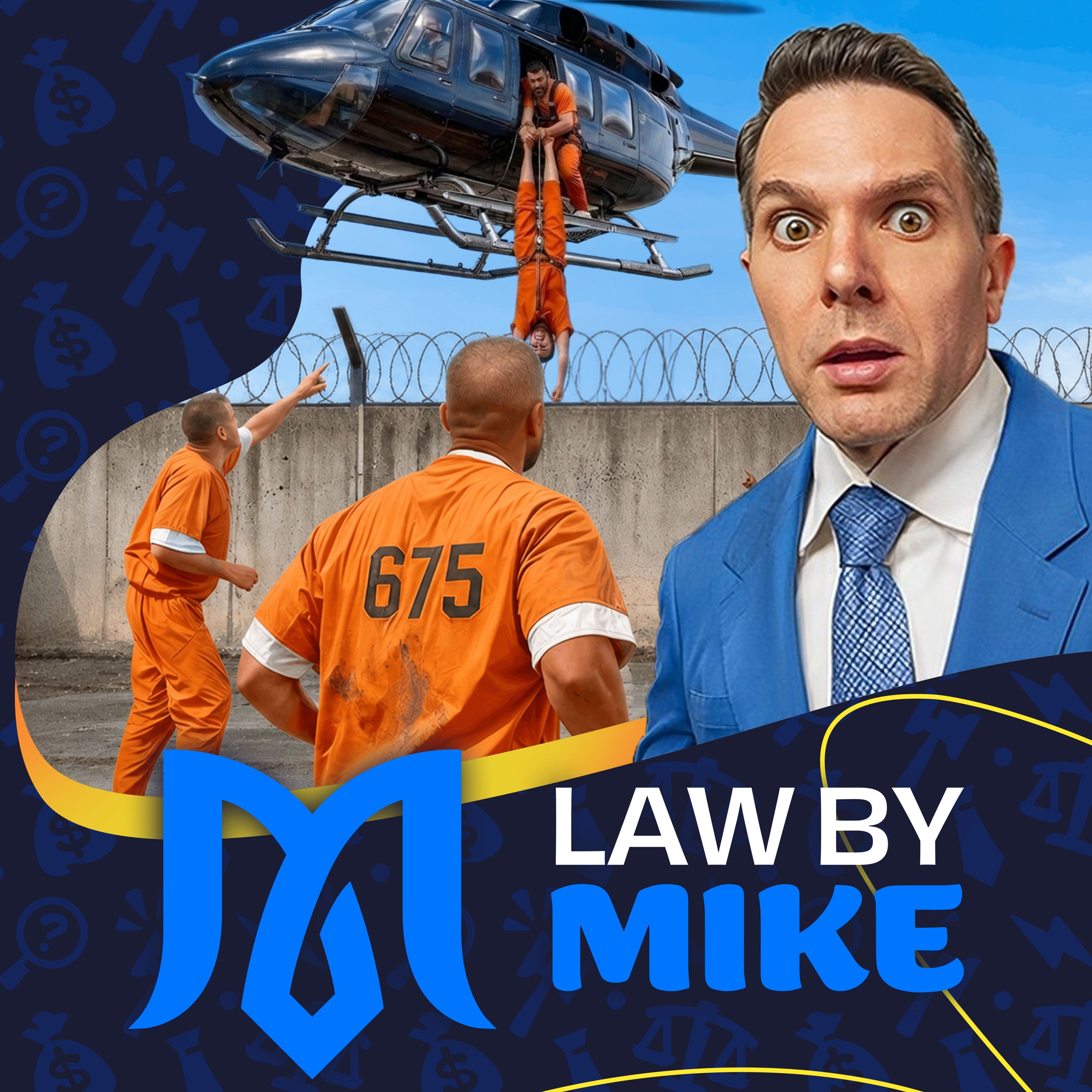
This Video Is Getting A YouTuber 31 Years In Prison
10m 43s
Johnny Somali, a YouTuber known for provocative content, is facing eight serious charges in South Korea that could result in up to 31 years in prison. The legal case stems from multiple incidents: disrespecting the protected Statue of Peace, causing public disturbances in stores and on buses, and creating and sharing AI-generated deepfake videos of a Korean streamer, Bong Bong, showing intimate scenes. These deepfakes are illegal under South Korea’s new anti-deepfake laws, even if known to be fake. The prosecution added a fourth charge after the initial case, significantly increasing the severity of potential penalties. Johnny’s conduct—such as showing up late to court, wearing a controversial hat, and making false claims about his family—was seen as disrespectful and undermined his credibility. He also previously made similar offensive remarks in Japan, fueling public anger. Despite claiming ignorance, the public perceives a pattern of insensitivity. His deletion of video evidence was ignored, as re-uploaded footage was still accessible. A former Korean special forces member attacked him, leading to charges of intimidation and stalking, with a total fine of $10 million, later partially covered by public donations. Johnny’s lawyer entered guilty pleas to minor charges, sealing convictions and increasing prison risk. The case reflects growing legal and public concern over online predators and digital harassment, especially in Asia. His next hearing is set for February 2026, and if convicted on all counts, he could face a 31-year prison sentence.
How is it possible that a YouTuber could get 31 years in prison? I have no moral of sociopath. You're about to watch someone who thinks they can do anything anywhere face real legal consequence. And how five mistakes built the legal case so strong that this creator may never be allowed to return home again. It all starts with a simple visit to one of South Korea's most beloved memorials. I stand with the Korean people. I love Korea. Everything that I did in Japan was for the Korean and the Chinese people. When Johnny was in Japan, he walked through the street shouting about two atomic bombs that were dropped on Hiroshima and Nagasaki. That's super offensive. A lot of people died because of what happened there. I don't know why he's yelling that in Japan. The problem is that this isn't a normal statute. It's called the Statue of Peace. And it commemorates Korean women who were forced into slavery by the Japanese military during World War II. And Johnny's trying to justify his crimes in Japan by claiming everything he did was for the Korean people. But really, he's just disrespecting a protected public monument, which is obstruction of both public order and a public place. And that was just the first of five things Johnny did that could land him up to 31 years in prison. Next, look at what he did inside a convenience store in Seoul. Johnny is seen sitting in a convenience store, making an alcohol drink and blasting music. An employee comes over and tells him to quiet down and stop drinking. Under Article 21 of the Food Sanitation Act, allowing customers to drink inside a convenience store can result in the owner getting fined or even having their license cancelled. But he continues to act like a jerk. This is obstructing business, meaning he's stopping someone from performing their duties. But it's the least important thing that's happening here. Then, a customer tells Johnny to clean up his mess. Johnny's response? He turned the music up even louder and started dancing in the middle of the walkway. Once he starts yelling at other customers, he becomes liable for violations under Korea's minor offenses act, which covers disorderly conduct and cleanup costs. So what does this mean? All of these actions will be included in the case against Johnny. And when a judge reviews the case, the judge will treat each of these moments as evidence. What's even more interesting is that Johnny deleted the original footage from the convenience store because of backlash online. However, he may not realize that other people have already re-uploaded the video. A judge can still find and use it as evidence. And depending on the circumstances, could treat the deletion of the original as an attempt to destroy evidence. Which brings us to the first bus incident. The music Johnny's blasting on the bus is a North Korean propaganda song. He's trying to offend and disrupt the passengers to get a reaction from them. Get out. Get out. Oh. Come on, come on. Let me do it. A lot of work. So once someone forces a driver to stop a bus and they're removed, they're no longer just being disrupted. They're now preventing someone else from running their business. But this wasn't the only case of Johnny causing a scene on public transport. People are very frustrated with him already. This is where things get dangerous. Because now Johnny isn't just putting himself at risk. He's putting that man, the people around him, and the driver in danger too. And that opens the door to even more serious charges, like intimidation and assault. But the man on the bus was the least of his problems. Because once Korean news started running this footage, everything changed. Moppo police station confirmed they had opened a formal investigation. Police began reviewing the clips for proof of crimes being committed. And soon after, the local news reported that Johnny had been booked by police. In Korea, being booked does not mean you're arrested. It means you are now a formal suspect and the case is moving through the legal system. And if that wasn't bad enough, the police also placed a travel ban on Johnny, which meant he couldn't leave the country while the case continued. Then something happened that shocked not just Johnny, but everyone following the case online. Johnny was attacked by a group of strangers, who said they were fed up with what he had been doing in South Korea. And then it happened again. Oh my gosh. But this time it was different. It wasn't a random civilian. It was a former Korean special forces soldier turned YouTuber. Oh man, look at him. He's wobbling. That was a hard hit. And this guy's getting arrested. It's still against a lot to hit someone. But, you know, if you're Johnny, you should expect this coming. You pretty much angered an entire country. After the incident, the attacker was investigated and charged under South Korea's criminal act. Reports first said he was fined around 1.5 million won, about $1,025 USD. But later, Dialgun told another YouTuber his punishment was far worse than anyone expected. He was also charged with intimidation and stalking, because the confrontation with Johnny was planned and filmed. And once legal fees were added, the total fine was $10,000,000. Roughly $7,000. This is huge because in South Korea, the average monthly income is around $2,800. And at first, it looked like he would be stuck paying all the fines alone. But then he posted a photo on Instagram of him standing in the street next to Johnny. The caption read that he did what he had to do as a Korean citizen. He thanked people around the world for calling my hero. Underneath was a pay power. Almost immediately, the public began to help cover the cost. But what's even crazier was that a former police officer and American YouTuber, known as Donut Operator, paid the remaining $4,000. By this point, most people would start taking the situation seriously. And for a brief moment, it looked like Johnny did too. "Nan-un." "Nan-un." "Jom-mao." "Jom-mao." "Jisung." "Jisung." Johnny then went live to explain himself and share his side of what happened. "I want to apologize to the Korean people. I was not aware of the significance of the statue. You know what I mean? It was just entertainment from the audience." But despite Johnny's best efforts, the public didn't believe this apology was sincere. Almost immediately, people warned the Korean public that Johnny had done the exact same thing in Japan. They said he apologized there too. And then, the moment he left the country, he insulted them again. And things only got worse. On the actual day of his hearing, Johnny showed up late to court. This is seen as extremely disrespectful in any court in the world, because it shows that you're not taking this matter seriously. And it became worse when he entered the courtroom. He was wearing a make America grade again hat, which broke courtroom rules. And he had to be told twice to remove it. Then, the prosecution read the charges into the record. In total, he faced two minor offense charges and four obstruction charges. Johnny's lawyer entered guilty, please, to all of them. By pleading guilty at the hearing, Johnny locked in criminal convictions. And in South Korea, that sharply increases the chance of a prison sentence. But then something totally unexpected happened. The judge introduced a fourth charge that Johnny and his lawyer had not reviewed yet. Back in October, Johnny was doing more than harassing random people. He was also targeting a well-known streamer named Bong Bong. Johnny pulled up AI-generated images and video on a live stream that showed him in the Korean streamer Bong Bong. IRL in stage intimate moments, including a clip that makes it look like they were kissing. He used that as supposed proof that she was his Korean girlfriend. He told viewers that she had invited him to Korea and used those fake clips to sell that story, even though there had never been a real relationship. The clip he showed even had an AI watermark in the corner, which viewers noticed right away. Under South Korea's violence laws and recent deep fake reforms, creating or sharing NSFW deepfakes of a real person is treated as a crime, even if everyone knows the footage is fake. Each count can carry a sentence of about 10 years in prison. And prosecutors have said that the Bong Bong deepfake is one of the main charges driving Johnny's potential prison time. Johnny's lawyer entered not guilty pleas to the two deepfake charges, but he clearly shook Johnny because of what he asked the judge next. She explained that other foreigners had already been waiting nearly two years, and that Johnny would not receive any special treatment. But a lot of what Johnny said may be alive. Because during one of his streams, Johnny claimed that his family disowned him. "The only thing I'm really tripping over is because my dad told me he does not owe me to have kids. So I'm like, I'm gonna just go back to crashing out, y'all just go like you, I'm gonna make a new family." This contradicts his statement to the judge that he needs to go home to see his family and could affect his credibility for anything he says in the future. What's even more ridiculous is that I found an interview where someone from Johnny Somali's team revealed just how much money Johnny was making from all of his stunts. In a day roughly, how much would he make? If he was streaming a long stream, what's 700 a day? What? Seven hundred dollars.
in the undulation. - $700 to terrorize a country, that doesn't seem worth it. He's literally risking his life over a few hundred dollars. The public also wants to see Johnny face real consequences, especially after years of YouTubers causing problems across Asia. Because of that history, some people are openly saying Johnny should be punished harshly. The next court date has been set for February 11th, 2026. If the victim, bomb bomb, does not appear, the hearing could be delayed again. Right now, Johnny Somali is facing eight charges in South Korea. And if he is convicted on every count, the maximum sentence is 31 years in prison. Thank you so much for watching. If you want to see another video like this, click here to watch YouTubers who are saved by the law.
Podcast Summary
Key Points:
Johnny Somali faced up to 31 years in prison in South Korea after multiple incidents involving public disorder, disrespect of protected monuments, and illegal content sharing.
His actions, including shouting offensive messages near the Statue of Peace, causing disturbances in convenience stores, and blasting music on public transport, violated South Korean laws on public order and business disruption.
He created and shared AI-generated deepfake videos depicting a well-known streamer, Bong Bong, in intimate situations, which are now criminal under South Korea’s new deep fake laws.
The prosecution introduced a fourth charge related to the deepfakes, which carry up to 10 years per count and significantly increase his potential prison time.
Johnny’s late arrival at court, wearing a politically charged hat, and false claims about family disapproval undermined his credibility and showed disrespect for legal processes.
Despite claiming ignorance, he previously made similar offensive remarks in Japan, and the public viewed his actions as a pattern of disrespect toward Asian communities.
He deleted original footage of misconduct, but re-uploaded videos were found by authorities, and evidence of evidence destruction may lead to further charges.
Public outrage intensified after a former special forces soldier attacked him, resulting in massive online fundraising and charges of intimidation against the attacker.
Summary:
Johnny Somali, a YouTuber known for provocative content, is facing eight serious charges in South Korea that could result in up to 31 years in prison. The legal case stems from multiple incidents: disrespecting the protected Statue of Peace, causing public disturbances in stores and on buses, and creating and sharing AI-generated deepfake videos of a Korean streamer, Bong Bong, showing intimate scenes. These deepfakes are illegal under South Korea’s new anti-deepfake laws, even if known to be fake.
The prosecution added a fourth charge after the initial case, significantly increasing the severity of potential penalties. Johnny’s conduct—such as showing up late to court, wearing a controversial hat, and making false claims about his family—was seen as disrespectful and undermined his credibility. He also previously made similar offensive remarks in Japan, fueling public anger.
Despite claiming ignorance, the public perceives a pattern of insensitivity. His deletion of video evidence was ignored, as re-uploaded footage was still accessible. A former Korean special forces member attacked him, leading to charges of intimidation and stalking, with a total fine of $10 million, later partially covered by public donations.
Johnny’s lawyer entered guilty pleas to minor charges, sealing convictions and increasing prison risk. The case reflects growing legal and public concern over online predators and digital harassment, especially in Asia. His next hearing is set for February 2026, and if convicted on all counts, he could face a 31-year prison sentence.
FAQs
Johnny faces up to 31 years in prison due to eight charges, including obstruction of public order, disorderly conduct, and creating deepfake content that violates South Korea's anti-violence and deepfake laws. Each count can carry a 10-year sentence, and conviction on all counts would result in the maximum penalty.
The Statue of Peace commemorates Korean women who were forced into slavery by the Japanese military during World War II. Disrespecting or defacing this monument is illegal and considered a violation of public order and peace.
Johnny made noise, drank alcohol, and refused to quiet down when told by staff, which violated food sanitation laws. He also caused disturbances by dancing and yelling, leading to charges of obstructing business and disorderly conduct.
Playing a North Korean propaganda song on a bus disrupted passengers and caused the driver to stop the bus. This is seen as obstruction of business and could lead to charges of intimidation or assault, especially given the public safety impact.
Johnny was physically attacked by a former special forces soldier who later faced charges for intimidation and stalking. The attacker was initially fined $1,025 but later faced a $10,000 fine after public outcry and support.
Johnny created and shared AI-generated fake videos showing intimate interactions between himself and streamer Bong Bong. Under South Korea's new deepfake laws, this is a criminal offense, even if the content is known to be fake.
Chat with AI
Loading...
Pro features
Go deeper with this episode
Unlock creator-grade tools that turn any transcript into show notes and subtitle files.
 PodcastTranscript AI