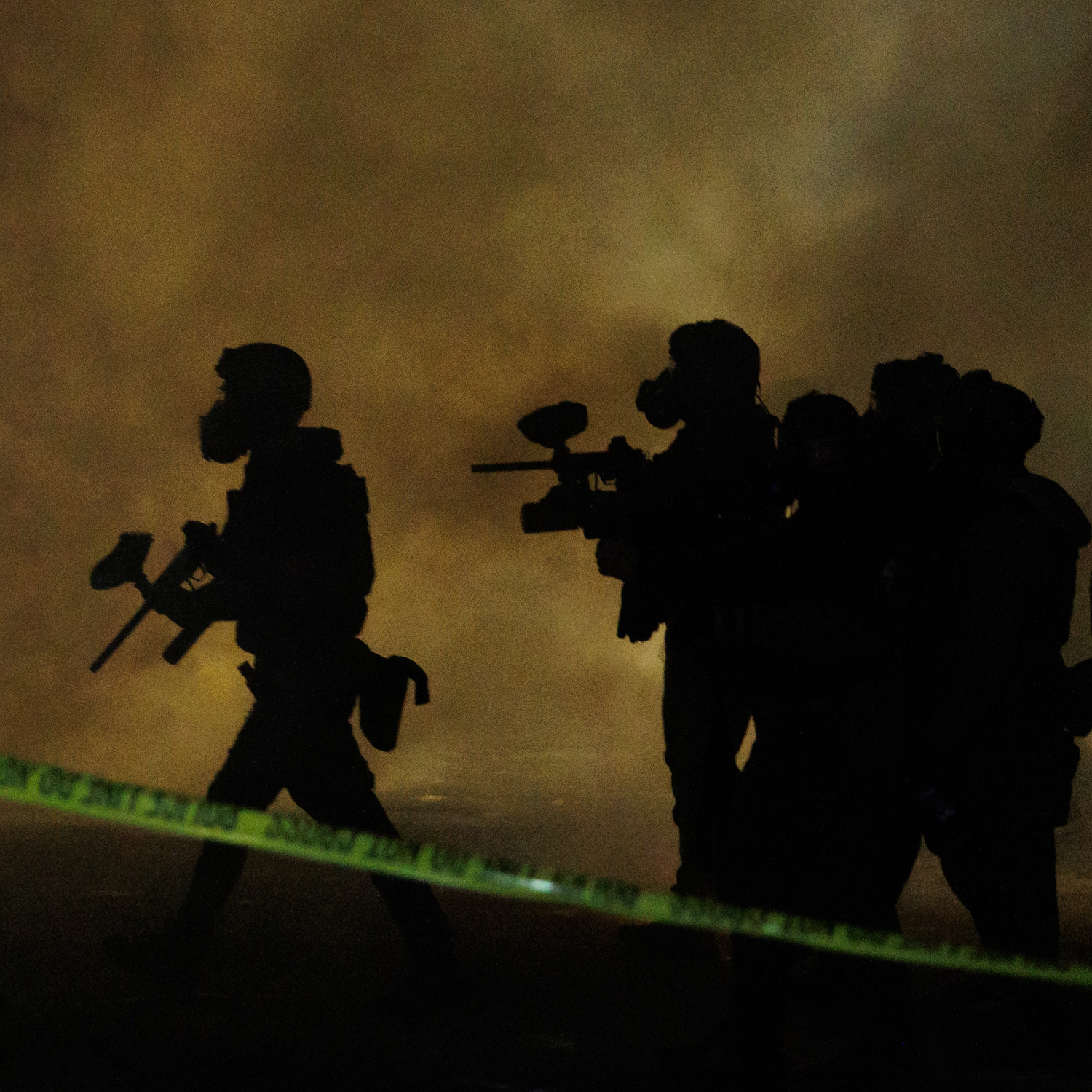
“This is not sustainable”: the ICE surge in Minneapolis fuels chaos
15m 52s
El informe cubre varios temas principales. En Minneapolis, la escalada de la presencia de agentes federales de ICE genera más protestas y enfrentamientos con manifestantes y líderes locales, quienes exigen su retirada. Mientras, grupos comunitarios organizan redes de respuesta rápida para vigilar y documentar las acciones de ICE, cambiando a un enfoque más proactivo. En política exterior, la líder opositora venezolana María Corina Machado se reunió con el presidente Trump y le entregó su medalla del Nobel, pero no consiguió un respaldo público para su movimiento, ya que la Casa Blanca reiteró su apoyo a la actual líder interina venezolana, Delcy Rodríguez. En deportes, la venta de entradas para la Copa Mundial de la FIFA 2026 es criticada globalmente por sus altos precios y complejo sistema de lotería, lo que ha generado un debate cultural entre ver el deporte como entretenimiento comercial (visión estadounidense) o como un bien público (visión predominante en otros países). El boletín también incluye notas breves sobre la renuncia de la subdirectora de ICE para postularse al Congreso, los primeros datos del impacto de la prohibición de redes sociales para menores en Australia, y un próximo episodio de podcast sobre los incendios forestales en Los Ángeles.
Transcription
2513 Words, 14545 Characters
Good morning, the ice surge in Minneapolis is fueling more protests and clashes. We cannot be at a place right now in America, where we have two governmental entities that are literally fighting one another. The Venezuelan opposition leader has handed over her Nobel medal to Trump, but it doesn't seem to have swayed him to support her. And why soccer fans around the globe aren't happy about World Cup ticket prices in the US? It's a complete scam, fans are being fleeced for basic tickets, and it's not good enough. It's Friday, January 16th. I'm Shemetha Vasu. This is Apple News Today. As federal and local leaders continue to trade blame, protests continue in Minneapolis. The Washington Post's video reporting shows enforcement agents firing bursts of what appears to be tear gas as demonstrators shout and throw things at them. On Wednesday night, a Venezuelan man was shot and injured by a federal agent. The Department of Homeland Security said their officers were reacting to being attacked as they attempted to make an arrest. Right now, there's close to 3,000 federal agents in Minnesota. As the Trump administration expands its presence there, heavily armed agents have been reported forcibly entering houses, pulling over a school bus, and seizing people at work. The ACLU has now sued the government, accusing it of indiscriminately targeting Somali and Latino communities without probable cause. Yesterday, Minneapolis Mayor Jacob Fry repeated his call for ICE to leave. This is not sustainable. This is an impossible situation that our city is presently being put in. And at the same time, we are trying to find a way forward, to keep people safe, to protect our neighbors, to maintain order. But Homeland Security Secretary Kristi Nome has promised to continue the surge and defended the operation to reporters. Every single action that our ICE officers take is according to the law and following protocols that we have used for years. That this administration has used, that the previous administration used, they are doing everything correctly. Meanwhile, President Trump has, not for the first time, threatened to invoke the centuries-old insurrection act, which enables the president to deploy the military on U.S. soil. In response to the surge, some local groups have begun tracking the movements of federal agents. Madison McVan is a reporter with the Minnesota Reformer. The idea behind a rapid response network is that, when people see an ICE rate happening, they can alert other members of the network so that they can all respond, inform people of their rights, warn neighbors, and protest ICE. This mayor's similar groups we've seen pop up in places like Los Angeles and Chicago. McVan recently went on one of these community patrols in Minneapolis, with two observers who decided to follow a truck with ICE agents inside. The observers continued following that vehicle until it came to a stop in a parking lot, and the observers parked nearby. Then the ICE vehicle backed up and blocked in the observer's car. The agents got out of the vehicle. They came up to the car and told the observers, "Stop following us. This is your first warning." McVan told us that the increased attention on immigration action has meant that ICE has shifted their strategy slightly from what we saw in Chicago and in LA last year. It seems like the ICE agents aren't doing these big, protracted raids anymore. They're getting in and out quickly before people have a chance to respond. So in response, these people that are in rapid response networks have shifted to more of a proactive approach. They're following ICE vehicles around, filming them, and basically trying to discourage them from making arrests in the first place. McVan told us her observations have led her to believe that people in the community are more galvanized than ever to support their immigrant neighbors. We're seeing people escort immigrant workers, teachers, restaurant employees to and from work to make sure they arrive safely. Lots of immigrant families are sheltering in place right now because they don't feel that it's safe to go outside. So churches and other community organizations are gathering donations of food, things to do indoors for kids. I think Renee goods killing really, rather than scaring people away from doing this work, has brought more people to it. ICE did not respond to the Reformers' requests for comment. Venezuela's Nobel Prize-winning opposition leader was at the White House yesterday, hoping to rally Trump behind her cause, Maria Carina Machado told reporters after she had come with a gift. I presented the President of the United States, the medal of Nobel Prize prize, and I told him this, listen to this. A White House official confirmed to ABC that Trump accepted the medal. Though even if it now sits on the Oval Office mantle piece, the Nobel Committee has underscored that the honor itself is non-transferable. For Machado, she said the meeting had gone very well, but it appears she still has some persuading to do as the White House reiterated their position yesterday that Machado doesn't have the support to lead a post-Maduro Venezuela. Vera Bergengruin is a national security reporter with the Wall Street Journal and was covering the exchange. I think for most of her supporters, the more notable thing is what didn't happen in this meeting. She wasn't given a public audience. I think we're all used to these Oval Office meetings where Trump receives foreign dignitaries and they have this back and forth, or they, you know, at least meet us at the White House. They have some kind of photo op and they say some words to the cameras. It is really unusual for this not to happen. Instead of backing her, the White House is messaging that it has a cooperative relationship with the current leader of Venezuela, Delce Rodriguez, who was Maduro's Vice President. House Press Secretary Caroline Levitt said Trump likes what he's seeing. There have been extremely cooperative. They have thus far met all of the demands and requests of the United States and of the President. And I think you have all seen that play out. We obviously had a $500 million energy jail that was struck in large part because of the cooperation from Miss Rodriguez. Rodriguez gave her first state of the Union address to the country yesterday, where she outlined what sorts of changes could come to the state-owned oil industry. Oil remains a key part of why Trump thinks he can work with Rodriguez. But Bergen grew and told us the extent of the relationship so far has been surprising. It has been really stunning to see him say that, to really embrace her. I mean, he's been very, very flattering towards someone who, again, was Maduro's Vice President and she is a regime loyalist. I mean, it's not like she turned against him. In all of the same people who enforced this brutal regime are still running the government. Trump had a long phone call with her yesterday. He called her a terrific person. He's been very complimentary of the working relationship with the Venezuelan government. As Trump has expressed uncertainty about Machado, a number of Florida Republicans who represent a state with the largest Venezuelan population in the United States have said that the opposition leader has their backing. That includes Senator Rick Scott, who was asked about it on Capitol Hill yesterday and said that he disagreed with Trump's assessment. Well, I don't think there's any question she has a respect. If she'd been on the ballot, she would have gotten 90% of the vote last time. She proved that it monogones all this one. So she has a respect, but President Trump's got a plan of how to transition where we don't have civil unrest. As for Machado, Bergen grew and said she's on a bit of a campaign to make her case and get more visibility. We know that she's in Washington for a few more days to meet with supporters here, but it's very unclear exactly where she goes. And again, I mean, there isn't yet much of an indication that the administration is wanting to help her return to Venezuela or to help her opposition movement really take hold. If you were hoping to catch a game at the upcoming men's world cup this summer, which is being hosted across the US, Mexico and Canada, then prepare for an uphill battle over tickets. On Thursday, FIFA said it received more than half a billion requests for tickets in its most recent application window that closed this week a record, but it has already proven to be one of the most controversial tournaments in recent years and it hasn't even begun yet. It all centers on the way that FIFA has decided to sell their seats. Book cup ticketing is very complicated by necessity. This is the most in demand sporting event in the world and there are only a certain amount of games. Henry Bushnell is a senior writer for the athletic. There are various ways that you can distribute a scarce resource and basically FIFA has chosen to have two filters. One is a lottery, so random luck. They did two lottery in the fall and then they are currently doing their biggest one. And the other way they are distributing this resource is with prices. And those prices are far higher than any previous world cup, costing hundreds of dollars with the final running well into the thousands. Now FIFA says it's a nonprofit and it reinvests the money it makes into promoting and developing the game around the world. But the decision has still generated a worldwide backlash from fans in other countries more accustomed to double digit US dollar prices. Take soccer mad Scotland. The country is appearing at the world cup for the first time in nearly 30 years and they're so excited that their government declared a national holiday to mark the first game. But the ticket costs have enraged fans, even becoming a political issue. Speaking to the BBC, Scottish lawmakers like Anas Sarwar have been demanding action against FIFA. It has to be stopped because this is a deliberate fleecing, not just of Scotland fans but actually fans from every nation that's represented in that world cup. I'm sure FIFA knew all that the prices would be controversial because they were going to be so much higher than previously. And because American people are much more accustomed to paying premium prices for sports tickets than the rest of the world. And so there was always going to be some sort of issue here that got people talking inevitably. And that Bushnell reports illustrates a pretty wide cultural divide between fans in the US and fans abroad. It's two very different visions of what sport is and what sport should be. In the US, it is thought of as entertainment as a commercial product that you can seek out as an experience that you can seek out and buy. And so the conversation about ticket prices often comes down to supply and demand. Whereas in Europe, especially, and also other parts of the world, sport is more seen as like a public good and like these teams are seen as community institutions that shouldn't just be treating their fans as customers. Bushnell says a lot could have been done to keep ticket prices affordable for a common fan. But so far, this seems to be working out in FIFA's favor, given that 500 million people apply to purchase tickets. They're basically using that number to show like, yeah, our strategy worked. Yes, you all criticize these prices, but people are willing to pay these prices because this is a big event. What we don't know though is there's a chance that 100 million of those requests are for the most popular game, which is Portugal against Colombia. And another 80 million or whatever is for the World Cup final. What we don't know is whether they even have 5,000 requests or 10,000 requests for a game like Switzerland versus Qatar or Saudi Arabia against Cape Verde. And that's the level of game that I think people are wondering about. For those still willing to spend and hoping to get a ticket, the first game on US soil is on June 12 in Los Angeles. And finally, a few other stories we're following. The number two at ICE has stepped down to run for a seat in Congress. Madison Sheon, who's 28 years old and serves as Deputy Director at ICE, said in a social media post yesterday she left her job to challenge Democratic Representative Marcy Capter in Ohio's ninth district. Capter has held her seat since 1983 and is the longest serving woman in congressional history. Sheon steps into an already crowded GOP primary where more than half a dozen Republicans have entered the race. The district, which currently covers most of Northwest Ohio, became more friendly after a redistricting effort in the state. It's been just about a month since Australia enacted the world's first social media ban for kids and data on compliance is starting to roll in. Social media companies so far have deactivated nearly 5 million accounts across several platforms. Australia's internet regulators say the figures are a sign that the law is having a major impact. Reuters reports the data also suggests these companies are taking the law seriously. The law bars kids under 16 from being on sites like Instagram, YouTube, TikTok, and Snapchat among others. Australian officials say it's too early to declare all sites are in full compliance. Meanwhile, a study by mental health experts is also tracking how the ban will impact kids in Australia long term. And here's what's coming up on Apple News in conversation. This week I spoke with MSNOW senior reporter Jacob Soberoff about last year's fires in Los Angeles where he grew up. Soberoff is out with a new book called Firestorm about the human and political fallout and why we may never know the true cost. What was lost is incalculable, you know, two entire communities in the most populist county in the country are gone now. And I don't think that the ramifications of what has happened and sort of literally the populations shifts that are happening are going to be understood if not now, you know, even for years to come. If you're already listening in the Apple news app right now, stick around to hear the rest of that conversation. It's cute up to play for you next. If you're listening in the podcast app, you can follow Apple News in conversation to find that episode or come back to the Apple News today feed tomorrow. All new episodes of in conversation will be available there on Saturdays too. Enjoy the weekend, we are taking off for the MLK Day holiday. We'll be back with the news on Tuesday.
Podcast Summary
Key Points:
Las protestas en Minneapolis continúan mientras aumentan los agentes federales de ICE, enfrentándose a líderes locales y siendo vigilados por redes comunitarias.
La líder opositora venezolana María Corina Machado entregó su medalla Nobel a Trump, pero no logró un respaldo público de su causa por parte de la Casa Blanca.
La venta de entradas para el Mundial de Fútbol 2026 genera controversia mundial por sus altos precios y el sistema de lotería, reflejando una división cultural sobre el deporte como producto comercial versus bien público.
Noticias breves
Summary:
El informe cubre varios temas principales. En Minneapolis, la escalada de la presencia de agentes federales de ICE genera más protestas y enfrentamientos con manifestantes y líderes locales, quienes exigen su retirada. Mientras, grupos comunitarios organizan redes de respuesta rápida para vigilar y documentar las acciones de ICE, cambiando a un enfoque más proactivo.
En política exterior, la líder opositora venezolana María Corina Machado se reunió con el presidente Trump y le entregó su medalla del Nobel, pero no consiguió un respaldo público para su movimiento, ya que la Casa Blanca reiteró su apoyo a la actual líder interina venezolana, Delcy Rodríguez. En deportes, la venta de entradas para la Copa Mundial de la FIFA 2026 es criticada globalmente por sus altos precios y complejo sistema de lotería, lo que ha generado un debate cultural entre ver el deporte como entretenimiento comercial (visión estadounidense) o como un bien público (visión predominante en otros países). El boletín también incluye notas breves sobre la renuncia de la subdirectora de ICE para postularse al Congreso, los primeros datos del impacto de la prohibición de redes sociales para menores en Australia, y un próximo episodio de podcast sobre los incendios forestales en Los Ángeles.
FAQs
There is an ICE surge in Minneapolis, with nearly 3,000 federal agents present. Reports indicate agents are forcibly entering homes and making arrests, leading to protests and a lawsuit from the ACLU alleging indiscriminate targeting of Somali and Latino communities.
Local rapid response networks track ICE movements to alert community members, inform people of their rights, and protest. They have shifted to a proactive approach, following and filming ICE vehicles to discourage arrests.
Maria Corina Machado presented Trump with her Nobel medal, but the White House reiterated its position that she lacks the support to lead a post-Maduro Venezuela. The administration is instead maintaining a cooperative relationship with the current leader, Delcy Rodríguez.
Fans are angry because FIFA's ticket prices are far higher than previous World Cups, with basic tickets costing hundreds and finals in the thousands. This is seen as fleecing fans, especially those from countries accustomed to lower prices.
FIFA is using a lottery system and high prices to distribute tickets. Despite global backlash over the cost, the organization received over half a billion ticket requests, indicating high demand.
In the U.S., sports are often viewed as commercial entertainment where prices follow supply and demand. In contrast, many other regions see sports as a public good and community institution, leading to different expectations about affordability.
Chat with AI
Loading...
Pro features
Go deeper with this episode
Unlock creator-grade tools that turn any transcript into show notes and subtitle files.
 PodcastTranscript AI