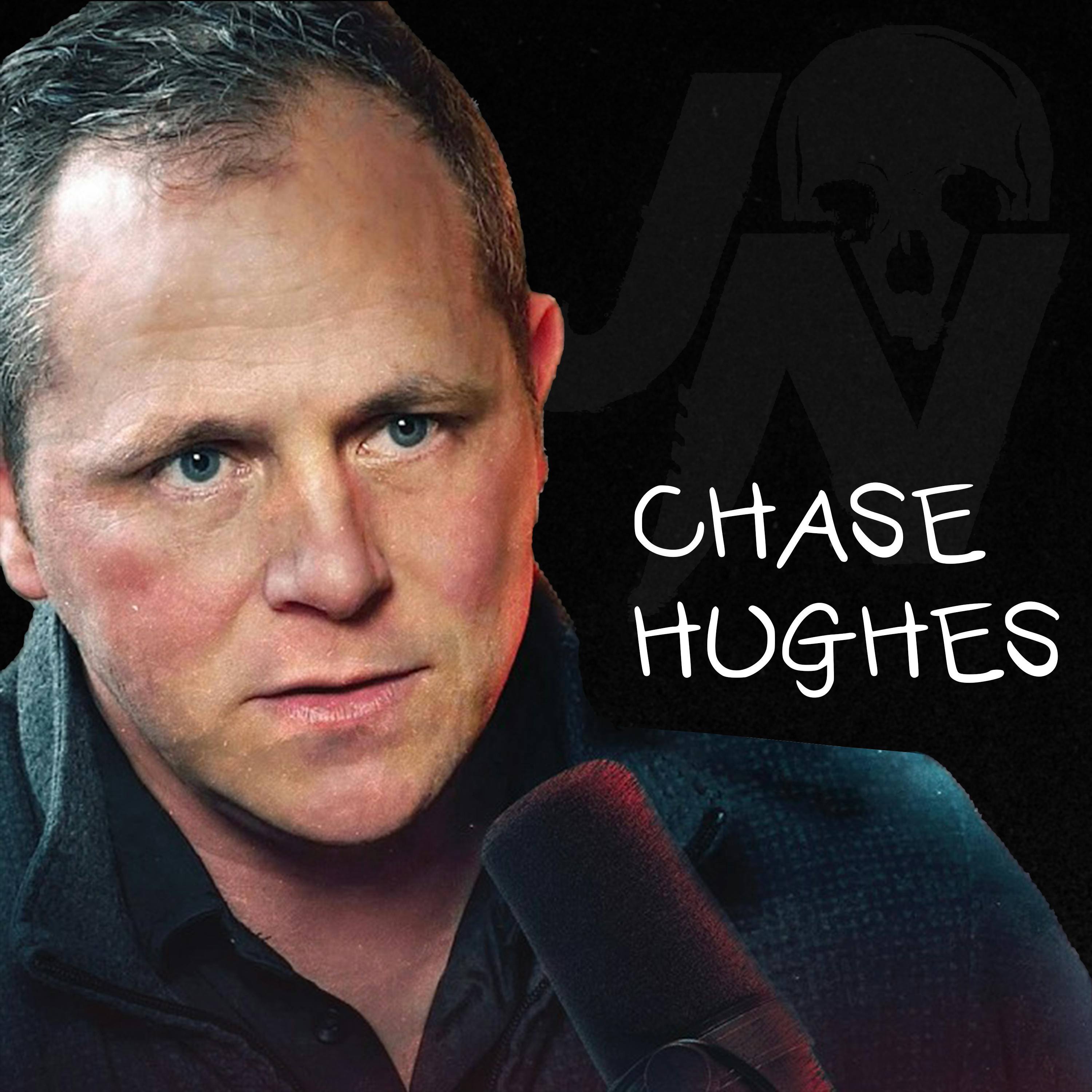
"They Stage Everything!" Pysop Expert Reveals How to Spot Manipulation and Protect Your Thoughts
120m 19s
Chase Hughes - Interview With Jack Neel Work with me 1-on-1: https://jackneel.com/call This is the 63rd episode of the Jack Neel Podcast, where I discuss crime, business, and psychology with fascinating individuals. If you have any suggestions to make the content more engaging or requests for specific guests, let me know in the comments below. Socials:Follow my Instagram: https://instagram.com/jackhneelAdd my Snapchat: @jack_neelWe are hiring! https://jackneel.com/applyBusiness Related Emails: [email protected]
Transcription
20724 Words, 109987 Characters
Today's guest is an expert in CyOPS, mind control, and government brainwashing. One of the most powerful techniques that people don't really understand. If you want someone to think an idea is their own, you have to make them feel clever for coming up with that idea. In our last episode, we explored his process for reading and manipulating human behavior. Technics he's taught to the CIA, the FBI, and the US military. I've studied CyOPS for a very, very long time. I train CyOPS. The fastest way to engineer behavior in a country is to destabilize the nation. And the fastest way to destabilize the nation is make people stop trusting their neighbors. Now we'll dive deeper into the persuasive tactics that can influence someone's thoughts, uncover the psychological operations hidden within social media, and break down the step-by-step process used to brainwash an entire population. They're in the business of engineering reality. The events are real. The story behind them are almost never real. You see something happen on the news, you see something happen in your life, and you just have one word. Just memorize this one word when you hear that stuff or see that stuff. Chase? Hughes. Welcome back to the Jack Nell podcast. Thanks, dude. Glad to have you. Chase, on our last podcast, the viewers said that the moment you started speaking, they couldn't stop listening. How do you make someone focus completely on your words? There's a few different ways to do that. Let's talk about the mechanics of how that worked first. So first, when you want someone to focus, if I want you to feel anything, then all I get you to do is pull files out of your mental file cabinet. And this is one of the most powerful techniques that people don't really understand. If I talk about something, you have to pull out your references and all of your files about that thing in your own file cabinet. You can't resist it. Like if I say pink elephant, I've just created an image in your head, irresponsibly, which is how we usually use language. But if I talk about something vividly, then I'm getting you to pull out these files. And this is just one of the most critical lessons that I teach any of my one-on-one clients. So if I know that I can get files pulled out of your file cabinet, I also know that your file clerk or whatever we call like this memory retrieval system, I just call it a file clerk. He's going down there and he's going to pull out this file, this file, this file. Everything that he pulls out, he's going to leave it out on the desk. And because he's leaving it out on the desk, that makes the memory way more accessible later on. And this is called priming. So if I want to get you to think that being really focused on something is your own idea, I'll talk about when I watch the show and how it captivated all of my attention. And I might shift the words from me saying "I" to using the word "you." And it'll sound something like this. So name like a really good movie. Anything. Die Hard. Okay. So diehard is one of those movies that people don't think is a Christmas movie, but kind of is a Christmas movie. I remember the first time watching Die Hard. It's one of those times where you're sitting there and now I've just shifted to you. And people don't notice. Like you didn't notice that I shifted from "I to you," right? So it's one of those moments where you're just sitting there, you're watching a movie, and all of a sudden this one thing gets super interesting, and all your focus gets sucked up into this one thing. It's like the volume on everything else around you gets completely turned down, and you just completely zone in on something. So in order for you to understand what I just said, you had to pull out references from your own memory. So I'm getting you to pull those files out one by one as I'm describing each little piece of this process. The second thing I did that you may not have noticed is when I said you get completely focused on just one thing. I'm pointing at myself right now. Very covertly. I'm not like doing this, right? But I'm saying you just get completely focused on just one thing, and it's like the volume on everything else gets completely turned down as I'm pointing away from your line of sight to me. So I'm doing a lot of things at once. So what we did here is pull out all those files, made it more readily available, and then made you think that it's your own idea to feel how you feel because that all came from your own head. Does that make sense so far? And then I'd use what's called gestural referencing when I'm saying something and then pointing in a certain direction. So like if I want to demonize another group of people, I might point and I'm not going to point at you, right? I want to point at me, I want to point like away from us. So let's say the goal is to make you super focused, and I know that you are a podcaster, right? So I might say, you know, I've been on a lot of podcasts, and it's amazing how so many times I'll be on a podcast, and there's this one podcaster who's like, he's talking to you, but he can't pay attention. It's like they're not really connected. They're not tuned in to the conversation, and you're nodding your head the whole time. But what I'm getting you to do is covertly make an identity agreement about yourself. I'm covertly getting you to agree that you are not that type of person. So if we started out our conversation that way, and I talked about watching die hard, how it is to get focused on something, and then I demonize this other group of people that's not us, saying that they can't focus, they can't tune in, they can't really connect with another person. During that time, your brain is making these agreements, and the moment I get you to make an identity agreement, that's different than an idea. So I can say, yeah, it's really important to focus on a podcast. You'll be like, oh, yeah, yeah, it just sounds like bullshit, because I'm getting, that's an idea. An identity is me getting you to say, I'm not that person, or I am this person, depending on how I'm wording myself. Then we add in a third layer, and this one will be like using what's called an embedded command, which are not really effective for achieving big things, but making small shifts in a person's thoughts, you can, you can use these for sure. And this is where you hide a sentence inside of a sentence, and the sentence should be able to stand on its own, and it should sound like its own sentence. So essentially, the four rules of delivering some kind of embedded language in your language is number one, whatever you say to that person has to be stand alone as a sentence. Number two, you drop your tone, and dropping the tone means I'm going to talk to you in a way that I'm telling you to do something, but it's hidden within a sentence. And number three, I want to return to our topic of discussion as fast as possible, so your brain is not picking up on what's happening, and I'm returning you back to familiar territory very quickly. Does that make sense? You want an example? Sure. All right. So let's say I just talked about these other podcasters, and I would say, you know, I think it's really rare when someone could just stop and completely focus with me the way I see it when I'm on a podcast. So I might just go right back to podcasting, right? So that would be coming back to the conversation. But what I said is stop and completely focus with me. All is one sentence. So if you took the audio clip of what I just said out, that's its own sentence. And I paused before and I paused after to help your unconscious part of your brain pick up on that more, like it pays more attention to it, even though it sounds like a run-on sentence. So when I'm saying the words with me, the conscious part of your brain thinks that it's hearing one me starting a new sentence. So I might say, let's say the word like get completely fascinated, right? And I want to say that to another person. I might say, you know, it's one of those moments, just like when we're watching Die Hard, one of those moments where you can just stop and feel completely fascinated with me, the way I see it. And then I would go right back into our conversation. But I said, get completely fascinated with me. I didn't say with me, right? So if you cut the audio out of what I said, you would think that I was telling someone to do something. So now that the audience is fully tuned in, relaxed, open, how do you feed in a thought to believe it was always their idea? And how do you change the way someone thinks permanently? So there's a recipe. And I can't teach you the whole recipe because it's something that we teach you a lot of attorneys. But I'm going to give you exactly what you need to kind of reverse engineer this on your own. The number one thing when I teach people influencer persuasion is, if you want someone to think an idea is their own, you have to make them feel clever for coming up with that idea. Clever, not smart, not that they agreed with you. They feel clever on their own. And if you, I don't think we've ever covered this before. But if you watch the news, you'll see the news come up and they'll say, uh, local woman is reported missing. She's been missing now for 24 hours. Witnesses say that before she was missing, they saw her arguing with her boyfriend, details at 11. But what did your brain do? Your brain was like, Oh, I know. I know exactly who did it. So your brain makes this conclusion because they put two pieces of evidence in front of you. So when you think I bet the boyfriend did it, you don't, you're not saying I agree with the news. You're not saying I agree with the facts that were presented to me. You're saying, I'm coming up with my own idea. So the goal is, if I get two pieces of data and just put them in front of you and get them close enough together, I'm going to let you reach out and and click these pieces of data together. And I'm not giving you the answer. I'm making you think that it was your own idea. So I'm just getting two ideas that come together and letting you put them together. So on a sales call, I'm not going to put the puzzle together for you. But I'm going to arrange all the pieces where all you have to do is go, Oh, yeah. And they're right beside each other and you feel clever because you're like, Oh, I know this goes right to this thing. So if you get someone to feel clever, just about every time in every scenario, you're going to succeed in making that person think that it's their own idea. Get those ideas close enough together with some proximity that the person can clearly see they go together. And then I guess the long term reprogramming of beliefs. What does that look like? And how on our last podcast, you mentioned how you could brainwash me to murder someone in about 40 minutes. Does it work the same with beliefs? Like, could you change any belief that I had? I don't think that rewiring beliefs is required to rewire behavior. So it's much easier to rewire identity than beliefs. Because if you have beliefs about something, I would have to argue against them. I have to present facts and have to present counter arguments and all these things. I can get you to make identity agreements very easily. Like, are you a good person? Are you mostly right about things? Do you have a good intuition? Everyone's going to say yes, or everyone's going to at least feel yes to those questions. And I lead that identity into something that I want you to do. It's three steps. It's perception and then context and then permission. So if I change the way that you see a situation, I'm just changing your perception, not your beliefs. So if I get you to see a situation a little bit differently and all this all we're talking about here is I'm shifting your camera angle. So like I'm taking one of the cameras that we have in the room here. And I'm just moving it maybe like 10 inches to where there's a slight shift and like, oh yeah, I can see the situation a little bit differently. And then context. If I change the context, I don't need to shift any of your beliefs. I automatically change your behavior. And that's what's happening with all of society right now is the they're they're learning this method. And the context is shifting so fast that it's making people celebrate violence. Like people celebrating the death of Charlie Kirk, which is pure sociopath behavior, but it becomes okay, given a certain context in these people's heads. And I'm not saying it's okay. I'm saying their context has shifted so much that if I demonize someone and make them like, this is baby Hitler. And you really genuinely believe that you're going to be like, wow, that that changed the future for everybody. But another example this in the 1950s, there's a comedy hypnosis show like you've seen them before like you go to a comedy club. There's a hip into Sarah. You get some volunteers up on stage. Make some do like, stupid shit like one of the bits that this guy did. He had everybody up on stage and he said, all of you are working for the Sheriff's Department or police. And everybody out in the crowd right now is rowdy. They're at a house party. You're trying to bust this house party up. They're waking up the whole neighborhood. And nobody's listening to you. But the thing is you can't get off the stage. So everybody up on the stage is kind of going up to the edge of the stage yelling everybody pointing out like, you better listen to my authority. I'm gonna arrest you. So their under hypnosis like thinking that they're police kind of playing along a little. And then he says, now the people in the audience, now they're pulling out these giant like alien ray guns or some kind of a gun. And then one guy that's up on the stage hypnotized is an off duty police officer with a concealed weapon and draws his weapon and starts shooting into this crowd of people. Really happened. Which he obviously is a good guy on the force for many, many years. And the context was something where he would use his weapon. So he was in a comedy club, then he was in this weird situation where he's on duty. And in his mind, being on duty means that if I'm threatened, I'm going to immediately react with deadly force. If you know, these conditions are met for deadly force. So the context shifted. So his behavior automatically shifted. Which is the final thing in PCP. We have perception, context and permission. So this gave him like the social permission to say, I am allowed to do this and I'm justified to do this because the context changed. So if you can change a person's context, you can get any behavior that you want out of a human being. That's really fascinating. I haven't heard that story before about the undercover officer being hypnotized. I'm sure that's probably happened a few times. No doubt. Chase, how do you know if you're in the middle of a psychological operation? I would just assume 24/7 than we are. But let's go into the details. But what are the signs that something is a psychological operation specifically? So narrative sticking points. So matching narrative is number one. A matching narrative means that I'm hearing pretty much the same messaging from media outlets, celebrity influencers, which is number two, and authority, authority. So people that are in a position of social authority, not like cops and lawyers and judges. But people in social authority like pop singers, and I won't say any names, pop singers, the most popular pop singers, all saying the same shit on social media, that should terrify you to the deepest part of your core that none of this is is real or none of this is what it seems like. And those are the first two. Number three is if you're seeing people silenced or ostracized for disagreeing with an idea, we saw this during the pandemic like crazy. There were Harvard educated medical doctors that were kicked off of social media, which is our greatest fear of human beings is being ostracized socially. It's greater than death. This is why public speaking is rated higher by almost everybody than death. And it's not public speaking that we're afraid of. It's being out there and having a big idea and then getting rejected by a large crowd. That's what terrifies human beings. And you can leverage the shit out of that, especially when you can manufacture an artificial tribe on social media. So Harvard educated doctors that disagreed with this mainstream narrative were getting banned. And the dude, I can't remember his name, I wish I could, but the dude who invented M-R-N-A vaccines was on there and and went against the narrative and got ostracized. The dude who invented this kind of vaccine, it's unbelievable. And that step three, just remember in your mind that if an idea requires suppression to exist, it's a horrible idea and it's most likely a siop. Good ideas don't need to suppress other people. Good ideas travel on their own. Good ideas spread on their own. It doesn't need suppression by itself. So those three are some of the big ones. And is it fair to assume that the people who are the most silenced have an idea that holds value at least? Yes. If I'm seeing a large group of people or companies, because it's not like you're not seeing like it's not the news host that's silencing that person. It's the billionaire owner of that network. And that's a big deal. That needs to terrify you to your core. Because if I can go on a little rant here and just let's talk about siops and for the for real right now. When Charlie Kirk got killed, I put a video out there. I don't know if you saw it. I just kind of put my iPad up on a table and went on a rant. And I don't know how to record videos very well. I don't know how I have a million subscribers on YouTube because the way that I record videos on YouTube, I just started zoom meeting and record it. That's how much I don't know how to record so. But at the end of the day, if you're on social media, I want everybody to know that there's a 90, 90% chance that this stuff that we're seeing around the world is not some giant agenda that's scheduled out in some dark room with dude smoking cigars and writing all this stuff out and planning it out. If you look at how algorithms work, it's not like let's serve George Soros or anything like that. The algorithms are what's going to make Jack click on this ad to buy some new boots or to buy a new coat, right? And that's what the algorithms do. And we can go deep into how algorithms manipulate the shit out of you if you want to do that. But the second thing that they do is make you feel like you're part of a tribe. No matter what, if you have some dipshit, weird beliefs, they're going to put you in with all of your buddies that think like you do. But at the end of the day, you, if you're on the left, you're being shown the stupidest dumb asses on the right that could possibly exist. But what the way that you're shown it so often on repeat, you have no other choice in your mind unless you're deliberately seeking out competing media narratives. You have no other choice in your mind but to think all of these people are insane. All of them are absolute idiots. I don't know how this is possible. And if you're on the right, then you scroll through your feed. If you're on X or Instagram, it doesn't matter. You scroll through your feed and you're going to see the absolute dipshit morons on the left. And they're going to show you the most crazy psycho people possible over and over and over and over again until you say these, this is the left. Not these are people on the left or this is the right. Not just these are a couple of people because if you think to the time that, where did we go yesterday? We went, oh, we didn't go into Walmart. But if you walk into a Walmart, you're going to see people that voted in a way that you didn't vote. And they're not breaking shit. They're not screaming. They're not psycho. And they probably want the same things that you do. More, you have more in common with these people than you think. You're going to go see somebody on the right. If you're on the left or somebody on the left, if you're on the right, they want to feed their kids. They want to pay lower taxes. They want to feel safe in their own home. They want to chill. They want to come home at the end of the day and put their feet up and have some time off. They want to have time with their family. I want everybody to know, I've studied siops for a very, very long time. I train siops. And you have more in common with all those people that didn't vote the way you voted than some billionaire elite that's influencing media narratives. Even if that billionaire votes the same way you do, you still have more in common with that person that voted the other way that you see every day in your life that's not crazy. That is absolute engineered reality. And I have a checklist of how to tell if you're living in an engineered reality that you can, if you do show notes, then somebody can click it in the, what's it called? The description. They can, you can download it right now. And the guy from the Y files, AJ Gentile, just did a whole show on this, the engineered reality system. And I'm not, I'm not sitting here trying to say, oh, you need to love your neighbor, you need to love people. And that'd be great. Yeah. I'm just saying that the hatred that, that people are feeling for the other side is engineered. It is not real. And it's very difficult for people to admit that I have been manipulated. And I can tell you as the siops dude, the mind control guy, whatever you want to call it. I am as vulnerable as everyone else. I don't have some like, I don't, you don't get a vaccine. If you learn a certain amount, you don't like get immune to manipulation. I buy, this watch I'm wearing came from an Instagram ad. So I'm not immune to any of this stuff. And the moment that you think, oh, not me, I'm not immune to that, you become the most vulnerable person in the room. It's like you're going into Best Buy and you get a laptop and you're like, oh, no, I don't want to do that anti virus software. I don't get viruses on my computers. You become vulnerable because you think you are invulnerable. So realizing that all of us can be manipulated. And then coming to terms, it's very difficult to do to say like, I've, I've been lied to. I've been manipulated. And the, the biggest thing that people need to say is that this isn't me. This isn't me. This is an engineered reality version of me. And what are, what are those people responding to? Why am I getting mad at the left or mad at the right context? My perception got shifted. Then my context and then my permission to treat people like shit or, you know, however, I choose to react to that situation. Are you saying that the way these algorithms try to divide us and incite violence is engineered in itself? Or do you think it is a fault of the algorithms and what they reward? Because people say algorithms reward watch time. I mean, you know this stuff because you do, you do, you have your own YouTube channel as well. Algorithms reward, watch time, engagement, comments, shares, etc. Is this just a result of the way it's designed? Or do you think it was intentionally designed this way to incite this kind of violence, political violence? I think it's both. And here's the bottom line that it's going to hopefully seal this for everybody. Number one, they have to, their job is to get your attention and keep your attention and then sell you shit and make you click on ads so they can make money. That's number one. The best way to do that is to put you in a tribe where you feel safe most of the time. Show you what you agree with. However, these two Chinese intelligence officials wrote a paper that later got turned into a book called unrestricted warfare. And in this book, they talk about a hypothetical country that's very similar to the United States. And it's a country that has what they call asymmetric capabilities where our military is vastly superior and would win in a military war. However, in order to win against a country like this hypothetical country, the Chinese talk about, Syops was a huge part of this. And there's two trains of thought, and I'm not subscribed to either one. I don't just say that to be a podcast idiot who doesn't want to piss people off. I genuinely don't know. Maybe it's both. So number one, the fastest way to engineer behavior in a country is to destabilize the nation. And the fastest way to destabilize the nation is make people stop trusting their neighbors, stop trusting people that are within an arm's reach that could help you during an emergency. Number one, the second train of thought is if I want to obfuscate and hide my actions as one of these weirdo elites who's kind of controlling everything, I want you fighting sideways never upward. And look at our country right now. Everyone's fighting sideways instead of up. So I get you to fight sideways. You'll never look up. You'll never see me standing there kind of pulling all these strings because I'm getting you to fight wars that are horizontal instead of vertical. Would you say that's the biggest style of happening right now? Because I have a few others we could go through. There are some bigger, there's some much bigger ones. One thing that I've told my kids as they were growing up and we're at my house right now. I don't know if we said that yet, but like this is my office that we're sitting in. You get to meet my son last night and again today. And when they were growing up, they would always ask about like, is this did they get hypnotized? Did somebody get controlled? There were six, seven years old asking these questions. And one thing I would always remind them are the events are real. So when you see something happen, the event is happening. The story behind it and the entire thing is usually some kind of theater production. There's something happening there where we are in engineered reality. And if you look at that engineered reality matrix, we can you can just clearly see that so many of these things are engineered. And I'm not saying there's actors being hired and things like that, but I'm saying the situations are engineered. You see a big catastrophe happen. The moment some big embarrassing thing is about to get released. And it's every time. And it's every time. So there's always something going on. And I'm not sitting here as some harbinger of truth who's saying like, oh, I've got everything figured out. And I know all these guys pulling the strings. I've never focused too much on that because knowing about it is not going to really free you. You're not going to be like, it make you feel cool. You get a placebo of some kind of control of your life, but you have none. I want to focus on what are the methods that are being used? How can I make people aware of the methods and how do I get, how do I train people in these methods? So we can start using them in a in a war against that in our own mind of just fighting against being in that level of control. Well, get into some of the methods a bit later in the interview that can help people protect themselves from a siop and use some of Chase's methods in their own life. But I do want to ask, why do you think the Israel Gaza siop failed in the US? Because it seems like America used to have a very positive opinion of Israel and Israel affairs. And that has largely shifted to the point where it's become mainstream to say a thing like free Palestine. So from a psychological operative perspective, why do you think they might not have won their case? There's a few reasons. There was a there was a CIA program. I think it started in 1957. It was called Project Mockingbird. Are you familiar with this? Part of this, yeah. They installed the most. So if you talk to your parents, every news anchor that they remember from their childhood, there's like a 90% chance that was a actual CIA operative. And this is documented release documents. Guys like Walter Cronkite, like one of the most famous news anchors of all time working for the CIA to engineer reality. And they are in the business of engineering reality. And you just have to understand that so much of our reality is engineered. It doesn't mean you walk around like a skits of frenix thinking that everything's out to get you. Everybody's targeting you. It just means like you see something happen on the news. You see something happen in your life. And you just have one word just memorize this one word when you when you anybody listening when you hear that stuff or see that stuff. Maybe. Maybe. They say, oh, this happened today because of this one thing. Maybe. Just maybe you don't just say there's some global cabal and like I need to drill down to the end and go break into the bohemian grove and like figure out all the shit that's going on. You don't need to do all that. Just maybe that word can protect you from so much of the bullshit that's going on with with engineered reality. I don't even know what your question was. I will say just as an aside that spinning time with Chase and his son, the one thing I noticed was he wouldn't let his son make any direct like full identity statements or just like absolute statements. He'd be like, maybe that's the case. Don't say that. Say it could have been this. And I found that to be very interesting. I think it's very helpful in people's life to usually say maybe as well. But the original question was, why do you think the Israel Gaza side up failed? Yeah. So back to Mockingbird then. So there was as time went on to the 50, 60, 70s. There was a very strong foothold in what the American public was exposed to the opinions and everything else. So it wasn't like there's so many people that think, Oh, when Twitter and Facebook came out, we could engineer people's opinions. No, this shit's been going on on the newspapers for a very long time since like the 1920s. And it's it started with another guy who was Sigmund Freud's nephew. Yeah. Another story if you want to get into it. But it's been going on for a long time. What was that guy's name? Just a few people? Edward Bernays. It's a father of propaganda. Yeah. The father of American propaganda anyway. There was some Soviet programs that were really good too. So it as that they had a strong foothold and essentially just to turn this into like a couple sentences that foothold loosened as people were able to get on social media. And then Twitter X was acquired by Elon and then he just had this policy of like open truth. And you're not going to get kicked off of here for offending people, which like offending people isn't against the law. Like we should be able to offend each other to have powerful discussions and change politics and and even forwarding scientific advancement should should risk offending somebody who wrote a paper or something. So that came out and then it became less so that there were some there's always been some outliers. There's some guy who runs a podcast. There's like the Alex Joneses of the world who just don't give us shit. And they will just unload and they don't care about the social consequences. But a lot of people who have these opinions were scared of like, oh, I'm not going to do that because I'm going to I'm going to have social consequences. I'm going to I'm not going to talk about anything. But the apparent consequences of speaking up are getting less and less and less than they used to be. So this the reduction in social consequences is making the conversation seem to be like people are willing to speak their mind a little bit more. But when people are saying like free Palestine and all of this kind of stuff, a lot of that is about identity. It's about it's not about like you learned about Palestine and then you made an agreement. And if you look at this it is going to upset a few people. But I just want you to look at this objectively that what what I do today and the things that I post online are not me making a decision today. It's everything I've made a decision about for the last two years publicly. So what have you done publicly for the last few years? Maybe I committed to being a member of a left or a right leaning party. And that means that I also committed to this and then this and then this. So that shapes all of our behavior. And I think some people may not be willing to admit it. And that's okay. Some people may not be ready. I'm you got to be willing to admit that like we get shaped by our past and we get shaped by the things that were publicly made to agree with. And if I get you to make an agreement, that's one thing. If I get you to make that agreement in front of 10 people, I alter your behavior almost permanently because of how you view yourself and not wanting to go away and be seen as a person who's not who they say they are in front of the tribe. So I think a lot of that comes down to the fear of tribal outcast. So when I said two sentences, I meant 29. So it's fair as well that just from the way you're describing this, that free Palestine appeared to be a lingo that was fairly restricted or at least unfamiliar to people and then and of itself people made it a movement to be like the underdog. These are the victims that I'm not saying that isn't the case, but I'm saying that was at least what most people will tell you which makes it the more likely side to join. And if I view them as the underdog, then everything I see on social media is going to agree with me and they're going to show me what I need. So if I'm looking at something online and I agree with the free Palestine thing, I'm only going to see anti-Israel content because if I don't, if I start seeing stuff I disagree with, I'm going to close the app, I'm going to exit out of the app. So Dr. Phil has a great way to think about this and Dr. Phil says no matter how flat you make a pancake, it still has two sides. And I think it's important for us to look at both sides of every story. So if I'm on the support Israel forever side, I'm going to look, I want to look at some of the opposing narratives, I want to look at some of the other things, but I'm on the free Palestine side, I'm going to look at some of the other things from the other side and what they think. And I want everybody to know if you're listening, our brains have not physically changed in 200,000 years. No new wrinkles or anything, there's nothing really different about our brain. And we tend to think, we want to tell ourselves that our brain is a truth-seeking mechanism that's it's wired to seek the truth. It is the opposite of that. Our brain's job is to keep us alive and search for things that we already think are true. So your brain is basically a defense attorney and their job is to prove you right all the time. And once we understand that I'm going to start looking at other things. So either A, well informed or B, I'm not going to consume one-sided narrative based media. Do you think porn is part of a style? No. Do you think AI is a government style? No. Do you think Jeffrey Epstein is a government style? I think government up without the side. So you don't think it's possible that Jeff Epstein was just a financier? No. And this is, I know a lot of people who are way more educated than I am on the whole situation. I don't read about it, I don't follow a lot of those stories. Everyone that I know that works in intel positions thinks that it was a operation of some kind. Why do you think everyone has become more anxious? That's a very good question. And this is just my opinion. I think we have anxiety because we have unlimited amount of distraction and thought and aesthetic. So like you go to the bathroom, you take your phone, you go in the shower, you put on a YouTube video so you can listen to it. Sit in the car. We don't have boredom anymore. And boredom used to be one of the ways that we would mentally process a lot of stuff. And the second piece of this is, if you look at Maslow's hierarchy of needs, which is a model and all models are wrong, some models are useful. I think this model is useful. The third level, we have survival and then safety and then belonging. And this kind of social part of the triangle. And on the belonging part of the triangle, our brains were wired, like we said, our brains haven't changed in a long time. Our brains are wired to handle a tribe of like 150, 175 people. And you have a life and social media that has tens of millions of people in there. We cannot handle it. Our brains cannot possibly handle it. But it gives us a placebo that we're actually connecting to other people. And this is why we have a global pandemic right now of loneliness, even though we're more connected, but we're more lonely than ever before. Because what we are usually on social media is performative. I'm performing something. So no matter how much someone likes me, I know for a fact they're not liking me for me. So we get anxiety, social anxiety is through the roof. General anxiety is through the roof. Dr. Daniel Amman has some great commentary on this stuff when he was on, I think he was on Rogan like a week ago talking about this. And when we don't experience real connection with people and we're performative all the time, we are desperate for people to tell us things to connect with us. But even if they do connect with us, we know it's not the real me. So we don't have any real social fulfillment. There's a French philosopher named Sartre. And he wrote about this thing and it's now commonly referred to as Sartre's Hell. You get these three people. And they're essentially in Hell. But Hell is other people. And it's not in a way that you might think. In Sartre's Hell, you get locked in a room, sort of locked in a room with these three people. And everyone needs so badly for other people to acknowledge something about them. I need everybody to see that I'm a good person. I need everybody to see that I'm beautiful. I need everybody to see that I have a good heart or whatever it is. And in Sartre's Hell, they're desperate. There's three people. And he goes up to one of the other people. And one of the guys says, "I need you to tell me that I'm a good person. I need you to tell me this about myself." And the other person says, "Yes, that is you." And he doesn't believe him. So he refuses to believe him, but he's still desperate for them to keep saying it and keep saying it. And the funny thing is the door opens like once a day. So they can walk right out of the room and no one leaves because they're desperate to confirm these things. They're desperate to confirm who they are through the eyes of other people. And that is that's where we are right now. All of us getting into this desperation for, if I get enough likes on this video, if I don't have a pimple on my chin, then people are going to think I'm more credible. If I don't do these, if I don't say these words right, then people are going to think I'm less credible. So I want to confirm what I believe about myself through the behavior of other people. And that is Sartre's Hell. And I think that we are living in a digital version of Sartre's Hell right now. I do want to touch back a bit because I realized I glotted past something you said. You said that a lot of the main anchors at the big media companies were CIA operatives. Do you think that's happening today? Yes. Did you think I was a CIA operative? No. What are the sons? You mean like what should we look for online? I think when somebody has asked a difficult question about their government, their agency that they might be working for, they might answer it in a negative way, but then they'll say yes, but they do all this good thing and that good thing and that good thing. So I think that allegiance mandates some kind of PR maintenance. So asking those really difficult questions are the way that I see people respond to those. And it doesn't make me say, oh yeah, 100% that guy's an agent or whatever. But it does make me say, interesting. That's interesting that that like that person got asked about something that happened in the 1950s with the CIA. And they said yes, they did that back then. However, nowadays, their new focus is this and this and this. And they'll throw a little commercial on top of the admission of the negative thing that happened. Yeah, I think Gen Z, maybe this is biased because this is at least my belief, but I think people would be surprised that the CIA is sophisticated enough to infiltrate the influencers that Gen Z and Gen Alpha watch. Because they're like, oh, there's no way these older guys are able to get in here and do this kind of thing with us. You know, like we're watching TikTok. We're watching, I don't know, Sora AI videos, Instagram Reels. But if you were theoretically going to design a psychological operation, what would be the main areas you think you would have covered on social media? You mean like if I wanted to recruit someone like you? No, I suppose, like do you think they're everywhere? Do you think it's just media? Do you think it's podcasts maybe? Do you think it's tech talkers? Like how many is it everywhere? I think it's in in every area where media is concerned, yeah. And I'm not saying, let's be clear. So when I'm saying like somebody's an operative or whatever word you want to use, they're not like walking around on their off time, pulling out their secret CIA ID card and badging into the main building. That's not what happens. Even if you go back to Project Mockingbird, they're just getting some talking points in a letter every once in a while. They're just saying, Oh, you know what? Don't have this guy in your show or don't allow this to be spoken about in your show. Or if they talk about this, you're going to cut it out. There's simple things like that. Some very basic instructions. And the way that somebody like a Gen Z person might get recruited is let's just use a hypothetical person instead of a real person. So you're talking about how someone like me could get recruited into this? Yeah. So it's not like designed from birth. Oh no, no, no, not at all. They'll typically capitalize on the people who already have talent and skill. It's not like they're going to like, they don't have to worry about that because people are going to rise to the top and they don't have to worry about training them in charisma, media, on camera presence. They just find the people that are already doing well. So it saves them a lot of time and a lot of money. So let's say one day, let's just use you as an example. Somebody comes up and says, Hey, man, I love your podcast. Yada Yada, they're in a restaurant or bar or whatever. And they say, I have a serious question for you though. Are you a patriot? Would you consider yourself a patriot? Now I've got you locked into identity, right? Exactly what we talked about at the beginning of our show here. So you consider yourself a patriot. Then we'll go on a little bit. I'll get you to make a few more comments and stuff like that. And I'll get you to make a few more agreements that say that, yeah, I support the country and all that kind of stuff. Then I say, well, I have an offer for you. But before I show you anything, I just want you to say, yes or no, would you be willing to entertain the offer and look at what I have? And it might be uncomfortable. Would you be willing to look at it? Yep. Stage one is I show you all of your browsing history captures from your webcams on all of your phones and computers. So if you're doing the most compromising shit you could ever possibly imagine every bad thing you've ever done recorded in some way. And I'd say, I like your podcast. I think you're doing a great job. And I want to protect you. And I want to keep all this from the public eye. But we also want to give you $20,000 a month. So I'm all A. I'm going to protect you and B. I'm going to give you 20K a month from all this. So you have the carrot and you have the stick at the exact same briefing and you agreed to receive the briefing for me. Even after I told you it was going to be stressful. So now you feel like you chose all of this. So you walk away not feeling like I shoved this in your face. I told you it was going to be stressful and you agreed to it and you agreed that you're a patriot and all the other agreements. And now you're, if you say yes, the reason that you're doing this on your podcast is for your country because you're not going to call yourself compromised. We have this thing called cognitive dissonance that keeps our brain from thinking I'm a bad person. We have a hard-wired thing in our brain that says I did this bad thing for this good reason. It's in our everybody's brain. So now when you start to go back on the podcast, you're going to go back to that sense of patriotism because that's how that person anchored that conversation at the very beginning and probably at the very end. So now, even though you're being asked to silence people, not have certain people in the show leave something out of your podcast, you're telling yourself and this whoever's your handler is telling you this is for the greater good. This is for the good of the country because we have these brand new initiatives that are coming out. The Saudis are doing X and Y and Z. Chinese are preparing operations to do X and Y and Z. And if this thing got out, it could have caused a massive panic and a massive crisis. So you did the right thing, but in you kept the American safe by doing that and you'll tell yourself that and you'll feel good about it. So when a person is like in this situation, they will feel good about what they're doing, even if it feels a little off in the back of their mind, they'll still feel like I'm at the end of the day I'm doing the right thing. What happens if I say no? At the end of the day, if you said no, then, and this is all hypothetical. I'm making all of this up completely. At the end of the day, if you said no, the conversation would turn to, well, I think you're doing a great job. I appreciate you having this discussion with me. And I have to say that there is no way that I can prevent this stuff from reaching the public eye unless you decide to work with us. And all I'm asking you to do is just work with us once a week for five minutes, but it's up to you. And that'll be a mind virus in your brain for weeks and weeks and weeks. And it'll never go away. And all I've got to do is leave you a business car with a phone number on it. And you'll call. Eventually you'll call. That's fascinating. Chase you in these crazy hypotheticals, man. I'm just making them up as a government mind control expert. We'll say, what's psi op? Do you think is being run on you or what's psi op? Have you been susceptible to? I think about three years ago. And these are all political. This is like I started, uh, I followed one conservative person and then I got all these other things. And damn, this is, I was never going to admit this on anywhere. But I got down to a point where I was on X under an hour a day because I have these app time limits. Now they're like eight minutes. And I don't even have social media on my entire phone anymore. But now I got to this point where I was just seeing so much of this doom and gloom. The world's going to end. Country's going to end. You need to start preparing for World War three. All this crazy shit that I invested in a like survival property. I bought things that I weigh too much money that I shouldn't have spent. And I just completely bought into this. And at the end of the day when they said, Oh, all the shit's going to happen. All this stuff's going to go down. I was sitting there with all of this stuff, like sitting there looking around at all this stuff. I was like, I have such a fool. And I felt bad for a minute. But it's just like that's, I have a human brain. I'm not super human. I don't have a super immunity to any of this stuff. So it's definitely something anybody can fall for. And taking a break like what I call a media diet is maybe with what's going on today with depression and loneliness and anxiety and all this stuff, it might be one of the healthiest things that you can possibly do. It definitely changed my life. So just to recap and put it succinctly, how do you protect yourself from being brainwashed? And how do you kind of not be affected by any type of style ever? That's impossible. But there is the fastest way to do this is and I built this method for myself. And number one is what is grabbing your focus? So I need to train my brain to look for manufactured novelty. Some unexpected things, something that we never thought we never saw coming. It's a big black swan event that no one saw. Train your brain to look for that. So that's first, the first way to hijack them a Malian brain is focus. Second is authority. So you train your brain the moment that an authority figure comes up, even if it's like some Hollywood celebrity commenting on politics. It's maybe a politician coming out and saying these people are bad. Train your brain to look for authority figures and especially when their message is lined up. So part three of this is tribe. We start understanding and being able to spot the ways that artificial tribe is being manufactured. So if I'm on, if I own Facebook, let's say, or it doesn't matter, I'm not singling out Facebook. If I own a social media company, I can fake it to you that there are tens of thousands of people who agree with XYZ ideas. And the moment that I get you to believe that lots of people are adopting this new behavior, this new idea, and I get you to go along with that. And this is proven in research, study upon study. Some of these studies that are just fascinating to look at. These are done in the 60s. A lot of these done in the 60s. So we have focus, authority, tribe, and then emotion. So when am I, and when am I getting emotionally played? Not just when is something making me feel emotional. A good commercial makes you feel emotional. Like there was some of these Super Bowl commercials that people would cry during these commercials because they were so well done. That's okay. When am I being emotionally hijacked? And here's the way to tell when you're being hijacked. And in hypnosis, this is a hypnosis technique that I think was invented by this guy named Dr. Milton Erickson, who's like the grandfather of hypnotherapy. He's the reason that hypnosis and genuine hypnotherapy got approved by the American Medical Association, the American Psychiatric Association. And this technique is called fractionation. And in a fractionation, I have your emotions here and I show you things to bring it up here, up here, piss you off, and then bring you down again to something that's joyous and happy and reverent and kind and awesome. Then I bring you back up again. And then when I pull you back down, you'll be twice as vulnerable. Then I bring you back up again, pull you down, your twice as vulnerable. So just to give you the corollary and like how this came from hypnosis, if I'm hypnotizing you, and I only allow you to wake up a little bit, just to a point where your eyes open a little bit, and then I put you back down, you'll go deeper. Then I wake you up a little bit, just where your eyes open, push you back down, you go deeper every time. So this makes us hyper, hyper-suggestible. So being very keen and very aware of when I'm going up and then back down and then up and then back down. And if you're really good at this, you'll be able to spot where the ads you'll know before you see an ad. So you'll see riots, then you'll see fighting, then you'll see a body cam footage of somebody getting in a fight with a cop or arguing with a police officer to kind of like go, kind of get your heart racing a little bit, and then you'll see maybe one more thing that pisses you off. Then you'll see some other party person left or right doesn't matter. You'll see some political thing that pisses you off and makes you hate tribalism. So it's injecting the tribe. So that's focus, then authority, and then tribe. And then we have emotion. And that emotion starts right as that big thing is pissing you off. Then you'll scroll one more time and it'll be one of those videos. It was like, oh yeah, we just found this baby coyote on our back porch and he was injured. So we splinted his leg and we bottle fed him. And then it shows this little coyote, like a time lapse of him growing up, sleeping in the bed, playing with their baby, playing with the dogs, all this stuff. And it's like, wow, like you get this big emotional rush. That's fractionation. And then right after that little baby coyote video ad, you'll get an ad. And no human came up with this. I definitely didn't teach them this. The algorithm started understanding what makes people click. So paying attention to that is step one. Step two is, where am I seeing these narratives repeated throughout multiple media sources? I'm seeing lots of the same exact thing from multiple places. And number three, and this might be the most important of all, is where am I seeing people who disagree, get ostracized? Am I seeing people get exiled from some community because they disagreed with something? And those are the signs that you're in a cult as well. It's the same shit that cults do to recruit members and keep members. Like, what does what does a cult go through? I'm going to get you to adopt a whole lot of new beliefs and new identities. I'm going to introduce you to a cult following, like you have to stay in this members. I'm going to get you to start tribalizing yourself with these people versus everybody on the outside. There's an in group and an out group. Then there's a cult ideology and dogma that you have to follow. It's this rigorous thing that start changing your behaviors. What you're seeing on social media and not just social media, the media overall is basically what cults do to people. I'm going to isolate you and show you that you're powerless without these things. You have to follow this leader. You have to follow this doctrine. You have to excommunicate yourself from this tribe because they don't agree with you. They're creating a cult. It's exactly what we're seeing. I'm not trying to be dramatic here, but maybe that'll make for a good 60-second short or something, but at the end of the day, if I feel like if I adopt a belief and I can feel morally righteous because I believe something that is completely fabricated, that was engineered into your brain. But the hardest part about doing this, and people will say like, what's the checklist? What do I need to do to protect myself? The hardest part is admitting that you're vulnerable to it. Because a lot of people are like, no, no, I got all these ideas myself. I did research and I did all this and I looked at this. I looked at this document because our brain's job is to prove us right. You see the same stuff in a Tony Robbins seminar. It's like if you continue saying you're not successful, you're not successful, your brain's job is to prove you right. But if you continue saying the people on the far right are absolute dipshits or the people on the far left or dipshits, your brain's going to just look for evidence to prove you right. That's its main job. So you have to be able to admit that I have been manipulated before. That's got to be step one. It's fascinating. Would you say it's, I know Tony Robbins was a trained in hypnotherapy, right? Is that fairly common for large? I don't want to say cult leaders, but people with a large audience that's very loyal to them. No. They're training hypnosis. No. Manson did. Charles Manson studied hypnosis and a few other things. But mainly I think his main book in prison was like how to win friends and influence people back then. It's like a Dale Carnegie book, which is one of the best books ever written on like just having good social skills. But I think that the people who rise to the top and become cult leaders, you have number one, you have like a grandiose narcissism and you can't have a malignant narcissist as a cult leader. It's a lot harder to do that grandiose narcissism. Like my confidence in me and how perfect I am and how flawless I am is so strong that you'll just buy into it. So you have that. And I think the people that rise to the top and become famous cult leaders, the ones that we hear about because for everyone we hear about there's a thousand, 10,000 that we don't even know about. So the ones we hear about I think naturally become good at those skills that resemble hypnosis because they're calculating human behavior their whole life from the time they're three or four years old. They learn if I say this one phrase, it makes mom emotional. If I say if I do this one thing, I can get away with this. Or if I pay really close attention, I can hear Uncle Johnny's insecurities and I'm going to file that away and I'm going to use it later on in our conversation because I know those insecurities and I'm going to use them a little bit later. I think it would be useful for people to use these tactics for good, of course, but you certainly can. How do you quickly spot someone's number one insecurity? It's, I don't know about quickly. Well, you can do it very quickly to teach you it would take a few minutes. Let's let's go into it if you want to do it. So there's the first thing is you need to spot what they need from other people. So typically if I if I know what you need to be seen as from other people, I know what was probably missing in your childhood right away. And there's six social needs that we teach at NCI University. And these are significance, approval, acceptance, intelligence, pity, and power or strength. And I need it's not that I need to be powerful. I know it's not that I need to be significant or accepted. It's I need people to see that I am those things. So the guy that's driving the giant jacked up pickup truck with like the plastic nuts hanging off the trailer hitch and the MMA I fight all the time sticker and the Glock sticker on the back of his truck all like just Mr. Tough guy. He doesn't have a need to be powerful all the time. He has a need for you to see him as powerful. And those are two very different things, very different. So if you're just in a casual conversation and you hear somebody say, Oh, yeah, I've been working there for 20 years and still everybody calls me up. Even after I retire, they still call me and ask for my advice. That's significance. You're hearing significance right away. If you hear, let's just make it a company they used to work for. Somebody says, Yeah, I actually worked there for 20 years. It was the greatest group of people. Everybody takes care of each other. Boom, acceptance. You're hearing it right away. Or if you hear somebody say, Yeah, I mean, I worked with that company for 20 years, but that doesn't mean I'm going to be good at the speech tomorrow. I always, I always mess these things up. Just so you'll say, Oh, no, Jack, you're going to do great. You're going to be really good. You did great last time. You know your stuff. That's approval. Or here's somebody say, I worked with that company 20 years. It was right after I got my master's degree in blank and I wrote my paper on this, which led me to a managerial position over their intelligence. Or do you say somebody says, I've been working at that company 20 years and they never really pay attention to anybody. It was horrible. We had horrible hours coming in. We have our boss was a total asshole and I had to endure that for 20 years. Pity. So the person that's the pity needs person is one of the most confusing. It's not that they want pity. It's that they want you to understand how bad they had it or how much they went through. And our instinct with a pity person is to say, No, I mean, it's not that bad. You know, it was pretty good. You got a good paycheck. You had a good time. Not all the bosses were assholes. That's not what they want. So the moment you do that, it's like them knocking on your door and asking whether or not you're a drug dealer for the drug that they need. And you're going, No, not me. So that's, I mean, we get dopamine and we get neuropeptides that flood our system when we get what we want socially. And what was the one we left out? Oh, the strengthen and power like I worked with that company 20 years and I was always the boss. Everybody, everybody looked up to me. Everybody asked me for advice. And there was a lot of these little weak guys down on the sales department that couldn't make sales. But I went down there and I told them, you know, just the tough acting people. So that's one way of just seeing what people need socially. We'll ask on pity, what's the best thing to say? Just simply that sucks or that sucks because of XYZ. Somebody says like, well, I was in that relationship for way too long and now I'm starting to go to college and now I'm starting to get my own job. But it was still abusive and I still think about it all the time. My response to that person might be like, you know, I think, I don't know how you keep it together. I think most of these people that see you every day, they have no idea what you've been through and what you've endured to get where you are here today. So add on something and make them feel understood. Maybe not understood. You're adding what I covertly said was that other people don't get you. But am I saying that I get you? Did I say the words Jack, I totally get you? No. I'm implying it and you putting it together in your own head. I'm not saying it out loud. So now it's your own idea, your own thought. But let's go to these six needs again. So if I'm significance, I'm asking the question, do other people see me as significant? So do other people realize how bad I've had it? Do other people see me as powerful? But each one of those carries with it a childhood wound of something that was missing or something that didn't get acknowledged. And we carry stuff from childhood way too far into adulthood without us ever knowing it. And this is all all of us. But if I have a significance, identify a significance person within probably 60 seconds in any conversation. You can identify these needs and listening to people. We have a completely free course at NCI University. You can take like instantly that walks you through some really good training on this. But if I know your significance, I know that your fear and your secret insecurity that not even your friends know is feeling insignificant and being left out and not making a difference. It's so clear. And if your need is acceptance, I automatically know that your insecurity is being left out, being exiled or being made fun of and front of other people or people laughing at you. If it's approval, it's it's that you're always right. All of your insecurities are right and you're going to mess this up. So people confirming that. And if it's the intelligence thing, it's being seen as stupid or being publicly judged for not being smart. If it's the pity thing, then their secret insecurity is people are no one's going to know what you've been through to get where you are. No one's going to acknowledge you ever. No one's going to understand you. So each one of those we can see the insecurities very clearly. And there's deeper layer. This is like the preschool level of this stuff. And within probably two minutes, just using this system, you can see deeper into a person's life than their family and their best friends. And it's extremely reliable. In our last interview, I asked you to make a few predictions about me without speaking to me. But now that we spent some time together, what would you say my biggest insecurity is? So I would say that your two are probably significance and intelligence. And it's very clear that your acceptance is not that high. Like people who are more in the acceptance will be more raising their eyebrows during conversation. They'll ask for confirmation. They'll talk about teams. They'll talk about we came out here. We traveled this. We did that. They'll use a lot more of those pronouns that talk about groups of people. And the approval people are pretty easy to spot. They're just saying statements to make you go, oh, no, you're good. So I know that you're automatically within maybe two minutes of meeting you. I would know that your insecurities are feeling like you make no difference at all that you're insignificant. And that people think you're stupid. So that's pretty fair. Would you say, I don't want to guess yours, but would you say yours is significance related? Yep, significance intelligence for mine too. I didn't catch intelligence. That's interesting. But by the guy who wrote seven books, that's fair. Chase, what is where someone sits, say about what they want from you? What do you mean? Like at a table? Just, I guess the way they sit, where they sit, their proximity. I know you talk about proxemics. What can you kind of tell from that? I would say it's hard with sitting because if it's a new environment, there's going to be new behaviors. The brain's not adapting yet. I would look over time. So the number one thing you can do when you're looking at body language, nonverbal communication is look for changes. So looking at initial conditions is not always going to give you a good read. So look how the conversation starts and watch the changes in that person's body as it evolves. The number one thing you can look at it, did we talk about blink rate on the last show? Yeah. That's, we spend so much of our time looking in people's eyes. And it's an unconscious behavior that you can look, that someone blinking more often is stress, less often is more focused. And your job is to take people's blink rate and lower it through a conversation. So we're not just looking at a snapshot of fast or slow. We're watching for when does it start speeding up? When does it start slowing down? If I'm speaking on stage, I'll look out on the crowd. And if I'm looking in people's eyes around the room. And as I'm talking, if I see people blinking more often, I'll just change the subject. I'll raise my voice. I'll jump off the stage and walk around a little bit. And I'll regain that focus. And then and look around the room again. And I'll see the blink rate has dropped again. But when you look at a person's body, you want to, I mean, there's a whole lot of things we could look at, like breathing and angles and all this kind of stuff. But you want to look for, are they leaning back or leaning forward? And one of the biggest things that we teach people in influence of sales and with NCI is that we don't make big decisions with our backs against a chair that just doesn't happen. So they teach all these cool closing techniques, exactly what to say to close the sale. But the person's kicked back and like leaned back in a chair, your goal is to get their body to agree first before their brain does. Because that's our first language. I mean, we've been moving our bodies and communicating with each other with bodies for a million years, who the hell knows how long. But this language thing is very new to us. There's a hierarchical structure in our head for our auditory cortex. We have a visual cortex. We have all this hearing system and sound processing cortex as court a season in our brain. There is no structure for language. None. Not one structure in the human brain for language. There's an area where we kind of default throw some language skills into. There's two. But we have to understand that we've been communicating with our bodies a long time. So if I want you to do something, I'm going to make sure that your body starts agreeing before I ever ask your brain to start agreeing. So if you're leaned back in a conversation, I might think you're a little, you're not, it doesn't mean you're disengaged. Like don't believe that body language stuff you see on the internet where this always means this. If anything tells you that it might be crappy, a crappy source of information. But if I'm, if I'm seeing someone leaned back and then we have a contract here on this on the table and I slide this over to say, what do you think about it or I hand you a pen or give you a glass of water? I'm going to get you to start leaning forward. That's the only time that I'm going to start talking once your body is doing what I need it to start doing. What can you tell about a person by the way they speak? I would, I would watch for changes again. But if I'm seeing a rapid speech, I know that that's probably how their brain works. And I know that when they really want to stop and make a big decision or I need to convince them to do something, I'm going to have to slow their speech down over time. And I'm going to have to set that example of talking slower throughout a conversation so that they start mirroring that behavior a little bit and they start seeing that there's physical permission in front of them to start speaking a little bit slower. There's not much about a voice by itself that I would say. But let's say you were talking a certain way in the moment that I mentioned one subject, call it whatever you want. Let's say I mentioned politics or something and your voice starts speeding up. I'm seeing a change. So like the first I don't think people get training in this stuff enough that you read this article on 17 ways to tell when somebody's lying or 12 indicators that he's cheating on you like just absolute bullshit articles which I've written a couple. I know. It's like I've wrote a couple as I was starting out just because it gets clicks. But it gives people a little bit of a placebo of understanding. So at the end of the day, if you get good at detecting changes, then you are better than most people on YouTube that are talking about body language. If you're good at looking for changes and then being able to say, oh, I did this one thing or this topic came up or this thing happened, then I saw the blinking change and the breathing change and the body shifted, the voice change. You just get good at looking for changes and then understand the meaning later. Like start looking it up later. Just become a change detective when it comes to people and you will be so much better than if you had spent years studying all this body language stuff. I will say that it seems like you do have a couple things that you've noted in the past that are reliable over and over again. Like on our last podcast, you talked about the things that you could tell just simply by looking at someone's face like the soft. What are they called? The soft under eyes? Yeah, lower eyelids. I have someone conceals their forehead, their less trustworthy, that kind of thing. Is there anything else like that you've noticed? I remember Marcel telling a story. I don't know if it was about you or about someone else who had a similar skill set to you about a girl who was dating that you could tell that she was bulimic or something. Is there any other things that you look for that are reliable across the board? I think there's very, very few. And even those little things about wrinkles on the face and all that. I would say those are antidotes, anecdotes too. They're not hard fast rules. You have to be doing this stuff for a while. The only way that I knew somebody was bulimic. It's not because she'd like talk to a certain way or anything. She had one finger on her whole hand where the cuticles were worn down from like acid exposure and you could see little teeth marks on her knuckle on that same finger. That's the only reason I knew that. But how did you note a look for that? I didn't. I just saw her hand and I always look at people's hands and I just look around at people. And then there's like a deductive reasoning that happens after that. I wish there was a way to, maybe there is, but I wish there was a way to write a book about that where you could just like, oh, you see some shit on somebody's fingernails? Let me flip to the fingernail section and like find this thing. Maybe there, maybe there will be someday. But I find it the most difficult thing to teach people because it's just, I think it's just rooted in experience like I've never written an article on how to look at bulimia in my lifetime. But I knew that that was bulimia just by looking at it and using this, maybe it's inductive, I don't know if it's inductive or deductive reasoning that just came naturally because I'm just so obsessed with human behavior as a whole. I never judge mental. That's the biggest thing. It's like, if you're judging people, you're losing the game. It makes you less influential. It makes you less confident. It makes you less powerful in every situation. But you get to the point of like, I wanted to see behind the curtain. When I was like 19, I wanted to be a psychological lawyer. Like, I wanted to see all the stuff I'm not supposed to see with other people. That's what started me down this path to begin with. I wanted to see all the things that were hidden in plain sight. One of the reasons I became a body language guy was just trying to understand girls as a kid. Like, how do I avoid rejection? How do I know if I'm going to get rejected by somebody? I think over time, though, it goes in phases. When you first learn this stuff, you're hyper critical of yourself. Like, oh, how am I looking? How am I sitting? I'm like, adjust myself all the time. That is so exhausting. It was two years probably for me of just hyper-managing myself. Just because you think like everything's such a big deal. Then you think everybody can see what you see, even though they can't. They don't pay attention to it. Then it becomes like, wow, these people are screwed up. Then the revelation comes like, oh, they're screwed up just like I am. They're a lot like me. They hide insecurities. They don't forgive themselves. They carry around shame, 30, 40 years longer than they should be carrying around that shame. You start realizing that we are so, so much alike that it's scary and that we all hide the same things. We all don't forgive ourselves. We all conceal and pretend like we don't have shame. Even just as a perfect example, if you talk to someone today, if you're listening to the show right now and you talk about there's an epidemic of loneliness, everyone's going to agree with you. Not one of those people are going to come out and say, I'm lonely because we hide it. We're ashamed of it, but we'll acknowledge that all those other people have that loneliness problem, but nobody wants to talk about it. So you start seeing that we are so, so similar. It was a super drawn out answer, but can you tell someone to age quickly? Do you have that a build? I think you just look at somebody's hands and you can see the age. Yeah, what can you tell about a person by looking at their hands? Like, what are you looking for? I look for handedness, or they right handed, left handed, and look where their watch is. I'm looking at, do they keep their fingernails well? Do they trim their cuticles, all those kind of things? Do they have calluses on their fingers? And I just do this as a hobby. It's not like I'm really digging in there. Even when I'm doing jury selection stuff, I'm not profiling fingernails and stuff like it's not that cool. I wish it was that cool, but it's not. And just looking for basic things is one hand more hand than the other, which means as a person's probably spent a lot of time on the golf course. Just all those little small things and knowing little facts like I know if you're not wearing a watch, I know the fingernails on your dominant hand are going to grow about one millimeter per every four months time faster than your other hand. So like the dominant hand is going to grow faster. Just those million little stupid facts like that, that pile up to give you this little arsenal of being able to see almost irrelevant stuff about a person. Am I left handed or right handed? I think you're right handed. Am I wearing any jewelry? You have a silver bracelet on your left hand last night, but I didn't see anything today. Do I have rings? You had a aura ring on your left hand. Which finger? index. Cliffs. Okay. Ring finger. Because you told someone I was married. So I was thinking that you observed that, but that's good stuff. I think I look at hands a lot too, but we're trained, I mean, as a species, we're trained to look at hands because that's what's going to attack us if we meet up with another person, that's going to be the biggest threat. So we, our eyes are naturally drawn towards where the weapons could be and what could be hurting us in the future. How do you know if someone is about to be violent? Is it changes? Yeah. There is a graphic that I'll send you that you can throw up on the screen or make it as a download if you want, but there's four ways that we teach police officers to predict violence and it uses the word cope COPE. So it's concealment, oxygenation, preparation and expenditure like someone's burning off adrenaline. So there's a few big ones. The first one is that the person is blading their body and this is typically where their dominant shoulder will move away from you. So like this is what I'm going to do if I'm going to get ready to punch you or if I'm about to draw a weapon, right? I'm going to unconsciously do that and you'll see a dominant foot start with drawing and some of the others are they're looking at you, but off in the distance just so they can kind of get you in their peripheral vision and see your entire body. That is a big one that we see in like 80 to 90 percent of the police body cams that we looked at for to develop this program. These guys would look not directly at the police officer before they attacked, but like generally like over here so they could see the whole body in in periphery. And that was a fantastic one that that was happening. The third is and this is what we talk cops. This may not be relevant for everybody that's watching, but 90 degree angles. Our body doesn't naturally just sit at 90 degree angles unless we're like sitting in a chair. Obviously we're making a 90 degree, but our arms and legs not really. You cannot draw a weapon from concealment without making a 90 degree angle with your arms. So like we train the police officers to be hyper aware that go ahead and try it. I know you're thinking of scenarios right now. There's 90. We draw from the front, 90, draw from ankle holster, 90. So those 90 degrees are important, but really it's just a blading body and watching the person to see if they're trying to look calm. So if you're if I know them about to do an attack or if I'm really scared and I'm about to attack you, the adrenaline spikes inside me, the epinephrine. And that produces a demand for oxygen. So that makes my nostrils flare. And in the body language nerd world, they call this wing dilation if you ever want to look that up. But it causes a lot of things to happen. It causes my eyes to blink more often. So I'm seeing the higher stress. And I'm seeing somebody like either bounce on their feet or fidget down by their legs in a way that they weren't before. So if we started a conversation, you've been fidgeting the whole time, I'm going to ignore it because we're in the business of change, right? I want to see this starting to build up. So some of these things building up. So I want to watch for the little signs that a person is doing repetitive behaviors to burn off adrenaline. And that is one of the most common. So those are probably the four most common things that we've seen. There's about 17 on the graphic that I'll send you. But those are the four big ones. So you cover this concept of cope and a lot of other things and the behavior ops manual. We have a copy here. What else is in this big-ass book? Everything is in that big-ass book. Is this everything you know about behavior? Pretty much. Yeah, that's pretty much everything. And about six years ago, maybe a little less, I started having seizures. And it was like three or four seizures a day and then it started getting worse. And these were like absence temporal lobe seizures. So it's not like you're falling on the ground and jiggling all over the place. And these temporal lobe seizures almost always come with amnesia. So the seizure like erases itself from your memory. So I didn't know that I was having seizures and everybody knew that I'd studied neuroscience and all this other stuff medical neuroscience. So they assumed, yeah, if something's wrong with Chase's brain, he's, Chase is going to know. Chase is going to go see a neurologist. And then one time, I don't remember when it was, I was just sitting in my parent's house, I was visiting my parents in Texas, sitting in their house in their kitchen. I was talking to him and they were saying something and I just kind of zoned out like this and then I had to go lay down and they described what happened to me. And I knew like, wow, I had a seizure. And like that was the first realization. It's like a year and a half I'd been having these. And finally, someone described it. So I got diagnosed with temporal lobe epilepsy. And then I went and got a scan. So this, I'm fast forwarding and kind of tarantinoing this kind of going back and forth. But I got diagnosed temporal lobe epilepsy and then found out that it's associated with this other thing called mesial temporal sclerosis, which is where your temporal lobe, which is where we have our hippocampus, where we have memories and all this kind of stuff. And where spiritual things happen in your brain at this place in your brain called the temporal parietal junction. And I found out that I had this sclerosis where your cells are essentially committing suicide, like a neuron killing itself because of, you know, it thinks it's damaged so it kills itself and then sets off a cascade of lots of neurons doing that. So I thought that just looking at prognosis and like best worst case scenario situations, I was like, I might have maybe a year and a half to two years left of like being a functional human being. So I dumped everything that I was desperate for like, I'm not going to be able to feed my kids. I'm not going to be able to take care of my family. And I wanted my wife and kids to be able to have something. So I just dumped every single piece of knowledge that I've ever been trained in that I've ever learned into one giant book. Just in case, so at least like if I was gone, like mentally just gone, like scooting around in the house in the wheelchair, you know, who knows. But I they at least had this that they could go advertise it. They could, you know, run ads, they could do stuff to kind of at least sell this one physical product that that people could buy. And it literally is almost everything that I've ever taught is all in here. Everything I've ever learned about behavior is all in there. The models, the techniques, the tactics. I feel crazy for putting that much in a book. And it sounds like some shit somebody would say, like, let me mark it the book. That is all of it. That that book even goes into how to use ultrasonic frequencies and all of the stuff that people are like think really think a really weird stuff. It's all in that book. So ultrasonic frequencies. It all goes in. So to know if someone might need that book, what's a son? Someone is easy to manipulate. I think if a person's got a brain, they're easy to manipulate. We don't have a firewall and we don't have like an antivirus program that we can put into our head. But if you're looking for somebody with high suggestibility, you want to spot the people that raise their eyebrows and conversations more often, you'll see that like social gesture. And we our forehead is a billboard of emotion. If we show anger, we show happiness, we show skepticism, all that stuff with our forehead. And this big eyebrow flash is how we communicate, I'm not threatening and I'm not here to hurt you or I agree with you. And that's probably the biggest. So we can see that from a long way away. Second is the smooth, lower eyelids. I know we've talked about it before, but when a person doesn't have a lot of creases in this little lower part of the eye down here, you're going to see a person who is a lot more suggestible. And I've confirmed this with more than 5,000 people who went under hypnosis. And it wasn't me. It's like I talked to two guys who hypnotized people for a living and had them run through every single person they they took under hypnosis and verified it. So let me just explain that. If I can't because it sounds like some fortune cookie kind of stuff. If a person is happy their whole life and they're always smiling, you'll see these little crows feet that start to develop here, even by the age of 18, 19, you'll see them. It's not like that it's aging. It's you're etching an expression onto the face. Somebody's mad all the time. Their eyebrows are down like this. You'll see these little lines right here start to become permanent. And this is called the globella. So you'll see these two lines. And there's a lot of emotions that if we experience all the time, you're going to see it on the face. But if I told you to make a skeptical facial expression, like somebody's really feeding you something and trying to manipulate you and you're really skeptical about what they're saying, it's going to squeeze these eyelids down here. It's the first thing that will happen on the face. And it's so we can kind of narrow our focus in on something, squeeze it down. So when a person's hyper skeptical, I don't even know if that's a word, but you're going to see those wrinkles start to form down here. And when a person experiences a life that's lacking lots of skepticism, you'll see that lower eyelid, super, super smooth. This is my opinion. So it's not like I've done some peer reviewed research on any of this. I don't care about that stuff. But I've done my own research throughout my life. And it is very provable. If you go look up on Google, Charles Manson cult members, smooth lower eyelids, you go watch one of those ads for any group like any cult, you're going to see the smooth lower eyelids in there. My lower eyelids are really smooth. I'm a very suggestible person. Armand, really smooth? Yeah. So and I think there's a degree to which having high suggestibility makes you open to a lot of things in your life. Because a lot of people, if you're highly skeptical, you're going to close yourself off to things, you're going to be more, a little more close off to all kinds of situations in your life. You'll say no more often, but you'll probably not have as fun a life as other people. So I think I like being a highly suggestible person. Do you think it makes you learn faster? Yes. I do think it makes you learn faster because you believe it faster. You don't need extra learning to go just to prove yourself to believe something. And that held a lot of people back that I knew going through school. They're like, well, I don't know how this neuron can do this if it's not doing this. And I was just like, I just believe it. And then I'll learn that other stuff later. So I'll believe it first. And that helped me go through school a lot. And I think just being suggestible, I think, makes for a better life. Yes, every once in a while, you're going to buy some stupid shit on Instagram. But overall, I think it makes for a better life. Not mentioning a dissertation here. How do you get someone to reveal what they want from you? Oh, like what they're trying to get out of me. I don't know. I would say if I was in a conversation with somebody, I would typically refocus all topics about the outcome and what outcome, what would be the best outcome for you or what are you aiming towards? I would be very direct about it. If someone's trying to get sensitive information out of me, I would call out the script right away. So the moment that it started, if I knew like you and I were talking and you were trying to get sensitive information out of me, the first thing I might say was like, wow, you've got a very, and I'll compliment your technique. You've got a very good technique for getting information out of people. That's that you're, I can tell you're very well trained. When you call attention to a tactic being done, it takes the power away from that tactic completely. So like if somebody shakes your hand really hard and they're trying to be like super like pretend alpha male, just calling attention to that takes all the power out of it. So like they shake your hand and you're like, wow, that's a really powerful handshake. I read online that this like an alpha male move that only alpha males do that. But you're kind of, you're kind of complimenting them in a way where they're like, oh, shit, like all everything that I was doing unconsciously is now conscious. So as as the number one intelligence tactic was come up with by or come up by Carl Jung and Carl Jung had a quote that said, until you make the unconscious conscious, it will dictate your life and you will call it fate. So what I would I do and when I train any intelligence people and there's some training online that you can get this like declassified, but there's some still some stuff that's behind a wall that talks about getting these scripts out on the table. So anything that's unconscious, you make it conscious. So even in a conversation, like if I just didn't know how to call out your script right away, but I just knew how to make something in me unconscious and I'd like take it out. Let's say we're talking to each other, you're talking to me and I said, wow, it feels like I'm just revealing a whole lot of sensitive information here. It feels like I'm giving away a whole lot of info. And if I see you get nervous, that's automatically going to make me hyper aware of what's going on and it's going to make me very resistant to doing anything in the future. Make the unconscious conscious. How do you get a woman to tell you what she wants? I think even God would not be able to answer that question. I'm tempted to just leave it at that, but I guess you're a married man if you want to know where she wants to go to dinner, something like that. There is a difference between what she wants and what she will respond to. And those are two different things. Or what she says she wants. What's the most effective interrogation technique besides elicitation? How to use silence as a place holder for you to think and process what someone says? And there's all these YouTube videos out there like these conversation experts that are telling you to pause for two seconds to regain control of a conversation. Pause for two seconds and the other person's going to start speaking. If you use silence as a tactic, it's going to look manipulative. But if you genuinely are comfortable enough where you can pause for a few seconds to consider what someone's saying while you're nodding your head, you're going to get a wildly different response. There's way too many people out there teaching silence as a tactic instead of silence as a part of conversation that I'm comfortable with. So just letting the silence linger for a few seconds while you're processing what they're saying and nodding your head will do way more than using it as a little trick. Can you show me an example of how that might be effective? Yeah. So tell me, tell me about the trip you just took to Detroit. Was it Detroit? We went from Chicago to Detroit. Yeah. Okay. Yeah. Where do we stay? I can't even remember. It was all right. I think we had decent flights. I don't think we sat next to each other. It was a pretty quick trip. Got a good amount of work done for the podcast. I was doing in Detroit and yeah, we got started at a hotel or stand at a casino. It was for a good time. It sounds like you're good trip. That's it was all right. Yeah. I don't know. I wasn't a huge fan of the hotel. It kind of smelled like cigarettes. The podcast was a little shorter than I might have wanted it to be. But overall, was pretty good. The guest was sorry about him not being able to extend it longer. I think he was conscious of that. So that made me feel a bit better about it. And so was good. So that's it. And that was a combination of elicitation, which I said it sounds like so I used a statement to get you to keep talking. And the last statement I said at the very end was elicitation. That's never good or I don't know what I said. But that pause of just being like I'm interested in what you're saying. And I'm not sitting here with a straight face and like staring you in the face like an ass hole. And the people who use it as a tactic, they have a tendency to just sit there straight face. If you're interested in the other person genuinely and you take the time to stop and really just process what they're saying, then you're going to nod your head because you're starting to process those things in real life. Not because you're pretending to process those things. Like the nodding and the silence should be a byproduct of your level of interest in that other person. And it looks and feels very different when you do it because you're interested in somebody. That is really fascinating. Yeah. I guess this is maybe talking about myself too much. But I feared that the way I come off as a podcast host seems like I'm not interested sometimes. So I feel like I used to overcalibrate in the other direction and just constantly saying like things like that. But now I just kind of really try to have people on that I find super interesting. So at least it comes off as genuine. Yeah. I still don't know if it comes off well. I can give you a few tips right now. Sure. Yeah. You can put them in the show or take them out. Yeah. So I would move anything that we have in between us and another person we refer to as a barrier. So in all nonverbal communication people talk about that. Second is whatever I've never seen your notes before we have it like sit down beforehand and they're like, okay, here's what I'm going to ask you. I had no idea what you're going to ask. But when you have your notes try to use a minimum amount of words. Like if you have a seven word sentence, see if you can strike five of them and only have two words. That's going to make you more conversational. It's just going to remind your brain so that you're not overly consumed with worried about like, okay, when he's done talking, I have to ask about this one thing that I cease. And you're you're better than like 90% of these podcasts host. But I see some people that are just like waiting for me to finish talking so they can get to the next question. That is way too often. But go through your notes and strip every single word that doesn't directly contribute to your memory recall of what the question is truly about. The heart of that question. So that there's no more question marks. There's no more full sentences. Just a few words to jog your memory. It's going to make you way more present in the conversation. And it's going to help you like I only see two words here that forces your brain to come up with a sentence. Yeah. That's really interesting. I think I have gotten better about it as a consequence of carrying less about short form content with the podcast. Because with short form content, you have to be very particular about getting the words exactly right. With long form contents a little more. Let's stick to one topic and make sure we really hone in on it. Chase, you said that it's hard to change a belief in someone. Do you think it would be easier for you to change a belief in me or determine if I'm lying to you? It'd be easier to tell if you're lying. Okay. I'll give you three things. Do you know what makes a nonverbal behavior come out of a person during a lie? I don't. Stakes. So let me give you two scenarios. Let's say we have a person over here. We have another person over here. You and I are just the observers. And we slide this person over here a picture of a duck. And underneath it says your job is to convince this person that they're looking that you're looking at a horse. Okay. And they're like, okay, I see a horse and it's got a tail and this person is going, yeah, what was that tail look like? What colors that tail? Like that's brown like the rest of the horse and he's got a main no stakes. It's like if they fail this thing, it's not a big deal. The reason that we talk about these indicators of deception is because A, there is not one indicator of deception. It doesn't exist. There are no deceptive body language cues. What we're really seeing is stress. And we experience stress when there's stakes. There's something on the line. So if you're about a party or something and you want to like play that game with someone, if you put something on the line, you're you're much more likely to increase the stakes, which increases those stress output behaviors. So as a quick tip for the audience, if you're questioning someone and you have you're building up to that one big question, you raise the stakes right before you ask the question. So I might say something like Jack, I've, you know, we've done two podcasts together now. I've gotten to know you a lot. I like you as a person, which is why I want to say before I ask this question and before you answer it, I want you to think very, very carefully about your answer. And that raises the stakes. That's making the question vitally important. And I didn't need to do much. Would that make a person do better or worse? Or does it depend? If they're lying, they're going to do worse. Right. So it's a good way to catch someone at a lie. So what stakes could be added to this before I give you three sentences? Okay. So let's also put a hundred dollars in. Hundred dollars? Yeah. Make it a thousand. There we go. All right. A thousand dollars or shit. Okay. I'm not going to say how many lies are in here or if they're all true, etc. Just determine if I'm lying to you. So and I can read them to you and answer questions about them. I've less than two hundred thousand dollars in my bank account. Okay. I wear lifts in my shoes to make myself taller. Okay. I slept by my mom until middle school. Okay. The second one is false. And they close your mouth faster than everything else. You only knowledge your head three times. Everything else you knowledge your head about four times. And I would say you might have that much money in your checking account. But it doesn't mean that's how much you have to your name. So that one I would want to question you a little bit more. And so I would ask Jack, when you say that money is in your checking account, is that the amount that's in there right now or is that the amount that you have to your name? I have less than two hundred came my bank account specifically. So let me ask you a hypothetical. If you were calling your bank right now and you asked them for your balance, I would just want you to go through that in your head. How many digits would that be if you asked the bank for your balance right now? Six? That's false. So that's absolutely false. What you're saying now. What was it? What might have thrown off is it's two, like it's like a checking and a savings and it's their five digits, but they add up to six. That's what I was talking about with checking versus savings. Okay. Yeah. So if you go back through your entire podcast every time that you're recalling memory about numbers or words, you're down here. And when I just ask you this one question, I think the confusion was you were imagining checking versus savings instead of the actual balance. So your eyes went up here. I think I was adding numbers up maybe. Yeah. You might have been doing some mental math in your head. So anything where you're looking down and left, we typically access and there's a bunch of shit online where they talk about like this is creative and this is the logical side and you'll hear that's all I don't believe that anymore. But the two that I do still believe and Greg Hartley on the on the behavior panel, who's our other YouTube channel that we have with four behavior experts and made me evangelized me into this idea of purely believing it. When we look down and write for almost everybody, we're accessing an emotional memory. And we look down and left, we're accessing some kind of internal dialogue. So like if I asked you from your own mind, what is the first thing William, my son said to you last night when he came down stairs? Aha. Yo bro, there's no way you're here. Yeah. So that's external dialogue and you can't predict where a person's eyes are going. So like, do you remember just a few seconds ago, how you proposed the question to me about the three truths and a lie or whatever it was with it? Ask me to identify a deceptive statement. They're down and left. That's internal dialogue because you went into your own words just now. Yeah. And let's say what is one of the times that one of your friends made you feel special when you're a little kid? There's down and right. That's emotion. So those are very, very reliable. So now if I ask you is there a Burger King within six miles of where you live in California? No. So up and right. Is there a fast food place within six miles of where you live in California? Yes. You can think of it right now? Yeah. What's across the street from it? Maybe like a surf shop, I think. Right. So like this is visual, spatial memory. This is rope memory. So your eyes are kind of moving in different directions and there's no way to predict it. There is only, I think there are only two reliable directions. We move our eyes and that's down left and when we have some internal dialogue going on in our head, we're thinking about our own words and down right when something emotional is happening. And that doesn't give you the keys to the kingdom. So I remember asking someone about something once. There had something happened at a house where a person was hurt real bad. And I asked this person like, I want to talk to you about the backyard of that house specifically. And they went down right and I was like, oh shit, I got them. Like they have an emotional memory there. And obviously they hadn't been there in years. They hadn't been there a long time. That perfect alibi. They were totally innocent. So later on, we had a follow up and I asked them like, oh, when I asked you about the yard, the backyard of that house, what came up for you? They're like, oh, when I was a kid, my dad and I used to play catch out of that backyard. So there's an emotional memory that came up. It doesn't mean that it doesn't give you the keys to understand what's going on. But you know, there's something there. But that's all you kind of get. So it's like a little emotional metal detector. Like you know, there's something there, but you need to dig to figure out what it actually is. Chase, if you could only know three things about a person to determine how successful they'll be, what three things would you want to know? Number one, their level of ability to delay gratitude. Absolutely. Number one, gratitude or gratification. Gratification. Yeah. Okay. Okay. That's great. Yeah. Can I delay gratification and fulfillment? So can I sacrifice present tense, me's priorities and place future, me priorities above that? So that's number one. Number two, to determine whether or not they're successful, is their own level of enjoyment in things that other people would not be willing to do. So are they able to do things that they don't want to do? So in the moment, can they put away their clothes at the end of the day? Can they wash the dishes and not leave huge messes for themselves? Can they handle their business on, on that level? And number three, and maybe, maybe this is the most important. I don't know, I'm not putting these in the hierarchical order. Do they want to look successful more than be successful? You see these people that start out with these companies and the first thing that they do is, I'm going to go buy a Ferrari. I'm going to go, I can afford it. So I'm going to go buy it. I can afford a Porsche, that Porsche GT or X, whatever number it is. And I'm going to go buy that thing. And that, I don't know, 200K that they spent could have easily been reinvested in their business. And they decide not to do that. So those are the top three things. I think, do you, can you prioritize your future self? Do you handle yourself when nobody's looking, and would you rather be successful or look successful at the beginning? I love those. I've never heard the one, the second one you mentioned. That's particularly fascinating. But Chase, what's the best piece of dating advice you've ever received? I found an old book of yours by the way. Yeah. I think the best advice I ever received was that using tricks and tactics is our all ways to fake like you have your shit together. And I showed a like a pickup artist book to my mentor one time when I was really excited about this stuff. It was really into it for the while. And he challenged me. He said, "Flip to a random page in this pickup book and show me how it's not a way to fake like you're a real man." And I was like, "Oh yeah, easy." And I couldn't do it. And it was, that was a crippling blow to my level of certainty that you could just kind of tactic your way through life. So the best piece of dating advice I ever got was handle your shit, like separately. Like you have your own life all the time. And always, always be more okay with not having sex than she is. That's a good one. Yeah, I'm not sure how much you want to talk about that book, but I was reading through it and I was like, "This shit's really golden." Yeah, it was tactics. Do you think like any tactics are useful? I think tactics are useful once you have the cause of those tactics down. So typically when you see those tactics, that's a byproduct of just being a man. It's a byproduct of having your shit together. It's a byproduct of living a life of discipline. But you're just saying like, I don't need to go do all of this weightlifting stuff. I can just get toilet paper and stick it under my sleeve and look and it's going to look like a bicep for a few minutes. But the muscles are a byproduct of having discipline. So I think a lot of the pick-up stuff that I studied back in the day, and this was maybe a year or so, I thought it was really cool until I realized it's just faking. Because I'm trying to fake someone into thinking that I am, that I have my shit together, that I am disciplined. So it's just kind of like gluing feathers on to you. It's kind of like becoming a decorator crab. Have you ever seen those crabs? They put stuff all over their shell to look like something else, to look super special instead of having the root cause of all those things. Yeah. That's fascinating. Just to give an example that I recall from the text I'd read was you a guy sets himself up in a scenario and he goes over to a girl and says, "Hey, me and my firm were just debating about this. Do you guys believe in ghost?" It was the fact that you called them guys instead of, "Hey ladies, you know, the fact that you said me and my firm were debating about something." That is something that an actual man would do naturally. He would just genuinely. As a byproduct. Exactly. I think one of the lines we used to use back in the day was, "My friend and I have a debate. Does the Batman costume have nipples on it or not?" And that would always be a debate. But I'll tell you the best pickup line I've ever heard in my lifetime. And now it's going to get out. But it's asking a woman to look around the room and tell you who is real and who is completely fake. So you might just ask a stranger, be like, "There's pretty women all over this planet. They're a dime. It doesn't." But just looking around, how do I tell when someone's like a total POS or a total narcissist and somebody who's actually genuine? It is. You'll get so much education. They're going to teach you things that you've never heard of. But it's also almost irresistible. They're going to be like, "Okay, come here. You see this bitch over there?" And they're going to start going around the room like picking these women apart. And they will give you these little insights like, "Wow, I've never even thought to consider thinking down that direction that they're talking about." So it's really cool. You get a lot of insight and it's almost like an irresistible topic of conversation at the same time. I thought you were in to get first asking them, "Who do you think is an NPC, like not part of this reality?" And like, who's a real person? And I was like, "I could see that working." But what you said, that makes a lot of sense, too. Who's the shopkeeper? Chase, I find it fascinating that the book you have here, you wrote, knowing that you might not be here with us anymore because of your brain disorder. And it was something you wanted to leave to your family, both as a accumulation of knowledge that you've acquired over the years, as well as a financial gift to make sure that they're taking care of. But if all your books, videos, tweets were erased from the internet forever, and all you had with the next 60 seconds, what's the one truth about humans that you would lead to the world? You're supposed to enjoy it. It's supposed to be a game. Nothing is a big deal. Beautiful. Well, everyone, this has been your guest, Chase Uves. This is the Jack Neil podcast. For sure, you're coming on. Yeah, thank you.
Podcast Summary
Key Points:
Summary:
Chat with AI
Loading...
Pro features
Go deeper with this episode
Unlock creator-grade tools that turn any transcript into show notes and subtitle files.
 PodcastTranscript AI