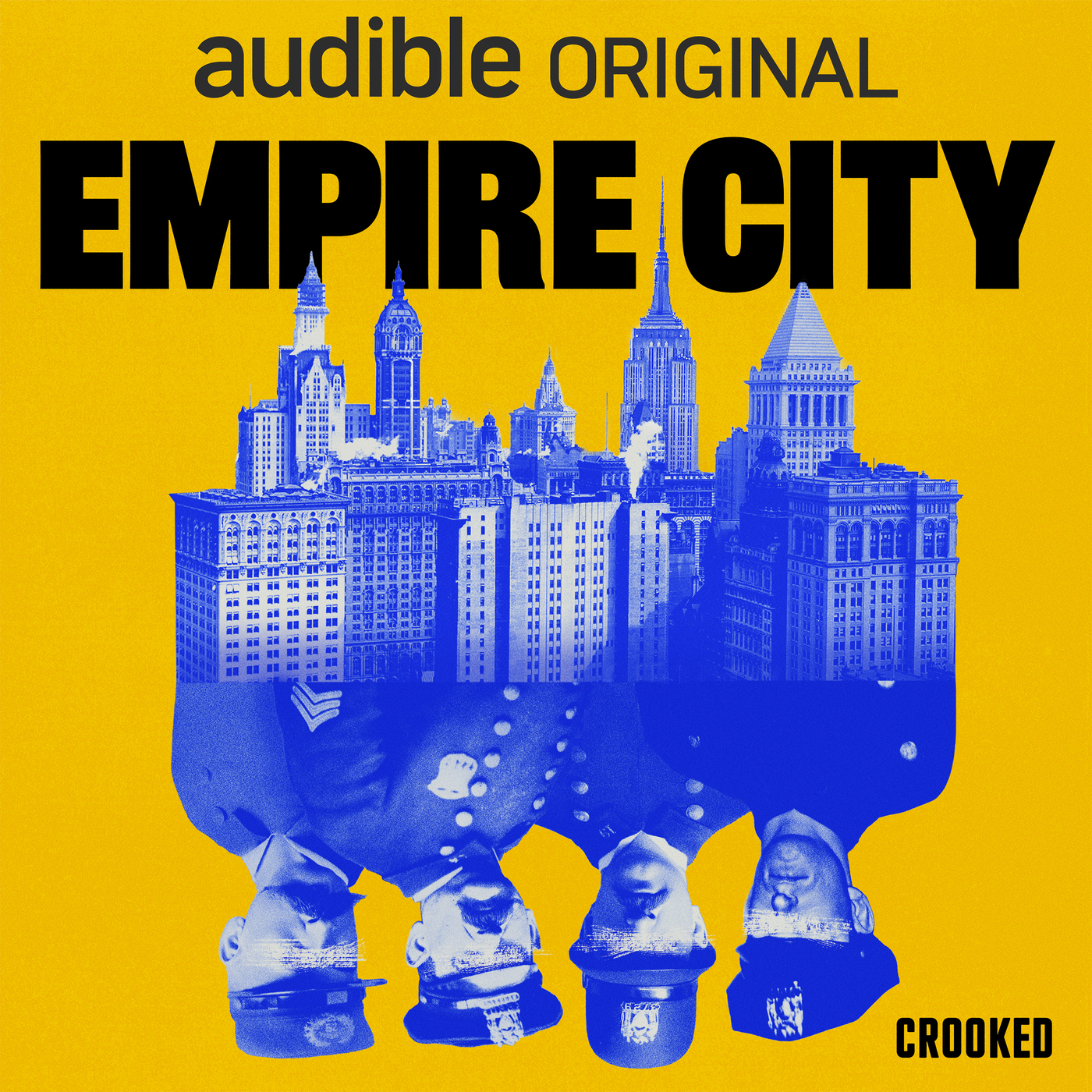
The narrator begins by contrasting the security he felt as a child with the vulnerability after his father's death, later discovering 1964 surveillance footage of his father, a civil rights organizer arrested by the NYPD for protesting police brutality. This leads into a historical examination of the NYPD's origins, revealing that early police like constable Tobias Boudinot in the 1800s were motivated by financial gain, using blanket warrants to kidnap free Black individuals like Ms. Brown and sell them into slavery, with judges like Richard Riker facilitating this. Meanwhile, abolitionist David Ruggles actively resisted by aiding fugitives and confronting slaveholders, embodying a fight for immediate freedom. The narrative argues that policing historically served to maintain order for the powerful, often targeting activists and marginalized communities, which contradicts the NYPD's modern mission of protection and safety, suggesting a hidden legacy of systemic oppression.
[MUSIC] The other day, I was hanging with my four-year-old daughter in Yola in the playground. She climbed nine feet into the air on a jungle gym. And then out of nowhere, she just jumped into my arms. She didn't warn me because she knew I was going to catch her. And when I was growing up, I knew the same thing about my fault. But even when I went out on a limb, they had my back, and they always would. So, 30 years ago, when I got a phone call telling me that my dad had died. Suddenly, the world felt a lot less safe. [MUSIC] I have a lot of pictures of my dad, including when I keep on my desk. He's standing with his arm around me, looking right at the camera as if to say, "Anybody that wants to mess with my son has to go through me." But sometimes, I wish I could unfreeze that image, because I've never seen a video of him, until now. [MUSIC] The footage is from 1964. There's no audio, it's black and white, but surprisingly clear. He's 31 years old, that's younger than I ever saw him, but there he is, my dad. [MUSIC] A black man, about six feet tall, wearing a dark-fitted suit in a skinny tie. He looks like me. He's moving and aracting with others. He's alive. [MUSIC] I want him to walk out of the screen so I can hug him. But the more I watch, the more I feel confused and angry, because this video is surveillance footage shot by a counterintelligence unit of the New York Police Department. [MUSIC] Back in the 1960s, my dad was a civil rights organizer, working for the Congress of racial equality. In March of 1964, they led a peaceful protest against police brutality. [MUSIC] He and other activists handcuffed themselves inside police headquarters in Lower Manhattan. In minutes after the NYPD's camera shut off, my dad was arrested. [MUSIC] Nine days later, the police commissioner addressed the incident publicly in an annual NYPD breakfast in front of 6,000 officers. He warned that he'd protect the city against violence and racial extremists. The room erupted in thunderous applause. [MUSIC] Then he identified three individuals that he said had sinister motives and a lust for power. The first was Malcolm X. The second was a man named Jesse Gray who had led rent strikes in Harlem. And the third was my dad, Mikasa Kumanika. [MUSIC] The NYPD says its mission is to- >> enhance the quality of life in New York City by working in partnership with the community. >> But that's exactly what my dad was doing. He dedicated his life to improving the lives of the most vulnerable people in New York. He protested racial discrimination in hiring, worked to desegregate schools and fought police brutality. In other words, he was doing the right thing. And for that, they called him an enemy and arrested him. [MUSIC] Who were they protecting when they did that? Definitely not him, the community you work for, me or even you. The second half of the NYPD stated mission- >> To enforce the law, to preserve peace, to protect people, to maintain order. But I keep trying to understand when maintaining order was the police keeping us safe. Because to me, in a lot of other New Yorkers, that mission doesn't sound anything like our experience with the NYPD. We usually see the police show up after the harm has happened. And then they treat everybody that looks like me like a criminal. And it's not just that. Back in the day, when women and black folks were marching in the streets for the right to vote, it was the police who took them to jail. And when steelworkers went on strike in Chicago, it was the police that shot them. When powerful people wanted to deny rights, they used the police to do it to maintain order. The way the police deal with the inconvenient people, the dangerous people who are fighting to make America a real democracy. That's the story that's been hidden in plain sight. I wish I could tell you that my dad's story was an exception. But once you know where to look, you start to see stories like this everywhere. At a time when we're debating where policing is going, we're going to tell you where the police came from. We're going to go back and uncover the untold origin story of the largest and most infamous police department in the world, the NYPD. From Wondry and Crooked Media, I'm Shinjaraa Kumanika. And this is Empire City, episode one. They keep people safe. Every single person in the US thinks the police have always been here. It's like, no, it hasn't always been like this and it also won't always be like this. Things change. On a cold February morning, educator and organizer, Mariam Cobbaz, taking me on a tour of Lower Manhattan. She's helping me understand what things were like when the NYPD first started becoming what it is today. This location that we're in is the corner of Broadway in Portland. We walk past a lot of cops. Mariam Cobbaz says if we saw what passed for law enforcement back then, we wouldn't even recognize him. Think of what you picture when we talk about police today. Badges, uniforms, guns, cars, walkie talkies. New York's earliest cops didn't have any of that. The first police in New York City were set up by its first colonizers, the Dutch. And what they had were green lanterns and hand rattles to sound the alarm. Because nothing says respect my authority, like a hand rattle. By the early 1800s, the rattler dudes are long gone. And in their place, we've got constables and watchmen. They spend most of their time doing things like ring bells and telling you what time it is. I always tell people when they come to New York City and they see this city in the way that it's built right now, that in the early 19th century, New York was a small town. The further we walk, the more I can imagine Old New York, long blocks of wooden buildings. There are horses and carriages, brick and cobblestone streets, rats. I mean, the rats are still here. There's no sewage system, so the air is filled with the stink that never really dissipates. And there's lots of rides. It feels like every week, a fight on a street corner escalates into a neighborhood brawl. Because every day, there's more and more people pouring into New York, including a growing number of black folks. It was hard to, I think, escape that. And I think if you don't understand New York as a small town, it's hard to understand other things about New York. Like how it's not always clear who to call when you feel like you're in danger. So let me tell you about this free black woman named Ms. Brown. She's hanging in the house doing laundry when she hears a knock on the door. She opens it and a black man introduces himself. His name is John Hill. He says they're related, that he's our uncle, and he needs a place to crash. At first, Ms. Brown is not sure if she recognizes him. But after they chat for a while, he does start to look familiar, so she and her husband say, "You good, brother, come on in." One evening, John Hill tells Ms. Brown, "I'm going out for a walk, but I don't really know this area. Can you come with me?" I imagine him heading out, kicking it, two black folks enjoying conversation. That's until out of the corner of her eye, Ms. Brown catches a white man coming up behind her. Before she can get out of the way, the man grabs for her. He's trying to kidnap her, and Ms. Brown is fighting back. But her so-called uncle, John Hill, believes her in the arms of the kidnappers. When her neighbors run up to see what's going on, they try to wrench Ms. Brown free. But the kidnapper has backup, and Ms. Brown has dragged away down the street. Everybody on the block hears her screams. The story of Ms. Brown is like folklore, and the details vary in different accounts. But what we do know is that John Hill was offered money by a white man to lure Ms. Brown into the kidnapping trap, so these men could send her into slavery in the south. What would you do if you saw someone taking your neighbor away against her will? Would you call the police? The people who saw Ms. Brown's kidnapping wouldn't, because the white man, snatching a free black woman off the street, is a police officer named Tobias Boudinot. Police officers like Tobias Boudinot boasted that they could arrest and send back any black, quote-unquote, to the south. Before I started this journey, I never heard a Tobias Boudinot, or police in the free state in New York, being involved in slavery. These motherfuggers are taking people off the street, doesn't matter if you're, you know, self emancipated, by person, or if you're free, they're just sending people back to the south, kidnapping them. But the more you look, the more you run into his name. I kept reading about kind of this nefarious, mysterious character by the name of Tobias Boudinot. Historian John Wells kept finding that name while he was researching early policing in New York. He is a police constable who sort of represents that part of his community that wants to keep black people in check, you know. I mean, he's a very violent and vile human being. And it's not just that Boudinot was racist. He's also broke. He's in his late 20s, living in an apartment with his wife and kid in Lower Manhattan. And being a constable doesn't pay enough. I mean, the pay was extremely meager. His spouse would not have had a job, right? So he has a lot of weight on his shoulders. He doesn't have a shiny badge pinned to his shirt. And like Rodney Dangerfield, he doesn't get any respect. They have long hours, there's low morale, they're poorly trained. And so there is every incentive in the world for them to look for ways to enhance their income. And Boudinot is always using his position to hustle up some scratch. The police constables for like entrepreneurs. Historian Wilbur Miller says the police in the 19th century didn't walk in a sign beat like we think of today. They were reactive police. That means Boudinot isn't preventing crime. He has to wait until something happens. For example, you were knocked down in the street, you know who didn't. You go to the court and engage the services of a constable who for a fee would get out or warrant and make their rest. So when a crime happens, it's bad for you, but for Boudinot it's an opportunity. So somebody steals your gold watch. You go to the court, you talk to the constable, they really know the underworld, right? So it worked out that you get part of the value. The constable would get part of the value. And the thief would be free from arrest or might even get a little bit of value himself. It's called compounding a felony. You're contributing to the crime itself, right? That seems crazy. It seems crazy, but that was the system. Like they have an incentive and a way to keep crime going. Yes, exactly. They have an investment in crime. But even though Boudinot's making a little cash here and there, his money problems are only getting worse. As Landlord comes and takes his furniture out of his apartment because he hasn't been able to pay his rent. And if sitting on the floor of an empty apartment isn't humiliating enough, newspapers are circulating lists of people who are bankrupt for being sued for not paying debts. And the fact that Boudinot's a constable doesn't stop them from putting his business out there. But as Boudinot is panicking, what he doesn't know is there's something big is about to go down. It's going to change everything for him in his money situation. But it doesn't start in New York. It starts in Virginia. A dozen or so enslaved people decide to leave Norfolk, Virginia to escape from bondage. They want to get to a state in the north where slavery has been abolished. For this group of black fugitives in the south manages to steal a boat. Late one night, seventeen of them squeezed themselves on board and head north to New York. After a few quiet days at sea, their boat floats into New York City. Some of the folks on board must feel like they made it, that they're finally safe. But it's not that simple. Their ability to secretly make their way up the coast of the northeast sets an incredible complicated set of patterns in motion. Virginia's governor hears about the escape and he's infuriating. So he taps into his allies up north. He writes to New York's governor and basically says, "Can you help us get our slaves back?" For the 13th Amendment ends most slavery in 1865, northern states are obliged to return and slave people to the south if they catch them. So New York has Virginia's back. The governor agrees to recapture the fugitives. He just needs to find someone to track them down and bring them in. And a broken, desperate, costable like Tobias Boudinot seems like the perfect man to get the job done. The governor of New York hands Boudinot a warrant. It essentially says, "These people I have charged, Constable Boudinot with finding." But this isn't a regular arrest warrant. This is called a blanket writ which gives Boudinot the legal right to arrest any black person in the state that he suspects of being a fugitive. And it goes way beyond just the 17 fugitives who escape Virginia. In every newspaper across the country, there are advertisements. He's ads that say, "She ran away from Virginia farm five years ago. Anybody who can give me information on her wear-up outs, I will reward them with $25 or $100." This warrant is a golden ticket, finally an answer to his money problems. Boudinot is pretty much got carte blanche to arrest people, collect reward money, and he protects that piece of paper with his life, he guards it with his life, keeps it in his hat, he keeps it in his vest pocket. So basically, this white cop has a piece of paper that makes him look at any black person as potential money in his pocket. And it's this paper that gives Boudinot and Constable's like him carte blanche to kidnap a free woman like Ms. Brown. But before Boudinot can sell someone into slavery and get his cut, he has to drag them into court, stand in front of the bench, and provide evidence that they're actually a fugitive. And tragically, this isn't hard, because the judge who handles most of these cases is the city recorder, Richard Riker. That name might sound familiar. This was before Riker's aisle and existed, but recorder Riker is part of the same family that owned the land, the notorious and deadly Jaya was built on. Riker would declare that person to be the self emancipated runaway, and within hours that person was sent to the south. He's a racist, with connections to the folks that run southern plantations, and he makes it clear that, quote, "we northern judges damn the abolitionists." And in this case, it turns out that a slave owner is claiming that Ms. Brown is his property. And so when a respite Constable stands to get paid, and acclaimed by a slave owner are enough evidence, and Ms. Brown is sent south into slavery. The Buddha wasn't just selling black folks into slavery because he's a racist, even though he was. And it's not because he had bad training. He didn't have any kind of training. It's because of the cash he stands to make. The real story that's hidden when we write off Buddha was a no-nothing racist cop, is that there's a whole network of people from slave owners in the south to their business partners in Virginia, New York making money off these sales. No matter whether a state calls itself a free state or a slave state, what's good for their wallets is the real law. There's nobody in the legal system taking responsibility for their actions. Within the police force, within the legal community, there's nobody telling Buddha not that. They shouldn't be doing this. And part of the reason no one's telling Buddha not to stop is that a lot of white New Yorkers aren't comfortable with their free black neighbors. Some of them see free blacks as competition for jobs, a threat to their economic safety that these police constables can handle for them. That entrenched racism, combined with the opportunity to make money, makes it easy for Buddha not to recruit other police into his network of kidnappers. And the kidnapping business starts to boom. But inside houses, churches, and abolitionist meetings, New York's black community is quickly catching up to what's going on. And one man is about to take his gloves off. I'm back on the streets of Manhattan with Mariam Kaaba. And she's telling me that she started doing tours for her friends when they would come to New York, visiting all the standard attractions. But it didn't take long for her to get tired of that, because she felt like it was given them a white wash version of the city's history. And I was super interested in black life, like what was going on with black people here. So over time, I started kind of like, stopping doing the stupid tours that I were like the, okay, we'll go to the, you know, we'll go to the Statue of Liberty or the Empire State. We'll go to all these places, but I'm also going to throw in some black shit. That was basically the bottom line. And that's how we ended up standing next to a glass skyscraper that was once the epicenter of New York City's abolitionist movement. This corner used to be home to a bookstore owned by a man named David Ruggles. Everyone's heard of Frederick Douglass in his courageous escape, but Ruggles was the man who helped him when he first arrived in New York, fresh out of slavery. Ruggles gives him a place to stay and food. His bookstores a stop on the Underground Railroad, and Frederick Douglass is just one of the many black folks that Ruggles supports. And he's the person who, basically in my opinion, embodied the first, like, full-time black activist in New York. And one thing about David Ruggles then inspires Maryam Kaaba is his philosophy of practical abolition. He believed that you did what you needed to do for your people, and that as human beings, it's really, really important for us not to be subject to listening to people tell us that we're going to eventually get free, that the notion of gradual freedom was bullshit. Ruggles says that we need freedom now, this instant, and one reason why gradual incremental freedom isn't enough for the black folks that are fighting to buy as Boudinot in his crew. Is it for them? The heart is a slavery, aren't theoretical. Your lived experiences is real and brutal as a whip tearing into your flesh. Remember Miss Brown? After a judge upholds her kidnapping, she's sold in the slavery and desperately tries to get free again. I hope she did, but I also know that's probably not what happened. We have one letter she wrote trying to find her mother, pleading for her to send her free papers, and then we don't know anything else. Now let's be clear, Miss Brown was living a full life as a black woman in New York, and because of a police officer, her freedom and even our record of her future is erased. Her capture is exactly the kind of thing Ruggles is fighting against, and he doesn't wait for something to happen. Ruggles finds out that there's a possibility that a family in Brooklyn, right in the heart of Brooklyn, are in fact holding three people as slaves. And without waiting a second, Ruggles puts on his coat and heads to Brooklyn. He goes to the front door of this family, the patriarch is not there, but his wife is there. And she says, you know, basically what do you want? And he says, I hear that you're holding people here as slaves, the contrary to the laws of the state of New York. And then before she can really answer, he hears the people in the basement. They're crying out, we're here, we're here. The lady of the house says these three are servants. And then she tries to prove that the black folks being a hell captive in her house are paid workers. And she says to one of the enslaved people, isn't that true? And the woman says, I've never received a penny in payment. The only thing you do is you hit us about the head and orders around and you keep us as your property. Looking at this white woman who's holding enslaved people in line straight to his face, Ruggles is furious. He tells the three enslaved people, y'all coming with me. I mean, he is literally saving people from slavery on a weekly basis in New York City. I mean, that's bold. Even though that's the law, that's still bold. He was very bold. He co-founded a group of anti-slavery activists. Ruggles started the New York Committee of Vigilance and the New York Committee of Vigilance became the institutionalized arm of the underground railroad. Black women in the organization figure out how to get over a thousand people to donate a penny a week. And that translates into some real money. Now, the Committee of Vigilance can get to work. They created their own community policing system because they knew the cops were in on the act. And they were not expecting to have good relationships with Tobias Boudinot. They knew that those were their enemies, that they were trying to do something to them. They did not walk. They say, "If these folks are going to keep coming after us, we'll start night watches in our own neighborhood. And we'll get some of the best abolitionist lawyers to face judge Riker in court." And as a matter of fact, why does Riker, one white man, get to decide whether black folks get sent into slavery? If we have to go through their corrupt courts, let's at least try to get a jury of our peers to hear these cases. In the whole time the Committee is fighting with those strategies, Ruggles is also fighting with one of his most potent weapons, his pen. He deeply understood the value of literature. He's your predecessor around the notion that media makes a difference. Ruggles was constantly writing in black newspapers. He published his own periodical call "The Mirror of Liberty." And in their pages of the most widely circulated abolitionist newspaper, the liberator, he spoke truth to power. The most extraordinary samples of human depravity that have disgraced our city were police officers and judges. We have not protection in law, because the legislators withhold justice, and at this point, we may no longer depend on the anti-slavery societies. We must look to our own safety and protection from kidnappers, remembering that self-defense is the first law of nature. Ruggles writes a warning, "Colored people beware. A certain constable in this city is very active in entering the dwellings of colored people, pretending to have search warrants, and ransacking their houses from cellar to garret in search of fugitives from slavery." He says, "Don't let anybody in your house unless you know for sure they're your friends. He coins a term for Budno in his gang. The kidnapping club." At this point, Budno has to face facts. Black people are not just going to act we ask and say, "Oh, okay, you know, I know I'm innocent. I'll just come with you to prove my innocence at the police station." They are armed with knives. They are ready to kill. It's a potent form of self-defense, and they are ready to defend themselves and their personal freedom whenever necessary. So Budno decides to go directly after the most outspoken voice of the resistance. David Ruggles. One night, the kidnapping club pays a visit to Ruggles' home with the warrant for his arrest. But Ruggles is tipped off and he sneaks out the back door. I know he had to be relieved because he barely got out. "There were bounties placed on him. He was hated by Wall Street. He was hated by the cops. The arsonists were constantly bombing his house. Like burning it down, he would rebuild, we would move to new places constantly to set himself up." But he's not about to go into hiding. The next day, he marches down the city hall to confront the men that tried to arrest him. Budno was waiting and he pounces on Ruggles. He shoves him up against a marble pillar trying to intimidate him. He says, "I was after you last night." And then Budno drags Ruggles into court. Ruggles is charged with resisting arrests, but the committee of vigilance organizes a quick defense. The charges don't stick and eventually he walks out of city hall, a free man. "David Ruggles is one of my favorite people who I've never gotten to meet and I feel a kinship with him on multiple levels." Mariam Cobbett says she draws on the spirit of David Ruggles and all the work she does. When I do defense campaign work, I think about him, my interest in publishing, I think about Ruggles who predates that. When I'm out in the streets protesting, I think about Ruggles and what he did, so much to make it possible for me to be here in this moment and do what I get to do. And like Ruggles, she made the risky decision to become an outspoken critic of the police. I'm definitely not in any way in the league of danger that a Ruggles experience on a day to day basis, but you're going to, you're going to be at risk if you take unpopular positions. You have to take precautions to try to be as safe as possible, but you also have to be completely aware of the fact that you're actually never going to be safe. And the committee of vigilance knew they weren't safe. Despite all their organizing, fundraising, and advocacy for two years after Miss Brown is stolen off the street, the kidnapping club is still going strong. And just a few months later, when the kidnappers snatch another black New Yorker, they say, "We tried to do this peacefully. Now it's time to try something else." With the kidnapping club and full effect, tensions are still high between police and black New Yorkers, but people who live in their lives as best they can. In one spring day, a black man named William Dixon wakes up early to get ready for work. Dixon is six feet tall, known in his community for his powerful presence and strong voice. He sings in his local church on Sundays, and during the week he works a variety of hijabs. This morning he's headed to a painting gig, so he kisses his wife and heads out the door. Before he knows it, he's approached by none other than Tobias Boudinot. But of course, that's not why they're really there. He's a big guy, and they're afraid that if the accused of him being a runaway, he'll fight for his life. Dixon's wife learned that her husband has been arrested. She runs to David Ruggles in the committee of vigilance for support. The clock is ticking. Tobias Boudinot is going to take Dixon to stand before Richard Riker as soon as he can. "And the black community knows exactly what Riker's predisposition is." Black New Yorkers have been through this before, but this time they catch a break. They have a full week until Dixon is scheduled to appear in court. This gives the community time to strategize. They gather witnesses who can vouch for Dixon, and the day at a trial, they roll up deep to Richard Riker's courthouse. Once they get there, the usual playbook starts to unfold. Boudinot and his people provide evidence to Dixon's property that he belongs to someone in Baltimore. And that's when things pop off. A huge crowd of black folks bum rushes the front of the courthouse. Riker is completely bewildered about what's going on, and they manage to rest control over William Dixon from the authorities and take him out of the courthouse and into the streets of New York. And then this whole melee erupts. Someone tosses a knife in a dagger to William Dixon, and after a struggle, he gets away. A judge in a courtroom nearby rushes out to see what's causing the commotion. Whoever he knows it, someone behind him grabs him by the neck. He's sort of manhandled by a black woman, you know, kicks him in the rear end. Yeah. Exactly. That's the moment in which the audience cheers. The woman's name is Kaziah Manning, and records show that she and a man named Jesse hold the judge down while black folks beat him to a pulp. Another man grabs a whitewash brush and snaps it over the head of a constable. Someone else jumps in and starts hitting that same officer. At that point, Tobias Boone realizes that the police have lost control, so he pulls out a gun and aims it at the guy pummeling his fellow officer. Everyone braces, as Boone knows squeezes the trigger. When nothing happens, the gun miraculously fails to go off. In the confusion, William Dixon gets away from the courthouse. He runs a few blocks, sees a basement on Duane Street, and dives into it. The kidnapping club sees him run away and follows him. They scour the street until they find him, and then they take him to prison. But there's no way that the committee of vigilance is giving up. Over the next few weeks, they keep fighting a court and raise bail money for Dixon's release. Four months after the black community struggled to free Dixon at the courthouse, the committee of vigilance gets a letter from David Ruggles. It is with regret that I make this letter a substitute for my personal appearance. Time and all of his effort is taking its toll on him. Though declining health compels me to retire from the city and take refuge in the country, my heart is with you in the cause of freedom. Ruggles develops a chronic illness and leaves New York for Massachusetts to recover. But he knows folks are anxious about William Dixon. Dixon has disappeared since being released on bail, and people want to know what happened. The Ruggles shares one final detail about Dixon to lift him around and strengthen their resolve. He is not kidnapped by that gang of desparados which infest our city as has been reported. He has taken the advice of his friends and retired to the country. William Dixon is free, but New York's black community has to face a harsh reality. As long as there's money to be made from slavery, they're going to be targeted by the police. When people said that slavery was going to end, people thought they were bonkers. People did. People thought, "Yeah, this is natural. It's always been like this. What do you mean? A lot of people can't integrate. Then I smart. They don't know. They can't do." And people are like, "Mm-hmm. Got to end." Now. Got to end now. Now, we want it now, and Ruggles and them were tarnished for that. They died for that, for that view. But you know what? The three of us are standing here today. We're here because of all of that. On a warm Friday morning last spring, my daughter and Yola and I met my producer Sam at Central Park. Central Park is one of my daughter's favorite places to visit in New York City. When we're away from cars surrounded by green grass, she can yell as loud as she wants and run as fast as she can. I can tell her makes her feel free. But part of what I like to come to Central Park is that this land in Yola's running on was once home to Seneca Village, an early 19th century free black settlement. At a time when it wasn't remotely possible to rely on the police for protection, black folks built a community on this land with schools, churches and gardens that existed for 32 years. When my daughter and I come here to play, we feel connected to that. 200 years of black history in New York, the radical possibility of freedom and community, the possibility my father fought to protect. As I sit playing in the sandbox within Yola, I see a police officer approaching the edge of the playground and my body instinctively stiffens. I look down and she's still playing, completely carefree. After me wants to freeze her in this moment, but then something comes over me. The police are already a part of her world. I've seen them in the cartoons she watches in her toys. Then they're even cops at her school and I start wondering, what is she actually picking up from all that? And Yola, may I ask you a question? What do you think the police do? She puts down her sand shovel and her eyes start back and forth, searching for the right answer. I mean, that is what the police say their job is, but when I hear her say it, I start to panic. As her father, part of me wishes I could just leave the truth hidden and protect her innocence. I wish I could tell her that Tobias Buno and the kidnapping club were just bad apples and that after they faded out, New York's police grew into something that we all could rely on to protect us. But that's not what happened. I don't have all the pieces of the puzzle yet, but I did find another piece that gets me one step closer to understanding the NYPD as we know it today, and it starts with a murder. We'll get into that next time. This season on Empire City. The first person to use the term organized crime didn't mean it in the sense of Don Crowley own and the Mafia. He meant it in terms of the police department. I mean, police is the ground level occupying force of empire, right? An empire is only as powerful as their forces holding the weapons. They wanted me to write about the New York City police department, but without using the words violence or corruption, which is effectively impossible. There hasn't been violence and corruption. I would like everyone in New York to know they shouldn't be fearing the police. They should be revering the police for the job they do. Wait, wait, wait, Edwin, did you just get upset because a black man did it break the law? Wake up, bro. Remember who you are. What would you tell that young aside 10 years ago? I would tell that poor, terrified 19-year-old baby that one day you will defeat the NYPD. The nightmare is going to end, bro, trust me, just hang in there. Empire City is made with the commitment to ensure that the stories of those who were and still are impacted by the NYPD are always part of the stories we tell ourselves about the police, about America, and about democracy. To learn more, go to crooked.com/empirescity or check out our show notes. Empire City is a production of "Wondry and Crooked Media." I'm your host and executive producer, Changerai Kumanika. For Crooked Media, our senior producer is Peter Breznan. Our managing producer is Leo Durang. Our senior story editor is Diane Hodson. Our producer is Sam Redell. Bowen Wong and Sydney Rap are our associate producers. Our design mixing an original score by Axel Cucutie. Our historical consultant and fact checker is History Studios. Our voice actor is Demetrius Noble. For "Wondry," our senior producer is Mandy Gorenstein. Our senior story editor is Phyllis Fletcher. Our coordinating producer is Mariah Gossett. The executive producer of "Push Black" is Lily Workne. Our producers at Crooked Media are Sarah Geysmer, Katie Long, Tommy Vittor, and Diane Hodson. Executive producers at "Wondry" are Nigere Eaton, George Lavender, Marshall Louis, and Jen Sargent.
Podcast Summary
Key Points:
The narrator reflects on personal safety and loss through childhood memories and the discovery of surveillance footage of his father, a civil rights activist arrested by the NYPD in 196
The history of early policing in New York is explored, revealing that constables like Tobias Boudinot operated for profit, often kidnapping free Black people into slavery under legal warrants.
Activist David Ruggles represents early abolitionist resistance, directly confronting slavery and supporting fugitives, highlighting community efforts against systemic oppression.
The NYPD's origins are tied to maintaining order for powerful interests, often targeting marginalized groups, which contrasts with its stated mission of public safety and partnership.
Summary:
The narrator begins by contrasting the security he felt as a child with the vulnerability after his father's death, later discovering 1964 surveillance footage of his father, a civil rights organizer arrested by the NYPD for protesting police brutality. This leads into a historical examination of the NYPD's origins, revealing that early police like constable Tobias Boudinot in the 1800s were motivated by financial gain, using blanket warrants to kidnap free Black individuals like Ms. Brown and sell them into slavery, with judges like Richard Riker facilitating this.
Meanwhile, abolitionist David Ruggles actively resisted by aiding fugitives and confronting slaveholders, embodying a fight for immediate freedom. The narrative argues that policing historically served to maintain order for the powerful, often targeting activists and marginalized communities, which contradicts the NYPD's modern mission of protection and safety, suggesting a hidden legacy of systemic oppression.
FAQs
He was a civil rights organizer for the Congress of Racial Equality, leading peaceful protests against police brutality and working to desegregate schools and fight racial discrimination.
He was arrested after participating in a peaceful protest where activists handcuffed themselves inside police headquarters, and was later publicly labeled as having 'sinister motives' by the police commissioner.
They often engaged in 'compounding a felony,' where they would negotiate with thieves for a share of stolen goods instead of making arrests, and also kidnapped free Black people to sell into slavery for reward money.
It was a warrant that allowed him to arrest any Black person in New York suspected of being a fugitive slave, enabling him to kidnap free individuals like Ms. Brown for financial gain.
David Ruggles was a Black abolitionist and bookstore owner in New York who helped fugitive slaves, including Frederick Douglass, and actively resisted kidnappings by confronting slaveholders and advocating for immediate freedom.
The speaker argues that the NYPD's stated mission to 'protect people' and 'maintain order' often conflicted with reality, as police historically enforced laws that denied rights and targeted marginalized communities.
Chat with AI
Loading...
Pro features
Go deeper with this episode
Unlock creator-grade tools that turn any transcript into show notes and subtitle files.
 PodcastTranscript AI