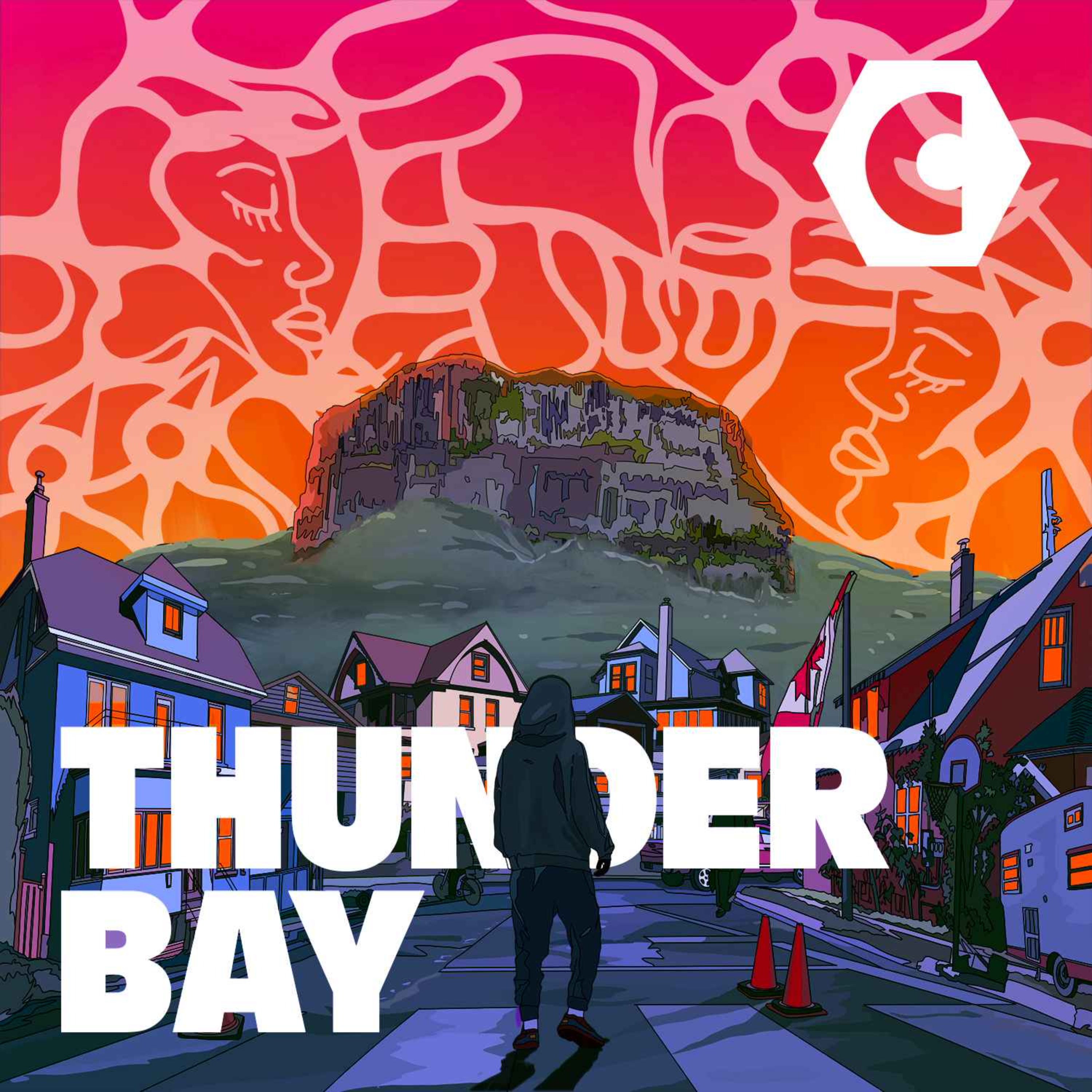
The podcast examines the systemic crises in Thunder Bay, Ontario, centered on the dangers faced by Indigenous youth. Many travel from remote northern communities to attend Dennis Franklin Cromarty High School, a school shadowed by the unsolved deaths of several Indigenous students found in local rivers. Thunder Bay is described as potentially Canada's most dangerous city for Indigenous people, with nationally high rates of homicide and hate crimes, and a police force accused of racism and negligence. The investigation explores the city's identity as a historically transient resource town, which has bred an insular "northern alienation" and deep social divisions. This hostility is manifested in violent attacks, like the murder of Barbara Kentner by a trailer hitch thrown from a car, and pervasive online harassment targeting Indigenous residents. The host, connected to the city, seeks to understand the interconnected social, historical, and systemic "what" behind the tragedies, rather than the "who," highlighting a cycle of violence, inadequate institutional response, and a community grappling with its legacy and future.
This podcast is funded entirely through support from listeners like you to continue this work We need your help visit patreon.com/canadaland and keep independent journalism alive for as little as a dollar per month First day of school at Dennis Franklin Cromardy High Orientation assembly a teacher takes the stage Okay, good morning everybody Nice to see everyone nice to see tons of familiar faces lots of people that are back The first thing that I want to mention is that here at the FC. We have a technology policy It's really important that you put your headphones in your pocket, okay? But it's still a sign of respect that your ears are open and that you're listening to the person up in front of you So if you have at first, it's a mixture of rules and motivational advice that'll be familiar to anyone who's ever sat through a high school assembly Students are treated with respect and dignity and in return are expected to demonstrate respect for themselves for others and for property Then comes a warning you won't hear at other high schools But the thing that you need to remember is that in the What are we 18 years DFC's been open now? I think there's been students that have left their homes They're northern communities to come to school here and haven't gone home Their bodies have gone home and it cast it My name is Ryan McMahon I come from a small initiative a community not far from this city and to us thunder Bay was the big city Over the past two decades in this city nine indigenous teens were found dead Usually their bodies were found in rivers and marshes. They were all from remote First Nation reserves I'm going to say their names now Jethro Anderson current strange Paul Panna cheese Robin Harper Reggie Bushie Kyle Morso Jordan Wabas Josiah Begg And Tammy Kiyosh Five of them went to school here at DFC Their deaths hang over this school like a dark cloud Everybody knows about them Including Megan today is her first day of high school Kind of scared nervous Making friends Keeping my grades up are some things I'm ready to move new school new kids New teachers, but Megan is also living in a new home with new grownups looking after her who she's never met before From grassy narrows But now I live here, so I just moved here just a couple days like yeah Megan like her classmates here at DFC comes from very far away The Ojibwe reserve where she grew up has just 950 members and no high school Same with 48 other remote rural communities Scattered across northern Ontario some over a thousand kilometers away from here Most of which you can't get to by car Many kids flew in just a day or two ago on tiny prop planes first time in a plane for most first time away from home Anyone is vulnerable at the age of 14 But these kids are especially at risk Many of them have never even set foot in a city before And their first city Happens to be this city Thunder Bay has repeatedly had the highest homicide and hate crime rates in the country It might be the most dangerous city for indigenous kids in the world They keep turning up dead some by accident from alcohol and drugs and some We just don't know There's been evidence of foul play of suspects who had motives to harm these kids But nobody has ever been arrested or charged A provincial inquest one of the most expensive and wide-reaching ever held Opened up these cold cases Reinvestigated each one and solved none Police reporters private detectives they've all come up empty There are podcasts that try to solve murders This isn't one of those podcasts the question I'm trying to answer is not who killed all those kids It's what killed those kids because something strange has been going on here I started noticing it a couple of years ago I have a personal connection to this town that goes back generations So when Thunder Bay makes the news I take note And this town just keeps making the national news According to Statistics Canada there are more murders committed here per capita than anywhere else in the country Making Thunder Bay the murder capital of Canada The city's mayor and his wife Marissa have been charged with one count each of extortion and obstruction of justice Our documents show the target of the alleged extortion was former lawyer Sandy Zaitsaf Zaitsaf did show remorse saying he's humiliated beyond belief and that his actions were grotesque to the extreme City police chief J. P. LeVec has been charged with breach of trust and obstructing justice For years the city's cops have faced accusations of systemic racism The evidence is clear that an evidence-based proper investigation never took place So how big of a concern is human trafficking in Thunder Bay and in Northern Ontario? I think it's a pretty huge concern. In fact almost a third of all Indigenous hate crimes in Canada are reported in Thunder Bay None of this is a secret but it's disconnected Why does it all keep happening here? What's with this place? What I want to find out is What do all of these things have to do with each other? This is Thunder Bay I need you to know there is an activity down by the river that involves throwing Indigenous people into the river when they're too drunk to defend themselves You tell me, doesn't that sound like bloodshed? You never hear about convictions and there's always bodies in the river or something Nobody's pushing them in. They just go to the water. It's a natural progression When people are sick, when moose are sick, when animals are sick, they go to the water One time I dealt with one of the Thunder Bay police officers And that fucker told me I can't wait to tell your parents you're murdered I can't wait to knock on their door And tell them you're dead Like who says that to 16 year old? You know mind you at the time He was charging me for arm robbery because one of the johns wanted his money back Missing people don't have a high priority. Native missing people Fuck, they're always running around. It's that I'm surprised even their parents would call in That they're missing. That most of them don't Another missing female who would have guessed that native, uh, this is her name Okay, whatever when I got sexually assaulted here But please they asked me when I was wearing they asked me if I was under the influence and they asked me If I tried to like engage that person And they just remember thinking these are people that are supposed to protect me I hate to sound like a racist, but it's the northern population We just harbor them in and nobody is in control of their behavior. They don't know civilization I am, I am sandy Shut up, Gerald, Alexander, Zeitzeth Thunder Bay, just I don't have an answer. It seems to just breed hate Thunder Bay is a fucking murder city It's the safest city you'll find in Canada Really? These last two years have been such a clusterfuck What the hell is going on in Thunder Bay? This place is the shit you'll down here Across the city limits and the sign says welcome to the city of Thunder Bay Superior by nature, population 110,000 Superior is a reference to Lake Superior, the largest freshwater lake in the world Which the town hugs the northwest corner of By nature is a reminder of the city's pride. It's proximity to rugged natural beauty On the horizon to the east, across the water, is a formation of huge volcanic rocks called the Sleeping Giant Or as the Anishinaabe call him Nanobujo Because when you look at it from the city, that's what it looks like An enormous man in the water flat on his back The town itself is low and flat and sprawling The sky is just enormous It's relentlessly bright here crystal clear There's no relief from the sun or in the winter from the ferocious cold winds coming off the lake It's hard to tell which side of the tracks is the wrong one Because there are train tracks all over Just as there are rivers winding haphazardly through the city It's a bad idea to use them as points of reference because they're so easy to mix up I've been coming here since I was a kid I ended up in Thunder Bay most winters for hockey tournaments, high school sports, and for family visits For my parents, Thunder Bay was a city where they came to party It's also the city they came to dry out They remember the fun but also the division, the tension Like at 1.30am when the native bar closed and everybody would pile out across the street to the other bar That's when the street fights would start So yeah, I was attracted to this place But the way my folks talked about it, it always carried a certain sense of menace I still have family here I still care about Thunder Bay I was fixated on it as a kid, always looking forward to my next trip here My next chance to eat pancakes at Perkins and shop for sneakers at the mall And I'm fixated on it now I keep coming back Something about it remains unsolved for me and I'm not the only one John Thompson grew up in Thunder Bay He left it, lived elsewhere, and then somehow it pulled them back in His hometown is his fixation, he covers it as a reporter for TVO, the public broadcaster He's my friend and he understands this place better than most Here's how he would explain it to somebody who's never heard of the place You're really in the middle of nowhere by global standards The next city of comparable size would be Susanne Marie, which is probably six or seven hours travel to the east Out west going to Winnipeg is probably eight hours and then down to Minneapolis is probably about eight hours So the north, you're looking at roads for probably about 500 kilometers or so and after that it's all flying It's a lot of Martian bog and there are a number of first nations All the way to James Bay to that to the north Thunder Bay to them is the service hub All first nations that are remote but one to my knowledge High school is not available The highway that takes you coast to coast in Canada runs right through it Thunder Bay is literally unavoidable Your population traditionally might have been more transient So you know obviously if you're having a transient population it is more prone to vice People behave differently when they're just passing through than how they behave when they're at home. According to John, Thunder Bay was never supposed to be anyone's permanent home in the first place It was a trading post for the fur trade then a way station for lumber and mining A place to take things from the land and then move on There wasn't an expectation that this was settled The expectation was in most of these towns will log what we can and then we'll shut it down We'll mine what we have to and what until it's not profitable anymore and then we'll get out What happened was a lot of people settled down and stayed Specifically Scandinavian people finish people settled here because This area ecologically is very similar to Finland What there was to do here for work in terms of the bush was something that was very familiar to them And following a loss in the civil war a lot of fins fled the country and came here Developed the population here that is the largest finished population outside of Finland in the world For generations, life here revolved around the work of extraction Well traditionally you would have finished grade 10 and you would have got a job in the mill When the forestry collapse happened in the 1990s It forced the Ontario government in particular to have to step in and provide services and governance Not having wanted to do it They didn't really know how to do it And it was met with and it continues to be met with resistance The settlers who came to Thunder Bay were immigrants But they stayed here against the odds built it up fought for it to survive Now they look at others who come here as the outsiders Even people like me You have this question that we always refer to as Northern alienation A sense of being alone to our devices And when power comes to town it's there's a sense that it's interfering Ideas from elsewhere are dangerous People from elsewhere are not welcome And so you will frequently hear counselors and the mayor condemn outside media Who are coming here to kick up a storm and make a great story and burn the city to the ground They don't understand us, they don't care about us, they're not telling the good part of the story Because they don't get us John is walking the thinnest line On the one hand, yes, he is blasting the insular close-minded attitudes of people who don't want media here Who don't want me, an outsider, to tell the story of Thunder Bay But he's also warning me Don't fuck this up Don't fuck me over for talking to you Don't take a dump on this place and then just walk away Because inevitably when this comes out People are going to be upset about the story you're going to tell from here So The question that they're always asking is how do we save Thunder Bay? How do we make it better? It's hard to hear Year after year after year and get windburn with how much trouble the city is in However, that doesn't absolve you from the responsibility to do something about it I don't know if I have a responsibility to do something about Thunder Bay To fix it I don't know if it can be fixed But I'm also not here to condemn it I've been coming here all my life and I want to keep coming here I called in a lot of favors to tell this story I asked a lot of people to trust us And I don't want to burn them or this place So I'm just going to try to tell it to you as best I can And I can't tell it to you without telling you about Barbara Cantor There were tears and there was anger I can't believe it got bad because it was so much It was standing room only today at the funeral service for Barbara Cantor She's got taken to us too early We all know that Today they focus on remembering Barbara and seeing her off one last time Late on a Saturday night, in the middle of winter 2017, a 34-year-old mother named Barbara Cantor was walking to a relative's house with her sister Melissa in the east end of Thunder Bay on Mackenzie Street, just one street up from Simpson Street A few days after the incident, Melissa gave an eyewitness account of all of it to the CBC It was about 114 in the morning We were leaving my sister's house and we were heading to my son's house just the next block over. This road is where there's a lot of huckers and everything that walk up and down those streets it's late at night You'll hear a lot about Simpson Street on an upcoming episode It used to be Thunder Bay's red light district We were walking along there I see in the car like it looked like he was going to go straight But then he turned on to Mackenzie Street towards us And the guy was hanging like halfway out the window Like his whole half his body was sitting outside the window And then I heard him He swore and said, "Oh, I got one of them" And then he starts laughing And then I turn back and then I look and I see my sister bent over She's like, "Miss, I got hit with something." She goes, "Look, see what it is." It took a moment to figure out what had happened The guy had hurled a rusted metal trailer hitch at them And it hit her sister Barbara in the abdomen rupturing her intestine And then I look on the ground and there's the trailer hitch It was like it's black, it's kind of rusty The ball on it's rusty It was the hitch and the ball I put a new hitch on my SUV this summer They're heavy They're weighted to pull 3,500 pound boats and camper trailers So to throw one out of a moving vehicle would take strength and purpose It would mean cocking your arm back awkwardly finding an angle in which to throw You'd likely have to take off your seat belt Shift in your seat, turn your body In that moment, she was still bent over in a lot of pain And she wanted to drop right then in there And she was like, "I want to lay down and want to lay down" It would take six months for her to die Braden Bushby was one of the four teenagers in that car He was the one who allegedly threw the hitch He was charged with aggravated assault Which got pumped up to second degree murder When Barbara died Well, majority of the people that do walk down in street are native You know what I mean? How did it not occur to him that this was a bad idea When he felt the weight of the hitch Why didn't he reconsider? Why didn't his friends stop him? Maybe because in Thunder Bay throwing things from moving cars at indigenous people Is sort of normal Just ask them It's actually not uncommon for something like that to happen That's correct The ladies that are getting it more targeted than the guys Sometimes when I'm sitting at the bus stop They'll just yell Indian or whatever I just kind of ignore it Um, yes, it is like a regular thing When I walk the streets Somebody throws stuff out like that I see the throw stuff out To me and to some other people Sometimes they yell It happened to me a couple times I was walking down the street There would be people throwing beer bottles at me I don't know what for maybe Because I'm native or I don't know Ask non-indigenous people about the attack on Barbara Kentner And many are just as certain of the opposite I don't know if that's normal I think a lot of our crime in the city right now is all race on race Not that I've seen but I've heard that happen sometimes But Thunder Bay is not the only place You can go anywhere, lots of other places Canada and the States and you're going to find I'm sure the same thing I think that's a one-off situation Have most unfortunate situation And I think that situation just reflected a bad image On First Nation population as well as As other populations in the city It might sound absurd to suggest That getting a trailer hitch thrown at you by a stranger While walking to your nephew's house and then dying Reflects badly on your community But the fact is It did It was made to The discussion of Barbara Kentner's attack And death Focused on her alcoholism Local news in Thunder Bay Is pretty sparse these days So a lot of people here get their information From a handful of Facebook pages and amateur news sites The comment sections are filled with rumors And rage A story spread online that Barbara was no angel herself That she had viciously attacked a young white man Years earlier It was a lie But no matter After that Came threats to Melissa Kentner's kids She had to leave the city It was Barbara's picture Not Braden Bushbees that made the news You Google him And her face comes up The only shot of him is with his hoodie pulled up And his head slung low Hiding himself during his perp walk Barbara was savaged online Someone dug up a video that had been secretly shot And uploaded to YouTube months before the attack It's an eight second clip titled Thunder Bay Zombies on Brody Street North And it shows Barbara Stumbling Her shirt off Arguing with her teenage daughter Text on the clip reads They just scrapped it out, ha ha It was uploaded by a user called Thunder Bay Dirty Thunder Bay Dirty was a popular website and Facebook page Whoever was behind it would post clips Of indigenous people stumbling around drunk Fighting or getting arrested Along with mocking comments These videos have thousands of views Most of it was supposed to be funny Like this Where the anonymous uploader sings in his best drunk Indian voice But some clips are just straight up rage Like this angry commentary about how filthy the city is Look at this shit Look what a fucking dirty that is Look at the sidewalks I can't even fucking roll over I still fucking pathetic it is The city is shit, look at it How the hell am I supposed to roll over blade in this Look at this This is complete shit Clean this shit up Fuck Thunder Bay Dirty is one of many sites like this There is the real concerned citizens of Thunder Bay A Facebook group where locals, the self-described real citizens Complain about panhandlers and convenience store robberies And a host of other problems that routinely get blamed on the same root cause The natives There are over 23,000 members of that Facebook group There are only 110,000 people in Thunder Bay Is there a difference between yelling racial slurs at people from your car And yelling at them on the internet? I suppose so Just like there's a difference between throwing fast food wrappers at a young mom From your moving car And throwing a trailer hitch at her But it's all of a piece And it happens here every day Months after Barbara's death There was another attack A guy was taken to hospital bleeding after he had eggs chucked at him from a moving vehicle The front page headline of the local newspaper joked that Egg toss incidents leave police scrambling It's all a joke To the press To the cops Racism is like this phantom that only half the city can see Those who see it feel haunted by it everywhere It colors every part of their lives Everyone else thinks you're foolish or crazy Just for believing that it exists The racism in Thunder Bay has many levels So you have to realize it's not just, you know, encountering someone who's going to Outwardly, you know, say, you know, "I don't want to serve you a coffee because you're indigenous" There's just a lot more subtle things here This is May Yeah, my name is May Catama, nurse practitioner at the Dennis Franklin Cromarty High School in Thunder Bay May sees the challenges in Thunder Bay very clearly I go into a store, I get followed I'm brown, yes But, like, I'm not going to steal, right? So you tell them now, you tell the clerks Well, you know, I'm just going to look around And sure enough, I mean, they're going to follow you in the store You see it systemically with the interactions with the police So there's that systemic racism And then there's the outward racism Where people say really nasty things And throw things at indigenous people as they're walking It's hard work making the phantom visible to people who don't want to see it Julian Faulkner does that work He's a human rights lawyer who goes after the police on behalf of indigenous clients He's been a constant thorn in the side of Thunder Bay's leadership The police, the police board, even the mayor He doesn't hold much back They represent, that is, the indigenous population represents Threat to the Scandinavian way of life that Thunder Bay represented This was their white-nirvana This is a community who is proud of who they are They are proud of who they are and that's the challenge In the south, when there is an allegation of racism You spend forever swinging at shadows In an argument about whether it was racist or whether anything was intended And whether it was really attributable to something else In the north, it's interesting I don't spend a tenth the time having to prove that it was a racist incident They will pretty well embrace that, yeah, these indigenous people are a problem And here's why I have never seen anything like it Thunder Bay is utterly immune to shame They are immune to the facts being disclosed about them It literally causes them to dig in And they continue And it's reminiscent of the deep south On the next episode of Thunder Bay The mayor, his wife, they're accomplice And they're one-time friend, multi-millionaire lawyer And convicted sex offender, Sandy Zaitsev I have absolute fucking proof That they tried to fraud me They have a forged fucking will Where, where, where, they claim the alleged I left my fortune of $50 billion to them Thunder Bay is produced by Jesse Brown and hosted by me, Ryan McMahon This episode was written by me and Jesse Brown Additional research by Brigitte Noel Reporting assistance by David Crosby and Jolene Bannick Music by Chris Dirkson Mixing and sound designed by Shandra Bullockon CanadaLands Managing Editor is Kevin Sexton A special thank you to the staff of Dennis Franklin Chromarty High School Special thanks to the Canadian True Crime Podcast For helping spread the word about this show You should check out that podcast too We are able to make this show only because of listeners like you You can help us keep going by supporting us at patreon.com/CanadaLand Please do Music by David Crosby and Jolene Bannickon
Podcast Summary
Key Points:
Dennis Franklin Cromarty High School in Thunder Bay serves Indigenous students from remote northern communities, with a tragic history of several students dying under suspicious circumstances, often found in local waterways.
Thunder Bay has high rates of violent crime, hate crimes against Indigenous people, and systemic issues within its police force, alongside a pattern of unsolved deaths and assaults targeting Indigenous individuals.
The city's history as a transient resource-extraction hub has fostered an insular, sometimes hostile culture, with significant social division and online vitriol directed at the Indigenous community, as exemplified by the murder of Barbara Kentner.
The podcast host, with personal ties to Thunder Bay, investigates the interconnected systemic and social factors behind the violence, rather than focusing on solving individual crimes.
Summary:
The podcast examines the systemic crises in Thunder Bay, Ontario, centered on the dangers faced by Indigenous youth. Many travel from remote northern communities to attend Dennis Franklin Cromarty High School, a school shadowed by the unsolved deaths of several Indigenous students found in local rivers. Thunder Bay is described as potentially Canada's most dangerous city for Indigenous people, with nationally high rates of homicide and hate crimes, and a police force accused of racism and negligence.
The investigation explores the city's identity as a historically transient resource town, which has bred an insular "northern alienation" and deep social divisions. This hostility is manifested in violent attacks, like the murder of Barbara Kentner by a trailer hitch thrown from a car, and pervasive online harassment targeting Indigenous residents. The host, connected to the city, seeks to understand the interconnected social, historical, and systemic "what" behind the tragedies, rather than the "who," highlighting a cycle of violence, inadequate institutional response, and a community grappling with its legacy and future.
FAQs
Students are required to put their headphones in their pockets during assemblies as a sign of respect, ensuring their ears are open to listen to the speaker.
Many come from remote First Nations reserves without high schools, often experiencing their first time in a city, which is Thunder Bay—a place with high crime rates and risks for indigenous youth.
Over two decades, nine indigenous teens have been found dead, often in rivers or marshes, with their deaths remaining unsolved despite investigations and inquests.
Originally a transient trading post, it became a settled community with extractive industries, leading to insular attitudes and tensions, exacerbated by its remote location and economic shifts.
Barbara Kentner was killed by a trailer hitch thrown from a moving car in 2017, an attack many see as racially motivated, but online discourse often blamed her and indigenous communities instead.
Sites like 'Thunder Bay Dirty' and Facebook groups spread mocking or hostile content about indigenous people, fueling division and misinformation in the community.
Chat with AI
Loading...
Pro features
Go deeper with this episode
Unlock creator-grade tools that turn any transcript into show notes and subtitle files.
 PodcastTranscript AI