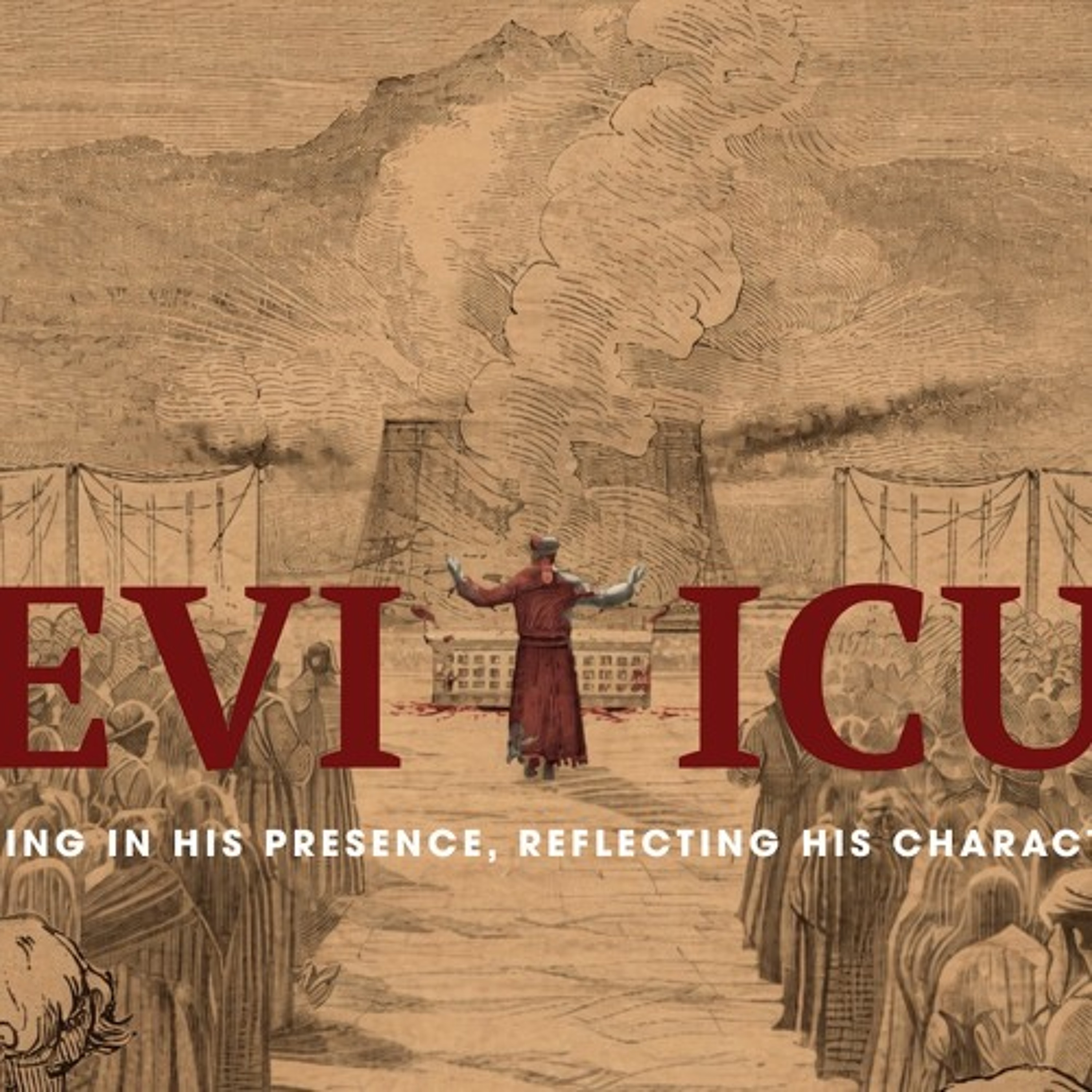
The Worship God Deserves | Dave Taylor | Leviticus 21:1–22:33
from Sovereign Grace Church Sydney
48m 7s
The Holiness Code in Leviticus, particularly chapters 21–22, emphasizes that true holiness means living as God is holy—distinct from the world, intentional in practice, and rooted in divine transformation. This is not a passive or compartmentalized faith but a comprehensive lifestyle where every aspect of life reflects God’s holiness. The passage highlights that believers are called to avoid profaning God’s name by living in alignment with His character, which naturally makes them stand out in a secular world. This holiness requires active, daily effort—striving to put off sin and put on godly living—as seen in scriptures like Hebrews 12:14 and 2 Timothy 2:25. However, human strength is insufficient; true sanctification is a partnership between believer and God, where the Holy Spirit convicts, transforms, and empowers. The message is urgent: we must reject the idea that holiness is easy or optional, and instead embrace a life of intentional obedience and trust. This not only transforms individual lives but also reveals Christ to a world that sees only conformity. Ultimately, the journey of holiness is not about self-sufficiency but about dependence on God’s power—“I can do all things through Him who strengthens me.” This reality avoids spiritual stagnation, preventing the danger of becoming “like Chippy,” who stopped singing in defeat. Instead, believers are called to rise, follow Christ, and live lives that reflect His glory, both in personal commitment and in the collective witness of the church.
But we are looking at the Holiness Code of chapters 17 through 27.
And as you know by now, the Holiness Code covers what it means for ancient Israel and therefore us today.
What it means for us to really live holy lives and what it means for us to be holy as he is holy.
For 16 chapters then of the book of Leviticus, the setting is the tabernacle and the tent of meeting.
We spend most of the time around the bronze altar and what it means to approach a holy God.
But from chapter 17 onwards, the setting is out in the world.
It's in our homes, it's in the harvest fields, it's in the marketplace, it's in the neighborhoods.
He's really describing for us what it looks like to be holy as he is holy when we're not just a church.
But we're out in the world to win the world and here in these chapters that we're looking at today,
where our focus is on chapters 21 and 22, the focus is on the holiness of the priests.
And the high and holy calling that they have on their lives to be holy is he is holy.
You know, I trusted it before we started to look at the book of Leviticus, maybe we heard a priest and we thought,
"Okay, that's just about passes, that's nothing to do with us."
But I trust by now you realize it has everything to do with us.
1 Peter 2 verse 9 says, "But you are a chosen race, it's talking to the church.
But you are a chosen race, a royal priesthood, a holy nation, a people for his own possession."
We are all royal priests, we are all called to a high and holy calling because we're all now part of the priesthood
and put our faith in Jesus Christ as our Lord and Savior.
And what God does for us then in these chapters is he doesn't actually introduce anything new to us.
There's nothing actually new in chapters 21 and 22 by way of big ideas that he hasn't covered already.
But what he does do in these chapters is he highlights and underlines and emboldens what he has already said.
Having already called us as a people to be holy as he is holy, it's like he highlights and emboldens
and underlines and exclamation marks that this is what that means for you.
As he emphasizes what that means for us as part of the royal priesthood.
And so in a sense, as I studied these passages, I really came to conclusion,
it's really like a milestone and recapping moment for us in the book.
It's like where we get to take stock of all that is taking place and make sure that we're applying it to our lives.
And so in some senses we're going to be looking at all of the Vedicists today.
chapters 1 through 22, I want to try and pull it together as best I can and to do that,
we're actually going to go over the last three verses of this section.
This is the Word of God and these last three verses sum up so much of what we're talking about in terms of the holiness code.
It's like just a stand together, just as a reminder that when we gather around God's Word,
He is addressing us.
We owe to Scripture the same reverence we owe to God, John Calvin said.
And this is what he tells us.
Leviticus chapter 22 verses 31 to 33.
So you shall keep my commandments and do them.
I am the Lord and you shall not profane my holy name that I may be sanctified among the people of Israel.
I am the Lord who sanctifies you, who brought you out of the land of Egypt to be your God.
I am the Lord.
Lord, would you bless the preaching and hearing of your Word this morning?
Would you bring it alive in our minds and in our hearts?
Would our lives be changed as we see who you are?
And what that means for us?
In Jesus' precious name, amen, please take your seats.
You know, it was over a year ago now that Austin Lohke, pastor of Canada,
brought up the idea to me and the team of us preaching through Leviticus.
I was somewhat skeptical about the idea.
I was somewhat concerned about the idea because I know for fat the Leviticus is a full on book.
There's lots of blood in Leviticus.
There's lots of gore in Leviticus.
There's like hundreds of laws in Leviticus.
It's also a Bible reading like graveyard.
Is it not?
It's always the book that you start, you know, you start in Genesis.
We're ploughed through Genesis. Exodus, start of February.
I'm excited about Exodus.
Leviticus.
Oh, man.
Is there another devotion I can give myself to?
I'm aware that Leviticus can be a hard book.
And so when he brought it up about a year ago, I was initially concerned.
And I was concerned that at times, if we're not careful,
we're not careful we could end up resembling a parakeet called Chippy
that I heard about some years ago.
This is Chippy's story.
Chippy's owner decided to clean out his cage with the vacuum cleaner.
She was halfway finished when the phone rang, so she turned around to answer it.
And before she knew it, Chippy was gone.
In a panic, she ensnapped the top of the vacuum and ripped open the bag.
There was Chippy, covered in dirt and gasping for air.
She carried him to the bathroom and rinsed him off under the sink.
And then realized that Chippy was cold and wet.
She reached for the hairdryer and Chippy never knew what had hit him.
His owner was asked just a few days later how he was recovering.
Well, she said, Chippy doesn't sing much anymore.
He just sits and stands.
The conclusion of a Chippy is he doesn't sing much anymore.
And I was concerned at the outset of this book of ridiculous.
That if this isn't done well, it may be said of sovereign grace church.
Well, they don't sing much anymore.
They just sit and stand. I was concerned that the lasting effect on our lives
would be, oh my gosh, this is overwhelming realities for each and every one of us.
So we just sit and we stare.
And yet, oh my, of little faith.
How good the Lord has been to us, has He not threw this incredible book.
In this book, we get to see the Holy and Almighty God of heaven and earth.
We get to see Him for who He truly is, not a Santa Claus, not some venerable old grandfather
that we can go to now and again for favors.
We see Him as the Holy and Almighty God of heaven and earth,
the King of kings and Lord of lords, the one who was and is and is to come.
And yet in all His might and in all His holiness,
we learn through this book that this great King of kings and Lord of lords
the Holy one of all wants to be our friend.
He wants to make friends with us.
And through the blood then of His Son, that's exactly what He does.
He becomes our friend. He wants to relate to us and then having calls into friendship with Him,
having called us into union and relationship with them,
He then commands us to therefore be holy as I am holy.
Having come into a relationship with me, I want you to work this out in your lives
by becoming like me and being holy as I am holy.
When you stop and consider the book, it's incredible, isn't it?
And so I have two points today.
I want us to, first of all, look at the story so far.
I want us to use it as a milestone and recapping moment to ensure that we're all on the same page
with what has been happening so far.
We only actually have six messages Leviticus left after this.
We haven't got long to go.
So pastorally, I want to make sure, are we understanding what's happening here?
And then secondarily, I want us to look at what this means for us today.
How does this apply to us today?
And I would have to say for me personally,
I feel a distinct pastor or burden to ensure, are we applying this?
Because if we're not applying this, you're not being blessed at all.
You're just hearing.
And James tells us you're not blessed by hearing.
You're blessed by doing.
We don't just want to be the man that looks at his face and the mirror
and then sees themselves, see what needs to change and then goes away
and makes no changes.
James tells us that would be a way.
That would be deception.
We want to go away and make the necessary changes.
Peter Davids, the commentator says,
"No matter how extensive one's scriptural knowledge
and how is amazing one's memory,
it is self-deception if that's all there is.
The true knowledge is the prelude to action
and it is our obedience to the Word that counts in the end."
Isn't that wonderful?
He wants us to hear the Word, but he wants us to do the Word.
And so I want to ensure that we all understand them.
What does this mean for us?
What does this mean for us today?
Point one, then the story so far and what a story it is.
a true story, a documentary of what actually happened three and a half thousand years ago that has
radical effects on our lives still to this day. And as you know by now it's a story that didn't
start in Leviticus, it's a story that actually started in Exodus. The book of Exodus in chapter 29
verses 43 to 46, the Lord commands Moses and Israel to build the tabernacle. This is what he says
about the tabernacle. He says there I will meet with the people of Israel and it shall be sanctified
for my glory. I will consecrate the tent of meeting and the altar. Aaron also and his sons I will
consecrate to serve me as priests. I will dwell among the people of Israel and I will be their God.
And they shall know that I am the Lord their God who brought them out of the land of Egypt that I
might dwell among them for I am the Lord their God. He tells them right in the middle of the camp
build a tabernacle because right there I am going to dwell with my people. And so from Exodus
chapter 35 through to the end of the book you see the people of God gathering all these materials
to build all that is necessary for the tabernacle. So they build the ark of the covenant,
the tent, its frames, its pillars, its poles, the veil, the tabernacle, the lamp stands,
the altar, the basin, the utensils, the priestly garments, they gather it all together,
they build it all together and by Exodus chapter 40 the whole tabernacle stands before them.
And as a crescendo of the whole book we read this in Exodus 40 verse 34 then the cloud covered
the tent of meeting and the glory of the Lord filled the tabernacle. I would love to have been there
to see that. Finally it's built and then the Lord who's been guiding his people through a pillar
of cloud by day and a pillar of fire by now now now descends on the Holy of Holies right in the
middle of the camp. God is there and is manifest glory. He fills the tabernacle with his glory in
this moment. And yet the very next verse then right at the end of book of Exodus you see a crisis
erupts because in Exodus chapter 40 verse 35 this is what we read. He says Moses was not able to
enter the tent of meeting because the cloud settled on it and the glory of the Lord filled
the tabernacle. It's a crisis. God has descended on the tabernacle the place where he's going to
meet with his people and Moses instinctively understands I can't go in. God is holy.
He's above me in every way. I'm a sinful man. I can't get in. In fact none of us can get in.
J.S.C.L. the commentator says how can the holy and pure king of the universe
dwell among his sinful and impure people? How can he live here and are very missed without his
holiness destroying his and our sin and impurity? The question that we have to ask at the end of
the book of Exodus is how can anyone get in? How can anyone draw near to a holy God?
And Leviticus chapter 1 verse 1 we see some of the sweetest words in the hall of the bottle
when we read the Lord called Moses and spoke to him from the tent of meeting.
The Lord now makes his move. Moses you can't get in and the people can't get in by themselves
but the Lord starts walking towards Moses. He starts walking towards the people
and in what then ensues in chapters 1 through 10 we learn two very important things.
First of all we learn about the need for sacrificial offerings for our sins.
That's what Leviticus chapters 1 through 7 is all about. The burned offering and the sin offering
and the peace offering we get to learn time and time again that the only way sinful man kind of
you and me can approach God in his holiness is through the unblemished blood of another.
The blood of another has to be sacrificed in our place, the life blood of another.
Otherwise we can never get in. And then in chapters 8 through 10 we learn that not only do we need
a sacrifice in our place but we also need a mediator. A priest. A priest to mediate for us.
A priest to make the offering for us. For the blood of another will be spilt but it has to be
a priest that will then take it and put it on the altar. Otherwise we can't come in.
A priest that will intercede for us and time and time again and incredibly we see that both
of these things ultimately point us to Jesus. Do they not? Incredibly. Jesus is both our sacrifice
and our priest. In Hebrews chapter 7, chapter 7 verses 26 through 27 the righteous talking about
Jesus and he says for it was indeed fitting that we should have a high priest, meaning Jesus,
holy, innocent, unstained, separated from sinners and exalted above the heavens. He has no need
like those high priests to offer sacrifices daily, first for his own sins and then for those
of the people. Since he did this once and for all when he offered up himself. Oh my friends,
what a sacrifice he was. He was the true, holy, and innocent, and unstained, unblemished individual.
He lived a perfect life and then he gave his life away on the cross as a ransom for many,
a toning sacrifice. Every sacrifice in Leviticus points to him, it points it to another,
a sacrifice that speaks of a better word that would be once and for all. And incredibly,
he was also the priest that applied it to our life. You remember in Leviticus chapter 14,
where we learn in Leviticus chapter 14, how a leper can come back into the presence of God.
Well first of all, it takes the blood of another. The blood has to be spilt and then a priest
has to take that blood and walk around the leper seven times saying clean, clean, clean, clean,
clean, clean sprinkling the blood all over the individual. What we learn in the book of Hebrews
is Jesus is that priest. He is the sacrifice and he is the priest declaring you clean.
What does that mean? Well Hebrews 4, this is 14 to 16, says since then we have a great high priest
who has passed through the heavens, Jesus, the Son of God. Let us hold fast our confession,
but we do not have a high priest who is unable to sympathize with our weaknesses,
but one who in every respect has been tempted as we are yet without sin. Let us then with confidence
draw near to the throne of grace that we receive mercy and find grace to help in time of need.
Isn't that wonderful? Through the blood of Jesus, the one who gave his life away is the true
atoning sacrifice. In the moment that he gave his life away and declared it is finished,
the temple curtains were torn in two, revealing that now you and I can go into the very presence
of God through the sacrificial blood of the Lord Jesus Christ. We get to approach him.
We get to come home having been clothed in the righteousness of the Lord Jesus Christ.
And then in Leviticus chapter 11 through 15 and then in particular chapter 17 onwards,
we start to learn about this holiness code, this reality that of what we call to live like and how
we're to respond to this great salvation that we've endured. The fact that we now live in the
presence of God has realities and consequences for us. And there's summed up well in Leviticus chapter
22 verses 31 to 33. Read it again. I am the Lord.
And you shall not profane my holy name that I may be sanctified among the people of Israel.
I am
the Lord. You see it is God who in his mercy is brought us up out of slavery, isn't he?
To Israel that meant literally coming out of slavery in Egypt. They are literally in chains in Egypt.
They cannot worship the Lord in Egypt. They are forced to follow pagan gods in effect.
But God releases their chains. He brings them out of Israel and takes them out of Egypt and takes
them to the promised land. The great Passover takes place where they put the blood of a lamb on the
The door post is the angel of death.
comes past, everybody in their home is saved and they are released. Well, the same
happened in our lives. We're not in slavery to Egypt. The Bible tells us that
prior to salvation, we are slavery to ourselves and to our sin and to the world.
And it got breaks those chains. And through the blood of another, he calls us to
rise up and go forward and follow thee. And as we do that, he says, "Listen, this is
what I want you to do now. I want you to be holy as I am holy." I think that is a
moment that in Western Christianity, we get radically wrong. Because in Western
Christianity, the temptation is, "You've released me from my chains. Thank you so
much. Now I can do whatever I want with my life. And if you could put yourself in
the back seat of my car, you'll be really helpful on the way." Is that not the
narrative of so much a Western Christianity? He doesn't say that. He says, "I've
released your chains. Now move over from the front seat of your car because I want
to drive with you. I've bought you with a price. Your life is no longer your own.
Once upon a time you were serving the world, now you're serving me. And it will be
worth it. It will be for your good and my glory. People will come to know Jesus
Christ as a result. But I want you to be holy as I am holy." And as Austin pointed
out just a few weeks ago, I thought, "So well, a holy life is a life holy aligned to
God." That's what we're being called to, okay? When the rubber hits the road. See,
it can be so easy to think, "You know what? I agree. I need to make God more of a
priority in my life." Wrong. You need to make God the priority. He stands alone as
the priority. That's why three times in these verses you read, "I am the Lord. I am the
Lord. I am the Lord." He's reminding you. You do realize I'm your God. I've changed
everything for you. I am the Lord. You're good.
And my glory. And so that I may be sanctified among the people that they may see something
different in your life, calling it to be holy as I am holy. Was that mean? Well, it
means to have a life that's aligned to God in our worship, which will love the Lord
our God with all our heart and all our mind and our strength. He's not just to be one
of our priorities. He's to be the priority in our life. Everything else revolves around
honoring God in our life. Everything. Where we live, what we do with our money, what we
do with our time, what we do with our gifts, everything. Because he is the Lord our God.
Secondarily, it means living a life that's aligned to God in our relationships, with
to love our neighbor as ourself, just like Jesus has done for us, with to lay our lives
down for others around us, starting in the church and they're carrying on into our communities,
with to be aligned to God in our boundaries. See, in his mercy and grace, he's called us
to be aligned to him. He says in verse 32, "And you shall not profane my holy name that
I may be sanctified among the people of Israel."
He wants us to be guided in our boundaries. Why? Well, for our good. Because not being
guided by boundaries, we are going to pay the consequences in our lives. He won't receive
the glory and no one around us in our communities will see any difference. They're meant to see
a city on a hill. They're not meant to see a light that looks just like
this. He wants us to be sanctified among the people, to reveal to the world something
different. You know, the Lord's boundaries in our lives. But these have been one of my
realizations as we study Leviticus. The Lord's boundaries in our lives are an absolute
wonderful expression of His Fatherly care to us. Do you see that? And not trying to
restrict us, trying to help us. And when we kick against it, we're crazy. It would
be like this. It would be like, "We all want to go." I mean, I would never want to
do this. But we all want to go skydiving, okay? And then we get into the plane and a few
of us say, "I don't want a parachute. It seems restrictive." Really? I mean, I think
the parachute is going to be like keeping us alive. You know, it's going to help us.
It's going to enjoy the experience. Well, I don't want to be restricted. It's all about
the gospel. Well, I'm going to wear the parachute, thanks. You know, God is giving you
parishes. He's saying, "This is how it's going to go well for you. This is how things
are going to be helpful in your life." Life holy aligned to God, then joyfully submits
to His boundaries. And a life that is holy is also aligned to God in our identity. Understanding,
like it says in verse 33, "That I am the Lord who sanctifies you, who brought you out
of the land of Egypt to be your God for I am the Lord." Your identity, your primary identity
is that you are the Lord's. When somebody says, "Oh, what are you?" We always say, "A
Christian." Okay, another way of saying it. "What is my identity?" I'm the Lord's. My
whole life. It's just the Lord's. He bought me with a price. So I'm all in for Him now.
He's uncurried in His commentary, says it this way. He says, "Many Christians live a life
of fragmentation. What that means is there is a tendency to compartmentalize their lives."
So if someone goes to church on a Sunday carrying a Bible, then they can think that that takes
care of the religious aspect of life. Because many activities, such as entertainment, business,
sex, as seen as existing outside of the realm of Christian consideration. But the Scriptures,
listen, simply do not condone such fragmentary living. They don't. In the Scriptures, you
hear, "I am the Lord your God. I am the Lord your God. I brought
you up out of Egypt. I've saved you by my grace. Be holy as I am holy." It's the refrain
over and over and over again. He doesn't want us to live fragmented living. He can have
this bit, but not this bit. He wants to say, "I want all of you for your good and my glory
and as a witness for those around you." Number 2, what does that mean for us today? Because
this is where the rubber hits the road, isn't it? Everything I've said so far is in
the headline of recaps. He's like, "Okay, I get that. I'm tracking. I hope we're all tracking.
I see where we fit in this story and I see what this all means. What does then this
mean for us today?" In a very practical rubber hitting the roadway, what does this mean
for you and what does this mean for me today? Well, in headline, we're called to be holy
as he is holy. What's the implications of that? Well, that's what I'm meditated on
this week and there's three things that I believe the Lord put on my heart for us this morning.
By what it means to be holy is he is holy. What it means if we actually follow that command
and through our lives, he's the first. But why don't it means that we're going to look
very different from the world? If you and I are truly going to be holy as he is holy,
it's one of the things I want you to understand. You are going to stick out like a sore thumb.
You'll be very different and I will be very different from those around us. In an author,
Calvin Miller writes on this reality and he writes on this reality from the perspective
of a very unexpected relationship. He made some years ago, listen to this story, pay careful
attention to his conclusion. Some years ago, at a train station in Pennsylvania, I met a
wonderful armished man, a young man in a black hat and a black outfit, a young man unmarried,
no beard around his chin yet. We got to talking and became friends. I left him a card and
within a week or two when I got home, I got a letter from him which began a three-year
period of having an armished penpal. It was the best correspondence I've ever had. One
day, I got a special letter. Sadie and I are getting married and we'd like to come
at our honeymoon and see you. Would that be okay? Wrote his friend, Ruben. Sure, I wrote
back. We'd love to have you come. So they came. They rode a bus. I'll never forget picking
them up. They were in their black clothes and that was unusual in Omaha, Nebraska. I took
them to my house. My children looked at them like they were relics from the deep past.
I took them to church and the church looked at them that way as well. I found myself living
with people who had never listened to a radio program or seen a TV program or gone to a movie.
Suddenly, I was explaining things.
My little girl came running through the room
with a Dallas Cowboys sweatshirt on.
And Ruben said, oh, I hear that there are Cowboys in the West.
I said, oh, these are Cowboys.
These Cowboys play football.
He couldn't understand that.
I explained fresco to him.
The world of definitions unraveled all week long
until Thursday night.
My wife and I had bit of season tickets to the playhouse.
And we were going to see Camelot.
And so I asked Ruben and Sadie if they would like to see Camelot.
And they said that they thought they would.
I remember Luther's dictum at this point
about going against conscience, being neither safe nor right.
I didn't want to spoil their conscience.
And so I said, remember, Ruben, this is a play.
And sometimes they do funny things in plays.
He said, Calvin, I know your letters.
You would never lead me into sin.
I said, sit down, Ruben, and let me tell you
about the dirtiest parts of this play.
I told him the dirtiest parts of the play.
I explained that actors sometimes kiss each other on the mouth.
Can you take that?
He said he thought he could.
I said, they're not married.
He thought he could.
I said, they wear leotards.
He said, what's leotards?
I tried to explain leotards to an Amish person.
He says, it is very difficult to do this.
Finally, after I explained his best, I could.
Thursday night came.
I mean, it was time to see Camelot.
They came out, of course, and the only clothes they had.
My daughter said, dad, are they going
to wear those clothes for the playhouse?
I said, yeah.
To which she said, well, can we go in after the lights go down?
I said, no, honey.
These are our friends.
All the way there, I felt a tension between a man
who wrote godly letters.
And what I was about to ask him to do.
We saw Camelot.
It was interesting.
Everyone in the theater had seen Camelot at least 50 times,
except Ruben and Sadie.
So Ruben and Sadie watched Camelot.
And everyone else watched Ruben and Sadie watch Camelot.
And on the way home, when you usually talk about the play,
they were very quiet.
I felt like I'd somehow disappointed them,
or stole the heart out of their faith.
When they got back to Pennsylvania,
they wrote me a wonderful letter thanking me for everything.
And especially that play, Camelot.
And now he closes with his reflections on this couple
and Ruben in particular.
This is what he says of Ruben.
I think he loves God with all his heart.
But he is completely unintelligible in a modern culture.
You know what I think about true believers in Jesus?
I think you might as well put on your black hat
and black suit now.
For if we stand true to Jesus Christ
and the world that is unfolding, then we too, I believe,
should look as out of place to our culture.
As Ruben and Sadie look to me.
My friends increasingly, I believe he's right.
I believe he's right.
That if we stand true to Jesus Christ,
if we are holy as he is holy, then we
will start to look as out of place in our culture.
As Ruben and Sadie look to him in that moment.
Not because of some Amish theology,
not because of Amish practice or isolation
or even in clothing styles.
No, we will start to look as out of place in our culture
because we are being holy as he is holy.
We are called to live in the world.
We must live in the world.
But we are not called to be a part of the world.
We are to look very different to the world in our practices
and in our lifestyle and our thoughts and in our values
and our attitudes and behaviors.
And the way we're called to live,
we should stick out like a sore thumb, places
that we will not go, things we will not do,
attitudes we will not have.
If we are going to be true to the Lord Jesus Christ,
I actually think we're going to start
to look profoundly out of place.
People who work say, "Have you seen that show?"
No.
Are you going to see that movie?
No.
Why not?
You would see it by conscience.
And you're not necessarily going to tell this,
but in your mind you're thinking,
"Well, why not?"
Because I'm seeking to be holy as he is holy.
That'll damage me.
It's not what the Lord wants from me.
Coming out in the weekend?
No.
Going to church.
That's weird.
My friends, we will start to look as out of place
as Rubin and Sadie.
Here's my question.
Have you settled in your heart
that if you're truly going to be holy as he is holy,
then you are going to look very different.
Think one of our greatest challenges in Sydney
is not persecution from the world.
It's seduction by the world whereby we want to look exactly
the same.
But God says, "I'm not interested in you looking the same.
I want you to look different."
That's what the attraction is.
I want you to be holy as I am holy.
Have you settled in your heart that you will look very different?
Number two, second implication.
What it means to be holy as he is holy
is it means a commitment to intentional and purposeful effort.
Intentional and purposeful effort.
See, it is so easy, I think, to be tempted in our lives
to think that we are just passive in our pursuit of holiness.
That in the pursuit of holiness, we just don't do it.
And then, right?
It just sort of, whoo, sprinkle fingers, happens.
It doesn't work like that.
So you hear slogans like, "Just let go and let God."
Or, "Just stop trying and start trusting."
They sound so enticing.
They sound so attractive because they make it sound so easy.
The problem is, they're not true.
They're not in the Bible.
When it comes to the pursuit of holiness,
we must give ourselves to intentional
and purposeful effort in our lives.
See, the Bible is against earning.
You must never think of the pursuit of holiness
as earning your salvation.
Jesus Christ has earned your salvation for you.
The Bible is massively against earning.
That's all about Jesus, but it is not against effort.
Effort is now understanding I am saved by His grace.
I now need to act the miracle.
I need to reveal in my life what it means to be holy
as He is holy.
I need to go after becoming more like Jesus.
The Bible is against earning.
It is not against effort.
And so the New Testament speaks about effort again,
and again, and again, and again.
Hebrews 12 verse 14.
Strive.
Well, that's a big word.
Strive for peace with everyone.
And for the holiness without which no one will see the Lord.
2 Peter 1 verse 5.
For this very reason, make every effort.
That's intense.
Make every effort, folks.
Pissue holiness making every effort.
1 Timothy 4 verse 7.
Train yourself for the purpose of godliness.
In other words, trainers in Greek, gymnads on.
Guess what we get from that today?
Gymnasium.
It's talking about how we keep fit with our bodies.
Some of you massively try and keep fit with your bodies.
Paul says, you know what?
That's of some use.
That's a good thing.
But definitely train yourself for purpose of godliness.
Give yourself to regularly playing attention
to the purpose of godliness in your lives.
And becoming more like Christ.
To the Philippians in chapter 2 verse 12.
Paul calls us to work out our own salvation
with fear and trembling.
He's not talking about fear and trembling
to something like a slave to a harsh chasm.
So that's not what he's talking about.
But he's saying, understanding that god is holy
and incredible and massive.
Work out your salvation in response to that.
Act the miracle.
Pissue holiness in your lives.
Live in a manner worthy of the calling that you've received.
And we see echoed in Ephesians as well
when he calls us to strive and to press on
and to make every effort and to work.
The Bible is against earning,
but it is not against effect.
So here's my question.
We have been Leviticus for ages.
How are you going in being intentional and active
in your pursuit of holiness?
I am eager that we not just see ourselves in the mirror.
God, this is helpful, and the go-away make no changes.
We just leave the room deceived every week, if that's our story.
James is no, the blessing is in the doing.
So how are you going?
Being intentional, active, in your pursuit of holiness, John says, "We need to be killing
sin, or sin will be killing you."
He gets that from 1st Peter 2 verse 11 that says, "Beloved, I urge you as Sir Jonas
and exiles to abstain for the passions of flesh, which wage war against your soul."
Be killing sin, or it will be killing you.
That's why in Colossians and Ephesians, he talks us about the divine change, and putting
off the all-self in, renewed in our minds, and putting on the new self because sin will
damage you, it will damage your witness.
It's a go after it.
How are you going?
Being intentional, active in your pursuit of holiness.
Are you clear yet what the Lord's putting His finger on for change in your life?
Are you clear what it means to put off and put on?
Are you active in that?
See, this is real nuts and bolts reality, isn't it?
This is what it looks like.
To be holy is He is holy.
It means a commitment to intentional and purposeful effort.
And finally, number three, it means realizing that we can't do this by ourselves.
We can't.
See, putting sin to death is hard, or am I just the only one?
Anybody else find the pursuit of holiness like difficult?
It's challenge.
It's a challenge in our lives.
It takes work.
It looks about this, but there's a battle within.
There's the good self, there's now in the gift of the Spirit, but there's the old self.
There's this battle going on, John Owen says, "The duties that God requires of us are simply
not in proportion to the strength we possess in ourselves."
He's right.
God calls us to be holy as I am holy, and then you look within and go, "This is going
to be a significant problem."
Because all I've got is like me looking back at me in the mirror, and I've got a bunch
of problems.
So John Owen says, "Well, you are right.
The duties that God requires of you are simply not in proportion to the strength you
have in yourselves."
Effectively, you're going to need a superpower.
You're going to need some massive help in this pursuit of holiness.
And in verses 31 and 32, that's exactly what we hear we have.
I love this.
Don't miss this.
Look again.
He says, "So you shall keep my commandments and do them.
I am the Lord, and you shall not profane my Holy name that I may be sanctified among
the people of Israel.
I am the Lord who sanctifies you."
My friends, that's amazing.
On the one hand God says, "Be holy as I am holy.
I want you to go after this with all your might.
I want you to keep my commandments.
I want you to live that doesn't profane my name."
He's not talking there about saying bad words.
He's saying, "Don't live your lives with me in the back seat."
Is if I'm just like a helper for you.
Don't profane my name because I am the Lord your God.
But in the very same breath, the same, be holy as I am holy.
He then tells us, "And I am the one who will make you holy.
I'm going to help you in this.
I'm going to age you in this."
As the Apostle Paul tells the Philippians, "Work out your own salvation with fear and trembling.
For it is God who works in you both to will and to work for his good pleasure."
Do you see?
"Be holy as I am holy.
It is God who works in you to will and to work for his good pleasure."
You and I have a superpower involved in our lives as we pursue holiness.
It is God Himself through the gift of the Spirit who now lies with Him.
We're not by ourself.
Derek Tidborne's commentary says, "The Lord Himself makes us holy as His transforming
power works in our lives, convicting us of wrong, affirming what is good and cleansing
out the bad.
Having us then is not achieved by our own and aided effort, but even so.
God's role in sanctifying us works in clear partnership with our own efforts and commitments.
So it does.
Our own efforts and commitments are important.
We need to be active in this.
We need to strive and make every effort and work hard.
We are called to be holy as He is holy.
But at the same breath we need to understand, "Oh Lord, I'm going to do all I can.
Help me!"
And He will help you.
Because He's the one who's changing you from one degree of glory to another.
He's the one who is sanctifying you.
No wonder then the Apostle Paul says, "I can do all things through Him who strengthens
me because He knows it and of myself I've got nothing.
But with Him I've got everything I need."
And my friends, 2,000 years on, you have everything you need.
Most of us should ever look to the Lord and just say, "It's just too hard."
You have the Spirit of the risen Christ in you.
He will make it possible.
You can do all things through Him who strengthens me.
You see, it's this reality that I think will avoid us becoming like chippy, the parakeed.
If we understand that God is with us, we ought to be holy as He is holy, but God will
help me in this.
We won't then stop singing and just stare.
We will rise and we will go forward and follow the understanding.
He is with me every step of the way.
And so my friends, I want to encourage you.
Keep looking up.
Be holy as He is holy.
It's going to mean we're going to look very different to the world and you've got to settle
that in your heart.
So what it means to rise and go forward and follow these, what it means to take up your cross
and follow Him.
We need to settle in our hearts that we're going to look very different to the world.
And we need to understand that it's going to involve a commitment to intentional and
purposeful effort in our lives.
But in a third of all we need to keep looking up, realizing we have a superpower with us.
He will change us from women.
So keep looking up and let's keep us here in holiness.
Lord I do thank You for Your Word and I thank You for the way You bring it alive in our
hearts and in our minds.
Lord you are such an incredible King.
You are the Holy and Almighty God of all who wants to make friends with us.
And then having done that You then call us to act the miracle.
I live a life worthy of the calling that we've received and to be holy as You are holy.
But I thank You that even in this task we're not by ourselves.
We haven't just got to try harder, work harder.
But we do have a part to play.
So Lord as we go after this making every effort and striving and intentionally moving forward,
would You help us?
And as a church, would we ever increasingly look like Jesus?
Would we become like You and would it be all for Your glory in Jesus' precious name?
Amen.
Podcast Summary
Key Points:
The Holiness Code in Leviticus 17–27 calls believers to live holy lives by being aligned with God’s holiness, not just as a religious practice but as a daily reality in the world.
Being holy as God is holy means a radical difference from the world—living a life that stands out due to moral, spiritual, and practical boundaries shaped by God’s grace.
Holiness requires intentional, purposeful effort, not passive spirituality, as seen in biblical commands like “strive” and “make every effort” to grow in godliness.
The pursuit of holiness is not about earning salvation, but about responding to God’s grace by living out obedience and transformation.
Sin’s power is real, and believers face internal battles, making self-effort insufficient without divine enablement.
God is both the initiator and the agent of sanctification—He makes us holy through the work of the Holy Spirit, not solely through human effort.
The central passage in Leviticus 22
The challenge for believers today is to move beyond passive faith and actively embrace a holy identity rooted in Christ’s sacrifice and priesthood.
Summary:
The Holiness Code in Leviticus, particularly chapters 21–22, emphasizes that true holiness means living as God is holy—distinct from the world, intentional in practice, and rooted in divine transformation. This is not a passive or compartmentalized faith but a comprehensive lifestyle where every aspect of life reflects God’s holiness. The passage highlights that believers are called to avoid profaning God’s name by living in alignment with His character, which naturally makes them stand out in a secular world.
This holiness requires active, daily effort—striving to put off sin and put on godly living—as seen in scriptures like Hebrews 12:14 and 2 Timothy 2:25. However, human strength is insufficient; true sanctification is a partnership between believer and God, where the Holy Spirit convicts, transforms, and empowers. The message is urgent: we must reject the idea that holiness is easy or optional, and instead embrace a life of intentional obedience and trust.
This not only transforms individual lives but also reveals Christ to a world that sees only conformity. ” This reality avoids spiritual stagnation, preventing the danger of becoming “like Chippy,” who stopped singing in defeat. Instead, believers are called to rise, follow Christ, and live lives that reflect His glory, both in personal commitment and in the collective witness of the church.
FAQs
Being holy as God is holy means living a life fully aligned with God's character—prioritizing Him in all areas of life, loving others as Christ did, and obeying His commands out of reverence and faith.
The Holiness Code calls believers to live out their faith in practical ways—through worship, relationships, boundaries, and daily choices—so that God's glory is recognized among the world.
Because true holiness sets them apart from the world's values and practices. As the text notes, those who live faithfully will appear 'out of place' because they are committed to God's standards, not worldly ones.
No. Holiness is not about earning salvation; it's about responding to grace by living out a life of obedience and devotion. Salvation is by grace through faith, not by works.
God actively works in believers to will and to work for His good pleasure through the power of the Holy Spirit, making sanctification possible and effective in their lives.
It means actively striving to put off sin, grow in godly character, and live in a way that reflects Christ’s holiness through consistent effort, discipline, and obedience.
Chat with AI
Loading...
Pro features
Go deeper with this episode
Unlock creator-grade tools that turn any transcript into show notes and subtitle files.
 PodcastTranscript AI