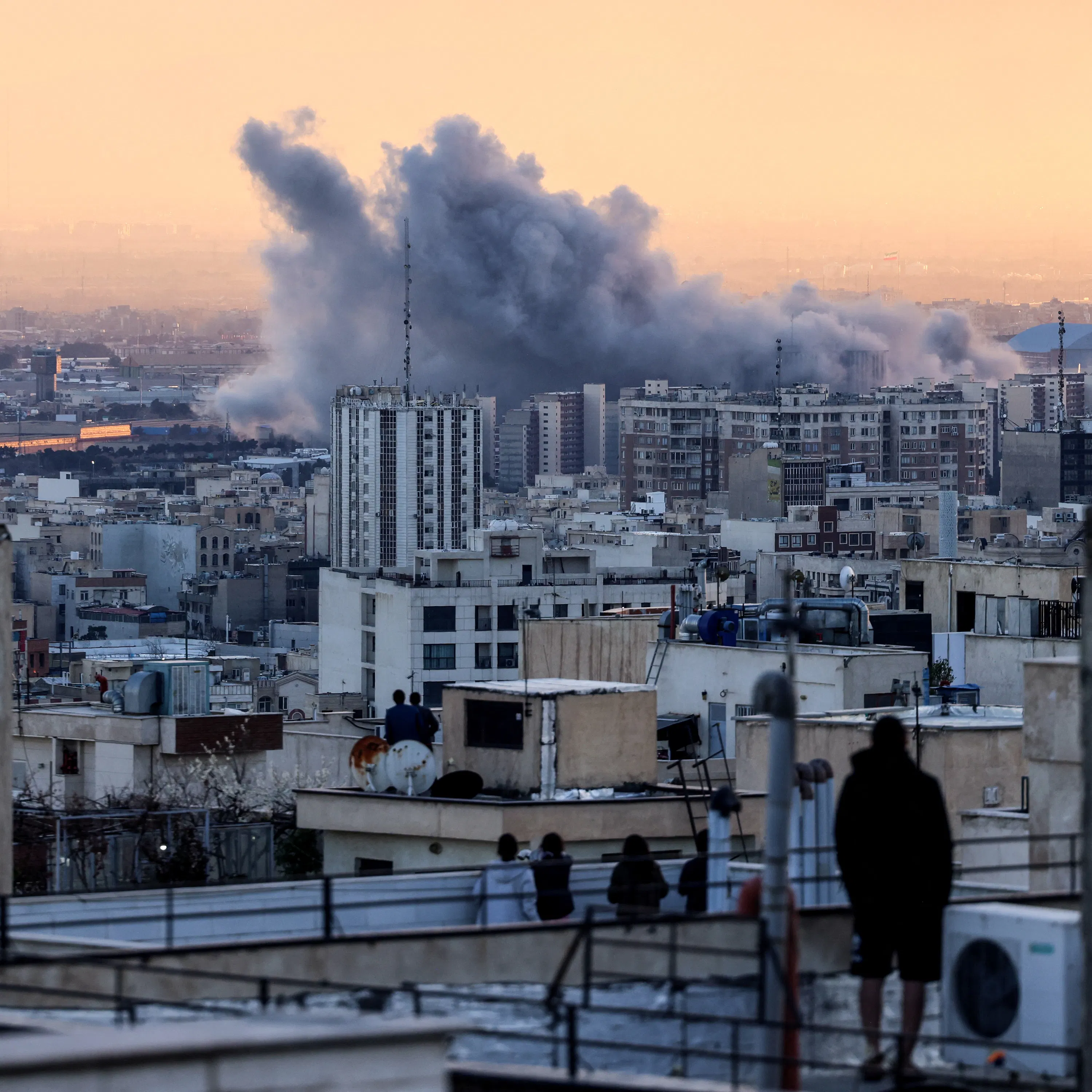
The wired newsroom is known for award-winning reporting on how technology shapes our world. On wires on Cane Valley, we take that curiosity even further. Each week, journalists from wired break down the biggest stories in tech while speaking directly with the people building, challenging, and reshaping the future. Is the AI boom sustainable? How do you protect your privacy in an age of constant surveillance? On Cane Valley tackles the questions driving today's tech debates and lighting up your group chats. Listen to new episodes every Thursday, wherever you get your podcasts. Hi and welcome to Ones and twos, FB's economics podcast. Every week we take a couple data points, use them to try to explain the world. I'm Cameron Abadi, FB's deputy editor with you in Berlin, Germany. Joining us as always is FB's economics columnist and Columbia University professor Adam Tuz with us in New York. Hi Adam. Hi Kim. So one big topic for you all this week that is the war in Iran. We will get to that in just a second, but first, just a bit of news on our end. And that is that we will be doing another live show in New York. We've done this a couple of times at a venue called the caveat in downtown Manhattan. We're doing it again. In the month of April, April 17th, it will be 9.30, one of the late shows that we've done before. It's always a lot of fun and the tickets are now officially available for purchase. You can find the link to those tickets in the show notes of this episode. We have a lot of fun doing these. I think the audience has had fun too. So check it out. They tend to go pretty quick in the past. So if you're interested, you might want to click on that link soon. But as I mentioned, we have the one big topic at the data point there is 2000. That is the number of targets in Iran, approximately, that have been hit by the United States and Israeli militaries since their war against Iran began on February 20th. And plans from the US to strike even deeper into the country. Israel launching a new wave of strikes across to Iran and an attempt by Congress to stop it all was shut down. U.S.-Israeli war on Iran is expanding, systematically destroying Iran's military, blowing up its missiles and killing its leaders. President Trump saying it could last four to five weeks. If we didn't hit within two weeks, they would have had a nuclear weapon. If we didn't do the B2 attack a number of months ago, they would have a nuclear weapon. And crazy people have nuclear weapons, bad things happened. Iran has retaliated itself with hundreds of ballistic missiles, approximately, between 500 and 600, fired off by Iran. That's been joined by hundreds, if not thousands of drones that have been launched as well. It all amounts to a major combat operation as the United States military has described it. Then that does seem pretty indisputable. It's definitely not the kind of limited military intervention of the kind that Trump oversaw and vet as well or even in Iran last summer for that matter. And yeah, it's already escalated into a pretty major regional war with those ballistic missiles and drones launched by Iran reaching other countries, primarily in the Persian Gulf. And yet a lot of out this war still remains mysterious how long it's going to last, the scope of US involvement, even the basic military goals that the United States has. And that might be the point. This conflict is unpredictable and all wars are, but maybe this one especially so. And yeah, we'll see how events continue to take us up by surprise. But in the meantime, for now, the war seems to kind of be in this kind of attritional phase with both sides firing weapons off at each other, preparing for an extended battle of some kind. And I'm curious, maybe to start off with Adam, how long on the US side, how long can we expect the United States to be able to fight this war? Because there's already talk of scarcity of munitions. And there's discussion of trade-offs with respect to the kinds of interceptors that have been provided to Ukraine until now. There's only so many that the United States can produce at any one time. And as I mentioned, Iran is firing off missiles of its own. And I'm curious about the elasticity of the supply chains that work here, because there's clearly a lot of demand for these interceptors, which can shoot down missiles of the kinds that Iran is shooting. But can the supply chains keep up? Or is this really not a supply chain issue? Is this kind of just endemic to warfare in general? I mean, these are fascinating questions. And we're going to get to some of the deeper questions of rationale later on in the show. But like right at the top, can we just pause to say how shocking it is that we're talking about this? I mean, this isn't somebody else's war. This is a war being waged by the government of which both of us are called carry-up passport holders of the country that along with Israel has launched this. What by any measure is clearly an illegal war. It's not even sanctioned by Congress. It's unclear whether it has a rationale, even if you could offer an rationale, it would certainly not meet most international law standards. The idea that there's an imminent threat is absurd. It's got a task that we're in this situation. And we've remarked on this before in all conversations about Venezuela. There is something uttered horrifying about the way in which American media in particular talk about wars like this, which affect hundreds of thousands, if not millions of people, with a lethal force. And as though they were sort of technical options, right? And we are going to get into the technology and the technology is fascinating. But there is a kind of how are we, how, you know, that we're like learningly exchanging great pieces. And from policy, Wall Street Journal, both you sent me some wonderful stuff to read on this supply chain issue. And like that's the level that we're discussing this, whereas this is like a fundamental miscarriage of, you know, the political organisation of violence. I mean, just sorry, I just, you know, before we spend 40 minutes talking about economics, can we just say that at the front? This is, like you say, like one struggles to formulate the terms within which to articulate this and the Trump administration, even by its own low standards, has been hard pressed to like string together, you know, a career. And some of the co here in rationales are offered up, frankly, you know, out of the box, you know, this crusading ideology, hegseths to twos as a major source of interpreting, you know, what's going on here? We're in a whole new level of insanity. This is not the targeted strike that they didn't Venezuela. This is something much blager, as you say. And one of its elements is that it is like the wars that were waged between Iran and Israel with American participation last year. Very strange because there are, they promise, not going to be boots on the ground. So what this becomes is this long range exchange of drones and ballistic missiles, unlike in Ukraine, detached from a ground war. And Israel and Iran are waging war, I think, by my estimation. I did some, like at the longest distance two countries have ever fought with no, you know, with no land engagement. So then the crucial rate limiting factor is the ammunition and the particular type of ammunition that you need here are drones, but those are relatively cheap. It's the missiles and the interceptors that are really the rate limiting variable. And there is a kind of historic constant here in modern warfare. I was thinking, I think, the first time, you know, a shell crisis really intrudes into the narrative of modern history is the in the late summer and early autumn of 1914, when the Europeans deadlocked on the west and front and started running up these large, large, large ammunition tallies for bombardment and counter bombardment and ran out of shells and it had an impact on the conduct of the war in 1914. And it exposes a kind of inherent and perverse logic in military production, which is on the one hand, the rational thing to do is before you start a war to have all of the ammunition you need for the war. So you pile it all up. But on the other hand, if you think about that, it's a grotesquely inefficient use of resource to pile up ammunition, unless you know specifically what you're going to use it for. It attrets when it's in stock and furthermore, it's subject to obsolescence. If you buy a bunch of shells 20 or 30 years ago, they're not going to be of the newest type and we've seen in Ukraine what was required to refurbish them. So it's also reasonable not to buy more ammunition than you need. And if you go down that route, which of course is the money saving route, then your supply chain for actually producing the stuff you need when it gets real is very, very tight. So then when you do ramp up to what production you can't easily get there. So then one thing that you talk about is having shadow factories, which are unused capacity ready for the war case, but that's hugely expensive. So who in their right mind would do that? So I think you're right to suggest that modern war has this problem of being voraciously hungry for ammunition and chronically unable to actually satisfy that demand. And it's only when you get into a truly appalling conflict, massive ammunition use over the very long term, that you can stabilize the inputs and outputs, but no one in their right mind would ever want to be in such a conflict. So it's inherently problematic. In this particular case, the interesting thing is that so far at least the focus has been on not on offensive weaponry, but on defensive weaponry. So it's all about the interceptors and the thing about those
is that they matter, and this is the kind of craziness of this, they matter much more not to the United States, which despite all the crazy exposulations, is of course at absolutely no imminent risk from any Iranian direct attack by conventional means, terrorism, perhaps, but not by rockets. But it's all of America's allies, which really are. So the Gulf States, Israel itself, and Ukraine are all desperately dependent on one of these tight supply chains for interceptors. And the thing about interceptors is that they're like rockets times two, or to the power of two, right? Because it's not just that you're firing a rocket at a target, that's B2, then a from Brown, World War Two. But this is famously trying to hit a bullet with a bullet. So you have to devise a rocket smart and fast enough, and quick reacting enough to actually hit the other person's rocket. And there's layers of these, and the thing about them is they're fiendishly expensive. So millions and millions of dollars per shot. And you need the batteries, safer Patriots, it was kind of mind-blowing number, a single Patriot battery with its radar and electronic control, a billion and a half dollars for just one piece of firing kit, right? And then the rockets themselves are millions, and the fad rockets, the ones which go out to 150 kilometers, high, high up on the arc of the ballistic missile, like 15 million dollars per shot. And it's estimated you need three to really take care of a ballistic missile. So the Iranians fire 500, you need 1500, and Lockheed's total annual supply capacity is 600. That's years into the Ukraine war, and so there's your problem. And even incredibly rich Gulf states, and Israel, which is constantly in a state of conflict, don't have stocks of interceptors large enough to actually counter a long-range bombardment. So there, there really is an issue, and the issue is not so much where the America can keep on delivering hellfire to Iran. The question really is, can it keep its coalition together? If the Gulf states can't protect themselves, and what is the cost that will be paid in Ukraine, where they're facing a similar ballistic missile barrage from the Russians, who now can produce, we think, between 80 and 100 ballistic missiles a month. So do the math again. You might need, if they went all in, you might need hundreds of interceptors for the Patriot batteries in Ukraine, and you can see how this just doesn't work as a calculus. And then you start suffering really serious damage to energy infrastructure. The Russians are clearly targeting much more effectively in Ukraine than the Iranians are so far, but it's so close across the Gulf that, you know, if they can really take out some of Qatar's infrastructure, or some of the pipelines and routes the Saudis will be using to get oil out, and we're in real trouble. So it's just part of a piece of just the total brainlessness of this entire project that they don't appear to have done the math on this. Is it fair to say that there's a kind of asymmetry between the offensive weapons and the defensive ones just because they're technological demands of the latter or so much greater? So much more complicated, and this is true with drones as well, right? You know, you can send these warms basically like motorbikes with wings with a bomb on the end, which is what the drones are like, or like little jets, and they cost hundreds of thousands, and you know, you're trying to shoot them down with batteries and missiles, which cost way more. Yeah, I guess we generally become so used to thinking of these kinds of supply chains as kind of like made-to-order supply chains, and you know, there was demand, and then the return to supply chains ramp up, but obviously it doesn't work in all sectors of the economy, even critical ones like this. But when it comes to the economic effects of this war, a lot of attention has been given to the price of oil specifically, and that is very legible in the prices. Brent crude prices are up 10 to 15 percent since the start of the war. That extends to also natural gas, which you know, prices in Europe have nearly doubled, at least at some point briefly after the attack on Iran started, and yeah, fuel prices for consumers are rising accordingly. And I guess first of all, I wanted to ask about the causes exactly of these price increases. Is that specifically because of the closing of the state of Hormuz, which Iran threatened to do and then carried out, which is the, you know, the area through which ships need to pass from the Persian Gulf area, or is this more to do with the direct attacks on oil infrastructure in the Gulf that we've mentioned Iran has been conducting? And then beyond that, like who are the big losers from this price increases so far? I mean, I mentioned Europe. It does seem to me, even though Europe is not directly participating in this war as of yet, that they may in fact be suffering from these price increases the most. We've talked about other episodes about the kind of deindustrialization that Europe faces and all of a sudden these energy costs are something that the continent needs to reckon with. So who are the big losers thus far from these oil price changes? Yeah, I mean from the supply side, it's probably worth talking about oil gas and then hydrocarbon derivatives of which perhaps the most important for the world economy is fertilizer, it turns out. Didn't know this before this conflict started, another one of those instances where war teaches eagography, but a huge part of global fertilizer production is concentrated in the Gulf because it comes out of hydrocarbon feedstock and so it's an obvious place to do it and plus the Asian markets are normally available through the Straits and Formus and that is really the decisive that. I mean, this is the nightmare, this is the Armageddon scenario, closing the Straits and Formus is the tail risk, you know, horror scenario for global energy markets. The two different dimensions for oil, the central thing is apparently, and I think this is emerging, you know, in these days towards the end of the first week of this war, is that if you block export from these giant oil fields, the problem is what do you do with the oil? Because you know, an oil field is, you know, it's like a pet, it's not just for Christmas, you can't turn the thing on and off easily. I mean, if you do, you risk real damage to the oil field because there these pressure cookers of natural pressure, geologically, and then once you open them up, you have a very, very tightly designed, scientifically determined process for emptying them efficiently and you can't in the middle of that, suddenly, you know, it's like trying to cook pasta and turning off halfway through, it'll be, it'll be poorly. So the nightmare scenario is that if the Straits remain closed for many weeks, the storage capacity of the really big producers in the Gulf, which are Saudi and Iraq, Iraq being the most vulnerable, probably, will overfill. It's unclear whether they're actually can be filled to capacity because no one's ever tried to do it. Normally, they stop at 80%, they would have to go over. Then they would try and put things in tanker fleets and try and keep them there. But then, if you really run out of storage capacity, you actually have to lock in the reserves and that's a disaster and potentially also for long run productivity from those fields. The other variable you mentioned is gas. And the oil market is gigantic, global, you know, the Gulf can be replaced. It's a huge shock, but the damage would be local. Gas is a different market. We've had lots of occasion to talk about its strange logic. There are domestic pipeline fairs, there are international pipeline fairs, and then there's LNG shipments. And the strategic significance of the region is the Qatar as the largest single supplier. There's one LNG facility in Qatar, which accounts for 20% of global LNG shipments. And that has been shut down. They've declared force measure. They've avoided their contracts. And so that market is already in spasm. Now, both of these are really stories about Asia. 85% of the oil that goes to the streets of Hamuz goes to Asian markets. A third goes to China. Then it's Japan, South Korea, India, and then poorer Asian societies, which are really most at risk. Europe's gas supply doesn't come directly from the Gulf. The LNG unsurprising, these ships out from the Gulf to in the direction of Asia. But closing the Gulf in shocks the whole market. And since the war with, since Russia's invasion of Ukraine, Europe has become more dependent on LNG. And so those shipments, because they're fungible, are priced at a global price. And as the global price goes up, because Qatar's out of the picture, the Europeans start paying more. And guess what? They've done it again. European gas stocks. So there is historic low point at this time of years. It's unbelievable when you see the numbers. They rebuilt them in the first years of Ukraine, and then apparently they've gotten complacent again. And they're rock bottom. So there's even some sort of crazy scenario in which Europe can potentially find itself in real supply difficulty. The answer, of course, is always just to ramp up the price. You just pay more. You know, the Harbeck story. You wave the German wallet. You'll get an LNG supply. The problem is then people lower down the food chain. And then we're really talking about Pakistan, Bangladesh, populace, really large Asian societies, which don't have the same purchasing power as rich countries. And that's where the fertilizer story gets really acute as well, because large parts of the low-income world's cheap fertilizer supply comes out of this region. It's much more direct in terms of its impact than the Ukraine crisis was because this is an input to everyone and it's literally just being cut off. And so the real worry is not whether rich America and soybean farm is relatively speaking can get fertilizer, but it's people lower down the agricultural food chain. And there's already reports of Pakistani and Indian fertilizer firms shutting down production because they can't get the LNG. So that's where the ripple effects are going to be. And always look for the weakest link in the chain. Well, yeah, then by the same token, I think it's only fair to ask who the potential
of this increase in fossil fuel prices are. And a couple possibilities come to mind. One is Russia as a major oil producer. I imagine they would benefit from this increase in oil prices. And then that raises the question of the sort of broader strategic logics of this war in Iran given that benefiting Russia will seem to have negative effects on Ukraine, which has been obviously a major focus of Western strategy until now. And then in terms of other winners, I wonder whether in a direct sense the United States fossil fuel producers are also beneficiaries of this, just in terms of increased prices benefiting them in terms of profits. And obviously they're more insulated from any direct warfare being so far away from the Gulf region. Or are there other winners maybe that I'm not considering here? - Yeah, I mean, I think that's in the immediate term that's exactly who you'd expect. And it is a replete. It's a replay on a much smaller scale. So far of the 2022 shock, where we saw absolutely gigantic historic profits being earned by Western oil companies. And if you look at Exxon's share price over the last six months, you see the pop in the early December when people started getting serious about this build up. They're clearly a beneficiary. You're absolutely right. The Russians are, I mean, in retrospect, it's clear that the Russians could pay for their war against Ukraine through the energy price effects of the uncertainty they created by means of the war. And in fact, the West Europe in notably paid for quite a lot of that. And that'll be replayed in this case. It's true also I keep harping on this fertilizer story, but I think it's kind of really mind expanding to go there. But if you look at the share prices of Yara, Norse Chidro as was, the great European, Norwegian, fertilizer producer and CF industries in the Midwest of the United States, they can't lose here because they make something essential for global agriculture out of hydrocarbons, which are caught up in a great geopolitical clash. One would hope further down the line, you know, because across there is some reason in the world that renewables become winners from this because how many more times do we need to learn the lesson that depending on imported fossil fuel energy from geopolitically unstable regions, subject to America's erratic politics and strategy, is a bad idea. We're at a historic moment now where, you know, you can buy very cheap substitutes for gas in particular and increasingly longer range for the EV. Like the shipments of solar panels from China in terms of their generating power of electricity compare with the electricity that you could generate by burning all of the gas normally shipped through the straits of formulas. So there's now a, you know, of course, it's not quite the same and everyone will say, "You do other on your generator of gas." And sure, sure, sure, sure. But it's not total parity, but we're in the same ballpark now where if you want to make the investment and shift renewables and now far more attractive, even than they were in 2022 because of what's happened in China since then. So they ought to be winners too, if there's any reason for the world. In fact, I'll be on a panel tomorrow in Germany for the Greens arguing that case for Germany because the German government perverse the airs doubling down on LNG and I mean, they're just shooting themselves in the head again. But that's clearly the message is push, push, push now into more secure localizable sources of supply. OK, we're going to take a quick break right here, but we'll be back in a second to continue talking about the Iran War. [MUSIC PLAYING] Today's episode is sponsored by IQT. Discussions about national security often focus on emerging technologies, but modern competition increasingly depends on whether those technologies can keep operating over time. AI, autonomy, and advanced manufacturing all require reliable energy and secure material supply. IQT connects innovation with real world deployment so new capabilities can move from demonstration to sustained operation. Learn more at IQT.org. [MUSIC PLAYING] This is not the future we were promised. Black hell that out for a tagline for the show. From the BBC, this is the interface, the show that explores how tech is rewiring your week and your world. This isn't about quarterly earnings or about tech reviews. It's about what technology is actually doing to your work and your politics, your everyday life. And all the bizarre ways people are using the internet. Listen on BBC.com or wherever you get your podcasts. I wonder if we could zoom out a bit in terms of thinking about the economic implications here in terms of the conflict spreading across the Persian Gulf region. And I'm curious what the broader implications beyond just the oil economy, which is coming under attack. I mean, it does seem like this region plays a larger role in the global economy now beyond just fossil fuels. And I'm curious, yeah, what should we be having in mind when we think about Dubai, Doha, Riyadh? Are these hubs now for goods and capital and people beyond just their role in the fossil economy? Yeah, I mean, we've spoken about this several times on the show. And I'm writing the script for today's show actually. I became quite upset thinking about colleagues and friends in the region and Doha, in fact, which I saw most recently thinking about what this means for them, what it means for people we met when we were in Dubai and Abu Dhabi last fall. I mean, they are outsized in their influence now because of their wealth, like of the total sovereign wealth funds assets, which in 2024, these are slightly old numbers, but 2024 were $12 trillion. Four trillion were in the Gulf with the MRT1 being about $2 trillion and the rest spread between the Saudis and others. They're major centers of construction, activity, wealth management. I mean, the more cynical side of this, apparently, there was an extraordinary story in the FT, which is a very wealthy people in the financial sector, quite like to become residents of the Emirates because it's a very favorable tax treatment. But to have that, you need to clock up a certain number of days, $883, basically half the year. And the problem there, of course, is that with all of these evacuations going on, these ultra high net worth individuals who mainly reside in London, because that's the connection that really matters. It's the old world of Europe and the Arab world, not the United States really. It's too far away and too culturally separate. But that connection between Europe and the Arab world is very tight. And they're really at danger of running out their clock, at which point horror of horrors they end up liable for UK taxation, which is horrendous by comparison with the Emirates. So these people are booking private jets, which are flying into the war zone to get them on the ground in the Emirates on time to be able to log their 183 days, because otherwise, they're in trouble. Right down the very other end of the spectrum. And this is a story I've been following on Twitter, which is really fascinating, is that the Gulf is really faces out into the Indian Ocean. And when you're there, you realize-- and this was also classically true of the British Imperial period-- the Gulf is a profound interest to the subcontinent, to Pakistan, to India, to Bangladesh-- what used to be the Raj, the greater Indian space. And concretely, what this means is that there's like 18 million South Asian workers in the Gulf at the bottom end of the labor market. So not the people who are counting their tax days, but the people who actually make these societies run, like 60% of the Emirati workforce is estimated to be South Asian. And those people are now in real harm's way, because they work on short-term contracts, under tough conditions. They make lives to themselves. It's a very interesting experience to actually engage, because English is a lingua franca. But that group is going to be under real pressure. And Modi's positioning on this has been the subject of really the tube-retive attack across the kind of Bricks world on Twitter, because the cowardice they've shown, because they invited the Serenian frigate, I guess, to some naval gala. And then the bloody American sank it in the Indian Ocean. Left the survivors to drown in violation of international law. You know, they've been learning bad habits and then as way, they're just blowing up boats and leaving people to drown. I guess they should be lucky that the Americans didn't machine gun them in the water. The Sri Lankans rescue them. And Indian nationalists are outraged that Modi didn't take a stronger stance, because this is like a fundamental violation of hospitality. So this is another access to this, which I think is very interesting. And it is also, of course, part of the global energy story. We've talked about this on the show before about India and Russian oil. The world is expanding. And it's increasingly Indian ocean, Pacific, Asian centered, and all of these questions reverberate in that world with real intensity. And at the level of individual lives. I mean, 18 million people given the size of this South Asian workforce is not huge. But those people are earning really good money. Those are cash remittances, which going home and sustaining large families.
in some poor villages in Peshawal and places like this. And it's quite, that's another facet of this that I think we should really be paying attention to. - Yeah, that's a good point. I mean, I imagine there'll be a lot of recalculations of investment in this region, and then investment of human capital, of people deciding whether to move to live there, as you're mentioning people on different ends of the income spectrum from different parts of the world. But yeah, beyond that, it's even just basic shipping. I mean, even you mentioned Asia, and like in the amount of Chinese exports that go through the Persian Gulf, it also seems to be really sizable and talk about investments in AI infrastructure there. And I mean, I don't know how much of this will be re-considered, or maybe insurance rates will be reconsidered along these lines going forward. But yeah, you know, thinking about Asia, I guess it's fair to wonder where China stands in this war and the kinds of ways it is affected. I mean, on one hand, I wonder whether there are opportunities for China in the basic sense of the United States now, you know, geopolitically being distracted from East Asia, even just materially having to maybe re-route military infrastructure to the Middle East from East Asia. But then on the other hand, I wonder whether there are negative effects for China in terms of its energy security. You know, we talked in the past about China buying discounted Iranian oil and that's probably no longer available in that way. And also, yeah, I wonder about the status of Chinese military technology as well, because Iran seemed to have had access to Chinese military technology that if I understand correctly, didn't necessarily perform very well. So maybe that's also a loss for China in this scheme of things. Yeah, I mean, China is interesting. And it's important to bring it up. I mean, we are in a very weird moment where arguably the most important thing that's happening for the world economy other than America's utterly gratuitous and kind of base this war is the announcement of China's 15th final year plan, which is happening during the two sessions meetings in Beijing this week. In fact, I was like, hey, study reading my phone on the way to do this recording because the energy component is now clear and we know what signals this is setting. In fact, we should maybe do a next week, about the 15th five year plan. And it gives you also a kind of like, you know, on the one hand, we've got a bunch of crusading, Christian evangelicals and the Bozo. And on the other hand, we've got a bunch of people trying to lay out apart for Chinese development with massive impact for the next five years in the same week on the same terrain. And I think, you know, we should do justice to the surreal quality of that juxtaposition. I mean, it truly is the case that a five year plan, which is the direct heir of the Marist and Stalinist five year plans is right now a more clear point of orientation for global economic development than the policies of the United States from America and its allies. I mean, this is, you know, this is a freaky circumstance historically. If you'd said that was going to be our future in 1989, who would have believed it? It's truly, you know, and there are people who say this is a humiliation for China. I mean, I don't get it. I honestly don't. Like, I think the argument is that, yes, the technology might not be up to dealing with American and Israeli technology, surprise, surprise. Though I mean, I think the jury's out on that. It'd be surprising if that was definitive. And then, and the second point is that this was supposed to be China's axis, right? Venezuela and Iran were supposed to be part of some sort of access that China was constructing. I think that just completely misses the geopolitics of this. China is the dominant, emergent economy of the 21st century. It is immensely rich. It has huge financial resources. It deals with top tier partners. And that isn't Iran and Venezuela. Those are the Gulf states that Saudi Arabia and the Emirates. And those are the people that you do business with if you're China. You don't need Iran and it's cheap oil and discounts. Like, China has a $1 trillion plus trade surplus and trillions of dollars in foreign assets. It's not haggling for cheap oil. It'll take cheap oil because it's people at cany. And there's course like a bottom-feeding Chinese teapot, you know, refinery business that will take cheap sanctioned oil. And there's a financial infrastructure to do this. But like anyone who thinks that that's the main line of Chinese policy is truly barking up the wrong tree. The Chinese will presumably just be playing it cool. They've said what needs to be said, which is that this is illegal and outrageous action from which they absolutely distance themselves. And then they're just going to wait, I imagine. Until the dust settles and the true players in the Gulf realize where the stability, where the source of market demand, where the source of tech relevant technology is going to be. And it'll be China and not the United States. I don't, I just feels like this is the moment for the Chinese simply to wait and for the game to come their way. They will not relish this. They want stability. But I mean, in terms of oil price, they have, we think, maybe as many as two billion barrels stored away. And why? Because 20 years ago, slightly more than 20 years ago, in the early 2000s, when they started to worry about geopolitical competition and oil in particular and realized how dependent they were, an oil demand in China was surging, there was a huge strategic debate in Beijing about whether or not to have an oil reserve and the more national security hawkish people won. And then 2003 happened. And everyone was like, OK, that makes sense. And they've systematically built that to the point now where they can feed the largest productive apparatus in the world for about five or six months if they absolutely have to. But they don't need, I mean, if Chinese commodity buyers move their tiniest little finger or somebody even thinks they're going to move their tiniest little finger, everyone in the global commodity markets moves to China's tune. Because they're the big buyer and they have the money. And one thing they're not short of is dollars. Like they have too many. They need to spend some. If they could somehow remediate their giant surplus, they probably welcome the opportunity to. I suppose this raises the question of what the future is for Iran. You know, you mentioned China's relationship to Iran. And I guess it's hard to kind of project what exactly Iran's future will be. We're in the middle of a war and it's hard to tell where it will head in and how far things will go there. But it seems safe to say that Iran will have a more hostile relationship to its golf neighbors. I mean, it doesn't seem like it will be easy to kind of reverse these hostilities and kind of go to a status quo anti once you've had this kind of exchanges of this level of destructive hostility. And then I guess it raises the question of whether that relationship with China will deepen in the sense of a strategic partnership. I mean, it is Iran's potential future, one that moves it away from being oriented towards the golf and maybe becomes more of a kind of hub in China's, you know, your Asian belt and road infrastructure network does Iran have a bigger role there potentially to play? I mean, I just feel kind of humble in the faith. I don't know how we can talk about the future of Iran at this particular moment. The Israelis have basically said that if they organically generate a new leadership, those will fall under the same death sentence which they've taken upon itself to declare against any leadership that emerges from the Islamic Republic. I mean, it's, we're in a mind-boggling situation. It seems almost impossible to imagine that Iran emerges as a, you know, a strength and force from this. As I said, like I think the idea that China's play on Iran is some sort of vitally significant strategic play from Beijing's point of view is absurd. Of course, they're not going to be unfriendly to the Iranians. Why would they be? They're useful. But the power and the money is on the other side of the golf. And China doesn't need any of this, right? I mean, it's, it's just opportunities and of course you wouldn't turn it down and you're not going to treat, unlike the Americans. You're not going to treat the scenario with disrespect. You're going to actually try and figure out what your relationship should be with each one of the parts independently of, you know, conflict which in the American and Iranian case go back almost half a century. So I don't, I mean, I don't think we should, we should do a, you know, at some point we did an episode in Iran relatively recently. We should come back. Topic, of course, we must come back to the topic. But I don't think under the present circumstances, there's any, there's any quick move that, you know, one can seriously make intellectually. And that's part of like the grotesqueness of this whole project, right? It's just, we've said it before, it's 90 million people. It's like, you know, it's on big by Chinese standards, but it's huge by any other reasonable measure. You know, you hear the Israelis talk, they're at least open about what they're saying, like, you know, we don't care. Civil war will be fine. And it's literally the position of the, of the Israelis at this point. So it's a purely destructive project from their point of view. They just want to paralyze and destroy the state capacity of Iran. And they're clearly very bent on it. And they have America's backing to say the very least, if not more. So that's the problem, I would have thought, is how an Iranian polity in state is going to function in the face of this completely disinhibited threat. And the position of the Europeans in light of this is even more like, you know, they've basically green lit other than the Spanish, like, they've green lit.
gratuitous, destructive attack on the sovereignty, on the statehood of another important country with whom they've been in negotiations over decades. It's really shameful. Yeah, and you're right to say that there is a sort of consistency in the Israeli communication about this that interestingly has been absent from the US side. I mean, obviously the United States is partnering with Israel here, but it has not, you know, nearly been as forthright about what its goals are as Israel for its part has been. And I guess for me, it struck me that there's a general question that that's not necessarily economic in a narrow sense, but maybe it's about the economics of attention, say, I mean that that about how the United States is prosecuting this war that seems genuinely strange to me. You know, we've talked in the past about how the Trump administration, when it came to its tariffs policy, tried to rally a lot of public attention to tariffs and even admitted there would be sacrifices involved for the American public, but kind of embedded that in some broader strategy. None of that really seems inevitable when it comes to this war with Iran. There was hardly any preparations and that's been noted in terms of preparing the public for why this war is happening. But even as a corollary of that seems to me that it's almost as if the United States government does not want people to be paying attention to this ongoing war the United States is participating in from what I can tell. It's almost like, you know, forget about asking Americans to sacrifice anything. They don't even want them to sacrifice attention to this war. And then to me, that seems like a genuinely new kind of quality to war when you have a kind of national effort without the pretensive, even any sacrifice of that kind or, you know, a major combat operation that's not even, you know, that the government doesn't want to be a major news story. So I guess if we were to kind of consider this in some broader military context, I mean, how to make sense of, yeah, the more general kind of economics of attention, I guess here. I mean, hence my outburst at the beginning because like, you know, I just, you know, we are going to spend, if you look at the coverage, much of which is fantastic, of course, in technical and interesting details, but it doesn't grasp this basic point that you're making, which is something very strange, disconcerting and you call it strange again, you're adopting an incredibly detached tone camp. Like it's grotesque. I mean, it's a fundamental erosion of, you know, if you think about any kind of Republican thinking, Republican as in political theory terms about war and how it fits with impolitics, you know, this is a kind of, you know, is it a regression to a kind of absolutist notion of war where the monarch just simply decides the conduct war over the heads of the citizens, but of course, it isn't, right? It's not a retrogression. I was reading Bodrilar at the weekend for teaching and he wrote this amazing book, the Consumer Society in 1970 in the middle of the Vietnam War and he has these amazingly fascinating passages about the grotesqueness of the American public fascinated by images of Vietnam. Every night in front, you know, in their televisions. But like as you say, that's not the story here. I mean, that was grotesque. This is even more so because it's as though someone else is waging the war. And you know, if you're interested, you just kind of follow it as a technical matter. But no, this is like the most serious act a polity can engage in. In other words, open aggression against another polity. And there's, you know, Schumer is humming and harming over whether they've had enough of information to consider the possibility of increasing the American military budget by half a trillion dollars because maybe they haven't had enough information yet. You know, procedural issues when the absolute substance of whether or not the United States is still in any sense a reputable member of, you know, what used to be thought of the international communities, you know, at stake. In fact, we can answer that question. It isn't. And like the United States currently is a rogue state. And it says though no one is reacting effectively to that. So that's one level. And then on the other hand, you could say, well, hang on, hang on. So that's the kind of Pomo post post modern of kind of reading of what's going on. And you know, who else but Trump to do that? Of course, I don't think Trump has the faintest idea, but it makes for image-e-like or something. It's a little bit like the replay of Obama's hit on Bin Laden, but with Maduro, right? So there's that kind of dimension. I think there are two other dimensions. I mean, the most obvious is simply, and it's delicate to say it because it puts you in the space of conspiracy theory, anti-Semitic conspiracy theory, is that essentially America is remote controlled by Netanyahu. Like that's more plausible hypothesis than one, as you said, like the Israelis have a clear rationale, well, they profoundly disagree with it, but you can see where the Israeli right wing got the idea that Iran was an existential enemy. Iran talks as though it's an existential enemy. They want to eliminate that threat. They're doing what they have to do. It's a ghastly, but it has a clear rationale. They've got an opportunity to do that. And they're taking advantage of it. Well, that would make sense. And there's loads of evidence, which suggests that's exactly what happened. It's impossible and extraordinary, but there's plenty of evidence. The third element, which we have to talk about though again, it's so surreal that it's weird, but we have to consider it, which is that there is an element of American society, which is absolutely gung-ho about this war, is totally committed to it, really takes it seriously. Truly is this crusading, evangelical, ultrapatriotic Christian, Zeal and Huckabee, who's the American ambassador in Israel, Hegseth himself to articulate this, Lindsay Graham articulates this, you know, we may sniff and go, that's crazy, but he's the, what he calls himself Secretary of War. Like, they actually think, and he's got it. It's a joke, but he literally has Hegseth has the motto of the Christian crusaders tattooed on his body. It's like, let your will be done, or something like this, some, you know, crazy Christian fundamentalist project of reconquering the Holy City from the Holy Lands, from, from, from Saladin. Like, it is possible that that is a non-trivial, trivial element here. And this would be like, you know, the crazy carousel of Trump politics, you know, sometimes it's Vance doing the, the restrictive Munich, the first Munich speech, right? It's kind of pull back. Then there's the Rubio, you know, Neomonro doctrine kind of version. It's as though they're taking turns, each one of them, you know, Steve Miller gets to do his ice brutality, which fits quite well with the Venezuelan operation. And now it's the turn of the Christian fundamentalists, who many of whom are also passionate Zionists, aligned with Israel, finally unleashing this war on the large part of America has been fantasizing about for decades. And so in that case, you and I just don't get it. We don't get it because we're not in that milieu. But if you are in that milieu, and apparently this runs deep into the command structure of the American military, which is not surprising, I've met, you know, many Christian fundamentalists from the, from the, not that the very highest level I have to say, but in the middle tiers of the American command structure, who really lived by biblical fundamentalism, just what carries them into combat, what sustains them, you know, you need some pretty powerful juju. And we got with us quite good reporting on the extent to which, no, there are folks who are cheering this moment of like, and the bigger it gets and the more the Iranians escalate and the broader the feel, the, you know, the shadow feel, the more this fulfills their fantasy of, you know, bringing on Armageddon and End Times. And, you know, we may, this is, is harraising, but I don't think we can deny the, the presence of that in American society. That's one group of people who, who, who do have a dog in this fight. Yeah. I think part of the, the strangeness is that I'm not sure Trump is, is invested in this and more, more, a much less, can muster this kind of rhetoric himself. I mean, it does seem like he remains a creature of, of spectacle and spectacles of dominance. And, and the incoherence is that when you have an actual war of duration, you can't simply string along a series of spectacles together. Like, that doesn't, that's not, that's not what war is. So this, the crucial thing is no boots on the ground. So if there are essentially no American casualties, you can square the circle. That's the key thing, right? But the thing about this is that's also why it has to have this strange form of like stand off long distance rocket. Like, you know, there are, there are no, no significant, you know, just part Mark Rutters ghastly, sycophancy, you know, you know, my, my respect to the service members were making the ultimate sacrifice. Like, they're hip and sick. No, they're like pressing, they're flying sorties and they're pressing buttons and they're doing so against with overwhelming superiority and basically barely higher risk than like, you know, operational car accidents. And that is what sustains the, that's what sustains the, this isn't a crusade actually. There's no one sweating in a suit of armor, you know, in Palestine. Like, this is not Iraq in the 2000s. But it's a generation that have been reared on images of that war, which they're not going to repeat, they're going to do it this way and they have the ideal part of Israel. Yeah, I mean, whether the United States still seems like the kind of master of the events here, I think is, it remains to be, to be seen given how, yeah, Iran is lashing out as well.
in ways that I guess were foreseeable, but the United States seems not to have entirely foreseen. I imagine it won't be the last time we'll be talking about the fallout from this war, but for now we should take a break. We will be back though, of course, as always in your feeds next week. (upbeat music) "Wands and Toos" is written and edited by Adam and me and produced by Claudia Tady. The show is made possible through the support of foreign policy readers and "Wands and Toos listeners." As always, we love getting listener feedback. You can leave voice messages on the "Wands and Toos" homepage on foreignpolicy.com or email us that's
[email protected] or you can tweet us that's @wandsandtoos.com. I'm Cameron Abadi. Thank you very much for listening and we'll be back in your feed next week. (upbeat music) (upbeat music) (upbeat music) Technological leadership alone no longer guarantees strategic advantage. Advanced computing, autonomous systems and sensing networks all depend on electricity generation and access to specialized materials. Without reliable energy and resilient supply chains, even sophisticated technologies cannot be sustained. That is why modern competition increasingly centers on endurance, the ability to operate, replenish and adapt systems over time. IQT works at the intersection of innovation and national security, helping translate commercial breakthroughs into operational capability. By connecting emerging technologies with mission needs, they help turn breakthroughs into operational capability because advantage today depends not only on invention but on endurance. To learn more, visit IQT.org. (upbeat music)
 PodcastTranscript AI