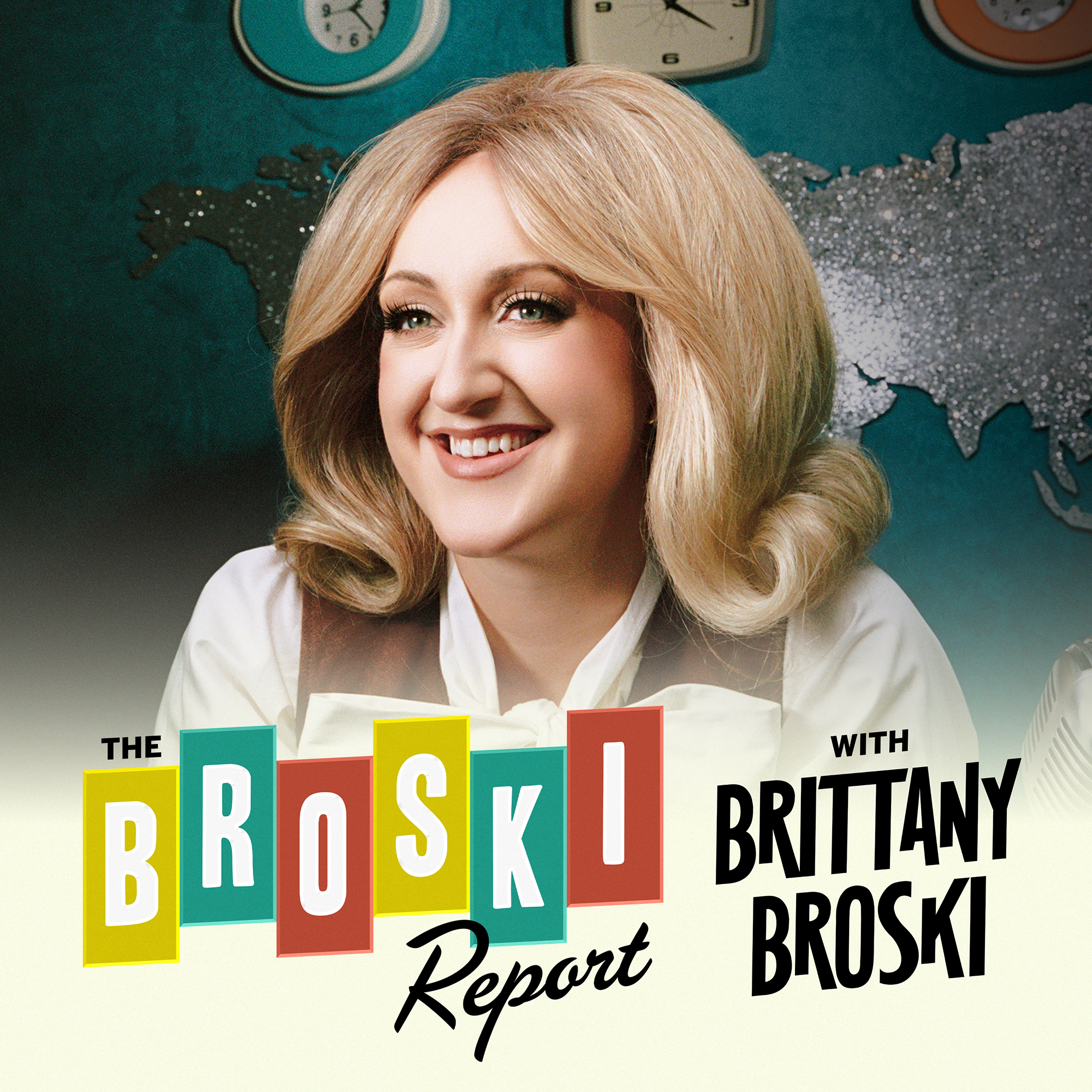
The Broski Report dives into the bizarre, toxic, and often horrifying practices of Victorian society, exposing a culture obsessed with appearances, control, and pseudoscientific medicine. From consuming arsenic in cosmetics and wallpaper to ingesting mummies and using human body parts as medicine, the era's beliefs in "natural" remedies were dangerously misguided. The show highlights how beauty standards were directly linked to illness—pale, lifeless skin was seen as a sign of refinement, achieved through toxic substances like belladonna, mercury, and lead. The obsession with death and the macabre is also explored, including the collection of taxidermied animals and the consumption of human remains. Historical context is provided, such as the "Great Stink" of 1858, which influenced fashion and social norms. The episode also touches on modern parallels, such as endocrine disruptors in receipts and the enduring fascination with the supernatural, culminating in a segment on ghost stories from listeners. Through satire and vivid storytelling, Britney Broski critiques the Victorian era not just as a period of social rigidity, but as one of profound ignorance, where science was misapplied and human suffering was normalized. The overall message is one of shock and reflection: the Victorians were not only strange, but deeply flawed in their understanding of health, beauty, and humanity.
direct from the broski nation headquarters in los angeles california
this is the broski report with your host britney broski we're going to start this episode with
a scene that i've written in my head just about 35 seconds ago okay this is a troubled mother and
father in the year 1889 talking to a german doctor about their sick child here we go
oh doctor please every night restless she writhes around in pain there must be something you can do
yes doctor give it to us straight anything at cost please save my darling child's life
well there is one thing we have not tried please doctor anything
tell us oh do tell us the only way forward is to start digging in your butt twin
what yes it is a new trial we are practicing in germany now to start digging in your butt
and scene in this town we call home everyone start digging in your butt
everybody dig everybody dig
hey guys welcome back to the broski report starring me your host britney broski
oh heavens you've interrupted my trials again in my scientific laboratory
really you must not before you enter okay guys we're back once again and the motherfucking stew
and by stew i mean my victorian library welcome back um have i changed outfits from last week no
has my hair somehow gotten greasier yes welcome back to my weird fascination it'll be short-lived
just let me let me fucking feel it out my weird fascination with victorians because
what the fuck was wrong with them what were they doing bro y'all were high on arsenic radium and
lead eating mummies what the fuck and britain this is this kills me bro british people think
thought maybe still think that they are the pinnacle of human evolution that they are truly
god's gift to this green earth they have the only correct way of life this that and the other and
you bitches were drinking arsenic and eating mummies can you get the fuck out of my face
now they didn't know how to design the fuck out of a nightgown though all right look at this
gorgeous little decolletage piece very scandalous you know what else i learned recently this whole
episode is going to be a deep dive onto what the fuck was wrong with victorians because i know i've
been hinting at it but we're really going to get into it today and by the way again i've never
looked more beautiful i've never looked more beautiful something about this almost dead
seaside melancholy look here like a slight purplish under the eyes greasy hair one singular eyelash
i'm loving it like like dead ass i've never looked better i'm being very genuine like this is this is
the look right what have we got today really what we've got to understand about the victorians is
they were really fucking weird okay what the fuck was i just about to say in this town we call home
everyone start digging in your butt start digging in your butt
digging in your butt is over though that is an old ass meme okay if you're still laughing at
digging in your butt in august of 2025 you need to fucking stand up you need to get off and if you
don't know about that meme you don't need to know about it because it's over now it just sits it
gets caught in my head like a loop sometimes like a fucking riptide start digging in your stop
the voices the voices start digging in your butt twin and spongebob's voice
stop it the voices talk to me at night and then i come into my victorian library and i start reading
sherlock holmes and i'm like yes dr watson his time in the afghan war start digging in your butt twin
no really i must learn to focus that's literally y'all don't understand what i do alone in my house
think fuck i live alone because the thought of even even hear me out when i say this the thought
of living with a man and not being able to live with a man and not being able to live with a man
and not being able to live out my little fantasy in my own house that i pay for by myself
get the fuck out of my space you know what would ruin this vibe look at this gorgeous vibe i've
curated in here and if you're an audio listener this shit is a victorian dream i have all my
little oddities i have my little favorite books i have a creepy picture of edgar allen poe half
dead i've got all my shit laid out i'm posted the fuck up in here if a man was in my space
that would literally blow
my high if a man walked up in here like hey babe we're out of toilet paper can you get the fuck
sometimes i feel like that werewolf filter on snapchat you know where you like open your mouth
really wide and then like it sprouts and the eyes turn red and the backdrop goes blue that's how i
fucking feel when a man pisses me off yo we're out of time then go get your mom then get in the
car and go get some start digging in your butt twin fuck you and fuck off okay let's get into
some victorian weirdo shit i have a bunch of fun facts here that are not so fun because they're
gross victorians were fucking gross so let's get into it okay fact number one to understand about
the victorians they were freaking out about the victorians they were freaking out about the victorians
freaks they were some freaks bro the victorians were freaking their shit in a crazy way and then
turning around in the same breath and being like the level of debauchery and unbecoming lack of
decorum truly one must be imprisoned for such a lack of decorum oh we must implement a law
forbidding this type of behavior the first vibrator was created in victorian times i know
that's fucking right and then it was outlawed because a woman's pleasure should be outlawed
i know that's right girl shut the truly so many things came about in the victorian era that's like
y'all were on to something and then of course they were like oh a woman is like oh no no we
can't have that a woman's enjoying herself can't have that hell no don't even get me started on
gay people enjoying themselves can't have that not once not twice never do y'all remember
the viral youtube video drinking out of cups i just wanted to throw that out there if you do
hey give me a fist bump if you do give me one of these right to the phone nice and if you don't
go watch it that shit that was a very formative video for me me and my cousin bailey i don't know
why that shit we quoted it all the time okay victorians were some freaky all weirdos let's
get into it 11 fascinating facts about the victorians
number one read all about it health professionals this is from soodley soodleycastle.co.uk
health professionals in the victorian era were constantly innovating and suggesting new and
interesting ways to fight illnesses in 1875 one recommendation was to cover oneself in sheets of
newspaper providing a warm and comfortable night's sleep while reducing the onset of pneumonia
what bro okay what's your
go
gonna want to do is put paper all over your body go to the bathroom wipe with the toilet paper put
it on your legs and that'll cure your tuberculosis now this is not on any evidence or it's just kind
of something i'm theorizing right now yeah because you know i dribbled on myself i was drunk one night
i pissed on my leg and i woke up next day and i wasn't coughing no more so what you're gonna want
to do is go home
go home
piss on that toilet paper piss on the newspaper wrap your leg in it and tell me if that shit
doesn't go away tomorrow all right if it doesn't i'll come by i'll come talk to you then all right
love y'all bye that for real is like what victorian medicine sounds like well what you're gonna want to
do is suck on the head of a snail that might cure your syphilis if not hell i don't know
maybe try having sex with a bunch of people that might make
syphilis go away all right i'll be back around tomorrow hey y'all got five dollars i owe somebody
some money literally it's like victorian doctors hell i don't know y'all got any food around here
i'm kind of hungry number two an everyday poison toxic arsenic was widely consumed by victorians
which we know okay arsenic was in uh green was a big theme for victorianism
they loved the color green bitch that shit had arsenic in it dresses wallpaper candy
all of it had arsenic and radium was another fan favorite of the victorians
And another one was, as we know, lead.
These bitches loved lead, mercury, radium, arsenic.
Throw it all together, make a gorgeous mocktail, okay?
Add some THC, die.
Arsenic, radium, cyanide, THC, get high, die.
That's actually a fun weekend activity
for you and the girls.
You and the girls!
After you're finished eating a mummy,
mummy unboxing!
That's another thing they would do.
We'll get to that in a second.
These bitches loved arsenic, bro.
Women believed it had qualities
which made skin appear younger.
And so it was a major ingredient in many cosmetics.
Whereas men would consume arsenic pills
as a way of stimulating their libido.
Can't get my dick hard, drink arsenic.
All right, my peener's not working.
Let's see if this lead will fix that shit.
Oh, I'm dead at 30.
Oh, I'm bald and dead at 30.
Got it.
Okay, so did not work.
The German doctor character I was doing in the beginning
did not work.
Patient found dead and bald.
Underline dead and bald.
Okay.
Unsurprisingly, these products caused extreme sickness
and led to many fatalities
before people understood the true power of the substance.
How many bitches died with a half-chode
and bald at the age of 25 before they were like,
maybe the dick pills aren't working.
Maybe the gas station arsenic dick pills
are killing our youth.
That equivalent today is like bang energy.
That equivalent today is like,
what's that shit that,
was it bang energy?
The early TikTok straight dudes
where they would like get paid $100,000
to make 1,000 videos early TikTok.
And they all lived,
they lived together
and they were probably all kissing each other and shit.
And they would make videos promoting bang energy.
And what was that fucking water bottle?
The coldest water bottle?
I don't remember those.
And on Vine, it was like Badu, that dating app.
Bro, this is the equivalent, bro.
They were trying to push the Team U TikTok shop,
arsenic dick pills, and guess what?
The fee wasn't that good and it was killing the youth.
So it happens.
Actually, you know what it is?
It's that flat tummy tea
where you just shit your brains out.
That's the equivalent to the arsenic dick pill.
Number three, curious collections.
Many Victorians would specialize in collecting objects
from zoological and botanical
to geological and archeological.
That's kind of how I feel here on this set right now.
I gotta get some more oddities in here.
I gotta get some more weirdo shit.
Arguably and ideally made of plastic,
made of microplastics, okay?
I love microplastics.
I love consuming things made of microplastics.
I love BPA.
I love whatever that shit is that,
do y'all remember that documentary that came out
a couple years ago, maybe like 10, 15 years ago,
I don't know, about the shit that's on receipt paper?
You know what I'm talking about?
Receipt paper chemical.
Oh, it's BPA.
These chemicals can be harmful to human health,
particularly impacting reproductive systems
and potentially contributing to obesity
and attention disorders.
See, we're all fat with ADHD and with fucked up periods
because we got to stop sucking on that receipt paper.
Okay, y'all, if you're watching this right now,
chewing on a wad of receipt paper, spit it, spit it out.
What, eh, spit it out.
That's how I feel sometimes on this podcast.
What did I say, eh, get over here, spit it out.
Bisphenols, bisphenols in thermal paper.
Thermal paper used for most researches.
It's coated with chemicals that react with heat
to create the printed image.
BPA and BPS are common examples of these chemicals.
Bisphenols and receipts are in a free, unbound form,
which allows them to easily transfer to skin upon contact.
This can happen even with a brief handling of receipts.
Yeah, dude, I saw this in a,
when I took an AP environmental science class in high school,
she showed us that my,
teacher showed us this documentary about BPA
and like specifically in water bottles and all this shit,
how easily it transfers and how it's in literally everything
because everything's made of fucking plastic
and how that is, it's an, what's it called?
Endocrine disruptor, isn't that it?
Endocrine is hormones.
Yeah, it's an endocrine disruptor.
Yay!
Anyways, like I said, stop sucking on receipt paper.
People devoted cabinets and spaces for their prized collections,
which would often take up entire rooms in their home.
During the era, many towns and villages had a curiosity shop,
which sold an array of weird and wonderful objects to avid collectors.
You know what's tea is you can go to like pretty much any old ass city,
London probably being the most relevant because that's like actually the epicenter of Victorian culture,
but even shit like Madrid and New York,
Paris is another great one where there are these cities,
that have extreme oddities and they are real,
but there are some curio shops that have fake shit.
That's been like,
it's one of those things where it's almost more nasty and weird to find an original,
you know,
embalmed baby giraffe or any of these weirdo shit that these Victorians used to collect.
And those go for way more than these fake ones.
Obviously.
But at the same time,
what do you have to do to create a fake embalmed like Chupacabra or some shit?
You know,
sometimes I go to these macabre,
weird oddity shops and it'll be like fabricated creatures that have been pinned the way they used to pin butterflies or whatever,
you know,
or like bats or whatever.
And it's these fake mythological creatures.
And I'm like,
who the fuck is making this and selling it?
Like real Chupacabra.
Chupacabra caught and pinned taxidermied $5,000 real from the Victorian era.
And it's like,
what the fuck?
I want to meet the people who are making the fake ones because the real ones,
obviously we know the Victorians and just,
there are weirdos out there who want to own that shit.
Like they're fascinated by it and they want to own it and they want to make sure that it's authentic and real.
Why is beyond me,
but there is this weird counterfeit things that are supposed to be real oddities or resemble real things.
And they're obviously fake,
but I want to know who the fuck is making that.
Y'all get what I'm saying?
And also that shit's cooler to me than the real stuff.
The real stuff is nasty.
That makes me like really sad.
You know,
when you walk into a place and you see like a real taxidermy Buckhead or like those nasty gentlemen's lounges or bars that have genuine game,
like African game,
that's been poached and stuffed.
And it's like a prize.
Obviously,
we feel differently today than we did even in like the eighties,
nineties,
early two thousands about that stuff.
But it's still very unsettling to see.
I would much rather go into a place and see like fake Chupacabra or like a Jackalope.
You know what I mean?
If I see a fucking rabbit with antlers,
I'm like,
that's sick.
Is that real?
Hey,
is that real?
Where'd you get that?
Hey,
can I touch it?
I'm like climbing on top of booths.
Ma'am,
please get,
can I touch that one?
Where'd you find that?
These things have been extinct for fucking years.
Where did you find that?
I'm taking it down.
I'm petting it.
Like Dr. Evil with his cat.
Yeah,
this is actually a genuine Chupacabra to a fucking Jackalope.
I can tell.
I can tell by the shape of the ears and the antlers.
So it's actually a really rare find you got here.
How much for it?
Ma'am,
please put that back.
That's,
it's just a design.
Yeah,
how much for it?
You take Venmo,
cash app?
Come on,
don't be cheap with me.
Just let me know how much for it.
What is a Chupacabra?
Okay,
now let me tell you something.
I didn't know a Chupacabra was vampiric.
Originating in Puerto Rico in the mid 90s,
the legend has spread throughout the Americas
with sightings reported in Mexico,
the Southern United States,
and even as far as Chile.
While the Chupacabra is often depicted
as a fearsome reptilian creature
with glowing eyes and sharp fangs,
many scientists believe that the creature
is actually a misidentification of animals
with severe mange,
a skin disease that causes hair loss
and emaciated appearance.
I always thought a Chupacabra was like a dog.
Yeah, it was like a mangy dog.
Yeah, see?
No, it's not a lizard.
Trust.
Trust, bro.
It's not a lizard, I'm telling you.
Okay, they're described as a vampiric beast
that attacks and drains the blood of livestock,
particularly goats.
That's crazy.
Okay, I did not know
that they were actually doing blood sucking.
I didn't know they were sucking.
I thought they were just kind of being a nuisance.
Okay, let's go back to,
and a jackalope, of course,
we all know what a jackalope looks like.
Jackalope.
See, that's sick as fuck.
I love jackalopes.
That's awesome.
I don't know what the fuck side of TikTok I'm actually on,
but I just got an update.
I was just informed that there is a,
what's that shit called from Last of Us?
Forceps.
Okay, forceps is an instrument tool for forceps.
Last of Us.
Cordyceps.
My fault, look, my fault.
Cordyceps.
Fungus.
There is a type,
of fungus. What is this little pop-up right here on Google? What the fuck?
Okay. Oh, you keep clicking it and it keeps growing. What the fuck, Google?
Oh, I don't like, I don't like fungi. I don't fuck with fungi like that. I'm sorry. Look,
and now it's all over my shit and I can't read. Okay. That was crazy, by the way. Did y'all see
that? For audio listeners, when I Googled fungus, a little mushroom thing popped up at the bottom of
my Google and I clicked on it and then shit started growing all over the screen. Okay.
Anyway, I saw this shit on TikTok. I'm just keeping y'all informed because I was informed,
okay? There is a anthropomorphic, anthropomorphic type of cordyceps
that is infecting rabbits and it's making this weird shit grow out of their face.
I'm not going to look up a picture because I saw it and I like got a little queasy,
but it's basically like a tumor that grows all over their, their face and it gets in their eyes
and shit. I don't know what's causing it, but it's like a parasite that it's affecting rabbits.
I don't know why. And I don't know how to help the poor rabbits. Anyways, jackalopes are sick
as fuck. And I'm going to pull this back up because this is what a healthy jackalope looks
like. All right. And honestly, um, ew, look, there it is. See,
look, that's so sad. I don't want to look at that. Virus can cause bunnies to grow horns,
but they're not horns. They're big tumors on their head. Anyway. Um, yeah, the jackalope,
America's animal amalgamation. That's sick as fuck. And how about when I was a kid,
I used to look at pictures like this. I used to be like, well, obviously they're real. There's
photos of it. Okay. But what do you mean? It's not real. There's literal photos. Like you,
how do you think those came about?
Me as a kid, not understanding Photoshop is real. Oh, y'all. I just got to the bottom of it. The
creature originated in Douglas, Wyoming in the thirties when brothers Douglas and Ralph Herrick,
it's always some fucking men, created a taxidermy hoax by combining a rabbit with deer antlers.
This first jackalope became a famous symbol of the West, a popular souvenir and a significant
part of Douglas, Wyoming's identity, which is known as the jackalope capital of the world.
Shout out Douglas, Wyoming. And I got to go. Okay. Let's get back to the Victorians.
The widow of Windsor. Number four. It's well-documented that when Queen Victoria's
husband, Prince Albert died in 1861, she went into mourning and wore black until her death
40 years later. During this time, she secluded herself from the rest of the world and was rarely
seen in public, earning herself the name of the widow of Windsor. But did you know,
Victoria disliked black funerals and at her own funeral in 1901 ensured the streets of London were
decorated in purple and white. Don't care. Victoria was a fucking monster. Have you seen
the picture of her mourning gown though? She was a short little thing. Queen Victoria mourning dress.
Look at this. There's no shot she was that tiny. Look at that, bro. That's nuts.
The mourning dress worn by Queen Victoria after the death of her grandson from Russian flu is to
go on display for the first time as part of an exhibition highlighting the ongoing threat from
epidemics. The tiny black silk and crepe dress was made for the diminutive. Dim, dimin, diminutive.
Diminutive. Fuck. How do you, I've always, diminutive. Extremely or unusually small.
Diminutive. Diminutive. Interesting. Diminutive.
For the diminutive queen in 1892, following the death of Prince Albert Victor, known as Prince
Eddie, who was 28 and second in line to the throne when he was struck by the illness a month before
his wedding. His death changed the course of history and showed that even the most privileged
could succumb to disease. But it also changed the way epidemics were seen. Influenza before that was
not seen as very serious. This really drove home that influenza was a serious and virulent disease.
The exhibition has been staged to mark the
centenary, centenary, centenary, centenary, centenary. I think it's centenary.
Centenary. Centenary. And what's the British?
Centenary. Now that just sounds stupid. Centenary.
The exhibition has been staged to mark the centenary, centenary, centenary of the 1918
to 1919 Spanish flu epidemic, which killed between 50 and 100 million people worldwide.
This is very fascinating to me. This is one of my weird, sometimes I get super fixated on it and
then I forget that I liked it. Not liked, rather, I find it very interesting, the study of disease.
And also now that we've all lived through a global pandemic, just like, it's so fascinating how little
we truly know. It's fascinating in every realm of, you know, human knowledge of how little we know
of the known world around us. And even less of the unknown world when it comes to the ocean and
fucking space and whatever. But when it comes to disease and how it, this concept of it
disproportionately affecting classes, what really interests me is when you go back all the
way to like Henry VIII or like Charles II, I believe it's the second of Spain, like the Habsburg
Chin and all this, like royals, honestly having the most,
access to, you know, people at the forefront of health and research and study when it comes
to medicine. No one is immune. Everyone dies, right? You can have the best care. And if the
care is bloodletting, you're still going to fucking die. What I recently learned is so many
portraits and customs developed from, in an attempt to hide the severity of how these diseases ate
away at the royals. And it was almost this unspoken yet widely known thing that they were riddled with
disease. Syphilis being probably the most famous, but all of these different, I mean, flesh eating
bacteria from having unprotected, unsafe sex, just like horrible hygiene habits, all of this,
like it disproportionately, of course, affected the poor, but that doesn't mean the rich were immune.
So, I mean, pockmarks and all these, it's just crazy how history will hide that and, and portraiture
and all these surviving, I guess, evidence that we have of how medical ailments were treated at
the time and how the royal family would do everything in their power to hide it. It's just
very fascinating to me, right? Because I want to see that shit. That shit's nasty. That's nasty.
And you should be embarrassed because, ew. Hey, ew.
Okay, here we go. In the Victorian era, people were fascinated by ancient Egypt. Many historians
believe this was down to the parallels that could be drawn from their relationships with death.
In fact, Egyptian influences can be found in women's mourning jewelry from the era.
This obsession led to an unusual phenomenon whereby experts would unwrap mummies for an auditorium of
curious men and women. Now, let me add on to that, and we're going to actually go into a different tab now because
rich Victorians would go to Egypt or to the African continent and purchase mummies, bring them back to
the United Kingdom and have unwrapping parties and then eat them. What the fuck are you bitches
talking about? You bitches are weird. And you're going to turn around and be like, I don't think
gay people should actually be allowed to get married. What the fuck? You're so high on mummy
brains. It's actually rotting you. It's rotting you from the inside out.
Okay, mummy eater. Fucking cannibal weirdo. Let's read it. This is from Smithsonian Magazine.
Mummies and other preserved and fresh human remains were a common ingredient in the medicine
of the time. In short, not long ago, Europeans were cannibals. For several hundred years,
peaking in the 16th and 17th centuries, many Europeans, including royalty, priests, and
cultists routinely ingested remedies containing human bones, blood, and fat as medicine for
everything from headaches to epilepsy. There were few vocal opponents of the practice, even though
cannibalism in the newly explored Americas was reviled as a mark of savagery. See what I mean?
It's they're talking out of both sides of their fucking mouth. Mummies were stolen from Egyptian
tombs and skulls were taken from Irish burial sites. Gravediggers robbed and sold body parts.
The question was not should you eat human flesh, but what sort of flesh should you eat? The answer
at first was Egyptian mummy, which was crumbled into tinctures to staunch internal bleeding.
What? By other parts of the body, but other parts of the body. Hey, talk fucking read. Read normal.
My hair is so greasy. I can feel it. I can feel every modicum of grease on my scalp right now,
and I can smell it. I'm freaking out. I'm,
I'm over-singulated. I'm hot, and now I'm reading about eating people.
Ew!
I feel like the Grinch. That shit, I'm not going. What the fuck? If you don't
forward this message to seven friends. She will be at the base of your bed tonight.
Me as the guy from Pan's Labyrinth. Okay. And let's staunch internal bleeding. Stanch.
But other parts of the body soon followed. Skull was one common ingredient, taken in powdered form
to cure head ailments. Right, because if your head's hurting, just eat some head. Yeah, you just
need head. Yeah, let me get the head. Yeah, thank you. Me at the fucking apothecary. Yeah, let me get
a head and, um, yeah. Let me get a head and maybe some brain. Okay. Anyway. Okay, that was a dick
sucking joke. Let's move on. Thomas Willis, a 17th century pioneer of brain science, brewed a drink
for everyone.
Apoplexy, or bleeding, that mingled powdered human skull and chocolate. What the fuck are y'all
talking about, bro? And King Charles II of England sipped the king's drops, his personal tincture,
containing human skull in alcohol. Oh, that just made me gag a little bit.
Oh, dude. If any of you bitches have been to the catacombs in Paris, raise your hand.
Okay, now think about grabbing one of those and licking it.
I just, I cannot understand, first of all, such a disrespect for the human body.
Second of all, really thinking that shit would work. Third of all, how normal it was. Like,
what the actual, I'm, this shit is so interesting to me, because what are you talking about?
Even the toupee of moss that grew over a buried skull called usnea became a prized additive.
It's powder believed to cure nosebleeds and possibly epilepsy.
How popular was epilepsy?
Epilepsy in the Victorian era, damn. Human fat was used to treat the outside of the body.
German doctors, for instance, prescribed bandages soaked in it for wounds,
and rubbing fat into the skin was considered a remedy for gout. Jesus. Blood was procured as
fresh as possible, while it was still thought to contain the vitality of the body. This requirement
made it challenging to acquire. The 16th century German-Swiss physician Paracelsus, Parakelsus,
Paracelsus, Parakleos, believed blood was good for drinking, and one of his followers even
suggested taking blood from a living body. Bro, y'all want to be vampires so bad. You want to be
Edward Cullen so bad. While that doesn't seem to have been common practice, the poor, who couldn't
always afford the processed compounds sold in apothecaries, could gain the benefits of cannibal
medicine by standing by at executions, paying a small amount for a cup of the
still-warm blood of the condemned. I'm actually, like, my mouth, I'm gonna vomit.
The executioner was considered a big healer in Germanic countries. He was a social leper with
almost magical powers. For those who preferred their blood cooked, a 1679 recipe from a
Franciscan apothecary describes how to make it into a marmalade. You bitches,
should be shot. Oh my god. Okay, I'm actually done reading this. We can actually move on.
As well as mourning loved ones, there was another, more practical reason why so many
Victorians wore a lot of black. It was all down to pollution. Industry was booming in the Victorian
era, and as much, and as such, pollution was rife, particularly in the cities, meaning that women who
wore light colors would find their dresses turned shades of gray, and so opted for darker clothing.
So, like, what was it called? The Age of Stink or some bullshit like that? What was it called?
Let me find it. Yes, bro, in 1858, 1858 was known as the Great Stink. The River Thames was so full
of sewage and factory waste that it could be smelled for miles and made people physically ill.
The Great Stink? Bitch, what the fuck? And this was the country colonizing the world? The Great Stink.
You're eating bodies. I can't believe it. I cannot believe it. You bitches were drinking blood and
eating brains, and you're like, what if we colonized all of Africa? Oh my god! I can't believe it!
Oh! Lead was used as food coloring, and people would often put arsenic in pickles to make them
more sour. And trust, if I were alive during Victorian times, I would have had
arsenic poisoning down. I would have been Miss Arsenic. Miss Arsenic, 1861. I have a sash. Bro,
I bet that shit tastes good. I bet arsenic is good. If it made pickles more sour, yeah.
Oh, all I would have taken is, I go to the apothecary, and they're like, got these new
pickles in. I would have been like, give me that jar. Give me three jars, actually. Arsenic pickles.
Arsenic, due to the body. Arsenic exposure can lead to a wide range of health effects,
from acute poisoning with symptoms like nausea and vomiting, to chronic issues like skin damage,
cardiovascular disease, and cancer. I wonder if a lot of Victorians died of cancer, or if it was
for real, like they were just rotting from the inside. Nausea, vomiting, and diarrhea. Awesome.
They had hot butt. They were shitting liquid fire all the time. Bro, I'm telling you, I actually
about my chemical makeup in 2025 that belongs in the Victorian times. I wouldn't have lasted beyond
the age of 25, and I think that's really magical, but I would have had a damn good time. I would have
had a great time in Victorian England. I would have stunk, though. The great stink. The great
stink. Okay, there was arsenic in the wallpaper. There were arsenic in clothing. There was arsenic
in candy, which is nuts. Radium is another
really popular one. Radium, Victorian era. The use of makeup, hair products, and perfumes is not
a modern notion. These types of bodily decoration have been around since well before the ancient
Egyptians. While each culture and time period have interpreted their beauty routines differently,
the Victorians took it to an entirely new and dangerous level. From the products they placed
on their faces, ways in which they washed their hair, and even the dyes used to color their
faces. The people of the Victorian age should have come with a buyer beware warning. Arsenic has been
a popular cosmetics ingredient, despite its known toxicity for centuries. However, presences of
poisons in everyday life, particularly for a woman, were hard to ignore. Glass and tin bottles hide
snug in a case, waiting for a woman's daily ritual. She reaches for a bottle of ammonia and washes it
over her face? Holy shit. Careful to replace the delicate glass stopper. Next, she dips her fingertips
into the creams and powders of her toilet table, gravitating towards a bright white paint filled
with lead, which she delicately paints over her features. It's important to avoid smiling. The
paint will set, and any emotion will make it unattractively crack. One publication in particular,
The Ugly Girl Papers. Me. Sorry, guys. Gotta clock in at The Ugly Girl Papers. Bro, imagine being
hired at The Ugly Girl. Just found out I'm chopped at the chopped and unk papers. The popped paper,
no. Well, the chopped and unk papers are always hiring. Fuck. Shed light on the practices that
women were participating in every day, even offering suggestions on different common poisons
to use themselves. Reminiscent of what was known in the 1990s as heroin chic, there were two main
makeup looks throughout the Victorian era, the English Rose and Painted Lady. The goal of the
makeup was to make her appear as pale as possible, a reminder to the rest of society that her
privilege has afforded her to not have to work in the sun. I know that this isn't, well, of course,
everything goes back to colonialism, but this is also a big trope in India of skin lightening creams
and how, of course, colorism permeates almost every culture, but this idea specifically of
skin lightening and being light-skinned means you don't, you're not doing manual labor. And that's
something to be, you know, desired and lauded. And I think that that's so interesting that, like,
it just trickles down into literally everything. The way that you're painting your face and what
you're buying at the apothecary is with that in mind. It's just, it boggles the mind. It really,
really does.
Because of this societal ideal, it came as no shock that the highly sought-after look
quickly became modeled after those suffering from consumption or tuberculosis. Shout out John Green.
Alexis Carl, a perfumer who has researched Victorian cosmetics extensively, noted,
the look of the consumptive was very desirable. The woman with the watery eyes and pale skin,
which of course was from the cadaver in the throes of death. Bitch! Me.
Literally me. A woman that looks like she's on the verge of death. Why is that the beauty standard?
and why is it, why is it, okay. So just how was a look like that achieved? To attain the watery
eyes, a woman would place belladonna drops, what? Directly into her eyes. This effect would last
far longer than dropping citrus or perfume, as some women did. What the fuck? While belladonna
would achieve the desired look used over time, it would render the user blind. Yeah, no fucking
shit, bitch. To achieve the pale, translucent skin that would evoke purity, innocence, and most
importantly, class, women would go to extremes that would make some of us cringe today. One of
the most popular notions of basic skincare at the time was a mix between ammonia, mercury,
and opium. One was recommended to coat their face with opium every night, followed by a wash of
ammonia in the morning, and if sparse eyebrows or eyelashes plagued you, a quick wash with
the mercury compound was recommended as a night treatment. What the fuck? Ammonia was also commonly
used to wash and style your hair. Looking for longer eyelashes without the use of mercury,
eyelash extensions began to rise in popular thought in the 19th century. To start,
cocaine would be washed not only across your eyelid, but on the interior rims of your eyelids
as an anesthesia. Then a technician would pluck a few hairs from
your head, thread it through the eye of a sewing needle, and get to work threading
your new eyelashes onto your lash line. What? That's actually gagged me. I'm actually speechless
at that. I mean, wow. Ew, bitch. In writing such as the ugly girl papers, the author would be
somewhat contradictory in both
recommending that ammonia will help your hair to grow and be stronger, while also suggesting that
the ammonia wash used on your face would help to rid you of any unwanted body hair. Right. At the
end of the day, you're just going to be bald. Another popular face cream at the time was the
French brand Thoradia. Among many, used significant amounts of radium to help brighten a woman's
complexion. This is gagging me. Arsenic complexion wafers became another increasingly popular avenue
to achieve the pale color of your face. In the 19th century, there were a lot of people who
of virtue for a woman. Offered in places such as the Sears and Roebuck catalog and the local
druggist, these type of wafers were advertised for delicate nibbling and were advertised as
generally safe. It has even been recorded that in Bohemia, former portion of the Czech Republic
and Slovakia, women would bathe regularly in arsenic-riddled hot springs to lighten their
entire body. Fuck me. Multitude of side effects from damage to the kidneys and entire nervous system,
hair loss,
arsenical keratosis growths throughout the body, vitiligo, and ultimately death. Lead-based cosmetics
paints had been an extremely popular skin cover for decades before the Victorians grabbed hold of it
and continued to rise in the 19th century. Covering your face, arms, chest, and any other piece of
skin that was shown, the corrosive nature of lead would leave your skin damaged and in far worse
shape after every use, requiring you to use more and more to cover up its effects. Damn. Okay,
this is about the wallpaper. Author Charlotte Perkins Gilman highlighted the household danger
in her short story, The Yellow Wallpaper. The smell. It creeps all over the house. I find it
hovering in the dining room, skulking in the parlor, hiding in the hall, and lying in wait
for me on the stairs. Such a peculiar odor, too. I've spent hours in trying to analyze it to find
what it smelled like. In 1839, German chemist Leopold Mellon noted,
that damp rooms with green wallpaper often possessed a mouse-like odor. Ew. Which he
attributed to the production of dimethyl arsenic, acid, within the wallpaper. Many believed that
they would be safe from the effects of these wallpapers as long as they refrained from licking
it or stayed away from the green colors. However, even if left untouched, arsenic could flake off
of the wallpaper or even from arsenic gas if the room became damp. Fuck.
When put into the bounds of Gilman's The Yellow Wallpaper, a woman is confined to a single room
to help rid her of the female hysteria that was clearly taking over. The constant exposure to
the arsenic-laced wallpaper, coupled with isolation, led to the mental decline and
assumed eventual death of the main character. Have to read that. Wow.
For those of us in the 21st century, we read about these types of booty routines in absolute
shock and horror, but we weren't alone. The Victorians knew of these poisons and their
simply chose to ignore them for the sake of beauty. The lesson learned? Beauty may be in the
eye of the beholder, but arsenic, mercury, radium, and lead would guarantee that you were drop-dead
gorgeous. Okay. Okay, mollybrown.org. Okay, thesis statement. Okay, conclusion. That's nuts.
Apparently they would do radium in water as well for like a energy drink. Radium in water, Victorian.
Water was artificially radiumized in jars or consumed as patent medicine based on a
misunderstanding of radium's effects. While the Victorian era was a time of significant
scientific discovery, the widespread commercial use and promotion of radium in water as a health
tonic came more in the early 1900s after the discovery of radium by the Curies.
Bitch, that's crazy. Oh, and you want to know something else that Victorian women would do?
Honestly, this is like still really relevant today because we still talk about this today and
it still exists in a certain form. Bitch, the tapeworm diet. They would literally eat a tapeworm
so that they would shit their brains out and lose weight that way. But then the question is,
how do you get to tapeworm out, bro? And then you die because now you're feeding every time you eat
something, the tapeworm's eating. And guess what? You might have a little bulge in your stomach
because the fucking tapeworm is in your gut.
Oh my God. Will we ever be free? Will we ever be free of these made up fabricated unreal beauty
standards? I mean, it's truly like, there's nothing good that comes from it. There's nothing
good. Okay. Anyway, I am going to officially introduce a new segment that I'd like to do on
this podcast that is broski nation ghost stories. A lot of you bitches are disturbed. A lot of you
are spooky and weird. And that's why I like you. You have stories to tell. You have things to say.
And this is above all else, a kind of forum for the weird, spooky, disturbed bitches to
speak to me. Come to me, speak to me. And so my squire, Elizabeth has put together a Google form.
Um, I think like two, three weeks ago at this point, wherein she asked broski nation
to submit their ghost stories. I am prepared to read one to three of those right now. And I'd
like to incorporate this every week where we kind of end on a broski nation ghost story.
And I either react to it and have some insight or it haunts me and I have to go to bed alone.
Um, so let's go ahead and do that. I think that this is a fun, a fun thing. Okay. This one is from
Hannah. Pronoun she, her. Thank you for your submission, Hannah. Here's the story. Growing up,
my dad took us kids camping a lot. We grew up in a house in front of a woods. This particular
woods has been in my family for seven generations. Damn. It holds all seven of their ashes as well.
I've slept in this woods countless times, but I will never forget the first.
We set up camp deep in the woods in an area we call the rocks. We call it this because there's a pile of
boulders bigger than any other rocks in the woods. It was late summer, almost fall, and the air was
cool. Okay, story building. Okay, scene setting. Come on, Hannah. I shared a tent with my older
brother. My dad slept in a hammock. I woke up in the middle of the night needing to pee. I was
scared to go alone and I woke up my brother. Like a great big brother, he told me to go by myself
and quickly went back to sleep. I unzipped the tent and crawled out. The fire had gone out and
it was pitch black, all except the moon, the stars, and the man holding the torch.
Ew! Ew! He was about 20 feet away. Ew! This isn't a ghost story, bitch. This is your. He was about 20 feet away, just standing there watching me, holding a stick with one end
wrapped in some fabric that was ablaze with fire. Except even though the fire was bright,
I couldn't see his face. The outline of a man in the dark holding a torch. I wasn't scared,
not in the slightest. In fact, I wanted to go to him. Hannah, don't go to him. Hannah,
what are. Get back here! Ew, I don't want to finish this. Ew, I'm freaking myself out.
Every fiber in my tiny body was so drawn to this man. I wanted to go
walk with him in the woods, but I was cold, so I peed right in front of him and went back in the
tent. The next morning, I asked my dad if he had seen the torch man. He told me I was dreaming.
Soon, my mom told me the same thing.
It was just a dream, it didn't happen.
But my brother knows, he remembers it.
me waking him up. In fact, I even peed on the tent. It was not a dream. Now that I'm older,
my mom thinks it was one of our ancestors and I was drawn to him because I am his blood.
Others say it was a trick and that's how they trapped you. They say if I had went to him,
I never would have been seen again. But I long for the day I see the torch man and next time
I will learn his name. Hannah, you better be fucking careful, girl. Damn. Do not go to the
torch man. The torch man? Oh, I don't like that. Hannah, peace and blessings to you and please,
universe, keep your arm around Hannah and protect her from the powers that be. Amen.
Okay, let's find one or two more. This one's from Megan. I grew up feeling connected to the
paranormal and being a bit more aware of it, I've had many more stories I could share, but I think
one that will stick with me forever.
Was when I did a tarot reading after my dad died. I wanted to feel him one last time. I set my altar
up, lit a candle, and offered him a space next to me. The candle was flickering like crazy. Mind
you, no fan or AC vent. I'm in a closet doing this. Once I asked if he was present, the candle
angled toward where I had offered him a seat. I just got a chill. I immediately got chills and
I just knew it was him. Like I could genuinely feel him there. I asked him if he had anything
to tell me for closure for the both of us. We had a very rocky relationship due to his
alcoholism. The cards I pulled relayed the following. I'll just
summarize. That he was supposed to be a figure of strength and was led astray in life. That he
knows he hurt those around him and wished he would have done better. That he is sorry for his
wrongdoings and that he knows I will be strong and fearless in my life moving forward and that I was
loved. Oh my god. I cried a lot. I said he was free to go from the reading and the candle went
back to flickering. And I've been grateful for that moment ever since. It has only strengthened
my belief in the paranormal and beyond. Wow. Wow. You know, stories like that, it's like
when people pass on, I do believe that if they have unfinished business, they absolutely will
come back. They will come back and communicate. I don't know how long it takes. I don't really
know if they care how long it takes, but he had unfinished business with you is what it sounds
like. And the fact that you were able to get
such closure in a way that really was impactful, that's amazing. It really, really is.
This is from Lexi. These are crazy. You bitches are haunted.
And I love y'all for it. The story that sold me was when I was very little, probably around three,
I had two imaginary friends that I was very attached to. I was an only child.
My family said that I would be outside for hours talking and playing with them.
One night when I was getting a bath, my grandma had asked me,
why did you move over, honey? I had said, oh, to make room for Seda.
She had brushed it off since this was a daily occurrence for me to be so insistent that my
imaginary friends were real. I had stated that her dad, the chief, was very mad and caught her
smoking tobacco, so she had to stay home. And I had leaned over to my imaginary friend and cupped
my ear as if she was telling me a secret and said, Seda said she died. She had scarlet fever at age
three.
My grandma was so distraught, she had asked the city and had looked online for information about
their house. Turns out their house was built right next to a sacred Native American burial
ground. We still think to this day my imaginary friends were actually ghosts. I could tell so
many more, but hearing that story still sends chills down my spine. That's nuts. I do think
even about what I was talking about last episode, when I said if I were to ever have a child,
which I won't, but I have strict, you know, guidelines that I would follow if I ever had a
child. Children are so pure and susceptible and open to a lot of things. It's easier to learn a
language when you're a child. It's easier to learn an instrument. You're just a sponge as a baby,
as a youth. That I do think when it comes to matters of the spirit or of the paranormal or
of communication with different realms, I know it sounds really woo-woo, but I do think that
children are the perfect conduit. That's why it's so fucking creepy and scary.
When kids are the ones that are used as a vessel, but I think that's because,
and guess what? My house is creaking now, and I'm like, I'm freaked the fuck out.
No, no, very much no. Very much don't do that.
Okay.
But I do think, I believe every word of this story, because I do believe that kids,
because they're so pure-hearted, have more access. And so absolutely, 100% I believe that. Wow.
Okay, y'all, I think that'll do it for me for this episode.
I need to go turn on every single light in my house and go turn on music in every single room.
So thank you guys so much for joining me today.
And I love you very much.
If you want merch, go to broski.shop.
And I'll see you on the next episode for now.
Goodbye.
Bye.
Podcast Summary
Key Points:
The Victorian era was marked by extreme and often dangerous practices in medicine, beauty, and daily life, including the widespread use of arsenic, lead, radium, and mercury.
Victorians consumed human body parts—such as skulls, blood, and mummies—as remedies, reflecting a deep-seated belief in the medicinal value of cannibalism and preserved remains.
Beauty standards were tied to illness and death; pale, sickly appearances were prized, achieved through toxic substances like belladonna, opium, and arsenic-based creams.
Green wallpaper, clothing, and cosmetics were laced with arsenic, leading to poisoning and health deterioration, with long-term effects including organ damage and death.
The era also saw a fascination with the macabre, including collecting embalmed animals and fake curios, and hosting unwrapping parties for mummies.
Industrial pollution, such as the "Great Stink" of 1858, prompted women to wear black clothing to avoid soiling their dresses, reinforcing the era’s association with mourning and hygiene.
The Victorians’ obsession with ancient Egypt and exotic cultures led to the illegal and unethical extraction and consumption of human remains.
Modern critiques highlight how these practices reveal deep-seated societal values around class, beauty, and control, often masking suffering and disregarding human dignity.
Summary:
The Broski Report dives into the bizarre, toxic, and often horrifying practices of Victorian society, exposing a culture obsessed with appearances, control, and pseudoscientific medicine. From consuming arsenic in cosmetics and wallpaper to ingesting mummies and using human body parts as medicine, the era's beliefs in "natural" remedies were dangerously misguided. The show highlights how beauty standards were directly linked to illness—pale, lifeless skin was seen as a sign of refinement, achieved through toxic substances like belladonna, mercury, and lead.
The obsession with death and the macabre is also explored, including the collection of taxidermied animals and the consumption of human remains. Historical context is provided, such as the "Great Stink" of 1858, which influenced fashion and social norms. The episode also touches on modern parallels, such as endocrine disruptors in receipts and the enduring fascination with the supernatural, culminating in a segment on ghost stories from listeners.
Through satire and vivid storytelling, Britney Broski critiques the Victorian era not just as a period of social rigidity, but as one of profound ignorance, where science was misapplied and human suffering was normalized. The overall message is one of shock and reflection: the Victorians were not only strange, but deeply flawed in their understanding of health, beauty, and humanity.
FAQs
Victorians commonly used arsenic, lead, mercury, and radium in cosmetics. Arsenic was used in face wafers and makeup to achieve pale skin, while lead was in paints to lighten the complexion. Mercury was used in eyelash treatments, and radium was added to face creams and even water as a 'health tonic'.
Yes, some Victorians believed in the medicinal value of human remains. Mummies and preserved human bodies were used in remedies, with body parts like skulls and bones being powdered and consumed to treat ailments such as headaches, epilepsy, or internal bleeding.
The 'Great Stink' of 1858 was a severe pollution crisis in London when the River Thames became foul with sewage and factory waste, causing widespread illness. The stench was so strong it prompted public health reforms and highlighted the dangers of industrial pollution in urban areas.
Victorian women used toxic substances like belladonna, mercury, opium, and ammonia to achieve pale, sickly skin. Belladonna drops were used to create watery eyes, while mercury and opium were applied to the face and body to produce a look of paleness associated with illness and social status.
The 'digging in your butt' meme originated as a satirical or absurd internet joke, often used to mock or highlight an outdated or ridiculous idea. In the context of the show, it's dismissed as an old meme, symbolizing a shift away from outdated or absurd cultural references.
Victorian-era health practices were largely based on superstition and misinformation. Remedies like drinking blood, eating bones, or using toxic chemicals were widely accepted despite a lack of scientific evidence or understanding of their dangers.
Chat with AI
Loading...
Pro features
Go deeper with this episode
Unlock creator-grade tools that turn any transcript into show notes and subtitle files.
 PodcastTranscript AI