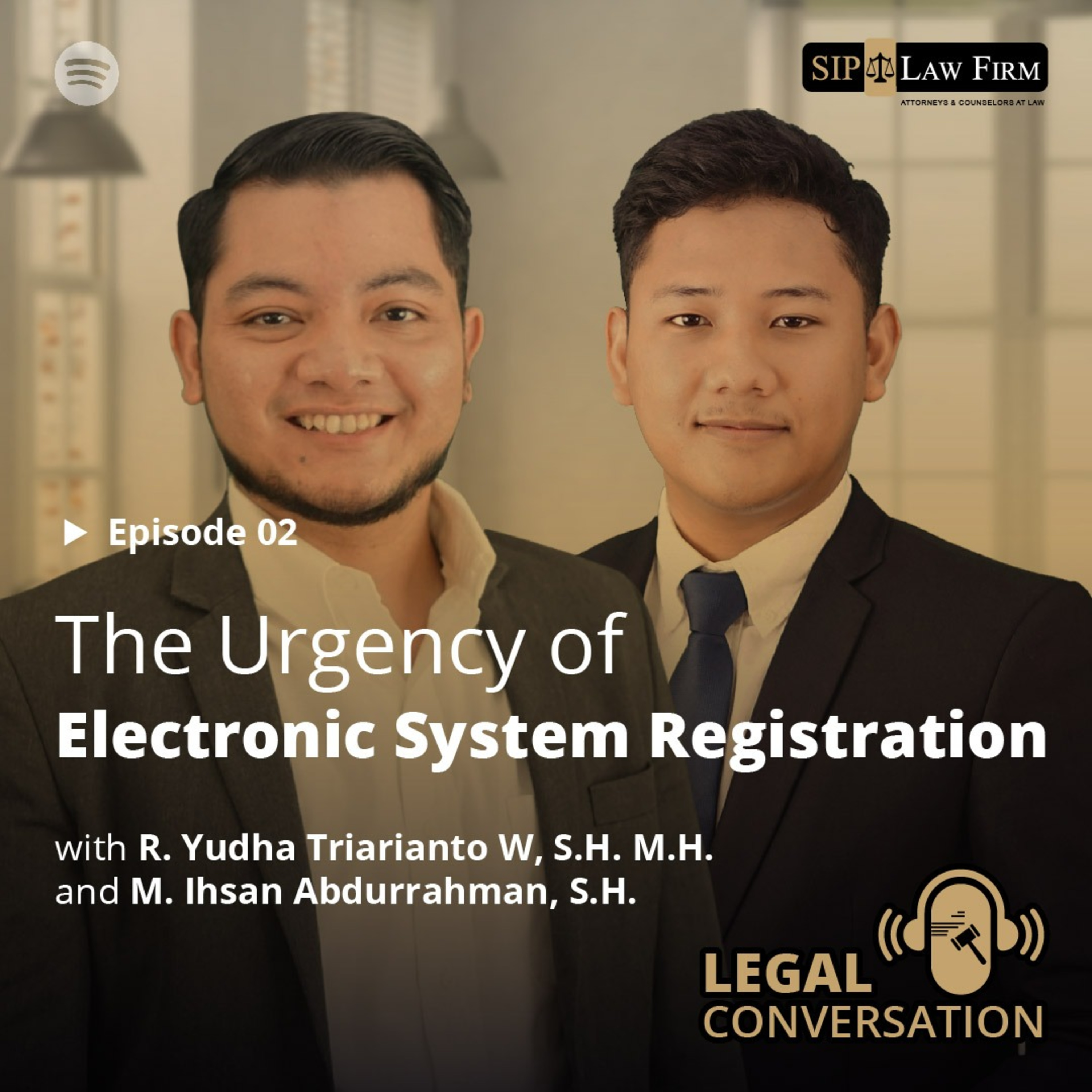
The podcast discusses Indonesia’s Minister Regulation No. 5 of 2020, which requires private electronic system providers (ESPs)—both local and foreign—to register their systems with the government. The regulation, mandated by Government Regulation No. 71 of 2019, classifies ESPs into public (government-run) and private (operated by businesses or individuals). Private ESPs include platforms like Instagram, YouTube, Netflix, and WhatsApp, which host user-generated content or offer services such as e-commerce, digital payments, or communication. Registration is streamlined through the OSS system, replacing older, more complex requirements. ESPs must comply with obligations like preventing prohibited content dissemination, providing user terms and conditions, enabling reporting and rapid takedown of illegal content (urgent cases within 4 hours, others within 24 hours), granting government access for supervision or law enforcement, and designating a local contact person. The government can enforce compliance by blocking access to unregistered systems. Non-compliance leads to administrative sanctions, from warnings to revocation of registration. The regulation aims to simplify business operations while ensuring oversight, particularly for foreign ESPs targeting Indonesia’s large market. The podcast emphasizes timely registration to avoid penalties.
[Music] Recorded at number 7 building. Hosted by SIP law firms lawyers and partners, we present you SIP legal conversation. The spot cast is provided for informational purposes only and should not be construed as legal advice on any subject matters. Hello Good day everyone,This is病 son Alvin tor Anman speaking and I will be hosting this second episode of siplica conversations. Welcome back to siplica conversations, in this second episode we will be having discussions regarding private electronic system providers and I will be accompanied by one of our associate lawyer. Yud зна trigrade I no. Hello及您 werah? How do you do, I am a glad xan, thanks for asking how about you Liaison. Yeah good, good, only lah. Okay, must you there shall we start now? Yes of course. Okay so at the end of 2020 the government through the Ministry of Communications and Informatics has issued the Minister regulations number 5 of 2020. Okay so what can you say about this MR number 5 2020? Okay so this Minister regulation is mandated by the KFRIMN regulation number 71 of 2019. Specifically on the Article 6 regarding registration of electronic systems. This GR71 state that the ESP has a duty to register their electronic systems, both for public ESP and private ESP. The differences between these two ESPs that the public ESP is run by government agency or government institution, while private ESPs operated by prime sector, whether the field was business entities or by society and the MR5 of 2020 also specifically classifies the private ESP for user generated content. Okay so basically the public ESP is run by government agency or government institutions while the private ESP is operated by private sector. Yes, right. Okay so you mentioned earlier about user generated content. What is the private ESP or user generated content? Okay good good question Nissan. The user generated content or we can say UGC, UGC means all the data electronic is uploaded or protested by the user. Example we can see Instagram has put YouTube, all the content is uploaded by the user so that's kind of UGC. So the first requirement for private ESP before the system used by the user is register their system to minister through the RSSS. Okay. Yeah RSSS is integrated reference system that used for business players to apply various kind of license. Okay. But the next question is, do all the private ESP have to call that registration? I can say not all of them. First, the first ESP is supervised by the ministry or institution based on law such as all the contact is supervised under the agency. So contact is must register their electronic system. Okay. And the second requirement is the private ESP has a website or online apps or online application that contains at least one of six types of system which are first, content offering goods or services. We can say like marketplace or online shop and then next is content financial transactions and services such as print tag, payment gateway and also marketplace. We can say now in marketplace they also provide payment for credit, taxes or pay installments right? Okay. Yeah. And then the next requirement is some kind of paid digital content such as Netflix, I say I have like Spotify, see? And then provide communication services such as WhatsApp, Line, this is kind of a social media. Yes. Okay. And then the next is kind of like software engine services like Google, Yahoo, Bing. Okay. And then. And the last is the ESP conducts personal data processing. Okay. And then the company ESP that provides cloud services. Okay. So you mentioned earlier about the, every paid digital content showed we registered there. ESP, a connect system in Indonesia. Yeah. Right. Okay. So Netflix is also a big guide to register there. Absolutely. In Indonesia. Okay. Okay. So, I have a follow up questions. Let's say if there is a company has a website that contains information about their company, and there is a link menu to join as a subscriber. For example, like if we want to get a news update or let this news from a company and we have to fulfill our personal data. It means that this company much register at website or whatever. Yes. Correct. Yeah. So, the company make a arrangement and appoint a third party to operate the website. Okay. Okay. Who is the, who is the obligator to register the website? Is the principles or the third party who runs the website? Okay. I can say the principle who is obligated to register their website. Okay. Even it is operated by the other party, but the website or the apps is under their name, under the name of the principle and also under the authority of the principle. Okay. Because of the websites it is under their name and they have authority to operate the website. It means like the principle is obligated to register in the website. Yes. Correct. So, this regulations is also applied for the private, foreign private ESP or is only applied for the local ESP. It also applied for foreign property ESP. So, even the ESP is operated in America, it must comply with this regulations. Yes. Right. Okay. Okay. So, it means like this MR number 5, 2020 has extra territorial jurisdictions. Yes, you correct. But I'm sure the next question is how the government enforce the law to foreign ESP that even not located in Indonesia? Yeah. Okay. Is this one kind of equations that will be coming up in the future? Yeah. And I can answer it. Our government has authority to block the access of the electronic system. Or we can say the government will take down the website or the apps if they have not been registered. Yeah. Okay. The private ESP has six months since this minister regulation issued. Okay. Okay. Because of this regulation has been enacted on November 2020. It means like the maximum they need to register the website or their systems in May 2021. Yeah. Yeah. Six months after November 2020. All right. All right. So, what do you think about this regulation? Is there any issue? Yeah. So, I think through this podcast, I highly recommend that all private ESP, whether local or foreign ESP, must register immediately their electronic systems to get PDB. PDB is kind of like certificate of ESP registration. And with this new regulation, more simple than before. Okay. Yeah. It's already integrated with OSS. Yeah. All right. Before it, the ESP must register to the minister of communication informatics. But right now, it's already integrated by OSS system. User can just log in to OSS and fill out the registration ESP section. Okay. So, for fill the question, the ESP can print out the certificate. It's easy, right? Yeah. Yeah. And the registration list will be post on a website of the Ministry of Communication at ps.cominfo.gl.id. Okay. So, this registration mechanism is conducted without prior verification. All the answer or data are considered correct. So, I think it's very good for business, especially for the stock companies. Because the previous regulation rules that together TDP, first thing to do is the ESP must get standardization by ISO to 270001 and also indexed kami by BSSM. Yeah. Hopefully, this kind of regulations will be an incentive for the business player more is to do in business in Indonesia. Okay. be signed there.
registrations obligations, what provisions that makes you think the private ESP should be aware of? Okay, I know several obligations that must be complied by the registered private ESP. So after registered, there is some obligation that they must be complied. First, the ESP must ensure the system do not condemn prohibited information and or facilitate the dissemination of prohibited information. Okay, so how if the iconic system provider is user generated content? Okay, for the UGC, it must have clear user instruction or terms and conditions to inform that the user will responsible for any uploaded information. And also the UGC must provide report on their apps so the user or even the public can report if there is prohibited information that posted by other users. And this brings another duty that ESP must take down the prohibited information as possible. As regulated for urgent content such as terrorism, child pornography and disrupt public order maximum for hours since the first three four and 24 hours for prohibited content other than the three kinds like as I said before. So to make sure the ESP safe from user mistakes, they must have clear instruction and or terms and conditions. And the second duty that must be very concerned by the ESP is they have to give the access of their electronic systems and access to electronic data to the government if needed. So this duty brings the third duty that the private ESP must have special at least one contact person located in Indonesia to handle communication with the government. This person we call it Nara Hubungia. Okay okay. Actually there is a question on your second point. You said earlier that every ESP have to give the access of their electronic systems and access to electronic data to the government. Yeah. I think this is why it's hard because it means like government can access all of the private data of the ESP. It depends on your perspective. Okay but how do you think about it? Yeah yeah. Every see deeper yeah. This requirement is not that simple because there is a terms and condition for the government to request action to the ESP. And all the requests must be based on conducting supervision or conducting law enforcement. Okay. So what is the form of the accountability? What if the government abusing their powers to access every object of the air-conveillance system? Okay. Yeah. The MR5 of 2020 has control it by obliging the private ESP to having all the factory codes, the gadget, the use of access by the government institutions. So the private ESP can conduct all the after their system there is electronic system access used by the government. Okay. So it means like the government it makes a leader change for the government to abusing their power to have the data. Yeah. Correct. Okay. Okay. It's all a sound query. Yeah. Yeah. And I think this is good for protecting the users and also the ESP. Even the government can request the access to electronic data. It must be with type policy. Yeah. We should be more worried about our data if we sign up in on register ESP right? Oh. Yeah. Yeah. Okay. So I see these obligations earlier. It's not easy for for any private ESP because they need to open up their data which they need to open up their secret to government institutions. Yeah. Yeah. What do you think about that? Yes. I agree. But I think Indonesia is a big market. So this obligation absolutely not too heavy compared with the potential benefits that will be obtained by the ESP right? Yeah. I agree with that because of Indonesia is one of the leading countries. This will be a potential benefit for investors to invest in Indonesia. Yeah. Right. Is there any is there any point that you want to point out in this podcast? Yeah. Yeah. Yeah. Yeah. Last but not least the discussion for ESP who do not comply with the PM 5 of 2020's. Try to but with administrative sanctioner start with a warning letter, temporary suspension, access to elimination and refocation of TDP. Okay. Okay. Every of the ESP should be comply with the new regulations. Yeah. And then they need to fulfill every of the requirements that stayed on the PM number five. Yeah. 2020. Okay. I think this is the end sessions of our legal conversations. Do you have any suggestions for our listeners? Yeah. As I know, there are still many private ESPs in Indonesia or who operate in Indonesia have not registered their system. Okay. And I think since the PM 5 of 2020 has been issued, the registration has been simplified. So I think it is better. It is good time to register your ESP before the government take on your electronic system. Okay. Okay. I see. I see. There isn't any reasons for our FB of electronic system providers or not registering their electronic system or for not registering their applications. Yeah. Okay. Thank you very much. And we appreciate you for the company. Okay. In the next episode, we will discuss netherlical topics. Stay connected with us on Instagram, link in YouTube and Spotify. Also visit our website at SIPlover.com. Thank you for today. See you in the next episode of SIP legal conversations. [Music]
Podcast Summary
Key Points:
Indonesia’s Ministry of Communications and Informatics issued Minister Regulation No. 5 of 2020, mandating registration for private electronic system providers (ESPs), including foreign ESPs operating in Indonesia.
The regulation applies to ESPs with websites or apps offering goods/services, financial transactions, paid digital content, communication services, search engines, or personal data processing, including user-generated content platforms.
Registration is simplified via the OSS system, replacing prior requirements like ISO 27001 certification, and must be completed within six months of enactment (by May 2021).
Obligations include ensuring systems don’t host prohibited content, providing user terms and conditions, enabling reporting and takedown of illegal content (within 24 hours, or 4 hours for urgent cases), granting government access for supervision/law enforcement, and appointing a local contact person in Indonesia.
Non-compliance may result in administrative sanctions
The regulation has extraterritorial reach, enforced via blocking access to unregistered foreign ESPs.
Summary:
The podcast discusses Indonesia’s Minister Regulation No. 5 of 2020, which requires private electronic system providers (ESPs)—both local and foreign—to register their systems with the government. The regulation, mandated by Government Regulation No.
71 of 2019, classifies ESPs into public (government-run) and private (operated by businesses or individuals). Private ESPs include platforms like Instagram, YouTube, Netflix, and WhatsApp, which host user-generated content or offer services such as e-commerce, digital payments, or communication. Registration is streamlined through the OSS system, replacing older, more complex requirements.
ESPs must comply with obligations like preventing prohibited content dissemination, providing user terms and conditions, enabling reporting and rapid takedown of illegal content (urgent cases within 4 hours, others within 24 hours), granting government access for supervision or law enforcement, and designating a local contact person. The government can enforce compliance by blocking access to unregistered systems. Non-compliance leads to administrative sanctions, from warnings to revocation of registration.
The regulation aims to simplify business operations while ensuring oversight, particularly for foreign ESPs targeting Indonesia’s large market. The podcast emphasizes timely registration to avoid penalties.
FAQs
It is a regulation from Indonesia's Ministry of Communications and Informatics that mandates private electronic system providers (ESPs) to register their electronic systems with the government.
Public ESPs are run by government agencies or institutions, while private ESPs are operated by the private sector, including business entities or society.
A UGC private ESP is one where all electronic data is uploaded or provided by users, such as Instagram or YouTube.
No, only those supervised by specific ministries (e.g., banking), or that have a website or app containing content like goods/services, financial transactions, paid digital content, communication services, software engines, personal data processing, or cloud services.
The principal company is obligated to register, as the website is under their name and authority.
Yes, it applies to both local and foreign private ESPs, and the government can block or take down their systems if not registered.
Chat with AI
Loading...
Pro features
Go deeper with this episode
Unlock creator-grade tools that turn any transcript into show notes and subtitle files.
 PodcastTranscript AI