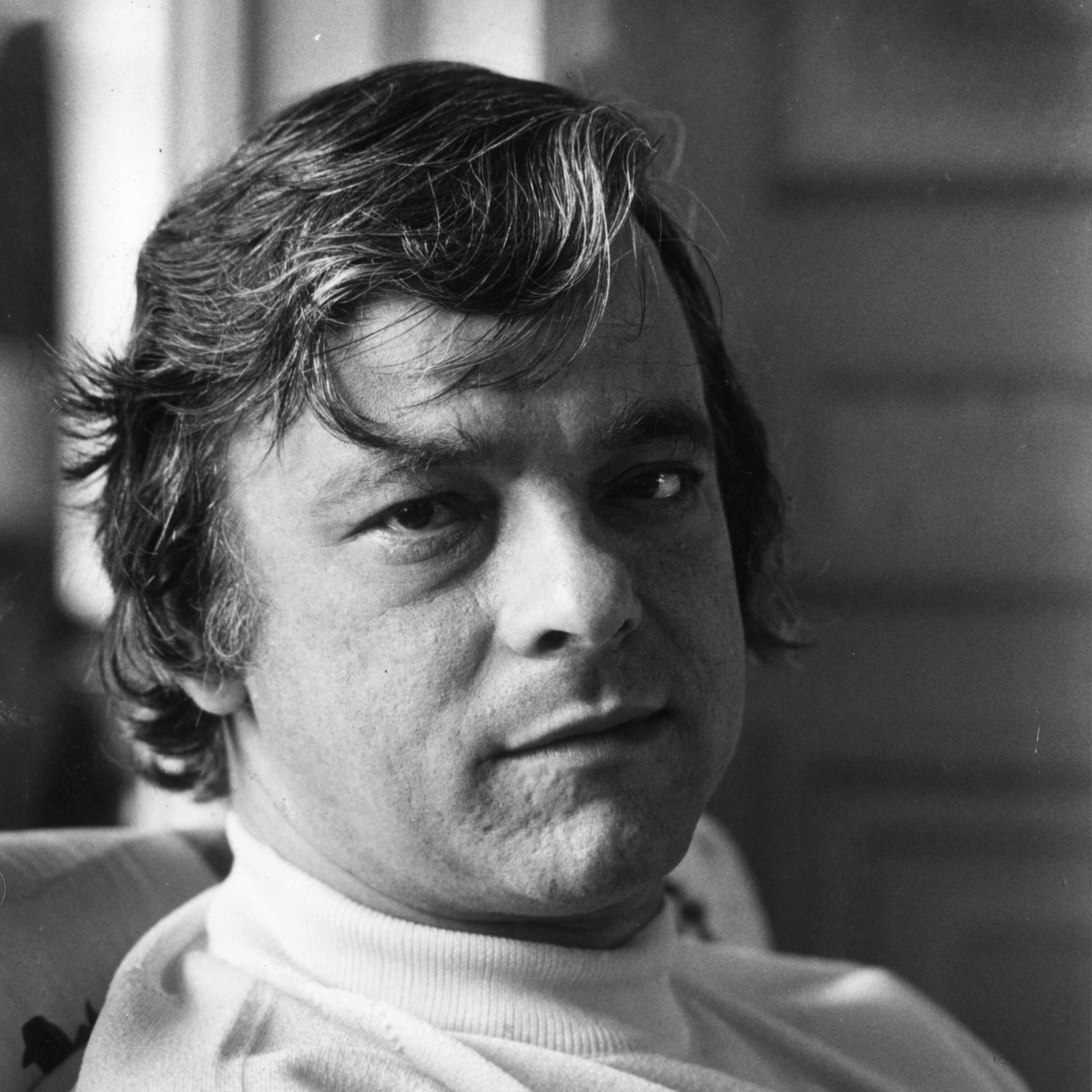
Stephen Sondheim is celebrated as a genius who transformed musical theater with his complex and subtle compositions. His personal life, marked by a strained relationship with his mother and struggles with alienation, deeply influenced his work, as seen in themes of revenge in *Sweeney Todd*. Sondheim relied on alcohol and drugs to overcome inhibitions and channel his emotions into his art. He cherished the mentorship of Oscar Hammerstein, whose direct criticism guided his growth. Despite early reluctance to publicly acknowledge his sexuality, Sondheim found love later in life, which inspired more openly emotional works like *Passion* and *Road Show*. His career exemplifies how personal turmoil and creative expression were intricately linked, leaving a lasting legacy on Broadway.
This is fresh air. I'm Terry Gross. Stephen Soundheim once described himself as an austere revolutionary. His musicals, the music, the lyrics, the stories were both more complex and more subtle than their predecessors. After Alan J. Learner, who wrote the lyrics from my Fair Lady Brigadoune in Camelot, saw Soundheim's groundbreaking 1970 musical company, he broke into tears and told his wife, "My way of writing musicals is over." It's no exaggeration to say Soundheim was a genius. Genuses are often complicated people, with complicated personalities, and Soundheim was no exception. Perhaps the most difficult relationship in his life was with his mother, who could be cold and even verbally cruel. That seems to have influenced Soundheim's personality in the themes of some of his songs. In the new book, Stephen Soundheim Art Isn't Easy, my guest Daniel O'Crent offers insights into Soundheim's life and music based on access to his letters, archives, oral history, as well as the 36 hours of interviews that Meryl C. Crest did for her 1998 biography of him. And O'Crent's own interviews with many people who knew him. O'Crent has worked as a book and magazine editor and was the first public editor for The New York Times. He's the author of previous books about prohibition, baseball, and how eugenics and bigotry shaped anti-immigration law. Stephen Soundheim got a start on Broadway writing lyrics for Gypsy and West Side Story. He went on to write music and lyrics for such shows as "A Funny Thing Happened on the Way to the Forum," "Fallies," "Meryl C. Crest," "Sweeney Todd," "Sunday in the Park with George," "Into the Woods," and "Pasion." Daniel O'Crent, welcome back to Fresh Air. It's great to have you back. I'm very happy to be here. I want to start with you choosing a song. And I'd like it to be a song that you heard something new in as a result of all the research that you did for this New Sound Heim book. Well, Epiphany, this horrifying and overwhelming song, "Near the End of Sweeney Todd," I had listened to and been impressed by, I don't know how many scores of times, but when I was doing the research and listening carefully, that's when I realized that everything we've heard before in that show comes back in very brief snatches in that one song. It's all tied together in a way that is powerfully effective without the listener knowing why it's so effective. And this is a song where Sweeney Todd, who is seeking revenge against the judge that locked him up and then stole his wife and then is trying to marry Sweeney's daughter. Right. He steals his wife, well, he steals his wife and discards her. You know, wounds are permanently. Yeah. Yeah. And Sweeney ends up killing her because now she's homeless and has gone mad and she's just like in his way. So, yeah, anyhow. So here's the song and it's one of my very, very favorite of all, "Sondheim's Pieces." And this is my favorite show of his. And it's a really like his desire for revenge is just like overflowing. And he wants to, everybody's unworthy and they all deserve to die. That's the refrain. They all deserve to die. So here it is. [Music] So that's epiphany from Stephen Sondheim's "Sweeney Todd." And something I found really fascinating about your book is that there's this recurring chord in "Sweeney Todd." That's a real horror movie kind of chord, like old horror movie. And he knew that chord from a Bernard Herman score from a 1945 film, "Hangover Square." And so I went to that movie, which I've never seen, but watched the scene where the concert pianist who is having a breakdown and is murdering people is at the piano playing this very dizzying piece and strikes that chord several times. It was a chord that the very young Stephen Sondheim, he was a teenager, heard and he just fell in love with that chord. And he went back to see the movie again because he wanted to be able to retain that chord and be able to use it for his own purposes. Now, he was not yet a composer at that point, but he was an incipient composer. And in fact, that chord that he called the Herman chord shows up in his work and shows up particularly in "Sweeney Todd," I believe three times. So let's just hear a little bit of the music from the concert piece that's being played. It's with that chord in the Bernard Herman score because the pianist is performing when he's having the breakdown and we hear that chord. So that was an excerpt where what Stephen Sondheim called the Bernard Herman chord is heard in. It's from the movie "Hangover Square." I think Sondheim had denied that "Sweeney Todd" was about revenge or his own desire for revenge. And you found something in your research that relates to that, would you explain? Sure. In an interview that he gave to his first biographer, Marl C. Crest, back in 1996, Sondheim described the day that Judy Prince came over to hear some of the songs, the beginning songs of "Sweeney Todd." She was his closest friend. His self-acknowledged muse and she often would do this. He would play them for her before anybody else. So she came over. He had told her before that that it was a horror show. It was going to be a spined tingler. So she comes over to his house and he plays a few of the first songs and she stops him, two songs into it and says, "This isn't fun with horror. This is the story of your life." And as Sondheim reported it, he said, "It never occurred to me, but of course it is." Now in the Seacrest book, we don't know what the story of his life is, but I was able to determine through a couple sources, but primarily Judy Prince, who never gave interviews, that in fact it was about revenge. And you write that his psychiatrist, Milton Horowitz, wrote papers on revenge and on revenge and masochism. And Horowitz connects revenge to deep loneliness and the need to connect, which you can also relate to Sondheim. Yeah, there are two major arcs to his life. One is from absolute alienation to finally near the end of his life connection. The other is from an ambivalence that could be crippling at times to resolution, to knowing who he was and what he was capable of doing. But it took 50 years from him to move from one of those poles to the next one. So in terms of Sweeney being about revenge and people thinking, "It's ought to be a graphical in some way, not the murder property, just about revenge," Sondheim said, "The difference between Sweeney and me is that I turned it into art." I think that's a sentence that says a great deal about his entire career and his entire life. That through his music and his lyrics, he was able to express things that he could not for various forms of inhibition express otherwise. It was where, if it's not autobiographical, obviously he's not slitting throats. Obviously, he's not George Sarat, obviously he's not in the woods and into the woods, but the feelings expressed in those shows all come from inside of him, I think very, very clearly. And I think it's in a small
way inside all of us that we get angry that we want to get back at someone and we don't necessarily act on it, you know, because but but it's just I love that show so much and there's a part of me, you know, I'm I'm fairly inhibited myself but there's a part of me that like I suppress certain feelings and you just like relate to all the feelings in that show. Absolutely and and it's the inhibitions that keep us from expressing those feelings or something that was something that he attacked. And that's not a bad thing necessarily. No, and if socially it's a very good thing to do and sometimes when he was in a bad mood he would let them out socially but mostly it came through in his songs and one of the things that's very important to know about Sondheim that enabled him to bring them out in his songs those feelings were the disinhibiting effects of alcohol and drugs. And alcohol particularly was something that he consumed in great quantities. His collaborators said you know it didn't impair his ability to work but he would drink all day long marijuana cocaine for a period but mostly alcohol great great quantities of alcohol. The cabaret performer Michael Feinstein reported about having his assistant call Sondheim when Sondheim was coming to dinner at Feinstein's house and asked if there was anything particularly that he would like at dinner and Sondheim replied according to Feinstein vodka vodka and more vodka and there are dozens of other incidents and moments where the alcohol is so visibly a tool that he uses to make it through his work and I think through his life. So I want to ask you about a letter, a letter that's very famous to Sondheim fans that you know you learned more about. Describe the letter as Sondheim described it and then describe the letter that was actually written. This was a letter from his mother and they had a very complicated and very stressful relationship with each other which we'll get into after we hear about the letter. In the late 1970s his mother who was known as Foxy that was her nickname wrote him a letter the content of which he revealed an interview with the New York Times in 1994 in which he said in the letter my mother said the only thing I regret in life is giving birth to you. Now that's a kind of a powerful statement and that kind of explains the or at least measures the intensity of his negative feelings about his mother and it's a story that he from that point told over and over and over again. All of the Sondheads as we sometimes are known as those people really know everything about him or want to know everything about him. We all know this letter. He referred to it so frequently. I found however in the Mary Rogers papers Mary Rogers was his lifelong friend daughter Richard Rogers. He sent her what he said was a copy of the letter he had written to his mother when he received that and so letter in which he says I never wanted to do with you again. This is just the end of our relationship. But in that letter which he represents to his oldest friend as the accurate version of the letter that he had sent in 1978 she doesn't say I regret giving birth to you. She says the only guilt I have is giving birth to you and there's a mile of distance between guilt and regret. There's two ways I can interpret guilt. One is that she knew she wasn't meant to be a mother and she feels guilty that she was such a bad mother. But the more obvious interpretation is she gave birth to a monster and she feels guilty about that that she unleashed this miserable person on the world. Oh that's interesting. I go the opposite direction. I like your first version better. I don't see any evidence that she felt that she had unleashed a monster on the world even in her bitterest expressions to him. So there's a song in company that seems to be related to his mother and it's "Ladies Who Lunch" sung by Elaine Stritch. What's the connection? Well in fact it is about his mother in a way. She was a socialite. She liked to be around famous people and she'd like to eat nearly not every day but certainly every week at the 21 club where all the stylish people of the era would go and she would go with friends who were in show business or not. These were the ladies who launched. They were the subject of that song and they were the object of his distaste. I don't think that Sonheim was aiming at anybody else but his mother. But he was thinking of this group of women when he wrote that "Carruscating, Acidic and Chalereus" song. So let's hear it. This is "Ladies Who Lunch" from his musical company. and dollars. I'm at a May of Pinter play. Perhaps a piece of Mars. I'll drink to them. And one for a dollar. Here's to the girls who play wife. There was ladies who lunch from the Steven Soundheim musical company. So let's continue talking about the relationship between Soundheim and his mother. Although they had a pretty toxic relationship much of the time, his mother was friends with Oscar Hammerstein's wife. And Soundheim was friends with the Hammerstein's son. So when the Hammerstein's moved to a farm in Pennsylvania, his mother and Steven Soundheim moved nearby. And Hammerstein became Soundheim's mentor. And Hammerstein wasn't mean to Soundheim, but he could be very blunt in his business. Well, he was direct with them. I think that Oscar, as he must be known, Oscar was the most important male figure in his life. Oscar dies when Soundheim is just about 30. But for those 30 years, there was no one he was closer with and no one for whom he had more regard. And worth saying, he didn't have regard for Hammerstein's work as a lyricist, even though Hammerstein was at that point, the most prominent and successful lyricist on Broadway. But as a nurturing personality, he valued him immensely. And part of the nurturing that Oscar brought to the relationship was to be frank with him so that when the young Steve is trying to write music or write a play, Oscar would be very direct with him and said, "Sorry, this is no good. You're trying to pretend you're somebody other than you are. Write what you know, write what you think." And those were the lessons that Soundheim cherished for the rest of his life. And one of the first things, Soundheim showed Hammerstein when Soundheim was still pretty young. Hammerstein's response to it was, "This is really terrible. I'm not saying you're not talented, you are, but this is terrible." And Soundheim's glad for that. The same thing shows up when he's at college at Williams when he's studying music with the composer Milton Babet. He wants the criticism. He relishes the criticism. But that happened only in the intimacy of personal or professional relationships. Criticism from the outside, most creative people, certainly most creative people in the theater that I know are very wary of, lary of, and displeased by critics. But not to the degree that Steve and Soundheim was. He despised critics. There were exceptions, but mostly he demeaned critics. You know, his first music and lyrics show was the enormous success of anything happened on the way to the forum. In 1962, I believe it was, recalling that experience of a show that was a gigantic hit. He wrote to a friend to say how it was the most bitter experience that he had ever had. As a composer, as a writer, or as a theater person, the critics took me out and they trounced me and dragged me through the mud and they beat the hell out of me. And in fact, if you go back and read the reviews of a funny thing happened on the way to the forum. There was one pan. The critic for the world telegram and son really slashed it and demeaned it and said, "This would have been a lousy score in the 1930s." But other than that, it got good reviews. It got very positive respect for his music. And this was the first time his music had been performed on Broadway. But his memory of the experience just two years later, when
one of being horribly mistreated by critics. We need to take a short break here, so let me reintroduce you. My guest is Daniel O'Crent, his new book is called "Steven Sonheim." Art isn't easy. We'll be right back. This is Fresh Air. Hi, this is Molly Seving-Uspert, digital producer at Fresh Air. And this is Terry Gross, host of the show. One of the things I do is write the weekly newsletter. And I'm a newsletter fan. I read it every Saturday after breakfast. The newsletter includes all the week shows, staff recommendations, and Molly picks timely highlights from the archive. It's a fun read. It's also the only place where we tell you what's coming up next week. And exclusive. So subscribe at www.wy.org/freshair and look for an email from Molly every Saturday morning. After Oscar Hammerstein died, Sonheim collaborated for one show called "Do I Hear A Walls" with Richard Rogers, who was Hammerstein's, you know, longtime songwriting partner with Rogers writing the music and Hammerstein writing the lyrics. So I want to place something from "Do I Hear A Walls" because just the whole idea of Sonheim and Richard Rogers collaborating is interesting. We should hear an example of the music. The only song that caught on from there was "Do I Hear A Walls" which as I recall, I heard people do want like the "At Sullivan Show" and on the radio. Do you want to choose one? Yeah, I think your instinct is right. We remembered "Do I Hear A Walls" because that song became a very big hit and was sung by many, many other popular singers of the era and even since then. It was also a very, this is not to demean Rogers at all. It was a great composer, but it was very much easy listening. It was something a kind of music that could be popular. Yeah, let's play it. Okay, here it is. And the singer is Elizabeth Allen. That was Elizabeth Allen singing the title song from the original song "Do I Hear A Walls" A collaboration between composer Richard Rogers and Stephen Sonheim wrote the lyrics. So, I'm getting back to talking about Sonheim's life. He knew he was gay, but you couldn't really come out that not even on Broadway were like so many of the directors and writers and composers and lyricists were gay and the audience as well, but you couldn't be out because that's how it was. So it seems to me from your book that he really tried to be straight because he just couldn't be out then. I think he gave it a shot. I think it wasn't that he made a valiant effort to do it, but see, let's see if this is a possibility and he did not come out publicly really for, well, it's the middles to late 70s. Not that anybody was asking that much in those days. Certainly all the people who knew him and people in his social world, they knew he was gay. He knew he was gay. He did not think it was a defining aspect of his life. He didn't want to be, is it word, typecast. He wasn't a gay composer. He was a composer. And his private life was something completely separate. Did his attitude change when he found the person who became his spouse? Well, his attitude begins to change when he falls in love with a 21-year-old and sometimes at this point in his early 60s, an incipient or aspiring songwriter named Peter Jones. He meets this young man and it's head over heels. That's when he wrote passion. That's when he wrote his only unironic play. That's when he wrote his only unironic musical. That's the time that he wrote a show that was about exposing one's love. He had never done that before. Now the characters in passion are heterosexual to man and a woman. But there's no question this came out of this changed experience of finding someone to fall in love with. He had serial relationships with many, many men over the years. But this was the one that clicked. And then after that ran its course, although they remained friends. In the early 2000s, he met Jeff Romley, whom he fell deeply in love with. As Romley did with him, Romley moved into his house and they spent the last 17 years of Stephen Sondheim's life together. They got married four years before Sondheim died. There was no effort of hiding that relationship. During that period, he wrote a song from, I think this is probably the final musical that was actually performed in his lifetime. In his lifetime. Yeah. And it had several titles, but I think it's mostly known as a road show. And the song I'm thinking of is the best thing that ever happened, which is, I love this song. It's a duet. And I didn't realize until he wrote it that it had become a standard song at gay wedding. But let's hear the song. You might just be the best thing that has happened to me so far. Of course not much ever really has happened to me so far. I didn't much like love. I always thought it. I never thought it would happen like this. Give us a kiss. We may just be the best thing that has happened to us, kiddo, partner. Another moment like this may not happen to us, partner, lover. And all is said and done. I have to agree. You are the best thing that's happened to me. That was the best thing that ever happened from the Soundheim musical road show. And my guest is Daniel O'Crant, author of the new book, Stephen Soundheim Art isn't easy. So Soundheim collaborated on several key musicals with Hal Prince. They had a pretty complicated relationship. And he also had a very complicated relationship with Leonard Bernstein. So let's focus on one of them. You can choose. Let's talk about Bernstein. When the two met, Soundheim was 25 and he came in to sort of audition as a lyricist for West Side Story. And Bernstein, who was at that time the best known non-rock musician in America by far, television star, music star. Bernstein immediately embraced him and hired him along with his collaborators on the show to write the lyrics for this very unlikely show about street gangs in New York in the mid to late 1950s. And they were a great combination. There are problems with the show. They both would perceive in later years, but I think anybody who's familiar with the score of West Side Story would say that it was a success. From that moment on, Soundheim became part of the Bernstein social world, which was the Red Hot Center, the creative world of New York. In fact, a world that Soundheim would later parody or satirize, I should say, that he would satirize. And merely we can roll along. But at that time, he was taken in. He was taken in by everybody who mattered in the world of music and theater and books and dance. And he became very close to the Bernstein family. But over the years, what was a wonderful collaboration and a loving friendship turned a little bit into rivalry and then it soured toward the end of Bernstein's life. My supposition, and it's only a supposition, is that at the time that Soundheim's reputation as a composer was rising and had nearly reached its peak, Bernstein's reputation as a composer was plummeting. And the relationship changed. One was now a musical success. The other was now somebody who was having a very hard time holding things together musically and in many other aspects of his life. I think Bernstein didn't like Sweeney Todd. It was Sweeney Todd of what he said about Sweeney Todd. He said, "The music made me want to throw up in my galoshes." See, I can't imagine that because it's such a brilliant musical, such a groundbreaking musical. And Soundheim didn't like Bernstein's mass, but no one did. That's what he was doing by a lot of people. Yeah, exactly. And not liking it. Yeah. But with Sweeney, I think, Terry, there's misperception. I don't think when he said, "It makes me want to throw up in my galoshes." He was. commenting on the music, I think he was commenting to some degree on the subject matter, but mostly on his envy for Steve's success. I think it was killing him that Steve was having success doing something that he could no longer do. You write on the book that Son, I'm described his songwriting process, not the lyrics, but the musical part, as being built around chords, that the first thing that comes to him is the chords, and then he adds the melody around that. And some of his chords were so interesting, and I'm going to go back to Swinny Todd for this, because at the beginning of the show, it opens with this like really chilling organ solo, and it's one crazy chord after another. Like each chord has such a kind of demonic sound to it, and it just keeps building and building. So let's just hear a little bit of that. So that's the opening music from Swinny Todd, his musical about revenge that's inspired by, it sounds like it's inspired by horror films in part. Yeah, it's an amazing piece of work, and of course that theme returns throughout the show, behind other songs, for different purposes, but it haunts the show. He said harmony was everything. If you don't have the harmony, forget about the rest of it. And so he would sit at the keyboard, and he would just noodle around with his fingers, and he would find these harmonies that seem to fit the theme, the subject matter, and most importantly, the character who was singing the song. If you're just joining us, my guest is Daniel O'Cranty, he's the author of the new book, Stephen Sondheim. Art isn't easy. We have to take a short break here, and then we'll be right back. This is Frish Air. So I want to end the musical part of our discussion with one of the two songs that were played at Sondheim's Memorial Service, and there were songs that he felt very deeply about. One of them was someone in a tree from Pacific Overtures, a show that didn't do well, and most people don't know as well as he shows that do do well. I don't know the score that well myself. But he had told me that one of the first times I interviewed him that someone in a tree from Pacific Overtures was his favorite of all the songs he wrote. And you write, when listening back to that song, he'd frequently tear up. So I want to play that song, but I'd like you to set it up for us. Pacific Overtures is set in the middle of the 19th century when I'm think of this as an idea for a Broadway musical. Let's do a Broadway musical about the opening of Japan to Western Commerce in the 1850s. I mean, it sounds ridiculous for musical. I happen to love the show deeply. It may be my favorite of all the Sondheim shows. And in this particular scene, the American ad-broll has come ashore to negotiate with the Japanese authorities, negotiate with many ships and cannons right behind him. So it's not the easiest of negotiations. And in the song, a young boy is in a tree. He's the someone in a tree who is hearing little bits and pieces of the conversation and wanting to know what's really going on. And believing that things he's here, that he hears going on may not be the whole story. It is about an outsider trying to get in. And I believe that that would be a very short version of much of Stephen Sondheim's life. Even though it is not necessarily a beloved song by Sondheim fans, I think they would be admired and treasured because it was so important to him. His collaborator, John Wideman, who had never written a Broadway show before Pacific Overtures and then collaborated with him on two other shows. He said to me when I interviewed him that Steve Cried at the time he wrote it. But he was still crying about it 40 years later. There's something in that that you need to pay attention to. And I think that what I pay attention to is the outsider trying to be in. Okay, let's hear it. Tell him what I see. I am in the tree. I am in the tree. I was younger than. In between the eaves I can see. Tell me what I see. I was only ten. I see men and Latin. Some are old. Some chatting. If it happened I was there. I saw everything. I was someone in the tree. Tell him what I see. Some of them have gold on their coats. One of them has gold. That was someone in a tree from the Stephen Sondheim musical Pacific Overtures. My guest, Daniel O'Crent, is the author of the new book, Stephen Sondheim Art Isn't Easy. You know, I think your book could have been called Genius Isn't Easy. Instead of Art Isn't Easy. Art Isn't Easy is a quote from Sunday in the Park with George, one of the lyrics. But there's so many geniuses in your book and they're all such complicated people. I guess they are. I may have overcomplicated them because I do so much research. I go so deep and I find things that inevitably lead to complication. You could do it with my life very, very, very easily. But it is true that in the theater community, I think it goes without saying that emotions are on the surface. And even if you're trying to hide the emotions, the fact that you're trying to hide them are on the surface. It's a very volatile world. And so the people I'm writing about in this book, not just Sondheim, but also Prince and Bernstein and so many others, not a lot of easy personalities. So you said that the Sondheim book is going to be your last book. How does it feel to have Sondheim be the last book you're going to write? What was great about the Sondheim project was I wasn't going to make any money from it. It's published by a university press. It's on a relatively arcane subject. And it was something that I did because I was interested. And I had been interested in Sondheim for most of my adult life. And now here was the opportunity presented to me. Go find out everything about somebody that you admire greatly. And that was a pleasure. And I'm pleased enough as I hope you are Terry. I'm pleased enough with this one to think, okay, I've done enough. Well, Daniel O'Kran has been a pleasure to talk with you. Thank you so much. You love Sondheim's music as much as I do. So it's great to share this with you, Terry. It's been a pleasure. Thank you so much. Daniel O'Kran is the author of the new book, "Steven Sondheim Art Isn't Easy." After we take a short break, Book Critic Maureen Karagan will review a new novel that reimagines an infamous clash of cultures. This is Fresh Air. Mexican novelist Alvaro Enrique reimagined the 1519 meeting of Spanish explorer Hernán Cortez with Aztec ruler Mactezuma in his 2024 novel, "You Dreamed of Empires." Enrique's latest novel called, "Now I Surrender," also reimagines an infamous clash of cultures. Our Book Critic Maureen Karagan has a review. Before the captivity narrative about a Mexican woman abducted by the Apache in the mid-1800s, before the storyline about Geronimo's surrender, before the torrent of details about the life and peoples on the borderlands between present-day Mexico and the U.S., there's this first sentence. In the beginning things appear. Writing is a defiant gesture we've long since gotten used to, where there was nothing, somebody put something, and now everybody sees it. For example, the Prairie. That's the opening of Alvaro Enrique's new novel called, "Now I Surrender." The words are spoken by Enrique himself. He appears throughout the novel as a writer traveling on a road trip through the southwest with his family. They're visiting sites that tell the story of the Apache fight for survival. That prosper only
like opening gives readers fair warning about how defiantly challenging, occasionally overblown, and at times magical this epic novel is going to be. In the self-conscious hallucinatory tradition of historical novelists like EL Doctoro and Dondalillo, Enrique keeps intrusively reminding us that this overpacked tale of the past is something he's constructing as much as resurrecting, and like his predecessors Enrique subscribes to a paranoid reading of history. As a character in Libra, Dillillo's novel about the Kennedy assassination says, "This is what history consists of. It is the sum total of the things they aren't telling us." There's so much that official history hasn't told us about how the West was won, that Enrique here works furiously to fill in some of the silences. The novel's most engrossing, if brutal storyline follows a young Mexican woman named Camila. We first see her running into the prairie after an Apache raid wipes out everyone else living on her elderly husband's ranch. To give you a sense of how immediate and visual Enrique's writing can be, here's the moment when the Apache catch up with Camila. She didn't look back, but she clearly heard a group of horses breaking away from the herd of running cattle and swerving toward her. When the dust raised by the pounding of the horse's hooves began to sting her eyes, she threw herself on the ground and curled into a ball, hoping to be trampled to death. Then she was yanked up by her braids, her neck wrenched, her legs kicking, her brown underskirts of flour in the wind. Camila's abduction spurs a second narrative featuring a rag-tag search party assembled under a lieutenant colonel of the Mexican Republic. The searchers ride far into the vast territory that was once known as Apache Ria. Enrique tells us this ancient homeland of the various Apache tribes vanished before our eyes, like cassette tapes or incandescent light bulbs. Where Sonora, Chihuahua, Arizona, and New Mexico meet today was an Atlantis and in between country. And straddling it were the Mexicans and the gringos, like two children, eyes shut, their backs to each other. While the Apache is scuttled back and forth between their legs, not sure where to go with strangers bubbling up everywhere, filling their lands. The endgame for the Apache began in March 1886 when their great leader and shaman, Geronimo, surrendered with a small band of warriors to the U.S. Army. According to the official transcript of that moment, Geronimo said, "Once I move like the wind, now I surrender to you, and that is all." Enrique's novel, which takes its title from Geronimo's eloquent words, loses some vitality when it focuses on the story of his surrender and afterlife as a prisoner of war and a curiosity. Geronimo appeared, for instance, at the 1904 World's Fair in St. Louis and rode in Teddy Roosevelt's inaugural parade the year after. Given that Enrique writes with such unsentimental admiration about Apacheia, perhaps recounting the story of Geronimo's fall felt more like a right-early duty than a desire. Now I surrender has been described as a revisionist or alternative Western, which it is. But given its scope, I think it might be more apt to call it an expandable Western. There's room for everyone in this epic of conquest and eradication, Native Americans, Mexicans, Gringos, formerly enslaved people, immigrants, and one lone writer, gamefully trying to tell their stories before the curtain comes down on the whole enterprise. Marine Carrigan is a professor of literature at Georgetown University. She reviewed "Now I Surrender" by Alvaro Enrique. Tomorrow on Fresh Air, we'll talk about the latest developments in the war in Iran and it's spread to other countries and the Strait of Hormuz. Our guest will be Karim Saadjadpur, senior fellow at the Carnegie Endowment for International Peace. He says President Trump was hoping things would work out like they did in Venezuela, where the Vice President, Elsie Rodriguez, became president and is cooperating with Trump, but instead, Trump may have produced another Kim Jong-un. I hope you'll join us. To keep up with what's on the show and get highlights of our interviews, follow us on Instagram at NPR Fresh Air. Fresh Air's executive producer is Sam Brigger. Our technical director and engineer is Audrey Bentham. Our interviews and reviews are produced and edited by Phyllis Myers and Rebildonado Lauren Crenzel, Theresa Madden, Monique Nazareth, Thaya Challener, Sison Eccundy, Anna Balman, and Nico Gonzalez Whistler. Our digital media producer is Molly Seveen Esper. Roberta Shorock directs the show. Our co-host is Tanya Mosley. I'm Terry Gross. [BLANK_AUDIO]
Podcast Summary
Key Points:
Stephen Sondheim was a revolutionary musical theater composer and lyricist whose work was more complex and subtle than his predecessors, profoundly influencing the genre.
His difficult relationship with his mother and personal struggles with alienation and inhibition deeply influenced the themes of his musicals, such as revenge in *Sweeney Todd*.
Sondheim used alcohol and drugs as tools to disinhibit his creative process, enabling him to express intense emotions through his music and lyrics.
He maintained a lifelong mentorship with Oscar Hammerstein, who provided frank, nurturing criticism that shaped Sondheim’s artistic development.
Sondheim’s late-life romantic relationships, particularly with Peter Jones and later Jeff Romley, brought personal fulfillment and inspired more openly emotional works like *Passion*.
Summary:
Stephen Sondheim is celebrated as a genius who transformed musical theater with his complex and subtle compositions. His personal life, marked by a strained relationship with his mother and struggles with alienation, deeply influenced his work, as seen in themes of revenge in *Sweeney Todd*. Sondheim relied on alcohol and drugs to overcome inhibitions and channel his emotions into his art.
He cherished the mentorship of Oscar Hammerstein, whose direct criticism guided his growth. Despite early reluctance to publicly acknowledge his sexuality, Sondheim found love later in life, which inspired more openly emotional works like *Passion* and *Road Show*. His career exemplifies how personal turmoil and creative expression were intricately linked, leaving a lasting legacy on Broadway.
FAQs
Sondheim had a difficult and toxic relationship with his mother, who was often cold and verbally cruel. This strained dynamic influenced his personality and themes in his music.
Oscar Hammerstein served as Sondheim's mentor, providing frank and nurturing guidance. Sondheim valued Hammerstein's direct criticism, which helped shape his approach to writing music and lyrics.
Sondheim frequently used alcohol, and occasionally drugs, to disinhibit himself and access deeper emotions for his work. He consumed large quantities of alcohol, which collaborators noted did not impair his productivity.
Sondheim acknowledged that 'Sweeney Todd' reflected themes of revenge and personal alienation from his own life. He stated that the difference between himself and Sweeney was that he 'turned it into art.'
Sondheim borrowed a distinctive chord from Bernard Herrmann's score for the film 'Hangover Square,' which he called the 'Herrmann chord.' This chord appears multiple times in 'Sweeney Todd,' adding a horror-inspired musical element.
Sondheim initially kept his sexuality private to avoid being typecast, but later embraced openness after falling in love. His later works, like 'Passion,' reflect more personal and unironic expressions of love.
Chat with AI
Loading...
Pro features
Go deeper with this episode
Unlock creator-grade tools that turn any transcript into show notes and subtitle files.
 PodcastTranscript AI