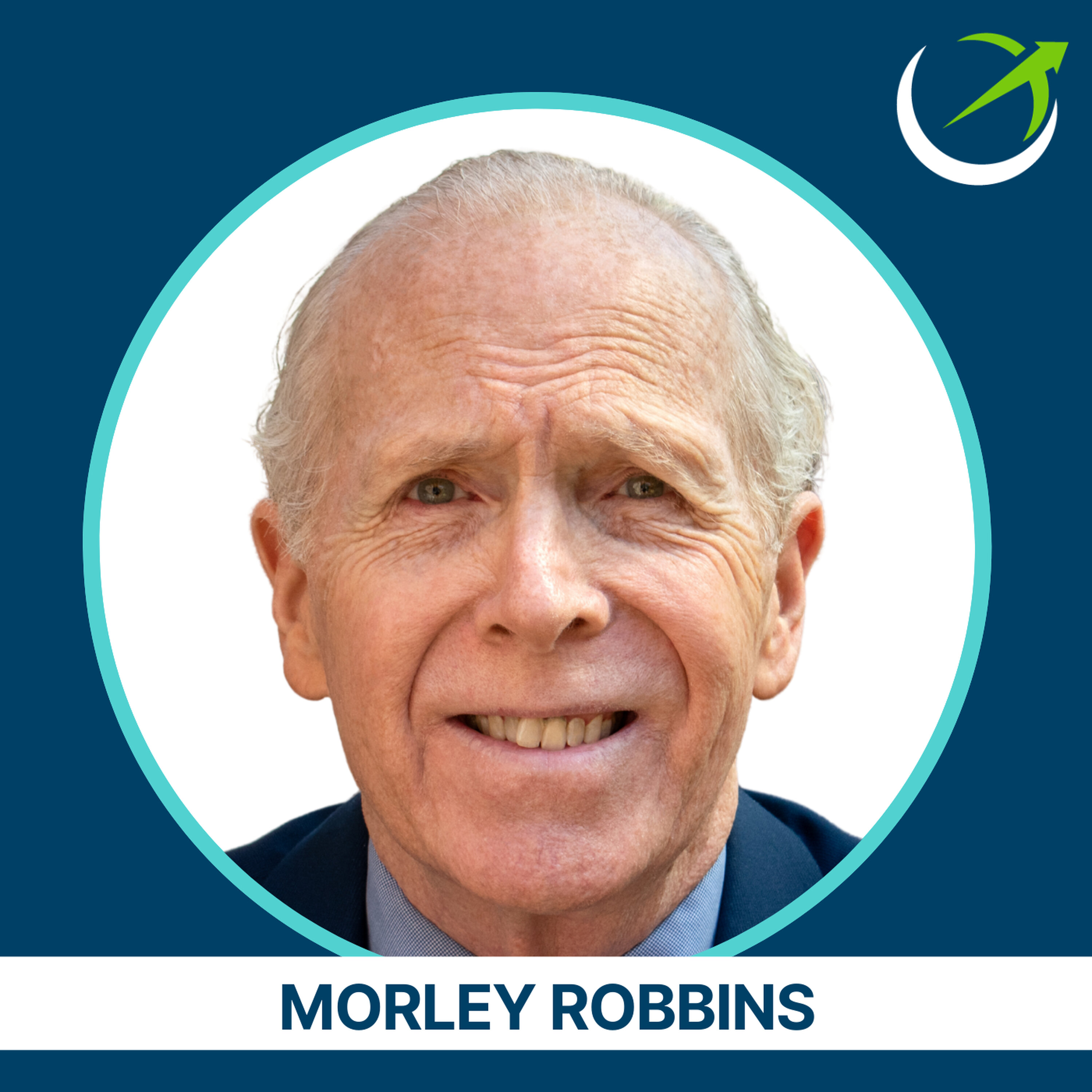
The TRUTH About What's *Really* Causing Your Fatigue & The "Root Cause" Protocol to Fix It, With Morley Robbins.
66m 27s
In this episode of the Boundless Life Podcast, host Ben Greenfield interviews Morley Robbins, creator of the Root Cause Protocol. Robbins argues that copper is the most crucial mineral for health, as it drives mitochondrial energy production by converting oxygen to water in complex IV and regulates iron to prevent oxidative stress, which he identifies as the root cause of fatigue and aging. He challenges conventional views on anemia, suggesting fatigue often stems from iron dysregulation and excess tissue iron, not deficiency, and that iron supplements can exacerbate oxidative damage. Robbins shares his personal health journey and explains how copper, along with cholesterol and melatonin, forms a protective triad against "rusting" or iron-induced oxidative stress. The conversation also touches on the historical "Great Oxygenation Event" and alternative theories about atmospheric changes. The episode includes promotional ads for various health and wellness products.
My name is Ben Greenfield and on this episode of the Boundless Life Podcast. This is a very powerful triad in our body that keeps all the pathogens at bay, keeps the iron in regulation. We are endowed naturally with these mechanisms, but they're not taught in mainstream medical education. Welcome to the Boundless Life with me, your host Ben Greenfield. I'm a personal trainer, exercise physiologist and nutritionist, and I'm passionate about helping you discover unparalleled levels of health, fitness, longevity, and beyond. [Music] What if I told you you could calm your fight and flight sympathetic nervous response in just minutes with Vegas Nerve stimulation, clinically proven Vegas Nerve stimulation. You can do this with this teeny tiny handheld device. It's super cool. It's called TruVega, TRU VAGA. It's a drug-free solution to balance your nervous system for better health, better sleep, focus, stress, management, and it is award-winning technology. It's really taking over the whole biohacking industry because it's two minutes. Like you can slip it in your pocket and when you're stressed out or when you're trying to sleep or you wake up and you can't get back to sleep, three minutes lightweight compact goes through TSA, you can use it anywhere and you just hold up to your neck for a couple of minutes. If you want to balance your nervous system naturally with TruVega, visit TruVega.com/Greenfield and use code Greenfield30 to save 30 bucks off any of their devices. That's TRU VAGA, TruVega.com/Greenfield, use code Greenfield30 to calm your mind, focus better, and recover faster in just two minutes flat. It's about the time of year when you might possibly turn to a cup of hot chocolate, but a lot of hot chocolate has crappin' it. And I have this new kick I've been on. Peak Tea has taken the wellness world by storm for the past, they've probably been around for like five plus years, but they came out with this stuff. I don't think they call it hot chocolate, but to me it tastes like creamy spiced hot chocolate. It's called Nandaka. And they made this stuff with functional mushrooms like Rishi and Corticeps, a ceremonial grade cacao, fermented tea, a dapagetic herb, so every single ingredient is source for purity and bile availability. So your body absorbs exactly what it needs to stay sharp and grounded and resilient, and of course like I mentioned the flavor is like creamy spiced hot chocolate. It's warming, it's smooth, I have possibly, may or may not have been known to just like put a packet into my morning cup of coffee to just make my mud even mudier. Peak Tea has crush it with this, so if you want to feel the holiday magic and unlock your healthiest glow, with the most exciting offer this season, you get 20% off site wide for life from peak plus a complimentary exclusive holiday bundle at peaklife.com/ben. This episode with Morley Robbins, which was super eye opening, we talk about the massive myth behind anemia and what really causes it, the surge of copper deficiency and what you can do about it. Morley's root cause protocol, and for anybody who struggles with fatigue, chronic fatigue, tiredness, low energy, this one's a must listen. Show notes are a bend greenfieldlife.com/rootcauz. Let's dive in. I've known about today's podcast guest for quite some time, never had him on the show. Morley Robbins used to be maybe still as known as the magnesium man, but perhaps more popularly of late, he is the creator and the founder of something called the root cause protocol. And even wrote this brand new book that I just got my hands on and just finished reading called Curier Fatigue. Notice how the CU and Cure, if you're watching the video, is the periodic table of the elements sign for copper, which is a big part of this whole root cause protocol, and maybe how I got kind of interested in the first place. But Morley has a pretty cool backstory in terms of how he got into all this after getting his degree in biology. He's in wellness coaching, he's in nutrition counseling, functional diagnostic nutrition, and has written this incredible book that I think might have some surprises in it for people who are accustomed to the standard ho-hum health and nutrition advice out there. So all the show notes, including a link to Morley's book and website, I'll put at Ben Greenfield Life.com/Root Cause. Morley, welcome. It's been a long time coming. Absolutely. Well, thank you for the opportunity. Looking forward to our discussion. Yeah, absolutely. And you know, from what I understand, you know, I stalked you a little bit, a little bit. You used to be like a hospital executive? Yeah, absolutely. Yeah. Okay, so how'd you go from that to this? Well, I grew up in a very sickly family. Everyone has a backstory. And my mom was an alcoholic, my dad was a doctor professor with a schizophrenia. And my sister became a nurse, so I was supposed to become the doctor until I got to college and found out, wow, this is a lot of work. I still applied to school, but there was a very little chance I was going to get in given the competitive nature of it. But if you can't become a doctor, you go into hospital management, because it's just a natural progression. And so I chose to do that. And I worked for hospitals for about 12 years and then worked in consulting firms for 20 years, solving bigger and more complicated problems within the hospital field. And it was a phenomenal 32 year career. And then I developed what's called frozen shoulder. I couldn't pick my hand up above my waist. Yeah, I've had a little bit of that from tennis, but it went away pretty quickly. No, this didn't go away. I was miserable. And I went to a health food store that I had frequented for many years in Chicago area. And they told me to go see Dr. Liz. And I put up my hands. I said, I don't do which grabbed because I knew that my chiropractor. And they saw me some supplements. They didn't do anything. I came back a couple months later. Not that we want to throw all chiropractic medicine under the bus, but that does happen sometimes. I don't know, but the long story short is Dr. Liz is now my wife. And she healed my shoulder by correcting the the chirogoid muscle and my jaw from the inside. I might have very was a very painful experience, but as she pressed my arm went up, it was as close to miracles I never meant. What really got me into this work that was she used to phrase I've never heard in 32 years of working in hospitals. She talked about the innate healer, the healer within. And I looked at her. I didn't say anything. I thought to myself, if there's an innate healer, I want to find out who that is. Why do we have millions of doctors around the world if there's a healer within? And that's really what the book is about. I think that that bioavailable copper and the way we presented in the in the root cross protocol is in fact the mechanism to activate the innate healer. I cannot wait to dive in here you have on page 32 the book you talk about the keys to having more energy you distill it pretty simply into a three step process that I know has a lot of implications and rabbit holes will probably get into what what are the keys these this three step process to having more energy. Well, the real key is recognizing that we need to be able to activate oxygen and turn it into water. And that mechanism that enzymatic process is what releases ADP to go over to complex five to become magnesium ATP. And so the key is that that complex for which is where that conversion of oxygen into water. It's a it's actually a stove. Think of your kitchen got a stove and does the stove know what burner to use does the stove know what temperature the oven should be. No, every stove needs a chef well copper copper is the chef inside of chrome sea oxidase. So the him proteins he may and he may three basically become a stove to hold the oxygen but it's oxygen there's slicing and dicing it so it turns into water. And that is the critical step and then it moves over to complex five which is a nano rotor as you probably know spinning it 30,000 revolutions per minute 500 revolutions per second and the beauty of our body is we have allegedly 40 quadrillion of these mitochondria supporting our day to day activity which is I think absolutely amazing to think about. And so you're saying copper is kind of an integral part of this mitochondrial production of energy production of ATP what do you say copper is like the most important part. I think, you know, there's depending on your
sourcing, you might hear about 82 minerals versus 92 minerals, but the way a lot of people talk about them is it's like they're all of equal importance. I don't think that's the case. I think there's a hierarchy and I think copper is in fact at the top, just because of the unique properties it has by converting oxygen into water, but also its ability to regulate iron and oxygen at the same time. All of the health problems that we have then stem from iron induced oxidative stress. It's the copper that keeps those two elements at bay and allows us to have the fullest expression of our physiology. So iron induced oxidative stress, like an internal resting of the body, because copper is protective against that type of oxidation, it would basically be the key in your theory for fixing the fatigue that a lot of people deal with, like balancing and modulating copper levels. Yeah, and again, keep in mind this is not my opinion, this is a companion of thousands of articles that I've read that there are research scientists and clinicians who've come to this conclusion. I've just gone out of my way to make sure people really understand how central this function is in our body. Yeah, okay, let's explore this whole resting thing. You talk, like early in the book, about what you describe as the great oxygenation event, which the way I see it might be kind of like the best way to explain how this resting kind of started in the first place. So what was the great oxygenation event? Well, it's interesting. Oxygen was not always on the plant and it's fascinating that several billion years ago, according to the astrobiologists, again, I'm just going to take it at face value that they know what they're talking about. But cyanobacteria began to interact with the sun in the process called photosynthesis, very, very important part of our life process here on planet Earth. And so oxygen is given off in that process. The oxygen was going into the primordial sea, which was primarily iron and sulfur. And as the oxygen began to build up in the sea bed, then it started to go into the atmosphere. And again, according to the folks who studied it's most, when there was one tenth of one percent oxygen in the atmosphere, we now have 21 percent. But when there was one tenth of one percent, it wiped out 99 percent of life on the planet because of the everything was anaerobic. And the importance of copper, again, this is me just sharing what the scientists have written about. But what copper brought to the equation was three critical chemicals that I think are of utmost importance. We've talked about one of them, the cytochrome coxidase, which is complex four in the mitochondria. It's classification would be it's a multi copper oxidase. And there's several different forms of that enzyme class on the planet. And that's the class of enzymes that can turn oxygen into water. Very important process on a planet with oxygen. The second critical element that was brought about by copper was you've heard of melatonin, but it's not just a sleep aid. It's actually the master antioxidant inside our mitochondria. It's a really critical part of our physiology and it's only possible because of bioavailable copper. By the way, when you say melatonin's only possible because of bioavailable copper, what's that mean? Just the mechanism of producing it, the mechanism of its action. And then the third element that I think is always a surprise for folks is to find out that cholesterol was one of the first elements that formed on the planet. And its unique properties, as I'm sure we'll discuss, is that it has the ability to be a sink for oxygen because it takes 11 molecules of oxygen to make one molecule of cholesterol. And it was in 1973 that a famous cardiologist and copper expert named Leslie Plavé, it's a guy, but in 1973 he was able to demonstrate that lack of copper is what was causing a rise of cholesterol in society. Because if you had less copper, you would need more cholesterol to fight oxidation. Exactly. You got it. Now you understand cardiology better than most doctors on the planet. Okay, so I have a super weird question. I don't know if you've ever gotten thrown this on a podcast, but okay, so and this is going to be a little esoteric for a second because my religious background is Christianity. And so obviously like a lot of Christians, I have like more of like a new earth creationist view of the planet and also the belief in a great flood event. Do you think, and I realize this is a require like considering that the earth is newer than the billions of years that is often proposed by modern science. Do you think there is some that there's some credence to the idea that some great flood event could have affected atmospheric gaseous conditions and been a potential alternative explanation to the change in oxygen levels that would result in increasing oxidation and even from like a biblical standpoint, the shortened lifespan that we see in humans in a post flood environment. I absolutely think there are many ways to explain what's going on. And I think that the research that I've done the last 16 years has only made me more curious and more open to are there other explanations for what might have happened. But I think that the bottom line is air physiology. Air mammalian physiology is designed to work with oxygen and iron. And we've got to be able to work with them cleanly so that they don't create static electricity or create rest as we're as we're describing it. And so yeah, I'm certainly open to that. And like when I'm talking to the Amish in Pennsylvania or Ohio or Indiana as I have on numerous occasions, they very affectionately refer to me as an evolutionist. And I respect that. That's okay. But what they can't refute is my physiology. They know that within their community they are resting out big time. And I think that's it's a systemic issue around the globe. And I think we have to deal with. Yeah, and I think a lot of people think rusty out and they would imagine like college and degradation and wrinkles and signs of early aging. But the way that you explain it, if there is increased oxidation, you see you can see decreased production of ATP and like, you know, a 14 year old kid with glowing skin. Absolutely. And that could result in fatigue simply because there's not enough energy currency being produced absent of some kind of external sign of of rusting. So to speak. Completely. And I take a very simplistic view about aging. Aging is just iron accumulation. It is not complicated. And as the iron accumulates in our tissue, it causes this rusting process. And I think the aging community and the longevity community are very slowly coming to that realization. But it was it was first proposed by denim harmin back in 1956. I mean, he was a an industrial engineer, PhD engineer that was fascinated by the rusting process that industry had to deal with. And he decided he wanted to see if it applied to humans. So he became a doctor. He didn't just become a doctor. He went to Stanford to become a physician. And he proposed the free radical theory of aging. And then that was when he was 40 years old. And then when he was 90 years old, he updated his findings in 2006. And basically his his theory, his whole concept of free radical theories are the most adopted theories for aging on the planet. It's just it's a very simple process. Quantum energy, it's the latest thing. I know. So woo. But lila quantum tech, they're very interesting. They've done 59 plus research studies, 48 of which were placebo controlled. They're bringing scientific rigor to quantum energy technology in a way I haven't seen it before. And they're actually measuring this in real laboratory environments. They have six studies in progress right now to push the boundaries of what we know about quantum energy and your health. For example, they've used dark filled microscopy in which they take a drop of blood and they look at it using a special form of lighting the lasmusy living cells. And those studies demonstrate significant protective and improvement effects of what they call their quantum block technology on your blood after a 10 minute exposure. I have their quantum block. It's in my kitchen. I put my coffee in it. I put my smoothie ingredients in it. I put my salads in it. I put some of my supplements in it. I put my water in it. And I just charge it up with this quantum energy. One third party study revealed a remarkable 20 to 29 percent increase in ATP production when they tested cells with this quantum block. And for every product sold they're planting a tree through one tree planted. So you help your body and you help the planet.
But you can do all this at lileq.com, leleq.com, and use code Ben10 for 10% off from lileq.com. Well, if you've tried all the health trends, but you're still feeling tired or foggy or off of your game, it might be time for gummies. Yes, gummies, what we all used to think were the sugary diabetes inducing glycemic index increasing, gooey gobs of good, but dangerous junk have been totally reinvented. Eurolithin A is something that has been studied recently and is one of the new darlings of the mitochondrial health and anti-aging community, and the folks at Timeline have figured out how to deliver. Six times more Eurolithin A than a glass of pomegranate juice and using a massive amount of pomegranates, enough to give you carpal sonosin room, and they've gotten them all in a gummy that sugar-free, naturally sweetened with stevia, vegan gluten-free, non-GMO, clean label projects certified, NSF content certified, free of major allergens and artificial ingredients, and contains mydo-pierre, the only clinically proven form of your lithin A. One gummy is 250 milligrams, which means by chewing on four gummies, which I just put into my morning smoothie. You can increase muscle strength by 12%, boost muscle endurance by up to 17%, support faster recovery after exercise, and the benefits build as you use them really kicking in after about eight weeks. I've been taking the strawberry flavor gummies, which are kind of addicting for gosh, it's been like 20 weeks now, and I love them. Plus it's nice that I can kind of like have a treat, but it's a supporting mydo-contria and be super healthy. So you get 20% off of anything from Timeline. They've got soft gel capsules, they got powder as well with the mydo-pierre, but just go to Timeline.com/ben and use mycode Ben20 at checkout to get 20% off today. That's Timeline.com/ben and use mycode Ben20 at checkout to get 20% off today. So explain this to me. If the buildup of iron would, based on the physiology you've described, contribute to fatigue, why when someone goes to a doctor and presents with signs of fatigue, that anemia is one of the things that's proposed as a cause, which would be low iron levels. For people familiar with the diagnosis like that, or largely thought of as low iron level. So why is it that anemia is thought to be the cause of fatigue? And is it a problem that people are then taking higher? I've just done two online courses about this very topic. One is just a more basic version, but one's a deeper dive. It's one's 90 minutes, one's three hours long. But to answer your question directly, a lot of confusion about anemia. And the real issue is we're using a blood test and we're extrapolating to the tissue. So low iron on a blood test does not perfectly represent the tissue level of iron. And Bruce Ames, famous physiologist at Berkeley for many years, at the peak of his career, he was the most quoted scientist on planet earth. But in 2004 and 2005, he was able to prove that there's ten times more iron in the tissue than shows up in the blood. And so the confusion that we have on the planet is that a few, want to adopt the position of the world's health organization, they'll tell you that a third of the world's population has anemia, some form of iron deficiency anemia or anemia of chronic inflammation or one of the other subsets of anemia. But they'll tell you that a third of the population is struggling with iron. Well, here's what we have to believe. First of all, iron is the most dominant element on planet earth. Number one, 36% of the earth's composition is iron. And I'd like to think that humans are the most evolved species. My opinion shifted a little bit in 2020, but let's still go with the assumption that the people are still the most evolved species. And so in order to accept anemia, it means that the most evolved species has lost the ability to metabolize the number one element on the planet. And it doesn't pass the sniff test. And the part that's missing in this conversation is the copper protein called Cerulo Plasmin. Cerulo Plasmin. Cerulo Plasmin. Okay. It's one of the largest proteins in the human body, 1046 amino acids. And it was first discovered there were eight atoms of copper inside it. And over the last 60 years, almost 70 years, down to six coppers, some scientists suggest it might only be five. Are you saying that we have lost those three to four copper ions in Cerulo Plasmin or when it was originally discovered, it was improperly quantified? No, I'm just saying that from 1948 to 1975, Cerulo Plasmin always had eight coppers in it. Then in 1975 to 2000, it had dropped to seven. And then in 2000, to the current day, it's down to six. And I've read in three articles now, what might only be five? So picture, picture driving of V8 and having a cylinder go out every few miles, that's what's happening to humanity. Okay. So you are saying that basically the average level of copper in Cerulo Plasmin as measured in human beings over the past several decades has decreased. It's in the literature. It's documented. Okay. Got it. So it's not as though we've found out better ways to somehow visualize or measure Cerulo Plasmin and we've realized, well, those copper that we thought in it is lower, it's that levels are actually decreasing. And I've talked to a handful of copper researchers and said, okay. Let the hey, and no one can tell me. They don't know what's behind it. I'm like, okay, we live in a very entertaining environment, as you well know. And so what's important for people to understand is how central this protein is to our well-being. And so the model for big pharma is one gene, one protein, one function. That's what really drives the big pharma business model. One gene codes to produce one protein and that one protein has one function. Exactly. Okay. And so for Cerulo Plasmin, there is one gene. It's the Cerulo Plasmin gene. But it produces nine enzymes. There's nine different functions that Cerulo Plasmin can engage in. So it's basically a transformer. And what I find while the entertaining is that in medical school, doctors don't learn any of this. They don't learn that there's 15 different substrates for Cerulo Plasmin. And what's a substrate again? It's an element that the protein can work with. Okay. And so it can work with iron and oxygen and work with copper and can work with cataclylamines. And it can work with amines and polyamines. And it's just like we need to be mindful of this. This is a very powerful part of our physiology that is kind of pushed off to the side in conventional medicine. And in fact, what if you really want to get into the nuance of it? So there's a team of Russian scientists headed up by Basil Vasilyev. Cerulo Plasmin actually works with lactoferin in myeloproxidase. This is a very powerful triad in our body that basically keeps all the pathogens at bay, keeps the iron in regulation. And so we are endowed naturally with these mechanisms, but they're not taught in mainstream medical education. And so it's just we are constantly being exposed to workarounds because no one knows about the central importance of bioavailable copper. Okay, so back to the anemia piece which got us on the Cerulo Plasmin kick in the first place. What you're saying is, if I go to the doctor, they test my blood levels of iron. That doesn't necessarily mean I don't have high tissue levels of oxidizing iron. And that the reason I would have low blood levels, but high tissue levels would be a result of some type of Cerulo Plasmin deficiency or some way that's not working properly. That's one factor. It's more likely that what I've learned more recently been is that if we have any kind of chronic stress, do you know anyone who has chronic stress? Yeah, a few people. Just a few people, right? Like most of the planet. In the presence of chronic stress, the two stress models that are used in science are chronic social defeat stress and repeated restraint stress. So that's what 2020 was. I don't know what either of those are chronic social defeat stress and restraint stress. Just go back five years and see what life like when we were first confronted with the insanity of 2020, we felt socially defeated and we felt constrained about what we were
allowed to do. But what they've discovered is that that social state, that stressful state, triggers a response in the immune system and we produce higher levels of what's called interleukin six. It's a very important part of our innate immune system. And interleukin six causes a rise in an iron hormone called hepsidin. Suruloplasm would be the positive regulator of iron metabolism. And hepsidin is the negative regulator of iron metabolism. There's a big difference between positive regulation and negative regulation. To use the sports analogy, a quarterback is a positive regulator, a middle linebacker on the defense is a negative regulator. He shut down plays. And so it's important to know that these mechanisms exist. But if hepsidin is rising, under stress, it's going to cause what's called iron sequestration. The body is designed to pull that iron out of the bloodstream into what are called recycling macrophages. Very, very important part of our physiology. Because the body knows that if the iron is available, the pathogens will use it. And then you're going to have a more significant infection. So stress is going to be a major contributor, but just any kind of pathogenic stress, any kind of exposure to pathogens is going to cause this sequestration of iron. And it's going to look, the iron is going to look low on the blood test. When, in fact, it's not revealing what's happening at a tissue level. And the part that's usually missing in most people's awareness is that we have a very sophisticated turnover of iron in our body every day. Every second, every second of every day, we have to replace 2 1/2 million red blood cells. Got to take 2 1/2 million off line. Got to bring 2 1/2 million on line. And that is the synchronized work of the spleen, working with the bone marrow. Spleen's breaking them down. Bone marrow is bringing them back on line. And there's a tremendous flux of iron that needs to take place. And every 24 hours, we need to make 200 billion red blood cells. And that requires 25 milligrams of iron. It's not very much, but it's significant. But the important part for your listeners and followers is that 24 of those 25 milligrams comes from this recycling system. Only 1 milligram is supposed to come from our mouth. And what's happened in modern society is they flip the narrative. And they want people eating upwards of 20, 30, 40, 50 milligrams of iron because we have a very iron fortified diet. And the body can't assimilate all that iron. So it gets put into storage, into tissue. And that begins to throw off the elegance of the iron physiology. Okay. I want to ask you about iron fortification in a second. But coming back to have sit-in, I understand this correctly. So we're in a straight, we're in a state of stress. And it could be social stress, environmental stress, pathogenic stress, etc. Have sit-in would upregulate. And thus more iron would get sequestered in the tissues. The blood levels would, if we were to be tested, would be low. And the more iron sequestered in the tissues would allow for us to do something like fight off infection better. That's a great question, Ben. It depends on how strong your immune system is. It's a wonderful insight. Because we can have pathogens both intracellularly and extracellularly. So what this conservative response is is dealing with the extracellular pathogens. So let's get the iron out of the blood, which is extracellular, and get it into the recycling macrophages. Then you have the possibility of parasites and other pathogens building up in the intracellular medium and in the actual macrophages. And so ideally we've got to be able to handle both the extracellular and intracellular flux of iron. And the important thing for you and your listeners to understand is that anytime you need to move iron in the human body, copper has got to be nearby. Copper is going to be the mechanism to open the doorways to allow the flux to take place. Okay. So you're saying like a copper dysregulator, copper imbalance would result in dysregulation between action of hepsidine and seruloplasmon. And thus we wouldn't be moving iron efficiently between intracellular and extracellular environments. That's exactly right. And the product stress is what could cause that to happen. And what it's been proven to cause it. Absolutely. And what we're now what we're facing is not just the chronic stress, but we're facing the shortage of copper and other minerals in our diet. I mean, we live on a very compromised environment. It is time to introduce to you yet again the game changing product that you can use before a night out with drinks, nudge, nudge, wink, wink. It's called free alcohol. So from holiday parties to festive toast by the fire, the holidays are a time when we all share a drink or two or three or four with friends and family might be years end win or relaxing up to a busy day. Regardless, you want to be ready for the next morning and not feel like crap. And while I a course endorse celebrating responsively, Christmas parties, holiday dinners, late night gift wrapping with a glass of eggnog, this stuff just happens this time of season of the opportunities arise more often than other times of the year. So this is where you would not want to forget your Zbiotics pre alcohol probiotic drink invented by PhD scientists to tackle rough mornings after drinking. Here's how worse. When you drink alcohol gets converted into a toxic byproduct in the gut and it's that private product, not dehydration, that can give you a rough day after drinking. So pre alcohol makes an enzyme that breaks that byproduct down that simple that science. So make the most of every toast. So they did there this holiday season. Just don't forget to bring pre alcohol along for the ride. Go to Zbiotics.com/ben15 to learn more and get 15% off your first order when you use code Ben15 a checkout. Zbiotics is back for they 100% money back guarantee. So if you're unsatisfied for any reasons, they'll refund your money. No questions asked Zbiotics.com/ben15 and use the code Ben15 to check out for 15% off. You may have seen me or my wife using these cool fashionable red light face masks. We wear them in the morning. We wander around our house looking like weird biohack zombies, but this isn't just extreme fashion technological fashion. When you use a red light face mask like the one we use from Bon Charge for 10 minutes a day, three times a week, you get glowing skin, less puffiness, less wrinkles and less fine lines, boost complexion. And you can use this anytime. I put mine on when I'm just tooling around heating up hot water for coffee. My wife wears hers when she's like sitting on the couch, staring off into the sunrise. While you're easing into your morning, winding down at night, doing chores around the house, you name it. You can be doing therapy for your face. BonCharge.com is where you can grab one of these 25% off. That's huge this season. BGL25 for 25% off the Bon Charge red light face mask. Get yours before they sell out. Well, I'm sure a lot of people are going to wonder what I'm wondering is where we replace the copper. But before we get to that, you said when you talked about iron, you said we get a lot of iron, but you specifically said iron fortification. And I wanted to know more about that because like I consume red meat. I have, you know, some iron rich sources of vegetables. I don't personally supplement with iron, but is there a difference in the type of deleterious oxidation and iron accumulation that would occur from say iron fortification and iron supplementation versus let's say a person who's having like a grass fed, grass finished like rib eye steak and maybe some liver a few times a week. So the important thing to understand is there's heme, which is animal iron, heme and non heme. Heme is considered organic, non heme is inorganic. They don't want to see the meat. You know that. I know that. I mean, they're going out of their way to try to make it fearful to eat animal meat, but the accessibility of iron in that situation is far easier to work with than the non heme iron. And when you get into the research around it, that's absolutely fascinating because 95% of how we access iron would be through this organic flux. But what they want us to believe is that 95% of it is coming from fortification. And so a lot of confusion around that. And the key is that everything really changed in 1941 when England, and Canada and the US started to add iron filings to the food, to the wheat flour, where they first started it. Now you said that in a very odd way. People here iron fortification.
and that sounds good. Adding iron filings sounds disturbing. I guess what are iron filings? - Iron filings are the most inorganic form of iron you can possibly have. And this is a profile in the book, Iron the Most Toxic Metal by Jim Moon, who is a, he was a PhD, Iron Toxicologist who passed away in 2016. So, people don't realize what the food system has done. And what's also important to know is that so we have this watershed event in '41. In 1969, the FDA sought to increase the iron level in food fortification by 350%. Wow, an increase of three and a half times. And that led to 20 some scientists from around the world, Iron Toxicologists. Coming to Washington, DC with one question. What are you trying to do? Kill people? And so in a magnanimous gesture, the FDA backed off and only increased it 50%. What's important to know is that there are nine different forms of iron being added to the US food system. And all nine have been classified as carcinogens. - And are all nine of those non-heem forms of iron? - Yeah. - Okay. And I'm assuming non-heem and the bioavailability of that, or the way that that's utilized being different would mean there'd be a higher risk of it building up in the tissue or creating some type of an iron imbalance versus heme iron, which would be better metabolized or something like that. - Right, exactly. And so that they're actually, I don't wanna get too detailed 'cause I'm gonna lose your listeners. - Yeah, they're smart cookies. - Okay, well, they're separate doorways. They're separate doorways for him and non-heem. - Okay. - They're separate exit doorways for him and non-heem. And it's important for people to realize that the research is obsessing about the non-heem side and they're just ignoring the heem side, which I think is a mistake in my humble opinion. But the part that people are not aware of is there is zero copper fortification in our food system. There's zero magnesium fortification in our food system. There's zero retinal fortification in our food system. And so we are exposed to constant additions of iron and calcium and vitamin D, but no one's talking about their parallel nutrients that are critical because they have a yin yang relationship. - Yeah, and we know what copper is. A lot of people know what magnesium is. Retinal, I believe that's a form of vitamin A if I'm not mistaken. - Animal, animal, animal, vegetable. - Yeah. And what's the link between the cholesterol piece that you talked about earlier and retinal when it comes to this equation? - Just that September 1955, Eisenhower has a heart attack and Anselkees sees this on that moment and he gets people to believe that oh, it's cholesterol is causing the heart attack. And so we put everyone on a low fat diet. So when you go low fat, you're going to not ingest retinal along with the cholesterol. And so what people didn't know, I mean, I didn't know this until I started to really get into the research. In order to make copper bioavailable, you must have retinal in your diet. And retinal is an essential part of the mechanism to their two critical copper pumps in our body. One's called ATP7A, it's called the manky's gene. You know, there's ATP7B, the Wilson's gene. Well, those two genes produced proteins that can only be activated by 13 cis retinoic acid, which is a hormone derivative of retinal. So if you don't have retinal in your diet, you can't get to the 13 cis retinoic acid, you can't activate the pumps, you can't load copper into the copper enzymes that are critical for the physiology of our body. - Okay, so this is back to the cholesterol sync piece. You know, as you describe cholesterol as being protective against oxidation, it would be low cholesterol equals low retinal, equals copper dysregulation equals oxidation by iron. - There you go. - We should drop the mic right now. (laughing) - We're not doing it yet. - Okay, so I'm assuming part of this is like, don't be fat phobic, consume good dietary sources of fat. I'm assuming part of this is, you know, take adequate levels of magnesium. I'm assuming a big part of this is like, avoid foods fortified in iron, which would mean cutting out a lot of process and ultra-process foods. - There you go. - It's a good idea generally. - Exactly. - Maybe don't take an iron supplement. - And then the copper piece, that might be a little bit lesser known to a lot of people. Where do you actually get copper? - Well, I answer that question, but let's make sure people are aware of the medical meme that runs medicine around the world. And that is your anemic and your copper toxic. Those are two dominant thought processes that are constantly being pumped out in the air waves. - Yeah, well, I hear anemic a lot. I don't hear copper toxic as much. - Oh, it's very pervasive. And so they want us to be afraid of the very element that regulates iron. And they want us to believe that we can take as much iron and not be worried about it. So a good rule of thumb for how much iron you have in your body is to take your age and multiply it times 365. This is not my formula. This is the formula that the iron biologist, like Robert Crickton and Douglas Kell and people at that stature, these are the mega stars in that world of iron researcher. That's what they use. So I'm gonna be 73 in a couple weeks. So I've got about 27,000 milligrams of iron in my body. Well, men are designed to run on five. So I've got a multiple of iron. And so the iron footprint is what we've got to mitigate and we've got to begin to introduce the copper at the same time to bring the physiology back into balance. So then to come to your question, historically, the food sources of copper would have been organ meats and shellfish. - Okay. - Nuts and seeds. - Michael Nuts and seeds, you like our specific ones higher? - Cashews are particularly high. - Great, you didn't even know this. It was a key ingredient in a new ketone-based energy bar I just developed. So there we go. You just did free advertising for me. Okay, cashews. - That's fine. And then we've got leafy greens, like mustard greens, color greens, beacons. They are, they're historically, again, we're talking historically. We're very rich in copper. Unfortunately, we live in a post-Galifeo state world. Roundup is worldwide now. Roundup is in the air. It's not just on commercial farms. Proof of that came in 2022, when a study was done in France. Now, if I mind you, French were very opposed to the introduction of glyphosate in Europe. They were very resistant to that. - Might mess up the flavor of the Bordeaux or something like that. - Exactly. - Yeah. - 99% of French citizens are peeing glyphosate in their urine. That was sort of a bell-weather study that began to send a shockwave around the world that glyphosate is in the air and in the rain water. And so it isn't just, even organic foods now are subject to this event. - So what's that have to do with copper? - Well, it means we have compromised sources of copper. - Oh, so you're not saying like the glyphosate would somehow, maybe it does, I don't know, impair copper balance. What you're saying is, well, all these copper rich foods, you're getting some of the other, whatever gut damaging effects of glyphosate or some of the neurological issues associated with glyphosate. If you're going out of your way to eat a bunch of non-organic, dark leafy greens and whatever meat from cattle that are eating things that have been sprayed, et cetera. - Well, actually it does affect the availability of minerals in general. Let me introduce the thought before I get there. It's important for people to know that, again, take the time machine back to 2020. A lot of people are doing what's called the COVID cocktail. And that was high doses of the scurvy acid, high doses of vitamin D and high doses of zinc. - I did that. - Okay, well, it's the perfect triad to kill the bioavailability of copper. - Oh shit. And so it was April of 2020 that I renamed what COVID stood for. So COV stands for copper's vanished. And ID stands for iron's dysregulated. - Oh, man. - And so the research that would be important for you and your followers to know about was in 1928, two separate studies, March of University,
University of Wisconsin, Mayoth University of Kentucky, where they purposely withheld copper from the animal's diet and the liver filled up with iron. They've known this since 1928. It's very well-established biological fact that copper is instrumental for regulating iron in the animal's body. It's a very, very central function that a lot of scientists have known. It's just not taught in one place. Medical school. And so, back to your point about the impact that glyphosate has on minerals. There's a famous scientist named Don Huber. He's in the retirement now, but he's at Purdue University. And he studied glyphosate for the last 30 years of his career. And he studied the speed with which minerals are keylated from the soil, being exposed to glyphosate. So you're familiar with earthquakes. An earthquake of three is, you know, dishes rattle, but no one dies. An earthquake of 12. No one survives that. So what Dr. Huber was able to document, and he's done several studies to this, that glyphosate is pulling calcium and magnesium out of the soil at a speed of three. He's pulling iron and zinc out of the soil at a nine. You're going to tell me copper's a 12, right? Copper's a 12. And so, here's the significance of that. That means that copper is coming out a billion times faster than calcium and magnesium. And a thousand times faster than iron and zinc. Now, here's the problem we've got then. When I was in college, my mom had a Mercedes 350 SL. And I drove that car in Florida twice the speed limit. I was going 140 miles an hour. It was a wall of green going past by the grace of God it didn't get caught. But that was twice as fast. When I was a little boy, a guy named Chuck Yeager broke the sound barrier and he was going 10 times the speed limit. Went 750 miles an hour. You and I don't know what a thousand times faster or a billion times faster is. And what we tend to do is, well, I don't really understand that. So I can't be that important. No, this is very, very, very important. And what's happened, Ben, is we as a species have become Swiss cheese because we're missing minerals in our nutrients. And we're eating Swiss cheese because the food is missing the nutrients. Yeah. Maybe, maybe, maybe French cheese. Okay. But the point is we have a compromised diet and we have a compromised physiology. And the whole purpose behind this book is just to wake people up to this reality that minerals are critical for our physiology, but especially copper and magnesium because we're seeking to make energy to respond to the stress that we're constantly under. Okay. Obviously a major takeaway from that TED talk on herbicides and pesticides is if you're going to choose these copper rich sources that you talked about, select the source carefully. But then what about, have two follow-up questions related to that? Copper supplementation. Like can you just buy and supplement copper? And then also, I hear B-Pollen is a really good source and I'm curious to hear your thoughts on B-Pollen. We highly recommend B-Pollen and like vice-brand. But it's with the acknowledgement that, to some extent, that particular source of nutrients on B-Pollen has been compromised. Everything's been compromised now. Well, actually, no. So I interviewed the people and this is not a commercial. They're not sponsoring this book. But I interviewed Carly from beekeepers' naturals and they actually, they source all of their bees now in Europe in totally non-sprayed environments. You know, because the issue with organic in America is in many cases, the bees are just traveling to a bunch of inorganic sprayed farms. But they have a source in Europe. So I know beekeepers' naturals, according to them, like they have a clean version of a bee pollen. That's beautiful. That's exciting. I think it's important that people recognize that the study in 2022 would suggest that glyphosate is more prevalent than we want to believe. And certainly the research that Stephanie Cenef has done, certainly has implicated a lot of chronic problems are stemming from, she'll refer to glyphosate in her writing. She doesn't get down to the copper level until your face to face. It's a different story. Okay, got it. Now what about copper supplementation? Like the company sell like a good form of copper that you could take. If you just don't have good dietary sources. One of my contributions to society was to make a copper supplement in 2021. I didn't just start you a softball, by the way. No, no, no. No. But the whole key, though, is I want people to realize that the name of the supplement we came up with or that I inspired is called recuperate. So we recuperate. That's great. But the point is that is a bioavailable form of copper. Okay. Taking a copper supplement isn't enough. You've got to be able to have the nutrients that copper is looking for. Oh, you mean like this would be called like co-factors in the supplement industry? Absolutely. And so copper is a fat soluble, a mineral. It loves to be in the medium of fat. And in order to metabolize fat, you have to have copper in your physiology. That's the yin yang of copper. There's a copper fat axis and there's an iron sugar axis. So they've been dumping this full of sugar, knowing that it's going to build up iron in our body. What's been missing has been the copper in the fat for decades. Interesting. By the way, the iron sugar axis, I mean, hypothesize that has something to do with sugar shifting you into a more anaerobic state and increasing the amount of iron saturation in this issue. Absolutely. Okay. Interesting. Okay. So the last thing about copper that I'm wondering is can I get some kind of a blood test or some type of evaluation that tells me, like gives me an accurate picture of my copper values? And I guess I should throw in there because people are going to wonder, diddo for iron. If blood is giving you an inaccurate representation. What I cobbled together is what's called the full Monte iron panel. It's nothing, what's unusual about it was to introduce copper markers and zinc and vitamin A and vitamin D into a fairly standard iron panel. And you can order it any individual can order it from a website called requestattest.com. And I've trained about a thousand people now in the root cause protocol. And so there are people out there that can help me introduce it. But what I would propose is that if you decide you want to do that, I have no control over the cost. It's 275. But if you decide to do it, I would love to interpret the results. We can either do it offline or online, depending on how you want to approach it. But I think you'd find it fascinating to see what your body is revealing. And it's the interaction and the interpolation of those markers where I can begin to get a sense of what level of oxidative stress could be taking place inside your body. And I imagine given your commitment and focus, it's going to be a different level than what I typically see with a lot of people that I work with. Yeah, maybe is that a blood test? Yep. Okay. Think about the, you hear a lot of practitioners now using hair, like a mineral analysis. What do you think about that? No, I've worked with hair tests for 16 years. Because I'm assuming the blood test that you just talked about, if you say it's all iron, it's not going to tell me copper or it does. No, no, the blood test is going to help you. There are multiple media for discerning what's happening at a nutrient level in the body. You can use blood, you can use urine, you can use feces, and you can use hair. Those are the typical sources. The hair is very, very easy medium to work with. Here's the, the beauty is its simplicity, but there is a downside to it. And again, I've worked with a hair test for 16 years now. The beauty of the hair test is it will tell you right away if you're dealing with stress. Because you're going to get back a saber-toothed tiger report of different levels of minerals throughout the hair sample. The hair test really shines is there's a way to measure whether the body is able to make energy in the face of that stress. There's an adrenal ratio and there's a thyroid ratio. Drenal ratio is the ratio of sodium to magnesium and the thyroid ratio is calcium to potassium. Those are very helpful to get a sense of what's the energy producing capacity of this individual. So it's not just levels, it's the ratio. The ratios are very, very important in mineral analysis. And here's the part that a lot of people don't know about with the hair test. They do measure the metals, especially the zinc, copper, iron and molybdenum are the four-primary.
metals that they're going to look at. I'm not asking me manganese, but they also do measure homolyd them. But the first thing they do with a hair sample is they burn it. It's the very first thing they do. I've been to the labs, I've watched them do it. And so what that does is it oxidizes the valence of that metal. Well, zinc is unique and only has one valence, it's plus two. Copper has at least three. Iron has at least four and manganese has six. And so what we're everything gets frozen to a plus two valence. And we don't get a complete understanding of what's happening inside the body. The other thing that you can't do with a hair test, Ben, is you cannot measure serrulo plasma in a hair sample. It does not show up in a hair test. Has that blood? Is it real plasma? Yeah, only in the blood. Got to do it in the blood. Is that part of the iron panel that you run? Do you have serrulo plasma on that? Absolutely. And again, back to the ratio, it was some hematologist from Harvard back in 1960. It's a very entertaining series of studies they did, nine different studies of serrulo plasma. They chose to do the research at Bell Laboratories in upstate New York, not in Cambridge, Mass. I've never understood why they did that. But what they introduced the world to was the ratio of copper to serrulo plasma is very, very important. And the great scientists of the 1930s have studied these metals very carefully. And they were very clear that zinc and magnesium and copper and iron should all be at 100 in the serum. So the copper, the zinc, and the iron should all be around 100. And these were based on numerous studies by numerous scientists back in the day. And then the ideal for serrulo plasma should be 30. And the ratio should be 3.33. And when there's a deviation from that, that's when you begin to get into the nuance of what's going on in the person's world. Okay, and I assume your test results give those ratios. Yeah, absolutely. Okay, okay. All right, so you have a really intriguing page in the book. And by the way, just so you guys know, if you go to bengreenfieldlife.com/rootcauz, I'll put some helpful show notes to you and links for the things Morley and I are talking about. But like we are just so you know, we're like an hour in and we've covered like maybe 20% of the book. So if you want the full meal deal, read the book. But I really like this chapter, this page where you go through like what a suggested daily schedule would look like for the root cause protocol. Like, and I'm assuming you might even do this in your own life. So walk me through like the supplements that you're taking to balance things out. And why you're choosing specific items. We don't have to take a deep dive. But just like the general overview of what a day in the life of the root cause protocol looks like to balance out, you know, the copper issues, the iron issues, this ruloplasma and everything we've talked about so far. So the whole basis of the protocol is it's built around stops and starts. And there's about a dozen different nutrients that we tell people to stop taking like stop taking iron, stop taking calcium, stop taking zinc, stop taking supplemental D. And those are very current traversial, but we can back up the reason why we take that stance. But then what you're referring to is the daily schedule that we've developed over the years. Just to give people a guide for how to introduce these critical nutrients into your routine. So you begin to get the full benefit of having bi-available copper and having balance in your minerals. And what we're really doing in the initial stages, we break it down into phases. We have phase 1, 2, 3. And then we have what's called phase X. So the people, you know, doing what you're doing right now, this very regular steady movement. It's very, very helpful. Get out in the sun, things like that. But the goal of phase 1 is to really begin to address the prevalence of mineral imbalance in most people's body because people have not been aware that minerals are the spark plugs of life and they are. And so we're bringing the adrenal glands back online. We have an adrenal cocktail that we develop that introduces sodium and potassium and magnesium along with vitamin E, excuse me, vitamin C. Just to nourish the critical glands that rest on top of our kidneys and get them back in the game of dealing with distress. But then we're also introducing, like the copper is the last component of that phase 1. But we're trying to get people focused on meal food wherever possible, food-based supplements wherever possible. And do it in a phased format so that they're not overwhelmed by the process of transitioning from the conventional worldview to, you know, you made reference in some of the wording that you use that I had created the protocol. Actually, I like to think of it as Mother Nature created the protocol. I just happened to dust it off. Yeah, I get it. Yeah, you did say Whole Foods. I'm reading around Whole Food Vitamin C, Whole Food Vitamin E. You said Whole Food Supplements. What's a Whole Food Supplement versus like, you know, an average everyday supplement? Yeah, so with Vitamin C, we've been trained to believe that a squirbic acid is Vitamin C. And so Vitamin C, the whole Vitamin C complex is like your car where it has an engine, a steering wheel, four wheels and a cover. That's the design of a of a Whole Food Vitamin C complex. The squirbic acid is just the cover of the car and no moving parts. So it's a very different complex than what we've been led to believe. The Vitamin E, typically what they'll sell you is alpha to cough raw. When in fact, there are four to cough rawls and four toco trains and very often there's selenium at the core. Okay, yeah, so this would be like, I did an interview with Dr. Barry Tan and he described like the difference between synthetic vitamin E and like taking an ado plant extract, which is like the four tocoperoles and the four toco brine holes. Exactly. Exactly. And so the mother nature designed those vitamins that way for a reason. The interplay of those parts. And what's important for people to know is everyone that knows about a squirbic acid would assume that it was Albert Sven Gorgi who got the Nobel Prize for discovering a squirbic acid. Well, that's not at all what happened. But the important point is that he got the Nobel Prize in December of 1937. He wrote an article, a letter to the editor, "Nature Journal in July 4, 1936." And I have the letter in my files and he made a very clear statement. He said, "A squirbic acid does not cure scurvy." He was not working with a squirbic acid. He was working with hyaluronic acid and he was working with hungarian peppers which have the whole complex. And so the world has been led astray by this deception around a squirbic acid versus the whole food vitamin C. Okay. So if you take vitamin C or vitamin E, look for the whole foods version. And of course, have magnesium on there. Rice bran, that's the rice bran and B-pull on those are probably listed as forms of copper and liver also. Actually, there are rich sources of B vitamins. And so the anticopter or just B vitamins? Well, I would argue that the copper is probably woven in there. I had a conversation with Dr. Plabe many years ago and I said, "My theory is that all of the B vitamins require copper so they can regulate iron." And he said, "Well, more of that's a great theory." He said, "I can't speak for all of the B vitamins." He said, "Well, I will tell you for a fact, is that folate B9 is copper dependent." And when you understand the role of folate in our physiology, that's a very profound piece of information that totally changes our understanding of vitamin A and vitamin D metabolism in the body. Yeah. And you know, looking at this, it seems like it's something someone could pretty easily stack onto their current diet. Take magnesium, cod liver oil, a lot of people have access to that. Some kind of trace mineral, B-pull and B-fliver. I know a lot of people don't like it, but you can take capsules. Even though I like the cook and I love B-fliver steaks. Rice bran, dietamacus earth, a couple times a day, this adrenal cocktail that you mix in fresh grease, orange juice, your water. It seems like you wouldn't have to, this isn't a doomed school for people to like overhaul everything. It's like stop taking a certain number of things, start adding these in. And then the last thing I was going to kind of ask you that I was wondering about related to iron, what about like giving blood to jumpstart the process? Do you have an opinion on philbotomy like that? Yeah, we regularly recommend that. Okay. What we really are proposing
is that we need to lower the iron footprint in our body. We need to raise the copper footprint in our body. And you and I have a very different profile than a great grandparents. I can assure you that they were eating different food than what we eat. I mean, I think you have a tremendous discipline and rigor about yours, but the average person doesn't-- they're not eating the types of foods that their ancestors ate. And so the ability to release the iron from the body to lower the oxidative stress. And so the whole concept of curia fatigue was based on the work of Douglas Wallace, who's a famous geneticist at Children's Hospital in Pennsylvania. He wrote a very important article in 2005 where he was challenging his clinical colleagues and his scientific peers. He said, you all don't seem to understand how energy is made in the body. And how if the oxygen doesn't become water, you have an opportunity cost. You can't recover that oxygen. You've got to neutralize that oxygen or that oxygen. And so if we don't turn the oxygen into water, we sub-optimize that production of energy. And there we have what he called cellular energy deficiency. Well, fatigue is a little easier to say. And it turns out that there are 20,000 symptoms that are profiled in the Mark Manual. And guess what they all start with? Cellular energy deficiency. That's the focal point of every condition. Wow. Wow. And I mean, this is new stuff for a lot of people who have heard, like, take an iron supplement, pop a bunch of vitamin D. But in reading over your book, I finished the book two weeks ago. I've definitely got some things to experiment with. And I'm sure some people are going to want to do this test, as you were there at. And some people are going to have questions, comments, feedback. I'll sit down after this and help make the show notes nice and juicy for you. If you go to Ben GreenfieldLife.com/RootCaws, the book's not super hard to read. I think if you really want to take the deep dive, you can get through this in a week or less. I think it's worth looking into. Morally, this is fascinating stuff. And I want to thank you for coming on the show and for doing the work that you do. Well, thank you. I appreciate the opportunity to share it. And what I think is important in this particular edition of the book is we've taken a deeper dive around the copper. We've introduced a whole chapter on women's health, which a lot of people don't realize all revolves around this copper iron crisis. But the footnotes that are there are ones that you can-- you can hand this book to a doctor and say, if you want to understand copper, here's the book to do it. Yeah, very well researched. 290 references. So worth checking out, you guys. Here's what looks like. Curier fatigue. It's now available on Amazon. Pretty new. Second edition. BenGreenFieldLife.com/RootCos is where I will put the show notes. Morally, thanks so much, man. This is good stuff. Well, I appreciate the opportunity. Thank you so much for your time. All right, folks, I'm Ben Greenfield along with Morally Robbins, signing out from BenGreenFieldLife.com. Have an incredible week. To discover even more tips, tricks, hacks, and content to become the most complete, boundless version of you, visit BenGreenFieldLife.com. [MUSIC PLAYING] [MUSIC PLAYING] In compliance with the FTC guidelines, please assume the following about links and posts on this site. Most of the links going to products are often affiliate links of which I receive a small commission from sales of certain items. But the price is the same for you. And sometimes I even get to share a unique and somewhat significant discount with you. In some cases, I might also be an investor in a company, I mentioned. I'm the founder, for example, of Keon, LLC, the makers of Keon branded supplements and products, which I talk about quite a bit. Regardless of the relationship, if I post or talk about an affiliate link to a product, it is indeed something I personally use support and with full authenticity and transparency recommend in good conscience. I personally vet each and every product that I talk about. My first priority is providing valuable information and resources to you that help you positively optimize your mind, body, and spirit. And I'll only ever link to products or resources, affiliate or otherwise, that fit within this purpose. So there is your fancy legal disclaimer.
Podcast Summary
Key Points:
The podcast discusses the "Root Cause Protocol," emphasizing copper's critical role in mitochondrial energy production by converting oxygen to water and regulating iron to prevent oxidative stress.
Fatigue and aging are linked to iron accumulation and oxidative damage ("rusting"), with bioavailable copper presented as key to activating the body's innate healing mechanisms.
Anemia is questioned as a diagnosis for fatigue, suggesting it may reflect iron dysregulation rather than simple deficiency, with standard iron supplementation potentially worsening oxidative stress.
The episode includes promotional segments for health products like the TruVega nerve stimulator, Peak Tea functional beverages, and Timeline's Urolithin A gummies.
Summary:
In this episode of the Boundless Life Podcast, host Ben Greenfield interviews Morley Robbins, creator of the Root Cause Protocol. Robbins argues that copper is the most crucial mineral for health, as it drives mitochondrial energy production by converting oxygen to water in complex IV and regulates iron to prevent oxidative stress, which he identifies as the root cause of fatigue and aging. He challenges conventional views on anemia, suggesting fatigue often stems from iron dysregulation and excess tissue iron, not deficiency, and that iron supplements can exacerbate oxidative damage.
Robbins shares his personal health journey and explains how copper, along with cholesterol and melatonin, forms a protective triad against "rusting" or iron-induced oxidative stress. The conversation also touches on the historical "Great Oxygenation Event" and alternative theories about atmospheric changes. The episode includes promotional ads for various health and wellness products.
FAQs
The Root Cause Protocol is a health approach developed by Morley Robbins that focuses on correcting copper deficiency and regulating iron to combat fatigue. It emphasizes that bioavailable copper is essential for mitochondrial energy production and protecting against iron-induced oxidative stress, which can drain energy.
Copper deficiency impairs the body's ability to convert oxygen into water in mitochondria, reducing ATP (energy) production. It also fails to properly regulate iron, leading to oxidative stress or 'rusting' that accelerates aging and causes fatigue.
Excess or unregulated iron in the body can cause oxidative stress, similar to rusting, which damages tissues and impairs mitochondrial function. This reduces energy (ATP) production, leading to chronic fatigue and low energy levels.
Anemia is often diagnosed based on low iron levels in blood tests, but fatigue may stem from iron dysregulation and copper deficiency in tissues. Simply supplementing with iron without addressing copper can worsen oxidative stress and fail to resolve the underlying fatigue.
Melatonin acts as a master antioxidant inside the mitochondria, helping to protect against oxidative damage. Its production and function are dependent on bioavailable copper, linking it directly to energy metabolism and cellular health.
Cholesterol can act as a sink for oxygen, requiring 11 oxygen molecules per cholesterol molecule. Research indicates that copper deficiency may lead to increased cholesterol as the body attempts to combat oxidative stress, suggesting a protective role rather than a purely harmful one.
Chat with AI
Loading...
Pro features
Go deeper with this episode
Unlock creator-grade tools that turn any transcript into show notes and subtitle files.
 PodcastTranscript AI