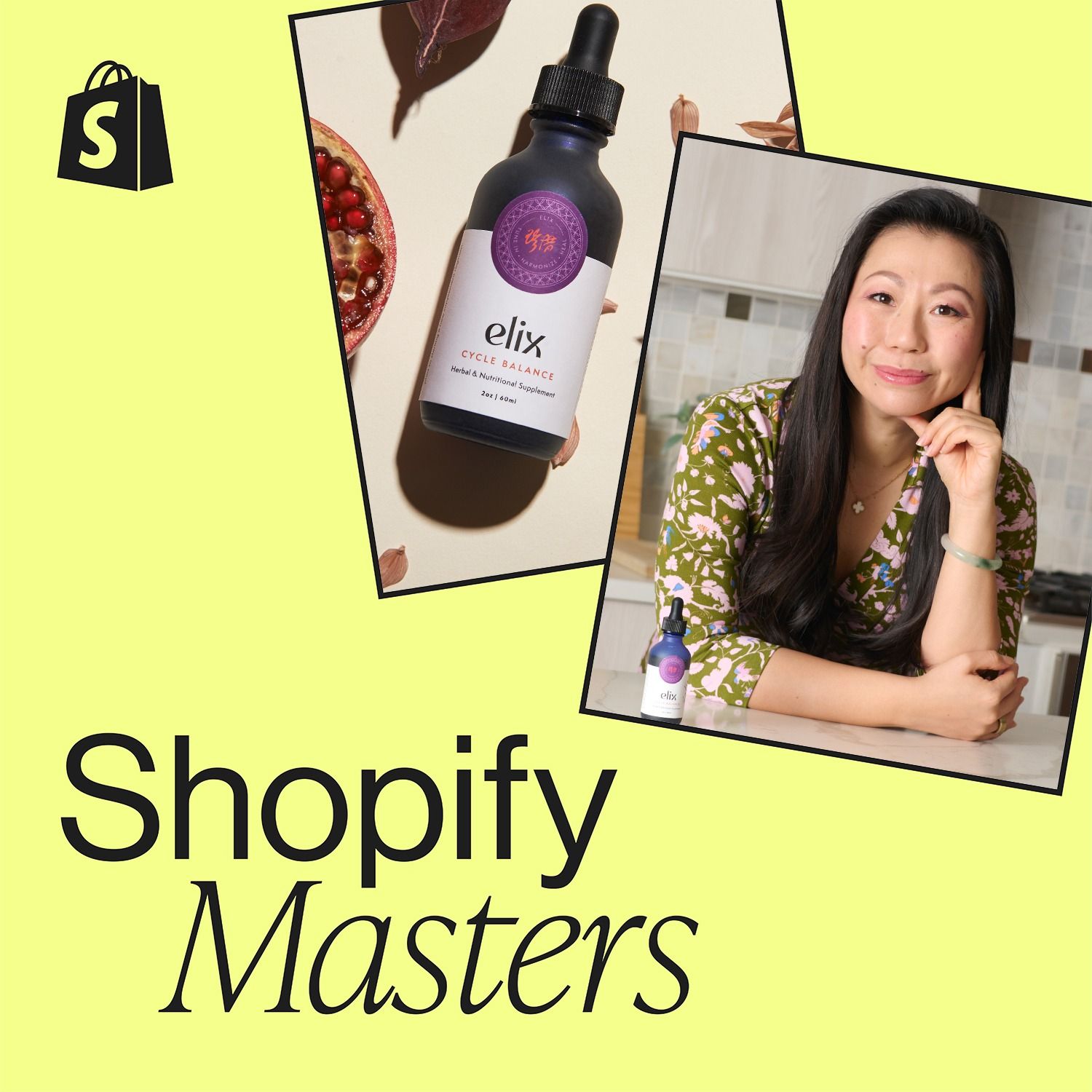
The Strategy Behind Elix’s First $1 Million and 90% Reorder Rate
41m 1s
Elix, a wellness brand founded by Luluga, focuses on traditional Chinese medicine personalized to individual needs. The brand's success is attributed to offering personalized solutions through health assessments. Launched during the pandemic, Elix achieved rapid growth, hitting a million dollars in sales and expanding its reach to all 50 states. The brand's emphasis on authenticity, community, and guidance from TikTok played a significant role in its success. Luluga's journey of rediscovering her roots in Chinese medicine due to health issues led to the creation of a platform providing personalized herbal blends and one-on-one consultations with doctors of Chinese medicine. Despite initial challenges and uncertainties, Elix's unique approach to menstrual and hormonal health resonated with a diverse customer base, including unexpected rural demographics, highlighting the brand's ability to educate and empower individuals in embracing holistic well-being.
Transcription
6693 Words, 36860 Characters
Part of what makes Chinese medicine so effective is the personalization element. It's all about the right treatment for the right person at the right time and helping you heal at the root. Welcome to Shopify Masters, your companion for starting and building a business. I'm your host, Serena Smith. Women's health is becoming big business and one founder is leading the chart with both science and culture. After facing her own hormonal health issues, Luluga founded Elix, a wellness brand rooted in traditional Chinese medicine and backed by clinical research. This new system of decoding our bodies, which has been around for almost 5,000 years, is what really drew people to the brand. Launched during the pandemic, Elix quickly took off hitting a million dollars in sales with a team of three selling products in all 50 states and logging nearly a million in-depth health assessments. It was just such a win for how these herbs are really working on a deeper level. Founder and CEO Luluga is here to share how she's growing Elix through authenticity, community, and a little help from TikTok. Don't we all need it? Welcome to the show, Luluga. Thanks, Serena. It's such a joy to be here. Oh my god, it's such a joy to have you. I'm so excited to have this conversation. I want to go back in time a little bit back to the beginning because though you are Chinese by descent, this wasn't the path that you were on for many years of your life. Tell me where you were both personally and professionally when the genesis of Elix started to take root. Yeah, well, culturally, I came to this country when I was five years old, not speaking a word of English. So for most of my young adulthood, it was really about how can I be as American as possible, learn the language, learn the culture, and really just fit in. So throughout middle school, high school, I was obsessed with being the All-American girl. I was on the leadership team, like class vice president, varsity, true lady in college, I was in a sorority, and I just really wanted to pursue what the All-American path of success looked like. So coming out of college, I went into management consulting and started climbing the corporate ladder. And I got to a place in my late 20s, early 30s where I just remember feeling awful. Like I would wake up in the morning's exhausted. Often with a migraine, I had chronic IBS, bloating, just so many digestive issues, and we now know about the brain gut connection. But all of this really manifested itself in my period. I remember getting period pain that was so bad, it left me calling it sick to work for the first time of my life. And that was the start of my journey to rediscovering my roots in Chinese medicine. This period issue is one that is actually incredibly common. And I think for so many women, we have this understanding that that's just kind of the way the cookie crumbles and like the way life has to be. For you, was there some connection already to traditional Chinese medicine that indicated to you? Like there must be some other path here. Yeah, well, I remember growing up, my family didn't really have ibuprofen or tonal or nicole dakeful in our home. Whenever I wasn't feeling well, my grandparents would make some type of jinsang chicken soup or super food tonic. But me wanting to fit in and be the All-American girl, I grew embarrassed about bringing this stuff to school. I didn't want to be the kid with the smelly lunch. And so even fast forward this time in my 20s and 30s when I wasn't feeling well, Chinese medicine wasn't the obvious solution. The obvious solution was, okay, let me go to my gynecologist and see what she could offer me. And really, what my gynecologist could offer me was more birth control, which I had been on since I was like 15 years old to regulate my hormones or opioids for the pain, antidepressants for my mood. And I was thinking, wow, is there nothing else that I could try? That's less invasive first. And it was really out of desperation not getting the solutions from standard health care and feeling quite honestly dismissed by the doctors I went to. They're like, oh, your cramps don't sound like they're that bad or oh, it's only a few days a month. Like, why don't you just take XYZ pills? So it was really out of this desperation and my mom hearing my story, she was like, why don't you try going back to Chinese medicine? And my grandfather actually ran a hospital in China. So during this time, my mom connected me with a family friend, Dr. Xia Hongshan, who read my tongue, felt my pulse, and then he answered me all these questions. I was like, wow, notice he know about me and my symptoms and what I'm feeling just from looking at my tongue. It blew my mind. And that's kind of what led me back down this path of Chinese medicine rediscovering it. Okay, so then describe to me the trajectory then from becoming comfortable with reintroducing it into your own life personally. And then the light bulb moment of, you know, maybe this is actually a business and something that I should pursue. Yeah, it's such a great question. Well, so it wasn't a parent at first. At first, it was just like, I couldn't believe how well it worked. And part of what makes Chinese medicine so effective is the personalization element. And for me, the doctor after having done the intake assessment, prescribed me a blend of herbs. He told me to drink it for three months. And that first month, I remember feeling so good. Usually I would get migraines and pain a couple days before my period. But I wasn't feeling any of those symptoms. And I was working in fashion at the time at Saks Fifth Avenue. Remember going to work was a spring day. I was wearing like a white house to heritage dress. I went to Bathroom before lunch. I looked down, I was like, oh my gosh, I started bleeding through my dress. And I didn't even feel any of the symptoms. And I was so shocked, Serena, at how good I felt on my period that I started talking to all of my female co-workers about what I was feeling before, the Chinese herbs. And that was the light bulb moment. So many of them started opening up to me about, you know, my co-worker who couldn't wear jeans once a month because of her bloating or my other co-worker who had the corner office who always had these horrible migraines. She was calling and sick to work, but they were menstrual migraines. They came every month like clockwork with her period. And I thought, wow, there's so many of us just suffering in silence and sucking it up month through for a month. This seems like a bigger problem than just what I was doing. Oh my god, it's so true. And if you have the privilege of feeling that kind of relief, it feels like such a eureka moment. You're like, this is completely and utterly life altering, frankly. Okay, so you feel the personal relief. And then, you know, like any good woman, you tell all your friends about it. And they're like, we need this in our lives as well. They're like, can I just have your period herbs? And I'm like, sure, why not? And I go back to Dr. Shai. I'm like, Dr. Shai, the herbs are amazing. And all my friends want them too. And he was like, well, at, you know, what work for you might not work for them. The reason why they work is because they're personalized. I was like, oh, interesting. And at the time, my role at SACS was all about taking this data that we're collecting and personalizing the shopper journey. And I thought, is there a way that we could build the first platform that personalizes Chinese medicine, like bring the process of seeing an herbalist or acupuncturist online. And fast forward 18 months, that was essentially what we built and launched to Lex. It's really a platform where we have a free online health assessment. Anyone can take, you put in your symptoms, you put in your lifestyle, stress, what you're going through. And then we recommend a blend of herbs that supports you based on Chinese medicine pattern diagnosis. And then we've also launched a whole opportunity for people to connect one-on-one with doctors of Chinese medicine. Because so much of the wisdom of Chinese medicine is about how to eat with the seasons, how to move your body according to what it needs, how to breathe, how to rest, how to really nourish yourself. And a lot of what our doctors do is one-on-one consults that help people come up with a personalized lifestyle plan in addition to the herbs. I want to talk about that expansion into providing actual doctor, patient care, because it's so fascinating. But your initial offering was not that, right? Your initial offering was taken assessment, and we will send you some herbs to support your health and your constitution. You spent more than a year prototyping to try to get that process right. What did that entail? And how did you know, because I think that this is such a big thing for so many founders and human beings, how did you know when to move from the research into the execution phase? Yeah, that's a great question. I would say before we even got to prototyping, I spent almost like two years when I was still working my corporate job, really understanding and doing deep customer research online, this challenge within menstrual and hormone health. What are women going to? What are the alternatives? Where are really the gaps? And then what's the perception of the supplement aisle? Like, why are supplements so overwhelming? And then where could Chinese medicine really fill a gap? And would people be willing to take a 50 60 question online health assessment, give all this personal information? So for me, it was like a lot of time doing the R&D, getting the customer research, looking at, is it even possible to source organic herbs and make these formulas at scale the way that I envision that it's not a pill or powder, but it's really something akin to what my grandma would make at home boiling down organic herbs into liquid decoctions that your body can actually absorb similarly to food as they medicine. And then once it felt like to me, okay, there is a market. People are really curious about Chinese medicine that they would be open to the health assessment. Then we started prototyping. We prototyped first the online health assessment. What are the questions that we would ask? What are the patterns of imbalance? And then we went on to the formulas. And I remember in the early days, it was literally like we worked out of a commercial kitchen, like mixing and matching, like different herbal formulas and then sending them out. And you're like, oh my god, I am my grandfather. It's pretty much like buying these herbs and bulk that, you know, like boiling them down and then mailing them out in, you know, mystery brown colored bottles with like people's names handwritten on them. And and then we were like, okay, our friends and friends of friends are using this and they're filling out our survey and they're saying it's working for them. What about strangers from the internet? And during that time, we actually launched a beta under a pseudone because I was bootstrapping all of this. I didn't have the money to invest in branding, naming and design. So in our beta, we called it hashtag period pain free. It's very simple. You knew what it was. But we're just curious, running a test, you know, what strangers from the internet actually buy this and try it. And we ran ads on Facebook. We actually had our first version of our Shopify site set up as like period pain free.com. And it was really fascinating to see who, who was clicking on our ads, who was buying the product. And I remember we had an intern at the time that was like, we need press. And I was like, we're not ready for press. We're like in mystery brown bottles out of a commercial kitchen. And I am so grateful to this intern, her name is Melinda. She went through and she found all the journalists who had written about endometriosis, like really painful on a condition that manifests in painful periods. And she just cold emailed like over 100 journalists. And one wrote back Laura Parker, who was a Buzzfeed editor and wrote the book for Gina problems and said she'd be happy to try it. And I remember us sending Laura our brown, you know, mystery bottle with her name handwritten on it, the herbs that we were literally boiling down our commercial kitchen. And she used it for a couple months and said that nothing's ever helped her like this had. And fast forward to when we were at the point, we had raised a little bit of money and we were ready to formally launch it. Laura just wrote one of the most beautiful articles about the brand. But even before we formally launched when we were still in beta, I remember Laura posting about it on her Instagram. And every single time she posts about it, we would have like a couple hundred new followers and like a couple dozen new orders. So it was like a great lesson early on of, you know, don't be afraid to reach out to people. And the right people will find it and will be concrete champions of the brand. I do think there's such an important lesson in this about sort of doing something before you feel fully ready. And it paid off, you know, and also how gratifying for you to be able to experience somebody else getting the relief that you experienced. Just from like a meaning perspective in life, that's a really lovely thing. When you started engaging with potential consumers when you were in that beta, who were not just your friends and friends of friends, when you were engaging with the larger internet, ether, what surprised you about who was clicking and where they were coming from and what their backgrounds were, was it what you anticipated? You know, I was so surprised. I kind of had this hypothesis of who our target customer base would be given that this is organic Chinese medicine. I thought, you know, maybe it's a more like liberal urban coastal demographic. But what really surprised me was some of our highest converting areas were rural non-urban non- Coastal. I mean, I remember we had an early community member in Kentucky who told us that she had never even tried ginger before Alexa, and that all of these herbs and mushrooms, this was so foreign to her, but because after using these herbs for a few months, she felt such a dramatic difference in her pain that it almost inspired her to go on a food journey of like, okay, what vegetables are out there that I've never tried and like what other herbs could I be incorporating into my cooking and it was like this whole like lifestyle transformation. And I loved hearing those stories of how much like once we start feeling better in our bodies by discovering something that we never tried before, how it really opens us up to look further for other ways that we can live more in tune with plants and mushrooms and food as they medicine. Radiating impacts, that's so nice. You formally launched in what turned out to be the very early days of the pandemic, right? Like March, literally like March 2020, right? What, that was a time, obviously, we can all remember, though maybe some of us would like to not, peak fear and also really complicated sentiment toward Asian populations in this country for a lot of people. So what was it like to launch a traditional Chinese medicine company like in that moment? Yeah. In that moment, I think there was just so much uncertainty. We had a real question of, what should we lead with as a brand? Should we lead with that we are a providing natural relief for menstrual and hormonal balance symptoms? Should we lead with that we are a clinically proven supplement that's like made in a very clean way. Like we will down all of our herbs, their organic or wild harvesting, Colorado spring water, no fillers, preservatives, like it literally is such a clean formula. Or you know, where does Chinese medicine show up during a time when there's a lot of anti-Chinese sentiment given the conversation at that time? And to be honest, even today, you know, we see that there's a lot of geopolitical uncertainty. And what was interesting was I think we had started the positioning about being natural period care. But then when we had done research and talking to our community, like what made you choose elix. Overwhelmingly, our biggest supporter said it was the Chinese medicine element and how Chinese medicine gave them a new perspective on how to understand the root cause of their imbalances. And what I mean by that is, you know, Chinese medicine has a whole system of understanding our body. When you're in pain, depending on if that pain is sharp or dull, it points to a different balance. When we have acne, depending on if it's a white head, if it's red and a faint, or if it's a combination, that points to a different type of inflammation, whether it's heat or dampness. And this new system of decoding our bodies, which has been around for almost 5,000 years, is what really drew people to the brand and that they can learn something new, like from looking at their tongue and other things. So we're like, wow, this is really great insight that we should be almost like more confident and proud in our heritage and what we have to offer from an educational perspective. I mean, I will be honest, starting out, it still wasn't easy because we definitely had the internet trolls. Sometimes we're applying to our Chinese medicine content with nasty comments, but I would say for one, you know, not kind comment, we would have four to five community members hopping in and spreading love. So, you know, you kind of learned to just roll with it. You know, it's like that old chestnut that like there's no such thing as bad press, right? It's like the people come in and troll and then you have these sort of warriors for you that come in and defend you and it feels like to me that actually maybe helps create some kind of customer loyalty and retention really. It makes them feel invested in the brand in a different kind of way. And in you, Lulu, like did you find that to be the case? You know, Serena, I think one of the most humbling learnings for me on this journey has been becoming more visible as a part of the brand. In the early days, I very much shied away from that. I was definitely not on TikTok. And my team gave me a assignment that's like, okay, why don't you just create an account and post a video a day for the next 30 days to just learn the platform because content is evolving and TikTok is setting a lot of the trends. It's like, okay. And I remember like the first day, I was like, I posted something like super awkward and crenched like, you know, walking down the street, whatever. The next day, try to green screen. And then the third day, it was like, I posted a random video being in nature, saying like POV like plant medicine is all around us or something like that. And that video went viral. And then a couple days later, I woke up and I saw some article about like birth control making you date the wrong guys. And I just like shared my experience of like my 20s dating all the wrong guys until I met my husband. That video went viral. And I realized the power of just authenticity and TikTok when you just like hop on and just speak whatever's on your mind and how powerful that platform is. But that was such like a humbling way to just get out of my comfort zone. And I'm really grateful to my team for that assignment. So there's any founders out there that are, you know, wanting to learn and wanting practice about being visible for their brand. I highly recommend TikTok as a platform because you never know what might happen. And you would expect like 90, 95% of videos to fail. And that's just how the algorithm works. Have you been able to discern some connection between the following and the engagement on TikTok and how it's impacting the brand? Yes, we do a lot of surveys of our community. And what we see is that some of our most like our highest lifetime value, LTV community members have actually discovered us via organic content on TikTok. And to your point, I think it's because when they come in through TikTok and we don't really do any brand advertising on TikTok, it's mostly organic and it's mostly just me hopping on and sharing whatever's on my mind for the day. But I think it's a channel to really get to know me and build a connection. And I try to respond to the comments as well. People ask a lot of questions. And so we see that that connection really translates to higher education and more connectedness. I would imagine that it helps with the credibility piece too when they see that the founder of the company is not just a face or, you know, somebody who saw an opportunity in the market, but that you really are not intended really steeped in this world and that you're a font of information and education yourself. For me as a consumer, I would see something like that and think like, okay, like she really knows what's up, you know, I can trust this. Yeah. And at the same time, I'm continuously learning. Like I feel like the beauty of my journey with Alexis, it's been an opportunity for me to dive back into the cultural wisdom. You know, why my mom always made tremella mushroom dessert with my grandma in the summer, like, and that's become a TikTok trend and really understanding, well, what's the science behind tremella mushroom? Why is that so good for her skin? Why does that moisturize from the inside alley? That's been really fun. And I've been sharing a lot of that on TikTok. On a personal level, there's a parallel here, right? Like with our health, we want to feel in alignment and in sort of a flow. And I think similarly, like you talking about such a typical immigrant story, an immigrant myself, I can relate to it of this feeling of just wanting to be American and just wanting to be white bread and pushing away your cultural heritage. And then you having it mirrored back to you time and again, actually, this is the thing to lean into, right? Because it given you a sense of personal peace or alignment to have those things feel like they've come into one harmonious state. Yeah, I feel like the walls are coming down in terms of like the different areas of my life. Like I very much felt like growing up. There was like, this is who I am with my family. And then this is who I am with my friends. This is who I am at school. And then when I enter the workplace, it was like, this is who I am with my family, my friends. And this is who I am at work. Like I remember when I started my consulting job, I had to buy a whole new wardrobe. And it was mostly like black and blue and gray and just like so drab. And it's like now as like a founder, it's like I, I love to wear colors. And I love to wear florals. I love to express myself. And I, I feel like I get to be my authentic self in every facet of the word from cultural heritage to my creativity to my personality. And so much of being a founder is just knowing how much you don't know. And then trying to learn or trying to find the people who know more than you who can be helpful or a great partner along the journey. And that's been incredibly humbling. I think there's something so important in this about hiring for your blind spots and hiring for your weak spots. But what's hard about your blind spots is that you're normally blind to them. How do you have any tips in terms of how to build a team? This is something we've been very intentional at Alexa, how we build our high performance culture and really a growth mindset. Because a lot of the work I did in my corporate consulting role was going into like dysfunctional Fortune 500 or 1000 companies where people did not understand the strategy. They didn't respect the leadership. And how do we turn around a toxic environment? So I'm building Alexa. It's like, okay, from day one, how do we build an environment where everyone, it can be the CEO of their own world. That's one of our cultural values. And I think it starts with as founder knowing my why. And my why is really to help millions of people discover the life changing potential of living in tune with their bodies through Chinese medicine and this mind body spirit healing. And so in terms of the organization, it's really so much about continuously growing. We have three cultural values. It's to be the CEO of your own world, be the first to share a question and then build the future we're proud of. And so when we hire, when we look at performance reviews, we not only look at business goals, but we look at it through the lens of these cultural values. And I think where a lot of times organization struggle, starting with hiring is like only hiring the people who have the skills to do the job versus looking at it through the cultural lens. And to your question about blind spot Serena, something we implemented very early on, we actually have an external coach that works with every single full-time member of the team. So every single full-time member of my team gets one a one monthly coaching and they have development goals. And then our coach also works with us on 360 assessments. And so once a year, everyone will fill out a confidential survey about each other, like sharing what are strengths and opportunities. And myself included, and I feel like that's been one of the richest sources of feedback is like, okay, how does my team really feel that I'm doing along the areas that I say want to be a leader? And where can I continuously improve? That's what helps to shine the light on the blind spots, but also in a safe supportive way. Because if you're only doing the 360, but you don't have coaching or development programs in place, it can feel like, oh my gosh, I'm so exposed. And now I don't know what to do with this information, but when we pair the 360 feedback with the coaching, with ongoing development planning, I think that's what really creates the environment where our team can continuously grow. Like we've had team members grow from like, in turn to manager, we've had multiple team members get promoted two or three times within a short amount of time that they've been with us. And that's the part that makes me most proud. Right, you have to both grant people the information and then also give them the tools to be able to grow. And if you're just doing one without the other, it runs the risk of actually being damaging rather than empowering, right? Was this something that you knew to do from jump, or was there a turning point in the company that indicated to you, okay, maybe we need to make some shifts and incorporate some other practices here? Yeah, it was definitely in the early days. You know, I think we hit our first million in revenue with the full-time team of three. Like everyone worked so hard and we were just so burnt out. And so when I looked to, okay, how do we continue to grow sustainably? That was like a turning point where we're like, okay, we need to make sure we're bringing on board external help and we're putting some of these check-ins and processes in place. So now we do monthly one-on-one check-ins with every team member and we put in there like, how's your well-being? How do you feel about your work-life impact? How do you feel about work-life balance? And it's just like zero to 10, you just like put in a number. And if someone's normally like a 10 out of 10 on like, feeling like they have great impact and like a 10 out of 10 on work-life balance, but one month it jumps to a five, even if they don't proactively say something, it gives information for the managers to check in and ask like, okay, so I noticed you rated yourself lower this month here like, what's going on? And have you seen that that has had a meaningful impact on the business at large? We definitely have seen that in the sense that I think when people are growing and when they feel supported in their development, we are able to take more risks and we're able to really think of new and creative ways to support our community. And that, to be honest, is actually where our health coaching program came in and very much started as an experiment. We were getting all of these tickets and DMs. I mean, we would get DMs that was like multiple paragraphs about someone's health history asking for tips on diet. What tees should they be drinking? We're like, wow, our community is really coming to us wanting more hands-on support. How do we make sure that our team really has the ability to deliver on this? And so this was an idea that came out of one of the monthly check-ins and then we ran an experiment. We started off with two part-time Chinese medicine doctors and then we saw that, oh, wow, not only are our existing community members signing up for coaching, but then new potential community members are signing up for it. People are buying coaching sessions in bulk and so then we kind of just expanded the program from there and now we have eight doctors of Chinese medicine all the team. Wow. I mean, now I think, you know, especially with the shifts during the pandemic, telehealth and senior doctor remotely has become much more common than ever in the past. But it feels to me as somebody who engages with traditional Chinese medicine and acupuncture myself, like it feels like such a deeply intimate and personal process. How transformative has the expansion into this direct doctor to patient support been for Alex? We see that it's significantly increased our lifetime value. Our goal is to grow in a way where we're deepening our relationship with our community and health coaching and these offerings have been one way that we do that. Like we actually have a 90% repeat purchase rate, which is extremely high in the world of e-commerce today and we think a lot of that is because we heavily invest in the post-purchase experience and in resources like health coaching and other educational webinars and resources. There is a lot of content from people who, though they may be well-meaning, aren't necessarily well-informed. Some may actually be predatory as well, right? So how does that impact the way that Alex functions and how do you make sure that you're operating from a place where you can signal to the consumer that there really is this level of credibility and education involved in what you're providing? Yeah. I mean, Serena, from day one, we've wanted to make sure that Alex sits alongside Western medicine and health care that we are a tool in the toolbox and I've always made it very clear. Our role here is not to replace the doctor, but it's to be another resource for the consumer. And so from day one, we've had doctors of Chinese medicine on our board along with MDs, gynecologists, dietitians. For example, PCOS Awareness Month or fibroids. Whenever we share the Chinese medicine point of view, we also tried to share how it's rooted in clinical research and we're also investing in our own clinical research. So we have successfully completed two IRB approved clinical studies that are featured on clinicalstudies.gov if you search by Alex. Our first clinical study was actually on the efficacy of our personalized formulas for up to 15 different symptoms of hormonal imbalance. And we saw that in a three-month period, there was 90% improvement symptoms. I think they told us that usually for supplements, it's considered good if you have like a 50-60% improvement, but a 90% improvement and consistently across all 15 symptoms. And then our second study was on our personalized formula and our formula for stress daily harmony for PCOS. And we saw significant improvement in a six-month period. And last year, we just launched a clinical study for fibroids, because fibroids, we're not talking about enough, up to 80% of women will have fibroids by the time or 50. There's still so much we don't know about what causes them. We do know that they are painful and we're really grateful to be able to exist in a time where we're able to conduct these studies and hopefully help more women find relief. Truly, truly. You built pretty quickly out of the gate. And you've shown that this is scalable and that people all across the country are in need and desires of this. What does the next few years of Elix look like? Yeah, well, we're really excited to continue expanding, I guess, beyond the realm of women's health. What we've seen over the last couple of years is that once someone finds Elix and it helps her with her menstrual hormone symptoms, she's coming back to us and she's requesting other products. So we've largely built out our product portfolio based on community asks. So we created an immunity duo with incredible, showing earlier medicinal mushrooms like Rayshi. I wish our listeners could see this, but you're holding up this like really astonishing, massive mushroom that almost looks like you're looking at the cross section of a tree. Oh yeah, it's incredible. This is an incredible adaptogenic medicinal mushroom that works wonders on the nervous system and also really helps boost immunity. So we launched an immunity duo. We have a formula for stress. We have a digestive. We launched a like five times sold out sleep formula in time. We recently launched a craving support formula for blood sugar, metabolic health that sold out three times. And what we're seeing is not only is she coming back and buying these wellness formulas, but she's also introducing her partner, her children to Elix formulas. So we see a continued expansion into wellness formulas that could serve the entire family. And we're really excited to start expanding beyond direct consumer. We've been very fortunate in our ability to scale on our direct consumer channel because of how social media and how our health assessment have helped people discover us. And now I think we're out of phase where we're excited to be out more in the real world to continue to meet more of our community where they shop. Have you introduced any products that are geared specifically toward Ben? So actually all of our wellness products can be used by now. And we've had some really funny testimonials about how women in our community are micro dosing their husband or boy fast coffee in the morning when they need a little additional support with stress. You are a delight and it's going to be very exciting to see how Elix continues to grow. As we wrap up, tell us for the broader public what is one thing about health that we should all know. And for the founders out there, give us one, you've given us so many nuggets, one more really core piece of advice or hot take. For the founders, I would say to know your why and also know what fills your cup. Because all of us who are really passionate about what we're building, there will definitely be times where we fall off the bike or burn ourselves out because we're so passionate working on this. And it's not about how often we get burnt out or fall off the bike, but it's really about how we're able to pull ourselves back up. So I think just knowing like who and what fills your cup is so important. And then one thing about health, this is a hot take, but I would say for everyone out there, especially as we're entering the colder months to avoid ice drinks first thing in the morning and/or before you eat, because ice creates stagnation in the body. And we're just from a Western medicine perspective, using additional energy that we don't have to to warm it up. But from a Chinese medicine perspective, it could create stagnation, digestion, hurt our immunity, create discomfort. So it's the easiest thing for health. Avoid ice drinks, subit for warranty and lemon, and you'll feel so much better throughout your day. Wow. Isn't it? Wow. We were talking about, I was talking about this with our sound engineer right before we started recording that like so often in life, the solutions are so much simpler than we think they're going to be. Just warm up your water a little bit, you know? And if I could add another thing, it would be to eat the rainbow. Like Chinese medicine says like if we eat the different colors of foods and vegetables throughout our day and week, you'll never get sick, because you'll get all the phytonutrients that your body needs. It's so simple. Right. Nature is giving us the queues. Thank you so much for being here. It was so lovely. Thank you, sirator. That's Luluga Founder and CEO of Elix. Shopify Masters is produced by Alicia Clark, GoGoZogre, and Schwang Esther Shan. Our engineers are Matt Schwartz and Miko Betlum and Rachel Races are senior content lead. And I, of course, am your host, Serena Smith. Come back every Tuesday and Thursday to catch a brand new episode of Shopify Masters and be sure to check out our YouTube channel for all of our video interviews. Until next time, thanks for listening.
Podcast Summary
Key Points:
Luluga founded Elix, a wellness brand rooted in traditional Chinese medicine and backed by clinical research.
Elix offers personalized Chinese medicine solutions based on individual health assessments.
The brand was launched during the pandemic, quickly reaching a million dollars in sales.
Summary:
Elix, a wellness brand founded by Luluga, focuses on traditional Chinese medicine personalized to individual needs. The brand's success is attributed to offering personalized solutions through health assessments. Launched during the pandemic, Elix achieved rapid growth, hitting a million dollars in sales and expanding its reach to all 50 states.
The brand's emphasis on authenticity, community, and guidance from TikTok played a significant role in its success. Luluga's journey of rediscovering her roots in Chinese medicine due to health issues led to the creation of a platform providing personalized herbal blends and one-on-one consultations with doctors of Chinese medicine. Despite initial challenges and uncertainties, Elix's unique approach to menstrual and hormonal health resonated with a diverse customer base, including unexpected rural demographics, highlighting the brand's ability to educate and empower individuals in embracing holistic well-being.
FAQs
Chinese medicine is effective due to the personalization element, focusing on the right treatment for the right person at the right time.
The founder started Elix after facing her own hormonal health issues and rediscovering her roots in traditional Chinese medicine.
The founder turned to Chinese medicine out of desperation when standard healthcare solutions were not providing relief for her health issues.
Elix evolved from personal relief to a business idea when the founder realized the need for personalized Chinese medicine and the potential to bring the practice online.
Elix initially offered an online health assessment and personalized herbal blends to support health and balance.
Elix prototyped its offerings by conducting deep customer research, creating online health assessments, and experimenting with herbal formulas.
Chat with AI
Loading...
Pro features
Go deeper with this episode
Unlock creator-grade tools that turn any transcript into show notes and subtitle files.
 PodcastTranscript AI