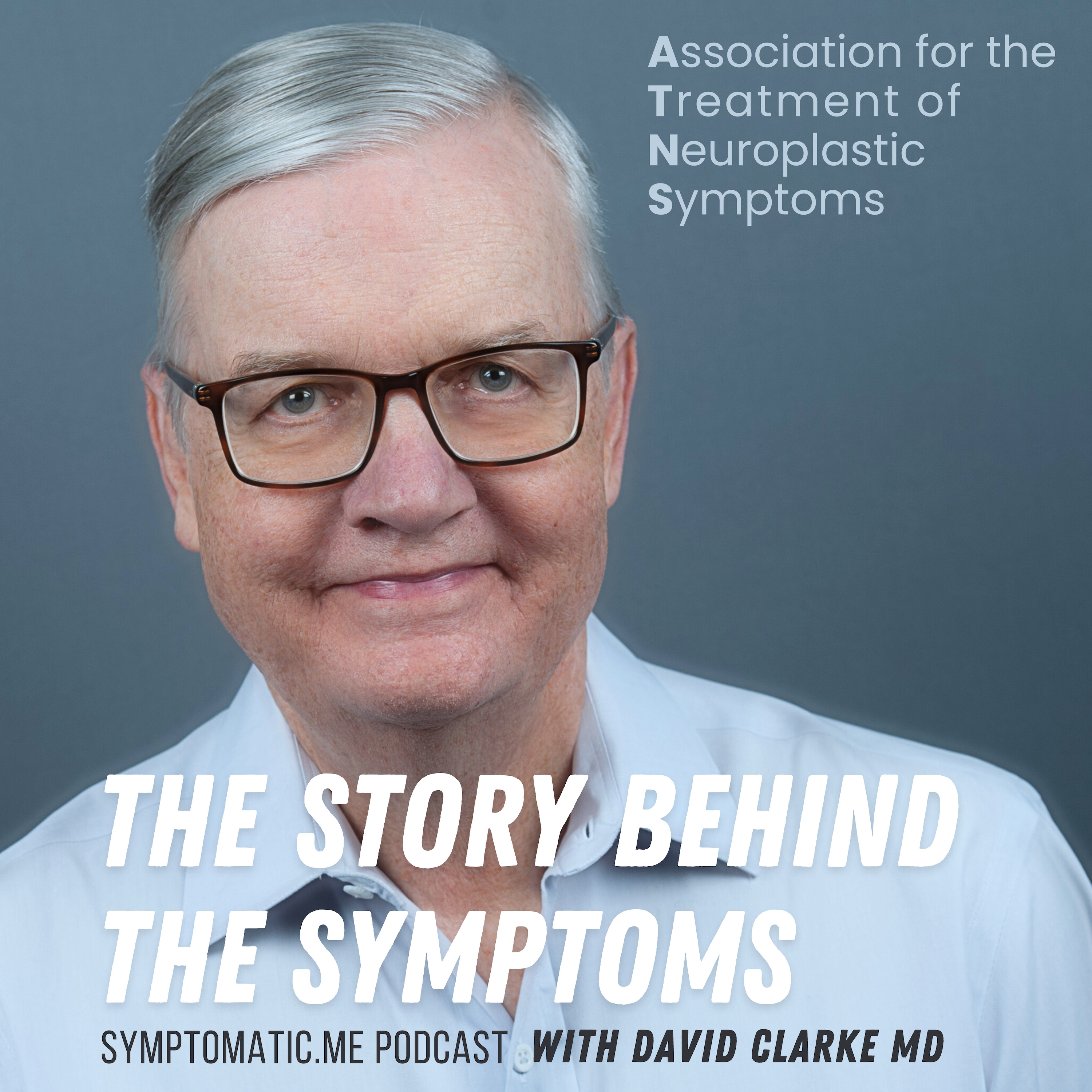
In this podcast episode, psychotherapist Ellen Vora discusses her long journey with neuroplastic symptoms—physical ailments like chronic fatigue, pain, and chemical sensitivities without clear structural causes. Her symptoms emerged in her late 20s and persisted despite extensive conventional and alternative treatments, leading to a restrictive lifestyle and frustration. A turning point was understanding neuroplastic pain mechanisms and adopting Pain Reprocessing Therapy (PRT), which specifically targets symptom patterns and proved more effective than general approaches like mindfulness or cognitive behavioral therapy alone. Vora connects her condition to psychological factors from her upbringing, including perfectionism, a strong need to please, and a family environment that prioritized duty over personal desire, which created chronic stress. The conversation highlights the importance of specialized mind-body therapies that address the root emotional and neurological drivers of such symptoms for effective healing.
In fact, I even remember saying to one of my therapists, literally, I don't know what to do with how much anger I have. And she said, quite unhelpfully, I don't know, but I'm pretty confident you'll figure it out. I now teach my clients exactly what to do with their anger. And it goes like this, you figure out what it's telling you. That it's a valid signal and it probably means something about your boundaries of being intruded on and that you don't like things as they are. And so you're going to have to do something different. Welcome to the story behind the symptoms, a podcast from symptomatic.me. Your host is David Clark M.D., a board certified gastroenterologist who successfully diagnosed and treated over 7,000 patients with neuroplastic pain or illness. Each episode we dive into our guest site experiences to uncover the deeper causes of their symptoms. By listening to their story, you will gain insights that advance your own journey towards knowledge that becomes healing. Welcome to the story behind the symptoms podcast. I am your host, Dr. Dave Clark, president of the Association for the Treatment of Neuroplastic Symptoms. And my guest today is Ellen Roca. Why don't you introduce yourself? Hi, Dr. Clark. Hi, everyone. I'm Ellen Roca. I'm a psychotherapist for 22 years in private practice. And now I run, signed and run a program, a group program for healing neuroplastic symptoms called chronic ticured. Great name for it. I love it. Okay, what we off what we try to do in this series and this podcast is to understand an individual's personal symptoms. And to do that, we like to start at the beginning. When and where did those symptoms begin? And what has been their progress over time? All right. Well, I will say that I did have it. Knowing what I know now, I did have some neuroplastic symptoms in my childhood. Though they were not dominant. And I would have said I have it had a healthy or felt quite healthy as a kid. So, grashes, allergies. And the most obvious one I would say was what we called in my family, hypoglycemia episodes where I would get shaky and very weak and feel nauseous really fast, like just dime. And I would feel so terrible that I didn't want to eat. But my mother was convinced it was a blood sugar thing. So I will eat something. And so those happened, you know, barely, I don't really know how often. But I remember it was they were compelling enough that I learned to carry food with me all the time. That sounds like a lot. Yeah. I mean, I guess. And again, I really have a very distinct memory of how long they lasted or, um, but I was a good eater and I loved, you know, I ate regular meals. So I think maybe as I got older, it wasn't as big a deal. My neuroplastic symptoms really kicked in, uh, in my late 20s. And it started with exhaustion. I came back from a trip with a flu. And then I used to say I never really got better. I was exhausted. I had body aches, dry eye, which was such a random symptom. Tannitis, GI issues. A lot of random things, rashes, yeast overgrowth, you know, infections. There's so many symptoms. Plannedo fasciitis. It's hard to really like piece it all together, but that's what really, really kicked in in my 20s. Yeah. And certainly one of the characteristics of neuroplastic symptoms that they tend to be multiple and that they aren't always that some people just have one, but the more symptoms that a person has, particularly if they're not clearly explained by an organ disease or structural damage, then the more likely it is that there's a neuroplastic cause for all or most of them. Okay. How did things go from there? Well, I tried addressing them with conventional medicine and ran out of usefulness there within a year or two. It was pretty frustrating and then switched to like a holistic provider. Uh, and that seemed like a big aha at the time, but honestly it in some ways. I think all it made me, I think they did put stress on my radar, but I didn't know the full picture of this mind body model we now know and use. So symptoms kept coming and were to go episodes, symmetrical sensitivity, um, at points spasm in my back and neck as so as I had a chronic so as spasm for a couple of years. Honestly, they sort of all blend together in and out, not all of them at the same time, but as often happens. Uh, I was diagnosed with food allergies and, you know, we did extensive allergy testing and I was on this what I call a very short leash, um, and still only limping along. The really limited, I started tracking rigorously reactions to foods and then just my, you know, food world that smaller and smaller. Yeah. Yeah. That has happened to so many of my patients and it's natural. You eat something, you have a symptom, especially a GI symptom, but can be other symptoms and you blame it on the food. And it actually probably was just coincidental. It wasn't the food that was responsible, but it's very natural human reaction to want to eliminate that food, especially if the symptom was significant. I've had countless patients that have come to see me with extremely restrictive diets. So you're, you're not alone in that process. Right now and here's a problem. But, you know, once that starts happening and you make a conscious connection, right, then you actually do develop a conditioned response to some food. So it's, it's, it's not just necessarily the emotional stressors. Now you're afraid of that food and the brain does respond. Oh, the, the, the level of deprivation and frustration and frankly, anger and resentment is just, you know, it was, it was a lot, which is, you know, part of the picture, right, is because once the neuroplastic symptoms start, you know, now you've got the extra stressor of all the things you're doing to try to resolve and then all the ways that you're feeling deprived of fun and feeling good and all the extra appointments, you know, so the amount of money, the amount of money I spent, you know, trying to get well and the amount of energy, you know, I used to call it my part time job to get well. Everything I was doing took literally as much time as a part time job would. Well, two past two and a half decades I suffered. Yeah, it's just, I mean, this is why the ATNS exists is to educate the public and healthcare professionals so that when someone like yourself comes to their office, they know what to do. You know, anybody who has the number, just, just the sheer number of symptoms that you had, a neuroplastic process should be at the very top of the list of possibilities. Absolutely. And what's really manning about it is, I was with a holistic provider who was talking to me about stress. I started meditating, doing yoga. I was in psychotherapy the whole time and I think this is this is part of what I was what I'm so passionate about. What I wanted to come and tell my story because I was even working on a lot of the right things. You know, I knew my perfectionism was a problem. I didn't know it was related to my symptoms, but I was working on that, you know, in my therapy and and really so many of my other a ppd personality traits, sorry, ppd. My typical personality traits that lead to when there are plastic symptoms, I was working on that, but I think for me, and I'll just say, you know, my undergrad at Tufts was in biosecology, my and then I got a clinical counseling degree while I was going through all this with holistic emphasis. So it's not like I didn't understand that the mind impacts the body and vice versa. But for me, what was missing is I literally just didn't know how the pain system works. And I, you know, there was, I don't even, did we know even about neuroplasticity if we did and it had been coined, I guess you would know what I need, Dr. Clark, but the, you know, I just didn't understand how neuroplasticity was playing into it because once they start, right, it's like a nasty little snowball. Yeah, well, it's even sort of beyond neuroplasticity. I mean, their research is clearly showing that approaches like mindfulness and cognitive behavioral therapy, while they do have modest benefits for this condition, they really aren't sufficient by themselves. You have to go after the specific kinds of issues and connections that are capable of being responsible for physical symptoms. So it's, it's a whole different window on the mind using these physical symptoms. It's a whole different kind of psychotherapy that begins with the idea that we are going to talk to you and understand you in a way that will alleviate your symptoms, not help you live with them, but actually alleviate them. And then of course, the second thing that we do is we want to shift your attention from your body where it naturally is going to gravitate to, toward whatever is going on in your mind. And, you know, we're going to talk about some of those things today. But the research clearly shows that this new form of what we're calling neuroplastic recovery therapies is vastly more effective. In the Boulder Backband study, it was four times as effective in terms of the statistic called the effect size as you typically see with cognitive behavioral therapy, for example. In the UCLA study of older male veterans, it was directly compared with cognitive behavioral therapy and the proportion of people who achieved the pain relief goal that they had in that study was four times greater in the neuroplastic recovery therapy subjects than compared with the cognitive behavioral therapy subjects. I mean, it was just light years beyond.
what had ever been seen before, just shockingly good. All right, so let's jump to what actually did work for you 'cause you are better today, are you still having symptoms? - I'm completely better with the exception of, I'm still doing as I call it, the Cleanup Act on the chemical sensitivity. I'm lots and lots better, like I was so sensitive, I used to be so sensitive that when I printed a document from my printer, the smell would give me a headache. That's how sensitive I was at chemicals. But I know that that's a, you know. - All right, people who want to know now, what works for you? - Well, you know, what you were just saying about all that research, it's so interesting because I would have said that over the years I would get better and then, you know, I dipped down and it was never clear to me why, but if I was gonna really working my program, so to speak, which I always was, honestly, 'cause I so badly wanted to get better, I was so intense about it that was actually, frankly, part of the problem. But it was really, when I found PRT, it was like, then it was just easy work. - Pain reprocessing therapy, just for our viewers who are new. - Right, exactly. By then I had resolved quite a lot of the fatigue, the exercise intolerance, the body aches, a lot of the food allergies. But, you know, what I didn't mention in my story is that I had three concussions in three decades. So that was a really big factor that I don't think anyone was even speaking about because that's like injuring the quarterback of your team, right? And even aside from, I don't think in any of those cases, my brain tissue is actually injured as in, might get in a TBI, but the, you know, physiological assault on my nervous system, right? Like the PTSD of anything could happen and, you know, I'm not really safe, you know? I was really active. I've always loved to be active and the fact that I got these injuries made it scary to even, you know, do the things I loved. So by the time I had healed quite a lot, I had yet another concussion that was during COVID too, you know, while all of us therapists were listening to everyone talk about the same thing we were going through. And so I get a concussion while literally months after I went completely down the health for the sake of COVID. So now I'm looking at a screen which you really shouldn't do when you have a concussion. It was, it was a mess. But about a year into that. So I had developed significant chronic dizziness and queesiness and off-balanceness, you know, we'd call it 3PD, maybe not necessary to define what that is, but neuroplastic dizziness. And when I finally found PRT, then it was short work 'cause I just knew how to target the symptoms very specifically and train out of them. So my, my process was really messy because like you were saying with meditation and kind of behavioral therapy, yeah, I was getting better over time a little bit, you know, but then life stressors would happen, you know, a big loss or a big life change or whatever. And but it was never clear to me that that's what was bringing new symptoms on or whatever. So I would, it's tempting to say PRT worked, but PRT worked really well for the dizziness, but that's what I was applying it to. But long before that, I was really working on all the setup, what I would call the setup from my family of origin. - Okay. - Right, so. - All right, let's go there. - Yeah, you wanted to know that, right? - Let's talk about the family of origin because that's always been a big part of my approach to patients. - Right, so I would say that there are many factors, you know, this is the post-mortem after years of looking at this, years literally, you know, of therapy. So I'll say, and I know people always want to call a client say, I had an extra, in a lot of ways, very extraordinary parents. They were, they were good Susan types. They really prioritized being good parents, supporting us kids in our education and all of our extracurriculars. And although we, you know, middle class, but they really prioritized giving us whatever advantages they could possibly give us. But my parents were PPD person, I know. I know what do you call it now? If we don't use PPD personality traits, the personality traits that set you up for neuroplastic symptoms, my parents really had them. So they, we don't have to label them, we can just describe them. - Yeah, so perfectionists and their own right, they worked a ton, they modeled really valuing productivity as a family, we, I really didn't have much collective fun. I was, you know, my parents were working on the weekends or early in the morning, I very late at night. That's not to say they were not available to me though. They really prioritized being there for us kids. It's just that, how to say it. There was a lot of sort of intensity and priority around being good, doing the right thing. In fact, I grew up, you know, my, my religious upbringing made very clear what the right way to be was. And so I think I grew up with a perfect set of, combined with my own temperament, being very sensitive and empathic. You know, I think my parents were so invested in being good parents that even though they never would have made explicit that you need to succeed to make us feel good about our parenting. I think that was sort of in the water we drank a little bit. I think they invested so much in their parenting. In fact, to a point where I think it really was detrimental to them that there was a sense of loyalty and needing to please them. That they probably, if we talked about that directly, they wouldn't have even really acknowledged 'cause they would have said we love you no matter what. But I think there was a flavor of wanting to sort of live up to the family moral values and not want to disappoint them. Another factor was, you know, you've probably heard the preacher's kid syndrome. I was a teacher's kid syndrome. I suppose my parents were educators. So, prominently in my hometown, in the schools I went to. So, so there was a sort of, they were known and there was a sense of you're being watched and there were high expectations, you know? So, another piece to it was that my mother was, she was a case study in neuroplastic symptoms herself. Even more severe than mine, I would say. She managed to continue to work and have three kids, but she really suffered. And her approach was very conventional and very pharmaceutical and never really even considered things like yoga meditation, anything that would have been alternative for self-care like. And so, I think a big part of sort of where what happened, she would even say, you're just like me, or about it's just like me, and I did not want that. And I was like, I don't want, I don't want what you got going on. - Definitely not. - No, and I wanted to really set myself, I could see that she wasn't taking very good care of herself and she'd kind of resign herself to all these symptoms. And so, I wanted nothing to do with that. And I actually think that that controlled to an intensity that did not serve me. In the period processing therapy world, we talk a lot about intensity not helping, actually hurting the healing process. But I was sort of acting in reaction, I think, to my mother's way of dealing with her symptoms. Combined with the fact that I really take after my father and he was quite an intense person. So, I already sort of had some of that in me. And then in terms of, I was so determined, I do not want these health, I want to live, I want to succeed, I want to make the, I want to do what I want to do in the world. And so, I really puckled down and I was willing to do anything. That was another thing about my family of origin. Again, a very lovely thing about my family in the sense that they really valued doing the right good thing. But, kind of with a dog in perseverance. And I, I'm getting that. - I learned that. My gosh, so, you know, almost like I had this belief system, which of course took a while to figure out. But like, if it was hard, it was the right thing to do, you know, not. So, I didn't, my parents didn't have the capacity to teach me how to figure out what I really wanted. They were really good at teaching us how to do what you should do. - Yeah. And how are you supposed to figure out who you are in an environment like that? - No. - I am guessing that a child in that environment would have felt at least partly responsible for her mother's health. And would have felt like not only do I need to be good to please my parents, but I also need to be good so that they feel good about themselves as parents so that everybody who's watching me recognizes that I am doing well and to possibly alleviate some of my mother's health problems by not being an extra burden for her. And you put all of that together. And it is, as I sometimes describe it, like being an Olympic weightlifter who's got 50 pounds more than the world record for their weight class carried around on their shoulders. - Yeah. You know, it's interesting. I feel that I ever felt like I had to relieve her health problems, but I will say that I was parentified. So, my parents didn't have a great marriage best I could tell. And when they had conflicts, she would talk to me. - So, that's more weight on the Olympic weightlifter? - It's the setup, right, for becoming a therapist. - Yeah, you're not supposed to be a therapist when you're a grade school. - Unequivocally not, correct. And not only that, but it puts you in conflict, right? Because I was told all the time I was just like my father, but my mother's complaining to me about my father. And, you know, there was a certain level of alignment with him, you know, in any case, there was, and there was a lot of right, sort of, when I was very young, you know, being mom or dad's helper, you know, I get a lot of strokes for helping. - I don't think I felt over-responsible person.
say for their feelings, but I think I was sensitive to everything that was happening. And the family value was, do what you're supposed to do. Yeah, which there's virtually no limit. I mean, you're essentially, either you can think of it as being on a treadmill, you never step off or that whenever you jump over a particular high bar, the bar gets moved. And I guess, I think this is the part that I think was so confusing for me in part of what took me so long to heal, is that they wouldn't have said that. In fact, I even remember this one moment, I think maybe it was middle school when my father dared me not to study for a test. He probably figured I was going to get an A anyway, because I, you know, I did well in school, I did well in sports, I did well in music. But I think he saw this problem and I give him credit for that. But my parents really, in a lot of ways, were emotionally immature. I use that term that comes from Dr. Lindsey Gibson. I use her work a lot with my clients because I think as I sort of did the post mortem on my experience, my family of origin, what I would say is that I got my accomplishments were seen, which then therefore trained me to really think in terms of accomplishing, right? And productivity and success instead of really being seen in my emotional experience. My parents, they didn't really have that capacity to do that. And I think what that does, because I see it all the time with my clients. And honestly, I think this actually sets up real complex cases for neuroplastic symptoms, just like my situation, and you don't think you need actually trauma. I don't think you need. No, you do not. Right. And I think in my case, emotionally immature parents, they can't really see and attune to the emotional experience of their kids. And what that does is makes it really hard one to know yourself and to trust yourself. And three to process your emotions, right? Those are all three connected very clearly. Completely, right? And so on the one hand, I think what was hard about kind of cracking the code on my neuroplastic symptoms is that wasn't all that obvious to me because I was doing really quite well, sort of an objective terms from the outside. And plus none of us has a parallel life to compare ourselves with. You're right in the middle of it. These are the two most important people in the world to you. And you're going to be focused on achieving. And so any emotions that you might have along the way are just going to get in the way of that. So the emotions just get buried, as you very well know. Agreed. In contrast, again, I was always tall. I was like my father and he really, he did shut down his emotions, you know? They were, they're inconvenient. I say that, you know, they're fat, you know, they're, they're great indicators and guidance, guidance tools, but they are in being it until you learn how to process them. And I just didn't have, it's not only a skill to be able to attend to your own feelings, to name them, to be able to process them, to feel safe feeling them, all that, all stuff I teach clients. But it's also a skill to be able to teach your kids that and a lot of parents just don't have that skill. They're very well meaning, right? Yes. So this is such a challenge too. It's an extra challenge when you have parents that wanted the best and we're doing their best as they saw it. And you're right. And had no idea of what they were doing to their child. Completely agreed. And I really honor, they need so many sacrifices, my goodness, so many. So I think down to choosing a place for us to live where we could really romp and have a true childhood and play creatively outside plenty of kids to play around, not really where I think either of them really wanted to live, but they chose that for us. So I think actually the truth is that those sacrifices, even though they did not hold those over our heads, I think they felt burdensome in the sense that I've got to sort of live up to the sacrifices that they made, you know, or make them worth it. I think at least that's how I metabolized it. Maybe a child with a department would have metabolized it differently. Yeah. No, it makes perfect sense. It's just another source of weight on your shoulders. The fact that you knew they were making sacrifices for you and that would be one more reason why you would focus on accomplishment and achievement and focus much less on whatever might be happening emotionally that could get in the way of that. It's very, very difficult when you have parents that are doing their best and care about you and are from their perspective are trying to help you be the best person you can be. How can you be resentful about somebody like that? How can you even find fault? Instead, just the opposite is what you're going to do, which is to try to meet their expectations and turn the treadmill up even faster. You know, and I think that's what leads to what taught me one of the biggest lessons as a therapist because I mentioned, you know, been doing 22 years of psychotherapy and I specialized in trauma very early on and was using all kinds of alternative techniques to heal trauma pretty quickly. EMDR in the beginning and then other techniques. But what was interesting is that those techniques didn't always resolve pain in fact most of the time they didn't. And I couldn't really understand that as a therapist early on. Now knowing this model, I know that really it's at least the way I've come to think of it is the issue is not the extent of trauma, the issue is the extent of inner conflict. And very often when you have big traumas, you have big inner conflicts for sure, no doubt about it. But in my case, what was so confusing and I think this is true, a lot of the clients that I have very complex cases, but stay the same thing. I don't have any trauma. Like I can't, my parents did this good job thing, right? But the inner conflict about being actually angry or unhappy or unsatisfied with how I was treated when all that stuff was provided, I think that that was really hard for me. That is from my patients, it's probably the single most difficult task is to recognize and to feel that you can be really angry or resentful or both at somebody whom you also care about, at somebody who was doing their best. And how do you resolve that? And that's a huge part of relieving the symptoms is to recognize that our minds are trying to communicate this anger and resentment and they're doing it via the body. But yeah, very, very difficult. One of my patients, a lot of my patients, I haven't write a letter to the parent or parents who mistreated them, not to mail it, just to write it. And they put down all the good stuff that they can point out and remember. But they also put down all the things that they're resentful about. One of the ideas I like them to have in mind when they're writing this letter is to imagine a child of their own growing up in the same environment while they are forced to watch, even for just a week or 10 days. I don't know if you have any kids of your own. Imagine a child you care about whether it's your own or a niece or nephew or the young kid across the street. Imagine them in your childhood environment and you're watching, but you can't do anything about it. And what are you going to observe in that environment that you're going to find uncomfortable or is going to make you sad or angry to see it? Yeah, you know, I think that's it. I know that you, I've heard you say this before and I, I don't know that a word of work with me. Okay. Maybe a couple of my clients. And here's why is because, you know, how long is it? I think it's only about five, maybe eight years that I've come to the appreciation for the power of empathy as what I call the currency of love in a relationship. Unequivocally, I think empathy is the most important thing anyone can give a child or any human really that you're in relationship with. But I think for all the years that I was trying to process, you know, do my own psychotherapy work, my own healing work, I don't think I would have even noticed that I wasn't getting that in my family of origin is my point. And I think that that level of being seen in my emotional experience, I'm not sure it was that obvious to me. And so what I've seen it, I don't know. All I know is that what was so powerfully healing to me in addition to learning about PRT and learning PRT and understanding neurocluscity and how to literally train the brain out of symptoms was doing what I call self empathy. We talk a lot about self compassion, but I think for a lot of people, self compassion boils down to like, oh, I'll take a bath tonight instead of make myself read an email. But I mean literally self empathy, really seeing ourselves, turning in toward and rec noticing our emotional experience, invalidating it for ourselves because I think that's the key ingredient that very often doesn't happen even in good families because I watch all the time, you know, I'm a big fan of the beach now because I found my jam, but I'll be at the beach and I watch parenting happen all the time and very often parents are just sort of annoyed, but their kids having a meltdown instead of really zooming into what's happening with the kid that they're having a meltdown and tuning into whatever the emotion and the problem is, right? The more point is that I think I don't know if that would have worked for me. I know I think it would have that that trick works really well for most people because there are objective behaviors that are problematic. Well, how did you find you? You mentioned anger and resentment. How did you find your way to that? That's a really good question. I think it really, when I found the kind of what I call messy emotions journaling, sort of my brand of, you know, like brutal honesty kind of journaling, I've been journaling again through
I was journaling long before any of my neuroplastic symptoms showed up. But when I finally figured out, "Oh, what I'm really looking for is inner conflict," I went looking for it, right? And so I think that was a big part of it because for me, healing kind of coming, but it always felt like I'm not entirely there yet. And eventually it came to, "Oh, so I guess the point here is that I'm not done. There's something still a little bit unresolved, you know?" And so for me, my journaling process really usually takes me back to something that doesn't feel quite right in a relationship, which brings me to what I call believing and grieving. Like I think if you had emotionally immature parents, you're inclined not to believe yourself as how I call it. And I don't, by the way, mean believe in yourself. I mean believe yourself. Like believe your experience about something. Because for me, I would discount myself all the time. I would invalidate myself all the time. I'd feel something, but then I would sort of, you know, because of my spiritual values, I would be like, you know, well, gratitude or anger, I should go with the gratitude part, right? So I would invalidate those other emotions. And at some point, I think once I understood this model, I was like, no, no, no, I gotta let myself feel those things. But really believing myself meant that I had to make some big adjustments in relationships. And my experiences, again, if neuroplastic symptoms aren't budging, it's usually because you're not believing yourself about something that's really not working in the relationships, the relationships you have. And it could be, you know, your parents, your kids, your siblings, your spouse, whatever. But there's something that's not working and you're sort of downgrading it. And she said quite unhelpfully, I don't know, but I'm pretty confident you'll figure it out. And it goes like this, you figure out what it's telling you that it's a valid signal. And it probably means something about your boundaries of being in fact intruded on and that you don't like things as they are. And so you're going to have to do something different, right? Anger is always legitimate. She wasn't saying it wasn't legitimate. She just gave me no skills for I have a little anger about that therapy, obviously. Anyway, I think when I figured out, and this is the part where I was talking about believing and grieving because when I started believing myself that my anger was legitimate, what that meant is I need to grieve and it really radically accept certain relationships weren't ever or weren't going to be what I wanted them to be and that I needed to adjust accordingly. And I think with my dog in perseverance, my intensity, I was resisting that. And back to the extent of neuroplastic symptoms to me is usually related to how much you're resisting what is, right? And so for me, I was so really just trying to make certain things work and keep it, subjecting myself to things that didn't feel right, that I think once I decided that, you know, oh, that's related to these symptoms. Oh, in that case, I'm going to do something very different because I'm really tired of spending time and money and having my whole life, you know, in this tiny little box because of my chronic health problems. No, ho, if it means disappointing people, if it means really, really adjusting my relationships and they're mad at me, oh, well, you know, there's where my perseverance, I often say like, what we just need to do is funnel these personality traits into the right activity and you can keep them as long as they're directed in the right direction. So for me, then it was a matter of, okay, finding the courage to make other people mad and honor my own anger about how things were going in my relationships. And that was a huge turning point. But I don't think think that was the only one. I will say finding Brane Brown's material, Dr. Brane Brown, who studied shame, studies shame, really made a massive difference for me because I really think that shame under girls most neuroplastic symptoms, maybe all of them, I don't know. But I don't, I very often think, I think the very often it's missed. It certainly was missed in the therapies that I was doing with my therapist because I think a lot of people think of shame as you believe you're worthless. And I feel really strongly about making a distinction. I think when you're in shame, you can feel worthless. But in my case, it was missed because I never would have said I'm worthless. My spiritual belief system said that I'm not worthless. We all have equal in a value and integrity and all that. So that didn't make sense to me. But the emotion of shame, understanding the emotion of shame was a total game changer for me. Because, and this is often what I teach clients is that there's the emotion of shame. Most people don't even recognize it. What they, what they notice when they're in shame is the thoughts that go with it, which are not, you know, some version of I'm not good enough or, you know, I'm not something enough usually. Right? Maybe I'm worthless. But in my case, it never was that. And so I missed it. As shame was a massive problem. But I, I didn't know how to deal with it. Now I know. So here's what I used to do is I used to argue with shame. And I think that's what a lot of people do. They try to talk themselves out of the message of shame because shame is such an intense emotional experience. It like, it kicks off a bunch of thoughts about ourselves, but they're not the same as the emotion of it. And if you try to argue with the thoughts, it just doesn't work. And that affirmations do not work. Trust me. I did them diligently. Yes. What really works is empathy for the shame. And that was a game changer when I figured that out. I don't know. I even sure I read that from Brunei Brown, but eventually I figured out if I see myself in my shame, my suffering with the shame, then I'm giving myself kindness and then all my inner harshness, the same therapist actually, one really good thing she did. Maybe the best thing she said, Ellen, I don't know. I think it's the end of a session. She said, I don't know anyone with a harsher inner world than you do. You have. And I remember. Which completely fits with the experience you had as a kid that trying to live up to the many pressures in that environment would have been physically impossible, emotionally possible. I mean, really, and it's so funny because when she said that, I thought, I missed it, selling at things, but I'm not sure that's something I want to excel. And it really made me stop in my tracks. But again, I wouldn't have called that shame. I do think I had a lot of shame, but I would not say that I had a belief in my unworthiness or worthlessness. All right. Our viewers are going to want to know what was the shame about specifically. And before you answer, I just want to say that the five major negative emotions I've seen every single one of them in many people be responsible for physical symptoms. Usually, anger, that seems to be the most common at least in my practice, but shame absolutely has been there for many of my patients. So what I think our viewers are going to be asking themselves or asking of this podcast right now is what was the shame about? And can we, I think we've already understood where it came from, but I think it's important to understand what it was specifically about. Yeah. Okay. It's related to the inner conflict issue because I think it was for me, it was about not living up to what I was supposed to be or do, right? And so if I was going to adjust my relationships so that they felt better to me, if the other person was upset with me or I wasn't, you know, being the good, daughter's spouse, whatever, the way I think about shame is it very often happens in the context of relationship. In other words, how we feel about ourselves in reference to relationships. And so because I had this sort of codependent style, I think it put me in shame to even think about doing something contrary to what I thought I should be doing. And there was always sort of like, I haven't done enough, right? Like I could accomplish more. Yeah. It's, you know, you're on the treadmill and you can never get off and somebody always seems to be turning it up faster. So how do you overcome that? How do you decide, you know what, you are not going to shame me anymore? Love your question. I'm so glad you asked because I feel so strongly about teaching people how to resolve shame because I really do think it's a beast that needs to be tamed. And I really believe that shame is just a neural network like any other neuroplastic sign is symptom. So in other words, you've just learned it. It's learned. And on the one hand, we all have some shame where it is part of our equipment and unless you're a sociopath and we don't want to, you know, that's not what we want. So we're going to have shame sometimes. What I learned is again, gauging and shame arguing with it is like engaging any obsession with a compulsion. It feeds it. And I've been doing that for years. When you're trying to prove to yourself that you're okay, that you're good enough, that you survived and therefore you're a good person, all you're doing is feeding that idea that I have to somehow measure up. So what I figured out, and this really came from Brunei Brown's first, Ted Talk, a lot of people miss it. It's the nugget of the whole thing. She says the people who believe they're worthy have just decided to believe it. Yes. And when I heard that in a really took it in, I was like, I could do that. And so thereafter, I was like, I'm just not going to entertain any ideas to the contrary. I just think that's a baseline. It's what it is. It's true. No, I love that. And then what I say is you act as if, right? That's one of the slogans from 12 step away was fake until you become it, right? So you don't wait until, because that's what I used to do, right? Why? I wasted time. Money. Those are big things for me.
I beat myself up terribly, right? But I also like to show people that if they can understand the magnitude of what they had to overcome as kids, which you absolutely had a massive magnitude of issues to overcome as a kid that were of no fault of your own, that people can take pride in that. The analogy I use, people who watched this podcast have heard this from me before, but as if you had parachuted into the Amazon jungle as a toddler and had to find your way out, and that anybody who can do that has done a remarkable thing. And that can support the idea that you deserve to be proud of yourself instead of the opposite. You know, I really appreciate your validation of the suffering of my childhood. That said, I think one of the things that's even hard, even as I hear you say it, is I had so much privilege in a lot of ways, right? Like my parents sent me to college and I grew up in a very safe neighborhood and all that. So in some ways, it doesn't feel like on the one hand, I do validate my own suffering. On the other, I think one of the things, one of the downsides of being a therapist is all day long, I hear about people's severe trauma, because I'm a trauma therapist. And I was always like, why is my body responding? Like I'm a trauma survivor. But I. Well, other people had it worse, therefore my suffering couldn't have been too bad. Right. And you know, that's a completely false logic. I do. And you know, just because you had lots of good things, which you did, and that doesn't make the bad things less bad. 100%. And I think I did arrive there. But even still, I don't even think sort of claiming that I sort of succeeded in overcoming. I mean, I can look at myself and say, really. I'm really proud of myself for working so hard on my recovery and getting to where I am. And making all that change, I think healing from neuroplastic symptoms, especially as many layers as the ones I've had, takes tremendous courage. You show me this healed from neuroplastic symptoms. And I was. You're looking at someone who has demonstrated a tremendous emotional courage, mostly because of the changes that requires you to make in yourself and your relationships. And you know, my hero Richard Roer says, you know, "To think. Most people don't volunteer for transformational work. Usually one of two things. Great love and great suffering." And you know, for those of us with neuroplastic symptoms, it's the suffering. But I will say, let me. To finish the story and cracking the code on shame because I feel really strongly about this. Really trying to prove to myself I did it for years that I was good enough. And you would have thought I had plenty of material for that, right? It didn't work. Because when you're as committed to perfection as I had been, it just doesn't work. What really worked was empathy, genuine empathy. I see how hard it is for you to make a mistake and/or waste money or time or something and really struggle with that. So seeing myself, that was one of it. And believe it or not, I know you're going to believe this. You're going to love it, actually, Dr. Clark, because I hear you say it all the time. I think sometimes trying to solve the shame nugget works best if you don't hit it straight on. That's what I was just saying, which is, you've got to just decide that you're unequivocally worthwhile, just like everybody else, and then act as if. But the other thing for me was honestly finding my gym, what I call finding my gym, which is finding fun. In school, I played sports and music, and so fun was built in. And then when I hit my 20s, it wasn't that obvious because I played team sports and I didn't know. And then once the neuroplastic symptoms kicked in, it was harder to. Because I loved moving my body. It was harder to get access to that fun. For some food allergies in and eating out of the question, it's hard to find fun. But for me, I think a huge turning point was discovering my gym, really giving myself permission to spend endless hours at the beach on a good beach day. And. Time with no purpose but your own joy. And when I see my patients doing that, I know they have turned the corner. That's true because I think somehow, for me, it's also a good night of dancing. So if I. It just changes my perspective, right? When you have endorphins running, when you're high on endorphins, you're perspective about your to-do list, like just really changes. So that was a big, really big deal for me. And then I guess one other turning point I will say, "This was a brutal turn of events." You know, I was really just doing so much better because I had discovered neuroplasticity through DNRS, dynamic neural retraining system. I think the system is missing some important things, but it clued me into neuroplasticity. So I was really coming along and my healing well, and then I mentioned I had my concussion. So I had this chronic dizziness. And because I knew about neuroplasticity, and because my literally my brain felt like it was broken from this concussion, I just. There were so many things. I don't even know if it was a very severe concussion, but all I can tell you is that I'd never felt so bad. Everything hurt, you know? Anxiety went up, all kinds of things. And I had heard about this neuro rehabilitative optometrist, cutting edge therapy based on neuroplasticity, helping you find new neural networks to do the same thing using eye glasses, blah, blah. And so I spent a bunch of money in the middle of COVID flew out to see this world-renowned expert who was going to prescribe glasses for me that would help fix my brain. And again, at the time, I really thought, okay, I've really damaged my brain through this concussion. But rather than it being a detour, which just sounds like getting off the highway and taking a longer route, I literally, Dr. Clark went. It was like I got off the highway and went back in the opposite direction, going, you know, 70 miles per hour. Because what those glasses did is. They backfired for me. I think they worked for a lot of people. Yeah, it was returned to the biomedical approach to the symptoms. I guess, but it was built on neuroplasticity. And again, she was working with the autonomic nervous systems. To me, at least on the outset, it sounded like it fits with this model. But the problem was, is what it made me as far more hyper-vigilant visually. And by then, after a few months under that treatment, honestly. Oh, I know. Oh, the symptoms. So, but that actually, that's the good news of it, and it's painful to even think about the time, money, and whatever, but massive setback. That led me to start PRT. And PRT, working on when I gave up on the glasses and worked on the dizziness symptoms very directly. It took a year, in my case, because I had literally been training my brain into hyper-vigilance using these glasses really backfired. Talk about neuroplasticity going to rack. But using PRT was so dramatically effective on that chronic dizziness, it was uncanny. But that actually is a big part of why I really believe in having an expert, a coach therapist, somebody who can guide you, because I think had I had one in my life, I wouldn't have done that treatment in the first place. And by that time, like my vestibular system really. I don't know that I would have just using this model. I did use this model to heal, but I needed a vestibular expert to show me what would be a graded exposure to heal out of that dizziness. She understood this model, and luckily, you know, like she said it might take six to 12 months, in my case, and it did take about 12 months. But it made playing aids fully healed. And that front, I dance all the time, can do as many turns as I like, and no problems there. So that's a testament to the amazing power of the brain to heal. It's an extraordinary story that you have, and the amount of physical symptoms and emotional issues that you have overcome has been extraordinary. And this is why I like to do this work. How I love to do this work is that my patients are my heroes, because they have had tremendous struggles with things that they weren't always consciously aware of, and not able to put into words. And, you know, those are among the most difficult struggles a human being can have. And yet they have eventually succeeded. Some of my patients even after many decades, like yourself. So thank you so much for being with us today and sharing your story. I know everybody who hears this is going to learn a tremendous amount from it. We haven't had in the podcast up to now anyone who struggled with shame as much as you did. I think that's going to be a tremendous source of insight for many people, because it's a key emotion that afflicts many, but it isn't talked about as much. Thank you. All right. It was a pleasure. Thanks for having me.
Podcast Summary
Key Points:
Ellen Vora, a psychotherapist, shares her personal history with multiple, unexplained neuroplastic symptoms that began in her late 20s, including exhaustion, body aches, and chemical sensitivities.
Conventional and holistic treatments provided limited relief, leading to a highly restrictive diet and significant life frustration. A key missing piece was understanding how neuroplasticity and the pain system drive such symptoms.
She found effective recovery through Pain Reprocessing Therapy (PRT), a targeted neuroplastic therapy, after addressing underlying psychological factors from her family of origin, such as perfectionism, people-pleasing, and a high-pressure upbringing.
Summary:
In this podcast episode, psychotherapist Ellen Vora discusses her long journey with neuroplastic symptoms—physical ailments like chronic fatigue, pain, and chemical sensitivities without clear structural causes. Her symptoms emerged in her late 20s and persisted despite extensive conventional and alternative treatments, leading to a restrictive lifestyle and frustration. A turning point was understanding neuroplastic pain mechanisms and adopting Pain Reprocessing Therapy (PRT), which specifically targets symptom patterns and proved more effective than general approaches like mindfulness or cognitive behavioral therapy alone.
Vora connects her condition to psychological factors from her upbringing, including perfectionism, a strong need to please, and a family environment that prioritized duty over personal desire, which created chronic stress. The conversation highlights the importance of specialized mind-body therapies that address the root emotional and neurological drivers of such symptoms for effective healing.
FAQs
Neuroplastic pain or illness refers to physical symptoms caused by brain pathways that have become sensitized, often without structural damage, and can include multiple symptoms like fatigue, body aches, and sensitivities.
Anger can be addressed by recognizing it as a valid signal, often indicating boundary intrusions or dissatisfaction, and using it to prompt constructive changes.
Pain Reprocessing Therapy (PRT) is a neuroplastic recovery therapy that targets symptoms specifically by retraining brain responses, often proving more effective than traditional approaches like cognitive behavioral therapy.
Family dynamics, such as perfectionism, high expectations, and emotional burdens like parentification, can create chronic stress that predisposes individuals to developing neuroplastic symptoms.
While diet changes are common, neuroplastic symptoms may not be directly caused by food; restrictive diets can sometimes worsen stress and conditioned responses rather than addressing the root causes.
Common neuroplastic symptoms include exhaustion, body aches, dry eyes, tinnitus, GI issues, rashes, chemical sensitivities, and dizziness, often occurring in multiples without clear structural explanations.
Chat with AI
Loading...
Pro features
Go deeper with this episode
Unlock creator-grade tools that turn any transcript into show notes and subtitle files.
 PodcastTranscript AI