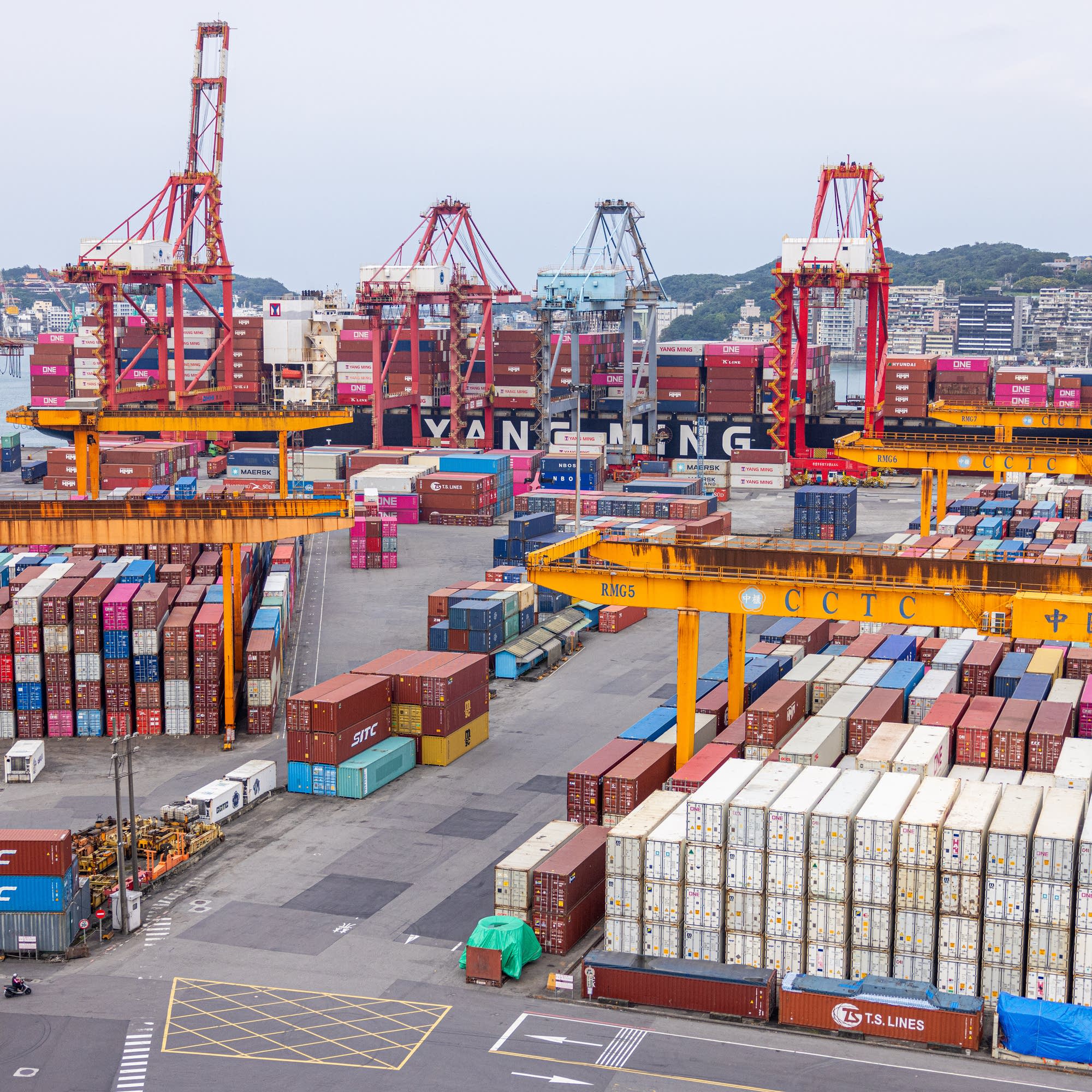
The U.S. and China are in a paused, not resolved, trade war, with tariffs reduced from their peak levels but still remaining at a meaningful 20–30% average, reflecting mutual fatigue from prolonged conflict. Imports of Chinese-made goods—especially AI infrastructure components—are rising, fueling a larger trade deficit, while exports to China remain weak, undermining agricultural sectors like soy and cotton. Meanwhile, copper prices have surged to record highs due to demand from data centers and defense, shifting its role from a general economic indicator to a strategic commodity tied to high-growth industries. This makes copper less reliable as a broad economic barometer. On monetary policy, Federal Reserve officials, including Chair Powell and Chicago Fed President Goolsbee, emphasize that current inflation pressures stem from factors like oil shocks and AI investment, not just interest rates, and that higher rates may not effectively target inflation sources, risking broader economic pain. Airline profits are under strain due to jet fuel costs now exceeding $4.50 per gallon, prompting route cuts and reduced service. In consumer culture, brunch is declining in popularity due to health trends and business inefficiencies, though it persists in innovative, solo-friendly settings. A Federal Reserve Atlanta study shows most U.S. CEOs are retaining tariff refunds rather than passing them on to consumers, indicating ongoing financial uncertainty in global trade.
For look, trade and tariffs back in the news from American public media, this is Market
Planets.
In Los Angeles, I'm Kai Rizzo Monday, today, 21 September, good as it always is to have
you along, everybody.
We're going to mostly take a pass on the old standbys this week, jobs and inflation and
data.
And we are turning for our economic through line instead to foreign affairs.
China's president Xi Jinping is headed to Washington this week.
Our slice of it at least to start is the on again, off again, on again, off again, trade
war between the two biggest economies in the world.
Then if you have lost track of where things stand, join the club, Marketplace of Justin
Hogue gets his going with refresher.
It wasn't too long ago that tariffs on Chinese goods were skyrocketing back in the spring
of last year.
US tariffs on Chinese goods reached 145 percent at their peak.
Megan Schoenberger is senior economist with KPMG.
She says China was hitting back to reciprocal tariffs on US goods reached 125 percent.
But in the time since tariffs have come down, addressor with the Progressive Policy Institute
says when you average the tariffs that are in place right now, most of the things you're
buying in the store that are Chinese made will have a, you know, about a 20 to 30 percent
tariff, depending on the type of product.
Gressor says that's still higher than tariffs were during the Biden administration, but
he says it is a sign that the trade war is on hold.
It's not like issues are settled.
It's more like both sides have been bloody to bit and they're feeling it in their best
interest to, you know, not continue that for a while.
Imports from China have been picking up this year.
Megan Schoenberger with KPMG says that's been fueled by demand for computers, data storage
devices, and other components needed to build out AI infrastructure.
It is the main driver of why we see a larger trade deficit in recent numbers, and a lot
of these products importantly are exempted from tariffs.
But exports to China have not been very strong.
Earlier this year, China said it would buy about 25 million metric tons of American soybeans,
but Naomi Bloom with total farm marketing says at this point.
China has purchased approximately half of that.
The Trump administration has also claimed that China will purchase about $17 billion worth
of cotton, sorghum, corn, and other egg products.
Bloom says that would be a huge relief for American farmers.
When you have over $6 diesel, the farmers are still not making money because they're getting
ready to harvest, and you know, some of those combines take 300 to 400 gallons of diesel.
But so far Bloom says China hasn't really shown up.
I'm Justin Howe from Marketplace.
300 gallons of diesel at $6 a whack, right?
Wall Street today, while my goodness traders weren't quite a good mood, oil fell, stocks
went up.
Happy Monday.
We'll have the details when we do the numbers.
All right, let's talk commodities here for a bit, shall we not oil the commodity most
in the news of late I know, but rather a commodity that arguably can tell us almost as much
as crude about the global economy, specifically about the prospects for global growth, copper.
As its price goes up, so too does the outlook for the global economy because copper is used
in so many different industries, and copper prices have indeed been going up 45% this
year so far, a record high earlier this month.
But as Marketplace's Henriette reports, there are some things going on in the copper market
right now.
It wasn't that long ago that the price of copper could kind of tell you how the economy
was doing, says Ian Lang at the Colorado School of Mines.
And so if you saw sort of uptake in advance for copper, you said, oh, okay, right, we're
building more houses, we're building more cars, right?
Other things must be going well in the economy.
And yeah, we do still use copper in cars and houses and appliances, but says Jacob White
at Sprott Asset Management.
In the world of 2026, it's really more about the strategic end uses.
These days, tons of copper goes into data centers, electricity infrastructure and defense systems,
and because it's being used for strategic industries, the price of copper is a bit less tied
to broader ups and downs in the economy.
And electricity grids, for example, or AI data centers or defense programs are procuring
copper.
It doesn't necessarily matter to them that copper is at an all time high.
And there are factors besides demand keeping that price high.
First, there have been a bunch of recent disruptions at copper mines around the world, says Natalie
Scott Gray at the Financial Firms Stone X.
We've had earthquakes, we've had flooding in Indonesia, which really can't be helped.
And many of those mines are old, so they're getting more expensive to operate.
Then there's tariffs.
The Trump administration has been signaling that it might tax imports of refined copper
for over a year now.
It hasn't done it yet, but companies are still sending tons of copper to the US to get ahead
of tariffs.
And that has global implications.
So we've had this extreme tightening in the market outside of the US, and that's really
been the primary driver, why we have very high copper prices.
All that Scott Gray says is diminishing Dr. Copper's accuracy as an economic forecaster
and Henry App from Marketplace.
I'm going to preface this next item with a warning that it's a tad weedy, a little
bit dense, but it's important so bear with me.
Last week during his press conference, Chairman Kevin Warsh was asked about something called
the neutral rate, the neutral rate of interest specifically, and what he thought of it.
It's useful academically, it's a discussion help us think about policy.
Do I think it has any operational effect on decisions that we make today?
No, I don't.
Useful academically, but not operationally.
We have gotten Courtney Brown from Axios, also one of our Friday regulars, on the phone
to talk about that a little bit to dig in, Ted Courtney, so good to talk to even if it's
not on Friday.
Even if it's not on Friday, good to talk to you too.
Okay, so we're going to talk about what the Chairman said in a second.
First though in number one layman's terms and in number two, like in 45 seconds, what
is the neutral rate?
Okay, so the neutral rate, I've always thought about it since I've been covering the beat.
I've always thought about it as kind of like big foot, right?
Like, you can see evidence of big foot, but you never see big foot itself.
So the neutral rate is this level that is not directly observable, where interest rates
are neither restraining the economy or goosing the economy.
But again, no one knows where it is in real time, so that's why it's like big foot.
But I have to ask why can't we, is this like Schroeninger's interest rate or what?
What can we know?
Exactly.
When I first started covering the Fed, I was like, what do you mean they don't know?
It is this thing that is very academic and it seems like Worsh is not very willing to
engage in the academic conversation of where the neutral rate is in the way that I don't
know, former chair Powell was or even New York Fed president John Williams is.
One would imagine though that even if you can't directly observe it, you can have some
sense of it and it would be helpful to know, yes?
It would be helpful to know because if you know where neutral is, you know maybe how far
to go above it to do things like contain inflation or how far to go below it to do things
like, you know, try to juice the economy as they were trying to do in the 2010s.
And so not knowing where it is is a problem, which is why it's always confused me that
it was this kind of like mythical concept.
Okay, so to brass tax here, Worsh said the other day in his presser, he says, I found
it difficult to describe the financial conditions have as restrictive.
Once again, let's do a primer here.
Financial conditions being restrictive means what?
Financial conditions meaning being restrictive means like, look at the stock market.
Look how high the stock market is and if they're restrictive, maybe the stock market wouldn't
be as high flying.
What are credit conditions doing Worsh is essentially saying, when I look around and I look
at things like the stock market, credit conditions, doesn't seem like it's all that restraining.
Doesn't seem like it's restricting activity all that much.
And they have removed, according to Chairman again, I'm doing a lot of that in this interview.
They have removed a dose of accommodation, accommodation being letting things go, I suppose,
right?
Yeah.
And this was looking a huge moment in the press conference and I don't know if Worsh intended
that to be the case, but by saying we've moved a dose of accommodation, you're implying
that rates are accommodative.
And up until this point, I think we've heard a lot of Fed officials describe rates as a
little bit restrictive.
So that raises all kinds of questions of perhaps how much more does the Fed have to raise
rates?
from here in order to restrain the economy
and do things like for inflation down.
- Right, I'm sure you saw this morning that Austin Gools
be the president of the Chicago Fed said,
"We try real hard most of the time the Center of Bank does
"to look through oil shocks."
And he said, "Maybe the time has come
"where we can't really do that anymore."
So you were all in the chairman's press conference last week,
what Gools B said this morning,
and I'm sure we're gonna get a zillion more Fed speakers
this week.
Certainly, it does seem as if more restricted policies
on the way, yes.
- Yes, and Gools B did a little hang
with a few reporters after his speech in London,
and I was wondering-- - As he does, he's that kind of guy.
- I was a part of that hang.
And you know, much of the conversation seemed to boil down
to the Fed has a little bit of a problem right now,
because many of the things pushing up inflation
don't really seem all that affected by interest rates.
So we got the oil shock as a result of the Middle East conflict,
but we also have something like the AI investment boom.
And one of the things that President Gools B said this morning
is that he doesn't really see that activity
as being particularly interest rate sensitive.
Here's why that matters.
The Fed has to raise rates almost anyway
as an attempt to get inflation down,
and that might not hit the sources of inflation,
but it's gonna hit other parts of the economy.
So Gools B was talking about a potentially painful trade-off
where there are parts of the economy
that aren't necessarily the sources of inflation
going to be restrained by higher and more restrictive policy.
- Since I've got you, and we have a little bit of time,
I do need to touch now on the whole long and variable lag thing,
because it's not like there's flip switches
that get flipped and things happen, right?
These changes in interest rate policy get made,
and then we're just gonna have to see.
- Yeah, exactly, exactly.
And this is my least favorite phrase in monetary policy,
long and variable lags, but it's very true, right?
The way that interest rates affect the economy,
it's just crazy to me as well.
Kind of a mystery, we don't know when
and exactly how interest rates will affect the economy
and it changes from business cycle to business cycle.
So it is very much the case that in a few months,
the economy will start to feel whatever interest rate increases
the Fed pushes through now,
and what will that look like?
Well, that's anyone's guess.
- It is a frustrating, frustrating line of work
covering this stuff, but ultimately fun and rewarding.
Courtney Brown at Axios, thank you, Courtney.
- Thanks, Guy.
(upbeat music)
(upbeat music)
- One might imagine that for those just starting out
in the labor market, the coasts are the place to be,
big dynamic cities, lots of jobs.
You can see the logic, right?
Well, think again, the job search site monster
says Ohio is the place for somebody to launch their career.
Monster ranked the best cities for young workers
based on affordability and job prospects.
Turns out nine of the top 10 are in the Great Lakes region
and five of them,
Akron, Columbus, Dayton, Toledo, and Cleveland are in Ohio.
Marketplaces, Cali Wells, based not for nothing in Cleveland,
did some digging to figure out what put the Midwest
at the top of that list.
- To be at the top of the list,
a city has to have pretty low housing costs
and low unemployment.
It turns out the Great Lakes regions got both.
When you look at Ohio, it has major hubs for education
for meds, aerospace, technology.
- Vicki Sulemi is the career expert at monster
who wrote the report.
She also used to be a job recruiter
who remembers sifting through piles of resumes
and says the piles were much higher in New York City
and other major hubs.
- I wish the candidates knew to apply to these outliers.
There's less competition.
- Unless competition translates
to a much healthier job market.
- Bayju Shah is president of Cleveland's
Regional Chamber of Commerce.
- We have had sub three and a half percent unemployment now
for three and a half years running.
And that's even lower for those with college degrees.
- His organization, the Greater Cleveland Partnership,
puts on this career fair at the Rock and Roll Hall of Fame
every year to help employers find young people
to fill entry-level jobs.
- Talent is the issue when you've been running below
three and a half percent unemployment for three years.
And you've got no end in sight to your demand.
- So the region earned the number five spot on monster's list.
But recruiters say a job offer is not enough
to lock in an early career employee for the long term.
- Growth and development is one of the questions
that we get all the time.
- Charles Donaldson is an early talent recruiter
at the Cleveland-based paint company, Sherwin Williams.
He says what comes after that first job is a top concern
for the entry-level workers who decide to stay.
- They're looking for am I gonna be able to move around
when I be able to advance like what other opportunities
are available for me once I get in.
- It's the same kind of questions
at the booth for Ohio-based Jelly and Jam Company,
J.M. Smucker, Kelly Brooker Davis manages
that company's emerging talent.
- They wanna know, do you have employee resource groups?
What do you do for the interns?
Do you offer professional development?
Do you offer social opportunities and networking opportunities?
- Some of the young people at this event
are happy with the answers they're getting.
- I think it's just a really good place
to kind of start my young professional life.
- Yeni Song is a senior at Case Western Reserve University
in Cleveland.
She's from Philadelphia, but she's planning to stick around
the Lake Erie Shore after she graduates.
- There's a lot of new companies that are starting up,
that are getting based in Cleveland
or in the surrounding cities,
and I build a really great community of friends
that I'm not sure if I'll be able to find somewhere else.
- Plus, there's the whole buy a house
for under a quarter million dollars thing.
Kids go to school and then we'll move to a large city
where opportunities are bound,
but then the cost of living and other considerations
quickly sort of set in.
- David Carter went to Northeastern University
and had every intention of staying in the Northeast.
- I was studying more marine science in Boston,
and during the strange time that was the pandemic,
I moved home and finished remotely.
- So he started applying for local internships
and one of the places he applied
ended up offering him a full-time job.
- So I've been there about two years now.
- He says he likes the slower pace
and the quality of life in the Great Lakes region,
enough that he's got no plans to leave.
In Cleveland, I'm Kayleigh Wells from Marketplace.
(upbeat music)
(upbeat music)
- Coming up.
- Boosy bottomless mamosa.
- It's five o'clock somewhere, right?
First though, let's do the numbers.
- Down dust rose up 366 today,
seven tenths percent, 52,000 and 48th.
And Azdaq jumped 500 and 99 points, 2.2 percent.
27,122, the S&P 500 climbed 114 points,
about one and a half percent, 7764 there.
You heard about the Ohio job market
from Kayleigh Wells, lots of big companies
have roots in the Buckeye State.
J.M. Smucker, based in Orville.
Saw shares dip two and a half percent
on the day, Wendy's had quartered in Dublin, Ohio.
So he shares dropped about six tenths percent,
shares of Procter and Gamble, based in Cincinnati.
Saw shares fall two tenths of one percent,
bad day for Ohio companies, right?
Paramount Skydance is merging with Warner Bros' discovery.
He's going to proceed, now two companies
have settled with state attorneys general.
Warner Bros, up 10 and eight tenths percent on the day,
Paramount, down to and nine tenths,
are listening to Marketplace.
This is Marketplace.
I'm Kay Rizdal, happy autumnal equinox,
Eve everyone fall starts tomorrow afternoon,
cooler weather, earlier sunsets,
and a merciful end to the busy summer travel season.
For airlines, the typical seasonal slowdown
in demand coincides with high and rising jet fuel prices.
And as Marketplace's math fields reports,
that means the roots that airlines fly
really do need to earn their keep.
For all the dire warnings heading into summer
about high jet fuel prices and potential shortages,
Charles Duncan, at Altitude Ex Aviation Group,
says it turned out to be a good summer for airlines.
Demand has been red-high.
Of course, high fuel prices are not welcome,
but I think overall the airlines have done well.
Largely because they were able to pass on a lot of those costs
in the form of higher airfares.
But heading into fall and winter,
when not as many people travel,
Duncan says it's a bit of a different story.
When you couple the weaker demand with a spike
and even more elevated cost of jet fuel,
that is a challenge for the industry.
At the beginning of the year,
jet fuel was a little over $2 a gallon on average.
Now it's at $4.50 a gallon.
An industry analyst, Robert Mann, says airline executives
are not expecting it to come down anytime soon.
And the result is that routes that were reasonably profitable
and expected to be so simply cannot be flown
profitably at these higher prices.
So airlines are starting to cut some of them
to reduce their losses.
Both routes and times of day on routes
that are less profitable.
Like flights that leave midday or midweek.
George Ferguson at Bloomberg Intelligence says this signals
to him that airlines don't have quite as much pricing power
right now as they may.
have thought. And so they're again diving back their offerings trying to boost the ticket
prices so they can recover all their increased costs. Jet fuel, of course, plus maintenance
and labor costs. Airlines have the same challenge that the rest of us do right now, and that is that
everything is going up in price, everything. And Ferguson says, "If costs keep climbing, we may
see airlines cutting back even more into next year. I'm Samantha Fields for Marketplace."
As times change, so too do our habits. We are eating healthier, we are drinking less, and so,
according to the Wall Street Journal, a certain weekend staple is falling out of favor.
Lane Floreshyam is a style report at the Wall Street Journal. Welcome to the program.
Thanks so much for having me on. Okay, from the headline, we regret to inform you that brunch is
now officially dead. I guess my response is really what happened.
So we got this idea for this story because there are a number of restaurants in New York that have
recently started serving lunch on the weekends, and they have these really fun, elaborate lunch menus.
And so as I kind of started working on a story about lunch, it became, you know, this idea of
is brunch kind of over, and it's not that brunch has vanished off the face of the earth. So many
restaurants still serve brunch, but the idea that kind of the most modern iteration of brunch as we
know it, this kind of like, boozy, bottomless mimosa, ex-benedicts, and French toast brunch,
might be a little passe, in the year 2026. Well, I am going to the wrong kind of brunch,
let me tell you that. But let's bring it down into its component parts. First of all, the people
who are no longer going to brunch, why not? You know, I think we hear so much about how people
are drinking less, and I think that the idea of like waking up on a Saturday or Sunday and having
the first thing that you do go to a bottomless mimosa or Bloody Mary brunch is not as appealing.
I think people are, you know, they're doing more fitness and prioritizing their health, so I think
that's part of it. And then I think people are also looking for more exciting menus than, you know,
the kind of like, egg dishes and French toast and other kind of like, carb-heavy menu items that are
often, you know, being served for brunch. Yeah, that's totally fair. I get that on the carbs thing.
Now, the restaurant tours, this is a business model decision for them. What's their thinking?
I think for a lot of them, brunch doesn't make as much financial sense because, you know, if you're
a restaurant that's open for lunch and dinner seven days a week, that's 14 meal services. And so to
change everything out for brunch, that's two meal services where you're bringing in new ingredients
that take up space, you're having to train staff on how to prepare these two meals. And so it just
doesn't make sense to do that for just two meal services a week for just brunch. Yeah, there's a
quote from guy who said, you know, we're not making pancakes on Mondays and Fridays, so we have to do
it special for the weekends. And that just makes no sense. Right, exactly. All right, look, those of
us who enjoy rolling out of bed on a Saturday or Sunday and going for, you know, reasonable brunch,
there are still options out there, right? There are definitely still options out there. And I think
that a lot of people do really enjoy this kind of leisurely weekend lunch, both, you know, kind of
within the restaurant industry. One of the restaurants that I featured in the story is the
four horsemen in Brooklyn, which is kind of, you know, this restaurant that has had a weekend lunch
for, you know, 10 years when everyone else was doing brunch. And it's very inventive and they
have an amazing wine program. So if you do want to drink, there's like, you know, there's still this
great option, but it's not that kind of like, you know, Bloody Mary brunch service. Oh,
always good to have options. Here's the put up or shut up question. Are you a brunch person
or not a brunch person? You know, I am not so much a brunch person. You know, a couple of the people
I talked to for the story we're talking about how nice it is to go out for a solo lunch. And I
really like that. I think brunch is inherently a group activity, but going out for lunch by yourself
can be a really, really enjoyable activity. I 100% endorse that solo dining at a restaurant,
right? I totally endorse that. Absolutely. Lane Floresh, I'm at the Wall Street Journal,
and thanks a lot. I appreciate your time. Thank you so much for having me.
This final note on the way out today in which I'm just going to report you all decide. I saw this
on Bloomberg a study from the Federal Reserve Bank of Atlanta about tariffs, tariff refunds,
to be precise. The Atlanta Fed surveyed 1100 CEOs and about a quarter of them said they had gotten
a refund or were asking for one of them three quarters said they were going to hang on to the cash.
17%. Said they were going to give their customers refunds. I report you just add.
I'm Eric Babawi, Caitlin Ash, John Gordon, Noia Karr, Steve Mollison, Stephanie Seek, are the
marketplace editing staff Kelly. So there it is, the news director. And I'm Kyle Rizzo,
we will see you tomorrow, everybody.
This is APM.
Podcast Summary
Key Points:
The U.S.-China trade war has cooled significantly, with tariffs reduced from peaks of 145% and 125% to an average of 20–30% on Chinese goods, signaling a temporary truce rather than resolution.
Imports from China are rising, driven by demand for AI-related components like computers and data storage, which are largely exempt from tariffs and contributing to a larger trade deficit.
U.S. exports to China remain weak, with soybean purchases falling short of promised volumes and no clear progress on cotton and other agricultural deals, hurting American farmers.
Copper prices have surged 45% this year due to demand from data centers, electricity infrastructure, and defense, with supply disruptions and tariff speculation playing key roles.
Copper’s price is now less tied to general economic health, as strategic uses dominate, reducing its reliability as an economic barometer.
The Federal Reserve’s neutral interest rate remains an academic concept, not operationally useful, and policy decisions are being influenced by persistent inflation from oil shocks and AI-driven investment.
Airline profitability faces pressure in fall and winter due to soaring jet fuel prices, leading to route cuts and reduced offerings, especially for midday and midweek flights.
Brunch is declining in popularity due to health-conscious habits and lack of financial incentive for restaurants, though it remains viable in niche, inventive formats.
Summary:
S. and China are in a paused, not resolved, trade war, with tariffs reduced from their peak levels but still remaining at a meaningful 20–30% average, reflecting mutual fatigue from prolonged conflict. Imports of Chinese-made goods—especially AI infrastructure components—are rising, fueling a larger trade deficit, while exports to China remain weak, undermining agricultural sectors like soy and cotton.
Meanwhile, copper prices have surged to record highs due to demand from data centers and defense, shifting its role from a general economic indicator to a strategic commodity tied to high-growth industries. This makes copper less reliable as a broad economic barometer. On monetary policy, Federal Reserve officials, including Chair Powell and Chicago Fed President Goolsbee, emphasize that current inflation pressures stem from factors like oil shocks and AI investment, not just interest rates, and that higher rates may not effectively target inflation sources, risking broader economic pain.
50 per gallon, prompting route cuts and reduced service. In consumer culture, brunch is declining in popularity due to health trends and business inefficiencies, though it persists in innovative, solo-friendly settings. S.
CEOs are retaining tariff refunds rather than passing them on to consumers, indicating ongoing financial uncertainty in global trade.
FAQs
The trade war between the US and China has softened, with tariffs reduced from their peak levels. While tensions remain, both countries have agreed to a temporary pause, as each side recognizes the benefits of avoiding further escalation.
On average, most Chinese-made products imported into the US face tariffs between 20% and 30%, though this varies by product type. This is lower than the peak of 145% reached in 2018, indicating a de-escalation of the trade war.
Demand for technology products like computers and data storage devices—key components of AI infrastructure—is driving increased imports from China, even though these goods are often exempt from tariffs.
Exports to China have been weak, despite a 2023 promise to buy 25 million metric tons of US soybeans. As of now, China has purchased only about half of that amount, and no significant purchases of US cotton or other crops have materialized.
Copper prices have surged 45% this year due to increased demand for data centers, electric infrastructure, and defense systems. These strategic uses are less tied to general economic cycles, making copper a less reliable indicator of overall economic health.
The neutral rate is a theoretical interest rate where the economy is neither overheating nor slowing. While it’s not directly observable, it helps guide monetary policy decisions, such as how much to raise rates to control inflation.
Chat with AI
Loading...
Pro features
Go deeper with this episode
Unlock creator-grade tools that turn any transcript into show notes and subtitle files.
 PodcastTranscript AI