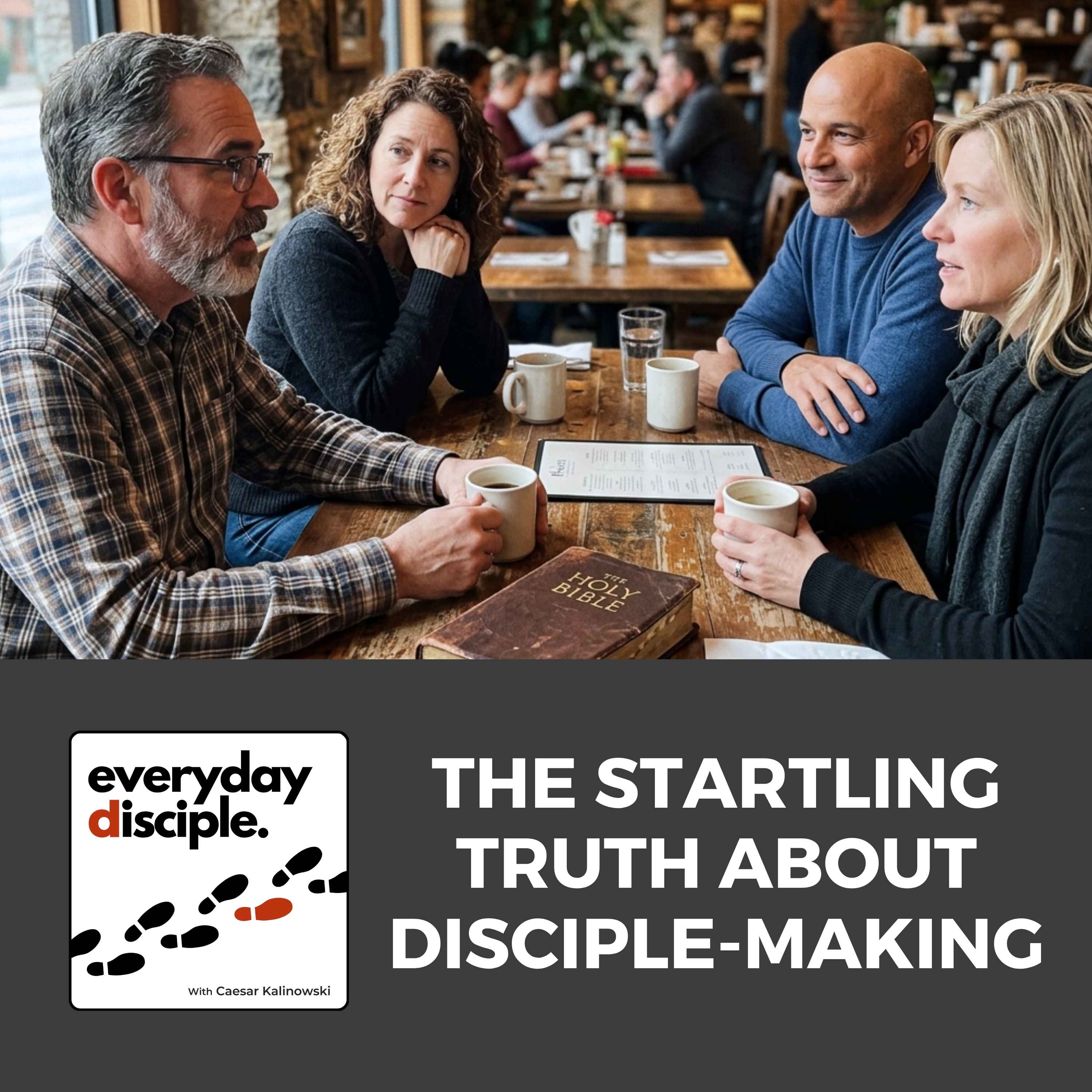
The podcast discusses a discipleship crisis in the church, warning that without meaningful change, the institution risks becoming marginalized. It argues that common approaches—equating discipleship with Bible knowledge, evangelism programs, or hiring dedicated staff—often miss the mark. True discipleship is presented as a holistic lifestyle where believers, in community, help each other apply the gospel to all aspects of life, moving from unbelief to belief. This requires life-on-life engagement, not just weekly services or classes. Several barriers hinder this shift, including leaders feeling too busy, fearing family pushback, or worrying about failure. The hosts emphasize that until the church redefines discipleship as this integrated, missional lifestyle—the very purpose Jesus gave—it will continue to see complacency and decline rather than multiplication of mature disciples.
If we keep talking about the lack of discipleship in our churches for another 20 or 30 years, like we have been, without changing things, well we won't have the problem anymore, not because we've solved things but because the church will be all but irrelevant and further marginalized in society. Without discipleship, we're left with a shadow church, just a lot of religious trappings and tradition without the red hot center of the mission Jesus gave us at our core. I think the church is stuck and what if the common popular understanding of discipleship is what's actually producing some of the sickness and complacency and decline we see all around us in the church today. But what if we could do something about it by rethinking and reframing what we mean by discipleship and calling our leaders to embrace this life that Jesus calls us all to? Welcome to the Everyday Disciple Podcast where you'll learn how to live with greater intentionality and an integrated faith that naturally fits into every area of life. In other words, discipleship as a lifestyle. This is the stuff your parents, pastors and seminary professors probably forgot to tell you. And now here's your host, Cesar Kalinowski. Hey brother, how's it going? I am loving this weather, first off, and I'm loving the fact that I think are we officially in summer? We're getting closer. And our Vernal Equinox on the planet that determines that kind of something. I'm sure. I'm not in this science, but yeah. No, but it feels like summer. The weather's been beautiful and sunny and kind to us. What are you doing? What are you doing? Are you going to go to Disney or something? I'm actually not this year. I'm actually, we don't have a ton of plans. I'm going to England. Yeah. Tina and I sort of put a moratorium on travel outside the Pacific Northwest for July and August a few years ago. Because it's so perfect. It's too perfect. I remember literally, this isn't a sound like some people are going like, oh, first world problems. We were literally on vacation in August in Hawaii a few years back. Yeah. And it was like really sweltering and hot. You like, you barely could go outside half of the time, right? Sure. And then back home here, it was like 78 zero humidity no bugs like like for two months. And like, why would you know, you're like, if you live here for 10 months of the crap, you should reward yourself with sticking here for not that bad. Anyway, so we do have some things that we're doing, but not in July and August, man, we really we rarely leave now. People can visit, you know, they usually do, but that's when we tell everybody that's when you want to come. So if you're listening to this and you plan to visit Team K this summer, it's July and August. That'd be fun. We'll have summer. We'll have a late night hang. You can come to cigars and theology with us or do something. You're right. Yeah. And then we'll have a little bit of theology with whoever wants to show off that one, you know. We'll just throw it out there and see who traverses the globe and comes and joins us. But what if it's like too many people to do it? Yeah. Amen. Be a good discipleship, right? That'd be fun. Transition there. All right. Okay. So today we're talking about why discipleship is so rare in our churches. I know it's not a happy topic per se. Yeah. But it's still important, man. Well, it's important because it's a main thing that Jesus has called us to, right? And we're giving our lives to like make disciples who make disciples and make disciples in this multiplication aspect of discipleship. And I don't want to sound like an alarmist, but there are a ton of churches that have discipleship programs or paying a lot of money for discipleship pastors even thinking that they're doing discipleship right. But I think we might be just talking about two totally different things. That's a thing. They might be doing what they're wanting to do exactly right. So we're not throwing stones here, but we know there is a bit of a discipleship crisis. And we've been talking about it for years. I'm so glad, so grateful to God for moving the hearts of so many brothers and sisters to say, "Hey, there is an issue." Yeah. Like we got to get there. And but like you said, are we possibly talking about two different things? I think partly. I think in some cases we're actually trying to accomplish two totally different things, but we use the same term. Yeah. If you keep using that word, I do not think it means what you think it means. So in some cases we might be talking about something different and some cases we might be talking about different methodology. Okay. Now I also think like I've read Kerry Neewolf's say recently that the average North American Christians about 3,000 Bible verses overweight. I love that term. That's great. Okay. And the way that many leaders approach maturity in Christ is to assume that knowledge produces that maturity. But I'm like since when? When does that work? You know? Like smartness, right? I mean, it's nice and it's awesome to people understand what they believe, but knowledge in it itself is not a hallmark of Christian maturity. I mean, possible polygons says knowledge. What? Puffs up. Yeah. Puffs up. Love by contrast builds up. And so some of the most biblically literate people in Jesus' day got passed by to be his disciples. Okay. So discipleship, a lot of people think it equals teaching people how to evangelize and fill his church. That's another thing where they go, that's the goal of discipleship is to get more people to talk about Jesus and fill the church. Yeah. Well, I think it's a natural outgrowth of maturity in Christ and understanding who we are now, our true identity that we would talk about Jesus. And if we call that evangelism, okay, yes. And every time we gospel someone's heart, help them move from unbelief to belief. Yes, that's evangelism in its pure sense because we're evangelized. We're good-nosing people, right? Yeah. And I don't think that that's what everybody thinks there against. Some people think, well, discipleship is knowledge acquisition. So our discipleship, it's four courses. It's one, one, two, one, three, one, four, one, or it's nine weeks of this and it's all topical. And so, you know, week one, you study this week two, we're talking about prayer, week three, we're going angelology, week four, we're, you know, whatever, you know, I don't know, you know what I'm saying, right? Yeah. And so, but others still, you know, they're not even really engaged in it. And they just assume if you're going to church, you're, you're disciple and you're being disciple. And I don't, is anybody believe that anymore? I don't think so, but the scary thing in my opinion is you've got a lot of pastors going through seminary actually who are coming out with like this proper way of doing discipleship, right? But it seems like the tithes of turn because what I'm seeing in a lot of the American institution is very different than Jesus is called to go and make disciples. And maybe we can compare and contrast before we really even get too deep into this, what maybe many institutional churches claim to be doing as discipleship with what we would consider healthy discipleship to look like because I don't think there's many people that actually view them as differently as we say. And I think we've kind of already tipped our hand there. I think that institutionally, and by the way, you said like, you know, there's like these heaps of pastors coming through seminary with knowing how to disciple, I don't think so. I would actually beg to differ. No, I've only gone to one seminary, so I can't say, but I know a lot of people, I spent a lot of time with people who have been through seminary. Most, and I'll say pastors have never been discipled and they would be honest to say that. And I've tested this like, you know, I speak a lot and I'd be at a conference and let's just say for the sake of math, there's a hundred pastors in the room. I say, how many of you pastors have been discipled and I'll describe what we think discipleship is? One hand maybe. That's sad. I know I've never been discipled. So you know wonder that they've not been discipled, that they're not, they're now have discipleship, you know, disciples making churches or disciples making environments, right? And I don't think necessarily that's the focus of most seminaries. Now I think that's changing and that's good thing. I think that's starting to change. But, but I don't know that, you know, there again, even those who engage it, they think it's someone's job, like you mentioned earlier, like, well, we've got, we hired finally, we have finally, and we've got to do something about the discipleship problem. We hired the director of discipleship. Yeah. So wait a minute. But if the mission of the church is make disciples of Jesus filling the world with him so that the world is increasingly filled with God's glory, then why is not everybody's job at the church paid or unpaid making disciples? Why do we have a director of it so that we can kind of like, sail it off into the corner? It's the same thing that we do with youth. It's like, well, we have a youth director to do what, you know, disciple to kids, but they're not disciple them. You know, they do the pizza do thing. You know, they get to have pizza and then some mountain do and then they do an altar call. It's like, wait a minute. Shouldn't youth leaders job be to help train parents on how to disciple their kids? Yeah. So their friends, their kids know how to disciple their friends too and then their parents do and it's all, wouldn't that be the goal? So as soon as we start to sort of institutionalize discipleship where we set aside, we give it a name, we hire a certain person to be about it, forgetting that the only reason the church exists is discipleship, then we're already starting off on the wrong foot. And that's why we say, well, wait a minute. Maybe it's our understanding of discipleship that's actually producing this lack of fruit because if you think it's someone's job and then you define it as, well, they got to learn all this stuff about the Bible. So it's Bible literacy is the goal. No, the goal is moving from unbelief to belief in area of life. So that's, you know, our well-worn description of discipleship that we use over and over in all my trainings and people have heard me say it over and over. Discipleship is the process of helping people move from unbelief in the gospel to belief in the gospel in every area of life, not just connected to their afterlife, but everything. They're parenting, they're money, they're finances, they're vacation time, they're, you know, I'd sexual orientation, they're identity, how they spend their money, everything. That's, and so how's that going to happen? If discipleship is moving from unbelief to belief in the gospel in every area of life, then guess what? Discipleship then must have to happen in every area of life. And you and I could talk about a few areas of life in a class, but I won't know if you're really living it or not. I could fake it for a couple hours.
There's no way to talk about every area of life. You know, you have 75,000 classes. But if we're doing life in a Christian community that's got the gospel at the center, then over time, life on life, life in community, life on mission, i.e., discipleship is happening. Now it takes intentionality, 'cause we all know too, you can just hang out. - Sure. - And not there'd be no discipleship. - I've never been there before. - But if the gospel's being applied and people are moving from unbelief to belief, then concerning God and what's true of them now, that is what discipleship's about. And that comes right out of scripture. That all sin comes from unbelief and walking in Jesus' ways is what? Believing absolutely what's true of the Father, what's true of the Son and what's now true of us by the power of the Spirit. - That's beautiful. - That is what discipleship is. And I think until the church grasps that discipleship's not about knowledge acquisition or passing on of lots of biblical history and like, you know, memorization of verses, that's why I love that whole thing of, you know, we're 3000 Bible verses overweight. - No. - It's like, until we grasp that it's gonna be life on life, like a family, like just like Jesus modeled, three years hanging out all day a lot, you know? And applying the good news of the kingdom, the good news of the gospel to absolutely every area of life. Then I think we're working from a false paradigm. And that's just gonna keep producing what it's been, which is not true discipleship. That's why it's so rare. I don't think the church has grasped the real definition of what discipleship is and the real goal, which is what? Make disciples who make disciples of Jesus filling the world with His glory. That's the whole point. Go be fruitful and multiply. That's sort of our creation order. Revisited when Jesus is now go and make disciples of mine all over the world, right? And every nook and cranny. Then He says, as I was sent, so I send you any what breeze on them, again, it's kind of reminding us of the creation story. As I've been sent, so I send you, right? Receive the Spirit. I mean, it's this whole sort of bookended picture that God's always been about this. And that's what Jesus sent His church to do. And it wasn't, hey, memorize this and answer this properly. I just wanna remind you all, little shocking thing here. Jesus never owned a Bible. The disciples never owned a Bible. It's this lifestyle in Christ, where the gospel touches and transforms all of life. And that's only gonna happen life on life. It will not happen one day a week for hour and a half in rows. It won't happen with just like a series of four classes and now boom, you're a mature disciple. No. And that's the thing. This idea of the church is failing at discipleship. And it's out there. I'm not casting any stones that the church isn't throwing themselves. But it doesn't come up because of the right premise to fill the world with God's glory through Jesus' plan to go make disciples who make disciples everywhere. They go, well, there's just such a lack of maturity around here. And then it leads to this, this, this, and this, which is basically they're saying is, how can we manage people's sins and get them to be better church goers and give more consistently? Well, they need to be more mature disciples. It's not gonna happen now. That's not the point of discipleship. That's the fruit of some of it. Sure. But unless we have the goal right, filling the world with God's glory, moving from unbelief to belief in every year of life, living the life that Jesus lived instead of our false existence lives. Oh, that's the goal and we have to grasp that. So, given these differences of goals or even maybe methodologies, what do you think the thing is behind the thing that's really keeping our churches and even our church leaders from embracing discipleship in the way that you described it? Like, why is this so rare? I don't think it's just one thing, okay? I don't think it's one thing. Even now, there'll be some people listening to go, wow, that helps. That is different than I kind of was raised with, you know, thinking discipleship is or maybe what I was taught at seminary or whatever. But I don't think it's just one thing. Let me give you seven roadblocks or fears that may be keeping you or me or someone's pastor or church from true discipleship and mission, okay? Let me give you seven things. And I want to thank my buddy Nick Terry for helping me summarize my own thoughts and pull these together, okay? So thanks Nick. But let's just go through these and you and I can just sort of bat him around, okay? Sure. First one that might be a roadblock is time, meaning like pastors and churches say I'm afraid of the real commitment to being in making disciples in community. Yeah, I can see that. I'm so freaking busy now. How would ever start to live life on life? And I've listened to a few of your podcasts. It really sounds like a family. How am I supposed to fit all that in? Yeah. I don't have the time. It's impossible. Or I'm already like, I've got Mondays, I've got men's ministry and then Tuesday my wife has women's ministry and I've worked with practice on Thursday. Wednesday and next thing you know, every night of the week is service on Sunday. Yeah, exactly, right? And so it's a time issue. Well, it's not, but that's one of the roadblocks that we see. And if I make a real commitment to disciple making in community like this, I just know it's no way. And go back a couple episodes to 2.15, we talk about are we too comfortable for the mission? Yeah. And one of the things we talked about are we too comfortable with our time allotment? Yeah, absolutely. Next one is family. A lot of leaders, and this is, I think a big part of why church doesn't embrace this type of discipleship is they think, what if my own family won't go along with this? In other words, church has always been church in our faith over there and then we kind of live our life. Sure. We kind of live two lives. We talked about spiritual schizophrenia. Yeah, absolutely right. And so I think family is a big one. What if my own family won't go along with this? You know, like we haven't been talking and living this way and my kids are teenagers already. They barely will go to youth group. You think they're gonna start living this way? Yeah. That's rough, man. Yeah. Yeah. I wonder too, like if the family aspect, the thing that we always talk about is the beauty of actually doing this with family. Like you get to incorporate the kids as you actually are making disciples. Like a mission model, you incorporate everybody. You don't segment your life into two different worlds of, of like, here I do this. We talk about some leaders have a family and then they have the mission, which they call, I work at a church. Yeah, that's the, I'm on a mission. I work at a church all day, you know? But I come home and that's, you know, I chuck out and I have my phone off, my family time. I don't want my family to hate the church because I don't, you know, so you have a family plus a mission, right? Some families have a mission of their own. Like, and our family gets together, we go to Guatemala once a year, we help work at this one church or we all serve together in youth ministry or something, right? So you have your family and then you have sort of, when it's convenient, you have a mission that you do together or at a task. But what we're looking to have is a family on mission, where it's our lifestyle. But that freaks a lot of people out. It's a roadblock. It's a roadblock, but that's the only way we're gonna make mature disciples. I am convinced of it. Third big fear of roadblock is failure before we start. Like, if I start and fail, I'm gonna look bad in my people. You know, I've heard about this missional thing and it's been tough and my buddy, you know, Cross Town, they said, where I always start trying to do this missional to me anything and it just, you know, it didn't work. So, you know, if it ain't broke. So we'll just go ahead and keep it where it's like, once a year, we offer these classes and we don't even do it really now. We have this guy come in and he used to be a barber church just old buck and he kind of runs everybody through like an Old Testament survey and it's discipleship, right? - I mean, right? - Yeah. - So they're afraid if I start and fail, you know. - When I would say, I have seen a lot of it too with the failure of like, I don't have it all together. What if somebody smarter than me, you know, like, asks me questions, I don't know, I can't do this right. - Absolutely. - See, it's one thing to prepare a sermon and stand up for 30, 40 minutes and deliver it. - Yep. - And no one have to engage the content back and forth. - Right, but in community and truly making disciples, you get every possible question, man. - Yeah. - Throwing your way and push back and challenge in every bit of it. - Yeah. - You don't always have to be the answer, man, you know. - Right, so I don't know if I might fail. Fourth roadblock or thing that might be keeping us from true discipleship as the church is our gospel fluency. You know, people say truth be told, I've never been discipled in a way that the gospel was applied and allowed to transform every area of my life. I've learned a pretty high degree of Bible literacy, but I have pretty low gospel fluency. - Yeah. - And so other than, if I don't know some, I'm not doing an Old Testament survey or a lot of facts about the Bible. I don't know that I know how to apply the gospel in every area of life. - Yep. - So, well, it's terrifying. I mean, one of the churches I've served in is, you've got people that have been in Bible study for 70 years, but they don't know how to live. I mean, stuff comes up or relationship problems or I don't trust God in this area. It's like, we're just going to another study with it. Rather than like, no, I can't. - Or let's go to the next church. - Yeah, bounce out, right? - Just bounce out, yeah. Okay, fifth one might be a roadblock and why churches aren't really making disciples, it's very rare, is reproduction. Like, they think I don't have a reproducible way that makes disciples that make disciples and live out the life that Jesus did. Now, you can, but there again, if you take off the table, the 101, 201, 201, you know, like studies like that, and you say, well, we'd emit all of life, everybody's at their own place. It's not one size fits all. How do you reproduce that? There are ways. I would love to help you with those. We have teaching books, courses, all this kind of stuff, but that keeps a lot of people from it. They see the difference, but they, I don't know how I'd ever reproduce that. And so I can't be in every group, or maybe I don't trust everybody else. - Yeah, right, or something. - You're right. - Sixth one is money. Ooh, people will say, you know, if I were somehow pull this off and our people are actually to embrace life in vibrant, michael communities, people are being gospel growing into maturity, they might stop coming to church on Sundays. And then how would we collect their money and pay the bills around here? - Yeah. - And some people say, no, really listen, that is one of the number one things I get asked about as michael communities mature and multiply, and they've been reconcredited. When do you collect the money? - Yeah. - Right? One time I was teaching at a seminary, and the guy who was like head of theology, and I was teaching one of his classes, he introduces me to his class, and he goes, by the way,
that he's just going to talk to you now about discipleship and the mission of the church. It's going to tell you it's all biblical, it's all true. And you're going to say, at the end, you're going to go like, "Why is in our church doing this? Why is in my pastor talk this way?" And I'm going to tell you, your pastor would agree, too. He would not have any problem theologically with what Caesar's about to teach. He would have a problem financially with it. And I was like, "My jaw hit the floor." And then he was like, "Okay, go ahead, you can start at the class." He just said it. I couldn't believe it. I mean, sometimes we think this, but he said it. And that's true. And a lot of people are like, "Wait a minute, how would we. " Yeah, I might not have a job there. Exactly. If people start moving to maturity and counseling each other in the gospel and marriages are getting healed and they're learning the word and they're bringing in people who are not yet believers who really don't know that much about going to a church service because their family didn't grow up doing it. So they don't go like, "Whoa, amazing." They go, "Count oh weird." Or whatever. Their kids are loving it. So how do we get to get the money? And then I want to have a job. And so, yeah. And the last one, and this goes back to the episode we did on, "Are you too comfortable?" Yeah. Have a said two, fifteen. Yeah. Is comfort. Last but maybe hardest at all to admit is, a lot of churches, a lot of leaders go, "I really prefer my faith, my ministry, my Christian vocation, just the way it is." You know, thanks. I'm good. It fits. I've worked it out. I've got my thing, my wife's got her part time job, my time, my ministry, my family, my hobbies, everything's in place. I'm good. I'm good. And maybe in a few years, you know, I mean, we did go to that discipleship conference. Yeah. I did take some of my leaders. What they do with it in each of their departments up to them. But I'm good. So anyway, there it is. I know this, I gosh, we usually were so much more, I think, positive. But this is the episode about why discipleship is so rare in our churches. And I want to call people to look at these, right? Yeah. I'd be curious to ask our listeners, which one of these seven roadblocks the discipleship are you actually specifically most affected by? Yeah. Going to the Facebook group. Yeah. And list them off. I mean, here we go. It was time, again, like, you know, I'm afraid of the commitment this would be. Who's got time for this? You know, or my family won't go along with it. So family or, you know, failure before we start. So what if if I start and fail or I'm like, fluent in the gospel. So I can teach lots of facts and history lessons. But like, how do I apply the gospel in a real? I don't know. Or is it reproduction? Like, I don't have a reproducible method for this. Or is it the money aspect? Like, how does the church get paid if people are actually living this life? Yeah. And then or is it comfort? Those were the seven. So, you know, I would love to hear from our listeners. So we can maybe help, you know, and we can help give them ways around these roadblocks gospel their hearts, right? Always love them, man. Let's part of doing this together, right? I think it's important too that discipleships not just focused on those who've already professed faith in Christ and attend our churches. Like, yeah, that's usually the methodology. Yeah. It's like evangelism. Yeah. And then disciple them. Yeah. Right. Maybe. But stuff we don't. Yeah. Because if we don't, I think it's more natural and important to start discipling people also that don't yet know or trust Jesus into the truth about our good God. Correct? Yeah. That's right. We've always said discipleship and evangelism shouldn't be bifurcated. They shouldn't be made two separate things. Yeah. If discipleship is the process of helping people move from unbelief to belief in every year of life, in the gospel, then wouldn't then discipleship be evangelism? You would think? You're applying the gospel not just to someone's afterlife or their atonement issue, but to every area of life. Yep. So, yeah. So then that would be just like Jesus says in John, and John, he says, if you'll walk in my ways and be my disciple, then you'll come to know the truth that sets you free. So we see Jesus, both commands, but models, a call come and follow me. And they walk with Jesus for a long time as he applies the truth of who his father is and you've heard it, you know, said, but I say or you've seen it written, but I say, you know, you have any applied the truth of who his father was and who he was and what was really true of them, how God saw them, but in every area of their lives. Now, in chapter 28, Matthew chapter 28, Jesus is there with the 11, they're still alive. He's about to ascend into the sky. It says they're watching him as he ascends and some some still did not believe. Right? So that means Jesus was discipling people who weren't Christians. Right? There weren't any yet. That term wasn't even, you know, or not yet. And I think you're absolutely right. Like, and I want to say, don't just don't discount the discipling of the saints. Okay? Because most Christians have never been discipled in a way that the gospel touches and transforms all of life. But don't also think that discipleship can't start until someone says of Jesus in my heart, parents starts going to my church for a bunch of time. Yeah. That's just not what Jesus said or modeled. Well, like what we say a lot, too, is if the process is moving from unbelief to belief in every area, if you don't have every area mastered yet, like we are all unbelievers on the same plane. It's not like he would get bifurcated as quickly as we want to. So I need you, you need me. There's different areas in our life that are more conformed to Christ in your life than mine. I need you to like point out the unbelief I have, point out the truth of the gospel there. So all right. Let's get to the big three, man. The big three are the big three takeaways that we want you to leave with. If nothing else, maybe we're working out or driving you couldn't write some of the stuff down. If you want a free download of what Caesar's about to give us today in the big three, all you have to do is go to everydaydisciple.com/bigthree and you'll get the notes right away. Caesar, what are the big three for this week? Big three for this week. First, discipleship was never meant to be an optional program of the church. It's the primary reason we were created and saved that we be conformed to Christ and discipleships not about knowledge acquisition or biblical literacy. It's about gospel fluency and experiencing the good news in absolutely every area of life. This is what the kingdom of God being lived out and experienced now is all about. We will not experience that without true discipleship, the gospel touching down in every area of life. So we wonder why that church service alone which is righteous and might be the best preach in ever is not accomplishing maturity. That's why. Second, Jesus died for and loves his bride, the church and wants to extend his glory and love through us to all of humanity. Disciples of Jesus who make more disciples of Jesus in every family, neighborhood, city and nation, that's his plan for accomplishing this great mission to the glory of God. And you don't have to do this to have God's love, but you get to. I would say that a lot to you. This is like the biggest adventure ever. You're not taking all your stuff with you. Okay. And then third, begin to identify the roadblocks to discipleship and mission in your life. And then ask God to grant you repentance in these areas. Okay. And in a reminder, repentance is not feeling bad about our past and committing to try harder. It's a renewing of our minds and beliefs that we allow to shape our lives, our time, our families, our budget, our comforts and fears. Okay. And you can get started on this new lifestyle of discipleship and mission today. Ask God to show you how, ask him to grant you a new mind in this. Yes. And then a way to get started. Okay. Love that. And I want to let everybody know if you've been a part of the discipleship and mission jumpstart that we've been doing the last week. Yeah. Right. It's coming to a close here. But coming out of that, I opened up registration for my seven moves to mission course. And it's open right now as of the airing of this episode, but only for like another day or two when you're hearing this. Okay. So depending on when you're hearing it. So if you go to the show notes, there's a link to the seven moves. And the seven moves is what I do is I've broken down. What are the seven most basic steps? Things you need to understand. Like the moves of your mind and your beliefs, like shifts in belief and then moves that you master in the rhythms of everyday life. And these are the most basic things to get you, your family or like your church and Michel community started truly moving towards a mission life, toward discipleships right at the center of everything. But it is. I'm going to tell you it's the front end of it. It's how you start. It's the first seven core things that we teach people that without this, all the other fancy shmansees won't even matter. So if you want to see all that this training has to offer and use it to lead your family or community or church toward true discipleship mission, check out the link in the show notes for the seven moves to mission. Of course, right away, while the registration is still open. Yeah, great. Thanks, man. And some people ask, well, why do you shut it down? Why don't you just sell it all the time? Because we walk with people through this. People sign up, they go through this. There's a lot of questions. We do a lot of coaching. Yep. Sometimes there's one to one stuff where we'll help people solve problems in their context. Yeah. Can't do with everybody forever. So we open a registration for a little while and then we have to shut it down and get to work. Yeah. Hey, thank you for everything you've poured out to us today, man. It's been a blast. It has been. If you haven't yet reviewed and listened to and subscribed on iTunes to this show, you can go in and subscribe to the show for weekly notifications every Monday morning. You'll wake up to a new show. And then if you leave us a kind review with a good amount of stars, it helps put this show out in front of people that Apple takes that data and suggests it to new people. We actually see a lot of people that come in and so they appreciate it. You can help us right now if you're loving this, if you just take a second, either on your phone app or you can go to iTunes and find the podcast and just, you know, rate it and give us a little review. It doesn't have to be some long, you know, things. Yeah, but it's a couple of sentences. Anything. We'll read it on the show. Hey, join us next week when we talk about the Cyphership Enmission and the Faith that Nation Fits into all of life because what we do, you know, what we do every week. So we talk about so a little surprise topic for you. Thanks for joining us.
us today for more information on this show and to get loads of free discipleship resources, visit everydaydisciple.com. And remember, you really can live with the spiritual freedom and relational peace that Jesus promised every day.
Podcast Summary
Key Points:
The church faces a crisis of ineffective discipleship, which risks making it irrelevant if not addressed.
True discipleship is redefined as a lifestyle of helping people move from unbelief to belief in the gospel in every area of life, not just knowledge acquisition or programmatic classes.
Common roadblocks to this model include perceived lack of time, family resistance, fear of failure, and institutionalizing discipleship as a specialized role rather than the core mission of every believer.
Summary:
The podcast discusses a discipleship crisis in the church, warning that without meaningful change, the institution risks becoming marginalized. It argues that common approaches—equating discipleship with Bible knowledge, evangelism programs, or hiring dedicated staff—often miss the mark. True discipleship is presented as a holistic lifestyle where believers, in community, help each other apply the gospel to all aspects of life, moving from unbelief to belief.
This requires life-on-life engagement, not just weekly services or classes. Several barriers hinder this shift, including leaders feeling too busy, fearing family pushback, or worrying about failure. The hosts emphasize that until the church redefines discipleship as this integrated, missional lifestyle—the very purpose Jesus gave—it will continue to see complacency and decline rather than multiplication of mature disciples.
FAQs
Many churches lack true discipleship, leading to a 'shadow church' focused on religious traditions rather than the core mission Jesus gave. This complacency risks making the church irrelevant in society.
Discipleship is often mistaken for knowledge acquisition, such as Bible literacy or structured classes, rather than a lifestyle of moving from unbelief to belief in the gospel across all areas of life.
The goal is to make disciples who make disciples, filling the world with God's glory by helping people live out the gospel in every aspect of life, not just acquiring knowledge.
It compartmentalizes discipleship as someone else's job, whereas the mission of making disciples should be everyone's responsibility in the church, integrated into daily life and community.
Key roadblocks include time constraints, fear of family resistance, and fear of failure. These prevent leaders from adopting a life-on-life, community-based approach to discipleship.
Healthy discipleship is a lifestyle of helping people move from unbelief to belief in the gospel in every area of life, achieved through intentional life-on-life relationships in Christian community.
Chat with AI
Loading...
Pro features
Go deeper with this episode
Unlock creator-grade tools that turn any transcript into show notes and subtitle files.
 PodcastTranscript AI