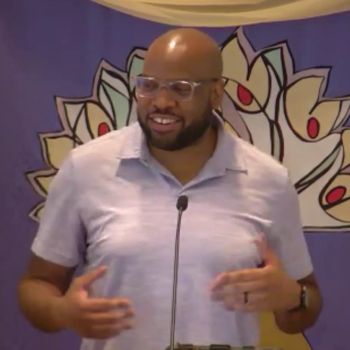
The speaker delivers a Pentecost sermon centered on the Holy Spirit’s power to create inclusive, multilingual community. They begin with gratitude for gathering in person and share a personal narrative about moving to Raleigh, drawing a parallel between their anticipation and the disciples’ waiting in the upper room. The sermon revisits Acts 2, where the Spirit descends as tongues of fire, enabling the disciples to speak in languages they did not know, allowing diverse peoples to hear the gospel in their own heart languages. The speaker contrasts this with the Tower of Babel, where language confusion scattered humanity, and argues that Pentecost reclaims language as a tool for affirmation rather than division. They reflect on historical colonization, noting how separating people from their language erases identity, and thus the Spirit’s miracle is one of liberation. The speaker connects this to their own role as a new pastor in a predominantly white congregation, anticipating that some may see their leadership as surprising or even mistaken. They emphasize that translation is an art, not a science, using the example of Jesus becoming the “sweet potato of life” in a culture without bread. The sermon concludes by urging the congregation to embrace the Spirit’s call to expand their community, communicate God’s deeds in forms people can understand, and ask where the Spirit is leading them in their city during this season of transition. The speaker prays for eternal life through the new wine of the Spirit of communion.
Well, those days everybody doing the right this morning. All right, no demos. Let us pray. Oh gracious God, we thank you for the breath in our bodies. Thank you for another opportunity to gather here as one and right now God. I ask that your Holy Spirit might be both the source and the yield of this little light of mine. And now I pray that the words of my mouth and the meditation of all of our hearts might be acceptable and pleasing in your sight, oh God, our rock and our deemer. In Jesus name, amen. I have been looking forward to this weekend for quite some time. Yes, I'm excited about being with you all in person again as we prepare to enter into and adjust to a new normal. But this weekend is also the first time that our kids were able to see their home for the foreseeable future. They're excited. Okay, okay. Jessica and I drove separate cars up. So we had one driver per vehicle for a drive that takes just over 11 hours. And to avoid the risk of driving drives, we spent the night in Savannah, Georgia. So when I woke up yesterday morning, I felt like a kid on Christmas, except the present that I was most excited about was my kids reaction to their new house and their new rooms. See, there are some people who enjoy road trips and I am not one of them. And so it was that excitement, that anticipation that powered me through the hours long journey, the rest of the way to Raleigh. And I imagine that a similar anticipation sustained the disciples in that upper room on that day of Pentecost. Just over 50 days earlier, their rabbi, their leader, had been captured and executed in one of the most gruesome fashions ever devised. The third day after his burial, they received word that his grave was empty and that he'd actually risen from the day. And in due time, they encountered the risen Jesus. They spent 40 days gleaming from their rabbi once again. And then he descended to his rightful seat at the right hand of the Father. But not before they've received a curious instruction. See, toward the end of Luke's gospel account, which serves as the precursor to the acts of the apostles, Luke chapter 24, right around verse 49, Jesus tells these mostly rural galleons to stay in Jerusalem until they were clothed with power from on high. And this is why they found themselves in that upper room on that day of Pentecost. It is not lost on me that two millennia later, we find ourselves gathered in this upper room on this Pentecost Sunday. Now, perhaps I'm alone in this, but I find myself with a similar sense of anticipation about what awaits this gathering of those who follow Jesus in the days to come. Having tied our fates and our hopes to the promise of the resurrection, we eagerly anticipate the next phase of God's invitation to partnership in this commonwealth of God. And now in the middle of a transition of a servant who loved and led this community well, a leader whose journey called them to a station that took them beyond walking with us daily in this capacity. We wait, sitting in the complexities of transition and grief and excitement and anticipation. We lean into our own upper room moment. What will we look like when we are clothed with power from on high? As the disciples sat in their Jerusalem upper room, the Holy Spirit answered that question and resounding fashioned, loudly, profoundly, and visibly, the Spirit filled their gathering. The text of Acts suggests that something that looked like tongues of fire came and rested on each of them. I wonder if when they saw these tongues of fire resting on them, any of them thought of Moses at the foot of Mount Sinai and countering a God, he hadn't known in a bush that appeared aflame without being consumed. I wonder if Peter, James and John may have recalled their mountain top experience with Jesus being transfigured in front of them as they now witnessed glory to send on the people in this upper room. I wonder if they had the time or capacity to think about these things as the power from on high clothed the people in that room. Because what happens next is a game changer. The people in that room began to speak other languages with no dualingo, no flashcards. They started speaking languages they had it known before. Now Acts chapter 2 verse 5 tells us that Jewish people from all over the known world were living in Jerusalem at the time. You see much like Raleigh and the triangle area, Jerusalem was a city of transplants. A cosmopolitan enclave where perhaps one dominant culture is consistently trying to navigate an ever shifting demographic map. And when they are clothed with power from on high, they are empowered to speak with all of these diverse peoples in their own heart languages. I find that fascinating because way back in Genesis chapter 11 we get the story of the Tower of Babel. And in that story there's only one language in all the earth. And the people of all the earth with one language endeavours to build a monument unto themselves. Their shared language becomes a vehicle for the building of an empire. And God seems to find this problematic. So after God scatters the people physically God confuses their languages. And thus languages become tied to peoples and nations. Now the Bible doesn't document this directly but history and even the Bible's composition over time does bear witness to the idea that to control a tongue is to control a people. The reason that I a descendant of West Africans here in these United States speak fluent English instead of Ego is no coincidence. It is the mark of being successfully colonized to separate a people from their language is to separate them from their story. It is to try to take an eraser to their very identity. And so it seems as though the miracle of the Holy Spirit on the day of Pentecost was one of affirmation. At the Tower of Babel the danger of empire is defeated by the confusion of language. But in the upper room on the day of Pentecost the reign of God is declared and celebrated with the reclamation of language. The power from on high that Jesus tells the disciples to wait for Andrew Rusalom the center of Jewish nationhood was made manifest in the ability to speak in the languages of other people. The Holy Spirit empowers the followers of Jesus to expand their communion beyond their kinsmen. These people from every nation under heaven heard the good news in a way that made sense to them. That is what power from on high enables us to do. It's also worth noting that the people who witnessed this power some of them at least thought that the disciples were crazy. They figured they must be drunk. And I need to let you know that you should expect similar reactions as this mostly white, men and night congregation prepares to move forward with someone who looks and talks like I do as their pastor. But perhaps that is exactly where the spirit of communion is leading us in this moment. Maybe we're called to be multilingual and intercultural in more ways than one. Now for those of you who happen to be bilingual or multilingual you might know that translation is more art than science. And we just don't always have one to one equivalence. And sometimes we have to translate ideas rather than words. The story is told of a missionary in Papua New Guinea who ran into an issue when translating the Bible for the tribe he was served. He comes to John chapter 6 verse 35. I am the bread of life whoever comes to me shall never hunger. Was that this particular tribe did not have bread as a staple of their diet and therefore lack language to make sense of this truth. The solution devised was to render the verse in relation to their diet which leaned heavily on the sweet potato. And so in his translation Jesus becomes the sweet potato of life. I wonder what else Jesus became on the day of Pentecost as the power from on high and power the disciples to speak in languages they had it known. I wonder if Jesus became the fry bread of life or the corn bread of life or the mauduros of life or the cassava or the yam of life. I wonder if having
been empowered by the Holy Spirit for this specific purpose, the disciples were even aware of all of the things Jesus had become in the resurrection. Each of us in this room comes with a different story. My vernacular may be a bit different than yours. My sonic inheritance and rhythm may be a bit asynchronous in your ears, the cadence in which I teach and speak may come across as odd to some, but it is my firm belief that the Holy Spirit has empowered each of us to share this good news, God's good deeds of power, in which ever language, form, or fashion people need in order to make sense of it. The power from on high is the spirit of communion. In some ways, this penta-cost day in the upper room is the day the church was born. And the church is where the Holy Spirit empowers us to reimagine community. The boundaries of this gathering are yet expanding. Has one song implores us, we must draw the circle wide, draw the wider still. Let this be our song. Because that is precisely what the power we've been clothed with from on high equips us to do. The question we've been invited to sit with in this here upper room on this penta-cost Sunday is this what people has the Holy Spirit empowered us to connect with in our own capital city. How have we been inspired to communicate God's good deeds of power to those in need of deliverance, in need of liberation, and in need of salvation? In this season of transition for this group of Jesus followers, where is the spirit of communion drawing us? My prayer is that we might find eternal life fulfilled in this new wine of the spirit of communion. May it be so.
Podcast Summary
Key Points:
The speaker opens with prayer and expresses excitement about gathering in person for Pentecost weekend.
The speaker shares a personal story about driving to Raleigh and anticipating their kids’ reaction to their new home.
The disciples waited in the upper room for the Holy Spirit, as Jesus instructed, before Pentecost.
The Holy Spirit empowered the disciples to speak in diverse languages, reversing the confusion of Babel.
The speaker notes that language control has historically been used to colonize and erase identity.
Pentecost’s miracle affirms diversity by enabling communication in heart languages.
The speaker connects the Pentecost experience to their own transition as a new pastor in a mostly white congregation.
The sermon highlights translation as an art, using the example of Jesus as the “sweet potato of life.”
The Holy Spirit calls the church to expand community and draw the circle wider.
The speaker challenges the congregation to ask who the Spirit is empowering them to connect with in their city.
Summary:
The speaker delivers a Pentecost sermon centered on the Holy Spirit’s power to create inclusive, multilingual community. They begin with gratitude for gathering in person and share a personal narrative about moving to Raleigh, drawing a parallel between their anticipation and the disciples’ waiting in the upper room. The sermon revisits Acts 2, where the Spirit descends as tongues of fire, enabling the disciples to speak in languages they did not know, allowing diverse peoples to hear the gospel in their own heart languages.
The speaker contrasts this with the Tower of Babel, where language confusion scattered humanity, and argues that Pentecost reclaims language as a tool for affirmation rather than division. They reflect on historical colonization, noting how separating people from their language erases identity, and thus the Spirit’s miracle is one of liberation. The speaker connects this to their own role as a new pastor in a predominantly white congregation, anticipating that some may see their leadership as surprising or even mistaken.
They emphasize that translation is an art, not a science, using the example of Jesus becoming the “sweet potato of life” in a culture without bread. The sermon concludes by urging the congregation to embrace the Spirit’s call to expand their community, communicate God’s deeds in forms people can understand, and ask where the Spirit is leading them in their city during this season of transition. The speaker prays for eternal life through the new wine of the Spirit of communion.
FAQs
They drove separately to have one driver per vehicle, which helped avoid the risk of driver fatigue during the long journey.
Jesus told them to stay in Jerusalem until they were 'clothed with power from on high,' which is why they were in the upper room on Pentecost.
He parallels the disciples' anticipation in the upper room with the congregation's own 'upper room moment' of transition, grief, and excitement as they await a new pastor.
He suggests Jesus could become the 'fry bread of life,' 'corn bread of life,' 'mauduros of life,' 'cassava of life,' or 'yam of life,' depending on the cultural staple.
He contrasts Babel, where God confused languages to prevent empire-building, with Pentecost, where the Holy Spirit reversed this by affirming and celebrating diverse languages.
He notes that some witnesses dismissed the disciples as drunk, and he expects similar skepticism as a Black pastor leads a predominantly white congregation, suggesting this may be the Spirit's direction.
Chat with AI
Loading...
Pro features
Go deeper with this episode
Unlock creator-grade tools that turn any transcript into show notes and subtitle files.
 PodcastTranscript AI