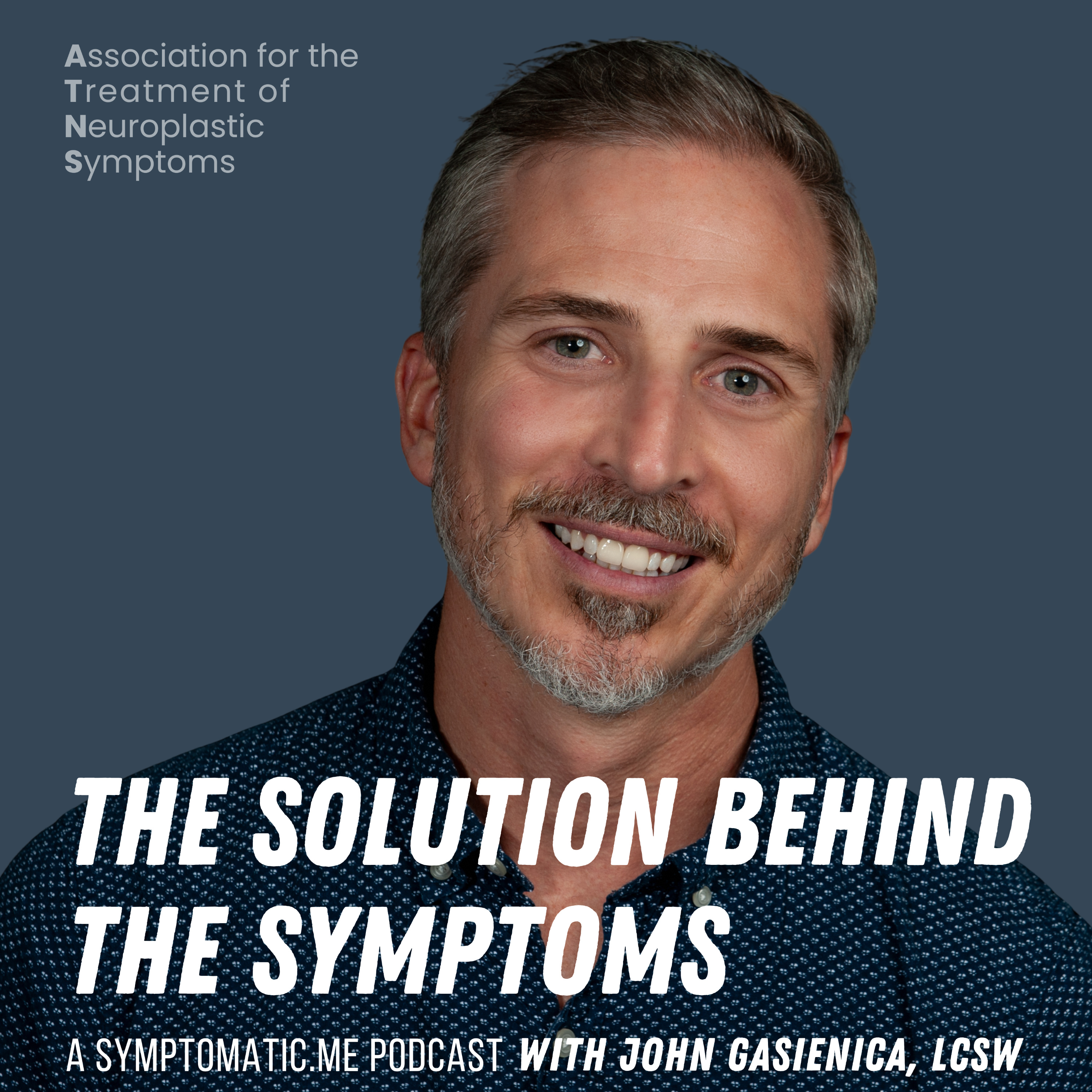
The Solution Behind the Symptoms: Overcoming Pain After Illness and Injury with Becca Kennedy MD
44m 23s
This transcription features a therapy session with Liz, a chronic pain patient who survived breast cancer, and expert commentary from Dr. Beck Kennedy. Liz’s pain began during her cancer treatment in 2006 and has persisted for nearly 20 years, severely impacting her quality of life. Despite being cancer-free, she experiences pain in her hips, joints, and surgical sites, which doctors have treated with medications like benzodiazepines and gabapentin without lasting relief. Dr. Kennedy explains that chronic pain often stems from a hypervigilant brain that learned to associate danger with the cancer experience and continues to produce protective warning signals. Liz’s history includes multiple traumas: her mother’s sudden death, her cancer diagnosis, and the fear of leaving her daughter alone. These events forced her brain to suppress emotions for survival, making it difficult for her to identify or express feelings. In the session, the therapist guides Liz to reinterpret her pain as a safe signal from her brain rather than physical damage. He encourages her to ask her pain what emotions it holds, revealing fear that the pain will never end. The goal is to help Liz’s nervous system re-learn that both physical sensations and emotions are not dangerous, allowing her to relax and reduce chronic symptoms. Dr. Kennedy emphasizes that this approach is evidence-based and applicable to various neuroplastic conditions.
And just check in that sensation in your neck, that sensation in your sip bones. What do those feel like when you feel protected like this? Absolutely neutral in the most amazing way. So completely forgot about any insistent sensations in my body. There are like now I'm just sitting. I don't feel any pain projecting anywhere from sitting. It's absolutely incredible. Welcome to the solution behind the symptoms, a show where expert therapists and doctors help real life patients heal from chronic symptoms. My name is John. I'm a therapist, a researcher, and I'm very proud to be hosting this show and partnership with the association for the treatment of neuroplastic symptoms. We've a great episode today, physician and chronic pain expert, Dr. Beck Kennedy is here to break down a therapy session. I did with the patient whose chronic symptoms started during her battle with cancer. You'll hear her teacher nervous system. How to let go of pain. It's been holding on to for decades. So let's meet my first guest. All right, so joining me today is Dr. Beck a Kennedy. She is a family medicine physician and founder of resilience healthcare, where she helps patients recover from chronic pain, long COVID fatigue and other neuroplastic symptoms using evidence based neuroscience. After more than 20 years in conventional medicine, including leading a long COVID clinic with Kaiser Permanente, she shifted her work toward brain and nervous system retraining approaches that address the root causes of chronic symptoms and help people restore their health and reclaim their lives. Beckett, it's so great to have you today. Thanks, John. It's great to be here. So I love chatting with you because you have this unbelievable wealth of knowledge of just the physical body and then an understanding of how powerful the brain can be and how it can create symptoms. And I brought a patient today. The session we're going to be listening to is a session I did with a patient who beat cancer. She had a very traumatic journey through cancer, but beat it is healthy. But ever since she got her cancer treatment, she's had chronic pain ever since. And she's trying to grapple with this idea of where is this pain coming from. And I would imagine when you have cancer and you've gone through a chemo radiation, you can imagine all this damage being in your body. But we know there's there's millions of people out there who have beaten cancer with chronic pain where it's a neurological issue now. It's caused by the brain. Can you explain how a process going through something like cancer could cause chronic pain? Not in the physical sense, but in the way that it affects your nervous system and neurology. Yeah, absolutely. My gosh, well, first of all, amazing to hear that story. I'd love to hear that that she beat it. Yeah. And really when would we think about the new neuroscience that pain and other sensations is a warning signal, a protective warning signal made in the brain to protect us. Well, if we've been through more danger, then our brain becomes more hyper vigilant or it's really can become more hyper vigilant. So something like cancer is big and scary and can kill us. So that's a huge stressor and a huge danger. And so our brain keeps in place what it's learned from the past and then tries to keep us safe and keep warning us just on this unconscious automatic level. So so certainly going through something like cancer, even though the cancer itself is gone and the actual danger in the body is gone, our brain can certainly get stuck in place just warning us being hyper vigilant. So I got to look at for this. What if I miss that, you know, all of these things. And again, you know, I think what's so important that I talk with my patients is really understanding that this is an unconscious level. It's not that this is necessarily conscious. It might not even be conscious at all, but it's just the unconscious wheels turning in the neural circuit. Fantastic. Yeah, I think that's an important distinction. And for anybody listening, if you haven't been through cancer, you're worried that your pain might be a mixed pain. I'm just paying attention to some of the things we work with with this patient because it can be applicable across all types of diseases and issues. So why don't we get into the first part of the session and we'll take a listen. So Liz, thank you so much for joining us. Why don't you tell me about just some of the things you've been going through with the pain you've been feeling when it started. I think I started off in life as a very everybody would say I was too sensitive and people were cutting the tags out of my clothing and from a very early age. I had back pain as a teenager. I have a curvature in my spine. They gave me a Milwaukee brace, which I couldn't wear. And so I dealt with back pain for many years, but it didn't really get to the point that it was intractable until I was diagnosed with breast cancer in 2006. So, yay me. This will be the 20th anniversary of my diagnosis, which is great, except I've also been living with chronic pain since then. And I had surgery. I had a mastectomy and I had chemotherapy and I had reconstruction surgery. And ever since then, I have had pain. And in the beginning, it was pretty much I had pain from the chemo like in my hips, in my joints and random places that I wouldn't have expected to have pain that weren't necessarily directly related to the surgeries. But I also had pain from the surgeries that very unfortunately was treated rather aggressively with benzodiazepines. It took those for two years because I didn't know what the they weren't even really helping. Finally, I just stopped taking them, which you're not supposed to do immediately. But then I've just been relying on Tylenol and Advil ever since. And now I can't take Advil because it hurts my stomach. I've had injections, steward injections in, you know, I have a neuroma, which is like a scar tissue area that hurts a lot. And I've had physical therapy for pelvic floor type thing, which didn't really help, but it didn't hurt either. But nothing really helps. And although I'm alive 20 years later, my quality of life is probably 10 to 20% of what it was before. And it's affected every aspect of my life, my ability to work, my ability to have relationships, to go out and do things. And I guess I. And what did the doctors told you like they gave you benzodiazepines? What does the medical system said to you about where this is coming? From what you should be doing. I think I've gotten a lot of, you know, like, have you, you know, try this or try this, but in recent years, nobody's really, they just give me different medicines like gabapentin or selexa or effects or things like that. But I can't take those because of the side effects. So I think they pretty much run out of ideas. I'm sure this is a story you've heard a lot, but what are your first reactions just to hear in this one? Yeah, I've got such a common story. So I said, yeah, you know, I mean, first of all, just compassion for, you know, lifetime of probably struggles and then cancer and then ongoing pain and the, the really disability to our life. And then doctors running out of answer, trying lots of medicines and not working and then and then just left with that answers. And it is interesting that if a doctor gives a benzodiazepine, you know, that's a anti-incidie medicines, fantastic to to relax us. But, you know, what would that be treating that's structural? Nothing really. I mean, it treats anxiety. So if anything, if a benzodiazepine helps that it's really speaks more to that it's calming the fear in our brain, rather than treating anything structural in our body. She listed a couple there, like particularly I see patients getting prescribed gabapentin left and right as well. When a doctor prescribes that but can't really tell you where your pain's coming from, how should a patient handle that? Like what should they say? What question should they follow up with? Oh gosh, such a good question. I mean, I've been a physician for 25 years. So we used to prescribe opiates for, you know, decades, never gabapentin, but then once we stopped prescribing opiates, then gabapentin became the new medicine that was just used for everything. And, you know, it's sort of thought to lower the pain threshold. We're sort of neurologically, but it's prescribed for so many different things. I mean, it's prescribed for chronic pain, but it's also sometimes prescribed for anxiety or depression or I've seen it prescribed for insomnia. And, you know, all of these different things and when a medicine is prescribed for lots and lots of different symptoms, you know, really begs the question, what is the chemical mechanism? And, you know, is there like what exactly are we treating? Like what are you treating? What do you think is going on in the body that you think that the gabapentin is treating? And I guess, you know, it's those sort of questions that I think that is important for patients to ask their physician. And if a physician doesn't really know or the answer doesn't really make sense, often the reason for that is because it's a neuroplastic condition. It's happening because of the warning signal in the brain stuck on loop. And there is, you know, there is the idea of central sensitization or where the brain is hypervigilant and over responding to structural changes in the body and sort of the mainstream pain clinics often talk about that and that maybe something like gabapentin is addressing the mechanism in the brain to dial down that over responsive or hypervigilant brain. But I think the other question to ask is really, what are the randomized controlled trials? Like what does that data show? Because our brain is powerful and our brains just normally have placebo responses. Like my own brain develops a placebo response to medicines at times. And that's just what we do and the reason we have the
the scientific method that we have is so that we can really distinguish, is this chemical working because of some sort of independent mechanism or is it working because of a placebo response? And so I think really dialing down and understanding what's the mechanism, what's the research, what's the data to show that that specifically has a reason for being used. So we heard with this patient, she had a mastectomy, she went through a chemo. So we see a lot of the physical issues that have come from our cancer. But in this next section, I want to start diving into psychologically what this process was like for her and to see how that could have affected her nervous system. So let's take a listen. So the pain really started when you got this cancer diagnosis. Tell me about what that process was like for you. You get the diagnosis. What was that like emotionally getting that diagnosis? I was in a relationship with somebody who, it wasn't really, it wasn't a very good relationship. It wasn't terrible, but it wasn't great. And I had a 12 year old daughter at the time who had a few years before I lost her other parent, which was actually her grandmother, my mother. I didn't know a good way to tell my daughter that I had just been diagnosed with breast cancer. And so I think I might have sprung it on her in a way that traumatized her or maybe because she'd lost her grandmother with whom she was right close because my mother lived with us. And I think that that was extremely traumatizing for her. And so her realizing like I could lose my mother and then I would have nobody because I don't have extended family. It was extremely painful and difficult for me. And I was so scared. There wasn't any cancer in my family. I didn't really have any family to rely on. And I had this just very weak relationship that, you know, he was supportive. But not I thought if I die, who's going to take care of my daughter? And then the person you're raising her with, it sounds like they passed away. Were you still in the grieving process of that? So my mother had helped me raise my daughter from the time that she was like an infant to the time when she was seven when my mom died. I didn't even properly grieve my mother's death. She got very ill very quickly. I was actually traveling when she got sick and went into coma. I had to quit my job because I couldn't get childcare. It was, yeah, it was really, really bad. It was an awful time. The bad news is that you went through a string of the significant traumas. The good news is that's why your pain is still here. Your brain learned. We have to just survive the day and we can't deal with these emotions because if you would have felt the grief towards your mother, if you would have felt the actual full terror of your cancer diagnosis. If you would have felt the suspicion of the loneliness that your partner might not stick around, you would have shut down. There's no way you would have survived any of this. So your brain learned how to suppress those for a survival perspective, but it also learned when these emotions come up. It means this is too dangerous or too significant for us to take care of right now. That's the pattern that gets stuck in your brain is that emotions are equal danger because they're not contributing to survival right now. That makes a lot of sense because I had a therapist a few years ago. She would ask me, "So how does that feel?" Try to connect with what emotions something is causing and I can never tell a therapist a feeling. I don't know what a feeling is. It seems like such a simple thing, but I could never connect with my feelings. So we see with Liz, she went through the string of traumas and she now has this response in her nervous system where it's very difficult for her to be in touch with her emotions. On the flip side, people go through significant traumas and instead of being disconnected from their emotions, their emotions feel incredibly intense, almost over all minute times. Can you, from a doctor's perspective, can you talk about how a trauma like this and the emotional response the nervous system has to it, can sensitize the nervous system or cause these pains to persist even in a healthy body? Yeah, exactly. That was so well said, Shannon, wow, so much to deal with. Any one of those things is really hard emotionally on any of us, but to have all of that together and especially the sense of loneliness, isolation, loving her daughter, the fear around, not only the fear of her own death, but then what would happen to her daughter. Just, oh my gosh, every part of that. Then our neural circuits are made. If they are connected with an emotion, especially in emotion like fear, the neural circuit is particularly strong and robust. So if we went through something like, you know, a saber-toothed tiger jumping out of a bush, so fear, the emotion of fear is associated with that, that neural circuit is particularly strong so that we can survive, so that our brain is really good at remembering that. Fear is if we walk past the thousand cute bunnies and flowers every day and maybe have a little bit of joy or that is just not nearly as robust, our brain just doesn't care about remembering that because it doesn't matter for us, survival. So she had the breast cancer, this physical experience happening in her bodies, and not only the breast cancer, but then all of the treatment associated with that. And while that was happening, she had all of these different, incredibly emotionally charged situations in her life. So now the association with what's happening with her body is now being connected with, I mean, even bigger emotions than just the cancer itself, even. And like you're saying, the emotional response in order to express the emotions of what she's going through would be so astronomically huge, it could feel really overwhelming. Add to that, I don't know specifically what her history was. In terms of learning the safety of expressing emotions as a child, but if she was highly sensitive, likely her brain didn't find a lot of safety in that also. So you roll all of that together. And her brain really learns that expressing the emotions is not safe. And then just really keeps her stuck in the hyper vigilant mode. It's something we'll investigate with her later, but we were talking a little bit before I recorded you and I like to nerd out about kind of making these therapies and modalities as elegant and concise as possible for people. And the two things I want the listener home to pay attention to with Liz, as we go into the treatment section of the podcast now is we want to teach Liz two things and Liz has a really good background already of understanding, okay, maybe these pains on peeling aren't damage for my body. It's not the chemo that's still in there that caused issues. It's not the scar tissue. It could be neurology. And so she kind of has this first understanding of reinterpreting her pain as this is just a danger signal from my brain and not my body. And in this next section, we want to teach Liz to start reinterpreting her emotions as safe as well. When you go through a trauma, your brain can start viewing anger and sadness and fear as things that are predicting danger. I got scared and then all of a sudden I had cancer for several years or I got sad and all of a sudden I was in chemo treatment. And so what we're going to go into in this next section is just looking how Liz learns to interpret these two parts of her life through a different lens. So do you resonate with that feeling of like it's hard to just kind of feel relaxed? I don't know how to relax. I can be. So therefore I'm always tired. Holy. Of course. If your brain's never entering a restful state, you're going to be exhausted. Even if you're doing things that are relaxing and theory, it's like the engine's still running when you're in the parking lot. Yes. So that's what we want to work on today. I want you to just close your eyes and I want you to just slow your breath down. Feel your exhale is getting a little bit longer, a little bit slower. And generally when you do this, the reason you can't actually relax is there's a piece of your brain that's saying, I have too much to say right now. You got to listen to me before I'm willing to relax and it's kind of soothing feels like suppression. And so what I want you to do is just notice, where is it in your body right now that your brain's telling you like, I'm not ready to fully settle down. Is it discomfort? Is it a buzzing? What do you notice? Physical discomfort. Good. And what do you feel that physical discomfort? Moment in my neck and in my sit bones. So right off the bat, the first thing we want to do is help you reinterpret that sensation as safe. So right now this is not anything that's wrong with my body. It's just there's some emotions my brain's holding on to that it needs to get out. So view those and I actually want you to speak to those sensations. I want you to ask that sensation in your sit bones right now. What's scary in you right now? What are you frustrated about? What are you sad about? Just see what pops up. Yeah, it's actually it's really interesting that this pain is popping up right now because this pain is identical to the pain that I first felt when I was in chemo. It was like the first pain that was caused by the cancer treatment and besides the surgery and what's coming up is with this pain ever go away. Am I going to have to live with this forever? And I want you to just feel that fear. And what I want you to see if you can do is now that your brain's expressed that question will this ever go away and really our brain talks and statements your brain saying this is never going to go away. Am I right? Question mark? Now that it's expressed that I want you to view this not as an indication that something bad is going to happen, but simply your brain is on a look up for you. This is a part of your nervous system that's trying to help you and see that fear not as a indication that things are going bad. But simply this is a very powerful piece of your nervous system that's looking out for you. Think about all that experience going through cancer treatment. How lonely those aspects were. I want you to think about this piece of you is with you.
you the entire time, on the lookout for danger. And I want you to see if you can actually just kind of let go and almost feel like I have somebody looking out for me. I don't have to fight this, I don't have to stand alert, I have a protector. And how's that feeling you do that? It feels very different. The pain as it was no longer feels as though it's pain per se. It's sort of diffused and become almost a warmth that's spreading throughout my lower body. And it does not trigger, it does not trigger the idea of pain. It just triggers the idea of sensation. Beautiful. So all I want you to do is just feel that warmth. I almost like it's spreading through you. Like this protection is all over your body. And see if you can actually enjoy that sensation. And what's that feel like? It brought me back to like the first time I ever felt safe, which I think was in my mother's arms. Beautiful. So just feel that, remember your mom, and almost feel that warmth as her reaching back out to you. Now I want you to feel this feeling of just letting yourself be inheld. Let yourself be taken care of. And what do you feel emotionally when you think about that? It's a very interesting prior to this conversation today. I had thought to myself was there ever a time when I felt safe. Now I feel like I certainly felt safe when I was in my mother's arms. Go ahead and see if you can just enjoy that feeling. Help your brain tap back into that memory. And I want you to imagine almost like this little clock ticking in the back of your head right now. Each moment that your brain views this sensation not as this feeling like your damage, not as this warning, the something bad's going to happen, but actually this feeling of consoling and this feeling of being taken care of. You're actually able to enter these more restful states. And how's the rest of your body feel as you're like this? Feel warm. And I feel more capable of relaxing like the right side of my body was very tense and now all of a sudden the left side of my body is like I can take some of the weight. And how's that sensation your sup bones feel? It just feels more balanced and it just feels like a sensation and not like pain per se. And so I want you to just take one or two more breaths and just open your eyes. How is that experience? Really interesting. It was really eye-opening. I felt like it showed me a whole realm of possibility of physical experience that I didn't know was possible for me. At first there was a lot of sadness and a lot of fear. And after you you know talk to me more it felt as though I could perceive a sensation not as a threat. And I think I've gotten into a mental habit of every sensation as a threat. Yeah it's very interesting to explore what it feels like to be in this body because it feels like my body is having its mind blown. Like wait a minute you don't have to respond to sitting on the sofa with pain. Like right now the pain where it was hurting at say you know a very high percentage. Now it's close to zero. I still have a sensation because I'm sitting. I can feel my sitbone sitting but it's not sending a pain signal to my brain. There you go. It's like I have a body. I have a body. I have a body full stop. I don't have a body and therefore I'm experiencing pain. So when you see that session can you explain for the listener at home why one list or it's reinterpreting her pain is safe just a sensation and her emotions as not predictors of danger but potentially even helpful loving things come in from her brain. Why does that affect her sensations? Like why does her pain change? It's amazing to to care that and I just love it so much. Yeah so again thinking about that all pain is made in our brain as a protective signal and it's happening through prediction and our brain is updating its predictions really every second of every moment and it takes in all of the information from the world as well as the information from our thoughts and rolls that into the prediction it's making that is what is determining our experience and how we feel which is coming from our unconscious brain. So understanding so her understanding the science that her body is okay that her body heals even if there's scars or if there's contractures or you know something like that from the treatment it's not it's healed. It's no longer damage in the body that her brain needs to warn her about and especially something like just sitting on the couch. So then it's reinterpreting so that that signal is coming from her sits bones for instance going up to her brain and then now it's rolling in different information so it's sort of creating different neural circuits that are rolling in with the neural circuit of the information coming up from the sits bone and and that in that different information is now updating the brain's predictions and so now it's updating the brain's predictions that this is just the normal sensation of the pressure from the couch on normal tissue rather than the brain being hypervigilant around that specific area that we don't have to be hypervigilant. I like the example of going into a hunted house and if your best friend taps you on the shoulder because of the filter of fear you might over-respond to that tap. It's a normalcy signal but our hypervigilant brain is over-responding but now if we expect the tap and we go in again and they tap us again or they tap us again now we can lower down that hypervigilant response and just respond with maybe laughing and smiling and looking at it which completely updates the predictions of how the brain generates our actual felt experience that's happening in our brain. It's great to hear how this process works from you a legitimate doctor because I think a lot of people listening to this will say like this is I want to just remind people what you said before of like this is purely unconscious. This is not Liz in those moments making a decision. I'm not going to have pain anymore. Norez the last 20 years of her life been I'm deciding to have pain. This is a pattern that the brain gets in and if you're feeling doubtful listening to this it's completely understandable to feel doubtful or brain gets stuck in a way of thinking and it and it resists kind of new ways of thinking so everything I tell my patients when I first meet them is like you don't need full confidence or belief that this is real. Yeah. Just start doing some of the exercises. Yeah. Right. In this next section I want to show Liz how to handle those moments when fear takes over her. After her cancer experience and I think this is common with a lot of people who have been to cancer there's this worry of the recurrence of cancer and this worry of are all these environmental factors kind of working against me to cause the cancer to come back. And so in these moments it's not going to be as easy as a therapy session where you're able to feel comfortable and taken care of. I want to show Liz how to handle when life throws at her some moments where she feels scared and she feels some emotions come up and just teach her how to get through those periods in a way that teaches her brain even when I'm scared I can be pain free. And so what I want to go into now is okay what happens when you encounter a situation that throws you back into that survival mode. I want you to think of a time recently where you got really scared or you were kind of thrown into that room and a cycle or even a memory that pops up for you that freaks you out reminds you of really bad things. Anything that comes up that's going to trip your brain up in the future. What comes to mind when I give you that prompt? That exhaust thing when I walk through parking garage and I smell the exhaust it instantly makes me think am I going to get cancer from this. Right. And so I want you to visualize that right now. And that's just one car. I want you to visualize being kind of like an underground car garage where it's just like exhaust filled. And what do you feel when you think about this? What comes up for you? It just gets so scared and almost like panic. Like I have to get out here. So feel that panic. Where do you feel the panic in your body? Kind of like in my chest. Perfect. And so I want you to do a sit bring it on right now. Bring it on that. And this isn't an alarm bell that says you're in danger. This is an alarm bell that says you have this unbelievable protective force in your body that's on lookout for you 24 hours a day. That's what fear is. It's this deep love and compassion your nervous system has for you. I want you to feel that squeeze. Almost as if somebody's there giving you a hug and saying it's going to be okay. I can take over from here and what's coming up for you. We've transmuted the squeeze of fear into a squeeze of protection. I could use my breath to acknowledge that love and compassion that my nervous system has for me. Instead of just constricting it, I could just say, hey, I notice I could I could notice that it's expressing love and compassion for me in that moment. And how does that feel when you do that? It feels I have a lump of my throat because it feels like I'm being done a great kindness or I'm finally able to feel some compassion that I didn't know that it was being directed toward myself and there's a sense of safety in it and protection. And this is what we call a 200% reversal which is now it goes from fear to this not just neutral but this feeling of oh my gosh, I have this compassion and kindness internally and it feels good. And just imagine what that's doing to your nervous system right now. And thought of that had an image when you said that of a tree with its strong branches just branching out over me and protecting me and I don't know just was the image that came up. Yeah, and I want you to imagine
Imagine this strong tree with those branches protecting you. Just keep watching. It's telling you, you can clock off now. You can go relax. I've got the watch tonight. And just imagine watching TV or going throughout your day with this just tree looking out for you so that you can take a break. That was a feel. It feels very, very protected, like profoundly protected, profoundly supported. And just check in that sensation in your neck, that sensation in your sick bones. They're like, now I'm just sitting and I can feel that I'm supported by the little sofa that I'm sitting on. But it is not, I don't feel any pain project anywhere from sitting. And my neck doesn't hurt either. And my back is not hurting. Nothing is hurting. I just feel that I'm sitting. So the last thing I want you to do is just go back to that position of strength. Feel those muscles and all that part of your body. And this is where we want to kind of groove in this new track. Feel that strength. Just enjoy sitting down. And I want you to almost go back to that woman from so many years ago who just got that diagnosis and just let her know, give her these feelings right now. Of in many, many years, you're going to sit down in your couch and your body is going to be perfectly healthy. You're going to have strength in your legs and strength in your neck. And you're also going to have gone through this experience that helps teach you that your nervous system is there for you, caring for you, at all moments you have this protector. And just the final thing to let her know is it's going to be okay. She never would have believed it. She has color. But I'm living proof that it's true. And it's earned truth, right? You know it because you've been through it. Yeah. And I can stamp my foot and say, but look, here I am. You do get through it and you can not just get through it, but thrive. That what you just said there is this idea. Like you didn't just survive cancer to survive. You want to start thriving. And this is how you break out of that survival mode. It's just teaching your brain, okay, the world's safe enough again to start viewing things through this different line. So that's what you're doing. And I want you to take one or two more breaths. And whenever you're ready, just slowly open your eyes and come back to the screen. Why do you think it's important to combine both this work of reinterpreting emotions and reinterpreting the physical sensations? Why is it not often sufficient to just kind of work on one or the other? What about those two together you think makes more of a profound impact on people? Well, first I want to say, oh my gosh, yes, right on. I love hearing that that really what these neuroplastic sensations or symptoms are is protecting us. So they feel terrible. We don't want them, but really just like you guided her, John, is that they are our brain, loving us. They are our brain trying to protect us. And so if we just are focusing on just breaking that fear symptom loop that our body is okay, but we really denying in ourself really that underneath all of it is that love and that compassion. Like the hot's really what makes our survival brain safe is knowing that no matter what, that we love ourself, whether we succeed at things or external things that, you know, that it doesn't have to be based on these external conditions that no matter what, we show our brain that we deserve love and protection and that and and I think that's just so beautiful is really being able to change the sensations from just fear and us fearing the sensations and not wanting them trying to push them away, which obviously we do, but really understanding that they are our brain loving us so that we can actually use the sensation. It's like a road map to follow down to find our own sense of love for ourself. And again, really building and growing inside of us that compassion, having compassion for these often gargantuan debilitating symptoms and being able to meet that with compassion and love for ourself, that's really what reframes and updates the prediction of the sensations. Those people at home who were like me, self or self compassion was kind of like a foreign language. It didn't, it wasn't something I was really taught. I kind of figured out and adulthood. Yeah, how did you, how did you self teach yourself compassion when it didn't feel organic or even honest at first? Well, I think it's really important to understand that what is not familiar feels wrong. And when we're not taught self compassion, when we try to lean into it and bring it in for ourself, it doesn't feel right and our brain tries to reject it. And so I think even just the understanding that I didn't have to, it didn't have to feel right. Like it didn't actually have to feel good, but intellectually, I knew that I deserved it like everybody does. So I find that it's really like anything that it's kind of great at exposure. You're leaning into it and it's you're developing really, I'm not so clinical of me to say this, but you know, you're developing new neural circuits. And so little by little, just being actually present with that discomfort, as you bring in the compassion and love for yourself, and as you keep going with that over and over and over, that's what starts to shift and change it and create the familiarity for your brain until it becomes the default mode. It's interesting like I needed my own personal pain journey for it really to be worth it to teach myself self compassion. Yes. Because otherwise it's just so much easier to just go along with the same unhealthy patterns on our life, but to actually, you know, dive in and do the work to change it. Well, in this last section, Liz just wants to know how to make this as simple as possible. And I talked to a lot of patients about this quote from Mike Tyson where everybody has a plan until they get punched in the face. And so and trauma and PTSD is going to punch you in the face. And unless we make it extremely simple for our patients, it's difficult to remember the plan. So in this last section, Liz just asked me like, what, how do I remember this? And I want to just show people at home just some basic steps they can follow to get in this path. Obviously the session with Liz is fantastic. She's feeling pain free. As we know with our patients and the way the brain works, it's this giant recall machine. This pain free existence she's feeling right now is not going to last. She's going to need rep after rep after rep to practice this and for people struggling at home who haven't had an aha moment like this where the pain dissolves away. I promise you just keep on plugging away at it. And it will become your default state. Dr. Kennedy and I are both people who have had our own journeys where living proof of you just like have to stick with it. Yeah. So let's just take a listen to this last section just to hopefully break it down in a way that people can kind of follow it home and follow in their own journeys. How do I get back to this if I need to? If part of me forgets. I think the best way to do it is to make it very, very simple because when you're in that fight or flight state, it's like complexity is the enemy. And so just think of it as just this three step process. One is expression. So asking those sensations, what are you feeling right now? What's going on? What's causing you to give me this alarm? Are you scared? Are you angry? Are you frustrated? And a lot of times in the beginning it's going to be that consistent feeling of like, is this ever going to go away? But in your brain, express that. And then that second step is reinterpretation. So it's this looking at it from a different angle. What is this fear really? The fear is just this deep carrying my system as for me. We don't get afraid about things we don't care about. And so if you can view it as okay, like I know every instinct of my trauma and my experiences is wanting me to tell wanting to tell me that fear equates to something bad is about to happen. But let me just see if I can change my interpretation of this. Can I view this fear as this protective mechanism? This tree that's branching, that's watching out for me. And sometimes it's going to be anger. Again, another protective mechanism. Why do we get angry? Because we want to fire away out of danger. It's a piece of us that cares so deeply about us. It's willing to do extreme acts of violence to protect us. Again, tree gets stronger. Now it's one of those trees from Harry Potter that like, you know, smashes things. Or a sadness coming up. Well, again, how do we reinterpret this sadness? We'll make it sad about things that are internal state, seeing that we've lost something that we care about deeply. It's trying to sue us through this losing process. And again, view that sadness like you never had an experience to mourn your mother properly because of all that was going through. You'll find as your nervous system comes down a little bit more, sometimes a sadness will pop up from past issues. You'll feel the sadness of missing your mom. And if you can view that sadness is purely, oh my god, my system cares so deeply that I've lost her. You don't get sad about things that you don't love. This is a reflection of how deeply I loved her or pieces of her. And let me just appreciate that. I love that about myself. I love that I care about her. And it rises, it peaks, and it falls like a wave. And then all of a sudden you come out of that experience and your brain fears sadness a little bit less. And so that's a really long-winded way of going through stuff too. Reinterpret. Whatever comes up reinterpret. And then finally three, once you've reinterpreted, just go back and try to sue your system. So that feeling of fear, let it know. Yeah, we're okay. Now that you're feeling in connection with it, you can let it know. Actually, these fumes in this garage, totally fine. I probably breathe gallons of this stuff for however they measure, I don't know, toxins in the air. And I'm incredibly resilient. And I'm going to be okay. And I appreciate you looking out for me.
But we're going to be okay. And what they're starting to call this, which I like this phrasing of this, is this idea of pulling it out of your limbic system. So your limbic system is where these emotions are created. And your neocortex is how we understand the emotions. And so when we create this relationship with the feelings, we're engaging this neocortex which can think rationally and which can kind of guide us. And so it doesn't mean dismiss the limbic system, dismiss the emotions. It just means use the front of your brain to create a synergy with it. And now once you pull it out of your limbic system, you kind of get it into your neocortex, you can kind of metabolize it and break it down. And then move through it. So now that emotion is peaked, it's plateaued and then it's fall down again. And now you can go on throughout your day without this lingering anxiety that's underneath. Does that make sense? It makes excellent sense. It makes so much sense. I can feel it in my bones. Oh, amazing. I have literally no pain right now. What does that tell you? Like, what do you think about that? It tells me that when I feel safe and I'm in a trust, like a trust, where the environment, which I trust you very much and I trust, I'm learning to trust my body and what its, you know, intentions are for me that I can be pain free. The cancer didn't cause your pain, the experience of cancer caused your pain. Wow. That's profound. That is profound. Does it feel true to you? It's absolutely unequivocally true. It was the fear. I mean, there were some mechanical things, but mechanical things heal, right? It was the fear and the ongoing insecurity of my life and the undelt with grief and the undelt with sadness that just didn't have an outlet. And so it got, I could feel it getting stuck inside me and I can feel it now just going somewhere else. Don't know where it's going, but it's going somewhere else. So Becca, it's been so wonderful having you on the podcast today. I want to give you the opportunity in our last few minutes here to just give a message to people who are listening. If it's not cancer, they're going through. If it's just chronic pain, if it's some sort of mixed pain, anything they're struggling with, can you just help people at home? What would you want to leave with them? Yeah. Like, and I love the ending of the simplification of it and anything. This is what you meant, but to be clear is that when she had active cancer and she had pain that was from the cancer, but this is her having chronic, ongoing pain after she's cancer free. She's been cleared by the oncologists, you know, all of that, but she's continuing to suffer. And yeah, I mean, letting, letting the doctors in the oncologist be the ones that are vigilant and hyper vigilant, what, ongoing testing needs to happen because doctors are really good at that and allowing kind of actually the trust in them of getting the screening and the tests that need to, you know, follow up so that your own brain doesn't have to feel like it has to hold on to that every minute of every day. And right. And then really coming down to I love how you said that is kind of the two pieces of letting go that the problem isn't because of the ongoing structural damage in the body, kind of trusting in that and going through all of the rigorous pieces that's important to do that first and then showing up with love and compassion for herself. And I think if there's like you were saying, it can get, it can feel confusing or complex or like all these things, but I think that is really if we can just keep coming back to that and update our brains predictions in the direction of self compassion and love. And that's what the protective signals are is that over time with consistency and time and building and growing that self compassion and that self love can get us there of really finally calming the brain and the nervous system. You see, well, thank you so much for being here today. Yeah, my pleasure. Thank you so much for listening to this, Lucien by the symptoms. I want to give a huge thank you to Liz for sharing a piece of your journey. If you want to hear more about doctor by Kennedy, you can visit her website at resilience-healthcare.com And if you'd like to be a patient on a future episode, message me on Instagram at johng.therapy or answer questions and share tools for my practice. Thanks again.
Podcast Summary
Key Points:
The patient, Liz, developed chronic pain after surviving breast cancer and its treatment, including chemotherapy and surgery, which her brain now associates with danger.
Dr. Beck Kennedy explains that chronic pain often results from a hypervigilant nervous system stuck in a protective mode, even after the original threat (cancer) is gone.
Liz’s pain is linked to unresolved emotional traumas, including her mother’s death, her cancer diagnosis, and fear for her daughter’s future, which her brain learned to suppress for survival.
The therapy session focuses on reinterpreting pain as a non-dangerous brain signal and teaching Liz to see emotions like fear and sadness as safe rather than threatening.
Liz struggles to relax or connect with her feelings, as her brain remains in a constant state of alert, leading to exhaustion and persistent physical discomfort.
Summary:
This transcription features a therapy session with Liz, a chronic pain patient who survived breast cancer, and expert commentary from Dr. Beck Kennedy. Liz’s pain began during her cancer treatment in 2006 and has persisted for nearly 20 years, severely impacting her quality of life.
Despite being cancer-free, she experiences pain in her hips, joints, and surgical sites, which doctors have treated with medications like benzodiazepines and gabapentin without lasting relief. Dr. Kennedy explains that chronic pain often stems from a hypervigilant brain that learned to associate danger with the cancer experience and continues to produce protective warning signals.
Liz’s history includes multiple traumas: her mother’s sudden death, her cancer diagnosis, and the fear of leaving her daughter alone. These events forced her brain to suppress emotions for survival, making it difficult for her to identify or express feelings. In the session, the therapist guides Liz to reinterpret her pain as a safe signal from her brain rather than physical damage.
He encourages her to ask her pain what emotions it holds, revealing fear that the pain will never end. The goal is to help Liz’s nervous system re-learn that both physical sensations and emotions are not dangerous, allowing her to relax and reduce chronic symptoms. Dr.
Kennedy emphasizes that this approach is evidence-based and applicable to various neuroplastic conditions.
FAQs
Pain is a protective warning signal made in the brain. After a major danger like cancer, the brain can become hypervigilant and keep sending pain signals even when the physical danger is gone, due to unconscious neural circuits stuck on high alert.
Gabapentin is often prescribed for various symptoms like pain, anxiety, or insomnia, but its mechanism is unclear. Patients should ask their physician what the medicine is treating, the mechanism behind it, and what randomized controlled trials show to distinguish chemical effects from placebo responses.
Emotions like fear strengthen neural circuits, linking physical experiences with intense feelings. If expressing emotions feels unsafe, the brain stays hypervigilant, keeping pain signals active even after the body heals.
It means understanding that chronic pain can be a learned protective response from a hypervigilant brain, not necessarily a sign of ongoing tissue damage. This shift helps patients address the root neurological cause.
After significant trauma, the brain may suppress emotions as a survival strategy, viewing them as dangerous. This disconnection can keep the nervous system stuck in hypervigilant mode, perpetuating pain.
By recognizing that emotions like fear or sadness are not threats but signals from the brain, and by practicing slow breathing and asking sensations what they need, patients can teach their nervous system that emotions are safe.
Chat with AI
Loading...
Pro features
Go deeper with this episode
Unlock creator-grade tools that turn any transcript into show notes and subtitle files.
 PodcastTranscript AI