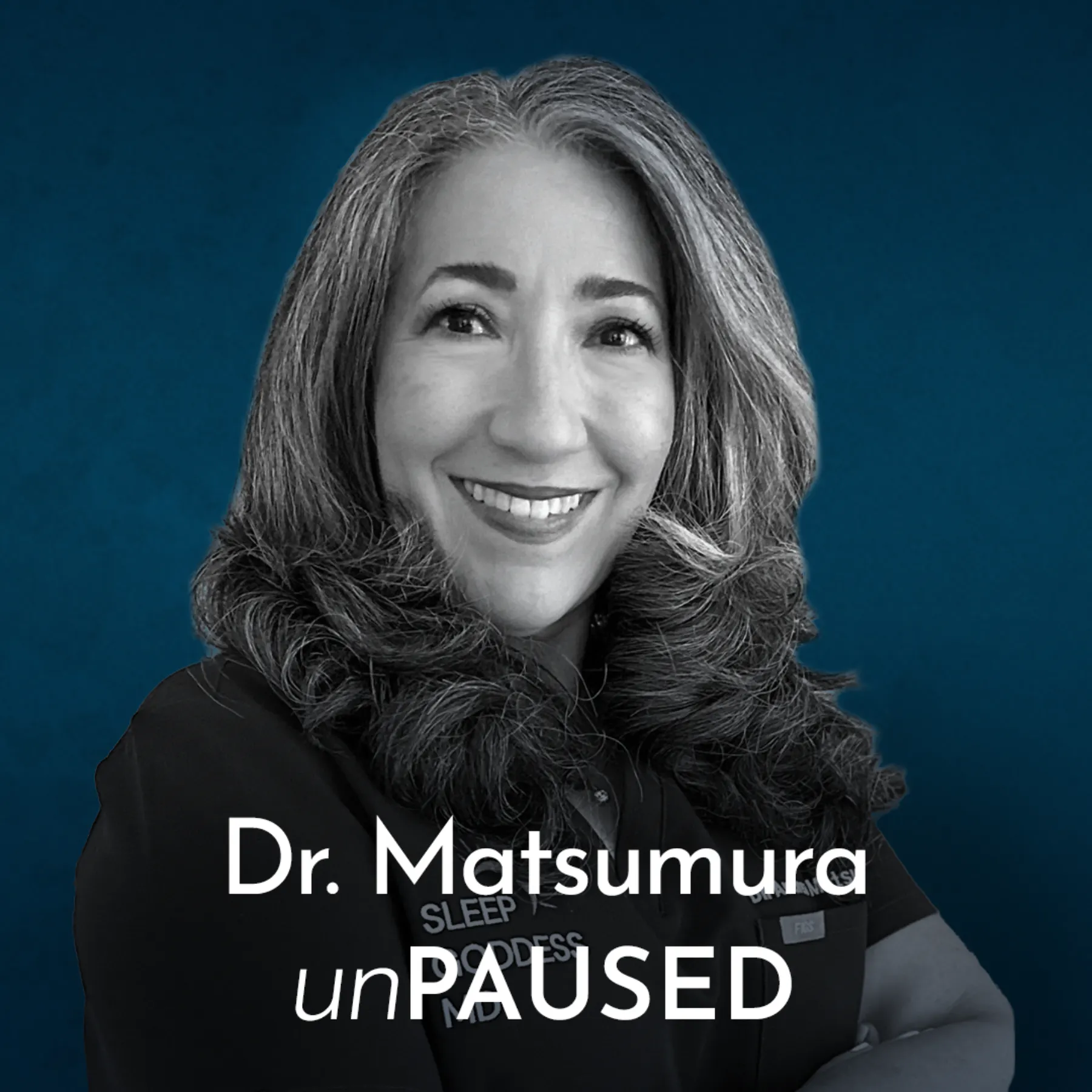
The Sleep Crisis in Menopause: Insomnia, Sleep Apnea & Solutions
79m 47s
The speaker expresses frustration with the societal tendency to minimize women’s sleep complaints, attributing it to a broader normalization of female suffering across life stages—from painful periods and anemia to sleep deprivation during child-rearing and invisibility in menopause. She emphasizes that poor sleep is a serious health issue, associated with increased risks of cardiovascular disease, depression, anxiety, weight gain, cognitive decline, and reduced quality of life. Sleep is described as a vital sign and foundational pillar of health, with quality being more important than quantity. Insomnia affects up to 30% of the population chronically, and sleep apnea often goes undiagnosed in women because it may not involve snoring and screening tools are male-centric. The discussion covers sleep stages: light sleep (stage one), stage two (preparation for deep sleep), deep sleep (stage three for physical restoration), and REM sleep (for emotional regulation). Deep sleep typically occurs in the first third of the night, REM in the latter half. Wearable trackers can identify trends but are not diagnostic; individuals should trust their own perception of sleep quality. The overall message is that women’s sleep problems are real, consequential, and deserve proper attention and care.
Why do you think women's sleep complaints are so frequently minimized? Well, you know, it goes back to, and this is why I do what I do. I am really tired of the normalization of women suffering in society. That is exactly why I'm doing what I'm doing, because we get told from a very young age that our baseline for suffering is higher. We should just suffer through those horrendous menstrual periods that we should be anemic. It's okay, you know, sorry, you're losing a lot of blood. If you have children, well, you're just not going to get enough sleep. Well, you have to take care of somebody else. There is mental load in the working environment, in your home environment. We are taught that we are supposed to suffer more. And then you hit menopause, you hit midlife, and then you become invisible. And then you're supposed to suffer. Well, you know, you don't have hormones now. It's just the way it is. The views and opinions expressed on an pause are those of the talent and guests alone and are provided for informational and entertainment purposes only. No part of this podcast or any related materials are intended to be a substitute for professional medical advice, diagnosis, or treatment. Today's guest is someone I've known and trusted for more than a decade and one of the most important clinicians in my own education as a menopause specialist. Dr. Andrea Matsumura is a board certified sleep medicine specialist who's been shaping the field of women's sleep health long before most of the medical community even recognized how profoundly sleep changes during the menopause transition. When the vast majority of my own patients were coming to me exhausted, wired, anxious, and unable to sleep through the night, Andrea was the first person I turned to. Quite literally, I was taught almost nothing about sleep in medical school or residency. I knew women stopped sleeping during menopause. I knew the complaints were universal, but I didn't understand the mechanisms, the physiology, or the stakes. Andrea is the one who opened that door for me. She helped me understand why even asymptomatic women on hormone therapy can still struggle. She walked me through the neuroindicrant chaos of perimenopause, and when I began digging into the research myself, I was stunned by what I found. Poor sleep is associated with increased cardiovascular risk, depression, anxiety, weight gain, obesity, and pericognition and reduced quality of life. The girls are not sleeping and it's costing them dearly. Andrea has spent her career helping patients reclaim their nights, their energy, their mental health, and their lives. She blends clinical wisdom with evidence-based clarity, and she teaches in a way that makes the science finally make sense. When I decided to develop a sleep supplement for my community, she is the person I trusted to partner with. Her guidance shaped everything from the science, to the formulation, to the practical strategies women can use to finally rest again. Andrea is an extraordinary clinician, a generous educator, and a quiet force behind the scenes who has changed countless lives, including mine. I am so grateful to have her here today to help us understand what is really happening to women's sleep during perimenopause and menopause and what we can do about it. I'm Dr. Mary Claire Haver, a board certified obstetrician and gynecologist and certified menopause practitioner. I'm also an adjunct professor of obstetrics and gynecology at the University of Texas Medical Branch. Welcome to Unpause, the podcast where we cut through the silence and talk about what it really takes for women to thrive in the second half of life. So Dr. Matsumura, welcome to Unpause. Thank you for having me. I want you to tell me a little bit about where you grew up. Tell us about your background. All right. Well, I grew up with my mom living in my grandparents' house. My mom was a teenager when she had me, so she was really young and we grew up together. And I grew up in San Antonio, Texas. And what drew you to medicine? Well, that's a personal story that I don't get to share that often and is taking me a while to kind of wrap my head around it. But my mom and I were both on Medicaid when I was little. And I had a lot of infections like allergies, stuff like that. And it was really hard because we'd go to the ER and we were really treated like second-class citizens. It was a really tough time. And I realized one day, I guess I was about five or six. I had a June bug flying my air. And it got stuck on the tempanic membrane. And that would be the ear drugs to our listening. And I remember going to the ER because I mean it stuck on your ear drum at Hertz, right? And the ER doc was probably a lovely resident like we've all been said, well, how many roaches do you have in your house? And my mom was mortified and she said, we don't have roaches in our house. And they ended up drowning the bug that was in my air, taking it on. And said, huh, it's a June bug. Oh, well. And I remember at that point in my life, I said, I need to not only take care of me, but take care of my family. And I need to take care of all of the people who don't have a voice and who are muffled and silenced and dismissed because this is a terrible experience. And I was really little. So from that point on, I made it my mission to do really well in every science class. So I ended up working on getting my PhD in molecular biology. And it was a snooze fest. Wet bench research is pretty not for everyone. It's slow. And so I ended up finishing that out, getting my masters. And I got into medical school. And then I was off to the races. When were you drawn to sleep? That was later. Yeah. So I was practicing primary care and seeing tons of patients and doing hospital work and outpatient work. And nobody can sleep. The girls, I say this all the time. That's right. The girls are not sleeping. That's right. They're not sleeping. All of my patients. I mean, it's the rare patient who's like, nah, man, I go to bed like, you know, sleep like a rock get up. I feel refreshed. Like that is so rare in my practice. So keep going. Yeah. The girls aren't sleeping. And it's literally breaking our hearts and our brains. So we got to do something about it. Okay. But I got into sleep because nobody could sleep, but it's an afterthought. So after we were done talking about all of the chronic medical conditions, it was this, oh, yeah, can I get something for sleep? I'm not getting enough sleep. So then I started doing more reading about sleep and how important it is. And I thought to myself, wait a minute, I didn't get taught this at all in medical school. I received nothing about sleep, nothing in residency. I was just learning about obstructive sleep apnea and realized, oh, I am missing tons of people who have sleep apnea and tons of people have insomnia. And what's going on here? So then at that point, I left my practice and I went back to school to study sleep and I did a fellowship in sleep medicine. What do you do in a sleep medicine fellowship? There are over 70s different sleep disorders. The one that everybody knows about is obstructive sleep apnea. The one that everybody lives with is insomnia. And I learned that sleep is truly our core pillar of health. That's why I call it a vital sign. Sleep problems are a respect for cardiovascular disease. Like recognizes a high risk factor. I just happened to interview yesterday to Alzheimer's specialist and they both were talking about how critical sleep is for cognitive decline. So it's pretty amazing. I never learned any of that. 100%. I mean, everything that we talk about, exercise, nutrition, how medications work, how are hormones work. If we are not getting the quality sleep, and I like to focus on quality, if we are not getting the quality, not just the quantity of sleep, then everything is off its off bets. I mean, it's just not going to function as well as it should if we are not getting that foundation set correctly. What is insomnia? By definition, insomnia is the inability to get to sleep and/or stay asleep. And you feel like you did not get enough sleep when you wake up for the day. What percentage of the population has this? So at any given time, at least I would say 50%. That's what data says. We'll have some form of insomnia. That's short lived. But up to 30% of the population will have chronic insomnia. And chronic insomnia is again, by definition, the inability to get to sleep and/or stay asleep at least three times a week for at least three months. So you're doing your sleep medicine fellowship. Were you noticing differences between males and females? At that point, I was at the VA. There's a lot of guys at the VA. So it wasn't seeing a whole bunch of women. And we really didn't focus on women's health. So every single
screening tool is really focused on men's health. A lot of the data, I won't say all of the data, but much of the data is focused on population health around men. So I really didn't start to see the connection between women's health and sleep until I actually started going out and practicing sleep medicine. - So explain to our listeners, what does a sleep medicine specialist do? And how would you find one? Like, yeah, it sounds amazing, but you're the first sleep medicine specialist I've ever met in my life. So, I don't practice medicine for a long time. - Yeah, if you're having trouble sleeping, if you're snoring, if you can't get to sleep or stay asleep, a lot of times a primary care doctor will be referring you to someone like me. If somebody has a neuromuscular condition, so anybody who's got any type of neuromuscular condition, like a common one is multiple sclerosis. People will come and see me. If you have an autoimmune disorder, people will come and see me. Women who are pregnant will come and see me because we know that pregnancy, if you have sleep apnea, you're at higher risk for all sorts of potential complications. - What is sleep apnea? - It's basically an oxygen deprivation state. So typically it's obstructive, although there are seven different types of central sleep apnea, but the one that everybody knows about is obstructive sleep apnea. And that is when the back of the throat closes off those soft tissues and you're unable to oxygenate the rest of your body. - And is that snoring? What snoring is? - So snoring is a common symptom, but it is not a common symptom in women with sleep apnea. - So you can have sleep apnea and not snoring. You can have sleep apnea and not snoring. - How would you know you had it? - You don't always know you have it. Even when people are snoring and somebody next to them that is sleeping with them and their bed says, "Hey, you know, you stop breathing, I'm elbowing you, I'm waking you up." Sometimes even that person says, "There's no way I have sleep apnea." So you don't always know that you have it. - So you start your sleep medicine practice. I know you're doing a lot of sleep studies at the time. That's when we were becoming friends. - Yeah. - What is a sleep study? - So a sleep study or a polysomniogram is when we take a look at all of the different stages of sleep. So you have all these little stickies on your head that are, it's an encephalogram. We're looking at the different stages of sleep. When you're awake, we have typically three breathing channels that we're looking at for respiratory effort and oxygenation. We're looking at your heart rate, your heart rhythm, and movement. A home sleep study is modified. It doesn't look at all of the brain waves, but it is generally capturing all of the breathing channels. So you're out there living your best life. When did you start noticing the girls were different? - Yeah. - So as soon as I started my sleep medicine practice, I noticed that women were coming in. You could tell that somebody had said, "I don't know what to do." So and you're not sleeping. So I'll send you to the sleep doctor. And many times women would come in saying, "I just don't feel right." And a common phrase would be, "I don't know if I'm depressed because I'm sleepy or I'm sleepy because I'm depressed." Oftentimes it was women in midlife. And I was in midlife and I was starting to notice that there were subtle changes in my sleep. So this is me, Andrea, I can sleep anywhere anytime in a place and all of a sudden I'm having middle-to-night awakenings. And I'm thinking, "What is going on?" And then I also started having myself irregular periods. And so I started asking women these questions and word gets around fast. So then everybody that was getting an appointment with me was a woman. And then I kind of, - My people. - The women's whisper network became the expert in women's health and sleep. And so then I started digging in and realizing there is a huge connection and we are getting dismissed. And there is no great screening tool to help us identify women who are having trouble sleeping who might have sleep apnea, rest of the excendrome, chronic insomnia. It's like this perfect storm because that's when our hormones are shifting and the explosion around cardiovascular and neurocognitive issues kind of rears it's ugly head for us and sleep can be that hinge that either makes it or breaks it in terms of enabling us to help ourselves around cardiovascular health around neurocognitive function. - So let's go big picture. - Yeah. - Why is sleep such a critical piece here for overall health? - It's like your CEO. It's for your body. So everything hinges on our ability to get into those sleep stages. So we need to have deep sleep. We need to have REM sleep in order for us to kind of clean all the waste products out of our brain for all of our hormones to function in the pattern that it needs to function in to continue to support our circadian rhythm because every single cell runs on its honest circadian rhythm and the master one is the clock genes that are in the brain. - The what genes? - Clock genes. - What are those? - We've got clock genes in the hypothalamus of the brain. We're born with them and they are the pacemaker of the circadian rhythm for all of the other cells in our body to function. - We know that data is showing that poor sleep is increasing the risk, as you said, depression, cardiovascular disease, diabetes. It's talking to me about the women. Why is this so important for them? - Well, because we have the same risk factors once we hit midlife when we're in menopause and we have this delay in our diagnosis. And that sets us up for, we know that cardiovascular health is so important. That's the number one issue. Most women think if you ask them on the street that the number one killer of women is breast cancer, what is the number one killer of women? - It is heart attacks and they just feel like that's bad luck. - I know, it's not. - And it's so intimately involved in our ability to get good sleep because we know that when people have chronic insomnia and it goes untreated and we don't try to treat it, that you have higher cardiovascular risk. - So you've quoted that sleep is foundational. But before we talk about fixing it, which we will, can you tell me what restorative sleep is? There's different kinds of sleeping. You briefly talked about sleep stages. I'd love to dig in here as well. Restortive sleep is when you wake up feeling refreshed. You wake up and you can remember words, connect the dots, you don't have brain fog. - I call it the rainbow and the birds chirping. - You don't feel dysregulated, you're looking forward to your day. - That's what good sleep feels like. As opposed to when you wake up and you say, oh my gosh, I only slept a few hours. I don't know if I'm gonna make it through the day. - So what are the sleep stages? You briefly talked about. - So there's four sleep stages. So stage one is that light sleep. A lot of people will think that they didn't get any sleep at all, but they may have been hovering in stage one and stage two. Stage two is when your body's more or less preparing for the deeper stages of sleep. And fun fact, stage two is what we spend the most time in. So a little word about wearables or tracking devices, that light sleep is stage two is in that light sleep. So a lot of people will think, gosh, I have so much light sleep, but you're supposed to have a lot of stage two sleep. And then there's stage three sleep, which is our deep sleep or slow wave sleep. And that's really the big stage where you have all of the body. Restoring itself, all the physical restoration. And then RAM sleep is when we're dreaming. And dream sleep is really important because that is when we're doing a lot of emotional consolidation. That's that emotional regulation piece. Some memory consolidation also happens during RAM sleep. - So I wear a tracker. And you know, I used to be obsessed. My husband and I were, you know, Chris and I were wake up in the morning and be like, would you get, you know, for our scores? 'Cause not like I'm so competitive. And so according to where I'm much better sleeper than my husband. But you know, what I never understood were the different phases and how much time I spend, most of my deep sleep is early in the night. In the first half of my sleep, is that normal? - That is normal. So that deep sleep or slow wave sleep we're supposed to get in that first one-third of the night. And then RAM sleep is usually in the last half of the night. So we, you know, there's a whole method to the madness, if you will. - Yeah. - And we're fluctuating. - Yeah. - Wow. - Yeah. - We're psych fascinating. - Why? - Your brain goes through these different cycles to kind of clean the brain out. And it's kind of like a dishwasher, right? - Yeah. - So it keeps cycling through so that it's cleaning out all the waste products of the brain and developing and setting the stage kind of cleaning the slate so that you can move.
weight that profession in the morning. We had Luis Nicola on and she talked about the microglia, the small cells and they shrink during deep sleep. And the fluids start pumping through 'cause they can get around and that's cleaning. That's cleaning it out. That's usually in slow-wave sleep. - What is it recommended time? - So the American Academy of Sleep Medicine says that everybody should sleep seven to nine hours and everybody kinda knows her sweet spot. But there is some data coming out that all is not lost if you're not sleeping seven hours. That really, let's focus on the quality and not just the quantity. - What does that mean? - So quality, how would you know? - So we know ourselves better than any tracker. - So I always tell folks, please ask yourself first before you wake up how you feel before you start looking at your data because it primes people. So if you're not thinking about it, or you might say, hey, I got pretty good sleep and then you look at your data and you say, oh my gosh, I got horrible sleep. And then you really wake up for the rest of the day with this perception that you're not getting good sleep. And that's not always true. The trackers are, they're good, but they're not diagnostic tools. So really trust yourself first. - Has anybody come to your office because of a tracker? - All the time. - Good and bad, what would be a positive outcome of a tracker for you? - Positive outcome of a tracker is when somebody notices a trend that something has shifted and it's consistently shifted. - Okay. - And then that's a window for us to then use some diagnostics to kind of figure out like a sleep study or kind of dig deeper, hey, what's really going on with your sleep? But most people come in because they say, my oxygen saturation is going down for five seconds here or there, great. News flash, that's not abnormal. But when should you be concerned about 'cause you're oxygen saturation, should you be concerned about that ever? - If it's consistently low. And again, these are not as accurate. So if it's consistently low and you notice that it's firing off a whole bunch and it's telling you, hey, I think something's going on here, then that's when you should go in to get evaluated. But even my tracker will say that occasionally I have low oxygen saturation, but I know that I don't have sleep apnea because I test myself. And it's very intermittent. But if you see like a sustained window and for women, this is important because women will often have remrelated sleep abnormal breathing. So they will have remrelated obstructive sleep apnea, meaning that they pretty much don't have what we call obstructive sleep apnea and all of the other stages of sleep. But during dream sleep is when they actually start to have low oxygen saturation, some hypoventilation where you cannot oxygenate well. And that could show up on a tracker where you have a little window of time where you were consistently having low oxygen saturation. Okay, talk about hormones and their role in sleep regulation. So we're talking about sex hormones, or the PET hormones. Yep. When we think about estrogen progesterone to testosterone, so estrogen is really helping us with our thermal regulation with our temperature control. It also helps with sleep spindle production, which is part of stage two of sleep. It also then helps with REM sleep. Progesterone is really about, it's got a lot of what we call GABA, GABA, Urgic potential, so it really helps calm the brain. It also helps to support the structures at the back of the throat. So progesterone helps with supporting the airway while we're sleeping. And then testosterone is really helping with that deep sleep, so, and sustaining sleep. So those are kind of the big components of how these sex steroids really affect sleep. This year at the Menopost Society, you were there, right? And the incoming president is a psychiatrist, and he did a presentation on sleep. And at the end, I watched it remotely, and I was very surprised to hear him say, and maybe quoting him incorrectly. At the end of the day, it was like, do not recommend progesterone. Oh, sleep. Will you surprise by that? So I was-- What is the evidence? So, yes. So I was surprised by that. I think what he was trying to say, and I'm giving him the benefit of the doubt, because I didn't get a chance to snag him and say, hey, what's going on here? There isn't any data that says that progesterone is curative for, let's say, obstructive sleep apnea, right? But we all know that it can help with getting women to sleep and calming. I have the thousand patients who will testify right now. 100%. I'm like, we're not asking the right questions. If science is it recognizing how progesterone is helpful for some patients to sleep? And we don't have any studies showing whether or not we add progesterone and estrogen if that helps with sleep apnea. And I get asked that question a lot. Women will ask me over and over again, hey, if I start on menopause hormone therapy, will this help me with my sleep apnea? And we don't know. So let's go back a little broader about sleep. And make sure my listeners understand, when we look at the major causes of sleep disruption or insomnia as an umbrella term, we have patients who struggle to fall asleep. We have patients who struggle to stay asleep. So let's talk about the fall asleep crowd. Why would it be possible to sleep? Why would any patient, especially a woman, struggle to fall asleep? What are the broad categories of causes? Because this is, yeah, there's 70 different causes of insomnia. Right. So 70 different sleep disorders. So the big ones are you have a breathing abnormality. You might have a movement abnormality, or such as what is a move on? So restless like syndrome. So restless like syndrome can affect up to 30% of women in the postman-aposal state. Is that more than men? And that is way more than men. And so I did not know that. And it is, and it is under diagnosed. I just had somebody the day I was at a party, actually. And somebody pulled me aside and said, you know, you were talking about restless like, that is me. And I didn't realize that that is actually what was causing me to have insomnia. So for listeners, what is restless like syndrome? So it is what I call it. So by definition, it is a conscious phenomenon, meaning you have to be awake. OK. So restless like syndrome is the this movement in any limb-- Really? Does it have to be your legs? --doesn't have to be your legs. Could be in your torso. It can be in your arms, your legs. And it's basically this uncomfortable feeling that builds. And you have to move. It dissipates, and then it builds right back up. And it is preventing you from getting to sleep. And then when you're asleep, it's a little bit semantics. There is a condition called periodic limb movement disorder. And that is when limb movements are causing constant arousals and preventing you from getting into the right stages of sleep. There are two separate things, but they're actually on the same. They share like the same-- They're kind of low-sci. Yeah. What? What causes this? Why would someone develop versus like syndrome? So yeah. One common reason is having low iron stores. And well, let's not get me started on that. I had a pregnant patient who's a pathologist and had a horrible LRLS. And she's the one who taught me about the ferritin. Yes. And we were getting her iron transfusions in the pregnancy. Yep. So that wasn't anemic. Yeah. But her low ferritin-- and it worked beautifully for her. And we underutilize iron infusions. Because sometimes it takes a long time with iron replacement to feel-- Or all. Or all. Yeah. I had low ferritin for a long time. Yeah. And I had GI stuff. So very difficult for me to-- It's hard to sort of. And finally, I was like fine. I'll go get the iron transfusion. Life changing. Yeah. Life changing. I recommend them all the time now for patients who are struggling with a solution. Yeah, definitely. And the normal values are not normal if you have recess like syndrome. What ferritin level are you? I just did a whole post on this today. It's so funny. What level are you like? We need to get this higher. So if you have recess like syndrome, your ferritin should be around 100. OK. So ferritin is the iron storage protein. And it drops way before you become anemic. That's right. Right. And in our clinic,
if they have chronic inflammation, so if their set rates high or, you know, we have signs of chronic inflammation, we're not using 60, we're using 100 because it's going to keep phase reactive. - Right. - Here's him will rise abnormally in response to inflammation. So we have to move that goal post from patients. - 100% and also across the sublid rain barrier, that's why you have restless leg syndrome because it has a role in how dopamine gets released. And so that's how it works in the brain. That's why you will have restless leg syndrome. And we've had these levels that are standard that are now changing right for normal. But even then those normal levels are not normal if you have restless leg syndrome. So now the normal range is like 45. - 45. - It was 15. - It's trying to be terrible. - It was terrible. - Yeah. - So you'd have these women coming in who had like a fairytale level of, you know, 10. - You're like, oh, you're bored. - You're bored. Right. It's not really that low. And these people probably, these women should have had iron infusions. - Okay. So we talked about movement disorders. - Let's keep going. - So then you're left with chronic insomnia. And chronic insomnia is when there's not really anything else that could be causing you to not be able to fall asleep. So the other big one is circadian rhythm abnormalities. So let's say you're a night owl, but you really have to get up early because you have to go to work earlier or you've got to get your kids to school or you're taking care of somebody, whatever. The point is that you're not in sync with your circadian rhythm, which again, those clock jeans are in the brain. You can't really change them. It's kind of like eye color. You're born with them. You can fake them out. So that's called circadian realignment when we try to adjust somebody's circadian rhythm. And the other one is, you know, there's lots of reasons why people will have chronic insomnia. One can be your change in hormones. One can be trauma. Another one can be mental health. There's all sorts of anxiety, anxiety, depression, I mean all kinds of things. All right. So what about the patients who go to sleep fine, but then two a.m. three a.m. What is happening? Yeah. That's learned hyper vigilance, especially in midlife. This is a neuro, neuroendocrine, neuro steroid change, right? And so we have a change in cortisol. And sometimes that cortisol spike starts to happen earlier, which causes early morning awakenings. Then your brain basically that that neuro pathway for sleep, it changes. Your brain just says, okay, we're going to learn a new, a new path. And so you develop this hyper vigilance, this, this hyper arousal in your sleep. And that is a behavioral change. This is why it takes time to treat insomnia. And it is not typically fixed with any sort of prescription medication or supplement. How do we fix it? So the, the number one treatment is cognitive behavioral therapy for insomnia. What is it? So it is basically retraining the brain. It's, it's all about behavioral change. It's about addressing and understanding what is causing that hyper vigilance and retraining the brain kind of like building muscle. You know, I always tell folks, you don't just go into the gym and pick up 50 pounds. You can't, right? You have to start slow. You have to be consistent. And then you can eventually pick up that 50 pound way. I also tell people it is not a couch to 5k. It is a couch to marathon. It doesn't happen fast. You know, if you, if you were really pressed, you could probably run, you know, three miles, but you can't run a marathon really easily without training without training. This is about changing somebody's way of thinking and also giving them some ideas on how they can kind of give themselves permission to go back to sleep. How does that look like? What would you, okay, so so me, all right? I'm waking up at 3 a.m. every night and we've ruled out medical causes. I don't have sleep apnea. My hormones are replaced. You know, we haven't put a finger on it. How would you counsel me to do? Is there an app? Do I go to a counselor? Yeah, there's so many different avenues. So there are apps out there. There are sleep psychologists out there. There are online programs. There are books. The key is consistency and you really have to address all of the components that are in kind of behavioral therapy. So it's kind of what we call a three-legged stool. So the first one, most people do a pretty good job at, which is sleep hygiene. But more people, than we think, don't always go to bed at the same time or wake up at the same time. Maybe they're doing things in their daily life that is affecting their ability to get to sleep and they don't even realize it. Maybe they're eating a really heavy meal right before bed. Maybe they're exercising too late. Maybe they are super stressed all day and don't realize that that is going to affect their ability to kind of shut down and get to sleep. So there's that sleep hygiene component. And also, maybe their bedroom is not conducive too hot, too cold, too loud, too bright. And then the other one is addressing the hypervigilance, the stimulus. Like what is causing that middle of the night awakening? And I will tell people, let's develop a plan. Let's figure out how to help yourself get back to sleep and not catastrophize when we wake up. So a lot of us right wake up in the middle of the night and go, oh my gosh, I'm not going to get back to sleep. What's going to happen? Instead, have a plan. Okay, I'm awake and I know I'm not falling asleep, falling back to sleep anytime soon. So I'm going to get out of bed and I'm going to go sit somewhere and do the most god-off-a-born thing I can do, like reading a book or doing some sort of meditation, something that will help induce sleep. So we don't want people cooking, cleaning, working, exercising if they cannot fall back to sleep. And we do want them to get out of bed that is called stimulus control, fancy word for making sure that your brain associates the bed with sleep or intimacy and nothing else. Because if you stay in there for a long time, then your brain starts to think that the bed is like the sofa or the kitchen table. It doesn't associate it with sleep. So you should get up. So you got to get up. It's painful. Pick something like an insomnia chair or whatever you want to call it and just do something really relaxing and boring to help yourself get sleepy enough. And when you're sleepy enough, you go back to bed. The last one is the hardest, but it's it actually works really well, which is sleep restriction. So if you think you're only getting five and a half hours of sleep, then that's how much time you should give yourself. So instead of trying to get into bed at 10, tossing and turning for two hours or falling asleep and then waking up at one and tossing and turning for two hours or whatever and then getting up at six, we tell people, well, if you are only getting five and a half hours of sleep, then let's slowly, we don't just say only get five and a half hours, but we start to help people kind of compress their sleep so that they can then expand their sleep. So I call this the accordion effect. So you know how you have to the only way if you push an accordion in the only way for it to go is out. So that's the same concept is that you kind of have to compress the sleep in order to expand the sleep. So you know, what I will say about kind of to behavioral therapy for insomnia is that there's a lot of data around it. It is successful, but it is pretty rigid and you do have to follow all of the components or you have a lower success rate. And what I find is that there hasn't been a lot of studies on chronic insomnia only in women, right? And so I think it drives a lot of people's anxiety. So you already have some anxiety about getting to sleep. And then it revs up this sleeping anxiety even more. So I like to combine acceptance and commitment therapy with it, which is a different type of therapy altogether where you give yourself, you know, love and grace so that you can actually get up the next day and maybe feel like it's not going to be the end of the world. So maybe you can't fall asleep in the middle of the night and instead of saying, Oh my gosh, I'm not going to do well tomorrow. I've got a presentation or I have to do these things for my children or what have you that you say, you know what? I'm going to be awake for 90 minutes tonight and I'm not going to let it run my day. Maybe I'm not going to fire off on all cylinders, but I'm going to make it the best that I can for the next day. And you start to be kind to yourself. So I call CBTI the grit and acceptance and commitment therapy or act the grace. So if you can combine those two, I think you have a higher success rate. There are very few published studies on this and there are very few sleep psychologists who practice this and combine therapy, but I am that's what how I practice it. That's what I focus on when I help people with insomnia. You've talked a lot about how some of these common sleep conditions like sleep apnea and RLS are missed and women. I learn zero. I know.
part of our less, more as like this curiosity. And sleep apnea was old fat guys, you know. And so, and men who snored. - I think it's important for our listeners to understand the female presentation, the atypical sleep apnea, though we're 51% of the population. Like talk to me about women and how they present with these. - So, and why do we care? - Yeah, we care because it is a cardiovascular risk factor. So, if you have moderate or severe obstructive sleep apnea, we know that you have up to 25% increase in having a heart attack or a stroke or having a neuro-cognitive issue later online. - And is it the primary thoughts for dementia? - Yeah, it's the inflammation. - Yeah, so it's the chronic low oxygen state that then causes all of this reflex physiology in the body that then puts you at risk. So, women don't typically present with loud snoring, witnessed apneas. There's actually a study out there that talks about the fact that if women have a male partner, they're less likely to be identified as having sleep apnea because their male partner will not notice anything abnormal happening in her sleep. But women tend to have insomnia. They tend to have this, they call it tossing and turning. And I love it. Women never say that they snore. They say that they pur. - Yeah, so I love it. Women always say, "I don't really snore. I kind of pur when I sleep." That can be mild snoring that's enough. And the issue is that you don't have to be obese to have sleep apnea. And especially in-- - Especially women, right? - Especially women. You can have normal body mass index. You don't have to have loud snoring. But if you're menopausal, you're at greater risk. And you know-- - So, whoa, menopause increases the risk at sleep apnea. - It does up to 50% of women will have sleep apnea. Not know, they have it. 90% of those women do not know that they have sleep apnea. So, nine out of 10 women are not diagnosed. And then there's a delay in diagnosis because all of our screening tools are gender biased. I mean, the stop being questionnaire, which is this acronym for these questions, the G is gender. So if you're a woman, you don't get a lower score. - You get a lower score. - Stop it. - 'Cause they don't recognize that women have sleep apnea. - Yeah. - Okay. One of my takeaways from all this is, if a woman is snoring and her partner recognizes it or she's purring, she might be further along the course than her male counterpart. - Yeah, exactly. - So if you're snoring at all, you should go get evaluated. - 100%. I have a very low threshold for testing women because again, women come in feeling just generally that I don't feel well. I don't know what's going on. I have brain fog. I can't seem to feel rested when I wake up. I might have some mild snoring. So snoring does increase in midlife, but again, it's not caught. It's not, if it's not big, bad snoring or if somebody isn't watching us have trouble breathing, then many times the connection of a woman might be at risk for sleep apnea, that connection is not made. - A lot of women try to self-medicate. If they're sleep problems and the first thing they usually reach for is melatonin. Talk to me about melatonin, what it is, why it's important. - Melatonin's a hormone. - Okay. - It's got a lot of different uses in our body actually, but the one that we know about the most or the one that's talked about the most is how it starts to set the stage for sleep. So there is this whole concept called dim light melatonin onset. That means in the absence of light, that's when the pineal gland starts to release melatonin. So it's really a clock starter. It is not a sleep aid. It is starting the cascade of sleep, but it is also a circadian rhythm regulator. And what I did not get taught in my sleep medicine fellowship is that we actually lose melatonin production as we age. - Like how much? - Well, up to 50% by age 50, which I had no idea about and I did not realize that the pineal gland is the first gland in the body to calcify. And that the whole stereotype of the older person coming in, - Now the only thing I was taught about sleep is you sleep less as you get older. - Yeah, and that is normal. That is expected. - So maybe it's expected, but should it be normal? I mean, it's part of quote unquote normal aging, but do I have to live like that? Do I have to live with a lower quality of life? - Well, you know, it goes back to, and this is why I do what I do. That is exactly why I'm doing what I'm doing because we get told from a very young age that our baseline for suffering is higher. When if you have children, well, you're just not gonna get enough sleep. Well, you don't have hormones now. Sleep is like horrifically disrupted. - Yes. - Okay, so, and we'll get back to melatonin 'cause I have so many more questions. - Yeah. - But I chose a field of medicine that is a lot of shift-ish work, or staying up late at night, or getting up early in the morning for obstetrics to deliver babies. And it was fine when I was 25. You know, it was fine when I was 35. It was fine when I was 40. But man, in my 40s, it was hitting harder and harder, and I was not rebounding like I should, and I would bring everything to work, so I could perform, and my family was suffering. So, when I was about 48, 49, I was having disrupted sleep from hot flashes when I was going through menopause, or in the early stages before I, you know, realized that HRT wouldn't kill me. I reluctantly went on HRT, and my sleep went back to normal because I wasn't having hot flashes at two in the morning. I then transitioned positions to shift work away from the clinics where I could go part-time. And so I became a hospitalist, and then COVID hit, and I was working 24-hour shifts, three days a week. And I wonder how many years I took off of my life, because I was an absolute basket case for like the last year of that. And I've read that shift workers are at super high risk for medical conditions. Can you talk a little bit about that? - Yeah. - Well, the good news is that you can repair what you were kind of-- - Look, I know. - Because my instructor-- - Do you think I present to myself? - Well, it's no more shift work. (laughing) - There is good data out there that shows that, you know, if somebody has untreated sleep apnea, or untreated insomnia, that once we began to treat it, you can get yourself back to baseline. Okay, but there is data out there that does state that if you're a shift worker, and let's say you are not a night owl, then yes, you are at higher risk for dementia, for cancer. That's because the way that our circadian rhythms work in our body, they rely on our ability to get to sleep at a particular time. It's all about timing, right? And so shift workers have this disruption. And like I said, every cell works on a circadian rhythm. So then every, it's like chaos inside the body. And so our immune system suffers, our ability to clean all the waste products out of the brain suffer. There's so much oxidative stress on the body. And yes, that then kind of is a total setup. - Why are so many women complaining about nightmares with melatonin? - So one, you might be taking too much. - How much is too much? - So I'd say anything over three milligrams. Three milligrams is the max that I would recommend for anyone. You don't really need to take more is not better. - The one I was taking when I didn't know what to do was 10. I was like, this is what is in the bottle. - Yeah. - It's purple, it looks pretty. - Yeah. - I associate purple with sleep. - Yeah. - And I was having horrible nightmares. And sometimes it would help or I'd wake up completely drunk. - Drunk. - You know, like I said, more is not better. And we also don't know what's out there over the counter. There's lots of different brands. There's lots of, you know, some of them are high quality, some of them varying qualities. And there are, there's a couple of studies that were done that showed that at least 70% of the melatonin that is sold over the counter is not just melatonin. - Wow. than else in it.
And so we just need to be really careful. Now, when you do take melatonin, you could even take a low dose of melatonin and have nightmares or intense dreams. And that's because melatonin is what really intensifies dreaming because you're having more sustained sleep. So then you might have more intense dreams. And that intensity might translate into having more abnormal dreaming. Why do I remember some dreams in usually the scary ones versus the had good dreams? Yeah. So, you know, it's all about how the amygdala is reacting when you're dreaming and how you're consolidating and storing the memories. I don't know exactly why somebody is going to remember a nightmare other than the fact that, you know, the way that the brain works when we're dreaming, it almost looks like we're awake. So all of the parts of the brain that are typically asleep and the other stages of sleep actually wake, you know, they wake up. The pet scans show that when you're dreaming, a whole lot of your brain is lighting up. And you know, that might play a role in how we are consolidating the memory, how we're reliving something that might be when something that was really stressful during the day translates into a nightmare because it is subconsciously affecting our ability to get to sleep and stay asleep. So let's talk about solutions and what actually works. Hormone therapy and sleep, estrogen, progesterone, right, and what we know. So we had talked about how the lack of estrogen, then, you know, you tend to have more fragmentation of sleep. It is, it really focuses on thermal regulation. And so if you replace estrogen, then you tend to have more of that temperature regulation, which then allows you to stay asleep, which then allows you to get into all the right stages of sleep and increase your RAM percentage. So that's the plus with estrogen with progesterone when we give progesterone to folks that is also then calming. It helps to set the stage for sleep better and it helps, probably helps. We don't have data with some of that airway protection, but we don't know if it's curative or not. Okay. So you're kind of like calming the brain and then you're preparing the brain to stay asleep, right? And there are some studies that show that testosterone does help with deep sleep. And for some people, testosterone is a missing link, like they still have trouble sleeping, even after they've started on estrogen and progesterone and they're like, okay, let's try testosterone. And that was the missing link for them. It's not as well studied, but it is a potential solution. But up to, you know, at least the third of those folks who start on hormone therapy still have trouble sleeping up to half of those folks still will have trouble sleeping. So then we have to start looking at the other organic causes, right? Like, do you have untreated sleep apnea? Do you have untreated rest of the exendrum? Do you have chronic insomnia? Let's fix that. Let's work together and treat that. And that's where you come in. Yes. Yeah. How do you build the perfect sleep environment? Build me a bedroom. Yeah. You want it to be dark, cool and quiet. Those are your big three. So you don't want extra light. If you need blackout shades, you need an eye mask. I'm a big fan of eye masks. I love a good eye mask. You need an eye mask on your eye too. I did this collaboration with Kailu soak and I love it. And I made little eye, little pads, little pillows for it so that if you wear eyelashes, it doesn't affect your eyelashes. But you know, that tiny little bit of pressure around the eye actually induces calming. So for some people, that can really be helpful. For other people, maybe they don't that's not for them. But you have to figure out what's good for you. Catherine C. Catherine C. Catherine C. I'm asking my daughter. Yeah. Yeah. I don't. I've taken a moment of playing, like, especially in a versey slide. But I, I just worry, you know, I've never slept without. And maybe because I had trauma as a kid, and it was assaulted. But yeah. I sleep with fear that someone's going to touch me and hurt me, you know. 100%. Well, you know, you just brought it up. And so being blind, it scares the hell out of me. You brought up trauma. And that was discussed actually at the menopause society. And it's something that we don't talk enough about or or really bring it up with in the menopause state. But those hormones are actually a little bit protective, you know, they're actually allowing us to power through the day. And when that scaffolding starts to diminish that then you don't have the compensatory mechanisms to power through. And so trauma tends to resurface in midlife when women are going through menopause and it greatly affects her sleep. Wow. That's a big deal that we don't talk enough about. I jokingly or maybe not so jokingly, I carry around a box of tissues with me because every literally every single woman that I see will just break down in tears. Oh, me too. Once we get in an apostolic all day, once we get down to the bottom of everything because a lot of women will not be on hormones because again, we still have a lot of work to do, right? So I'll say let's start with that. And if that isn't going to help with the sleep, then let's start digging deeper. Okay. So for women who can't for a contraindication or choose not to use hormones. Yeah. What are the your top strategies for them? At the end of the day, there's no medication that's going to cure your inability to get to sleep as we talk. There's no medication. Yeah, we haven't talked at all about the sedatives. Yeah. So that's such a Pandora's box. I took Ambien. Yeah. I've taken Ambien when I was doing shift work. My husband went overseas. But I have friends, one of my best friends who cannot sleep without it. Like it is non-negotiable in her life and there's an addiction here. Yeah. Yeah. Yeah. Talk. Let's go there. Okay. So there's again, there's no medication that cures your sleep. And Ambien and those medications like that, the benzodiazepine-like receptor agonist is what I like to call them. They're sedative, hypnotics and anxiety. They're also amnestics, meaning they cause amnesia. Yes. You forget waking up in the middle of the night. I don't know how many people that I've reviewed their sleep study with them and I'll say, "Oh, look, you were awake here for like 45 minutes." I said, "No, I wasn't." Yes, you were. Your brain waves are awake and they don't remember. So their perception is that they're getting good sleep. So these medications taken long-term can be pretty detrimental because if you're still not getting into the right stages of sleep, you still have all those risk factors. What about trasodone? So trasodone. Oh, love trasodone. It's one of those. Is that like a Blescher heart? Come on. I have trasodone. Yeah. Blescher heart. It is used. It's overused. It is labeled as an antidepressant that was a terrible antidepressant and at the doses that it works for depression, you're a complete zombie because you need like 300 to 400 kilograms to treat depression. But they realized that everybody was falling asleep all the time. So trasodone is one of those medications that is used widely. But you really want to get down to the root cause of your problem because what if that medication stops working or there's no medication that works forever. Most people need escalating doses or they need a triad or five things. It used to work and now it's not working. Right. So, yeah. So really you want to get back down to those drivers, those behavioral drivers and maybe it's masking another sleep disorder that you didn't even know you had. So up to 60% of folks who have, abstract asleep apnea have insomnia. That's a condition that's called comisa. So that is the comorbid condition of having sleep apnea and insomnia and maybe you're just treating your insomnia and don't even know that you have sleep apnea and addition. What time should I go to bed? It depends on what your circadian rhythm is set at. So people are either early birds, they're night owls or they kind of fall somewhere in between. Is that your prototype or? Yeah, that's your chronotype. Again, those are clock jeans. Again, we can kind of help you reset them if you will or align them to fit your needs. I am a morning person. You're a morning person. Oh, yeah. I'm a badass in the morning. I mean, I could like cure cancer in the morning and then the minute, like by two in the afternoon, I am just really kind of just functioning and I go to bed typically earlier than most people. So because I'm up at five. Yeah. So you go to bed like it. Nine. It's a shish. Yeah. Sometimes eight birds. Yeah. That's an early bird. Somebody who wants to go to bed at eight, nine, wake up at four, five people who are night owls.
What if you marry someone of the different, what if your life partner, your bed partner is in a different chronotype? What do you do? You have to honor your own growth. (laughs) It's better for your health. So that's interesting. You see that because a lot of women will come in and they try to follow their partner's chronotype because they are people, pleaseers. And they want to go to bed when their partner goes to bed, they wanna wake up when their partner wakes up and they're just dying of chronic sleep deprivation because those folks tend to be more of an early bird and they're staying up way too late with their partner. And the other funny thing is that anecdotally, a lot of people marry the opposite chronotype. (laughs) So let's talk about lifestyle outside of, we're talking exercise, nutrition, all the other pillars of health, how do these play into how we sleep? So when we think about exercise, we know that exercising actually does help you get into all the different stages of sleep better. You just have more sound sleep. So we do want to promote people moving that-- - What kind of movement? - Any kind of movement. As long as you're out there raising your heart rate a little bit, that's all that counts. I mean, if you can go walk fast, you can go swim lanes fast, you can walk lanes in the swimming pool. You can do whatever it takes to help you-- - Don't you want some more as a traffic light? (laughs) - I'm like, I don't get in the pool. (laughs) So whatever it takes to get that dopamine release, it really helps with sleep. And then there is some data that shows that if you eat too heavy of a meal too close to bedtime, that affects your ability to get into the right stages of sleep. - What about the quality of our nutrition? Does that really play in it all? - Yeah, definitely. I mean, if you're eating nothing but greasy junk food, it definitely affects the other parts of your body that then affect your ability to get to sleep. So if you're eating stuff that doesn't allow your stomach to feel good, then that's gonna affect your sleep. High saturated fatty food is not going to be conducive to helping you get into the right stages of sleep. - Okay. Now I've seen a lot of in the wellness world, lots of talk about, and I even have a few of these devices, the red light therapy, morning light. How important is all that? There's some small studies that say that that might be helpful, but these are all new things that have come out. And what I try to do is let's get down to basics. Right? If you try to eat the way that we're supposed to eat with lots of vegetables, fruits, good protein, some carb, and you try to honor your body with exercise and movement therapy, that's really what you need to focus on. I don't want to complicate it too much. You don't need a wearable to get better sleep. You don't need light therapy to get better sleep. This is not about all of the little accessories that we need, right? Sleep is, it's foundational. It's a core thing. We gotta eat. We have to drink water. We have to sleep. Full disclosure, Dr. Matzemur and I and I talked about in the intro have developed a sleep supplement together. So let's talk about supplements with our listeners knowing. Yes, that we know there is a commercial interest here, but let's just talk about it in general. Don't even say what's in our sleep supplement. We talked about melatonin. Yeah. So yes or no, yay or nay. You like it? I like it. I like it. And melatonin, I think there's something to it. We don't have enough research out there that we should absolutely 100% replace it. But goodness, if we are losing that much of it, can we check melatonin levels? And you can in saliva. So there's, there's, there's some tests that you can do to check, to check melatonin levels. Do you check them? No, I don't. So I, I think that sleep support, circadian rhythm support, relaxing your body. Like you've said, it's really important. A sleeping pill. It's not a set. Right. Right. It's not a sedative. It's not a prescription sleep aid. This is about supporting mechanisms that maintain quality. So what else? Any other supplements? Will you reconsider? I don't really recommend supplements, typically, because it's usually really personal, right? Like something that might work, like Valerian route might work for somebody, but may not work well for somebody else. Lemon balm might work well for somebody, but might not work well for somebody else. And it's really difficult then to say, well, you should use, you should use this. What I like to focus on are things that are evidence-based that we have a lot of data on. So we have a lot of data on the components that we put into this sleep supplement. And we know exactly what they are doing. What I find is that when people come to see me, they're having trouble sleeping and they come with an entire shopping bag full of supplements and medications. And I start to say things like, well, I don't think we need to actually take all of these and somebody will say, but I can't sleep without these. And I said, no, wait a minute. You're still here. You're here seeing me because you're still having trouble sleeping. So are they really helping you? Or what's really what's really going on here? So you're still here because you are still not getting sleep and you're taking $150 worth of supplements. So I don't think that they're really helping you or else you wouldn't be here. So for a woman who's been listening and who's exhausted, who's been exhausted for years, what's the first hit step that she, you know, because you are talking to, you know, a couple thousand people on my gas. And there's at least, I promise 20% of them, at least in my pace, in yours, it's 100% of your population population. But in mine, it's close to 50 and it's only men and women who are like, okay, yeah, I'm not sleeping. We need to fix this because I don't want to die. What is she going to do? So the first thing that I do, which is why I carry those tissues is I validate and I say, this is not a you problem. This is not an internal problem. This is something that we can work together. It's just not that something's broken in you. We can help. These are organic chronic insomnia, which is talked about a lot is an organic medical condition. Would you say that it is a predictable, expected consequence of menopause and aging? It's pretty darn common. Yeah. And we need to do something about it and we need to say to women, sorry, you don't need to, you know, you don't need to live with this. And again, that validation, that telling women that they're not broken, that this is not something inherently wrong with them, they didn't cause it is huge. So I start there. I see in my patients that it's happened to me occasionally when you get that middle of the night wake up or you're struggling to fall asleep, I had trouble with falling asleep when I was younger and ended up doing CBT before I realized I was doing it. And you get into that negative spiral in your head, like you were describing it of, oh my god, I'm up shit, you know, I'm not going to ruin everything and why is this happening? It's horrible, you know, you were sitting there spiraling alone in a room struggling so hard, I need to sleep, I need to sleep, I just have to sleep, and I can't sleep. And I think it's affecting our mental health way more than we ever expected. And it takes a toll on someone's ability to maintain positivity, to feel like there's, like there is hope for them. And that's what I tell women, that's the other thing I tell women is there is always something we can do to help you get better sleep. All is not lost. What is one myth about sleep and menopause or just sleep in women in aging in general that you want to debunk? Well, one of them is that you don't have to live with it, we don't have to suffer through it that we can work together, that every 15 minutes counts, that's the other thing. A lot of people get stuck, a lot of women come in and say, well, I'm only getting six hours of sleep or I can only get five. And I'll say, well, let's work on achieving an extra 15 minutes because if you add that extra 15 minutes, time seven times, you know, 12 months, a whole year, that's a whole lot more sleep. So let's focus on the little wins and not have to think that we have to be perfect. You've described sleep as a vital sign. What do you mean by that? So, you know, why do we check vital signs? Because we know that there's screening tools. There's screening tools. We know that there's something that we can do about them. We know that also treating somebody's high blood pressure, treating somebody who has an abnormal respiratory rate, that actually is going to help them with reduction of other medical conditions, right? And so that's why I think that sleep should be a vital sign because again, it is the foundation. It's the core. We could be chasing our tail with high blood pressure if somebody is not getting enough sleep. We could be chasing our tail if somebody has untreated sleep apnea and we didn't realize that they were spending eight hours in bed, but they were only getting five hours of sleep. What gives you hope right now in the field of women's sleep medicine?
This increased awareness and me just kind of ringing that bell over and over again and people like yourself and all of us out there who are taking notice and giving women agency and knowledge to have these types of conversations with their provider. How can someone find a sleep medicine specialist? So you can look online on the American Academy of Sleep Medicine has a list of providers. There are sleep providers in just about every city and I, you know, I think that that's a good place to start. So you developed something called the dream sleep method? Yes. Did my sand that correctly? What is it? So it is an acronym to cover all the different bases that could be affecting your sleep. But I, what I hear a lot from women is that they got told that they didn't have sleep apnea because they had a home sleep study and that there was nothing else that could be done. So, you know, got to figure something else out. So they come to my office and appointments feeling pretty hopeless. So what I realize is that is that there's all of these other factors that could be affecting people sleep that are not really getting addressed. So the dream sleep method is basically an acronym for all of those bases to cover. So D is your daytime activities. So what are you doing during the day that could be affecting your ability to get to sleep? Are you running around? Are you feeding yourself correctly? Are you giving yourself enough water? Are you stressed out all day long and then bringing that into the bedroom? So that's daily activities. That's the D. R is the resting environment. Is your bedroom too cold to hot? Is the mattress uncomfortable? Do you have a TV that you have to have on all night? So what I'm going to do is that there's too much light coming into your bedroom. So you want to make sure that the bedroom is dark, cool and quiet and that you're optimizing that resting environment for sleep. And then E are the emotions. So, you know, are you struggling with depression? Are you struggling with anxiety? Are you struggling with trauma that is affecting your ability to get to sleep and stay asleep? A is archetype or your chronotype. So are you an early bird, but you work a night shift? Are you a night owl or what I call an Aphrodite. So I call Artemis is your early bird. And you're for D. Is your night owl, but you have to wake up really early to get to work or you've got to take kids to school or you've got some other commitment and you are you can't follow your true circadian rhythm. So where are you an Athena, which is basically somewhere in between and you're able to kind of fit into the the societal norm, which we have here in the United States, which is like 10 p.m. to 6 p.m. But knowing which are circadian rhythm is is really important to understand how you get into the right stages of sleep. And last one are medical conditions. Do you have untreated sleep apnea, restless the syndrome, unneuromedical condition, a cardiovascular condition, menopause, all of these things having to get up to pee. Yeah, multiple times at night. That's right. That's actually a risk fact. I have so many urologists refer patients to me because getting up to go to the bathroom in the middle of the night can be a risk factor. Is there anything else you want to tell our audience? Well, I'll just kind of leave again with there is always something you can do to help yourself get better sleep. All is not lost. And that nothing is nothing is wrong with you. There is something that we can do to help you feel better about your sleep. Feel confident again about your sleep. Amazing. Thank you so much for joining us on our pause. You're menopausal now. I'm post. Yeah. I am done. I am done. So menopause for a lot of our listeners, not me anymore. I feel like I am my absolute most badass self now. It feels like the world wants us to hit pause. The world wants us, you know, we tend to be invisible. Women really, really feel invisible. But what are you doing to unpause for yourself? I reinvented myself. This was my reset. And that's that is the one thing I want to leave people with is that even if you've had years of bad sleep, you can still reset and enjoy the rest of the decades that you have left to live. I'm not going to be invisible. I'm going to be heard. And I'm going to raise awareness. And I'm going to help other people know that they have power in themselves. I'm going to help other people who want to promote health and that we have a whole second half of our life to live even bigger and better. Awesome. Thank you so much for joining us on on pause. Thank you. You can find Andrea on Instagram at Dr. Andrea Matsumura and through her website sleepgodisimd.com. You can find full episodes of unpawsed on YouTube at Dr. Mary Claire. I'd love to hear from you about this topic and anything else that's on your mind. You can find me on Instagram at Dr. Mary Claire and get honest, accurate information on health, fitness and navigating midlife at the pauselife.com. My upcoming book, The New Perry Menopause, is available for pre-order on Amazon. If you're loving this podcast, I have an important request. Please take a moment to follow unpawsed on your favorite podcast app. Following and listening is what pushes this information to more women who need it. So if this podcast has helped you feel seen, understood or supported, hit follow right now so you never miss an episode. Thank you for being here with me. Let's keep going unpawsed. Unpawsed is presented by Odyssey in conjunction with pod people. I'm your host, Dr. Mary Claire Haver. The views and opinions expressed on unpaws are those of the talent and guests alone and are provided for informational and entertainment purposes only. No part of this podcast or any related materials are intended to be a substitute for professional medical advice, diagnosis or treatment.
Podcast Summary
Key Points:
Women’s sleep complaints are often minimized due to societal normalization of female suffering, from menstruation to menopause.
Poor sleep is linked to increased risks of cardiovascular disease, depression, anxiety, weight gain, cognitive decline, and reduced quality of life.
Sleep is a vital sign and core pillar of health; quality (not just quantity) is crucial for restorative sleep.
Insomnia affects up to 30% of people chronically, while sleep apnea often goes undiagnosed in women due to lack of snoring and male-focused screening tools.
Sleep stages include light, deep (slow-wave), and REM sleep; deep sleep occurs early in the night for physical restoration, REM for emotional regulation.
Wearable trackers can help identify trends but are not diagnostic; self-perception of sleep quality is important.
Summary:
The speaker expresses frustration with the societal tendency to minimize women’s sleep complaints, attributing it to a broader normalization of female suffering across life stages—from painful periods and anemia to sleep deprivation during child-rearing and invisibility in menopause. She emphasizes that poor sleep is a serious health issue, associated with increased risks of cardiovascular disease, depression, anxiety, weight gain, cognitive decline, and reduced quality of life. Sleep is described as a vital sign and foundational pillar of health, with quality being more important than quantity.
Insomnia affects up to 30% of the population chronically, and sleep apnea often goes undiagnosed in women because it may not involve snoring and screening tools are male-centric. The discussion covers sleep stages: light sleep (stage one), stage two (preparation for deep sleep), deep sleep (stage three for physical restoration), and REM sleep (for emotional regulation). Deep sleep typically occurs in the first third of the night, REM in the latter half.
Wearable trackers can identify trends but are not diagnostic; individuals should trust their own perception of sleep quality. The overall message is that women’s sleep problems are real, consequential, and deserve proper attention and care.
FAQs
Women are taught from a young age that suffering is normal, including during menstruation, motherhood, and menopause, leading to dismissal of sleep issues.
Insomnia is the inability to get to sleep or stay asleep, with chronic insomnia defined as occurring at least three times a week for three months.
Sleep apnea is an oxygen deprivation state, typically obstructive, where the throat closes and prevents proper oxygenation.
Poor sleep increases risks of cardiovascular disease, depression, anxiety, weight gain, and cognitive decline, especially during menopause.
There are four stages: light sleep (stage 1), preparation for deep sleep (stage 2), deep sleep for physical restoration (stage 3), and REM sleep for emotional and memory consolidation.
The American Academy of Sleep Medicine recommends seven to nine hours, but focusing on sleep quality is more important than quantity.
Chat with AI
Loading...
Pro features
Go deeper with this episode
Unlock creator-grade tools that turn any transcript into show notes and subtitle files.
 PodcastTranscript AI