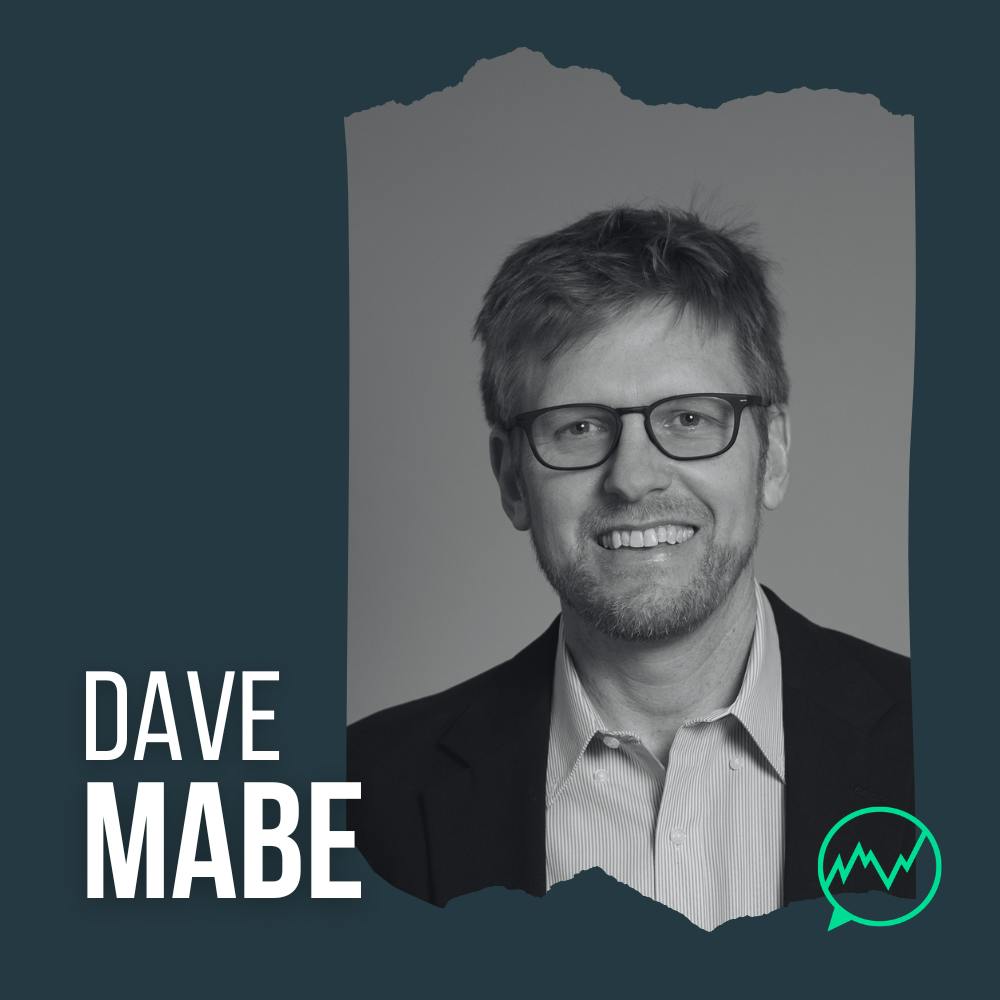
The Shift to Systematic Trading — Building Backtested Confidence
56m 22s
The transcription begins with promotional segments for trading platforms Trade the Pool and Tasty Trade, highlighting features like capped risk, advanced tools, and low commissions. It then transitions into the "Chat with Traders" podcast, hosted by Tessa, which explores market realities and trader psychology. The episode focuses on the emotional difficulties of trading, especially during drawdowns, and features an interview with trader Dave Mabe. Dave recounts his evolution from conservative investing during the dot-com era to day trading, adopting a rule-based "gapping breakout" framework. A pivotal moment was when he backtested his strategy and discovered a systematic version performed better than his discretionary trading, a humbling realization that pushed him toward automation. The discussion covers the importance of position sizing, risk management, and using expectancy (R multiples) to evaluate performance. Dave emphasizes that systematic backtesting helps objectively identify which trades to take or skip, overcoming the limitations of human intuition and emotion, ultimately building a more scalable and confident trading approach.
Chat with traders is brought to you by Trade the Pool. Did you know that every decade the market reinvents itself? Online brokers open the doors. Mobile apps made trading seamless and commission-free trading erased barriers. Now a new era has begun. Meet Trade the Pool, Limited Risk Trading. And now you also have unlimited time to reach the profit target. From now on your trading risk is capped and your trading opportunities are limitless. Trade the Pool funds home-based stock traders with up to $200,000 in buying power. That means you can trade larger positions and scalar strategies without risking your own savings. It's time to trade with more capital, making it truly worth your time and effort. Ready to trade the pool? Click the link in the description and join the stock trading revolution today. Are you ready to get serious about trading? Then join Tasty Trade, Investor PDS best platform for options trading in 2026. Stocks, Options, Futures and more. Tasty Trade has everything you trade all in one platform. Get low commissions, including zero commissions on stocks, so you can keep more of what you earn. Trade's smarter, with advanced charting tools, a pre-built strategy selector, risk analysis tools, and more features. Visit TastyTrade.com/chat for more information. Tasty Trade Inc. is a registered broker-dealer and member of FINRA, NFA and SIPC. Trading in the financial markets involves a risk of loss. Hawke has episodes and other content produced by chat with traders are for informational or educational purposes only and do not constitute trading or investment recommendations or advice. People think that trading automated is, you know, unemotional. There's a lot of emotion in it. It's exactly what you just described there. What do I do here? I'm in this drawdown. What do I do? That's an emotional thing. You're not making the decision during the day about that, but it's definitely an emotional decision. And every trader that ever quit trading did so during a drawdown. Right? They're not quitting at all time highs. So that's the hardest part of trading is having the confidence to trade through a drawdown. Markets, speculation and risk. This is the Chat with Traders podcast. Hey, traders, Tessa here. As always, thank you for tuning into Chat with Traders. You know, since 2015, where one of the longest running long-form podcasts in the world dedicated to trading, we've had in-depth conversations with professional traders and industry experts exploring the realities of markets, speculation, risk. And what it truly takes to achieve sustained performance. Today's episode 318 has another strong example of that. What happens when the thing you believe is your edge, your intuition, gets beaten by your own backtest. Today, my co-host Ian speaks with Dave Mabe, a trader of over two decades who began trading during the.com era, moved from swing trading into day trading and built a rule-based gapping breakout framework centered on defined risk, position sizing and expectancy. But the real turning point in his career wasn't the strategy itself. It was the moment he tested it and discovered a systematic version that outperformed his own discretionary trading. That humbling realization pushed him toward automation, scaling from hundreds of trades a year to thousands, and rethinking how to manage drawdowns and diversification. We also dig into gapping breakouts, our multiples, why traders often misunderstand backtesting the gap between simulation and live results, and how to build real confidence in the system before sizing up. You'll find additional background and resources from Dave in the show notes. Now let's get to the conversation. Ladies and gentlemen, we're so pleased to present Dave Mabe from North Carolina. Dave, I'd like to welcome you to chat with traders. Thanks very much for having me. This is quite an honor. Yeah, so where are you at now and where did you grow up? I live in Carbure, North Carolina, which is just outside of Chapel Hill, which is sort of near Raleigh. I grew up not far away in a small town called Pofftown, which is near Winston-Salem, North Carolina. So yeah, I'm a lifetime North Carolina with the accent too. How did you first get introduced to the financial markets? So my dad was always investing in some way. In fact, we had cattle for a couple of years as an investment. So he was always kind of dabbling around. He was very conservative with money, but always sort of dabbling around and investing and very much a saver and still that mindset in me. So I had to sort of expose to it kind of an early age. And when I went to college, I went to UNC Goheals. I had a modest scholarship at the time. And my dad said, hey, if you get a scholarship, I'll give you the money that we've saved for you when you graduate. So he did that, which was a great idea. I did the same for my daughter. And the first thing I did when I graduated was put it into a mutual fund. So that was my first real trade, so to speak. And over the years, my time frame just got shorter and shorter. But that was my very first interaction with the markets. And were you pleased with its performance over the years? And did you track it frequently? So I held it for about a year. This is right during the dot com era. So it worked pretty well. But I, something in the back of my mind, I felt like I didn't have control. I wanted, I just wanted to be more in control of what was going on. At that point, I started doing a little bit of research and started swing trading. And were you following much of what was going on there in the, in the dot com, media, and what kind of stocks did you get into? You know, growing up with my father, who was, like I said, very conservative. I didn't, I wasn't very risky at all. So like this mutual fund purchase was kind of a big deal. So I knew that my dad, like the more I started inching toward trading, the more he was going to sort of raise his eyebrows and like, what in the world are you doing? This seems so crazy. So I was always very skeptical, very just over prepared. Like thinking through worst case scenarios all the time. But I started swing trading and actually was just following somebody who has given me picks, right? Like a, like a trading room sort of at the time that it worked pretty well. But all of a sudden the guy went on vacation. So there were no stock picks. I was like, well, this is not going to work. Like I can't be relying on somebody's, somebody else's schedule to take trades or not. So that got me just thinking about, okay, what might the next step be? And I remember, I remember a particular trade at the time. I was in, I think it was, I'm pretty sure it was RFMD, which was a local North Carolina company, sort of a darling company at the time and people that I respected were, it's no, yeah, this is a great, a great thing to buy. So I bought some, I think right before earnings and earnings came out, little and behold, they beat earnings and I was like, man, this is going to be great. And then of course the stock tanks. So I'm like, okay, this makes no sense. I'll never be able to predict that. So just like with one trade, I was like, okay, I need to take some other approach that I can really get my mind around and feel like I have some sort of edge. So I didn't, I know I was never going to have an edge in like predicting how the market was going to react to an earnings thing. That just didn't make any sense to me. So at the time, there was sort of a vibrant, a very vibrant trading blogosphere and there are a lot of people sharing different ideas. So sort of dove in there, you know, exchange ideas with some well-known bloggers at the time and came upon this day trading system that they were trading. So I looked closely into that and said, okay, let me see how this would work. And like I said, conservative background. I knew I was going to tell my dad I was going to be day trading now. So I really wanted to cross my teeth, dot all my eyes and really think through, okay, does this make sense? There's a lot of snake oil out there. Let me think through this and make sure I think of every sort of scenario that could happen. A lot of it made sense to me when I started making trade. This is probably 2005, I mean, my first day trade. And I really feel like that was kind of the first real trade I made. You know, the more I've thought about it and the more I was interacting with other people, I was like, well, this makes so much sense because I'm not holding overnight. At the time, there was not much after hours trading. So that's when all the news came out. I knew there was going to be times where I couldn't avoid an overnight gap. It just made a lot more sense. And then plus you have four times you're buying, you know, your equity and buying power, intraday versus overnight. So I was like, wow, this makes a ton of sense to me. And so I started doing that, you know, very cautiously to start. And it worked. [BLANK_AUDIO]
Well, right from the beginning. Define well. How did it perform compared to your previous trading that you had done in the preceding years? So the swing trading I had done was actually it was not bad, but what I realized pretty quickly was it was going to be many months really before I could get enough at bats or enough trades to really see if it works or not, to really convince myself that it works. So that was another thing that drew me to day trading was, okay, I'm going to get a ton of at bats here, the potential for a ton of at bats. I could see much more quickly whether something was going to work or not. And that just really resonated with me. So even though the swing trading was did fine, it did well. I really felt like this was a better path for me. And I could get away from following a guru and really taking full control of what I was doing. So did you go about the stock selection of what to day trade? Did you just wait for this group to tell you what to day trade or did you venture out on your own? So they were trading a very specific system. And I just, I mean, the rules were out there and I just started following the rules and interacting with one of the bloggers who was someone of a mentor at the time for this system. I started trading the system and I would follow up with the trader at the end of the day, say, the mentor, hey, it was a good day or bad day. What do you think about this trade, that trade? So while it was, I didn't realize at the time, but it was pretty systematic. There was a little bit of discretion in there in what trades you would, what names you would put on the list or take off the list based on some intuition. But it was really good to have these rules. Thinking back, like the big part of it was rules that I didn't have to make decisions during the day or that many decisions during the trading day. Humans are just hardwired to do the least profitable thing if you don't have a plan. Now, why is that? What is it about human psychology? Why would we want to do the most unprofitable power? I think that there's just so much emotion with money and the way people think about money and their history with money. You're always wanting to get out early or hold on too long. And coming up with a plan is hard. You have to look at a lot of data and figure out what works across a large number of trades. I mean, just think about how long that takes after hours. Now, if you try to do that during the day when you're in a trade and you've got this, you're seeing your PNL bounce up and down, waiting on you to make a decision. Like you're really coming up with a strategy on the fly, which is really that's just too hard. It's not going to work. It may work for a little bit, but it's just a way harder approach for a lot of people. What were some of the so-called rules or systematic approaches that this group had that you learned early on? I actually trade a version of this strategy still to this day. They're basically trading gapping stocks and looking for a narrowing range after the open, after they're gapping up, looking for, you know, they would get in on a breakout of the range and use a stop on the other side of the tightening range. And then they would just hold all day. And it wasn't, you know, a group, we took all this group, a group of sort of maybe a little too much. It was sort of just a loose conglomeration of blogs at the time, which is kind of a shame that that blogosphere disappeared. I mean, a lot of social media is sort of taken the place of that, but it was a pretty vibrant blogosphere where a lot of people sharing ideas at the time. What was your approach to or what was, what did you learn about position sizing and when or whether to add to a position? That's one of the things that I knew from my research before I even made the first day trade that I had to get position sizing down pat. There was no, it was like non-negotiable. So that's one of the things I was overprepared for is how to compute position size. And that's sort of the, one of the reasons this strategy works is when the range is pretty tight, you get to take a large position size, you're risking the same amount of money. And with the tightening range, you can take a lot of shares. So you end up with these pretty large position sizes and you can make a lot of money on a pretty small move. That's sort of the reason this strategy works. Another thing that I had down pat before I made the trade was the concept of expectancy in our multiples and evaluating your performance in terms of R. So important. And there's just so many benefits to doing that. And this particular strategy lends itself really well to using that approach for evaluating it. And so what were your risk management strategy? Did you just set a stop at a percentage below your current price or was it contingent on what you saw in the charts at that moment? And it would vary significantly. So the setups would come along and materialize. And then the setup would determine the stop distance. And then I had my criteria was, you know, I was going to risk a certain dollar amount per trade. And then over time, as I got more confident, I would raise that over time slowly. Yeah, once the signal came along, there was no discretion about what to do. Okay, you take it with size X. So you traded this one strategy for a while? Are you happy with the performance and just kept milking it until something happened? So I kept trading it and I traded it for probably three or four years. And you know, it wouldn't make money every month, but it was making money each year. And I would notice some things. Like one of the first things that I realized was the people that I was interacting with were essentially trading the same system sort of. But there were days where I would say, okay, here, you know, man, we had a really bad day today. And the other guy would say, oh, I made money. What's what happened? And I realized that, so well, you didn't take trade XYZ. And he would say, no, no, I've got a rule that where I exclude trades like that based on, you know, I think it was like relative volume above three or something. Now, as I go, well, that's interesting. So how'd you come up with that rule? You told me, you know, just basic intuition or, you know, some experience blah, blah, blah. But it made me realize that that's why people who think they're trading the same system can end up with so, so much different results. It's because some people are better at skipping the right trades and taking the right trades, right? So when you see people trading this basically the same strategy and having different results, the strategy is just has a much better way of figuring out which trades to skip and which wants to take. So how often were you taking trades that in retrospect, you felt you should have skipped even though they met the criteria for that strategy? I think the whole name of the game and what I came to realize was that is the entire point like that. That was a path for me to come up with strategies was come up with the initial idea. Not really worry about applying too many rules like you've got a general concept and then figure out what rules to apply to figure out, okay, I'm skipping these, but I'm taking these. And it wasn't until I started back testing where this really dawned on me as a way to really create my own strategies. At the time, this, there was, you know, back testing was a little bit, I would say frowned upon. It didn't reflect reality, so a lot of the people in this group were sort of down on it. What was that? Why would they be down on collecting more data to improve their system? I think they thought that it just didn't reflect reality enough. And probably they had some discretionary intuition that they didn't feel like could be re-created. And that's kind of what I thought too. I would have stocks that would meet the loose criteria. I would sort of use my intuition to say, yes, this one should go on the list. This one shouldn't go on the list. And I was doing that in real time. My assumption was I had been doing this for a while, but doing it, you know, making money with it. So I was like, well, there's no possible way you could capture my awesome intuition with the back test, right? So also the time I was working for AT&T to job on the side. And I was doing a lot of automation work there. So I was doing a lot of development. And the more I did that, the more I realized, you know, back testing makes a ton of sense. Why would I not do that? Why would I not try? I was like, okay, I don't care what these other people are saying. I'm going to try it. I did the work to create my first back test. And I was trying to recreate what I was doing. My thought process was, well, yeah, I've got some discretion in there. But let me see, maybe there's, and whatever back test I come up with, can't possibly be as good as that. But let me see, maybe there's something I can learn to apply to this. So what shocked me was the very first back test I ran was going to be a little bit more
better than my manual trading. Why is that? - I think what I found was just like a methodical way to figure out which trades to skip and which ones to take. And comparing that to my intuition and I was keeping meticulous records of all the trades I was taking. And I was keeping meticulous records of the discretion I was using for, okay, does this meet the criteria, does it not? And does this meet my sniff test? And what I found was my discretion wasn't nearly as good as I thought it was. So I was like, okay, which as you can imagine, it's pretty humbling. Right here. - You were still doing good with it anyway, right? But you thought in your back test it was better? - It was better. So my thought was, okay, well this is crazy. I never thought this would be the outcome. The very first back test I did, that seems insane. But it really opened my eyes to, wow, there's a whole world out here that I'm ignoring by not back testing. And there's paths to new strategies, paths to improve the strategies I'm trading by like really diving in and taking a fully automated approach with how I was trading. - Are you ready to get serious about trading than join Tasty Trade? Investor PD is best platform for options trading in 2026. Get low commissions, including zero commission on stocks so you can keep more of what you earn. Tasty Trade is packed with advanced charting tools, back testing, a pre-built strategy selector, risk analysis tools, and more features to help you trade smarter. See equities and derivatives with high trading volumes, dividends, upcoming earnings reports, and more with their pre-built watch lists. Or create a custom watch list to keep an eye on the companies and sectors that matter to you. Manage your positions with speed and position using active trader mode, one click trading, and smart order tracking. Plus, Tasty Trade's stellar trade desk team offers live support during trading hours if you need it. Visit TastyTrade.com/chat for more info. Tasty Trading is a registered broker dealer and member of FINRA, NFA, and SIPC. Have you ever watched a stock explode in thought? If only I had the capital or sat on the sidelines because your account balance felt too small to matter. Good news with Trade the Pools limited risk platform, you don't need millions or even thousands to start trading the US stock market. Bypass the PDT and tap into over 12,000 US listed equities. From penny stocks to big caps, ETFs, even the newest IPOs, and short anything you like, with zero locate or hard to borrow fees. Start your evaluation, get funded with up to $200,000 in buying power, so you can go big without risking your own savings. And now you can also have unlimited time to reach the profit target. It's a game changer. Not ready to trade yet? Trade the pool offers a free demo and educational resources. Practice on live data, master the platform, and build confidence risk-free before you even pay a cent. Click the link in the show notes to start trading with Trade the Pools capital. So speaking of, so for back tests, what are the essentials in a back test? And how do we know if we're just cramming too many things in the back test, always trying to perfect it and tweak it and what have you? Yeah, it's a bit of an art. I think the best way to approach it is to create a back test that's sort of tangential to what you're already trading. A lot of traders will try to completely replace what's already working. Like maybe they're discretionary trader, they want to completely replace what they're doing. But I don't think that's the right approach. A much better approach is to keep doing what's working, create something from the ground up to be automated. And so that way it's completely additive to what you're doing. And there's not this cutoff point where you say, okay, I'm discretionary now. And then tomorrow I'm gonna be automated with the same thing. I mean, it's like software projects in general, they take way longer than you imagine they will. There's always gonna be problems that come up that you haven't thought about. So there's just a lot of pressure, especially with something that's working already, you wanna cut over. And a lot of discretionary traders work with will, that they don't realize how much intuition and experience they have to create ideas that are automated from the ground up. If you've been able to trade discretionary and you've had some success, you have more intuition and experience that you can draw from than people realize. - So after you did this first back test and you say, wow, this is better than what I'm doing now, did you just run with that, say great, I found the solution and here we go. Let's maybe even increase the position size. - What I did there was, I didn't do it overnight, but I realized, okay, this has to be better than what I'm doing. So I didn't switch overnight, but I did start gradually automating some parts of what I was doing to get closer to that back test. I would automatically compute the position size for a while. And then I would automatically enter my exit orders after entering a position. Then maybe another step would be actually entering the entry orders and have those submitted by the computer, but then have to manually hit transmit in my broker to actually make them live. So there was this whole series of steps that I was going through to sort of get more and more confident so that it wasn't just wake up day one and have the software that I'd written, try to make all the trades with a lot of size, right? That would, I knew enough about software to know that that was not the right approach. - And so how did the early live trading experiences compare to what the back test showed? - There were pretty close, but it's never going to be perfect. And I knew that going in. I knew that having a back test was a great reference, but I also knew that you're never going to get all those fills that the back test can get. But the back test was good enough where I knew that I had a lot of leeway there. So even if I got just some portion of them, it was going to be worth it. At the time I had created a online trading journal, this was the first online trading journal that existed as far as I know, it was called Stockticker. So I had an API for that and I hooked up my software to it. So it was automatically entering trades into my journal with all the slippage accounted for and it gave me a way to very easily do a back test at the end of the day and compare my actual trades to the back test. So I could see in a report that was automatically generated for me, here's the trade you missed that were in the back test. And then I would go back and look and see, okay, well, how could I have gotten that one? Like, could I adjust my entry order to be able to capture that trade that I missed? Like, why did I miss it? It was just this feedback loop that I created for myself that I knew was a path to confidence for me. Because if you think about discretionary trading, it's, you don't really have, your only reference is your experience or what somebody's told you. And it's really important to have a path to confidence. I like to say that it's, you know, trading is not super hard if you're trading with small amounts of money, but as soon as you start really trying to scale up to make lots of money, that's when things get really difficult. Why is that? I mean, the way we shouldn't be the same of, is it because we're trying to trade large sizes relative to these securities? Or I mean, there's a whole list of reasons. That's one of them. But another is just the way you think about money as you trade higher and higher, the numbers get bigger and bigger. It takes a certain kind of mindset to be good with that. And still, at some point, once you reach a certain size, sometimes, you sort of have to earn your keep at that size before you, and spend some time at that size before you can go higher. A lot of times you'll see mistakes that you made earlier kind of crop back up when you go to a higher size. And the mistakes with automated trading are different than discretionary. You know, a lot of traders will try to go completely automated to get rid of their emotional, you know, emotions that they think is affecting their trading. But, you know, there's a lot of sizing mistakes that are emotional and can crop up when even with automated trading. Often I hear people talk about how important it is to do the live training and compare it to the back testing and how often, how different it can be. What are the scenarios that people can use to narrow that difference? Why do you think that some people experience huge differences between the live and the back test and how can we get those two to be more similar? - So it varies a lot by strategy. So some strategies are really fun.
fast, some are slow, and so the differences you see are going to vary a lot by strategy. But there's typically things you can do to get a handle on it and make some adjustments to capture more of the trades that the back test is taking that maybe you're missing live. Really before you make your first automated trade, have a process for reconciling. So you're at least seeing the differences and brainstorming, okay, what could I have done differently here or how can I adjust the entry technique I'm using to capture more of these? So is one back test usually good enough or I mean to get some statistical significance how many would be optimal? Well, I think about it as the number of trades in the back test. And that varies a lot, of course, by strategy. And depending on the number of trades that your signal produces, you may have to go further back in history to create a big enough sample set to really come up with a good strategy for. And those are the things you can vary it by. But in general, the more trades you have in a system, the more profitable it could be. So, and I realized that pretty quickly when I was introducing this automation, it was making no mistakes. All the mistakes that I was making, it was not making. I don't know if you've probably made a trade with a size that has one too many zeros or one too few zeros. You're like, wow, this is, I think the one too few zeros is a lot more frustrating than one too many zeros. So all those mistakes were eliminated. It was getting better fills because it's just much faster than I could have been. It felt like I was coming up on a ceiling discretionarily with how many trades I could take. All of a sudden that went away with automation. So I could take like I was taking. I was just looking at my results recently and there was one year where I took, I don't know, 300 trades and then the next year I took 3000. And it was right around this time that I introduced the automation. So it just opened up so many things for me to think about and it allowed me to use my, more efficiently use the buying power I had in a way that was just great and really resonated with me. How did your performance vary just prior to implementing this and then the year after using your strategy? What was the difference there? I mean, it was probably five times the profit based on this. It was a lot. And it was, I wouldn't think about this at the time, but really I was scaling wide versus scaling up. That's the way I like to think about it. You can have one system and just keep increasing the position size, the better it does and just get bigger and bigger and bigger and bigger. That's what I call scaling up. But then you could also take another approach and scale wide. That's another way to scale your trading business. Just take more trades, find more profitable trades and maybe at the same size, but just take more trades and that's another way to scale. Using the same strategy or I mean, you were very content, obviously, probably with that single breakout strategy, right? Yeah. So I just felt like being able to take more trades would be a better long term approach. So I remember having a significant drawdown one year in this particular strategy and I finally came out of it and I scaled back my size and I ran the back test afterwards and I thought, man, if I had not reduced my size, I would have made a lot more money. And so the next year, the next year, now the drawdown comes, but I was like, no, I've learned my lesson here. I'm not reducing my size because I know that it's going to take me a while to get my size back up when I come out of this drawdown. So I'm not going to reduce my size. And of course, you can imagine what happens. The drawdown just gets deeper and deeper, right? So that was kind of the low point of my career, I'd say, because I almost quit. I mean, here I, you know, imagine, you know, I had this basically, this one strategy and put a lot of work into it. I made a lot of money from it. This is what I was. This is what I did, right? And then I've got this huge drawdown. So I really, I thought about quitting because, you know, here you are doing all this work and you're losing money. That's terrible. I mean, it's a, it's a horrible feeling. So I knew that I needed to come up with some way to have more strategies. So how important is it to find the reason for the drawdowns? You know, when is I don't know why, but the stats say, you know, it happens, you know, good enough. Um, I think the, the more backtesting you do and the longer your backtest window, the better and, and easier it is for you to make decisions about that. And that's another huge difference between discretionary trading and automated trading. You just don't have that reference to see, okay, is this unusual or not? And sometimes there is a, there's a bit of a randomness element to matching the backtest and drawdowns in general. Uh, that's why I say it's a, it's a bit of an art. And as much as people want it to be a science, there's still some, uh, kind of unknowable or something that you just can't produce down to numbers sometimes in, in trading like this. What, what gave you the confidence to stick, stick with it? I mean, did you, um, discover something in a new backtest or did you create a new strategy or was it, did you, I imagine you probably felt tempted to tweak the system, right? Sure. Yeah. I was tweaking the system pretty regularly. I, I think a lot of traders are, aren't quick enough to do that. They get stuck with a certain system and don't want to change it for fear of curve fitting. I see people all the time that are sort of too scared of curve fitting, I think. And as long as I don't think curve fitting is that hard to avoid, but you need to start from a backtest with a lot of trades and each rule you add to the strategy, you need to make sure, I call it, it needs to tell a coherent story. So you need to think deeply about the rules you apply to the strategy and why you're adding them and what makes you think they're going to continue into the future. Yeah. That's a, such a critical piece. You know, I realized during that drawdown, every trader that ever quit trading did so during a drawdown, right? They're not, they're not quitting at all times. Right, right. Do we set the amount of the drawdown, like the percentage in advance, okay, if I have a 10, 15, 20% drawdown, once it hits that level of a drawdown, then I will do this. You pre-plan that ahead of time so that you don't get your emotions involved in. That's definitely helps a lot because like I said earlier, people think that trading automated is, you know, unemotional. There's a lot of emotion and it's exactly what you just described there. What do I do here? I'm in the drawdown. What do I do? And yeah, anytime you can have some sort of pre-planned way to handle that is great. Can you give us a concrete example of back testing a strategy, like just a few of the things that go into that? Right. So the, this original strategy that I traded and I created a back test from, you know, the rules were already, it was pretty much a systematic strategy already. It was just applying the rules to it and realizing that, yeah, I had this discretion involved, but okay, what if I had to trade it without the discretion, what would that have been? So I created a back test and Amma Broker, which is software that I used to back test and trade. And I still use that same software to this day. And then it's just about, you know, clearly defining the rules. And that's, on time, discretion and trade is that's a hard part. But the really good traders really have a keen sense of what ideas are modellable and which ones are discretionary. So they're constantly looking for ideas that could be modellable that they could put to the side and automate and, you know, have that be part of their business. It's helpful to have a programming mindset, but it's not a requirement, especially these days with LLMs and check GBT and such. It's never been an easier time to do back testing. Oh, I see. So do you use AI currently or in the recent years in, and if so, how do you use it exactly? Sure. I use it all the time. I think you've kind of silly to not use it. It's really helpful as a programmer to be able to sort of audit what it does and step in when it's doing the wrong thing. I see a lot of people kind of create spaghetti code using LLMs these days, but because they don't, you need to have a basic understanding of what you're asking it to do. And the better, the more understanding you have of it, the better your outcomes are going to be from using it. So, yeah.
it to create code? I'm have created code for 30 years now, but I absolutely use ChatGPT and Clawed to create code for me now. You mentioned about something about working with traders. I don't know if you've worked with traditional prop traders and some of the challenges that they might have of transitioning to a systematic trading. Yeah, so there are traders that trade with proprietary trading firms that I work with and varying levels. The prop space has changed pretty dramatically over the last several years. I mean, there's a lot more players in the space. Yeah, so I think it's an interesting model. I work with a lot of traders at SMB Capital, which is a well-known firm. Yeah, it's definitely a different mindset to trade prop versus trading your own money. And there's advantages and disadvantages of doing it. But yeah, I think it's an approach that a lot of traders could benefit from and should think about. In some of your earlier videos I saw, you mentioned that the majority of your profits come from shorting. What do you think are the unique practical problems of shorting that back tests often ignore, like, for example, borrow costs, locate availability, hard to borrow spikes, and buy-ins? Sure, yeah, those are definitely issues. The way I think about it is a back test should be like the perfection that you're trying to achieve. You're never going to achieve it perfectly, but I like having a back test that is sort of pristine. So I include commissions in the back test, but I don't try to model slippage directly in the back test. I just know that after the back test, I'll lose somebody to slippage and mistraids, but I'm doing that after the fact. And the same thing with locate costs. You can't predict exactly with your back test what the locate costs are going to be, but that's fine. You can do that after the fact. And depending on the strategy, you may or may not have significant locate costs. So that's going to vary by strategy. So yeah, I just, I find it better to have the back test as sort of this pristine thing that I'm trying to achieve, knowing that I'll never quite achieve it, but I like, I think that's a better approach. A lot of people get stuck trying to model slippage in like the perfect way and try to make their back tests reflect reality exactly, but I think there's sort of a fool's errand. You're never going to be able to model it exactly. But that's fine. You don't need to model exactly. You don't have to have a perfect simulation to make money. And you don't need to have perfect confidence to get alive with something. It's a lot of what you learn when you go live. You know, a lot of people think that their work is done with the back test is complete, but really that's when the work starts. Right. You're going to learn a lot after you even take tiny amounts of, you know, tiny position sizes, trading live. What are some of the a few things that you learn and then what do you do? Do you do more back tests and tweak this and that and like kind of what's that process look like? So there's a there's an economist that goes that works at Duke University. It's got to really get analogy here. He's got a thought experiment that says, okay, let's say you're building a university. You've got plans for the big ornate buildings. You've got plans for your quads, you know, your grassy areas. It's so beautiful. But then where are you going to put the sidewalks? So one thing you could do is you could form a committee of the professors and the students and like have them sort of vote by committee where the sidewalk should go. Or you could hire an engineer to figure out where that should get. Right. But he says, no, there's a much better way to do it. And that's building university, put a bunch of grass everywhere. No sidewalks. Wait two years and then go and look at where the brown spots are formed for people walking and put the sidewalks there. That's where you should put them. So there's a little bit of an analogy there with with trading strategies. A lot of people want to really come up with the perfect back test tweak it to get exactly right. But you're not going to be able to you're missing out on a lot of learning by not going live and trying to make a perfect back test. The quicker you can go live, even at very tiny amounts, the quicker you're going to learn and be able to apply back to your back test some things you discover by seeing the live trades, even at minuscule size. What are some of the common wisdoms that you found that you debunked when you did back testing? You find that there's a lot of BS out there. Back testing, I felt like is a superpower for traders. You don't have to believe you don't have to take things at face value that you hear everywhere. There's all sorts of things that traders say or gurus say that are just completely false. One of my favorite ones is let's say you're in a profitable trade and you're not sure what to do. A lot of people will say, "All right, take half off, move your stop to break even." That's what you should do. Take a partial profit. But if you ever go and do the back test on that and compare it to not taking a partial profit, it's like night and day. You're losing so much money by doing that and not carrying your full position size to your natural exit. You just go and do the back test and see that it's a terrible idea if you do that over and over and over. What about setting stops is what have you learned about that? I learned that stops in general make strategies worse. Of course, they're required to actually for mere mortals to trade a strategy. You have to limit your risk. But one of the things I like doing with the back test is making sure the back test works without stops and targets initially. Run a version without stops. It should work then. It better work then because applying stops which you should always do is going to make that worse. But I like running it without stops because you're going to avoid some of the biases that come with back testing. Using a very tight stop, a lot of times you can make a strategy appear to be good when you use a really tight stop. But in reality, that stop is going to get hit but the back test doesn't suggest that it would. Why is that? It's because the precision on the back test isn't precise enough. But let's say you're back testing on one minute bars and you got a really tight stop in there. Well, on the entry bar, there's the decision you have to make. Are you going to let yourself and the back test get stopped out on the initial bar? Are you going to wait one bar? A lot of traders choose to wait one bar. And if they got a really tight stop that would have gotten hit on that entry bar. And the next bar, it's not going to get reached. So a lot of those trades that you would get stopped out in real life end up looking good in the back test. So having, you know, understanding that is really important. And a lot of traders will say, okay, well, I'll just, I need to create a tick-by-tick back tester. That's the answer. And there's some back testers like that that exist, but it's a really hard and resource-intensive thing to create. So there's a cost benefit analysis there. And you could get by without that extreme level of precision. And as long as you understand how the back test works and how those precision issues will sometimes make the back test look too optimistic. Excuse the last interruption here. This is Tessa. We hope you're enjoying this episode so far. If you love the podcast, please give Chat with Traders the best review you can on whatever platform you're listening from. This will help us to keep the episodes coming. Also, if you haven't subscribed to our email list, please hop on to chatwithtraders.com and click on subscribe so we can keep you posted of information that may be of importance. Thank you. Now back to the Chat with our guest. Do you ever do forward testing? I mean, if so, what are your thoughts on forward testing? I think about forward testing is just taking live trades with really small size. As long as you have a good process for reconciling and noticing where the back test isn't measuring up and why, then you can learn very quickly and you have a much quicker path to confidence. I only know of two ways to gain confidence in a trading system. That's when one is just traded over and over for a long period of time and the other one is back testing. It's a shortcut to confidence. Confidence is really, it's so important because if you don't have confidence in strategy, you're not going to be able to trade it with significant size, which is required to make a lot of money with it. Having a talk a lot about a path to confidence, what is your path to confidence? Why are you not trading the strategy now with your full account size? There's probably good reasons why you're not. Figure out what those are and see if you can get answers for some of those to alleviate those concerns and continue to get more more confident in your strategy. What about like draw downs and say diversification? What are your thoughts on having multiple different strategies?
And so that maybe you have uncorrelated strategies, hopefully, to smooth out that equity curve. - Yeah, that's exactly why I, when I was in that big drawdown, I knew that's what I needed. Like I was too reliant on this particular strategy that could go away. So I knew I needed more strategies, and I needed a much faster way to come up with them. So I really buckle down and created tools for myself to be able to quickly come up with ideas and quickly back to us and then figure out how to create strategies that I could go live with. So that was really a key insight for me. And I see it so frequently now, traders that have one good strategy. They only think harder than coming up with their first profitable strategy is coming up with your second. Because you feel like you have, you feel like you haven't figured out. And you're like, okay, well, I don't care what everybody says. This is working for me now. This is how trading works. And you can't even, you don't even allow, you don't even realize it, but you're not even allowing yourself to think of other ideas. You kind of get fossilized in one way of thinking. But really the way to scale is to add additional strategies and that are uncoordinated. And that's, you know, I see that day in, day out. And, but it is really surprisingly hard for people that have are successful with a single strategy to come up with that second one. - Well, there's, aren't there a lot of strategies off the shelf that one, that's already been created that one could tap into and say, hey, this strategy here looks good. Let me add that. Why is it, why would it be necessary to always have to come up with your own strategy as opposed to adopting one that's already on the shelf? - Because the one that's already on the shelf, probably isn't that good because it wouldn't be on the shelf, otherwise. (laughing) - Well, do they ever come back into the, does a strategy that goes dead for a while, does it ever come back into Vogue, have you ever seen that? - Sure, I see that. I see, you know, the tools that I created for myself are basically give me a way to make adjustments to a strategy over time so that as it deteriorates, I've got a way to apply another rule to get rid of the poorest trades in the system. So over time, I've, so when I go live with the strategy, I've gone through my optimization process where I've selected my rules and then I've selected the set that I'm gonna go live with. But then I continue with the optimization process so I've got another rule kind of in my back pocket so that a few months from now or however long when the strategy goes in drawdown, I can say, okay, I've got, I'm not like caught flat footed. That was the problem with that big drawdown I was in. I was flat foot, I didn't have, I was at a dead end and didn't know where to go. And I never wanted that feeling again. So I keep kind of a rule in my back pocket that okay, here's one that I could apply 'cause I've already done the research for that and I'm not completely starting from ground zero with the strategy at that point. And that's just a much better, it's a much better mindset. For discretionary traders, what's a simple first step toward automation or being more systematized? They can do say this week to get started. Yeah, so I would say brainstorm some ideas that you probably already have beneath the surface related to the strategy you're already trading. Like what's some set of trades that almost meet your criteria but not quite? That's a good area because you're already probably pretty familiar with that universe, figure out how to create a strategy from those. Like come up with just an initial idea and create a back test from it. Get in a habit of coming up with ideas like this and creating a list and prioritizing those ideas for which ones to work on next. A lot of traders have lots more ideas than they realize they do. Great, so to wrap up for those wanting to get into back testing and who are not programmers, any particular software that you'd recommend. I have a free back testing course that goes through the ones I recommend. It's called better back testing. So you can go to betterbacktesting.com and sign up for that. But the ones I'll recommend are on there. Amabrokers, one I really like. Trade ideas, I worked for, I was a CTO for trade ideas for many years. It's great because you don't have to write code and you can do some back testing in it. The other one is real test. Real test is, the only problem is it's daily data only. If you need intraday data and you need a back test on intraday data, then you're not going to be able to use it for that. But yeah, those are the ones I recommend. That's probably the best way to get started. Well, David, I'd like to thank you for coming on chat with traders. Yeah, well, appreciate you having me on up. There were, yeah, there have been many hours where I've spent cycling in my shed, listening to this podcast over the years. So yeah, it's kind of, it's an honor to be on here. Appreciate the invite. Yeah, and how can our listeners reach you? Yeah, the best way is to sign up for that email course is totally free. You'll get emails directly from our personal emails. So and that's better backtesting.com. And yeah, feel free to reply and yeah, I'll read all those emails. Fantastic. Thanks for coming on the show. Thank you. You've reached the end of this episode of chat with traders. But rest assured, there are more episodes loaded with real market insight and zero hype on the way soon. So to stay updated with each great new release, subscribe to the podcast and iTunes. And we'd love it if you leave a rating and review. We'll catch you next time on chat with traders. [MUSIC]
Podcast Summary
Key Points:
The podcast discusses the evolution of trading from online brokers to modern platforms like Trade the Pool and Tasty Trade, emphasizing risk management and technological tools.
A core theme is the emotional challenge of trading, particularly during drawdowns, and the importance of systematic, rule-based strategies over discretionary intuition.
Trader Dave Mabe shares his journey from swing trading to a systematic day-trading approach, highlighting how backtesting revealed automated strategies outperformed his discretionary trading, leading to increased scale and confidence.
Summary:
The transcription begins with promotional segments for trading platforms Trade the Pool and Tasty Trade, highlighting features like capped risk, advanced tools, and low commissions. It then transitions into the "Chat with Traders" podcast, hosted by Tessa, which explores market realities and trader psychology. The episode focuses on the emotional difficulties of trading, especially during drawdowns, and features an interview with trader Dave Mabe.
Dave recounts his evolution from conservative investing during the dot-com era to day trading, adopting a rule-based "gapping breakout" framework. A pivotal moment was when he backtested his strategy and discovered a systematic version performed better than his discretionary trading, a humbling realization that pushed him toward automation. The discussion covers the importance of position sizing, risk management, and using expectancy (R multiples) to evaluate performance.
Dave emphasizes that systematic backtesting helps objectively identify which trades to take or skip, overcoming the limitations of human intuition and emotion, ultimately building a more scalable and confident trading approach.
FAQs
Trade the Pool funds home-based stock traders with up to $200,000 in buying power, allowing them to trade larger positions and scale strategies without risking their own savings, while capping trading risk.
Tasty Trade provides low commissions, including zero commissions on stocks, advanced charting tools, a pre-built strategy selector, risk analysis tools, and comprehensive watchlists for equities and derivatives.
Backtesting helps traders systematically identify which trades to skip or take, often outperforming discretionary intuition, as it provides a data-driven method to refine strategies and build confidence.
Traders often struggle emotionally during drawdowns, as the decision to quit typically occurs then, making it the hardest part of trading to maintain confidence and continue trading through losses.
Dave Mabe moved to automated trading after backtesting revealed a systematic version of his gapping breakout strategy outperformed his discretionary trading, leading him to scale from hundreds to thousands of trades annually.
The Chat with Traders podcast features in-depth conversations with professional traders and industry experts, exploring markets, speculation, risk, and the realities of achieving sustained trading performance.
Chat with AI
Loading...
Pro features
Go deeper with this episode
Unlock creator-grade tools that turn any transcript into show notes and subtitle files.
 PodcastTranscript AI