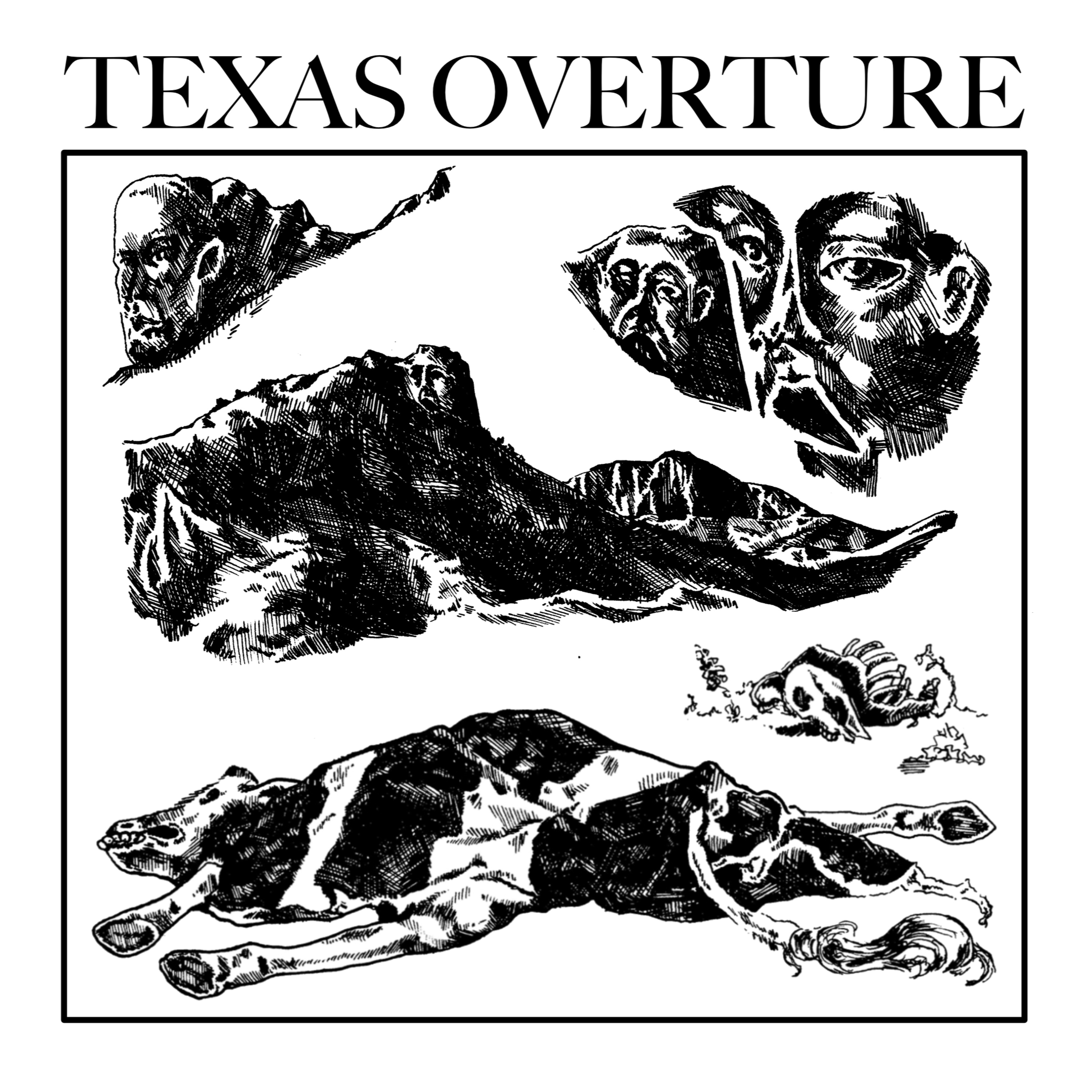
The podcast "Texas Overture" examines paranormal phenomena in Texas, with a focus on the Olmos Basin in San Antonio. The hosts discuss Whitley Strieber, a famous UFO author who wrote "Communion" about his alien abduction experiences. In his 1997 book "The Secret School," Strieber recounts childhood events from 1954 when he was nine years old. After a vision of a shadowy figure telling him to "remember the telescope," Strieber met poet Alene Carter at a museum. He became obsessed with her observatory and, while recovering from polio, sneaked out to her house. There, he was transported to a "secret school" in the Olmos Basin, where a group of children gathered around a large, baobab-like tree under the guidance of a figure called the "Sister of Mercy." At this school, Strieber experienced time travel, witnessing ancient Rome, the creation of Earth, and futuristic technologies. The hosts visited the Olmos Basin and found the tree, which remains a tangible landmark. They note that Strieber's later involvement with the Gurdjieff Foundation, which focuses on achieving higher consciousness, parallels these early experiences. Additionally, other witnesses, such as Ron McAddy, have reported UFO sightings in the same area, indicating a pattern of strange activity around the Olmos Basin. The hosts emphasize that their goal is not to prove or disprove these events, but to explore their phenomenological and mystical context within Texas.
[Music] I can feel high-fives. What's up? Nothing much. I'm gonna lead us off with an excerpt of a poem. Oh, where all leads for what all is and why? Is there no answer through the breathless void? Is there no whisper through the timeless sky? No song from sun, nor moon, nor asteroid. Love is and through that flame will man no light. How strange that Earth should question in the night. That was a poem from Alene Carter. She was the poet, Loria, in 1947 in San Antonio, Texas. And she's gonna become very important in the story that we tell today. Yeah, guys. Welcome to Texas Overture, our new podcast. Welcome. Should we talk a little bit about what Texas Overture is? Yeah, I think so. I think that'd be appropriate. Yeah, so Texas Overture is essentially a Para Anthropology podcast. We both kind of studied Anthropology in college. And we want to explore mystical, psychological, paranormal phenomena specifically within Texas. We're very interested in the idea of place and time as it relates to these phenomenal. Right. And I think it's important to lean into these instincts and interests that we have and to try to take them to their conclusion and to understand the phenomenological context behind them. And I think that this podcast is a means for us to do that to explore the Texas landscape as it exists on a sort of mystical or obscured plane. Yeah, so thank you for joining us today. We're gonna be talking more in depth about a place shrouded in all sorts of mysteries called the Olmos Basin in San Antonio, Texas. And some of the paranormal happenings connected to it. The Olmos Basin is essentially a low-lying wooded area just north of the city's downtown now tucked under Highway 281. It's defined by its soccer fields and walking paths, gnarled oak trees, deposits of brush and litter left over from the last flood and the nearby Olmos Dam. It's strange, but it's one of those places that you encounter every so often that feels like it's at the center of something energetically, acting like a magnet to strange activity and events. The history and folklore surrounding it definitely reflect that. And today we're gonna be looking at one case in particular. Alright, so let's get into it. One of the most important characters we're gonna be talking about today is Whitley Strieber. Camila and I both learned about Whitley Strieber a couple of years ago because we were doing some digging and we learned that there was a famous author who had had UFO experiences in San Antonio. I bought Camila a copy of his book "Communian" from the Unlimited Thought and Lightman Center on San Pedro. Some of you might be familiar, it is now destroyed tragically. It's still have unlimited thoughts in my mind about it personally. But yeah, "Communian" is a nonfiction book that's important, published in 1987 about Whitley Strieber's encounter with a group he refers to as the visitors. The book really confronts the psychological and existential implications of Whitley's abduction from his cabin in upstate New York. I believe it was the day after Christmas. The book ultimately sold like two million copies. It was adapted into a movie starring Christopher Walken who's being an absolute freak. It's an awesome movie. You have to watch it. There's really bad air clapped in guitar rips interspersed throughout and little blue men. Yeah, it sets the town. It's a real treat for a movie night with a friend or lover. Yeah. But you know, previous to "Communian" came out in the late 80s. He had already kind of been on the scene. He was an advertising and then he kind of pivoted to a career in writing horror books. He wrote "The Wolf and" and "The Hunger." I believe one of those was adapted into a movie. Yeah, "The Hunger." It was adapted into a movie at Star's David Bowie and Susan Sarandon and Catherine Dinoff. I haven't seen that one. But both of those kind of dealt with sort of paranormal themes. And when "Communian" was released, it kind of ushered Whitley into the Wild West of 1980s UFO culture, which if you're unfamiliar with quite chaotic, it landed him in a feud with Bud Hopkins, a uophologist and fellow author of a book dealing with abduction themes around the same time. I think it was called "Entruthers." And this sort of chapter in his life led him to be a frequent guest on Art Bell's "Cost to Coast" AM radio show, which some of you might have might be familiar with. And after "Communian," he went on to write a number of other nonfiction books, expounding upon his experiences with the visitors. Our focus for today isn't Whitley's fame in the UFO community, but some strange events that happened to him in his childhood right here in San Antonio. Yeah, so Whitley was born in San Antonio in 1945 to a well-off family in Terrell Hills, a nice neighborhood in town, not far from the Olmos basin. His mother was Kathleen Mary Drout and his father was Carl Streiber. She was kind of like woman about town in the newspapers for going to society events and his father was apparently a lawyer with oil and gas interests, and they're kind of prominent in the community. Whitley went to Central Catholic High School, knew a lot of boys who went through that system. And he outwardly lived a very leave it to beaver-ass life, but if beaver time traveled with other little boys in the night. Yeah, so in 1997 Whitley published the Secret School, and this book is also a nonfiction book like Communion, published as a nonfiction book, and it goes into his experiences at the Olmos basin where he claims to have been taken into a children's circle or a secret school that met in the middle of the night at the behest of one shadowy non-like figure. Right, and this all began in 1954 on the roof of this Jebruh home on Elizabeth Road in St. Tonyo where Whitley would frequently sit out and watch the stars at night. He had what he called his first Mars experience. And this is described as him as a nine-year-old boy, sort of plummeting through a vision, through space and time, and eventually ending up meeting a shadowy figure. He mis-took for a nun from the nearby incarnate word. The figure approached Whitley in his dream and his vision and told him, "At all costs, you will remember the telescope." And she held out a book to him, and he recalled that she sort of brought his head down into the pages. And she said, "At all costs, you will remember the telescope." And she said, "Get to the telescope." And he came back to, he was in his bed, and the dream and vision became prophetic in a sense. Everything seemed to fall into place for Whitley, when he met Aileen Carter at the Woody Museum in St. Antonio. The lovely poet whom Faith read at the beginning. Before we get any further, I just want to say that I know some of this may sound a little wacky, a little kuku bananas. And we're not really here to really get to the truth. We're here to get to the truth. We're not necessarily interested in facts. And proving and disproving any one thing. I want to say that shortly after communion was published, a local journalist named Ed Conroy, a pen day, a tomb upwards of 400 pages, kind of, you know, viciously investigating, incorporating some of Whitley's claims. Ed wrote for the St. Antonio Express News, still around in town, and, you know, kind of met with Whitley extensively, met with his family members, met with psychologists who checked Whitley. And doctors who checked Whitley for temporal lobe epilepsy. So they're, if you're interested more in that, you can check that book out. It's very interesting. And it provides a lot of context about the sort of bubbling UFO community at the time. You know, all the characters, William Moore, Linda Moulton-House, etc. But yeah, if you're, if you're at all feeling like this is crazy, that's valid. And there's a lot of. stuff out there on that topic. Okay, back to Whitley and Hayley. These two, meanwhile, young Whitley was at the Wooding Museum admiring the shrunken head collection, which his sense been removed only because they were found to be artificial. He heard a voice behind him. Nail ethical reasons for that. Yeah, exactly. He heard a voice behind him say, "You're not looking, you're devouring." He described where he said he looked up at a tall, bony woman and the sheariest, most complicated, most diaphanist dress he had ever seen. He said, "She were the largest straw hat I had ever seen. She had big eyes and spoke with the softly cultivated accent of the old south. When her eyes met mine, I felt a door get kicked open right in the middle of me. I wish that I had gone to confession and communion and was in a definite state of grace instead of standing here, wasting my time thinking about how interesting it would be to see them actually shrinking the heads." What kind of nine-year-old was this extravagant woman when the diaphanist gown used a little freak for that? But clearly, Eileen, Eileen, he was transfixed by her. Eileen was kind of another prominent figure around town. She was a poet and a harpist and she lived with her husband at the Maverick Carter House. What is now known as the Maverick Carter House, which today is close to downtown near the Tobin Center and not that far, but a sizable distance from where Whitley grew up in Terrell Hills. At the Carter House, there is an observatory built by Ethel Harris, a woman who was known at the time for her tile work. Eileen also commissioned her to build her chapel in the dunes, which is a chapel in Portoranzas on Mustang Island. That's very beautiful. When Eileen met Whitley and told him about her telescope, it let his brain up, given the vision he had recently had. He obviously became obsessed with this woman and going to the observatory and it was all that he could think about. Whitley writes in the book that he fell ill with polio shortly after kind of a classic ailment of the times and he almost died. He says that his fever was like 107 degrees and it was this like torturous, scary experience. I think he almost got his last rights to him and kind of in the dwindling days of his illness with the telescope with the observatory still in his mind and Eileen still in his mind. He pretended to be asleep one night and read his bike all the way down to the Carter House. Right. It was a very concerted effort from Whitley to do this. He had to keep a lot of secrets from his family that day in order to sneak out. And I think that that sort of thing was sort of characteristic for Whitley, that sort of curiosity leading him out of the house. He writes that his mom came into his room and was trying to tell if he was awake or not and that his mom opened the door and began growling at him to try to wake him up, try to tell him, that maybe there is something there that he should be afraid of, but he stuck to his guns. And has your mother ever growled with you? Not that I room, not no, no she hasn't. I don't think mine has either. It's a tactic that I guess doesn't work. The boy broke free. Yeah and he wrote his bike. I meant to look up how long that bike ride would be, but I think it probably like an hour and a half or something for formerly sick Whitley Strieber to ride into downtown San Antonio. He writes that at that point, San Antonio was not the sort of place that had any activity past midnight. So he was being very conspicuous around the world. He ended up on Aileen Carter's porch and was able to shimmy his way through the door. But actually it was just unlocked. So people weren't lock indoors like they do nowadays. No. Back then you could do anything. You could just walk right in and drink a glass of milk in the kitchen. You could walk right in and use the observatory. You could want to walk right in and take a nap on the couch. Well Whitley did not take a nap on the couch, but he did walk right in to go scope out the observatory. I read a passage in the book about that people night. It was during that night and Mrs. Carter's observatory that I was finally admitted to the secret school. The long weeks of struggle were over. I did not know it, but from the moment I heard the low resonant voice replied in my whisper, I was a fully matriculated student of its wonders. This was the moment that the telescope seemed to change. I backed toward the door away from what now looked like a dark, matted, not of snakes with skin of polished black metal. I felt very trapped up here, aware that the voice had come from somewhere, thinking that it was Mrs. Carter and that I had woken her up. My recollection of the transition that followed is vague. One moment I was at the telescope. Then I was lifted off my feet, and suddenly I was walking in a line of children going along a wooded path. This is the first memory that I have involving the others in my children's circle. I found myself close behind a boy who I soon realized I knew from school. He was wearing a white t-shirt and he was so hot that I could see sweat soaking down his back. This begins what leaves experience in the secret school. Him and the other children in the children's circle are being led down the base end to this big tree. He writes that he actually recognizes some of the other kids from his classes from school as extracurriculars. At this point more memories start to come flooding back for him. They are led to a large bulbous tree that he describes as looking like an African bow bab. In the almost basin, these meetings took place around the tree. He recalls an unliconstructor who is being known as the "Sister of Mercy," which is something that he intuitive in his initial vision when she told him to get to the telescope. When he met Alene Carter, he actually asked her if she was the "Sister of Mercy," and she said, "Oh, heavens no," because that was a euphemism for a prostitute. But you know, since everybody lean, she was also known as the angel of prisons because apparently she had a thing for an incarcerated guy and she fought like hell to get him loose. But that's another thing entirely. So yeah, the rest of the book from here kind of goes into these recovered memories that he has accessed in his later life, that he is connected to the visitor experiences that he describes in communion, though it's not clear that they are connected events. And it definitely raises questions about what the nature of these events really are. But he describes experiences like, you know, being exposed to technology that was not of his time, futuristic technology, something similar to a VR headset. Right, structurally. Yeah. And he describes being in places and spaces that really weren't possible or like granted an idea of reality and possibly influenced by these technologies or by the practices that were going on in this children's circle. So Whitley starts to have these experiences with the other children where he feels like they are basically time traveling. He's having all of these thoughts and visions that sort of transcend our degree of reality and of linear time. And he writes that I can remember how comfortable this extremely strange state of being steamed. It was normal. I was used to it. As I rode in one life and walked in the other, I shifted the focus of my attention back and forth with complete ease. And the base and I was going to the benches. In Rome, I was going to a temple. I was not steeped as we usually are in linear time, but conscious and too present and too parallel times instead. And these two times that he's talking about are him and the basin with the other children gathering in the benches around the tree with the sister of mercy. And in Rome, where he writes that he would travel through the city and he knew the city well and he was finding temples and praying and gathering in similar ways that he was in the almost basin. Yeah. Later on, he also talks about kind of visiting an ancient society on Earth of people populated by people with more expanded consciousness and who had more intuitive knowledge of like, you know, the ways in which the universe worked. And several related experiences in space. Yeah. Yeah. He talks about effectively witnessing the creation of the Earth, watching a galaxy's glide and the moon breaking off. And all of these experiences are sort of centered around this community and the idea that he is learning something past what we know and that he's sort of fine-tuning this ability. Something interesting that comes up in one of the memories is the presence of his
father too. It's kind of more of a hazy one but I think it's notable that you know a familiar adult was in the room when he had an experience he relates to the secret school. Yeah and something I think is really interesting especially in relation to these early experiences he describes of like expanding consciousness through the secret school is his later involvement as an adult in the Gurgif Society. The Gurgif Foundation which was built upon the ideas of George Gurgif who was an Armenian thinker and philosopher who's core belief essentially was that mankind is in a state of waking sleep and that there are things that we can do to kind of achieve a higher level of consciousness and yeah so I just think it's interesting that like later on he became so embedded in this group that you know oriented itself around that. Yeah and it all began around around this big tree which in the spirit of our our boots on the ground journalism we went to we went to the damn tree folks we found the tree we found the tree it's real you can go to it you can go to it and we set off looking for this tree and and personally I was under the impression that we were gonna be on like a three-hour journey through the forest maybe like macheteying I don't know branches and weeds and fending off beasts yeah and also I thought that they were going to be so many trees and that it was going to be really difficult to find this tree but actually it's very conveniently located just off a path on the incarnate word campus and it is so big it's fucking huge shoot and you know at the time that Whitley was you know having these experiences that area was definitely less developed in Carnot word was just a college not a university the pharmacy school wasn't there so I'm sure it was much more obscured and now now there's a a lab rinse built near the tree too yeah off St. Bridget's path which is kind of it's kind of cluttered with different like shrines to St. Bridget too and we went looking for the labyrinth as well which I also thought was going to be like large bushes completely covering you and obscuring your site but it was actually just some rocks just some dust yes rocks yeah I think labyrinth should be as tall as bathroom stalls at least so you can have some privacy as you heal your your demon as you want to do when you're confronting a labyrinth but yeah the tree was huge it was on a hill it it looked diseased it I could see why it looked like a bow bab tree there were small small sort of areas where a child a child might fit and the accessibility of the tree definitely doesn't undermine the the grandiose nature of it it was it was very large hit him hit him with that grandiose nature exactly I put my hand on it yeah in many places I felt it kick there was no way that that we could have had an unbiased experience at this tree we were into deep but we did see it and it was beautiful yeah it was awesome we found it through through through people who knew people from the past I will leave it at that right so we have you know these experiences from Whitley Strieber and the Ole Miss Basin and they're quite extraordinary they cover a lot of bases and it's important to acknowledge that there are other people who have seen similar things it's not just one guy it's actually two guys it's actually it's two to thirty five guys who have seen things in this area and one of the most prominent ones aside from Whitley is Ron McAddy who claimed that he saw a UFO over the Ole Miss Basin area from the Cambridge elementary school playground around the same time early fifties I have an excerpt from his story here Ron McAddy writes it was a rocket-powered ship to be sure that was the only certainty apparently made of metal even the color of the metal had a dark eerie shade to it the ship was completely silent yet there was one awful symmetry to the configuration of the ship like it did not belong here and yet there was a magnificent beauty to it all actually be holding the art of another world McAddy writes about that he writes about seeing the ship and then he writes about the way he described it is sort of receiving these messages in his brain from a voice that doesn't sound like his and the message that he got was we are being watched and he sort of paused and reflected on that for a moment and then he got two more we must not be seen we must leave yeah he and he somebody who had Conrad of author of report on communion also kind of interviewed extensively and kind of spoke to you and recounted a lot of his experiences in that book I did some more shoe leather journalism folks and I emailed my contact at the Texas Division of Mufon to kind of see about any recent UFO sightings in the basin area which includes the incarnate word campus and areas surrounding Cambridge elementary school and according to my my pen pal Ken Jordan in the last 12 years there have been 357 sighting reports of UFOs of which only 35 were of significance by Mufon standards as unidentified craft in and around central San Antonio which would be the almost basin area and I thought that was you know I thought it was interesting their stuff going on maybe then I was back in the secret school in Texas we were getting up from our benches hugging each other telling our teacher goodbye she sat slumped her head down as motionless as if she was dead we were used to it hugging her unresponsive body anyway so I think that something that was interesting in communion to was that Whitley at times shows like this very strange affection towards the visitors and towards the unknown and it seems like there's a sort of like exchange of power that's going on through through these memories that he has which he says many times I think that we've been you know referring to them as visions and experiences but for them they're just memories and that's I guess sort of us revising it for the sake of accessibility but he claims that these things happened and you know for this for him this is he's traveling and he's really truly visiting these other times and what he says about the secret school is that the secret school was meant to teach these children how to revise history and how to get in touch with themselves in a way that gave them access to do so he says who founded the secret school this hidden gateway to the timeless larger mind that is our true self was it visitors from some other planet if so why lavish all this attention on us or was it our own souls or people from the past or the future or some other meaning of reality altogether so I think that the obvious conclusion through line that we can draw from this is that the strange-hooded figure Whitley became so familiar with in the forest was Aileen Carter Carter in her public life was known for sort of bringing children into her home teaching about science about art about poetry and it's very possible that she did that in other ways too around her observatory were painted the words when I consider thy heavens oh lord and I think that this is important to mention because I think it's important to mention the idea of worship because that's something that was incredibly important to her and Whitley like a lot of the secret school is Whitley sort of relating these experiences back to God whether it be his father's voice the creatures he sees in the night or the messages he receives he feels the need to constantly reaffirm that all of these things are of God and I think it's I think it's important to reflect on this because they're intertwined with the idea of worship and with the idea of wanting to make contact when he entered Aileen's home the first night when he was sneaking in before stumbling into the observatory Whitley visited her chapel and above the doors to her chapel the words are painted be still and prepared to meet that God and this is something that you'll see in a lot of UFO discourse and conversation is the idea that aliens and angels and flying saucers they're all the same thing and Carl Jung's flying saucer book he talks about circular symbols a lot and how circular symbols have historically always meant God he says something I really like an old adage God is a circle who centers everywhere in whose circumference is nowhere wouldn't Aileen alike we're equally concerned with the
idea of contact whether it be with aliens god or both. And the smoking gun and all of this alien and alien are anagrams. Think about it. Yeah wow um I would just add that yeah some of even the more grounded rituals that Whitley describes at the secret school have this sort of strange religiosity to them. There's a passage where he describes all the children and the sister of mercy participating in a kind of ecstatic frenetic type of dancing together like the Sufi's or the Shakers would. And I also think it's no small thing that the night he says began his initiation into the secret school the night that he broke into alien alien carter's home. He was recovering from a near death experience that led him to be read his last rights in the Catholic Church. I don't know like in a way his desire to see the telescope saved him really since the way it's kind of framed in the book. I'd like to read one more alien carter poem that I think is very sweet and whimsical but also maybe further connects some of the dots. It's called Baby on a shooting star. Baby close your eyes. We'll creep out where all the worlds asleep then we'll sail into the sky where the suns go whirling by. We'll sail a cloud and catch the moon. Is it baby's lost balloon? Then we'll travel oh so far on a fiery shooting star. Now dust is smeared on baby's toes. Star dust on his little nose. Oh what fun it is to play all along the Milky Way. Let us romp with the great bear tumbling near the dragon there and we'll have to race this one before the candle night is gone. When the sun peeps up again oh they'll wonder wonder then why my baby looks so wise. Oh it's kind of kind of the secret school. Yeah it's very sweet learning about the cosmos under the cover of night. Talking about all of this I think it's important to bring it back to the basin itself and look more closely at the outwardly and assuming kind of sun scorched land in the middle of South Central Texas that to Whitley Shrieber has the sort of sacred significance. You know even before like knowing about the secret school or really about the basin's history I always had this sort of unplaceable eerie impression. You hear stories about like politicians cheating on their wives and other sorts of claims of debauchery. Ed Connory writes about like people claiming to see UFOs flying into the almost basin and the Ron McAddie era. And it's just weird because personally I used to go there all the time it was a big part of my my own childhood in a way. I had soccer practice there like for years and it's a place where I first encountered like the first glimmer of pornography I've ever saw like a soccer ball got kicked into the into the brush and I had to go retrieve it and there were just like porno leaflets and that scandalized me at a very young age. So those kind of things leave an impression. Yeah I wasn't active there during my childhood but I think like late high school maybe early college. I went to the hobo caves for the first time which is an area that's attached to the dam at the almost basin and I just found it so strange and so eerie and I couldn't believe that I had never been there before and it was strange because the hobo caves there this it's it's attached to to the dam and there's this large staircase that goes up in a large ladder and it's all very desolate but it's covered in graffiti and there's so much to tell you that humans have been there and that humans have been there for a very long time but it still feels just entirely quiet and unpopulated and it just gives you the very strange sense to know that you're somewhere that people have been for for a long time before but you have no connection to it I think. Yeah there's a lot of artifacts there even if like the artifacts really crumpled cans. Yeah I don't know I think maybe one reason why the almost basin you know after reading more one reason why the almost basin could be entangled in all of this and the Whitley Strieber saga and why it still feels like such a magnetic place to us and why we find ourselves drawn to it nearly 30 years after he even said something happened to him there is that it's honestly kind of like a geographically important place with implications for the development of life and civilization here in this part of Texas. Yeah like the whole footprint of the almost basin lies on the balkones fault zone which has been dormant for like 15 million years but it's responsible for all the springs throughout San Antonio and eastern and central Texas including the original headwaters of the San Antonio River now known as the Blue Hole which at one point was apparently more of a geyser than the spring but now it's sad it's mostly all dried up. When we went to the tree in the almost basin we actually also went to the Blue Hole and we crawled inside not knowing that it was home to several species of special spiders. Yeah we got right up in it it was very dry there were there were dried flowers that looked like someone had tossed into the hole and they were kind of scattered around and they clung to the rocks that built it. It was a strange experience I think that I felt more connected to the Blue Hole I guess spiritually than I did the tree and as I said before it was impossible for us to have an unbiased experience because we've been focusing so much on this but it was especially it felt nice to be a person in a place that has provided so much for so many different people in our area. Yeah I did hurt my spine crawling into it which is still very tender there but I agree it felt it felt like kind of special and solemn in a way to be in a place like that. You know like in having like a reverence for like the place that like generated the city that you live in in a way if you're unfamiliar with San Antonio it's like in many ways defined by its river like obviously in like corny like gift shopways but also like places on the banks which were once filled with vegetation have been replaced by businesses and you know something we're really interested in and something we talk about a lot is like the idea of water being a conduit for energy and you know obviously this has like tangible implications water being a natural draw for biological life and settlements and it's also something that I you know I think can be harder to place you know in my day a ghost tour guide once told me that water is a very active conduit for paranormal energy and I believe that San Antonio is a place that is geographically destined to be saddled with drought also like we're definitely you know being you know kind of in the southern most reaches of the country you know dealing with some of that and the basin by nature of being a low-lying kind of flood plain marked by the nearby dam first bill after a devastating flood in 1921 has a sense of euriness kind of like in a mark fisher way that is defined by the absence of water when everything is all dried up yeah I don't know I'm interested like yeah what happens to these places like the blue bull an old river creek or basin when the water has stopped flowing like where does all that energy go I don't know right I remember when we were at the loop was looking inside and thinking about the naming of San Antonio after seeing it in Patron thinking about how he's the patron saint of lost things and all of the water that was once there and just where it went and how strange it is that we were looking into a life source that was just completely gone did you dry that that clearly like ran its course and what it needed to do yeah kind of makes you feel like you living after everything or something yeah in her paper the archaeology and early history of the head of the San Antonio River doctor Karen Stotther you know does describe the almost basin as a place that was at once a biological hub and a transitional zone between the Oak Juniper Hickory Woods common in northern bear county and the Texas Hill Country and the dry brush country characteristic of southern bear county the coastal plain and the Rio Grande Plane and then she kind of goes into talking about the Payao people and other nations of co-wheel to con people who lived in the basin area you know when the dam was first built in the 1920s like literally a cemetery from the late archaic period was bulldozed like people have been in that drawn to that area forever like lithic tools have been found there yeah and like you said like yeah like San Antonio was literally named San Antonio because a group of like early Spanish settlers in 1691 like arrived
arrived at the headwaters, arrived at the area that is known as the Blue Hole on St. Anthony de Pada was feast day. Like that's crazy how it all kind of leads back to this one thing. And like still, even like after that like a more recent history, like the almost basin drew a lot of like chaos through its like military activity. It was a camp during the Mexican-American War in the mid 1940s. And like during World War I it was like a US balloon corp, like bait training camp, like military balloons, which is kind of wacky to think about. Yeah, I don't know. Today, St. Antonio is such like a fucking bloated suburban city, but it's interesting to kind of connect even a place like that, so defined by its sprawl and like, you know, lack of like, you know, localization through its like all its chains to like one like definitive aquatic source. I don't know. With the Whitley-Strieber stuff, you know, maybe there's something happening in the fault line that we're not aware of or I'm not aware of. And there's some sort of like geometric activity influencing people's behavior in the area, like causing all these strange incidents, I don't know. Maybe there's like real aliens, like something akin to Whitley-Strieber's visitors and they're drawn there for the same reason we are and that we've always been because it's like a source of life. Oh, these things. They beg the question. Do you love this shit? Are you high right now? Do you ever get nervous? I started recording. I heard that. I heard that. Oh, you know, just fine. I'm just going to be a little bit nervous. I'm going to be a little bit nervous. You know, just fine to process ideas and images through Jake Drake's discography, moving on. Yeah, there's a lot to think about. A lot of questions hanging heavy in the air considering all of this. You know, I think, you know, it draws the question, you know, something I want to pitch to the room was Whitley Streiber, Fed strategic disinformation about UFOs and the visitors by the military or the CIA. Like, was he a victim of Richard Doty who came forward as a member of the military, influencing people like William Moore, the author of the Roswell incident who also spread false MJ-12 documents and fellow coast to coast AM, Gas, London, Molten Howe. And even if he is an agent of disinformation, like, what can we learn from these strange and heavily documented experiences? You know, like, was he being psychologically experimented on, you know, by whom does it, does it matter? I don't know. And does Whitley Streiber's interest in, like, space and consciousness preclude him from being a credible source or does it make him kind of a perfect vessel for the visitors to get their message across? Right, and then there's the very fundamental question are aliens real. And of course, that, you know, we have no possibility of answering that and many people don't. And we also just have to consider is that even what we're talking about aliens, who was the sister of Mercy, the dark figure that led Whitley and the other children through the forest, was it Alien Carter, the poet laureate in astronomy enthusiasts, or is that too easy? But she and Alien, a product of the imagination and angel, as Rilka says in the Dveno Elegies, every angel is terrifying. I think that that is very relevant here. And I think honestly, any of these speculations seem equally possible to me at this point. Yeah, I don't know. I think at least to me what's compelling about Whitley Streiber, I mean, obviously it's a whole can of worms that we don't have the time to fully go in depth into at the moment. But like, something that's compelling about him is that like, in a lot of his work, he seems to approach his experiences in like a very, like, existential way. And it's clear that they meant something to him. Yeah, and I think he is earnest. I guess that we can judge him for, are not knowing where these experiences come from and what he's been influenced by. But I do think it's important to note that I think we both believe that Whitley Streiber believes what he's saying. And I think that, you know, he writes about these experiences with a lot of conviction and that means something. And we don't know, I guess, exactly where to draw the line. But there are a lot of things that we can read into when we read his memories. At least during that time in the past, he's, you know, has his own podcast of his own now. And, you know, it's hard to fully take anyone's stance, but it's hard to deny that he's somebody who is worth studying. Yeah. I don't know, sometimes it can be tempting to try to get to the bottom of a truth, but often that's like the least interesting part. I don't know, what makes a place like the almost base in a place worth talking about, worth attaching stories to. How has it been home to so much history? Is it a portal? I don't know. Like, yeah, is it a portal to, like, inner earth or, like, the heavens, the cosmos? I don't know. Like, you can draw your own conclusions. Right. And I think, I think that the best way to end this, the content of the episode is just to let Willie Streiber take it away for us. He ends the secret school by saying this. Like Charlie Cockrole, I have come to hypothesize that all of humanity is connected at a very deep level of mind, where there exist structures and energies that permit communication of truths that go to the very core of our lives. That level of mind, moreover, is not separated from the earth itself, but is, in fact, deeply connected with it, and in energetic sense, especially at certain sites where the energy seems to be more freely available. Is the almost base in one such place? I have come to seriously understand the possibility that it is. Born into a culture that looks at land solias real estate to be developed, I admit that I hunger for a sacred landscape. But the stories of the witnesses will remain, even if the last oak in the almost base in his bulldozed to make way for yet another athletic field. G Wiz. Yeah, this feels like a good point to stop. Thank you for listening to chose to do so. Yeah. Thank you for listening. I think it's important for us to discuss this sort of thing. I guess my interest from this comes from my artistic background. I really like the way that people assign meaning to things that, I guess, exist beyond the physical realm. And I like the way that different people interpret the same phenomena. I'm just interested in the way that these sorts of undercurrents sort of slip through the cracks and make themselves known to us from time to time. And I think that this is a good way to begin exploring that the almost base thing. Yeah, for sure. I think, you know, as we previously mentioned, too, we both kind of have an inter-pult like a student anthropology background. Maybe, maybe, maybe not. I've dabbled in the trenches of what I'll call SEO-based media journalism. And I think through that experience I found myself kind of talking to all kinds of different people and developing a reverence to, you know, the place I live and kind of being very bored and frustrated with the type of media that's allowed to exist here, especially when there's so much like real magic and mystery, pervading Texas history and like the land itself. You know, I mean, also, like I truly wasn't suited for that type of work. I am lazy and have like a Nancy Drew disorder. So really, you know, wasn't my bag, but I think, you know, doing something like this feels very exciting and earnest. Yeah, yeah, yeah, there are a lot of threads that I think maybe we touched on just very, very briefly in this episode that we're going to pick up elsewhere in other places or people around Texas that we feel need to be delved into a little bit. So I think that this is a good well for us to start with. Yeah, the spring is bubbling, baby. Exactly. All right. Well, thank you everybody once again. Appreciate it. I'm Camille and Faith. And this is-- This has been Texas Overture. Thanks for listening, guys. Yep. Goodbye. [MUSIC PLAYING]
♪ And little glowing combuckets in her ankles ♪ Odellus shine with the me will I ♪ Odellus shine with the me will I ♪ ♪ ♪ Is a building made of mirrors ♪ Why am I drawn to you tonight? ♪ Why should say so to y'all my tree Of a church in a cold of sack? You're gonna want to sit with the backids in the back ♪
Podcast Summary
Key Points:
The podcast "Texas Overture" explores paranormal and mystical phenomena in Texas, focusing on the Olmos Basin in San Antonio.
Whitley Strieber, author of "Communion," had childhood experiences in the 1950s involving a "secret school" at the Olmos Basin.
Strieber met poet Alene Carter, who had a telescope that triggered his visions and led him to a children's circle led by a figure called the "Sister of Mercy."
The secret school involved time travel, futuristic technology, and expanded consciousness, with memories recovered later in life.
The hosts physically located a large, baobab-like tree in the Olmos Basin that Strieber described as central to his experiences.
Other witnesses, like Ron McAddy, reported UFO sightings in the same area, suggesting broader paranormal activity.
Summary:
The podcast "Texas Overture" examines paranormal phenomena in Texas, with a focus on the Olmos Basin in San Antonio. The hosts discuss Whitley Strieber, a famous UFO author who wrote "Communion" about his alien abduction experiences. In his 1997 book "The Secret School," Strieber recounts childhood events from 1954 when he was nine years old.
After a vision of a shadowy figure telling him to "remember the telescope," Strieber met poet Alene Carter at a museum. He became obsessed with her observatory and, while recovering from polio, sneaked out to her house. " At this school, Strieber experienced time travel, witnessing ancient Rome, the creation of Earth, and futuristic technologies.
The hosts visited the Olmos Basin and found the tree, which remains a tangible landmark. They note that Strieber's later involvement with the Gurdjieff Foundation, which focuses on achieving higher consciousness, parallels these early experiences. Additionally, other witnesses, such as Ron McAddy, have reported UFO sightings in the same area, indicating a pattern of strange activity around the Olmos Basin.
The hosts emphasize that their goal is not to prove or disprove these events, but to explore their phenomenological and mystical context within Texas.
FAQs
Texas Overture is a Para Anthropology podcast exploring mystical, psychological, and paranormal phenomena in Texas, focusing on place and time as they relate to these events.
Whitley Strieber is a famous author who had UFO experiences in San Antonio. He wrote 'Communion' about his abduction and later published 'The Secret School,' detailing childhood experiences at the Olmos Basin where he claims to have been part of a secret children's circle.
The Secret School was a children's circle that met at night at the Olmos Basin, led by a shadowy figure called the 'Sister of Mercy.' Whitley recalled being taken there as a child, where he experienced time travel, futuristic technology, and expanded consciousness.
Aileen Carter was a poet and harpist in San Antonio who owned a telescope observatory. Whitley met her at the Witte Museum, and she became central to his visions, leading him to the secret school after he sneaked into her observatory.
The big tree, described as looking like an African baobab, is located on the Incarnate Word campus in San Antonio, just off a path near St. Bridget's Path. It is still accessible and visible today.
Yes, Ron McAddy is one prominent example who claimed to have seen a UFO over the Olmos Basin area from the Cambridge Elementary School playground.
Chat with AI
Loading...
Pro features
Go deeper with this episode
Unlock creator-grade tools that turn any transcript into show notes and subtitle files.
 PodcastTranscript AI