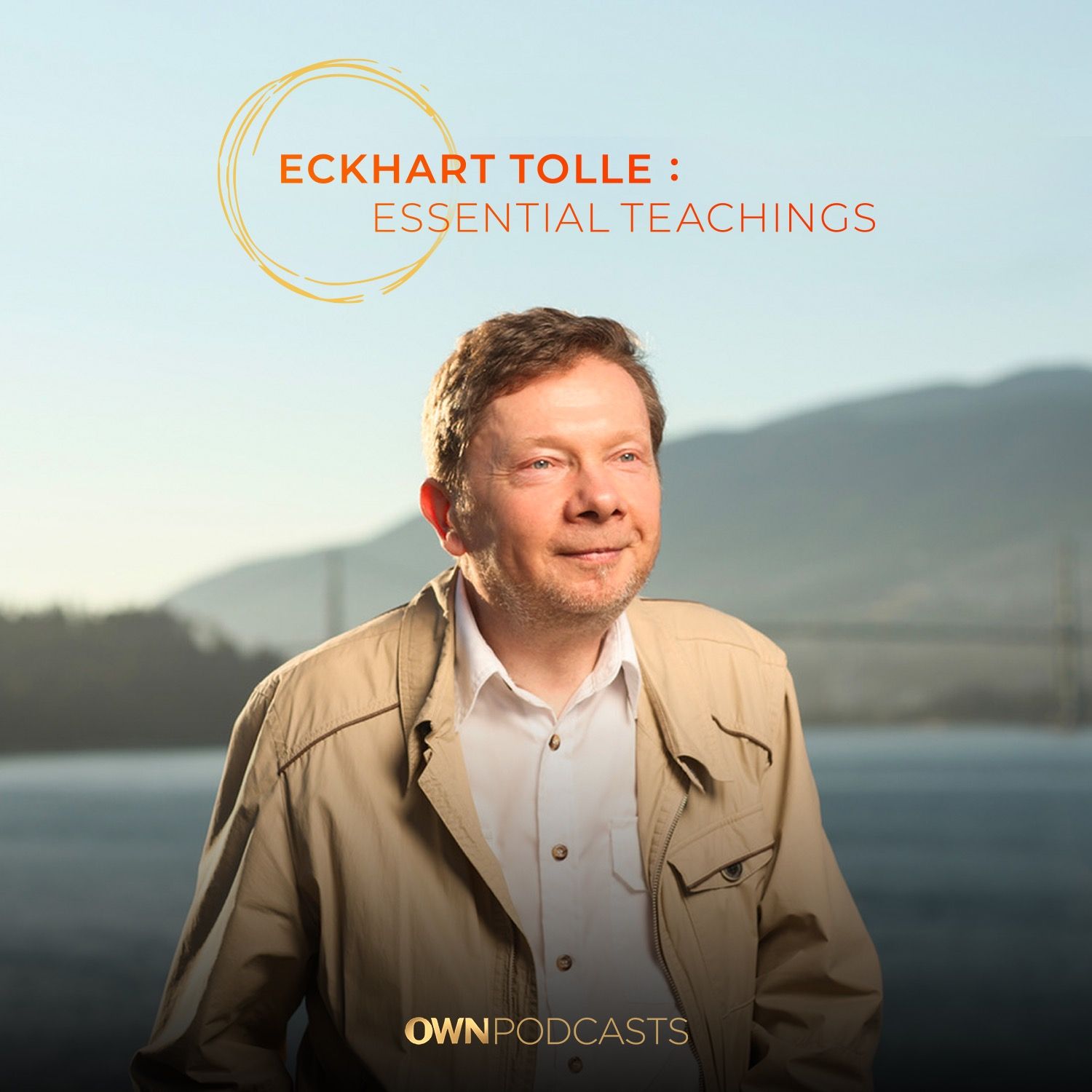
In this podcast, Eckhart Tolle addresses questions about manifestation, karma yoga, and life purpose. He emphasizes that while manifestation can work, it is crucial to discern whether the motivation comes from the ego or a deeper self. He warns that any achievement on the horizontal plane carries a downside—fame, wealth, or success often bring unforeseen suffering. Instead, he encourages transcending the polarities of good and bad by remaining anchored in presence, where one does not identify with either success or failure. This allows appreciation without attachment and ease in letting go. For those who feel fulfilled without actively manifesting, Eckhart explains that this is perfectly valid; one can simply enjoy the present moment and let life unfold. He introduces the concept of karma yoga, or consecrated action, where one gives full attention to each task without fixating on outcomes. This practice, he says, can reveal a deeper life purpose naturally. Finally, he highlights the role of "frequency holders"—people who embody presence in everyday activities, thereby contributing to the collective human consciousness. Such individuals, even in simple roles like gardening, serve a vital function by maintaining a state of awareness that positively influences others.
The Secret of Manifestation In this podcast, Eckhart answers questions about the aphorism be careful what you wish for. He says when we attempt to manifest certain desires in our lives, it's critical we discern whether the motivation is ego-driven or something more profound. Eckhart encourages everyone to be who they are at the deepest level. He says anything we achieve on the horizontal plane will also have a downside. Therefore, he encourages us to not get to attach to outcomes. He says as we reach a state of deeper consciousness, we learn to transcend the polarities of good or bad, and we simply align ourselves with what is. Hi Eckhart. Hi. I just want to let you know something. I've been visualizing speaking with you in person for many years now. So I've manifested. It works. Yes, it does. So my question for you today is around the idea of like right now in my life, I do feel very fulfilled to the point where, you know, I don't really need to manifest really anything because I really want to be embedded in the being. But I think part of it is also due to me feeling subconsciously scared to manifest anything because in the past, when I have tried to manifest anything, most of it came true with a price that I had to pay, tremendous amount of suffering and awakening to kind of get to where I need to get. So I think a part of me is also afraid to manifest. So yeah, I just wanted to hear what your thoughts are around that and how I can reconcile that. Yes, thank you. So really it's two questions. One is the the price to pay for when you achieve something. And the other one is, well, it might not be a question, but a point worth mentioning, as you said, right now you don't feel the need to manifest anything. Now let's talk about that first. It's by no means the case that you being should always be engaged in manifesting. Sometimes your life unfolds quite well as it is. And you don't need every day to have some kind of new practice to create something new, unless you feel you feel that is what you want to do. So and some people are actually do not manifest consciously in the way that we are talking about here. They are engaged in some kind of activity that at some point they enjoy it. Is it enjoyment in what they do? There may be a content that enjoyment is come of course always comes from a deeper place. And then the activity evolves and suddenly grows into something that bears fruit and grows into something big. This can easily happen if you find something in your life that you enjoy doing. And that means you're good at it. It may also involve you have to of course be dedicated to it if you feel there's something that you enjoy. Or there it may be playing music, writing or even some kind of business that you have. If you enjoy doing it, then it's very likely that it will grow into something without you necessarily needing to sit down and do manifestation practices or techniques. And this brings us to also the very powerful point to be yourself and to know whether what you want to manifest comes from the ego or whether it comes from the deeper level of yourself is important of course. So important not to live through a mental image of who you are or who you want to be. And then try to on the basis of that mental image try to manifest something in order to make that mental image better. So don't have any mental image of who you want be yourself at the deepest level. Then power is there immediately be yourself. And I believe the same case is quite a few artists and so on. And others may have may have used manifestation techniques. I know of some sports people who have used very successful through using manifestation techniques. It varies. So first of all, you don't always need to be manifest. Example, just enjoy what's already here and what you're doing already and just see where it goes. And that's fine too. Enjoy the present moment, enjoy the doing whatever you're doing it in the present moment. It's perfectly fine to do that. And there are there may be periods when manifestation is called called for and then there are other periods when it's no longer needed. And then little later there may be another period when you practice it again or not. The price to pay is obviously everything has a when the word of polarities. Any good thing that you achieve will also have a downside. That's just how it is. And so it's not to get too attached or to believe that it is it is only it can only be positive. Every person you meet or start living with. Sometimes you have to live start living with the person to see his or her downside. Sometimes you just go out on dates, you only see one side. Just the perfect my perfect partner quite obviously perfect until you start living together. And then you have any situation that you go into will have a downside. Fame over the years I've met quite a few famous people. And some told me that they become after after initial elation elated at their fame. They became more unhappy than they were before. Because they live through an image of they started to believe in the image that the media projected onto them and they can more and more alienated from their true being. There's always a downside as you may have read many lottery winners. Became very unhappy the majority of lottery winners big wins in lotteries after a few years became extremely unhappy and had very unpleasant life experiences. So no matter what you achieve it always exists in the world of polarities. The important thing is. Larities are here on the horizontal plane light and dark and so on whatever the polarities in and young light and dark high and low. Here the important thing for us is to. Transcend the polarities shows you are in a place where. I often use the image of a triangle or pyramid so good and bad are here when you are aware or present enough then your consciousness is not tied to either the good or the bad is not reactive anymore. You know, no longer identified with either the good or I have achieved that me look at me you know identified with the good and you're not identified with the bad is it all so dreadful I'm totally just devastated devastated. Identified with the bad identified with the good these are very unpleasant places ultimately even identify with the good it's not going to last. Therefore if you are present you are the consciousness that the apex like a pyramid or and there here you have the here is the good and here's a bad but you are here or you could invert the triangle in all of because I like the term. Deeper consciousness you could say higher consciousness it's just words I actually like the word term deeper consciousness I often I often talk about the deep I as opposed to the surface I so let's let's invert this and the good bad horizontal plane and then you go down an inverted triangle and you are at the point here that is transcribed. Transcendent to good and bad when you are aware when you are present you are at the point of transcendence which means there's no need anymore to identify with the good when it happens and say it because that if you do it amplifies your ego if you inflate it some people your chief thing experience actually ego inflation I call it. [BLANK_AUDIO]
they become very unpleasant people, they don't even know it. So you can get ego inflation. Or you identify with a negative, then you get ego. You can either experience ego deflation, but not in a good sense. But many people, even when they identify with a negative experience and negative ego inflation, because the mental image of yourself as a victim of circumstances, or victim of other people, or victim of society, or victim of God, that mental image gets very strong. So you identify with a bad, something bad has happened to you. You identify with that, that can also strengthen your ego enormously. So in either case, you are alienated from yourself through identification. So when something good happens to appreciate it is lovely. To say, "Oh, thank you. Wonderful. Thank you." But that's all. It does not become part of your true identity, because the identity you have found that already, even before the good thing happened. That identity is inseparable from connectedness with the present moment, with the presence of you here and now. So you found that already. So appreciation, yes. Or even a possession, let's say you, something is given to you, or something beautiful, and you buy it. You can appreciate something, a beautiful possession, without neediness, or needing to accumulate vast numbers of possessions, but an occasional beautiful object or something that you appreciate it. Does it add anything to your identity when you appreciate it? Not necessarily. You can be transcendent to that. Appreciate it. Oh, lovely. Knowing that at some point, it will probably leave you. Or at some point, you may enjoy giving it to somebody else. It's easy to let go also. When you don't identify with something good, you can easily let go of something that's good and give it to somebody else, which is always a wonderful thing to do. And when you lose it, or somebody steals it, you are not devastated and you tear out your hair. Oh my God, I've lost this dreadful, awful. And then a friend of yours comes to you and says, "Isn't this time to, for spiritual practice that you've been talking about for so long?" And she, "All leave me alone with that spiritual practice. Can't you see, I've lost this thing that's so valuable." Don't bother me in spiritual practice. No, this is not the moment. It actually happened to a friend of mine. So, that's transcendent polarities. Don't identify with good or bad. Then you have a point of freedom. Or let's invert it here. You're either deeper, I, deeper, I. Then that's a assume that was my answer to your question. Yes, yes. Oh, wow. You gave me so much clarity as to what I need to do now. So thank you. Thank you. Thank you. Thank you. Hi, I'm Karl. Hi. Thank you so much for everything that you do. And for taking the time to answer our questions. My question is sort of, it is the previous question actually. I was wondering if instead of focusing on manifesting, violating is my life purpose. If I leave a standard life and approach every action in accordance with karma yoga or that I heard you talk about, will my life purpose really stop to me? Good. That's also a good question. Karma yoga may not, but maybe not everybody will understand the term. It comes from the Bhagavad Gita. Wonderful scripture. One of the great spiritual books of the world. Very deep. In a, there are many translations of the Bhagavad Gita. And some leave the term karma yoga and translate it. Now, karma, the Sanskrit term. Literally, it actually means action. It's a law of action and reaction. Yoga is a spiritual practice. So karma yoga is a spiritual practice in action in activities. In one of the, I have about six or seven different translations of the Bhagavad Gita. In one of them, it's karma yoga is translated as consecrated action. Consecrated action. It's action that you do not looking as again, this is a quote from the actual Bhagavad Gita. Not looking to the fruit of the action. The fruit of the action means the outcome. Not to focus on the desired outcome, but to give your fullest attention to whatever it is that you are doing in this moment. To give it your fullest attention. So consecrate means you can say you consecrate it to go or the higher power of the universe. You surrender, surrender action, consecrated action. And that is a wonderful way to live. Every moment is self-fulfilling. It implies that you are not treating this moment or whatever you are doing at this moment as a means to an end. But as an end in itself, it's radically different from the way most people act. For most people, almost continuously, the present moment is reduced to a stepping stone to some future moment that is believed to be much more important. That's an unconscious mind pattern in most people who are not awakened. So there's a continuous devaluing of the present moment to a means to an end and people do it unconsciously. They don't know that that's what they are doing. But that reduces the quality of your life. Which reduces the power that otherwise could flow through you into this world. It reduces also your ability to really create from a deepest level. If you feel fulfilled in your practice of karma yoga, which is honoring fully the present moment and whatever action you are taking in the present moment. And yes, knowing that every action may have a certain purpose, a certain aim. And of course, inevitably, the aim of the action is in the so-called future, even the littlest thing. Like going to the kitchen, get a glass of water out of the fridge pouring. Of course, you're pouring the water. Of course, you know why you're grasping the bottle. And you know why you are because you want to have a glass of water. Of course, you know what the aim is, but it does not mean that you cannot be fully aware and honor the action that's happening at this moment. So then it's a very different way of doing things when you, you know, on the periphery of your mind, you know what what the aim is, you know where you're going. You're on a journey. You know, let's say you're walking from A to B. Obviously you're walking from A to B because you want to arrive at point B. You know that, but you're not focused on arriving at point B. You're focused on the step you're taking at this moment. That's karma yoga. You're honoring each step, but ultimately he's only one step. There's only ever the step you're taking at this moment. You're honoring this step. You give your fullest attention to this step. And so you're referring, of course, you know point B, you're going to point B, but your fullest attention is not there. Your fullest attention is on this step. So it's fulfilling in itself and the great power comes with that. If you can live like that, it is quite possible that you're something deeper will emerge from that. You call your life purpose, but I lived like that for quite many years and basically I still live like that now, but there isn't there was a moment many years ago when I had a feeling that my work was not unfolding sufficiently or almost too slowly. I was practicing karma yoga just to believe in the present.
but there was a sense of, okay, I knew there's a spiritual teaching coming through, there's a spiritual power coming through. I also knew that I was only reaching the handful of people. I was seeing people in private spiritual sessions. Occasionally I would do a workshop for 10 people or so on average. Once I did a workshop in England, I was living in England or only one person turned up. I did it anyway. So I had this feeling that I needed to do something to enable this power to come through more fully. So that yes, I was surrendered and then I found myself in a village church in England. I've told the story before in Somerset in a little church, old 800 year old lassies, wonderful little churches, every English village has, an empty church out there. I suddenly I felt inspired to tell something to the consciousness or they're not separate from consciousness, but it was manifesting something. I want acceleration, please, I said, acceleration of the work was implied. I want acceleration, acceleration, I meditate on acceleration in that empty church. And then these sort of acceleration stayed with me for a while and then it disappeared. And a few weeks later a change happened and I suddenly felt a deep impulse that I had to move to the west coast of North America and I didn't know why, but it was all connected with the power of now and so on. I didn't connect these things at first, the impulse to move. It came because I had made a demand or request. Otherwise, I was completely surrendered to the present moment, but I felt so if it comes to you to connect it with your question, if it comes to you, then something you may be feeling client or not to contribute some direction to where life is going. It doesn't mean that you are separating yourself because you are not separate from the totality. So if you feel totally fulfilled in your karma yoga, that's perfectly fine. It is possible that something deeper will emerge that you might call your life purpose. It is also possible that your life purpose is to continue to practice karma yoga no matter when and where. That is in itself is a wonderful contribution to human consciousness because I call that a frequency holder. Some humans do not are not interested in creating very much out there. They are not interested in, they don't feel any urge from within to manifest anything in particular except what's already there in their lives. These are human beings. I've met quite a few of them. Some live close to nature, some work as gardeners, some artists, they work, they do things with their hands, pottery, sculpture, other things. They are fine with that. Their function is to be present in what they do completely. That is their life purpose. That is another life purpose is to be a frequency holder which is to embody presence in whatever you do even if on the surface it looks like something small. It's not small. Anything into which presence flows is not a small thing. You're so called consciousness which is not yours. Let's just call it that. Your consciousness is connected to the totality of human consciousness. Human consciousness is one aspect of universal consciousness. You cannot not affect other humans. Even if you lived in solitude as a harming it, your state of consciousness would still affect the totality of human consciousness with which you always connected. There have been throughout history humans who embodied this state of the Dacol frequency holder. That means what they do is they hold the frequency of presence. This has been a tradition. Unfortunately in the Western world, this has been almost lost because it's not not regarded as anything that is part of the already existing social structures that we have in the Western world. If you go back a few hundred years, you had monasteries on convents and the frequency holders, people who felt they didn't want to go out into this world and to achieve things, they would go into a monastery. Some of them probably were present, not all of them. There were others who were very much ego dominated, always, but that's another story. But there were social structures like monasteries that gave people a place, they just wanted to be devoted to God, just to prayer and God. Then very few monasteries actually survive in the West these days, convents, they're all closing down. There's not an established place for frequency holders in the Western world anymore. In India, there's been uninterrupted tradition going back thousands of years for people to recognize society, recognizes there and always has those humans who feel cold to bond to withdraw from the world and just embody consciousness or presence. They still exist in India and they're not regarded as crazy. Whereas in the West, they would probably regard it as crazy or something very wrong with them and they don't have a place here. So don't underestimate the importance of frequency holders. If you are frequency holder, that's fine. Even there, you have a challenge. The challenge is to remain conscious and presence. If your life becomes too regulated, if you've got too much into a daily routine, let's say you're a gardener and you have these, you're carefully of flowers and plants every day and you're present and everything you do, it's just wonderful. The challenge is to remain presence after a few years of not being challenged by anything. Without knowing it, your level of consciousness could go down because nothing is challenged you, but usually even frequency holders will sooner later get challenged by events. If you practice coming back again to your question, if you practice karma yoga, consecrated action and you feel that is fulfilling, then either you will continue or something will emerge out of that, which is also not uncommon, that something will emerge, something that suddenly you know what you have to do or create in this world. If you feel something is still, something wants to emerge, but it's not emerging fully, you might give it some help with a few affirmations that you might have, that your purpose is unfolding beautifully and easily, your purpose in this world. And you can continue to be a frequency holder, to continue to practice karma yoga, and at the same time, you could have very gentle affirmations that your life purpose is unfolding and flowering. You have to find your own affirmations. This is not incompatible with karma yoga. So would you like to comment on what I said? Does it make sense? Yes, absolutely. Thank you so much. I guess I was sort of on the path of working towards what I taught, and maybe my life purpose, but I came across a lot of obstacles. I know you've talked about obstacles, but there were several obstacles over several years. So I was just wondering, I wanted this sign. I wanted it to kind of let it go and see if it comes back to me, rather than kind of pushing, like going out and pushing for it again. Could you?
give one example of such an obstacle. Or it's the most the other people. Yes, I, that's, I sure many people are familiar with those. That's one of the greatest challenges for most humans is other humans. One of the great sources of sometimes joy, but very often also suffering is other humans problems. If you ask what are what problems do you have? Many people, the first thing that comes to their mind is some other human or several of them. So the our challenges and good point, I'm glad I asked our challenges often come in the form of human beings are the humans. And then that is also very helpful. Sometimes the people that irritate you most are those that are most helpful to you in the evolution of your consciousness. It doesn't mean that you need to actually stay with every obnoxious person that you meet and you say, no, I can't remove myself from him or her. Well, sometimes you can remove yourself from an obnoxious person. It's the right thing to do. At other times, especially if it's family members with you, you have this calmic link. That's good practice because family members, it's not so easy to say, I don't want to see you again, go away, or some people do that. But depending on your culture that you culture you come from, in some cultures, family is still sacrosanct family is very important. In the west, I know people who have not seen their siblings in years because they can't stand them. But it's more difficult if it's family members, then very help very useful for spiritual practice to stay conscious, stay present, but when you come together with family members, especially if they criticize you as they may do. Or whatever it is that they tell you even parents, if you are grown up, but then you still have to meet your parents and your parents may not agree with your life may not be constantly still want to interfere. Maybe your mother or father will still want to control you because they can't give up their role of mother and father. All these things that you can deal with as part of your spiritual practice. And this is why Rambdas said, as you may know, Rambdas, the spiritual teacher said, if you think you're so enlightened, go and spend a week with your parents. And you have a good advice because that will give you feedback as to your state of consciousness. How do you deal with your parents for two weeks, you're stuck there. Now of course, some people have very conscious parents, a few, I haven't met many, but actually it is more common these days. I've met a few younger parents who are endeavoring to bring up their children consciously and to endeavoring to live together as consciously as possible. I've met quite a few because of the people I come into touch into contact with. It's still a minority, of course. But if I go back to when I was a child, I can't think of any conscious parents at that time. People, apparently, who were consciously endeavoring to live consciously that was unheard of when I grew up many years ago. People didn't even know what it meant to be conscious. Be thankful to other humans for being difficult. If they are absolutely unbearable or they become violent or whatever, then of course you have to remove yourself. But if it's inevitable, then we with them, then practice. So you transcend all reactivity and can be loving, having, being in the state of loving kindness, although they are not. One last thing, often people tell me that they complain that my mother, my father, they don't understand me at all. They don't understand anything. Whenever I go, they don't understand me. They suffer a lot because their mother or their father don't understand what they complete separation. They're trying to explain what their value, what they consider important spirits or values. Parents just don't understand. They just criticize. I often hear those stories. And of course, my advice is if anybody doesn't understand you, give up the assumption or the belief that you need them to understand you. And that it would actually make any difference to your life if they did understand you. It's a thought in your mind that says, I need them to understand me. No, you don't. You can be, you don't need them to be fully or to understand you to be fully yourself. You didn't you didn't you don't need them to recognize who you are because you know who you are. You're not dependent on anybody's understanding. It's a normously liberation, when you can give up the need to be understood by other people. The need was actually always just created by the egoic mind. You imagine imaginary scenario with your parents or your mother whatever. And your mother traditionally always criticized you and said, I don't know what you're doing with your life or whatever. And suddenly you imagine your mother is, no, no, I really appreciate what you do. I can understand it now. Does it really make a difference? A moment ago, let's say she said, all you're doing is wrong. We're whole life is wrong. And she said, then she changes her mind and it says, Oh, now I understand you make no difference. One or the other ultimately to who you are. And that's an enormously liberation that of not not needing to be understood. And that's only one aspect, of course, of other people and the many challenges that can arise with other people, not surprisingly. I've quoted him before, what is such a lovely quote. I think I've eroded in a book. The philosopher, example, Sartre French philosopher said, hell is other people. And that's the English translation. I think in the original French, you just, it reads this, hell is the others, les autres. Hell is the others. So what's the others? Hell. And of course, to the ego, it is very often. Heaven and hell because to the ego, the other sometimes regarded as heaven too for a while. And then you get married and live together and suddenly it's hell. Not always, but often. Heaven and hell, the others. Thank you. Thank you. Let's have a moment of stillness. Thank you. Thank you. I'm Oprah Winfrey and you've been listening to Eckhart Toley, Essential Teachings, the podcast. You can follow these essential teachings on Spotify or wherever you listen to podcasts. If you haven't yet, go to Spotify and follow this podcast. Join us next week for more enlightened teachings from Eckhart Toley. Thank you for listening.
Podcast Summary
Key Points:
Eckhart warns that manifestation can be ego-driven; true fulfillment comes from being yourself at the deepest level, not from chasing desires based on a mental image.
He advises against attachment to outcomes, as everything achieved on the horizontal plane has a downside (e.g., fame, lottery wins often lead to unhappiness).
The key is to transcend polarities of good and bad by remaining present and identified with deeper consciousness, not with successes or failures.
"Karma yoga" (consecrated action) means giving full attention to the present moment without focusing on the fruit of action; this can naturally reveal one’s life purpose.
Some people serve as "frequency holders"—embodying presence in simple activities, which positively affects collective human consciousness.
Summary:
In this podcast, Eckhart Tolle addresses questions about manifestation, karma yoga, and life purpose. He emphasizes that while manifestation can work, it is crucial to discern whether the motivation comes from the ego or a deeper self. He warns that any achievement on the horizontal plane carries a downside—fame, wealth, or success often bring unforeseen suffering.
Instead, he encourages transcending the polarities of good and bad by remaining anchored in presence, where one does not identify with either success or failure. This allows appreciation without attachment and ease in letting go. For those who feel fulfilled without actively manifesting, Eckhart explains that this is perfectly valid; one can simply enjoy the present moment and let life unfold.
He introduces the concept of karma yoga, or consecrated action, where one gives full attention to each task without fixating on outcomes. This practice, he says, can reveal a deeper life purpose naturally. Finally, he highlights the role of "frequency holders"—people who embody presence in everyday activities, thereby contributing to the collective human consciousness.
Such individuals, even in simple roles like gardening, serve a vital function by maintaining a state of awareness that positively influences others.
FAQs
Eckhart advises discerning whether the motivation comes from a mental image of who you want to be (ego) or from your deepest self. Be yourself at the deepest level, without attachment to outcomes.
Yes, it's perfectly fine. You don't always need to manifest; you can enjoy what's already here and what you're doing. Life may unfold well without conscious manifestation.
Everything on the horizontal plane exists in polarities, so any good thing has a downside. The key is to not get attached to outcomes and to transcend good and bad through deeper consciousness.
Be present and aware, identifying with the deeper consciousness rather than with outcomes. This allows you to appreciate good things without ego inflation and handle bad things without devastation.
Karma yoga is consecrated action—giving full attention to the present moment without focusing on outcomes. It can reveal your life purpose, which may be to embody presence as a 'frequency holder' rather than achieving external goals.
Yes, being a frequency holder who embodies presence in whatever you do is a valuable life purpose. It contributes to human consciousness, even if it seems small on the surface.
Chat with AI
Loading...
Pro features
Go deeper with this episode
Unlock creator-grade tools that turn any transcript into show notes and subtitle files.
 PodcastTranscript AI