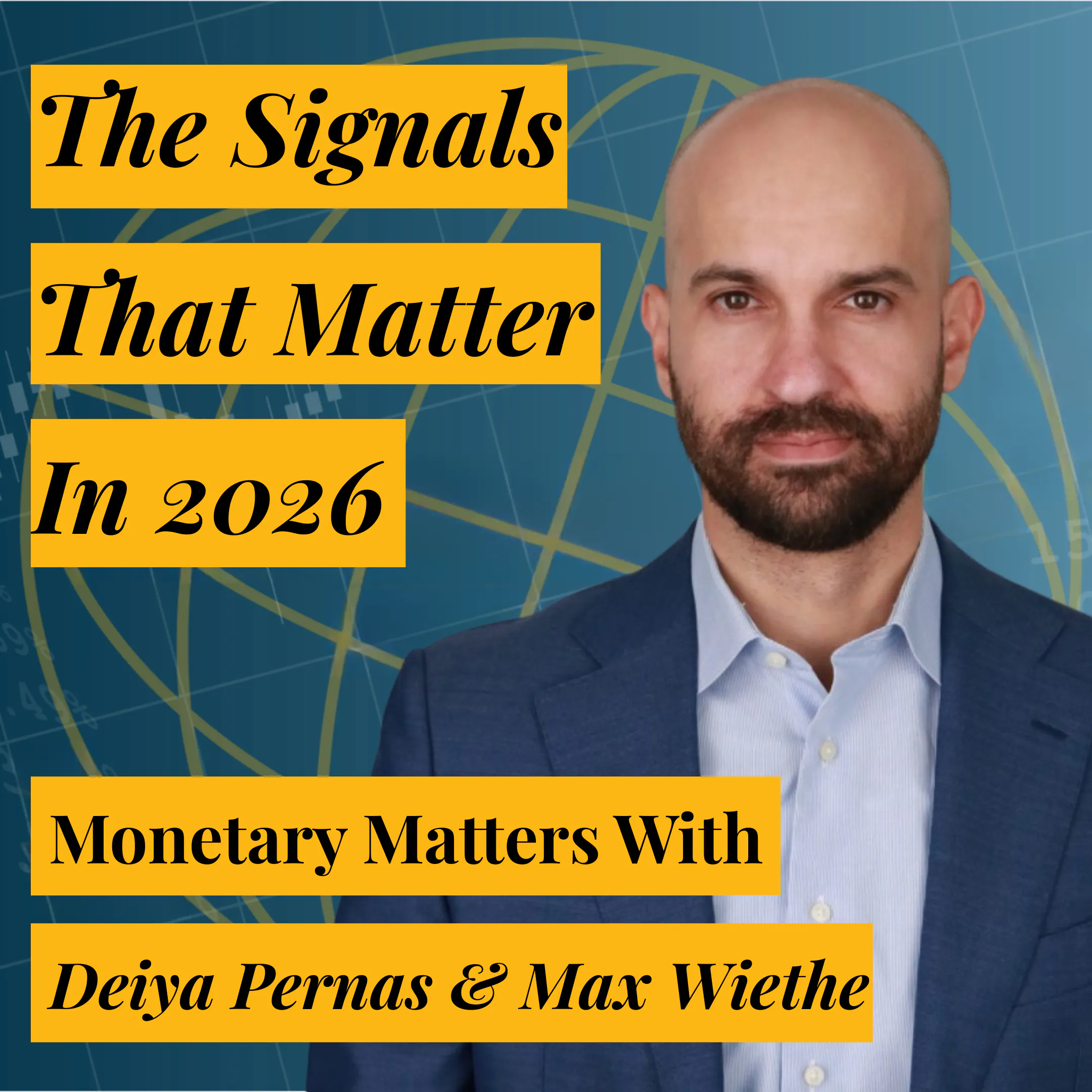
The SaaS Reckoning, Consumer Trends, & AI Disruption: The Macro & Micro Signals That Matter in 2026 | Deiya Pernas
67m 35s
The conversation discusses the significant disruption facing the software/SaaS sector, driven by AI's ability to drastically reduce development time and costs, enabling new market entrants. While the sector has seen major sell-offs, this is attributed more to valuation multiple compression than to the market pricing in the full extent of fundamental disruption risks. Many SaaS companies, especially horizontal ones, are still considered overvalued. The guest emphasizes a forward-looking investment philosophy that avoids lazy "mean reversion" bets and instead seeks concrete predictions about structural changes. Key opportunities are identified in mislabeled "AI losers"—companies adapting successfully, such as by moving up to the enterprise market or integrating AI. Enterprise and vertical SaaS are viewed as more protected due to their complexity and stickiness. Other major structural shifts highlighted include the evolution of commercial search intent toward LLMs, a continued shift in advertising spend toward social media platforms, and broader changes in consumer and enterprise behavior driven by AI. The investment strategy involves pairing perceived AI winners with misunderstood losers and grounding decisions in evidence-based trends.
Welcome to Monetary Matters. Today I'm speaking with one of the best performing independent equity research providers and not just measured by a paper portfolio or a few big calls that by an audited real money portfolio. Pairness research has compounded capital at over 30% since they began tracking their portfolio in 2017. They're coming off another great year in 2025 up over 52%. I'm joined today by co-founder, Daya, Pairness. Thank you so much for joining me today. Very happy to be here. Thank you for the introduction and I'm looking forward to a good conversation. Daya, one of the things I like about your research is the way you approach it like a portfolio manager. And that includes writing quarterly letters. So you just released your Q4 2025 letter. And one of my favorite parts was the section where you posed 10 questions for 2025. Some of them are big picture questions. Others are more idiosyncratic relating to, you know, very specific sectors and positions. But I want to start off with one of the ones that I think is the biggest and super timely for what's happening in the market right now. And that's will businesses continue to allocate the same percentage of spend to software. Why do you think this is such a key question for the market in general, but also for the companies that you guys are invested in in researching? Yeah, so we did list those questions. There were meant to be provocative. There's, you know, there's a good amount of uncertainty no matter how concrete your understanding is of each and that the software question is one of them. You know, our business is going to continue to spend roughly the same percentage of their budget on software. And I've seen significant amount of market movement. There's been the SaaS apocalypse. Dock, SaaS apocalypse, I think it's a bit dramatic. It's given the movement so far. Most SaaS type companies are down about 10 to 50% a year today. But there are a lot of questions for software investors that they haven't had to ask before. Oh, you used to be the case. You know, analyzing SaaS business is one of the easiest businesses you can analyze. You find a company. It's led by, you know, led by founder of product visionary. You understand the product. You understand the total addressable market. Yeah, there's some calculations around CAC and on TV. But after that, you kind of, you kind of have all mapped out. You understand how they're going to grow. It's capital-like business model. And there's the rule of 40 where a company is growing at a certain percentage. And if they have the margins to match it, you're kind of done. You can go to the beach and watch this and come down for a while. But now SaaS investors are having to start asking you questions about, you know, disruption and cloud. And this year, especially, cloud, which is anthropics coding, AI, at least perception wise, is seen a huge step function improvement. And the marginal cost of producing software is rapidly decreasing. It used to be that to build a good SaaS product, it took about seven years, seven, eight years or so. And if that time has been reduced six months or less, then you start to, I mean, there's a whole bunch of questions about potential entrance and how do SaaS companies perform in a made of world. And the market doesn't seem to be doing a lot of discerning. We like. We like areas where it seems like the market's confused. It's not really discerning enterprise SaaS from Mid-Markets SaaS from consumer SaaS, Horosoff from Verta. There's no sense of destruction at all. It's just, you know, everything's so off. And that's the type of environment that we think, at least for an active equity Analysts like ourselves, you can develop a differentiated perspective and And if you're differentiated perspectives correct is that opportunity to produce Alfa and we can get all the issues in some software space, but just broad picture. That's why we think it's interesting. This is a case where you have a sector that has been sold off tremendously. I mean, we can go through some of the battleground names out there like sales force, HubSpot, like these are the types of companies that are, you know, off. I think many of them over 50% from their highs. And there are people out there who are just kind of buying blindly betting on this mean reversion. How do you, you know, specifically because I know you guys are long in your portfolio. How do you make sure you're not just being a mean reversionist and you're really trying to get into the questions around does this company have advantage and distribution? Does this company? What is sticky about this? This is why we think there's going to be a size block opportunities in software space because I don't think the market is nuanced and oh, like is enterprise access just as disruptable as some sort of consumer. And we don't think so we think for the many of the reasons you said, I mean, the enterprise has. There's a lot more bells and whistles to it. You know, companies care about compliance, these care about securities, companies care care about, you know, workflows across departments. And enterprise needs the confidence of having a big time, a big team behind some of the key software that they utilize. But that doesn't also mean that the pricing isn't going to change. SaaS, enterprise SaaS typically works on a perceived model. You could see that transitioning to a usage based or contract negotiation starts to look slightly different, which is all which could also disrupt growth. So even if you're confident about the product, you know, you got to think about the pricing a little bit. You talked about mean reversion and yeah, in our letter, we did critique kind of lazy type of value investing. We call it mechanical value investing. Where you're looking at companies that just saw a low PE and you're saying, you know, there's usually some sort of problems. And you're saying, well, look, you know, when the company turns around, a lot of this pessimism is extrapolated and definitely going forward. The market tends to be overly pessimistic when there's bad news. And when there's, when the company starts turning, there's a little bit of good news. We'll get a repricing and we'll enjoy some out of that way. I mean, that type of mean version of work and certain environments are relatively stationary. But when you have environments like the one that we believe were in today that there's a lot of structural change in many different areas that we can get into, you have to be very careful about thinking that things are going to go back to the way they were. Or we can just bet that this temporary problem, this company's experiencing is going to be fixed. That lazy type analysis doesn't work. You have to have concrete justifications why problems are going to be fixed or problems are temporary. And you really have to anticipate what the future contours that this is going to look like. So it so our whole investment philosophy is about leaning into prediction. And obviously you have to understand the historical financials and just how the site is in a single type of business, the ecosystem, and so on. But you have to put everything together in a forward looking view. It's not enough to just look at past trends and expect them to continue or expect them to reverse. There's that lazy type of thinking is completely decimated and you have to really be concrete and how you think about the future. So when you look at the hundreds of SaaS names that are out there that are down tremendously, what are some of the larger companies that you look at you say, yeah, I think the market has this right. This business is in trouble. Whether it's pricing as you said or the actual product itself is going to fall out of favor as new entrance either pop up or already have. If you look at the SaaS complex right now, it's still in my opinion and we tend to be more price sensitive than others. It's still very overpriced. If you look at companies like Salesforce, Adobe, Autodesk, ServiceNow, and you just look at meeting valuations as a whole, EV to forward sales are still six to seven times, which is expensive. We start getting interested in SaaS companies when they're trading below five times the EV to sales. Despite the informal SaaS last year, despite SaaS companies being down 10 to 15% this year, we still think they're overvalued. If you were invested in a SaaS company trading and worth of seven times EV to sales, I think there's just a lot of vulnerability there. What we've seen so far really is just multiple compression. I don't think we've seen disruption risk really priced in SaaS yet. When you're saying multiple compression, that enterprise value to sales. You're saying enterprise values have come down. We haven't even really seen the sales. The denominator really get hit. Have the concerns that people have been talking about with disruption to sales shown up in that denominator really at all in the industry? You've seen some sales slow down slightly with some horizontal type SaaS. It appears that companies are just a bit more cautious about SaaS spend. If it comes to maybe a new SaaS product or something like that, it's like, okay, how many people do we actually need using this product? Does a SaaS pricing not make sense? Let's just be a little bit more cautious. That is translated in the sales figures of some companies. You've seen a slight slow down of sales growth. Some of those companies have come down as a result of that sales growth. But given the disruption risk that I'm referring to, we have
really see that much of that yet. So I think that the most of the conflicts is still trading to your rich and we're going to see it generally start to come down. What are the parts of the complex that you do like that you believe we are going to see the same allocation of spend to or even growth in spend? We think that more vertical type software that really understands the niche is probably better protected than something that's more horizontal. We think enterprise SaaS is more protected. So but apart from that just very broad just those very broad guidelines it's very very nuanced and if you're investing in a SaaS company that isn't somehow using AI to make the product better I would rethink the company strategy. Almost most companies we look at are either trying to move up to enterprise because it's a stickier there's been some softness since kind of small-beating business space and they're using AI somehow to make the product better or at least they're trying. A lot of them are going to fail at it but it does certainly appear to be that sense urgency in that in SaaS world. Okay and the way you construct your portfolios you have your core positions which are about 5 to 15 percent each. You have starter positions in the 3 percent range and then you have your more speculative trades in the 1 percent range. Have any SaaS names made it into any of those buckets that we could talk about today? Buying SaaS for us has been part of a broader kind of our bell strategy which is really pairing what we think are AI winners with AI losers quote quote quote that are that are mislabeled as AI losers so they're not really AI losers but the market the perception seems to think so. Sam Rosh is a company we invested in about four months ago. They recently were known as an SEO provider for small-beating businesses and they expanded that product sweet and they moved up in enterprise and they started solving problem for enterprise customers which is hey how am I showing up in different LLMs? It wasn't just about keywords anymore if I'm if I'm ranked high if some of these searches some keyword in my ranked high net list is more about hey are what are customers asking in LLMs and what are what are elements saying which is becoming a more and more important topic. So they were making large investments in this area and it was about 10 to 15 percent revenues and that part of their business was growing about 30 to 40 percent or so. So they had an AI solution they had traction they have a very large install base of enterprise customers which they can continue to penetrate. So the story for us is that oh the market seems to think that this company is an AI loser because maybe companies are going to start spending less on SEO and more on more on LLM type of commercial searches but it was very very clear to us that this company is moving the right direction and they are getting acquired by Adobe to bolster their AI solutions. So that was a great example of a company that was mislabel as an AI loser so that's what were one of our prime areas of focus is trying to find those types of companies. So you mentioned in this mean reversion section that there are structural changes underfoot I mean we've talked about one of them which is AI and the way that that companies are looking for AI solutions and changing you know with the SEO as an example changing what they're focused on what are the other structural changes that you are really focused on that you think if investors are not paying attention to they're going to have a really hard time in 2026. Just general consumer behavior enterprise behavior around AI how are enterprises using AI how is that going to change their relationship to labor moving forward in which areas of which areas of labor are more effective than others. Right now it seems to be that white collar slowed entry-level positions that can be automated away are seeing trouble. Consumers how are consumers going to shop for things how's that going to change. I mean the big question about everybody's mind right now is commercial intent in LLM's exactly how that's going to move over. There's been a lot of chatter about oh open AI is going to start putting you know these buy-now buttons on these searches but then it's like well wait a minute don't is it true that consumers just want to type the question in and have one product show up and then purchase it or do they still want the whole carousel of choice that they you know or images they can scroll through from something like Google search to make purchasing decisions. And if that's true then maybe we're back to saying kind of Google search interface. So I think there's just a lot of questions about how you know how consumers can shop online. I think there's a lot of questions about how their consumers are going to consume entertainment in an AI world like what the entertainment concept just can look like. Social media how businesses are paying for ads. Just how many iterations can you know if you're paying for ad on meta and just how good those ads iterations are given their AI driven given that the content generation would be so quick in the iterations you know continue to just in real time improve uh improve level engagement. There's a big regulatory component to that too. I don't know if you saw that study from I think it was NYU where they said AI generated ads were you know obviously more effective than both AI plus human and human only generated ads but then all of that outperformance went away and it actually went negative if they had to disclose that the ad was generated by AI. Okay great we have all these AI ads they're more effective but you have to put a little sticker in the bottom it says this is AI like it really affects the the firstest perception so it's not just does the technology work it's are the regulators going to let these companies run wild or are there going to be more guard grounds which I assume is going to follow its regular pattern of being significantly late the space is just moving so fast that the regulators are are going to be so behind I mean we're still talking about crypto regulation today so um yeah I agree there's that perception of it and then what exactly is something created by AI what if there's a human element plus an AI does that constitute as AI generated but yeah I agree there's this perception of it's AI created then it's kind of slop and well then you know I don't I don't want to see something that's totally commoditized but then again if they don't have to disclose that then you know the consumers not going to be able to tell the difference and again the space is evolving very fast we have we don't know exactly how it's going to develop but these all these thought experiments are interesting because at least it keeps you flexible as the you know as things continue to evolve what are some of the thought experiments where you do have a house view at this point you've looked at this question you've asked it and you think at this point obviously facts can change anything can change in a second but you do have a view for how this question is going to shape up over the next year SEO like marketing business spending it's marketing dollars on SEO we think that's going to be challenged for a number of reasons uh primarily the commercial search intent moving over to LLMs uh right now open AI handles about a trillion prompts a year versus a Google's five trillion or so so just just to show you just how uh just a level of engagement and attention that consumers are investing in LLMs at first order thinking I would hear less spend on SEO and I would think that's going to hurt Google's ad business but at the same time they're one of the leaders in AI and they're making they have their own um the TPUs not the not the GPUs so how does a view like that translate into portfolio decisions you have to get down to the new ones a little bit you have to understand then yes there is this trend that okay a lot of consumers are on uh uh LLMs and what exactly is the nature of what they're searching on LLMs structurally different from what you know from Google searches for instance and the answer turns to be it turns out to be yes commercial search intent is still the domain of Google usually if somebody has a commercial search intent they're going to Google first if they're looking for something more instructional or more knowledge-based they're going to LLMs and hence Google has uh has adapted right you've seen anytime anybody searches something Google they see the AI power search answer uh and then put that if you're an advertiser that maybe that was part of your keyword but well all of a sudden that reduces click-through rates because people as soon as they see that AI answer they don't go through the click-through links which that for you as a potential advertiser for that keyword so it turns out uh that in certain the areas it has greatly affected traffic for some businesses and certain areas not so much so really understanding that what types of businesses uh are still uh going to be able to advertise and see an ROI from that and which types of businesses are going to have to think of another strategy because for most businesses they could just spend money on Google ads and then just go away it didn't really have to be much very sophisticated beyond that but now when you're starting they're starting to have to get more nuance. Social, and. is more and more going to absorb some of that spend. That's what we think the penetration rate of social as far as the overall add spend is going to continue to increase. And that's something that we think is concrete is backed up by the way the data is moving. Just more of the add spend pie is going to go towards social. So that's kind of a trend that we would be in. We would be willing to bet on. So our prediction in some sense is that is that social, the amount of spend going to social is going to increase. And companies that are situated within that should see a tailwind benefit. And that's when we think about prediction, that's kind of our flavor of predicting that that's how we do it. It's grounded in evidence. It's grounded in not only anecdotal, but you're marrying the anecdotal quantitative. You have conviction in trend and then you're looking for companies to benefit from that. What about the types of products or services that are not going to be or not currently being disrupted as much? Is it high end goods? Is it low end goods? Are these things where people are searching for brand names and not a product type? Like what are the types of businesses that are not seeing that click through heard as much? Businesses that I think that have spent just more time and energy on their keywords that have more of a PR presence as well. So given whatever somebody searches on Google, they seem to be coming up a lot more in the blue links. So it's companies that are larger than invested a lot of money and spend and building out this SEO infrastructure. I think smaller companies are the ones that are hurt from a lot of this because they don't have the sophistication or the spending dollars to consistently rank with all these keywords. That's interesting to me because you have small companies in your portfolio. You have large companies in your portfolio. In your latest research email, you had a massive company and a couple of sub billion dollar companies. But you did have a really interesting appendix in your letter talking about the number of multibaggers in 2025 and just how big a year it was for small companies. So it's interesting to me that you think these small companies are going to be hurt. But I see them in your portfolio and clearly that's one of the things that worked a lot last year. How do you square this concern for the smaller businesses with the fact that that's what's working in the market? For most of the small companies that we invested in that we've seen outside of your turns in, so not been product oriented. It's been a result of large data center type spend companies that are almost small industrials that have pivoted smaller companies by their nature are there's just less inertia there. So they're able to pivot quicker than larger companies to give advantage of certain opportunities. So it's been a small time industrial companies have pivoted towards these large trends and seen an influx in demand. And Capstone is one of these companies that we invested in last year. They're a maker of micro-turbines and they're one of the dominant manufacturer of natural gas power micro-turbines. And this is company the Merge-Dubank should be last year. Had new management they're really just like a kind of a large assembler. They have about a couple thousand vendors and they went through every single vendor relationship and try to be a rationalized spend along with rationalizing their pricing. That went a long way to achieving their comfort score of profitability. And it turns out they have a perfect type of product for data centers that are looking for off-grid solutions. Everybody knows about the strain power grid. Everybody understands that data center energy usage is going to continue to increase. It's going to continue to make a bigger percentage of that energy consumption. And a lot of the alternative energy providers are going to benefit from that because the grid isn't going to be able to do it itself. So off-grid solutions like micro-turbines can pivot towards this vertical and enjoy an enhanced revenue growth. So that was something-- so that's really just, hey, find the right company and get their early-type story. It's relatively small, still even after the tremendous year it had in 2025. So what is your process like for uncovering these smaller companies? You're already looking for the company. So it's like, hey, the over-artic thesis is quite clear. Hey, off-grid solutions are going to become more and more important. I'll turn to energy providers. Find ones that are pivoting, that have the right leadership and construction. So where the pivot makes sense. And ideally, they're already getting some sort of traction. We don't like to turn around or even companies that are pivoted where they have not seen traction yet. It's still a bit too nebulous for us. We'd like to see some sort of traction before we enter a position. And we start getting really excited about something when we're the first ones to be talking about it or thinking about it. And if you're first, there's going to be a turning over-- if you're correct about your thesis, there's going to be a turning over investor base. There's going to be a very long re-rating cycle. And there's no better feeling than being at the very beginning of that wave. It's unbelievable. What does the beginning of the wave look like? You talk about traction. What are the types of things you like to see in a company? Does it have to show up in earnings? Or can it be press releases about deals being signed that are not going to show up in the financials until quarters down the line? It goes back to something that we think about. It's what we call motor investing. We're looking for companies where the motor or the company is getting stronger. And what that means is it's kind of like the potential energy is getting stronger, but it hasn't yet translated to kinetic energy. It's almost like if you envision pulling back over a bow, so to speak. It's like there's more and more potential. But it hasn't really-- it hasn't been the income saving yet. It hasn't the revenue growth yet. And that's what we really, really like to see. OK. Well, sometimes the bow snaps. How do you manage risk? How do you deal with, hey, there's a lot of potential energy building here? And you know what? Somebody else took it all there, the big winner. This isn't the winner. The most important part is having a belief system that is dynamic and then updates on face to information. And you have to be very attractive to disconfirming evidence. And you continually be testing your thesis. And if new information emerges that contradicts that, you better pay attention to it and ask why. So it's really about like you have a belief, it's updated, it's fluid based on new information. And you have to rely on your own ability to kind of update your work. You were evolving conceptualization of where you think this business is headed. For the-- like you said, yeah, things go awry. Let's say capstone. This is a company that's already been bit up quite a bit. It's been a lot of fun of mental reasons. They've achieved profitability. They've rationalized pricing. So revenue growth is perceived in line. The valuation right now is starting to get a little rich if they don't sign some of these larger customers that we're talking about. So if you're also looking at valuations too, right? So let's say valuations keep going up and up and up. And then they haven't really made any more headway to adopting some of these data center customers. Well, then that's position where you can be looking at tremor to get out of your whatnot. We don't think that's going to happen. We do think they are going to-- those plans are going to come to fruition. But yeah, it's a calculus to your balancing updating beliefs with valuation and you're combining that all together to make real-time decisions. And I can tell from reading your letter, it's definitely not 100% price-based. There are some investors who say, position pulls back this amount. We're done with it. There was a name that you wrote about in your letter that has maintained its position in the portfolio coming into 2026 despite a pretty sizable drawdown. So I think everybody has had a stock that they were confident on pullback in a way that they weren't expecting, especially when you love the fundamental thesis. And the market just doesn't agree. How do you decide between being wrong and sticking with your guns in a name that pulls back a considerable amount? Remittly is a good example of this because it's been our biggest position. Well, it's all donated one and two for quite some time. And it's been a position where we were probably a little early in the name around 2023 when it was trading north of time sales. And the whole thesis was quite simple. Remittly is a cross-border remittance provider. So you think of migrants, for example, come to the United States to send money back home. So it provides a digital solution. It's a best-in-class digital solution. It's a founder-led company, capital-like. Its main competitors are dinosaurs like Western Union and MoneyGram. So they're very quickly taking share from these players. Along with a very broad, and this goes back to counter prediction, what we're talking about. Like really understanding these broad-based trends and having a lot of conviction on them. And the other part of the trend is that, well, there's going to be a lot of evidence.
a lot of cash living in digital. So in the past, when Pete Migrant has said cash home, different family, now they're using a digital means so many home-let-emobile. So clearly, the best-and-class mobile player is going to be beneficiary to that. Add to that, the developed world is aging quite rapidly. Birth rates are not keeping up with replacement. If you look at places like Italy, places like Germany, Japan, those meeting ages are getting close to 50. The meeting age of those countries, the US, I think, the meeting age is something like 39, which is still getting up there. US is one of the few developed nations that is keeping up birth rates or keeping up with replacement. But you have the situation where the developed world regardless of the national populace rhetoric that is going around the globe right now, they're going to need migrants to plug those population jacks. And because of that, that is a trend that is going to continue. And again, if you're a cross-border or a mittens provider, you have the best class digital solution you are going to benefit from that trend. So what happened to Mithli is we ended up being completely right on the front of the balance. As since we've invested in the company, the prone revenue at 30% plus the entire time, the stock, unfortunately, has just continued to sell off stock. And we're down-- last year, down, if I consider it really on the name-- currently, we think it's trading in an unbelievably track evaluation. We believe that the company's going to be multi-vagger. You just-- this is a situation where the price is moving one way. And the fundamentals are agreeing with you. And you just have to just keep adding, unless you see something, some disconfirming evidence, that is going to prevent you from doing so. But you just have to keep adding to the position. Again, like you have to be paranoid. You have to retest your thesis. Am I wrong? Could I miss something? Is there a potential terminal value risk and not thinking of a stable coin or something like that? Or are you retest that thesis? And then after you think about it in an objective way, then you go back and you're like, well, no, I don't think that's true. I'm going to continue adding. Are they utilizing stablecoins at all? They're utilizing stablecoins in a treasury function, not to help directly with consumer transfers. So yeah, in a treasury function only, stablecoin right now is mainly a crypto phenomenon. We are very convicted in stablecoin kind of disruption, disrupting the normal kind of flows of money, given that people in their local economy spend money and fiat. Unless that changes, unless somebody in their local economy is going down to the vendor and paying with some sort of crypto, it's very unlikely for us to see that this, you know, stablecoins is a disruptor of normal commerce. What about remittance? I mean, it's one of the main-- if you talk to any crypto bullet, it's far in a way, like one of the main success stories that they like to talk about, because people always say, what is the real world use case of crypto? And that's probably the number one that I have seen cited is remittance payments, cross-border transfers. Is that actually showing up? Is it taking share? And, you know, we talked about wanting to see, yes, maybe these companies are AI losers, but they're making shifts to address that inside of their companies. And I kind of see stablecoins in a similar vein. Why aren't you concerned about stablecoins with remittance? So that phenomenon that you're describing is completely non-existent. In very specific situations where you have, like, maybe some affidim countries where you have a total banking system collapse, they're setting money through cryptos. But these are definitely exceptional cases. So the idea that stablecoin is going to-- and I get why people think that's a goal that you send stablecoin is going to be a lot cheaper than remittance or whatever. But turns out remittances are already have come down, from maybe about 10 years ago, 80%, 90% as far as cost goes. So remittances, you know, it's 1%, 2% to send money across borders. So you just haven't seen that in the data at all. And again, going back to the main explanation model that you'll see that is because when somebody sending money back home to their friends and family, you know, on my grant is sending money back home to their friends and family. There's sending money that they're going to need to use for purchase food, that rent, utilities, what have you. And that food rent and utilities is spent-- that they're paying for that in their local currency. So they want local currency. And they're going to use that spend local currency. And as long as that's being done in a very, very efficient way, lighting fast and the cost is very, very low, I don't see how stable coins is going to be disrupted that. Again, like, you know, we're big on-- you know, our industry is funny because, you know, clearly you have to kind of sound like you're confident that your idea isn't so on, and you've done your work. And we are, but that is not without us always maintaining some small reservoir of doubt and all our decisions making. I mean, it's just part of being a good thinker so you have to maintain a bit of doubt with everything, especially since we're talking about the future, right? So if I see evidence contradicting that view, which currently there's absolutely none, then yeah, we'll revisit, figure out why it's happening in this area, and maybe stable coins are going to increase penetration over all our menses, and the thesis is broken. But you know, that's certainly not something we're saying. And the other side is the person receiving their mints payment is usually an older person. Yes. So it's going to somebody who is maybe not as familiar with crypto. And so you're going to have to see some improvement in the UX and the infrastructure for these consumer-based crypto apps if you want. I used to have to travel to Puerto Rico a lot for work, and I like to call it a Bala Island, because it's interesting being a US territory in that there's free migration between the mainland United States and Puerto Rico. So anybody who wants to come here, if they can afford a plane ticket, and they can afford rent and find a place to live, can come here. And so you're talking about median age being about 39. I know in Puerto Rico, it's about 45. Every time I'd be on the plane, I'd be sitting next to either somebody. It was an old person who was visiting their younger family who had moved to the US, or was a younger person who was coming back to visit their older family who had remained on the island. And you know, these are people who are flying many times or the first times in their lives. I can't imagine I'm opening a crypto app to convert their stablecoins into dollars. And there's not the local currency problem, because again, it's Puerto Rico. It's a US territory. And so they use dollars there. But it's just very interesting to see, because I think it is like a perfect microcosm of the migration trend because of the lack of barriers completely to what we see from other countries. And if you look at Puerto Rico, especially that island is seen significant population of clients since Maria. I mean, I think there's something like 3 million or so Puerto Ricans in New York. And a condom subdub this, a brain drain, where any young person with any sort of agency is going to go to where there's more opportunity, especially the frictionless do that. So I think that's important. Is your understanding that customers, these are migrants. They're not your typical development well-banked type customers. And this is another reason why when I talk to people, they're like, oh, why don't they do X, Y, and Z. It will be a lot better cheaper. I'm like, we have to understand how migrants said money, which products and services they trust. And a lot of that community is through word of mouth as well. So it's unlikely, after you've already trenches off in that community to be easily disruptive, just because of the nuances of just migrant type culture. Now, you mentioned that you are very much bottom up when it comes to the companies you invest in. A couple of those 10 questions that you asked are, have big macro implications. When you think about these questions, is it in a macro through a macro lens and how they're going to affect a broader economy? Are you looking for companies that are directly affected by that particular trend? It's a bit of both. And as far as some of the macro trends we talked about, one of the trends I think is not talked about enough is the rebalancing in just general consumer spend versus 2020. And I think that one of the things that makes you a good equity analyst is you have to be somewhat of a social scientist. You have to be observing the behavior of others and saying, oh, is this behavior-- and observing your own behavior. I know we all like to think we're special different. But I understand that which parts of my behavior are maybe not so intentional and are really scaling every-- like people are doing this everywhere. Like I noticed the other day I was on Uber, and I ordered-- Uber eats. And I think I got an Uber one subscription or something. And I noticed I'm spending a lot more just on a--
Uber, but the eats, and then I look at, go through Uber's transcripts and they're like, "Oh, Uber one customer spend two or three times as much as your normal Uber customer." I'm like, "Oh, that, you know, anecdotally, that immediately gives that quantity of data that just a little bit more conviction given that I understand it at an anecdotal level." But as far as a broad macro trend, there's been a re-dialysis we can soon spend. You've seen wages have increased commutively since over the last five years since the end of 2020, about 26%. And there's been a lot of essential categories that have outstripped wage growth. When you're talking about healthcare or vehicle insurance, shelter, electricity, all those categories have increased 30 to 40%. I was pointing at the data here. Motor vehicle insurance is up 63%. Electricity is 38%. Meets, poultry, fish, and eggs, 31%. Again, this is cumulative increase over the last five years, relative to wages. So you've seen a lot of these essential categories outstrip wage growth, which means there's less discretionary capacity than other cycles. So there's been a re-balancing in consumer spend. So if you're looking at a discretionary category and you're saying yourself, well, is this, are the levels of volumes going to get back to 2020? As a category, probably not. But maybe there's individual companies that are going to continue to do quite well. But it's not going to be a category argument. It's going to be a more a share-taking thesis at that point. So that's kind of, I think that's a macro structural macro change that I don't think is talked about a lot. And it gets back to the housing buying as well. Is the level housing activity going to get back to 2018? Well, 2018, 10 here is about 2.5 or so. Now the 10 here is about 4.25. That has come down quite a bit. But even if it does come down to 2018 levels after we get a double-bed share that turns on quantitative easing or a significant amount of quantitative easing that you have, I guess there. Home insurance, HOA fees, a lot of those about the stripped wage growth. Again, the price of homes are up about 40% cumulatively, which leaves consumers have to put a lot more down for the down payment. Obviously consumer balance sheets have gotten a little better since the end of 2020. But that tends to be lopsided into higher network type households. So it's, my guess would be that no, the activity doesn't return to 2018 levels. Even though you're starting to see like a lot of these like rocket mortgage type companies trading, I think very healthy valuations expecting that same amount of activity to return in it. And I would bet, well, I mean, just psychologically, I would bet against it, but we don't trust positions. But it just seems to me that given this rebound, you can spend that it's unlikely that you're going to see that level of housing activity given where prices are. You're preaching to the choir. I'm a IMA home housing market volume bear as well. I just don't see how we how we get back to those to those levels either. As far as the consumer trends that you were talking about, what are the types of companies that you think are going to. That are going to take share you said you don't think it's going to be category. I would not make a bet on a discretionary category getting back to former glory. That being said, we do invest in some sort of consumer discretionary names. One of them is Doc Martin's we've invested in quite some time. It's been roughly flat. They've been growing revenues mainly through pricing volumes are slightly down. But our conviction in the in their brand equity is so high that even if the category is quite down, we think that they're going to continue to maintain share and grow when the category rebounds. And it's still the category of boots category still at a cyclical low. And we do not expect the rebound to get back to any former levels at all for us for the thesis to make sense. So I think that if you're going to invest in a consumer discretion type category, you have to really, really confident in their brand equity and confident in their ability to take share in that category. It's really a share taking type story. I would not expect the same level of discretionary spend certain categories that we have that we've been joining past. How does one maintain and get that conviction? I mean, you look at a Lou Leman, something that a few years ago, people had tremendous conviction in the brand equity. And maybe I'm biased here in fashion forward New York, but the good looking girls are wearing a hallow yoga. Not Lou Leman. It's something your mom is wearing. It can happen extremely quickly, what looks like strong brand equity flips. I guess look, Doc Barnes has been around a long time. Yes, exactly. And so, I think that the majority of the sale are from a timeless type of product, their 1460 boot. And it's, if you look stylistically, if you look at it, it's kind of remained, it hasn't changed all that much throughout the years. So they haven't had to make huge, huge revamps and style or whatever to keep the customer interested. But if you look at all age categories, there's still high level engagement, all age categories. So even the new, you know, you're looking at new Gen Z, new customers. It's always a prompt for a brand when it's like, oh, it's your grandma's brand, but not, you know, a younger generation. But there's something special about the soul of the Doc Barnes brand, the kind of deli spirit of it that refreshes every generation. So those old songs and young punks is exactly. As far as the blue lemma goes, again, blue lemma has been difficult for us to invest in purely evaluation basis, but also it's a company that has been around that long. So any company that has been on any type of brand or discretionary product that has been around that long, you always have to ask yourself, well, is this kind of just a trend that's going to go away at some point. So clearly they were, they were kind of first to this kind of athlete, you know, a trend. And you've seen a couple of this other competitor come along, take a lot of share. And some of it is because of the, the, the fact that you're a fact nature of the category. So yeah, I think any, any time a brand has been around that long, you've got to be very, very careful describing a brand that leads to it. So what about those brands that are on the rise? I mean, some of the best performing consumer discretionary names are often those ones that are taking off at the beginning of the fat. That's simply something we stay away from entirely. I mean, usually if something is fat, is, is fat is, it's going to be trading quite rich. So, and fat is something that is notoriously unpredictable for us. We're looking for something that's concrete, something that we can have some sort of predictive insight into. And anything that tends to be fat driven. Yeah, that we, as much as we can, we try to stay away from those categories. With that limited discretionary spend, is it going to go towards goods or is it going to go towards experiences? Pretty well, I was talking to you recently, who was saying that the younger generations aptitude to spend more on experiences is related or connected to this lack of home ownership to some extent. If this idea that, you know, we're not going to be on your home, there's a kind of lack of stationarity. And that kind of leads itself to more spend on experiences of your goods or something. I don't know if that's true. I have no idea. Maybe it is. But I'm not going to say something either way about the structural or six-clin nature of, you know, goods versus experiences for younger consumers. You could make a big argument of social media, just the social media influence regarding getting people excited over experiences and travel. Obviously, that is going to persist. You know, it's funny. I remember when people, this was a pretty pandemic. When are you a golfer at all? Yeah. Okay. Back in the night school golf team. Oh, nice. Okay. Cool. So do you remember pre-pandemic when there seem to be a narrative that, you know, golf is kind of dying in a way because people could spend the time on a golf course. Like attention spans are a lot lower and people are just going to go for a lot less. And there's just kind of decline in the attention of the game. Is that you remember hearing about that? Yeah. I mean, it was partially related to Tiger no longer being there. I mean, you had this tremendous tailwind of like a huge star who had propelled the game, propelled everything forward. And there was a bit of an overbilled to in the early 2000s related to the Tiger Boom and Golf. And so that was a big sort of like cyclical sort of unwind there, but yeah, I mean, for me, I think that the clear tailwind.
for golf has been the influencer space. - Yes, exactly. - It's been tremendous and I've seen it with friends who I'm just like, how many hours a week are you spending watching golf YouTube? And to all of our listeners who much both, thank you for allotting some of your time to monetary matters and to markets. But it's pretty incredible how much people are watching golf, much less than putting five hours into playing it. - It's unbelievable. - I just remember I'd go to different driving ranges, pre-COVID and they'd be empty. And now it's like I can't find a spot. And it's been like exactly me said, there's all to the social kind of media trend, which flew in the face of the narrative, which seemed almost structural. It's like, hey, we'll keep on a lot less time. They're just not gonna be golfing as much. Golf is sport, unfortunately. One that just takes too much time and attention, people just don't have to band with anymore. So there's a structural reason for what we're seeing golf. And then fast forward a few years later, and because of this influence or phenomenon, the whole structure and popularity of the game is completely changed overnight. So obviously there's a huge social part of this that makes it very difficult to gain inside of what's happening or what will happen. But yeah, but going back to the goods or experiences we don't know if this is a sickle thing, sickle thing with young people who go back to goods, it seems to me that experiences are gonna be here to save a long time better. - Well, what's interesting about golf is I call them gear sports. They are sports where part of it is the ability to get the new toy, right? And it also ties into the K-shaped economy thing of whether it's the super nice road bikes or mountain bikes, like there's a new thing that you can buy and add on that's gonna change your game. And there is an aspect of work and putting in the time and the experience side of it, but people, you get to buy the outfit. You get to put on the outfit. You get to put the outfit on social media. You get to buy the equipment that goes with it too. It's a good and experienced category. And it's also considered to be more at the top of the K. So I think that it's got a lot going for it in that. And you have some big private equity deals, like the lab butters. They got bought out by private equity. Certainly those guys are paying attention to what is happening in these golf markets. - That's insightful about gear sports. Yeah, and maybe there's a social catch-a on that too. Like you said as well, I don't know. It's also funny because like Mike, I'm a big believer that just with new generation of golf equipment, it doesn't do all that much to your golf game. - It's one of the secrets on tour. They're all playing old. They all have a favorite ProV1 from like the Tournament. - Yeah, it's all playing and it's just stamped with the new stamp. - It's hard for me to relate 'cause I'm never gonna be one of these guys that goes out against a title that's drive right over here. 'Cause I just don't think it matters. I think that, if you look, there's a lot of YouTube videos on the test single old equipment versus new equipment. And a lot of times there's very little difference. But yeah, no, I think the gear that whole ecosystem is part of the alert for a lot of people when it's growing the game, which is really interesting to see. - It's pretty hard to play golf here in New York. So I have switched more to tennis, but it has the same dynamics. And I also think not that women's golf isn't also very popular, but women's tennis, they're the highest earning female athletes in the world. They have some of the biggest endorsement deals. And we can just come out and say tennis outfits look good. And so when we talk about the social media, the signaling of what part of the K in the K-shaped economy are in, the attendance at the US open is at record levels. There are people that will put in name, put in name, players, and it's just like a huge thing of like, oh, I am of this class of person. I live in the New York City area. I am supposed to go to the US open, whether you're a man or a woman. We just also had the rider cup, which I think was a little bit, I think golf is still skewed male in terms of this trend. But similarly, it was just like, if you are a red blooded male of this part of the K-shaped economy, you should be going to the rider cup with your boys. And if you're not, then you're missing out. And it's pretty incredible what I've seen. It's something that I very much focus on, because it's affecting how much it costs me to play tennis. Yeah, humans are, yeah, that's bizarre kind of behavior. It's so interesting, because you would think that it's counterintuitive. And I'm also always interested in situations where it's like, oh, that's interesting. I would have thought that that would develop that way. Like, for example, you have the internet, you have social media, and it can, you know, whatever fits your persuasion, you can go find, you can enter to your interest. And it seems to me that that type of ecosystem would lead to a more heterogeneity in interest. And it seems like what you're describing is the opposite. You're getting a lot of like clotted around just kind of these social expectations, which, you know, it just bizarre. I'll never, you know, cease to be surprised by just behavior about consumers. Like, it's always, it always surprises me. Yeah, it's no longer the Christmas card with you and your family and your new starter home. It's, we had 12 honeyduces, and we got seats at Arthur Ash for the big tennis match. Like, that's the new status symbol Christmas card. Wow. Yeah, there you go. Well, let's go to maybe some of the more commercial trends that you are wondering about. And one of them is, will commercial travel go back to COVID levels? It was really interesting. I think it was Delta just reported, and they just had an overall drop in passengers, but reported, you know, great profits and revenues because of the strength of business class. So I think it ties into this commercial travel question. It ties into these K-shaped economy questions. How are you thinking about air travel and aerospace in general in the portfolio, whether it's the defense side of things or commercial air travel? I think we described it just the general and behavior that those are very, you know, capital intensive, just structurally difficult businesses. Very commoditized. I mean, if you look at airlines, they're one of the, like, seats that has experienced some of the lowest inflation since 2020. I think Camille is at least around 10% or so. So, you know, costs have been up and prices. They haven't been able to offset the prices, just given the extreme commonization space. As far as the defense side of things is totally different, I think we're very interested in increasing our defense exposure, which is hard to find the right name. I know a lot of these companies have been bit up, quite a bit. As far as going back to the commercial travel question, I think it links back to just commercial real estate and are people coming back to the office in significant ways. I know there's been a lot of announcements with companies bringing people back to the office. I haven't seen the latest data on that. I mean, you probably know better than me in New York. It seems like there's some sort of hybrid model that is probably more, that is game popularity where people come back three days or four days and the office and they have maybe more on Friday. I thought that maybe before people started coming back to the office a little bit, I thought it was one of the hardest trends to try to predict whether this was kind of structure or people were going to come back. I mean, it seems to be likely that rents and commercial buildings would continue to come down and then there should be more attractive people to kind of, oh, I'll just get an office. But that still wouldn't be like people coming back to the office full time that they'd be done just having an office more of a hybrid model. But I don't know, what are you saying? It's definitely hybrid. There is a lot of return to office. I mean, especially now as people are, it's one of the ways that you can kind of silently downsize. You can put out a big return to office memorandum and you have all these people that were hired and instead of having to lay them off and in a, not that I don't think New York has a requirement that you pay people's severance, but it's pretty common. And so if you can say you're returning to office and it's either quit or you're fired for cause, save a lot of money on that. And you don't have to announce, you don't have to do the big layoff announcement, which looks bad for your business that you have to explain. So return to office is a way, I think, also to do silent layoffs. But as far as the commercial travel goes, I just booked a trip for, like, to go to the eye connections conference in Miami, the big allocator conference. And, you know, we were talking about it, Jack, my business partner and I, and we're like, yeah, it'll be great to get this trip in. Like, we don't really have to travel a lot for work. And when we started out in this business with, you know, real vision, we would fly around the country to do in-person shoots with two cameras and there's production crew and all these sorts of things. And, you know, the podcast industry
was around, but it was much more nascent. And you are seeing some return to the in studio just as the ability to make content has people have the equipment. And they've seen how the business model works. And so you are seeing a bit more upscaling of the quality back towards that in person in studio type of model. But you have to have an established brand to do that, or you're just lighting money on fire in a lot of ways. And there's a big difference between traveling to do that and setting up shoots on location and having a studio and just saying, you know, let us know the next time you're in New York, we'll get it done. But, you know, I think it's less traveling to shake hands, show face, you know, sign the deal. And actually that experiential travel of like, oh, you know, more conferences, more events, like that type of corporate travel I see as being, like, pretty strong, especially because there is less in office. It's a way to, for these people, you have a team that is dispersed across the country. You're going to all come together for a conference, and it's where you're going to show face and build that camaraderie, you know, seeing a lot more like corporate offsite events, where you've got the team dispersed across different regions and, you know, they're going to get together for a week and do team building and stuff like that. So playing into that experiential sort of trend is definitely what I see. But all anecdata, not anything already. Yeah. Yeah. And that's interesting. So you're almost making a case for a blog. Here's my reasons why my commercial travel is going to get back reading exceed previous levels. And, you know, I mean, you have these two counteracting forces. You have forces you describe where, yeah, there needs to be just more vacatants of people meeting in person, given work from home phenomenon. But then you still have more people for work from home and generally, when there's more people around the office, there's probably going to be more travel. So those two things counteract each other, I don't know how it nets out. But it does seem reasonable to me that-- Well, I look at it as more like we're sending the whole team. Like corporate travel used to be-- we've got one guy who's on the road. And he's on the road every week. And he's flying to a new place to meet clients. And we've got these like teams that are kind of always on the road. And so how does that person who used to take 50 flights a year is now taking 10? How does that square with? All right, we're sending everybody to this conference or to this event. And we're putting everyone on a plane, you know, 40 people. Is that enough to make up for the loss from the road warrior? Yeah. And that is lost. Like we are doing the initial call, even signing the deal, right? Doesn't necessarily need to be in person in the same way. Well said. Yeah, it's like how that squares is interesting how that will shake out. I don't know which one of those forces will win out. And going back to what you previously said about companies, yeah, I'm not sure if companies actually mean it when they say come back to the office. Or like you said, it's more of a tactic for a head of counter reduction. Because it seems to me that executives on down and seem to be having a flexibility. I'm unsure. I know there's some productivity hits in some areas. And companies have spent a lot of time thinking about how to maintain productivity or productivity or you can enhance productivity in kind of this Zoom type work from home world. So yeah, I think-- yeah, it's interesting. I wouldn't be surprised if we just stayed at these same levels for a very long time. Yeah, I do think there's some of a reset to the new normal. But the other big question you have about White Collar Headcount could very much affect that. If the difference between the person who stays around and doesn't is they're the one who lives in town and comes into the office and has that face time versus the person who is remote, regardless of whether it's their individual productivity is better or worse, it's just we don't need as many people because more stuff is being done by AI. Is that going to mean that those people in office are going to come out on top? These are all the big questions that I think we have. I'd like to close with a big answer. Is there anything in the questions you ask that you have the most confidence in looking forward that really is already taken up position in your portfolio and barring a major change? You see that staying the case for 2026. I think the allocation to cybersecurity is going to meaningfully increase for businesses. If you look at the good stat, since about 2023, the number of the amount of cybersecurity tax of businesses has been going up by something like 30% a year. Because bad actors are using AI in different ways, kind of attack companies. So the amount of spend is being allocated by companies. The amount of energy and focus that has be put into cybersecurity is going to continue to take more share. There's large companies, Proud Strikes, Pellowouts, networks that will continue to benefit. I think from those trends, they're already very, very large. I think Pellowouts are now worth something like $100, $100, something billion dollar company. And what I think is interesting is how those big companies compete. And cybersecurity is one of the hardest-- it's one of the hardest companies to run well, like running cybersecurity, given that threads are always changing. So these big cybersecurity firms have adopted almost like this big pharma model, where as soon as this new cyber kind of threat comes out, they look for a small company that has been founded and funded to work or fight, like, maybe API security is now a big issue. A company that started doing that and they go and they acquire that company. And it's really like this serial kind of acquire model. And these kind of big companies are able to kind of maintain agility in a very, very dynamic cybersecurity world. We would like to increase or to add some cybersecurity before you just an notoriously difficult industry, given just the levels of dynamism and change. Are you looking for those smaller companies that are going to be acquired? Or is it the big companies, but they're just not at the right price for you? The big companies just aren't at the right price point. We're not investing. I don't know what-- like, some of these big companies trading on a-- I would be surprised they're north of 10 times sales. I think Cloud Flares still north of-- I think that's around 20 to-- they're trading in the same valuations in our opinion. So yeah, we can't touch them. But yeah, smaller companies, potentially they're trading something reasonable. It's definitely something we're going to be evaluating. Well, Dale, we'll leave it right there. Everybody can find your work at www.pairnessresearch.com. You're also on Twitter. Are there any other places people can find you? Mainly, Twitter, pernostresearch.com, where we publish our research. Well, thank you so much. We'll do it again soon.
Podcast Summary
Key Points:
The software/SaaS sector is facing significant disruption, primarily from AI, which is lowering development costs and enabling new entrants, challenging traditional business models and pricing.
Current market sell-offs in SaaS are largely due to multiple compression, not yet fully pricing in fundamental disruption risks, with many companies still considered overvalued.
Investment opportunities exist in mispriced "AI losers"—companies perceived as threatened but actually adapting well, such as those moving up-market to enterprise or integrating AI into their products.
A forward-looking, nuanced investment approach is essential, focusing on concrete predictions about structural changes (e.g., AI, consumer behavior, ad spend shifts to social media) rather than lazy mean reversion or historical trends.
Enterprise and vertical SaaS are seen as more resilient than horizontal or SMB-focused solutions due to factors like compliance needs and integration complexity.
Summary:
The conversation discusses the significant disruption facing the software/SaaS sector, driven by AI's ability to drastically reduce development time and costs, enabling new market entrants. While the sector has seen major sell-offs, this is attributed more to valuation multiple compression than to the market pricing in the full extent of fundamental disruption risks. Many SaaS companies, especially horizontal ones, are still considered overvalued.
The guest emphasizes a forward-looking investment philosophy that avoids lazy "mean reversion" bets and instead seeks concrete predictions about structural changes. Key opportunities are identified in mislabeled "AI losers"—companies adapting successfully, such as by moving up to the enterprise market or integrating AI. Enterprise and vertical SaaS are viewed as more protected due to their complexity and stickiness.
Other major structural shifts highlighted include the evolution of commercial search intent toward LLMs, a continued shift in advertising spend toward social media platforms, and broader changes in consumer and enterprise behavior driven by AI. The investment strategy involves pairing perceived AI winners with misunderstood losers and grounding decisions in evidence-based trends.
FAQs
Pairness Research has compounded capital at over 30% annually since they began tracking their portfolio in 2017, including a 52% gain in 2025.
It's key because the marginal cost of producing software is decreasing rapidly with AI, potentially disrupting traditional SaaS business models and pricing, leading to significant market uncertainty and sector-wide sell-offs.
They avoid it by not just betting on undervalued stocks; instead, they develop concrete, forward-looking justifications for why a company's problems are temporary or will be fixed, focusing on structural advantages like distribution and product stickiness.
They consider SaaS companies overvalued if trading above 5x EV to forward sales, noting that many still trade at 6-7x, indicating vulnerability despite recent price declines.
They believe vertical and enterprise SaaS are more protected due to niche expertise and stickier customer relationships involving compliance and security, compared to horizontal or consumer-focused SaaS.
They focus on finding 'AI losers' mislabeled by the market, such as companies like Sam Rosh that are actually adapting with AI solutions, and pair them with AI winners as part of a broader bell strategy.
Chat with AI
Loading...
Pro features
Go deeper with this episode
Unlock creator-grade tools that turn any transcript into show notes and subtitle files.
 PodcastTranscript AI