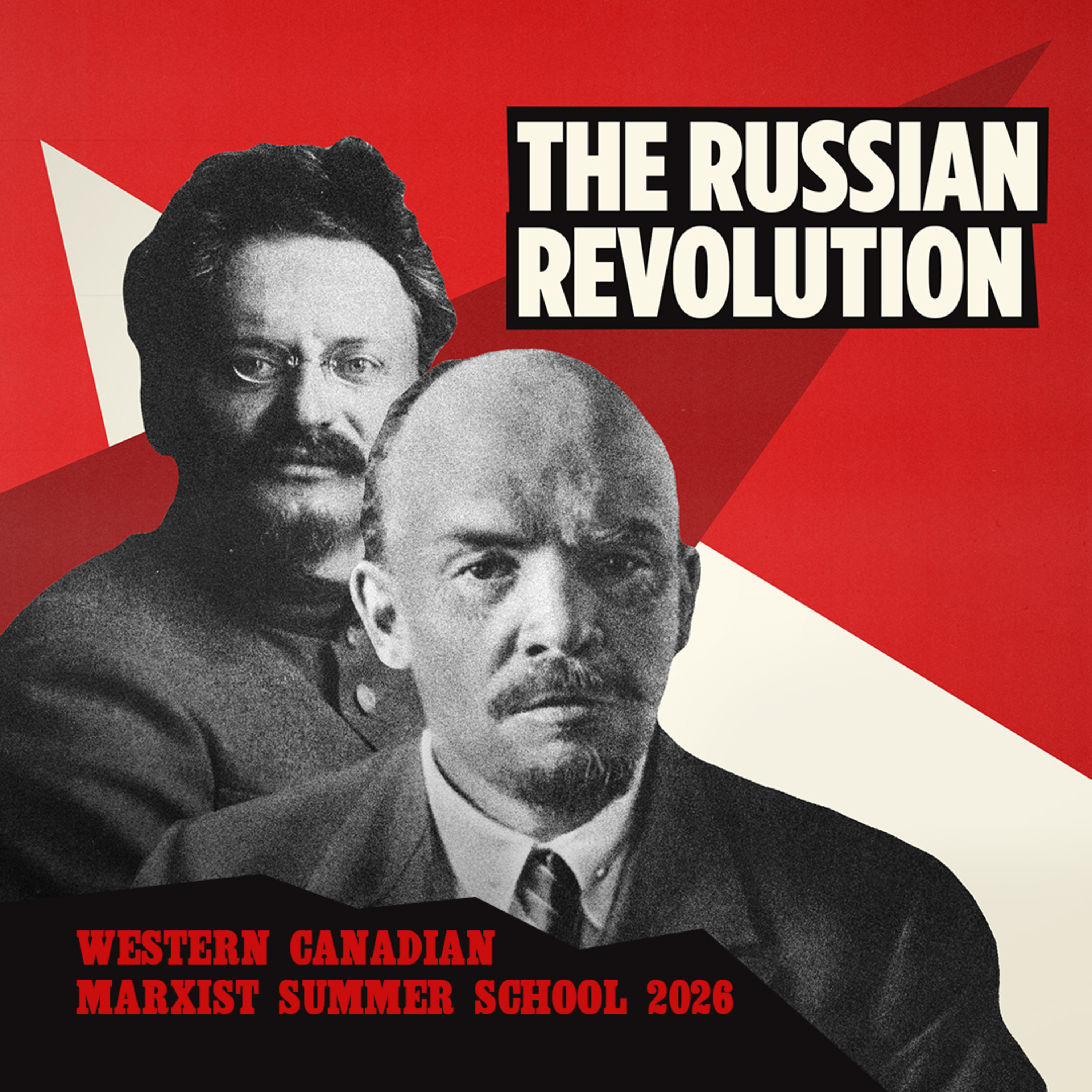
The Russian Revolution: Ten days that shook the world
from Marxist Audio Archive
51m 33s
The Russian Revolution stands as a pivotal moment in human history because it was the first time the working class seized political power and began building socialism. Unlike other revolutions that were crushed or failed to transform society, the Russian Revolution overthrew Tsarism through mass mobilization, strikes, and the rise of workers’ councils (soviets). Despite initial dual power between the provisional government and the soviets, the Bolsheviks—led by Lenin—provided clear revolutionary strategy, resisting opportunism and exposing the provisional government’s inability to deliver peace, land, or bread. The revolution was not a violent seizure of a palace, but a democratic, mass-driven process, with workers and soldiers voting in favor of socialist governance. The October Revolution culminated in the overthrow of the provisional government, establishing the world’s first workers’ state. It introduced real democratic control, including workers’ management of industry, land redistribution, women’s rights, and national self-determination. Most importantly, it proved that a socialist revolution could succeed through popular struggle and disciplined leadership, setting a precedent for future revolutionary movements. The event remains significant because it demonstrated that socialism is not inevitable, but achievable through organized, conscious class struggle.
Yeah, the Russian Revolution, what was the Russian Revolution?
Very important question.
This was a remarkable event.
There have been, and the importance of this for us to study today, is that there have
been many, many revolutions.
We have them all the time, if you haven't noticed.
In different countries around the world, revolutions actually are inevitable.
They are a product of the capitalist system, which makes it so that the masses cannot
continue to live as they were any longer and they rise up to try to transform society.
But socialism, which is a new form of society with the workers in power, in control, is
not inevitable.
Revolutions are inevitable.
Socialism is not.
The entire history of the 20th century clearly demonstrates this, as conclusively proven
this.
And even in the vast number of years, there has been a number of great revolutions, amazing
revolutions with millions of millions of poor people rising up to try to transform society
from Kenya to Bangladesh to Sri Lanka to Indonesia to Nepal.
But none of these revolutions have fundamentally changed anything if we're going to be brutally
honest about it.
They haven't changed the system.
The ultra-rich still rule.
They still control the politicians, many times they are the politicians.
And the rich keep getting richer as we get poorer.
This is what makes the Russian Revolution distinct because this is not what happened in
the Russian Revolution.
The Russian Revolution was the first time and the only time, actually, that the oppressed
and exploited masses over through the ruling class, not only over through the government,
they over through the government, and they over through the ruling class and they over
through the system, and they at least began to construct socialism.
So this is why we describe this event as the most important event in human history.
Some people say, "Oh, what do you say?"
Is there any other event in human history that can claim this?
There isn't.
So this is a fundamental importance for us to study today because as revolutionaries,
we are trying, we want socialism, right?
We do not want capitalism.
And we want millions of people are starting to ask this question, "What do we do?
What is to be done?"
And so by studying the Russian Revolution, we can answer the question of how?
That is what we, I will try to hopefully get through today of how did they do this.
So a bit of background.
In many ways, the fact that the workers came to power in Russia was in some ways surprising.
It was a bit weird because Marx had laid out his theory about the proletarian revolution,
you know, scientific socialism, the working class, being the force that is going to overthrow
the capitalist class, take control of the means of production, and start building socialism.
Marx thought, therefore, it would not be Russia that would be the first that the workers
would come to power, but it would be Britain or Germany or a more advanced capitalist country.
But as Lenin described, capitalism didn't break at its strongest link in Britain, it broke
at its weakest link or one of the weakest links in Russia.
It was a weak link because it was, yeah, it wasn't even really fully a capitalist country.
It was largely futile, the economic relations, it was a very peasant-based economy, a very
small working class, and yeah, for a very long period of time, there wasn't very much
of what you would describe as real industry.
Then near the end of the 19th century, you had a rapid development on the basis of foreign
investment from imperialist powers, and very rapidly, you had this backwards country, at
least the big cities were transformed, and there was big industries developed.
But politically, so you had as the economic foundation of society was shifting, but the
political superstructure was still based on the old society.
You had Tsarism, you had Tsar Nicholas II, he was the emperor, the God King, emperor,
no democracy to speak of.
It was one of the most repressive brutal regimes in history.
Netflix has recently done a very nice show called "The Last Zars," which tries to
purify them, it's disgusting to be honest, if you know anything about the Tsarist regime,
but this is what culture is under capitalism, I guess.
But yeah, they had some of the most, it was so repressive because it was like an old feudal
monarchy, essentially, with a king, right?
But they had, it was Trotsky called this "combined and uneven development," that you had capitalism
in Europe, and you had advanced technique and everything, and you had advanced repressive
techniques.
And so you had a few ancient despotic feudal regime that had the most repressive techniques
of modern capitalism, a giant army, a secret police, etc.
No group was spared, the brutal repression, women, Jews, especially, not all national minorities
Russia was known as the prison house of nations, most people that lived in the Russian Empire
were not Russian, and workers' movements, any time the workers started the rise up to
fight for better wages or whatever, they were brutally put down in blood.
Trade unions were illegal, they were not allowed, strikes were therefore not allowed, legally,
demonstrations, similarly, there was really free speech did not exist, education was controlled
by the Russian Orthodox Church.
And Zorozm was also the main bulwark of reaction in Europe.
Every time there was traditionally, every time there was a revolution in a European country,
there would be this multi-million peasant army that would roll in from Russia and put
it down in blood.
So this seemingly, actually, this is a lesson in materialism, sometimes, quite often,
I find a lot of people on the left are very superficial in the way they analyze things.
They look at the surface, and they say, it's hopeless, you know, doomerisms like this,
doesn't see beneath the surface.
So yeah, you could look at this situation in Russia and be like, this sucks, this really
sucks, this is horrible, this is this horrible system, this horrible regime that is repressing
everyone, most of the revolutionaries didn't live in Russia, they lived, they couldn't be
in Russia, they lived outside.
So this was this seemingly a movable object, the Russian Tsarist regime collapsed like
a house of cards in February 1917.
How?
Why?
Well, as I mentioned, you had this rapid development of capitalism, which the Tsar had
opened up to.
He started modernizing and he let investment in, they developed factories, and he was not
a Marxist, obviously, so he didn't think this through.
But at the end of the day, that was his undoing.
Because the investment, you know, as Marx said, capitalism creates its own grave diggers.
And through the building of a modern proletariat, a very young, fresh proletariat, peasants pulled
from the countryside into these giant factories that were the size of small towns, you're talking
20, 30,000 people in a factory, hyper-exploited, didn't have any traditions, didn't have in
Europe, they had social, like Germany had social democratic traditions and trade unions.
You didn't really have that in Russia.
So you had this like raw anger and desire to change society.
And yeah, under the boot of Tsarism.
So yeah, this led to the 1905 revolution, which yeah, Rose Luxembourg wrote the Mass Strike
about it.
I think it was the first time in Europe you had this like mass general strike, insurrectionary
general strike movement and Tsarism got a bloody nose from that.
They eventually put it down, drowned it in blood.
The Tsar Nicholas became known as Nicholas the Bloody because of this.
This revolution is important because it's the first time that what is known as Soviets
appear.
Soviet is basically the Russian word for council.
And you have these very democratic workers, councils formed as organs of struggle, right?
Eller eventually put down in blood.
But this is something I think that is important for us to understand is that the masses learn,
we often say this, they don't learn from, they don't go and read Das Kapital and learn
about, they learn about what capitalism is from experiencing capitalism.
And they learn valuable lessons about what Tsarism was by being shot and being put down in
blood when they tried to. rise up. They first rose up as appealing to him, little father, please save us, gun them
down in bloody Sunday in 1905. So yeah, this is the first time the Soviets appear. And this
was a lesson, even though the Soviets were put down, and the revolution was drowned
in blood, people remember. Masses remembered that. So Lenin said 1905 was the dress rehearsal
for 1917. So yes, the movement was put down in blood, but no reaction, no state can stop
the movement of history, can stop the wheels of history, and the movement picked up again
right before World War I. And there were big strike movements because people were brutally
exploited, and they couldn't stand it. They had to find a way out of this. This movement
was briefly cut across by World War I. It's a classic thing that the ruling class quite
often does. Actually, you're seeing it constantly with Israel, every time there's internal problems.
It's external enemy war. You can ramp up nationalism and jingoism and rally the workers
behind the government and the ruling class. And that's precisely what Russia did. They
joined World War I on the side of the so-called Allies, Britain, and France. But yeah, war
is one of those aspects that cuts across the class struggle. But dialectically, contradictory,
it exposes, it sharpens all of the contradictions of society. Think about it, you're getting killed.
You're getting family members killed. And that jingoism, that kind of nationalism, nationalist
hysteria around war suddenly gives way to people being quite upset. And really, that's
what happened leading into 1917. The pressures of the war fell on the poorest, the hardest.
The Russian army was very undeveloped compared to the German army. So it was like millions
of peasants being sent to the front lines as cannon fodder, just getting mowed down. And
it was just absolutely horrible. It was a bloodbath. Economically, this also posed problems
as war quite often does. The people couldn't get enough to eat. One of the main demands
in Russia was bread. Peace, land, and bread. That was one of the main slogans. Yeah, and
so this was this situation where it seemed like this all-power Russian regime that was
gone to war that had put down the 1905 revolution in blood that seemed untouchable, collapsed
like a house of cards in February 1917. In January of that year, there were strikes
against food shortages. As I mentioned, the question of bread was central. There were
bread lines, right? People couldn't get enough to eat. There was inflation. This shows
something interesting that a lot of people know about the Russian Revolution. This actually
happened on March 8th. It was on Women's Day. And the women textile workers were the first
to fight. They actually went to the Bolsheviks in Petrograd and said, "Hey, we got us go
on demonstrate on Women's Day." And the Bolshevik leaders that were there were actually conservative.
And they said, "No, no, no, no. Are you crazy? You're going to get shot down." And they
said, "Well, fuck you. We're going to go anyway. We're going to go out anyway." And
they went anyway. And they're dragging the men out, because women were one of the most
oppressed groups in Russian society. And quite often, the most oppressed group can
lead from the front very easily, because they don't have anything to lose. And they have
everything to gain. And so they lack that sort of conservatism, right? So they dragged
the men out. There were mass strikes across all of St. Petersburg. The strikes went beyond
unions. There was unorganized workers that were striking. It was mass spontaneous strike.
The Tsar, I think, thought, "Oh, just do what I did in 1905, just the same old thing,
bring out the cavalry, start shooting them down, or tell them to go home." But this did
not work. The revolution had run too deep. People had learned from the previous experiences.
And this is the thing about the army. I think sometimes people think the army is all powerful,
but the army is filled with humans. There are humans that have to pull the trigger. What
is it due to you when you pull a trigger and kill someone? It causes a big political, especially
working class people or peasantry in the army that are forced by the state, the ruling
class, to put down their fellow brothers and sisters. It causes a political question.
And when they asked them to do it again in February 1917, they refused. And there was mass
defections over to the side of the revolution. They actually started shooting on their officers.
There were all told probably about 1,200 people that died in this revolution, in what's
known as the February revolution. But the end of it was amazing. This is our abdicated.
The regime collapsed. It could not be maintained. So this is a very interesting moment. The masses,
the working class, the textile workers and other workers that have gone on strike. They've
split the army down the middle. They've come over to the side of the revolution. And the
Tsarism has fallen. So the question was, who rules now? As is quite often in revolutions,
we've actually seen this in some countries. If you don't have a plan for who rules, it's
not good. Because someone's going to rule. Yeah. And this shows us something quite important
about power. That the bourgeoisie are used to ruling. And if you don't have, the workers
don't have a plan to take power. The ruling class or a faction of the ruling class or
the bourgeoisie or their military will step into that vacuum and take power and just continue
things. They might make a few cosmetic changes, right? So, and this is, this is what happened.
You had the provisional government formed. And now the provisional government was a government
of liberal bourgeois. Actually, people that were entirely opposed to the revolution, they
did not like it. They were upset about it. They thought it went too far. They criticized
the Tsar. They said, "Well, you shouldn't have shot them. You should have used water cannons."
It's kind of like Joe Biden's, you know, "Shoot them in the leg." If you remember that
one. So, yeah, they did want to put down the revolution. They just thought that the
Tsar did it not in the nicest way. So, yes, this was what was known as the provisional
government of bourgeois liberals, people like Miliukov, who is one of the main bourgeois
theoreticians, kind of historians, Guchov, who is a big industrialist. And at the same time,
the workers remembered 1905 and they formed Soviets, which was fantastic because these
were the most democratic organs, right? They were workers' democracy, not bourgeois democracy
where you would vote once every four years for a guy in a suit, who then betrays everything
he said he was going to do. This was an active kind of direct democracy of the masses,
day in, day out, week in, week out. That's what a Soviet is. It's a council, right? So, those
reappear. Very contradictory. This is the paradox of the February Revolution, because you
get the Soviets and the provisional government. The provisional government is a bourgeois government,
right? So, the importance of the Russian Revolution. So, up until now, we've seen this before
in other revolutions. You've seen, actually, I don't know if it's still the case, but up
until very recently in Kashmir, you've had, you have dual power. I don't know if you
know that in Pakistan, I'll, I'll keep by Kashmir. There is a situation, or there has
been, of dual power, where you have the bourgeois government alongside community or people's
councils, basically. Not new, had it many times throughout history. Actually, talked about
the Spanish Revolution in the previous session. In the Spanish Revolution, you had these,
come with these gobinianos that were basically like workers' councils that ran large swathes
of Catalonia, the state, right? So, up to here, nothing exciting, quite enthusiastic,
not new, or not different than a lot of things we've already seen. This is where we get
to the difference and what we really need to take home. You had the Bolshevik party. So,
in 1917, the beginning of the year, the Bolshevik party that had been built over 20 plus years
before through blood, sweat, tears, all that thankless work that we all do, that nobody
sees in the history books that they had been doing. They had built them up to about 8,000
members. Now, that's a decent size, but it was in a population of 150 million, so you
got to put it in context, right? But these 8,000 members, importantly, they were, they were
most of the main leading working class activists in the main industrial areas, right? They had,
so Bolsheviks had patiently built that up, and one people over to their ideas prior to
the revolution. The Soviets that I mentioned had reappeared.
But in the context of a revolution,
where you have millions, a revolution is millions of people.
I would say politically untutored people,
people that aren't in your reading group.
They're not in a party necessarily.
They don't know anything that much about politics.
They're just thrown into the movement.
And what happened was the Bolsheviks
to push to the side, because if you think about it,
when people come into a struggle,
they tend to first choose the path of least resistance.
So when they looked at it, the Bolsheviks
weren't the only socialist organization.
You also had the Mensheviks.
And you had the social revolutionaries, the SRs.
And the SRs and the Mensheviks were supporting
the provisional government.
They were saying, look, we overthrew Tsarism.
We're great.
We need to unite.
Left unity, right?
We all need to unite.
We overthrew the Tsar.
We're all united.
The Bolshev-- I'll get into what the Bolsheviks believe.
But that's not what the Bolsheviks ultimately said.
So they were exposing the harsh truth of the situation
and telling people things that they were not ready to hear
yet that it's not going to be good
if we all support the provisional government.
It's not one big happy family.
So yeah, because of the situation
where millions of these people were thrown into the struggle,
new people, fresh people, the Mensheviks and the SRs
won an absolute crushing majority in the Soviets,
in the first Soviets, when they reappear.
And the Bolsheviks were relegated to a tiny minority.
And the workers and the soldiers looked to the Soviets.
They didn't look to the provisional government.
They looked to the Soviets.
But the leaders of the Soviets told them, well,
we can't take power because it's a bourgeois revolution.
We were overthrowing Tsarism.
So we have to support the provisional government.
And so I think at this time, a lot of the workers and soldiers
are going to, I guess so.
OK, sure, I trust you, right?
Yes, right, we need to be united.
Sure, I hate Tsar more than anything, right?
So yeah, you have this very contradictory situation
in which the provisional government is in power.
But no one has elected it.
And it only exists because the Soviet is supporting it.
In the words of Guchav, who's a reactionary bourgeois
industrialist in the provisional government,
he says, it is clear that the provisional government
exists only insofar as the Soviet allows.
So we talked about it a little bit in previous sessions.
This is a situation of dual power.
Again, we've seen this before.
We have seen situations of dual power many times.
The differences, you have the Bolshevik party.
And therefore, you have a potential resolution
of the dual power situation in the favor of the workers.
And that is what we are trying to do, what we're preparing for.
So as I mentioned, the Bolsheviks were in a tiny minority.
There was a carnival-type mood of, yay, we over through the czar.
This repressive regime that's existed for hundreds of years.
And people think winning is easy at this point.
This is quite a common phenomenon at the beginning
of a revolution.
And there's massive pressure to support the provisional government.
And the Mensheviks and the SRs, as reformists usually do,
they just bend to that popular pressure.
And they opportunistically supported the provisional government.
So this is the contradiction of the February revolution.
That the liberals were in power only
because the Soviets supported them.
But the liberals could not deliver on any of the basic demands
of the revolution.
And actually, the liberals, as I mentioned,
they didn't like the revolution.
So peace, land, and bread.
The bourgeoisie that were in power now
through the provisional government supported the war.
And they actually had their own imperialist interests.
They were allied with France and Britain.
And they wanted-- they thought, this world war,
this is pretty good, because the Ottoman Empire is collapsing.
And maybe we'll get a chunk of it.
So they couldn't deliver peace, even though the Mensheviks wanted peace.
Land, big question.
The peasants wanted land.
They had had a so-called agrarian reform.
In I believe it was in the 1860s that a previous R had done.
But all it did was chain the peasants to the land
in the form of debt.
It didn't really give them the land.
So-- and the bourgeoisie in the cities in Russia
were actually tied hand-in-foot to the feudal lords.
In many ways, they were the same people a lot of the time.
So they had no interest in giving land to the peasants.
Not like in the French Revolution or previous bourgeois
revolutions where the peasants seized the land
and the bourgeois revolution granted the peasants the land.
And that was the basis for the development of capitalism.
In Russia, the bourgeoisie in Russia
was reactionary, was allied with foreign imperialism
and the landlords and did not want to give the land to the peasants.
So they were in power.
But they couldn't actually fulfill any of the tasks of what
we'd described as the bourgeois democratic revolution,
which is, yeah, land to the peasants, expulsion of imperialism,
sovereignty, democracy.
They couldn't fulfill any of these things.
The question of bread, there was inflation.
There was war.
There was all these problems.
They couldn't actually give the people what they needed, food.
So the masses wanted all these things solved, which
freaked out the liberals, because that
was opposed to their economic interests.
And the masses were radicalizing very quickly.
Revolution is different than normal times when things move
seem to move very slowly.
A revolution, things move very quick.
And this actually pushed the liberals to the right
because they were scared of the workers.
Milyukov, the main leader of the cadets,
that was the main bourgeois liberal party,
that was leading the provisional government.
He wanted the Tsar back.
He said, we need to bring back a Tsar,
because this situation is crazy.
You need a stability.
So we need a monarch.
And what they really wanted, they said,
you know what England did was good.
They had a revolution.
And then they brought the king back in 1688.
So they get constitutional monarchy.
You get the best of both worlds, right?
We can be in power.
And they're going to have the monarchy as a backup to help us.
So that's what they want.
So here you have a very contradictory situation.
Everyone hates Tsarism.
They've overthrown Tsarism.
They've established this government of people that
are supposed to believe in democracy.
And then they're trying to smuggle the Tsar in the back door.
And then the leaders of the workers and the peasants
in the Soviets support the provisional government.
So this was the contradictory, the paradox
of the February revolution.
It was a situation of dual power.
It needed to be resolved one way or another.
As I mentioned, every other example
that I can think of, it's resolved in a reactionary way
that the working class organs of power
are drowned in blood and they establish a military dictatorship.
The importance of the Russian Revolution
is it resolved, as we will see, by the working class
and in alliance with the peasants coming to power.
And that's why this event is important.
So Lenin, I haven't talked about him yet much,
but he was the main theoretical leader
of the Bolsheviks who had built the party.
He was in exile because revolutionaries
weren't really allowed to be in Zara's Russia,
or they'd be arrested or killed.
So he returns-- the revolution happens.
He's not in Russia.
He returns back to Russia in April.
There's actually an interesting situation
that captures this paradox and I read a quote to you guys.
So he comes back and he comes into Finland,
the station in Finland.
And the leader of the Petrograd Soviet, Chiaidze,
and they come with all of these--
Lenin is well known.
Like he's a well-known the historic leader
of the Bolshevik party.
And everyone knows he's coming back.
And they're all scratching their heads and like, oh shit.
Is he going to unite with us?
He tends to be quite--
they know he's not opportunist.
He's quite a principled guy, Lenin.
But yeah, we're going to go meet him at the station,
the train station.
And the president of the Petrograd Soviet, Chiaidze,
goes and says he meets him.
Lenin comes off the train.
There's all these people there to meet Lenin, right?
And they think, great.
Lenin's coming back.
We've overthrown the Zara.
Look what we did, Lenin, aren't you happy?
And he says, comrade Lenin.
In the name of the Petrograd Soviet and the whole revolution,
we welcome you to Russia.
But we consider that the chief task
of the revolutionary democracy at present
is to defend our revolution against every kind of attack,
both from within and from without.
We hope that you will join us in striving
towards this.
goal. And then Lenin does, he does one of the most amazing things. He just ignores him.
It goes out, turns to the people assembled. And he says, "Dear comrades, soldiers, sailors,
workers, I am happy to greet you in the victorious Russian Revolution, to greet you as the
advance guard of the international proletarian army. The hour is not far when, at the summons
of our comrade Karl Liebenächt, who is a German revolutionary, the people will turn their
weapons against their capitalistic exploiters. The Russian Revolution, achieved by you, has
opened a new epoch, long live the worldwide socialist revolution." And the Mensheviks and
the social revolutionaries who have been leading the Soviets and supporting the professional
government are just shocked. Lenin is just like Mike dropped on them. Yeah, he explained
that we are, we've, we're passing through a stage. He releases his April feces. And
at this time, the Bolshevik party, the leaders that were in Russia are very confused. Lenin's
not there, and they're like, "Oh, what, what, what do we do? This new situation is crazy."
And they're saying, "Oh, well, yeah, we should, look, the Mensheviks, it seems like
they're pretty good. Maybe we should reunite with them." And they're, they're tending to
try to merge with them and actually tending to support the professional government because
of all that pressure. There's a mass pressure in a revolution. There is so much pressure
to not stand out, to just be like everyone else and to unite, right? And so they tended
to do that. So Lenin comes back and he immediately sees the problem. He's lighting, he's writing
letters to them from afar, saying, "Absolutely no confidence in the professional government. Suspect
them. Hold them in suspect. We will not trust them. They cannot solve any of the problems."
He comes back and he goes on a war footing inside the Bolshevik party to convince them
of what is necessary. And he basically, in his April feces, which I highly recommend
reading, they're very short. It is one of the most brilliant, I think probably the most
brilliant texts in revolutionary strategy and tactics. Not in theory, but in practice,
because it's in the middle of a revolution, right? What he explains is that the workers
have not taken power in Russia, even though they were the ones that made the revolution.
And he says, "Not because they couldn't take power, but because," quote, "they had insufficient
class consciousness and organization." He said, "But we should know, and this should
give us confidence that the provisional government and the bourgeois lazy cannot solve any of the
burning questions." So we cannot support the provisional government at all. We cannot
give any support for the war. That is, it's just because you had a revolution, didn't
change the nature of the war. It's still an imperialist war, so we will not support the war.
And the only resolution to this can be if the Soviets come to power. And this is what
he very clearly explains in the apothecities, which was different from what everyone else
was saying at the time. And yeah, this is what really makes this revolution stand out.
Is the role of the Bolshevik Party, in particular the leadership of Lenin, that steers this ship
away from the iceberg and towards the socialist revolution? So events, as I said, events move
very quickly in the middle of a revolution. And just a few short months, everything that
Lenin had said in the apothecities was became true. The provisional government was unable
to solve any of the problems facing the masses. The liberals were extremely discredited.
And as this, we've also seen this happen many times, when the bourgeoisie become discredited,
what do they do? They call up the left. The workers like you, can you help us out here?
They got in this guy called Karinsky. And he was a member of the Social Revolutionary Party,
kind of a socialist guy. He would tell you that in private, maybe not in public. Yeah,
use the label didn't really mean it, that type of person. But a lot of people held him
in high regard. As things go on, so he ends up becoming the prime minister. He becomes
the main prime minister. The all bunch of Mensheviks and SRs are brought into the provisional
government. So what they're doing is they're using the workers' leaders to dupe the workers
and rule on their behalf. We've seen this happen many times before as well. So this is also
not that different. So yes. So yes, again, the main difference is the existence of the
Bolshevik Party. So the July days is a kind of a midway point in the revolution. So this
is a point where, as I said, things move very quickly from February to July. People from
that carnival period of yay, were all united. They go, "Oh, shit. These bastards aren't
solving anything." They've tried new offensives. They actually try to mobilize more troops to
go to the front. And people like, "What are you talking about? We overthrew this arc because
you want to put an end to the war. Peace, you know? There's a mass armed demonstration
in Petrograd. The workers in Petrograd are the advanced guard of the revolution. They
want to move to seize power in July. This is also one of the reasons why we have to build
the revolutionary party. Because as was shown in 1905, in 1905, in 1907, when the Tsar put
down the revolution, he was essentially playing whack-a-mole. Some people would rise up in
Ukraine in all different areas of the Russian Empire, and he'd put them down. But they didn't
rise up together. And there was no real party. The Bolshevik, the Bolshevik is too small. There
is no real uniting force, right? So here, you have a situation that is dangerous because
there's one section that is of the working class that's moving far ahead of where everyone
else is at, especially the peasants, who Russia is 150 million people. And the vast majority
of that are peasants in the countryside. And they probably don't even know what's happened
in the city. They might not even know that the Tsar is overthrown. And you don't want
a Paris Commune situation. And the Paris Commune, as we mentioned in previous sessions, was
a situation in which the workers took power in one city. They did not spread the revolution
to the rest of the country, became isolated, and drowned in blood. So yeah, the Bolsheviks
put themselves at the head of this demonstration, and did everything in their power to hold
the workers back from doing anything ridiculous, adventurous. Because at that point, that would
have amounted to a horrible adventure. So yes, there's a wave of repression, nonetheless.
The Bolsheviks are basically outlawed. The Soviets participate, the Soviet leaders participate
in the putting down the Bolsheviks. Lenin goes into hiding. Trotsky is arrested. Trotsky
at this point has come back into Russia, and he's become the leader of the Petrograd Soviet.
He was the leader of the president of the Petrograd Soviet in 1905. He's kind of a really well-known
revolutionary figure. I can't go too much into Trotsky if someone wants to come in on
the discussion. Please do. But they could not crush this movement. It had gone too far.
The Bolsheviks at this point are a couple hundred thousand members. They've gone from 8,000,
and because they stuck to their guns, they did not bend. They did not do what everyone
else was doing. They just explained the truth to people. That only when the Soviets come
to power will we be able to solve all these problems. By this time everyone goes, damn,
they were right. Everyone's joining them, right? But they tried to repress the movement.
They couldn't repress it. If they wanted to repress the Bolsheviks, they're basically
repressing the working class as a whole. That's the power of the workers. They had to
repress the Soviets as such, where the Bolsheviks are becoming increasingly popular.
At this point, the capitalists have lost faith in the provisional government. They've said,
"Jesus Christ, the situation is serious. You have workers' councils. You have armed
workers' guards. You have factories being seized. You have strikes. They're trying to
lower the working day. They're affecting my profits." So they start losing faith in
the provisional government. They said, "Yeah, well, we supported you when we thought that
you got a handle on this situation. But now it seems like you don't." So at this point,
the Bolsheviks are repressed after the July days. The pendulum of the class struggle swings
to the right. They repress the left, which gives the initiative to the right wing. And this
usher's in a period where the bourgeoisie try to resolve that contradiction of dual power
by liquidating the Soviets, which we have seen many times. If you know anything about
the Chilean revolution, this was essentially Pinochet. So they bring in a guy called Cornelove.
Yes.
Yes, Kornelov was a reactionary general and he said this, he said, "It's time to hang
the German agents in spies.
Lenin, first of all, it was a big slander being spread around that Lenin was a German agent.
Yeah, it's time to hang the German agents in spies.
Lenin, first of all, and disperse the Soviet of workers and peasants deputies, yes, and
disperse it so it will never get together again."
So that's what Kornelov's trying to do.
He actually is first plotting with Kurenski because Kurenski is also not happy with the
Soviets.
You can see that the Bolsheviks are gaining in the Soviets and he wants to put an end.
They're paralyzing things, right, because it's a situation to do a power.
The Berzwazi need to have power in their hands, not be checking it with the Soviets or having
things that they do overruled.
So he's plotting with Kornelov.
The only problem here is Kornelov is that the Berzwazi don't really like Kurenski either.
He's too weak and Kornelov hates Kurenski.
And so he starts plotting to overthrow Kurenski as well.
Yes, I'm sorry, I'm going to have to wrap up soon.
So the Mensheviks and the SRs that are leaving the Soviets, they see this situation and
they go, "Oh, shit.
We could lose our heads and the Bolsheviks are the only ones that have authority in the
worker class that can mobilize the workers to defend the revolution against Kornelov."
So the Bolsheviks are released out of prison.
They form a united front with the Bolsheviks in the military, what's known as the military
revolutionary committee, and they organize an armed defense of the capital.
They form tens of thousands of armed red guards.
And yeah, I believe this really shows the power of the working class.
Kornelov plans his coup.
He sends troops in on the railway on the trains.
The Bolsheviks send in agitators.
They divert the trains off the path out of the way, not to the city.
And then they send agitators onto the train who explain to the soldiers because the soldiers
actually are told a bunch of lies of what they're doing.
And they tell them what's actually going on.
The coup dissipates without a shot being fired.
Actually, there was one shot fired.
The guy, Kornelov called it in sick.
He didn't go to his own coup.
And the guy that led the coup is depressed and shoots himself, which is good, yes.
So out of the situation, the Bolsheviks gain massively.
You think about it.
We've proven in practice that they can defend the revolution.
They've defeated Kornelov.
Kurenski is proven to be complicit and weak.
And then what you have is a situation where everything starts coming up Bolshevik.
In September, every single Soviet starts voting in favor of a Soviet government.
In favor of the Bolsheviks.
I could list it, but I don't have time.
As Sukanov, who was one of the main Mensheviks leaders.
So he can't be accused of having pro-Bolshevik views.
He says this.
He says, they were among the masses.
In the factories, every day and all the time, they became the party of the masses because
they were always there guiding both in great things and small the whole life of the factories
and the barracks.
The masses lived and breathed together with the Bolsheviks.
They were wholly in the hands of the party of Lenin and Trotsky.
So by October 16th, they had 400,000 members, and they became the decisive leadership of
the proletariat.
But the question of power is still not resolved.
Now if you've ever heard anything about the October revolution, especially in the halls
of academia, they will quite often say, oh, Lenin's coup.
And they describe this as this anti-democratic thing.
But as I described, the February revolution, actually, no one voted for the provisional
government.
It was a complete anti-democratic imposition.
The only democratic mandate that existed was the Soviets that were the only real democratic
organs.
So if you want to look at it this way, the October revolution was the democratic organs
of the Soviets taking out the one that had no democratic basis, the provisional government
that everyone hated.
So how was the power taken?
Well, quite often when you think of revolution, it can seem like this romantic thing of a
couple of dudes and guns running into a parliament building and declaring something.
There usually is some element of truth to this, but I think that's not helpful to understand
what a revolution is because most of the revolution was done prior to the government being removed.
They carried a massive campaign amongst the soldiers and the sailors, the workers, they
discussed with them.
They discussed with them the question of seizing power, particularly Trotsky seemed to be everywhere,
talking to people and people were voting on it and agreeing.
It was a massive democratic movement.
They sent detachments of commissars to the telephone exchange, to the print shops, to the railways,
to all the government buildings and the workers all agreed.
And at this point, at a certain point, the government is totally isolated.
They're just in the Winter Palace.
They don't have control of anything.
There is the sailors have all come over to the Soviets and are in favor of a Soviet government,
and the provisional government is completely helpless.
They try to order the arrest of the Military Revolutionary Committee leaders and this completely
backfires, and people see this for what it is.
You're trying to arrest the people that saved us from Cornelauve?
Who's interest do you have at heart?
The government calls a council to try to figure out what to do.
And there's one general who's there who says, "I don't know why this session was called.
We have no tangible military force and consequently are incapable of taking any action whatsoever."
So it describes, "What is power?"
The general is extra-scribing.
They don't have power.
Power is something real, right?
And so the October Revolution was a resolution to the contradiction of February in the favor
of the working class and the peasantry.
So on October 16th, the Winter Palace is taken almost without bloodshed.
It was largely bloodless.
The joke, as you may have heard, in the filming of the movie about the seizure of the Winter
Palace, there is more bloodshed than because there was a pyrotechnic disaster and then in
the seizure of power.
So the Soviet Congress begins on October 25th, the day before the seizure of power, 649
delegates representing 318 provincial and local Soviets meet.
390 of the delegates are Bolsheviks, which is an outright majority, 72 are Mensheviks,
160 are SRs, so it's completely shifted.
At the beginning in February, Bolsheviks are very small minority.
Now they're the outright majority.
And the SRs, which is a peasant party, have split to the right SRs that want to support
the provisional government and the left SRs, 100 are left SRs, and they form a coalition
government with the Bolsheviks.
So yeah, those people say, all the Bolsheviks don't like working with anyone.
They just want to seize power, so it's not true.
They had a coalition government with the SRs as the first government of the Soviet Union.
In Lenin does a smate speech, the Winter Palace is overthrown in the middle of the Soviet
Congress, the government's overthrown, and he makes a speech and says, we will now proceed
to construct the socialist order.
This is really where our heritage is from this.
This was the most important event in human history.
I believe it was also the most democratic government in the history of the world.
Normally when someone takes power, what do they say?
They say, it's okay, go home, thank you, go home, go back to your home, just let us
handle it.
Right?
That's normally what happens.
What did Lenin say?
This is what he says.
This shows the nature of this revolution as a fundamentally different form of society.
He said, worker comrades, remember that it is now you who runs the state.
Don't go home, you have to run the state.
No one will help you if you do not unite and take all the affairs of the state into your
hands.
Our Soviets are now the bodies of state power with full powers, bodies with decision-making power.
Everybody knows that any time you try to get anything done that would benefit working
class people, what happens?
The media, the politicians, you think money grows on trees, that's impossible, and it gets
chopped up in the parliament and destroyed by the parliament or the Senate or whatever.
That's because we live, this is a bourgeois parliament.
And they have to say bail out a pipeline, what happens?
Boom.
When they have to bail out the capitalist, when they have to bail out condo developers in Vancouver,
it happens overnight, almost as if it's not a problem, they find money, it just comes out
of somewhere, you know?
But that's because it's a bourgeois government.
This shows what happens with the workers government, it's completely different.
they empowered the peasants to divide the land amongst themselves.
and be managed by their land committees.
They mobilized the workers to establish
workers control of industry.
They aggressively combated the famine and eliminated that.
For the first time, a great power, for the first time
in the history, withdraws from a war without annexing anything
and without violating anyone's rights or taking any spoils.
They declare the right of nations to self-determination,
women get the right to vote, a long list of other things.
It's establishing genuine equality before the law,
before all other countries, actually.
This is quite significant.
Actually, most of the capitalist world
gave women the right to vote because of the Russian revolution.
And it set an example that they didn't want to look like
assholes, you know?
So yeah, like I said, this is a fantastic event.
The first time in history that the working class has ever
taken power.
And yeah, so I think we need to learn the lesson is like,
we've seen many revolutions.
We've also seen many revolutions that had dual power,
but you've never had a revolution before,
in which the situation of dual power was resolved
in favor of the working class.
And that was because of the Bolshevik party.
I think we should study intently what the Bolshevik party was,
how it was built, how they conducted themselves.
Because that is the type of party that we need today.
And that is the type of party that we are building
with the Revolutionary Communist Party.
Leave it at that.
(audience applauds)
Podcast Summary
Key Points:
The Russian Revolution was unique because it was the first time the working class took power and began constructing socialism, unlike other revolutions that failed to transform the system.
Revolutions are inevitable under capitalism, but socialism is not, making the Russian Revolution a landmark event in human history.
The collapse of Tsarism in 1917 was driven by economic modernization, mass worker exploitation, and brutal repression, culminating in widespread strikes and mass resistance.
The February Revolution led to dual power, with the provisional government and workers’ Soviets coexisting, but the latter remained the true democratic and revolutionary force.
Lenin’s leadership and the Bolsheviks’ ideological clarity were critical in resisting opportunism, exposing the provisional government’s failures, and guiding the revolution toward socialist goals.
The July Days and Kornilov’s coup demonstrated the working class’s growing power and the Bolsheviks’ ability to defend the revolution through mass mobilization.
The October Revolution was a democratic, mass-driven seizure of power, not a coup, with support from soldiers, workers, and sailors, and was validated by a majority in the Soviet Congress.
The new Soviet government established workers’ control, land redistribution, women’s suffrage, and the right to self-determination, marking the first time workers ruled with real power and democratic accountability.
Summary:
The Russian Revolution stands as a pivotal moment in human history because it was the first time the working class seized political power and began building socialism. Unlike other revolutions that were crushed or failed to transform society, the Russian Revolution overthrew Tsarism through mass mobilization, strikes, and the rise of workers’ councils (soviets). Despite initial dual power between the provisional government and the soviets, the Bolsheviks—led by Lenin—provided clear revolutionary strategy, resisting opportunism and exposing the provisional government’s inability to deliver peace, land, or bread.
The revolution was not a violent seizure of a palace, but a democratic, mass-driven process, with workers and soldiers voting in favor of socialist governance. The October Revolution culminated in the overthrow of the provisional government, establishing the world’s first workers’ state. It introduced real democratic control, including workers’ management of industry, land redistribution, women’s rights, and national self-determination.
Most importantly, it proved that a socialist revolution could succeed through popular struggle and disciplined leadership, setting a precedent for future revolutionary movements. The event remains significant because it demonstrated that socialism is not inevitable, but achievable through organized, conscious class struggle.
FAQs
The Russian Revolution is distinct because it was the first time the working class overthrew the ruling class and began constructing socialism, unlike other revolutions that failed to change the system and left the wealthy in control.
It succeeded because the working class, through organized political action and the leadership of the Bolsheviks, took power and established a government that addressed the masses' demands for peace, land, and bread, unlike previous revolutions that were suppressed or co-opted.
The Bolshevik Party provided clear leadership, maintained class consciousness, and consistently opposed the provisional government, guiding the workers and soldiers toward socialist power through revolutionary strategy and democratic mobilization.
The Soviets were democratic worker councils that represented the real power of the masses, serving as the legitimate, grassroots organs of revolution and later forming the basis of the new Soviet government.
Lenin's principled leadership, especially in his 'April Theses,' clarified the need to reject the provisional government and push for workers' power, which united the masses and shifted the revolution in favor of socialism.
It was primarily a democratic process, with widespread worker and soldier support, mass discussions, and consent through the Soviets, resulting in a bloodless takeover of the Winter Palace.
Chat with AI
Loading...
Pro features
Go deeper with this episode
Unlock creator-grade tools that turn any transcript into show notes and subtitle files.
 PodcastTranscript AI