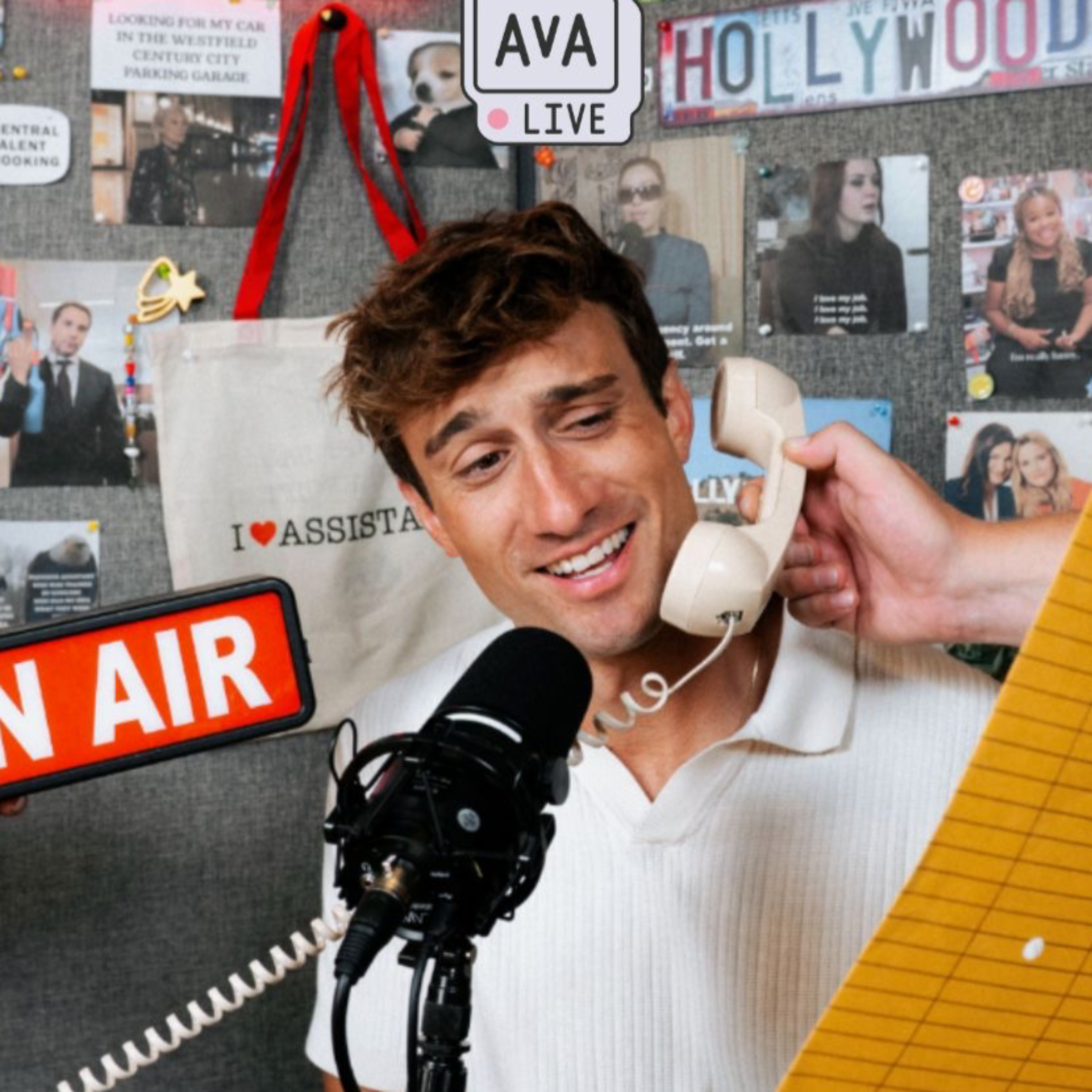
It is Wednesday, July 22nd. Welcome to AV Live. We are back better than ever. Why better than ever? Look at that bottom. Scroll bar. We got a news ticker. We always talk about news going on in Hollywood. Every week's a crazy week. We now have the ability for you to sit passively while your boss is yelling at you and you're on mute to know what's going on around the industry. Lot going on and six top stories the week will fire through him quickly. Nolan's Odyssey not just a career best, 264 million global opening. Did you know he also bans uggs on set? Kind of agree with him on that one. What about Netflix? They bought Ben Affleck's AI company Interpositive for $587 million. Guess everyone's got a price. Emmys. They're removing five categories out of the NBC telecast because of, well, attention span. But they're also revamping the awards in an attempt to grab more young fans. Three other stories. Spotify. They're expanding their video strategy, adding global charts to their video. That gave abilities as well as some IRL news. AMC everyone talks about the theaters are dead. Hollywood's dying. AMC's revenue rose by 14% to 1.6 billion. We are back. The World Cup Final shattered records with 62.8 million US viewers. Tough game to watch, but 62.8 no joke. So that's the news of the weekend Hollywood congrats to our production team. We figured out seamlessly to put that scroll bar at the bottom. We're thrilled for today's show sponsored and presented by central talent booking who we love at a door. We got four, wait five guests joining us. Jazzy Collins, who's an Emmy winning casting director, buying hits like Love Island USA and more. We have Jeremy Zimmer. You know his name. He is the co-founder and longtime CEO of UTA United Talent Agency. Max Cheyenne, who's the co-founder of Kaper. He also started just a little thing called Puck. He's in the food media space and we have Andrean Michelle. They're the co-founders of high mom productions and reality queens. They've worked on keeping up with the Kardashians, Seagirt lives, some Mormon wives and many more. But first up, we teased her bio. Jazzy Collins is an icon in the casting space. She's worked on everything from Love Island USA to the traders to the Bachelor of Franchise and we're thrilled to have her join on Avie Live. Let's bring her up. How are you? Hello. How are you? How are you doing that bio? You did a fantastic job. Thank you so much. You've done so much. You've started to cut it down to just a few sentences and, but for someone out there who may not be as familiar with the line of work that you do, can you just give a brief description or definition, I guess, of the work of a casting director? Yeah. So, especially a casting director that is on the unscripted side. We are looking for folks that are all different types of life, all different types of walks of life. They could be your neighbor down the street. They can be your trash man. They could be the model. You're looking for people that are willing to share their stories and put themselves out there. And every show is obviously has a different cast that we're looking for. We have people that are looking to compete on something like the traders to people that are looking for love on Love Island or the Bachelor of Bachelor at. So, if you just love being on camera and love having a good time, you're probably a good candidate for a reality TV. Well, I love that. That's why I brought you. It's my audition, I guess. I've already failed. Where's the craziest place? Where's from the top? Where's the craziest place you've ever found someone to cast? Oh, man. I spend a lot of time in Whole Foods and I spend a lot of time in Aeroan. I find the best types of characters in both of those places. What are they shopping for in Aeroan that catches your eyes at the $28 CMOS? It's probably actually $40 bucks or is it the hot bar that slaps? It is also $80 bucks. It's the hot bar. Because a lot of the time, most people are just like kind of standing there and looking around. And that also gives me the way of like, I can look at both profiles of their face and walk by. And then usually I could see their teeth and like smile when they're talking to someone so the hot bar is the best spot. So we got breaking news in the show to get casted on Love Island. You must be at the hot bar. It is true and scientifically proven. But let's go back to your career. You know, it seems like an area that's very specific. But how did you get into it? And when did you start having that, you know, figuring out that that was going to be your passion? Yeah. I had no idea casting was even a job that you could even do. I think everyone thinks PA is like the track you go on set and then you figure out whether or not you want to do. But casting is not something that you actually see. So my first job interview was for an office PA job. And I thought, you know, I was going to get the job. I was really excited and walked in and they actually filled the position before I walked in the door and they said, sorry, but you're great. Like you have a great personality. Do you have any interest in casting? And I said, sure. I've never heard of anything like that. Okay. And my first job was on Let's Ask America. And that was a Skype game show, which was ahead of its time because that was back in the past. And funnily enough, I actually cast my high school marine biologist teacher on it. I love that. Full circle. What was your favorite class in school? Oh, favorite class in school was definitely history. Okay. I'm really good at retaining and like stupid information. That is not a skill I have. But for kids, for kids or young people out there who want to break into that to the role that you're in 2026 is a very unique landscape for the line of work that you're working in. What advice would you have for them? Take us out for coffee. Take us out on a Zoom. We love talking about our jobs. There's nothing we love more about than just talking about how we got into the industry, what shows that we're working on and just picking our brains. So the amount of times I get DMs in my Instagram or I get a cold email from just someone that has an interest in it. And I respond to them. And I say, yeah, I have, you know, 20 minutes, let's hop on a Zoom and I'll talk to you about the casting process. If it's something that you want to do, a lot of times I've actually hired these people too. What makes a good cold email that stands out? Knowing a little bit about me, my past, what I've done, also having a really great, like big insight into reality TV, knowing that they actually watch and consume it. And then I also love when people like say, if someone was on this show, and I feel like if you were to cast this type of person that hasn't been on that and like actually thinking critically and putting that in an email, love that stuff. Because I know that if I were to actually hire them, they're actually going to also think critically on the job. I love that. That's how I've hired most of the people that work here too, including one that is one of the biggest consumers of reality TV that we know. She's going to join this call. We took a bunch of questions live from the fans, our ambassadors. Her name is Jocelyn. I believe we're going to have her in a sec. She's joining air. Jocelyn. Hi, Jocelyn. Hi, Jocelyn. Hi, Jocelyn. Nice to meet you. Nice to meet you. Jocelyn, are you work off this right now? So excited to talk to you. So excited. A lot of New Yorker at heart. I just live in LA now, so. Love it. You're back. So we talked to our community and got a lot of great quick questions that we want to hit you at. So the first thing, what is the wildest thing you've ever heard from someone during a casting interview that's made you think we need to have this person on the show? It wasn't the most wild thing, but it was the how they actually walked into the interview. Crystal that was on R.E. season of the Bachelor walked in wearing a pink dress and both of her dogs chucking in Wayne. Love that. I immediately was like, she's on the show. There's no way you can't have someone that walks into an interview and actually brings dogs so she didn't know that the office was dog friendly, but it was, but she walked in. And I was like, we have to put her on the show. She's great. That's amazing. And I bet the dogs were very well behaved. No biting. No biting. Love that. Okay, the next question is what is around the love island casting process that might surprise some people? Yes, I worked on season two of it. Right now, Jody Thomas is taking over and she's a phenomenal casting director, so shout out to her. When I was doing the casting process, things might be a little bit different than what it is currently, but we actually asked people to be on camera in their bathing suits and do a full 360. And I think it's very, very important that people know that yes, you're going to be on camera 24/7 in a bathing suit. If you can't even do that on camera, then you probably wouldn't be able to do that on the TV show, so. Totally. That makes sense. Okay, next question, when you're casting for love island, this was our most asked question. How do you know what makes a good OG versus a bombshell? You know, the OGs and the bombshells, funnily enough, we don't actually have any choice of it. That is all the network. It's not us. So the beauty of that is like, we get to just cast a wide net, and we see who we think would be a really good fit for the show based on personality, what they're looking for. We don't have to feel like we have to put them in one of those boxes. Totally. Have you been following along with this season of love island? Yes, amazing. Okay, so switching gears to the traders, obviously Rob won last season. And he was such a great trader because no, read him on love island, is there a love island, islander from this past season that you think would make a great trader? Oh, that's a really good question. You know what? Is it was it Trinity? Yeah, yeah, our winner, I think she would do it because here's the thing. She's really good at calling people out.
And that skill alone is really good at the round table. So honestly, that might be the, that might be a move right there. Love it. Okay, last question. If you were casting Warner for a show, which reality show do you think he would kill ends? Survivor. Yes. Or big brother. Honestly, I think Warner, I think a lot of people will, will trust you and take you to the end. To be honest, you got one of the best boss in the world. So I would trust. Yeah, you got, you got a good face Warner. Are you sure you don't want to do reality TV? Amazing. Well, it was so nice to meet you, Jazzy. So nice to meet you. Thank you. Thank you. Bye guys. What are your muted? She's the best. We, we love her. She's our, she's our reality TV stand when they were prepping me for this interview. I'm like, a lot of this is going over my head, but I, but I'm all in on it. But it's last question here and we end each segment with something called unsung heroes throughout your career or now. Who's someone behind the scenes that you'd love to shout out? Oh, I love that. So my right hand Chris Caputo is she has been such an amazing addition to my team. I've been working with her for now, that two years. And we actually cross paths, probably seven years ago. And I didn't at that time, I was not in the hiring position. And something about Chris, I always knew that she would be a fantastic addition to my team in the future. And now she's been on all of my shows for the past couple of years. And truly, I would not be standing here or sitting here today without Chris Caputo, because she is an absolute all star. So shout out Chris Caputo, shout out, Jazzy Collins. Thanks so much for joining the show. Love this conversation. I will see you on on survivor, I guess, right? Give me the call time and I'm there. I'll ask Jesse Tenenbaum, see if you're available. He's the casting director. We'll make it up. But thank you for being a good sport. Let me appreciate you. We'll see you, Jazzy. She was awesome. And we love, again, I'm out of reality TV stand, but I guess I'm going on survivor. What I am a stand up is people who are highlighting others in the world of entertainment. One of those is Kira Jo. She's a student ambassador for AVA, who has a new segment called Leading Ladies, which are highlighting women in entertainment. Ross, let's roll the clip. Hello, my name is Kira Jo. I'm an AVA student ambassador. And today, I'm going to tell you about the speaks leading ladies in the business and entertainment. So first, we have some things to address with our SNL girlies. Chloe Feynman announced on Thursday that she'll be leaving the show after seven seasons. And since SNL doesn't announce their final cast until basically right before the season airs, we don't know who, if anyone will be taking her spot. But she's wasting no time. She's already slated to join an upcoming Netflix series called Myron Bolatar as a series regular. And meanwhile, fellow cast members there at Sherman just signed with WME. She had her debut comedy special air last December, and she's now really pushing to expand into more film, TV, developing her own projects. And she also just appeared in Teenage Sex and Death at Camp My Asma, that premiered at Camp Film Festival. Also, some really big moves coming from Lucky Chap Entertainment, which is Margaret Robbie's theme of focus production company that produced Barbie. Their upcoming film, Hollow, written and directed by Lindsay Anderson, Vera and starring Sydney Swini, was just picked up by Sony. They've also announced a new film called Nasty, starring Jenna Ortega and Rose Byrne, and directed by Mary Bronstein. Ella Bates and Final Talks joined the cast of Sarah Polly's upcoming adaptation of Sylvia Platz, The Bell Jar. She'd be joining Carrie Mulligan and Billie Eilish, who's making her film debut in this project. And with The Bell Jar being such a literary classic, there's definitely a lot of pressure surrounding this adaptation. But so far, all major cast and crew that have been announced are women. So I'll take that win. Until next week, ABA. Thank you, Kira Jill. We're going to make that a recurring segment. And if anyone has ideas, segment, things they want to talk about. Reach out and looping in my
[email protected] or just DM assistance versus agents. So a lot of the show is virtual. But we do have guests in studio from time to time. And there's one right next to me that we've been excited to talk about. And talk to bring here on ABA Live. His name is Jeremy Zimmer. He's a co-founder and was longtime CEO of UTA United Town Agency. And we are thrilled to welcome him to ABA Live. Jeremy, how are we? I'm great, thanks. Thanks so much for having me. I appreciate how is the post UTA? Give me an update on what's going on in the life of Jeremy Zimmer right now. The post UTA experience has been, it's been really a profound time to learn and grow and stretch my wings, read a lot more. And also start thinking about where I want to be in the business and what I want to do and what I'm excited about. So it's been a great time for me. And before we get into all that, what does that next to you? I think it's called a mail cart. When's the last time you see one of those? It's been a while since I've seen mail, let alone a mail cart. We'll talk about seeing mail. There's a little Manila envelope there. Why don't you grab that? I think I've had some initials on it and give it over to you. Jay Z. We're going to do a quick quick hits, Rapid Fire Q&A with Jeremy Zimmer. We're excited. Are you ready for this? Yeah, I wasn't prepared for it, but I'm ready. These were questions submitted by our audience and we're going to fire them off. Best super agent lunch spot in L.A. Today? Today. Leora. We love Leora. Shout out Leora if you don't know. There you go. Yeah. There's a good story behind that, which we'll get into, hopefully. But best super agent lunch spot in New York. Where do I love to go in New York? I like going to Milocean, New York, because that's near our office or what was our office in New York. And now it's the Empire State Building, which is up there behind this corner. Exactly. Which is pretty crazy, but favorite movie of all time. That's a really hard one because there's so many, but I mean, I love. I love Shawshank Redemption. I love. I love to live and die. I mean, you know, Quentin's last movie to live and die in Hollywood. There's so many movies that I call great, that are my favorite movies. It's hard for me to pick one. What about the movie that made you fall in love with the industry? Sullivan's Travels. Amazing. Worst mistake you ever made as an assistant. Can't remember. None, apparently. And what client would you trade, trade lives with for a day or any celebrity, I guess? I mean, I wouldn't mind trying on Brad Pitt's life for a day or two, but. That book is pretty nice. He wasn't a client, but it looks pretty good. Yeah, that's nice. I mean, look, LeBron James life, it looks amazing. Current day, I'm a six years fan. I hope we get him. Don't think we will, but there's a shot. Last question, what's your go-to coffee order? Latte with almond milk. I will say your assistant got it right because we have that out there for you. Yeah, yeah, yeah. I hope so. That was quick kids with Jeremy Zimmer. Jeremy, thanks for joining again. Your story's been told a lot. And there's a lot of young, younger audience who may not know, may not have read the mail room or listened on the variety pockets. But in your own words for a couple of minutes, would love for you just to run us through some of those early years. You know, especially started at that 14 year old working at the gas station. I was a, you know, I grew up here in Los Angeles. I was a non-traditional kid in the sense that, you know, I just was not a very good student. And it was very hard for me to concentrate and focus. And I'm sure today I would be diagnosed with ADHD and I'd be calm as calm as can be. But that wasn't the case then. It was hard for me to get focused. But when I was 14, I got a job working at a gas station out in Malibu and I just loved it. And I loved the constant motion, working on a bunch of things at once, trying to keep a, you know, cohort of people happy, moving around, answering phones, dispatching tow trucks. I mean, doing all these different jobs that came to be cleaning out bathrooms. I didn't like that part that much. But, you know, it just kept me moving and I really loved that. I loved that experience and I felt really competent. And it started what I realized is the things that I, if I get good at something, I can really enjoy it. And I found that to be the case over and over again in my life. And during that era from the gas station, we actually have a map of the exact pinpoint off of coral candy and Malibu's on your head on the PCH. But what did you really learn about yourself during those early years and things that you also didn't like? Because you talked about these things. Honestly, I wasn't that self-reflective to say, "Oh, I've really learned this about myself." I mean, I guess what I understood was that I could figure things out. You know, that in an unstructured environment, I had the ability to sort of see patterns and behaviors that could work for me. And so I think that was good. It gave me a certain degree of confidence in how to deal with people, particularly adults. But if you had asked me at that point, what did I learn? I would have, I don't know, I learned how to, you know, fix a tire and pump gas. And a lot of that is, it's about working with people and you would mention that. People overlook those early career jobs as, you know, they're above them. I, you know, early on a lot of the roles that I was taking to make money taught me a lot about how to work with people, which I think would be overlooked. But then that job and that era moved you to the East Coast in a very different world. Well, yeah, that job didn't move me to the East Coast, but probably the lack of attention to school moved me to the East Coast. At that point, my, I was living my dad and stepmom in Malibu and they were like, we just can't take it anymore. You got to get out of here. So I went back East to live with my mom and, you know, continued my pattern, found a job working in the gas station back East. And sort of stumbled, stumbled my way through school enough to be able to graduate from high school and go to Boston University. And you had mentioned on a podcast recently the word underachiever and something that you kind of accepted during that era. I think that's a pretty unfair term for underachiever in school because I think school people measure a lot, you know, grades. And I don't know how much grades matter. A lot of the people that have sat in that chair that I've interviewed have engraved.
graduated, what are some of the most important things reflecting back in that era, but thinking about it now that students or young people should be focused on outside of the classroom? Well, first of all, the term underachiever was actually, I went to see a guidance counselor, I think it was the fifth grade, and he said, "You know, you're what we call it classic underachiever." And it stuck, and in fact, if I were to ever write a memoir, I would call it classic underachiever, like that idea of stuck, like, "Oh, I see, this is what's supposed to happen, I'm supposed to sort of not quite get my shit together." And that felt, you know, perfectly fine to me at the time. But what you learn is there's a variety of different skills that you can use to succeed in the world, and you can overcome deficiencies with focus and consistency and behavior. You don't have to be graded everything off the bat, you can actually really get good at things. And so both of those things came into play in my life, and, you know, I basically had the somewhat of the same job for 45 years. And, you know what, doing something that long, you get actually pretty good at it, and you develop confidence and competence and all kinds of attributes that really help you. Before you had that career for 45 years, you're in Boston, I believe you're 19 years old, walk us through a moment in that time that stuck out in your life, I know, well, and then I was working in these parking lots. And I was, you know, going to school sort of and working in these parking lots had a bunch of stuff going on, running around all over town. And one morning, I was in front of a restaurant in Boston, I was counting the receipts, and, you know, guy walked up to me, pulled a knife and basically said, "Give me all your money," and when I didn't immediately respond with all my money, he stabbed me. And that was a, that should have been a mag, you know, massive turning point in my life where I saw the whole world differently. It wasn't, but it was enough of a turning point where I was like, "Okay, when this is over, I'm definitely not going back to school, and I'm going to figure out what it is I'm meant to do." And that's when I was fortunate enough to be introduced to a way more of an agency and be given an opportunity to start in the mail room there. So when you started in the mail room here in New York, I believe? Yes. What was it about that environment that allowed you to be successful early on? I mean, it was sort of like, you know, a parking lot or a gas station, it was like lots of stuff going on and you were in the middle of it. And that was back when people, much communication was done by memo. So that was, you know, somebody would need to send a memo to 30 people away more if they would send it down to the mail room. You get 30 copies, you put it into the mail slots, you run the mail around, and that's how information, a lot of information flowed through the mail room. So if you were in the mail room and paying attention, you could figure out a lot of what was going on in the agency. And then you could figure out who was doing what and who was kind of on the move and who was sort of faltering and how do you, you know, impress the people who are on the move so you can get next to them and get on their desk. And you start moving up in those early years. Back to that, the knowledge about what is happening, the attention to detail, and we'll get about the love of the game and being a consumer of content. But what do you think were the key reasons why you started to be promotable in the eyes of others and then started to work your way up the ladder? I was just very available. I was always in people's face, making sure that I was helping someone anticipating a need. And then I became an assistant to two guys in the most one in the most picture part, one in the theater department. And, you know, I was affable with the clients and they liked me and I started, you know, doing just doing stuff, making little things happen. And then there was this sort of new business starting, which now everybody's going to, you know, but back then it was like there was a company that was just starting called HBO and another company that was just starting called Showtime and they started these companies, pay TV channels and they had no content. And they didn't know where to get it. And back then independent movies would be made and then they would go into a theater for a few weeks. And then that was it. There was this was pre DVD, pre VHS, pre pay television, pre streaming obviously. So movies were made and with air in a theater and that would be it. And sometimes they'd show up on channel nine or something. So suddenly all these movies that you that William Morris had been involved with that were just sitting there became somewhat valuable to these things. And I be gotten the middle of that business and started sending out these huge three quarter inch VCR tapes all over the country to different buyers and making deals. And it was it was a lot of fun. And it certainly gave me a lot of profile in the agency at that point. And before we finalize that, if you could look at the landscape of Hollywood right now, what is an example of that trend that you're seeing that young people could take advantage of? Well, the trend that's most obvious, which are lots of the movie and television people now are jumping on the sort of, Oh, wow, YouTube bandwagon, the creator bandwagon. But understanding that there's this whole new world of creators that's explosive and has an all and unlike, you know, a hot new writer or a hot new director, they actually walk in with an audience. I think the fact that that's getting as much attention as it is is is an example of that. Like where are the new markets? How do we anticipate those markets? And how do we understand how to help evolve them? Like sometimes the problem with markets is there's not an organized system of buying and selling. So if you can be in the middle of a very new market where you can help organize the system of buying and selling, you can really take advantage of your position. And when you were looking at the landscape and going back to your career bid, what did you see at the agency you were at as well as William Morrison and even in others that made you want to launch your own venture? What was the shortcomings of the industry that allowed you and pushed you to do it? Well, I left William Morris. I wanted to come out to LA because I was a more of a movie guy and I left William Morrison, went to move to LA and I was working at ICM and they gave me an amazing opportunity and I was grateful for it. But CAA at that point was really, really dominating. And Micovitz had this very institutionalized, collaborative environment, super aggressive. And frankly, ICM was on their heels quite a bit. So it was William Morris and they were just taking a lot of market share. And one, I had a, you know, a number of clients and I felt vulnerable with those clients. And two, it was just frustrating. And I had moved up quickly and I was running the motion picture department there. But, you know, it didn't matter because no one would really consider, it's not like anyone was listening to me or like, oh, yeah, let's all get together. You know, I'm sort of like running up the hill like, let's go get those guys and I turn around and no one was behind me. And I really felt there was an opportunity for a different, you know, another option. You know, first of all, I joined these two guys who had started an HD call, Bauer Benedict, Marty Bauer and Peter Benedict, who were my partners and they're great, great guys. And then I sort of, it became obvious to me there was an opportunity. I thought there was an opportunity for what would be a fourth major player in the business. And you've separated, you know, throughout your tenure and career there and still, you know, it into a powerhouse. But a lot of that decision I assume was made out of a position of being fearless. And so we caught up with a couple of your old co-workers people may have worked for you and fearless that word kept coming up. How do you think fear has played a role in your career or being fearless? I mean, both have, you know, and, you know, unfortunately, fear can be a, you know, either a paralyzing, a paralyzing attribute or it can be a motivating attribute. And I think I was lucky that fear motivated me more than it paralyzed me. I was, you know, lucky. I wasn't lucky to have the fear I had, but I was lucky that it motivated me as opposed to paralyze me. And I was like, holy shit, if we don't get going, everything's going to fall apart. And if we lose this client, we're going to be fucked. And if we don't get this done, it's going to be a disaster. We got to do this. We got to do that, you know, and keeping, you know, and, and, and, you know, unfortunately there's a point at which when you're driven by that kind of fear, it ends up being, you know, an attribute as well as a, a, a defect that needs to be worked on. And during that era as well, was there any, when you're making that decision, you're all in early years, any self doubt that crept into your decision to leave, to leave, to leave the structured industry, something that to leave, you know, I, to leave ICM. There was no doubt at the time. It was, it was clear to me. And, you know, there were other things going on in my own life, who I was at that time. And, and some of the stuff I was working on myself. And, uh, it was clear to me that this would be a better environment for me. And, and, and I want to take now fast forward a bit to today. We have, you know, 10 minutes. I want to go through the current state of Hollywood. But also, you know, within that, you talk a lot about a mirror and being able to look at yourself during that time when I was working, you know, even in the structured area for a lot, a lot less than you, it's very hard to take a step back and evaluate yourself and look in words and say, what do I like? What do I not like? Who the, I'm the, who, who am I? Who is the person that I want to become? How were, were you able to do that first off? And when were you able to really self evaluate in your career? I mean, that was always, it was, it's just a, it's a constant journey. It's a constant evolution. You know, being willing, I, you know, I've said it people all the time, the most important business tool is a mirror. Your ability to really evaluate yourself. What am I doing? Why am I doing it? Am I doing my best? What do I need to do better? Because it's hard to get real feedback from people. Your friends don't want to give you real feedback. Your clients give you real feedback when they fire you, but that's not, that's usually too late. Your colleagues will give you feedback, but it's sometimes hard to listen to it.
your bosses want to give you feedback, but there's also a lot of tension around how do you give feedback in our, in the current work environment. So, you know, being able to be honest with yourself and go, wow, I'm really, I'm missing the boat here. And, you know, leaving, leaving UTA was, you know, an opportunity for me to give myself some real feedback. And I've been, you know, painfully grateful for it. Yeah, and that segues nicely into the topic again of current day. Twelve years ago, you were on a panel with the athletic and you said you have to have an affection and an affinity for the product. What product are you most interested right now in your career? Well, today I'm really, what I'm really interested is the product of people, entrepreneurs, young, aggressive, dynamic entrepreneurs. And those can be creators, those can be, you know, founders of companies. You know, what I loved, I loved so many things about UTA and I loved the company and I loved working with young people there. But there were, you know, throughout the years, there were these young entrepreneurs. Either, you know, we bought, I think, 19 companies in 10 years. Yeah. And so, some of those companies were driven by and founded by these young, incredibly dynamic entrepreneurs. Those relationships were really fulfilling to me. You know, Rich Paul's business. He was a, you know, great entrepreneur. It started his business, Rayna Pachanski who started a great business called DBA, you know, really these consisting. And then people who were entrepreneurs within the platform. So, you know, that's, that's, you know, Aaron Rosenbaum or Jabal Lewis or Ali Burman, people who looked at a space and said, I really believe this space can become something powerful. And I'm going to devote myself here to this sort of untraught path. And to me, that's really exciting. And so, I'm looking, those are the kind of relationships that I'm looking for now. And, you know, I sit with founders and people come in and they, you know, it's amazing. The businesses that young people are creating out there. And I feel like what I can bring to the party today is not, oh, I have a better idea or let me, let me show you how to do it. But I have a certain amount of wisdom. I have pattern recognition. I've access to capital. And I think those things combined can be really helpful to a young creator or a young entrepreneur. And that's what's rewarding to me today. And so, when you're looking at a young entrepreneur or founder creator, you know, like you, for instance, yeah, I mean, look, we could do a deal right here. It'd be the first deal. I will say funny story. I got a text one day, hey, it's Jeremy Zimmer. I either thought one, my identity was about to be stolen asking for us. So, security number or I had done something so messed up on the show that I was immediately canceled. Neither happened. We created a good relationship. But when you're looking at founders now, creators now, what are the attributes or things that you're looking for in order to give you that green light in your mind that you want to pull the trigger and work with them or invest capital into them? Well, one thing is I'm looking for not just a good idea, but their ability to communicate their idea, to tell the story about what their business is and why there's a need for it and what the opportunity is and how they see growing it. And to really be able to talk about the story of this business and what excites and what excites them about it, that's one thing. And, you know, there's a, you know, I don't want to say there was a, you know, there's a spark, there's a connection, you know, and I also need to be able to see pretty clearly how I can help, like how are my relationships or my connectivity or the things I think about? Can I really be helpful? Because there's some businesses that are either very tech forward where I don't really understand them well enough to be of help or, you know, there are other elements of the business where I don't think I can be helpful or I just don't get it. And in those cases, I have to be really honest with myself. Like, you know, I don't think I'm going to be able to add much value here. Is there a certain type of creator trend sector of the business that you think is, has a lot of white space in and one that may be too oversaturated right now and too much focus on it? I don't know. I don't think much is oversaturated. We're just in like the second inning of the creator economy. So I think there's a lot of saturation ahead of us. So I don't really think of it that way. I think that, you know, these businesses are going to shape shift a little bit and right now it's all about, oh, Netflix is getting a business on YouTube or whatever that is. You know, to me, it's like, I don't want to be spending my time chasing what already happened. And I want to be sort of thinking about what's next. And, you know, obviously, AI is a big piece of the puzzle. How is AI going to be, you know, really sort of a helpful piece of a puzzle, but not the piece? You know, so businesses that can be augmented by and enhanced by, but not totally dependent on. And I want to understand these new platforms. You know, I want to be, you know, what's happening on Roblox and, you know, where's the world going? I mean, obviously, Twitch now is becoming this incredible live streaming platform. Please watch my show. It's about to show it out. Seven Seven Unemployed. And I'm really, really excited about that. We're having a great time. But live streaming is really interesting and, but still, you know, really amazing storytelling. I mean, I work with a guy named Adam Fays and his show Keep the Meat of Running is, I think it's, you know, like the best show on YouTube. And a while ago, that wouldn't be a big thing to say, but it's just so great and it's so warm and powerful and sells such great stories. And I love that. So I think that's still an important part of the puzzle. So we had on Adam early, and we had on Korean. We talked about it. Now we have you on. It seems like a team trend there. Tell us about eight seven seven unemployed there. Because I think it's so interesting is that when we first sat down, he told me this was happening. And it was probably the coolest thing that I've heard someone at your level sit and really want to pursue. What made you want to do it? And what is it? I guess for the people of the world. Well, what is it? It's a show where people, you know, people call in who are having who are struggling trying to find a job. And right now, as we all know, there's a real unemployment crisis in the country. And young people are really dismayed by it and concerned about their ability to find a job. So this is an open form to discuss what's going on. What is their search like? What are they trying to accomplish? And we're very, you know, open and straightforward about well, have you tried this? Have you tried that? Why don't you think about it in a different way? And that kind of stuff. And you know, yesterday we had a great show. We had this amazing, this amazing woman named Oblivion, who's called Staples Baddie, who's become an influencer on behalf of Staples. She's a Staples employee. And it was so exciting and sort of really opens up your mind to what makes a great employee and how to show up as an employee. And I thought that was a great, great gas. And we also had a plumber, a guy who's basically taking over a plumbing business in Connecticut and why he loves it and what it means to be a plumber. And how much money you can make as a plumber and helping people to sort of open up the aperture about how they're thinking of getting a job. We actually have Adam face in the chat because his live he says, "Hi, Adam." Hey Adam, we love Adam. I hope I'm doing a good job. To close in the last couple of minutes, what interests me also about what you're doing now is it's very outside of the traditional Hollywood sphere and into the new age creator. I think there's certainly a blending of what those two things mean. But we we went and interviewed 2000 Hollywood assistants right now. 86% rated the current state of Hollywood as bad. 61% regularly work 50 more hours. That's not new. But 80% said that the pay or dues culture never was fair bargain. So some of these things are stuck out. I think really the 86% rating the industry is bad. How do you evaluate it from your position? You know, having been involved in the industry for so long. And would you tend to agree with that? I don't agree with that. I mean, I you know, so many of the people that I deal with at every level right now started in a mail room and the value they've gotten and the way that value continues to compound through their career is really amazing, including your assistant who started at UTA and was saying, "Yeah, every single day I am using skills that I didn't even know existed that I found at UTA and developed at UTA." And I think it's incredible. And that's why I'm excited to work with young people because the enthusiasm and energy and watching people get it. You know, there's no greater thrill than when I would walk around UTA. And I'd see one of my former assistants who's now a real agent making a big deal. And I would overhear them handling that negotiation. And I'd go, holy shit, they really know what they're doing. That's really exciting, exciting truth. And you know, the thing people don't understand is the compound value of, you know, we talk about compounding in terms of money. But the real, you know, the compounding of experience, relationships, connectivity is really, really powerful. And sometimes it takes longer than you want it to. But if you stick around, you really get good at something, what starts to happen later in your career, the amount of value you're able to create and the amount of money you're able to make as a result of sticking around and getting really good at something, it's pretty extraordinary. I would say there's certainly an epidemic now of sorts in terms of instant gratification and, people looking for, you know, that next step very quickly. But a lot of what you just said, compound relationships, knowledge, it takes time. And I think people need to slow down a bit who are younger and, you know, it's because everyone else is celebrating massive wins on social media, the instant gratification of hitting the next real or ordering something on Uber Eats or I guess gopuff, shout out to gopuff sponsor. But I think there needs to be, you know, an idea and a real feeling of wanting a career that's a long career in the industry and not that instant gratification. What other advice would you have for someone currently sitting in a mail room,
or an assistant out there. I would say be the most knowledgeable person in the building about a new platform that not everybody else is already chasing, you know, and whether that's roadblocks or, you know, who are the top 20 creators on Patreon? Do you know who they are? Are you in contact with them? What's happening on Reddit? What's going on in Substack? How do I get a head, one step ahead of the next wave so that I'm there and I'm an expert on it. I mean, a colleague of ours on Rosenbaum, I remember he had come to us and he was, I don't know what he was doing, he was doing like, you know, laser discs or some shit like that. And he comes and says, I really want to be an audio podcast. I was like, isn't that like radio? He goes, no, no, no, I was like, okay. But I liked him and I liked his energy. And he completely devoted himself to the podcast business. And in fact was, I talked about this earlier, a big part of creating a market where a market didn't really even exist. It was just beginning. And he sort of created this market, created a tremendous amount of value for clients, created a lot of value for people who weren't clients because he set precedent for what kind of podcast deals were out there. And that kind of experience, seeing where the puck is going and skating there, which is a, you know, tired metaphor, but a valuable one, I think is really inspiring. Yeah. And to close the interview, before we do, ask you our final question, which we ask all guests. Two months ago, I was watching Stadguy, we love here and I know you do too. You talked a lot about focusing on what you have and wanting what you have. And I think that really stuck with me. What do you have now that you've wanted and what do you want to devote this next chapter of your life to? I mean, you know, really what I have now is much more than I ever wanted. You know, I have this amazing wife. I'm blessed to have, you know, married this incredible woman and I have these four amazing kids. I'm about to have a grandchild and I'm incredibly grateful for that even though I'm much too young to be a grandfather, obviously. And I have this beautiful life that I worked really, really hard to get. You know, I worked really hard for 45 years. Professionally, I worked really hard on myself for 30 years, you know, emotionally. And the result of that is this really great life. And now I want to learn how to really enjoy it and not spend my time on Instagram, you know, feeling like I'm missing out on something and all that other bullshit. I want to really live above, above the fray and above the anxiety and above the nonsense. And a lot of days I do it, a few days I slip back and that's what I aspire to every day right now. Well, we're going to see you on, on your show, your live stream also, see you hopefully in person soon. Before we finish, we ask every guest this, who is someone behind the scenes in your career? You'd like to give a shout out to, or life? You know, there's so many people. I mean, this will be weird. I'd like to give a shout out to my former colleague, David Kramer, who actually was a great partner to me for a number of years. We had an amazing relationship. The end was a little funky, but whatever. But you know, he's a really solid, smart, good thought partner through a tremendous, through a long period of my career. Amazing. Well, Jeremy, thanks for joining us on Navy Live. Truly a pleasure. Hope to see you soon. Thank you. Thanks for having me on. Of course, anytime. So, from Jeremy, he mentioned the word "puck," but before we get to one of the co-founders of "puck," we do have a quick video that was sent to us from an icon who we love, SJ, over here. Uh, in London right now, she sent us a quick video. Hit it, Ross. Do I like my job? Yeah. I really like it. I mean, I feel like I actually might want to be an agent. My boss really likes me. He said that I'm literally doing the best job an assistant has ever done. There's a lot of stuff to do, but I just feel like that's the way the industry works. Do you know what I mean? Like, you have to be tough to tough it out. But I think it's going to be okay. Oh my gosh, I'm sorry. I'm like, can I have some? Just know if you don't hear from me and I'm like, it's because I've died. My therapist told me that my sleep paralysis demon might be my boss. I wake up in a cold sweat and my boss is standing at the end of my bed with a pile of papers saying, do you even think that you can do anything? And I just have to keep saying, I am a person. I am a person. I am a person. I actually broke my life the other day because I was running and dropped a bunch of coffees and let's just say if I was a horse, they would have shot me by now. Did you hear the phone ringing? No? Oh, phantom calls happen all the time. You still want to be an agent? No. So make it past Tuesday, I'll try to be a writer. We love that, Shay. She's the best. We're going to bring her back to LA and she's going to be in studio, take notes that tell you network. When I was coming to the industry, Puck was the place where I read a lot, absorbed a lot, learned a lot. We've on one of the co-founders of Puck, Max Cheyenne, who's also the co-founder now of Caper, who's in the food media space, excited to bring him on, Max, bring him up. How is it going? Hey, what's up Warner? What did you eat this morning? Give me some advice. I know you're in the food media space right now, what's the, what's the meal of choice? Oh my god, this is embarrassing, but I chugged a coffee and ran out the door and like jumped on a city bike and felt like I just went meeting to meeting almost until now. So you're like the intermittent fast and that's all the rage these days. I love it. Well, thanks for joining, Max. I know we connected a couple of months ago at this point for people not as familiar with your journey. Can you just quickly talk about your progression from some of the places you've been in the past, you know, ending up, I guess, starting Puck? Yeah, definitely and thanks so much for having me, fan of the show and what you're building. It's been great to see. I, I've just, I've lived many media lives. I think is the best way to put it going all the way back to early bleacher report days helped, you know, grow and build that platform, followed by the athletic, with a quick pit stop outside of media through an app, build in an app called game time. But then after the athletic co-founded Puck and led growth and product there and really decided to then take a lot of the DNA from the athletic and from Puck and bring it to this new category to start Caper. I started thinking about, you know, one, I just, I love building media. It's, it's so fun going zero to one. It's such an interesting, fast paced space. Love to tell great stories, love to work with journalists and felt like, you know, we'd figured out a lot of things with the athletic, with the business model and then parlayed a lot of those over to Puck and just really began to feel like there was, there are more categories to take this model to and started, you know, started working with my co-founder, Daniel Sinis, who we worked together at Puck and really put our heads together about some of the conversations we had been having every time we went out to eat. And it was, it wasn't about the food. It was about what's going on in the back of house. What are the various revenue streams? What's going on with the real estate of the place? What goes, what's going on the walls and what are the decisions behind that? Who, you know, who are the characters? And I think that was the, was kind of the germ of the idea for Caper and we started looking at the landscape and feeling like there was the opportunity to really build a B2B to see brand in this space. Very similar to how we approached Hollywood and some other categories at Puck. And that really has been the last year, you know, we're, we're all here in New York. The team of, team of nine right now and just really excited about the ground that we've been covering so far with the coverage. And we'll get into the food space, but you had mentioned the DNA of media brands, the athletic being one Puck, obviously, what do you think makes a great media brand in 2026? You've got to have multiple revenue streams, you know, from day one and we are a subscription at our core. We have brand partnerships and advertising and we have a growing events business. We actually did an event in partnership with a 24 on Monday where we screened the, the new Bourdain movie, Tony. That was really fun tonight. We're actually doing something at the square diner in Tribeca where we've got Yari from Hellbender doing sort of a reimagined take on diner foods and inviting out, you know, our Caper subscribers and our partner Blackbird, you know, this month to, to that event. So you've got to have multiple revenue streams. And then I think the partnership with journalists is really important to and how you're working with talent and partnering correctly and incentivizing correctly. And that's something that, again, at the athletic, you know, we started into Silicon Valley and it was just sort of, you know, start of 101, you know, equity in the business, incentives on performance, you know, competitive basis, of course. And we evolved that, brought that to Puck and actually continued that model with our Caper journalist and are even incorporating, you know, IP participation, which we think is, you know, really important, particularly with some of the stories we're telling. And again, other ways to make sure that that we're all truly aligned with, with the success of the business. And you had talked about food and hospitality industry and why it's experiential. You sit and have a meal with someone you haven't had one today because we've been taking up your time that you have one after. about food, though, beyond that, as a media company in the hospital.
space, a very tough place to operate physically, you know, with restaurants and bars right now. What interest you from the media lens though? Well, I think what you're saying is actually why there's so many great stories in this space, right? It's a really tough business, a lot of status involved as well. It's a lot like Hollywood, in fact, there's lots and lots of parallels that we've been drawing across and I think the people that get into this world are incredibly passionate and truly are overcoming odds to have successful businesses. And I think that is the root of any great storytelling, right? Great characters, great dramas that are playing out and when we looked at the landscape, you know, we felt like in a world with so many great characters and stories, there actually wasn't consistently great, a brand consistently telling great stories and that really jumped out. And so, you know, on the consumer side there's, you know, brands like Eater and the infatuation, they all do really great work and offer service journalism and discovery and, you know, lots and listen rankings and a lot of a lot of utility, right? And then on the professional side, you know, there are lots of brands out there that are very B2B but not totally personality driven and sometimes I, you know, I sort of found myself reading some of these outlets and I was like, okay, this is, this is, this is informational but not quite entertaining. And I think there was, it just started to really jump out that there is this sort of prosumer opportunity in this space that if we appeal to the professionals, tell stories in this space, then there is a consumer that is going to gravitate towards over to this because they want greater intimacy with these places they go out to and that started to really become clear. And then as we've been published when we feel like we've started to find that voice in that space related to that opportunity and expand on the voice because I think where a lot of people feel that the world landscape, social media and media in general is becoming saturated. I think that's when generic voices are highlighted. I think there's people that have really unique POVs, really unique and definable taste, especially young people that differ from the norm. How important has that been to the identity, construction of paper and then also what advice would you have to young people when they're trying to find their own voice? Yeah, well, the first thing we wanted to make sure was that we would, we would go to a market with three incredible reporters and journalists like that was without question what we knew we needed. And we were fortunate enough to partner with Emma Orlow, Chris Crowley and Annie Armstrong. And Chris and Emma both have had really great careers in food media. But then Annie sort of represented a little bit different. She was in the art space, she was writing at ArtNet and doing the wet paint column there and we said, "Hey, we would think it would be interesting if you brought your lens to this world." And a lot of times, and we certainly, we need the connectivity that Chris and Emma bring us. They have fountains of knowledge of this space. But we also thought, you know, what if we started to think about this world, which I really, you know, paper is the business of hospitality. I think that's a big distinction versus food media, right? And the business of hospitality means our stories are starting in real estate. They're starting in our, they're starting in media. They're starting in the business of this world and lots of times going through the paper lens and coming out in this, you know, kind of common denominator of society that is hospitality. That in some way you can sort of relate to through all these different worlds. And so, it's been really encouraging to see, you know, Chris bring his great reporting. Emma bring, you know, her reporting, and he bring her voice from, you know, sort of the art world, some of our contributors that come from, from non-food categories, lending and it's, and with Dana Brown, our editor in chief, it's, it's, he's kind of really stitching it all together and, and the result is something unique. And to end this interview, you had mentioned hospitality. Who do you think is building the coolest hospitality brand right now out in the landscape? And it's probably hard to pick one, but you can pick a couple. Sure. I mean, I think what Simon Kim is doing is, is amazing. I mean, I really think that the businesses of these hospitality groups are hitting inflection points and he's a great example. The way that he's, you know, expanding, you know, beyond New York and doing other things. I think Missy Robbins is, is always doing really cool things with Missy Poston. I think she wants to really refine that concept and, and do more, you know, Missy's partner, you know, Sean Fini with Fina Pizzi in the way that's, that's going. So I, it's, it's, it's hard to pick, to pick one, but those all are, are ones that come to mind, immediately in just terms of sort of the spaces and how they're approaching this world in, in such unique, in such unique ways. Missy was actually a, a fellow classmate, it's been cool to see what, what they've done over there. And, and well, Max, thanks for joining me before we leave. You got to answer the question everyone does. Someone behind the scenes in your career that has left an impact on you that you'd like to shout out. Oh my gosh, I have someone very top of mind. His name is Joe Yanarella. He was at Bleacher Report with me early on. He actually just announces retirement and posted it to LinkedIn and I just learned it so much from that guy. So, you know, very timely that, that, that dude is such a real one. I guess everyone wants to know where you have it dinner tonight. You got to have that, that actual meal today. We're doing an event at Square Diner in Tribeca. And so Yari from Hellbender is going to, going to reimagine Diner food in a, in a really cool way. And I don't know if you, you know that spot, but it's, it's pretty iconic in, in New York and really excited about what, what that is all going to look like. And, and, and I think she's going to have some really, really fun dishes for us. I'd say I'd see you there. We're about 3,000 miles away in this cubicle of ours, but have fun tonight, Max. Thanks for joining. Congrats on the new venture. I'm excited to keep up. Yeah, same here. Thanks so much, Warner. Congrats as well. We'll see you soon, from one food to a food giveaway. We got gopuff, big shout out to gopuff for sponsoring this episode. And we are going to give away $250 worth of go box right now. Go cash. Sorry. Give me go, go box as well. I was, we ran a little giveaway on an Instagram and had people submit what their artist writer item would be. We have two winners. We have Lily Diaz, who said Oli Pop, which we just love on the show. Carlos Lerma, who said, "Any snack that won't melt in a production van." That is someone who deserves $250 worth of gopuff, go cash. We will reach out directly and every week we're going to be doing giveaways in the show. To congrats on those two, hopefully you get all your Oli Pop and whatever snack won't melt in your production van, Carlos. From food again to back to the world of reality, scripted, unscripted, Andrea and Michelle are some of the queens in the space, they're the co-founders of high mom productions. They have produced top reality shows from keeping up with Kardashians to million dollar nannies, most recently, to secret lives of Mormon wives. We have them both here, joining us, Andrea and Michelle, I'm getting the go ahead that they're here. How are you? Hi. Hi. I'm Warner. Hi. It is so great to see you both. How are you? Good. We're excited to be here. Where are you calling in from? Where are you, where are you based out of? I'm in Utah right now. I'm in Los Angeles right now. Fellow L.I. I was going to go see your life tomorrow and why. For people that aren't too familiar with the world that you exist in, can you talk about really quickly each of your journeys and where they got connected? Yeah, totally. I'll go first. Let's see. I started Warner. I started as a writer's assistant for Don Foster on 2.5 men a million years ago and then so I was working and scripted and I was doing sketch comedy and improv and stuff like that. And then someone told me about the world of unscripted and I moved over to that and I became like a story editor on real world and challenge and all of that stuff and then I ended up going on to Kardashians and just kind of moved my way up the ladder and started working in the field. I started in story. Eventually I was show running that show and that's, you know, it was his history from there and then Michelle and I, Michelle, I'll let you talk and you can say where we met. Yeah, it's funny. We have kind of a parallel journey in some ways and starting and scripted. I was quite young and I was way over my head in some ways, but I was on the last two seasons of friends and I didn't even realize what a well oiled machine that show was at the time and I was just, you know, I started at the PA level and I was very lucky that they gave me the opportunity to hop between departments over there very quickly and I ended up being a shadow and director's assistant to Kevin Bright who was one of the showrunners and one of the directors on that show. So that was, that was amazing and then went off to Joey and as you know, Joey just lasted two seasons and then from there.
There started my directing path with music videos, commercials, brand films before brand films are what they are right now and you know, transparently I decided to get into unscripted because the work was more consistent there. And I as well started in the story department and walked into another well oiled machine with the Bachelor of Bachelor at Bachelor in Paradise, worked in story on that and then Andrea and I met through a mutual friend and Andrea wrote and starred in a very funny scripted comedy short that she heard that I was a director. I directed that. It did very well in the queer film festival space and that's the beginning. Walked together since then and yeah, it's been amazing. And since then you've made some incredible hits, but early on when you were navigating your early careers, what surprised you most about the unscripted industry? Hmm. Good question. For me, Warner, I didn't even know back then, right, when I was writing like spec scripts and doing all of that and being an assistant. I didn't know that there was like this super creative space in unscripted and a friend of mine told me like you could be a story editor and unscripted. And so going into that world, like I didn't know anything about it. And so the creativity that exists in unscripted format for me has just been able to like build that muscle even more and allow me to be as creative as I am on the scripted front. So I think that that was the most surprising thing for me. I'm sure you're going to tackle that as well. How hard people work in the genre? I think it, I think Andrea and I pride ourselves in bringing people from different formats into the genre. I brought a lot of my commercial and scripted friends when they needed work. And you notice that they're like, holy moly, like this is intense, like it's you, if you can do scripted, you can do anything on, I mean unscripted, you can do anything, honestly, it's a lot of work, it's, you know, it's a lot of time. And it's a lot of intent in some ways with being in a format that you have to allow things to breathe, right? Like it is doc you first. But there's a lot of work that's put into it. And I think a lot of people don't understand how hard it really is. With it being difficult, there's also some crazy moments that have probably happened throughout your career. Many of them, is there a moment that stands out and working on any one of these shows that can kind of illustrate the nature of the industry, to put it lightly? I don't know if there's one moment for me because I have been doing this so long. There's so many moments, but like, I guess the first thing that comes to my mind is I'm going back to Kardashian days and when Kim Kardashian got plugged in with Norris, you know, because in this genre, we're filming an episode a week, most of the time, like we're doing everything very quickly. And we're following the reality that's happening in people's lives and it's happening in real time. You're watching it. But when you're dealing with celebrities or people who are in the public space, you also need to keep things private and keep them from going on. So I remember for Nos Far Jam and I were doing that show together and I, we took the footage and I taped it with duct tape under my desk in my law of downtown LA and I kept it there for like months. And we didn't tell anybody about it because Kim didn't want it out. You know, she didn't want anybody to know that yet. So I mean, that's kind of this world sometimes. And I'm not sure I'm excited to hear yours, but when you're in those moments, how hard is it to balance the human level aspect of the people that you're working with and any of these shows with the, you know, the business side of it, right, reaching mass audiences and kind of leaning into the unhinged and crazy that could potentially, you know, I don't know, paint some humans or other people in the wrong way. How do you balance this? That's, that's a really good question. I believe anytime you put a camera up on someone, it you, Andrea and I as producers, I as of back in the day, you know, director, photographer, moment you put a camera up on someone, there's this inherent trust, consent and respect that you have to have. The way Andrea and I are very talent forward. We are always talking to our talent, we're, we're, you know, after a show wraps, there is a little tinge of depression because you're like, oh my God, I just bonded with this person in whatever way. So, you know, Andrea has that story. We have other stories of our first big unscripted collaboration was on the Rose McGowan documentary and docu, docu series, citizen Rose, and it was during the Weinstein allegations. And we remember there was a time that things got kind of dangerous and the network called us and they were like, hey, you know, you've got your crew. You can continue shooting, but I don't advise it because this could be dangerous. Andrea and I basically stripped down to a camera, Andrea and I, Rose and her aunt. And that was it. But it was speaking with Rose and saying, hey, do you want to continue documenting this time? Like, how do you feel about this? Can we have a game plan? And we ended up hiding out in a retirement community called the villages in Florida. It was like insane, but it was like all a plan that we had with our talent. And there's so much trust and, you know, people have this preconceived notion that reality or unscripted producers are, you know, like puppeteers in a way. And we've got this master plan and it's like Wizard of Oz and we're behind the curtain just like plotting like landmines for these people to walk into and it's, that's just not our style. Well, so how much of it is, it's not to cut you up, but that's a great point. How much of it is, you know, programmed when you look at reality as a genre or unscripted. How much, when you're looking forward to a season, is it programmed versus just let it go and let it happen? Yeah. Well, you know, we're storytellers at the end of the day, first and foremost, also, always. So, you know, I mean, if you talk about like, of course, you plan things, you know, we talk to our cast beforehand, but it's all based on reality and what's happening. Like, we have a plan of where we're going, what we're doing with, with each character, but why can change at any moment, you know, because it's based on what's really happening with them. So, I mean, again, just to touch on what Michelle said as well, it's, I always go back to having a moral compass and that this is just a TV show at the end of the day. You can never forget that the people that you're documenting like Michelle said are putting their trust in you, and, you know, I care more about them at the end of the day than I do making a television show. So, and Michelle does as well, so it always comes back to that. But of course, you know, one, I mean, like, we can plan, you can have a dinner party, right? Like, you can plan to have a dinner party, but you can't plan how somebody's going to feel sitting at the table next to who they're sitting next to. So we can put those things in play, you know, you can, you can, you can have a vacation or plan something like that, but what's going to happen at the event is up to the people who are sitting there. I don't know if that was a specific event or has there ever been, you know, obviously there has, but any of them that have stood out as the most unplanned situations that you both have dealt with besides the north story. Um, I mean, there's so many, I'm just, you know, I mean, I, I'm trying to think of something off the top of my head. I'm going back to Kardashians because that's what popped in my head. We were in Dominican Republic. Chris Jenner, nobody knew she was allergic to shellfish and she ate shellfish and her lips blew up and it turned into the funniest thing ever, you know? And the kids come in and see their mom with this giant lips and, and you know, you just follow it. You run with it and that happens on every show. It's happened with Michelle and I with Lindsey Lohan on Lindsey Long Beach Club. Lindsey did that dance. Nobody was planning on that. That went viral, you know, like, so you never know, like when one of those moments is going to be something that, um, everybody is going to remember and you know, you know what? I have, I have a lot of moments probably because I'm fresh on it with our, with our series Million Dollar and Annie's Warner. It was such an element of surprise in some ways and I got to tell you, it came from the families and the kids and none of the stuff with the kids was produced. Um, you know, it was the most beautiful element of surprise. I have to say that these children really showed themselves like, um, my three, our three dads, um, they have twins and one of the twins isn't a caviar. And it was like, oh, yeah, you guys go to lunch with the nanny, see what happens and you saw that moment and you're like, oh my god. And the twins couldn't be any different because one wanted a hamburger or a chicken fingers and fries and the other one wanted caviar with oysters. And I'm like, is this kid for real or, you know, for example, the gear of a taste, you know, like their process of like doing some sort of like evil eye kind of bush thing of slapping the nannies.
with that thing before an event and clearing that out. That's what they do at home. Or Nicole Willes and how she wanted Taylor to wear a princess outfit and get in the water and sing to the kids. It was just like, it was, it was bizarro in the best way. And I think we just had to roll with it. But I think it was fun because you don't usually see families and kids in that kind of unique way and unscripted. Yeah. And there's something very humanizing. Some oftentimes relatable to the things that we deal with from a consumer lens. But why do you think reality right now in 2026 is hitting so hard with an audience? I think reality is the communal water cooler moment right now. I think we are all searching for community. And I feel like reality is something that we can all talk about at the end of the day. After something drops, after, you know, weekly or the whole season or whatever, it is the most, it's interesting. In the last five to 10 years, it is the genre that is now like the most spoken about when it, there was some snobbery of like, oh, that's reality. Now it's kind of, it's on like, okay, you guys wait. There's a moment right now that's happening. But Andrea, please, sorry. I'm just saying the same thing as people watching everyone on social media. You know, we all love. We love the relatability. We love to see people's flaws and their vulnerabilities. You know, it's like you can see people fall in love. You can see them embarrassed themselves. And the other thing that I think is that audience, audiences love having an opinion, right? If you're watching a scripted show, you can have an opinion, but these opinions are about real people. You know, you can be like, oh, I don't like that person. Oh, I like them. I don't like the choice they made. And you can go online and talk about it. And then you can go on their social media and see all of that. So it's fun. And then also again, like you're watching somebody go through something that you went through in life or you're going through now. And it's real. It's, and so people love that. It's like, even if it's a little bit different, you're not, you know, you're not a nanny. You're not Mormon. But it's the same life experience, you know? And we're also going through like a creator renaissance as them being talent, right? Like look at Andrea's show. There's a bunch of shows that we're developing as well with, you know, content creators and influencers. And the narrative doesn't stop with the series. Like it's cool that you can, you could see the journey continue after it drops. You could see it continue. It's very meta, which I love. Like they're talking about the previous season online or online. They're talking about what's going on right now. And you're like, oh my god, like, I feel like you're super engaged with, with the talent and with these stories and with these people. It's gotten quite personal in a big way. And to end this segment, and I appreciate you both going through and some of those stories are amazing. To, for young people out there, really quickly, who want to break into this space or sit in your shoes one day, what is one piece of advice you have for them? Mine would be, don't try to curate, you know, your career too early. Like take the job that's in front of you, you know? Like I see a lot of younger people nowadays, like saying I'm a DP or something like that. But it's okay to take the AC job, you know, just get, get in there and do it. You know, that's what you've got to do. It's all about experience for me. Like that's how I learned. I grew up on set. You know, I was just kind of thrown in and I had to find my way. And I think that that's the best, that's the best teacher is just being there and doing it. So don't try to jump 10 steps ahead too early. Just enjoy the ride and that's where you're going to learn the most and you're going to end up being a better deep need if you start out as an AC and work your way up. Love it, Michelle. I got two thoughts. Treat everybody with respect because you never know who you're sitting next to in five years. I think every human is a human at the end of the day and hearing that kind of, like we're looking out for each other, we're doing the same thing, we're doing the darn thing. It's sort of a miracle when something gets made. If you treat people well, that really carries a lot, whatever level you're at. And also, you know, these don't dare to be delusional. That's my model. Dare to be delusional. Like I have been so delusional with so much of like, this is going to happen. I'm going to somehow make this happen. And you know, my dad has always said, if you want something, you're going to go up a wall with your teeth and he's right in a way. Like I will find a way to make something happen, even if I have to be scrappy with ethics. But like, yeah, if you've got a great idea, pick up a camera. I mean, I loved going to my grad school. I went to USC Film School. But nowadays, with all the resources and all the platforms, if you've got a great story, make it. Like there is no excuse. Just do it. You know, I love it. It's never been easier to put art out into the world and to pursue your passions. I think with the, you know, with respect to obviously accessibility. But if you're, you know, get a foot in the door. And Andrea, you said amazingly, people are so focused on, I want that perfect job early on. It's going to get one and then prove yourself and rise up. And you both have done it. You're inspiring to me. The next generation, you know, people who want to sit in your shoes one day and be making the shows you are. And I appreciate you both joining the show. Thanks, Warner. Thank you so much. We'll see you soon. Appreciate it. And so we have one more quick surprise interview at the end. But we did want to kick it to pre-record to my favorite artist, ETA and Felipe Pantone are doing an exhibit in L.A. right now. They've worked with everyone from F1, to Billy Eilish, to Jay Balvin. And they're exhibit running through August 8th. And they wanted to send us a special note. Ross, kick it away. Hey Warner, this is ETA. We're here at Albert's Benda Gallery. I'm here with Felipe Pantone to show you guys our new collaborative show. Parallel Practices is going to be open until August 8th. Open to the public. To the coolest guys that I met, got to meet them last week and see it. Go check it out if you're in L.A. ETA and Felipe Pantone. We do have one more surprise interview. We talk about equitable access and giving people the ability to join the show, you know, who may not be able to engage with something. I guess we have. But I'm going to open the floor to one of our student ambassadors, Jordan, who is here to grill me. I don't know what he's going to ask me, but we're going to take some Q and A's. Let's bring him live. How is it going? I think you're on mute. Unmute. Let's. Hi Warner. How are you? I am great. I love that shirt. I love the fit right now. How are you, Jordan? Thank you. I'm doing good. I'm doing good today. Can you do a little intro on yourself? Because you've been one of the most active members of our community for the past couple of months and so would love for to hear from you. I'm the intro. For sure. My name is Jordan. I'm a part of the ABA campus ambassador program or was a part of the ABA campus ambassador program. I just graduated with a degree in music industry and I've pursued a lot of thank you. I've pursued a lot of internships and different endeavors that revolve around PR and publicity and music. So yeah, that's a little bit about me and my free time. I love to watch reality TV so I love the the guests we have on today. What's your favorite show? Anything the Real Housewives? Okay. Yeah. I love it. I should have brought you up here to grill some of the other guests on the Real Housewives franchises. But we appreciate you joining. Would love to open the floor to you. Take it away. Yeah. So Warner, I had a question for you. So after completing seven internships and entertainment, I've learned that sometimes I can over communicate with my supervisors as I try to get that clarity so I can complete tasks accurately and efficiently. However, I sometimes wonder if this comes across as pesky or incapable as opposed to dedicated. When you hire, how much do you value communication skills and entry level candidates? And where do you draw the line between over and under communicating? Well, first off, seven internships is insane. I add zero entertainment internships in school. But it's a great question. I'll answer it in a different way. I think looking early in my career, some of my biggest shortcomings were not being vulnerable and not reaching out to ask others around me for help and not communicating the fact that I may have not known something. And that falls on me. The fact that you're doing that early on and realizing it is incredibly important. And I think there's, there's two ways to really communicate effectively when you're at a role. One is with your boss. And I think that oftentimes early on, depending on the size or scope of the company and the role you're in, is really important. But there are people sitting around you, ideally at, you know, unless you're at a two person company, which is very possible, that have lived those experiences that may have the answer and that have, you know, worked through problems that you may be facing. Sometimes it feels very isolating to be starting a job in a new industry, whatever level you're at. It feels very isolating sometimes to be dealing with crazy things day to day, regardless, again, of
of any industry or any role. So I would say communicating is an incredibly valuable skill, regardless of where you're at in the tenure of your job. The fact that you're thinking about it now is really important. Going to your boss, I think there's a conversation you can have depending again on your situation with your boss asking them if that's the most effective way to be communicating. I love when the people that work with us come to me with a question or a problem. And it often makes me think about where I'm not training them well enough or putting them in positions that maybe they're not ready for it. They don't have enough support. So I think I've learned a lot, and I know that wasn't specifically your question, but talking to you. I've learned a lot about myself and how I can train people better. And I always urge people to over communicate always. And who is it with? That's a personal decision. Whether it be going to your boss, but I would always recommend going to the people around you first, because I can guarantee you, or once that we're moved, they've probably dealt with that problem in the past. But amazing question. What's your dream role in the industry? My dream role in the industry would be to work at a music PR agency or work in-house at a label under their publicity teamers. I love that. And what's your-- give me a favorite artist. Who was on your Spotify wrap this year or last year? Ooh, right now, it's probably a lot of Jill Scott. Love that. Amazing. Well, Jordan, thanks so much for joining. Hopefully, I helped answer that. And we'll see you back in the WhatsApp group chat for our ABA ambassadors. Absolutely. Thank you so much, Warner. And also, wait. Happy Birthday. I heard a rumor. Is it true? Yes, it's true. Thank you so much. We searched everywhere. We have a confetti cannon. I couldn't find it, but pretend there's a massive amount of confetti coming around. Just what we're going to photoshop it in, or whatever the production guys do. We'll have you birthday. I appreciate you joining the show. And hopefully have a fun time celebrating. Bye. We'll see you. Jordan's the best. Next week on the show-- thanks for joining us today. I appreciate it. We had an amazing run of guests. Next week, we have Connor Wood, a K-Fibula, who hosted our award show, the ABA Awards. We have David Freeman, who is key in an integral launching CA's digital media department. We have William Stanford Davis. He's an actor and comedian on Abbott Elementary. And we have the global head of entertainment partnerships at TikTok, Don Yang. Thanks for joining. We'll see you next week, same time, same place on AV Live.
 PodcastTranscript AI