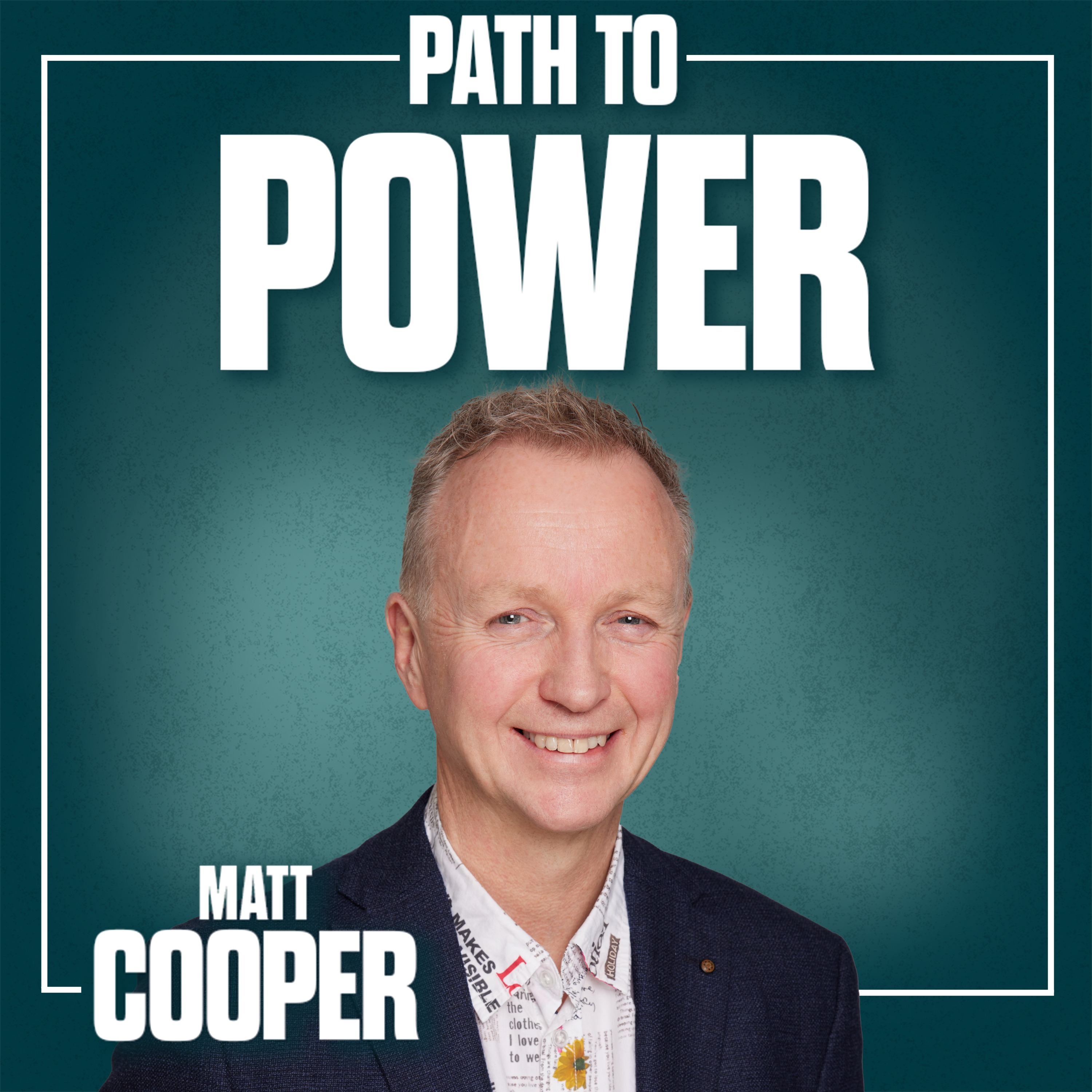
This episode of the Path to Power podcast discusses the political fallout from recent severe flooding in Ireland, using it as a case study for broader governmental failures. The hosts argue that the current coalition, and governments since the 2008 financial crisis, have consistently failed to deliver critical infrastructure like flood defenses and housing, despite high corporate tax revenues. This has led to public frustration and a rise in populist sentiment. The conversation critiques reactive policymaking and highlights the need for proactive measures, such as improved flood warning systems and sustainable land-use planning to mitigate climate-related disasters. Politically, the episode analyzes the rise of the Social Democrats as a potential challenger on the left, though their specific policies and ability to form a governing alliance are questioned. The dialogue also references past infrastructure successes and ongoing debates between environmental and hard-engineering solutions to flooding. The episode is sponsored by the Greenman Group, an investment firm focused on sustainable assets.
Thank you for listening to the Path to Power podcast. You can sign up to the Path to Power Plus to enjoy ad-free listening and to get early access and also to get our exclusive extra bonus edition once a week for those who subscribe to pathtopowerpodcast.com. That's where you need to go to find our details of additional weekly content where we'll also look at your questions and answer them as they come in on a weekly basis. Today's episode is brought to you by the Greenman Group, a European investment in operations group investing in and operating the essential sustainable assets for our future. The Greenman Group focuses on three pillars, sustainable investing, real assets such as real estate and agriculture, as well as green energy infrastructure. What makes the group unique is its integrated model. It doesn't just finance these assets to its network of businesses, it builds, manages and optimizes its pillars for the long term. This approach is designed to create durable value from the ground up. To learn more about investing in are being involved in the real assets shaping a sustainable future. You can visit the Greenman Group's website at thegreenman.group. Hello, and welcome to this week's edition of Pathtopower with me, Danny McConnell and me, John Lee. So, you're going to introduce me, Danny, sorry. Sorry, John, well, listen, I was day dreaming. I'm still your thunders, so matters, obviously, still under the weather, but we have a great show for you today, and John, we've a lot to get through. And obviously, with the country still, that's what's subject to a number of rain weather warnings, particularly on the East Coast, following a week of very heavy rain last week, I think we've had, you know, almost three-quarter of a month's rainfall in the last 48 hours or so. It has brought this front and center into the political agenda. We've seen politicians including the T-shirt go down to NSC or other badly affected areas. But you've seen, I think quite frankly, a legitimate public outcry saying, "How will we hear again? How has this been going to happen? Why are we seeing the same areas like the Promenade and Clantarf flood again and again, when we've known these issues for so many years?" Well, the outcry may have also become because plays leafy Clantarf, and I think it was Black Rock, Darts Station, was underwater. So conditions that are used in the west of Ireland have hit leafy suburbs of Dublin, which is never good for them, and politicians, and we won't be facetious about it, because there was some pretty horrific images of what went on in some places. But it has brought into focus a repeated criticism of this coalition, which let's not forget is in power really since 2020. Finne Gayle themselves are in power since 2011 on a failure to deliver on infrastructure across the board, and flood defense, and laterally now, we see a flood warning system, ultimately our infrastructure projects. And we have seen, for instance, and listeners can correct me if I get wrong, any of these wrong, but areas that say 10, 15 years ago, 20 years ago were flooded, and subsequently, successfully, gosh, flood defenses built for them, have not suffered any longer, anyone sounds very obvious, but there have been areas that have been repeatedly flooded they got. So if you remember back in 2002, up your part of the world as well, the banks of the Talka broke, and there was a very, very famous evocative photograph of Bertie Hurn standing in water in his wellies with a bucket hat on, and that was the front-page newspapers. There he was dealing with things. The Talka was dealt with, there were flood defenses put in there, and it's not been a problem since. It's funny though, because it's near enough to you. It is, yeah, because I live in Drum Coundry, and my kids play in Griffith Park, which is a long way, the Talka runs through the very beautiful class. But it's interesting, because I joined Gibbons, I was standing in from out on the last word, last week, and then John Gibbons was on, we're talking about the floods, and he says, "Dee sort of had it in the night shell." Ah, come to that. But he says, like he says, the direction these sort of flood defenses, all it does is speed the water up and transfer as the problem elsewhere. And when he says what we need to happen is upstream, is sort of agricultural land or spare land, as it is at the moment, given over to sort of become floodplains to take the pressure off. Now, I don't know, he'd like, I'm not an expert in these things, but I would have thought that, particularly in city center areas, where there's a lot of businesses, a lot of shops, who, by and frankly, get screwed in the totality in terms of the rates that they pay, in terms of the overarching kind of hand of the state, they tend to get screwed a lot, and regulation is hard. You know, they've had to pay rates, they've had to pay minimum wage increases, you know, the water normal coming in for their staff members, like they're just getting hammered by the state all the time. And the one thing they've asked for repeatedly is protection from floods in these sort of areas, and they repeatedly haven't got it. And with some legitimacy, I think, they've all right to be pissed off. I was contacted by a friend of a friend from inner-scority when the teacher was down a few days ago, and he kind of was pretty young kind in his language. He said, that fucker is what he said, comes down here, it gets his photo off, makes it look like he cares, and he fucks off again. That's his language, not my language, that he says, like we're stuck with this. We're then left, we get all the suits, say, then kind of tones and expressions from the teacher could the day or the ministers of the day and say, this has happened. But at the same time, it could be another five, six, seven years before anything actually does happen. And politicians can't win in those instances. I know me, Hallmark, and I spoke to Leo Veradkara, the time of the Chrysler tragedy. And he was in Chrysler with me, Hallmark, and he spoke, which is not always usual for political rivals, extremely warmly, and with great praise of me, Hallmark, and how he could interact with people who were suffering a tragedy in that town. It is a strength of his, but they can't win. But take yourself away from that. Globally, there is a problem Western democracies have had in a failure to deliver anymore, particularly since the crash. There has been an increase understandably in some ways of bureaucracy and red tape because of the wild west environment that led to a global economic crash and we forget how close the whole thing came to falling down. It is a common criticism of Western governments, and it has consequently this is a failure to use the mass of revenues that some countries like ourselves are bringing in to deliver for roads, hospitals, and infrastructure that would see them deal with environmental changes. And that has consequently been a reason for a rise in populism, that you can't do things anymore, and you can't do this, and you can't do that. And if you remember back, the reason we became known as the Celtic Tiger was because of a comparison with eastern countries like Singapore, etc, who could create these wonderful states and use their incomes to build things quickly. And that can't be, it seems to be done here anymore. And I was, someone I was speaking with in a fallback venture during the week, and he pointed out to me, and he would be seen as a critic of the current administration internally. Whilst the pre-crash government, we mentioned Bertie a heron, could do. Now listen, a bit like the Alan Parker's line about the Titanic had had 2,000 miles of event-free sailing to the iceberg. There was a bit of a problem in 2008. But prior to that, there was delivery on infrastructure projects. We had the Portonal, we had a motorway network, the building of which, let's not forget, continued through the crash, the money was obtained, to continue that motorway network that is thanks to that coalition then in Crow Park on back a bit, was built. We didn't get the Bertie ball time, God, but there was the IV, the stadium, there was Lewis, there was extensions to train lines. There was an ability to deliver on the massive income we had, and there was house building. And that is an increasing frustration with the electorate. And it ultimately, particularly in the area of housing, will rebound on the coalition. It was interesting because I had launched with Leo Varacker. He was, did he pay? It was a kind of an IAEA launch. So ourselves in the business post did an event with the Institute for European Affairs, which Leo Varacker is now on the board. So there was a launch after Governor Martin O'Malley was in 10. So we did launch in the crash in Motel. So again, we were getting sitting beside Leo, and he just released his book, and we were just chatting about the crossing or the joining of the two Lewis lines. And you'd pretend you read it. Oh, well, John, we have to pretend these things. I know I did actually read it. But it was interesting. He said like the big regret he had was that once they joined the two Lewis lines up that they didn't keep building for 250 to 300 million euro a year, which is still a lot of money, but relatively small in the grand scheme of things you could have had with proper planning and proper preparation, five to 10 kilometers of new Lewis line every year. Imagine if we had had that 10 years, we would have had like, imagine how much we'd have 50 to 60 extra kilometers of Lewis line across the open city. Now, how they just kept going. They didn't. Not a single additional kilometer of Lewis has been built in that time. Not in like, you know, that joined up hasn't. We're only now beginning to see the extension up into fingers, which should have happened years ago. Like, my sister lives in Ashburn and her kids come in from Ashburn into school in Dublin. Like, no railway out there. The Laven line is still hasn't been pretty. These are like, this is the lower end bridge. There's even land bars to have a light rail built to Dublin Airport up to Ballymone. Now, I don't know if that's lapsed the land. I'm thrilled to hear that Leo Varagra's only regress from his time in government is that he's enjoying up the Lewis, I'd say, fuel. I think it was his only regress to fuel. There's going to be a point to a lot of other other things he did achieve. And I suppose that does go to the point as well when you're critical of the Finne Gayle government's post 2011. We can't forget that they were trying to save our economy, which they were. There was a there was a financial crisis that continued into a currency crisis from 2011 on. There was no house building. There was very little infrastructure building. Besides the roads that went on then. But as I say, it is, it is when the public look at the macro figures of a 34 billion intake on corporation tax annually. And they don't see a delivery of flutter defenses, for instance, and their houses flooded. It's very hard to explain to them how that hasn't been achieved. Yeah, but to your point earlier about that government who got an awful lot done, they are also guilty of allowing and local tarries are guilty of allowing an awful lot of houses up to about 100,000 houses built been built on clearly designated floodplains. On land that they should never have been built on. That was the argument part of the argument John Gibbons is making. I don't always agree with John because I think sometimes in my view, I think he does go a little too far. I think his rhetoric would need to be moderated a little bit. But I think on that point, he has a valid point. Like, why were you allowing houses to be built on floodplains? Because this sort of eventuality was always going to happen. It may only happen once every 20 years, but it's going to happen. And these are people who probably can't get flood insurance. These are people who probably can't guess or sell their house because they've bought it, etc. And they're clearly now going to suffer these sort of problems increasingly with the change in the water. So you do feel that, you know, like that shouldn't have happened. But John also got into, we had him on the tonight show, which I was hosting last week. Your host, Michael Fitsmaris, was on, splendid to go with him and who took great umbrage at the farmers and turf quarters been blamed by John for some of the flooding. And it is spectacular. You'll find it on social media. And I would say the two of them met up in the car park afterwards and had a grayish warm chat, but I'd put on a go to the referee. And it is, and it is, it's an argument that comes on one side, I guess, builders and small farmers who feel they're unfairly been criticized for, for somehow be smirching the natural flood defenses that there are there, bogs, trees, fields, everything else can soak up that water. And then on the other side, the environmentalists who are blaming them, but it is, I think, indicative in this instance, for instance, of another criticism. We have particularly this coalition, which is, seems to be extremely reactive. So, I mean, like, you only have to look out your window the last 10 years or so to see there was going to be a problem with you, but it seemed to strike them at this weather event as a complete, complete shock. James Brown got himself into trouble last week for a coming out and given met Aaron a bit of a lash. Um, you're still walking the corridors down Lesterhouse. I mean, well, how does that play kind of? I spoke to James about that on Friday. Um, he gave us a few lines for the male and Sunday. And I spoke to all the people around government. No, his, he was taken out of context that classic line, but he, he, he was referring to a partial criticism of met Aaron, this, which ultimately rebounds as a criticism on the system. Let's not say this current coalition, but a longstanding thing, whereas there have been plans back in 2016 for a flood warning system. Now, flood warning systems exist in the UK. They exist in the United States where they have even more serious weather events far more frequently. Um, I worked in the Midwest in, uh, 20, 30 years ago on me, Jay won. And, um, even then they had very advanced warning systems of tornadoes, which are, which are more serious than what we're facing. But in those jurisdictions now, there are focused flood warning systems where, um, devices on rivers can be transmitted to a central area. And if you're in that area and your house is in danger of flooding, your pharmacy receives a text, there was an initial plan for that first start in 2016 and hasn't happened. And what James Brown was saying was that in that instance, the met Aaron yellow orange red warnings aren't, uh, they're too blunt. They're too wide a, a, a facility and they don't warn people of flooding. But that's not my met Aaron's fault. Ultimately. Yeah. That's the failure again to execute and enact a proper flood warning system for him. There were people saying he went over this hop. Was he taken a flag for kind of unfairly targeting kind of met Aaron at the teeth of, of that sort of particular weather event? I wrote a column on Sunday, which, um, there was a kind of bit of surprise because the only criticism that would come James's way was a bit too meek. So, um, there was, um, there was, um, some acceptance in government that he'd been a bit, he gone from, uh, as I wrote, uh, Kindregart and cop to, um, terminator overnight, but gone after poor Aaron met Aaron. But like, a lot of, a lot of the political establishment. I think the wider community saw a little bit of a distraction. Distraction. Okay. Let's move on, John. Um, the social democrats are meeting this weekend and they're, they're experiencing a bit of a high in terms of their popular support. I think our last poll and the business post had them at a record high of 10% compared to the 5% of, of, for the Labour Party and the underlying demographic pressure or data would see them kind of eating into sort of traditional feeling of middle class votes. And also, are they almost emerging as a kind of a viable alternative to Sinn Fein on the left, where the Labour Party don't seem to be? But what's your assessment of holly currents? What's your assessment of the Labour part or of the social democrats? And are they really serious in terms of wanting to get into government? I'm smiling at, um, the, the wonderful game we all play of, uh, political interpretations of polls because I spoke to a, uh, uh, senior Finne Gayle person during the week and they interpreted the rise of the sock Dems as haven't taken votes away from Sinn Fein. But I, I think the, in the round the sock Dems phenomenon is fascinating because they are earmarked as, um, support for the Sinn Fein led disfamed, this, you know, the left of the United Left Alliance, the, the great white whale of Irish politics now. Um, but wherever their rise is coming from the sock Dems, I would, would say they are taking votes away from a certain cohort who would have voted Sinn Fein in the past to large a protest against the government. So why I say it's interesting is that this left wing alliance, the problem that going to have I think is any advances those left wing parties make is going to be at the expense of all the left wing parties. So I just don't see it happen. And ultimately if you watch and you go, the new answers and answer hosts are always fascinating is, you know, you're there long enough yourself. This, I still think if you were to go and have a really honest conversation with leading Sinn Fein people and sometimes I do, um, they don't really believe that's going to happen. They're still looking at Sinn at finna fall. And with the expectation that ultimately eventually the finna gale, um, juggernaut has to run out of steam. They can't conceive and think you said it last time around this podcast. Go back into government. It's hard to see it. Maybe they can. Let's see what it comes down the line. But I'd be watching if I've gone to the bookies of finna fall Sinn Fein labor alliance in the next. Okay. As a possibility in the next government. I suppose the question that people have often asked of the social democrats and I've asked them asked it myself. Now when founded, we will remember it was founded by three people, Stephen Donnelly, who went on to become minister of health in finna fall. Catherine Murphy and Rosian Short all night, they were three unique but substantial political figures in their own writing. Catherine Murphy had sold it on the left for a long time. And Rosian Short all had obviously been another been a minister for the labor party resigned in protest at the sort of the way he and Gilmore and John Birkin, etc. had led the party. Um, the social democrats under holy cairns is a very different operation and cast a very different kind of outlook. Um, and you know, they now have 11 TDs and the doll Delvesie had the Owen Hayes debacle controversy around his palator shares, etc. He's now back in the fold. Um, you have, you know, Keanu Callahan stood in for holy cairns for a year while she was on or for a long period of time when she was on maternity leave and kind of was seem to be adequate if not spectacular in terms of his handling of that particular position. But what do they stand for? Like, what, what's their, what's their, what's their attraction? What's their calling card? Or what's their USB in our complex proportion representative system? Um, that question could ask. Be asked of all political parties. It's not too wise to stand for nth and too much in Irish politics. But again, as I said, go back to what I said, I think at the moment, there's somewhat a coalition of a group of people who have moved away from Sinn Fein upset with, with some aspects of what they represent. And I think they, if you look at some of the constituencies they're in, like Schnee, Gibney and Southside and, um, what's her name? Um, in Wicklow. Jennifer Whitmore. Jennifer Whitmore. They've taken some of that green vote as well. People who are successful enough in life, not to really care, but some aspects of life will worry about the environment and Gaza and other big global geopolitical issues like that. They're so like, wishy-washy, not, not that distinguished or not clear in what they want. But in most recent Irish times, Paul, there are, there's still only seven percent, you know, that's 3 percent could go either way, um, labor or Ford. They went down to Soc Dems, went up to, um, so, you know, there a long way off in a substantial outfit as well. And some of their seats could go either way next time out. So I, I'm not quite sure to answer your question what they necessarily stand for. They are that leftist probably higher income groups would be in favor of them. And they have grasped a few issues. But again, like say someone like Gary Ganon, you know, he again is a very different politician from Holly Cairns. He's in a working class constituency, Dublin Central. And quite a long time ago around the time that Stephen Donnelly went to Finnefall, there was, there was talk in Finnefall of them going for Gary Ganon. So he could have gone somewhere else. So there a bit of an amalgam of differing politicians. And, um, let's say as they do in the coming years, Holly Cairns, of course, is a, is something of a social media phenomenon. And she has been responsible, I think, for a lot of their rise. Okay. And if you were to, I suppose, look, you're again watching them both in Leicester Hayson kind of around the place. I mean, who stands out for them of, of their new cohort? I mean, you've mentioned Orishine, Gibney, you've mentioned Owen Hayes, like Gary Ganon. Like who for them is the one that you kind of go listen? Like Holly, obviously, attracts as you say, her own sort of unique interest, you know, on social media and across the political spectrum. But who, who do you think is our Sunday performer? You know, I, um, I've appeared in a few TV shows and we had her in a few weeks ago. Shanei Gibney, um, has come from the, has come from the private sector. She, like we had a one night up against Michael Haley Ray. And we were discussing issues to do with, um, Mercosaur was Mercosaur. And, you know, people would be, and I, and certain cohort of people would be extremely critical of what she represents, represented. But on, on that particular discussion, she was certain of what she was going to say. And she was certain of what she represented. And it was in great contrast to Michael Haley, Ray, representing a rural constituency, farmers and everything else. So she was, she was extremely, not everyone's cup of tea, but she was extremely proficient, easier performer. So she is still out to me. Jennifer Whitmore, again, even though I forgot her name a moment ago, has been a very able politician. And they're able to get reelected, which is a big thing. And with some of them, myself and Haley, have been reelected. And that's a big achievement. I, I still think there's quite a bit to go for them. I don't believe this, though, it'd be huge achievement for them if they retain their 11 seats. It's a nice segue into, when we want to talk very briefly about the Dublin Central by election, I think you had on the front page of your paper yesterday, the day before, John, the two by elections are going to happen in May. They're going to be an answer to the coming days or weeks whenever suits them. There had been soundings and warnings from the opposition that they would not permit or not accept the latest date possible. Now, the two dates that I named, they're looking at are the 15th of May or the 22nd of May, two Fridays in May. That's at the outer end of how far they go and the permit is under the, under changes that were made to a court action with Pierce D'Arty when years ago. But that's threat from Sinn Fein and the independence, independence that were out there on the record this boat to John and I about has somewhat a basis. I think they're all willing to prepare. It's not that far away now, May. They didn't push it to February. There was warnings again of a repetition of the dull row that we saw a year ago, those disgraceful scenes, whether there was an eruption over something that I think subsequently the opposition had quite a good argument to make about dull speaking rights for people who were in government essentially. That hasn't happened. There is an acceptance of those dates, probably there wasn't an uproar over those proposed dates. And I think they would be pivotal by elections. Not only for me, Hall-Martin, the T-Shock, the top man, will be looking to those slight recovery in the polls he's had in the latest poll in the Irish Times. But he will not really expect to win either of them unless, of course, Amin O'queeve comes back and goes away west. Our God forbid from me, Hall-Martin's point of view, Bertie, a herner was to stand in Dublin Central. There's very little chance of them winning them, but he will need to get a good percentage for Finnafall. A very good, they've, you know, a real failure there would be bad, would be very difficult for him in May coming up to the Finnafall or a dash and then into the EU presidency, which starts at the end of June. But also a Dublin Central, it'll be very, that's married Lume McDonald's constituency. I was the clearest. I live in Dublin Central as well, so I'd be very important for her as well. And there has been some talk that Gillian Sharers may stand. She is the motor of the tragic young boy Harvey Mars and Sharers who has passed away. There has been speculation that she may run for Sinn Fein. So just the other declared runners and riders in Dublin Central Dangle Ennis for the Social Democrats Janet Horner was the names this week for the Green Party. Obviously the speculation around Jerry Hutch, who obviously ran so closely and was pipped at the post by Marie Sherlock of the Labour Party on a can of on for people for profit is standing again. Ian Null Smith is standing for Aintoon Maliki Stinson is standing as an independent. We obviously assume that Ray McCatum who is the current Lord Mayor of Dublin will be the Fini Gaye candidate. But as you say John, all eyes will be on who stands for Finnafall. Will it be John Stevens, who is a local councillor, kind of almost an apparatic of Bertie or Heron? Will they run Mary Fitzpatrick again? Who again, I'd say, is a neighbour of mine. So she has stood for a number of times unsuccessfully in that consistency. But by elections are extremely hard for goal of sitting governments to win. And Dublin Central, I think, just given the nature of the consistency, is very left-leaning, very working class in some parts of the consistency. It's a very difficult one for either Ray McCatum to win or for Finnafall. And I've been up down the years of a contradiction there, but with politicians canvassing there. And there's an increasing number of apartments, which is just difficult to canvas physically. You can think about us. You can't get in. A lot of people are gone during the day. That kind of thing. Mary Fitzpatrick has run there a number of occasions, but also performed very well in the European elections in the past. She is a senator. She's a roctor's representative in that area. And you would think she is the most likely option. Maybe she has been disinclined to throw her hat out there right now. I'm not sure why, but one would accept it. Again, I was talking to Finna Gale during the week and they've announced their plans for a convention in Galway West. And senior people in the party see the favours to come through there as Senator Sean Kind, who is a former TV as well. So often there's great speculation about establishment parties about who they're going to roam, but it usually is the roctor's representative in the area. And Galway West, again, would be interesting. Dublin Central has changed incredibly since Burtier Herndt's day. Did he ever have three there? There was certainly two, and there was a famous occasion with Cypriot Brady where he didn't reach a thousand votes. No, in 136 votes. Yeah. That's a famous figure. And Burtier was able to pull them over the line. That constituency has changed an awful lot since. And it was incredible to think that, like, say, someone like Paschal Donahue from a standing star could build a Finna Gale seat back up. I mean, I had been Alice Glenn there previously, but to build a Finna Gale seat in that consistently. And Holders, I mean, he almost came very close to losing it in 2016. He kind of held on with the skin of his teeth, and then was more comfortable. Sorry, he was comfortable in 2016. It was 2020. I think where he almost lost out. But, you know, I think you know, well, Danny, I mean, the job for Ray McAdams essentially pulled credibly enough to show that there's a seat in the doll in a main, in a general election there for him. If he tanks completely, then I think Finna Gale would be worried that that's a seat gone. The teetress going into the last election was that Sinn Fein were absolutely rock solid for two seats, Mary Lou plus Janice Boyling at the time. That obviously day, day, they obviously went into a nose dive, you know, in the year running into the last general election. So that prospect of a second seat just dissipated and dissipated. And that's where Marie Sherlock was able to squeeze in over the line. No, you would think, you know, from a bi-election perspective, anything can happen, you know, like look at, you know, a vannabatic, you know, and party with a national poll rating of three to five percent, you know, she won the bi-election in Dublin-based say, I went on to hold her seat. So anomalies like that can happen. So it'll be interesting to see, but I think for a Finna Gale or Finna Fall, you're thinking, can we get a credible enough poll rating that puts us in the hunt for a seat coming the next general election? Yeah, and on the reference to Jerry Hutch, you know, there was all the, the Rasmitas around his performance, but bi-elections into general election, bi-elections are far more like the British system, for instance, it's more of a first pass, the post essentially, and you'd 50 percent of the vote, that makes Hutch unlikely to come through on that, should he stand, I mean, I'm not convinced yet that he will. And his last election outing probably attracted a lot of unwelcome attention to him as well, since it's been proved. So that's the problem he's going to have. You would expect Sinn Fein really to be successful there, and that's why it would be a big one from Erie Lue, that if she is good, it's expected of her. If they don't have a candidate electors, it's problematic for them. Yeah, we've got to take a break. So stay with us, we'll be back, and we're going to talk a little bit more about Merkisaur, and the fallout, continue fallout for the government in terms of Merkisaur, and how they were sort of wrapped on the knuckles by a leading European Commission Chief this week. And also, John will bring us through the ins and outs of what happened at the Eroxas Committee this week when talking about social media. So stay with us here on Patipera. Today's episode is brought to you by the Greenman Group. It's answering a critical question how to invest in the sustainable future in real tangible terms. It's answered lies in three areas, the energy transition, the places we live in shop, and the future of our food supply. The Greenman Group's strategy is to own and operate the physical infrastructure in these sectors, from solar energy generation and EV charging to agricultural projects and grocery anchored real estate. By building, managing and optimizing these areas via its investment and operational businesses, the group aims to build resilience and deliver long-term value. Explore its approach at the greenman.group. You're welcome back to Patipera with me, Danny McConnell and John Lee. John Lee, the great John Lee. John, let's get into Merkisaur. So we had on our front page last Sunday comments from Christoph Hanson who is the EU's agricultural commissioner. A base he's saying that Ireland's Hanson Merkisaur was incoherent and not responsible and he says, "Listen, how does this make sense given all that's gone on before?" And he basically just says, "Listen, this is not how a credible government like Ireland should be acting." What gave his comments even more weight was that he was endubbing this week so he was meeting the Tornish and the T-shirt and all the rest of it. But we knew at the time, because I think we said at the last one we were on this podcast that there was a fallout for the government in terms of the standing in Brussels in relation to the rejection in Merkisaur. But we're seeing the workings out of that, like the sort of the criticism or the kind of the ill-feeling toward Ireland that has come into the fore. I interviewed Simon Harris on Wednesday night, was a Wednesday. I can't remember our role together. He was Tuesday night. I was Tuesday night on the tonight show and I specifically put this issue to him because he'd bet Christopher Hanson that day. I think Hanson had called the government stance on the thing incoherent and other things. Simon Harris said, "Well, listen, it's a democracy and we were entitled to push our view." I disagree with Commissioner Hanson and we were entitled to put our view that we opposed Merkisaur. But it's a fascinating story and it's why politics is often so compelling. It's so multifaceted that Merkisaur thing. On one hand, we have a centrist forward thinking coalition that is obsessed with trade and our performance and trade and willing to base ourselves to the United States to keep whatever favorable terms we can with them. Yes, this massive, one of the biggest trade deals ever agreed anywhere between the EU and South America has essentially been held up by Irish opposition. So Ireland, France, number of others opposed it. We were told in the run-up to the initial vote was that I was sure it doesn't matter now if we opposed it, which might as well back it because it hasn't to hope not being knocked back. But ultimately there was a vote in the EU Parliament to refer this Merkisaur trade deal onto the court, the European courts, and it's held it up by two years. So our opposition did matter. And further down the line, it's been even more minimized to be blamed on a sexual group that is the beef farmers who, through their very, very vocal and able lobbying, were able to convince the government that they would lose seats that finna fall and finna gale TDs would pay the price if this was not opposed at your opinion level. And it was fascinating this weekend the context of the board be a Larry Merrin controversy that you had Sinn Fein of all parties. Acting almost as the voice of the farmers and being on the side of the IFA against the government who have sought to, in my rightly sought to defend Larry Merrin and board be it. But it just goes to show how the old kind of certainties don't seem to be a certain anymore. I mean, it was somewhat curious watching the debate in the doll, and this is the sad man that I am that I still watch some rock this debate. But to watch Sinn Fein TD after Sinn Fein TD get up and say farmers don't want this, the IFA don't want this, and you've abandoned them, you've let them down. And you had the Mike the Haley raised who himself is a farmer, Martin Hayden, the minister of agriculture saying that's nonsense, but I've never seen that before. In all my years watching Irish politics, I've never seen that before. There was a commitment in the program for government where they said that we're going to oppose it. So the feeling amongst government TDs, and we must not forget that the important revolt over markets or occurred amongst the Finna fall parliamentary party. They felt, and this has happened in other issues, completely unconnected in the past, to do with abortion, for instance, and other things that they had stood on a particular issue. They had promised their constituents that they were going to oppose this. It was in the program for government crucial independence TDs. Now ministers had formed the government signed up to a program for government where they had committed to opposing this. So it was, it was, forget the necessarily the issue on that. On beef, it was a commitment. They felt the electorate that they couldn't reside on. And if you were, if you were someone like Ryan O'Mara, Finna fall back, Bencher, in in temporary Albert Dolan and Galway, or beef farming is a huge part of the local economy there, you could lose your seat if they hadn't opposed it. But lastly, I felt slightly unfair, in this sense, we mark ourselves, let's not forget, through Bord Falchia, not Bordia, but Bordia as well. And other organizations, as this green grass-based agriculture, but this Nirvana, where we're not affected by the environmental damage that's been done in South America, we don't have rainforests to burn, but our forests aren't being destroyed. It's a huge part element of our, of our global marketing. And foodstuffs, exports, and if you were to include, say, Diagio in that, we have to say dried milk, which has been exported to China. It's a huge part of our export, our food exports. I think they had a point on that as well. The food industry and the beef farmers that, you know, listen, we, we, we market ourselves as selling unadulterated agriculture products. And Microsoft will be to make a clear to the listeners, allow the import of Brazilian and Argentinian beef, which due to antibiotics and other issues, is a controversial matter in itself. And what was interesting I thought was, from all of this, this seemed to be yet another example of how Neil Martin has made a mess of things. And he's had a year of making a mess. He's back now in the polls, Danny's back. Not according to our polls, John, and I'll say true tomorrow's vote never like it. Let's see. Let's see. But take up that point, be a whole Martins bad year in terms of, you know, the speaking rail rights, you know, even, you know, it's just he seems to have allowed himself to get into hot water. You know, he seems to keep shooting himself in the foot. And he keeps allowing himself to be putting himself at odds almost gratuitously at odds with his own back benches, who, as less as we've discussed here before, are no great fans of his. You know, I mean, they've tolerated him. They've never loved him. And I just wonder, is he losing his touch? He's losing his authority. Matt and I in this podcast agreed that we are both written and in my case, show you how little I know, back in July of last year, that I felt me, Hallmark, go on for into the future. He could become tarnished again in the rotation, rotation t-shirt arrangement he has with Finne Gayle. And I really would have felt, even though he's advancing so much in the years, as we all are, that he could have led them into the next general election. That is not going to happen now. So much as Finnefall probably shiver when they hear the name Jim Gavin, that controversy, which came very close and almost came to a conclusion as we ran into Christmas, which in Ireland ends all, carry on, include in political controversies. It removed him of the authority that he had. The authority is a strange thing. It's a femoral. Once you lose it's impossible to get it back, get it back. And that's where that Microsoft thing came across. And as I said, on a number of occasions in Roses, there was a phenomenon that started during the Jim Gavin thing where people like James O'Connor, a young back venture from Cork, let's not forget, felt completely liberated to rice upeds in the Sunday independent calling for me Hallmark and to step down without any repercussions, without any discipline coming their way. And there was a number of public criticisms of it. So his authority has gone and allied that to the fact he's been around a long time. It means his leadership is truncated in a way I wouldn't have felt it was a year ago. It's funny because it has echoes from me to what happened to Nick Kenny after the 2016 election. His authority had gone into a minority government. You know, they had to rely on the independence. Like he was weakened and everyone knew it. And you can see the power moving towards Veracca and Colvin at that point, because they were the years apparent. It was the same with Brian Cown, I think, back. It wasn't like our post-gargle games, that famous event in Galway, where his authority and Lenin was at that time on maneuvers. And clearly it was on maneuvers. And like we quickly got bounced into a bailout a month and a half later, but you could visibly see the authority ebbing away from Brian Cown at that point. So like you're absolutely right, you can, I think we're at that moment in Fienafol where I think you see that sort of the control that me Hallmark has exercised over his power or over his party for the last 14 years, ebbing away. And I think the end for me Hallmark could come very swiftly, purely on the basis, because because of the way he has controlled his party, there are plenty of people waiting to give him a kick in on the way down. And I think that could come. You know, once it happens, I think it could happen very, very quickly. But I think the big difference now and then is back to 2011. We had me Hallmark and who it should not be forgotten as we recorded in our book at the time. He went to Brian Cown privately in his office. The first time he was revealed was in our book, "Hell of the Gates" where he asked Brian Cown to stand down as leader of Fienafol and continue his t-shirt. And then stood against him in emotion, a conference that was set down. What Fienafol had then, what the country had then, was someone willing to stand against the leader. Fienafol has not had that, has not had an obvious heir apparent. If there was anyone who was Michael McGrap, perhaps, and he was moved off to Europe. And I think it's been kind of not spoken about as much during me, Hallmark and Straviles is the entry of Jim O'Calaan into cabinet a year ago. Now Jim O'Calaan is going to be the next leader of Fienafol. You can put your your money on that, if you go on to the bookies. And he is there and he is waiting. And I think that is a huge difference now. There was a reason I think Jim O'Calaan was kept every cabinet and we're seeing why. Do you think though, a bit like Gordon Brown, that if you wait and wait and wait too long, your moment almost passes you by, that Gordon Brown waited so long to become the Prime Minister of England, but his shelf life had already, like so is there a danger for Jim O'Calaan if he doesn't move quicker, that momentum slip away from him? If you're Jim O'Calaan and he's a extremely successful senior council, I would suspect, Jim can write in and complain that he's not done too badly, financially out of that job. We know how well senior council or pay Danny, you and I the odd time have had interactions with them on behalf of our papers. I think he could be something of an Albert Reynolds that he's not going into the top job to gain a second career. He may do things, but also if you're Jim O'Calaan, he got into cabinet and I say do things in that the nature has crept in dias politics in recent years is that the whole objective seems to be staying there rather than actually achieving things that might ultimately cause your job as we saw with Albert all those years ago, but he was a gambler and an eventual, adventurous politician. Jim O'Calaan didn't ask for any of this, no one for saw what would happen with Jim Gavin, and that is the ultimate destabilization of mehals leadership. And I think if you're O'Calaan, why would you push it? And I think a very obvious day month that are all going to have to make a call and this is next December when the end of the EU presidency comes and we'll see, it's a big prize for Jim O'Calaan a year as T-Shick with that election. And would you get, because he's always any conversation of how would Jim O'Calaan, public, private, whatever like that, he's always said, there's no vacancy, like I've never gotten the sense that he's willing to mount a heave, lead a heave or anything like that. What he did say, we've mentioned it in the past, he was asked at a press conference whether mehal Martin was going to stay on as leader of finna fall and whether he'd, I think the actual question was whether he'd become honest or whatever. And he said, I can't see into the future. I thought it was a very hard answer. That's the most cryptic he's being. John, we've only had time for one more topic. Let's get into Groc and the social media. Some of the media companies were up in front of the doctors committee, including Tiktok, and where I think Susan Masu happens to be a former advisor to Andy Kenny, who's now spokesperson for Groc or one of their head public affairs people, making the point that they can't stop every foul utterance or they can't stop all of these sort of mad things from happening and gross things happening online. But you watched the committee, you saw, I mean, what was your, I was in and out during the day and I watched as we do an answer house. I watched a good bit of it back on the laptop sitting at the bar and answer house. But I remember, as many of us do, when legacy media, as we're now called, RTE, we're up in front of the Eroctus committee and people were watching the Eroctus committees in pubs. They were putting them on during the day for the afternoon drinkers. There was huge focus on those Eroctus committees and people saw it was, it was, it was something of a boon for, for politics in that people suddenly became interested in something you and I spent years and years sitting at Eroctus committees. But if, if I would say to our listeners, if you're ever going to watch back on the Eroctus website, a committee watched this, it was the definition of slick, corporate executives and, and representing very well their companies coming in to my eyes, defending the indefensible. These companies now not speaking about the people who were out representing, mostly Irish people representing their companies at an Eroctus committee. These social media companies are, I believe, the catalyst for the re-nation of the Western world, for a very, and, and, and people think of being over the top here. You and I work for media companies. I work for the DailyMail.com is arguably has a spread as big as some of these social media companies. We have to comply with jurisdictional laws. We have to in Ireland, God knows, deal with some of the most draconian libel laws in the world. We cannot commit crimes. We cannot allow people to print things, to publish things on our website that break the law. These companies can do it everywhere. And the reason they're allowed to do it is because governments, including the Irish government, make so much money from them. They have gotten to a position in the United States, which still is the global economic leader, which still is the police, the police is the world's democracies until Trump ends that very soon, I guess. They are so powerful and so wealthy. It is now arguable that some of these companies, Amazon, for instance, which I know is not a necessary social media company, but it's involved in in the media. Mesh and others are so powerful. They're arguably more powerful than sovereign governments. And what needs to happen globally? And we will come to this point when people realize the damage that these social media companies are are doing. We need to see a Teddy Roosevelt act where back in the early part of the 20th century, the robber barrens, as they were called, became so powerful in the United States, JP Morgan, John D. Rockefeller, standard oil. You'll still see some of the standard oil companies that for instance, ESO, if you look at its standard oil, ESO, were broken up by Teddy Roosevelt because he feared the president of the United States that were becoming more powerful than the sovereign government. And that is the point we're going to have to get with these guys. They came in last week and justified the unjustified of the roctor's committee. And I really recommend to watch it back. And I think if anyone has that concern, all you need to is read Sarah when William's book about inside matter. Yes. How they have leveraged that global power and how they've had sovereign governments, like the Irish government, I know the governments basically bend the knee to them and kind of facilitate them. And I thought it was really interesting as well that Alan Kelly said this, the chairman of the committee said that he tanks met at Google and TikTok for attending. But there was a degree of conditionality on their attendance that they insisted that three of the four companies had to attend. They'd only go with the others were going and let's not forget exit and show. Didn't show. Yeah. Yeah. Show up. There was admissions. Like again, it was very interesting to go down to Kula, new senator, Finnegaille, senator, former or tea broadcaster. spoke about her her experience as a parent and seeing the difficulties of social media and Peter Chapp Clear had asked some very basic questions. Finnefall TD about a breakdown that would be available of sexual abuse violations that were made with these social media companies. None of them had the breakdown of it. So there was a they found that disrespectful to Ireland at the outset. Sinn Fein TD Joanna Burns said asked about the about the fines they have paid. The social media companies have been levied with four billion in fines by the Irish government in recent years and they paid less than two percent. So it was just it was an insight into the the position that they have now gained where they excel. They have a defense for the not paying a fine. So what did they answer that particular? No. Why would they pay it? No one puts any pressure. I'm sure the answer behind closed doors is from these companies should we give you 34 billion a year in corporate tax? In corporate tax. Why would we pay it? Well, I'm sure there is plenty more in all of that but I think we are out of time. So that's it for this edition of Path of Power with Me Danny McConnell. And John Lee. Thanks very much for listening. Stay tuned for this weekend's subscription edition which will be hosted by Shane Coleman and he'll be joined by Kevin Conningham of Ireland Thanks to discuss the trends and polling since the 2024 general election. So stay tuned for that. For the moment for us. Thanks for listening and bye bye for now.
Podcast Summary
Key Points:
Recent severe flooding in Ireland, especially in Dublin, has intensified public criticism of the government's long-term failure to deliver adequate flood defenses and infrastructure.
There is a broader discussion about Western democracies, including Ireland, struggling to execute major infrastructure projects efficiently post-financial crisis, despite high tax revenues.
The podcast touches on political dynamics, noting the rise of the Social Democrats as a potential left-wing alternative, while questioning their clear policy platform and the feasibility of a left-wing alliance government.
A debate exists between environmental solutions (like upstream floodplains) and traditional infrastructure, alongside criticism of past planning that allowed housing on flood-prone land.
The episode is sponsored by the Greenman Group, which invests in sustainable real assets like green energy and agriculture.
Summary:
This episode of the Path to Power podcast discusses the political fallout from recent severe flooding in Ireland, using it as a case study for broader governmental failures. The hosts argue that the current coalition, and governments since the 2008 financial crisis, have consistently failed to deliver critical infrastructure like flood defenses and housing, despite high corporate tax revenues. This has led to public frustration and a rise in populist sentiment.
The conversation critiques reactive policymaking and highlights the need for proactive measures, such as improved flood warning systems and sustainable land-use planning to mitigate climate-related disasters. Politically, the episode analyzes the rise of the Social Democrats as a potential challenger on the left, though their specific policies and ability to form a governing alliance are questioned. The dialogue also references past infrastructure successes and ongoing debates between environmental and hard-engineering solutions to flooding.
The episode is sponsored by the Greenman Group, an investment firm focused on sustainable assets.
FAQs
You can sign up for Path to Power Plus at pathtopowerpodcast.com to enjoy ad-free listening, early access, and a weekly exclusive bonus edition.
The Greenman Group is a European investment and operations group that invests in and operates sustainable assets, focusing on sustainable investing, real assets like real estate and agriculture, and green energy infrastructure.
Repeated flooding occurs due to a failure to deliver on infrastructure and flood defense projects, with some areas lacking proper defenses despite long-standing awareness of the problems.
The coalition is criticized for failing to use increased revenues to deliver essential infrastructure like roads, hospitals, and flood defenses, leading to public frustration and a rise in populism.
A regret was that after joining the two Luas lines, they did not continue building extensions annually, which could have added significant kilometers of light rail across the city over the past decade.
Houses built on designated floodplains are at risk of flooding, which can occur periodically, leaving residents unable to get flood insurance or sell their homes, exacerbated by climate change.
Chat with AI
Loading...
Pro features
Go deeper with this episode
Unlock creator-grade tools that turn any transcript into show notes and subtitle files.
 PodcastTranscript AI