Go back

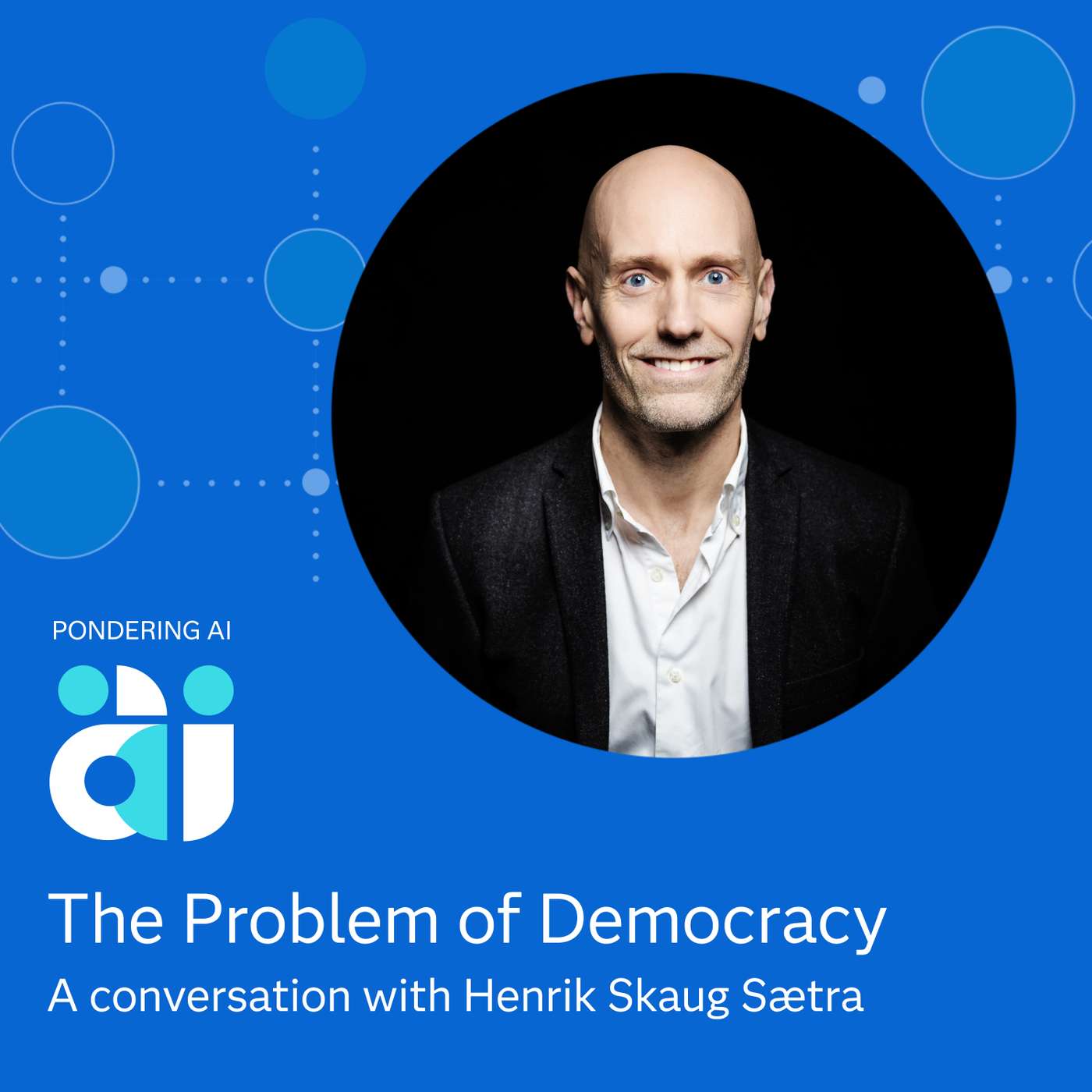
The Problem of Democracy with Henrik Skaug Sætra

54m 4s

The Problem of Democracy with Henrik Skaug Sætra

In the episode, host Kimberly Neville welcomes Henrik Scalg to discuss the influence of AI on individuals and citizens. Henrik emphasizes the need for political action to leverage technology effectively. He raises concerns about AI's effects on democratic competencies, information processing, and social interactions, including filter bubbles. The conversation delves into the implications of AI on relationships, citizen perspectives, and government accountability. Henrik highlights how AI systems may alter perceptions of government, emphasizing the importance of messy democratic processes for societal learning and improvement. The dialogue also addresses the potential isolating effects of AI on local engagement and the broader impact of technology on global discourse and worldviews. Ultimately, the question is raised whether democracy is a problem that needs to be solved by AI, prompting reflections on the fundamental values and goals of society.

Transcription

9842 Words, 54136 Characters

Welcome to Pondering AI. I'm your host, Kimberly Neville. In this episode, I am so pleased to welcome back to the show, Henrik Scalg, etc. Henrik is the associate professor at the University of Oslo and the CEO of Pathways.eu and that's ways spelled W-A-I-S. He is also the author of the recent book How to Save Democracy from AI. And because that publication is not yet available in English, I had to jump on the opportunity to ask him to join the show and talk to us directly about how or what influence AI systems are having on us as individuals and as citizens. So welcome back Henrik. Thank you very much. Pleasure to be back. Now the last time you joined us, we were discussing whether we could use tech such as AI to meaningfully enable the sustainable development goals or SDGs. Is your current interest and research into the intersection of democracy and AI and natural extension of that work or did that come about from a different source entirely? For me, it's quite closely related because I think it much should have worked on SDGs and sustainable development more generally tends to end up with this conclusion that yes there is a positive role for technology to be played potentially that requires politics that requires us to kind of make the right choices have a willingness to make these choices and going to go through the processes that actually enable us to use technology in a meaningful way. Otherwise that potential is just that potential that will never be able to realize. So for me, they are quite closely linked because I always end up with this conclusion that there is this potential here but what we actually need is political action and this sort of processes that allow us to regulate and control and use technology in a way that's beneficial to conducive to reaching our goals. It's an interesting perspective because I think there's a tendency sometimes for us to want to say if we could just get politics out of things right? If we could take the politics out of whatever that might be whether it's policy or technology or schools or you know insert the the noun here then wouldn't things just be easier and so this is very much a acknowledgement I suppose that in fact politics is part and parcel with what we do as humans both perhaps even even there's there's a political element if you will maybe we call it a social element and even our individual relationships and as well as that with our countries is that is that a fair comment? Definitely and that also links very explicitly to some of the other work done recently on the kind of critiquing as opposed to technofixes and technosolutionist approaches to different sorts of things which are in essence tend to revolve around this idea that can't we just optimize away or kind of get rid of that kind of social and political and those sorts of things that drag us down and drag us back and kind of hold us back from kind of utilizing this beautiful technology or other sorts of kind of engineering oriented approaches to solving the social problems that we encounter right? So I think it definitely ties to those sorts of that sort of thinking which relates very much to technocracy I guess which is always kind of we have a part of technocracy and democracy always but we should be wary of kind of trying to go all out would be my suggestion. Yeah and we'll talk a bit more here today about why that is sometimes problematic but I'd like to take a step back and ask us and get your perspectives on how AI more broadly is influencing us just as people if you will. What do you think or what are some of the concerns or observations you have about what it's doing to how we think about and engage with even just basic information? Yeah that's where I started about credit deal with individuals and then with the deal with the relations between people and I think generative AI systems in particular have very kind of significant effects on how we access information kind of get and gather information how we process it how we analyze it and how we kind of make turn it into something else turn it into kind of synthesis or analysis analysis and these sorts of things and communicate our kind of analysis and our views and perspectives to others. We use AI so heavily in all these processes now that I'm arguing that we are at risk of losing some of the kind of core democratic competencies that we need to be effective citizens in kind of vital democracy because then we would need to understand what people try to convey to us even if it's longer than a short bullet point list even if it's more than an opsis we will have to be able to deal with a bit more complex information than that and we need to take that information and be able to take the essence out of it ourselves as well to understand what is meaningful in different context from different people for different cases I think that's also a crucial test that I think we're at risk of losing when we don't exercise that capability and then of course communicating is key to democracy as far as I see it being able to understand what you can really for example like what you are as a person what you might respond to in terms of argument was important to you and then conveying my arguments to you in a way that might kind of facilitate a good discussion between us that goes for what I call a key democratic competencies and I think the way we're using AI systems now means we get a lot less practice in these things and while some think that's good we affect device and kind of spend kind of save time on doing these things I think we get worse at doing these things which is to me a huge red flag and then of course we have the interactions between people as well which is more of that kind of familiar older debate on filter bubbles and echo chambers and that sort of dynamics that means less exposure to divergent opinions and worldviews and also worldviews that are much further apart than they used to be for these different groups in this different echo chambers and all these sorts of things are exacerbated in different ways by the current generation of AI systems as well so these two things are linked and deal with this more basic competence is that we need to communicate and also to understand it. And it almost seems that it would be intuitive to assume that the latter portion of that where we are increasingly in these filter bubbles and islands has actually been perpetuated or propagated by the former which is international interactions with folks we are trying to understand what are your motivations where are you coming from and what to do about that but I don't know that unless we're particularly calculated and I may want to bring you over to my point of view and think about based on how you're talking what you're talking what I know about your background your interests how you're presenting yourself how do I persuade you to that other point of view but some of this conversation is not even about persuasion but today so much is focused on personalization let me you know especially systematic personalization that it's it feels like it's gone too far in yeah in that I definitely agree yeah yeah our kind of our world's become quite narrow and that's the dangerous in terms of facilitating those broader discussions and just having the ability then to understand what other people want and how to communicate with them and that might be fine right if you don't need politics you could say that okay this allows us to have this kind of nice isolated worlds where I don't need to deal with this problematic people that mean that kind of that want something different for me that have different opinions for me in these sorts of things then that might be fine but if we think politics and democracy in particular is about jointly trying to figure out what is our problem and what will we do to try to solve it as opposed to fighting over who has the majority for example and there's two different views and politics and if you want to form a kind of some kind of joint basic understanding of what our society is that we are we and that we need to deal with certain problems together then I think that sort of dynamic is really detrimental to being able to do that effectively yeah I would agree now you mentioned briefly impassing there earlier our interactions with each other and in your research in your observations is or how is our relation with machines or how we relate to machines which is very much something also that we are being pushed to do what to think about our interaction with AI systems as relationships how is that impacting our relationships with each other and is that is that changing the nature of our interactions and that's also really interesting that's one of the things I said before interactions between us and they are mediated by AI but then of course we have that additional layer that you point to none as we actually interact with these AI systems directly as well and for some this replaces or alleviates the needs then for some interaction with humans for example and if so that might of course build trouble in terms of that joint understanding of and feeling of we and understanding and acknowledgement of that we are in joint society we are in essence the community but it also shapes our expectations of people for example if I get used to talking to chat GPT which is I don't know what you want to call it if it's kind of overly sarcophantic for example if it praises me it tells me I'm smart all the time if it listens to me whenever I kind of need some advice if it doesn't ever need something from me for example interacting heavily with these sorts of systems might make me more kind of might make me demand more of other people as well and grow weary of them sooner because they are more cumbersome to deal with than these machines for example so these sorts of things might have a long-term effect that could be problematic and with chat GPT that's one sort of instance where we choose to interact with it to get information many people at least but of course you have character AI and replicant all these other systems as well that make these sort of social partners that are intended to be our one of the primary social interactions that we have and that could be problematic I think but also if you turn this into politics again we see government also trying to make chat bots for example if we can just lay off all these people now we can make these AI agents be our kind of government representatives so whenever I need something from the government I get a chat bot as opposed to getting a real human for example and that does something as well with my relationship with the state with the political institutions that are what govern us so I think that also matters in a sense because who's accountable who's the state who can I turn to for this kind of meaningful human interaction with politics with political institutions I think that matters a lot as well so while it's definitely good in many instances while they make make customer service if you want to kind of more effective we shouldn't always look at interactions with the state as customer service it's about something different as well it's about communicating with the human standard or have been delegated to these kind of political tasks for us as a community so then replacing these sorts of things with AI systems is also runs the risk of then making government more distant from us more opaque and all these sorts of dynamics that could be very detrimental for our understanding again of politics as something we do jointly as human beings does that also change our vision of the government as a collective agency something that is there to serve all of us which sometimes means that the services the products if you will I don't like that that orientation when we're talking about social services in particular and government you know should be you know if I have the broader collective view I might see that hey here's services and supports that are important and that I think should be provided and that are valuable because they support my my fellow citizen my neighbor the person down the street but if I'm you know going to target to buy something I expect them to have they want me as a customer I want them to have the explicit products that that I want and that's a very different mindset in in my thinking and I would imagine that that could then influence our perception of our governments as well is that is that true yes I think so very much so you get this kind of customer perspective as opposed to the citizen perspective this kind of the government as me and you versus this kind of me as a recipient of services that I can be critical off I can evaluate them I can place my demands on them and I can kind of demand my rights and the sorts of things where the citizen of course is much more about having the obligation to do things myself as well to participate to play a role to be an active part of government so it's a very different perspective and I think this sort of the the attempts to do to affect device politics with AI systems tends to take us into this kind of rightholders and customers and recipients of services that these systems can then kind of optimize for us for example so I think it tends to nudge our perception of what government is in that direction so that would be one of the key points I guess and does that mean that because it's turning into it turns us into a very sort of output oriented affectation I suppose and why is that why is that so problematic yeah that would be a problematic and it's also why it's very understandable why people want to do this right why do we want to use technology to solve social problems in general if we return to that because social problems and social processes and democratic processes are inherently messy they take a lot of time they are messy we very often get output that's quite kind of fundamentally flawed that's obvious to us that this is not a perfect outcome but then when we look back we've been through some very important processes very often when we do this sort of politics as democracy as this kind of messy and cumbersome processes because we learn that's where we learn about what society is what we each other what the others in society want from us and these sorts of things so well the process takes a lot of time that's partly because we do all these other things in that process and also then because we jointly also figure out in that process what it is we want to solve what it is we want to achieve what our goals are what the goals of our society is that is not some objective predetermined output or kind of measure that can be and kind of put us the target state of some effective system because just our goals and our values and what we want to achieve is continually reestablished through this messy process of democracy so it's both a process that's cumbersome and messy because so much goes on in there and I think it's also messy because that's where we learn to do things and if we do that a lot we learn to do better so that would be important in terms of doing democracy as the sort of school of society for example that are all political philosophers talk about for example specifically is municipal and local level politics which can be particularly kind of frustrating to people that's this kind of school of school of society school of democracy in many ways that's necessary to kind of build this understanding of each other in society that people then can use in this higher levels of government I think and I suppose as our societies and our the scope of control I guess of our democratic institutions if we look at the size of our states and our countries these days are very very large as well and perhaps that that makes that all of that messiness just bigger and harder to wrangle right you get such a much broader spectrum and so you can see the perhaps the natural inclination towards more command and control type approaches although it's not at least in my opinion leading us in a productive and helpful you know way that's promoting well being I suppose now of course with the modern societies and not Aristotle's kind of Greece for example or Athens we have a different fundamental for doing politics of course so doing that at the kind of US level with direct democracy and interacting with each other to understand each other we can't do that at that level but we can do that at the municipal level in a city level for example and increasingly less so the higher up become but we have this tiered systems to be able to have these sorts of processes even in large and complex societies so the federal system in the US for example is a good example of this of course so what you were saying there also then reminds me and perhaps reminds all of us that the mechanisms of government it's so easy we just came out of as you know very contentious and roiling election here in the US and it's been quite eventful ever since as well and it's so easy to see it at that level at the nation nation wide level and just feel like it's out of control and we do forget that again we are operating within a smaller community and we can affect change at that level which blows up but maybe this is also where AI is getting us by keeping us off our local streets if you if you will this is where it's also serving as an isolating mechanism because all we're seeing is the the noise at the big big level where we really can't affect it and it's keeping us you know in our houses if you will tied to our screens and not engaging even with the local community yeah so that's one of the benefits I guess and also link it just between social media and digital technology in general and AI systems just kind of create a certain dynamics at these sorts of platforms or services so it's yes national level at least in the US and here in Norway for example is always so very much kind of regional or even global all times so we engage with this kind of global discourse instead of engaging with this kind of local communities meaningfully very often at least so people in Norway you a young people in Norway they never seen Norwegian news for example and they deal with a kind of manosphere and they deal with Jordan Peterson and they get they get the same kinds of news and information and problems and challenges that people in the US get for example even if it's from a very different context it might not make too much sense it creates this kind of very broad and high level groups as opposed so yes very much so because then we end up with very different world views and we deal with the very high level topics that for example have the MAGA and you have the others in the US that gets this kind of very rival camps with a very and split view on what the world looks like and should look like yeah and as you were talking as well we we talk a lot on on the podcast here with guests about are we solving the right problems with AI and and trying to achieve the right objective so the question then rose to mind is is democracy a problem that needs to be solved by technology and by AI in particular yeah because what is the problem here right that's the best question to start with as opposed I mean when we ask can technology be used to solve something or fix something and pretend to kind of I tend at least kind of to get back to this what is the problem really and for whom I'm kind of why and how because anything can be a problem for someone and but the problem we want to solve with democracy and deals with kind of the very basic values we have and where we're going to goals we have for society and that could be of course a basic desire to have order and security and not living a fair of violent death and the social things maybe fundamental level of health maybe some welfare on top of that maybe some sort of educational provisions that allow people to have some opportunities in life so these sorts of things then are the kind of the basic fundamentals that I think we have to figure out to what extent and how far do we agree that this should be our joint initiative in Norway we agree that's a lot more should be our joint kind of undertaking then in the US for example so that's something to negotiate continually with each other as well how far should our joint project extend and what's left then for us to solve individually but then how do we solve the politics with democracy then and then that makes kind of that solidifies pretty much the question of what we want to achieve and then tries to figure out then what have we at one point in time tried to maximize or optimize for example if it's economic growth and that's shallow and narrow I suppose if it's some level of welfare that's also insufficient in certain sense if it's climate emissions these sorts of things AI systems can solve for some of these so we can make all these different indicators of the goals we have and the kind of the desires we have for politics to do but then we also end up in the same place that we might solve some isolated or optimize some isolated indicators but we lose all this stuff that goes on in the process and then negotiating what the system should optimize how do we deal effectively with that if we delegate too much to these systems but the goals to optimize the goals to solve and that's really also a contentious issue then because some think that this can be done quite effectively we can say that what we want is economic growth that will allow us all the benefits of life so we can optimize that and then we can deal with the consequences later for example whereas others would be quite opposed to that as I believe and said we want some different values as well equality and equity and all these other sorts of things for example also to be dealt with collectively but yeah so I think it'd be good to first to talk about maybe some examples where folks have tried to solve democracy if you will with technical approaches but one question before we do that does a technocratic approach then as you were speaking of it there does that mean that a tech or an AI led approach to society to governing society could actually change or influence how what democracy even means how we define it yes I think so very much so so that would be also another key point in the book I think that we run the risk when we when we increasingly use AI systems for the different parts and components of various democratic processes we actively change what we mean by democracy and of course democracy as a concept has always changed it changes also without technology over time as we develop our societies develop all these sorts of things we get new ideas and our kind of our imagination what democracy is changes as well but it changes very dramatically when we use AI systems to try to solve the sort of things that we are talking about here I believe so here we can get into some of the examples maybe of how that happens because Google DeepMind for example is one of the kind of least problematic maybe kind of AI powerhouses in the world and they develop some interesting systems related to trying to take their approach of solving protein folding solving chess solving go in these sorts of things right they're good at solving things so why not democracy right and so they've taken us into some interesting research papers on that and I have one system that they call democratic AI which is really interesting and both because they explicitly called it democratic AI right because this is a system that then can analyze different people in the group and try to come up with solutions that a majority of these peoples would support so that takes us into a very it's democratic in name of course majority rule is part of democracy often but it's definitely not the core or the only or the central aspect of democracy at least not as I see it so there we get into this idea that democracy is voting and majority rule for example so it it diminishes our conception of democracy into something quite narrow and quite impoverished I believe when we kind of do these sorts of things and turn democracy into something compute computable at least it runs the risk of doing so so this system is kind of useful for many things but it's not really democratic in a sense that I think about democratic as deliberative processes and this sort of human processes the other thing that they did was this system where they saw can be used AI systems to reach consensus so they built this machine called the Habermas machine from Jürgen Habermas the founder of this idea of deliberative democracy so they're going to name it after him and then this system acts as a mediator between different people so if you and like five six other people then we're in a group and we were tasked with coming up with some consensus statement for example we could either talk together or we could have this human mediator or moderator between us that tried to kind of come up with something we could all agree with or we could use this Habermas machine for example so their study shows that the Habermas machine outperforms humans and coming up with statements that people support and feel that okay this is a statement I can kind of stand behind this this reflects my views and perspectives more so than the other processes but then we have what they call deliberative democracy without a single human being interacting with another human being so that also takes us into a very different landscape of sorts so that also changes what we mean by democracy right because then the road is quite short to using this systems for example to just analyze me profile me or I can play some kind of training games with my digital AI twin for example and this twin can represent me in some sort of government process and I can be represented my perspectives is in there all these sorts of things could be qualified or kind of checked off without me meaningfully interacting with human beings or politics at all in some way so in name yes this could be democratic but it's also deeply problematic our pondering AI audience is as inquisitive and opinionated as our guess so let's hear it share your comments questions or guest suggestions by writing to me at pondering AI at SAS.com now back to the show I find myself almost lost forwards but not quite I guess I don't I'm not quite following how that could be seen as democratic because what you're talking about if I understand that correctly is essentially running a similacrum or simulation of society and assuming that based on the various bits and bobs I have deduced about Kimberly with her largely without her knowledge or consent I have a view that I have perfectly determined what her perspectives her views her desires her beliefs are now knowing how people show up online versus how they show offline I think we should all be able to instinctively know already that this is not correct so the idea that this is a I mean it would be lovely if that were true I suppose in some sense I say that slightly to classically but is this really just then providing the purveyors of these systems who by the way are developing the algorithms which means that they are deciding what is what are the important points the ability to say to you it's okay because you represented i.e. in the data but ultimately I mean they are the the ultimate sort of master there correct yes great great points here and I think the version will be could kind of tone it this down a little bit and we can say that you could for example explicitly then for example input your preferences for example so it's not some sort of automatic deduction of kind of something based on what you do you could actually kind of instruct they don't kind of how you value different things in different dilemmas for example and you could even have this kind of on-off switch so you could delegate it to cases that you're not that interested in and you could actually go in a manually vote through the systems for example when you want to so of course there are many different approaches that the proponents of this sort of technology say that this is Uber kind of democratic this is direct democracy at scale right so there is some truth to that that representation could happen at scale here more effectively but of course we run into a lot of risks related to what you said definitely kind of how does this translate into kind of accurate reflection representation of what I mean and then how is the systems built then and because when we make this compute computable when we make the simulation we have to translate for example political agendas or political decisions into something computable into something that translates into diverse indicators and values and factors for example that we build these models on that is a hugely political choice and kind of design point as well and how we translate that into interaction between this different digital twins if you want to how we do a social choice here has huge political consequences and implications so there's all sorts of different kind of leverage points here for the people behind this technology to manipulate and shape politics if we turn our politics over into this system resembling something like this so definitely hugely problematic I would say but of course I see kind of why people would be attracted to these sorts of ideas yeah it's well as I think about circumstances too where I've been involved in mediation part of the point there I suppose is that the mediator doesn't have a dog in the fight terrible terrible you know statement there as well or saying there as well but the idea is that the mediator fundamentally shouldn't care necessarily where things go out and at the end of the day it's it tends to be about everybody gives up a little bit of something right I think that's the old trope which is what you know it went well when everybody's a little bit unhappy versus everyone being perfectly happy and so that objective I'm not sure that I see how we achieve that in an AI with an AI media this mediated system or world first of all but also we know that with technology the reasons that you know there's been research out there as well that I know you're aware of and look into very deeply into can we use this to persuade people so for instance we know that a lot of folks are radicalized very effectively online and so then this as the logic goes here well can't we also be using these systems to de-radicalize people or to persuade them bring them over to our point of view which again right that's narrowing the aperture but it also depends on if if anywhere behavioral psychology has been put into absolute play it is within our automated systems and I think that is not to our collective you know value and certainly not to the collective benefit and it's not something that we should be proud of this folks who work in in this in this area but you know the use of dark patterns things like that that are very explicitly and purposely designed to be manipulative concerns me a lot then in this kind of an approach yeah it would be endemic I think in these sorts of systems how it's possible to not just if you want as those kind of that wants to kind of see their manipulation as positive and call it when you do nudging of different kinds nudging into people being active or nudging towards kind of better or healthier or more socially kind of conscious choices you could have all this incentive to build a certain different sort of manipulative mechanisms into this of course and also this kind of consensus statements they could of course also be shaped in different ways so we have first the problem that I omit the entire process where the mediation or this kind of discussion between us makes me understand who you are and why you want what you want and then kind of being able to understand you would be better when we're gonna meet on the street and or discuss something else later on I skip that process entirely and we might end up with a process where I have no idea what the others even wanted right so this kind of everyone feels then pretty happy with the statement but not that's kind of a bit unhappy but satisfied because we reach something together so it's quite a bit of a different process definitely well and there's no room in that process necessarily for us to be really clear about what everyone's sort of giving up and I think that's part of that consensus and collective building as well right we're all it's not that you all have to walk out and happy I'm not suggesting that at all but there is some discomfort and as you I think you call it constructive division um I don't think it's a term you coined necessarily but constructive division is is important to say that it's okay we can actually work and function as a collective without us all having to ascribe to a singular point of view to a singular perspective um and working out what exactly what are the things that we write that our own sort of social then diagram of what we think as a community is where we really do need to be aligned and where where we don't be is also in of itself part in parcel of how we think about democracy today I guess I should say maybe we'll define this daily in the future but and that's hugely important and I'm not advocating for some sort of totalitarian society where we have this joint common will where we all kind of come together and then agree on everything of course not right but coming together and then being able to understand our differences and respect and tolerate each other enough despite wanting some different things that's essential for a function in democracy and that's of course something we see in different societies struggling with the day I see being able to talk across these divisions and that's where the social media and these sort of echo chambers and all that sort of stuff deprives us of the practice as well of being exposed to diverging views and being able to respectfully and tolerate and kind of engage with each other without that becoming other chaos or just withdrawal um so that's that's really problematic I think and that's also very much a design choice and political choice in the platforms we have for example in the platform to use like Facebook like your ex-twitter or the source of things they can promote or um kind of discourage different sorts of social dynamics and political dynamics and which is a responsibility day might have or might take on their own or something we might have to kind of then regulate or try to engage with on political level if they don't do it if we think that's necessary for us to have a good foundation for social engagement across yeah this different firing lines there's another narrative that's fairly common today around viewing AI as infrastructure and it comes up a lot and mostly today in the context of LLMs in things like chat GPT etc who have which have hovered up you know immense amounts of information and because they are so beyond enormous they are it's impractical to expect um you know a lot of other folks without really deep pockets um and time to be able to develop their own versions of that as it stands today I think that I just want to put out there that I that this that narrative precludes the ability for us to do things differently or take up different bits but I'm wondering um are there other specific political implications of this I just the narrative of AI is an infrastructure yeah I think it's it's become really really important now as so many people now know what this technology does and they use it and rely on it in so many different ways now and most people are aware of it to some degree some aren't and because it's now kind of being diffused into all their different services and kind of messaging apps and mail apps of course so it's kind of there on this kind of infrastructure level and everything that people also engage very directly with it and I think one response just for some would then be okay we just need smaller models this sort of technology is nonsense it's just hype right and I don't buy that because so many people are finding so kind of immediately obvious use cases for this sort of technology they find it so immensely valuable that I don't think this technology will be going away and people are already becoming sort of reliant on it and mostly maybe not for a crucial kind of purposes but for some purposes are good and useful definitely and I think then it is a problem and it's increasingly been discussed in a political lens as we got the shifts in politics and geopolitics following Trump's inauguration and following up on actually what he said he wanted to do in terms of alliances and international politics in Europe people are talking much much more about this now that digital sovereignty for example is a huge thing that we need digital sovereignty in terms of we need to have models and infrastructure in AI systems if we at least believe that this is at least partially fundamental for achieving productivity growth and economic growth and kind of sovereignty in general then we need to have this systems built and controlled in friendly states or here and that's becoming increasingly uncertain right whether or not the US is a friendly state and we get the Microsoft blocking the email accounts of the international criminal court you get all these sorts of things and people increasingly seeing these people behind these infrastructures at Trump's inauguration and then very much associated with the kinds of politics that is much more conflictual in terms of Europe but US relations for example and then they go to work and they have Microsoft office they have Microsoft's co-pilot they have only US companies right everything they do is on some US service and there is no really valid European alternative at scale yet many would say for most of these services and that's becoming something people discuss a lot more and of course that means that links geopolitics to markets to economy and the these sorts of things because that creates a market for growth of course in Europe but it also makes it a conflictual political area as J.D. Vance came to the Munich Munich and said and don't touch our companies right we don't want to directly regulate our companies so we get these tensions that we didn't have just six months ago I think in terms of figuring out what does it mean that these sorts of technologies are becoming infrastructure in the sense that we rely on them for basic social functionality connecting between people and for work and economic purposes and all these sorts of things they are in many ways akin to infrastructure it is interesting though because if we think about a lot of our what we might have traditionally thought about infrastructure let's say our electrical grids or those components I've been trying to think about this a little bit more and a lot of cases there has been an element of that if they were always regionally controlled right your grid is not connected to our grid but there has always been the the resource control that is underlying that I suppose which is where do we get the power to power our power you know where where did the oil and the gas and the the coal come from that that's used to to do all that so I suppose that's as you start to think more deeply about that you start to see the the levels what do you think or in your researcher in the book what are the implications do you think about around either folks pushing for digital sovereignty or the lack the inability to enforce digital sovereignty yeah I think as I said I think it creates huge new markets in Europe for example for developing the kinds of services that we know we rely on at the scale that makes the kind of effective competitors either subsidized or not everything kind of everywhere is partially subsidized in some way also kind of the you american tech scene is subsidizing different ways through different kind of uses of political power to kind of sustain them and kind of regulate in ways that's beneficial for them so I think there's a lot of push here on kind of research and innovation funding for example for projects that might make this happen that be get kind of regional alternatives it's that or it's effective regulation of course the saying that data in Europe has to stay in Europe it's not allowed to flow out of Europe and control mechanisms for making sure that happens so of course there is this alternative here as well we don't have to build our own but where we actually ensure that the technology here is safe for us so this has become China China in Europe has always been has this kind of discourse right we we're very skeptical of kind of Chinese infrastructure in our communication telecommunication mobile networks for example because that's been a kind of potential source of espionage and these sorts of things right and even buying kind of electric EV buses from China in Norway is being discussed because they have this kind of ability to remote turn these things off and these are the main means of evacuating people from cities but but what's interesting then is that this is also now applying to a certain degree to US technology as well and it never did in the past because it's been a very close kind of is perceived close friendship right so that's been on problematic but it is more so now so I think there's different sorts of opportunities that arise in being the most responsible ones of the ones in the US now that are at least kind of linked to the most problematic aspects perceived from other countries for example in the US I think that's hugely kind of valuable now not to be seen as a very intimate little linked with administration now for example but of course in other areas that will also be very beneficial to be very linked to these sorts of institutions in the US now and also increasingly linking or kind of trying to get into military spending and all these other things that further link it on politics and tech and power in ways so there's very very different dynamics here and there's pros and cons of these different strategies as opposed the people are definitely looking at who's kind of most actively now trying to kind of be close to Trump for example right so people are serving that and different companies come out very differently in that sense I guess so that's a strategic choice as well it is interesting I drive an electric car and I've been pondering recently and as you were talking about the buses we don't necessarily want to buy an electric bus from China because that might mean they have control over that bus but there was really nothing required right or determined that said when we went to an electric to electric vehicles that they had to be connected in this way right so there seems to have been like we've there were consuming or taking I don't even know if it's ownership but you can call it ownership when it's this way of these type of products with some sort of embedded assumption that that means they must be connected to the digital infrastructure right they must be automatically controllable from x, y, and z they must share data in places and it's again this is a completely sidebar here but it's something that I've been thinking more and more about like I know why the companies have done that but it's not clear why we as consumers I think it's just because it kind of got slipped in it's like you know the spinach in here yeah you're free that's a kid we didn't notice it but now I'm like why why does it need to be that way you should be able to give me an electric car that has none of those ties and integration. I definitely agree and of course they can argue in favor of it but you have the same with kind of refrigerators of course and toothbrushes and everything now has AI and is connected to the cloud right so we get that kind of creep everywhere because software service is much more profitable than selling some self-contained device that you can service differently so I think it's really interesting and a really good point so also when you buy this critical infrastructure it should of course be possible to mandate that this is self-contained in some sense as well if you are a big buyer or a public buyer of kind of vehicles for example in Norway or I mean disability or something so it's possible of course to think along those lines I think and people should increasingly do so. Now as we close up here then I'll just sort of assume that we agree that democracy is not a problem to quote and quote be solved with technology although technology may play a part in helping us operate elements of that the governmental or societal machine if you will the mechanisms but what is it that we can do to ensure that we are promoting and informed and engaged citizenry and are there steps that we should be taking now to promote democratic values and ensure that we have a hand on the will of where this technology is going in terms of how it is actually shaping and being deployed in the service of our societies. Yeah then that's the great question of course and that's the difficult one but I think it always comes down to some key aspects that I think is really important of course education is always important and that's not then because in Norway for example people are turning to we need to kind of make more and better engineers we need to make people that understand AI and can build this new system survival Silicon Valley for example and partially yes but also having this interdisciplinary approach to technology that allows us to have humanities and social sciences and informatics computer science people talk together and understand each other I think those sorts of competences will be crucial for allowing us to build the kinds of technologies we want not just a particular kind of very kind of rapid accelerationist technology for example so those sorts of approaches from early on in school for example end is kind of democratic competencies education and bringing technology in there and seeing how these interactions play out I think will be very important and so some sort of digital competency or a literacy if you want to it's important but not just this isolated engineering or computer science approach to that of course so I think there's a many different approaches here also in having high-reducation degrees that are tightly into discipline there in that sense but of course people might say that okay but then you get out competed by the purists but I think that's not really necessarily problem if the regulatory environment is devised in a way that promotes and rewards responsible technology and development and use that actually promotes the values we want as a society because if that's the case if we have this kind of rules of the game that promotes the kind of good innovation we want then these sorts of people are the ones able to make that and kind of understand that so I think those two things play tightly together and I think the EU has been going in the right direction for quite some time with AI Act kind of regulating risky systems as they say digital services act mandating some sort of content moderation mandating transparency in terms of who buys advertising time how elections are kind of handled by the different platforms these sorts of things are crucial I think kind of given it should be I think and of course digital markets act as well which turns to this kind of problem of some companies getting too much power and monopoly power being something even the libertarians tend to kind of in principle at least historically agree on that should be kind of something we deal with through politics but not when is our monopolies of course but still kind of innocence this this is one of the kind of few things that even kind of the market liberals say that politics is good at and should be used for so I thought I think this sort of regulatory environment is crucial for getting good technology and the need of competency to make that happen and of course I think the media as well is interesting for me and I write about that in the book kind of editorial media is crucial in the sense that that's also very much intrinsically linked to our kind of abilities to have function in democracies to have transparency to have critical journalism to have something translate to kind of find the bigger lines and communicate these sorts of things with us and get important voices out there to more people and these traditional media are of course undermined by the social media that are increasingly problematic because it's hard to get advertisers money and it's hard to get subscribers because everything is free and everything is becoming increasingly free as you just increasingly get it just intractivity or perplexity I for example why should anyone click into newspapers at all anymore so I think that's also a huge problem that we need to deal with as a society and I think Canada for example with a revenue sharing model the same big tech companies have to kind of share part of their revenues with kind of local independent journalism is also crucial I think so then its regulation and its education and its media as some sort of kind of at risk sector now that I think we need to protect and build up in order to kind of safeguard some of the key democratic institutions that we need and of course these are no quick fixes and people might say of course these things are important but yes it's difficult to kind of pinpoint one specific thing that we fix this so I think it's a long-term goal and I think as I said the EU with a regulatory approach is required and necessary which is why I also think it's really sad that they are now starting to kind of backtrack and say that okay we we don't want to be left behind we want to be innovative we want to be productive we want to have these sorts of economic growth that has been driven by the EU tech sector right so they are also increasingly talking as if these sorts of things these protections without think is really important are being scaled back in order to promote more innovation and more growth here in Europe so I think that's sad and I think that's where we're probably headed and I'll do what I can to kind of try and make it not happen too much yeah and I suppose the critical question whenever we're having the conversation about are we falling behind is that that's always you can only answer that relative to the the end goal that you have in sight so that is that that assumes we are all heading in the same direction or want the same outcomes which I think is perhaps a question as well so with all that being said Henrik what would you like to leave with the audience and as individuals for what we can do to make sure that we are in fact truly represented and showing up as engaged citizens moving forward yeah I think it's trying to kind of take back some sort of relationship with the concepts of democracy what we think democracy is and kind of think about why we think it's important if we think it's important because it's come something of this kind of euphemism for everything good which is why people say that we can have democratic AI we can democratize everything we can do everything kind of democracy is good without ever really thinking about anymore why it matters and kind of what's at risk of being lost if we don't have the kind of democracy that we kind of want hard for I'm not we as in me but someone right so that's also part of the problem I think that now not many people that are engaged in this right now knows the kind of real alternatives to democracy so I think engaging with those sorts of questions is really important for us and then doing what we can as individuals of course to kind of choose to platforms and services and do what we can to promote the technology we think is good and conducive to it will be important and then to try to imagine how we can use technology in better ways that don't diminish or kind of narrow down democracy into something quite technocratic but actually functioning ways that can be more empowering and allow more people to understand politics and participate actively and meaningful in politics because I definitely think there is scope for using technology for those sorts of things and technology has to play a role I think if we are to have more effective democracy and more direct engagement with with democracy as well so I don't think democracy is bad we should abandon it I think democracy can have a meaningful role to play but that means we have to engage with these sorts of things and don't try to solve it in a sense yeah on those very wise words and called action for all of us we will end here today thank you so much Henrik it's just always a joy to chat with you and we'll look forward to having you back perhaps for a third full scale appearance here in the future and see how we're doing on on our path to wherever we are headed at the moment likewise always a pleasure thank you so much all right so if you'd like to continue learning and hearing from thinkers doers and advocates such as Henrik subscribe to pondering AI now you'll find us wherever you listen to your podcasts and also on YouTube in addition if you have questions comments and/or guest suggestions you can write to us at pondering AI at sas.com that is sas.com

Podcast Summary

Key Points:

  1. Henrik Scalg is an associate professor, CEO of Pathways.eu, and author of "How to Save Democracy from AI."
  2. Discussion on the intersection of democracy and AI highlighting the importance of political action in utilizing technology.
  3. Concerns about AI's impact on democratic competencies, information processing, filter bubbles, and social interactions.

Summary:

In the episode, host Kimberly Neville welcomes Henrik Scalg to discuss the influence of AI on individuals and citizens. Henrik emphasizes the need for political action to leverage technology effectively. He raises concerns about AI's effects on democratic competencies, information processing, and social interactions, including filter bubbles.

The conversation delves into the implications of AI on relationships, citizen perspectives, and government accountability. Henrik highlights how AI systems may alter perceptions of government, emphasizing the importance of messy democratic processes for societal learning and improvement. The dialogue also addresses the potential isolating effects of AI on local engagement and the broader impact of technology on global discourse and worldviews.

Ultimately, the question is raised whether democracy is a problem that needs to be solved by AI, prompting reflections on the fundamental values and goals of society.

FAQs

AI systems are significantly affecting how we access, process, and communicate information, potentially reducing democratic competencies.

AI contributes to filter bubbles and echo chambers, limiting exposure to varied opinions and hindering communication skills.

Interacting with AI systems may lead to higher expectations from humans, potentially undermining genuine human interactions and community bonds.

AI-driven approaches may shift perspectives from citizens to consumers, affecting the understanding of collective governance and participation.

The fundamental question lies in understanding what problems democracy faces and whether technology, including AI, is the appropriate solution.

Chat with AI

Loading...

Pro features

Go deeper with this episode

Unlock creator-grade tools that turn any transcript into show notes and subtitle files.