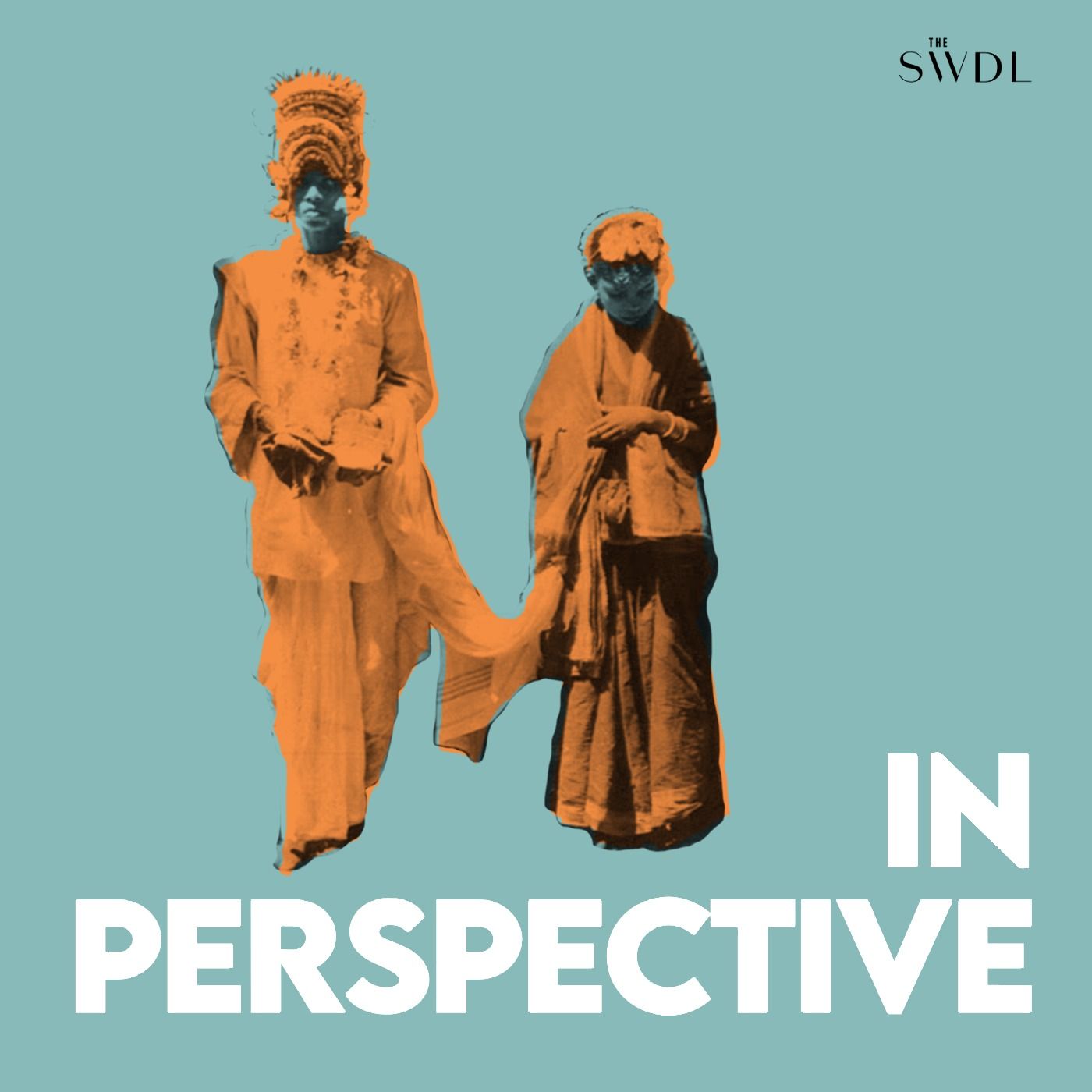
The Phulmoni Case, Child Marriage Debates in India and More With Dr. Ishita Pande
from In Perspective
41m 54s
The discussion explores the historical development of age-based legal norms governing sexuality and marriage in colonial India. It highlights how British colonial law, particularly the Indian Penal Code of 1860, introduced specific chronological ages (like an age of consent of 10, later raised to 12 in 1891), shifting age from an arbitrary legal convention to a concept naturalized as intrinsic to bodily maturity. The infamous Phulmoni Dasi case, involving the rape and death of a child bride, became a catalyst for reform, but also exemplified a problematic, medicalized obsession with scrutinizing the child's body to define childhood, which constrained visions of gender justice. The path to the 1929 Child Marriage Restraint Act reveals that early debates surprisingly emphasized protecting boys for nationalist and social vitality reasons, with concerns for girls developing differently. Furthermore, the Act's evolution from a Hindu-specific bill to a universal law politically minoritized Muslim communities, whose legal objections were framed as backwardness. Ultimately, the analysis argues that the naturalized legal categories of "child" and "adult" can be used to marginalize not just individuals but entire communities, limiting more capacious understandings of justice.
What is the Poolemoni Darcy case and how did it impact debates on sexual consent in India? How were India's first child marriage laws in the protecting boys and what led to the development of the field of sexology in India? Did you have some sort of decision on the law or the demand from the police? Hi, this is Shrishti and you're listening to the Inperspective Podcast where academics reveal little known facts about Indian history, society and culture. In this episode, we're taking you back to a conversation from April 2021 when we spoke to historian Dr Ishita Pandey. This is out of which we wanted to ask you about these legal norms around age, which right now we take it for granted that there are legal norms on age for regulating sexuality. But could you tell us about how they came into existence in India in particular? So as to your question about legal norms, you're absolutely right. We take these pretty much for granted and it's not just laws about sexuality that we take for granted, but we have minimum ages prescribed for when you can drink 25, when you can drive 18, when you can marry, currently at 18 being revised to 21, etc. And we think of these as probably tried to aspects of maturity. And what the reason why I'm bringing up these different contexts is that that allows you to see immediately how contextual and how arbitrary some of these age limitations are. I mean, there's no reason why you should be able to not drink, but be able to drive. So we kind of already know, even though we take it for granted, we are able to see that these are fairly arbitrary norms that we subscribe to and these are prescribed to us by the law. Now let's take that idea and try to think about child marriage laws, age of consent laws, laws that govern sexuality. And with those, it's harder for us to think of those norms as arbitrary and I try to explain why because we are so clear that something like child marriage is we are brought up to believe that it's a social level. We know that it leads to various forms of social and sexual exploitation of children and that's when this arbitraryness argument becomes difficult for us to swallow. So for the specific question, you are so when did these legal norms come into existence? So there's a few different ways in which I can answer this question. One answer is that these minimum chronological ages, so chronological age being 14, 12, 18, right? These were, these are something that were best stored to us by colonial law. So if you look at the Indian Pino Code of 1860, they actually have various age stipulations and the age of consent at that time was set at 10. Some people will answer this question and say actually these norms around age pre-existed colonialism and that if you look at Hindu shastras and his Hindu legal texts and Hindu injunctions on religious life, that there are certain age stipulations that you can find even then. So for instance, they could argue that they were approximate chronological ages given for when Brahmins for instance could undergo the ceremony of investiture which was lower than when Shattryas would undergo it, right? So what I'm arguing in my book is that yes, you can go back to pre-colonial times and find sort of approximations of chronological ages, but what happens is with colonial law, we get very specific age stipulations and what happens in 1860, I already told you is that they are age stipulations, but the reason why sexuality is important to this story and what happens around debates around age of consent particularly in 1891 when the age of consent is raised from 10 to 12 is that for the first time debates about why certain chronological ages should be attached to age of sexual maturity become very important. So 12 becomes the age of consent because as people argue then is that 12 is when the body starts to mature. So what's interesting to me about these discussions particularly in 1891 is that age goes from being a legal convention that we in all agree on as it's fairly artificial to something that we come to see as attached intrinsically to the body, to nature, to morality, etc. So that's sort of one way of answering the question about the norms we take for legal, the norms we take for granted around age, how did they come into existence. I should also mention that one of the interesting things to think about is questions of evidence as well. So if you are arguing that the law is the site around which sort of age conventions become naturalized for us, it's interesting to think about how age is proved in courts as well. And here again sort of the scrutiny of the body becomes very important. Taking off from that very interesting ending point, I think that brings me to one case which was extremely controversial in colonial India and for any student of modern history who studied this is a case which is very well known which is the case of Hulmuni Dhasi. How did the case of her day reconstitute child marriage and I'm quoting you here as a social medical problem with a substantial focus on the child's body and what were the problems with this kind of discourse. So Pulmuni's Dhasi's case is a case that involved a young child wife between 10 to 12 years of age who was raped to death on her quote unquote wedding night according to the legal sources. And the case has been very important because it was taken up as one of the prime exemplars of what was the problem with child marriages, right, in India and why there was a need to raise the age of consent. And again, your listeners might be interested in knowing that there was no direct intervention into the problem of child marriage in the 1890s. So raising the age of consent was an indirect way in which sexuality that child wives could be protected from sex within marriages, right. So the reason why this case was very important is because in that historical context, it was widely discussed. So social reform was pointed to this case as a sort of heinous example of what could happen with child marriages and the need to raise the age of consent. It's become very important to our discussions in history because if you are interested in questions of age of consent, in age of marriage, you will see that this case comes up repeatedly when we write about these questions. So the reason why I am particularly interested in the case is what happens at this time is this obsessive focus on pulmoni's body itself. So her body then becomes the site to understand how old precisely pulmoni was when she died. What were the signs of maturity on her body? The latter set of questions makes a lot of sense when we are talking about rape. We want to determine what kind of violence had been enacted on her body. What was equally interesting is that her precise age and the evidence of age that could be seen, had she attained puberty or not, what was the size of her press, what was the patterns of hair growth on her body and these really sort of disturbing details were brought up repeatedly. And what was happening at this time is and these discussions were not taking place only to determine the form of violence or the scale of violence that had been visited upon her, but to actually try and figure out what are the signs of childhood and what are the signs of maturity and therefore of adulthood on the body. So the reason why I talk about the constitution of child marriage as a socio-medical problem is because this excessive sort of scrutiny of the body, the medicalized gaze that comes to fall on the body is fascinating because it's not tied up any longer only to questions of social justice, right or to protection, but it is about trying to determine with absolute certainty what the signs of childhood are.
are in a body. Right? So and for me, the problem is precisely that. Right? So it should not matter if somebody is, you know, 11, 12, 13, even 18, right? What concerns us here is the is the history of violence or what should ethically concern us here is the history of violence, right? But what becomes interesting is that because of this particular repulsion we have for sexual violence against children, right? That it becomes important and it became important then and it is important to us now to have a body be legible as that of a child. And I think that sort of constraints and circumscribes the problem of gender justice, which is what I write about in the book as well, right? That our obsession with child protection is something that actually narrows down how we imagine gender justice rather than allow us to have more capacious understandings of what gender justice could look like. And I also try to think about how this constitution of child marriage as a socio medical problem naturalizes the child in a way that's actually problematic for discourses of child protection. Because it not only sort of narrows down how we think of women's rights, it actually makes the child the foil for our understanding of rights and therefore actually ends up robbing the child figure of aspects of, you know, for lack of a better term agency and a more sort of capacious understanding again in their case as to what is possible in times of protection for women and children. Absolutely. And I think that's so interesting and like you said, it's something that we see echoes of even today. I think the way in which you examine bodies in court and the way in which that's presented as evidence and also more broadly how we understand when is someone a child who needs protection and when do they cross over from that it's such a arbitrary and interesting distinction that we make. At that point in time child marriage wasn't illegal and finally we do see the child marriage restrained at getting passed in 1929. And you've looked at a very interesting aspect of the debates and discussions leading up to this which is the arguments around protecting boys and boyhood. So could you tell us a little bit about how these arguments around boys and boyhood become important in the passage of the Child Marriage Restraint Act and were similar concerns expressed about protecting girls? Because in our times of course as you know the problem of child marriage and as we discuss it is quite centrally figured on the girl child. How does child marriage affect the girl child and her education, her sexual exploitation etc. So what was surprising to me when I started researching the Child Marriage Act 1929 which again has mostly been written about as a problem of women's social reform is the extent to which social reformers were concerned with the figure of the boy chart. So some of the laws that preceded the Child Marriage Restraint Act of 1929 that you just talked about and which has become the template which has which we have used to sort of for our subsequent Child Marriage Law laws in India was that in these earlier laws and some of these are provincial and local laws that I write about. The minimum age for boys is prescribed but no corresponding minimum age for girls which is which is to us kind of mind-blowing because how do you tackle the problem of Child Marriage or without thinking about the girl. So it was not so it was these laws but I also discovered in reading social reformist novels that often the tragic figure of the boy child who had been married off below a certain age was sort of presented as the point in sort of victim figure in some of these Hindi novels from the 1920s and 30s. I've read for my book Medical Text to see how you know outside of the domain of the law how people were thinking of the problem of Child Marriage. So in medical text and in sexological text in particular again the boy was very important to the discussions. So there were discussions of how excessive sexuality harmed the vitality of the young boy slash adolescent male and that the harmful consequences that could therefore be seen to the national future if these boys and young men were not protected from the ravages that Child Marriage or Youthful Marriage bring. So the concern was social reformist, the concern for the protection of boys, it was a nationalist concern or racialized, highly racialized concern as to what was happening to happen to the future of the race if these boys were not protected. They were concerns expressed about the education of boys and also the health of individual boys as well as a matter of concern. And so the second part of your question was similar concerns expressed about protecting girls. What is interesting is that they were but to me what's interesting is that these concerns were expressed first about boys because that's not how we usually see it and that the concerns expressed about girls were also different in a certain way. So the concern for the sexual protection of girls was something that was coming to being as I've already expressed in the late 19th century. But with the boys you could see concerns being expressed that were not so explicitly explored yet which is the concern for the education etc. And that comes a little bit later. So I don't know if I've quite answered your question but I think what's interesting to me is to think of how even the problem of child marriage is seen as problematic so to speak for different reasons in the 1920s when the first sort of set of interventions to abolish it come into existence and they are quite distinct from the way we see child marriages a problem in later times in the 1950s and the 70s and in the present. Absolutely and I think that's really interesting to actually look back and think about how that shifted and I think also like you pointed out to just think about you know where the concerns were coming from and what were concerns expressed about which I think till today in a lot of the discourse it's not about the child or the woman's the girl child or the woman's rights but it's more about what she represents as like a figure of societal pride or like you know indicator of our societal progressives. So raising the age of marriage and other scholars have pointed out too right is about signaling a society's modernity right so does the age of 15 age of 18 does and especially the shift that from the age of 18 is the minimum age of marriage to the age of 21 what are the real economic social consequences of that right do we really need to raise the age of marriage and some scholars, feminists, scholars have suggested that this the protection for girls becomes a sort of way of signaling the nation's developmentalist agenda, the nation's modernity, the nation's progress and that's what has been signaled there. It also and the concern for the protection of boys likewise if I can go back to the previous question was also tied up with other sort of national concerns that made sense at that point of time right we're talking about colonialism we're thinking of the future of the national use it also and in going back and thinking of the ways in which boy protection versus girl protection was thought of at that time we can also think of patriarchy itself as something that is about generational about generation and it's not only about gender and sexuality right so age and generation play a major role in terms of how we understand patriarchal power as well. Absolutely and I think that's such an important point for us to reflect on through history and today as well. Talking about a different aspect of the sort of debates that we saw around the Child Man History Act you also look at this question of quote unquote the Muslim and the category of the Muslim within the debates around this. Could you tell us in what ways the public debates on the Child Managed History Act in 1929 actually ended up rendering the Muslim into a political minority. Thanks so much for that careful reading and that question. So one of the things that happened during the passage of the Child Managed History Act of 1929
is that a law that was intended as a matter of Hindu social reform, the minimum age marriages that were being proposed were to apply to Hindus alone, when Harbhila Sharda, who is an Arya Samajir reform, who is also a legislator in the Indian Legislative Assembly, proposed his Hindu child marriage bill that became a child marriage restraint act of 1929. During the discussions and its various reiterations, the law then became applicable to all communities living within the subcontinent. What happened at this time is that there was a fairly widespread backlash from some Muslim organizations by no means all, but also some Muslim legislators in the Indian Legislative Assembly, who protested the minimum age of marriage becoming applicable to Muslims as well. They came up with what I consider a fairly well considered rational for why they felt that the age of minimum age of marriage should not apply to Muslims, and that had to do primarily to do with the fact, and this is what they argued, that Muslim law infact had stipulations that did protect Muslim childbirths, and these were the options of puberty and discretion, which allowed a Muslim wife who had been married off as a young age to repudiate a marriage that had been contracted for her when she came of age or attained the age of puberty. So basically the argue was that this is a matter of Hindu social reform, and there is no problem within the Muslim community, and there is no reason for this law to be applicable to Muslims. What I'm interested in is the way in which the debates proceeded, and in the way in which the Child Marriage restraint act became seen as so much a matter of Indian modernity that the Muslim opposition to it came to constitute what was a fairly reasonable legally based argument to be seen as a sign of an entire community's backwardness. So that was one of the ways in which there is sort of representational minoritization, what I call of the Muslim, as backward, as socially backward. There is also political minoritization that is very visible because despite the protests and requests for a revision to the law, what happens is that this law gets passed as an all-India law that will be applicable to all communities. To me that was also a sign of how the flaws we can begin to see at this very early moment of representational and democratic politics. That's just beginning to take hold. India is still not independent, but we are beginning to see how the language of majorities and minorities, but also the fact of political majority and minority can make a difference. And what I'm able to trace in the book is how all Muslim objections are quite systematically marginalized and minority of its trade. So the religious community of Muslims becomes seen and sort of constitutes as a political minority in a very sort of striking and problematic way. During these debates on the Child Marriage Restrain Act. And the third thing that I'm interested in is, has to do with what I call the politics of childhood. And that has to do with how we sort of common-sensically understand the distinction between childhood and adulthood, and as well as the distinction between say children and minors as well as adults. And what I, and this is sort of a more nuanced and maybe not entirely convincing part of my argument, but what I try to argue is that when the adult child distinction becomes very naturalized to us, it leads us to think of other races, other communities, other genders, other classes as a kin to children or minors and therefore less deserving of being heard. So what I write about in the book also is to urge us to think about how our sort of juridical or the legalistic understanding of what a child or a minor is allows us to sort of minoritize entire communities. And in the example that I write about, it is mostly Muslims, but also the lids that certain other alternative sort of solutions to gender justice are seen as necessarily backward, not as good and so on. Lots for us to think about there because definitely I think we don't question where you know judging a community's progress on the basis of this age and gender justice factor actually comes from and I think that's why this history and these histories are so important. When we speak about the sort of debate around Muslims and the ways in which they were minoritized politically and representational in discourse, another important debate that we see at the time is around this track which is Rangila Resul which was published in India in 1924. Could you tell us again a little bit about that because I'm sure a lot of listeners would not be familiar with that and could you tell us about what kind of debates and protests it led to? So the track that you're talking about Rangila Resul was again a sort of social reformist Arya Samaji track and it was in historians have written about it extensively as a sort of a major ingredient in what they call the track wars. So a lot of these reformist organizations were producing tracks that had a social reformist message but they're also contained a veiled attack actually not so veiled attack on other communities etc. And just to give your readers a bit of an idea of the kind of you know discourse that was prevalent in this track I'll just read a couple of lines from the track in translation that I also include in my book. So Rangila Resul I'll just read some lines why did Muhammad betrothed himself to this young girl who was a granddaughter to him at the point of age. Arya bought her dolls with her and the 53 year old bridegroom who occasionally joined in this child play. Is it not objectionable for a 53 year old elder to play with children should not that be in another role and not as a husband. So the idea here is that Muhammad the prophet of Islam is being represented as a grand as a grandfather figure who should have been a grandfather like figure to his own wife. And this is sort of and and it is sort of written in the form of a satire. So at some points there's sort of there's claims that all we have so much to learn from the sexual virility of this person who married so many times and at other times very clearly this sort of discourse which is about basically representing the prophet of Islam in language that renders him visible as a pedophile. And scholars have written about the sort of backlash or the riots broke out against the publication the publication was banned etc and for reasons that you can see because it was seen as a track that was deliberately inciting and provoking hatred against the community of Muslims. And of course there was outrage on behalf of that community that was expressed right. The reason why I chose to read some of the content of this because historians usually focus on the fallout of what happens is because what's particularly interesting to me is the way in which age as well like 53 or grandfather as well as age difference the age difference between him and Aisha is being talked about draws on this entire social reformist literature that is also prevalent at that time which is not directly inciting violence against any community but this one is. So the reason why I read Wrangular Assul and its in its detail is to show how it is actually just an exaggerated and more violent form of some of the ideas that are being presented about other communities in social in more respectable social reformist literature.
at this time. And the other reason why I read this is to again make that point about how age distinction and moralities that attach to it can become a way of making completely distinct political claims, right? That ultimately this really is, it's seemingly or it's justified as oh, you know, this has been written because it's another intervention that allows us to see a not only why, you know, a child marriage or age differentiated marriages a problem, but it's also, you know, Muslims are being represented as sort of the community that suffers more from this problem even though child marriage had started out as a problem of social reform that concerned in those the Hindu community more. But it also, you know, it goes to, you know, it's a good example for me about how sexual morality that is especially sexual morality when it comes to age can become a way of inciting a political sentiment and even violence that is seemingly unrelated to the problem of child marriage that is being discussed. That's really interesting in terms of like you said thinking about how this kind of sexual morality around age was invoked in other ways. Lastly, I think something which we found super interesting in terms of your work was to kind of look at how developments in the field of sexology actually affected the debate and arguments in favor of regulating children's sexuality and child marriage in the 20th century. So could you tell us a little about this and the kind of impact that it has? So, sexology again is a new discipline at the time that we are talking about. So, sexology is a discipline of scientific studies sex which arises in the late 19th century is taking hold in the 20th century and, you know, in India and all around the world that becomes a sort of scientific way of making arguments for social reform, for women's rights, etc. Right? So in the question you sort of posited sexology as allowing for a certain type of argument to be made for regulating children's sexuality and child marriage. What was fascinating to me was how sexology was actually being used to make a case both for child marriage by some, by some legislators in the Indian Assembly who were against the child marriage law at the same time at which sexology was being used to make an argument to regulate child marriages or to abolish it. So the way sexology becomes so crucial to both sides of the debate is the status of sexology as scientific and therefore removed from religious arguments. So both sides of the debate for and against child marriage legislation see sexology as a way of making an argument by leaving behind the sort of religious arguments where, you know, people are looking to the scriptures for justification for certain minimum ages of marriage and so on. Actually more more than sexual maturity the debates were around sex education, right? So when is a child going to be instructed on sex? So some of the what I noticed is that some of the arguments that will be made in the particular context of child marriage in India were using sort of more global debates on a sex education and at what particular ages were children going through certain levels of sexual maturity at what point of time were they going to be given access to knowledge about sex, etc. And so those very sort of particular distinctions about age as so between five and eight a child can be taught about sexual knowledge but only as sort of information about the birds and bees and so on and it was only in adolescence that children or adolescence could be taught about human sexuality, etc. So those were the kinds of debate, the discussions that were informing the debates around age of marriage in India as well. That's really interesting and I think it definitely also just immediately makes me think of the kind of discourse that we're seeing now around child sexual abuse and when is the right time to start talking to a child about sex and about, you know, which parts of their bodies, okay for someone to touch and good touch and bad touch. So I think it's really interesting if you look back historically and then reflect now and on some of the contradictions around these things too. What is considered okay and what is not considered okay if you're a child. And I think finally just if you could tell us a little bit about what kind of inspired this work and because like I think you also make that complicated arguments around, you know, this idea of age in relation to sexual relations and why we look at childhood and children just like categorically questioning those. So if you could tell us just a little bit about where this idea came from as well. So I think I came to the I came to some of the questions that I ask in the book partly from the present and I think with the debates around consent and age of marriage that continue to be so important in India today in a way that I don't need to tell you. But also the concern in India today about the continued manufacturing of Muslims as a political minority, right. And as objects of increasingly, you know, violent, you know, as objects were as Muslim bodies as receiving physical violence in a way that we are not used to. And I think this is this sounds like a peculiar sort of rationale for writing a book about child marriage. But I think the present did influence the way in which I began to read some of the debates from the past that I was reading. So I think I'm drawing on a lack of comfort with the certainties that we have about gender justice and sort of backwardness when it comes to women's rights and women's issues. And combining that with trying to see how those certainties actually can very quickly lead to problematic entailments that we don't often see as connected. So other scholars such as Chatur Gupta, whose work some of your listeners might be, you know, interested in have written about how sexual moors, you know, in the early 20th century constituted different communities and how the regulation of interactions between Hindus and Muslims, both sexual and other was very much sort of tied up with sexual normativity, right. So it's coming from that tradition. It's coming a little bit from the present. It's coming from the need to think about consent at this moment, very, very carefully to think about consent in more in sort of broader terms than what we are used to by pointing to some of the problems with which the way we think about consent, which is completely tied up in my mind with a particular sort of liberal juridical tradition that has been constituted as the secular law that we know in India today, right. And so it comes from a place of wanting to be critical about sort of the certainties that we have about the ways in which we see consent, the way in which we see gender justice, etc. It also comes from an interest in thinking about how social morality or sexual morality always already has a political content, so with, you know, which has its pros as well as its cons. So I think it comes from a place of feminist self-critique to a certain extent as well as well as a desire to understand the present and how we came to be where we are, where political, the political qualification of certain communities, as well as the, you know, the sexual moors that we cherish and we push seem to be so closely entwined. And I think, I think one of the ways of thinking about it is to think about what's at stake now if we were to admit that, you know, we are living in India, that we have, you know, a Hindu nationalist state, if you want to accept that. Why is it that interventions to protect Muslim women to protect Hindu women, have taken care of them.
taken on so much of an importance for us now. Why raise the age of marriage again now? Why is there so much at stake here? Why sort of look at, you know, Muslim law? Why this desire to protect the Muslim woman from Muslim men? And I think these are the kinds of questions that sort of slip into the way we look at the past as well. One of the things that I do in my book and since you asked me why I came to write the book the way I did is what I call and I won't go into details of it because it's a fairly sort of sort of theoretically and historiographically driven argument and which I call reading sideways. And that is precisely about admitting how the how a historian's present actually affects how we read the past and I think that is something that is good to be upfront about because the ways in which we have been writing about child marriage were different in the 70s, the 90s and the present now in the 20s and I think it needs to be and I think it's the present is allowing us to see sort of settled questions of what is child marriage of what were these debates on child marriage really about in a completely different way in the present. And that's the note we ended our conversation with Dr Ishita on. We hope this podcast gave you much to think about the ideas of sexuality, age of consent and child marriage through these very interesting glimpses into our history. We release a new episode of our podcast every Monday. So be sure to tune in. This podcast is brought to you by TS Studios, the production company that brings the Swaddle's creative point of view to original podcasts and films.
Podcast Summary
Key Points:
Colonial law introduced specific chronological age stipulations for sexuality and marriage in India, shifting age from a legal convention to a concept tied to bodily maturity and morality.
The Phulmoni Dasi case (late 19th century) became a focal point for raising the age of consent, leading to an excessive medicalized scrutiny of children's bodies that narrowed discourses on gender justice.
Early child marriage debates, culminating in the 1929 Child Marriage Restraint Act, initially centered on protecting boys for nationalist and social reform reasons, with concerns for girls emerging differently and later.
The 1929 Act's passage transformed a Hindu social reform bill into an all-India law, marginalizing Muslim objections and contributing to the political and representational minoritization of Muslims as "backward."
The naturalization of the adult-child distinction in law can be used to minoritize entire communities, constraining broader understandings of rights and justice.
Summary:
The discussion explores the historical development of age-based legal norms governing sexuality and marriage in colonial India. It highlights how British colonial law, particularly the Indian Penal Code of 1860, introduced specific chronological ages (like an age of consent of 10, later raised to 12 in 1891), shifting age from an arbitrary legal convention to a concept naturalized as intrinsic to bodily maturity. The infamous Phulmoni Dasi case, involving the rape and death of a child bride, became a catalyst for reform, but also exemplified a problematic, medicalized obsession with scrutinizing the child's body to define childhood, which constrained visions of gender justice.
The path to the 1929 Child Marriage Restraint Act reveals that early debates surprisingly emphasized protecting boys for nationalist and social vitality reasons, with concerns for girls developing differently. Furthermore, the Act's evolution from a Hindu-specific bill to a universal law politically minoritized Muslim communities, whose legal objections were framed as backwardness. Ultimately, the analysis argues that the naturalized legal categories of "child" and "adult" can be used to marginalize not just individuals but entire communities, limiting more capacious understandings of justice.
FAQs
The Phulmoni Dasi case involved a young child bride, aged 10-12, who was raped to death on her wedding night. It became a key example used by social reformers to highlight the dangers of child marriage and advocate for raising the age of consent in the 1890s.
Colonial law, particularly the Indian Penal Code of 1860, introduced precise chronological age limits, such as setting the age of consent at 10. This shifted age from a vague legal convention to a concept tied to the body and morality, especially after it was raised to 12 in 1891.
Early debates, leading to the Child Marriage Restraint Act of 1929, focused on protecting boys due to concerns about their education, health, and national vitality. Social reformers and medical texts argued that early marriage harmed boys' development and the future of the race.
The act, initially aimed at Hindu social reform, was extended to all communities, leading to backlash from some Muslim groups. Their opposition was framed as backwardness, contributing to the political and representational minoritization of Muslims during colonial debates.
Phulmoni Dasi's body was intensely examined to determine her age and signs of maturity, such as puberty and physical development. This medicalized gaze shifted focus from justice for violence to defining childhood through bodily markers, influencing discourses on child protection.
Raising the age of consent from 10 to 12 was an indirect way to protect child wives from sexual exploitation within marriage, as there was no direct law against child marriage at the time. It aimed to prevent sex with underage girls, even in marital contexts.
Chat with AI
Loading...
Pro features
Go deeper with this episode
Unlock creator-grade tools that turn any transcript into show notes and subtitle files.
 PodcastTranscript AI