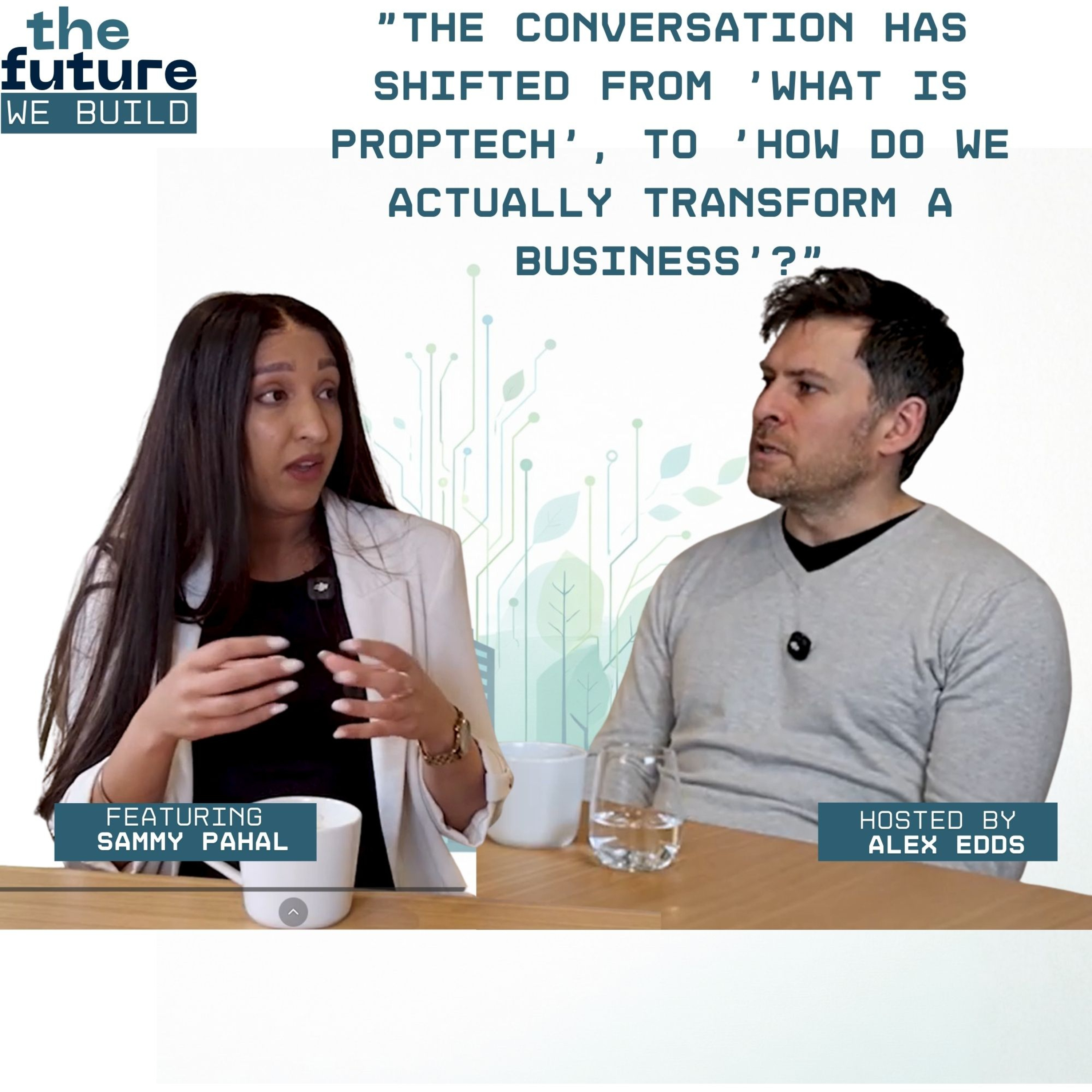
The one with... Real Estate's data crisis, PropTech growth, AI readiness & the new Real Estate UK
44m 15s
This conversation centers on the evolution and current state of PropTech in the UK real estate sector. It discusses the merger of the UK PropTech Association with the British Property Federation to form a new alliance, "Real Estate UK," intended to strengthen the industry's collective voice, particularly in government policy and advocacy. The dialogue notes that while understanding and maturity around PropTech have grown over the past ten years—moving from basic definitions to strategic implementation—significant challenges remain. These include the difficulty of engaging smaller real estate firms and the complex "execution" phase of integrating technology, which requires proper change management, internal sponsorship, and solid data foundations. The rise of AI is further pushing technology to be viewed as a core strategic priority, with leadership shifting from innovation teams to CTOs and CIOs focused on building integrated tech stacks and future-proofing their organizations. The overarching theme is the ongoing need for digital transformation, facilitated by better connections between tech providers and the property industry to realize tangible value.
It's probably simpler for the tech companies to sell to ASL and be sold. Yes, they shouldn't just be going for the big players. There's too many gates to go through on the big players. And they put all of these legacy issues as well. Welcome to this week's episode of the Future We Build. My guess this week is Sammy Bajal, managing director of the UK PropTech Association. Following the merger with BPF last year and the upcoming merger to create real estate UK, this new alliance will represent hundreds of real estate companies and propTech companies and be the single voice of real estate. Our conversation today touches on this merger and what it means for PropTech. Talk about the current state of adoption in the market and some of the existing challenges and we talk about what needs to change in particular with the looming AI disruption. We also address the key challenge of connecting with the long tail of real estate owners and managers. It's a broad-ranging conversation about the need for digital transformation and how the sector can realise the value of PropTech. Let's dive in. So welcome to this episode of the Future We Build. And thank you for joining Sammy. So today my guess is Sammy Bajal, managing director of UK PropTech Association. And I want to speak to you because I obviously, we've known each other for a while. Back in the days when I was trying to innovate within JLL, the trials and tribulations of that, in some ways that's where a lot of this all started and your journey started. And obviously there's been success stories and there's been challenges and almost like 10 years on, I guess, what's working, what's not working. And I guess from my perspective having then obviously gone into another corporate role, trying to be a customer and in some ways trying to influence the adoption and use of smarter, more digital tools to try and streamline some of these processes. Just how challenging that is. - For Teftar. - Yeah, trying to move industry and move companies. And now I've been spat out the other side, I don't know in this position of having conversations. And I was thinking about how has that last 10 years gone? And obviously linked within that, the role of the UKPA, and obviously get you to just introduce it and talk about it, but it's obviously then gone through a bit of a change in most recent years with obviously BPF. And now the establishment of real estate UK. So maybe let's start there, just a little bit about you. But then sort of in the context, or I guess this journey that you've been on through through that, I guess that arc. And then most recently, I guess, how that merges happened with BPF. What does that meant and what's that look like, I suppose, in the last year? And then maybe just sort of touch on, you know, what's happening right now, which is this new real estate UK group that we want to get familiar with. - Great, yeah. Well firstly, thank you for having me. - Very welcome. - Going to be here. And yeah, it has been quite a journey. We have known each other for almost almost 10 years, probably, since the very beginning of the UKPA for Mink, which was in 2017. So it's been, yeah, it's been an interesting journey. My background, I don't know whether you, I'm sure you probably know this already. - No, no, I did a bit of research on it. - So I was doing that, so. - Yeah, so I'm not really a tech person, or a property person. Yeah. But my background is in psychology. So it's interesting because actually I think, I'm sure we'll come onto this. But psychology really plays such a critical role when you are going through any sort of change. And that's no different, I think, in business context when you're bringing in technology and you're trying to innovate. So it's actually been quite helpful to have that sort of background knowledge and that kind of mindset that that brings as well when you study psychology. - So you understand why people living in this different environment? - Yeah, so I think so. - Yeah, yeah, it doesn't mean you can solve it necessarily, but understanding is the first step, I think. But yeah, my background was in psychology and then I just kind of fell into PropTech if you like to do. - It's a little bit full of that fall into one of those days and maybe PropTech as well. - Absolutely. But it's been interesting because I was working, ordinate, when PropTech was just becoming a thing. And they were using the partners of us, we're using location data in their solutions and platforms. And then trying to sell those to the property industry. So they were the first kind of PropTech companies that had come across. And then I got introduced to Founder of UKPA and joined as the first employee. And that was a big learning curve for me, moving from big government-owned company, 1000 employees, did just me and the Founder of UKPA. - Who was that? - Eddie Holmes. - That's right. - Yeah, yeah. - Comshore people all know him. - Yeah, yeah, yeah, yeah. And so, yeah, and in a way, I suppose, that has given me a good experience to be able to relate to startups, especially those that have come from your corporate background to just working on their own sort of thing. So, yeah, and I mean, what in terms of what we do at UK PropTech Association, so it was set up to drive digital transformation of the UK property industry when that was kind of the big buzzword at the time, digital transformation. And everyone was trying to understand what does that actually mean, how do you procure PropTech solutions, what is PropTech? That was the big kind of conversation. - Are those conversations? Is this PropTech? - Yeah, exactly. - It seems so aged now, though. - Yeah, and I think we have defined it somewhat now, but of course, there's still sort of crossovers with other areas of technology as well. But the conversation I'd say has shifted from, well, what is PropTech, why do we need it to? How do we actually transform a business? How do we innovate to now even, how do we get the right sort of foundations in place to be able to use PropTech more effectively? So, I think it has really sort of shifted. And our role as UKPA is to really bridge the gap between PropTech's and their understanding of the property world and then the property side's understanding of what PropTech solutions exist in the market and the role that it can add to their organisations, the value it can bring. I think it's sometimes, you know, we hear this question of, well, is PropTech just finding problems to solve? And there is a little bit of that. By also, I think sometimes you don't know what the problems are until somebody actually. - Make the market. - Exactly. So there is a bit of that and I think our role really is to facilitate conversations and bring both sides together through our events programs. And now of course it's much easier to do that as part of BPF now that we have access to more real estate professionals. - So that's been the main benefit I suppose of the BPF piece to start there is just obviously you're immediately then part of that wider membership. - Yeah. So access to their events and also your own platform, so I suppose it's just as much easier accessibility. - Yeah. - For both sides. - Absolutely. Well, I mean, we had our events in the early days in the heads of innovation coming to our events. - Is that so you were there, yeah. - And that was great because those were people that clearly got it. But you can only get so far. - Quite, yeah. - You know, as you said, in your role you've had to influence internally. And so I also think part of what we can do is to support heads of innovation and CTOs and CIOs be able to influence internally as well by getting the right people to our events, to really to hear from people outside of their organisation who might be saying similar things to what they're saying. And then also hearing how other real estate organisations are innovating. I think often change comes because of fear of being left behind and not innovating fast enough. The question I get from a lot of the real estate companies is, can you tell us what our competitors are doing? So I think that's really where we can add value. - For 10 years, that's how we made money out of a consultant model basically. - Yeah. - That's how the industry works. - Yeah. - That's crazy. - So bringing it up to today, and was it this beginning of the turn of the year, is the real estate UK officially? - So officially it will happen in April from the merger. - Okay, okay. - Yeah. - So we've got the brand out there, we're trying to, more familiar with the website. A kind of landing page at the moment is there and we're working on some sort of flagship events for this year. - And this is really just bringing together an even broader set of traditional real estate players. - Yeah. - And all under one umbrella. - Yeah, it's really to create a stronger voice and representative body of UK real estate. - Into government or generally, I suppose. - I think there's a lot that will happen in terms of engaging with government and having a stronger voice. - It was always a challenge, wasn't it? It was like, who is the voice of real estate? - Yeah. - Yeah, okay. And I guess from a regulatory perspective, particularly in the context of this podcast and what I do around sustainability, a lot of it has been driven by regulation. Obviously, we've got MEEs and EPCs in the UK. But, yeah, I think a clearer channel into government around what is actually that we need. - Yeah. - What's the voice, what's working, what's not working? Because I remember I used to sit on the BPF Sustainability Committee way back when, being that's just one voice of many. - Yeah. - So I think that hopefully will make it easier. and I guess through you and then into the broader world.
world of Proktech sort of connecting them into that communication and that channel should only be a good thing and help sort as you said earlier like which ones are actually solving real problems and what are the problems that need to be solved so okay yeah and we as UKPA have been doing some advocacy and lobbying work on behalf of the Proktech sector and it's been quite reactive to be honest and then in the recent over the last year or so we formed a relationship with MHCLG so we've got a Proktech growth partnership now with government okay and they've funded us to work with the industry to understand you know what are the but what are the things that need to happen to be able to scale Proktech faster yeah so that's been great I guess on misresidential obviously but is there a particular sort of subset of that or is it general yeah so the overarching kind of aim is to is to drive adoption of technology in housing yeah so to be able to deliver against the 1.5 million homes target so that is the kind of focus yeah but you know everything that we're doing is is also with the lens of well how does this support the Proktech sector more broadly as well yeah and I think one of the other benefits that we've had since merging with BPF is is being able to tap into the policy team within the BPF they have a really strong policy team internally who all have relationships with different parts of government and different areas of expertise and so now I think it's an opportunity for us to really weave in especially where they're working on campaigns with government to show you know talk about what needs to happen how can we bring the tech angle to that yeah and make sure that we're you know we're promoting the use of technology to solve some of these issues as well and I find I mean a hundred percent and I find that I'm even just sort of on you know and I guess it's just the education it's just takes time and but like you say that still I think but certainly for a while the the the audience or the customer you know quote unquote the real estate I guess owners investors marketplace you know there was a as you said earlier like when defining what it is what does it even mean and I think still depending on which part of the value chain you're in when you hear the word prop tech you know you immediately you have a thought about well is that widgets in a building to make it smarter or is that as you said earlier like is that sort of planning based sort of geospatial stuff is that you know portfolio-wide kind of analytics that there's so many variants so obviously within that full kind of value chain of real estate so wherever you sit within that value chain it it means something very different to you and as you say to try and like connect in with both the market and then obviously further into government around policy navigating okay well that policy is going to drive this particular part of the market rather than this part and you know how's that going to influence and what needs to happen and what are the digital technologies that kind of sort of solve that I think yeah just having that derestate kind of translator to help the market understand well that's this is the segment of prop tech that we're actually talking about in relation to this policy or this driver rather than the sort of pink brush of like well it's in a prop tech generally yeah because there is just you know this and as you say it's sort of on either side it's well it verges into climate tech or it verges into fintech or it verges into something else so I think yeah just you and the end and your organisation having that ability to just help guide and I guess more than anything the customer right is like what am I looking for and who am I actually you know trying to do business with or what do I need and I guess you know moving on to that like in terms of where we are now you know at 10 years I guess down the road from like at least when we sort of started do you see like is there a much better quote unquote marketplace for your members like is it are they speaking to more informed clients is there an easier route to clients are there you know maybe back then it was a little bit like we found a we found a solution we now trying to find a problem to to offer it is it now maybe the other way around whether you know the industry is like okay well I now know my problems or at least I have an understanding of what they are therefore I know that I need a solution for it just curious to know kind of how you sort of lends the right now and we'd love to talk a little bit about kind of what needs to change or what might happen in the future but with regards to right now is it better than it was and if it is yeah kind of how would you sort of I guess define kind of how we're we currently I don't know it's a big question because there's laggads and there's you know leaders and it's you know different parts of the fairly chain but just curious to kind of get your take on that. Yeah so I'd say generally speaking there is a greater level of understanding of what tech solutions are out there how it can solve problems and even how to kind of navigate innovation internally and how to how to go through digital transformation and so I would say you know that there is a level of maturity there now that we haven't that we didn't see early on but I was just to ask you on that so I just support but do you think that's limited only to the big sort of you know blue chip big organizations that have the resources to do that or would you say that that's also kind of translated through to because obviously a lot of really stay in your own ship so I'm so by medium sometimes single family or you know family offices etc. I'm just curious to know do you do you think it's still that what you're saying is still is only at the top top length or is it is it blending through. That's a good question yeah I mean I would say it's probably the larger organizations that have the resources to invest in people that can understand how to do that you know it's the great stars and the enduring and British land and range etc who have innovation teams who have that expertise and can translate that to the CEOs I think the smaller organizations they there is definitely a willingness and I think there's maturity across the board in terms of understanding what tech can do I don't think there's you know I don't think we're in a in a world now where people are bearing their heads in the sand anymore but in terms of actually maturity as a as a buyer that that there is and I think maturity of execution is another question because I don't think that that the execution bit is as mature as people would think. We've had Paul Martin from SQL on another episode and one of the problems he's trying to solve is that execution piece particularly around like decolonization but you know and I again having had it's interesting here you say that because having been in the seat of the innovation role you know the job is obviously connect the dots internally go outside and figure out what's out there speak to clients so we'll see in the context of gel I'll speak to clients figure out what their problems are so a lot of it is just running around trying to figure out you know there are solutions to this problem yes we can line it up but then it's like okay now you've actually got to do it yeah how are you going to do it yeah and that takes budget takes you know time or pecs or whatever it is and it takes willingness and like to your early point right change it takes change management so you need to find a sponsor within the business and typically innovation roles they might have a small budget but that's more to do sort of P.O.C.s and tests to genuinely get it into the business you need to COO or you need someone like that so yeah it's interesting that it's it would you say that it's characteristically that it's still the innovation teams quote unquote or the person that's sort of most interested all the person who's sort of doing it from an innovation perspective is still the main sort of link in to you know to the solutions or is it is it sort of becoming more like the CTO or the if they have a CTO which obviously yeah yeah I think it is becoming the ownership is now sitting more with the CTOs and CIOs it needs to yeah I'm see I'm definitely seeing that more and I'm seeing that actually there is more endorsement and support from the CIOs as well but we had a panel of then a couple of weeks ago I'll kick off for the second image programme yes it was it was it was great it was the first time I had a chance to really speak to the CIOs of British and Granger in Duran and we had a CTO this the sort of director of innovation for Knari Wolf Group as well and and it was quite clear from that that actually they are looking at this now as a strategic they not just innovation in people running off and doing prop-tick pilots they are thinking about how does this actually align with their business strategy to future proof their organisations and especially I think that's been driven by AI of course you know everybody is wanting to understand how they can make sure that they're ready for being able to leverage AI and what's the disruption that might come from that as well and there's a recognition that will be need to have a more of a holistic strategy around this and that they also then need to get the plumbing right the foundations right and that's why I'm seeing now actually is that because we set up an innovation leaders forum in the BPS so post-post-murgeoning you know this is a group of about 30 people from BPS membership companies who are responsible for tech and innovation in the organisation and now with the kind of key theme I'm seeing is they're all looking at how do they get the plumbing right how do they how do they create the stronger tech stacks how do they fix the data issues that they might have how do they how do they integrate that
platforms with other prop tech platforms and consolidate rather than having lots of different prop tech companies or platforms that they're working with. Yeah, I mean, yeah, a lot of the AI, right, it's the elephant in the room, it's the thing that's going to potentially change everything. But I'm, you know, a question I suppose, and I wouldn't be surprised if you're saying this is certainly in terms of the new startups coming through, I'm guessing a very high percentage, I've got AI in the name, or at least, you know, the AI, they're AI first companies. But I'm not so, but in fact, actually, I wrote an article on this particular, I mean, obviously again, within the context of sustainability, particularly, actually the third article came out today, so there's timestamps this episode. But it was exactly that point, which is, you know, AI, there's a lot of hyper and AI, and obviously if you go into an alarm, you're going to ask it a question and it will give you an answer, of course it will, but that answer will be completely false. And so in the context of business, and if you want to, you know, use that kind of technology to ask how well is my building performing or, you know, how do you, you can't get it to hallucinate, right? It needs to be grounded on real data, and it needs to be coming from a place where that data is probably auditable, at least if you're a regulated industry. So, you know, the premise, which is exactly what you're saying is, in order to leverage that kind of capability, you need to have a really kind of clear data set from where that's coming from. Otherwise, you're just going to be asking it and getting fictional answers back. Yeah. That was, they'll sound really good. But, you know, that's so critical. And I think it's funny that on this sort of 10-year journey we've been on, I remember even back in the day of JLL, but, you know, the message has always been, I think, from literally on every panel, I think I've ever sat on, is data, data, data, right? It's just, get our data sort of, get our data, and it's interesting that sort of, you know, until now, this sort of burning platform of AI, or the threat, I suppose, of AI. Yeah. Coming, people have realised, okay, we absolutely have to get this sort of. Fine, you need to sort it out, yeah. And there's a lot of investment and time now being spent on, okay, what is the data, what data's hours and what do we need in that kind of central core? And then what information data is, it needs to plug into that. So I think it's, yeah, as you say, it's probably helping reshape and a bit of consistency, as well as reshaping how the industry is going to start, you know, looking at it and working. So, and actually, for any of it, it sort of leads me to another point which was around, maybe the change, I'm going to be curious to get your thoughts from what you're saying, but in terms of the supplies coming into the market, you know, there's the sort of traditional sort of SaaS, sales, dashboard type service, login, here's a dashboard I've presented all your information to you. Perhaps the new world is, you just plug in and the data's going straight into your, you know, data warehouse. There is no dashboard, there's no login. Yeah. That's the service. Yeah. And then you can obviously plug it in and plug it out, but that requires a level of maturity in the business to be able to operate that way. So I think those that are sort of equipping themselves, which by the sounds of it, if they've got CTOs or innovation leads that are sort of pushing for that, that's in my head. Anyway, that's sort of being AI ready, is going that capability right so that you can then go out and go, well, we just need to plug in this data stream or when we acquire a new asset. Okay, how do we plug that data stream into this core, which I think it should, you know, it should make it easier because I think, you know, and again, it's those questions to you, it would be around just the, and I forget what the number is, but I remember when we were, when we sort of worked, in fact, I think when I was a board member of the UKPA, there was like quotes of like, you know, I think it eight thousand prop techs in Europe, I think it was a number I seem to remember my head. And so, you know, one of the things always was when you go back into realistic, I was like, there's just so many, there's just so many solutions like how do I even know where to start? Yeah. I'm just curious in terms of, do you think that number shrunk? Do you think that number's grown? There's obviously been a little bit of consolidation. Obviously, there's been some people, there's some companies that haven't managed to survive. But yeah, what's your take? Is that still as a confusing marketplace? Yeah, well, I think the, the figure that we would not be quoted back then, in terms of UK based prop techs was around 795 or 800. And according to the report that we did with MHCLG last year, it's around 795 companies. So it hasn't really, I mean, we've seen companies that have bolded, we've seen new companies emerge, but it's staged kind of, yeah, as a total number, it's staged relatively the same. And in the report last year as well, we also found that there are a declining number of new companies emerging in prop tech. But in terms of prop tech investment is coming back up again. I was going to ask that, okay, because there's been obviously a lot of talk. I mean, particularly from my lens around, when I look at it, it's more around sort of climate tech, prop tech. But there's definitely been a slowdown of, you know, looking at sort of climate tech. I mean, investment, but I was just curious in terms of the VC and money coming into prop tech more generally. But obviously like everywhere in the market, obviously the economy and everything else, it's been tough. So I'm sure we've seen that, but I was just curious, has that happened? But you're mentioning that it's an else that I'd to tick up again. Yeah, it is starting to pick up again now. I think it's just going into already established scaling companies. Right, yeah. So in early stage, new organisations and startups. Okay. Finally, I've read something along those lines, I think, three or four times in the last couple of weeks about if you're now a founder looking for VC, it's not just about an idea on a PowerPoint. No, it really isn't. You need revenue. You need, you need, you need, you need, you need to improve in business, which is tough, right? But it's from the founders perspective, it's more tough, but it sort of shows as well that the maturity I suppose of that capital coming in and recognizing that this is not as easy as perhaps someone who was going to be talking to me. No, yeah. I think back then everybody was quite excited. There's a huge audience here. Yeah. And they wanted to try all new tech solutions. And we had to go through that phase, I think, to understand what worked and what didn't work. And now there's much more pressure, you know, financially, but also, you know, with things like AI coming, it's, I think, the CEOs are looking at return on investment and they're looking at, you know, where are the efficiency gains that we can, we can have from these of PropTech. So it's just much more, much more focused investment in PropTech, OK? So in terms of, I guess, both sides of the lens that you can see it from both the tech companies that are members of yours or through, you know, through the association that you're seeing, you're both the ones that are sort of new, but also scaling where there's actual success and then be on the flip side, you know, the customer of that, you know, with, I guess, with, you know, now real estate UK, the new industry body looking forward for like the next year, two years, sort of like, what, how do you, you know, what, I guess, what do you see in terms of adoption and scale, but also what, what do you think is needed, like, what would you sort of call upon to either of those groups to say, look, anyway, this is really going to happen. You know, from my lens and this podcast lens is around predominantly, like, how do we make buildings better and smarter and more sustainable? But, you know, I guess, generally, you know, the sort of digital transformation of the industry, kind of what, what do you see is still needed to kind of help accelerate some of that change and like, where are the blockers still? So I mean, I think in terms of what I'm seeing working now before I come onto what needs to change. I think the tech companies that are able to integrate with existing platforms are the ones that are seeing much more success because it seems to me that the CTOs and the heads of innovation want to kind of own their tech stack. They want to have their own sort of central platform rather than, as you say, adding in another dashboard. They want tech, they want to work with ProPtech, but they want it to integrate into what they have and they want to own that and shape that. So I think we're seeing those that can integrate with that and integrate with kind of existing work, plays and don't disrupt behaviour too much. Other ones that seem to be working well and the AI first ones as well. And in terms of where that looks like in the market, I think we're seeing, you know, a good kind of amount of traction in terms of tools that can help you understand where to invest and how your assets are performing, so kind of that asset management and risk and look at your portfolio. And then in the ESG reporting space, I think that's still a growing area, but I think it's more about not just how again having another dashboard, but how do you actually automate some of the data collection that you might need and link that in with your finance systems in your risk model link. So I guess that integration of all of that, not just having a silo solution on monitoring your energy performance of a building. I was going to ask you that actually just on that, I mean ESG terminology, but it's like front and up, I was with a founder yesterday who they initially started out as a sustainability quote unquote or even decarbonisation platform. And they're like, no, no, no, no, we've now pivoted. We're now just, you know, an asset management platform. And it makes a lot of sense because a, depending on who customers you end up being sort of siloed into the sustainability piece, but be like you say, well, you're only going to solve some element of the problem there. And you're always going to come up against the internal kind of friction of like, well, that's it's in the asset management platform. Well, that is the asset manager. So why not try and tackle that whole thing?
And actually, I think, you know, linked to that is some of the problems or challenges, you know, that we have in the industry just in terms of how fragmented it is and just, you know, the workflows that we have. Now, I think for a long time, I certainly was one of them as well. You know, you're never going to solve that. That's just so complex. I'm actually starting to see companies that are solving it, you know, very early on and obviously AI is helping, you know, drive a lot of that. But just the complexity of variables that go into making decisions about CAPEX or RAPEX or whatever it is, you know, for a long time, as I could say, I was like, I can't see ever that really being solved. But now, actually, that's getting pretty close. So you're starting to see, I guess, the vision, you know, that workflow of a proper digital workflow, as you say, like data comes in and a lot of these things that I think, I mean, certainly I've spent 20 years banging my head against a brick wall sometimes with regard to data and, you know, getting information in, analyzing it, synthesizing it and then producing an output, give it a couple of years. And I think we'll just look back and go, my God, like, why will we spend so much time on that? And that is now, you know, click of a button. And there's just a, you know, digital workflow that captures the data and spits it out in a way to go format. And I think we're not that far away from that. So I think there's a lot of efficiency that's clearly going to come. It's just, like you said earlier, it's just, you've got to be ready. You've got to find a way of getting your docs in a row that can leverage that. And I think that that is still the biggest hurdle. I mean, I had a moderated a panel for RF and Yardee recently off the back of a report that they did looking at, I think they surveyed, I want to say about 30, fine managers looking at, they use some technology and data and how prepared they are to bring you an AI as well. They all said, about 100% of them said that they think that AI, sorry, data reporting is going to be really important over the next 24 months. But in 28% of them said that actually they're making advancements in that space. So yeah. So I think it's still, and when I moderated a panel with some of the people that responded to that survey, they were all talking about the foundations and the plumbing and getting access to the data and they said that there's no issue with the amount of data that's out there. It's just getting access to it in the right way, fixing the pipes to bring that data in to those central platforms to be able to then spit out the reports and all that. So I suppose jumping straight to the conclusion of that is if you're in the market, if you're a platform, you'll protect whatever you want to call it that's handling data, they're the problems you need to solve. It's how do you get there from one place to the other, basically. Right, I'm saying that. Right, but then analysing it, synthesising it and dashboarding it means to be getting it, making it accessible, structuring it and then feeding it into. And it sort of begs the question I suppose because a lot of, obviously a lot of prop tech companies, tech companies are funded by VCs. There's a sort of classic sass model of scalability and that's sort of driven all of the market. But actually what you're saying, which is 100% and I remember my time at JLL, even when I was at the sal, it was like, we can't need it to look like this and we can't need to be slightly bespoke and our core, our enterprise data warehouse looks like this and we kind of want the workflow to look like that. And you often had conversations with the sass profile again, that's not how we deliver it and it's sort of cookie cutter. And actually what you're describing is, well, maybe it's a little bit more, you need to bring a little bit more bespokeness to it. And whether that is going to influence the sort of prop tech service offering or whether it's the traditional, I guess, tech enterprise sort of tech providers that will benefit from this as opposed in terms of helping to build out that central core to make it flexible, to make it available to pull in this data. If you're just curious to kind of know, like to your point, if there's that gap, who closes that gap? Is that the prop tech is going to come in and try and solve that or is that the traditional kind of tech enterprise techs, you know, solutions and tech providers that help solve that. And clearly on top of both of those, you need the right people with the right skillset, which sometimes doesn't exist yet. Yeah, no, it's a great question. I mean, I would like to think that the prop techs can help to solve that issue. Yeah. If they get it right, they can. Yeah. But we are seeing obviously a slight sort of shift towards working with enterprise tech providers as well, big giants and Microsofts, etc. Yeah, it's interesting, isn't it? I guess how unique a real estate company's operations is and the workflow is compared to a non-ridistate company, you know, I don't know because we see these big tech providers, they span across multiple sectors. But yeah, that'd be interesting to see kind of how that evolves. And I guess as well, when frankly, I mean, I've been playing with them myself, but like, you know, the ability to kind of code yourself and vibe code your own software. Maybe that's what, you know, CTOs and the teams will be doing is just figuring out how do we actually plug and play with all these different things and switching out and changing it. Very interesting. Look, one of the questions I ask all my guests is, and I think in particular, in a relevant view, is kind of what either problem are you trying to solve, but maybe it's bound on that, like, what problem are you hearing and you're still seeing in the market that obviously we haven't yet covered, that you think someone needs to, I want someone to console this or you think it needs to be solved. Curious to know, you might not have one, but I'm curious if you do. So, I think one of the problems that we're trying to solve is this, and you mentioned earlier, this kind of disparity between you've got the really large organisations who can have invest in the right people to bring technology in and to run digital transformation programmes and then you've got the much smaller organisations that can't really afford to do that. Yeah. And what one of the problems I'm trying to solve is to support those young sort of smaller organisations who maybe don't have the same resources by leveraging the expertise and the insights and experiences of the individuals that work for the large organisations. That's where the forum comes in and is doing that. It's giving people in the room that don't have huge teams behind them, an idea of what they can learn and gain from those that have already been through that journey. And also just setting this kind of challenge of, you know, is there more that the pro techs can be doing to support with the execution and the implementation of technology versus what the real estate professionals need to be doing. I don't think that's quite clear yet. We've had a debate on it a while ago and I think we're trying to really surface those tensions through the events programme. Yeah, that's interesting because there's two things that one is curious to know on this. But in terms of the real estate UK membership, does it still kind of tends to be the larger organisations or is, you know, our members, do you get that sort of longer tail of members as part of that? Well, it's actually a bit of a mix because one of the organisations that will be part of real estate UK is the IPF who have individual members. Right, okay. So some of those individuals work for some of the big corporates, for some of them don't. So we will have a mixture of, so there's a ability to connect in with that because that's always been, you know, really say such a, certainly when you go out of that sort of top, you know, 10%, it's certainly like, well, just there's so many people to get engaged with. So to be able to sort of capture that. But it sounds like there's a great opportunity there. I mean, by the sounds of it, you're really trying to help. And I think that's a smart idea. It's trying to plug the expertise from those that have it, so those that don't. Yeah. I suppose just in terms of like people out there in the market offering advice and support in a sort of fractional consulting basis to, you know, to those types of organisations. Yeah. I should say as well, on the flip side of that, we're also trying to make sure that proctor are better equipped to engage with real estate clients. Yeah. And I think that's something that we've been doing since the UKPA formed. And some organisations will be better at it than others. But there is still, I think, a lot to be said for if you can just speak the same language. If you can really understand the problems of your clients or potential clients, what's actually keeping them up at night? Because your solution may not be the answer to that problem. Yeah. But at least if you understand what is keeping them up at night, you have the poll context. I mean, you know, get the tone right. One-on-one sort of consulting sales. But, you know, it's just what is your problem as the client and then figuring out by sort of the dark arts of, well, this is how this solution sort of fits into that problem. Yeah. You know, it's so important to understand that context. But also, and it's funny you mentioned the thing earlier because I remember thinking this, in fact, I spoke to one of the, I won't mention the name, but I spoke to one of the tech companies about this is that, you know, the sort of classic kind of SaaS model of like, you know, here's the pitch, here's the solution, right? There's sort of six months, 12 months on boarding and then, you know, if you go and it's kind of self-serve. It's like, okay, that keeps the cost down. It's, you know, versus the consulting model, whatever, there's lots of pluses. But, you know, the on boarding, it's really tough and like, is it me? And then I've got to get all my users to sort of log in and one of the things I said to him is, as well as that sort of, I mean, there's a sort of on-boarding cost as a lot of these things have. But you should also offer an optional extra, which is actually come in and work with the team that's procuring you, but maybe also the CTO or the tech team. Well, whoever it is, is to actually like sit alongside them and say, look, this is how you maximize the value of the platform that we're offering you. Yeah. Because I think too often, and I know the tension here, and I've spoken to enough founders to know, right, the SaaS model.
model and the classic VC model of, we don't want to do any consulting, we don't want any consulting, you know, it just needs to be kind of a repeatable business. But there's such, my concern would be the failure rate of, you know, the value and it's, and also just not getting enough value out of that solution. And I think there's a lot to be said for that. And whether that's the company themselves or whether they partner up and offer, you know, a sort of advisory, you know, consulting type, you know, onboarding solution, I don't know. But I think a lot of real estate companies, big and small, frankly, but probably as you say, certainly on that sort of longer tail, they really need that help to help onboard it. And I think once that it's like anything, right, it's like any app you use or any technology you use, once you've used it three or four times, then it becomes native. But on that first go, here's the log in and then you come back to it three weeks later, it's like, what's my log in? I don't forget. And so, you know, it's, it's very easy to, that sales pitch, do it. Sign it, done. Move on. Okay. How do we actually keep, keep maintaining that? Second question, which maybe sort of links to that then is if there's in a magic one, but if there was, if something on, in our, that you've got to guess a greater plug into, to government, be curious to kind of, if you've got thoughts on this, but if you can get one thing kind of done, magic one by government, by business, maybe, you know, the sort of real estate community, but business leaders and or individuals all three. Curious. Do you have one? Ah, this is after tough question. It was after. You got magic one. Anything. Anything. This is probably quite unrealistic to you honest, but I do think, you know, now that the government want to ensure that the UK is a leader in AI. Yeah. That's the key focus. And we've got industry, lots of industries, not just real estate, trying to grapple with what it means for them. And then you've kind of got this looming slightly dark cloud, which is if we don't get ready for AI, then potentially that's quite disruptive. And what does that mean for society? To me, it feels like, and maybe this will come from the sort of AI strategy that government is working on, but it feels like there needs to at least be some sort of support guidance, something to help businesses prepare for this and local authorities as well. And I'm hoping they are doing that with local authorities, but all aspects of society, I think. I actually saw something, I think PWC have done some work with government to come out with some online training, free to use online training around AI. In fact, there's some construction focus bits of it. So we should probably, you know, we can push like people on the show notes as well, but I think you're right. I mean, 100%, right? Let's just think about how many, where and how is this going to influence and impact people. Especially for the smaller organisations who don't have the budgets, you know, maybe the large organisations fair enough, they should be investing their profits into their organisations into their teams to prepare for this and upskill, but for the smaller countries. Don't get me started on the social consequences of this. Yeah. Yeah. Yeah. Okay. So, more, more, yeah, I guess more signposting and better support and information from government to help us navigate through this. Okay. I think so. Yeah. Okay. Thank you very much. Great conversation. It must be a pleasure. Thank you for having me. That's it for this week's episode of The Future We Build. I want to thank you so much for listening to us wherever you are. If you're navigating these same challenges from pricing in climate risk, decarbonising buildings, or if you're scaling a new product or solution, join us on LinkedIn. Search for me, Alex Zeds, or follow our official page at The Future We Build. That's where we break down these episodes further, discuss the topics and discussions, and connect you to the leaders engaged in this mission. This show and the guest sign-by will be influenced by the conversations we have on LinkedIn. So, if you have ideas or would like to hear the thoughts of an industry leader, let me know and I look forward to continuing the conversation with you there. You can find the show notes and full transcripts on our website. And if you found today's session valuable, please hit subscribe on Apple, Spotify, or wherever you find your podcasts. Thank you for listening. I'm Alex Zeds, and I'll see you next time.
Podcast Summary
Key Points:
The UK PropTech Association (UKPA) has merged with the British Property Federation (BPF) and is forming "Real Estate UK" to create a unified voice for the real estate and PropTech sectors, aiming to improve advocacy and government engagement.
PropTech adoption has matured over the past decade, with a shift from defining what PropTech is to focusing on digital transformation, strategic integration, and building foundational tech stacks and data management.
A key ongoing challenge is connecting technology solutions with the diverse, long-tail of real estate owners and managers, beyond just large organizations with dedicated innovation teams.
The role of technology leaders (like CTOs/CIOs) is becoming more strategic, driven by factors like AI disruption and the need to align tech with business strategy for future-proofing.
Effective change management and understanding human psychology are critical for driving innovation and technology adoption within the property industry.
Summary:
This conversation centers on the evolution and current state of PropTech in the UK real estate sector. It discusses the merger of the UK PropTech Association with the British Property Federation to form a new alliance, "Real Estate UK," intended to strengthen the industry's collective voice, particularly in government policy and advocacy. The dialogue notes that while understanding and maturity around PropTech have grown over the past ten years—moving from basic definitions to strategic implementation—significant challenges remain.
These include the difficulty of engaging smaller real estate firms and the complex "execution" phase of integrating technology, which requires proper change management, internal sponsorship, and solid data foundations. The rise of AI is further pushing technology to be viewed as a core strategic priority, with leadership shifting from innovation teams to CTOs and CIOs focused on building integrated tech stacks and future-proofing their organizations. The overarching theme is the ongoing need for digital transformation, facilitated by better connections between tech providers and the property industry to realize tangible value.
FAQs
The UK PropTech Association bridges the gap between PropTech companies and the property sector, facilitating conversations and events to drive digital transformation and innovation.
The merger provides broader access to real estate professionals, strengthens advocacy with government, and creates a unified voice for the industry, enhancing collaboration and policy influence.
Challenges include navigating legacy systems, securing internal buy-in and budget, and effectively executing digital transformation strategies across organizations of varying sizes.
It has shifted from defining what PropTech is to focusing on how to implement technology, innovate, and build foundational tech stacks for effective adoption and value realization.
CIOs and CTOs are increasingly driving strategic alignment of technology with business goals, focusing on data integration, tech stack consolidation, and preparing for AI disruption.
It provides access to events, resources, and advocacy, helping smaller firms understand available solutions and navigate digital transformation despite limited resources.
Chat with AI
Loading...
Pro features
Go deeper with this episode
Unlock creator-grade tools that turn any transcript into show notes and subtitle files.
 PodcastTranscript AI