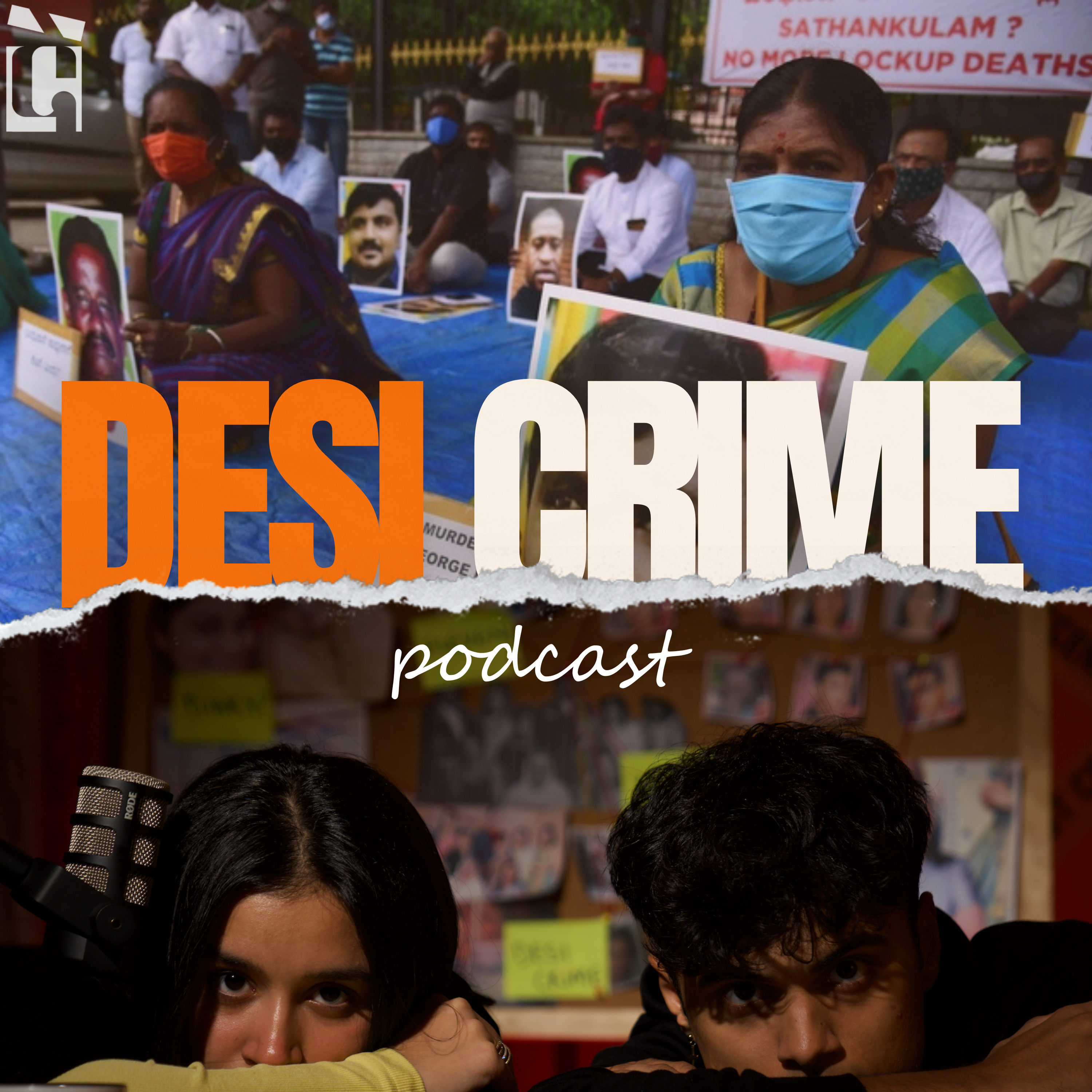
The Murder of Jayaraj & Bennix: The Full Story (2026 Update)
from The Desi Crime Podcast
62m 54s
This podcast episode compiles three segments from 2020, 2022, and 2026 detailing the case of Jairaj and Phoenix, a father and son in Sathankulam, Tamil Nadu. In June 2020, during COVID lockdowns, Jairaj kept his mobile phone shop open 15 minutes past the 8 PM curfew. Police initially let him go, but the next day they arrested him, claiming a warrant. When Phoenix followed to plead for his father’s release, both were arrested and subjected to horrific torture inside the police station. They were stripped, beaten with batons, had their knees crushed, genitals assaulted, and skin peeled; their chest hair was plucked, and they bled so profusely that their clothes were changed multiple times. Despite this, the judicial magistrate dismissed their cases without seeing them, and a doctor declared them fit, leading to their transfer to prison instead of a hospital. Phoenix died on June 22, 2020, and Jairaj on June 23, 2020, with official causes listed as fever and heart failure, contradicting the obvious brutality. The case sparked nationwide protests and a Supreme Court mandate for CCTV in police stations, but only two sub-inspectors were initially suspended. Updates from 2022 and 2026 reveal a CBI investigation and criminal charges, yet the podcast emphasizes that this case reflects a systemic culture of police violence in India, where thousands die in custody with few convictions. The story underscores how minor infractions can escalate into fatal brutality when safeguards fail.
Hi everyone, welcome to another episode of the DC Crime Podcast. I'm Ashwarya and this episode today is going to be a little different. Considering recent updates in the Jairaj in Benik's case, what follows as you listen is a compilation of all our previous episodes on this one story. The first episode was released in 2020 when the case first broke, the second in 2022 when the case moved to a trial, and the third is an update from right now, April 2026. Listen to all three parts for the full story. The world has been outraged by the police orchestrated killing of George Floyd, where a Minneapolis police officer, Derek Chauvin, kneeled on a man's neck for 8 minutes and 46 seconds. The man's last words were "Mother, I can't breathe." Something happened here in India just 7 days ago which struck a chord in the hearts of Indians just as George Floyd's dead did in countless Americans. This is the story of two men who were taken into police custody and beaten till their skins peeled off their bodies. This is the story of Jairaj and his son Phoenix. You guys, the format and the tone for this episode will be slightly different from our previous ones. We truly feel sick to our stomachs having researched this case and to talk about it now is honestly just as difficult. But this case in all of its glory details needs to be heard. We need to be made aware of the state of police brutality in India and the lack of safeguards to turn to if your protectors are the ones that wrong you. By now most of you would have at least heard of Jairaj and Phoenix and some perhaps have seen that video by Suryatra which is trending on Instagram. Whether you have or have not, we are here to tell the full story of these two men, two men who were victims of gruesome police brutality. As a true crime podcast we believe it is our responsibility to use our platform to share the story with our listeners, Desi and Nod Desi alike. Most national Indian news is dominated by North Indian headlines since most media houses are based here. Moreover the linguistic differences between North and South states also contribute to this sense of alienation. Eshwarri and I are North Indians and hopefully we are able to do justice to this story on the Desi Crime Podcast. Today is 19 June 2020. And Jairaj, a 60 year old middle class man is like all of us still adapting his mobile phone business to the ever changing government guidelines in a post-COVID world. Small scale businesses like Jairaj have been upended by this pandemic due to lack of demand as well as limited government aid. Jairaj runs this shop with his son Phoenix and is a proud owner of a little shopping apartment in Sathankulam Tamil Nadu. This is a small town in the district of Tuttikuri, also called Tuttikurin. Despite the coronavirus measures 19 June was lined up to be another regular COVID day, with started sales and less footfall. Tamil Nadu has one of the highest number of coronavirus cases in India and naturally measures have been taken by the state government. One such measure is that all shops are to be closed before 8 pm curfew time. While these rules have been legislated, they aren't regularly enforced and not everybody is aware of each new guideline and its neti gritties. Anyway, the day passes and the deadline of 8 pm approaches. Whatever the reason may be, Jairaj keeps his shop open beyond 8 o'clock till 8.15. Whether unknowingly or with the intention is still under speculation, but I believe that is the detail which isn't remotely pertinent to the overall essence of the case. Regardless, a police patrol car spots their shop and head constable Esmurugan reports this break of curfew. There's nothing wrong with this so far. The police only did their job and to be fair, Jairaj did miss the deadline for the curfew, but just by 15 minutes. Regardless, upon being asked to close the shop's shutters, Jairaj complied he didn't make a fuss at all, he closed his shop and logged it by 8.30 and returned home. It was a mundane routine interaction between cops and civilians. Little did Jairaj know that the next day is going to be his last as a free man. 20th June is a Saturday. Jairaj doesn't think much of last night's events and proceeds with his day normally. However, this day was far, far from normal. On the evening of 20th June, 2020, a police chief pulled up to Jairaj's modest mobile accessories store. It was out of the blue for everybody there. From the jeep stepped out, sub inspector Bala Krishna and police officer Jessuraj. They claimed to have an arrest warrant against Jairaj. Understandably so, Jairaj was angered by this. Being arrested for a 15 minutes delay in closing one shop is the most ridiculous thing I've heard, especially when mind you, Jairaj was compliant with the cops night before. Naturally, he rebuked this warrant and fired back at the cops with verbal jibes. Following the verbal spat, the police engaged in the first act of police brutality, the first act of many in this case. They took the 60 year old man by his collar and dragged him to where the jeep was parked and shoved him into the jeep. Finally, yet sad enough, in the FIR later filed by the cops, the verbal altercation is presented in a manner such that the police seem to think it vindicates them of their action of hurting an unarmed person. Nothing can vindicate the police of dragging and shoving a person in a jeep, a person who was unarmed and 60 years old. This police jeep was headed towards the Sathankulam police station for court and court interrogation purposes. As night falls on this small town in Tuttikuri, Phoenix who watches his father being dragged away by the cops for reasons he doesn't fully understand, follows the jeep with some of his friends in tow. A worried Phoenix rushes into the police station in an attempt to understand why his father has been taken in and tries to get him out. Now I'm trying to put myself in his shoes to understand what I would have felt if I would have walked into a station to get my father. And honestly, I don't think I'd be terribly worried. I would probably know that the cops would trouble me that they won't let my father go without money, that they'll probably pass night remarks to harass us. In worse case scenario, they'll hold him in for another day or two at the maximum to trouble us. And that's probably what Phoenix thought he would have to deal with. But that was far from what actually happened once he stepped into Sathankulam police station. For a while after he arrives, the police don't let him enter or let him see his father. They ask him to wait before someone can come in meet with him. And he's finally allowed to speak with an officer. He begins to ask questions. Phoenix wants to know why his old father was taken in, where he's been kept and for how long before he's going to be released. But he's not given very many answers at all. He was told his father had kept his mobile phone shop open for 15 minutes past the covid lockdown for a few times and thus the cops had taken him in. This Phoenix stands in the middle of a police station trying to plead his father's case, begging the cops to release his dad. The cops decide to arrest Phoenix and put him behind bars too. Now this is the turning point of this case. This was no longer a matter of police intimidation or complacency. This case took a sharp turn towards one of the worst cases of police brutality India has ever seen. What happened is disturbing and graphic, but we aren't going to shy away from sharing the extent of torture this father and son duo underwent at the hands of a dozen merciless cops. The first account we're going to share with you is by Percy, the daughter of Jairaj and the sister of Phoenix. The video of her statement can be found on our Instagram @dheseekrime. She said, quote, "My father was beaten up by the police inside the station in front of my brother. He couldn't tolerate the assault." He questioned why the cops were beating our father in the name of questioning. cops then.
assaulted my brother. His whole body was bruised and bleeding. My uncle was begging the cops to release them but they didn't show any mercy. All the cops in the station were involved in beating up my brother. I saw pictures of his dead body. All his chest hair was plucked. They had to change his clothes thrice as he was bleeding so profusely." It is now widely reported that within police custody the two men were stripped naked with not a single piece of clothing on their bodies and were thrown into a part of jail with no CCTV cameras. However, the following accounts have been corroborated by five witnesses and the wounds on the bodies of Phoenix and Gerard are evidence of what was done to them. The two men were beaten with lattes or batons. Their knees were smashed and by the end of this entire ordeal the bones in their knees were crushed. Their faces were shoved against the floor and steel-tipped batons were shoved up their anus multiple times till both men bled. Furthermore, their genitals were almost dismembered. Their backs were beaten so relentlessly and so ruthlessly that their skin peeled off. The police even stooped to the level of plucking their chest hair out. With this much bleeding the cops sent their now-blooded clothes to their house and demanded a fresh bear, not once, not twice, but four times. The bleeding was so profusely that between just the two men, 10 longies were used up. While all of this was happening, Phoenix's friends stood outside the police station demanding the two men be released. One of those friends was a lawyer named Manimaran, who came forward to tell his account of the incident and I quote, "We were standing out and we were seeing the whole incident from outside through a glass gate. Phoenix and his father were beaten. In the morning there was blood all over the place where they were sitting. Phoenix was beaten so brutally his flesh was ripped off. I gave them four pairs of clothes to change. We had laid down a blanket in the seat of the car when we went to pick them up. Phoenix had lost a lot of flesh on his back and he was a well-built man. The car driver was in tears seeing their state. The spot where Phoenix sat was covered with blood. The place where Jairaj sat was also covered with blood. The blankets are still with us." Unquote. After hours upon hours of torture, these two men were supposed to be taken to the judicial magistrate who would decide whether they would get remands or not. However, they were never taken to the judicial magistrate and the magistrate dismissed their cases without ever physically seeing these two men. I just want to point out here the importance of the judicial magistrate to see the accused. It is the judicial magistrate who upon seeing the physical condition, the physical well-being or the lack thereof of the accused decides whether they are to be given a remand, how long their custody is going to be, whether they should be sent to the prison or whether they should be sent to the hospital like in the case of Jairaj and Phoenix. But this wasn't the case and the judicial magistrate dismissed their cases without ever seeing them in real life. After getting off easy with the judicial magistrate, the cops then took these two men for a hurried help check-up. What the calls called a fitness check where they were pronounced "fit" what they meant by fit only they would know because these two men were far from fit. Finally, in the wee hours of Sunday morning, after being tortured, tormented and brutalized, these two men, this father-sundrao, were transported to a prison 100 kilometers away to Koval Patay Subjail. Now I just want to point out that had the judicial magistrate actually seen the two men as he was supposed to, he couldn't have legally sent them to a jail but would have instead had to send them straight to a hospital. Of course, their condition worsened in the jail and they had to be transported to the government Koval Patay Hospital near to the prison. One of the eyewitnesses recounts that the seats of the car in which they were taken to the hospital from the prison was read with blood all over. It's now the 22nd of June, 2020. Need I say more? Of course, nobody could survive with these two men went through. Not even them. Phoenix's battle for his life ended on the 22nd and he was pronounced dead at the hospital. The official autopsy declared fever as the cause of death. His father held his last few breaths for one more day than his son in positive way, in vain and in pain on the 23rd of June. His official cause of death was deemed heart failure. Today on 27th June, almost one entire week after the men were taken into custody, two sub-inspectors involved in the incident have been suspended. The inspector has been removed from the station and the proceedings have been initiated against two head constables. Moreover, the case has gone over to a special Madurai bench of the Madras High Court, which would deal with this case further. More than a thousand people of this small town in Tamil Nadu staged a dharna or a sit-in protest and there's a nation-wide uproar against a long-standing problem in India. Police brutality and the lack of a safeguard against the wrongs of those meant to protect us. But police brutality isn't the only problem that led these two men to die. It was a failed system overall. A failed magistrate who didn't see the two men, a failed doctor who declared them fit at the intimidation of the police, a failed hospital that couldn't declare the true reasons of their death and a failed nation that took this long to wake up. Do you all remember when video surfaced with cops beating people with lattes when the lockdown just began? Many of us sided with the cops beating up citizens when they deemed so necessary. It seemed harmless at the time. It's been three months since those videos surfaced and now we have stumbled across a far more fatal form of police brutality. I just want to point out to our listeners. When cops beat innocent people with lattes, shoot pellet guns at protesters, you steer gas to dismiss peaceful assemblies, and when we stay silent and compliant with these socially accepted norms, it leads to a toxic culture which results in grotesque and outrageous tragedies such as gyroids and phoenixes deaths. Hi everyone, welcome to the Desi Crime Podcast. I am Ashwara your host for this episode. And I'm Arianne. Almost two years ago in June of 2020, as the world was protesting the unlawful death of George Floyd caused by a cop who stepped on his neck for over nine minutes India was fighting its own case of police brutality. We brought that case to you two years ago and since then new harrowing developments in the case have led us to bring to you another episode. This episode goes to the countless people who are hurt or lose their life at the hands of those meant to protect us. This episode goes to all of those cases that never got a protest, people that were turned into mere statistics of violence at the hands of the police. This episode goes to Gerar and Benix and their family that still mourns their loss today. This is their story. I still remember covering this case as one of the first few cases we ever did. As soon as this case came into the spotlight into the news in Gerar, George and Benix were trending on Twitter. Both of us realized that this is a case that needs to be covered and needs to be covered quickly. Recently for those of our listeners who do not know, Eshwarya and I have started putting reels on our Instagram that are short summaries of cases from around the world and focusing on South Asia as we always do. And we were going back and making reels of cases we've already covered of which Jaya Rajan Benix was one such case.
We were not aware that there was any development in the case until we revised our Information and research for that particular reel and you can check out our reels on our Instagram at they see crime But that's besides the point as you were diving into the research for the reel It turns out there is so much more that has happened including a CBI investigation Including people being criminalized and we simply couldn't not record another episode But what scares me is the old adage the old saying that one person is a story but a thousand is a statistic Yeah, and there are so many cases so many victims of police brutality Unfortunately, we've grown up in a country not only watching police beat up people but seen it being glorified in movies Singum for example The normalization is what is scary to me Arun? Our police stations don't have cameras to the extent that those in the US do our interrogations aren't recorded our cops don't have body Cam's in fact I found this stat during my research into this case It was in December of 2020 after this case that the Supreme Court mandated that all police stations installed CCTV and night vision cameras on their premises And that all police interrogations be video recorded that's big in December of 2020 though I find that incredibly appalling as bigger for move that is the fact that it came in December of 2020 And according to the national campaign against torture which is an Indian rights group based in New Delhi at least 1,731 people were killed in police custody in 2019 Compare that to the fact that between 2005 and 2010 only 21 police officers were convicted for crimes of police brutality Against the people in their custody But this case shows you that no matter what measures you take if you don't train your cops right and don't change the culture of policing within India Things will hardly change I say that because the police station where Jairaj and Benek so being held did have CCTV cameras But there is change and this case was a hub injure of change in the Indian policing system As a reminder for our listeners and for me frankly Ashwarya Tell us who were Jairaj and who was Benek and what happened to them to be years ago So 2020 was the year that the lives of everyone in this world changed We experienced a historical event that all our children will read about in their history books 20 years from now Don't name it It was a global pandemic it has to be said We saw a global pandemic ravaged the world one country at a time one family at a time As of today 6 million people have died of COVID and in India that number is somewhere around 500,000 deaths All of that began in 2020 But death was the worst case scenario obviously For a lot of families in India even if they didn't lose a family member they lost their jobs Their businesses took a hit and they didn't have a running income to feed themselves And nobody knew how long this was going to last Today 2 years later the nightmare still hasn't completely ended At the time though a vaccine was very far away and scientists were only beginning to understand what was actually happening to us During this chaos living in Sathankulam in Tutekori of Tamil Nadu were P. Jairaj who was 59 years old and his son J. Benek who was 31 years old The two men had a life in Sathankulam they had a family a shop that they ran Before COVID hit life looked up for them Benek was just 31 contemplating marriage and hoping to start a new phase in his life Jairaj had a wife Selvarani who he loved deeply Jairaj and Selvarani had 4 children 3 of whom were girls and Benek's the only son Naturally Benek was the most pampered child His sisters doated after him they loved him protected him and his parents would give the world up for him As Benek grew up he became a loving son and a caring brother He was known for having an incredible relationship with all of his sister's children who also loved him He was the favourite uncle Then of course COVID hit and life became tougher The government ordered co-few times and lockdowns All shops had to be closed by 8 pm every night ordered the cops and the people complied This included APJ mobiles the mobile accessory store that Jairaj and Benek had owned for many years now And obviously the cops were just doing their jobs If shops needed to be closed by 8 pm unfortunately they must take you into custody if you violate that order No matter what your personal circumstances are Or at the way he's giving you a warning Or give you a warning right But if they do take you into custody they're not doing the wrong thing The cops don't make the rules the government you elected makes the rules and when times are tough Sometimes the government rules come at a personal cost When we previously covered this episode It was common knowledge that Jairaj and Benek had violated lockdown rules They had kept their shop open past the 8 pm curfew time And that's why the police arrested them Fair enough At the time it was reported that when things went wrong was actually inside police custody After the father's son duo were taken to the police station That piece of information we now know is an absolute lie and fabrication No way Eventually Arran the investigating authorities gathered CCTV footage from a shop right across from APJ mobiles called King Electricals This CCTV footage revealed a few key details that changed the nature of this case completely You know the fact that whatever happened to poor Jairaj and Benek's even If they violated a police curfew, it was already disgusting It was already disgusting That you're telling me they didn't even violate Okay, come on, you just continue The CCTV footage revealed a few key details that changed the nature of this case completely Firstly it revealed that the cops had actually gotten in a small argument with Jairaj the day before the arrest On the 18th of June the camera revealed Jairaj standing outside his shop With a group of men a few minutes before closing time The cops arrived as usual to make sure the shops were closing And Jairaj passed a rude comment directed at one of the cops to express his agitation for having to close the shops early Things didn't escalate on this night and the patrol team of cops made sure the shops closed down and left The same CCTV footage reveals the patrol team coming back the next day on the 19th of June But this time they arrived earlier than usual They arrived at 730, there was still 30 minutes to the curfew time and all the shops can be seen open in the CCTV footage At 745 pm the cops can be seen asking Jairaj and Benek's to follow them to the police car standing at the street side Both father and son follow but a few minutes later Benek's returns to the shop From the footage it's obvious that the cops took Jairaj to the police station in their car What is also obvious from the footage is that Jairaj and Benek's did not violate co-ver lockdown rules So not only was the treatment of the men in police custody unlawful and obfiously illegal The arrest of the men was illegal too The cops had no basis to take them and the men had broken absolutely no laws The cops had told Benek to follow the police car to the police station and meet them there This CCTV footage showing all of this happening with the time stamp can be found on our Instagram @dacycrime Now the cops were obviously legally obligated to file an FIR for any arrest that they make and they did that in this case In this FIR they say that Jairaj and Benek's violated co-vid curfew laws which we now know is obviously false And that when the cops told them to close their shop down They refused to follow instructions and started rolling on the street Which is what led to all of their internal injuries that would kill them in According to an article by the news minute the FIR said the following "The shop was open after the curfew time imposed by the district administration due to the lockdown Jairaj, his son Benek's and a few other friends were standing outside the shop We told them to disperse While others went away Jairaj and Benek's sat on the ground and abused us verbally and rolled on the ground In this they suffered their internal injuries And quote That is so blatantly untrue, Eshara You showed me the video right now And it is evident in the video Everybody just go to like @dacycrime see the video It's evident that there was none of the rolling and hurtling Nor was there the lateness in closing the shop They were literally called by the police to the other side of the road They complied There were so many witnesses to corroborate that evidence There were friends of Jairaj and Benek's and Aurohwala who was their friend Who were seeing all of this unfold There was It's a lie The police story is such a big lie It's almost kind of funny It's funny Because we believed sort of the police's accounts When we had first initially covered the first part to this episode We had believed that Jairaj and Benek had actually violated COVID laws But now it's hysterically untrue There is no abusing happening There is no conflict happening in this video These men are simply called towards the cops And they go And in part we believed that story Partly of the cops because It seems more rational I guess I mean I don't think both of us would ever
believe that such heinous actions were taken on no grounds except a maniacal lust for power. Yeah. And what power does to people? I would have assumed at least there was an altercation, at least there was some, you know, rambling up, some fighting, some arguing. The video is clear. There is none of that. No, there is none of that. The men were completely innocent and it's proven now more than ever with the new evidence that has come forward. But also, I don't have to ask you, is it physically, biologically, physiologically possible to roll on the street long enough to hurt yourself so bad that you die? Does your body like not have a mechanism that tells you to stop doing something like this when it hurts so bad that it'll kill you? And I'll answer my own question on that. Your body does have such a mechanism and that mechanism is called pain. You feel pains. You don't kill yourself doing shit like this. There's a reason people don't come it's use side by rolling on the street or by torturing themselves for us because it's impossible to kill yourself that way. This is absolutely the stupidest thing I have heard in my entire time covering this podcast that these two men with the sheer amount of injuries that they had died because they themselves were rolling on the street for that long. Didn't you know that the roads in Tamil Nadu have pipes on them? Yes, yes. Yeah, I'm surprised you didn't know that. I did not. Fun fact, bro. Fun fact. Anyway, so now both Jairaj and Benek Sarin police custody. They were booked under section 188 which is disobedience to order duly promulgated by a public servant. Section 353 which is the user force to deter a public servant from duty. Section 269 which is negligent act likely to spread infection of disease dangerous to life and section 5062 which is punishment for criminal intimidation of the Indian being ill code. When the men don't return for a while some close friends go over to the police station and what they hear on the inside makes their jaws drop. They can hear the cops shouting. They can hear the men crying. The cops are saying over and over again. How dare you speak against the police? One friend in this group was a lawyer and asked to see the men immediately which by the way is a right granted to each and every one of us by the constitution of our country. At the end of this episode I will go over some basic rights you have if you're ever in police custody. Listen to them, know them, exercise them. But in this case the police refuse to let this friend inside the police station. They refuse to let anyone meet the men. For hours this group of friends waited outside the police station hearing the men get tortured. Inside the police station multiple police officers including volunteers at the police station took turns torturing the men. A report by India today claimed quote Benix's lawyer who was there in the station when the police officials hit the father's undo had a horrifying tale to share. Advocate S. Manimaran and eyewitness to the brutality said quote "we were standing out and we were seeing the whole incident from outside through a glass gate. Benix and his father were beaten. In the morning there was blood all over the place where they were sitting." End quote. He added that Benix was beaten so brutally his flesh was ripped off. He said quote "I gave them four pairs of clothes to change. Benix had lost a lot of flesh on his back and he was a well-built man. The spot where Benix sat was covered in blood. The place where Jaya Raj was sitting was also all blood. Those blankets are still with us. They were both beaten to death." End quote. "Unbelievable." This is completely insane. This is in a secular democracy where people have rights. This isn't 2020. 2020. Unbelievable. This was not all other eyewitnesses have come forward to claim that Jaya Raj and Benix were beating from their rectum and were sodomized while they were in prison. "I guess I'll take the gory job of actually defining what sodomizing is which is the official term for essentially sexually assaulting ainily a human being and it's almost it's not almost. It's way more than reprehensible that these two innocent men beyond being beaten, beyond being unlawfully imprisoned in custody were sexually assaulted. The father and son together." Whether or not the two men were sodomized was actually not proven when we had initially conducted this episode and recorded it. Now we definitely know that they were sodomized. The men were sexually assaulted starting at around 8 pm that night till about 3.30 am in the morning. When we previously covered this episode we talked about how later in the morning the duo were taken to Koval Pati Hospital. At the hospital the medical fitness certificate was provided by Dr. Vinila. We now know that these doctors are the two men in their condition and call the marks on their bleeding bodies "abrasions". However this ruling by the doctor at the hospital has now been heavily questioned. After this excuse my language half-assed medical examination, Jair Rajan Beniks were taken to the magistrate for their remand. A remand is basically a local authority declaring that an accused is fit to be put into custody till they can be presented to a judge. Sathankula magistrate D. Saravanan is the man whose duty it was to examine the men and realize that something was incredibly wrong. But he did anything but fulfill his duty. He didn't even meet the men. He actually stood on his balcony and looked down at the men standing below. The two men were surrounded by a team of police officers and weren't even properly visible from up in the balcony of few floors above. From his balcony D. Saravanan waved his hand to the police to take the men away. After this on the 20th of June, the men were taken to Koval Pati Subjail despite the fact that they absolutely desperately needed medical attention and had any of the people in this chain of command including the doctor and the magistrate done their job right, the two men could have been saved. But at the jail, the men were seen by a medical profession who could not believe his eyes when he met the men. According to an article by News 18, quote, "When Jairaj and Benix were examined by a doctor at the Koval Pati Subjail, the reaction from the medical professional was a mixture of puzzlement and shock. Both had suffered serious injuries on their back sides but their facial expressions revealed little about trauma. In fact, Benix and Jairaj were able to walk to the doctor's room in the Koval Pati Subjail from their cell where they were lodged since the day before. Benix had spotted a swollen knee too. How could somebody with such wounds be normal?" asked the doctor. The medical examiner then went on to check the medical certificate obtained by the police from the Satankalam Government Hospital to enable judicial custody for them. The report had recorded, like I said, their wounds as abrasions, or description that the medical examiner at the Koval Pati Subjail completely disagreed with. The official changed it to quote "multiple hit marks in the glutal area." End quote. The article goes on quote, "The doctor's examining patients inside a jail are usually doubly cautious about hypersensitive and diabetic inmates. Benix had high blood pressure and his father was diabetic. The medical examiner had inquired if they had the necessary tablets. After finding out that they did, the examiner prescribed antibiotics considering the severe trauma. Jairaj was advised to visit the general hospital nearby to administer a dressing on his wound, given that he was a diabetic. But by now, it was too late. The dressing wasn't going to save the men. The antibiotics weren't going to save the men and their necessary tablets weren't going to save the men." It was around 7.30 pm on Monday that the medical examiner received a call about Benix. Quote, "He's sweating a lot and complains of palpitations." End quote. A jail authority informed. Benix was taken to the hospital in an auto-rigsha and not long after that, the prison authorities received a call that he had passed away. When the prison authorities went over to Jairaj's cell to break the news to him that his son, the child that he had raised with so much love was now dead, they instead realized that Jairaj was running a really high temperature. He was then taken to the hospital a little after 10.30 pm. The prison officials had resolved to test him for coronavirus. He was declared dead around 5.30 pm on Tuesday. You know, there's nothing about this situation that does not suck. But what's even worse is that the father
had to before dying be supplied the information that is sundied. Yeah. And how horrifying with that being to know that your only son was dead while you were on your dying bed. Yeah. I am not a parent but every parent says it is their worst nightmare. Worst nightmare. To have their child died before them. I cannot imagine what that must have felt like. According to doctors who were present in the hospital at the time of Benx's death, the 31-year-old had palpitations and a lower level of oxygen saturation. Jaya Raj was then brought in with a high fever and very high sugar levels. He was admitted and later it was noted that his sugar levels were brought down. Despite that, he died. Quote, unfortunately, suddenly in the morning, we couldn't save him and he died, said the doctor present at the hospital where the victims were brought in. The death of the two men brought their communities to the streets in protests that saw more than a thousand people demanding justice for days on end. But their deaths brought their family to destruction and pain. The Deccan Herald conducted an interview with one of Benx's sisters. She said, "My mother has not been able to recover from the loss. I'm sure she never will be. She cannot digest the fact that my brother Benx is no more. My mother's lap still longs for her son and his love." In fact, Silverani moved out of that house in which she had lived with her husband and son shortly after their deaths and hadn't gone back even once until their first death anniversary. Quote, "She doesn't want to go back to Sathangulam. Though I have been visiting her house once in a month or so, she's never accompanied me. This is the place where she lived with my father and brother. She does not want to revisit those memories. But she agreed to come because it's their first death anniversary." Not just Silverani, but Benx's sister said she had a tough job even convincing her children that their mother or uncle will never come back. She said, "Even the other day when we were talking casually, one of my daughters said, 'Mama will get her chocolates when they go to Sathangulam.' The kids keep looking at photos on our mobile phones whenever they remember my brother. None of us can forget anything. It's quite tough telling the kids that their mother would never come back." You know Arun, in my opinion, the worst emotion one can experience after losing a family member is regret. And Benx's sister experiences it. That feeling that you could have done things differently and it would have changed the outcome of your loved one's death? There's nothing stronger and more hurtful than that emotion to me. Benx's sister says she still regrets not picking up Benx's phone that night. He had called her when Jayaraj was arrested and she assumed it to be a regular phone call to her and she didn't pick up. She said, "I still regret not attending the phone call. If I had attended, I could have spoken to him one last time. Maybe I would have told him to be cool and not get tense about our father's arrest. If only I had attended the call." Sometimes it's confusing to contemplate why survivors' guilt is such a strong emotion. But this is essentially a variation of that. Where, of course, somebody could have done something and things wouldn't have been in the butterfly effect. Does what the butterfly effect does. But I can only imagine her thinking. I'm still thinking right now. Maybe if something was done differently, the smallest of things, just not even those two curse words that were said, maybe just saying sorry. But a part of me then feels like we are blaming the victim when we say things could have been done differently. What could have been done differently was that the police system of India would have been different. What could have been done differently was these officers held each other accountable. What could have been done differently was also that they were trained to be better cops, better public servants, not maniacal idiots drunk on power. This is one of those episodes where trying to be funny for me is impossible because there is just apathy. Apathy for a system that produces statistics of police brutality. So yes, maybe if something could have changed, it was his sister calming him down. But I think there are better things and more pertinent things to change. I think if she ever hears this episode, she'll gain some solace from what she does. I really hope so. But exactly what you're feeling around the entire country felt. This case of police brutality sent shock waves across India with the Madurai bent of the Madras high court taking soar motor cognizance of the case, meaning that the court taking on the case without the case being brought to them by a third party. Ten policemen were arrested by the CBI that took over the probe and nine of those ten are still in jail while one of them died due to COVID. The high court in this case directed the Tuttikuri district collector to take control of the police station to enable the magistrate to collect the required documents. This incident represents the first time in the history of the Indian police that a district administration has seized control of a police station. The judge further directed the additional director of forensic sciences department to send a team of experts to collect materials directly from the police station which was now an active crime scene. The charge sheet produced by the CBI added to the horrors of this case and revealed that they were subjected to several rounds of beatings sometimes with metal rods. The charge sheet further said that whenever there was a silence in the police station, the inspector urged the staff by asking why there was a silence and thereby instigating them to start a fresh round of beating. They deliberately stripped the men naked so that the beatings would hurt more. In 2019, two of the nine arrested inspectors S. Shedhar and P. Raghu Waneesh demanded bail which was denied by the courts. The nine of them now wait in prison accused of third degree murder of waiting trial which is seen numerous delays due to COVID. The family still awaits justice. For our listeners that don't know, third degree murder is non-premeditated killing that's committed with the intent to cause bodily harm but not death. On the other hand, second degree murder is non-premeditated killing but with the intent of causing death. To many people, this seems like an unnecessary distinction between second degree and third degree murder which is why fun fact in the US only three out of 50 states even recognize third degree murder as a subcategory. Fascinating. Very fascinating. By I can see an argument being made for the third degree murder. It's been almost two years to the men's murders. If there's anything the country can learn from their deaths, it's that India's policing system needs reform. We need to firstly employ better cops. Then, we need to train those cops better than we train them now. It should be close to impossible for cops who are our first line of justice and protection to show such deep disregard for human life. And lastly, no matter how well we train our cops, we need systems in place to check their work. We need not only more cameras and more protocol but we need more ethical doctors and more thorough magistrates and higher accountability for people on whom our life depends. And this is all not to say that all cops are bad. No, it's not. There are brave cops, cops that we have covered on this show. Cops who we've talked about from Nithari, whose ingenious and bravery is equally commendable. Absolutely. But that doesn't rebuke the fact that there are problems in the system which need to be fixed. And we can simultaneously recognize individual cops as bravery and a system that needs rectification. You're absolutely right, Aranya. The intent of none of this is to say that cops are inherently bad people. There are incredible cops in this country. And like I just said, they are our first line of defense and first line of justice. And in my personal experiences, they've risen to that occasion. Any personal encounter I have ever had with the cop has only left me with more respect for the work that they do. But you're right, that doesn't change the fact that we've just covered a case that should have never happened to begin with. But obviously none of this brings the men back. But if somehow through this episode, through this conversation, we can create more vigilant, stronger systems and better policing and stronger citizens, their deaths won't be in vain. On that note, as promised, I will tell you what your rights are if you're ever in police custody. Make sure you know your rights like the back of your hand and make sure you exercise them. Your constitution guarantees them so that you are protected. When you're in police custody, you have the right to, number one, know the grounds of arrest. The constitution stipulates that no police official can arrest any individual without informing the accused of the reason of their death.
rest. It's also compulsory for the police official arresting a person to inform any relative or friend of the person of a rest. In most circumstances, you also have the right to see the warrant of your own arrest. Number 2. Number 2. You have the right to be produced before the magistrate within 24 hours of their arrest. If not, the cops are liable to be charged with wrongful detention. Number 3. You have the right to be released on bail by making arrangements for sure. Number 4. You have the right to choose and elect your own lawyer and the right to consult a lawyer even during your interrogation. If you cannot afford your own lawyer, the state is required to provide you free legal aid under every circumstance. Number 5. You have the right to remain silent. You do not have to speak to the officer interrogating you and you have no obligation to provide information. You cannot be coerced into speaking. Number 6. You have the right to be examined by a doctor. If an arrested person claims that medical examination of his body would lead to a detail which would dismiss the arrest, a doctor's examination has to be provided. Any minor or major injuries suffered by you have to be recorded officially in a memo by the examining doctor. This inspection memo is supposed to be signed both by the police officials arresting you as well as you. Number 7. Every police official authorized to conduct the investigation and arrest is obligated to show you a clear, visible and valid badge where the name and designation of the police official is clearly mentioned. Number 8. You have the right to have one friend or relative or any other person who you want by your side during your arrest. You also have the right to inform someone of your arrest before you are arrested and the police is legally obligated to inform you of this right. Lastly, number 9. Your arrest must be entered into an official police catalogue. This catalogue must include your name and the names and designations of all the police officials under whose custody you are. You have the right to see this police catalogue. I think you are forgetting the most important one which is number 10 which is the right to tell the cops that you listen to the AC crime and the cops are not messing with you if you haven't done something wrong. If you have done something wrong then I hope you don't come here. Just go to jail. Do your time. But otherwise, yeah, you are the AC crime listener and you know you are way around the Indian judiciary. Absolutely. We just gave you a lesson. This is getting out of a crappy legal situation 101. I hope this suggestion helps innocent people and not criminals actually going, you know what? Actually. You know, not to get all philosophical, but these rights are meant to protect even those that are guilty. So I am sure there is something to it. And with that, we will see you again in a few days with our next episode. Till then, stay crazy. Stay, they see. I love saying that. With the first two parts now over, you have now arrived at the most recent update from April 2026. On the 6th of April 2026, a courtroom in Madurai Tamil Nadu fell into a silence that had been nearly six years in the making. Judge Jee Muthukumaran of the first additional district and session court looked up from his papers and delivered the sentence India had not dared to believe it would hear. Death. Death for nine police officers. Death for the men who tortured a father and his son through a night of unspeakable horror while the country slept. The judge called it a rarest of rare case. He invoked the image of a fence, eating the very crops it was built to protect. He referenced George Floyd in the United States. And then he signed the order sentencing all nine officers, Inspector S. Shridhar, sub-Inspectors Bala Krishna and Raguganesh, head constables Murugan and Samidurai and constables Muturaja Chalagurai, Thomas Francis and Valu Mutu to death. The court also ordered them to collectively pay Rs. 1.40 crore in compensation to the family. Outside the court room, Jeehraj's wife wept. Benix's widow had been raising their child alone for six years wept. Their community finally exhaled. We covered this case on the AC crime in 2020 and then again in 2022 when the trial was still underway. The story of two brutal and frankly unexplained police custody deaths that had lit India on fire. The deaths triggered national outrage. The Madras High Court took S.Muthukognizans. The trial and officers were arrested. The case was transferred to the CBI which filed a charge sheet in nine days which is remarkable speed, charging the accused with murder, criminal conspiracy and destruction of evidence. By the time we covered the case again in 2022, the trial had been underway for two years. Key witnesses were still being examined and one accused. Special sub-Inspector Paul Durai had died of COVID, bringing the number of accused from 10 to 9. What followed over the next three years was a legal battle that tested at every stage whether the system was actually serious about accountability or just going through the motions long enough for public attention to die down. The accused were held in Madurai Central Prison throughout the proceedings. Multiple bail petitions were filed on their behalf including several by Inspector Shridhar. The man that the CBI had identified is the architect of that night's violence. Each petition was dismissed. In response to one of these applications, the CBI told the high court directly that Shridhar was the main conspirator and that releasing him would endanger the trial. The court agreed and the accused remained in custody. Then in a move that shocked the family and the prosecution, Shridhar attempted to become an approver, essentially asking the court to let him turn state's witness in exchange for a lesser sentence. Jai Raj's wife, Selverani, formally opposed the application, arguing it was a strategy to delay the proceedings and protect Shridhar from the full weight of the charges. The CBI opposed it too and the court rejected the application. The defense for its part worked hard. Their strategy was true fold, challenged the facts and equally important, dragged the timeline. On the facts, they argued that the arrest was legitimate and triggered by a genuine lockdown violation and a verbal altercation. They pointed to statements attributed to Jai Raj and Menix from right before their deaths to suggest that nothing extraordinary had happened in custody. They disputed the conspiracy charges, arguing that even if there was violence, there was no evidence for prior meeting of minds among the officers. No proof, they had planned to target these two men specifically. The defense also leaned on Jai Raj's pre-existing health conditions to argue that his death could not be conclusively attributed to the assault. On their tactic of dragging the timeline, the numbers speak for themselves. The judicial magistrate who had investigated the police station shortly after the deaths was cross-examined by the defense across 26 separate court hearings between October 23 and February 2024. The CBI's investigating officer was cross-examined across 21 hearings between March and September 2024. In June 2025, the high court was told point blank that the defense's approach appeared designed to delay the trial and prevent its conclusion. The strategy had burned through nearly two full years of court time on cross-examination alone. The delays were also partly structural. In 2023, the high court granted additional time to the lower court after it was reported that the post of presiding officer was vacant. The case had been handled by an additional district judge's additional charge without a dedicated judge. This is the kind of administrative gap that in ordinary cases buries a file. But this case, because of public pressure and high court monitoring, was not allowed to go quietly. Through all of this, the CBI's case only grew stronger in the court room. The prosecution examined 52 of its listed 105 witnesses over the course of the trial. Forensic evidence was central. The DNA match between the blood found on the lock-up wall, toilet surfaces and lattes, and the victim's own profiles was presented. Autopsy reports were submitted, confirming the injuries were consistent with sustained custodial assault and inconsistent with the defense's natural causes argument. The sanitation worker who was called in the morning after the assault to clean the station floor testified to. The fact that the CCTV footage from the night had been deleted was raised before the court. And then came in constable Rayvathi. The woman who had been on duty that night, who had seen everything. She was 37 years old and on night duty at the Senthine Colompolis Station on June 19, 2020. She watched her colleagues torture Jair Rajan Benix through the entire night. She saw the blood stain lattes. She heard the screams. When the judicial magistrate came to investigate shortly after the deaths, she was surrounded by colleagues who had committed the crime and every reason to say nothing. The CCTV footage had already been deleted. The station floor was being cleaned. And Rayvathi, before she opened her mouth, asked for protection for her children. And then she spoke. She told the magistrate everything. Her account described the night long assault in detail and the Madras High Court ordered police protection for her and her family the same day her statement became public. She testified again in court in 2022. She kept testifying across six years under cross examination in the full knowledge that her colleagues wanted her to stop. The court's final verdict relied on her account as its decisive evidentiary backbone. Without Constable Rayvathi, the cover-up might have held. The death penalty verdict of April 6, 2026 has many authors. Its most important one never held any rank above Constable. The court in its final verdict cited her eye witness account as the decisive threat that healthy entire case together. On March 23, 2026, after nearly six years, Judge Muthukumaran delivered his finding. All line accused were guilty of murder. Before pronouncing the actual sentence, the judge served it briefly, requesting medical reports, salary certificates and submissions from both the union and state governments on aggravating and mitigating circumstances.
He was, in other words, following the procedure for a potential death sentence to the letter, ensuring the record was watertight for the inevitable appellate review. Two weeks later, on April 6th, he returned to court and delivered the sentence. Now this is historic. It is extraordinarily rare in India for police officers to be convicted of murder in a custodial death case, let alone sentenced to death. In 1999 and 2023, over 2,200 people died in police custody across India. The number of meaningful criminal convictions that come from those deaths is vanishingly small. The Santhan Kulam verdict is an exception, and that word "exception" is doing a lot of work. Amnesty International India responded to the verdict with a statement that deserves to be heard. The chair of board, Akar Patel, said the verdict, quote, "marks a rare moment of accountability, but that the death sentence is not justice. It is a deflection from the deeper reforms urgently required." What he was essentially trying to say is that India still has no standalone anti-torcher law. The doctor, who signed a fitness certificate for two men bleeding from a wrecked injuries, faces no accountability. The magistrate who waved them away from his balcony without looking at them faces no accountability. The system had multiple failed saves that night. Every single one of them failed. And only one of those failures is on death row. And Tamil Nadu did not stop producing custodial deaths while this trial paid out. In June 2025, a 27-year-old temple guard named Ajith Kumar died in Sivaganga Police custody. His post-mortem rail, 44-engineer marks. In March 2026, the same month the Santhan Kulam officers were convicted. A 26-year-old named Akash Dehli San died in police custody in a different part of the state. The verdict is powerful. It is historic, but it is not a cure. The court's experts have also cautioned that this is not the end of the legal road. The death sentence must now be confirmed by the Madras High Court, which will independently scrutinize the sentencing and weigh mitigating factors for each of the nine convicts. The accused can also appeal. This process will take years and there is no guarantee that all nine sentences will be confirmed in their current form. What the verdict delivers then is not closure, a word too easily applied to cases like this. It delivers acknowledgement. The court sanctioned on the record acknowledgement that what happened to Jairaj and Benix was murder. That matters enormously to their family. It matters to every family in India who has been told as Jairaj and Benix's family was initially told that their person died of illness. It matters that the lie is now officially in the record, a lie. We'll continue to watch this case as it moves to the high court. For Jairaj, for Benix, for Rehwathy and for the many names we don't know because their cases never became national news and their deaths were never followed by a CBI investigation. We keep watching.
Podcast Summary
Key Points:
The podcast covers the 2020 case of Jairaj and Phoenix, a father-son duo in Tamil Nadu, India, who were brutally tortured and killed by police after a minor curfew violation.
Jairaj kept his shop open 15 minutes past an 8 PM COVID curfew; police initially let him go but arrested him the next day, escalating to extreme violence.
Phoenix followed his father to the police station to plead for his release and was also arrested and tortured.
Both men were stripped, beaten with batons, had their knees crushed, genitals assaulted, skin peeled, and chest hair plucked; they required multiple changes of blood-soaked clothes.
The judicial magistrate dismissed their cases without seeing them, and a doctor falsely declared them fit, leading to their transfer to prison instead of a hospital.
Phoenix died on June 22, 2020, and Jairaj died on June 23, 2020; official causes were fever and heart failure, contradicting the obvious torture.
Two years later, a CBI investigation and criminal charges were filed, but the case highlights systemic failures in Indian policing, including lack of accountability and culture of violence.
The podcast updates from 2022 and 2026 note that the case spurred Supreme Court mandates for CCTV in police stations and video-recorded interrogations, yet police brutality remains widespread.
Summary:
This podcast episode compiles three segments from 2020, 2022, and 2026 detailing the case of Jairaj and Phoenix, a father and son in Sathankulam, Tamil Nadu. In June 2020, during COVID lockdowns, Jairaj kept his mobile phone shop open 15 minutes past the 8 PM curfew. Police initially let him go, but the next day they arrested him, claiming a warrant.
When Phoenix followed to plead for his father’s release, both were arrested and subjected to horrific torture inside the police station. They were stripped, beaten with batons, had their knees crushed, genitals assaulted, and skin peeled; their chest hair was plucked, and they bled so profusely that their clothes were changed multiple times. Despite this, the judicial magistrate dismissed their cases without seeing them, and a doctor declared them fit, leading to their transfer to prison instead of a hospital.
Phoenix died on June 22, 2020, and Jairaj on June 23, 2020, with official causes listed as fever and heart failure, contradicting the obvious brutality. The case sparked nationwide protests and a Supreme Court mandate for CCTV in police stations, but only two sub-inspectors were initially suspended. Updates from 2022 and 2026 reveal a CBI investigation and criminal charges, yet the podcast emphasizes that this case reflects a systemic culture of police violence in India, where thousands die in custody with few convictions.
The story underscores how minor infractions can escalate into fatal brutality when safeguards fail.
FAQs
Jairaj was a 60-year-old mobile phone shop owner in Sathankulam, Tamil Nadu, and Phoenix was his 31-year-old son. They were victims of police brutality in June 2020 after a curfew violation.
Jairaj kept his shop open 15 minutes past the 8 pm COVID curfew. Police reported this, and the next day, officers arrived with an arrest warrant, leading to a verbal altercation and Jairaj being dragged into a police jeep.
They were stripped naked, beaten with batons, had their knees crushed, steel-tipped batons shoved up their anuses, genitals nearly dismembered, skin peeled off, and chest hair plucked. They bled profusely, requiring multiple clothing changes.
The judicial magistrate dismissed their cases without seeing them, and a police-arranged health check-up declared them 'fit.' They were sent to prison instead of a hospital, worsening their condition.
Phoenix was pronounced dead on June 22, 2020, with fever listed as the cause. Jairaj died on June 23, 2020, with heart failure as the official cause.
Two sub-inspectors were suspended, an inspector was removed, and proceedings were initiated against two head constables. The case was transferred to the Madras High Court, and the CBI later investigated.
Chat with AI
Loading...
Pro features
Go deeper with this episode
Unlock creator-grade tools that turn any transcript into show notes and subtitle files.
 PodcastTranscript AI