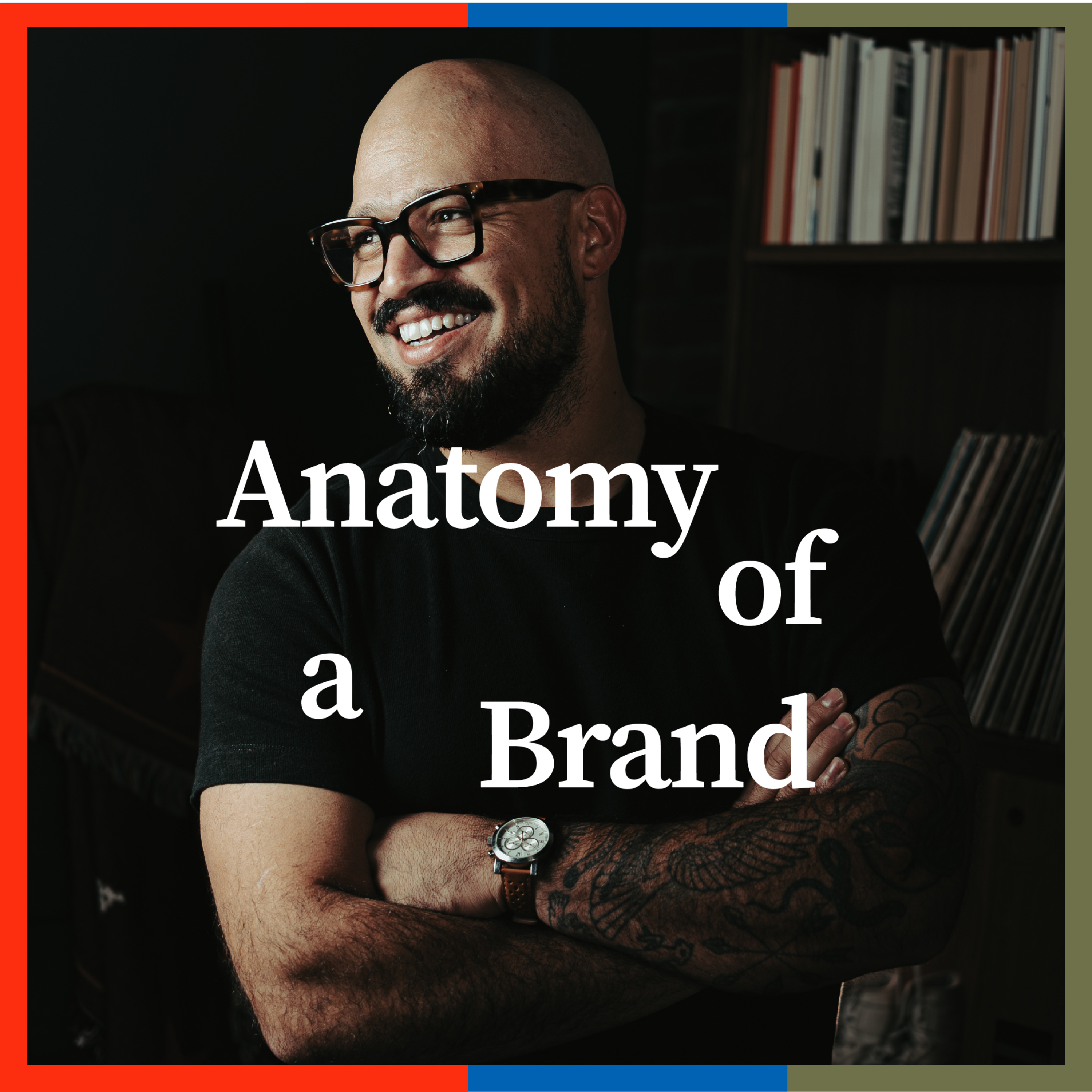
The More You Talk About the Pain, the Better Your Product Sells | W/ Donald Miller Ep. 29
from Anatomy of a Brand Podcast With Chris Cruz
66m 53s
The interview with Donald Miller, founder of StoryBrand, reveals how applying narrative structure to business messaging transforms customer engagement. He explains that human brains are naturally drawn to stories, which cut through daydreaming. The core of the framework is making the customer the hero who wants something clear, facing a specific problem. The brand's role is to be the competent guide that provides a plan and calls the hero to action. Miller shares compelling examples, such as a supplement company seeing a 400% sales increase solely from rewritten product descriptions that clarified the customer's story and solution. He stresses that most companies fail by focusing messaging on themselves or being overly vague. The key is simplicity: using "zero cognitive load" language that instantly communicates what problem you solve. This approach, rooted in millennia of storytelling, shifts marketing from being clever to being clear and customer-centric, fundamentally driving behavior and growth.
This is the interview Donald Miller doesn't usually give. Not the framework around story brand, the man actually behind it. And I broke one of the rules that I'm literally talking to you about today. The most important element of any messaging campaign is actually the negative, not the positive. Why? Every CEO thinks their product is the story. Every marketing director thinks being clever is the strategy, and every brand wonders why sales aren't converting. I think reading my eulogy every morning has cost me tens of millions of dollars. Donald Miller spent years obsessing over why stories work, studying screenwriters, running memoirs, and he did something nobody expected. He turned it into a marketing framework, and it changed how companies talk to customers forever. We simply rewrote his product descriptions, simply rewrote them. Just using different words. Using different words. No advertising, no design changes, and he saw a 400 percent increase in total sales. That is fascinating. In this episode, it's not just about the story brand framework. It's about the leader that grew this, the pivots he made, and some of the challenges he faced to grow a multi-million dollar business. This is episode 29 of Anatomy of a Brand. I'm Chris Cruz, and this is my conversation with Story Brand CEO, Donald Miller. Donald Miller on the podcast. Okay, this is a surreal moment. I've already been hyping you up. That's what I wanted to do. It was just hype you up, coming onto the podcast, be a hype man for you. But I've followed your work, like I said before, for a really long time. Even one of your books, a million miles and a thousand years, when you were running memoirs, I remember a part of it that was this phrase. I think you'd bike to cross the US, right? It was for a nonprofit, though. You would do it for Cherrywater? Yeah, we raised a charity water like nonprofit. Yeah, we raised them on "Aidrow Wells." Okay, and I remember you saying, what's the book, the premise of what's the story you're going to live in this moment for me? There's a part of me that read that book and was like, what's the story I want to tell about my life later on. It made me even make some pivot choices on how I look at life and how I look at what I want to do. I want to live a story worth telling. Like, what's the adventures I want to go on and live my life? But then you built out a whole world that became story brand. Some people are familiar with it. That, listen to the show. Others aren't. But story brand brought such a, I would say, one way could be disruptive, but also just a new beacon for how companies can get clear on stuff. It was just a framework that was like, wait a second, this is both so simple but yet so profound. And you developed this framework from all the different history of writing and knowing story. But if we were to give a flyover for people, what is the story brand framework? How do you articulate it now as it stands today? Well, yeah, well, first of all, thank you for having me all. Yeah. You're a delightful presence. I had written so many memoirs years ago and had studied story and story structure to write those just just to be a better writer. I think I bought books that you recommended that I couldn't ever get through. Probably so. I can name it. I can name it. I think that book, I was like, man, I'll get through it. First of all, the booker, Blake Snyder. I think that's the same guy. I'm the same guy. Joseph Campbell. Yeah, so I've done that and I've become just sort of obsessed. I think every writer has a bit of an OCD kind of fixation with ideas that they can't stop thinking about. Just going. Yeah, it's sort of a necessary characteristic. I had been obsessed with story for years. Ghana, Robert McKee, seminars, wrote a screenplay with a group of guys. One of the things that always fascinated me was that 30% of the time, the human brain is usually day dreaming. It's checked out. That's actually a survival mechanism because your brain burns a lot of calories to process information. If there's nothing in your immediate environment that you need to process to survive, your brain will literally say, hey, let's day dream. Let's day dream. Kick in the gear. Yeah, the primary task of your brain is to keep yourself alive. If there's nothing in your immediate environment, a relationship, information, whatever that you need to survive, your brain will day dream. The only thing that can stop it from day dreaming is narrative. If you sit down to watch a movie or if somebody starts into a story, your brain will wake up from its day dreaming, it will pay attention regardless of whether the information or the story is about your survival. That to me was just always kind of fascinating. Not only that, we have a longing for story. We go to see movies and there are just stories. We will prop up our, if you're like me, you'll prop up your laptop in bed. A wife and I just finished the Agatha Christie series, Seven Diles, which is fantastic, by the way, for sharing Netflix recommendations. But please do, we'll go through all the work. That's a five episode series. But does that fascinated me? The second thing that fascinated me was that stories are formulaic and they are very, very structured. Down to, down if you're writing a screenplay to the minute or to the page that by page three, you have to have an inciting incident, by page, you know. But page 37 or whatever, there's a mid-act climax. Just things like this. Yeah. That was thing number two that fascinated me. And then the more I studied it, the more I realized, you know, there's other things you can do with story besides just tell stories. You could actually take a corporate message and filter it through the elements of story to get people to pay attention to a business. I didn't even own a business. But I'd been hired by Accenture to do some, just some thought work around project management kind of laid over all the stuff I learned about story on how to get employees to engage around a process. This was when Continental and United Airlines were emerging and they were working on that. And so, and then I worked on that for years and then thought, this is actually an interesting marketing and messaging framework. I had written seven or eight memoirs. I didn't have anything else to write in that category. People say, "Why'd you switch?" "Yeah." And I'm literally like, "Because nothing else has happened." I'm not a company country. Yeah, yeah. I'm like, I'm in my late 40s. This is like this. Everything's just kind of slows down. So I decided to write a book about about, well, I actually, I had a conference company and I used this story brand framework, which didn't have a name at that point, to do this, to come up with sound bites that invited people into a story in which they would attend my conference in order to win the day. It's very formulaic. But that more than quadrupled the number of people who came to my conference without spending any money on advertising. It was just literally the way I was wording the invitation. Okay. Can I ask you just a question right there because I know we're going to dive into all these things. But when we're even as an agency, as we're an agency running one while we're building this podcast, people will interact with us around messaging. And you're saying just messaging alone has the potential to change how you attract customers and turn it into revenue. You're saying the way you say things matters. Yes. Yes. And I've seen it over and over. In fact, I'm thinking of my friend David who has a company called Mara Labs and they make supplements. He can get like a thousand pieces of broccoli into a pill, that kind of thing. And yeah, exactly. And we simply rewrote his product descriptions, simply rewrote them using different words, using different words, no advertising, no design changes. And he saw a 400% increase in total sales of his company. Fascinating. And it was partly because we rewrote those product descriptions to invite the customer into a story. But it was also partly because his product descriptions were actually confusing. And we wrote them in such a way where you could understand why you should even buy this. And those to me are the low-hanging fruit. Like when a client comes to me and says, hey, we really want you to help us. I'll look at their stuff. And if it's confusing, I'll say, okay, there's no question we can help you. Because all we have to do is actually say, it's a really good cheeseburger. And you're going to sell a lot more to me. Sometimes it's not very hard. You're like, it's right there. We're just changing the words. And so you notice that for your conference and you built out this framework which goes through these different kind of almost stages of an act or a story arc. Yeah, it definitely parallels 2,500 years of storytelling, best practices. And part of it is to summarize it, there's seven categories of sound bites, the language I use that you need to come up with. First is identify what your customer wants because they're the hero in the story. So if I were writing a screenplay, I would need to know that my protagonist wants to marry his high school sweetheart. Now we have a movie. The team wants to win the national championship. Now we have a movie. The single or group protagonist needs to want something. And the rules, if you're writing a screenplay, is it has to be one thing, not many, and it has to be clear and not vague. So they can't want to live their potential. They have to want to win the high school basketball tournament. Does that make sense? It cannot be vague. Yeah, you can. Oh, I want to actualize myself. Yeah, it doesn't work. It doesn't work. I want to break my father's record and the shot put at the Olympics. Now we have a movie. So what we learn there, with that particular sound bite, is most companies don't actually, they don't actually clearly articulate what it is that their customers want. They don't know. Do you think that's because they focus on themselves? Like, there are a lot of it is. Yeah, a lot of it is your focus on yourself. There's other mistakes that you can make. Well, if I'm broad and vague, I can catch more customers.
I had a kid once say to me, "Donna, I've got a dog training business." He was working his way through college and he said, "How can I grow this while I'm working my way through college?" I said, "I don't want you to say that you're a dog trainer anymore." Here's what I want you to say. Have you ever been in a house where somebody knocked on the door and the dog started barking incessantly? If you've ever had that experience, by the way, have a dog that does that and it's your blood pressure goes up. The person tells them what, "Yeah, you can feel it." And then as I say this, their listener is going, "Oh, man, yeah, that's annoying." Then I say, "I want you to ask that question." If they say, "Yes, because everybody has been in that house, even if it's not their house." You say, "I'm a dog trainer, I fixed that problem." I guarantee you, you will double in business when you actually solve the dog barking at the door problem more than if you solve the dog barking at the door, teaching dog to heal, teaching dog not to use the restroom in the house. You will get more business when you are specific. By the way, you can solve that one problem and then explain later, "Well, I can also teach this dog to heal." Because now you're in the door and you're, you know, that sort of thing. So, it's okay. It's so good. There was a dog trainer. There was not a dog trainer. There was a window cleaner. It's the time we want to grow our window cleaning business. What do I do? I said, "Put on a business card, these words. Look out the nearest window if it's dirty. Call this number. We will clean it." And that's it. Just don't overthink this. That's all you have to do and you will grow your business because that's, that, there's, we call it zero cognitive load. You've got to explain what you do in such base, simple, primitive language that nobody has to burn a single mental calorie in order to understand. Yeah. I use the example sometimes in politics. Now, I'm not a Republican or a Democrat. I've worked in a Democratic White House and I've held Republicans on the presidential side. But I, if you look at somebody like Donald Trump whose, whose border policy is "Build a Wall" and somebody like Jeb Bush who wrote a book about immigration. He wrote a book and he's up against a bumper sticker and the bumper sticker won. That should tell you something about people's willingness to think in nuance or understand the artistic direction that your advertising has gone as you express yourself to the world through your business, which is ridiculous. Yeah. And so simplicity of messaging is really important. Truth be told, I have, it's kind of embarrassing to say this, but I have the amount of times that I have done my elevator, elevator pitch in my head listening to go, "Don't tell me this." That would say, "It's not clear. Not clear. You need to be simpler." 30 seconds. So like the frameworks you offer are really that practical. Well, to be fair, it's also very hard. One of the reasons that I think I have job security is because, you know, I always say story brand is the only company I can't help. Because when you're so close to what you do, you're just, you're too close to it. You understand it too well. You have trouble simplifying it, you know, and you think people understand even 5% of what you understand and they don't. And you have that bias of like, "I live and breathe this every day. The knowledge I have messes with my ability to articulate this." Well, I like, I struggle where I'm like, "Oh, I'm using all this shop talk that no one cares about." Yeah, that's exactly it. Like no one actually cares. No one says any of these words when you talk to them. No. I say them because I'm like, that's where I breathe, but they could care less about that. Yeah. If you have a deal with it, if you have a baker who uses ancient grains and, you know, that doesn't trigger gluten allergies and these sorts of things, I will smoke that bakery with a really good cookie as my tagline. Do you see what I'm saying? Yeah. And I think we're just overthinking it. And somebody says, "No, you won't." I mean, if they have ancient grains, can you point to one bakery? That has ever used anything like that to grow. No cookie, crumble cookie like I said. That's it. You're going to get smoked by somebody who just says, "Best cookie in town." And literally, there are people right now who disagree with me, but can't point to an example. Yeah. And I would say, "No, I'm. " You know, now ancient grains and all that kind of stuff, make that your secondary messaging. I'm not saying it's not important messaging, but it's not your primary messaging. So back to the framework. Yeah, yeah. You have to identify what a customer wants and needs to be clear. And you have to identify the main challenge that is triggering them. This is a part that I've struggled with at Tonsion because there's like three different layers. It's the most important. Yeah, it's the one I feel like I miss. The problem sound bite is by far the most important sound bite. Hit us out. Hit us out. Because human beings only spend money. They only cast votes. They only get out of bed to solve a problem. It's the primary motivation of all human behavior is problem solving. And by the way, the human brain is an unbelievable problem solving machine. If you don't have a problem to solve, you will invent one. You will. You will find something to worry about. And there's one reason for that. It's because the brain is designed to keep you alive. And if it's designed to keep you alive, all it is interested in is threats. And what my brain does when I hear that is I go, I think in the sense of goals as well, where I go, it sounds similar to the idea that even society will tell me what I need to be doing, goals, any of the problems I need to solve. I don't choose anything for my life. Society has no problem trying to direct my life and give me some kind of problem to solve if I don't get traction in my life. It'll even agitate problems that don't exist. Which is what politicians do all day long. They agitate problems that don't exist in order to get you to vote for them to solve that problem. And then by the way, they don't solve the problem because they've solved the problem you won't vote for them. This is what problem in DC. What I'm saying is these are tactics people use in order to make money or get votes or to change power. To move human behavior. To go like, we're trying to get people to an outcome. We're trying to change and interact with human behavior towards whether I need to sell you a product or I'm trying to get you to join my cause. I have found like when I've gone through the story brand framework over and over again with so many different ways. Why framing websites do we use again? All the different ways. When I get to this problem, that first stage of, oh, the character wants this, next stage, what's the problem that they have? I wrestle because I have the existential problem. The big Star Wars good versus evil. Then I have the like, these, I don't know which honestly that's where I struggle the most is going, which problem do I pick? How do I pick one? How do I pick? That's the problem I solve. I usually tell clients we need to AB test because ultimately the problem that you want to focus on for the next decade is the one that gets the biggest human response. So it's not even with me. It's more so like, what is the market? Yeah, I actually, as the writer of the book, I don't know which problem you should, you should, I'm not always right. So you AB test these things. For some reason, people are responding to this. I've made a lot of mistakes too. I'll skin a website that just says, do you want to take your business from 100,000 to 500,000 and then discover that's actually not the problem. They really just want to be in a lonely and they want to be in a room with other business leaders. Then I'll risk in the website and say, well, okay, well, let's focus on that problem and we get a ton of people interested. So you have to constantly, the rule though is you can only choose one. That each product or each brand can really only choose one problem because the human brain can't, can't figure out a complicated narrative in a short period of time. And usually in advertising and marketing, you've got milliseconds to capture somebody's attention. So you have to identify the problem and then the third pillar is you position yourself as the guide in the customer's story and that is the guide is a character in stories because guides are characters in life. Yoda is a guide. Obi-Wan Kenobi is a guide. Mary Poppins is a guide. Haymich and Hunger Games is a guide. Mary Poppins is a guide to George Banks, the hero of the story. So there's this character that exists in life, Mr. Miyagi. I'm dating myself with all these 1990s references. But you want to position your brand as the guide to the hero and the reason is there's several. The guide is the strongest character in the story. The hero is the second weakest. And so when we position our brand as the hero of the story, we're literally positioning our brand as a weak character in the story. And weakness is a survival liability and strength is a survival asset. So you really want your brand to be strong and competent and also you want your brand to be completely and totally about the customer. They're success. I'm trying to get you to be super incredible. Oh, obsessed. Yeah, and that's hard to do because intuition and our own survival instincts want to make the story about us. But it's actually counterintuitive. The more you make the story, if you're a brand, the more you make the story about the customer, the better you survive. And that makes sense too because we've had others on the podcast that we were talking about storytelling and the ways that people almost, almost once storytelling became even a little bit of like a part of the marketing framework, ways that you look at brand, looking at story, they'll go, well, let me tell my origin story. I'm like, that story is not-- Exactly. Don't tell that story. That story is not worth anything.
It actually is kind of boring and like now-- - It's gonna hurt you. - Yeah, and but they feel like, "No, but I've gotta tell my story. "That's how I'm gonna show up as me." And you're like-- - You know, I use all brands and all marketing is really fundamentally about building relationships. And you're getting to know people. And so whenever I'm in a classroom or if there's a bunch of people in the room, if there's a bunch of ladies in the room, I'll say, "Hey, have you ever been on a date with a man "who talked about himself the entire time?" And of course, every woman is shaking her head and she's got stories to tell. And then I'll ask a second question, are you married to him? (laughing) And the answer is, "No, you're not." - That's so good. You're not. - Yes, yes, yes. - And so when people say, "I wanna tell my story," I say, "Let me remind you of some primitive thinking here, "you really wanna listen." And you know, here's what's interesting. - Yes, hit me. - Ask the same woman. If you went out a few times with a man who did not tell, every time you asked him about himself, he spun it to ask about you again. Or he answered so shortly to get out of it and answer, by the fourth date, what did you wanna know more than anything in the world? You wanted to know his story. And here's why, because people who talk about themselves, incessantly, we see these people as weak and we actually subconsciously see them as survival liabilities. And a woman is actually looking for a survival asset in a man. She's looking for strength, she's looking for characters, she's looking for humility, because humility will serve her. And she's gonna be in a very vulnerable state at some point in her life, especially she has children. So that's what she's looking for. He is also, by the way, looking for a survival asset. He's looking for somebody who believes in him, somebody who will say, "You are respected and you're worthy of my attention." We're both really looking for survival assets. So what happens when I make it all about me and tell my story, she senses you are a survival liability and I am not safe with you. And so her instinct, it's not a narcissistic instinct. It's actually quite a sophisticated survival instinct. And I would tell any woman that, like if he talks about herself, if he gets you talking about you, you might have found somebody here. - Wow. - Because he has, it takes a strength of character to be able to think about somebody else while I also need to survive. And so I think brands need to kind of emulate that attitude and their brands who do it, Ritz Carlton does it, Chick-fil-A does it. - Yes. - You know, they're brands, and those brands, we think of those brands as strong. I would say Chick-fil-A is a $22.3 billion year organization. I would say if they weren't as other focus, which they've actually defined as second mile service. They have a definition and a playbook for how they do it. And I would say without that playbook, they're an $11 billion organization. That literally 50% of their sales come from positioning themselves as the God. - Wow. - Because people see anybody who affirms their identity and anybody who listens to their story, they see that brand, that literal brand as a survival partner and to help them affirm their identity. There's a, this is fascinating. - There's three different neurological, psychological studies on this. And they would all come to the conclusion that all human beings have a character in their mind that they believe they can be. And they are always pursuing that character. And any brand who affirms that they are anything like that character, they see that as a survival asset. - That feels so, and I-- - They want to partner with that brand. - It feels so in line with even like, set friends. - Your friends. (laughing) - Think about who your friends are. - Yeah. - They're people who help you out. - Yeah. - Yeah. - Well, 'cause it's funny because like, when I read, I think I'm getting the title right from Seth Goden's book, "All Marketers are Liars and it's crossed out storytellers." And it's like this idea of what's the story you're telling yourself that this brand is now gone and said, "We're gonna affirm that." - You're right. - You're right. - You're right about you. You're like, "Now I have affinity." Even if their product is not superior to other people's products, 'cause you'll have people say, "I have the best product I should win." You're like, "I'm so sorry." - It doesn't work that way. - Yeah, not anymore. So when you're going through this process, you built Story Brand. The framework is very accessible. There's lots of what you've communicated it so effectively. You have even your Story Brand 2.0 book that came out, you have this framework. If people are hungry to deep dive into that framework, it's available for them. What I wanted to do, and selfishly, with getting time with you, was I know that you've had evolutions of your own company. As you've built, you had business-made simple. You started to develop that and you developed other coach builder and different things. I wanted to ask you as a CEO, as you're building things, what are the things you're doing with your own brand that you're recognizing? Like, my first question is, or another side of, what has been one of the hardest decisions you've had to make for the brands and the companies you lead? Recently, you're like, this is one of the hardest ones I've had to do. - Well, I would say I've made a lot of mistakes. A lot more mistakes than anything I've gotten right. And I've gotten some things right. So it's been a humbling, a very humbling journey. Thankfully, every year seems to be better than the last. And so somehow we keep plotting forward. But I think one of the mistakes that I made was, I started a company called Story Brand and that blew up. And so now is managing a lot of people. And I started, I created a framework to manage those people. And so I started a division called Business Made Simple to test those frameworks. And just in doing that, I broke one of the rules that I'm literally talking to you about today. I'm trying to become known for two things. And that's a very difficult thing to do. So what I do now is when I start something new, I literally start a new LLC. We start new books. I find a partner who has equity in that division. And I stay focused on Story Brand. And they help me build something else because my mind wants to create new things. And I have more solutions than just one. But I would warn everybody out there that I am more in favor of being a house of brands than a branded house normally, usually. That's not always the case. And certainly if you go into a public or a grocery store, it's got to be half of those products really belong to about eight different companies. You're right. And they're all run like different businesses and different products. And they're separated. You don't say, well, if you love head and shoulders, you'll also love Rice Krispie. That's not how you think of it. You're a dandruff, you really get to work well. Exactly. That's what you want to dandruff in your cereal. So they separate those things. And that goes back to the rule of, you can have-- a customer can want one thing, and they can have one problem, and they can have one guide. That's just how the mind works. So how did you reflect on that? Like, was the company not going the way that you wanted them to go? The companies were actually doing well. They were doing well. But my Story Brand certified guides didn't like that I was spending time with coaches and teaching coaches these other frameworks. And at one point actually changed the name of Story Brand certified guides to Story Brand certified coaches, because I wanted them to all get along. And that was a critical mistake. Critical, critical mistake. How did you find that out where people just like-- I found it out. Because there was some tension. There were some people sort of saying, hey, you know, he didn't ask us. Well, there's a problem number one. Who was the hero there? I was the hero. And I wasn't listening to the customer. Wow. So that was very, very humbling. And I had to do an apology tour and go around and say, hey, I'm so sorry if we're changing that name. But I'm not really sorry if they're not listening to you, because I've just had a conversation with you. I would have never done that. And thankfully, my Story Brand certified guides are incredibly forgiving and generous. And there's something powerful about that. But how can you not be though when you're trained in culture to CCOs not do that? When you witness it, when you're trained to go, executives just-- they don't apologize. They don't do that kind of work. They're not that human-centered approach. And then you finally get one that your heart texted been craving to have that kind of interaction. You're like, oh my gosh. It's counterintuitive. It is. It is. Because we think we need to be strong. I've just always found that no matter what the data says, no matter what studies show, if you just do what God wants you to do, somehow you're going to be all right. And so I try to remember that. But I would say that was a critical-- that was a big mistake. And now we literally separate the teams, separate the books, separate the website, separate all of that. And that tends to go better. OK, so now inside of that, I'm going for that inside baseball. I'm trying to understand it because I've been such an outside observer for so long and learning. And watching-- because I'll learn from your content from-- took the courses, business made simple, all that stuff. And then I'll listen to you do those live interviews at times or these live sessions. And I'm watching your podcast go, "Busy Story Brand, Business Made Simple." Then there was a switch to why this works. I think it was. Why that works? Why it works? Which did not work. Think of the irony there. OK, that's what I wanted to find out. A little bit of what's-- as someone who is very much in Patrick Linchione, he's working genius, it's like, I am a. inventor and galvanizer like ideas and rallying people to them. So it's hard for me to restrain my ideas. - Yeah, you and I are similar. - Okay, so then I'm seeing you do these things. I'm like, I probably would make those same choices, but would he call those mistakes? Or would he call them, they worked? Like I wanted to know because I'm like, I think I'd make those same mistakes. I got four podcasts changes I want to make, but maybe I shouldn't do it because I'm looking at you on the outside going, he's changed them. What is his thought? - And now we're back to the story, brand podcast. And it will be that way forever more. - Okay, so walk me through that. Walk me through that, I didn't find that mistake. I didn't work, but why? - You know, we call the mistakes, they're really just at that. Right, they're really just like, let's try this. And I do believe that your instincts can guide you to some degree. And you and I both probably have something in common that we test ideas in the marketplace rather than in the lab. And I don't really have a problem with that. So it's hard to see that as a mistake as much as it was a learning curve. And I think you go, everybody I've known who has supposedly won the lottery with an idea or a product, you start digging, you start talking to them. And it was the 37th iteration of something. And then boy, you came out of nowhere and the guys like I've been doing this for 10 years. - Yeah, they're like, oh wait, this is a rebuild company that was once, nothing I got reached. - That's exactly it. - So true. - Yeah, and you even think about the, well, it doesn't even, you don't even have to look long. Even Amazon, I mean Jeff Bezos would say he's had two hits. He said two hits, and that's it. Amazon Prime and Amazon Web Services. - Most people don't even understand Amazon Web Services to even call it a hit. - Right, but we're all paying the money every month. - Oh, I guarantee that. - It's like the cash gather, like, oh, it's the Amazon marketplace. I'm like, yeah, but remember Amazon Fire? Remember the Amazon phone? - Yes. - Yeah. - Oh my gosh, yes. - So, we wouldn't say he's dumb, the richest man in the world arguably. So I think that's just one of the things you have to get come to this. - The R&D nature of how you are versus, so at one point you had to be able to say in this, you're like, okay, this learning has pointed to a different outcome and we've got to change it. What was that learning moment that you're like, I saw that and it's not the outcome I'm wanting or it's not that I'm gonna pivot the podcast to this or to that, was it? Because your new products you were offering or is it? - If it's not working, you need to abandon it fairly quickly. I would not, there's a term called sunk cost where people tend to chase bad decisions and they tend to chase bad investments because their ego wants to fix it. And I would just say, check your ego at the door. It's not working, let's change. So the hardest thing for me just as a leader is walking into the room when I've rallied my entire team around something and they've gotten used to it and say, hey, we're not gonna do that anymore and run the risk of looking flaky or like I changed my mind over time. And because not everybody's wired that way. Not everybody's wired to be able to pivot and move quickly. And so you're asking people to do something that's sort of counter to their nature. That's the hardest part, it's not actually pivoting. That part I do all day. - Like I feel like I'm like, oh, it's just changed it. Not realizing the ramifications for all those that don't change like that. - Well also if you're like me, you don't even remember your mistakes. You don't even remember your failures. My wife reminds me all the time, but I'm like, I have no recollection of that ever happening. - Like that was last week, you're like, yeah. - What was last week? - And there's a lot of studies that show that success is more correlated with the number of at bats you take than anything else. So, okay. - There's so many times you try. - All right, so for a person built like you that has this ability to pivot, think no ideas, but yet story brand has endured inside of your ethos for a long time. Do you have to overcome any kind of boredom? - No. - Like, no. - No, which to me is, to me is, that's a sign. I mean, gosh, just last week I was in Atlanta in front of a bunch of real estate agents delivering the story brand keynote for probably, I would think it's gotta be 500. - Yeah, I was gonna be 500. - Between 500 and 1,000 times. - You're out of breath. - And that's unheard of. - Yeah, it was as though it was the first time. - No way. - No, I'm not making that up. I absolutely love it. - You feel like you've, at the same time, you're like, is it because you know it works? - I can give that keynote for the rest of my life. And I've never gotten tired of it. I'll never get tired of it. I also never get tired of somebody saying, well, here's my tagline, do you think it's good? And I'll say, no, I think you should actually say this. And I'll say it differently. It's just, it's kinda like saying, do you ever get tired of like jigsaw puzzles? Like if you like jigsaw puzzles, you're just gonna like 'em first. - You're gonna love it. - Yeah, you should love it. - There's a flow state that you get into that like, there's a book flow that optimizing of human experience. - Yeah, I read that. - Yeah, it's a fascinating book. - It's an Asian author, what's this? - No, I don't know how to pronounce his name. It's one of those, he might be Russian. - IP. - But it's a name that I could not pronounce. It's really difficult. But he talks about that state of when you are achieving a task that is hard enough for you to be mentally stimulated to where you're not bored, but not too hard to where you get anxiety. - Right. - And then you're able to go, all right, I feel this bettering of me in that process. And I come out the other side of more complex, better person, achieving a goal. You're in this, everything kinda disappears still for me doing this. You're like, I love doing it. Which is, for me I'm like, oh, that is fascinating because you've been doing this for a long time. - And that's. - Yeah, it's going on 10 years now. Well, story behind, I think, I mean, story behind was around long before the book. - Yeah, because if you go to story behind, - It's been about nine years now. - Yeah. - The thing I was teaching story behind a few years before that. - Okay, so now my other question then in this process, you're building out, you're doing these things. If you were to look back on, how would you describe what you're most proud of? - Oh, okay. - As you're building these things. Like, what are the things you're like, man, I'm really proud of this. - Well, I mean, you know, it's not just a bad answer, but I'm proud that I've got, I got married late and became a dad late. So I'm proud that I have a daughter who knows my name and I don't leave more than, usually more than one night a month, this month it's three, so I'm feeling guilty about even saying that. But, you know, that's the thing that I'm, that's what life is really about, right? Everything else is just fundraising. But I think if I had a contribution in the long run, there's a business framework out there that will probably be recognized after I'm gone. And, you know, not everybody gets lucky that way, and I feel like I got lucky. - Yeah. - So I guess I'm proud of that. - Yeah, I mean, absolutely. - Even though it's a 2,500-year-old framework and all I did was turn into a marketing friend. - I tried to read Joseph Campbell, and I'm a reader. I tried to read Joseph Campbell. - You know, he's not my inspiration. - It was really good. - It's really Blake Snyder and Robert McKee. - Okay, because I was a hard one to pull through. - Yeah, it is. And I, look, he's dead on. He's on the something there. Joseph Campbell's on the something. I don't tend to agree with his outcome as a man of deep faith, but he certainly recognizes that there's something primitive in the human spirit that story is pointing toward, you know. - Wow. So do you, in this journey, you, and business-made simple, I remember you talking about it, I've heard you talk about it many times. I wanted to kind of engage with you on it, is you, do you read, you still read your, is it your obit, or what is it your like- - My obituary. - Yeah. - Right at this morning. - Okay, like, that is a fascinating talk to motivate you, to pull like, unpack that a little bit. - Well, it's an old strategy of Stephen Covey recommends it in Seven Habits of Highly Effective People, Michael, - I've read that. - I've read that. - Recommend is doing, it's Stephen Covey got it from somewhere else. - Okay. - The idea, is that you sit down and you write your obituary, as though you were hearing it at your own funeral, and you write it, so you have control over what that obituary is, and it's a way of reminding yourself about what David Brooks calls the eulogy virtues. You know, David Brooks divides the eulogy virtues and the resume virtues. The resume virtues are tended to what we think about all the time, and the eulogy virtues are what actually matter. And we, for whatever reason, it's very hard for us day to day to think about what really matters, taking a little more time with somebody, being altruistic, having characters, staying humble in the face of success, these are the things that actually matter. Our drive, our survival instinct says, "Get money, beat the competition, those kinds of things," which often contend with the eulogy virtues. So it's a tactic to write your obituary and try to read it every morning to sort of recalibrate yourself. So when I read my eulogy virtues, it reminds me that Donald Miller was a great dad, that one of my goals, I have a four and a half year old daughter, one of my goals, and it's in my obituary, is that my daughter would never see me holding a phone. - Wow. - Now she has roughly a thousand times, but that's my goal. - Yeah, I got a lot more left here. - But to be reminded of that, and I would say probably my daughter has seen me hold a phone less than most folks, because it hits the key bowl when I walk through the door and I don't pick it up until she goes to bed. But it just reminds you of the, to me, reading your eulogy that you wrote every morning, or every morning that you read.
you can, reminds me of the things that I will regret. And that's very hard to hold in your brain is like, you're gonna regret not responding to this letter that somebody wrote you. You're going to regret talking to your wife this way. You're gonna regret playing the victim or thinking of yourself as a victim in this situation. You're gonna regret that. And it just takes a really gentle reminder to recalibrate your moral compass. But what's amazing is you say, well, Don, why do you have to read it every day? Because literally, I forget 24 hours later. I literally read it and I go, oh yeah. I want to be a good dad in 24 hours. Like, oh yeah. (laughing) That's right. That's right. Yeah. I want to be a good husband. Oh yeah. Here we go. Remember this. That's more about my ignorance than the human brain. The human experience. I think as well. Oh my gosh. But I think what I find fascinating about that is it points to you, I would say it points to a internal awareness and building of your internal world that helps you with all that you're doing in your company. I don't think, I don't look at that. And some people might go, oh, that's really interesting that Don does that for his life. And it's really fun that it makes him a good dad and a good husband. But I'm going, those things are so connected to his success in business as well. And I think that virtue, that awareness, that development, I think, especially when I interact with people who are, I see these rising influencers, I create brands and but are lacking a depth. They have an incredible product that they figured out even and they've gotten notoriety really quickly. But they've never sat down and done that. Yeah. I'm going, oh, there's something here for people who are building brands. To start to think about how your internal world impacts what you're building. And am I right to say that there's a part of you that says that this makes you a better entrepreneur knowing that? I think, I don't know if it makes me a better entrepreneur, it depends on how you measure that. Yeah, I would say there are people who I watch, contemporaries who have gotten to know who are all younger than me. And I know for a fact, they will deeply regret the way they are living. And there's nothing I can do to help them understand that. But you get these kids for a season and you are wasting it. You're on the road and you're proving, what you are doing is you're trying to heal a father wound through success and you're creating another father wound in your child. And I know it and they can listen to me right now and they will know it and they can't. And then I think, well, if I hadn't become a dad at 49, I would be them. There's zero question in my mind because I'm such a driven person that if I had to become a dad in my 20s, I think my daughter would have spent a lot more time with a therapist. She's probably going to have to do that anyway. My kids are definitely standing out. I'm starting to fund now. Oh my God, if every fund is going there, college want to do it. And by the way, let me also say just to anybody who hears that and is convicted by that, repair can heal those wounds in your kids. So to be able to go back and just sit down and say, hey, your dad really screwed up. I'm so sorry. And I think some of the feeling of abandonment is actually coming from me and will you forgive me? I can heal a ton of-- So it's not a lost cause. But I am saying-- No, I'm 100% agree with you. Yeah. So but I don't know that-- listen, I think reading my eulogy every morning has cost me tens of millions of dollars. Whoa. I'm back that. What do you mean? I mean, the laws of business are the laws of business. And if you are on it and you are focused and you are ruthless about the people that who work with you are A players and you get rid of B players and you are ruthless about beating the competition and you have some ethical gray area about suing some folks and getting them out of the market, you're going to make more money. And that's just a fact. And you see it sort of everywhere. The question is, again, your business also has eulogy virtues and resume virtues. And I think the businesses that participate in the transformation of their customers and affirm their identity, I think they make great money. I think they make plenty of money. And I think the CEOs of those companies sleep well at night. And they've seen-- capitalism, I'm a huge, huge fan of capitalism. There's never, ever, ever in the history of the world been a more successful exercise in reducing poverty than capitalism. There's no ministry on this planet that can come anywhere close to it. So I'm a huge, huge fan of that. But I think rampant, unguarded, unbridled greed is a destroyer of worlds and certainly a destroyer of families and those sorts of things. So I want to sort of walk that line. There's something inside of you that says you're willing to lose money for something. I think we all are, though. I think you're the same. I think most everybody's the same. I think if somebody backed up a dumb truck full of cash and said, hey, I want you to help me sell this thing, listen, it does cause cancer. But we've got some scientists who will kind of skew those-- you're not taking that money. No, no, you're not taking that money. So I think the question is, can we take those lines of I won't cross this and maybe bring them a little bit back to the left even more? Yeah, absolutely. And well, I think there's some kind of development of the internal person. You're saying, even you're saying the repair with your child. And I know exactly what you're talking about. That exercise-- if I simply to reduce it to an exercise, but it's much more than that, being able to own a mistake, come back, clean that mistake, repair that relationship, there's no way you're not able to do that then in a company with a team with a mistake. Like that training ground of being able to go, oh, I know how to own my mistake. I know how to see my mistake. I know how to know what I'm being defensive about my mistake. I know when my wife's going, you're not really looking at the true matter. Those things shape me as a person, therefore, it makes me a better X, Y, or Z in a company. It's just-- there's no way they don't. But it's when you compartmentalize your life and go, these don't touch. I think you're missing out on the way that life shapes you into a better person. But in your journey with all of this, as you've scaled companies, as you've started to-- over a decade of doing this, trends change, markets change, things change. How have you had to pivot even the story brand framework? Is there a way that you're looking at companies now going? I know that we kind of sold the product this way before, but we got to sell the product this way now. Is there anything that you're seeing that you're like, we need to pay attention? That's every day. Every day, especially now. I mean, the world is changing faster than ever. It will not stop changing. It's relentless. It's brutal. There are-- I've been able to make the acquaintance to become friends of Charles and Chase Koch, and Georgia Pacific and 1,000 other companies. And in fact, they are printing their book, The Principle Driven Leader, Under Story Brand Press. And so-- I think even story brand press existed. Because we have three books. And there's will be the fourth. But one of the things that they highlight in their book is that in a world of relentless change, there are principles that just never change. They're the same. And they outline 41 of them in their book, The Principle Driven Leader, which isn't out yet. But I think it's instead of sort of looking at the world that won't change, I would actually look at the things that stay the same and focus on those. And narrative structures never change. The ability of stories to get attention never change. Some of the methodologies change. And you have to walk in the door of your building every morning and say, hey, what are we doing? How are we changing with the world? And you have to be able to pivot and change with it. I mean, even in marketing, so much SEO is now going to AI. It's still like websites. I was going to ask-- That's the natural question, right? Because even watching story brand evolve and great story brand.ai and things like that, you're looking at a market that you're going, how does messaging get still charged? In a world that people feel like everything is at their fingertips because it is, sort of speak. You're in this Renaissance era. But you're talking about messaging, changing the trajectory of companies. There's a tool that can be utilized. How are you addressing-- I know you developed-- So for it, yeah. At first, we actually went with it and created story brand.ai. That was an amazingly successful economic move for me. Yeah. It's still an amazingly successful lead generation move. But what we've discovered with AI is that it actually-- I don't believe it's going to write as well as most human beings. And now I'm seeing-- I can tell you when AI created a website. And I can tell you when one of my story brand certified guides created a website. And there's a humanness to when a human does it. That now I'm seeing-- I'm coming back to the advantage of human beings doing it. And even human beings who are using AI and using it as a co-writer and editor and things like that, or market research, the stuff that it's really good at. So I think. He just always want to kind of keep a pulse on what works and what doesn't work, and ultimately the market will tell you. - And don't you think, okay, so here's the conversations I get, and I have these moments where they'll go, they'll say, yeah, Chris, you can recognize when people use AI, but a company doesn't care 'cause for them it's cost effective. And for them, it doesn't really matter. Is there anywhere, any state of your going like, no, I think the human's actually gonna sell better for you? Like, well, certainly in person. (laughing) I mean, we're gonna screen-dart you and sell to this. - Yeah, I mean, human beings are gonna wanna be together, and I think that's gonna be more true in the future. So anything you can do to add a communal effect or a communal effect to your business, that way you can bring people together, I think you should probably start launching those programs. - That went into that deeper. I'm like, I'm pack what you're meaning there, like. - I mean, for example, if you sold something to dentists and you added a community of dentists, regional community of dentists where they could get together, you probably should add that, because that did longing for, to be with other human beings, I think, is not gonna go away. I'm amazed not at how much is changing with AI. I'm amazed at how much is staying the same, because it is such an incredibly powerful tool. - Interesting. - And yet you look around and things are kind of just staying the same and people aren't using it as much as, they're using it, but it's not changing that, it's changing a lot, don't get me wrong. But the truth is, AI could probably replace, I don't know, 40 million jobs right now that people are just choosing not to replace them. And I would suggest that's because we tend to cozy up to human beings a little more than our laptops, right? And so I think, I don't know, I don't think it's going to change a lot. There's no question, and we can adapt with it. But I think human beings are human beings and human beings like other human beings. - So you said something that I wanted to double tap into, you said storybrand.ai was a good economic model. Now it's gonna come a good lead engine. - What's still both? I mean, it's still a money maker and a lead in a lead in a red. - Okay, so people can still charge for it. - Yeah. - You still charge for it, but end-- - It's cheap, it's like 50 bucks a month. - That's for you. Did you get any kind of moment where you're like, okay, I'm creating this and your coaches, or anybody be like, what's the-- - What do you think, Chris? - That was my wonder, I'm like-- - Well, let's move on to mistake number two, and apology to our number two. I wasn't like, in a bad way, I was more going like, I wonder, like, did that actually come up in that process with the coaches? - It did, and my argument was it's actually going to help you, because if you are a storybrand guy, you create websites and you create this marketing collateral. - Yeah. - Previously, people just had a book. Now they have a book that's leading them to AI, and the AI is printing out the text of their website, and the text of their lead generator, and the text of their emails, and the text, that text, first of all, now they're not just reading a book, they're looking at a marketing campaign that has not been executed. - Yeah. - And so the number of people who understand what a storybrand marketing and messaging campaign is, and have actually taken the first step in creating it, exponentially increased, and we're still in need of a human being to put it to the exactly. That argument to my guides, it was still such a threat at the time that I think some of them, it was very difficult for them to, they wanted me to pretend that it didn't exist, and go put the genie back in the bottle. - Yeah. - And you can't do, 'cause there's got to be more of a-- - I can't do it. So I think some of the guides who were most threatened by that left and the ones who embraced it, a lot of them went into the multiple seven figures because they engaged the strategy. At the same time, at the same time, I certainly, I don't like the world changing, and I think I could have done as a leader a much, much better job, much, much better job, practicing diplomacy and creating focus groups, and creating the product with my storybrand certified guides. I could have done a much, much, much better job with that. And so an apology tour, I think, was warranted there. But, you know, morale right now is very, very high. A trust in our storybrand certified guides is, - It's amazing. - It's high. I would actually say there's more of a demand for our guides after AI now than before AI. And so, and also I tell people, they use AI, like they're using artificial intelligence. But listen, I mean, you're the same as me. I run a company. I don't care if you use AI. I don't have time to use AI to figure this stuff out. I'm running a business here. I'm not a marketing director. And so, I hope that, in fact, I don't even know if I would hire, if you were anti-AI, I don't know that I would hire you. Because, you know, that's like saying, look, I'm a mathematician, and we're gonna put this rocket into space, but I gotta tell you something. I don't use calculators. I'm like, okay, we're getting the guy used to calculate. We're getting these precise numbers. We're not doing long division on this piece of paper right now. Yeah, it sounds like more your ego than your desire to be accurate. Fascinating. So, yeah. So, I had this in the back, my back pocket. I was like, okay, if I feel like we could go there, I want him to put him on the spot and ask his input on it. So, I have an idea for a product that we offer. And I wanted to be like, all right, I've got Don in front of me. I'm gonna ask him what he thinks about this. And get, have real-time feedback and go like, this was a crap idea, or like, there's some legs to this, or now go back to refinement, which I'm open to all of the answers. There's no need to make me feel good. So, I'm running up against this hurdle, as we lead a branding agency. So, we will execute on strategy. I'll back up like this. The story pitch I tell myself that I've worked on after doing all the different things is when people ask me what I do, which I used to hate that question. Like, what do you do? And be like, well, you know, and you just kind of go through the fumble over yourself. And I said, well, I help people trust companies. You help people trust companies. And so, that's where I just happened to call it branding. But my job is to go, how do I get you to trust them in a way that you end up putting yourself potentially at a risk by choosing them, even if you don't know the outcome? So, I'm like, I think about branding as this trust experience. How do I close that gap of you trusting them for an outcome? Can you-- Yeah. Can I give you a-- Please? On the pitch? Yes, please. I start with a problem. Okay. So, I would go one of two directions. I would actually have a statistic that's accurate. Okay. Something like, you know, up to 70% of the consumer-- Right, I'm talking about the rest of this. Do not trust businesses to tell them the truth. You know, something that's very specific. And then I would say, and then I would say, I make sure that you're one of the brands that people trust so much. So you always want to start with the problem, because if you start with a problem, the solution has way more value. Yeah. But if you actually start with the solution, the solution is not framed against the contrast of a problem, and so it's perceived as less valuable. Let's go. I would actually go a different-- Yeah, please. I would say a different direction than that, and then I might say-- I'm looking to double my revenues, so let's go. Yeah, I might say something like, you know, consumers tend to spend a lot more money with brands that have built trust with them. But most brands don't know how. I teach them how to build trust so that consumers actually engage them more than the competition. So there's a number of ways to frame the problem. But it's, again, the most important element of any messaging campaign is actually the negative-- The negative. It's not the positive-- Creating that contrast moment. It's creating the contrast. And sometimes every few years or so, I'll teach a writing workshop at my house. And we have this kind of event space that we built behind the house so that I can be a better day at and not grow. Is it called-- I've named after your dog, is that right? Goose Hill, yeah. Yeah. Lucy Goose. Good research there. There's about 1,000 books on the bookshelf in the caretouse. And I'll say to somebody, hey, just go pick up a book off the shelf. It doesn't matter. And they go, they grab a book. I say, OK, open it to any page. Put your finger down on any paragraph. And then they do that. And I say, let me tell you what that paragraph is about. That paragraph is about a character who is experiencing conflict. And then I say, read it. And they'll say, Harry Potter, who was blood-- Yeah, that's awesome. That is awesome. And I've never missed. Never missed. Now the truth is, it's about 80/20. So at some point I'm going to miss. So I'm going to go, OK, put your finger down somewhere else. But so far, I haven't had to do that. The principle that I'm teaching is that interesting writing is almost all conflict. And even something like Angela's ashes by Frank McCourt or Tiz, anything by Steinbeck, anything by J.K. Rowling, open it up. It's very, very active language. Lots of action verbs, lots of negativity. The reason is it engages the human brain, because the human brain is a threat detecting machine. So it's much, much more attractive to negativity than positivity. So but here's the great thing. People go, well, I don't want to be a negative brand. The more negative you are, the more you're
- Your solution is perceived as hopeful. So if we were to say, if I were to say, I remember a story when I was a kid, this young girl I ever still remember name, Jessica. She fell into a well in her grandparents' backyard in the state of Texas. And for three days, people were tried to get her out of that. - This is a real story. - Real story. - Okay. - This is the fact when there's like four channels on television and everybody in the country was glued to their TV and trying to get Jessica out of that well. It was captivating. And at the end, these firefighters were able to dig through pieces and remove a rock and get down there. And I remember the footage of her coming out of that. Well, now let me ask you, Chris, did I just tell a hopeful story or a negative story? - Wow, yeah, totally. - Let me tell you how much of that story was positive. - Yeah. - One second. - Yeah, at the end, right there. - And that's how you want to think of your branding. - Wow. - Your product is that moment where people don't have to struggle with this anymore. They don't have to not have trust. So for you to say, look, consumers trust corporations, which by the way is true, the study just came out about three weeks ago. The trust for corporations and corporate leaders is at an all time low. It has never been lower. And consumers are hopeless, they're cynical. And most consumers, I'm gonna make up statistics, but we want these to be true. Most consumers can name no more than two brands that they actually trust. - Fascinating. - Trust is at an all time low. And trust will actually cost you your business. You will go out of business if you don't know how to build trust. I help brands build trust. - Yeah. - So did you hear the end of it? The end of it was Jessica came out of it. - Yeah, yeah, 100%. - I was just checking here. - And that's how you want everybody listening. That's how you want to talk about your products. - Oh my gosh. Okay. Oh my brain is spinning. I've got like 10 minutes left that I'm supposed or five minutes left or so. If there, so here's the last thing I wanted to get you and put on, which you already got my world spinning, is this idea of taking all of the services that we offer. So we do all of those things we offer. And what I'm running up against, the problem that, not the problem solving, the problem having and closing clients, that is they're dealing with the price points of things can they afford to do this, X, Y, or Z around. If I do this design thing now and I need content later on and it's just a cost and who's gonna implement this in my company, all of these elements of execution, implementation and strategy, all of this, I'm going, can I take all of that as what we do as an agency and go, I will be your entire in-house team for a certain price that's reasonable, whatever, and established that as a subscription. You can do anything that you need one at a time, but where your in-house team, for you would otherwise need $300,000 to do this, you're gonna do this for $80,000 a year, $90,000 a year. And you get all of this in one subscription with us, like implementation, strategy, execution, all of that, and in a creative services way, from a brand. Yeah, you've done something really smart there. You've contrasted it or compared it to an in-house team that would cost them a lot more than $300,000. And I think my marketing team cost well over $300,000. Yeah, perfect. And if you were gonna do all that, another thing that you'd wanna do is, I would actually put it all in a playbook with tabs. I'd put it in a leather bound binder, and I would say this is the playbook that we're gonna take you through over the next 12 months, and by the way, when we're done, we're gonna start back at the beginning, we're gonna do it again. The cost of this is X, let me tell you, this is my team, this person does this for you, this person does this, this person does this. There's something about removing the feel of a black box investment that makes people much more likely to make the purchase. And if you said, look, it's $300,000, and we do everything for you. What's everything? What's everything? Yeah, I don't know what everything is. And then the other thing that's very, very important there is as you keep doing this, you need case studies. So you need to say, let me send you three case studies on what happened when somebody bought this product, we think you would parallel these. And then another thing that builds just, so you've got, let's talk about what you've got here. You've contrasted it against their cost if they did it a different way. So now it's not a three, you know, I, midlife crisis, right, I've been test driving these Porsche boxers. These Porsche boxers are sort of like the poor man's 911, they're basically go carts. And, but they're not cheap. And I've test driven about three of them. I've not bought one. This is kind of how I do things. I've got the money. I just, you know, I grew up poor and-- I like the process. Yeah, I don't know if I like the process. Which I had the lack of guilt to just go buy it. All it would take, all it would take is, and unfortunately, probably a Porsche dealer is listening to this thing called me. All it would take is somebody saying, hey, Don, this is $100,000 car. You are probably going to put about 4,000 miles a year on this car. So three years from now, this car has 12,000 more miles. Because these things hold their value, you'll be able to sell it three years from now for $3,000 less than you bought it. So you're talking about letting somebody have your 100 grand, getting 97 back three years from now. You know, you'll account for inflation. That's probably about $5,000 expense. For three years of you just being able to blow off steam on the natures trace. Yeah. And you know what I'm going to do? I'm going to buy that for you. Yeah, you're going to buy that for me. And then I go, I'm going to say, hun, I've made a terrible mistake. But I love what you're-- I love how you bring that up. And what I'm saying is, don't make your customer think. Don't make them think. Do the math for them. So one is, do the math. Second, remove the black box investment. Guy giving them-- What's that? Third of those case studies, where you're actually framing it as an investment. And then there's a fourth thing. I want you to tell the truth about somebody it didn't work for. And I want you to say, here's why it didn't work. And these characteristics are not true about your company. And not only that, we fixed in this. I'm a firm believer that one, create a really, really great product, especially in business to business. You've got to make people money. We make our guides money. And then put everything on the table until the absolute truth. I love that so much. And but tell the truth very clearly and in such a way that they can see the wisdom of why they should say yes. And I think that's really all there is to it. Gosh. Man, there it is. Thank you for being on the show today. My pleasure. What a pleasure to meet you.
Podcast Summary
Key Points:
The StoryBrand framework emphasizes that customers are the heroes of a brand's narrative, not the brand itself.
Clear, simple messaging focused on solving a specific customer problem is more effective than vague or clever marketing.
A brand should position itself as a guide (like Yoda or Mr. Miyagi) that empowers the customer-hero, rather than as the hero.
Rewording product descriptions or offers using this story structure can dramatically increase sales without changing the product or advertising spend.
Human brains are wired for narrative and problem-solving; they pay attention to stories and are primarily motivated to resolve threats or issues.
Summary:
The interview with Donald Miller, founder of StoryBrand, reveals how applying narrative structure to business messaging transforms customer engagement. He explains that human brains are naturally drawn to stories, which cut through daydreaming. The core of the framework is making the customer the hero who wants something clear, facing a specific problem.
The brand's role is to be the competent guide that provides a plan and calls the hero to action. Miller shares compelling examples, such as a supplement company seeing a 400% sales increase solely from rewritten product descriptions that clarified the customer's story and solution. He stresses that most companies fail by focusing messaging on themselves or being overly vague.
The key is simplicity: using "zero cognitive load" language that instantly communicates what problem you solve. This approach, rooted in millennia of storytelling, shifts marketing from being clever to being clear and customer-centric, fundamentally driving behavior and growth.
FAQs
The StoryBrand framework is a marketing approach that filters corporate messaging through the elements of story to capture attention. It originated from Donald Miller's study of story structure and was developed into a practical framework after he applied it to grow his conference business without advertising.
Human beings are primarily motivated to solve problems, as the brain is wired for survival and threat detection. Focusing on a clear, specific problem resonates more effectively than positive product features, driving actions like purchases or engagement.
Rewording product descriptions or offers to be clear and story-driven can dramatically increase sales without design or advertising changes. For example, a supplement company saw a 400% sales increase just by rewriting descriptions to invite customers into a narrative.
The framework involves three key sound bites: identifying what the customer wants (the hero's goal), defining the main problem they face, and positioning the brand as the guide who helps them succeed. This structure mirrors classic storytelling to engage audiences.
Positioning as the guide makes the brand appear strong, competent, and focused on the customer's success, which builds trust. In contrast, making the brand the hero weakens its appeal, as customers prefer to see themselves as the central character in their own story.
Businesses should A/B test different problem statements to see which resonates most with their audience. The chosen problem should be specific and trigger a strong emotional response, as clarity and relevance drive customer engagement.
Chat with AI
Loading...
Pro features
Go deeper with this episode
Unlock creator-grade tools that turn any transcript into show notes and subtitle files.
 PodcastTranscript AI