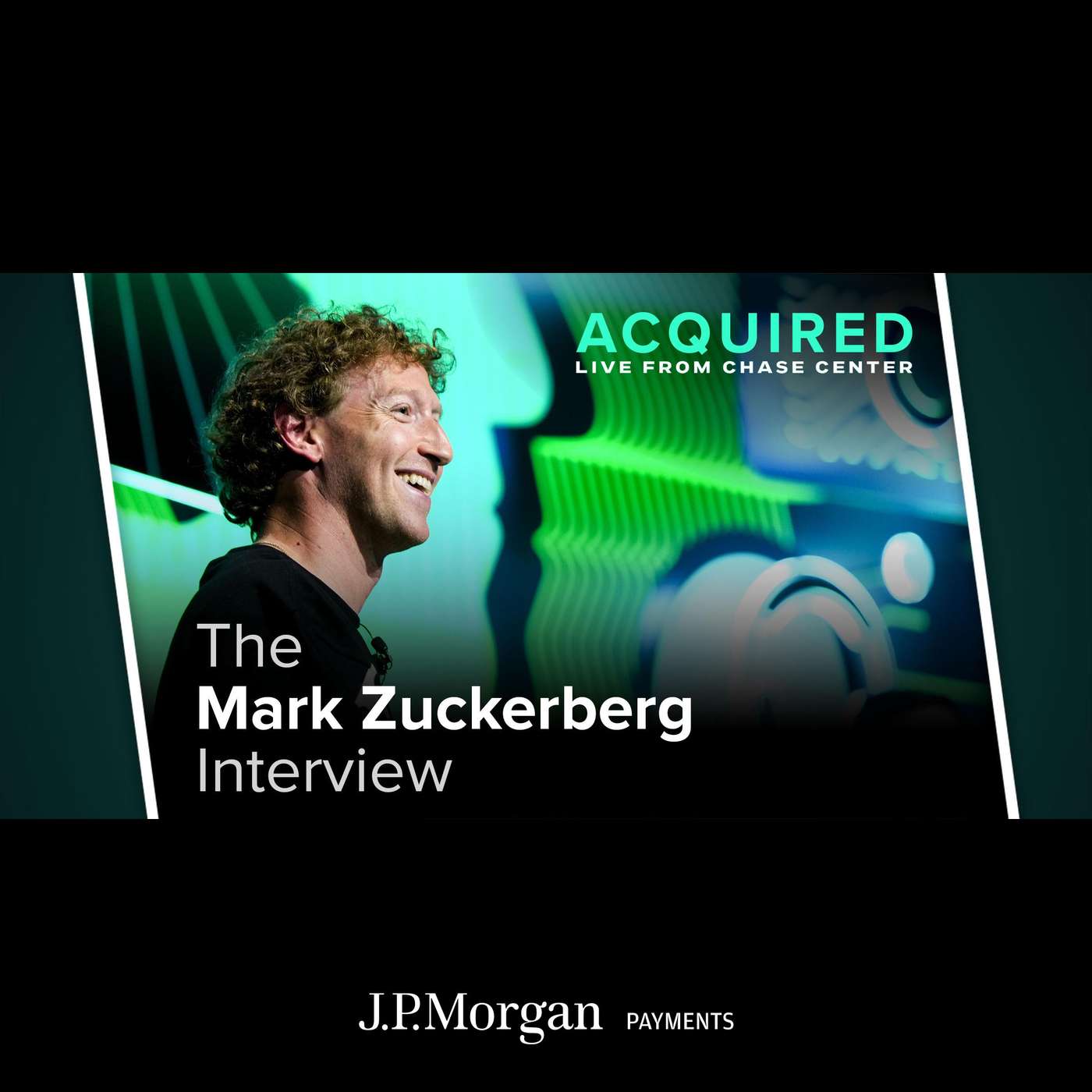
The transcription captures a conversation between Mark Zuckerberg and the hosts of the podcast "Acquired" at the Chase Center. They discussed various aspects, including Zuckerberg's entrepreneurial journey, the challenges faced by Facebook in its early days, and the vision for the future of social experiences. Zuckerberg shared insights on Meta's focus on social connection, the development of AI glasses, and the decision to integrate Meta AI into products. The discussion highlighted the evolution of Meta's products, the role of AI in enhancing user experiences, and the ambitious goals for creating immersive digital social interactions. The conversation provided a glimpse into Meta's journey, from its humble beginnings to its current position as one of the most valuable companies globally, shedding light on the innovative approach towards building the future of human connection.
Transcription
16641 Words, 87131 Characters
So how many interviews with Mark? Do you think you watched before tonight? Oh, to prepare. Yeah 30 to 40 and the best ones are the 0 4 to 0 6 vintage But they're also different. It's almost like every three to four years is a new era that is markedly different from all the previous eras totally and I think we might have witnessed the beginning of a new era right in front of us on stage. Oh, yes Absolutely. All right, should we do this? Let's do it Welcome to the fall 2024 season of acquired the podcast about great companies and the stories and playbooks behind them I'm Ben Gilbert. I'm David Rezenthal and we are your hosts listeners We have something very special for you today our interview with Mark Zuckerberg from acquired live at Chase Center Ooh, Mark is the iconic founder CEO of our time and this conversation was just too good to hold on to any longer So we are getting it out quickly before we release the full video of the entire show Which speaking of the full show was utterly amazing. We had surprise appearances from Jensen Huang, Daniel Eck, Emily Chang, and of course We had the one and only Mike Taylor the artist who sings who got the truth performing live. It was Incredible. We've got basically a whole film production that's now happening behind the scenes with another 90 minutes of content beyond just this mark interview We should have that out in the next couple weeks, so stay tuned for that All right listeners now is a great time to thank a new friend of the show that we are very excited about Sierra Yes, we are thrilled to be working with Brett Clay and the entire team over there So why are we excited about Sierra? Well, one of the things that we've learned from making acquired over the years is that a great company is often defined by its customer experience Yep, but being great is hard talking to customers is Expensive and while websites and apps are great, they're also kind of slow and clunky and your customers have to learn them They don't learn you Sierra changes all that they build customer-facing AI agents that can do an insane range of things like finding the perfect home or Picking TV shows or originating mortgages, shipping a sofa, returning shoes, authenticating patients for health care, ordering credit cards, Saving subscribers from cancelling and on and on in just two years since founding They've become the leading conversational AI platform with hundreds of incredible companies like ADT, Clear minted ramp redfin rocket mortgage, safe light, Serious XM and Wayfair all trusting Sierra for their customer experiences Sierra was built to be powerful enough for Fortune 500 companies including heavily regulated industries like health care and financial services But it really works great for any business including yours. With Sierra, you can build your AI agent once and deploy it everywhere within weeks on the phone and chat, SMS, WhatsApp, email, all in over 30 languages You can even publish it to chat GPT and with their unique and insanely aligned outcomes based pricing model You only pay for the value that Sierra delivers, increase customer satisfaction and resolution rates, lower costs and higher revenue Sierra enables the great companies of the world to show up at their best, consistently every minute of every day And in fact, we think so highly of Sierra that Dave and I even invested in the company To find out how you can build better, more human customer experiences with AI visit Sierra.ai/acquired and tell them that Ben and David sent you As always, come discuss this afterwards with us in the Slack acquired.fm/slack And if you want to be notified when every new episode drops sign up at acquired.fm/email All right, one more thing before the interview, we need to say a huge, huge thank you to the entire JPMorgan payments team For securing the Chase Center for this, for orchestrating the entire evening Ben and I really worked side by side all year with their incredible team to make this evening happen And we really got to know the Max, Umar, Dustin, Hannah, Vinnie, Nick, Amy, Carly, and so many others It's like we were one team, you guys rock Yeah, for the first time we actually got to experience what it would be like if acquired was a large world class organization And not just, you know, our little team And what happened at Chase Center is really the physical embodiment of that Thank you guys for being the best partners we could ever imagine And a very special shout out to Dustin Sedgwick, JPMorgan Payment CMO, who's a long time listener of the show and a good friend of ours And he's just been the driving force behind all of this without him, Chase Center wouldn't happen We're so grateful for incredible relationship with you and all of JPMorgan Yep, so please enjoy our conversation with Mark Zuckerberg and to take us in the chairman and CEO of JPMorgan Chase, Jamie Diamond Hello acquired listeners, welcome to the Chase Center and to acquired live I'm Jamie Diamond, chairman and CEO of JPMorgan Chase I'm happy to kick off the show tonight and welcome all of you to one of my favorite arenas It's been a great partnership all year between JPMorgan Payments and acquired Storytelling and educating about some of the greatest companies in the world For many of them, just like many of you in the crowd, we're thrilled to call you friends and partners of the firm Sorry, I couldn't be there in person tonight, but I hope everyone enjoys the show, Ben and David over to you Mark It's great to have you here It's great to be here, you know, I was watching I was watching Jensen's video correcting the record and I was thinking to myself We might need to book the next one of these for all the things I'm going to have to apologize for I'm going to say to him No, I'm just kidding Well, I don't apologize anymore We've noticed Well, okay, wait, wait, here's the question if you knew what you knew today What's up if you knew what you know today would you have started Facebook? Oh God, I mean look I think coming out hot He started it Literally, I think there's something to Jensen's original sentiment, which is that The entrepreneurial journey is very Challenging especially the early days when you're running a startup and you know There's the sense that what you're doing could just die at any moment and the volatility everything is just getting thrashed so much and It's it's not You know, you obviously you look back at all these fun memories, but It was not the most fun part of the journey or you know the part of my life that I like wish I could go back and relive So I mean I do think that there's something to what Jensen was saying that I thought was very honest and That when I heard him say it the first time I was like yeah, I get that right it's like I think I think there are like a lot of people for whom you know if you knew how painful It would be along the way you wouldn't get started, but then you know I think that that's one of the things that's good about Human nature as you can underestimate how painful things are going to be so that way you can go and do good things well On that topic we have a lot to talk about yeah, I think this is actually very appropriate first We have to ask you about your shirt and what you're wearing. Yeah, you know I um I Started Working with people to design some of my own clothes and So I figure you know look we're gonna design I wear we're gonna design other stuff that people wear let's get let's get good at this and So this one I actually I worked with this great fashion designer Micah Meary and He's got a great story, so I wouldn't be surprised if you're doing one of these with him one day and This one is so I've kind of started working on this series of Shirts with my some of my favorite classical sayings on them. So this one is Pate Mato's Learning through suffering It's a little family saying and also escolas Was it was that your family saying growing up or is that your family? Well, I know let's pull that thread. Yeah No pun intended. I promise What does learning through suffering mean to you? Well, I think you learn what matters to you and what's important and kind of your place in the world through Repeatedly hitting your head against different challenges and I mean, I think that that is sort of that's the journey Right, I mean, that's the entrepreneurial journey. It's also I think part of the beauty of building things and But there's some that Jensen talks a lot about too, right? It's like I feel like You you know when you go to start a company you Everyone kind of writes down what they would like their values to be but values are not what you write down on the wall It's like you're lived behaviors and you only really learn what you care about When you have to make hard trade-offs and face challenges So yeah, you learn the most important things through facing challenges Well Speaking of facing challenges, we want to talk about a number of those because I Mean we counted by our count. I think you have faced more existential challenges than any Meaningful company in history through your first 20 years first, though dubious distinction We will make our case to you of why well and enumerate them you're still good, but first I kind of think my you know like that old Nike Michael Jordan ad where he's talking about who he's failed over and over and over again And that's how he succeeds that one really resonates with me too, so Thanks to you guys. I got a pair of these this summer And I genuinely love them Tell us the story of how these came to be Yeah, so Thanks, I'm excited about them too so You know, we it met a we've been building social experiences for 20 years now and Originally it took the form of a website then mobile apps, but the thing is I never thought about us as a social media company Right, we're not a social app company. We are a social connection company, right? I mean, I we talk about what we're doing is building the future of human connection and That's not only going to be constrained over time to what you can do on a phone right on a small screen So when you think about you know when we got started, okay, we're like a handful of kids You know, we weren't able we'd love the resources the time to go define whatever the next computing platform is and also You know, Facebook originally got started around the same time as you know a bunch of the early smartphones and those platforms got started so we didn't really get to plan a role in developing that platform and One of the big themes I think for the next chapter of what we do is I want to be able to build what I what I think are sort of the ideal experiences not just What you're allowed to build on some platform that someone else built, but Like what is actually if you can think from first principles? What is the ideal social experience? So I think what you would like to have it's not a phone that you look down at That kind of takes your attention away from the things and the people around you, you know, not just a small screen I think what you ideally have is glasses and Through the glasses There's one part of it where the glasses you can they can see what you see and they can hear what you hear and in doing so They can be kind of the perfect AI assistant for you because they have context on what you're doing but then part of that is also that the glasses can project images basically like holograms out into the world and That way your social experiences with other people aren't constrained to these little interactions you can have on a phone screen You know in the in the not so distant future you can imagine Because you guys have demoed some of the stuff that we've done Like a version of this where we're having a conversation like this But you know, maybe like one of us isn't even here. They're just like a hologram and we have glasses and it really There's the question of delivering a realistic sense of presence There's something magical in the realm of building social experiences around the feeling of human presence and like Being there with another person and this physical perception right where we're very physical beings Right and people like to intellectualize everything but a lot of our experiences very physical and this physical sense of presence that you were with another person Doing things in the physical world is something that you're going to be able to do through holograms through glasses Without being taken away from you know, whatever else you're doing just kind of have that mixed in with the rest of the world It's going to be I think the ultimate digital social experience and I think it's also going to be The ultimate incarnation of AI because you're going to have conversations where it's like all right There's some people it's like maybe like I'm physically here. There's a person there You're like a hologram there. There's an AI that is kind of embodied as someone is there and The glasses will enable us so okay, so how are we going after this building this? This is like some some huge project. We've been working on it for 10 years and There are a lot of different challenges to solve to get there There's like you have to build a novel display stack or it's not these aren't just screens like the kind that are in phones There's this long lineage. They they're connected to the screens that have been in TVs and monitors and things for a long time There's been this massive optimization of the supply chain. There's like brand new display stack or on holographic displays that basically need to get created and then they need to be put into glasses. They need to be miniaturized and You also in the glasses need to fit chips, microphones, you know speakers, cameras eye tracking to be able to understand what you're doing batteries to make it last all day There's like new novel RF protocols. Yeah, it's like okay. It's a pretty big challenge. So we're like all right Let's go try to go for the big thing right and and we we've been working on that for a while and we're pretty close to being able to show off Kind of first prototype that we have of that and really excited about that At the same time we also came at it from this lens of all right So that's like a lot of new technology that needs to get developed um A lot to pack into a form factor because the glass that to be good looking too so What if we just constrain ourselves to like we're going to Work with a great partner escolar luxotica. They make rayband. They make a lot of the iconic glasses Let's see what we can fit into glasses today and make them as useful as possible and You know, I actually I kind of thought when we were getting started with those that it was almost like a Practice project for like for the the ultimate which let's be clear. That's what you thought Facebook was That's true. That's true. Yeah, I did like for your real startups someday. Yeah, no This is yeah, let's go on a tangent there for a second when so a started Facebook in school came out to Silicon Valley with Dustin and and a handful of people working on it at the time and We did that because Silicon Valley's where all the startups came from and I remember we got off the plane We were driving down 101. We're like wow eBay. Yahoo. Like this is amazing. They're all these great companies one day We're maybe we'll build a company like this and I'd already started Facebook and it was like surely the project We're working on now is not a company and Facebook had like some scale at this. Oh, no, it was a great project I just didn't have the ambition to turn it into a company at the time that just kind of happened But anyway Yeah, I mean A lot of hard work obviously, but but it's but I just at the time. I was kind of like yeah, I don't I don't think this is it Well, that's your answer. Would you have started? You actually didn't try to start Facebook. Yeah, I didn't know So yeah, so I mean the glasses though You know, we thought that this was like all right We want to get working with us the lower looks at us so we can start building more and more advanced glasses And then you know they're really good. They look good and then AI like the massive transformation in AI So let's remember for listeners. Let's just be really clear. You guys shipped this product that I'm holding before LLMs or at least before the public consciousness was aware of you know the chat GPT moment And these were not manufactured and shipped as an AI device That came later when they were already in market. Yeah a few years ago I would have predicted that AR holograms would have been available before kind of like full-scale AI And now I think it's probably gonna be the other order So now it's like all right great. Well, this is actually a great product because it's got it's got the cameras So it can see what you see it's got the microphone. It's got the speakers. You can talk to it I remember calling Alex Himmel the guy who runs the product group that's right again Hey, you know, I think we should probably pivot this and make it so that That meta AI is the primary feature of it and then like I remember I came in the next week And they'd build a prototype of it on Tuesday, and it was like all right good. Yeah, no, this is good This is gonna be a very successful product He told us a much more high stakes version of that story I was on the highway with my kids and I get this call on a Saturday from Mark and he's like those glasses Could we put meta AI in them running on device and like ship that soon so we can see if that's a good idea or not Yeah, that's that tracks. That's what I just said Sounds right All right listeners This is a great time to think one of our favorite companies here at acquired century. That's scNtry like someone standing guard Yes Sentry helps developers debug errors and latency issues pretty much any software problem and fix them before users get mad As their homepage puts it they are considered not bad by over four million software developers Today we are talking about the way sentry works with another company in the acquired universe and thropic Anthropic used to have some older infrastructure monitoring in place But at their massive scale and complexity they instead adopted sentry to help them fix issues faster Yep, crashes can be a massive problem in AI If you're running a huge compute job like training a model and one node fails It can affect hundreds or thousands of servers Sentry helped them detect bad hardware so they could quickly reject it before causing a cascading problem Sentry also enabled them to debug massive issues in hours instead of days so they could get back to their training runs And today anthropic relies on sentry to track exceptions, assign errors and analyze failures in real time across all of the primary languages Used by anthropic research teams including Python, Rust and C++ According to the anthropic team, sentry gives our developers one place that will have all the information they need to debug an issue And speaking of AI, sentry now has an AI debugger called SEAR SEAR is an AI agent that taps into all the issue context from sentry and your code base To not just guess but root cause gnarly issues and propose merge ready fixes specific to your application We're pumped to be working with sentry they have an incredible customer list including not only anthropic But cursor for cell linear and more if you want to fix your broken code fast like over 150,000 other organizations that use sentry From indie hobbyists to some of the biggest companies in the world You can check out sentry.io/acquired that's scntry.io/acquired and just tell them the bed and David sent you Yes, and they're offering two months free to all acquired listeners. Yes. Thank you sentry Okay, so Thank you for opening up with the story the question that I would like to Try to answer tonight is why has meta worked as spectacularly well as it has I mean One of the most valuable companies in the world through multiple iterations multiple technology waves fighting off you know maybe Let's name all the waves in which people said oh Facebook and meta are so screwed And yet that is not the way it looks today my space Twitter Gen 1 Instagram Snapchat WhatsApp TikTok Apple app tracking transparency putting its own whole category And now chat gpt And like there is a widely held public narrative every single time Snapchat discover stories or there's something where people are like oh The cool thing that Facebook the company did Is just obsolete now and they're going to go away you very much haven't gone away What do you think is the through line of the DNA of the company that allows you to keep winning? um I think it's that we're a technology company that is focused on human connection not a specific type of app So like we never thought about ourselves as a website or a social network or anything like that for for me building This kind of glasses to enable the future of People being able to feel present with another person no matter where they actually physically are Is the natural Continuation of the kind of apps that we build today But it depends on how you define what you are and then you need to figure out Well, how do you build how do you give yourself the competence to actually go do that And that's where I think being a strong technology company comes in Because you know a lot of companies I think think about themselves too narrowly in terms of okay, well, we're this kind of one thing And the reason why we can build all these things is because We are have a really strong technology foundation and some of that is just Me and how I think about stuff I'm not I was an engineer before I got started I mean I like mostly took like Systems engineering type classes when I was in college So you know talking about like friendster and my space and all the scaling challenges They had doing the graph calculations of like all right. Do you know this person should you show them the difference? Yeah, actually if you take us back and like we want to ask you the story of that time. I mean It seems quaint now friendster my space, but You study computer science, graph, networking, social graphs, that is a very very difficult So I think it's a combination of a Product question and a technology question. I think you can define the product in a such a general way that the technology Becomes basically impossible to solve So you want to have a smart product definition But then you want to be competent and better than everyone else at the technology And I think that that's something that we've held ourselves to and build a good organization around and it's it's one of the things that I Observed as soon as I came out to the valley that all these companies that called themselves technology companies Were not really set up that way right to say like the companies that I was talking about it's like they You know they the CEO wasn't technical the board of directors had no one technical on it They had like one dude on the management team was the head of engineering who is technical and like everyone else wasn't And it's like all right if that's your team then you're not a technology company So I think one of the things that I've always been pretty careful about is I actually like want Like the a lot of the people on our on our management team. It's like you know splits mostly people running Either these big product groups who come up through different technical pathways at the company And I think that there's like a balance right it's like you don't want everyone to be an engineer because there's other things that matter too But if you don't have enough of your kind of share of the company as engineers Then you're not a technology company And I think that that Also is important to the board And and I think it just like in terms of how you weigh decisions and culturally things inside the company matters a lot But but I think that's one of the things that Has been really fundamental right is like we're able to kind of go from Platform to platform and do these different things because we've invested and cared about the underlying technology The product experiences that we build on top of that are an implementation and they matter and for that I think we also I think are pretty curious and learning focused organization where You know, I view the product strategy Lesses any one specific thing and more as how do we iterate and learn as quickly as possible How to make each thing better for for the people we're trying to serve right? So it like I define our strategies we can learn faster than every other company We're going to win we're going to build a better product than everyone else because we're going to get it out first or early we're going to Have a good feedback loop we're going to get get a bunch of feedback We're going to learn what people like better than other people and then over time by the time you get to you know Whether it's version three or four or five. I mean, they're not even discrete versions because we ship so frequently It's um you just uh you learn faster. So I think that's basically the formula be a technology company build good foundation Like learn from what what people are kind of focused on in the world and learn and Staggerate as quickly as you can in one of my research calls to prep for this someone Described you as a master strategist which like it's we all sort of acknowledge that at this point But that the I mean except for like all the stuff that I just thought was not going to be that important that ended up actually being the most important It's But well, but that's the thing is you part of it is like okay You want to set up the game so that way you optimize you create your luck This is what Jetson told us like the apple is going to fall from the tree in some direction And if you just set up the game That you have a hand close enough to catch it The comment that someone made to me was the reason mark is such a good strategist is because he he plays The company as if it's a turn-based strategy game and he just make sure he gets more turns than anybody else And he makes sure that he learns more from each turn than the next player does do you feel like that encapsulates like I just like turn But it does kind of feel like the way that you make bets is like I Well if we have great engineering then that can kind of take care of the speed part that's like You know many iterations or multiple at bats and then the the well great engineering and speed and duration are actually two different values They're not necessarily at odds, but I think like there are a lot of great engineering Organizations that try to build things that are super high quality and have good competence around that but I know there's there's a certain Personality that goes with kind of taking your stuff and putting it out there before it's fully polished and look I'm not saying that our Strategy or approach on this is the only one that works I think in a lot of ways we're like the opposite of apple and clearly their stuff has worked really well, too Right, but I mean they take this approach. It's like we're gonna take a lot of like a long time. We're gonna polish it. We're gonna put it out and Maybe for the stuff that they're doing that works. Maybe that just fits with their culture But for us, I think that there are a lot of conversations that we have internally where You're almost at the line of being embarrassed about what you put out because you It's you know obviously not not in the sense that it's like You know you want to You want to put stuff out early enough so you can get good feedback You obviously want to test things that are reasonably hypotheses So if it's like so ineffective then you're not testing a good hypothesis. That doesn't work But I do think a lot of the conversations that we have are like okay Well, we can get this to be a lot better if we work on it for like another couple of months or whatever and and I do just think that like you want to really have a culture that values shipping and getting things out and getting feedback More than needing always to get great positive accolades from people when you put stuff out because I think like if you want to wait until you get praised all the time you're missing a bunch of the time when You you could have learned a bunch of useful stuff and then incorporated that into the next version your relationship And it's just about making sure that the what the thing that the company's known for or its brand can withstand All the little damage that you do to it by shipping stuff that's not quite ready Well, I would like to hope that it's not damaging to the brand um, but Well, but it Inately, it is like when you're like oh, I feel bad because I shipped a product that wasn't good enough You're sort of yeah, no, I don't know overstated. I mean we don't ship things that we think are bad But we also don't take and we want to make sure that we're shipping things that That are kind of early enough that we can get good feedback to see what they're going to be most used for Like I think a lot of the AI stuff that we're building now for example It actually You know, it's it's pretty clear that AI is going to be transformative for a lot of different things It is actually less clear what are going to be the initial use cases for for a lot of these things that are that are super valuable and So okay part of it is like okay, you put something out you want to kind of collect feedback and what people are actually what what it's um You know where it's resonating now if what you put out is bad then you're not going to collect good data because people are going to use it for anything because it sucks So but but I do think that You have hypotheses for what people might really want to use it for and they're not all going to be right And you want to kind of go early enough on that is more yeah, so I'm building to this question of uh To you is product creation An act of invention or discovery Like is David always inside that marble and you just need the very best tooling and ability to get things in market and get feedback to discover or the statue of David Or do you conceive of David in your head and I'm like I'm going to make this and put it in the world Does it have to be one or the other I mean? I think it's a combination. I think you're basically taking some kind of values Either kind of like values that you have or a value for something that you believe should exist in the world And trying to build something that's aligned with that while trying to match it up with what Is is going to resonate the most with people right? I think if you If you just do the latter then I think you just don't have enough conviction to see through hard things And if you just do the former then you probably don't get to product market fit or optimize what you do because you're not focused enough on your customers So um, I think I think both probably matter Yeah That I'm like as I pour through all these historical examples There's uh, like the market discovers some other participant in the market discovers the stories format And suddenly the whole world is like oh my god That is the way that we all that's the social interaction mechanism and that's like a pretty pure Discovery where you have products that have stories they perform very well That's been discovered, but there's other times it feels like everything you're trying to do in reality labs all You know 50 plus billion dollars that you've put into it is like We're gonna freaking will this thing into existence because I have an idea of the way that I want the world to be I'm not really like asking for that much feedback. I'm putting it in the world What's a combination? I mean, I I think that there's There's certainly a lot of things that we've invented or created for the first time I mean like in 2006 when we built the first version of newsfeed right the like before that social networks are basically profiles And then we're like hey like people actually kind of want to get the updates And let's like show them that and if we rank them then we can you know There's so many updates that this can help people parse through that quickly and today It's like hard to imagine any social product without a feed. So I think that's obviously there's some of these things are sort of seminal I don't want to call it an invention, but like patterns that we that we basically established first And then some of them are ones that other people did where we Take pride in learning from what is working in the in the world You know, we're not embarrassed about learning from things that other people Like discovered that we're good first and and then we build a better version of it and I mean I think that that's You know no one company is going to invent everything right I think if you don't invent anything then it's hard to to kind of be a successful company But um, but I do think that there's a mix of this there are more smart people outside of your company than inside your company If you're not learning from what's going on in the market then you're missing a lot of opportunities to Get valuable signal from from people in the community and customers about what they want you'd be doing Which It speaks to the thesis of Facebook as a technology company um meta meta is a technology company. Uh, we'll get to that later um Then and I have been having a conversation. I want to take this to open source Um and open source technology and it's important to you and Ben positive First to me and then to many other people in our calls over the last couple weeks that meta Has been the largest beneficiary of open source technology in the modern world and I'm curious if you would agree with that and If you would comment on your relationship to open source Well, I think almost all of the major technology companies at this point are primarily using open source stacks So yeah, I mean, I don't know we wouldn't have been able to get built without open source I think probably that's true for any new company that's been created since like I don't know 19 the late 1990s or something um For us open source has been important and valuable um I mean you were partially the first big company built on the lamp stack Yeah, yeah, no, and it's it's great makes it super easy to develop stuff quickly and iterate quickly But we've also had an interesting relationship this with us because sequentially as a company we came after google So google was the first of the great companies that built this distributed computing infrastructure So they came first so they were like all right, let's keep this proprietary because it's a big advantage for us And then we're like all right, we need that too But we built it and then we're like okay Not an advantage for us because google already has that So we might as well just make it open and by making it open then you basically get this whole community of people building around it So you know, it wasn't going to help us compete with google for Any of the stuff that we were doing to have that technology But what we were able to do is things like open compute were um get it to become the industry standard So now you have like all these other you know cloud service platforms that You know basically use open compute and because of that the supply chain is standard around Standardized around our designs which means that it's like way more supply way cheaper to produce We've saved billions of dollars and the quality of the stuff that we get to use goes up. So all right That's like a win-win, but I think in order for this to work We do a lot of open-source stuff. We do a lot of closed-source stuff. I'm not like a zealot on this I think open source is very valuable But I also think it sort of makes sense for us because of our position in the market and the same for AI I mean around long. Okay. This is where we were going with this. Yeah, it's um You know, it's similar deal You know, we want to make sure That we have access to a leading AI model right? I think just like we want to build the hardware so that we can build the best social Experiences for the next 20 years. I don't think that you know for for us. It's like we've just been We've been through too much stuff with the other platforms to to fully depend on I don't know And also we're big enough company at this point that like we don't have to right we can build our own core technology platforms Whether that's going to be AR glasses or mixed reality or AI So I think that's somewhat of an imperative for us to to go do that But you know these things are not like pieces of software that are monolithic their ecosystems They get better when other people use them so For us There's a huge amount of good And it philosophically lines up with where we are we're like i mean look i i definitely You know first-hand have a lot of experiences. We were like trying to build stuff on mobile platforms The platforms are just like now you can't build that Oh, okay. That's frustrated. Can we take a real quick detour? What's up? I really want to ask you so we can we can take a detour Okay, you took a detour. We're going to take a detour Um Help us with our research here The eve of the IPO Yeah, there's a quite a detour. Wait, quite a detour. Did you just really grab in the wheel here? Is this connected or did you just decide that it was your turn to talk? I'm sorry. I was like really like wound up I know Open source and AI We were going to talk to your back to this I think it's related. I do. I really genuinely do Facebook on mobile is HTML5 Uh-huh In 20 Yeah 12 May 2012 Yeah Yeah I Want to ask you what you were thinking going into the IPO with Facebook on mobile being HTML5 and What happened you IPO at a hundred billion dollar market cap over the next three months You have a 50 percent drawdown probably because of that Um, but I guess the related question to what we're talking about now is How much is that informing your approach here with a I was a pretty different different technical issue So I mean our legacy was building on web for websites and We were very used to building one thing and being able to continuously deploy it and it fits with our iteration style and all that So now all of a sudden this like app model comes along And it's like we have to build like different ones for each phone And like you have to go through a approval to get a ship doing after wait like weeks before it can ship It's like this sucks So like all right, but we have an idea Let's build this platform where we can get a web-based platform So you basically build a native shell and you build this web-based platform in it And we'll be able to just update our apps Every day and we'll ship one thing once and we'll update our apps across Android and iPhone and Blackberry and windows mobile and all the stuff that existed at the time because it it hadn't gotten consolidated yet and um We're like that's going to be that's We're like basically whatever downside we are going to have from not having the most native thing We're going to make up for in velocity and by having like way more of our energy focused on one platform Well, we were wrong It turned it out that you know having the native integration was actually critical for having the interactions feel good and And that so we basically went through this period where we had to go rewrite our apps with scratch and That coincided with mobile growing dramatically and mobile we didn't have any revenue Because it may seem like it's pretty similar, but there's a very big difference on on desktop You basically have the app and you have a column on the side that we could put ads and on mobile We needed to figure out what does it mean to put ads into the experience, right? So like let's be clear The feed ad had not been invented. Yeah, it's and like advertisers have like Pacific formats that they like working with and the idea that we were just going to be like all right Now your ad is going to look like a feed story was a big challenge for advertisers And the idea that now for people you're going to have this organic feed that was the most important part of the product And now we're just going to start putting ads in it was a challenge for for for the people who are using the product so We needed to figure that out and we need to get the apps to be better and We basically took I think it must have been like a year or something. We're just like look We're going to pause feature development of the company Because it's hard enough to do a rewrite, right? It's if you look at like the history of the tech industry There are all these examples like net scape and you know, these things that like they tried to do a rewrite They needed to reestablish their technical platform and they also tried to add features They basically just like never terminated. So that's a real risk right when you're like Like completely changing your underlying platform that there's net you're you're going to miss it Um, it's like all right We got to minimize the chance that that happens. So we're not going to ship any new features. We're just going to rewrite it make it faster um But while we're doing this Like basically mobile is growing so the percent of our traffic that is monetizable Is shrinking because web is basically shrinking and and mobile and that's your only business model Yeah, and I was like all right like and you're now recently You know the thing is it was actually pretty clear what we needed to do Yeah, I think strategically a lot of the time it's um It's somewhat harder to know what to do when you're winning like when stuff is going well It's like what is the next move to like go from winning to winning more um But when you're losing it's usually pretty clear what you have to do And and I think a lot of it is like is is just do you have the paying tolerance to go do it? So a lot of this was like all right the team was like okay um Well, we're going public and you know, it's investors really aren't going to like this if we are like not making Money for a year and a half and it's like well A year and a half is short in the grand scheme of things. Let's do this and we did it And it was a painful year and a half and then we came out of that and we were in great shape So I think like people Inside the company it felt a lot better sooner because it was pretty clear to people that we were doing the right thing Um, and they knew that we were executing in a responsible way Um, and it basically focused and we're doing the right thing But I think it's actually when You have something that's working well in your own one local hill and you need to jump to another hill That's a stuff that's really culturally hard Um, but this one I think was it was it was not fun. There were been a period a series of periods throughout the company that were not I don't know not not the Not the most fun periods, but um, although that one in retrospect is, you know, looks pretty good in retrospect It's like not that bad. It's like your market cap only got cut in half for a year and a half like great Great yeah, I'll take that All right listeners as we kick off 2026 now is a great time to thank one of our favorite companies and one that's become pretty essential to how we make acquired Anthropic and their newest flagship model Claude Opus 4.5 Opus 4.5 is Anthropic's most intelligent model It's state-of-the-art for real-world software engineering and it's the best model for building complex agents But what's really remarkable is how it handles things like trade-offs and nuance engineers at deeply technical companies like github and cursor and replete Say that it reasons through problems the way that a senior engineer would without requiring handholding And the new pricing tier at five dollars per million input tokens makes this level of capability accessible at scale Claude code now works directly in your terminal in your browser on mobile and natively in vs code So it fits into however you work and listeners as an aside I've been using Claude code all the time now to automate some tasks around acquired like transcription or To help me pull out what I thought were the most important points in episodes when we were actually recording it When I sort of look back at it a week later and preparing some of the elements in our new revamped email newsletter I know it's been awesome It's really helped us up level all the stuff that we do besides making the show around acquired But what's powerful for anyone building something ambitious is the same depth that makes Claude exceptional at something like refactoring complex code bases also makes it great at any analytical work So coming through regulatory filings building financial models synthesizing research across hundreds of documents The things that we have to do to make the show yes, yes indeed So whether you're shipping the next great product or tackling problems that need real deep thinking Claude Opus 4.5 thinks through complexity with you not for you It's your intelligent thinking partner for whatever you're building this year yep So head on over to Claude.ai/acquired to try Claude with 50% off Claude pro for three months And if you want to explore their enterprise offerings just get in touch with them and tell them that Ben and David sent you So David asked hey can you help with with our research Can I follow that thread that you just said hey that that one wasn't so bad um There's been a lot of Amazing things the company has done There's also been like a lot of criticism if you were to be self-critical of your own company of your own creation Of all the criticisms that have happened over the years. Which do you believe is the most legitimate and why? I mean there's so many things that we've messed up um That there are many criticisms that are legitimate um But if that was a year and a half mistake I think you know one of the things I reflect on over the last like 10 years or so Was you know the political environment just changed dramatically right? It's like before 2016 There was like not a month that went by except for maybe this IPO period where the sentiment about the company was Anything but positive and then after 2016 after the election Basically, there was not a month for a while where the sentiment about the company was positive and We I think so much of this stuff is correctly understanding your place in the world and in history and you know So I think you know we talked about before how it's like I think we understood that we are a technology company In that you have to be a technology company to build this kind of thing Um, I think we understood that we're not a social network company. We're a human connection company And that will take different forms over time Um, the political environment I think I didn't have much sophistication around and I think I just fundamentally misdiagnosed the problem So I think that there was this basic challenge And there were a lot of things. I don't want to simplify this too much. I mean there were a lot of things that we Did wrong or some things that we did right, but I think one of the things that I look back on regret is um I think we accepted Other people's view of Some of the things that you know they were asserting that we were doing wrong or were responsible for that I don't actually think we were and now that's it's um There were a lot of things we did mess up and we needed to fix But I think that there's this view where when you're a company And someone says that there's an issue I think the right instinct is to like take ownership for it right say like okay Like maybe maybe it's not like maybe it's not all our thing But we're gonna fully own this problem. We're gonna take responsibility for it. We're gonna fix it But when it's a political problem, I actually think a lot of the time Sometimes that there are people who are operating in good faith who who are identifying a problem that wants I'm gonna be fixed and there are people who are just looking for someone to blame and I think to some degree if you If you take responsibility for things because you think it's a corporate crisis. It's not a political crisis Um, and your view is like okay, I'm like I'm gonna take responsibility for all this stuff Like if people are basically like like blaming social media in the tech industry for like all these different things in society And if we're saying okay, we're gonna really like do our part to go fixes like this stuff I know there were a bunch of people who just took that and we're like oh you're taking responsibility for that Let me like kick you for more stuff And and honestly, I think we should have been firmer about and clearer about which of the things we actually felt like we had a part in and which ones we didn't and my guess is if the IPO Was a year and a half mistake. I think that the political miscalculation was a 20 year mistake And so it started in 2016 and I think that We have been working super hard to fix a lot of issues and to figure out kind of what the right tone is for navigating What is a very kind of fraught political dynamic across both the country and multiply it across all these places around the world And I think we've sort of found our footing on and like Like what what the principles are like where we think we need to improve stuff, but where You know where people make allegations about the impact of the tech industry or our company Which are just not founded in any fact that I think we should push back on harder And I think it's gonna take another 10 years or so for us to kind of fully Work through that cycle before our brand and all of that is back to kind of the place that it maybe could have been if I hadn't messed that up in the first place So but look in the grand scheme of things 20 years isn't that bad either And we'll get through it And I think we'll come out stronger But I do think that is one of the Kind of more interesting critiques that I think people got and we get critiques on both sides on that There are people who don't think we've taken enough responsibility But um, but I think certainly there's one line of critique which is you know you you kind of bought into Too much of the stuff that you shouldn't have and Yeah, I think it's gonna take us a long time to dig out about do you have a reasonable framework at this point for like Okay, here's the stuff where I feel like we actually do want to take responsibility for it and here's the stuff where like no, that's not our fault Yeah, I mean at this point I think a lot of the stuff has been studied So I mean I don't want to go rehash all the different things, but But I think at this point there's been like years of academic research on a lot of these things and you know part of the thing that's challenging is And one of the things that we've learned is we actually should be trying to support more academics and doing more of this research ahead of time Because like when you get to a point where you're being kind of accused of something You're not super credible just standing up yourself and being like I don't think we did this one Um, you know, it's like so I but what has worked over time is like you do the research in advance and and you get kind of third party Academics respected folks who get to debate all these different issues and then it's like oh no actually like the evidence Just does not show that social media is correlated with this kind of harm at all So I think that like or it's you know, so I think that's um I think that that's it's it kind of cuts it cuts both ways To me this brings up another topic we wanted to talk about with you and you just you know you said that's a 20 years isn't that long Um, I'm young you're young uh we all are this is the advantage of being a college dropout found And then when you start when you're 19 it's like hopefully we have more than 20 years and hopefully you have like profit duration Yeah, I don't know you hopefully you set up the company In a especially at the time truly unique way Uh, where you can operate the company and take that you know take that approach Um, do you mean super voting shares super voting shares is like you know in the technical aspect of there I think there are a bunch of technical aspects to it that we're not going to get into in this conversation But effectively You can take that perspective in a way that if you are a CEO Non-founder, you know without a structure that you've set up you just can't And I think you know in doing all the research for this A thesis we've developed is that like that is just one of the core fundamental advantages that meta has Um, so as you were setting up the company, you know when you were so young even when you went public you were so young Like why was that so important to you? Well In 2006 Yahoo wanted to buy the company for a billion dollars and everyone on our management team wanted to sell it And the board tried to fire me and everyone and basically in the next year everyone else on the management team left to because they I had done a good job community I mean, I don't want to blame them. I like I had done a good job communicating the long-term vision because I didn't I wasn't thinking about that at the time. I like wasn't thinking in terms of this as a company I was like this is a great project. It's awesome. Like a lot of people like what we're doing I think this will probably continue for a while. I think it's going to be pretty important in the world um, but I didn't I didn't like know how to think in terms of You know like long-term financial plans or um Like make a case to them why it would be worse or someone. Yeah. Yeah or or just like look We're doing this for the long term. We're not planning on selling the company So it's like without having made that case so it was understandable that basically Yahoo comes around A lot of people it's like this is like all their startup dreams come true. You got to take this offer Because I like I just wasn't in a place where I had the sophistication to basically articulate a lot of this stuff around where we were Going longer term it probably wasn't super confidence inspiring to them when I was like hey I think we should turn this down because we're gonna do this so um So after that It's like all right. Well, I don't want to get fired From my own company for wanting to build it. So let's uh Try to set up a governance structure that makes it somewhat harder to do that um so Learning through suffering Wow and being Very cash-generating very early such that you had a very real going concern on your hands And you just didn't didn't need to cut off your arm and sell it to someone in order to Yeah, build your business. Yeah, like I think this is a fundamentally misunderstood thing about oh, yeah Facebook the startup It is The prototypical Start-up you are the iconic startup family of this century And there's a lot of people that want to start a startup for a lot of the glamorous reasons of starting a startup you hated Being a startup and wanted to stop being a startup as fast as possible and be a like going concern Yeah, I mean, we're having a lot more fun now I think it's working on all the stuff. It's awesome But what is your advice to all these founders who sort of romanticize the idea of Of starting a company and kind of I don't know Obviously starting a company is not bad, right? I mean, I think that there's different schools of thought on how to do it I think some people think okay, I want to go start a company So I'm going to like go dive into this idea and I just think that that's a little bit dangerous Because there's this issue which is you have to be able to be nimble and pivot around until you can like figure out what works Right, it's I mean part of the reason why I didn't think Facebook was going to be the company early on was because when I was in school I built like 12 different things right that I were just things that I wanted to exist and is like all right This is fun. Okay, let's build another thing. It's like okay This one's fun people are still using that. I'll like help up keep this one But I like a bunch of other ideas for stuff. I was going to build too. So I just like I didn't I didn't like know how to think about what a company is going to be and then is so I mean there's something about maintaining flexibility. That's that's helpful You know once you hire a bunch of people You know, it's a lot easier when you could just have meetings in your own head about what direction you want to go in And it's like and there's a lot less pride and like people dug in when you're just like okay, I'm going to change direction It's like you know people have been like invested their ego and like no we were going in this direction and like now I must be convinced It's like nah, I just so I do think that that's a thing where you want to like keep things lean and and be able to do that That's one of the reasons where we try to get the company back to being you know over the leanest version of a large company is that we can we can be but But I didn't know there's something to that where it's like it's obviously it's not it's not super fun Not having the resources to do what you want to do But I think it also is problematic to have More people working on something than you should have for the stage that it's at because then the people are working on it Don't have the agency to actually like make the changes and do the things that they need to which is less fun And then you can attract the best people to go work on those things because it's less fun and so I do think you got it You just have to dial it right You're spending a good jillion dollars on reality labs And it's a technical term. It's not making that much money. So I'm going to I'm going to play Mark back to you Sure of it's not appropriate to have all these people and resources working on things for more than the stage warrants I'm being a little facetious here, but I'm curious how you why you categorize it differently. I mean Well, I think some of the stuff by the time you're at the scale that we're at Is also just about like what do you want to do over the next 10 to 20 years and what do you think you're going to be important? And you know, we were talking about like making your own luck and all that and how you know It's like I think there are some broad strokes that we can have a sense of where things are going I'm pretty sure glasses and kind of like holographic presence in AR is going to be a completely ubiquitous Product, right? It's just like everyone had phone before replaced it with a smartphone and then a lot of more people got smartphones If all we get is all the people in the world where you have glasses upgrading to glasses that have AI in them Then like this is already going to be one of the most successful products in the history of the world So and I think it's going to go a lot further than that So another is that there is the thing about controlling our own destiny It's strategically valuable you know, we did this calculation or estimate at some point where it's like How much money do we lose from our core family of apps to the various like Taxes that the platforms have to like when they tell us we can't run the ad business the way that we think we should be able to When they tell us we can't ship certain products so that way like people use the things less or like them less and um I it's hard to exactly Estimated but I think we might be like twice as profitable if we own the platform or something So I think from that perspective that's worth a lot Just from like a pure like dollars perspective, which is not primarily how I come at this stuff But even like now I've learned a thing or say since the other days and now at least I'm able to like Like um, I might not be able to convince the all the investors that we should be investing to the extent that we are in reality labs If I didn't control the company but at least I can sort of articulate a case for why I am confident that it's going to be good over time but For me, it's always been way more about the product experience and What you can enable and build and you know what one of the shifts and this is sort of like a value shift um Over time is you know one of the things that um You want to some of the early Oculus guys used to say to me that there's a difference between building good things and awesome things and And and like good is Good right. It's helpful. It's useful. It's things that people use on a day-to-day basis because it adds something to their lives But awesome is different. Awesome is uplifting and inspiring and Just like leads you to just be way more optimistic about the future And is just like this uplifting thing about humanity and so I think a lot of what we've done with social media so far is is very good What we've got we've built these products More than three billion people use them on a you know Near daily basis right. It's like it's like 3.3 billion on a day. Yeah, so yeah, and so that's And they use it because it is useful in their life Right and in all these different ways. I mean obviously people vary people use it for different things But it's useful and it helps people and it helps people stay connected helps people build businesses It helps people form communities. It's good. There are not many people on a day-to-day basis who get out of bed and they're like Fuck yeah social media like that's right. I mean that's not like um so I kind of think for the next for my next stage right for the next stage of the company the next like 15 years I want us to build more things That are awesome in addition to things that are good and I think that they both matter Um, but To me, this is like a little bit of a kind of the next stage of what I want our company to stand for and be and so I think A lot of the reality lab stuff that we're doing is going to be in that bucket um a lot of the AI stuff that we're doing I think is going to be in that bucket there are a bunch of things in the apps that are going to be in that bucket too um new apps too, but um But I don't know. I think that there's there's just something that's like fundamentally pretty good about that And that's I mean, maybe it's also just like where I am in my life, right? I'm um like like to think I'm young and a little older, right? But it's but it's like I do think that at this point You know, it's not just a meta thing also you know in my like personal life a lot of what I personally value is doing Things that are inspiring with people who I find inspiring all right And yes, so there's the personal version of this. It's like I get to work on You know, interesting science problems with like Priscilla and my wife and like And a bunch of awesome people, you know, I get to Yeah, design shirts with like some of the best fashion designers in the world, right? It's like I And statues Yeah sculpture of my wife bring back the Roman tradition of Designing sculptures of people you love Um, I'm not at all being facetious like yeah, no, no, no I but I mean, I think Daniel Arsham is like a really talented guy and I was like that's a person who I'd love to work with on something Let's go find a project You know building you know, I have one of my side projects is you know, we have this cattle ranch in Kauai and I'm trying to See if we can raise the highest quality beef in the world and there's like all this stuff. It's like starts with like It's it's awesome. We got we got this steer Shank he's like he's he's just the man. He's the man. We're having a hard time Keeping him on the ranch because We every time we put him in a stealing closure and he sees a female cow he busts through the stealing closure But I feel like that's the kind of bull that you want to make the highest quality beef in the world And we're just working with you know Trying to do really high quality awesome things with awesome people that's like if if that's what I get to do for the next 15 or 20 years then like It's gonna be a good 15 or 20 was was there a moment like what changed like when did this become your priority and why I can't It feels so radical that it how could it have possibly been gradual or was this just like mark all the time And we just couldn't see the real mark. I don't know I think that there might have been something around the way the company shifted in operations around covid I mean, it's like the Covid like all these tech companies went remote temporarily and it was an interesting period to just like Get some more time like a step back. I'm a pretty introverted person and I do think it's I need to be careful where like I get a lot of value and energy and ideas from being around other people But I also need time with myself and With covid I kind of got that and I it was a time of reflection Where I was able to think about the stuff and we were also going through this very difficult Political time in the country and in our company was at the center of a lot of those things I know that that was a cause of a bunch of reflection and then I think that a bunch of the things that we'd Spun up earlier, but it's smaller scale Right, so the reality lab stuff that we started in 2014 really The fair stuff around you know fundamental AI research that Yeah 2012, 2013, 2012, 2013, some time around then These things they kind of got started and they were growing And it was it kind of reached this moment, which is like we're going to double down on this and do this Or are we going to kind of like do this as a hobby And I was like no, I think we should do this All right, it's I mean this is like this like this is going to be a really important part of what we do And we had to make a really important set of decisions what we knew is going to be really painful You know to Go double down on those things and build out the AI infrastructure that we needed to and Scale up some of the reality lab stuff and I knew that a lot of the investors would hate it At least in the short term before it's clearly the right thing to do um The What I didn't know was that at the time I thought that we're going to not like it But I thought it was going to be okay because I didn't think there was also going to be a recession at the same time um So that like really it's like I mean look like like you learn who you are through challenges, right? It's like we we had like a really you know, it's like okay like losing half of your market cap is Is quaint compared to losing 80% of your market cap or whatever it was right? It's um you know so um But so I mean these are all intentional decisions, right? It's like I mean there are a lot of conversations that we had which are like should we go forward with this and The answer that I came out with is yes I this is what I believe in I think this is going to be important for the world I think it's going to work over time We're no stranger to going through painful periods and some ways it makes the company better Let's do it You We're start we're starting to enter Looking at the clock like Conclusion lightning round territory. I've had one like lurking in the back of my head. Yeah It makes sense to me that you would rebrand the company something that is not Facebook given how broad the family of apps was That you've got let's imagine you were going to rebrand it today You've got AI going on you've got AR going on you've got VR going on um Would you pick the name meta if you were going to rename the company today? I like meta It's a good name You know finding good short names I mean this actually was a thing that we talked about for a while because it was pretty clear that If Facebook is continuing to grow an importance in the world Which I think a lot of people don't appreciate and it's kind of mind-boggling at the scale that it's at But the the others I mean won't it you know we went through a period where it's like we had Facebook and a handful of small apps And now we have like you know four apps that have a billion people are more using them You know hopefully in the next three years five with threads if that continues scaling and um This was a conversation that we had a bunch where it's like does it make sense for the name of the company to be one of the apps as the other Apps as it's really becoming a family of apps and It was important to me This was also coinciding with a lot of A lot of the challenges that we were having right of the political brand challenges different things And a lot of people were proposing that from the perspective of running away from the Facebook brand right there They were like oh well like is the just the Facebook brand of issues do we need a new brand and I was like we don't run away from that Right, it's like we're like it might make sense one day to not have Facebook be the lead brand for the company because we do so many different things But I'm only going to do this When we come up with a brand that is going to be a vocative of the future that we're trying to build because we run towards something we don't run away from things And when we got to meta then I was like all right, we're here and it was around the time when we were doubling down on the investment and where there's all the controversy And it's like look like if we're doing this we're going to lean into this and we're going to do it. So let's do it And if I were to make the case to you, I feel The core competency of meta is You are able to discover Products in the world you've great ideas you work on them you discover interesting products and you mark are not someone who wants to define yourself by anything you want to have like Your hands on a bunch of great controls and maximize your degrees of freedom See where the world's going and then have the best freaking spaceship possible to go maneuver your way over there Yeah, it seems like I would pick a brand that almost doesn't pigeonhole me into a specific future I might be looking for something that's more like look. I want to maximize my maneuverability Yeah I get it but I don't know that's just I We'll line around a vision and a mission of what we're trying to do when we run towards it. That's always been how we've operated Yeah, and in many ways doing what I just suggested would kind of be running It's like well. We don't believe in it that much. You're like no I mean, we're a company that like puts a flag down or on what we're doing and we're going to go different It's like put a wall in front of us. There's going to be a Mark shape hole in the wall Speaking of lightning rounds and Mark shape holes You are accelerating what used to be your annual challenges I mean when we were all kids and we didn't know each other I mean I was so inspired you would do your annual challenges You opposed about them and I was like wow, that's like pretty damn cool And then we all get a little older and we all have kids on the stage now and We all have companies on the stage now and there's some large some small the demands on your time like it For me especially I mean lots of people that's like that space gets sucked and you have expanded it How What do you mean? Well, you used to do annual challenges, and I feel like now doing weekly challenges You're just on the t-shirts. You're making sculptures. You have like I'm trying to try to do inspiring things I mean, that's uh, yeah, I don't know um I'm also really competitive Hahaha who's your competition for this? What do you mean? Oh, I was just thinking about about other things that I'm doing I'm like what if I what if I start doing I like Got into all these like more extreme sports and fighting and stuff and like I don't know I mean there's there's we face a lot of competition and a lot of different aspects of what we do Um, something there's the social media competitors. There's the platform competitors I think Apple is a bigger competitor than people realize they kind of think hey They're doing a different type of thing, but I don't know. I think over the next 10 15 years I I think that kind of like battle over ideological battle over what should the architecture be of the next set of platforms Are they going to be the closed integrated apple a model that apple has always done which again? I mean like there's multiple There are multiple good ways to build things, right? So I think if you look at the different generations of computing um PCs mobile they've all had sort of a closed integrated version and an open version and The thing that I think there's just a ton of recency bias around is because iPhone basically won You know, I know that there are more Android phones out there, but I mean, but iPhone is sort of like the intellectual leader and by far like has all the Let's take it as it can see yeah, yeah I mean, there's the recency bias and probably like almost everyone here as an iPhone and right I think because of the recency bias There's sort of this view that's like oh no, this is just the superior way to do things But I don't actually think that's a given right in in the PC or uh windows with the open ecosystem was the leader and Part of my goal for the next 10 15 years the next generation of platforms is to build the next generation of open platforms and have the open platforms win And I think that that's going to lead to a much more vibrant tech industry now there are advantages of of doing A closed integrated model. I think apple will have a place for sure I expect them to be our primary competitive and I think it will not be Just a product competition. I think it's like a in some ways very deeply values driven and ideological competition Around what the future of the tech industry should be and you know how open these platforms whether it's things like llama and AI Or um the glasses or different things should be for developers like an individual someone getting started in their dorm room Like me to not have to ask for a permission to go build the next set of awesome things I've got a closing question if you're Please Thank you So so we have a lot of builders in the audience tonight a lot of founders we're in Probably the most interesting technology environment since the early mobile days in terms of opportunity It's been 20 years you might have to go back a little bit But what advice do you have for founders today on something that's different than trying to pattern match Mark Zuckerberg from 2004 given we live in a different world today Yeah, I don't know. I mean just do something that you care about and I mean if you're trying to run our strategy try to learn as quickly as you can but but I mean if there's like I think part of what I'm trying to say is I think there are different ways to build stuff right it's like our way worked for me An art team, you know, it's a different things have clearly worked for other companies I don't know One day one day my daughter went to we went to it took her to a Taylor Swift concert and She she's like, you know dad. I kind of want to be like Taylor Swift when I grew up Till yeah, I was like you you can't but you can't that's not available to you I was like but and she she thought about it and she's like all right When I grew up I want people to want to be like August Chan Zuckerberg And I was like hell yeah Hell yeah, so I think that that's um Yeah, I don't know I think it's like look learn from other people's Successes and failures, but do your own thing I love that love that well That is the perfect place to leave things um We made you something that You already have a very amazing well-designed shirt Uh, I hope you have room in your life from more than one. I do you know So do you still only wear one type of shirt now I've moved on So David and I made you a custom one-of-one shirt That represents tonight. Thank you It is size zuck So no one else can you know There's they can never be made again And we've got these coordinates on the back the first one GPS coordinates The first one represents Kirkland House Where you wrote the first line of code for Facebook and the second one is chase center Awesome, so thank you for joining us tonight Wow What a night Absolutely crazy. I mean mark has done Many interviews this year both with other podcasts and then in traditional press But that felt different if for no other reason than it happened live in front of a 6,000 person audience in an arena But I wasn't expecting it to feel that different Yeah, I mean it was I think the wildest experience of my life being up there I don't even know what else could compare pretty insane All right listeners This is a great time to thank our longtime friend of the show Vanta the leading a gentick trust platform that helps you automate compliance and manage risk David I caught up with Christina and the vanta team to get the latest. Oh nice So listeners probably know vanta started by focusing on compliance automation So helping companies to get there. Sock 2 ISO 2701 GDPR and HIPAA The begin site was to build a system that could monitor all of your compliance and risk continuously Not just once a year for your audit so you could feel confident in your security posture all the time But now they have realized that the business that they're really in is making it easier for you to earn the trust of your customers Yep, make sense. So when you start scaling you end up with more compliance and security requirements and more tools Which can get very chaotic Vanta has become the always on AI powered security expert that scales with you and as vanta puts it They are the best security hire you'll never have to make and of course the fastest growing companies in the world like cursor Snowflake, Repilit, Linear and ramp all use vanta to make sure that their security programs are always a step ahead And function as a real driver of growth for the business makes total sense It's funny when we first started working with vanta almost five years ago I think it was yep We thought oh this is one of those great acquired universe products that lets you focus only on what differentiates your product and outsource the things that don't But over the last couple of years their product has advanced so much that it's not just vanta does that for you It's now actually vanta does that better without a real-time monitoring system There's just no way that you could give your vendors and customers this level of confidence and trust Yep, so if your company is ready to go back to making your beer taste better and leave the compliance and security reviews to vanta's AI powered automation Join there now 12,000 customers around the globe You can just head on over to vanta.com/acquired and tell them that Ben and David sent you And you'll earn a thousand dollars of free credit that's vanta.com/acquired Okay, so David reflections on this conversation The biggest thing that I kept thinking going into the night As we're talking with mark as we're talking with this team, you know people kept saying we don't really do this Mark doesn't really do this and I kept thinking yeah, he kind of does because he's done all these podcasts this year And he does Facebook medic connect like he's done big events before of course Right, and he does a good number of in-person press interviews too It's not like he doesn't talk to the traditional press Even though that has kind of become a narrative. It's not really true. However Mark has not done an external several thousand person live Thing like this. This is a very unusual format and kind of an uncomfortable one even for you and I like we're so used to stopping Starting being thoughtful in our answers and like this is a show you're performing. There are no breaks There's no retakes. Yeah, right, but mark and like all the meta execs really embraced it A bunch of the executive team came like they took off this whole day and actually some stuff we did the night before too Bunch of the board members were there a lot of people important to mark were there his family came They made it an event Right, I thought this was a big deal for us. I was kind of shocked to the degree that mark Also thought it was a big deal for him which is super cool totally agree That's one I was also surprised and delighted that he was willing to dive into history with us Yes, we totally did not expect that he's so like usually so maniacally focused on the future and in our conversations To prep with him before the event. He was like I think of you guys as a history podcast, you know Let's talk about the future. I'm like, okay, okay, but we want to ground it in history and he Showed up and was totally ready to go back and I think that made the talking about the president in the future Even better totally because you could create these through lines. I mean as funny as your interjection on let's go back to the IPO moment was It opened up the door to have like these comparative moments to is what meta doing today is that similar to Something that you've done over and over should we be watching for a pattern here or are you very different today than you are historically the way that he was talking about that stuff on stage felt very authentic and I just haven't heard him speak in that way before at least publicly I think it was also a great way to let us all get a window into his psyche Which kind of brings us to another point which is like he is still in it. Oh What other Founders of companies like that. I mean there's Jensen who else you know, it's the two of them Yeah, I think the casual observer to meta might observe like you know Mark's been running it for 20 years and most of the time these founders kind of like go and do something else They become executive chairman or they like stepped into a board role or they own 4% of the companies There's some pattern there and for mark. I think it was plain as day on stage Uh, he is more in it than ever and I don't think he thinks he's like halfway through his journey Like I don't think he's 20 years in at 40. I'll be done. I don't get that sense either I think meta is his Vehicle by which he wants to live his entire life and he wants to make things with this group of people That he wants to make period and that is kind of the product strategy I got chills when he said the 20 year mistake and then I got Even more chills when he said but 20 years actually isn't that long Yeah, it's a pretty illustrative comment totally I was appreciative that he engaged with us on the be critical of the company because honestly I was asking that as research for when we inevitably do our meta episode I think he gave us a regret not a criticism But we were alive on stage in front of 6,000 people and it's it's not really the right format for that Yep, totally that said obviously a very interesting answer I think related though back to the he's still in it in some sense Reality labs you could look at like his blue origin a hundred percent. It's just within meta. I'm glad you caught this too other Big tech CEO founders Have their moment running the company they take a board role they go do another thing And oftentimes it's big and important for the world and capital intensive and mark is doing that but inside meta with reality labs I think it'll be super fascinating 20 to 50 years from now to reflect back and say what were the unintended or perhaps intended outcomes of co-mingling Multiple huge swings under one corporate umbrella versus having people who are either CEO of multiple companies concurrently or you know Step down from one to run the other for mark. I kind of feel like Again meta is his vehicle for executing the things that he thinks are awesome products And of course, it's not just awesome products But like things that could let him have more control over his universe. He's clearly a guy who who values Having a lot of degrees of freedom and doesn't like being boxed in. I loved your turn-based strategy game Oh get more turns learn more on each turn like oh man Starcraft pro player 101 there. Yes, but it'll be interesting to see the the knock on effects of having reality labs in the meta organization versus as a new venture Totally all of that brings me to you know, frankly just my biggest overwhelming takeaway from the whole experience which is Ben you've developed a really great Research interview question that you use on all the sources that we talk to now which is you ask What is the one thing that is most misunderstood about this company this organization etc and everybody at meta for years Always would say mark and I never totally got it until this evening He's both a singular individual himself, but it's not just that. It's that A true superpower of the company is that it is architected from top to bottom legally financially organizationally culturally culturally To reflect and amplify his immense strength which I think is probably true of like Apple Steve Jobs Bill Gates Microsoft and Vidya Jensen. Yes, but we are right up close to the ways in which meta is a sort of an amplifier or almost like it's a way for you to Take the gain on Mark's output and turn it up, you know 10,000 x Yes, and I think what was so striking about it to me versus you're absolutely right all those other companies It is generally accepted in the public narrative about Apple under Steve Jobs About Nvidia under Jensen that that is the case. I don't think it is about meta mark I don't think people understand I didn't understand that until this experience Are you saying meta is still very much a Mark Zuckerberg production I'll see myself out Well, but there we go Well listeners. Thank you so much for joining us on this journey come talk about it with us in the slack acquired.fm/slack would love to hear all of your thoughts as well Join our email list acquired.fm/email that will let you Basically know every single time a new episode drops or when we are doing something like chase center again To be the first to know about that. God if we ever do something like that again We've got a merch store check it out on acquired.fm. We've got acq2 our second show where we are always interviewing Earlier stage companies then meta, but where we think there are great insightful conversations with founders and CEOs and David, I know you've got some thank you's one last thing final thank you's thank you to mark Thank you to basically the entire meta executive team who helped with the evening Thank you to our men's for dressing us, which was my favorite Easter egg of the night Yes, so fun. Thank you to Jamie Dimon JP Morgan Chase and JP Morgan Payments for making it all possible It was truly a dream come true and that is because of our incredible partnership Dito was well listeners We'll see you next time. Yes in a couple of weeks with the full show. We are pumped to drop it We'll see you next time Is it you? Is it you? Is it you? Who got the truth now?
Podcast Summary
Key Points:
The interview with Mark Zuckerberg took place at the Chase Center.
The conversation touched on topics like entrepreneurship, challenges faced by Facebook, and the future of social experiences.
The discussion included details about Meta's journey, the development of AI glasses, and the pivot towards integrating AI into products.
Summary:
The transcription captures a conversation between Mark Zuckerberg and the hosts of the podcast "Acquired" at the Chase Center. They discussed various aspects, including Zuckerberg's entrepreneurial journey, the challenges faced by Facebook in its early days, and the vision for the future of social experiences. Zuckerberg shared insights on Meta's focus on social connection, the development of AI glasses, and the decision to integrate Meta AI into products.
The discussion highlighted the evolution of Meta's products, the role of AI in enhancing user experiences, and the ambitious goals for creating immersive digital social interactions. The conversation provided a glimpse into Meta's journey, from its humble beginnings to its current position as one of the most valuable companies globally, shedding light on the innovative approach towards building the future of human connection.
FAQs
30 to 40 interviews have been watched to prepare for tonight.
Some surprise appearances include Jensen Huang, Daniel Eck, Emily Chang, and Mike Taylor.
Sierra.ai offers customer-facing AI agents that can assist with various tasks, improving customer experiences and outcomes.
Facebook's future social experiences aim to move beyond phone screens to glasses that enable holographic interactions and AI assistance.
Initially not considering Facebook as a company, Mark pivoted towards advancing glasses technology with AI integration.
Sentry helps developers debug errors and latency issues, improving software performance and user experience.
Chat with AI
Loading...
Pro features
Go deeper with this episode
Unlock creator-grade tools that turn any transcript into show notes and subtitle files.
 PodcastTranscript AI