I still have that pinch moment every time I go to the O2. I sit there, think to myself,
I name this place. What makes a partnership so successful is when it feels really natural.
Beyonce loved the commercial so much. She asked for the footage, and in her,
one of her shows, she basically used it as a backdrop. She asked for the costumes as well.
People paid millions to be associated with Beyonce. O2 didn't pay her a fee at all.
If you were Stein again, what would you focus on? What would be anything you would change?
The lives do so well. It's still live music. It's all about the live experience.
We are humans, right? We are born out of real experience.
A balancer said, "Well, if you want to play at the best venue, the newest venue in London,
you're going to have to play by our rules."
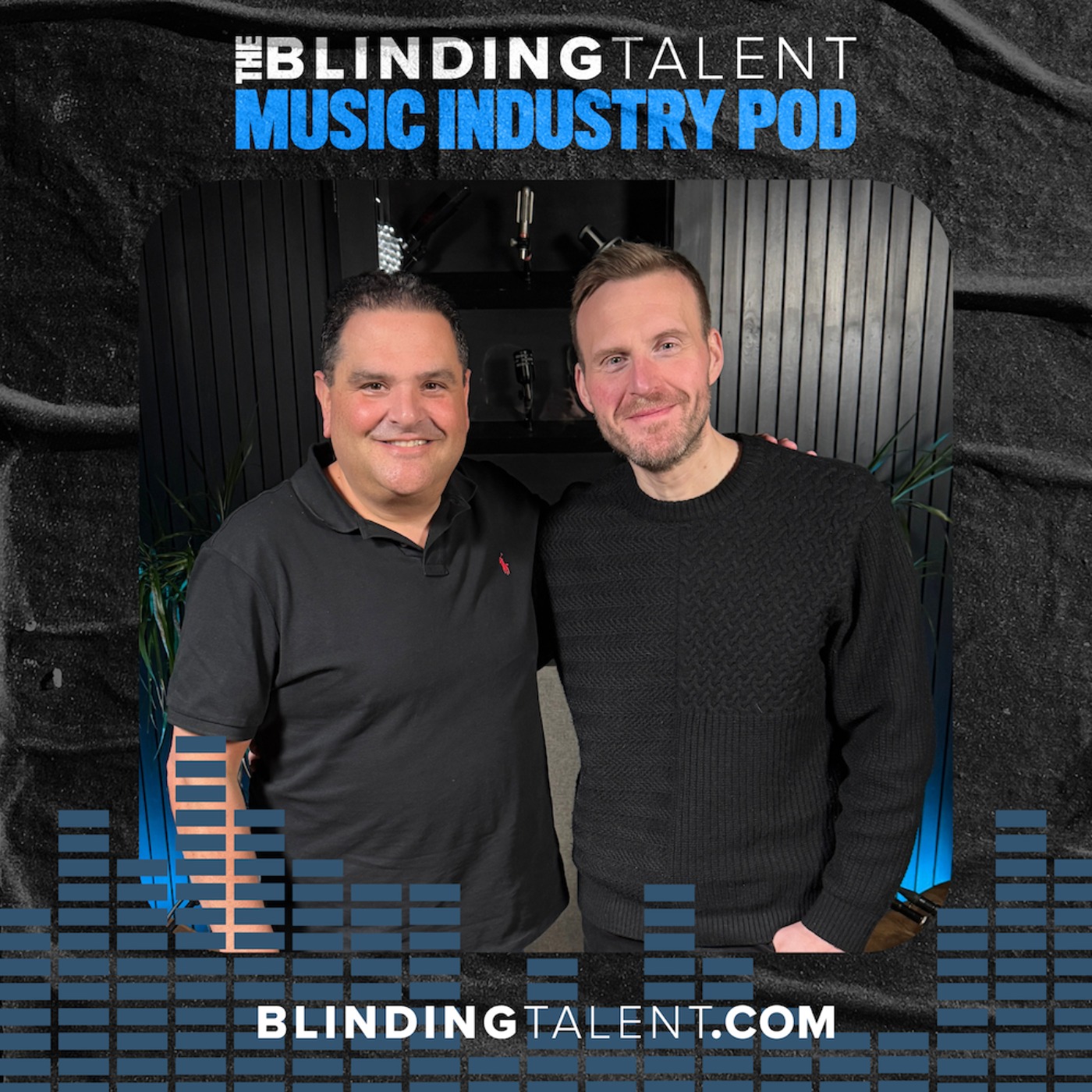
Okay, Paul, welcome to the blind and talent music industry podcast.
Great to be here. Thank you for being on. So this is a first for us.
This is our first president. You are the president of AEG.
So if anyone that doesn't know is watching this, listen into this. Explain a bit about your role.
Actually, what is AEG?
So I'm president of AEG Global Partnerships, which is a division of AEG.
AEG is a global company. We do lots of different things.
We own music venues. Be that the O2 in London or the crypto.com arena in Los Angeles.
We're a music promoter put on some of the biggest shows around the world.
Last year's Taylor Swift World Tour was done by AEG, Alton Johns,
Yellow Brick Road Tour was done by AEG, for example.
We also own smaller music venues like the event in Apollo, in Hammersmith,
or the new British Airway arc in at Olympia that opens up in a few weeks' time.
We also own sports teams. In Europe, we own the ice bar and ice hockey team,
but in the US, we own the LA King's ice hockey team. We own the LA Galaxy, for example.
Also, we own a ticketing company called Access.
They do ticketing for all our events, but lots of other events, including the Olympics in LA.
And actually, Global Partnerships is the division that works across all these different areas,
looking for brand partnerships and premium seating across all the assets we own.
Wow, OK, so you're a ticketing company, massive venues, Taylor Swift, Alton John.
OK, this is going to be--
I know, that's also music festivals, I should talk to a mentor, music festivals.
Oh, just those little things.
Yes, so we put it on the biggest music festivals in the world.
We've got Koacella, or Miraculous Press, presents BST in High Park,
amazing to all point Z.
So there's lots of different festivals that we run around the world as well.
Wow, I mean, AEG is a big deal, right?
And I think what's interesting is that the relative nature of what you said there,
and we own some small ones like the Apollo.
There will be people listening going, "All right, so not like the Mean Fiddler Roy."
You know, one of those--
No, obviously Apollo is tiny.
Apollo does, you know, 250-odd shows a year, and you know, it keeps us busy.
Yeah, so just a little one, just a little one.
So what an incredible introduction, right?
Access, by the way, is what I've got.
I've got my British Tickets.
I'm pretty sure I've got--
You want to go in British Tickets from Access.
Absolutely.
So there we go, so that's a great ticketing platform.
So what does your world look like day to day?
Like day to day as president?
So the role of our team, there's about a hundred of us in the team,
is to bring brands into what we do.
A lot of people out there don't know who AEG are.
And there's a reason for that.
It's because we often give brands ownership of our assets.
You know, the O2 in London, the number one music venue in the world,
you know, is sponsored by O2, the Telecom's phone company.
And they put their name on it.
People don't know who AEG are.
People believe that O2 run that venue.
I mean, we get emails about people
if there's a complaint about our mobile phone.
In the same way, the CEO of O2 gets complaints
where someone's burger was cold.
He gets a letter about that as well.
So not that people's bad.
I mean, it's not why your phone was buzzing so much before there.
It's just more complaints about O2.
In your live space, I'm sure there is a lot that excites you.
But what is it that really excites you right now
about the live music and the brand side of what you do?
I think most importantly, you know,
we always use that milestone now of post-COVID, you know.
Right.
Live post-COVID.
Since COVID, the world of world of live experience has just exploded.
It was big before, but it's just got bigger.
And it hasn't stopped.
We thought it was just kind of coming back from COVID.
People want to get out and about.
But it's not people love live experiences.
People are willing to spend more and more money
and investing in different experiences
and pay for premium experiences as well.
You know, the thought now when people go to a show,
they could buy a hundred pound ticket.
Or they might decide to buy the 200 pound ticket,
give them better access, better maybe better view,
better seat, maybe access to a lounge, etc.
And people are willing to spend more money in a live experience,
which I do now from personal perspective.
My friends do it.
And we can see it in the numbers we see coming into all our properties,
be that festivals or venues.
So I think that's really exciting.
People live music is going from strength to strength
and just getting bigger and better.
As we're about to hit festival season, I get really excited.
There's something about being in a field,
being out there in the summer, getting my shorts out,
getting my legs out and being out in the sun.
And just basically having a good time.
And I think that's, there's something about,
I always look back when I see them,
I stand in Hy Park watching 65,000 people
having an amazing experience.
And you think, I'm part of the team that helped make this happen.
And that's, it's a really nice thing to think about.
Or I'll go to the O2 watching people go to the O2.
And I go to the O2 a lot.
It's part of the job.
Most people probably go once or twice a year.
They buy a ticket a year in advance.
They've been thinking about that moment for so long.
And they pay for that ticket potentially a year ago.
So they've got money in their pocket when they come to the event
to go and have a great time.
And we always need to make sure that everyone
will walk through that door.
We have to presume it's their first time or the first time this year.
And they need the best experience.
You can't get, you have to always ensure that
you're always on the top of your game
to ensure that everyone gets the best time
when they come to one of our venues or events.
Yeah. And of course, what you're talking about there,
you know, just before that as well, you were saying that,
you know, these events, what's exciting about it now
is that you can customize that experience.
You know, there might be a bit of a premium
that you pay for that.
Whether that's a huge jump in very familiar in the theme parks.
Basically, of course.
Or whether that's better access or better views.
I mean, I saw this recently.
I was looking at my tickets for a show.
And I was able to go online.
And actually see what I'm going to be able to,
what my viewpoint will be from the seat.
And I thought.
Fantastic.
Definitely not buying this seat.
You know what, they're giving people choice.
You know, when we launched the '02 back in 2007,
you know, there was three chance of buy tickets.
There was a general mission ticket.
There was a sweet ticket as in a box.
Or there was a, we could have a premium VIP seat.
Now you go on, there's about 12, 13 different options
of type of seats you could buy.
And there's something for everyone.
Because you want to be able to give people what they want
and the experience they want.
And customizing that experience for each person is so important.
And what people expect now, not just going to a show,
but in life generally, everyone wants a customized experience.
And you should be able to deliver that in the live world.
And we do.
You really do.
And I think '02 is a great example of that.
And every time I've been to the '02,
I love the fact it's a venue.
But it's also got cinemas.
It's also got gaming areas.
It's got, you know, the idea of, like, well, there's loads of restaurants, right?
There's all different types of restaurants.
And I think that whole experience is good.
But let's just take one little step back here.
So thinking about your career, did you kind of always see it going this way?
Not at all.
I mean, I didn't know what sponsorship was when I was at school.
I mean, I kind of do some mentoring for kids in a program called Orte at the moment
where you kind of give advice.
They team you up with, you know, 16-year-old.
And you give them advice about their career.
And they're always asking me about, you know, what they're going to do.
And I said, "As 16, I had no idea what I was going to do.
Even when I was university, I had no idea what I was going to do."
And you have to make those decisions.
And things will come along.
And the people nowadays, there'll be jobs out there that didn't exist now.
I mean, look at the people that are working AI now.
That didn't exist 20 years ago.
So people didn't say, "I want to be working AI," or whatever it is.
You basically just have to go the flow a bit.
And I got into sponsorship, you know, I was lucky.
I was in the right place in the right time.
And it ended up becoming my career.
And it ended up being what I do.
And I guess what I'm kind of famous for, you know, in the industry.
Yeah, and the right place for right time is an interesting concept, isn't it?
You know, depending on your belief system there is always the right place in the right time.
So what you are right now is exactly where you meant to be on the podcast today, speaking to me.
But it's a wonderful career.
And I was looking into a lot of that.
That's what background we're going to get onto some more detail of that.
But one thing really stood out, obviously, from this.
Now a lot of people probably won't notice.
They'll think about, they'll think of a word "millennium."
And they'll think of Robby Williams.
And they'll think about the clocks.
Oh my God.
What happens to the computers when it strikes, you know, the first of the millennia.
And also, they think about the dome, of course, at the time was just a great big party experience, again.
It was built specifically for that millennium party.
But of course, that change.
So a newer instrumental in that.
Your instrumental in changing it from the millennium dome into the O2, which, as you said, is one of, if not the biggest music venue in the world.
Yeah, so, I mean, going back to the millennium dome, people may not know what it was.
It was built by the government as an exhibition for the millennium.
It was going to open for one year.
And they built it.
And the idea was going to be open on New Year's Eve.
1999 in the last four years and they basically went over budget
It cost a lot of money and there was an accountant somewhere in the government who worked out that because it gone so far over budget
They needed 12 million people to visit it to break even if they had six million so it was seen as a public disaster now any
Visitor attraction that gets six million people in its first year should be celebrated in one sense because there's a
brilliant number of people but they didn't get their 12 so it was seen as a failure. It was also seen as a failure by the press because on opening night
It poured with rain the Queen was there Tony Blair was there all the press were waiting and all the VIP guests
We had to wait outside in the rain because they're late opening the doors or something and so of course when you put a journalist outside in the rain
And they're going to have to watch a show
Not very happy and so the next day the headlines weren't great about the Millennium Dome and then from there afterwards
It was just seen as a negative experience
People that went there actually to the exhibition actually didn't go when it was the exhibition
Actually some people actually liked it, you know said oh yeah, it was good fun
You know, there's a great documentary on Netflix about the the big robbery that happened there about the diamond heist
And you can see images of inside what the dome was about them
so you know
There was people loved it people that hated it
And reality was it then closed after a year and Tony Blair came out of a famous line and said the learning from
This is government shouldn't get involved in visitor attractions. So at that point the dome was just empty it was empty
It was empty there a few buildings in it then came along a G and basically said and they were looking for a venue
They built they they built I should go about one step actually if I can about a G how a G started a G zone by
Our owner guy called Philip Antutes who is a multi billionaire based out of
Denver and bought an ice hockey team as a hobby, you know nearly 30 years ago and he bought the LA Kings
And he basically bought them and then realized they needed a venue to play in
And built basically what was the staple center in Los Angeles?
He basically bought a low land downtown in LA
Everyone thought he was crazy, but but buying land in LA downtown because it was a place you never wanted to go
There were riots going on down there at the time
But he bought all this land built the staple center
At home for the LA Kings and created this amazing music venue as well and sport arena and then basically built around all the land around there and created which is now LA live a great
Entertainment district. So when he built that and he decided that was going to be a plan
AG started and then they decided let's expand into London
Let's look for a site in London that we could build a venue in another entertainment district and the Prumba London is
There's not much room around. There's nowhere to build apart from East London or that part of London was underdeveloped at the time
It's not so much now and someone I mentioned to them actually was it was Harvey Goldsmith
I think mentioned to AG. Have you looked at the Millennium dome as a site and took the execs from LA down there and said look at this place
And they made a deal with the government to basically buy it and buy the site not for very much money
But in return they would develop it and make it into what it is today and they would invest all the money
And I think the original fee was I think there's about a French 50 million they invested which is small money now in today's terms
But at the time there was a lot of money and decided they were going to build this new entertainment district and
Arena, but they need to do that. They need to have sponsors and et cetera
And so they went to the market before my time when I wasn't at AG at this point and they went to the market and said we are gonna find
A sponsor who wants to get involved. I was working for O2 the mobile phone company has a head of sponsorship
We do things like Arsenal
When they were winning things this could be the the new time will they were winning stuff again
I don't know if it's gonna be published or maybe we stewed two kind of things
Yeah, we won and oh no, we didn't yeah exactly so but when they kind of you know were winning in back in 2002 2006
Basically, we sponsored the the shirt and also we sponsored the England rugby team where they won the World Cup in 2003
So I was loving life as running sponsorship for O2 and we did bits and musics when I got a phone call from AG
Saying would I want to sponsor the Millennium Dome and what I've just told you about the history of it
I said no, thank you and put the phone down and then they basically approached me
They call me a few months later and realized that no one knew who AG were
Everyone thought they were washing machine come come
And they said we're ranging a trip to LA and Vegas to show you what we're about. We've got you know
They're using Vegas. We've got venues in LA and we really want you to see what we're about and they took me over on a trip
I decided to take that trip. I said I love the Millennium Dome architecture and away on this trip
And I was amazed about
What they what a real live experience was and what you know in London
To go and see a music show in an arena in those days
We had two options. We are Wimbly Arena which at the time hadn't been developed. It'd been delapsing
But it wasn't great. It was not it's not swimming pool and then you had Oles Court
Which was an old warehouse and if you ever went to Oles Court
They used to have burger vans down the side. They were bringing on an event night. Yeah, pool of stage
It was a really bad experience. It's almost terrible, etc
That was what that and that was what I was used to going to a music show
And when they took me to see a music show in America
I was like, oh my god, this is amazing. Not only was it great acoustics the customer service the experience the food the premium everything about it was perfect
So I then came back to the UK and never heard from a gig in and I was like, I've got away with this. I've gone on this trip
They've obviously realized it was never gonna happen and they wasted with this money and
Thought I got away with a freebie and then about three months later. I get a phone call from a G saying we'd like to present you
Opportunity become a founding partner of the Millennium Dome. So I said, okay, I went along to their offices and they gave me a presentation
And I was amazed. I was like this is incredible
But I said actually I'm not interested in becoming a founding partner
What about naming rights because I knew that name rights was a thing they had in America and they said well
We haven't got the naming rights presentation right and yet
But we will come back to you and they came back to me and presented the naming rights opportunity
And I just went this is amazing. We should buy this and I
Went back to a 02 and said I've got this great idea
We should stop sponsoring Arsenal who are my team and we should put the money into the Millennium Dome and
The see you at the time Tom has got his office
Don't be so ridiculous
I just kind of thought this is such a great opportunity
It would be ridiculous not to do it. I kept pushing and pushing and I'll see
M.O. At the time as a great lately called calf kids and I said to calf
I just really believe in this project
I think we should we fall not to at least look at it. So she said okay. Why don't you go away and look at it
Investigate it. Don't spend too much time on money on it
But just do some research and I said at least that way if this thing does work and does come off and we said no
We said no for good reason and we turned it down. We never look back and go. Oh, we should look to that
so I went to
I looked around and it's fun out who I could talk to who knew about naming rights
The most important thing is no one knew about naming rights in the UK because naming rights didn't exist in the UK
There were no venues with name was a pre sort of things like the Reebok stadium for Bolton or the sports direct
Yeah, whatever a sports directorie now. There were there was the beachy cell net
Riverside stadium, which was Sunday and I think
But they were basically just tag on's where it wasn't real naming rights
It was like you've got the shirt. I would put a logo on the roof, right
It wasn't naming rights as you as you see nowadays and there was no definite agency's or experts
There a few people that came forward to me and said oh, we can help you. I was like no
I went to America and found an expert agency on naming rights
I went to a company called the Bonnum group and they basically helped evaluate the deal
Understand the opportunity put together basically a package of the things we should be asking for and I went back to
02 and my boss is a good thing for me as the CEO and left by this point, right and a new CEO was starting
I call Matthew Key and Matthew's first he was this CFO and becoming CEO
Which is never a good thing in my opinion. That's a joke because my current CEO is our own CFO
Well, I'm trying to make current accountants cool again
Yeah, exactly so and it's always nerve-racking though. He's never gonna get this. He's never gonna understand
You know, this is about and I went to presented him on his first day
Said this I want to do this and I show him showed him all numbers
We had a four-valuation why it was why would work etc
And one of the reasons I want to do this was the mobile phone industry was changing
Where reality was every mobile phone company was the same as in their the same network and they charged the same prices
So the only way you could
Get customers was about brand loyalty and keep a more way of keeping or
Your customers with you and not letting them churn over and this idea we came up with was with basically creating
Pre-sell tickets and priority tickets as 02 now it's called
The idea being if you know to customer you get tickets before anybody else
With comes to that venue and so this was a big part of the proposal we put forward and he got it
And he said this sounds like an amazing opportunity. Why don't you go and try and negotiate or agency if you get a deal
Done so I spent the next three months of my life
I was single at the time thank God because I didn't see anyone
I mean I was actually sat either in the office or up at night late because of they age you in America
Obviously and negotiating with them and coming up with a a plan to take the naming rights of the Millennium Dome
And we got to a stage where we had a deal in place ready to go and I had to go to the board of 02 because 02 was owned by
At the time a company called MMO to which is the corporation that owned it and I had to go to the board and get approval
So the CEO of the UK said that he supports it and he suggested to me that I go round to every board member and
Presented them individually before the board meeting to tell them about it and I learned a great lesson about corporate world
I went round to every single of those board members and presented them the idea
including the chairman. I said, "This is what I want to do. This is the idea." And they kind of
asked a few questions, said, "Yeah, we get this. It makes sense." We presented it at the board,
and they said no. They just said it was too much risk. Because it was a long-term deal,
you know, it was a 15-year deal. There was a lot of money. And actually, at the time, I didn't know.
And at the time, what did they say was the risk? Was it the length of time? It was a mixture.
It was a length of time. They were worried about it because no one did name me rights.
And they were also at the time why I didn't know. They were about to sell to Telefonica,
which is who own 50% of the business still. And they were worried about selling this,
this basically business with a huge debt of risk of something didn't work on their books.
It wouldn't be a great look. And they kept pushing reasons why, why they said no. And every time
they said no, I went back into A.G. I mean, negotiated things, give us some protections,
and we went back to A.G. and we solved it, and then they said no again. And this happened
for four times. And I thought this thing's never going to be done. But finally, on the last time,
we answered every question we had. We solved every single thing that the worried the board.
And in the end, they kind of said, OK, let's do this deal. And in, I think it was about March 2005,
we signed the naming rights for what is now the '02. And the '02 was going to open in 2007,
which it did in June the 24th, 2007. So two years before we actually opened, we signed the naming
rights deal. We did a big press announcement about what's going to happen with the Millennium Dome.
And it was a great, it got a huge amount of press because obviously the Millennium Dome
was such a negative story. What was going to become was a huge story. People thought we were crazy.
People thought, you're taking your brand off Arsenal, a successful team that were winning,
trophies, et cetera, going to sponsor this negative, um, white elephant in East London.
It's never going to work. And people were just sniggered. I used to go and speak at conferences
about it in the early days and saying, well, our plans were, and I knew I could see people just
going, he's an idiot. Look at him. And by believed in it, and reality is, we opened the doors in
June 20, 2007. And sorry, sorry, June 2007. And 20 years later, next year, about 20 years,
birthday, we are the busiest and the best music venue in the world. Last year, the O2 did 200,
and I think 39 shows, no other venue does that number of music shows or entertainment shows
venue. It's just, and that part of that reason is a lot of the venues in the US have sports teams
as well as they can't do that number of shows. I remember when I was at O2, we were negotiating
with AG. What happens if you don't have a hundred shows a year? And now we laugh about that because
it does so many shows. And what's the one moment when there's a doors opened and it's going well?
Was there one moment when you went to the O2 and you were sitting, you went, this is, this is not
only a great idea, this is going to become the venue for all traveling artists. I sit there, I think to myself, and it's a proud personal
moment. I think, you know, I name this place. And it maybe doesn't mean you think to anyone else,
but it means a lot to me. And actually, it's had a huge, you know, brand presence for O2. It's,
you know, it's been a huge part of their business and, you know, and what their whole strategy,
you know, they use the O2 and TV commercials, etc. And, you know, it's become a key part of why
people stay with O2, the phone business, is because the benefits they get from O2 and the priority
part which was launched off the back of the O2, then priority tickets, which have become now a
national thing. Did you go to the first ever live show there? Yeah, we did two live shows. So the
the official live show everyone knows about was actually Bon Jovi around June the 24th, 2007.
The day before we did an event just for O2 staff, it was like a test event. And we had to like,
we actually had Peter K perform, we had basement jacks, we had keen, I think it was, and a couple
of other artists performing. And it was brilliant. And that was really great. I had left O2, actually.
So I had been O2 for, you know, six years, did the deal. I was there for another year,
for the first year when we were planning it. And I got a call from the Bondham Group,
who the agency I hired in America saying, after, you know, they, they really believe in
name rights and no, and believe that the name rights going to come huge in the UK, which it
clearly has. If you look at a tour t-shirt now, the back of a tour t-shirt, every venue has a name.
Yeah. But that didn't exist before. And they want to set up an agency in the UK and they asked
me to come there CEO. And after a few back and forths, and I, in the end, I did go to work for them
after saying no a few times. But I went to work for the Bondham Group. And so a year before
the O2 opened, I actually left O2, which was the hardest thing about leaving O2 was, I wasn't
going to be working for O2 during the opening of it. But I was still going to be involved because
I was, I was the agency, but it was a career opportunity. I just couldn't say no to. And so,
but I did, I was, of course, I was invited to both the staff event and the, the official opening.
And it was great being there. And that moment when it opened, I probably was really proud that
it was opening. Couldn't believe it had opened. But never dreamt at that point, it would be doing
240 shows a year and being voted the best venue in the world every year by various awards, etc.
And just by a number of shows being the top of the list. Never did I dream that. And if I basically
said that in the case, the business case that I put forward to, to O2 at the time and said all
these things it is now, it's going to be the number one in the world. It's going to do 240 shows.
The deal will never happen because they'll never believe me because, you know, there weren't 240 shows
coming to London between Wembley and Lewis Court. And even today, Wembley does, you know,
100 odd shows. It's still doing the same out of shows it did before. We've basically made the
business bigger. We bought more shows to London. We've created more opportunity for London.
Yeah. And I guess this is the stuff that people don't see, right? So, when people go to the O2,
I'm sure, like for example, my wife, she's really happy. She got a priority access to West Life.
So she was really worried. She was like, oh my god, how am I going to tick it to this?
I mean, just went on to the app. Oh, my friend is an O2 customer. Bang, bang, bang, here we go.
Now, this obviously podcast isn't sponsored by O2 yet. But I'm hoping you'll make my dreams come true.
We're hoping to chat to them. Yeah, let's chat to them. But genuinely, when you look at the O2,
I think this is kind of getting onto that point, you know, what makes a partnership so successful
is when it feels really natural. Like now we look at the O2. I don't even think about it as a
commercial thing. I just go, oh, that's the O2. Where's that thing you're going to be? I was at the
O2. I was at the O2. I was at Brits going to be last year at the O2. You know, we don't think about
the Millennium dome presented by the O2. It's just the O2. Yeah, it's powerful. It's really powerful,
and it's a global thing as well. I go to America a lot, and people talk about the O2 as it's a
global venue. People know it. Tours basically often book their route, their tours about availability
at the O2. Because they come into London, they have to play the O2. It's not a great look for an artist
who's doing arena tours, not to have a time at the O2. So hence why they kind of try and book
the O2, and then they will book their tour around it when the availability are available, etc.
And it is a partnership of O2 as in the brand O2, because there are a key to our success. Is there
brand, their marketing skills, etc. help launch the venue in the beginning? I mean, I don't think any
venue around the world has launched with a television campaign. You know, O2 built a TV campaign
around our launch, which is still a great thing to happen. That doesn't happen with music venues.
So actually it was a huge partnership. And O2 have been key in the success of what we do. You
mentioned about priority ticketing. I mean, they launched the O2 priority ticketing from the O2,
and now I say it's a national thing. But reality is, the idea is if you're an O2 customer,
you can buy tickets 48 hours before anybody else. And from the beginning, we've been working with
artists and O2 in promoting that. And O2 at the beginning said, right, how do we get this going?
We're not here. We're putting our money in sponsoring the O2. We're not here to spend money,
paying for artist deals. And they wanted the artist. And I remember the first pre-sell we did
was Justin Timberlake. And actually at the beginning, however great it is now, people, we just
say to promoters, if you want to book the O2, the part of the deal is you have to give a percentage
of tickets to O2 for pre-sell. Promoters didn't want to do it. They were like, why should we?
We said, well, then don't play here. But artists wanted to play here. So there was a kind of a
balance that said, well, if you want to play at the best venue, the newest venue in London,
you're going to have to play by our rules. And that's what happened. And they had to sign up to agree
to give O2 pre-sells. And they forgot, they forgot to do it. They weren't happy about doing it,
the promoters, because the promoters weren't getting a fee from it. They just told they had to give
O2 the pre-sell. And then I remember Justin Timberlake was the first pre-sell I think we did. And he
sold like 74 tickets. And everyone's thinking, is this going to work? Is this going to work? And then
you get today where O2 sell out of every single pre-sell. And then he only sold 74 on the pre-sell,
the first pre-sell. Because O2 didn't have the database they'd set up, which they have now,
which has millions of people in. And now the first thing promoters say to us is, what will O2 do for
a pre-sale how to help us sell tickets.
because O2 are huge marketing channel now for promoters and artists they basically have done
television commercials of artists and they never pair an artist. They say we will pay for the media,
we will pay for the production but you have to give your time for free. And some of the biggest
artists in the world from the cold place to be on say have all given their time for free
to O2 to do this commercials which then O2 then put on television and help sell tickets.
And I always remember that my favorite that Beyoncé you can look at it on YouTube. There's a beautiful
commercial shot for Beyoncé. Beyoncé loved the commercials so much. She asked for the footage
and in her one of her shows a few years ago she actually used it as like her dress as a queen.
She basically used it as a backdrop. Right. And she asked for the costumes as well
because she loved it so much. And I mean people pay millions to be a sociator of Beyoncé,
O2 didn't pay her a fee at all. And so now they still do these what we call walk to TV,
walk to stage ads where you see the artist kind of walking to stage and they've done them with some
of the biggest artists as I say. And you know they do them now occasionally when they do do them,
they work really well. But it's not just about the TV commercials, O2 will support with below the
line advertising using digital media now as well when they get a pre-sell they can help sell and
shift a lot of tickets. I think it's interesting you mentioned about databases. I mean this is the
stuff that most artists won't see really is actually the power in that database. That's actually
a huge catalyst to sell these tickets, getting the email in and saying, "Hey, Taylor Swift is
coming next week or next year by your ticket now." And using not just the emails but using those
databases and getting people from social media, getting the right audiences etc is the most key
thing that you can do. And you know selling tickets is what promoters do for a living. And so
when you can work with brands it's a really good opportunity. I think sometimes artists see brands
as just a cash cow. And sometimes you know artists brands will do deals with artists and that's fine
and we do that as well with some brands, etc. you won't get involved with artists. But actually some
of artists realize that working with brand can be more than just about money. It's about brand exposure,
it's getting into a new audience potentially. It's about how you can help elevate yourself etc. So
working with brands are great opportunities. They have great databases, they have great market
tiers as well. So the best market tiers work for the biggest brand. So why would you not tap into
that knowledge and expertise? That's the thing. This is a global business, right? This isn't a small
localized independent venue. You are talking about the biggest venues in the world, the biggest
festivals in the world, hundreds of thousands of millions of people going to live shows every night
at a week, I'm sure. And I guess that's really well, that's a bit of a mind-fuck really,
let's be honest, because when you get your head around how many people are going to these shows,
everything, especially post-COVID, I think what you said earlier is very, very interesting because
never has there been such a fierce appetite for live music and live connection and live experiences.
I guess it's almost the antithesis to digital media in some ways, but where is the real growth
globally now in this sector? Orenas are selling out now. Last year at 50 of our artists were first-time
performers or at an arena. You're finding talent coming through because of the world of social
etc. You've got people who are coming huge overnight and selling out arenas, where in the old days,
these people would take 10 years to sell out an arena to get to an arena. These people are becoming
world-famous after releasing one song and selling out arenas. So the world has changed. From a global
perspective, we're expanding, especially into Asia, big markets for us, we've just opened arena
in Nagoya, in Japan. The thing about Asia is we do a lot of tours over there and we have done
for many years, but artists don't go into Asia because they haven't got the right facilities,
they're not great venues. So our thoughts are, let's build some great venues in Asia and then
we get more of them. Did I have a spare dome that you could just buy? No spare dome, but so we built
one in Nagoya, which is about an hour and a half on the bullet train from Tokyo. We're about to
start, hopefully very soon, another venue in Nagoya. Sorry, nice window in Nagoya, in Osaka,
so we're just putting that together at the moment. We've just opened a smaller venue, a 4,000 capacity
venue in Bangkok and we're under construction with a 20,000-seater arena in Bangkok company as well.
So we're in the market, saying name your rights for that one. The one in Japan in Nagoya is called
IG arena. We've just opened one in, the other one in Bangkok is called the European Live.
Both the venues in Bangkok are above shopping malls. Shopping malls are huge in Bangkok,
so building these arenas there. It's above shopping malls. Yeah, so it's just basically,
building upwards, building upwards, and these are brand new shopping malls that we're building.
All purpose built, and then we have a JV partner in Bangkok called the mall group. So they built this
amazing venue in. So how big are these stadiums above the shopping malls?
Huge, I mean, 20,000. Yeah, the one we're building currently,
which should be open in the beginning of 20-28 is 20,000 capacity,
although you're just opening, I think it's 4,000 capacity. Wow, so this is just sitting on top of
shopping malls. Yeah, exactly, and the idea is you go for the shopping mall to get to the arena
or the music club, except buy some groceries, buy a new top, go and see Taylor Swift.
Absolutely, and even at the O2, we've got a shopping mall there as well now. So we see Asia
as a huge expansion for us. I love working on the Asia market because it's exciting for me personally.
What I do in the UK, I've done for many years now, but going to a new market is a different way
of selling, it's a different way of learning. They like what we have in Europe and internationally,
in America, et cetera, and they see the benefit of coming to there, but it's been really interesting
learning experience, and the culture, the way you do business in these places is very different
to how you do it elsewhere in Europe and in the US. I guess that's the point, isn't it? Even yourself,
you want to challenge yourself, you're ambitious, you want to do new things, you want to do
new innovations, and that market, Japan in particular, is still a very new market in many ways.
I remember seeing one of the shows we did, the first shows I went and saw, I think it was
18 months, two years ago, it was Taylor Swift's show, and we took clients, she wasn't performing
our venue because our venue wasn't built yet, but she was performing a venue in Tokyo, and I went
to see it, and we took clients, potential clients to come and see our show. It's not bad.
And at the end of the show, people wait in their seats and then kind of walk out in lines
like at school. Can you imagine seeing, I've heard this about the Asia market, I've actually
heard this before, that they are very quiet and very respectful. It's at the end of each song,
and it was a completely different experience. It was a great experience, but it was just really
interesting to watch and see. Can we bring that over here, please? I really want people to
file out of their seats. It would be nice, wouldn't it? It would be a lovely fashion.
I was at the ember at the other night, and you know, you know, final whistle, it's everyone
rushing back to get to Chaos. At the Chaos, but you know, it's probably the same at the O2 as well.
The good thing about the O2 is being encouraged people to stay after the show for drinks and things
we got to the restaurants and the bars there, and you know, I always stay now, and I'm going,
let the cues go and then, you know, leisurely go afterwards. Yeah, I just feel like the British are
just the best at. The planes landed, everyone up, clip up, we'll stand in a queue waiting to get
out playing, which is not going to taxi to the gate for another 10-15 minutes, but we're here
just in case we're able to get off 10 seconds earlier. It's a mental kind of British thing,
that, isn't it? But I guess that's the wonderful thing about working with such a global companies
that you're going to experience lots of different variations of those audiences, and that you're
going to learn from that. It's probably going to come backwards too, right? You'll learn and bring
some of that back. Well, every time we build a new venue, we learn, you know, we always learn,
and we're always learning. You know, we built the O2, you know, each 20 years ago, and then we built
our venue in Berlin, which is now the Uber Arena. You know, we learn from things, and we change them,
and now we're building, and we're going through plans for our venue in Osaka. We are looking at
premium of what's happened in, you know, in the UK, and we've changed premium in the UK, so we'll
make you sure now we build that, because we can see it coming, and we know what the trends are going
to be. I mean, that's the thing. I mean, I think about Japan, it must have some really cool
texture in there. What's the cool bit of texture is in the Japan, the Japanese, what's it called? The
IG Arena. IG Arena. I think the difference is, actually, our venues around the world are so
advanced now on the tech. You know, you've got the best tech in all the venues, right? So reality is,
the world's caught up, and I say that about Japan. I remember going to the first time to Tokyo,
and of course, I went to the, we were going to have business meetings there, so I've got to go to,
I've gone, it's cool now, the crossroads. The famous crossroads, I've got to go and see that,
and then I was there, and it was nice, by thinking Piccadilly Circus is actually more of that
that, the patriotism. Yeah, Piccadilly Circus fell more technically advanced than this one.
But all those years, I've been thought thinking that Tokyo was the most advanced city in the world,
yeah, and it is advanced, but actually the whole world's caught up now, of course, on technology.
And we're not that far behind in the UK, right? No, we're not that far behind. I think we're
quite privileged in that sense. We can go Japan and hold our own. I guess I imagine, I don't know why
I imagine this in Japan, I suppose it's a good idea. Anyway, is that, get rid of tickets entirely,
your face is your ticket. I've always said that. Technology is coming. Yeah, and I think there's
obviously, you know, there's rules about sensitivities. I just
say about day two, etc. And that's probably what's delaying those type of things. There
is a venue in LA, the Intuit don't. And I went to it to see an event there just after
the fires had an LA. They had a, I was in LA and they had a concert, a benefit concert.
And you walk into the venue. And it basically just gassed your face and you walk in. So you
could arrive on a driverless Uber, and then you can just use your face to walk in. So this
technology is going to come out. I think it will be delays because of data protection.
People don't like giving you, you know, get a picture in the UK, you know, you saw the
kind of the PR about ID cards, which you kind of think, well, you need ID for so many things.
What's the issue about ID card? I'm not sure. But people don't like their concern about
giving all their data away. So I think that will be the delay in that type of technology.
But 10 years time, I see that happening. You can just see how with ticketing, you know,
with access tickets now, it's all on your mobile phone. It's on your app. You know, it's so easy
now. I get, I get sent my tickets and then I forward them to who I'm going with, etc.
Everyone's got the tickets on their phones now, which is great for the ticketing,
ticketing companies and for the promoters because, you know, in the old days, I would buy six
tickets and you knew about me or you about my mum because she might have bought tickets for me.
You didn't know about the data, the people actually go into the show. Now, you know, I get by the
tickets, I might then give them to all my friends and by sending them to their access account,
the promoter knows who's coming to the show. So you can actually learn much more about the
demographic, etc. Who's attending, etc. But it has a positive effect on the independence sector too,
right? Because we're seeing this technology at grassroots level now too, right? There's
different ticketing companies out there, you're fat somers and you're dyes and duh, duh, duh, duh,
right? And what these companies are enabling is independent artists also to have access to that
similar technology, where, you know, who are my audience? Where are they going to be? Are they
going to sell to them in the future? How can I promote myself to them? Well, I've got a new
album coming out of these things. So that, to me, the whole point of, I mean, data is going to be
the future of our business. And as long as we, you know, we get it right about getting permissions,
etc. When we're collecting the data and how we use the data and use it only in a professional
way, it can be a real benefit. It will be a real benefit. It is a real benefit. But we know
that data is the future. Yeah. And I think that's true for every sector, really. I mean,
yes, we're talking about music here, but I think that's true for every sector. Data is going to
be, you know, informing decisions around your audience and for remarketing and retargeting
and 100%. You know, like you said, that I, I imagine those databases that your live nations
and your AEGs and your Kilimanjaro's, whoever it might be, those databases are worth millions
and millions of pounds because they can access very hot leads, customers that are in a position.
We've got dementia or proof that they've purchased tickets before. They've bought premium tickets
before. We're going to treat people to have previously bought premium tickets the same way as
these are going to treat people to bought cheap tickets. You can basically, you know,
find the customer and know what to sell them and make people feel be targeted. And that's
what people want. People don't want, you know, they want to be, people want to get information
that's targeted to them. I don't want to see stuff that's not targeted to me. And even now,
on social media, sometimes you see things, you think, why are they, why are they selling me,
pamphlets, you know, you know, but my kids are pamphlets. So again, it's still not there yet,
but hopefully it will be seen. Definitely. And I think like what this means for artists is
is that the live sector is huge. It's thriving, but there are businesses like yourself that are
really paving the way to do things the right way and commercialize. It's not be, it shouldn't
be apologized for this stuff, right? You know, it's a commercial business and I'm sure there's
lots and lots of different areas that you can commercial and probably be having spoke about
order them today. But it seems like it's an incredibly exciting area too. And when we talk about
your career, right? So let's kind of go back, because it's what, 25 years, 30 years, nearly 30 years,
nearly 30 years, right? So similar to myself, right? Been doing the entertainment industry
more broadly for a long time. If you were starting again, right? Let's say you could go back and
start again. What would you focus on? Would be anything that you would change? I don't know if I
would change anything, because the career path I took has led me to where I am. And I've been very
fortunate in the career I have. I mean, I'm coming up this year with 20 years at AG for me,
which is incredible. You think nowadays in our world, who stays at companies for 20 years?
But me. I did. Yeah, you did. And there are a few of us. There's a few of us. There's a few,
but a lot of people move around so much. So I kind of think to myself, I was again,
right place, right time. But I guess what advice I always give to younger people when I'm to give
them advice is, don't be afraid to make risky decisions. And don't be afraid to make mistakes.
Because you learn from those mistakes. And you have to take some risks to get the rewards.
And, you know, if I, I didn't want to give up my job at 02, because I loved it and I loved
what I did and I, you know, had a huge budget. And I was, you know, running sponsorship for one
of the biggest companies, spending a sponsorship at the time, being 02. And I basically was offered
this opportunity to go and work for a startup in essence of this agency I mentioned earlier.
And I turned it down twice, because I was actually didn't want to leave my comfort zone.
The only reason I actually left the job in the end was I got engaged. And I,
they basically kept offering me more money this company because they thought I was negotiating.
And I kind of just didn't want to leave my comfort zone. And I got engaged. And I was with my
now wife and we were in Spain. And I was holding her romantically in the sea as you did in those days
when you were just engaged. Sounds like a picture as it does. She said to me these words. And I
don't forget these words. She said, when I have kids, when we have kids, and I give up work,
and I dropped her in the sea as excuse me. And it was the first time we had that conversation.
Probably not a response to you. No, it was the first time we ever had the conversation that I found out
my wife actually wanted to be a, she wanted to not have a career. She wanted to stay at her mum.
And which is a brilliant thing for her to want to do. But we hadn't discussed it before.
And I realized I have to leave my comfort zone and take some risk to get some more rewards.
And it was the best thing I ever did, not dropping her in the sea. But actually,
but taking a risk and leaving a job that I loved to go and do something different because
that pathway took me to where I am now. Yeah. And I think it's really sage advice anyway for
anyone listening and anyone that's kind of needing the moment of inspiration that, you know, all
of your growth sits outside of that comfort zone. All of your growth is there. If you're happy to
just kind of be where you are, there's something cool in that as well. And it's sometimes it's safe.
And you know, and that's I guess I was kind of, there's that safe moment. But if you want the reward
and to get push yourself and sometimes in this plenty of people, I know that I've been dropping
your future wife in the sea. It's pretty risky. Exactly. Like as you could swim. But reality is,
we do know that people, sometimes there's, you know, our team at AG, we've got a great team.
A lot of people have been with us for a long time. And a few of the people that work for us
and have left and come back, they've gone out and they've gone to great opportunities,
which have been great. And they've all cooled up and said, I hear you're hiring again, Paul.
Actually, can I come back? And these people, we never fell out with. They were great people.
And they went off to further their careers. And I think that's an amazing opportunity to do.
But grass is not always greener. Sometimes it is. And those people do really, really well.
And other times they've come back. And those people have come back and been with us for a long time.
And you know, they're great friends of ours of mine. And they've done a brilliant job.
But so don't mind. Sometimes that that's an opportunity. You can leave a company,
try some new things. If it doesn't work and you're good and you're respected,
you're I'm sure they'll always take you back if there's an opportunity there.
100% I think that's a testament to your business, your leadership. And
what you've done there to nurture that talent through the business. And that's clearly coming
through in the success that you guys are having as well. So look, we're coming to the end of the
podcast now. So just a couple of questions for you. And you know, you can go in as depth as you like
about this. But what does the future of live music look like? The reason lives doing so well,
it's still live music. And that's again,
back to post covid is why people wanted their desperate to go back out for that live experience.
People will never hopefully want to move away from that. All the technologies out there live
is going to be about live experience. So I think technology can enhance the experience,
be that through how technology can help with the premium, you know, in sea ordering or these types
of things the technology might bring or as you mentioned before with with your tickets, how facial
up, you know, ID might get you into buildings, quick go, et cetera, and safer. All those things,
I think will be a support. But the key thing of live music will be about the live experience.
Hopefully I can see still saying staying the same for a long time. And that's the thing. This is
this kind of rounds it all off really nicely. You know, you've got brands and sponsorship and
these really big deals that you've done over there. They've all been there at the heart to enhance
the experience for the customer. Yeah, exactly. Let's take the back to the O2. The brief from
the O2 at the beginning for O2 was everyone that comes to the O2 should have a great experience.
But if you're O2 customer, you have an even better experience, be that you've got your ticket
for anybody else. You have fast lanes to get into the venue. You basically have private
lounges that you can use, et cetera. You can be upgraded to, you know, to things via priority
and all these different things. That's the key thing that brands can bring. Yeah.
And people do one exclusivity.
They do one experiences.
They do want to have social proof.
They do want to have those things
and enabling people to do that.
Yeah, okay, you could argue maybe that, you know,
that means it's a bit exclusive for other people.
It's not well-fined, but this is about customization
based on your means and what you want.
And it's important that you always have an opportunity
for everyone as well.
Yeah.
It's just that certain people might have more opportunity.
Yeah, exactly.
So our final question, and it's thank you
for your time, so it's been really, really fun.
And I've really great chat and it's decided in the industry,
I think that a lot of people don't really see.
They go live music, Taylor Swift.
Yeah, but whoa, there's loads of stuff behind the scenes
that happens that, you know, your 100 strong team
are kind of working on every single day
to enhance the experience for people going to these events
and doing those partnerships.
They're just, again, just continue to add more value
and more opportunity and more venues, which frankly,
we pass a well-need, right?
So more of those.
But one last question.
What still makes this industry special to you?
I think it's musty, bit cliche, the people in it.
The cliche's good.
Yeah, the people in it, I think, are great.
I also think that we love what we do
because we have great opportunity.
We get great access.
We get to go to things that other people would just
die to go to.
Yes, it's hard.
Yes, we have targets and objectives like everybody else.
And we have to kind of get up in the morning
and think we have to hit our numbers and things like that.
But I also know that the benefits around it.
And the other benefit for me, I would say,
well, I've seen over the years, you know,
when I started, you know, didn't have kids,
but when I, my kids are growing up with what I do.
And they've grown up with the '02.
And originally it was like, I take them to see Disney on ice.
That was their big thing.
And it was like, great, I could take them
and a few friends to see Disney on ice.
Then I took them to their first concerts
and be able to take them to, you know, one direction
or whatever it was.
And now it's taking them where they come to me
and say, Dad, can you get me tickets for X or Y?
And knowing that they can have those experiences.
'Cause then the day we're here on this planet
to, you know, to support our families.
And this is a benefit of what makes me happy.
And I can obviously do a job with A.G.
and get my salary and do things and, you know, and have a life.
But it's those elements I can do for my kids.
That, you know, that keeps me happy and keeps me motivated.
And what a wonderful way to end it.
And also explain that because I think that's something
that, you know, I was in that sort of industry for a lot.
And I got taken out a lot, I went to a lot of gigs
and, you know, my kids were going to see J.L.S.
and, you know, they were very privileged.
I can only see what I'm saying.
But it isn't that nice when your family life
actually really joins with your work, like beautifully,
and enables and facilitates you to go to Coachella
with your free daughters and your wife.
- Yeah, that was experienced.
- That was kind of, you know,
who I've been to Coachella a few times on my own
for work purposes.
And I was like, this is the retrip we just did was a family trip.
It wasn't actually a business trip, it was a personal trip.
But I was able to take them to, you know, to Coachella.
And taking, you know, I do it as a 17, 16 and nearly 14,
you know, three girls.
You couldn't think of any perfect for them to experience.
And they absolutely had the time of their life, you know,
and were amazed and privileged to be there.
And, you know, and the most thing about my kids,
they're grateful, they're not doing it.
They don't expect to be there, they're always grateful
and they realize it's a privilege and not a, it's not a given.
- And I think that's absolutely right.
I'm like, when you can integrate those worlds together,
I think it just in, it just makes your job,
even that much more special as the question would answer.
I was asking, but like I say, thank you so much.
It's great to be here. - It's great to be here.
- I mean, it's true here.
- Yeah, thanks.
It's not bad, actually.
It's just been nice.
- But those who can't see it, it looks lovely,
so those who can't see, you know.
But no, it's been a really, really great chat.
And what an incredible journey you've had.
What an incredible career so far.
You know, I'm sure there's even bigger and better things to come.
And I'm really excited to get my ticket to go to Japan
to see that, not the, I'm not really bad,
but I'm about to love you.
I just want to see them filing out in a really fourthly way,
because that will make me happier than picking shit to be honest.
But, but like January's been such a great podcast.
Thank you so much for coming on.
I really appreciate it. - I really appreciate it.
- Thank you so much.
Thank you.
(upbeat music)
Make sure you subscribe and drop us a follow on Instagram
to get involved with the conversation.
For more information, go to blindintelent.com
or drop us an email at
[email protected].
Thank you.
(upbeat music)
 PodcastTranscript AI