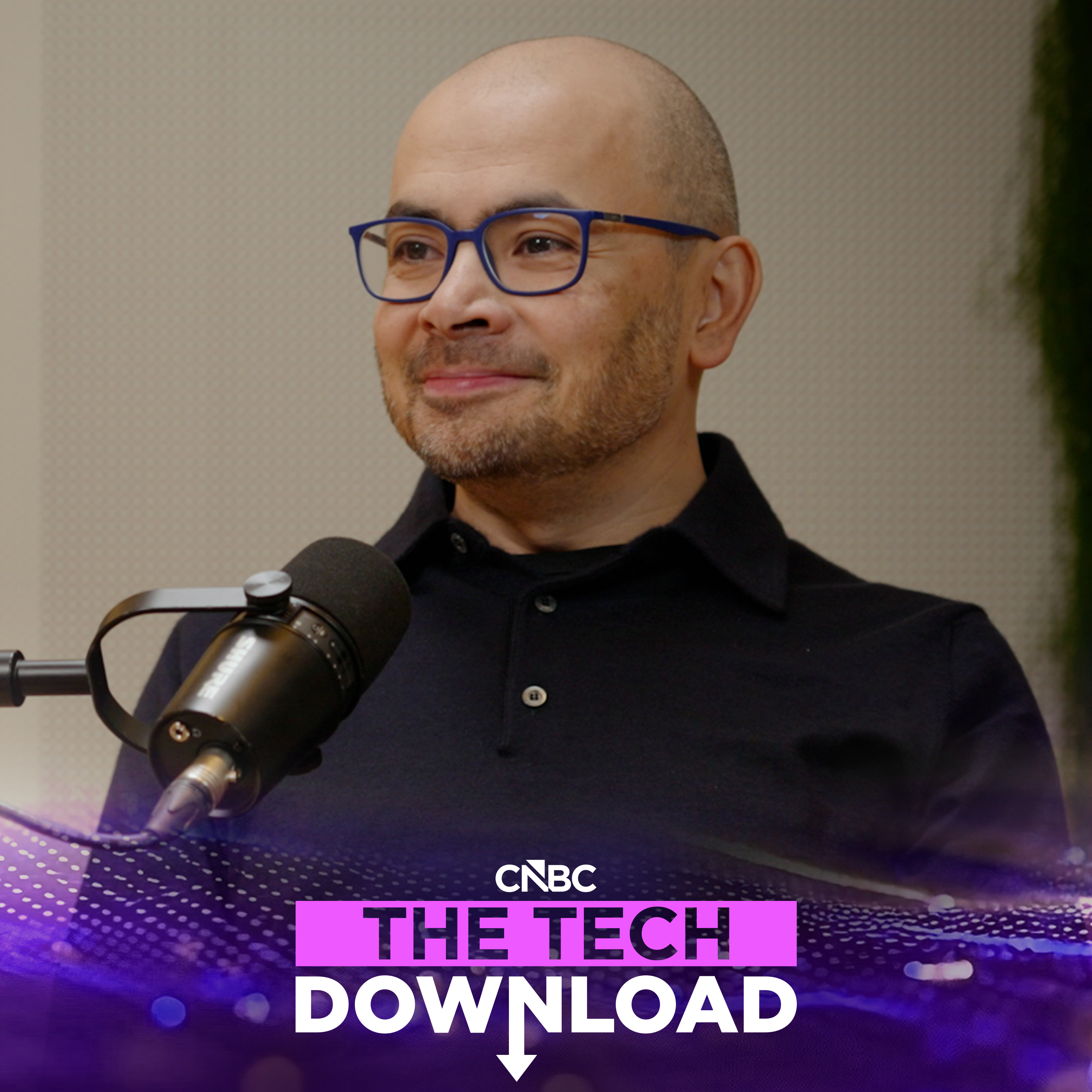
The podcast explores Google DeepMind’s pivotal role in shaping the current AI revolution, highlighting its foundational work in AI science—such as AlphaGo and AlphaFold—that has now become central to Google’s AI leadership. Hosted by Arjen Carpool and Steve Kovak, the conversation features DeepMind CEO Demis Hassabis, who outlines the ongoing evolution of AI, emphasizing that while scaling laws continue to yield progress, true artificial general intelligence (AGI) still requires breakthroughs in reasoning, long-term planning, and world model capabilities. Current large language models, despite their impressive text generation, lack the ability to produce novel scientific insights or understand physical causality. DeepMind believes the future lies in combining LLMs with world models to enable autonomous, physics-aware AI systems. The episode also examines the competitive landscape, noting Google’s strong position due to its vast user base, financial stability, and integrated AI strategy across products like Android and Apple’s Siri. It addresses concerns about AI bubbles, with Demis arguing that Google’s deep resources allow it to weather market fluctuations, unlike more capital-dependent rivals like OpenAI. Meanwhile, China’s rapid AI progress—through DeepSeek and Alibaba—demonstrates growing global competition, though breakthrough innovation remains a challenge. The discussion concludes with optimism that AI could usher in a new scientific golden age, driven by smarter models, better efficiency, and ethical stewardship, positioning DeepMind as a key driver of responsible and transformative AI in the coming years.
A CNBC original podcast.
Hello and welcome to the tech download.
A new CNBC original podcast where we unpack the tech stories that matter most.
Each season we dive into one big theme and what it means for your money
with insights from the industry's most influential voices.
I've always thought that in the end it would be the most important technology
we'll ever invent and it's sort of the natural progression really of the computer age.
This season we're looking at Google DeepMind,
the powerhouse driving the tech giants AI push.
We've been given rare access to key figures at the company,
including our guests for this episode, DeepMind co-founder and CEO,
Demis the Service.
I think it's going to be like the industrial revolution,
but maybe 10 times bigger, 10 times faster.
So it's an incredible amount of transformation,
but also disruption that's going to happen.
Hey, everyone, and welcome to the tech download.
Allow me to reintroduce myself.
I'm Arjen Carpool, Senior Technology Correspondent at CNBC based in London.
And I've got a very special new co-host with me.
Hey, there, Arjun.
Yeah, Steve Kovak here.
I cover tech over here in New York.
I mostly focus on Apple and Microsoft,
but look, I've been covering the tech industry for over 15 years now.
I kind of have a good grasp on everything.
And I'm so excited to be here with the Arjun,
because I've just admired your work from across the ocean for so long.
And now we actually get to kind of collaborate and do this thing together.
I think it's going to be a good time.
It's going to be so fun, Steve.
So between us, we think we've got nearly three decades of experience covering tech.
And the crazy thing is we've got so much to learn.
And I think over the course of us doing this podcast,
we're going to learn so much, speak to so many interesting people.
And so excited that this first series,
we're kicking off with an insight into Google DeepMind.
One of the world's leading AI labs as well.
And just for our listeners and our viewers,
a quick intro, I guess, to Google DeepMind.
It was a company founded in 2010 here in London,
where I said as well,
very small company founded by three people.
Demis Asabe's Shane Legge and Mustafa Salaman,
who's at Microsoft now, right?
Yeah, and in fact, I interviewed him,
got nearly a year ago now, Mustafa Suleiman.
He's basically doing what Demis is doing over at Google.
And it's just kind of interesting to see how Google
was like this incubator, so to speak,
for all of this top AI talent around the world.
Demis obviously stuck around.
He's running DeepMind over there.
What I also think is really interesting, though,
is just this AI moment, Arjun,
we've been living through for the last three years.
And how three years ago, chat GPT comes on the scene.
And Google was kind of seen as under threat.
They went through this code red.
They had to go through a bunch of reorganizations,
internally, eventually, Demis came out on top
as the leader of AI.
And guess what?
2025 was a really interesting year for AI over at Google.
They kind of caught up.
And in some ways, even surpassed what chat GPT was already doing.
And this is really interesting because
the fundamental technology for all these large language models,
we've been talking about for so many years,
started at Google.
And the perception was, Google let chat GPT
kind of take that technology and run away with it.
But now, in my view, at least, Gemini
is pretty much on par if not better than chat GPT.
And Google DeepMind is integral for this.
I mentioned it was found in 2010.
Google actually acquired DeepMind in 2014.
I was very new into my career as a tech reporter as well.
Google paid around 400 million pounds
for DeepMind at the time in 2014, about 540 million dollars.
It's a stake this day that could be worth tens of billions,
maybe hundreds of billions of dollars
according to some estimates today.
And DeepMind really is very much responsible for Google's AI.
We talk about Gemini, the chatbot, the AI
that Google's released to consumers.
This is powered so much by the technology
coming out of DeepMind.
But even before all of this,
DeepMind was having some big breakthroughs.
There was a big moment a few years ago
when they released the system called AlphaGo.
This was the first computer program
that was able to defeat a world champion
in a game called Go.
This is a very complex game.
And it was seen at the time as one of the grand challenges
of AI because it was such a complex game
with so many different combinations available.
The other big breakthrough, of course,
was something called AlphaFull.
This was another AI system developed at DeepMind
that could accurately predict 3D models of protein structures.
And the idea is here is if you could do that,
this may lead to some medical breakthroughs.
So this advancement of science has been pretty core
to what DeepMind's been up to.
And clearly, it was a significant bet
from Google more than 10 years ago
because it's helped turn Google into an AI world leader today.
Yeah, and that's exactly right.
Now, what really struck me about DeepMind
having watched them for so many years
is how rooted in science they were.
They weren't necessarily trying to build
consumer products like they do now.
They were really trying to solve
fundamental problems in science
and really usher in this era of AI-powered drug discovery
of other big complex problems like climate change.
I know Demis talks about that a lot
and he's going to talk about that
in your conversation as well, Arjun.
Absolutely, Steve.
Look, it's a great scene set up for DeepMind.
So let's get into the conversation with it.
CEO, Demis, the service.
Demis, thanks for joining me
on the tech download.
Appreciate it.
Thanks for having us.
Demis, we're going to try to get through a lot
in our time here.
But I want to start first with the technology itself.
And we've been talking about AI
and we've been talking about the capabilities
and how they've been continuously improving as well.
Now, in the tech order, there's a lot of conversations
about how good can these models get?
How good can these systems get?
And there's a lot of debate around this idea
of scaling laws for our listeners.
You know, it's this idea of more compute,
more data, bigger models, eventually will lead
to bigger systems as well.
You said we need to push scaling laws to the maximum.
There's questions over now.
Are we hitting any kind of walls
in terms of progress of those scaling laws
in terms of the ability for these models to get better?
And just from what you've been developing,
Karat DeepMind, what are you seeing?
Well, look, I think scaling laws are going very well.
So we're definitely seeing increased capabilities
by putting in more compute, more data,
and making these models generally larger.
So that trends continuing may not be as far
as it was a couple of years ago.
So there's some talk of diminishing returns.
But there's a big difference between
sort of no returns and exponential.
And I think we're somewhere in the middle where
there's very good returns and that's worth doing.
On top of that, in terms of getting all the way
to AI artificial general intelligence,
it may be that there's one or two big innovations
still needed as well, and maybe missing.
In addition to the scaling up of the existing ideas,
we'll get on stage very shortly.
But what are missing in your view?
Well, if you look at it, I mean, we've all played
around with different chatbots.
And you can see that they can do very impressive things.
In some dimensions, but they're kind of like
jagged intelligences, I like calling them,
in the sense of they're very good at certain things.
But there are other things that they don't do.
They're not capable of at all.
And if you pose a question in a certain way,
you find that they're flawed,
and they can't do some relatively simple things.
And so for a true general intelligence,
you shouldn't see that inconsistency.
It should be consistent across the board.
And also, there are things like it can't continually learn.
It can't learn new things online.
It can't truly create original things.
So there's quite a few capabilities that you would like to see.
And you would need for general intelligence
that are missing from today's systems.
That's really interesting.
So what would be this sort of unlock
to get to those intelligence systems?
I just want to quickly discuss the conversation I had with Thomas Wolf,
who's the co-founder over at Hugging Faces.
He was talking to me a few months back about his view on LLMs,
in particular, large language models.
And just saying, they're really great.
And you know, you use these chatbots
and the chatbots say, "Hey, great question, great idea."
And here's all the information you need to know.
But what's missing is the ability for these systems to come up
with new and novel ideas, perhaps.
And particularly, I know you're so interested in science.
And what AI could do to unlock new drugs
or discover new diseases, et cetera.
That actually, maybe the LLMs limitations are there
that can't come up with these Nobel Prize-winning ideas,
these novel ideas.
So perhaps there needs to be some sort of new architecture.
What's your thinking on that at the moment?
Yeah, well, look, my passion for my whole reason,
I've spent my whole career on AI is,
I think eventually it'll be the ultimate tool for science.
And of course, we've shown that with things like Alpha Fold
and all of the science work we've been doing over the last decade.
But there's still a long way to go
in terms of can an AI actually come up with a new hypothesis itself,
not just solve a conjecture that is already out there,
which would be already useful and impressive.
But can it actually come up with a new conjecture,
a new idea about how the world might work?
And so far, these systems can't do that.
They don't really have the capability to do that.
So there seems to be something missing.
I think some of the capabilities that require
a kind of long-term planning, better reasoning,
maybe also the idea of a world model,
this idea of the system actually understanding better
the physics of the world,
so that it can run simulations,
make me kind of in its mind to test its own hypotheses.
You know, these are things that the best scientists do,
human scientists do, and so far, our AI system.
systems, you know, and not able to do that.
Can you just help us understand a bit more of this idea
of world models, because it may be a term people
are hearing for the first time, you know,
how they're, I guess, they differ from LLMs.
- Yes, so LLMs and the models we use at the moment
are, you know, mostly around text.
Of course, things like Gemini, our foundation model
can also cope with images and video and audio,
so different modalities.
But it's still actually understanding the physics
of the world, the causality of the world, you know,
how one thing affects another thing,
can you plan a long time into the future?
These are all related concepts,
and if you really wanna understand how the world works,
so that maybe you can invent something new in the world
or explain something about the world that was not known
before, which is basically what a scientific theory does,
then you have to have this accurate model
of how the world works, you know,
starting with intuitive physics and how the physics
of the world works, but all the way up to biology,
you know, and economics.
- Yeah.
- And do you envisage a world if we get this idea
of artificial general intelligence,
this sort of human level of intelligence,
that there will be a combination of LLMs
and world models working together
or will sort of world models supersede
in some sense LLMs?
- No, I think there will be some convergence
of these technologies.
That's at least my betting is there will be
these LLMs or foundation models, you know,
like Gemini under the hood, that will be a key component.
I think the question, I think there's almost no doubt
about that in my mind, which is why we must try
and scale those systems as big and as powerful as we can,
but the question is, is it the only component
that's needed for an AGI?
And that's where I think I suspect
other types of technologies and other types
of capabilities will be needed.
And I think these world model capabilities
and we're working on our versions called Gemini
and we have video models like VO,
state-of-the-art video models that you can generate videos
from text and you can think of video models
and interactive models like Genie
as kind of early embryonic world models
where if you can generate something
that's realistic about the world,
then in a sense your model understands that about the world
otherwise how could it have generated it?
- Demis, you mentioned this AGI artificial
general intelligence, I know there's various definitions
of it floating around.
You've previously said you believe that reaching AGI
could be somewhere in the realm of five to 10 years away
is this still your view?
Given I guess some of the profound developments
we've seen in 2025.
- Yeah, so I think we're right on track from that.
Actually, when we started DeepMind back in 2010,
we thought this would be a 20 year kind of mission
to build AGI system that's capable of exhibiting
all the cognitive capabilities we have,
including things like true innovation and creativity
and planning and reasoning and things like that.
And I think we're about five to 10 years away from that.
But that's pretty incredible if you think about
how transformative a technology this is.
- You mentioned there might need to be some more technology
breakthroughs.
We're seeing things like the models advancing.
We're seeing the semiconductors advancing rapidly as well.
Are there any currently bottlenecks
and things you need to figure out?
I know energy is something that's been brought up so much,
saying, well, look, we can keep advancing chips,
we can keep advancing models, but at some point,
we're just not gonna have enough energy
to run these data centers, to run these AI models.
- Yeah, well, look, look, there's lots of physical constraints.
So, of course, there's, you know,
no one ever has enough chips.
And, you know, we're lucky that we have, you know,
our own TPU range in addition to GPUs.
And, but they just start enough compute chips
in the world, really, for the demand.
And of course, in the end, that comes down to energy as well.
There's this idea of energy what effectively is synonymous
with intelligence as we get into the era towards AGI.
Now, the interesting thing is, I think the AI itself
will help here in the sense of getting more efficiencies
out of existing infrastructure,
but helping with things like material design,
better solar materials, but it could also help
with new breakthrough technologies like Fusion.
We, you know, we have a collaboration with Commonwealth Fusion
in the US to help contain plasma and fusion reactors.
And one of my pet projects is, can we come up
with a room temperature superconductor material using AI?
So I think there are multiple breakthroughs
that AI could come up with and help us come up with
that would help with the energy situation.
And indeed, that's, I think that's one
of the most promising use cases of AI.
And then the other thing is, as these systems are getting better,
they're also getting, you know, 10X more efficient per year.
So if you look at our range of models,
we have our kind of lighthouse model,
our pro versions of Gemini, but then we have our flash versions,
which are way more efficient and the sort of workhorse models
that are used for everything.
And they use techniques like distillation
where you have a big model that teaches a smaller model
and the smaller model is really, really efficient.
And I think there are more and more innovations
and techniques like that that will keep bringing
the efficiency curve down.
And so you get, you know, much better performance per what?
- We hear a lot about sort of AI.
And I think there's a lot of people
wondering technology sounds amazing, sounds great.
There's also a lot of fear, right?
Around the proliferation of this technology,
the impact it's gonna have on people every day
and their lives.
I guess for you, what are some of the things we need to consider?
- Yeah.
- From that perspective in terms of the impact on society,
whether it's around jobs, whether it's around,
kind of what we're gonna do with our time
if we reach this goal versus, I guess,
the benefits that you believe this technology
is gonna bring for humanity.
- Well, of course, you know, I believe that overall,
AI is gonna be one of the most beneficial technologies
humanities ever invented.
That's why I spent my whole career working on it.
But it's only, you know, it's not a given.
It's a dual purpose technology.
I dream about using AI for things like curing diseases.
We have a spin-out called isomorphic
that builds it on alpha-fold work,
on protein-folding work that we did a few years ago
to accelerate drug discovery and try and solve all disease.
I think that's now, you know, within reach,
that type of thing in the next decade or two.
We've discussed energy.
There's many benefits, I think,
AI is going, incredible benefits AI is gonna bring.
But there are also risks.
Obviously, there's kind of economic disruption.
And I think there it's gonna be like the industrial revolution,
but maybe 10 times bigger, 10 times faster.
So, you know, it's an incredible amount of transformation,
but also disruption that's gonna happen.
And, you know, we need some new economic models
probably for that.
And then on terms of the worries about the usage of AI,
I have two, which I think are worth worrying about.
One is bad actors repurposing these general purpose
technologies, AI technologies for harmful ends.
And then the second one is AI itself,
as it get we get towards AGI and agent-based systems.
So these are systems that are able to do things
more autonomously than today's systems.
They can, you know, what are the guard rails around that?
How do we make sure we can keep them
doing the things that we want them to do
and not very often to something that we didn't expect?
And so those are the two kind of risks
that are kind of, that I foresee.
Do you feel that you're developing systems?
That you can be in control of?
- I think we're very confident about that.
You know, we've had, and thought about responsibility
and safety and security of these systems
in the very beginning.
You know, we started DMI back in 2010.
Almost no one was working on AI back then,
but we planned for success.
And we knew success would mean these extremely powerful systems.
So we also understood the other side of the coin of that.
So from the very beginning,
we've tried to be very thoughtful.
You signed the scientific method and a scientific approach
to try and understand as much about our systems
we're building before we deploy them.
Of course, it doesn't mean we won't make any mistakes.
There's two, it's such an incredible
and fast moving technology.
But I think with something like AI,
we need to be, I call myself a kind of cautious optimist.
I'm very big believe in human ingenuity.
I think given enough time and care,
we'll get this right as scientists and as a society,
but it's not a given.
And so we shouldn't be sort of rushing into this.
And we need to go into it with our eyes open.
- 'Cause I guess the reason I asked,
'cause I know you've spoken to people
like Yoshua Benjiro, Max Teigmark,
and these are people I've also spoken to in there.
And they're of this cohort that believes,
do we need to be rushing so quickly into a world of AGI
and agentic systems?
Maybe we need more tool-based AI to solve specific things
rather than these all-purpose,
or general-purpose kind of systems.
And I know they've called for perhaps a slow down
to the development of these AGI systems.
In your view, do you think you should be slowing down?
- Well, I've had lots of, you know, I know them very well.
Yoshua and Max, we've had many discussions and many others.
And actually, I have some sympathy for that view
that, you know, building a tool-based AI
is, you know, thinking of AI as a tool,
or the ultimate tool for, say, science,
is the right way to build AI in the initial stages.
And certainly, that's the way we're viewing it
and the kinds of things we apply AI to, like alpha-fold.
But the thing is, you know,
it's a very complex geopolitical
and corporate system that we're in.
And it isn't just about, you know,
there are many companies trying to build this.
There are also many nations trying to build it.
And it's, there's a sort of race dynamic,
which ideally wouldn't be there.
So in an ideal case, this would be a scientific endeavor
and it would be very carefully,
each step would be carefully considered.
But unfortunately, the real world isn't like that.
And we have to kind of be pragmatic about where we are.
So what we're trying to do is be good role models
for, yes, being on the frontier,
pushing the benefits of that as quickly as we can
and as broadly as we can.
But also, try and be as responsible as possible
with that along the way and thoughtful as possible.
And I think we've got that balance pretty good right now
hopefully that's a bit of a role model to the
the rest of the field and the industry too.
- Yeah, I want to address some of those dynamics as well,
but just first, I guess, just from a personal point of view,
have you ever, you said you sort of started
this mission of deep minds, you believe in the technology?
Has there ever been any moments in your career
when you've gone like, should we be doing this?
- Look, when you look at how powerful the technology is,
I really think that there are so many challenges
confronting society today, not to do with AI,
climate, poverty, the access to water.
There's just so many issues, health,
aging population, disease, so energy we talked about earlier.
So if there wasn't a technology transformative
as AI coming down the road, I'd be really worried
about society's ability to deal with these challenges.
So interestingly, AI itself is one of those challenges,
maybe one of the greatest ones, but it's also one
which can help us cope with and resolve
and solve some of these other big grand challenges.
So it's a very interesting one, right?
It's sort of double edged.
And I've always believed in that.
I've always thought that in the end,
it would be the most important technology
will ever invent.
And I think it's sort of the natural progression
really of the computer age.
- Demis, just a quick aside, you started life in gaming.
Which is amazing, very developing theme park.
Yes, fantastic.
Fantastic game as well.
Did you ever, do you still play games?
- Yes, I love games.
This my main and only hobby really.
Well, like these days, like League of Legends
with my two boys and my brother and we have a little team,
we've done it since lockdown.
But yeah, I love games in all its forms
from football to big games.
- It's such high impact, stressful role as you have.
- Yeah, potentially, is that your unwind?
- It is, I would say so.
And it's also, you know, it's kind of in the past as well
as being a great creative endeavor for me, you know,
and it's how I learned programming
and other things was through making games.
- I have no in air as a stressful job as you
but that's my unwind too, for sure.
- Get home, turn the console on.
- Exactly, no, it's okay.
(upbeat music)
- Executive Decisions is the new podcast from CMBC
where I ask powerful leaders about their decisions
that changed everything.
- I'm Steve Sedgwick, here's Mr. Joe Malone, CBE.
- I started that first business of skincare.
That's when I knew that I was in charge of my own life
and that's when the entrepreneur really,
although I didn't know what the word entrepreneur meant,
that's when the entrepreneur really took hold.
- That's executive decisions with me, Steve Sedgwick.
Get it, wherever you're listening to this.
- It's just in that small segment alone, Steve,
there's so much to unpack and I wanna focus on
on two kind of big buzzwords right now.
The first is artificial general intelligence or AGI,
this idea and I know there's so many different definitions
of it, but broadly speaking, this idea of AI
that is as smart or smarter than humans.
And I think that so many of these big AI labs,
including OpenAI, including DeepMind,
are pushing and hoping to get to this stage of AGI.
And so far, they've approached this
with a technique called large language models.
These AI models that are trained on huge amounts of data,
but mainly text, but there's this other buzzword, right?
World models, this idea of these AI models
that understand the physical world.
And this is, this buzzword is really growing in popularity, right?
- Yeah, and I think this is gonna be a big theme
of AI going into the rest of 2026
and even into next year because the idea here is
that LLAMs, sure, we got the language part down.
It can mimic the way humans talk and speak and write
and things like that.
But when it comes to the physical world,
we talk so much about robotics and AI and physical AI.
Well, they need to understand how the physical world works,
how water flows, how air moves and things of that nature.
And what really struck out to me
when you brought this up to Demis, he said, yeah,
we do need to start exploring that more.
And in fact, he sees a world in which the LLAM
and those world models start to converge.
I think that was the word he used.
Converge into something more unique
and more powerful and capable.
This is also a debate that someone playing out
among AI leaders like on social media.
You could fire up X or your favorite social media site
and what really struck out to me is Yanda Koon.
He was the head of AI for many years over at Meta.
He recently left to start his own thing
because he kind of got superseded by Alexander Wang
and that whole big talent wars that happened
over last summer.
He had a really interesting interview in the financial times.
He doesn't think LLAMs are what's going to get us to AGI.
To your point, that's what everyone's chasing.
The superintelligence AGI, whatever you want to call it.
His thing is LLAMs can only get you part of the way.
You need world models and all sorts of other things.
And he kind of harshly criticized Meta
for not thinking beyond the LLAM.
And that seems to be part of the reason
why he left to do his own thing.
And it's really interesting to see
one of Meta's big competitors, Gemini,
just talk openly about it and say, Demis saying, yeah,
we need to do this.
We need to start thinking about this.
It enables so many things from robotics,
autonomous driving, and just a better understanding
for these AI models and intelligent systems
that we're chatting with to get you that right answer.
Steve, do you ever use a chatbot and you put something in
and it would say, hey, Steve, great question.
That's a really clever thought.
All the time.
It's the sick of fancy of all these chatbots, right?
Where they're like, oh, you're so smart and great.
And I ask you with these questions, yeah, all the time.
Exactly, because the reason I bring that up
is partly to this point, this growing criticism
of LLAMs is that actually, yes, they're great
and they'll give you the information.
But actually, when it comes to LLAMs
as a foundation for being able to create new ideas,
novel ideas, there's limitations there.
And I think that's partly what Demis was speaking to
and why this idea of world models
is really growing in popularity.
It's going to be interesting to see how this plays out.
As you mentioned, into this next phase of AI,
where it's key for things like robotics, driverless cars,
and many other use cases too.
Yeah, and you'll notice as we continue this podcast,
I'm incredibly cynical about the robotics angle
of this AI moment we're living in.
All that so many of the robots we're seeing,
they're literally puppets, they're teleoperated.
The best example, of course,
is the Tesla Optimus robot,
which started out as a man in a bodysuit dancing around.
Now it's a real robot, but again, it's teleoperated.
They're literally people at a control room,
controlling it over the internet.
And even using their voice to talk to you and things like that.
So we are the robotics people I talked to,
we had one in the office just a couple of weeks ago.
And they said the hardest part isn't building the actual robot.
It's training it.
And that's where these world models are going to come in.
So they can actually operate autonomously
like we've been promised.
Demis, you mentioned some of the dynamics at play, right?
And competition commercially, of course, is one of those.
We've got to open AI, we've got to anthropic,
we've got to all these different AI labs out there.
It's intense.
And Gemini 3 has had such good reception so far.
But there was a point, people were doubting.
Google as a whole when it's ability to compete near.
And I'd say a point, it was at some point in 2025
and it wasn't that long ago.
And then Gemini 3 really came out
and impressed a lot of people as well.
But it's a space to ever change it.
So how would you assess right now the competitive environment?
How do you feel it?
Yeah, well, look, it's a ferocious competitive environment
at the moment.
I mean, many people who are telling me
being in tech for 20, 30 years says
that it's the most intense environment
they've ever seen, perhaps ever in the technology industry.
And all the, I guess most capable players,
whether it's individual tech titans
or big tech companies or all the best startups,
they're all involved in this space now.
Because I think everyone has understood
what we've known for 20 plus years now
that this is really the most important technology.
So that's sort of to be expected, but it's tough.
But it's also exciting.
And going back to games, I sort of started playing chess
when I was very young for the England Junior chess team.
So I've kind of been brought up in competition.
So I love competition, fortunately.
In fact, many ways I live for competition.
So a lot of a big part of me sort of lights to lean into this.
But on the other hand, the only thing I would say
is at the back of my mind, I know there's
something much more important than individual competition
between companies or even countries, which
is overall getting stewarding AGI wealth for the world,
for the whole, you know, for all of humanity.
And I think that's incumbent of all of us
who are leaders of the AI labs.
And can have an influence over this
is to have the sort of in the front of their minds
in amongst this sort of ferocious capitalist competition
that we're in as well.
So both are true at the same time.
I mentioned kind of the moment people were questioning
what Google was going to do with AI earlier in the year.
Did you do anything different?
Yeah, I think, look, I feel like, you know,
if we go back over the last decade,
actually, you know, Google, Google Brain,
specifically the research division in Google
and DeepMine as it was sort of fairly independent,
we kind of invented about 90% of the technologies
that everybody's using today, you know,
whether it's Transformers, of course, most famously,
the architecture behind all the LLMs or AlphaGo, you know,
sort of introduced reinforcement learning at scale
on a really hard problem.
So we've invented all this technology,
but then maybe we were in hindsight,
we were a little bit slow to commercialize it and scale it.
And, you know, that's what OpenAI and others did very well.
And then the last two, three years,
I think we've had to come back to almost our startup
or entrepreneurial routes and be scrappier, be faster,
shipthing.
really quickly, and sort of make really rapid progress. And I think what you're seeing
over the last couple years culminating in Gemini, the Gemini series, which we're very happy
with Gemini 3 is, as you mentioned, our latest version, has sort of put us back near the
top of the leaderboards where we feel we belong. And you feel like you can stay there?
I feel like we can stay there, of course, yeah.
In the middle of this competition, there's obviously a lot of talk about bubbles in AI, particularly
around valuations of certain companies, companies raising astronomical sums of money, the tech
giant spending hundreds of billions on infrastructure, and companies out there quite frankly raising
large sums of money with very little product or even very little profitability, if any.
And so where do you think we are right now in terms of this kind of bubble discussion?
You think we're a financial bubble when it comes to AI industry?
I think it's not a binary thing, this bubble discussion. I think some parts of the industry
might be in a bubble, to me, that's what it looks like, and others probably not. Fundamentally,
AI is going to be the most transformative technology ever invented. So that's that part
that underpins everything. So in the end, it's a bit like the internet bubble, in the end,
the internet was critical, and there were some generational companies that were created
during that time. So I think that's almost inevitable, there will be overexuperents once
everyone realises how transformative a specific technology is. And then there'll be probably
a reckoning, and then the things that are real will survive and flourish. Where it seems
to me is maybe in the private markets where there's seed rounds, tens of billions of dollars,
where basically there's just almost nothing there yet, and that seems a little bit unsustainable
over the long run. As far as I'm concerned, I don't really worry about bubbles. My point
of view is sort of leading Google DeepMind. I've got to make sure that whichever way it
goes, whether it continues to go or rosy and exponential like it is now, or there's a bubble,
there's some kind of bubble bursting that we're in the right position to win either way
and to take advantage of that either way. And I think we've got a good position given
Google's underlying business and how AI fits with that to benefit whichever way it goes
from here.
I guess some of your biggest competitors are the ones who have managed to raise huge sums
of money in the private market at this point. So do you feel confident that even if there
is some sort of correction at some point that you'll be able to weather it out, I guess?
Yeah, I mean, look, that's the whole point of Google's balance sheet and also all the
incredible products and surfaces that we have. I think it's dozens of multi-billion user
products and AI kind of naturally fits into all of those products, whether it's an email
workspace or new things like the Gemini app.
You mentioned Dynamics at Play as well. We talked competition, the other one is geopolitics,
which you mentioned as well. Here's discussions around China, of course, in this kind of competition
battle between China and the US. But there was a point where people were discounting the
ability of China and its companies to come up with strong AI models and technologies.
But actually, we saw with kind of what DeepSeek did, it kind of brought a bit of shock
to our, but actually more than that, some of the big tech companies like Ali Baba coming
up with some very competitive open source models. So China's on out this game, right?
Not at all. And actually, I think they are closer to the US front, US and West Front
tier models than maybe we thought one or two years ago. Maybe they're only a matter of
months behind at this point. The interesting thing is, and there's from very capable teams,
of course, like the DeepSeek team and Ali Baba, you mentioned. And the question is, is
can they innovate something new beyond the Front tier? So I think they've shown they
can catch up and be very close to the Front tier and catch up very quickly. But can they
actually innovate something new, like a new Transformers that gets beyond the Front tier?
I don't think that's being shown yet. Is that going to be, in your view, difficult because
of restrictions on access to technology, like leading edge chips, for example?
No, I think it's more a mentality issue. So I think it's something that at least the leading
labs, the leading Front tier labs in the West have nurtured, I can say, for ourselves.
You can think of DeepMind as a bit like a, try to be a modern day Bell Labs and encourage
innovation and exploratory innovation, not just scaling out what's known and today. And of course,
that's already very difficult because you need world-class engineering already to be able to do
that and trying to definitely have that. The question is, is the scientific innovation part?
That's a lot harder to, you know, to invent something is about a hundred times harder than it is
to copy it. So the question, that's the next Front tier really is, and I haven't seen
evidence of that yet, but it's very difficult. So one of the most striking parts of that part
of the conversation for me, Steve, was around China. I used to live in China for just over three
years, report out of China for CNBC covering the tech sector there. And there was this growing view
recently that actually China's so far behind the US when it comes to AI for multiple reasons.
One of those is that it may not be able to get its hands on the most advanced chip. So it's
industry could fall behind. One view is that it's just not innovating and it doesn't have the
capital, the way US companies do. But actually what was really interesting from Demis is he said
that he believes Chinese AI models are just months behind where the US is. So actually not far behind.
And remember when last year we had deepseek, really shocked the world and markets.
It showed I think China is in the game. And since then, whilst deepseek hasn't quite made
the waves it did when it first came out, Alibaba, one of the world's biggest or one of China's
biggest tech companies has been eleded there. It's developed some really interesting models,
which if you look at the open source communities such as on a site called Huggingface,
you see Alibaba's models are amongst some of the most popular experts who I spoke
to in the space say they're amongst some of the most advanced in the world. So you are seeing
there. And one of the things I can tell you just from living and working out there is
Chinese companies move fast. They have the expertise and they can innovate. So you can't discount
them out of this kind of AI race. But also take Demis' point that he said whilst the Chinese
companies are sort of catching up and are very much in this race, one thing they haven't proven is
their abilities to kind of make these big breakthroughs. So I thought that was a really
interesting and nuanced view. I guess the other part, Steve, is something you picked up on,
is Demis' comments on bubbles and AI bubbles? Yeah, and by the way, let's go back to what he said
first about the month's thing. Deepseek a year ago, it wasn't just about the fact that China
can do it and make a really good large language model or a chat, but it was also the idea that they
did it without the most powerful Nvidia chips that kind of rattled the markets as well.
And that's what we're seeing here in the United States now, Arjuna is trying to limit
China's ability to get those Nvidia chips. There's all this talk about. Maybe they'll get
those H200 chips, which aren't the best chips, but they're better probably than what China has access
to. And then you get into the whole smuggling thing. But to Demis' point, if they really are
months behind without full access to these chips, that kind of questions Nvidia's prominence
and dominance in the chip space as well. But yes, what you said about the bubble is also super
interesting too, because you asked him about that. Are we in a bubble? What do you think? All the
sort of things? And he basically said, we're Google. We're rich. It doesn't matter. We have the money.
We have the free cash flow to spend this. Our ballot sheet is our superpower. If for some reason,
we need to rein back the spending, we can do it and we'll be fine. But guess who can't do that?
That's OpenAI and Anthropic. The other two leaders, XAI, we can throw them in here too. Their whole
thing is they have to raise money indefinitely in order to get to the point where they can finally
show some revenue and revenue growth to sustain themselves without continuous fundraising.
If things start to dry up, OpenAI and Anthropic are at extreme risk. Google, Microsoft, Meta,
they have the cash flow to move on to another project. Meta's already done it with the Metaverse.
These companies can pivot very easily because they had these big, high merchant businesses already.
Demis is a lot of people, I guess, forget how much of Google's AI capabilities come out
from DeepMind and yourself and your teams. How do you work with Google? There's a lot of
fascination around that. Sundar Peach Eye called you up when they say, "Hey, Demis, we need this
thing or we have this idea for Gemini or for some other AI product. Can you build it?" How's that
relationship? The last three years we've combined everything together into Google DeepMind. This
one entity that all the AI research at Google goes on in and it's a combination of Google research,
Google Brain and DeepMind. I run that group and it's like the engine room of Google. You should
think of it like that. All the AI technologies is done by this group, our group, and then it's
diffused across all of these incredible products right across Google. The last couple of years we've
been building that backbone, so not just the models, but also almost re-alcutting the entire
infrastructure at Google so that these things can ship incredibly quickly these models. It's
almost sim-ship to all the main surfaces. When we release a new Gemini model, it's there the
next day or the same day in search. That's been going really well. I think I would say we really
got into our groove with the 2.5 Gemini models and for the last sort of year. That's been
coming really a smooth process now.
And I think you'll see that more over the next 12 months.
And so we think of ourselves as--
and describe ourselves as the engine room for that.
And Sundar and I pretty much talk every day about strategic
things and where should the technology go
and what does the wider Google need.
And then we adjust the road maps and the plans on a daily
basis, whilst keeping in mind the long-term goals of getting
to AGI first, fast, and safely.
So we should expect more of the ability
to come up with new things, new AI tools.
And that be shipped across the Google portfolio, et cetera,
because of that kind of change you've made in that relation.
Yeah, that's right.
So it's incredibly tight sort of iteration loop.
And we're all on the same tech stack and so on.
A lot of what you're building is going into Google products.
But I know covering companies like Samsung,
you help companies like Samsung to build out some of the AI
tools within their smartphones, for example.
And that kind of thing as well.
Well, look, we work with a lot of partners,
as you mentioned.
We're very proud of the fact that our technology
is selected by those partners because they
see how capable it is.
And actually, it comes to Samsung and other devices.
I think this is really interesting.
We are very interested in the idea of edge compute
and fast diversions of these models
working on these edge devices.
Maybe those phones, but also new devices like glasses
that we're working on.
And partners like Warby Parker and the idea of smart glasses.
And I think Google's worked on smart glasses
for a long time, as you know.
But I think that they-- finally, we have the killer app,
I would say, for it, which is this idea of a universal
assistant and helping you on your everyday life.
And I think all the big device players
are going to be interested in that type of technology.
Them is-- we've only got a few minutes left,
but I do want to ask a little bit about--
I was a brand new tech reporter when Google bought DeepMine
in 2014, and I think it was a $400 million deal back then.
So many people didn't know what you did.
And why is Google buying this British company?
What's going on here?
Do you have a look back to that and think, oh,
maybe we should have stayed independent at all?
Or are you happy with how things have turned out?
Well, OK, I knew-- it's funny.
So the head of search at the time, Alan Eustace,
he was sort of in charge with Larry
was sponsoring the-- Larry Page was sponsoring the deal,
as he was CEO at the time.
But Alan Eustace was delegated the head of search
to kind of close the deal.
And I did tell Alan that this would be the most important
acquisition Google ever made, which is quite something,
given that there's YouTube and ad words and other things
that they previously acquired.
But I kind of knew how important this was going to be,
and also how good a fit it was with Google's mission,
which is, organize the world's information.
And AI is a very natural fit to that,
and organizing and understanding information.
I mean, what better tool than AI for that?
So I kind of knew that would be a natural fit.
And we sort of knew that this--
maybe it's now worth, I don't know, $100,000
of what we sold it for.
But the thing is, I wanted to get back to the science
at the time and push forward the research,
which was still very nascent back in 2014.
And fair play to Google is there were one of the few companies
in the world I think that could recognize,
especially Larry at the time, how important this technology
was going to be, what it could become,
and what we see it for it today.
And I don't think we could have done the great work
we did with AlphaGo and AlphaFold and all the science
we've done.
And if we hadn't had their backing in the amount of compute
that they could bring to play.
So I don't have any regrets at all.
So tech CEOs, AI CEOs, new rock stars of the world.
I've seen Jensen Huang here in Europe,
and the CEO of NVIDIA, being followed around by everyone as well.
Jensen, I think, said recently that you and him talk,
you had great things to say about Nanobanana
and the new Ms. Generation Do as well.
What do you guys discuss?
Oh, we just got, I mean, Jensen's great.
It's an incredible pioneer.
Also somebody, I admire him for sticking to his vision
for 20, 30 years now.
In fact, I first started using GPUs in the '90s
on for gaming, of course, for writing graphics engines.
And physics engines.
So it's funny that it's come full circle to me
that my early gaming days, even the hardware that was pushed
then is now useful for AI ironically.
But yeah, we talk about, he's very interested in science
and AI for science.
And actually, AlphaFold was trained on GPUs.
So we, and he loves AlphaFold and the work
that we're doing in drug discovery.
So we mostly talk about AI for science.
I know a lot of the data centers
have built in NVIDIA systems.
But I know Google also has its tensor processing units,
TPUs.
So is there any kind of competitive friendliness there?
Yeah, well look, we're lucky we have our own,
we love our TPUs.
We generally use them internally for training our best models.
And actually, we found there's a big demand for that
from the elite AI teams who are trying
to build large models or serve very large AI models.
They're specifically built for that.
So TPUs are sort of, they're a little bit more special
in case than GPUs.
You can think of GPUs as being more general.
So maybe we would use a GPU when we're trying
to explore some new architecture like AlphaFold was
or some new application.
But then once we're, when we're trying to sort of scale
to the maximum things we know, then custom silicon
can be a lot more efficient.
So we're lucky we have, we have both,
we get to use both here at Google and DeepMind.
Great.
Then it's just looking to the future.
You're obviously so focused on science.
And the potential for AI to create new drug breakthroughs.
Do discover new diseases, lots of potential things there.
You've also got isomorphic labs, of course as well.
Where are we on this path to your vision of AI
unlocking all of these kind of breakthroughs
in the world of science?
Well, look, I love, I've always pointed AlphaFold
as probably the best example so far of AI apply to science.
You know, I'm very proud of that project.
And you know, we solved a 50 year ground challenge
in science of protein folding,
have the structure of 3D structure of proteins.
And over 3 million researchers around the world
are using it in their critical work.
So I can't imagine a more transformative sort of technology.
And what I would love is to see it
have better point to a dozen AlphaFolds.
And you know, each of them revolutionizing
their area of science or mathematics.
And I think we're well on the way to that.
And we're working on half a dozen projects like that
in material science, in physics, in maths, in weather prediction.
And I think the next 10 years, if AI goes well
and progress as well, and we use it in the right way,
it could usher in a new golden age
of scientific discovery.
What do you think are going to be the big things
in AI in 2026?
And the big breakthroughs and the big progresses
that you think will happen.
Agenetic systems, systems that are able to do things
more autonomously are going to start becoming reliable
enough to be useful.
I think we're going to see some really interesting things
in robotics in the next 12 to 18 months.
We're working really hard on some very ambitious projects
with Gemini robotics.
And then finally, maybe AI systems on devices,
I think we're going to start seeing them really useful
in the real world.
And then maybe the thing I'm most excited about
is advancing world models further, making them more efficient.
So they can actually be used maybe for planning
in our general models.
Great, Damien.
So I'm going to take that last answer as a sort of teaser trailer
for the next time you and I get to catch up.
Hopefully, at some point this year.
Thank you very much for joining me, Damien.
Thank you.
Thanks for having me.
So Steve, just in that final part of the conversation,
I thought what was interesting is the relationship
between kind of the deep-mind entity
and the broader Google business.
And there was a part where Damien was saying
he speaks to Sundar Peachai, the CEO of Google,
or Alphabet every day.
And how sort of more integrated they've become.
And I think, if I'm thinking about this AI race,
what that signals to me is that Google
has clearly figured out how to become speedy
at getting AI products to market.
But also, you've got to think about all these Google products,
whether it's Chrome, whether it's Gmail, whatever it might be.
They are wanting whatever Google AI is being developed
to spread all across those products.
That gives them an absolutely mammoth user base
to kind of almost instantly tap into
with some of these products.
And I've always, I've said this for a while now,
I think one of Google's bigger strengths really is that.
When you think about the Android operating system
and how large it is, 70% odd market share globally,
that is a huge amount of people and devices
where Google AI could be effectively installed on
and used quickly.
So they're in a good position in terms of going to market,
I think, and clearly this relationship
between deep-mind and the broader Google business
is going to be integral for Google
to sustain any success over the longer run here.
- Yeah, and on the Android front alone,
I mean, Samsung, the biggest manufacturer of Android phones,
they're already putting Gemini's their main chatbot,
Gemini's their main AI.
I'm always a little surprised,
Samsung didn't try to build their own,
which they have in the past.
But no, they've completely gone all in on Gemini.
They're partnering with Google on the new mixed reality
headset that they have.
There are some upcoming glasses that they're working on,
and partnership also with companies like Warby Parker
to design them.
So yeah, Samsung has like really adopted this,
and that is a huge platform for Gemini.
Just that, just the Samsung angle of it,
just that huge market share they already have is great.
And then let's talk about Apple.
Gemini is actually going to be the engine.
and that powers this new version of Siri
we're expecting in just a couple months time.
He did talk about his excitement to see Gemini
kind of spread on more devices.
So I think it's a really smart move by Apple
to kind of realize it can't build this on its own
and honestly do what Samsung is doing
and say, okay, let's just integrate this proven technology.
We already have a great relationship with Google
and this is honestly a different kind of Google
that I've been seeing for so many years
where you had so many different groups
kind of working on the same thing.
I mean, before this big reorg and Demis
got all that control over all of AI,
there were multiple groups within Google
working on artificial intelligence
kind of bumping against each other
and Sudar Pachai was really smart saying,
we got a, this is a huge moment,
we got to reorganize everything.
He folded everything under Demis has faucets
and put it into a deep mind
and that's where we are now
and it's really paid off in 2025
in a big way with Gemini 3.
- Yeah, and that consumer space really is
getting more and more intense
when it comes to the AI side of things,
particularly as you mentioned before
when you were talking about some of the talk about bubbles,
these competitors like OpenAI,
Google has big balance sheet, strong cash flow
and it has a huge user base of users
and it continues to innovate
and I think this really does
given that kind of that reorgant
and this kind of speed you're seeing now from Google,
I think this is adding,
gonna add a lot of competitive pressure onto OpenAI,
particularly on the consumer side in 2026.
So it's all up for grabs.
- Yeah, and we're gonna see a lot of different stuff
I anticipate from OpenAI this year,
they're gonna throw all the spaghetti
at the wall they can to see what sticks
because they've put enormous pressure on themselves
to generate enormous amounts of revenue
in order to fulfill all of these promises they made
about capital expenditure buildout
of these big data centers with Oracle
and all these sorts of things like that,
it cannot happen, all these committed spending they have
unless they productize it better and more effectively.
But like to your point,
we're seeing this with Meta by the way,
Meta has a huge opportunity to leverage its user base
and it hasn't figured out how to do that
in the way Google has.
So right now, Google feels like they're kind of on top of things.
- Well, look, part two of this mini series
on DeepMind is gonna be out next week
and we're speaking to Lila Ibrahim,
who is the COO over at DeepMind.
So catch that and if you've got any comments
or thoughts about this episode,
please reach out to us.
You can reach us pretty much everywhere, I think.
You're on multiple social media platforms.
- I'm a blue sky guy.
- Yeah, we're all over the place.
- No Instagram platforms.
- I quit Instagram seven and a half years ago
and I do not regret it.
- Wow, that's amazing.
- Yeah, no more doom scrolling.
- Love it.
- No more doom scrolling for this guy.
- Oh, thank you all for listening and watching.
We'll catch you next time.
(upbeat music)
Podcast Summary
Key Points:
Google DeepMind, founded in 2010 and acquired by Google in 2014, has been instrumental in advancing AI technologies like AlphaGo and AlphaFold, forming the backbone of Google’s AI capabilities.
DeepMind co-founder and CEO Demis Hassabis believes AI is on a transformative path, with scaling laws still showing strong returns, though true artificial general intelligence (AGI) requires breakthroughs in long-term planning, reasoning, and world model understanding.
A key limitation of current large language models (LLMs) is their inability to generate novel scientific hypotheses or create original ideas, highlighting the need for advanced world models that simulate physical reality and causal relationships.
While Google’s AI has faced competition and skepticism, especially in 2025, the release of Gemini 3 has restored its leadership position, demonstrating rapid innovation and integration across Google’s ecosystem.
DeepMind and Google emphasize responsible AI development, with strong focus on scientific innovation, energy efficiency, and ethical considerations, including risks from misuse and autonomous systems.
China’s AI progress, exemplified by DeepSeek and Alibaba, is now close to the US in performance, though breakthrough innovation remains a challenge due to a lack of scientific creativity and access to cutting-edge hardware.
Google’s integrated AI strategy, with DeepMind operating as the “engine room” and closely aligned with Alphabet leadership, enables rapid product rollout and broad deployment across devices like Android, Samsung, and Apple’s upcoming Siri.
The future of AI will be shaped by advancements in world models, autonomous robotics, edge computing, and AI-driven scientific discovery, with DeepMind positioning itself at the forefront of transformative innovation.
Summary:
The podcast explores Google DeepMind’s pivotal role in shaping the current AI revolution, highlighting its foundational work in AI science—such as AlphaGo and AlphaFold—that has now become central to Google’s AI leadership. Hosted by Arjen Carpool and Steve Kovak, the conversation features DeepMind CEO Demis Hassabis, who outlines the ongoing evolution of AI, emphasizing that while scaling laws continue to yield progress, true artificial general intelligence (AGI) still requires breakthroughs in reasoning, long-term planning, and world model capabilities. Current large language models, despite their impressive text generation, lack the ability to produce novel scientific insights or understand physical causality.
DeepMind believes the future lies in combining LLMs with world models to enable autonomous, physics-aware AI systems. The episode also examines the competitive landscape, noting Google’s strong position due to its vast user base, financial stability, and integrated AI strategy across products like Android and Apple’s Siri. It addresses concerns about AI bubbles, with Demis arguing that Google’s deep resources allow it to weather market fluctuations, unlike more capital-dependent rivals like OpenAI.
Meanwhile, China’s rapid AI progress—through DeepSeek and Alibaba—demonstrates growing global competition, though breakthrough innovation remains a challenge. The discussion concludes with optimism that AI could usher in a new scientific golden age, driven by smarter models, better efficiency, and ethical stewardship, positioning DeepMind as a key driver of responsible and transformative AI in the coming years.
FAQs
Google DeepMind was founded in 2010 and acquired by Google in 2014 for $400 million. It became a core driver of Google's AI advancements, particularly in foundational technologies like large language models and AI for scientific discovery, such as AlphaFold and AlphaGo.
Scaling laws suggest that increasing compute, data, and model size improves AI performance. DeepMind believes these laws are still effective and show strong returns, though diminishing returns may be a concern. The key insight is that progress continues, even if not exponentially.
World models are AI systems that simulate how the physical world works, including physics, causality, and long-term planning. They are crucial for enabling AI to understand and interact with the real world, unlike current large language models (LLMs) which excel at text but lack physical reasoning.
Demis Hassabis believes AGI is within reach, estimating five to ten years away. He emphasizes that while progress is significant, key capabilities like true creativity, autonomous long-term planning, and novel hypothesis generation are still missing and require new architectural innovations.
DeepMind has prioritized safety and ethical development from the start. It uses scientific methods, rigorous testing, and strong guardrails to ensure systems are secure and responsible. The team operates as a cautious optimist, believing AI can be beneficial but stressing the need for careful, thoughtful development.
AI has already made major impacts, like AlphaFold solving the 50-year-old protein folding problem. DeepMind believes AI will accelerate scientific progress across fields like drug discovery, material science, and weather prediction, potentially ushering in a new 'golden age' of discovery.
Chat with AI
Loading...
Pro features
Go deeper with this episode
Unlock creator-grade tools that turn any transcript into show notes and subtitle files.
 PodcastTranscript AI