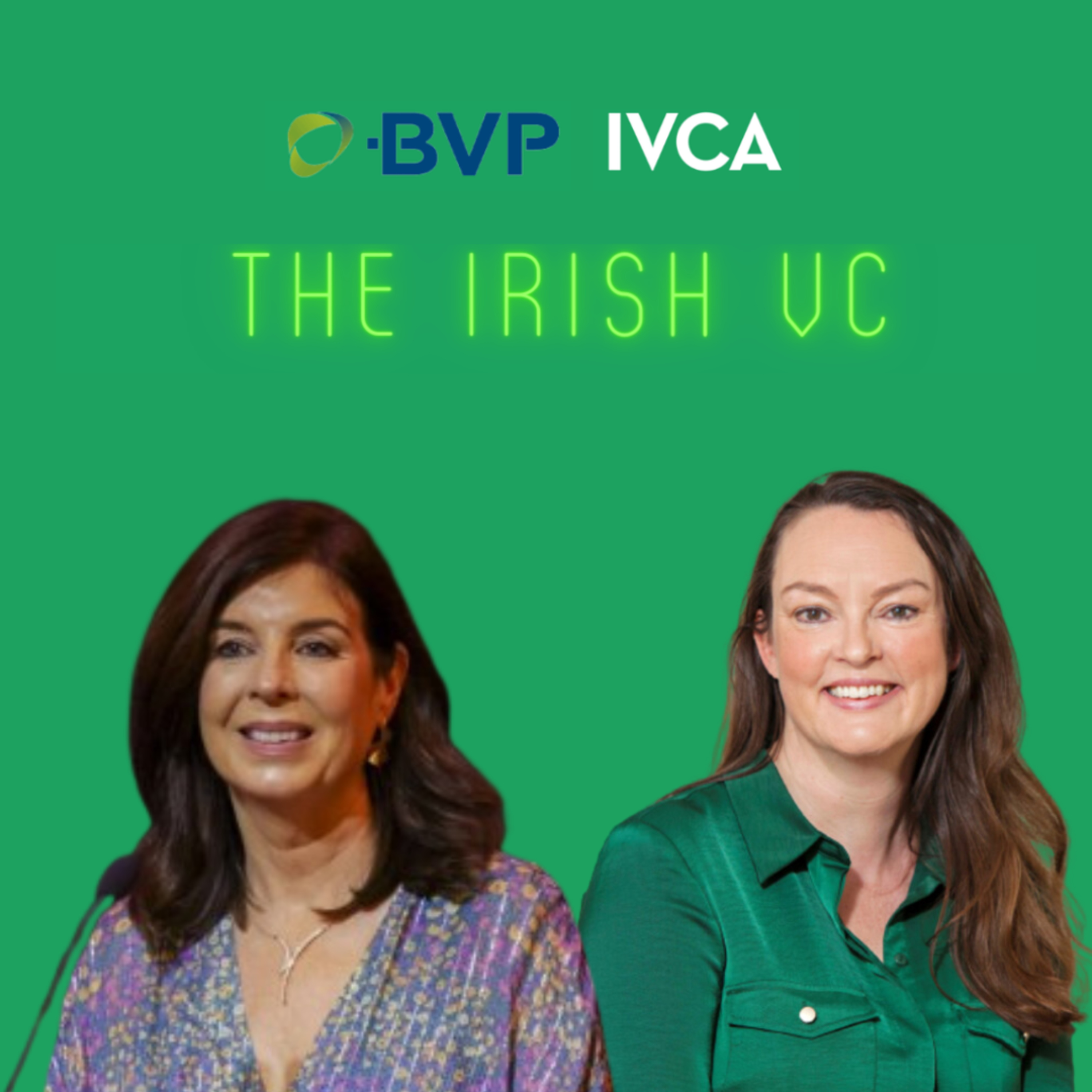
The Irish VC ep31: With Denise Sidhu, Director & Partner at Kernel Capital
from The Irish VC
27m 33s
In this interview, Denise Sedu, partner at Kernel Capital, discusses her career shift from accounting and banking to venture capital, highlighting the role of risk-taking and system innovation. She shares key lessons from two decades in the industry, stressing perseverance, market timing, and optimism, exemplified by portfolio company SwiftQ's pivot during the COVID-19 pandemic. Sedu notes challenges in the Irish venture capital landscape, including a funding gap for scaling companies and reduced institutional investment, but points to government efforts and sectors like MedTech and AI as areas of growth. She addresses difficulties faced by Irish founders, such as securing international sales expertise and capital, and advocates for greater support for women in entrepreneurship through mentorship and concrete actions. Sedu advises founders to prioritize building strong teams and solving genuine market problems, while aspiring venture capitalists should focus on cultivating unique insights and relationship-building.
[Music] Hello and welcome to this episode of the Irish VC and today I'm delighted to be joined by Denise Sedu, director and partner at Carnal Capital. By the way I said your name there, Denise, you think we'd never met, but that is clearly not true because you're a former chair of the IVCA as well as being a director and partner at Carnal Capital and I think most importantly of all a lady from Cork. Welcome Denise. Thank you, Zera Jane, delighted to be here this morning. Thank you and today's one of the things that always kind of fascinates me when I talked to people on this podcast and I talked to a lot of people who work in the industry is, as it was the varied ways that they found themselves landing up in a career in venture capital. Perhaps you could share with us a little bit your journey into a career in venture capital and what inspired you to work in this area? Indeed, so I'm a qualified accountant by profession. I started my post qualification experience in the world of trust and private banking as financial controller of Scorsia Bank in the Channel Islands and in my time with Scorsia Bank a lot of my efforts were introduced in a new banking system in the offshore branches and like that the opportunity to travel to Bahamas and came and doing that. Nice. Then lovely. Happy days to be starting to Ireland. I did a bit of traveling after Jersey and then I'm returning to Ireland. I took up my role as head of finance in Ulsterbank commercial services and that was the other end of the spectrum in jet finance but again here a lot of my role was involved in introducing new systems. So around this time the dark come boom was in full swing there was a lot of narrative around the millennium bog and I met with Nile Odin. Those innocent times and I made the decision to take leapfait to join kernel. Kernel at the time was a fledging company with big ambition and I guess you know the rest of the industry kernel has since raised over 200 million in finance and deployed that across AIC companies. Wow and it kind of sounds as though you know in choosing that career you took a risk yourself and you know it was very much like the experience of an early stage founder or an early stage company. Looking back what do you think some of the biggest lessons you've learned from both that experience and working with early stage companies has been. Goodness looking back for 20 years in venture and I somewhat up like this. First appearance beats challenge and patience is always underrated. The founders who succeed they're not always the smartest they're the ones who refuse to quit and great companies like great lives they take time to build you know and humility also matters and when we think we have the world completely figured out it changes and it proves us wrong and I guess the other thing I would add is optimism. Optimism is a strategy. People who believe the future can be better and act like it. They're usually the ones who create it and early stage companies these lessons hit home in a very practical way. Timing and real market demand. They're everything even the best technology with the strongest team can fail if the market isn't ready and where there's pure market pool, adoption accelerates, funding follows and the companies can really move faster than their competitors and a great you know a great example of all of that is one of our portfolio companies SwiftQ. Brendan K. Sam has team they built an excellent healthcare scheduling platform. They had a great team, they had a great product but the adoption was extremely slow. They never gave up on their belief and next one didn't call for Tish. Never let a good crisis go to waste. Never let a good crisis go to waste and we have all. Every one of us received a text from SwiftQ either scheduling a vaccination or a PCR test. So the SwiftQ product was instrumental in supporting mask over testing and vaccination efforts in both Ireland and the UK and in November 2021 just post pandemic the Dallas group and a global healthcare provider acquired the company providing a fantastic exit for a team and its investor base. You know so a great store showing perseverance, patience, patience and you know timing, market demand is everything. And you know that that's kind of interesting obviously COVID you know really changed things for that company. You know if you were to look and what kind of it feels as though we're living through another period of flux at the moment certainly in the last number of months if not years you know what do you think that means and how would you describe the current state of the venture capital landscape in Ireland and you know with that in mind and everything that we're seeing what sectors and trends are you kind of most excited about. My belief is the Irish French capital landscape at the moment is under a bit of pressure the IPC's venture pulse shows that Q225 which and Q2 would traditionally be a strong quarter and that was the weakest quarter in a decade. Yeah and I understand there was an 80% pullback by institutional investors given global uncertainty right now that's not fully surprising but also seed funding more than half and that's a concern because it's the earliest rounds that feed the future pipeline for scale ups. On the positive side the government has dipped up and the 2024 budget saw into price Ireland to see even venture capital skiing increased to 250 million from 2025 to 2029 however the department of enterprise itself has a third party compile a report on the gaps on the gap and the fact that Ireland has a 1.1 billion scaling finance gap for the next three to five years particularly in the three the five to 10 million deal range and that's critical missing piece for Irish scale ups and so I guess the challenges and the opportunities is to mobilize more domestic capital including pensions institutional investors to complement international funding and just as important later ensure our funds, our venture capital funds are large enough to support companies beyond seed through growth and inter global markets and keep that as companies local and Irish for as long as the work of the IBCA and yourself and the team and the council and the broader ecosystem is so important and working towards an island that can bridge that gap so we don't just produce great startups but sustainable scale. And speaking of those great startups what kind of sectors and what ones are you most excited about now even with that funding challenge which hopefully will be resolved in the near term. Goodness there's so many to choose from Bush and you know obviously AI is extremely important and exciting right now and moving a phenomenal pace but I guess the sector I'm particularly excited by in Ireland is our meta sector and that's experiencing significant advancements and that's driven by Irish companies that are reshaping diagnostics and patient care and those innovations not only enhanced diagnostic capabilities but also improve actual patient outcomes and by enabling our earlier detection and personalized treatment approaches and a couple of examples we'd have of that in our own portfolio is we have architect based here in Clark the company's objective is to create a completely new molecular detection using silicon chip technology and there has been no similar innovation since the invention of PCR in the 1980s and an abstract platform enables rapid portable generic tests outside traditional medical settings so you can imagine the impact of that innovation could be really profound and the science behind the company is really complex they have 40 patients granted and other 12 patients.
patients, patents, pending and you know a really exciting opportunity. I have another one then that would come to mind would be be secure which is very fast based and those guys are at the forefront of cardiac health technology and they have an FDA-CIRCED ECG analytical platform and that enhances diagnostic precision and operational efficiency in cardiac care and one of the big takeaways from the company's attendance at the HRX conference in Atlantic when it's very large cardiac conferences every year. So it was in our land till last week and that's that wearable technology is now becoming increasingly acceptable as keystones in the more integrated care ecosystems. So it's not about the high-job gadgets but wearables which build critical gaps in precision, context and real-time visibility especially in heart rhythm and remote monitoring. So they'd be a couple of examples that we just mean if you think about the life changing you know impact of that you know somebody being able to like monitor their own and cardiac rhythms 24/7 versus going into hospital or having a you know it's just a snapshot in time taking at any one point you know it's yeah it's kind of revolutionary but also really positive life enhancement for anybody you know with the any cardiac. And with the clarity those guys are getting you know the there's actually our land of health are now adopting a adopting a program doing a pilot of a program where they are pushing all cardiac cares onto hoop device and running, getting monitoring from there. So that's an actual health system. Yeah adopting that approach. And kind of I suppose tempered that excitement because obviously those companies that you've mentioned you know they have raised their first rounds they have products in the marketplace they've you know they've gone beyond pilots' age and they're out there gaining traction and customers but you know what are the challenges that Irish founders face maybe at an earlier stage when they're raising capital or even those guys raising capital. Yeah I guess founders in Ireland you know firstly we've benefit from a really vibrant support ecosystem between the local enterprise offices the various accelerators run around the country and to Paris Ireland there's a really strong backing for early stage companies in terms of concept funding and seed support mentorship and networks and that foundation is a real strength for art and challenge really starts when the companies move beyond that early stage. Yeah Irish market is relatively small and larger funding runs are hard to secure here and our average fee round is in the US is probably three times the size of Irish rents. So the different means Irish founders often have to stretch the resources further or look abroad much much earlier and top of that international investors who are key for scaling rounds they've put back significantly as we saw on the IVCA and that only adds to the pressure. So while we have strong sectors as I said in Medtech also FinTech, Clientech, accessing the kind of growth capital needed to complete globally, complete global globally that remains a major hurdle. Yeah and I think that's echoed in the recent scale Ireland Starship surveys you know which show I think that the number one issue for founders is raising capital and securing funding. Yeah so yeah money money money money and then aside from that if we you know think about companies in Ireland and you know we know as you were kind of outlining there that any Irish company will really have to grow outside of Ireland both in terms of funding but also the customer base probably quicker than you know comparable companies in other larger geographies. So aside from capital what else do you think is particularly challenging for Irish companies? Well if you put into perspective Ireland's population is just over five million that's a limited customer pool. Yeah if you want to build a company that grows quickly attracting investors and globally competes you'll have to look beyond Irish shores and that's why so many tech startups adopt a global first mindset from the very beginning. But Scalien nationally means dealing with compliance in different markets, navigation cultural differences and scales and completion global giants and that can be really tough for us startups and you know data often have small teams, emission budgets and very often we see founders who are technical rather than sales trained and you know so when they go out to the market buyers overseas don't know their brand, the regulations and logistics vary and international sales cycles can be very long and we're seeing them growing. So for an Irish company starting out then they start looking for an internationally focused world class talent person. That's an easy find you know if you want an accountant you can check their qualifications. Well there's no simple way to verify someone's ability to sell complex products across multiple international markets and there's very few international sales courses within the Irish academic system. Something that we've heard of we've written about and found lacking. So what look Irish startups? Yeah often I restart up they can turn those challenges and strengths they can be small and agile and they can prepare quickly. Being Irish they benefit from a strong reputation in global tech circles particularly because of the talent pipeline built around earnings role as European tech hub you know yeah but yeah that's one of the big difficulties we've seen. And I think probably it's a good point I want to have thought of you know much before in terms of you know the increased need for international sales expertise coming from a smaller market or you know like Ireland and maybe the lack of kind of academic or instruction or courses or guidance there and I think that's probably something that could make a massive difference you know so with every listening but the ability to create that kind of a course or training or instruction I think yeah that would we'd welcome that conversation. Yeah and we you know we repeatedly hear of the challenges of you go with a small Irish company who's a startup without break product or do you go to the IBM equivalent and you know it's a big risk for companies to take so there has to be a really compelling reason you have to be talking to the right level within an organization and companies need to we often it's one of the big things we would see with early stage companies as well they need to recognize when a company is gaining information of them rather than really genuinely interested Jane why are you interested in going to go to a commercial contract yeah yeah and I need to know yeah that I've heard or in conversations with founders for and those mistakes can be really costly they can be very costly they can cost six months of sales efforts and they can be very distracting yeah so for founders they need to do an approval concept it should be a paid proof of concept of large organization and it should be really really defined well and part of the doubts outcomes of that yeah excellent advice and Denise you know I know through the time when we worked together in the IVCA when you during your term as chair you know you're really strong advocate for women both in our industry and also an entrepreneurship and you know I think the the program that we had in place with Enterprise Ireland connecting female founders and female funders you know was really driven by you and your your desire to you know to enhance you know the the offering and to connect people in that space and and give them better opportunities and you know in your your time in this industry have you seen progress in in this area and you know what do you think still needs to change there's no denying progress as we made and more women are definitely definitely to shabrols or female founders are raising capital and we're seeing great visibility overall but the truth is the numbers that you know they're still far from where they need to be access to funding is still uneven networks are still largely male dominated and for me what really needs to changes too forward. Firstly, we just have to normalize.
women and leadership roles. It should no longer be a headline. It's just the norm. And secondly, I guess the entire ecosystem, investors, accelerators, boards, it has to be intentional about backing female founders and creating real pathways for them to succeed. And I always come back to diversity and entrepreneurship. It isn't just about good intentions. It's about taking concrete action. Enterprise Ireland's competitive start-up program for women founders. You know, that gives a crucial financial boost. But money isn't enough. And so again, women who take those programs, they benefit from the mentorship and the networks matter. And also somebody who's been through it, you know, speaking to somebody who's been through it, that can make all the difference to a start-up founder. Education is obviously key to all this, helps bring confidence, business skills, and culture plays a huge role. And we highlight the stories of diverse role models. Everyone starts to feel that entrepreneurship is possible for them. Yeah, so I guess for them saying when you combine all those factors, we don't just level the playing field. You know, we just will unlock a whole new way of innovation and growth. And that's the future I'm looking for from my daughter. And the world I'm hoping that she'll be in. Absolutely. And you know, if she or anybody, maybe a bit more, a bit closer to entrepreneurship was there now, but you know, as an experienced investor with lots of successes. What is the one piece? Can you distill it down to one piece of advice that you would give a founder in Ireland today? Okay, I'm going to give it just an ambitious and somewhere. I can't add to it. That's a great thing. I think two pieces of advice are will be welcome. Yeah, firstly, I would say just surround yourself with very best people you can. Full founders, advisors, early hires. And because the right team will carry true you true every pivot every setback and every opportunity to make sure you get the best people you can arrange it. And secondly, focus on solving a real problem, not just building a product. If the people truly need it or enterprise truly needs it, everything else will follow. Okay. And have you seen the growth the poll? Yeah. And have you seen you say that, you know, like with the it sounds like a, you know, a little bit of experience. Have you seen the offices where you know people go down the rabbit hole of product and maybe you don't engage enough with customers. Yeah, absolutely, but you know, again, if you've built, we've seen that many times, many times, a company will start out and the original pitch is not the product that is the end product, you know, because if you've surrounded yourself with the great people, you will pivot along the way as you're talking to your way. You know, very often we see people with some companies and that's fine. It's part of the journey and it's part of the patience and perseverance I spoke about earlier. Because, you know, companies have got to be able to finish. But, you know, I think it's going back to if there is real market, pull your problems are, you know, the logistical. It's very easy to solve. You know, it's a real one of you control money at the problem then and you will get the money because they will get on raising. Yeah, if there isn't a market, pull your going down a rabbit hole. Yeah. Yeah. So, and those furry rabbit holes are definitely to be avoided. And while we're in that kind of theme of advice, you know, the venture capital and private equity industry in Ireland is quite small. What advice would you give to anybody? You know, your background is different to others who are coming from a cantoncy coming from banking. You know, what advice would you give to anybody, either with that experience or similar experience looking to pivot to your career in equity funding or anybody kind of starting out on the journey today. I'd say to try and find a space where you have a real edge, you know, a differentiated insight is very rare and is a very valuable thing. Focus on relationships, not transactions. Your job is less about writing investment checks and more about earning the right to see great opportunities before all this do. Yeah. So if you build genuine relationships with founders, other investors and operators, that will bear fruit for you. And then very importantly, and this is the account and me coming out every time. Learn how to work, learn portfolio construction and how fun financials work because that's key to the success of the industry. Brilliant. Well, there's some excellent advice there kind of on the technical side and also on the personal and relationship side. And I think, you know, we sit around the IBCA Council or we have done in the past and it certainly rings through I think from everybody there that people will do business with people that they like and people that they have relationships with and that often Trump's. You know, a lot of other considerations. Yes, and your your reputation, you know, will proceed you. And you know, so yeah, and especially in a very small market like Ireland, small markets we have. Yeah, yeah, you you meet people, similar people in an ecosystem like this. At various different points. Well, Denise, thank you so much for your time today. Before we finish up any parting words or anything else that has occurred to you during our chat that you you haven't covered that you'd you'd like to share. No, just good luck. 10 would you just teach this podcast, especially if they're found to start you know from their journey. We chouched the community to the BC community as we've just mentioned it is a small community and everybody is more happy to talk and support companies. Brilliant. Well, listen, that's excellent advice or recording this on a on a Monday morning. So that's going to energize me and set me up nicely for a productive week. So thank you so much, Denise. Okay. Thank you, third.
Podcast Summary
Key Points:
Denise Sedu's career transition from accounting and banking to venture capital was driven by opportunities in implementing new systems, leading her to join the then-fledgling Kernel Capital, which has since raised over €200 million.
Key lessons from 20 years in venture capital include the importance of perseverance, patience, humility, optimism, and timing—emphasizing that market demand is critical, as illustrated by portfolio company SwiftQ's success during the COVID-19 pandemic.
The Irish venture capital landscape faces pressure, with a significant funding gap for scaling companies, though government initiatives like the €250 million fund from 2025 offer some support; mobilizing domestic capital is essential.
Promising sectors in Ireland include MedTech, with companies like Aranet and BeSecur making advances in diagnostics and cardiac care, and AI, though early-stage founders struggle with securing growth capital and international sales expertise.
Progress for women in venture capital and entrepreneurship is ongoing but uneven; intentional support, mentorship, and normalizing female leadership are needed to drive diversity and innovation.
Advice for founders
Summary:
In this interview, Denise Sedu, partner at Kernel Capital, discusses her career shift from accounting and banking to venture capital, highlighting the role of risk-taking and system innovation. She shares key lessons from two decades in the industry, stressing perseverance, market timing, and optimism, exemplified by portfolio company SwiftQ's pivot during the COVID-19 pandemic. Sedu notes challenges in the Irish venture capital landscape, including a funding gap for scaling companies and reduced institutional investment, but points to government efforts and sectors like MedTech and AI as areas of growth.
She addresses difficulties faced by Irish founders, such as securing international sales expertise and capital, and advocates for greater support for women in entrepreneurship through mentorship and concrete actions. Sedu advises founders to prioritize building strong teams and solving genuine market problems, while aspiring venture capitalists should focus on cultivating unique insights and relationship-building.
FAQs
Denise started as a qualified accountant, working in trust and private banking before moving into venture capital by joining Kernel, a fledgling company with big ambitions, which has since raised over €200 million.
Patience, perseverance, and optimism are crucial. Founders who refuse to quit often succeed, and timing with real market demand is everything, as even great technology can fail if the market isn't ready.
The Irish venture capital landscape is under pressure, with a significant pullback in institutional investment and a decline in seed funding, though government initiatives like the €250 million venture capital scheme from 2025 offer some positive support.
She is particularly excited about the MedTech sector, highlighting companies like Architech and BeSecure that are advancing diagnostics and patient care through innovative technologies like portable genetic tests and cardiac health wearables.
Irish founders often struggle to secure larger funding rounds domestically, as average rounds in Ireland are smaller than in the US, and they may need to seek international investors earlier, which has become more difficult with recent global pullbacks.
Irish startups face challenges in scaling internationally, including compliance across markets, cultural differences, and a lack of international sales expertise, as there are few academic courses in Ireland focused on global sales.
Chat with AI
Loading...
Pro features
Go deeper with this episode
Unlock creator-grade tools that turn any transcript into show notes and subtitle files.
 PodcastTranscript AI