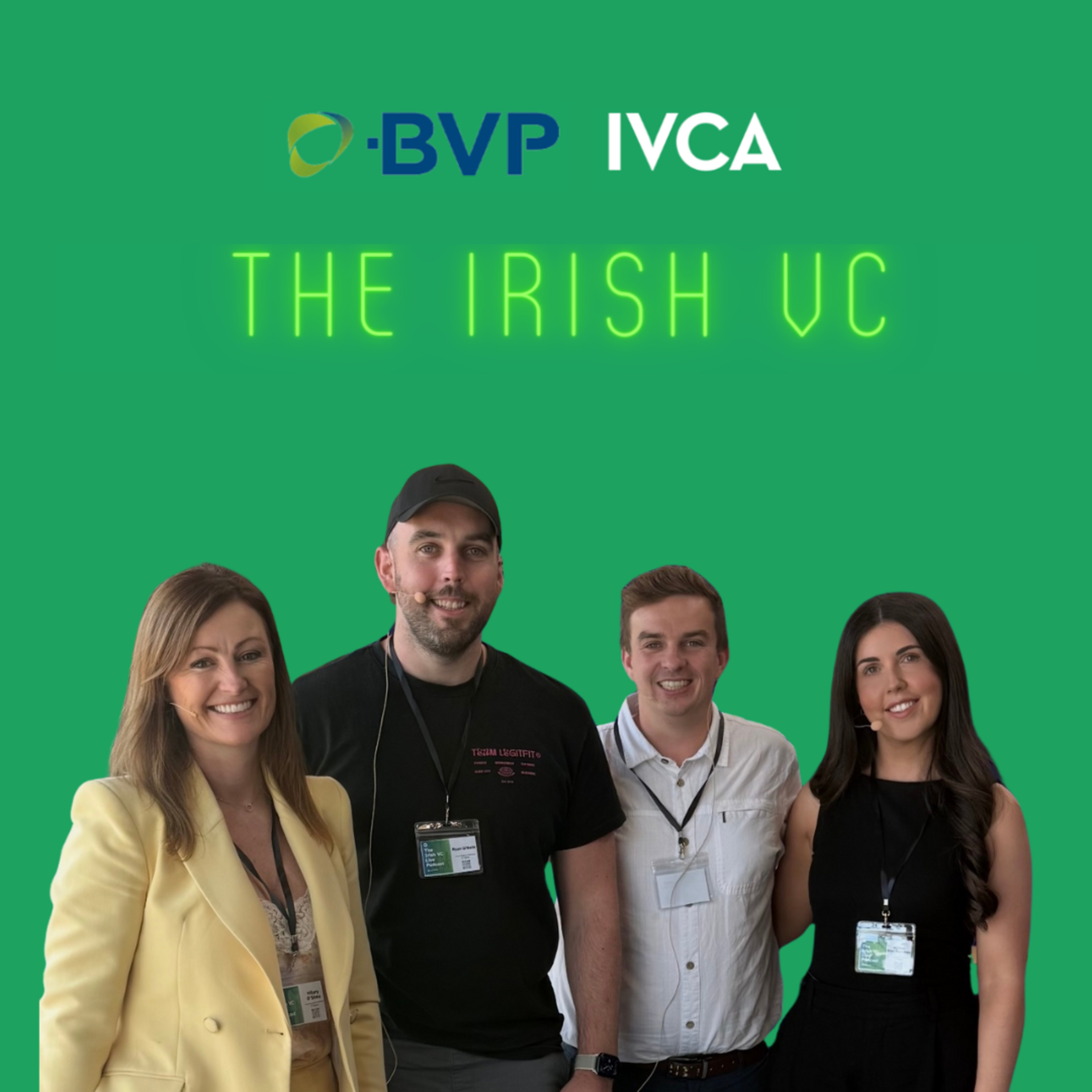
The Irish VC ep30: Branding for Start-ups! The Balancing Act - Product vs. Brand.
from The Irish VC
55m 42s
The discussion focuses on branding for startups, emphasizing that product development must come first, as a strong brand cannot salvage a bad product. Panelists agree that branding should start early by defining the company's purpose and values, which then evolve through customer feedback and storytelling. For resource-constrained startups, effective tactics include using social media for content creation, ensuring a seamless website experience, and personally engaging with customers to build trust. As companies scale globally, maintaining authentic brand narratives and leveraging cultural assets—like Ireland's reputation for friendliness and its diaspora connections—can provide competitive advantages. When seeking investment, founders should demonstrate how their brand translates into measurable business outcomes, such as lower customer acquisition costs or higher retention, and combine this with a compelling personal story to build investor confidence. Branding is seen as an ongoing process that intertwines with product development and company culture.
[MUSIC] Good afternoon, everyone here. It's Mark Farley here from HBAN. We are here for another edition of the Irish VC podcast sponsored by BBP in association with the IVCA, the Irish Transfer Capital Association. We're delighted to be down in beautiful court today on a really sunny day and have been a fantastic facility here in M.T.U. and we've got three amazing panelists here. We're going to cover the topic of branding and particularly going to delve into branding for startups and how it affects your valuation and the investment side of things as well. Without further ado, I am going to introduce the panelists here beside me. I'll go in order of closest to me here. We first have Hillary O'Shea, who's co-founder and chief corporate officer at Autonomy. They are a geographically friendly, be-corp certified outsourcing innovator, reshaping the BPO model. Then we have Rhino Neal, co-founder and CEO of legit fit, a platform empowering thousands of wellness and fitness businesses globally to build stronger communities and healthier lives. And finally, but as well as we have Alison McSweeney, founder of Brandhive, who's helped over 40. I think it's 45 now, Irish startups craft powerful brand identities. All three of our panelists are from Cork. As you can hear, I'm not from Cork. But, yes, before we hold back on the booze here, I do have my legions for Cork Boston over there, so I've played football for them. So that lets me wear the blood and bandage once or twice. And I also believe that my home band should be the real capital. So anyway, without further ado, we'll move on to some questions. So first off, I suppose, if you are in the position as a startup, how do you know if you should focusing on your brand or just initially focus on product? And basically, when is the inflection point when you know, okay, we need to be building a brand or is it right from the start? Am I start with you, Rhino? There, if that's okay. Yeah, I think product definitely is the first thing that I would focus on. But the way our team was fit, there was the technical whole founder and the non-technical co-founder being myself. So as he was writing codes, I had a different job to do, which was R&D. So we kind of, during the R&D, we were trying to learn what product to build, but we were also having these conversations calling out to Jim Warner, studio owners. So from that, we could like learn a lot about the brand. So I think it's like, you might know that you're doing it from the start, but it's kind of, you're doing both essentially, but at the end of the day, I think product comes first and then the brand pieces like the multiplier. And you can really only learn more about the brand through the product and talk into customers and getting that usage. And I suppose for context, that's a B2B. So maybe Allison, you might have a different view from the BDE work with a lot of direct consumer customers. So it is a different little bit for you. No, I would actually agree, but Ryan, I do think product needs to start first. I don't think you can outmark as a bad product. So I would start with putting all your energy and or indeed into creating a really good product and then building branding around that. And I also think when it comes to be to see you often only get one or two really first impressions with the consumer. And if they have a bad experience with your product, it's really hard to backtrack from there. It doesn't matter how good your logo is or how good your branding is. If the product is bad, the rest really doesn't matter. So I would start with product first as well. Okay, and Hillary, maybe this is slightly different, but with autonomy, you really deliberately rejected the term remote right from the start. And that's why I use the word geographically friendly. So when you were starting with so much purpose, did you really spend a lot of time emphasizing the language that you came out with and when you first launched brand and the product? Yeah, we did mark. I think it plays into maybe what you've both kind of identified. So we're in the service industry, right? So I would agree that you know that you can't focus on the look and feel or the name of your brand without actually having substance behind it. But you used I think a very good word, which was purpose, right? And to sit down and identify, you know, your purpose as a company is key, right? And that is also your brand promise. Okay, so you also mentioned autonomy where a fully remote customer outsource provider or now all around the world industry agnostic, but we did at the start sit down and we had to kind of like reconstruct or deconstruct everything we knew about an in office delivery, right? Because we are fully remote. So you would have read an article that I would have written back in early 21 to say we deliberately start using the word remote. Because it was nearly the antithesis of everything that we were trying to create in our brand, which was remote. So not being in the office is our operating model, but the company culture was key to us. So we then kind of sat around and said, right, we just need if we're going to attract great people to provide the service to great clients, we need to start using different terminology. So we began to use the terminology geographically friendly rather than remote. But I suppose now we're, you know, four and a half years into operating. We have 470 people around the world. We can confidently use the word we are a fully remote customer management provider. But I think we have built our culture around that connection around being geo-friendly. Because let's face it, at the time we set up the company, everybody said to us, you can't build a culture remotely. We felt we could and we've done so. And I suppose you're, you're a lot further than the journey than then then some startups that will be here today are here listening. So have you found that your customers have really valued your brand and like and that the brand that you stand for has made a difference in the sales process or how has that kind of worked for you? Yeah, it's worked hugely. First of all, I kind of find it funny to be the established brand because we were so lucky the new entry, you know, in the marketplace. And if you think of the market that we're in, the BPO industry, it's actually a 500 billion dollar industry globally, right? But it needs scale as well. So we had that challenge as a very unknown brand. We're still very unknown, probably globally. So we're still working on our brand. But it was key for us to attract great talent. So I think to both your points, you kind of have to work on the product or the service, but as well, your logo, your purpose, how you articulate your brand, how you describe your brand, you know, your website, all of those facets, we'll actually lead you to attract great clients. And then over the years, I suppose, very quickly, we have always done a kind of a 360 or review of what is our messaging. Do we need to change our messaging? Who's our target audience? So I don't think you ever stop working on your brand. Yeah, no, absolutely. And maybe for Alice, you might talk to me, we talked to us a little bit about at the early stages, when you have few resources, when you're so tied on money and Ryan, you might also have some ideas on this, but when you're so tied on money, how do you most effectively build a brand? What can you do? Both in the branding and the marketing side that still catches people's eye or what are the best strategies there? Yeah, I think we're living in a world now that's sort of made that easier with the rise of social media and a lot of those platforms in the sense that, you know, with very little budget, you can create content and get your messaging and your product out to a wide audience. So I would definitely start to make sure your comfortable and camera I'm constantly pushing founders to push out content and get their messaging out. But the one thing I will always say to customers or to clients, sorry, is make sure they have a really good website or app or whatever their platform is if they're sending people to because sometimes people put a lot of money into marketing or branding to start with. And then they're sending their customers to something that's not fully ready. So I would focus if you have limited budget on website to start with making sure that customer journey is really easy. Navigations really easy to check out and then put all the rest of your time into content and really push out messaging and once you start making money back in, you can then, you know, start investing back into branding and some more marketing materials. Ryan, what was kind of effective for you at the start? We had a really limited budget. So what was effective for us is we'd be on all the threads, the Facebook groups and just keeping our ears to the ground and then like the most affordable thing we could do is actually just our own time. So I ended up moving off the Dublin for nine months and I was living with the older woman just to keep her and I was driving around the M50 pretty much like morning till night, knocking on doors and we were kind of videoing a lot of the journey and like of calling into customers. And even if they weren't there, we were taking a photo and sending it to them on Instagram saying I called in and we did that well, let's call it emergency strategy push. It was to just get out there and to be in front of people, but also to kind of learn and one of the things we learned that's like we're in a noisy enough space.
And one of the things we learned that competitors were really letting down customers on was service and being a person you could kind of Like you could actually chat to from a human perspective and the fact that we were doing that in the first place and documenting that journey The businesses kind of felt like all these these guys really actually get us. They're willing to spend time What else they're actually about the service piece and we just kept leaning into that more and more and more and I think Yeah, just looking back like I think that served us really well to kind of build that brand because we we all came from family businesses Well, me my two co-founders So we had that kind of appreciation and we told that story is like we're here to Like my family is a independent shop for us competing against the super values and not the world So we were kind of like we're helping you compete against the big box gyms and that kind of stuff Which I think they could really like we were never gonna we didn't have the money in the first place But even if we went and spent laws of marketing budgets we we couldn't outspend competitors But we could out trust them and that's what we kind of focused on was building that story How did that work then when you start to expand globally you Beyond the M50 You know you can't be knocking on all doors trying to get them with a cork charm. Yeah, so How do you kind of scale that brand of that and and and make sure that it resonates that you are trustworthy customer first company? Yeah, and this is like is really good question because this is something that we were like conscious of already days And it was also because we were chatting to investors and that kind of stuff and they kept bringing up about the fact that you can't knock on every door in Ireland for 200 300 quits ass fee so what we decided to do was like kind of We knew people loved this idea. It was we actually moved over to the UK myself my co-founder and we hired a full-time videographer and instead of me knocking on a hundred doors We brought a videographer and we knocked on five doors during one like one week and got it done and then fed that out into the the ether of social and It's still and we had like we brought in these other initiatives and like we had our own Facebook group But it still brought this whole community feel to things and that we were like We're at all the events. We were still seemed like we were knocking on every door in the UK So that's kind of you were still accessible. Yeah exactly and like that's Again, it was we were accessible in the sense of from a support and service level But we couldn't like make the Unique and homics work for that So we had to portray that in a slightly different way and we we just did it in the US as well. We called into Three gyms in New York and two in Chicago So again, we're starting to create that narrative over there of like we're on the ground We're hustling because we genuinely are But at the same time it just yeah creates this really nice story that's like we're selling to business owners And they know how hard it is as well. So they appreciate And trust kind of what we what we do and what we stick to And Hillary to talk about that and expanding globally and I'm going to I think Quaker than ever go off script on the questions I'm saying so Just just bringing me there to a little bit of like brand Ireland and and In free for you guys has it helped Being like we're from we're from Ireland. Is it still seen as you know? I know spent a lot of time in the US. There is still a little apigar at you know the the the we Irish lads, you know sort of thing But did Has it helped you being you know where Irish were known as the friendliest people? Well, has that been integral to your brand or is it just we could be doing this anywhere and it doesn't matter No, it's actually key to our brand And so I think it's everybody knows here like Ireland has a you know huge track record And obviously, you know, we've attracted FDI for you know quite some time and I think now is actually the time to Dig deep and support all the entrepreneurs and upcoming entrepreneurs that we have And just widen that kind of emphasis but in terms of I suppose our business Technical support customer support brand management You know, we we recruit to last for for for ladder companies And we identify you know expert talent in operations and various other areas And but that Irish Irishness is key And I think as well we've also identified other entities other countries around the world that actually can match that So if you think of a lot of our customers wearable tech providers facility management providers e-commerce sass customer service technical support has moved now to a more advanced stage AI has taken and we've always had AI in customer management contact centers, but is now taking transactional We actually embrace that what we're providing is higher value premium customer support With AI, but you also I suppose need that that cultural ability to act independently so the job of the agent is now getting more complex In Ireland I think because of our educational system. I think because of the way we are in the way we relate we're very confident We're able to make those decisions We have a lot of people in Portugal. We have a lot of people in North America People in Japan. We're actually opening up in Colombia and we're finding that those Environments were getting great people who have those analytical skills And other areas of the world I'm not sure are as comfortable so I think it's a huge superpower Yeah, I mean like we see it the whole time and there's we have a lot of engagement We have a lot of international investors looking to invest in Ireland because of the Pedagre of talent I suppose coming out of get of here as well I listen I might just ask you on the direct consumer side and I Is there anything that brand Ireland or that works for like the You know that works like are we known for food and beverage? Are we know is there anything like that that is that that you can really into or that you have had to Really lean into well, I think that the main benefit for I think you called a team Ireland or brand Ireland is that we have so many Irish people living abroad So there's I think the last time I checked is 60 million Irish or claimed Irish in America And I don't know what the numbers are in UK and Australia, but The Irish in America and I'm sure I know you've sent out a time in America too. So you'll agree They feel a really strong passionate attachment to Ireland And so when Irish brands go to the US even their great grandmother might be Irish And they're getting behind that brand because they feel attached to the story and They've never visited Ireland But they like the story of the products coming from there and you can see it in the way that Americans are attached to like Kerry gold or Guinness or Jameson and you know when you go into any grocery store in the US like they're all using Kerry gold So I think absolutely that's played a huge part in it And I think that's why a lot of Irish brands when they're looking to international expansion the first place They go is the UK because it's our neighbours. It's easiest to get to and then after that They hit the US and that's not by I always think you know as part of an EU country with an open border Like why don't Irish brands go to France spain Italy ahead of the US But actually the US is an easier market to get to English speaking and so many Irish people over there. So yeah, it's definitely a benefit a lot of Irish brands that I've worked with Really and so I might just pivot a little bit and talk about branding in terms of investments We know there's going to be a lot of startups on this on this and both investors and And founders listening so For yourself Ryan. Did you feel that like that you could value that you could put a value on the brand when you were going A to raise was it too early the first time or and and did you feel that Your brand made a difference whether that's brand Ryan and and you know and Ryan TM or whatever you want to I want to say if your own personal brand is a founder or or or for legit fit was it something that investors valued and and If so how did you portray that to them? Yeah, I think And we learned a lot in In tech stars about like the importance of storytelling and The mistake we kind of made a lot of the characters with investors we go and build a deck first and then here's slide one to ten and just blah blah but Like firstly, I feel especially in the early stage They want to trust you as a person and they want to know what your like what's your background? What's your story? Are you well you in this way this market? What like what's your understanding and whether there's an element of personal brand that kind of crosses over into the into the business brand side of things there And But I think yeah firstly The branding shows your understanding of the market I feel so Like that's really important that you can kind of show that to investors like this is what we understand but then at the same time they're not just going to invest in that And And my story they want to see what are the underlying metrics that are proving this um This brand is not just strong on the superficially so uh it like it should tie back to almost like your Kp. I like keep performance indicators so If we can show like okay look Over half the businesses that are coming to us are coming from competitors and they're saying it's because of Uh customer service or sleekness and this is why our branding isn't this way and that's why we have lower class of acquisition And that kind of stuff it just needs to kind of almost work together. It can't simply just be like our brand is value that x It has to be it's like with strong because of these metrics that we're seeing
underneath all this essentially. - And that's bringing in the customers. You almost can attribute some of the revenue to saying, this is our brand bringing the same to track. - Yeah. - Okay. Yeah, that makes a lot of sense. Hillary, would you sing the same? I know you raised money. Was it a factor in the raise? - Yeah, I mean, I'd agree entirely, but what Ryan is saying there, like the brand, the company's brand and the founders are inextricably linked, I suppose. They're also totally linked when you go to the banks as well for funding, which is another thing that you learn, I suppose, on the journey of being an entrepreneur. Obviously, autonomy, aid and an I were married. We have that further complication, but as co-founders, we're part of the EOI entrepreneur of the year program. And I've heard you why you say previous to us being part of the program, that obviously you can value your company and your revenue, your turnover, your beta. But also then that the brand has a multiplying factor. So I'm not sure, Elliot or BBB might be best to advise, is there a figure around that? But it's certainly a contributory factor, absolutely. - My self-analysen, we took the train then together, so we were chatting about this, actually, and we were talking about one of the ways that an early founder valued it was, they looked at the influencers that they had connections to, that would do a free post for them in return for product. And just started valuing, well, how much would that have cost if I had to pay for that? And that was just their first, these guys were two, three weeks into business, and that was the first thing that they go, oh, actually, we're worth more than we think, at the time they thought they were nothing. So, Elliot and I suppose you work with a lot of companies that are trying to raise, and do you think that they effectively in Ireland use marketing or branding, or could they be doing it better as a vehicle to get more attention to raise or? - Yeah, well, I think when it comes to commercial brands, branding is everything in terms of value when you're looking to either sell your business or our scalet. It's the reason why, you know, if you're thinking about Cadbury versus a generic chocolate bar from Needle, and why if you go into a shop, you're gonna automatically go for Cadbury or Nestle over another brand. And it's because they've built such a identity around the brand that people often stick to. But one example that comes to mind, and it was one of the very first brands I worked with, which was fourth arc. It's a very popular brand in Ireland, and it was one of the very first I worked with, and they are, their products are higher priced, so their hoodies are like 80 euros, sweatshirt, 60 euros, and the quality is very much the same as other brands you can get on the market for a lower price point. And I remember looking back, thinking like, and I think they've crossed a million orders now, and why customers are buying such high volumes of this brand is actually, yes, it's about the product and the product is good quality, but it's the brand identity, and it's the founder Rosie Connelly, who's one of Ireland's biggest influencers, and it's the content they put out, and the storytelling around their content, it's the models, it's the photography, it's the videography, it's the branding, and that's what people are proud to wear when they're out, they're proud to wear that brand because it's so well-known now, and more so than a primary or a done story, so that goes with any label, that that logo or that branding identity is what carries the value, and I think when someone is selling their business or looking for investment, you really have to look at the community that they've built around it, and that's, in my opinion, that's where the value is more so than the product as well. - And now to go to the bad side, or the bad stories, the mistakes, and everything on that side of things. Is there been any, you know, we've got a lot of founders here that are probably going to start their first step, so is there any pitfalls that you've seen founders go into when it comes to branding that you're like, right from the start, do this, avoid that, do this, is there anything on that side of this? - Yeah, trade marks. You have to trade mark your business name or any important information that you wanna hold onto. I've had businesses who are about to press the green light on production, and you know, go into production line of thousands of units, and I'm like, have you trade marked your name? And I'm thinking that name is very generic, I'd be surprised if it was free, and they go to check and it's gone, and it's gone in the UK, or it's gone in Europe, as someone else has it. And that stops the pitfall down the line when you try to go to the UK, and you can trade there, 'cause someone else has that name. So, and then you have to rebrand two years in, and that's a very expensive and a very big lesson to have to undo two years of brand awareness on a market and to have to go reverse it. So I would say look into the trade marks and make sure you're crossing your teeth before you go to production, that's a very clear one from the get go, that would try to avoid. Burger King Mr. Trick there, then they would approach hungry jacks. - Yeah, hungry jacks in Australia, pennies, primaric in the yet, there's TJ Max, TK Max, there's a lot of them all right, yeah. And is there any from your journey that you're gone, oh my God, I can't believe I did that. No mistakes, only learnings. - Yes, of course. I think we were, well, we nearly called it broccoli. - Oh, yeah, yeah. - We literally have a photo of the board that we were writing down potential names and it was nearly broccoli 'cause it was like apple and apple, it was pretty big right. So, it was something fitness related. So we nearly did that, no, but I think maybe just, not to be too fresh, like obviously you have like the purpose and the mission vision that piece and that was the one way, but not to be too precious about the little things. Like the logo, the color scheme, we had dark, dark black at this dirt. Like, and we had sharp, I'm not wearing the logo on our butt, we had sharp edges on everything and I remember we got some feedback early days from people and they were like, it's a bit masculine, it's a bit too, and there's three male co-founders and we didn't really kind of, we didn't kind of take note of that. But we were gathering the data, which was the most important thing. And I think that's probably the biggest advice is like don't be fixate on and listen to everybody's opinion and then try to get enough statistical significance towards one thing and we ends up bringing in a, when we're in the Rubicon actually, we had a designer part time student come in and they ended up working on the color scheme funds and like changed just and went to all white and this pink color that we have and made the sharp edges. He was French and he said, I made it curvy. (laughing) The most French thing I heard. And yeah, so I was like, I think we made, but I think we were kind of open to listening to people so much that we were able to just keep iterating and keep learning and like, you know, even, I had one email last week with some automations running in the background to get feedback from people who don't end up saying to legit fit and they just thought legit fit sounds more fit than what they were doing. So it's always something that we're still thinking about plus, yeah. So. - Interesting, I suppose it's maybe not shocking that diversity and inclusion seems to matter although it tends to be pulling away from that and in some days, but we see it the whole time, bringing in a female investor or an investor, you know, from a minority or just a different country to come in with a different perspective and tell you, actually, that means, you know, those letters mean something different in France, you know, it can be really important. So maybe on that and the D and I side of things, I suppose, and Hillary, you know, you are obviously a mentioned B Corp since 2023 and has that certificate and having that kind of influence both your brand messaging and also positioning and help with sales as well. - Yeah, it has. It really has actually. So for those, maybe who don't know what B Corp stands for, it's a benefit corporation. So B Corp is a global certificate that attests that you run your business to the highest, I suppose social governance and environmental standards. It's like an audit, but as opposed to an ISO or other audits, it audits the whole part of your business. So, you know, through kind of five pillars. So your governance structure, how you treat your customers, how you treat your employees, how you treat your suppliers, how you treat the planet. So it's funny though, because we never actually went for us in terms of all we want, you know, letters after our name or a cert. We found a autonomy with three pillars, people, partners and the community, and then we happened to stumble upon B Corp in 2021. There are only 10,000 companies and globally we have the certification. We're one of the few in our industry, and it's a vigorous process to get it. But I suppose what it has done is it mirrored our founding values. We since built out our company values with all our team, which is really important. But it's a marker externally for employees looking at your company to say, okay, I now have a view how this company is run. It's also a market for a marker for suppliers. There are still people around the world who are concerned about sustainability and it is a high priority of theirs, even though it's not so much now in the US. But it does give clients, suppliers and employees, you know, a view into how the company is run. And we would say it's kind of integrity across all those areas and we say in decision making as well, a lot of companies might do it, but just pull up a chair, have the client in one chair, You know, have faith.
the planet, I have your investor in the other chair because you have to listen to all your stakeholders. You know, you can't over swing in any one direction. It's fascinating. I've looked into it and I know it's not it's no mean feat getting a B-corp, so I'm cute congratulations on that. Thanks. And you can lose it as well. Like you have to re-certify every three years and you know, if you don't, you have to hit a minimum requirement and if you don't hit that, well then you lose your certification. So it's a program of innovation actually. It's like any process, it's not just a stamp. And anyone I suppose who's listening, especially the M2U students here, if you want to learn more about it, I think we have a new guest lecture potentially go top top. Doing a little bit of it this interview. Doing a bit of it, Alison is going to be doing some guest lecturing on B-corp, so if you want to learn more about that, definitely talk to Alison about that afterwards. But you brought up a good point there, Hillary, around that we haven't really touched on, which is around employee and recruitment in terms of how your brand affects that. And I suppose one to talk about from your point of view how much it has affected that, and then maybe go on to talk about it to our other panelists about it as well. So yeah, I suppose how have you been seeing it both from yourselves when you're recruiting and then also for your customers? Yeah, so like for us it was key to get great people and we're still in the business of attracting great talent now across the world. So obviously for us, it was really key that we get the brand out there and have a great brand and actually one of the things on the mistakes or the advice or and you're correct, they're kind of two sides of the same coin because you really do learn from from the mistakes and kind of carry them forward. But one thing we did was get a brand, just somebody to I suppose to do a brand sprint with us, right, which was really it saved us. I think a lot of time at the very beginning and we're probably older entrepreneurs and we purpose built this company. We wanted to construct it fast. So we did that brand sprint. It was really helpful. But along our branding journey, we went very much in the early kind of 2021, 22 into the audiences, the people, right, the employee to your point because we needed to attract them. I know we opened in Portugal. We set up an entity there in May 21 and our first team members in Portugal actually set us, we thought this company was a hoax because it was kind of a bit too good to be true. Now I keep saying in inductions like we're not selling utopia here, it's a company and we're always that, you know, we're always innovating and insurating. But our focus on employees was, I suppose, particular to our brand because what we focus on on a day-to-day basis is the employee experience. So we recognized that in the previous industries and in bricks and mortar, BPO's, that was actually the challenge. Like the buildings were lovely. They'd fabulous cantines. They'd load the discobels. The actual environment. But the challenge was for employees in their day-to-day life. So I suppose we flipped us from what works looks like to what it feels like to work in a company. So we still have that focus on our brand. No, obviously then as a company grows and you're trying to attract clients, you're an Irish company trying to attract clients in the US or in Asia, you have to kind of recalibrate and actually look on your website and your messaging and say, "Right, you know, is this focus to the target, the sales target, as well as the employee?" So I think that's just the journey of a brand. Yeah, I mean like you're basically telling me that it doesn't matter how many ping pong tables you have in the office if you don't have maternity leave or don't, arrange a nice place to work for. Yeah. So I suppose that is our USB. That's how we've differentiated ourselves in a very crowded and kind of a market with very large players. Yeah, very interesting. Ryan, has it been the same for you guys when building the brand that you had people coming looking to you? Was that, you know, where people are applying for jobs via Instagram because you're talking about who activity or and that? Yeah, I think the lucky thing is, well, lucky, we're in fitness and health and wellness and people really, like in the last 10 years, they love that it's a parent of a lot of people's lives. So like we put up a job role and we'll get 500 applicants within a week for that job because a lot of people's story is something related to wellness or like might be mental wellbeing or physical wellbeing. And then I think like we on our, we don't have like job posts, it's like a notion page and it's kind of, it's built in a certain way that shows this is going to be an impact role and it's got like this is where we are, this is what we're shooting for and I think the people that we're working with, we're directly working with these business owners and I don't want to sound cheesy here but we're genuinely changing their lives. And we make that clear to kind of everybody in the team and externally as well, like the average business is growing by 70% to near one with us, which is massive because they're getting that extra revenue for the business or outside the business. And I think the fact that we're doing that for them and then they're changing other people's lives when people are coming into to kind of do phase ones, phase two, some we're kind of talking about our story, that really kind of is something that inspires people and drives people to kind of want to be part of that journey and yeah, just kind of helping the the world essentially again going very cheesy, but genuinely it is. Yeah, I'll be interesting to see if we could hyper that a collect to see if we'd be still getting those five hundred applications if you were broccoli. Maybe, maybe not. We have a bit if we've a few minutes left. So I wanted to go on and do some maybe kind of rapid fire questions, but one thing in particular and I wanted to talk about is what two brands are most exciting to you right now. And I'm going to take one Irish, one non Irish. What's what are they doing? Why is it incredibly exciting? And yeah, well, so maybe Allison will start with you. Yeah, so similar to Ryan, I'm really interested in the personally and professionally in the health and wellness space. I think it's a massively booming sector and you can see, you know, I always like a trends with the US, the UK, Ireland comes after and when it comes to the US, the big market over there is like health drinks supplements and so speaking on Irish and international, I suppose speaking locally first, a brand in Ireland called Femfuels. There are a so Irish supplement brand that specifically make supplements for women who are into the gym. So protein, BCAAs, pre workouts, creating and they've really done a lot of focus on education on why women should be taking these things and encouraging women to strength train, for example. And they've had massive amounts of growth over the last five years. They're now stuck in Aldi's nationwide. I think I don't even know how many structures they have, but it must be up near five hundred and they relatively small team, female founder and I just think she's amazing. I think the community they've built around it, obviously everyone knows when it comes to fitness or anything in wellness. People strive to be part of a community when either in the gym or the rise of the run clubs or they get behind brands when it comes to physical activity and being involved and Kylie's done a really amazing job at building a community around her brand who then also use her products and I just think she's done an amazing job of it. Yeah, I met my Kylie brilliant and when I first met her and I met Will, her brother and co-founder as well and I was going, oh, you know, this is fitness. I was 17, 18, so I'd know, it's not maybe five, five, six all airlines playing her, her link for Limerick. But it's not, it was, it was all, it was all built and you know, like it was all built with Kylie's brand and everything. So they're yeah, their fantastic band is really interesting. I actually was wondering what they'd be mentioned because it's someone that I always think it really stands out on the shelves as well. Well, they were also a client at one point, so I'm a little biased, but no, I just think they're phenomenal and the way Kylie thinks about activations and campaigns whenever I see them roll out on socials, she's so on the pulse, like she knows her audience is Gen Z and young millennials and she's so on the pulse with the way she delivers content and messaging, like she knows exactly who her customers and she's speaking to that customer. And then from an international perspective, I think the wellness drink industry is just about to absolutely boom internationally. Like I'm, I spend a lot of time in the US and over there I find a fascinating that you, well, when I say the US, New York and New York is very much polished in any way, but everyone over there is drinking poppy, Ali pop and all these, you know, probiotic drinks and it's really taken the traditional soda market by storm and, you know, you're looking at walking into any of the big grocery markets and there's just shelves and shelves of these drinks and they're all competing with each other and I've seen a drink recently, you know, on our side in the UK called Living Things and someone mentioned them to me like a couple of months ago and I remember like interesting and ever since then, every week I'm seeing them pop up somewhere new. They're in cafes all over Dublin, they're in retailers and I'm seeing people out in a bag which like on their lunch break and they're all drinking it and I just think, you know, the way the world's going and everyone has more awareness of supplements and health and health drinks. I think that Living Things branch in the UK is one to watch for sure. Yeah, fascinating. I suppose that's
because good for you, Ryan and the health. - Oh, here. I was hoping she was gonna say legit, that's okay. - Yeah, so is there anyone I suppose, other than yourselves, Ryan, that you are really excited about our interests. - Lee, I'm so focused on our American friends that are looking at our just the ones around us. But lovable, I think what they're, it's more just about the technology and what I give for that back in the day. It's really exciting what they're doing. Locally, I would always usually say, can I gym plus coffee? 'Cause I think they just did marketing right. They like the community events, even like looking at some of their posts today, they're really the authenticity, they're really standing behind us. It's cool to see. But I'll give one more to Ireland just to outweigh the international's. There's a guy in Clark, and he's running this thing called carrot communities. I've only come across him recently. And it's basically like these wellness meetups and he just organizes like one or two a month and goes into paddle places or goes in with yoga studios and goes around to, but I think like that type of like third space idea, people aren't really going as much to pubs as they used to be or mass as they used to be. There needs to be this third space where people meet up, can interact, and find love, all that kind of stuff. But I think those types of brands are really, really interesting. - Yeah, absolutely. I think that's one that's helping the explosion of paddle and places like that, something that's accessible. Absolutely. And we really have as a sauce society just become so much more fitness influenced. And like we had a company come into us, wanderer Jellies, they're doing protein Jellies. Like who'd have thought, you know, to protein Jellies is, I know, 10 years ago, even like what are you talking about? But they're patient, they're good. Hillary got about you. - Yeah, just some treat to the conversation. I love hearing about these new, often coming brands. Like for me, kind of two stick out actually. I have to give a mention to the IRFU actually and their campaign with women's rugby. I just saw recently it's called the Green Wave. And I really feel that they are kind of reframing or rechariting, I suppose we have a host full of rugby players. And I thought that was really, really positive to see in something homegrown. Another brand and I just, I love the brand and I love the founders. The brand is a new company and the founder is on your Kennedy. She's on the O.I. program with us. But the reason that I love her is she's just so different to my experience. She's 1.5 million followers on TikTok. Like I'm sorry, but you'll never find me on TikTok. I just, I mean, I think that ship has just sailed for me, you know. - It's never too late. - Maybe with your head say, never in the relationship. - Never in the relationship. - Never too late. But look, I just, I really admire, you mentioned it earlier on. There are other ways to build your brand. You know, their youth has a great, I suppose, way of harnessing kind of support and I love seeing young founders. I love seeing female founders and male. But I think it's really exciting for Ireland to one of your other previous points. - Yeah, I think in sports, we're seeing it in a good place. I know in the rec some documentary in the league of Ireland, the women's teams are properly now being promoted equally and it's finally getting to a place where, you know, I of course help by Kaden and Kabe, but the likes of that that are really driving it on. And for us, probably also good that the men's team aren't doing great. And the, on the gas side, it's probably not so good that the G.A. just have been absolutely brilliant the men's football has been brilliant the last few years. I know the women are gone, well, maybe we need to implement two pointers or something. But I suppose just to wrap up then in terms of what does, for you, now you're saying that would you go, would you maybe thinking, actually, maybe we need to hire someone to do social media, like, you know, the younger person, the Gen Z, someone in the audience, you know, from the empty you. - Yeah, and that's exactly what we have done. - Absolutely. So you have to. So like we have now over the last, over the last two years, a very slowly built out are a marketing team. And you do need to bring in new people and, you know, a different way to see it. And you still then, you have to know, I think, what your brand messaging is, though, I think you do need to identify what is the voice of your brand. And voices can be very different. So ours is probably because it's service more. It's a, it's probably the most unsexiest business in the world, but at the same time, you know, we are managing kind of global complex operations. So our brand voice has to reflect that. I think, Alison, that's probably where you come in that you might sit down with young founders, early stage founders and identify, like, what's the best route to market? What, where, you know, if I have X among 2000s, what's the best use I can put to it, you know? So I put that too. So yeah, like I think every brand needs to just invest on a vest more than their market. And for you guys, then, is it the case of, like, you know, you were straight up, you were talking my Facebook groups being early on to that, all of that. And I've been calling all the students here, Janzees, they're actually probably younger than that. They're in new generation again. It's what it's down Macaron or something. I don't know. There's something else I can't remember what it is. But so if you, do you find it hard to keep up with the trends for your businesses to be like, oh, well, actually nobody's watching TikTok anymore. They're on to, I don't know, something else. Is that something you've had to struggle with or? I, one of the terms that young people use now is they're chronically online. And that's definitely me because it's part of my job. So I feel like I'm here to the ground all the time with what people you'd hate to see my screen time on TikTok and Instagram and any of those apps because it's just outrageous. But yeah, I'm always kind of listening to what everyone's talking about. And again, I spend a lot of time looking at the US and the UK. And I also think depending on what business you're in, you know, the great thing about the algorithm is it will feed you what you want to know. So like I'm constantly looking at the US and the UK. So when I open up my phone, I feel like I'm fed the trends. And I'm fed what I need to know all the time. One thing just to touch on that I always say to brands when it comes to marketing is go where your customer is. Like I often have young founders say to me, we want to do an article in the business post. Or we want to do an article in the Irish Independent and they've a Gen Z audience. And they want to spend money on taking out this editorial piece in the Irish Independent. And I'm thinking, what's this for? Because your customer is not reading the Irish Independent. They're on TikTok. And so you need to be working with an influencer like Sophie Mary or Charline Murphy or something like that. So really figure out who your demographic is and put your spend there and put your time and focus there. You know, obviously if you're looking for investment, maybe go to the Irish Independent and the business folks because that's probably where investors are. But yeah, I would really narrow down who your customer is and go where they are, speak their language and pump out content that really engages them. And even if it's cringy and you know, you have founders who are in their authorities and their customer demographic is Gen Z and they don't want to be dancing on TikTok. Although Hillary, maybe I might get you dancing on TikTok. But I challenge you to another Alison who owns as the founder of Poppy, one of the biggest, I think it was the fastest growing company in the US. She just sold for just under two million a company that was three years old. And she's, I think she's told us to 40 now and she's two kids and she was one of the very first businesses on TikTok in the US during the pandemic when it exploded and she said that everyone was teasing her because she was dancing on TikTok. But she's just sold her business for nearly under two million. So you know, she knew that that younger generation were gonna engage in that content and they were the ones who were engaging with, you know, health and wellness and who were the ones who were the new generation coming onto the soda market and she wanted to catch them before they became like Coca-Cola Pepsi customers. So she had no problem dancing on TikTok and they paid off. So I think, yeah, go where your customers are and speak their language and that's just the best way to scale your business. - Funny, it reminds me of, I don't know if this happened to you guys, but Bank of Ireland came into us when we were like in TY and they all gave us a can of Coke and a bag of crisps if we signed up for Bank of Ireland bank accounts because on average, you don't change it out of your bank account. I think it was worth like 30 grand per signup because that's probably end up getting your mortgage with. So it is crazy how effectively you can very cheaply market. That's sometimes, Ryan, I suppose on your side have you seen that have you had to pivot from going, oh, we used to be doing influencers that were doing this now we're going younger or changing or? - We're definitely doing a lot more of that. During the storytelling I said where it was like us flugging and it wasn't quite like we brought in that video for him. We're definitely doing that story. Like if you look at our YouTube or the content we have on the vlog is like it could be on Netflix, like it's insane. So like we're in a kind of location that we fired really great people and they're really ear to the ground. I'm still on Facebook groups and I'm looking at them and I'm subscribed to all these newsletters and taking part in different podcasts and that kind of stuff because I know that a lot of the gym owners are kind of listening to podcasts in their downtime or drives and that kind of stuff. So we haven't pivoted hugely but yeah, I've also dressed up as a leprechaun for an event. You know, so like I'm willing to dance on TikTok. - Oh yeah. - Because we're about to, like we're kind of like, you know, this is the idea of the lads of the road that are easy content.
we're about having a like executing for sure, but having a bit of fun as well at the end time. So like when the Viraug for ease, we're meeting up in London now in two weeks time and we're going to an event and then we're actually doing six customer callouts. And as soon as I'm in front of the camera, like I'm his monkey, like it's like, well my parents used to say is you put on your shop face, yeah, no matter what's going on in your life, but on your shop face. So yeah, yeah, I'm well up for that kind of stuff. - That's brilliant, but I'm not a shop face. And for a final word, just on everyone, if you could give in a sentence or two, what would be the, if you're starting a company now tomorrow, what would be the most important thing to focus on from a branding point of view? Yeah, and I suppose along your journey, what is the best piece of advice you can give? Whether they're starting or they're a few months in. - So I think I'll go back to my original answer, which was to build an amazing website. We're living in a world now that's saturated with product, saturated with brands. And I think the last stat that I read was that a consumer needs to see something 20 times before they convert to buying it. So they need to see it on Instagram, TikTok, get an email about it, see a friend using it, word of mouth, whatever it is. And the worst thing you can do then is not have your website set off for an easy navigation. You're a customer needs to go onto the website and it needs to be really clear what your business is, what you're about, really strong imagery and videography. And just a really easy checkout process, obviously Shopify is the main service provider there and they make it really easy. So I would just not, just make sure everything's set off on the backend because if it's not easy to check out, the customer will leave and it's harder to get them back again. So I would say the customer journey through the website is really important to get through, to get right to the stars. We had a client very early on, a very popular client launch. And on the day, their website crashed and they were two hours into launch and 2000 extra orders went through that branch there, stockwise, and we had to refund the customers. And it was a simple glitch on the backend that hadn't been set up with their fulfillment center. And that reputational damage was so hard to undo. So I would just, again, cross your T's, same as trade marketing, just make sure all the basics are right before you launch. And the marketing afterwards, free marketing, content and stuff like that, that's why we'll go to next. Right. I think aligning it with your passion and who you are, there's no point in going into America because there's money in and see, oh, yeah, I'll be this person for these type of people unless you deeply are passionate about the brand and what you stand for because for any early stage founders, it's like, this is a game of resilience a lot of the time. And if you're waking up in the morning and being someone that you're not, you're not going to continue doing it. So you have to kind of almost, you know, like you were saying earlier, you're a part of the, you're intrinsically linked. So like you almost have to be happy that this is what's, is kind of internal to you as well. That would be kind of my thing. I'll tent this. Yeah, it's going to say it. Yeah, yeah, yeah. The authentic, yeah. And Henry Ali. Yeah, I would echo actually both what Alessandra Ryan said. So I think, you know, really leaving and being authentic about the brand is key and it's key when everything is going great. And it's also key in the depths of night when you just have spreadsheets, you know, and Excel sheets running through your mind. But as well, I think to your point, Alessandra, like that website, or I would even bring a step back, I'm old school, probably take a pen and a pencil and write down exactly what you're offering is. And actually, the other thing is I think a lot of people on the journey of being an entrepreneur, they're trying to think of something unique or something different or to take out the market. That necessarily isn't really the key. Sometimes it's actually, you know, an idea that's already out there but like what's your differentiation or what's your positioning or just what is your angle? It could be out there already. Don't discount something that's there. So I think, you know, being authentic, believing in yourself, getting your idea down, trialing it and then to your point, get your website, just your foundations along the way then, you know, when there's money at the bank, you can, as you said, invest in your videographers or bring on different types of content but it's kind of getting the basics right, really. And just getting it out there, moving it forward. Yeah. - Keep it simple. - Yeah, yeah. It's a good way of looking at it. - Perfect. We will wrap up there. So thank you so much for joining us today. It was fantastic to be down here in the fantastic facilities of the M.D.U. Thanks as always to BVP and just a last shout out if you are interested in becoming an angel investor with HBAN as well, we are always open to new investors. So please contact us if you're interested. And as Ali, it says also if you're interested in EWS, opportunities as well with BVP too. So thank you, that's all for most here and we will wrap it up now. (upbeat music) (upbeat music)
Podcast Summary
Key Points:
Startups should prioritize developing a strong product or service before heavily investing in branding, as a good brand cannot compensate for a poor product.
Building a brand involves defining the company's purpose and values early on, and it evolves through customer interaction, storytelling, and consistent messaging.
With limited resources, effective brand-building strategies include leveraging social media for content, ensuring a quality website/user experience, and using personal engagement to build trust.
For global expansion, maintaining brand authenticity and leveraging cultural strengths (like "Brand Ireland") can be advantageous, especially in markets with strong Irish diaspora connections.
Investors value branding when it is supported by tangible metrics (e.g., customer acquisition, retention) and a compelling founder story, not just superficial elements.
Summary:
The discussion focuses on branding for startups, emphasizing that product development must come first, as a strong brand cannot salvage a bad product. Panelists agree that branding should start early by defining the company's purpose and values, which then evolve through customer feedback and storytelling. For resource-constrained startups, effective tactics include using social media for content creation, ensuring a seamless website experience, and personally engaging with customers to build trust.
As companies scale globally, maintaining authentic brand narratives and leveraging cultural assets—like Ireland's reputation for friendliness and its diaspora connections—can provide competitive advantages. When seeking investment, founders should demonstrate how their brand translates into measurable business outcomes, such as lower customer acquisition costs or higher retention, and combine this with a compelling personal story to build investor confidence. Branding is seen as an ongoing process that intertwines with product development and company culture.
FAQs
Product should come first, as you cannot outmarket a bad product. However, brand development can begin early through customer conversations and R&D, with branding acting as a multiplier once the product is solid.
Leverage social media to create and share content cost-effectively. Prioritize a user-friendly website or app to ensure a good customer experience, then invest in branding as revenue grows.
Ireland's reputation for friendliness and talent is a superpower, especially in service industries. Additionally, the large Irish diaspora, particularly in the US, creates a passionate customer base for Irish brands.
Link branding to key performance indicators like customer acquisition cost and churn. Show how the brand drives metrics, such as attracting customers from competitors due to superior service or trust.
It is very important, as early-stage investors want to trust the founder. A strong personal story and market understanding can build credibility that complements the company's brand.
Replicate local engagement strategies through content, like video documentation of customer visits, to maintain an accessible and trustworthy narrative in new markets without physical presence everywhere.
Chat with AI
Loading...
Pro features
Go deeper with this episode
Unlock creator-grade tools that turn any transcript into show notes and subtitle files.
 PodcastTranscript AI