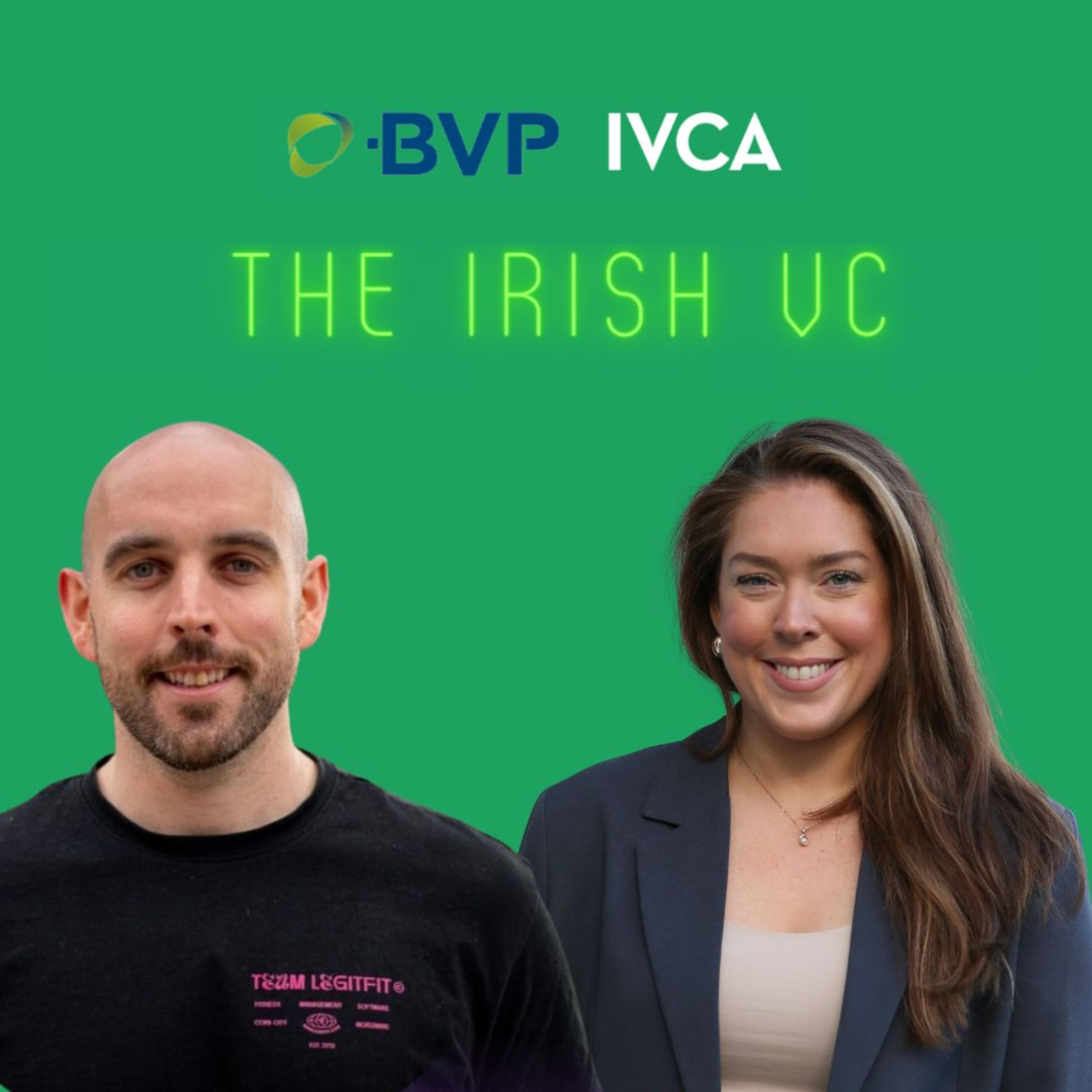
The Irish VC ep27: LegitFit - Building a Fitness Tech Empire, Ryan's Story
from The Irish VC
33m 12s
Ryan, co-founder and CEO of Legit Fit, shares his journey from a pharmaceutical career to launching a fitness tech startup. Growing up in a business-oriented family and passionate about fitness, he partnered with former soccer teammates to address gaps in the gym management industry. Initially conceptualized as an "Airbnb of fitness," the idea pivoted after direct customer feedback highlighted a need for streamlined software to reduce administrative burdens and cancellations. The first customer signed on in March 2019, marking the start of a user-driven product development approach. Scaling the business involved overcoming challenges such as building confidence during a Techstars program in the U.S. and expanding into the UK market through strategic marketing and partnerships. Legit Fit emphasizes user-friendly design and trust, aiming to simplify operations for fitness professionals and support their growth.
Hello and welcome to the Irish VC. My name is Marie Nolan and I work with business venture partners and I am extremely excited to introduce our guest today. We have Rhino, Neil, CEO and co-founder of Legit Fit. For any gym bunnies out there you might already know this company but put out for it or do. Let's dive straight in. Well, what's the story Rhino? Perry's keeping. From college? How's your day going? Yeah, grand. Actually, I know what time's it now. It's 3 o'clock but at lunchtime I went there for a run and it's so harsh today up in Dublin. I don't know if it's the same dinner core, it probably is. But I don't know how people in Harkland went running in the heat. It's absolutely torture. I was doing a lot of running in the. It's probably after Covid because I think everyone went through that like, strap a thing during Covid. I think the October when things were after opening up and stuff like that, I was over in Dubai. I was doing 5-10k, it was just pretty easily. And it was October in Dubai. I got the 3k and my heart was almost giving out for me. That's October. Maybe it was September but it's not like peak heat. Yeah, absolutely not. We're delighted to have you on the podcast and I know we're going to talk about all things legit fish. But I'd love if you could just maybe introduce yourself and tell us a bit about you. Sure. So I'm Ryan, I'm co-founder and CEO of legit fish. A bit about me. I grew up in a family business. So my parents were shopkeepers. Everybody in my family, I five older sisters were all involved somewhat in business or the business. I went a slightly different direction. I ended up doing a super interesting science in kind of leaving sort of every science subject, went into university. I did farm through the chemistry there. And yeah, I worked in the industry for about 80 months before I packed it up. I was just like, this is not for me. So that's kind of my background from a business education standpoint from a fitness standpoint because we definitely have to bring that in as well. I mean, I did fan from my sins this year. Everyone used to hate me when I said that 10, 20 years ago. But now they feel sorry for us. So one thing that kind of got me into the realms for it's own fitness. My name is genuinely Ryan after Ryan gigs. Believe it or not. No one. Yeah, so I grew up watching United going over to Manchester. That kind of stuff. Yeah, played played kind of soccer all the way through play to carcassity. Yutes. That's actually how I met one of my co now co founders. And then we got to the point where you're either playing with the first team or you're shifted on. Let's say to go elsewhere. And to be honest, it wasn't wasn't good enough for the next stage. So I ended up going into fitness. I wouldn't say I was the fittest soccer players. I was a goalkeeper. That was my co founder. And yeah, basically went into fitness, got obsessed about it. I was like in university. I was probably. I was in the gym more than I was actually in the actual lectures theaters, like two, three hours since today. I was going morning evening and I was just completely obsessed with it. And yeah, I suppose like that kind of that interest. And what I was doing in the pharmaceutical industry was I suppose what kind of would lead to legit fit. Yeah. And would you say then that you kind of developed a passion for fitness and sport? Had it since day one really like when I say I was obsessed with fitness, I was getting up at like half five six o'clock. I was doing steady state cardio because that was the in thing back then, which is basically walking on a treadmill. I was editing 12 boiled eggs in the first lecture of the day. I was eating six chicken breast a day. I was eating like I was real in that body builder mode. So I was like, just wait to say like strong man mode. Yeah. That like genuinely I was like obsessed with it for sure. And then so your co founder also called keeper was he on arrival team or was he on the same team as you. He was on a rival team at the start and then he was on the same team. So we were fighting for the same spot. His constant joke was he was number one back in the day, but I'm number one now. So that's what's important. And then did like so let's go back to the start and you know how did a comment page how did the idea comment page where you're trying to solve a problem. You know where you guys have a chat and we're like to help with it. Let's go fresh. How did that all start? So it started as I kind of mentioned I was in a big firmer and I once together that and I was in the stage. My life was like, OK, what am I going to do next? So I just started doing kind of like I said I would do a couple of things and I figured out I put my toes in the water. So I did a personal trainer course. I let you use to travel down to water for once a week for I think it was 12 weeks once or twice a week. Like comes certified as a personal trainer. Then I did a structural business course in the ignite program in UCC, which is like an incubator to kind of work on your business idea with something that was kind of pre-legifit. It was still fitness. It was like the Airbnb of fitness because that sounded super cool and everyone wanted to do the Airbnb of something at that stage. Yes. And and I think I also did a financial training course don't ask me why did that. I was swiftly moving on from that. But as I said, I was dipping in the water of different things. And I think it got to a point where I was like, look, I had the kind of I didn't do business in school, but like my home life was basically business. And and I kind of wanted to kind of do something in that I wanted something that was I suppose more fulfilling essentially and meaning. So I looked at, okay, maybe I will set up a gym or do something like that. And that's when I actually bumped into one of the co founders Ian, who was actually teaching a spin class at the time. So that's the goalkeeper co founder. And I was kind of help. I was kind of had a couple of coffees with him kind of saying, look, I'm thinking about going to fitness. I was also thinking about this product idea that could help businesses would like connect you with loads of clients and all that kind of stuff. And then I realized, okay, well, we need a kind of tech person as well. The fiends got to come forward as well. And that's when I shamelessly messaged one of five friends from primary school, who literally lived five minutes up the road for me. And he was working in service every monkey at the time. And I kind of said to him, look, you come down to when you're down to cork next, you want to go to the gym, something harmless. So then we went to the gym to the session went into the sauna after and I was like, do you know, I kind of have this idea and think the I mean we know. Yeah, it's just as a pledge at all. Yeah, dropping all the ins as we go into the into the gym itself wouldn't be great if you could do this. So yeah, we kind of talked about that. We literally were in the radistan and we went into the kind of borrowed a meeting room, let's say, and we started kind of writing ideas on a waitboard and. And then like three of us kind of came together and like we were taking part in the ignite program a full time then with this kind of concept of like the Airbnb of fitness. And we got to a point where like we kept talking to people saying, this is what we're doing, this is what we're doing. What do you think of it? And everyone was like, so it's great. Sounds so cool. And then there was a point where I remember a man who runs ignite said to us, you know, okay, well cool, will they pay for it? And we're like, I know I suppose so that they said it's cool. And he was like, okay, test that out. So we did like what's called like the boot of the car test. Well, that's what it was called to us anyway. So it's like we kind of said the same product and we said, look, we have it ready. It's live. It's in the boot of the car, even lots of offers. Do you want to give us the credit card details we get you set up? Then we got some more real answers about maybe it's not so cool anymore. Maybe it's like I'd have to see how it would go. Could you give me a trial? I don't know if I'm willing to pay for something right now. And that kind of led us to kind of the realization that, okay, this is something that we think will be cool. And maybe it's not actually something they need or that they're willing to invest in right now. Yes. Yes. And so that kind of during the process of of this of being in Ignite and setting up legit fit. I was also doing a masters in UCC in marketing management. I said I give myself a kind of baseline and that as well as potential fall back plan of legit fit doesn't work. Because I think it's nine or 10 startups failed, right? And we did we did something on research and development and how to do it and how not to do what we were doing was how not to do. We were telling someone this is what we built this is what we have this is how it's going to help. We never really asked the question, we just weren't quiz enough to them and what their pains, what their struggles were. And when we flip the questions and went back out, we literally knocked on every door and cork inside. A second time forget this idea, forget the Airbnb fitness, forget about that. Okay. If you were to build something in the morning, what does that look like for you? What does it help with what what are the pains. And by going out with that kind of more discovery, inquisitive kind of approach. We learned so much more and we learned that half the people we were talking to weren't using any software at all. Those people were getting about three cancellations per week. And spending about four hours on admin, this in turn was costing them 10 grand a year, right. That was our USP. Okay. So we have that. Then we looked at people were using software and we went down some we basically said to them, what you like about it, watch not like about it. If you could change one thing about it in the morning, what.
does that look like? And the thing that kept coming up was the existing solutions. They were, they were, I suppose, a little bit clunky, a little bit. They weren't as easy, why aren't they sleek? Because of this, these businesses couldn't get actual value from the software, the thing that's supposed to be helping them. That was the thing that we kind of recognise was like, okay, these, like, business owners, they want to know the numbers, they want to know how the business is growing, all that kind of stuff, but they don't want to be sitting behind a desk every day trying to relearn, like, how do I use this clunky software? 100% to simply the better, isn't it? You know, if something's confusing, but it works, nobody's gone to use this. It's like, if you sign up, no offensive sales force now, this product, this one's worked. No. I think the, like, if you're a one person sales company and you're using sales force, it's like, you're not going to get value from it. You get value from it, like, way down the line when it's huge. So what we were kind of focused on the beginning was, those initial customers, they're like micro businesses, like, they're their personal trainers, their coaches, like, that was the kind of entry point for us and learn from them, adapt it, and then start moving upstream as we kind of went, was trying to, I suppose, focus on the usability and the user experience side of things. And then what year was this all kicking off? Yeah, it was pretty cool, but it was perfect timing. It was a match. First customer was matched, March 2019. So we were getting, like, our first, like, first adopters, that kind of stuff on board. We're starting to make some good momentum. And then I remember I was in Dublin already at that stage. I did nine months in Dublin and then I moved to Limerick. Question for you there. So you said you got your first customer. Do you remember the first sale you made where it was? Yeah, and how that went. Yeah, so it went. I'm not going to lie, it was definitely shaky, I par it. The product wasn't fully stable, but I think the important part was we actually got the person to sign up and they were willing to put that trust with us. So that first customer was actually, it was funny because he, he was after setting up a fit as business. He used to, his family used to deliver, like, meats as in sausages, pork chops, all that kind of stuff into my family's business. And so we were both kind of going setting up these businesses and he kind of, I suppose he maybe, he could kind of understand that everything was going to be perfect. And this is a process and giving the benefit of the doubt. And he came on board in the, like, in the Western Gateway, which was the HQ essentially back in the day. Brilliant. And because it was so early stage, and it was your first customer and there's learning curves, do you feel like you learned anything from your first customer, essentially, to where the business is now and how is it scaled? Yeah, I think and this stands true to today, you always learn from the customers the direction. That's the most important point now. I think a good bit of time they're right about direction. Sometimes they don't know the other possibilities that could help with that direction, that angle that they want to get to. But at the very start, it was really, like, we didn't even have payments. So like, we were, we were a calendar essentially. So we learned then, okay, what's the next thing we need to build for these early adopters? And then, you know, it's, it's like, it's start off with, I need a calendar, then it needs, I need a calendar with different availabilities. I need a calendar that I can change and update things. I need to wait lists. Now I need to wait lists with notifications. Now I need, and it just keeps going and going and going. So it's, I suppose, for us, they led the product development to last and they still continue to do that today, because they're very bought and interested in the product development, because obviously it's in their benefit, but they can give us insights on one of the biggest pain points. Now the challenging piece today is you're not talking to one or 10 customers. You're talking to a lot more. So it's about how you prioritize that feedback. Okay, which is a good problem. Thank you guys. Oh, like, like, before we start recording, I said that I know the customer experience of legit fit, because I'm going to give an up, upload here to my gym. Strong body fitness in Green Hill, but he's legit fit. I've had that experience, which is great. And I actually asked one of the guys on the other end of it. I was like, how's legit fit, you know, go review? He was like, get great seamless. So it also used to be, you know, going well. And like, Sean was probably, he was probably the first 50 or 100 customers, I'd say, probably 50. He was one of the first people in Dublin that actually gave us an opportunity and kind of work with them. Like, at that stage, I literally turned up to Sean's door and was like, hi, I'm Ryan from the jiffy. Who are you using? Any pain points. Better person to do that too, because Sean would love that. And he'd just give a back to it. But that's the beautiful thing about this industry is you are working with people who are running businesses themselves and trying to do the best for their business and they see you doing the same and they can appreciate that. So they're willing to give you time to kind of, they won't just kind of fub you off like it can happen in other industries. So, yeah. Thank you Sean. I just kind of want to talk about maybe some trials and tribulations just on challenges because it's always really challenging for starships to get going, to scale the business especially. I feel like that is really difficult to do, especially in Ireland because we're such a small country and then you know you're trying to expand to overseas, maybe to England or you know, if you have big ideas. But for yourself then, what do you think was your biggest challenge in trying to scale the company just for growth? Yeah, I think like, to know one of the things that I that was really really great for us was we went to Techstars over in the US in 2021. It was still COVID so we had to go via Mexico to get to the US. We had to spend two weeks in Mexico which was like you know a testament of our stack of resilience. But I think the interesting part there was like we were going over, we're a team of probably eight at the time and we were like oh like we're kind of the small Irish company bloody blah and then we went over there and and we were in with the other businesses and like look they were they were doing great things, great numbers but they were painting a picture that was slightly different. Like the numbers were in GMV and we weren't counting GMV was something different and there was kind of almost a lack of confidence and I'll set the very start being like first time for our founders being Irish broad into this big like you know the US where things are bigger, better all that kind of stuff and I think the learning there after we kind of recognized where our numbers were and maybe we just weren't telling the right story or painting the right picture about the jiffis was that like we're actually doing really really well here and like we just need to drink a little bit of their kool-aid and be able to kind of tell the story is good as them because the foundations and what we have for our phenomenal like so I think that was kind of a thing that we definitely took home from the US was just like bring that level of confidence in what we're doing because we're we're clearly very good at it with with the numbers of that we're at so I think that was definitely a good learning but a challenge at the start I think then it was about like I suppose you know as I kind of mentioned earlier we were knocking on doors in Ireland and that's you know you're on a small island that's relatively easy to do something like that in the UK that was going to be a challenge because it's American that's 13 times the size of Ireland and so we kind of went to like looked at it from kind of a different perspective on what we learned in Ireland like why did why was there a certain point where we actually didn't have to knock on doors and just people kept coming to us and obviously like the the trust that was kind of built there was a big thing so to us because our product or service backed everything up so we had to look at okay how could we do that on mass and how could we also create the same story because people really love that story of these guys can just turn up to your gym and just like they genuinely care they're not this big part of faceless corp that are going to get more and more business so we wanted to kind of do that but portray it at scale so we brought in like we started building out the marketing team we brought in this full-time videographer and we moved to Manchester we were there for like almost two years and we literally did call it it's not as many businesses that we did in Ireland but we captured everything and then we were able to kind of pump that out essentially into the into the social machine and anytime that we had events on in Ireland we would leverage that as an opportunity to almost create a map of like roots and we would go to all these roots and just do that hard graft so it was kind of like just coming up with smagger strategies that would that would kind of be able to kind of do that similar effect in Ireland if that makes sense and then leveraging like well non-brands as big as well so like we partnered with like the best marketing agency in the UK the best gym coaches or gurus in the UK that would then kind of trust us so that led to kind of more trust amongst the market. One question that we usually ask is did you get any supports from Ireland you know any grants or anything like that? Yeah so from a grand perspective if there was free money out there we got it excellent as you showed
We had very little fun there. So we had the Ignite grant, which was 5K. So I was like, it's stipend for the year. And then we were kind of like working part-time to kind of get ourselves a bit. But then we got the local enterprise office. There was I think two grants that we got from there. Then enterprise Ireland came in with the CSF. We went down to the HPSU client, raised money actually from-- so we had family, friends, and customers invested along with texturs during 2021. So that was around 500K or something like that, as a total. And yeah, then we kind of found there the more DC route that we had raised in virus. And just as well on funding. When you went down the VC route, did you find that hard? Or how was that process for you guys? Yeah, so I think we kind of thought about going into the VC route from day to day. So I think a lot of startups here, that's the natural thing to do because you see these stories and LinkedIn and US, but also now probably Ireland as well. And we were kind of always trying to kind of chat to investors, but looking back, and I think we were just a little bit too green for it at that stage. And I'm actually thankful for that as well, because there's a lot of things we want to figure out. And yeah, we probably could have figured out that, or figured that out with money, boss. The fact that we didn't have money probably helped us even more because we had to become more, we had to think more outside the box and how we could kind of do things. So then when it came to a point where we almost like, we learned like a huge amount, we were definitely more savvy about what we're doing. We understood what we're doing, who we're serving, and what the kind of plan going forward was. Then it was kind of time to kind of take on some external funding because we wanted to grow faster in the UK. We found this, it was kind of mainly on me at the very beginning. I think when we were just like very early days, I found it really hard because I was, this is your baby somewhat. So like, people say no, and continuously say no at the very early days. I think back kind of grinds you a little bit. It's like, yeah, it's kind of like sales, you know? Sales is like next to sales is how I see it. But people call it matchmaking. You just have to find the right fish. Yeah. Yeah. Oh, it's a bit no pun intended. Maybe if these sees have like one match a day or something like that. Yeah. So I think that was like difficult. But again, I completely understand it as well now. Looking back at things. I think when we were kind of more at a stage, we were ready to kind of take on funding out of tech service and that kind of stuff. Like, yeah, it was relatively challenging. But like we did have a good few offers on the table. And I think that's just because how strong we built up the business. And we were like, and even same with the last round, we're like, we haven't taken on a huge amount of money in general relative to the industry. But we so capital-efficient and we're so good at doing that. And I think like, yeah, people are kind of surprised at the stage that we're at because we haven't taken 10 million or 20 million or something like that. So like, again, looking back at those early days, we're capital-efficient because we have to be capital-efficient. And now it's just the AMO essentially. And we can use when we take on money, we can use it really, really well. Yeah. Live and learn experience. And then I just wanted to go on to just maybe looking forward, looking ahead-- oh, no, sorry. I won't go ahead yet because I actually want to know the current position of the company. So you started in 2019, it's now 2025. How is it looking? How many countries are using the app? What's your staff numbers? Yeah. So as I mentioned, back in the day, we're a small company three of us, again, taking on big players in the market as well. We're now the biggest player in the Irish market. I think if you combine the next two biggest players, we'll probably decide by the then combined. In the UK as well, we've grown 100% plus year over year, which is really, really cool. And then from a team perspective, we're now as 29. I think it's tardy by next week. And we've got a couple of open roles as well. Amazing. That's amazing growth. And are you all based in Cork? We wouldn't confide in people's at Cork, even though it is the greatest. We're based all over Ireland and all over the UK primarily. That's still like, it's fully remote. We've been at that sort of moment influence. We've been that way since daydash. And yeah, it just, it works quite well for us. And then we kind of meet up. We tried to meet up once a year. So like, we literally, I think, probably last month, we all went to Malaga and the whole company, all teams. And that's the kind of part where we get to, you know, we save on all the office space during the year. So we spend some of that for just in a way that can really, yeah, be the difference in other versus other remote companies. Yeah, fair. That sounds like a nice trip. Nice little perk. Is it Malaga every year? Or do you go to different destinations? So we did them. So we did them. The reason we do these, actually, interesting story. When we started, I keep happening on the non-money, the same so forth. But we had come up with an innovative way to build a product without a product team. So we started these hackathons, which was basically, Geralt, his friend, or like our CTO, his friends. And some people I knew true, the light network, and that kind of stuff and said, look, we're going to tip rory. I feel the weekend. We're going to be working on this product. We're going to launch it. It's going to be free food, free accommodation, free beer. It's going to be awesome. And we got six people to the first hackathon. And we did-- I think it was three or four more hackathons. And that's actually what got the product light. You'll see on our YouTube channel, you'll see literally the moment that the product went light in this 300 euro Airbnb. So that was us kind of like a little bit outside the box with the lack of funding. And then that became one of the cultural things. Everyone was like, when's the next hackathon? And we brought that kind of into the company where the year after-- obviously, we were in tech service. The year after that, we went to a portable as a team during web summits. Again, I think we had 14 of the team out there. Then the year after that, we kind of-- the team's out. So marketing went one place, sales went another place, engineering went another place. And yeah, it's just like-- there's huge ROI in it. Just in, from the sense, personally, that you can give this experience and this thing back to the team, but also from a productivity perspective, like the weeks after, the months after. It's like a productivity goes through the roof. And then you're kind of building up to the next hackathon where you're kind of excited to kind of meet up with people again. So yeah, in Malaga this year, some of us did the high rocks as well. We're through there, in the fitness company. So vlog to cover soon. And next year, I don't know. We'll see, I think, as we grow, the destinations are getting nicer for sure, but it's something completely earned by the team. And then we'll go to look on Forge now. So it seems like a whirlwind from when you started to even the position that you're at now. And how much you've grown. And I'm sure you'll never stop planning for the future and trying to grow and all that jazz. So where do you see Le Jifre going maybe this year or in the next few years, do you have any plans? Sure. So we'll continue growing in Ireland. The UK-wise, again, that's still the plan. There's still so much more market for us to be able to get. So that's definitely something that we're continuing to execute on. And then with regards, new markets, we're being used in like 20 countries now, which is pretty cool. Bush, we see obviously the US as being a pretty amazing opportunity for us. So we're actually going over at the end of next month to New York. Well, we were originally just going to Chicago for an event. Bush, we've been able to get some great instructions to rent it by Ireland and just our networks. So we're actually-- and tech stars. We're going to New York first. We're going to be there for five days. Then we're going to Chicago for four days. And bringing the video out for along with us. And again, it's a repeat. Yeah, I think that's definitely something this year that we're gearing up for. So we want to use this opportunity from a content perspective to help reinforce marketing when we come back. Then that will be continuous plan next year. And we'll be testing, opening up new markets and just testing them out and seeing where the data brings us next, I suppose, really more than anything else. OK, so let's look forward to. And did you do Iraq's Dublin? Just-- No, we didn't. No. I was training quite well for the Malago on. And we didn't end up going to Dublin. Maybe something we look at this year, but I think, you know, this is the interesting thing about being-- in the business of fitness, we need to also ensure that we keep ourselves fish as well. And that's something I'm complaining about, either. But it's very funny. We did an off-site at the start of the year for planning. And we went to-- I think we went to Tipper Air again. It's something about Tipper Air.
We went there, but the difference this time versus the first time is we literally could open Google maps and find Locations that we're using us like a lot of locations. So we did the offside we did all the planning but you know One morning we did Pilates for one of our customers and she put us true or I'm a true the world for sure Then we did a crossfit session that evening we went to a song and swim session the next day was like it very Yeah, so it was kind of same and in Malaga We did the hierarchy and then we did the we actually did a yoga class at the Saturday morning before we went back into the hack on and idea And okay, so that kind of leads me on to wanting to ask a couple of questions and I love ending wish a quick fire end Okay, so you can just answer one What? Watch Nate and Latka No No No The king of quick fire rounds he does podcasts our interviews I'm gonna have to look up now Better my questions. Okay, we're gonna go into a quick fire round. Are you ready? I'm ready Okay, it might be different now to what you're expecting. Okay, let's go tea or coffee coffee Okay, favorite way to unwind yeah, Njoga Is in the relaxed one? Yeah, yeah, okay I am the biggest app you couldn't live with a pars from legit fish The biggest app I couldn't live without I hate to say it, but it's where the market is Instagram. Yeah, well, you know You're looking at it from a marketing perspective as well. Yeah, yeah Then all the hot And then There's another one that I just had there workouts Morning lunchtime or evening preference Evening preference during the week morning preference during the weekends Okay, interesting a lot of people don't actually navigate or you know like change their routine There wouldn't be more in people and even people I was doing Saturday evening date nights That's true you'd get in trouble. Yeah And the place that you've been or traveled to before that you'd love to go back to Was there last year valley Amazing routine amazing scene And just like the culture and the people there. Yeah, it's they have a lot of James there don't they Huge yeah, yeah, was it business trip? No Maybe you'll just have to make a trip back then yeah We're expanding it to Bali and Thailand and Australia All these places I want to go we're going to yeah, you're gonna do a world trip on Lucifer. Yeah, you just wish Fitness and Cuba fitness Really it's really it's on the up. Yeah, it is yeah, I agree Bored Ryan, it's been an absolute pleasure. Thank you so much for coming on the podcast and I'll see you guys here That's good. Thanks
Podcast Summary
Key Points:
Ryan, co-founder and CEO of Legit Fit, transitioned from a pharmaceutical career to fitness entrepreneurship, driven by personal passion and a business family background.
The company evolved from an initial "Airbnb of fitness" concept after customer feedback revealed a greater need for user-friendly gym management software to reduce admin time and cancellations.
Early growth involved direct customer engagement in Ireland, with the first sale in March 2019, leading to a product development strategy heavily influenced by user input.
Scaling challenges included building confidence during a Techstars accelerator in the U.S. and expanding to the UK through targeted marketing, content creation, and strategic partnerships.
The core value proposition focuses on simplifying software for fitness professionals, emphasizing usability and trust to support business growth.
Summary:
Ryan, co-founder and CEO of Legit Fit, shares his journey from a pharmaceutical career to launching a fitness tech startup. Growing up in a business-oriented family and passionate about fitness, he partnered with former soccer teammates to address gaps in the gym management industry. Initially conceptualized as an "Airbnb of fitness," the idea pivoted after direct customer feedback highlighted a need for streamlined software to reduce administrative burdens and cancellations.
The first customer signed on in March 2019, marking the start of a user-driven product development approach. S. and expanding into the UK market through strategic marketing and partnerships.
Legit Fit emphasizes user-friendly design and trust, aiming to simplify operations for fitness professionals and support their growth.
FAQs
Legit Fit is a software solution designed for fitness businesses, such as personal trainers and gyms, to streamline their operations. It helps reduce administrative tasks, manage cancellations, and provide clear business insights, addressing the inefficiencies of clunky or non-existent software.
The idea evolved from initial concepts like an 'Airbnb of fitness' after founders Ryan and his co-founders conducted customer discovery. They identified that many fitness professionals spent excessive time on admin and faced software usability issues, leading them to focus on creating a user-friendly, value-driven platform.
Legit Fit acquired its first customer in March 2019. The experience was shaky as the product was early-stage, but it established trust and provided crucial feedback for iterative development, emphasizing the importance of customer input in shaping the product.
Scaling involved overcoming initial confidence gaps when expanding internationally, particularly in the US and UK. The team adapted by leveraging storytelling, strategic marketing, and partnerships to build trust and replicate their grassroots success in larger markets.
Customer feedback directly guides product development, starting from basic features like calendars to more advanced functionalities. Today, the challenge is prioritizing feedback from a larger customer base to continuously enhance the platform's value and usability.
CEO Ryan grew up in a family business and studied science before shifting to fitness, combining his entrepreneurial upbringing with a passion for fitness. His co-founders include a former soccer teammate and a tech expert, blending diverse skills to address industry needs.
Chat with AI
Loading...
Pro features
Go deeper with this episode
Unlock creator-grade tools that turn any transcript into show notes and subtitle files.
 PodcastTranscript AI