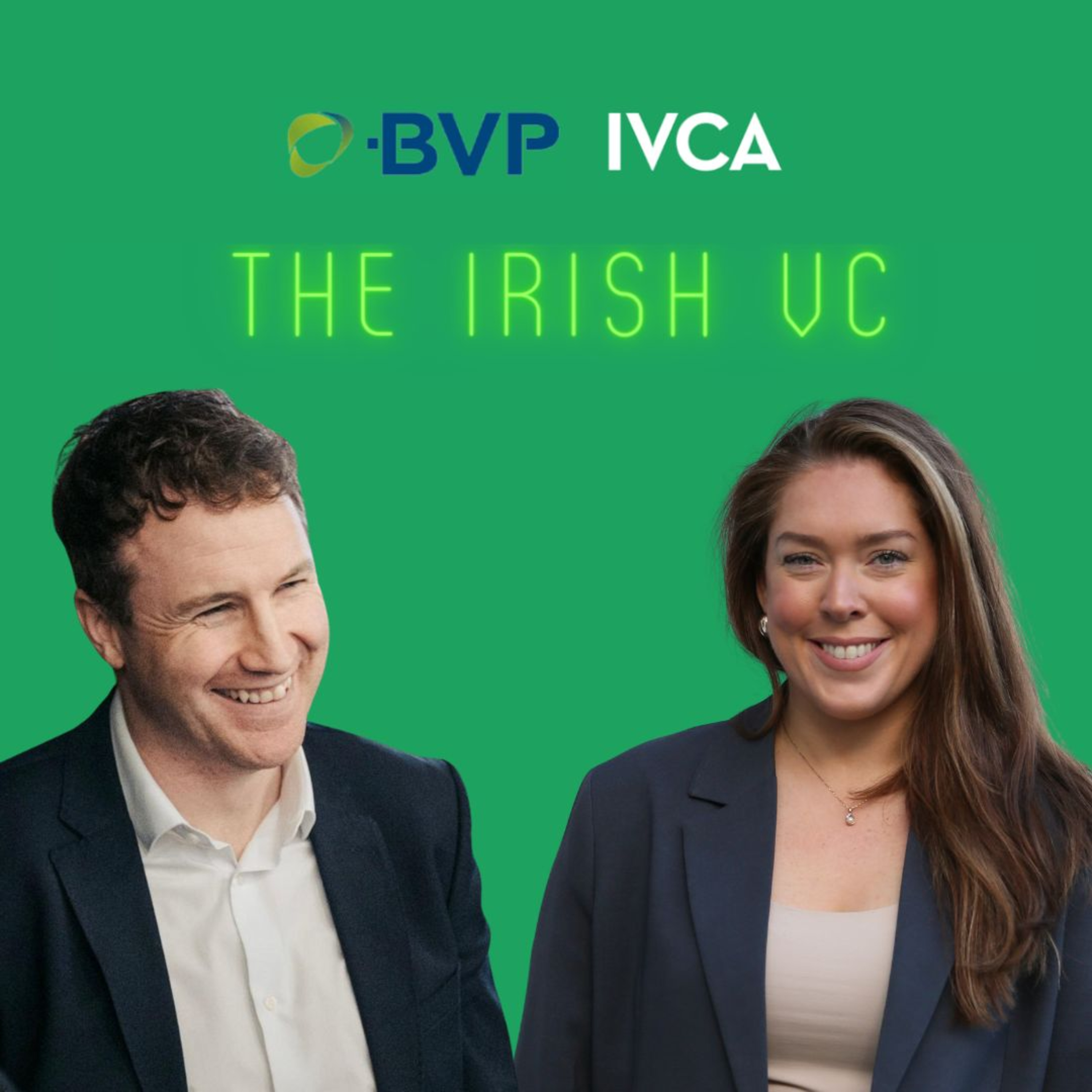
The Irish VC Ep21: From Black to Green - Conor Layden on Transforming Arigna Group
from The Irish VC
33m 18s
Irrigna Fuels, a long-standing family business originally in coal mining, pivoted to manufacturing smokeless coal in the late 1980s. Currently, the company focuses on launching Harvest Flame, a renewable solid fuel made from olive pits, which avoids carbon taxes and uses a sustainable, circular production process. The ash from the fuel can be repurposed as garden fertilizer. After a significant €3 million investment in new machinery, Irrigna Fuels is rolling out Harvest Flame across Ireland and the UK, securing placements in major retailers like Aldi. The transition involves adapting to retail packaging standards and responding to fluctuating demand, while balancing its traditional smokeless coal business. The company's evolution reflects a shift toward eco-friendly products in response to environmental regulations and consumer preferences.
Hello and welcome to the RSVC. My name is Marie Nolan and I work with Business Venture Partners and I am delighted to introduce our guest today. He's the commercial director of an RSVC company called Irrigna Fuels. Connor Layden, it's a pleasure to have you on the podcast how you're keeping. Thanks very much, it's good to be here and it's a very cold day today so it's fairly apt to be talking about a solid feel. Absolutely. So like we did have a really mild starting November and put the cold front has definitely hit and now it's that time of year where people like to sit in front of the fire, the wood burner, the stoves, get cozy and get the heat into them. But before the get cozy they need to go in and buy their feel for the fire and this is where you guys are experts in so we will get into the product maybe later on in the podcast. We might just take a step back and start off with you telling us a bit about yourself and your role in the company. Okay. So I'm commercial director of Irrigna Fuels. Irrigna Fuels is one of two companies in Irrigna Group. The other company is BLFUELS and it's a UK based company and I'm the manager director of BLFUELS. But my main role at the minute is to ensure the role out of our new product Harvest Flame onto the Irish market. So within that I look after the sales and marketing side of it and I also look after a lot of our strategy going forward and I do a bit on the procurement side and the other fields as my director I just look after the day to day running of it. And so as Irrigna Fuels started off as a family based company, family run business, do you want to share with us a bit about the story of how it started and maybe the journey so far? Yeah, perfect. No. So we are a fifth generation family business. So I'm myself, my brother and my cousin are fifth generation. We started out as a mining company all those years ago. It's over 100 years at this point and what we were doing. So Irrigna is located in County Ross Common. People, a lot of people will know Irrigna as the Irrigna mines and that was the family business historically. So before that before we was mining coal effectively in Irrigna mines, before that it was an iron or works site so the iron was mine as well at the time. So once we moved into the coal, coal was meant for power plant production and it was supplied to local power stations. Following that then the late 80s, early 90s it was evident that the mines needed to close because the power plant was affected being short at the same time and the coal that was left wasn't the good enough quality to take out. It just wasn't what it needed to do. My father at the time, he decided on our first pivot of the business and what we did was we moved into to start to manufacture low smokes, solid fuel which is multiple would be familiar with it as smokeless coal. So we were the first plant in Ireland to manufacture low smokes, solid fuel and we had done, we did that for a few years in the late 80s and early 90s and then the great thing happened at the time which was Mary Harnie and Ense Tublon would go smokeless. So that helped us grow substantially. I hope we started buying smokeless products for the next few years and we grew through the few years with that. It was a heavily invested in larger equipment that would effectively be able to replace our smokeless coal demand with the harvest flame with the renewable solid fuel. That's where we are today effectively. Brilliant. We might get into the nature of that product a little bit later on because I do actually think it's really interesting when even when I was looking it up and the story is that it's in, I really just wanted to go in and buy it. We'll talk about that a little bit later. But it's really interesting to the fact that it was a family-owned business or a region as a family-owned business. I just, even myself, would be interested in knowing as you grew up in the family business, was it something that you always wanted to be a part of? Were you like, okay, when I get older, this is what I want to do. I want to be part of the family business. Or you kind of have that other flip of the coin where you would think if you're born and brought up in the family business, do you want to just run away from it? So just wondering, what it was like for you growing up and how that went. I was, I was, I never really knew, tell what I was working the family business. I never really thought that that was where I was going to go. My mum worked as, as she was in the administration side of things and my dad, then he was manager director and then my two, my uncles still worked there and they were there at the time and then my granddad as well. He worked there when, when I suppose I was growing up early. So it's funny, I never really thought that I would end up back there. I went off to college in Dublin and I worked in Dublin for a couple of years and then just one day, my dad said to me that they were looking at the future and they needed someone in the sales side and what I would be interested in. And I kind of at the time, I was actually thinking myself, yeah, why not? He also, the harvest flame was going to go to the next level. The plan was there to bring it to market and it was a very exciting time within the business. I don't know. I just, I think it was, it was nearly a shock because I was living in Dublin. It was a shock in my current wife, I think, because we both lived in Dublin. So, you know, so it was a big change. So it just came back to us coming then. Yeah, effectively. Now, because we had, we were buying the business in Scotland at the time. I didn't, we, I was over and back to Scotland quite a lot. So I'm being initially, I was doing, I did a lot of sales. So you'd be on the road a bit, you know, you wouldn't necessarily have to be in the office every day. I did have to commute back and forth and I used to stay at home then a couple nights of the week. So my mom, I think she loved that. The fact that I was there every day talking every evening with that about work. You know, my, my, my granny, why remember when I was growing up, my granny and my grandfather, they used to live very close to the, the site and it used to be every tea break. The lads used to come up, my two uncles and my dad used to come up to my granny's house and they'd have, you know, their tea or whatever time it was in the morning. It was just all talk about work. So she eventually went, my grandfather retired and a couple of years later, she was like, no, we have to move away from here because we can no longer be the canteen. So, you know, so, and yeah, it was a big, it was a big adjustment, I suppose, when I did move back, but I actually, I loved it from day one. So it was great to work on my dad and learn from him. And then my uncles, I don't, I won't say this too loud, but it was, it was good fun working with them as well. So even though we kill each other every year, you need the balance, you need the serious every day work life and then you need the crack. And then so harvest flame. So this is the new product, maybe not so new, but new to some stores in Ireland. Yeah, so we've had it available for about five years now, but I'm very, very small scale and basis. So we could, we could always sell what we could make and you could never push it too hard because the customers would look for more and then you just couldn't supply, which was, this is the worst thing you can do nearly. So harvest flame is a product with no carbon tax. Our other products, the smokeless coal products have carbon tax in the state of the Ireland. And so carbon taxes made smokeless coal get more and more expensive every year and it's supposed to get more and more expensive every year between now and 2030 with the, with carbon tax increases, which are legislatures and finance bill. And however, from you, listen to various different parties in the minute, someone that we're talking about rolling back if they get into government. So that will have a big impact if it happens. But as we stand, there's a, it's 150 euro a ton of carbon tax on solid fuel effectively. And that is due to go to 240 euro a ton. So, so that kind of meant that there would be a market for a product that would have no carbon tax. However, unfortunately, when people assume automatically assume that your product is no carbon tax, they automatically assume it's going to be cheaper. But unfortunately, all green products in their, in their infancy are just going to be more expensive because the technology is more expensive. And so we came up with the product harvest flame. Well, my dad did ultimately about, he decided on it about seven or eight years ago. And we launched it in small scale basis. About two years ago, we decided that because carbon tax was growing and growing and growing, and that there was going to be a demand for a product that had no carbon tax. And actually it had that was green. And also all our customers had ESG requirements. And you know, they, they required to have green or renew more renewable products. And we kind of knew that there was a day coming where coal and fossil fuel based products wouldn't be allowed to be burnt in the country. And so when that comes, who knows. But so we decided that we needed to scale up. And we kind of took the brave decision two years ago to buy a new machinery to scale up. And we invested about three million euro at a time. And we took delivery of the machinery in January 2023. Or say we bought the machinery in January 2023. We took delivery of it in April 2023. And we installed it last summer. And then we were ready to go effectively this time last year, actually, but on a very small scale basis, the plant was fully operational to its full capacity. It was one drawback with that because we were planning to be up running for September, which would be the start of the winter season. But we effectively missed last winter because we were ready to go from middle November. But we were so busy on a coal side of things that was very hard to push it out. People, our customers don't like people launching products in the middle of the year. They like to have an infrastructure
in the shops, you know, because that's what they're going to stock for the full season. So, so this year is effectively our first year and we're rolling it out across the market in the Ireland and also in the UK to a lesser extent. But so far it's gone quite well, but it does take a lot of time to get a product launched. Yeah, absolutely and that's the same with any any product on the market. And do you want to name drop some of the stores that you've actually got in because they are large retail stores in Ireland and the UK as well? So a lot of solid fuel is still sold traditionally through solid fuel merchants. You're old school kind of delivery man, but a lot of it is is part of solid fuel and filling stations, local shops and then your hardware stores. But then also you've got kind of big retailers like Woody's, Aldi. They sell quite a lot of fuel from time to time. Then our summer customers like dairy gold go up super stores, their trading name. And then you have Tearlon and also a Reivo in the West. And we also are into top line and you know, it's hardware as well. So we cover quite a lot of a big span. But in all of those customers would have been traditional customers of ours. And what I suppose two new customers that we just got on board this year. And one of them is Aldi, which we have a special volume Aldi at the minute. And it's going very well. We got good timing as well, which is important. And with the weather. Absolutely. Timing is everything isn't it? Very very well and what he's that is it. Yeah, absolutely. We're learning more and more. Yeah, fantastic. It's a massive achievement. So congratulations is an order, I think. And like you said earlier, I think in the current world, people are becoming more and more conscious about making sustainable and climate healthy decisions. Even when it comes to everyday items like clothing, fuel, you know, plastics. So it's good to know that there is a product like this on the market for people who really, you know, in that mindset of, you know, I would prefer a more eco-friendly product. And then on that, is there much competition? Like, is there similar products to you in the market at the moment? Well, there are fully renewable products out there, but they are typically from a timber-based product. So there, so ultimately the tree requires to be cut down for their product. They're all cut down sustainably and there are a lot of its offcuts of stuff that's for use for building materials. And what our product is unique and so far as we use agricultural residues. So what we use is an olive pit. And people are kind of saying what's an olive pit, but an olive pit or otherwise known as an olive stone, which is when you eat an olive, there's a little stone in the middle of it, unless you get the ones that have the stone taken out. And so effectively, when they make olive oil in the Mediterranean countries, the olive stone is a body product. So what used to happen with the stone was they would go to landfill and they'd just rush and release methane and everything, all that stuff back into the atmosphere. But they've over the years they've worked out how to kind of gather them up and to use them. A lot of power plants in Spain actually run on olive pits because they use olive pits to fire the power plant. But we decided a few years ago that we needed a kind of dense product that had the high enough carbon content to start with to use our for our process. And of course, because it's an agricultural residue, the tree is required to be standing for us to get the olive. So no trees are caught down. So it's truly sustainable from that point of you. And then I suppose I'm talking about the process of how we do it. So what we do is we we heat treat the product. So we bring in the other pits into a rigna and we heat it up to 300 degrees, higher than 300 degrees. And we effectively drive off all the bad stuff that's in the olive, olive pit. And people say, okay, well, if you drive it off where it is a goal, but what we use is so we burn it in our own oxidizer effectively. And we so we we use we create the heat ourselves. So our process is circular. And so we only we only have a tiny bit of heat requirement or energy requirement on startup. But after that the whole process is fully circular. So it's a very efficient process. And that's very important for sustainability. Absolutely. And so you have a sustainable product. And then your process is also in that realm of sustainability, which is key. So it's absolutely fantastic. And then on the product itself, I did read that you can use it then to fertilize your plants and stuff. So so we make what so when when we heat treat the olive pits, you effectively make a product called biochar. And biochar is this car it's it's seen as a miracle product. It can be it can sequester carbon effectively. So you can put it into building materials. You can put it on to into compost. You can put it you can create organic fertilized with it. There's a myriad of things that you can do with with biochar. And but when you burn the biochar effectively, what you're doing is creating more and more char our higher concentration of it. So you can actually use the pits because it's fully renewable that you can use the ash as a fertilizer in your garden. So what instead of actually putting it on to your garden raw because it's very high concentration. What we advise people to do is to put it into their compost and and you mix it down and then you can put it onto your your roses or your grass and it helps everything to grow. So lovely. It's a bit out of benefit because particularly in cities where people have typically trouble their ashes in the bin, you know, and they have to pay for the bins. You know, 100 percent yeah. They go on the garden anyway. So that is but even yeah when I was reading about it I was like that's an absolute post for me because I'm a bit obsessed with the garden especially when it's coming into spring. You know if you can use you're basically buying a two and one there you know. So if you can stay warm and then you know have nice players at the end of it you know why not. That's it is out of bonus yeah. Yeah exactly. Yeah so yeah we've touched on sustainability there and so originally the company was you know black and now it's gone green and obviously I'd say there was a lot of you know operational things that needed to be changed. How was that transition you know and to take years and a lot of planning obviously. So it's still going and we still sell a lot of smokeless coal and we don't hide the fact that we do. I suppose we when the mines closed originally back in the late 80s we had to make a big transition at that time to be in a smokeless coal plant and that took a lot of time. A lot of there's not many people still working there that were there at the time but they still remember it and there was big changes and I suppose we the same thing has to happen had to happen or has had happened over the few years that we have but because we're transitioning and we still have an underlying business it can be very very difficult because we're not a fully green company so when you go look for fully green funds it's you know you you really yourself out of a lot of investment vehicles and but because we're transitioning it's actually less risky for overlanders but it doesn't take all their boxes in some cases but so it was very difficult to find the money to do it in the first place and yes despite the fact that we had an underlying business with you know a lot of people and a lot of expertise we used to say at different times if we just had a piece blank piece of paper and say we're going to do this we get the money much quicker and probably five times as much as we would need nearly but because we were transitioning and we had the fast a few elements of it you know that was difficult I suppose the other thing that we're doing because we're now going into kind of more retailers that's one of the big transitions that we're finding that's challenging packaging requirements you know when you were delivering coal to a coal man he didn't really mind if he got dusty you know because he was going to get dusty that day anyway and when he was having a delivery when you put green shiny bags and daldi you know they cannot be have any coal in them so you know there's a kind of a re-education place on ourselves in a rigna to make sure that we can do this and it is very different for everyone that's worked in the same places in the past and even myself you know we have to we realize we have to come to a different kind of service level and then the other thing that is happening as well and in our transition is that you know the consumer is going to more and more as you need it and if they don't need it they don't want it you know and in terms of stocking so like having to be able to meet a coal snap be ready for the coal snap when it comes you know it's so key you have to respond to your customers needs and requirements because they don't want to stock it first of all then they don't want to they don't want to have it if they don't need it they want to stock as this is the one and then the day the need it they want it so that is one of the biggest challenges that we we found yeah 100% I went into Aldi last night because my mom said she wanted to stock up on fuel for the stove so we went in but a whole charade of of different products and the woman at the till said she goes I know people have been telling me it's cold outside but I didn't think it was this cold she hadn't bought much fuel to roast the last few weeks but it just because of coal snap it yesterday but then everybody is in in the same position and then they just want it all at the same time so that's where you guys are yeah managing that it's it's difficult for supply chains to kind of react to this because you have to we're worrying about lorry lorry and all that and they find a more difficult to get around when there's snow on the ground so it's just everything kind of gets exacerbated and so we always want coal whether what not necessarily snow what we want freezing cold whether what would be a gringe yeah no but it is that it is that time you know where it's lovely to have the fire on and people you know I've just seen pictures of people sitting in front of their fires kind of cozy
And then I might just talk to you about maybe industry trends because your family has been in your fifth generation now. So you've seen it from you know you've heard stories in the past and you're in it now in the future and just industry trends, what trends are challenges do you see shaping the solid fuel and energy sectors in the next few years? Do you have any kind of perspective or insight on it? Yeah well it's what's happened over the last few years is our weather has actually heated up. You know our winters aren't as cold as what they were and I know someone showed to me and say they are but like you know the seasons getting shorter and shorter and our weather gets more severe it seems at different times you know we had I know we very very cold weather this week but like the last two weeks in November we're very mild for November. So like the season is getting shorter all the time and consumer habits are changing you know the a lot of the kind of solid fuel users are our older demographic and younger demographics they don't have time in a lot of cases and they don't want to lay fires you know they just rather switch on the oil or gas or whatever their air source heat pump. You know and that then every house has been built like it's very difficult to put a chimney in it any houses that are in a state definitely don't have one and you know it's a solo single build that's anyone that might have one so every new house but there's but then again there's still a lot of a lot of chimneys in houses in the country and so like we see the industry was shrinking down as time goes there is a natural fall off in burning products. The other thing that's happening is people are moving to more and more to convenience based products so like we traditionally we would have sold a lot of 40 kg sacks cold sacks you know and that they would have been delivered by cold men or hardware or stores or agri stores but that's changing so it's going it's gone from 40s to 20 kg and it's going from 20 to 10 kg and then 10 kg to burn in the bag type type products and that's your fire for the night when you buy the bag you don't really people don't really see the price they just want the fire for that night and because they might only do it maybe 10 times a year you know they don't really the price is largely irrelevant to them but they we see the markets kind of shrinking all the time in terms of the mass market but then also the people's because people's habits are changing the packaging requirements are changing and the sizes are changing so that that's one the two trends we see as well yeah yeah it's interesting to know and I know that yeah it's easy to turn the heating on but I do feel like a lot of people still love the traditional flame from the fire don't they do the only thing that's happening as well is because carbon tax is increasing all the time it's it is driving people to think about the cost of it and I suppose we are more everyone is more conscious of the environment all the time so people are looking for cleaner fuels like the many people that have said to us when we tell them what harvest flame is and it's not cold you know they love it they love the idea that they can burn it 100% yeah you know it's just so much cleaner for everything and better for the environment so yeah no it's a massive plus and it's definitely a driver for my family to why we buy harvest flame sorry I forgot to mention earlier on that amongst our charade of of fuels that we bought now the harvest flame was amongst them yeah so just just to note so the vision for the future at the moment is rolling out this this harvest flame product and is there anything else in the pipeline yeah so I touched on earlier so we we make biochar effectively and biochar is seen as this black gold I think it's it's called so what it does is so biochar effectively sequester carbon so it's one of the ways it's to actually hold climate change it's one of the most scalable ways of holding climate change however it's quite expensive to invest in the equipment to do it and and that's kind of where the drawback is and and the product that you come up with at the end is quite expensive but there are lots of markets out there that are opening up for for biochar and it can be used in the agricultural industry as a organic fertilizer it can be used in concrete industry as an insert so you can make carbon neutral concrete effectively but you have to there's lots of regulations that have to be met to do all that and then it can be used as a compost it you know as an additive to compost to make you know totally fully carbon to question compost so there is lots and lots of uses for biochar and that's where we see the massive growth down the line in the intermediate period I suppose we are looking to branch harvest flame out into the UK and the UK is a massive market we have our own sites over there and we're already selling it over there but we also have taken on a retair in the north of the UK called Boots and they are kind of high-end retair that sell they don't sell huge to venture fuel but they have it now as well because they they require kind of greener products so we do see the UK has been a huge market for in the meantime the other place that we see is industrial burning so there's still a lot of industrial burning of coal you can industrial you can use you can replace coal with biochar but at the minute it's too expensive and the tradeoff is too high what has kind of industrial burners are being forced to use move away from coal you know there aren't huge amount of solutions out there that and biochar is one of them so we hope that this market will develop over the over the next couple of years as well so okay so there's lots of opportunities you know yeah that's brilliant to hear and I might just ask you as well so you are connected to PvP and I'm just wondering how you found them and you know yeah how's that relationship going? So very good so far so a couple of years ago when we decided we needed to go invest in the scale of the plant actually this time two years ago we actually met Elliott and Steven I think was the first in November actually in 2022 the well how we came about I suppose is so I used to work on a company in Dublin called LeBron private and they were a corporate finance house I'd say still RSR and a lot of their focus was on commercial real estate and I had a phone call with with Karl and Tom a few years back in May and just said that we were just what we were trying to do and would you have anyone that you could tell point us in the direction of that would be looking to that would fund us because kind of the mainstream banks in Ireland really had no interest because of our fossil fuel element okay and I suppose Karl and Tom at the time gave him a list of people and PvP was on that list and they introduced us to Elliott and Steven and then we took it from there so so PvP we met them on in November and we drew down the funds I think it was in June so they provided them death for the company to purchase the machinery and do our build-life so so it was just helping to scale up the business and get you to where kind of wanted to be yeah they were able to see that the transition element of it that you know we were our plan is to go green and we've done a lot to go green and and you know that it's very difficult to actually go green if you're to transition to go green it's it's it's almost impossible because it's very hard to fund it almost it's much easier to just start afresh and that's very difficult to do so we didn't want to do that because we have 50 employees in a rigna and you know we wanted to keep we trained everyone over the years and we wanted to kind of keep the keep the underlying business intact as possible with the view to transitioning it over a three-year period so we are in year one of that three-year period so okay and then the guys were able to see that you know there was an underlying business there and that actually helped the credit side of it as well so 100% and I think a lot of people see BVP as you know a green focused sustainable company so it kind of fell in line with their investment strategy and what they're looking for so it sounds like a perfect fit to me I think we've covered most bases that we wanted to get into in relation to the company and the growth and the the background and the vision for the future so that was great now I do love doing a quick fire round at the end very random if you're happy to do it yeah okay yeah yeah hey random yeah we'll go ahead so you could just give one word answers okay yeah and that's that's great or if you want it elaborate too you can elaborate but okay so let's go okay favorite book or film I don't read a whole lot of books they had to be autobiographies but it was a film it's fairly recent sea bias but I really liked Up and Hymour for years ago where it's not that long ago thought that was great but I actually I never liked it but I loved Lord of the Rings but it's not really my kind of genre but I did actually love Lord of the Rings but Up and Hymour would be one of the more recent films I enjoy yeah yeah it was a great one and actually Kylian Murphy did you see his latest film the Irish film as coalman yeah I haven't watched it because I I saw I read I review on it and I was like oh it's a bit depressing I don't know if I watch it but I did see who's the coalman Wicklow or whoever he is so I said I probably will watch you when it comes out on general yeah yeah so then the next question um who was or is the most inspiring person in your life I suppose probably I probably say both my parents but in particular my I say and he passed away I suppose it's a year and ten months
So going out, yeah, sorry to hear what we're doing now is kind of really carrying out his vision and a rigness So so yeah, he was I don't know if he was still here. What I say he's a awesome foreign person But yeah, definitely he taught me an awful lot in the business and he kind of taught me that it's not always Straight line, you know, and when he taught us a lot he did a lot for myself my sister my brother as well So and then I suppose my mom is obviously still very inspiring to us so Yeah, the two of them So continue on the family legacy and then the final question if you were to travel back to any place You've been to before where would that be? Um, I suppose I give you a couple here with I've been I've been looking to go to have been to a lot of sporting events and big occasions And I was for but last I was at the World Cup last year and the Arlan's the Africa game was just Spectacular. I've been the whole day. I've been in Paris and already I played football for our local GA club small club And we won a championship after many years of trying at a low enough level, but the day after I just I'd love to go back to the day after the Monday we were sitting and wherever we were in Kyrgyzstan and and you just It was just brilliant fun and I suppose there's one third last one as well I went to boarding school in Dublin, Kasselok and when 50 or the first week of 50 or just we just I don't know we thought we knew everything. So I'd love to be back for one day just being there Just that age where you think you know Nobody knows anything more than I do. Yeah, of course. I should say my wedding and my birthday my two kids Those days well I won't give you anything But I also I also think that going back to that sporting event that you just mentioned there as well There's nothing greater than like feeling victory in sport or just like even if you're a support and a teamer for a Paralympic I just feel like there's a different level to the feeling of accomplishment in sport. That's it Yeah, yeah, like we we won nothing for an awful long time and when you finally get there It's just relief more sort of nothing I'm curious So when you're all there together the obviously the day you win it it's great for and what the next day you're just It's just you and the team like so it's kind of it's just brilliant Yeah, but you get to yeah the crack just the crack was I am kind of it's been an absolute pleasure I haven't even the podcast and thanks so much for all the insights was really informed of and And is there anything you want to leave with our listeners on a closing note? No, I suppose the one thing I've learned over the last couple of years or I'm still learning is that it's not just a straight line It's never a straight line. You set out your plans and it just the next day they change You know, and it's just to keep kind of going You know when you're trying to launch your product it just takes time you make you make one step forward and Tree back and then the next day maybe you know step forward. So what yeah, yeah So just keep trekking on forwards. Yeah, yeah, yeah, even if it goes on the day than ever. But you actually are closer and you imagine so Yeah, oh that's fantastic and go out and buy harvest flame. That's it absolutely right and buy harrow same. We should decide which Go go green this Christmas Absolutely So Connor, thanks so much and sure I'll chat you soon. Okay. Thanks very much Thank you.
Podcast Summary
Key Points:
Irrigna Fuels is a fifth-generation family business that transitioned from coal mining to manufacturing smokeless coal and now produces a renewable solid fuel called Harvest Flame.
Harvest Flame is made from olive pits (agricultural residues), is carbon tax-free, and its production process is circular and sustainable, with ash usable as garden fertilizer.
The company invested €3 million to scale up production, targeting retailers like Aldi, and faces challenges in transitioning to greener operations and meeting modern retail demands.
Summary:
Irrigna Fuels, a long-standing family business originally in coal mining, pivoted to manufacturing smokeless coal in the late 1980s. Currently, the company focuses on launching Harvest Flame, a renewable solid fuel made from olive pits, which avoids carbon taxes and uses a sustainable, circular production process. The ash from the fuel can be repurposed as garden fertilizer.
After a significant €3 million investment in new machinery, Irrigna Fuels is rolling out Harvest Flame across Ireland and the UK, securing placements in major retailers like Aldi. The transition involves adapting to retail packaging standards and responding to fluctuating demand, while balancing its traditional smokeless coal business. The company's evolution reflects a shift toward eco-friendly products in response to environmental regulations and consumer preferences.
FAQs
Harvest Flame is a renewable solid fuel made from olive pits, an agricultural residue, and has no carbon tax. Unlike traditional smokeless coal, it is a sustainable product that uses a circular production process.
Irrigna Fuels is a fifth-generation family business that started over 100 years ago as a mining company. It transitioned to manufacturing smokeless coal in the late 1980s and now focuses on renewable fuels like Harvest Flame.
The process heat-treats olive pits at high temperatures to create biochar, using a circular system where the heat generated is reused. This minimizes energy consumption and avoids cutting down trees, as olive pits are a byproduct.
Harvest Flame is available through solid fuel merchants, hardware stores, and retailers like Aldi, Woodie's, and Topline. It is also sold in filling stations and local shops across Ireland and the UK.
The ash from Harvest Flame can be used as a fertilizer by mixing it into compost. It helps plants grow and reduces waste, offering an eco-friendly alternative to disposing of ash in bins.
The company pivoted from mining to smokeless coal in the late 1980s and recently invested in renewable fuel technology. This transition involved operational changes, new packaging standards, and adapting to retailer requirements.
Chat with AI
Loading...
Pro features
Go deeper with this episode
Unlock creator-grade tools that turn any transcript into show notes and subtitle files.
 PodcastTranscript AI