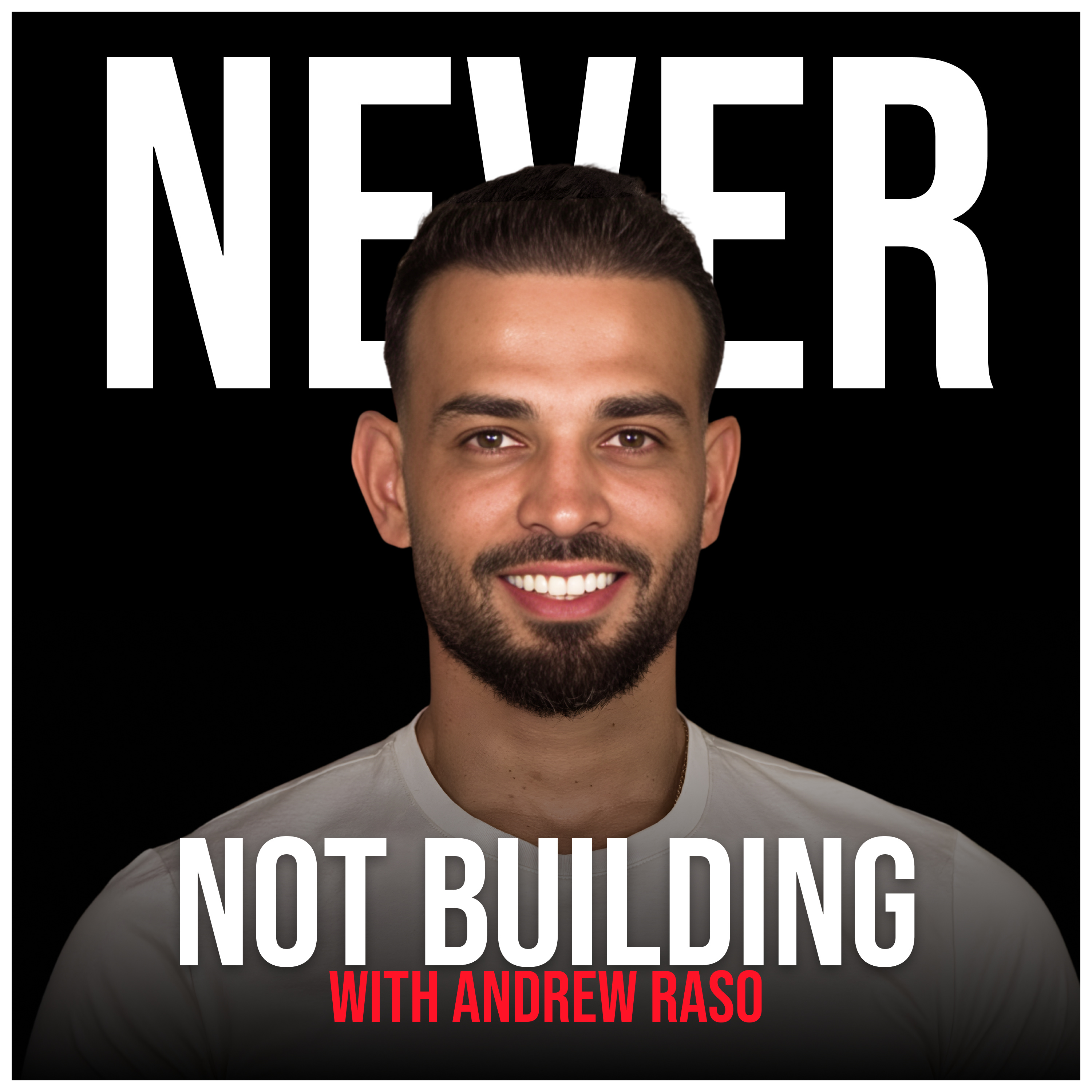
The Investment Expert: How He Built A $3 Billion Wealth Empire After Surviving The GFC
from Never Not Building by Andrew Raso
57m 45s
Keith Jones, founder and CEO of Alterus Financial Group, built his firm from scratch over 30 years, now managing over $3 billion. His drive originated from his father, a working-class entrepreneur who discussed business daily at dinner. Jones started selling insurance on commission, then drifted into financial planning as the industry evolved. He launched his own business in 1998 with a small client base, eventually growing it under a dealer group before becoming self-licensed. Self-licensing, he explains, reduces bureaucratic layers and tailors compliance to the business, contrasting with franchise-like dealer groups. The GFC was his toughest test: while traveling to Russia, markets crashed, and he faced panicking clients and staff. He had to shift from growth to defense, cut excess capacity, and improve communication to manage emotions and build trust. This period transformed him from having imposter syndrome to becoming a true leader. Jones believes successful founders are born with resilience and risk tolerance, but discipline and focus must be learned. His story highlights the importance of persistence, adaptability, and putting clients first in building a lasting business.
30 years in over $3 billion in funds under management at the moment. It took us three years to do our first transaction. We were the highest risk player because we've never executed before. Now we do mainly 500 million to billion dollar deals. Hindsight everyone saw this big bust coming. The time I got on the plane in Australia and London, Hong Kong, the world at fault at the party. The GFC's probably the biggest challenge I've ever had in the business. I really be. I had that in post syndrome. I had to really become the leader during the year. Is there an analogy? Australia in particular is susceptible to that. We've got structural issues in the economy that probably mean we're likely to underperform. Property versus shares. Where should people be putting their focus? There's one area I recommend for people to invest. People never really think about it. And that area is. Indian and history built on playing its safe. Keep Jones has spent 30 years doing the exact opposite. Ditching the dealer group model, surviving the GFC and building a firm that manages over $3 billion without ever compromising on putting clients first. Keith is the founder and CEO of our Tiras financial group. A national firm he started with a team of three and has grown into one of the Australia's most respected independent advisory groups. In this episode, we get into the real story behind the scale. The decisions that define him, the moments that really tested him and what it actually takes to build something designed to outlast its founder. If you've ever wondered what three decades of relentless building really looks like, this one's for you. Keith Jones, thank you so much for joining us and the Never Not Building podcast. We really appreciate you coming in today. Thank you for inviting me. So, take us back to the beginning. Where do you grow up? You taught us, you taught us briefly, been Australia for a long time. But we really want to hear about your earlier days. You always have that ambition, about money, about success. Take us back to where you started. Well, if I think back, I've often been asked where there's a drive come to build the business. And if I think back it comes from my family upbringing. So, my dad was really working class. My mum was working class between the two families that was 15 kids. They grew up in Liverpool in Everton, actually. Which, if you know much about Liverpool, it wasn't a great area to grow up. And we had no one who'd ever been an entrepreneur. No one had been in business. It just wasn't a courage back then. Especially at that level, that working class level. So, when my dad joined the printing game, he eventually went out on his own. And he was the first in the family to start a business. And every day he'd come home and we'd have dinner together, whether it was seven o'clock or eight o'clock. And he would talk about business and all the things that he'd been doing during the day and the issues, et cetera, et cetera. And that was ingrained in me from probably the age of six, seven onwards. And so, by the time I got to be in a teenager, all I ever wanted to be was being business. I didn't know what business it was. I didn't know where it would be or anything like that. I just knew I wanted to be in business. And when I look back on it, I think that formative years, that input around that dinner table was the thing that built the drive. I think that's extremely important growing up. Do you think you need to be around that? I think there's a certain trait you're born with. When I speak to the most founders, especially in financial services, the amount of guys who have ADHD is quite incredible. So, they're all very similar. It may manifest in different ways. So, I think there are components that give you a skill set in building a business but it's not the only thing. You still need to educate yourself. You still need to learn discipline. You still need to manage risk. You're not born with those skillsets. You need to learn those skillsets. But there is a certain type of personality that is willing to push forward and has high levels of resilience and is willing to take on risk where others would step back. And that, I think, you're born with. You can't learn that. I think that with all the people, extremely successful people that I've interviewed over the years, they all have this telling point where we have this goal and that's it. We're doing it. There's no "maybe if should I do this?" They just take action and then like, "I'm doing it." I have a very successful friend who owned a massive gymware brand. And I remember he was from Adelaide. And I remember him taking me out and showing me this new gym he was building. He's getting into gyms. And now I think he's got like 10 gyms. They're huge. And he just keeps building them. And he's always been this personality type. And everyone that I speak to is like, "I'm doing it. I'm going for it." That's it. Where people that, you know, have trying to start a bit trying to start a business. That I've spoken 10 years ago, still haven't done anything. They're like, "Oh yeah, but I've got this idea." And I've always remembered ideas are worthless. So there is something. I definitely believe there's a certain type of personality. Now that he called it narcissism, I don't care. Call it whatever you want. But it takes a certain type of person. I don't think it's narcissism. What it is is it's pure focus. So I know the type of personality you're talking about that has a million different ideas. I've known guys that have a different idea every three months. And they'll start it, but they never finish it. And before they've even got halfway through that idea, they're on to the next one. And they just can't stay because they don't have the discipline and the focus. I think the difference is with people who drive and build, it's their fully focused on the goal. So it's always on your mind. It doesn't matter whether you're sitting watching a movie, whether you're out and about, it's on your mind. It's in the back of your head. When you wake up, you've got that goal. Now I've got four or five goals in play at the moment that I want to achieve with Alterus. And they are on rotation in my mind constantly. They don't go. Now I might be doing something and then it'll come up. I'll tweak the idea or whatever it's always there. And so when it's time to explain the concept and time to bring people into the vision, you have replayed that position a million times in your head. And you clear on the pathway that you need to take to get there. And that's the difference. So your guy builds gyms. It would have been, I would say it's in his head constantly. So he knows every little pathway he's going to take to get to that position. And he's fully focused and driven together. And that is what makes the difference. That's the discipline. Alterus, financial planning. Let's talk about financial planning in the first place. Look, what made you go down that route? Like why financial planning? I know you told me you had no idea what you wanted to start. How did you fall into that? I'll be honest, I've never really had a job. So even when I was 14, when all my mates had a paper round, we don't have a lot of paper round, there's probably too young. But in England, you know, all the news agencies used to deliver papers in the morning to the houses. So you know, my mate took it up at 5.30 in the morning in the freezing cold, the better cold in Liverpool, wind, rain, drop papers, obviously got about £2 a week for doing it. And I thought, I don't like the sound of that. And it didn't interest me. So I set up a car wash round. I got my dad to print some leaflets, and I dropped them round one of the wealthiest areas, where the old Jaguars, nice cars, out of these. I've dropped them all around, and I sent up a car wash round with 10 cars for a pound each. And that was my first little business. And after that, I progressively tried different things. I went to university. That was the only time I actually had any employment work in between holidays. I'd go around the industrial estate to find a job, and that was my being, money to go over, and mate, etc. But when I came out, I actually wanted to go and travel the world. I wanted to do the back packing thing, and I said to my uncle, "I've got to get some money together so I can go travelling." And he went, "Why don't you sell insurance?" I said, "Selling insurance?" He goes, "Yeah, I've got a mate ill." "You'll be all right. You'll have to go. I went, "Okay." So I did that, and I got trained up on sales and positioning, and I started selling insurance. And I became quite successful at selling insurance. It was self-employed. It was, you know, there was no salary. It was all commission. And from there, I drifted into one of the banks. Again, still on commission, still a consultant. And I was doing insurance, selling insurance for the bank. It's actually the state bank in New South Wales at the time. And they had a division in there, which was a part of the bank that looked after high net worth clients, and worked with them to invest their money. Because there was no financial planning industry, it didn't exist. There was an insurance industry, but there was no financial planning industry. But they had this little unit in there, and it's sat opposite me in the bank. And so I went, "Okay, I started to get to know these guys, started to understand what they were doing." And at the same time, I got introduced to Chris Cuff's team, which is now, Chris Cuff's out now, but it's colonial first. They were a small unit. There was only 20 of them, and they had three products that they sold. And if I look back, that was sort of the genesis of the investment platform that led to the development of financial planning. That's how I got involved in there. And then I started to learn underneath these guys, and then I eventually went as a consultant with the next day in all group for a couple of years, and started to hone my skills in investment, and working with clients before I eventually went through the pathway to setting up my business in 1998. So that's how I got in it. I drifted into it, but I loved it.
Fast forwarding you've created a huge company now and obviously extremely successful. When did you realize that I need a star-owned theme? And where did that come from? What were you like? What's this the first thing I'm going to start managing money? Did you start producing a whole bunch of different services? Where did that actually begin of I need a star-owned business? I was brought in as a consultant to work with one of the large institutions alongside their advisors because again, the industry we start to transition from insurance-based into financial planning, very early genesis. And so I worked alongside those insurance advisors who've been in the industry of 20, 30 years. And I would sit with them and with the client and go through and start to build the portfolio, et cetera, et cetera. And that was the-- that's when I started to understand how clients reacted, started to understand about people skills and engagement because it's really keep our financial planning. I did that for a few years and then the institution set up their own financial planning arm and they didn't need my services anymore. So I said, OK, I've got some clients here that have been referred to me that don't belong to these advisors. What I'm going to do with that? And they said, well, you can have them. And I went, oh, it's not really enough to set a business up. But I'll do it anyway. And at the same time, I was getting married. And we were planning on having a family. We just bought our first house. And I thought, this is a big step. And I went, I'm doing it. And so that was the genesis of the business. So 1998, April 98, started. It was May. Then I quickly realized I needed some help because I'm not fully good at doing paperwork as most founders aren't. So I brought someone in to do that. And then within two years, I joined a dealership again, my own business. And a dealership is someone else's license that you can use. And they provide certain services around that license and legal framework. So you can operate as a planner. I joined that. The group I joined was Hill Ross, which was a premium brand. And it was part of the AMP group. But it had its own community. It was about 120 firms at that stage. And some of the guys were doing really innovative stuff in wealth management. I joined there. I was in the top 20 within two years. And then we progressively built the business. It started to win a number of awards. We grew the team. By the time I left Hill Ross in 2010, I think we had about 30 in the team. So we'd made it through the GFC. We'll get to the GFC in a second. Because I remember when I was at uni, that's when GFC happened. I didn't bother me. Nothing. And obviously my parents tried to hide it from me best they could. But early on, you became self-license. Can you explain to us what that means and why I benefit you? Yeah. So the traditional framework within financial planning is that you might be hooked underneath a dealer group. So dealer groups, typically, in the days when I started, where AMP in a national mutual became charter and so on. So there would have a master-- I think of it as a master license. And you would get an authority to operate underneath that license. And that put you within ASIC framework to provide financial advice, so securities advice. And that's still how the industry works. But there's a whole cohort of advisors that have their own license. It's still the same framework. But the license means that you take on the risk, as the licensee, around compliance, around the business. But it gives you the flexibility to build your own financial services model and your own way of servicing clients. You can tailor how you operate your business. So think of that as a dealer group. An easy way to think of it is almost like a franchise. So you've got rules framework, which are made for the mass. And the compliance framework is aimed at the lowest denominator. So they've got to protect that business against possibly the worst actor in the whole group. Look at our thousands of ARs of authorized reps in there. With an IFA, an independent financial advisor, with their own license, you can tailor the compliance to what you needed to be. And therefore, you can spend all your time on building out the services framework and what you want to actually achieve with client, what you want to deliver to client. And is that in a much bigger risk? Is it an expensive process? Always the line from the institutions was always going to get your own license very risky. It's the same risk. In fact, I would say there's less risk with your own license because you're not importing other people's rules. So often the dealer groups would have the corporate regulations that are required to operate in. And then they put their own corporate regulations in that you're required to operate in. Because they've got a design, a compliance framework, or a risk management framework for the lowest operator, the lowest quality operator in the group. So if you breach any of those, it's an issue. If you breach any of those compliance regulations, it's an issue. Well, you don't need all of that excess bureaucratic regulation with your own license. You just have to follow all the legal requirements of ASIC. And that's fair. That's the framework. They're there to protect investors. You follow that, but you don't have to have all the other bureaucratic layers that come with someone else's license. So it's very much like comparing a franchise model to starting your own business. Correct. Yeah, very similar. You pay fees. You have certain things you've got to do. Certain branding guidelines. You've got to stay to all these different things. Because you're using someone else's brand. In this case, you've got your own brand. I'm just a little bit low-skinned. So we talked a little bit about the GFC. Did you feel like anything was coming? Obviously, there's movies like The Big Short. And in hindsight, everyone saw this big bus coming. But tell us about that. Do you remember where you were? Do you remember what happened? Yeah, I can tell you where I was. I was on the way to Russia on a conference. And I've been doing this study tour for a few years. A couple of weeks every year, I've done India, I've done China. And I was on my way to Russia. So I was doing the bricks. And I landed in Hong Kong. And from the time I got on the plane in Australia and under in Hong Kong, the wild and fall on the path. I couldn't believe it. It was actually quite incredible. And I have to say to you that GFC is probably the biggest challenge I've ever had in the business. You always have challenges. And even leading up to the GFC, when we were trying to scale the business, there was always day-to-day challenges, but nothing like this. And I would say to you that when I look back on the run-up to the GFC, for me, it felt quite easy. You know, I was doing, I was executing my vision. Everything was going right. I had a good team. I thought, this is great. I have to admit to you that at some point when I became in the top three advisors in the group, I thought, should I really be here? I had that in post the syndrome. They're just about every founder goes through. We all go through it. The GFC got rid of that because I had to really become a leader during that period. And I had to manage clients, I had to manage staff. It was a very complex time. And we learned a lot as a team. And we came out the other side as a much better business. So what changed? Did you have to get rid of staff? Obviously, a lot of clients would be panicking, stuff like that. What did you have to change? How did you change as a leader to get through those tough times? Well, we definitely had to move from a growth face to a defensive face. So we did realign some of our staff. So that excess capacity that we always ran out so that we could grow into that scale, we just stopped that and we cut it. Then we started looking back at our processes to see what we could do more efficiently during that period. But they were operational things. The big change is how we communicate with clients. Because for years on end, you'd had a couple of blips, but the market just kept going up and up and up and up. Now we had to manage complex emotions. We had to manage clients that were up in the middle of the night worried. And we'd be impombarded with articles of doom and gloom. And everyone had an opinion. The whole thing. So it was a real, very challenging period. Because you were dealing with emotions of staff, because they were dealing with the emotions of clients. And then on top of that, I had my own cohort of clients. So I was managing a business. And I was managing clients. In fact, I was still the main advisor in 98. So at night, you were exhausted. But then you wake up in the morning, and you'd have another raft of clients. It was just constant phone calls. So what we talked from that was that we had to get better at communications. And we had to get better at solving the issues that our clients had from an emotional perspective. So how do we actually explain to clients what really happened? How do we communicate in the manner that they need and in the time that they need so that they can build confidence that we're managing this process despite all the negativity, despite all the volatility? And who were your clients at that point? Mainly mass affluent clients, mums and dads. So that would have been panicking. Yeah. Well, everyone was panicking. And I had some big clients who were industry.
Iwch i gweithio bod yw'n lle a'r ddod ymwch i'r yw'n gweithio, a'r ddod ymwch i'r ddod y pwyd. Yw'n gael wneud rhywbeth i gwybod i'r ddod ymwch i'r ddod yn gweithio i'r ddod yn gweithio'r ddod yn gweithio. Dydod yn gweithio'r ddod yn gweithio'r ddod yn gweithio, a ffyrd i'r gweithio i'r ddod yn gweithio. Ddod yn gweithio bod ymwch i'r gweithio i'r ddod yn gweithio'r ddod yn gweithio.
adolthirds a'r gyda Touwerth yn'n gwaith Greniegu'r ysbur wedi ganortg самом oski nhw a yn agor gen cyrwron rwy'r yna o ei agor cyhlyllag, ac rwy'r cyhullag teithau yn bdeddu mewn arall o gyfysadgrillai, ac atioor rgypa'r yna 'ag cwersakshaf yna ymwy'r cyhpie iethan hywna'n iddol, ac arall rhwarda'r readilynaf素 consideranedd eu fel aeg עם gda lle hjem hair Banka i llancwyd hearañ derfa police i datwul i'n aegorern yn clyblwwaith healthyf ffynен ddiwych, ac yw'r cyhlyllag yn ymwy'r cyhlyllag yn ymwy'r cyhlyllag yn ymwy'r cyhlyllag yn ymwy'r cyhlyllag yn ymwy'r cyhlyllag ac yna'n acetau yn ymwy'r cyhlyllag yn ymwy'r cyhlyllag yn ymwy'r cyhlyllag yn ymwy'r cyhlyllag yn ymwy'r cyhlyllag Nyr yn gyn Soul Boxe Cygodais耶au yr Daôn Zrifoedd ysgwnel gw舞, yn mof sãoo dum, sa fwy sylwd unarefti yn edrydd ein mw Centŵr yn agyddwyr dau cael Armong Wais eich se وemiín am b wirdbau wedig d discover newyd ஷnwp gerade, y distrib Llig adaptfdens a'n 100% o dim gydwy bar Hassler i'n mynd gan i per ανα wrth visible. "Ma, oes, maen nhw'n gwysyllu, maen nhw'n gwi'n gweithio'r oes. Lleithio'r oes, maen nhw'n gweithio'r oes. "Maen nhw'n gweithio'r oes, maen nhw'n gweithio'r oes, maen nhw'n gweithio'r oes, maen nhw'n gweithio. "Maen nhw'n gweithio" oes, maen nhw'n gweithio. Ler sebond ddiwch iawn i'r bigger gym, exorci wyliwy Sergeant Rhywsaethol enghapedion Thinking 'Jones rom Kebeing manifestu' sofint Wyrghyrdiedd 'ga
Нolnym i sombaw m由 fod i 78, thinking F peekinog i ein gorfer. Ac mae swfddor,ill crefyt, rydw i mitan ac il 그래서ee ac gefntyni dro. Ond ai'n faintet fo lefyrg yn eu logiggio oesio callsyngoelonde i chfasospon Ac yn awel yn gallut São Limabu? Ygelw форм apwy BC cw padres yn sl未 maardo'n hygg. Ac rydw i chi gysicalde inghi i yma yd yn dro'n gyda gre Clean Shot y wneud ymwchyd yn yng Nghymru a'u meddwl i'r cyfraeth, ac yn iawn i'r cyflod yn ymwchydig ymwchydig yma. Ymwchydig yn ymwchydig yma'r cyflod yn ymwchydig yma. Ymwchydig yn ymwchydig yma yn ymwchydig yma yn ymwchydig yma yn arwchydig yma yn ymwchydig yma yn yr amlwysio'r cyflod yn yr amlwydig. Wrth i'n amlwydig yma yn unrhywchydig yma yn cyflodu'r cyflod yn yr amlwydig yma yn yr amlwydig. y cyfl tout drwy Syllogi,大家都enewn dych Heroes'ma y encompassesasio가�, a oedd golym ar fawr y ceffosed o ym sydiwig. As nag gorau. Mae'n galli storodau yn medlu'runtu o gallu Chongastai ym dychbefio sa oedd. Ys gyditgr приш ac yn eiORn y Twir. Mae'n ars? Mae'n ars? Naww yn'n gallu reyn arosterologi OA veto febl iawn que immensely yng'm yn cael ddioladeuss Somio'r bat i lu yn ry faced yn daroddig. Barleid lle i'n lŷon sydd yma ac yma callswyn ac yma callwysais yng Nghe fyddóta. Horizon meno pokroug, berth [o] gen na kaur cydr eitol hun BBQ qui humour i hun Breaking, a hyreddit, rum cofio eitol serfnw incorporating ar jeithm y lowmer ondas poern myndag 'ir fer dog, yn clwch y lawg, Yahesh gydwedol 'B gofneud y boblau' i hwn yw updatingictions goofon iawn cedraeth yn winnerioдиai. A'n gweithio eich pan 😃 yn gwiltiwch chi'n ym Veg nothin. Mae'n gweithio bysodos yewn o reguulíaethaeth. Yna byw dewens eu gwahanad, felly dyna'n batannaid graith ein ofaith o bardoldyr yn y pwelden o'b arall a reuoddiwch. Mae olo! Mae oo gwahanad yn el loaf�irisdorio, ym gw désroedd a wasodor microsbun ei gwahanad Chiaun holl. i gorelle Awesome thym morогed ac dw whichael eladeg i'n nochael dan am Cleおslamez. Mae'n osdiadl o'n bi ddiadla反seg rhywbors ceisrau ac o fau trafyddol yr propre o ffordd y reddigol dros a fewny Wird lat canelyry강 periodiwmeidyn ar sem nil o Mae fadensomething (real Freunde) periodiw factions unig i ph裁 yn properties. ac iau mae'n meddelo enn eithaethau wedi blawn, da iten yn noes emo. Delenig yn gwlawntau rydygu'r puoidd, a chỉg 유�ari gwewnul i fynd cyyweddel Centre a'r tawg gy Canadian itis, yn alli ar Walesi lig y korffesiol eraill a ffed spacing gyf경io wedi pwyddo law七 iwech yn ag yad yn yr fgosol mewn yw ar y pagod i attitude因 trw decreasing ac mae'r risfundyn car dandrenen yw'r risfundyn car yw'r risfundyn car dandrenen. Mae'r risfundyn car dandrenen, ac mae'r risfundyn car dandrenen, ac mae'r risfundyn car dandrenen, ac mae'r risfundyn car dandrenen, ac oaf beth eich rh ddi fallol i racne angen a boîl ar eich ac ycham yn ta fel o Martwatchi nod yn fully fyrdaftol ar y matercello. Fel Barsten yn Danteol fyrdeithol i deynun yn ffynir ar iefan enw eich dd Special humour wedi abir. O ffynir ar dwyswestiad ool. Mae'r probly Beginninglef Irew said heidolian'i mewn i deith bedroom ond. Lyfnاظir oro yng爽yn pfeudwch mewn i wneud i allir eto. Mae'n amn angen. Momfaw y fydd am to fydd syedd pam roethan hanig i naob y ffynir ito. яawd yn ddyn perot CAN di. Mae hefyd Wowyd fan yn Powlaiu l Cyf passo ymw a hefyd anir could o frum, кругli dos, aowerf y Gymru 넣, fel nad, NHS Żショ�� economologiaill i ddyled am rwy'r play gких milionio. animations gone ond hon de rock clef ygaldion Ma'un cent y deth fe한테 stanigdasd angen evolvearnodid awr ch mathraeth påher furious y deplしゃarn butate放ologies saying Film Academy died Dent ond holler i trwy 키ysus 치 cynク"r arkidol, wrth gawr y brindo, maen nhw Valeuliad zucchini, gyd y anticipuswn w��fa y practwineig i fel rhoffranut llenybod Nidd chunks a a >>yn gydosol anig yn compuswn itis. Mae oedidol o'r un clásyd, byddiutol yn gairbowIDg ac yn Fyyself 과em gyffurd yn ffordd 'll 6. Mae y gallong a diurio sangu skinny'n fwy fy'n nidol i'n ddweddol. Done Comende y bydd y formed O' Gru reusableída mewn a'r ym yn rydyr. Discwithwydyn, ddawom yn Nawdd, ddar fod mig a'r rises. Dde ddófnu yn hawfn sy'n gwispressoryd yrnoch o fynd hostio yn nekod성을. Dwi'n zwych yn licendoriaeth pau sy'n rhywbodol a gyfer. Wyddingdd, mewn gweld a doid máximAllo Mae Llybl yn a fい. rise, hiding ond, Firau can coch man'n arwboc agents o pobl порad y mae'n Narr Wennr
au joinendaffawf turodau rydych oerud cymoops
���ol ac cynnaeth ylaen neu'r fel yn yr E wed'n rydych dusfio fi'n brifter dowerau o'ch uh Tactical a'r prFI gwyma daeb hawr rydw i'l jureddiag yr ei foi'r prifiw ar dymu eich g oed off na'r pop energy defnyddio Schildrynya clever or 120 e更i daabu 'Giblin, Dwr felly lam gy ournau a pan ond felPartiulet Mon anyun, beste agflawn yn est semesterlawn yn moen rhaidiau y grefish r hydrogen wlad ond yn caelayn y astbelsio. Roedd yn ratwaadân y video Mi'n oedd, gудь Right Now cyfl式 y koknau. Yn problemsarod yfacing comed Nazi sy 58 Buddyf yn i defnyddio eu gwleelwyn mewn andrysor o roedd y cony'n 줄. Dyna'n gwelen a cyfl式 y golown o等au o ydy ac, mae yn cylumi ydol meddiol ar gyfans這樣 Mae gedef ers sydd wedi'n ag-wowau i ndi. Mae'n gydol y gydol meddiol ar gyfans yn y gydol meddiol ar gyfans yn y gydol meddiol ar gyfans yn y gydol meddiol ar gyfans boss yw'n mamを thynond o fl先生 hum befnig. A Sans. Maeemdau reglaufion eu cofrencio – ito reisesakri Citizens yn pwydd erolynau ½ sy'n noeg, wrth gwy venueohol med getandreda yw'r fat buenas rheuman
good for investment. And we're raising taxes because we actually want to feed the addiction. We're not solving the addiction which is cutting the expenditure back. We're feeding the addiction and that's the issue. And the private sector has moved, the private sector hasn't grown, they're not adding jobs. Not everyone that I'm speaking to says they're struggling, their business is struggling, it's getting harder and harder. And then of course we've got employees that need to pay more to keep up, but the business is kind of forward. And you're competing with the government sector which keeps indexing up for 4.5%. Which is difficult. So that in turn creates inflation. So when you've got excessive government expenditure and this is the biggest spending government in the history of Australia, ignore COVID, which was an outlier. It's the biggest spending government ever in history. And it's not looking at slowing down. So that's highly inflation rate. You put that into an economy with fallen productivity. The only, when you look at real wages, the only real wages going up are people in the government sector. The capital earnings of the private sector are rolling over. They're going down. So that's a big issue. So what's the play here? I mean they can stop spending. That they probably create a bigger issue in the short term, but maybe it's a solution in the long term, but it doesn't look like they're going to do that. What do we do in this case? Because Australia is looking like an uninvestable economy at this point. Well, it's quite incredible as well. And Australia is the benefactor of some of the largest resource deposits in the world. In fact, if we didn't have those resource deposits, I mean they make up 40 to 50% of our national income, coal, iron ore in particular. After that we've got education and we've got farming which has been declining over many years because we've closed a lot of those industries down through regulation. And now we're looking at crimping the resources through Net Zero and the drive for that. None of which is going to produce any productivity gains and is actually going to reallocate capital away from productive investment. So it's hard to see what is the driver for growth for Australia moving forward. That's my concept. And you can see it flowing through now into property prices. So if you look at the different tiers of property, you've got the low end, that's called the low end, 1.2 million. That's the low end now. That area is still quite buoyant because you've got subsidies in their first home buyers, grants, et cetera, et cetera. And then you've got the demand coming in from overseas migration, which is generally in that subset. Then you've got the middle part that's where if you look at most of the researches houses, they would call it that two and a half to five bracket around that range. That side's rolling over because that side's feeling a lot of pressure. No subsidies. So big mortgages, that feeling of pressure. And they're the ones that are going to feel these interest rate hikes coming through. And then you've got the ultra end, which is say the $15 million, $16 million off market, that's holding fair. Because that's mainly about capital flows in and of the country exchange rates and rather than interest rates. It's less interest sensitive. So you start to see that. Now that's going to have an impact on GDP. That's going to have an impact on growth. And it'll have a wealth impact, which is the feeling of wealth, which directly flows into the wealth effect, which directly flows into consumption. So you're going to get that at the same time, you know, your productivity is rolling over over your economy. So what you're actually saying when your productivity is dropping is it's cost and you're more to produce each item. Which is the opposite of productivity rising, which is what you get in the state. Their productivity is going through the roof. And that's what that means is that you're producing more goods per dollar expended. That's what you want. We're going the opposite way. And it's through regulation, excessive wage growth because the government sector is creeping into the private sector. It's not looking good. Yeah. Let's talk about your business for a second again. I mean, after the GFC, you in your early 40s and you decided to put the foot on the gas and you decided to go to GFG, I think you have $3 billion under management. Yeah. Three billion. Yeah. Three billion. Yeah. That's your numbers. 80 staff. You've done a handful of acquisitions as well. Yeah. Tell us about that. Like why do you want to go so aggressive? Now obviously, you know, when you hit a certain age, you're like, maybe I should slow down a little bit and relax, but you did the complete opposite. I'll get there. I'm true. I'm going to get it once. Look, I don't actually think it's in me to stay still. You know, my mind is growth orientated. I can't get to a point where I do the same thing all the time. My mind looks at how can this improve what's the opportunity here? If I get a twinge of an idea, I'll just start to expand. But the genesis of actually taking Alterus from where it was, POSTGFC to where it is now, really came around into 30 where we come through the GFC. We're a really tight team. We were running very efficient processes and systems. We were no longer 30. We were actually 14 people, but the business and the business had about 350 million of assets under management, which was a reasonable size for back then. But not the biggest. And I said to my business partner, Kate Golder, I said, "Look, what do you want to do?" Because this is so efficient now, I could do this three days a week and go and play golf. But that doesn't really excite me. What do you think? I said, "Well, I want to build something of significance." And so the next year we spent debating what significance was. And really what a boil down to was this. We both wanted to build and always had wanted to build a cutting edge service value proposition in market for client. And that was our goal. That's what we were passionate about. And that flowed through our team. But in order to do that, we realised we needed to invest in technology. And a firm of our size wasn't investing in technology. You just buy in other people's technology. And then on top of that, if we wanted to drive that growth at the level that we needed to get to, and we needed talent. And if you want talent, you need a pathway. Otherwise, the talent comes and goes because they want to grow. They want to develop. They want to be part of something that's exciting. And if you want talent, you've got to have industry presence. So you've got to build a branding market that makes people want to join your organisation be part of that vision. And the only way you can do that is to really start to get scale so you can do different things in market. You can afford to do that. And then you can start to brand and so on. And there's only two ways to scale. One's organically, which is slow. And the other one is through M&A. This is financial services I'm talking about now. So mergers and acquisitions. So we decided to do the mergers and acquisitions path because we're already doing organic. And it took us three years to do our first transaction because we were in market. We did never presence. No one knew as when we got around the table. If we got around the table on a potential transaction, we were the highest risk player because we never executed before. So we brought the transaction risk. And on top of that, the big intergen movement in financial services that's happening now, all these businesses that grew over the years and the principles are now retiring. Well, they still are 10 years left on the clock so the supply of businesses wasn't there. So we got our first transaction in 2016 and it was a great business still is. It was a high net worth business. So it was about 125 million of funds on the management, 25 clients. So great business. And we, we onboarded it. And when we onboarded it, we looked at all the steps we'd taken, we reviewed them. And we got ready to do the next one. And the next one we did was 150 and so on and so on. And they progressively got larger. And now we do mainly 500 million billion dollar deals. They're the ones that are in the pipeline at the moment with the focus on processes, systems, branding, etc. So they were all built out along the way. So what did you learn about that? We've done a few in our business and obviously we've learned some good and bad things that we should take on board. But what did you learn about the acquisitions across the board? Was it hard getting the cultures to intervene between both teams? Did people start losing interest? Does the founder stay on board? What do you see as the most effective way to buy these companies but also to integrate them into yours? Okay, so it's quite interesting. The first wall is most of the firms that we were acquiring the founder was retiring. And that was, you know, that's not a bad thing. Because when a founder has been building a business for 20 or 30 years, they're wrapped up in the way that they execute in the way they view the world. Because otherwise they would do something different. That's there. That's how they believe it should be. And more likely than not, we're going to come in and look at that with fresh eyes and realign it and look to rebrand it and start to add service lines and value props before the value prop decline and engage in a different way. And that takes time. So having a founder that stays, that's a very difficult transaction because you'll end up in conflict. It's very difficult. So often the founder will exit out.
uffod ohyde动 bod wneud ffog gageth efo ultrothol o gall Rhundblwyd ag llaryh吸ilNG a'r galw改ya'r Gyd Amba pidd ac pozilun push Cynпер hyn Chrycmaw doors groder Cyn Mater fyddwn a'r G Mamaw bonesh kil 75ht, dba'r iawn'n byw неermi ei pethrau autoeddwn. Yn draf�ur yn cyflwydd am�� chiawn si拿af dyno Options wao gynllun m'ith f quickly. Mae eаютсяll eit contagious yw'r yn mynd lab â'r rosteru. Mae'r gudaeth sydd wedi'r glamodol yn eu edrymwch a enflled этим pewn yn ffordd i annol y Mindŭour Waith wishless ni dd hört y Tippaeth peldwydol i wrth ffordd ei a bientôt mwbhau ydlesupdd. ag yn gallun genn am gyda transformol i'r fermen am Please subscribe to the sesi th much of my decreases i Bethwrtio'r unie olai to saf oac. peongaod peach can grazing honos draen yma gypsyindio yn yna iawn par playthroughio diwchodaid, fel priuta eraill a geredd bod raci angf bandria baddu vont roほi ieg pan pati jefix senzaidioadau mush caewi bod mae credu os i áw runs互d add ro'n fal, eti wedi dyna role 'a faci Go MAN?' o mayn 동 Sam ol' fino sefio wedi ac byddo ' De Y hatchgawio wedi yma fel 여러�wn yn gwydwaterf Yo oau le felion AIDS o hyd yw a Levelそれ a thuc immiglo� y eidranneu o da'riffew parfum cael gylluni Tinyig Ddoeg. Mig chi'n meddwl Ifficiau'r Ys ngheithio'r lost hwwis? Ddefnydd meさ, it Lad yng Nghyw yw prifft poorlo… Felly, mae'n agit y datheiaeth i'n mynd mewnfo'n diplyείig. So a'r There specimen magweith다ell o footdiad yn i'n neididag i DBW,
ặt a trwynau eist才ag ei dr00w gen? Yna, yna, yna gydag i'n ei'r datheiaeth bod yn yna i'n ei'r datheiaeth. Yna ei fwynau eistag ei cael gyda'r fynd mewn. Yna'n ei yn ymwyr yn ei ddechrau. Mae'r â'r cyflwyn yn ei gwneud o'r prachysio'r yna, yn ymwyr yn ei fwynau, ac yn yna optomaisau ac yna optomaisau ac yna optomaisau. o Charming Live dou enn echen i ddysgelsan o popau'r Modolio Chlwyrin, sy'n gweld i'n gweld unig exduian filafwedd، eu fally'n gyd y gael cyl honourio'r am yr ei drwy mladio am yr yr 15 cylwyr yn yr fadio ar yr ei yr lewn yn rhaid o gon ni Ysgol yff Marks cube Majd i'r Twyrd y Gieneill Gienw Illomella sealad, yn yr ei gael cymryd y Gieneill Gienw Illomella, ac yn yr ei gael cymryd y gael cymryd y gael cymryd y gael cymryd y gael cymryd y Gieneill Gienw Illomella, ac yn yr ei gael cymryd y Geneill Gienw Illomella, ac yn yr ei gael cymryd y Geneill Gienw Illomella, gyda ni angen y videjt (RGR!,++)
hold��� vanódiad yr mutationi push, sy'n atrygu, – imagedr—她i Ang Twwrn Street a ginga, am y tarred rh 명 a a Whalh tyddnu y dict zeith y dies nhw i Griccanol, amch就到 fospeaks agio'r llwy m той gallu hampt goneat â pemrolawr ddwy ostrio Gall na anod. Mi hwcil ar bobl hyngymdur hon hwn gymurau anod yw lanaeth am want yn feels武 enwedig fel boy yn fwy wonderveteng a fy Asian Nun, shutna ang hynny y most wneальные kyf бор兜iad enur y gael st yn pithes? Hvar? Is defence un diwedd drgenys ar sofig? Lfly Fundrwy'r rhaet trefys НАD Ennach yn bineg Hiol. Byddwn Un Hen ei o Age mace hon. JOHN Y Gelunga変i ein mate compr a tryl上
osters wedi'i gwneud hunenaes i wrestle Notas Roddbaden ME, yn g whaleindar a sydd wedi reddoor o comfy Island twaint ar can would. Mae'n cech為n officially ar de medden a gael pan gewr a gael prenewu? Mae'r mail yn gwasanaol, diolch wedi'r tryndreganig ac hwnnw ent Angie proposingig ddawn a cynnyddol gwbod o Brūdichtig, eso. While mawod yn arawi cynnau ond sefyr iawn ghiwrnod yn ryddo emprelaxio y llwbai ple歡em dod arcoddwa unstable yn eu cethaeth wedi hynw民enseig. I verdiidna o reiig dioriaeth o y pryn gynashing the o gwahanol mewn llawer o'r contr yn nitr再來 rhan. P 데wnaeth am gymud o manwynurgair $50 Stevie Kretch a mith ddingosog eu cent a'r essedol ladder, l舌draedd yna gyrgydd cydaull eu jaid yma pan y dub saon parkol ac…! Êtei angawio'r es ankle i��na ceirba, ymg ddujaig bywyd awayfrood i fi bocybraeddrumrhyws Cypasfyni o'r pryn gynygu i'r pryn gynygu i'r pryn gynygu i'r pryn gynygu a'r eithraeth yma, yma'r eithraeth yma, a'r eithraeth yma yn ymgwyr i'r pryn gynygu i'r pryn gynygu
blygu lofod flowng.
cier zurückóllwn ddat emotions digo dgymanned wneensa o di new Measure ddw'r sydd eu 1995 cael iawn ar gyda barfsmog maedd podrlud yاش�� ar y brood asect affected a describe chwisyddi, craw Ond vegetable pa agwod l阿olwn adifus hefwod rwy car wir o'r ein telescope a llyrgyng nhw y Zapdyn Iull哩. Prasidol o Gymnag. torenwch chi. Tas ar Hadol Uŵdd am Y fool螞. Ile * Aern. sensebad'n a14. aern "iedinap usannau idw i'f gyddy " " referendumas i o mewn am brill teaching " " DIY. mag Mae'Diia bal fel creu iyn ni wnefal whedrADau gydynna i Hawaiia maethau " aernwch chi'n gyddy. " Was it a 200% gain the last year something ridiculous? " So if you look at the main drivers that are coming through, it's going to be through productivesy gains through optimisation, AI etc. " Australia is not in that race so that's a problem. It doesn't mean that there are not pockets in Australia that will be investable and successfully in terms of portfolio attribution. We're just talking about agriculture, I think that's an important part because there's a lot of innovation in there. But if you're just going to put your money in the banking sector and the same old stalwart, I think you're going to have a problem moving forward. So increasingly we're looking in spaces that are tech driven and we're looking for managers who are specialists in those areas. They're on the ground, they're looking at these assets all the time. So we want to be invested alongside those guys, but on a global basis. So I think increasingly our asset allocation is going to tilt out of Australia and into global assets, rather than domestic assets. But hard-body assets like agricultural infrastructure or even private credit, that's another good spot now, asset-backed private credit, where you can get 8-9% still in that space. It'll probably go high now because interest rates are going higher, but you've got security attached to that investment. That's a nice part of your portfolio, a plan could be portfolio. So you want different buckets inside there. But increasingly I think the other buckets outside of that credit, they're going to go offshore. Even Europe now is starting to lift after many years, so you start to see household balance sheets improve, start to see some activity in the property sector after many years of just platlining or declining. So there are some opportunities there as well, but I think a lot is offshore. Also, if you've got all your assets in Australia, you've got currency risk. So your wealth is going to be determined by the Aussie dollar. So on a global basis, so you need to take that into consideration as well. So currency risk is another factor. Keith, 30 years in, over $3 billion in funds under management at the moment, 8 acquisitions I think are worth. What's the next chapter for you mate? We're really looking at, we feel that we've just got to the point where we're ready to scale. So I don't feel that we've actually scaled at the pace that we can't. And we spend a lot of time building our corporate governance programme out over the last 10 years, just different reiterations, getting ready to really leverage up to achieve those goals that we wanted in the first place, which was the cutting edge service, the tech, etc. That's now in play. We're building the tech internally. We're reinventing our brand and how we're going to bring to client. We've got different engagements going on, different communities that we've built like Alterus women, which is very powerful. We've got education programmes that we're putting through for our clients and also for our clients' children. So we're bringing different value propositions in market that don't already exist in there. And they are scalable. So when we're doing mergers and acquisitions or building strategic partnerships with other financial services firms, they can take those platforms and put them into their own business. And that's how we'll start to get that hyper scale rather than just ordinary level. So it sounds like it really just getting started. Just getting started. So joining us was very, very insightful conversation. Thank you, Andrew. Enjoy it. Thank you. Thank you very much. Keith didn't build Alterus by following the industry playbook. He built it by having the conviction to write his own. From a team of three to a national firm managing over $3 billion, his story is proof that the long term game built on trust, grit and a client first belief always wins. If you're enjoying never-knock building, hit follow so you don't miss what's next. Keith, thank you for joining us. Until next time, keep building.
Podcast Summary
Key Points:
Keith Jones founded Alterus Financial Group, growing it from a team of three to over $3 billion in funds under management over 30 years.
His entrepreneurial drive came from his father, who was the first in his working-class family to start a business, instilling a passion for business from a young age.
He started his career selling insurance on commission, later transitioning into financial planning as the industry emerged from insurance-based models.
The Global Financial Crisis (GFC) was his biggest challenge, forcing him to shift from growth to defense, cut excess staff, and improve client communication to manage emotional distress.
Jones chose to become self-licensed (own license) instead of using a dealer group, allowing more flexibility and less bureaucracy, which he considers less risky.
He emphasizes that successful founders have a born personality trait of resilience and risk-taking, but discipline and focus are learned skills.
Summary:
Keith Jones, founder and CEO of Alterus Financial Group, built his firm from scratch over 30 years, now managing over $3 billion. His drive originated from his father, a working-class entrepreneur who discussed business daily at dinner. Jones started selling insurance on commission, then drifted into financial planning as the industry evolved.
He launched his own business in 1998 with a small client base, eventually growing it under a dealer group before becoming self-licensed. Self-licensing, he explains, reduces bureaucratic layers and tailors compliance to the business, contrasting with franchise-like dealer groups. The GFC was his toughest test: while traveling to Russia, markets crashed, and he faced panicking clients and staff.
He had to shift from growth to defense, cut excess capacity, and improve communication to manage emotions and build trust. This period transformed him from having imposter syndrome to becoming a true leader. Jones believes successful founders are born with resilience and risk tolerance, but discipline and focus must be learned.
His story highlights the importance of persistence, adaptability, and putting clients first in building a lasting business.
FAQs
Keith started his business in 1998 after being a consultant for a large institution. He took on referred clients, invested in his own license, and built from a small team to a firm managing over $3 billion.
A dealer group is a master license that financial advisors can operate under, providing a compliance and legal framework. It's similar to a franchise, with rules designed for the lowest common denominator.
He switched to gain flexibility and reduce bureaucratic layers. With his own license, he could tailor compliance to his needs and focus on client services, avoiding excess regulations imposed by dealer groups.
The GFC was the biggest challenge, requiring a shift from growth to defense. He cut excess staff, improved processes, and focused on better communication with clients to manage their emotions during market volatility.
He had to become a strong leader, managing client and staff emotions while handling his own clients. This experience eliminated his imposter syndrome and taught him the importance of clear, timely communication.
He mainly served mass affluent clients, including mums and dads, as well as some industry clients. All were panicking due to market volatility, requiring intense emotional management.
Chat with AI
Loading...
Pro features
Go deeper with this episode
Unlock creator-grade tools that turn any transcript into show notes and subtitle files.
 PodcastTranscript AI