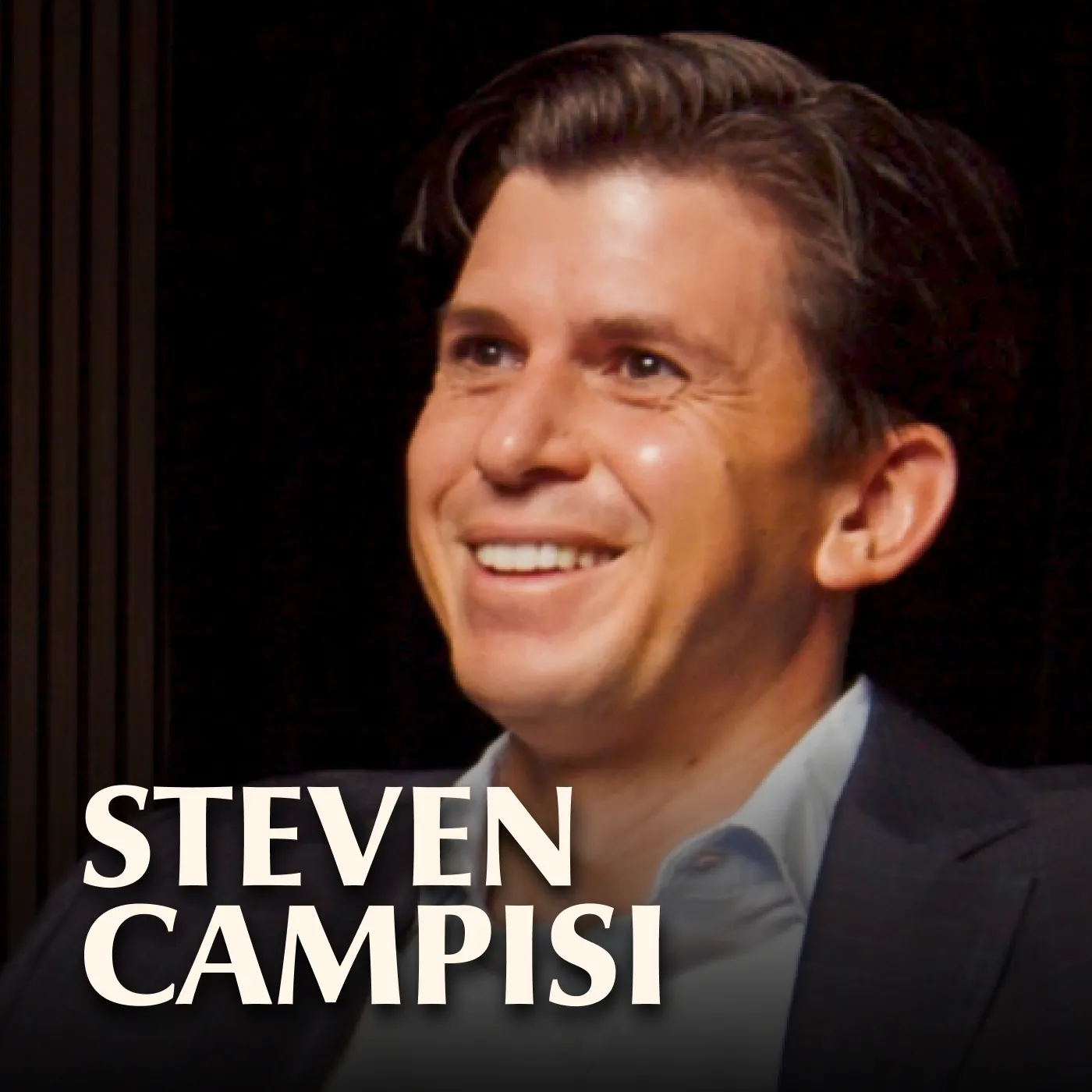
The Hottest Apartment Developer in America (Who Builds For 30% Less Than Competitors) with Steven Campisi, Hillpointe (#422)
81m 56s
Hill Point, co-founded in 2018, addresses the challenge of building attainable housing for median-income renters by reducing hard costs significantly. The company’s model disintermediates traditional real estate development by eliminating developer fees, GC fees, and subcontractor profit margins. Instead, Hill Point uses its own construction arm with direct sub-labor crews that travel across the Sun Belt, housed in worker accommodations provided by the company. This ensures consistent work and higher compensation for crews, avoiding labor shortages even during peak demand.
On the material side, Hill Point sources directly from overseas manufacturers, with a full-time team in China managing factory relations and inspections. Materials arrive at Savannah Port and are stored in a 500,000-square-foot distribution facility. The company designs its own building products, from flooring to windows, achieving costs up to 50% lower than competitors.
A third innovation is the use of prototype building designs (12, 24, and 36-unit types) repeated over 800 times. This reduces waste to nearly zero, as crews are familiar with the process and materials are shipped in pre-cut kits. The main bottleneck is not construction or capital, but securing and permitting new sites. Overall, Hill Point’s integrated approach—combining direct labor, direct materials, and repeatable designs—enables cost-efficient, scalable attainable housing development.
You as the developer are in control until there's any major decision to be made. And we're entrepreneurs because we want to control our own destiny. You guys build product for 30 to 40% cheaper than your competitors. If guys are calling us from the field and saying, "I'm out of screws," we know there's a bigger problem there because we gave you the exact amount of screws. We built the building 800 times, we know how many screws go in the building. What is the overall state of the market right now? There is certainly a shortage and it's only going to get worse of the skill labor. Or you guys also looking at unlocking sites that nobody else can even look at because they'll never have that advantage. We closed on our first fund like the week before the world shut down with COVID. I don't really. I think if we were about a week later, I'm not sure what it got in mind. What is the current state of raising money? What's investor sentiment in 2026? How do we build new attainable housing? We've got something we think is special here to come along with your business. So one of the most exciting things about your company is that you all actually have a real edge. I wanted to get straight into it. You guys build product for 30 to 40% cheaper hard costs than your competitors. I wanted to do a deep dive into how you all have built the construction arm of your business, stating back to the origins of the company. I co-founded the business back in 2018 with a partner. Our dynamic was, we had worked together at prior firms. Our dynamic was and still is, my partner really runs the construction and the material sourcing side of our business. So he is the construction expert. I run finance, legal, site selection, that's out of the business. We put together the company in 2018 and the thesis of the company is and was, how do we build new attainable housing? So housing that's affordable to people who make roughly median income and have that pencil to an IRR that's an attractive investment return. We looked at the attainable housing world and we basically looked at all the multi-family starts and said, "Okay, well 90% plus of what gets built is glass-a-luggery." The reason that 90% plus of what gets built being glass-a-luggery is construction cost. And simply too expensive to build brand new product and have it targeted to a median income type rent. And so we looked at that and said, "Well, let's create a company around the ability to deliver a nice new glass-a-luggery-style product at a cost discount to everybody else that then we can have a compelling investment thesis." And so the way we structure the company, we do three things a little bit differently than I think most of our competitors that enable us to do that. So the first is we don't follow what I would term a traditional real estate development model. So traditional real estate development model and I think you and most people out there will be very familiar with this. You've got a real estate developer. They put together the land, the capital stack, they've got the dream of what to build. They're going to come with a real estate development fee of 3 to 5% to cost. That real estate developer might have an in-house GC. They might use a third-party GC. But in either case, whether in-house or third-party, that GC is going to come with a construction contract that's got 3 to 7 or 8% of cost in fees and overhead. And then that GC is really what we would term a paper contractor. So all they are doing is they go out into every local sub market that they're going to build in and they go out to first-tier subcontractors for each key segment of the job. And they look for a turnkey bid. And they say, "Hey, I need to do framing, Mr. Framing sub, provide me a bid for labor and materials." And each one of those first-tier subcontractors as an embedded profit margin of 10 to 20 or 25%, depending on who they are and where we are on the cycle. So that's a traditional real estate development. The way we structured and built Hill Point is we're the real estate development firm. We do that through our series of funds. We don't charge a real estate development fee. We are the general contractor through our wholly owned entity Hill Point construction. We don't charge a percentage of cost to GC fees. So we structured it to try to align ourselves with the investors to say, "Hey, there's fund economics here and we'll be paid ultimately through the management fee and the promote in the fund vehicle." But then probably more importantly than cutting out those two layers, we are not what I would term a paper contractor. So we never go into a local sub market and go out to the sub base and say, "Hey, I need a quote for what should it cost me to frame in this market." We have established direct sub labor crew relationships. So we've effectively put our subs in business and structured them to travel with us from job to job to job throughout the Sun Belt. We source all of the materials direct to the job site. And then our project managers and superintendents are able to construction manage the whole job. And so by doing that, we're able to cut out not only what would be the not only would be a development fee and a GC fee, but also what would be the bulk of an embedded sub contractor profit margin. And so when you take out those three layers, add that up across an entire job, that becomes very, very material. So that disintermediation of the traditional real estate development model, that's the kind of the first key thing that we did differently to to reduce cost. Second was on the material sourcing side. So we then looked at it and said, "Okay, well, you know, we're going to go direct on our labor. We're not going to go through this chain. How can we get efficient on the material sourcing side?" So we started to and created a manufacturer direct material sourcing arm that today has 200 plus skews that we create, went to manufacturers created building products. And everything today from flooring, cabinets, countertops, lighting fixtures, plumbing fixtures, trim, doors, windows, all of those items, there are building products. And we're somewhere between literal pennies on the dollar for the small stuff, but 50 cents on the dollar, up to 50 cents on the dollar versus what everybody else pays for those same materials. Real quick, you said you created, "Is that your building specific products just for you? And is that stuff coming from America overseas?" Primarily overseas. So this all started with my partner Kelly actually before we met. His background, he kind of grew up on a construction job site. His father was an architect by trade and was a partner to development firm. And so he was as a kid getting sent out to job sites with checklists, go check the railings on this job site for HUD restrictions, all that stuff, and kind of grew up living eating, breathing construction. And early in his career, he had gotten hooked up with a real estate firm out of Chicago and became a preferred GC partner for them. And they were doing condo conversions. And they were doing condo conversions in 040506 in Arizona, where it was nuts. And so taking class B apartments and basically converting it to a condo and doing a sellup, condo mapping it and doing a sellup. And that whole game, the entire game there is, "How quick can I turn my unit?" And that's all an interior turn. So he was doing, he was the GC doing all these interior packages. And he had ordered flooring through a large American distributor, LVP, the stuff that goes in, and at every residential execution that's not ultra-luxury, the distributor was like, "I can't get it to you for six to eight weeks." He was like, "What do you mean you can't get it to me?" And they were like, "Well, it's on the water." And so a light bulb went off in his head and said, "Well, wait a second. If they're getting it and basically manufacturing out of Shanghai, why don't I circumvent them and go direct?" And so key at that time in his 20s got on a plane, flew to Shanghai, hired a translator, spent several weeks on a factory tour, going from factory to factory, located the factory where that flooring was coming out of, specked out a flooring product with that factory owner, wound up putting it down to deposit at his own risk, not knowing for sure if the flooring would show up in the US and obviously taking the bet that it would, thankfully it did. And that was kind of the start of that materials that supplied direct, that manufacturer direct model. And so we then took that at Hill Point and said, "Okay, well, we can do that way beyond flooring. We can do that in flooring cabinets, countertops, doors, windows, electrical components. And as our scale has grown, there's been more and more things that make sense to go direct, design our own product, our own specs, and buy the container load." And the third vertical? So the third leg of that stool is we looked at the multifamily universe and we said, "Hey, how everybody else does this for the most part is the developer finds land and then the developer goes to an architect and they design a brand new building with all different floor plans for every single market." And the huge negative of that is I was
the time and the architecture expense, but also nobody has ever built the building before. So you're coming up with this brand new design every time and we kind of looked at that and said, "Well, why?" Most of these markets in the Sun Belt are frankly similar in terms of the multifamily execution that works. Even when they design a brand new building, it's substantially similar anyway at the end in terms of the execution. Let's create a prototype model. And so we created re-building types. We've got a 12-unit building type, a 24-unit building type, and a 36-unit building type. A 24 is 212 split together, a 36 is 312 split together. We lay those out on a job site as they make sense. Typical job for us is going to be 300 units plus or minus. And then our same crews come through with the same materials and build the exact same thing over and over again. And so that's given us the advantage, I think twofold. One is the management. As opposed to having to run a direct to your sub-labor operation where every time you've got to teach the crews how to build something new, we're now at a point where we built our 24-unit building 800 times. So there is an embedded knowledge in that crew base when they show up. They know exactly what to do and they're typically moving from job to job to job. So they know, hey, I picked up construction on this job at this phase three weeks ago here. It looked like this and then I delivered it to here and do the same thing now in a new site. So that efficiency is one huge advantage of that. The second is on the waste side. So most people don't realize that when you design a brand new building every time and nobody's ever built a building before and typically when you walk a job site, you will see dumpsters full of leftover materials because nobody's ever built the building before. You've got all kinds of waste. And so normally that's about 5 to 10% of the materials is wasted on a typical job. We've gotten that down to almost nothing because we've built our material supply operation to ship kits by the building type. So we'll ship out pre-cut lumber, screws, and entire framing package per building. And then we know one, there's limited waste, but two, if guys are calling us from the field and saying, I'm out of screws, we know there's a bigger problem there because we gave you the exact amount of screws. We built the building 800 times. We know how many screws go in the building. Now let's kind of go deeper on each vertical. So as it relates to labor, the first question you said we don't charge a development for your construction fee. So how do you actually pay those people? Is it just cost to the project, whatever it costs it costs with no markup on top? Yeah, so it's all capitalized into the budget. So general conditions, the labor cost, the material cost is all capitalized into a construction budget. What would typically happen is one downstream, your subs would tell you, my bid for, I keep using framing, but I'm just going to use framing. My bid for framing is 15,000 a unit. Their cost is nine. There's six of a markup you never see. But then two, all those costs get added up. They're all in your budget anyway, all that labor is in your budget, all the materials cost is in your budget. And then your GC is saying, oh, and by the way, I'm three to five percent on top of that, whatever it is. So we put it basically just capitalize it directly into a budget, taking out the subcontractor embedded profit margin and not charging a percentage fee. So you're taking away the GC fee plus the subcontractor margin and just paying exact what cost it is. Correct. So is what's running home base, basically the asset management fee on the funds and obviously promote that's been created over time? Correct. That's what would run corporate. Okay. asset management fee and property management fee. Any acquisition fee? We don't know, no acquisition fee. As far as building these crews, so I'm assuming when you were doing your first deal, it's different than the pipeline you'll have now, how did you build these crews? And I'm assuming a lot of it's predicated on constant work to where you're not having a bunch of framers that are sitting around for a long time doing nothing. So how do you a build these crews that can travel? Let's just start there. Well, it started in Southeast Georgia. So that's where we basically started the company. Home bases out of Winter Park. My partner Kelly lives in Athens, Georgia and our construction offices there. And we had a couple of opportunities in Southeast Georgia that were we thought good development opportunities. So we started the business there with two deals. And the first couple of deals, it was not a highly specialized, this is a framing crew and now we're specialized to where we've got crews that only might do one part of framing or might only do one part of interior install. We didn't have the scale at that point to do that. So how it started was we just went basically direct to sub-labor. Kelly was effectively, my partner Kelly is effectively the project manager and superintendent of the job he lived on those job sites. And cutting out that first tier, it was, hey, you know, we're basically just executing direct with our sub-labor. That was the first couple. And the big debate, you know, that Kelly and I had early on and used to pretty much still talk every Saturday morning. And the topic always was what is going to be the limiting factor on scaling this business. And we both, I think, always thought it would be instruction capacity because of how hands on it was. And what we've seen as we've grown and as we've taken those crews from two deals to six deals to 12 deals and then started to introduce, hey, travel with us and then started to introduce more and more specialization is the simplicity of the repeat of the prototype as enabled it to where really our bottleneck is not construction. Our bottleneck is not capital. The big bottleneck is development and pre-development. How many sites that we actually want to build from an investment standpoint, can we get through the municipal process and to the start line? That's the big limiting factor. Explain why a crew would want, like, why would they want to work full time for y'all? And maybe it's because of the consistency of business, a sub that is charging a bunch of markups where it would appear like there's more money to go around for everybody. Like, what's the comp and loyalty structure to keep these crews? Hey, the best crews wanting to stay at hill point. It's, I think it's a couplefold. One is it would appear there's more money to go around, but there's not the end guys who do the work on most of these job sites are generally not treated well in our general low paid. That markup is captured primarily by your first year sub. So I think we are able to by taking out that subcontract profit margin actually pair guys more. That's one. Two is we're able to largely get them guaranteed work. They know they're moving from job to job to job, which they love. And they're moving from job to job to job with no headache, no hassle. They show up on the job site. It's highly specialized. Materials are there, no excuses. And we're able to get them paid on a percentage of completion basis, basically down to the week. Right. So they put down on Wednesday to get paid on Friday. So I think the guarantee of work and also that we're really able to compensate them or is why we've been so successful even, labor is a lot softer than it was, but even during COVID, right in that post-COVID 2021-2022 environment, we really did not have usual labor crunch issues. What does travel look like realistically? Are they finishing a just like two weeks on two weeks off, where they staying when they travel? Like how does how to cruise travel? Yeah, they're mostly on. Okay. Mostly want to work every day. Okay. So they want guaranteed work. They want to keep going. And we provide housing, a set up housing, try to arrange housing everywhere they go. So part of our budget, almost every budget will have between half a million bucks and a million bucks in general conditions for worker housing, because we're housing them on the road when they travel. And are your crews doing literally everything at this point, or is there anything that you do sub out at this point market by market? No, our crews are doing, I'll say almost everything. Okay. Yeah, the only thing that we, we we have a sort of an embedded sub-relationship with our site work contractor. And there can be some specialty stuff around that, but for the most part, our guys are doing everything that relates to the vertical construction of our prototype is our crews. Okay. Moving into materials, can you describe what this operation looks like? Obviously, you're sourcing overseas, you're getting better pricing, but this is a whole business in and of itself. You're dealing across the world, you're dealing with 200 SKUs, you're probably innovating on those SKUs at times, changing. Like, what does that team actually look like? And you know, it would seem obvious everybody should just go to China and get their stuff, but it's just really not that easy. Yes. So maybe talk about how the operation actually works, besides just we can get things for a lower cost than most people.
Yeah, I think one is you've got to have boots on the ground in China. Okay. So there's a lot of people who think they are direct to the factory owner in China and they're not. What's that mean? They're through a distributor channel. Okay. There's layers and layers of brokers in that world. And I think where people run into issues with overseas sourcing is they really, what you'll see a lot is, hey, I want to buy flooring on a one-off basis direct for XYZ project. But they really don't have scale. And a lot of the stuff that we do now, we really couldn't have done seven years ago because we didn't have the scale to do those products. Right. Now we're building five, six thousand units a year. So we've got the scale to do that. Today we've got full-time team in China that is doing factory relations and also all of the inspections or containers before they leave the mainland and come to the US. And so our operation, everything comes through Savannah Port. So and we have a half a million square foot distribution facility now in runs with Georgia. That hill point owns. Right. That half a million square feet. We are typically when we start a job, we are doing a full material buyout, literally getting all of the items on the water and putting them in that distribution facility until it's time to ship out to a job. So there is a full business around the material sourcing side that's not just, hey, I want to go on Alibaba or the equivalent of Alibaba and buy my flooring or this product or whatever. And you're right, we're constantly iterating on those products and constantly looking at products that we source domestically at a big markup, whether or not they're made domestically as a different question. Right. And saying how can we innovate on that product and make it better and or cheaper? Do you own the factories in China? We do not. Okay. How many factories total are there that are making your product? Is it all coming from one now or is it 10 or 10? No, there's a specialty factory. What you'll find is there's a specialty factory for almost every product. Yeah. So there's a couple of factories in China that produce LVP flooring and they make most of the LVP flooring that's produced in the world. And that's true for almost every product line building materials or otherwise. And so today there's probably 50 plus factories in total that are producing our various materials. All in China. And they're not all in China. All in the same region. Okay. So it's spread out. It's China, it's Vietnam. There's a lot of Southeast Asia, but it's spread out. So if I was going to go start and I was going to go over to China, you've kind of answered it. And you were just giving advice to someone that wants to start sourcing overseas. But maybe they only have one project. What would I need to do? What would be a successful first trip? Like what's the, not the secret, but like how do I make sure that I'm setting myself up and not having all these layers? Is there a way to cut all that out? Or is it really scaled that cuts it all out? I think it's scale and it's time. You actually have to, I believe, go and put your boots on the ground. You have to go. You have to go with the translator. You have to be willing to invest the time to get literally factory direct, meet with the factory owner. And you need to have some level of scale to do that. Wendy, I'll put the order in for product. Once you've closed on the land, like how far in advance are you putting that order in? Typically, when we close on the land and set a construction budget. Okay. So, and I only, normally that's right when we close on the land. Sometimes, if it's, hey, we're not going to start the project, we close on the land, we're not going to start the project for six months. Yeah. You might have a time gap there, but generally, it's almost simultaneous with land closing. And is it long-term contracts with these factories? Or is it something you're having to negotiate year after year? Are you constantly looking for another manufacturing for a product? Or is it kind of like these are our people? We're entrenched with them and we feel really confident they can deliver for us, no matter how big we get. Yeah, we're pretty entrenched. It's not a long-term contract. So, you're putting in orders and buying by the container load. And those prices can move. They're fairly steady. We're always trying to do it, look for how to do it better. But the fact of the matter is, I'll take LVP flooring, for example. You know, we have our skew of LVP flooring that is, as the wear layer we want, has the film on it, the look on it that we want. We'll vary that sometimes to say, okay, we think the style is changing a little bit. Let's vary the film. But it's primarily, you know, the 2026 vintage of Hill Point product will look 100% identical, no matter if you're in the interior of those units, no matter if you're in Phoenix, Arizona or Tampa, Florida. And from the time you put that order and how long does it take to land in Savannah? It's about 10 weeks. Okay. Plus or minus. And when it hits Savannah, what happens once it lands in your distribution facility? So it gets truck to our distribution facility. Okay. It's loaded into the distribution facility. Okay. Depending on the item, a lot of it we're having Kitted Overseas now to where it is kitted with our brand and Kitted ready to go out to the job site. Okay. Some of it still gets kitted in our distribution facility. And then our guys in the field, the project managers and superintendents, depending on where we are, stage we are in construction, they are ordering it for delivery to the field and then it's being shipped out to the job site from that Savannah area distribution facility as needed. And the kits are basically shipping containers, efficiently stacked with every material that you need. Kits will be down to the depends what the trade is but like down to the unit. So we'll have a interior kit. This is everything that you need kit wise for the kitchen interior. And we'll have for plumbing, you know, various kits with everything that somebody would need to construct that. This is more of a, this is kind of going back to labor a little bit. But just in general, like the sentiment is blue collar labor is relatively tough right now. Not as many people wanting to do it. You all have built a system of not only keeping crews but paying them better, keeping them busy. Just what's the state of the blue collar industry? Like how do you think about that labor crew and are a lot of these people working on visas or these American workers or is it both? It's both. So there's Americans and there's American citizens and there's visa others. I would say there is certainly a shortage and it's only going to get worse of the skilled labor, the skilled trades. Which are what? Plum, the MEP, primary mechanical engineering plumbing. There's absolutely a shortage of that. We've actually brought the license holder, the licensure for that in-house. And I think part of the secret of the prototype model is being able to use more and more unskilled labor where you don't need the same level of skill throughout your workforce on every job because you've got to repeat nature to it. The training, if you look at most construction, they have to be set up to do a variety of different tasks. If you are starting out at Brassfield Gory, they're going to put you in training program over three years and they're going to teach you everything from how to build apartments to how do I build the school, how do I build a bridge. And you're going to be in inch deep and a mile wide across the construction world. When somebody comes and works for us, what they really need to do is to be an expert in literally one thing and only the hill point way, only the way we do. And we're providing them volume to do it in our factory type model over and over again so that they can get really skilled at that. In a world of robotics, and we'll just say robotics for now, and you're building as many multi- you're one of the top five builders in the country. Is there realistically any, what will start on site, any on site robotics that you're seeing that's going to make a meaningful impact in how stuff gets built or is it a lot of lip service right now? I think it's mostly lip service. Okay. It's kind of robotics and refab construction that are both, I think, a lot of lip service, particularly for suburban sunbelt execution. Right. I think this stuff gets a little different when you start to talk about on the prefab side. Urban core, no really tight sites, union labor, I think that can very high vertical cost, vertical construction cost. That can be a different question. When you talk about, I've got a 15 acre site and I'm in first or second ring suburb of Dallas for Earth. I don't see it as cost competitive and I really haven't seen anything in either case, urban core or suburban on the robotic side that is making a meaningful difference yet. Clearly, all I've thought about is, are there anything you're thinking about from the prefab side or doing things inside the warehouse where you can
either build things in a warehouse that by the time they arrive on site require less labor or now. No, you know what we've always come back to is when we've looked at it is, I think first our model is set up to be as much of a factory in the field as possible. So that's kind of the thought behind shipping out the kits with the materials. Having super specialized labor on site right is to try to take what you would do in a factory or distribution facility setting and put it on site. The other thing we've always come back to on prefab is you trade and on site headache or a logistics headache. You have to pick one yeah and so one of the huge problems with doing material construction material portion of the construction in a centralized facility is the trucking cost of that and the logistics headache of that really means you're tied to a couple hundred mile radius to be efficient of that distribution facility. And we've always looked at that and said we actually think it's less efficient versus what we're how we're executing now as it relates to China. It depends what day the week it is and what political things going on we hear that things aren't great with China we need to bring everything on shore as someone that deals with China all day every day and does an enormous amount of volume what is it like doing business with China things good have they changed since Trump. Like do you are you constantly having to recalibrate that relationship depending on who's president or is it a lot of lip service and business is pretty good. I think it's mostly the latter now that's not to say it is not does not give you a panic attack when you've got a weekend where every four hours there's a tweet and tariffs are going up by 25% every four hours and that. Tariff dance. Certainly changes with administrations and certainly is a a wrench and things. The fact of the matter is for a lot of this stuff there is no compelling American alternative right it is not like for many of these materials and many of the things the tariffs have gone on. I can pick up the phone and call an American distributor at or American manufacturer at any cost the US is not set up to make a lot of this a lot of these items. In volume and. Or years away obviously for me all that do that so I think it's a lot of a lot of mostly lip service it's kind of some extra headache we're all. Managing how we how we do business yeah but. There I don't see it reversing and maybe it's reversing to some degree for what I would call. The critical supply chain pharmaceuticals department of defense and certainly I think that stuff needs to reverse and beyond short when you're talking about. Flooring yeah countertops not really non critical items in the scheme of things yeah. I don't foresee any of that meaningfully coming back on shore and I think the business relationship kind of is what it is and Trump's been pretty vocal about what what he. Seas is important being over here and so so the current state of things are things with China pretty good on tariffs how did y'all manage through that and are you still managing through that. Still managing through it okay and what does that even mean so some of it is like it is what it is the cost is the cost but is there a approach you've taken that given your scale and sophistication you've been able to do that maybe competition hasn't been able to do yeah I've the key has been we will literally order and take delivery when we start a project so we never get caught mid project. With cost overruns because oh wait there's brand new tariffs that we didn't know about and weren't in the budget. And or we can't get the materials yeah that really came out of code we started to do that during covid yeah literally take delivery and that was a can we get the materials thing not a cost thing at that point but we've carried that through and that really helped us when. The 145% tariff scare came on because we weren't then caught in a deal with cost overruns where maybe it would have changed the underwriting to mean hey we wouldn't have done right that deal. Yeah the real impact at 145% tariff for us you know our bucket of materials at our cost that we source overseas is about $10,000 a unit somewhere in there so every 10% tariff is $1,000 a unit of additional cost and. We literally look at it as okay there's an increase tariff my costs went up on this item for that with my whole construction budget i'm now at x% more that $1,000 a unit net net is four basis points of unlevered yield on cost yeah. Stacking those does this deal still make sense or no okay it sounds so obvious that you would have a 12 24 36 like a baseline building that you build over and over but like you said the current model is most. Developers get a site they hire an architect and every new deal is like a new surprise. One why don't most people do that does it require scale to have a model like that or is it just a lack of imagination. I think it requires scale to have a model like that where you get the benefits from it if you're going to build one deal a year or you're going to build a couple of deals a year but they're in different markets and with different subcontractors. It almost doesn't matter because nobody's built your prototype but nobody's built the building anyway yeah so. I think for a lot of development groups they kind of you like that so it's like I might go to a different GC or I might have different sub base so and I'm not they're not doing material sourcing so what's the real benefit. The other pieces there has been a theory which I don't know is totally wrong that I want to be able to look at my sub market and I want to say how much one bedroom demand how much two bedroom demand how much three bedroom demand. Very my unit types based on that where I think that really breaks down and particularly in my view breaks down. When you're talking about more of a attainable housing execution is where most of those groups then end up with 18 floorplates six ones five twos you know whatever their breakdown is and even the management on site doesn't understand they often don't know exactly what they have what's in the inventory it's always different so that's where the spirit of that comes from. It's not the way we've chosen business to me it doesn't make a lot of sense is there anything obviously you have a site building location changes you got to fit your buildings on the site is there anything that changes deal to deal like what are the variables from deal to deal is it the size of the pool the size of the clubhouse the gym or is it 98% going to be the same minus maybe the exterior facade how it looks and like what does change deal. By the facade we will change and very and will very we will vary it a little bit roof lines by geography so we're not going to build the same exact look in Phoenix right exterior that we're going to build in Florida or Georgia. The actual building footprint is identical. Gingerbread will sometimes vary and that will vary depending on municipal requirements will be a mean is palaties where you have to have the building first floors got to be brick to get approved or you have to have a stone facade or whatever you've got to do which obviously adds cost but will vary that gingerbread for the most part we have a standard amenities package so the pool design can vary a little bit depending on the constraints of the site but we have a standard clubhouse standard fitness facility that we have. Have created that we think is great works everywhere and we're. Producing that over and over we can call it the hill point way. It's kind of a broad question but you've you know you built so many units now like what is the perfect unit like what matters and what do you see when you see other people build like I can't believe they still build that stuff like what actually matters and speaking about attainable housing like what is valuable and what is not how have you guys landed on like what you build. The perfect one to three bedroom gym clubhouse etc etc so we only build two bedroom to bathrooms so which I should have mentioned in our 12 24 36 they're all two twos they're all perfectly stacked for an open concept floor plan. It's been our view and methodology that there is. Significant to bedroom demand in all these markets and the two two is the is the best execution so they're all two bedrooms to bathroom they're all 170 square feet in terms of what matters as we really look at that. Are various iterations of the product I think what matters the most over time is the interior of the unit how does it feel when I'm inside it because that's where my 10 spend most of their time yeah. And the amenities that people will actually use that really an apartment is business facility. It is cool deck more than pool we found and. Some work from home amenities everything else that you see that gets done in gets built in multi family the golf simulator all the over the top stop top stuff I think. Can be helpful to this leasing sale on the front end but is not ultimately utilized and is is not helpful for attention and particularly as it relates to attainable housing we try to build really nice gym really nice pool environment dog park.
And that's where the dollars get the interior of the unit. That's where the dollars go for us as we as we look at our our prototype plan true north advisors wasn't built to mirror the industry but to rethink about it entirely since 2000 They've served business owners entrepreneurs and families as a multi-family office and private wealth advisory firm With over 5.6 billion undermanagement and offices in Dallas, Fort Worth, Austin and Kerville their real investors not just allocators Conflict free council portfolios built around your life and not just the market a conversation is the first step north Visit true north advisers.com to learn more Long before the meeting an allocator has already formed an opinion of your firm from your materials your digital presence and how you show up in the market Half the decision is made before you're in the room and that impression is worth real money That's why I trust collateral partners one team holding your whole story together positioning materials press investor communications instead of a dozen vendors each holding a piece the market pays for what it understands go to collateral.com forward slash powers to see how the market sees you that's collateral.com forward slash powers. Okay, let's talk about markets What do you look for in a market clearly y'all are sunbelt y'all have to continue to expand What do you you're in some tertiary markets? I don't think you're in a lot of primary markets But what what needs to check boxes for y'all to go in the starting point is the demographics which Is a well told story population growth job growth true throughout almost all the sunbelt That's the very high level starting point then we're typically looking at two things One is as we go to a new market what is my cost advantage? By bringing my labor crews and my model into this market versus The retail construction setup if I picked up the phone and called the GC's in that market what would they quote? And that can be widely variable so You know, we've got a deal that we just started outside of mail where I think we're Half what anybody else what what I would I would have to pay the embedded sub labor there to build it um You've got other markets where it's much tighter Texas is a good example Which we we have not done a deal in Texas yet because our discount to the Texas sub base and the Texas cost is significantly smaller than it is in other places in the in the sunbelt So that's one thing we're looking at is what's our real competitive advantage when we pick up and go to this market What's our competitive advantage here? Two is we're generally trying to anchor off the 10 to 20 year old product so when we find a site I want to look within a three to five mile radius of that site and I want to say hey the Stuff that got built here in 0809 10 What's its occupancy and what are its rents and if it's 90% plus occupied and they get $1,500 a month for a two bedroom two bathroom If I can plug $1,500 a month into my pro forma model And with our cost structure I can get to an unlevered yield on cost and a return that makes sense That's generally a green light And it's generally a green light because I'm taking what's already established on what I believe will be an inferior product in that market I'm saying look as long as I comp to that I don't actually need any any real Rent growth right Graphics population growth. I don't need your real rent growth in this market to to make this deal make sense I think it's very different than how I see Most other real estate developers under right because the traditional model is Hey the newest nicest thing in this market they get Three bucks of foot and rent was built in 2025. I'm going to build something a little bit newer and nicer and I'm going to get three 10 of foot and rent sort of establish a new top Our model has been very much I want to see what's already established and I just want to hit the copy paste button What are you trying to build to or is that married by market very by market? Uh, it's a 200 plus basis point spread between unlevered yield on cost and the long run exit cap in that market is kind of like a minimum bar for us Let's say you're saving 30% Job to job but how much would you attribute that to labor versus material? I think it is We've done a whole bunch of analysis to try to get at exactly what that is and it's always tough to tell because Through the chain you've got this first year subcontractor that's wrapping it all up into into one invoice and so okay What is the material markup versus the labor markup? Our best guess is it's about 70% labor. I really fascinated by how you're you have I believe your pipelines currently 15,000 units if you backed into 300 units a site that's 40 something sites How does it what does the acquisition team look like like is it all based from home base? Do you have people in each market? How have you set up your acquisition team and to the extent you can share how you incentivized them and how does that whole that that in and of itself is a machine? It is uh, it is so we've Regionalized when we started it was all home base. Yeah as we've grown into different regions You know, we're huge believers that you've got to be boots on the ground And you've got to be boots on the ground for two reasons one is Understanding the real estate, but two is almost every deal we do Is under contract for a year to two years and during that year to two years We are almost always solving pre-development challenge. So there are Very few sites that don't have any hair on them and if they don't have any hair on them We normally are not winning the bid right that site so all of these have Entitlement challenges access challenges wetlands challenges Every deal has some kind of hair that's got to be dealt with and removed and so we set up four regions Florida is a region in and of itself We've got the south which for us is Tennessee, Georgia, Alabama, Kentucky We've got the Carolinas slash mid-Atlantic, which is North Carolina South Carolina, Virginia and then we've got the West Arizona, Colorado, Utah, Nevada and Each of those regions as a four-person development team led by a VPA development a director of acquisitions and associate and an analyst and then they are paired with in the same office Engineers four years ago now brought our civil engineering and our architecture in house Okay, and so in each region there are civil engineers and there's an engineering group and land planning group that partners with them On more of the technical aspects of the site approval and They're literally trying to bring to our investment committee as many deals that meets meet our metrics as possible how they're incentivized ultimately is Salary and bonus but really They ultimately enjoy a piece of the fund economics on the back end for deals that they bring that are successful And so we've got a structure for that but I really want them long-term incentivized with the success of the ultimate deal that they bring not Just get it to the closing table and Here's your bonus and you make a bunch of money whether or not the deal is ultimately a win for us in the industry So you've been able to eliminate that friction of acquisition person that's incentivized to get deals close make money irrespective of how the deal performs are are those Call them those pods of the the engineer the acquisitions that that four person pod are they bringing that deal collectively to investment committee And so they've all worked on it together before it hits investment committee correct I will say two things one you never fully eliminate that kind correct So it's it's you just have to be very aware of it You do your best with the structure to eliminate it, but it's just endemic in the business. Yep Yes, they've all worked on it. So typically that it's coming to our investment committee three times it's coming once When we're ready to execute an L.O.I start to spend legal dollars on getting it under PSA and ultimately do do do do diligence dollars It's coming a second time before we've got to go hard on that contract and it's coming a third time before we close And at each stage in a development deal You're learning new things and generally new problems And so the goal is you know, we've got a pretty detailed diligence list now that has to be run through and really operates like a checklist that they've got to run through in order The whole goal of that is to uncover as many problems as possible as early as possible Right because they're there and where I get paranoid is when we've got one that's coming back for the second time And everything looks great Because there's almost always something hidden there What does investment committee look like is it weekly who sits on it? How long is it? What does that process look like? It's weekly so we will typically have Every Thursday we've got a pre-lim and we've got what we call a milestone Okay, the pre-lim is for it to go under contract The milestone is we're going to go hard or we're going to close. We're really going to commit to something Yep We've got five members that sit on it that vote my partner and I sit on it And then we've got three other members from the senior team that sit on it and vote and give those decisions Generally gets attended by about 30 people So we invite the entire development team. I want them all involved. I want them all really reading the the materials I want them all asking questions everybody's perspective and How long is it last we'll have deal we'll have weeks where we have seven deals and we'll have weeks where we've got zero Right just based on where it is in the life cycle
So they can last three hours, three hours plus, and some can get tabled and say, we gotta come back next week, and we can have other weeks that's canceled. - And are you generally going up, because of your cost advantage, is it a mixed bag of sites that are on the market that everybody's bidding on, and you can tend to win sites paying market value because you have such an embedded cost advantage on the cost structure, or you guys also looking at unlocking sites that nobody else can even look at because they'll never have that advantage. - It's both, I would say, land and land brokerage is extremely fragmented, and it's different than most other real estate. So when we go and sell a completed class A, a class A minus multi-family deal, we're gonna list it with CBRE, Cushman and Wakefield, one of those guys, they're gonna prepare a listing package, it's gonna go out to market, we're gonna get back a bid sheet that has 20 to 30 bids on it. We're gonna tell all of those guys, hey, the bottom 20 of you are cut, the top five, you're going to best in final, hey, sharpen your pencils, you really get true price discovery, and that's because you've got something that everybody can underwrite, hey, I'm gonna pay a five and a quarter cap on your NLI, and yeah, we've all got variances in what we were gonna call your one NLI, in different ways we're gonna look at it, but you're really getting price discovery. When you look at land, you're talking about way smaller dollar volume, because the land's gonna trade $1 to $10 million typically versus a $70 million asset that's going to be a completed multi-family deal, and you've got all kinds of groups that are looking at it from a different angle. They're not all gonna build the same type of multi-family, they're not all gonna build multi-family. They're gonna be a single-family execution, could be an industrial execution, a lot of times there's an entitlement perspective, and then you layer on the fact that there's hair on most of these things that we all know will be there, it just hasn't been identified yet. The landowner doesn't know, and the landowners are broadly unsophisticated, so they are not institutional sellers, they are, hey, I inherited this land, I happen to have this land, it is just a different world, and so by virtue of that, the brokerage community is highly fragmented, you'll get tons of local brokers, oftentimes that are not affiliated with a major shop. And so we're trying to source both on-market, pseudo on-market and off-market, as much as we can. I find that most of our deals, not only got a little bit of a reputation, are coming from those smaller local brokers, where they are calling us, and two other groups, and saying, I think it might be a fit for you. What can you do here? This is probably more market-related to timing today. How many deals are you seeing that are like developer, bought it a few years ago, got it all the way, the deal doesn't pencil anymore, and y'all are taking people out of deals. Way more. - Yeah. It was non-existent three years ago. - Yeah. - I mean, just non-existent. And some of our best sites truly are other developers, either bought it or were under contract for a long time, solved a lot of those pre-development challenges, but at their cost basis and with their capital structure, can't get a capitalized. And we're oftentimes able to step into their shoes and make it work for us. And we've gotten some great, what I would call, infill primary market sites through that channel, which I'm sure we will look back in three years and say, you know, that those were unbelievable deals, and you don't get to do that anymore. - You brought architecture in, you mentioned engineering. Obviously fully vertically integrating. Do you have any advantage on the soft cost side on pre-deb and early work that maybe your competition doesn't have? - We do. So I think our, we've got two advantages. One is I'm able to spend effectively payroll dollars of our team on staff to do due diligence. Way more cost effectively than if you call up a third party engineer and say, what together might do diligence package. So I can get to the, this site doesn't work for X reason, much quicker and much more cost efficient efficiently than somebody who's going to call up a third party consultant. I think secondly, our real cost ultimately is the payroll and we've got a sufficient number of sites doing the same thing over and over again that what a third party engineer and certainly a third party architect would charge you for the stamp, we're typically meaningfully less than. All this, we've talked a lot about how the product gets built but I don't think we could do it justice without pairing it with the way you all are capitalized. So maybe start with how a lot of developers are capitalized. Probably more smaller if you talk to the great stars of world, their fun businesses now, you all are a fun business. So can you just talk about one, why you chose that route and why having, I think you all are what on your six or seventh fund, why having pre-committed capital gives you yet another advantage in a market like this and just in general. - Yeah, I think most of the development universe, even the large developers, even most of the rest of the top 25, they're capitalizing deals on a deal by deal basis. So the entire industry is really built around institutional joint venture equity. And that model and that structure is I'm a developer. I've got a prospective site that I've now cleared the hair off of and gotten a very clear pathway to entitlements and start. And I'm gonna call up, it's a mix, but family offices and private equity capital. And I'm gonna call Carlisle. And I'm gonna say, I've got this site, I think you might like it. And Carlisle is gonna give me a term sheet and they're gonna say, okay, I'm gonna put up 90% or 95% of the capital. You the developer are gonna put up 5% or 10%. You the developer are gonna get paid a development fee. The GC is gonna get paid a GC fee and you're gonna have a promote structure that is 15 over and 8, 20 over a 12 and so on and so forth. A waterfall structure when this deal is ultimately successful. Carlisle has got their own fund that they're allocating out of. And their fund investors are paying Carlisle one and a half and 20, one and a half percent management fee and 20% carry to basically pick those developers and asset manage those deals. And so that is the normal structure. There's an embedded double fee layer in there that most investors don't see. They may know about it, but they don't see it. And it is very deal by deal, which means Carlisle sometimes be there and I'm picking on Carlisle, there's eight that, you know, there's eight of them. Yeah. And sometimes they won't. Most developers I think do it that way because in order to really generate a fund model, you need scale. And when you're doing different deals all the time, meaning you don't have a prototype, you're not turning out the same thing over and over again. It's really hard to put together an investment thesis from a fund perspective to say, it basically ends up being, hey, we're really smart and we're good at development trust us. And we tried to structure the capital market side of our business to really complement what we're doing on the construction side and say, we're gonna do two things. One, we're gonna truly fully integrate. So we wanna take out the Carlisle layer, that double fee layer that happens there. We wanna take that out for the investor and effectively collapse that in our structure. But two, we actually have a pretty consistent investment thesis and we've got this competitive advantage and you can look at our pipeline. Now when we raised our fund one, that was eight deals that you could look at. But you could look at eight perspective deals, know exactly what they were gonna look like and get perspective investors a little bit up to speed on the strategy. I think that's had a huge advantage for us. And certainly, I think we didn't look as smart in 2020 and 2021 when all of these shops were doing their JV equity deals and getting paid their development fees and were very profitable for a couple years. But our view always was cycle changes and what happens in development is cycle changes and now I don't have my transaction fees and now I'm a developer and I gotta lay everybody off. Because the deals don't pencil anymore and or Carlisle is not there or whatever happens. And it's been hugely advantage to have committed capital from the perspective of I know my next two years pipeline, what that's gonna look like. And I also know just based on the assets under management and the funds, I know over the next five, six, seven years, I generally know what my revenue is gonna be. So I know what my staff can look like and I can give my team some level of continuity to say, hey, we kinda know what the base is gonna be here and we're gonna be here through cycles. Was it hard to raise your first fund in a model like this? Yes, yes. Yes, and we were very fortunate we closed on our first fund like the week before the world shut down with COVID. Oh really? Which I think if we were about a week later, I'm not sure what it got done. So were you deal by deal up until that? Yeah, we did our first couple of deals, deal by deal as just a, we're gonna prove the prototype. So we're gonna do a couple of deals, prove we can build this thing and when we were delivering the first. one. We started to have the fund conversations to say, here's our pipeline. And that was primarily at that point, a family office discussion. Right. We went to family and said, and said, we've got something we think is special here. Come along, Major, any with us? Right now you're raising in this fund. Is it a billion? Yeah, it's a 750 target and a billion hard cap. Okay. Is the capital markets team to raise that? Is that also inside Hill Point? Or do you work with outside firms to bring in equity? Yeah, we've never used a placement agent, so it's always been in our firm. Okay. So we've got a capital markets team internally that is four people, two of whom are really out doing direct investor relations and two of whom are doing a lot of the a lot of the investor relations from an administrative and operational perspective. Every operator I know hits the same wall eventually. Your best people are doing necessary work instead of their best work. That's why I like relay human cloud and it's why I brought them into all the companies that I run. They took the repetitive accounting off my team overnight, so we showed up to work that actually moved the company forward, pre-vetted, global talent fully managed up to 75% less than hiring locally. And they weren't a vendor. They were part of our team. Go to relayhumancloud.com/powers. That's relayhumancloud.com/powers. And you kind of said it, so if if you the way y'all are set up, if you were looking to invest in this fund, one thing they're obviously getting a deck, but they're also able to look into the pipeline that currently exists and say these 10 deals we know are going into this fund. Correct. You're almost getting an early look at what's coming in. You're getting an early look of what's likely to come in. So I can tell you and I've always told our investors this today. So today our pipeline is plus or minus 45 perspectives. And I can pretty much say 70 to 75% of these will end up in the fund, which 25% fall out. I can't tell you, because 25% will blow up and I don't know why yet. Let's just maybe move it to just like current state of the market. We'll start on capital. It's been tough to raise capital through this real state cycle. Like what is the current state of raising money? And maybe you can talk about how that's changed over the last four years. And is the appetite growing? Is it more challenging or more people or more investors now just narrowing in on fewer operators? Like what are you seeing? I think it's it remains a challenging capital markets environment. It's been a challenging capital markets environment since. Call it March of 2022 when the rate cycle changed. And when the rate cycle changed, what happened was a halt to operators whether real estate or not returning money from prior ventages. So all of these private equity funds wound up in a spot where it's we are holding the assets for longer to get them to the target returns. And so investors have most of our investors and our investor base is now a pretty good mix of institutional and family office. The institutions for sure have very detailed target percentages of what they want to allocate to real estate. And so when you have prior fund ventages that haven't returned money, whether it's your fund or not, they're now full on real estate maybe for the moment. And so that makes allocating to new ventages difficult. What we are seeing is most of the investor universe and institutions in particular are moving away from the Odyssey funds. And what and they're also moving away from the allocator funds. And what they want are operators where they can make a bet on five six real estate managers that they think are truly best in class and have an advantage in their space. That's where I think the puck is going for the most part from a capital allocation standpoint. Of that billion, how much will be institutional versus family office for other forms of capital? Yeah, I think it'll probably by by dollars be 60%-ish institutional in about 40% of your family office, multifamily office. And is that just because of the size that's gotten into her? That's just how y'all have pivoted, not pivoted, but that's just how the business has gone. Or based on size, it just has to be institutional. Yeah, it's size and track record. So when our first funds, so our very first fund was 60 million of equity. Yeah, second fund was 110 million of equity. You've kind of grown up the scale with each fund. You can't raise institutional money and you can't raise institutional money because they can't write a check small enough to actually come in your fund vehicle. So when you're only raising a hundred million dollars, most institutions don't want to be more than about 10% of your fund. Right. Well, that means they would have to write a 10 million dollar check. Many of these groups, they don't want to write less than 50 or 100 million. So part of it is just yet may have been an interesting story and we had those conversations, but it's a little bit like, we'll call us when you guys are taller. From your experience, how much is it with the institutional? Maybe this is more relatable to the first funds you raised that had institutional. Where if like one institution says yes, it kind of opens the door for all the rest to give a thumbs up. It absolutely did. Our first our first institutions were endowments. And you know, the institutional investment world is pretty clubby. And what I find now is when we have a new investor conversation, oftentimes they'll have talked to four or five people that are invested with us. So it's very clubby. We had on our second fund our first endowment investors. And then every fund it followed. I think right around our fourth fund is which we raised 510 million on our fourth fund. That was about where it flipped. Okay. To be we were had a track record, size was appropriate, more starting to be appropriate, more of a known commodity, and the institutional interest really started to grow. What's your timing on raising funds? Is it every 18 months you start a new one? Like how do you think about sequence? Every two years. Okay. So it's a two-year target deployment period. What we try to do is say, they are pipeline today is 45 deals. That's X amount of capital that we're going to need for the next two years. So that's what we're basically going to raise. And then we'll see all the investors again in two years. And we generally try to tell our investors with where development fund, you know, think about getting your allocation that you want out with us over two to three fund ventages. Because when I come back to you for the second, you're not going to have money back from the first because we're finishing up development. Is there anything you've learned like money that you wouldn't take? The questions that you wish you had asked or things that you asked going forward that 100 million is 100 million, but depending on who it comes from is how it behaves. Like what wouldn't work for you from an investor standpoint? We've had a lot of groups that effectively have come in and wanted some level of control, which is money that we pursued this model because we're entrepreneurs because we want to control our own destiny. Right. And we want partners. We want to be transparent. We're going to let everybody know what we're doing. What the strategy is and execute on that. But I also, a huge part of why I didn't go the JV equity route was you as the developer are in control until there's any major decision to be made. Right. And then it's your private equity partner that is really making the decision on refi sell whatever based on what's best for them at that point in time. Yeah. And so luckily, I think most of the fund investment universe is set up with a great mindset and we found a bunch of investors that are really good long to partners both on the family office side and the and the institutional side. But you know, we had early on tempting large check offers that was like, we had when we were raising fund one before we raised the dollar, we had somebody come in and say, we'll do the whole thing. But we we don't own you, but we own you. Yeah. But that was hard to turn down when you got zero. Yeah. And for the record, what is the whole time on these? Is it build it, stabilize it, sell it? Is it is it refinance it and hold it? So we underwrite every deal to a seven year, seven year model, okay, which would be on our model, build and stabilize in the first three years, refi at the end of year three, hold for cash on cash and exit in year seven. We try to be opportunistic to say, hey, a lot of these will sell when it makes sense and will sell in year two or year three. And certainly if the market is paying us for what the go forward growth of these assets are, we want to merge and build and sell. There's no reason for us to be in the ownership anymore. What we've seen over the last couple of years is really given where supply demand is in the multi-family space and the amount of supply that there's been, which is now getting absorbed through, but which has been a headwind for every operator. Much of the buyer pool was underwriting in their year one year, two year, three in their model, zero rent growth or negative rent growth. And we've kind of looked at it and said, well, you know, I don't think that makes sense. And I think when the supply demand stabilizes in 27 and 28, most of these markets, we're ultimately going to get paid a lot more for these assets. What does the debt actually look like? You have a fun model. Is it one lender that's doing construction across the whole country? Are you partnering with regional lenders in each market on the construction side? And then are you refining?
into like fan year Freddie. We have about 30 now banking relationships. So every deal is a different loan separate lender, local, regional, national. We try to pair it as it makes the best, the most sense, depending on geography and size of the deal with the right lender. We're typically leveraging it about 65% loan to cost and we've been fortunate. Over the last two or three years when most developers haven't been able to get there because of our low cost basis and because of the yield we're able to build to, we've still been able to get that. So it's all banks. We haven't done any kind of like bridge debt type construction financing. Typically, we're seeing spreads today low 200s over so for construction debt. And then we are almost always now refying into a fan year of Freddie product. This agency is, the agency's execution at 170 over is just in terms of spread is hard for a bank to be with. Do you get better terms from them because of your size and scale and repeat business? Starting to. We're starting to be a known quantity, a preferred relationship for both fan year and Freddie which is great. And I think more and more that will, we'll start to see the benefits of that. So you kind of started hitting on it like next question is just what is the overall state of the market right now? There was a 50 year peak in multifamily construction starts in mid 2022. We have had until recently about a million units under construction which is double the normal volume, normalize volume. And all of that supply delivered in the peak in the second half of 2024. So you had this affordability crisis, housing shortage, but that's been temporarily met with this glut of multifamily housing. They got delivered in almost every market. The Sunbelt markets had more as a percentage of percentage of inventory than other markets. And for the last year and a half, two years, we've been kind of resting off of this supply wave, this delivery wave. And all of that supply has been absorbing, but it's still got to be absorbed. And one thing I've learned from operating in the business is that the dynamic between who holds the power in the landlord and tenant relationship shifts on a pretty narrow dime. It's really about 94, 95% occupancy in a market where that shifts. When you get to 92%, every operator says, oh no, I got to put heads in bed. Pop up concessions, drop rent, we got to sign leases. When every operator gets to 95% occupied, every revenue manager at that company says, we're 95% occupied. We don't have much inventory. We better push rent. And so what we're seeing now is that supply wave get delivered. And we've had negative rent growth in most markets for the last two years. That absorption depends a little bit on the market. But I expect sometime in 2027, we're going to see that balance of power shift back to landlords. I think you're going to start to see rent growth reemerge. We're already starting to see it in some markets. I think it's going to be above the long run trend, long run trend in the Sun Belt for like 30 years is about 3.5% a year on rent growth. And I think you're going to be reading again on the front page of all these headlines about affordability crisis and long term structural shortage. I think it's just been obscured a little bit by this temporary supply wave that happened out of the super low interest rate environment. Are there any markets you love more than others? I know you're in a lot of them and so it'd be easy to say, we love them all. But like even within years, what are the best markets maybe to emerge out of it or currently? Which have been hit the hardest and which are the ones you like the most? It's almost all a perspective of where are they in that supply peak? Some peaked earlier and some peak later. So like Phoenix peaks later than most Atlanta peaked earlier than most. You're still seeing negative rent growth in Phoenix. You're seeing positive rent growth in Atlanta because you're past the peak from a demographic standpoint and a job growth standpoint. We happen to love Phoenix. We just see tremendous opportunity there over the long run. Now they've also had more supply. For sure. So those two things can kind of go together. You can look at one of the best performing lease up deals we have in the entire company is in Fort Pierce, Florida. Which is for those that don't know, it is just outside the South Florida, Southeast Florida, Tri-County area as you go north. It's kind of a commuter market. But no new supply in 15 years in that market. We might look at Fort Pierce alone and say these demographics are not particularly compelling, but there's no supply. So it's always a balance between you can have the greatest job story in the world. Austin was a good example. If you have a ton of supply, it will be the worst performing market in the country. For sure. Conversely, you can be Cleveland and have almost no supply. Even though it doesn't have great demographics, it's had almost no supply. It's had some of the best ranked growth in the country, which no one on Earth would have guessed in 2019. Would you get into the Northeast or California markets like that? Or is it more just too challenging to operate and do business there that it's just you have plenty to say grace over elsewhere? It's really too challenging. The regulatory environment in those states is just very difficult even when you deliver from an operational standpoint. So never say never, but I don't foresee it. It's certainly not on the on the nearest home road map. And for the record, I mean, one of the most impressive things about any great company is their ability to stay focused for a long time. You all have stuck to the plan. It is the plan. Is there a plan to maybe venture into a new product type or is the plan the plan? The plan is the plan. And the plan will be the plan until we've so nailed the plan that I'm not involved in the plan. Yeah. I love it. Okay. I just want to talk about y'all, y'all managing house. We can kind of pair these two together. AI, y'all manage. And when we were talking on the phone, I said, you know, why do you manage and candidate answers? Because we think we can do it better than most. What maybe let's just center around AI. Are you incorporating AI? You can take it at the corporate level, the how we underwrite deals level, the how we've crunch data to make sure a market works, how we're managing property. Has AI had a meaningful impact in any layer of your business right now? It has, I would say we all now have Claude enterprise level to hugely powerful tool. I mean, I find that I spend a lot of time with Claude just myself. The things that it enables you to build from a custom software development standpoint to better manage your workflows is hugely impactful. I think the biggest thing that we've started to do with AI is on the centralization of operations standpoint. So we set up about a year ago now, a contact center where we started to take in all of our calls. So every prospective tenant that wants to call and make a tour and every existing tenant that has an issue, they're all getting routed to a centralized customer care facility. And we're not the first to do that piece of it. That's something that many operators have done and has been a move toward that. For anyone with any kind of unit scale, the concept there is, let's take as much off of the onsite team that we can and let the onsite team focus on resident experience. And we'll try to take all the rest of the administrative pieces and be really consistent and really good at it in a centralized environment. So lead the tour, first tier maintenance calls, renewals, delinquency management, all of that happens out of our contact center. We started to, about six, seven months ago, we instituted a software to start to record all of those incoming calls. And as opposed to putting an AI voice bot out front, our view was, well, nobody really wants to talk to an AI voice bot. They still want to talk to a human, but how do we augment the human? And so the software that we're using now allows us to every call that gets connected when a level one or a level two associate is sitting in front of that, that having that call and sitting in front of their computer screen, they get a live script that is constantly changing. So it's dynamic. And it is telling them what to say and what to prompt next with the ultimate goal of one serving the perspective tenant. And two, how do we get them on site to actually take a tour out of hundred leads used to be for us, we might get 15 on site to take a tour. We've now increased that number to 25. We're closing at 40% or so once they get on site. So makes a material difference in your lease up and then ultimately your ad spend over time. The other thing that we're able to do is we're able to centrally capture all of that data. So we're able to hear for every call and have an AI summary for every call, what's discussed, what are the objections, what are the issues and really use that intelligence to better manage the business. I would say that's the most impactful spot that we're using AI that I think is a little bit different than everybody else.
because everybody's got clawed and everybody's got the off the shelf stuff. And essentially when a tenant of yours is looking, their basically decision is, do I want to pay $1,500 to be in a product that's 15 years old or $1,500 to be in a brand new facility, arguably manage better brand new? It's a pretty easy decision. It should be now, over time, we're not rent restricted. So over time. For sure. We're our rental arrays and we may be, over time, you know, we underroad off the 10 to 20-year-old comps. Yeah. We may be now competing with somebody who's also new. But it's basically like, I can get a new product for this or I can get a 15-year-old product for this. Correct. That's where it starts. Is the ultimate decision. Correct. Just from a management perspective, do you guys have, I guess I'm assuming you have Hillpoint Property Management or whatever you call it and you run that kind of like its own standalone business? We do. Yeah, we do. And property management manages everything that we've, that we do and, you know, I think we talked on the phone. It's a business I would not be in, but for how important it is to the actual execution of this is planned. Yeah. Stephen, this was awesome. Yeah, great to be with you, Chris. Thank you for being on. Absolutely.
Podcast Summary
Key Points:
Hill Point reduces construction costs by 30-40% through disintermediation, cutting out developer fees, GC fees, and subcontractor profit margins.
The company uses direct sub-labor crews that travel across the Sun Belt, with worker housing provided, ensuring guaranteed work and higher pay.
Material costs are slashed by sourcing directly from overseas manufacturers, with a team in China and a half-million-square-foot distribution facility in Georgia.
Prototype building designs (12, 24, and 36-unit types) are repeated over 800 times, reducing waste and improving crew efficiency.
The main bottleneck is not capital or construction, but development and pre-development—getting sites through municipal processes.
Summary:
Hill Point, co-founded in 2018, addresses the challenge of building attainable housing for median-income renters by reducing hard costs significantly. The company’s model disintermediates traditional real estate development by eliminating developer fees, GC fees, and subcontractor profit margins. Instead, Hill Point uses its own construction arm with direct sub-labor crews that travel across the Sun Belt, housed in worker accommodations provided by the company. This ensures consistent work and higher compensation for crews, avoiding labor shortages even during peak demand.
On the material side, Hill Point sources directly from overseas manufacturers, with a full-time team in China managing factory relations and inspections. Materials arrive at Savannah Port and are stored in a 500,000-square-foot distribution facility. The company designs its own building products, from flooring to windows, achieving costs up to 50% lower than competitors.
A third innovation is the use of prototype building designs (12, 24, and 36-unit types) repeated over 800 times. This reduces waste to nearly zero, as crews are familiar with the process and materials are shipped in pre-cut kits. The main bottleneck is not construction or capital, but securing and permitting new sites. Overall, Hill Point’s integrated approach—combining direct labor, direct materials, and repeatable designs—enables cost-efficient, scalable attainable housing development.
FAQs
They use a disintermediated model: no development fee, no GC fee, direct sub-labor crews, and manufacturer-direct material sourcing to cut out layers of profit margins.
They eliminate the traditional developer and GC fees, use direct sub-labor crews that travel with them, and source materials directly from manufacturers, often overseas.
They use three standard building types (12, 24, and 36 units) that are repeated across projects, reducing waste and increasing efficiency since crews have built them hundreds of times.
They hire direct sub-labor crews, pay them weekly, provide housing on the road, and guarantee consistent work by moving them from job to job, which improves loyalty and pay.
They have a team in China to source directly from factories, design their own products, and ship container loads to a half-million-square-foot distribution facility in Georgia for just-in-time delivery.
The biggest bottleneck is development and pre-development—getting sites through municipal processes to the start line—not construction or capital.
Chat with AI
Loading...
Pro features
Go deeper with this episode
Unlock creator-grade tools that turn any transcript into show notes and subtitle files.
 PodcastTranscript AI