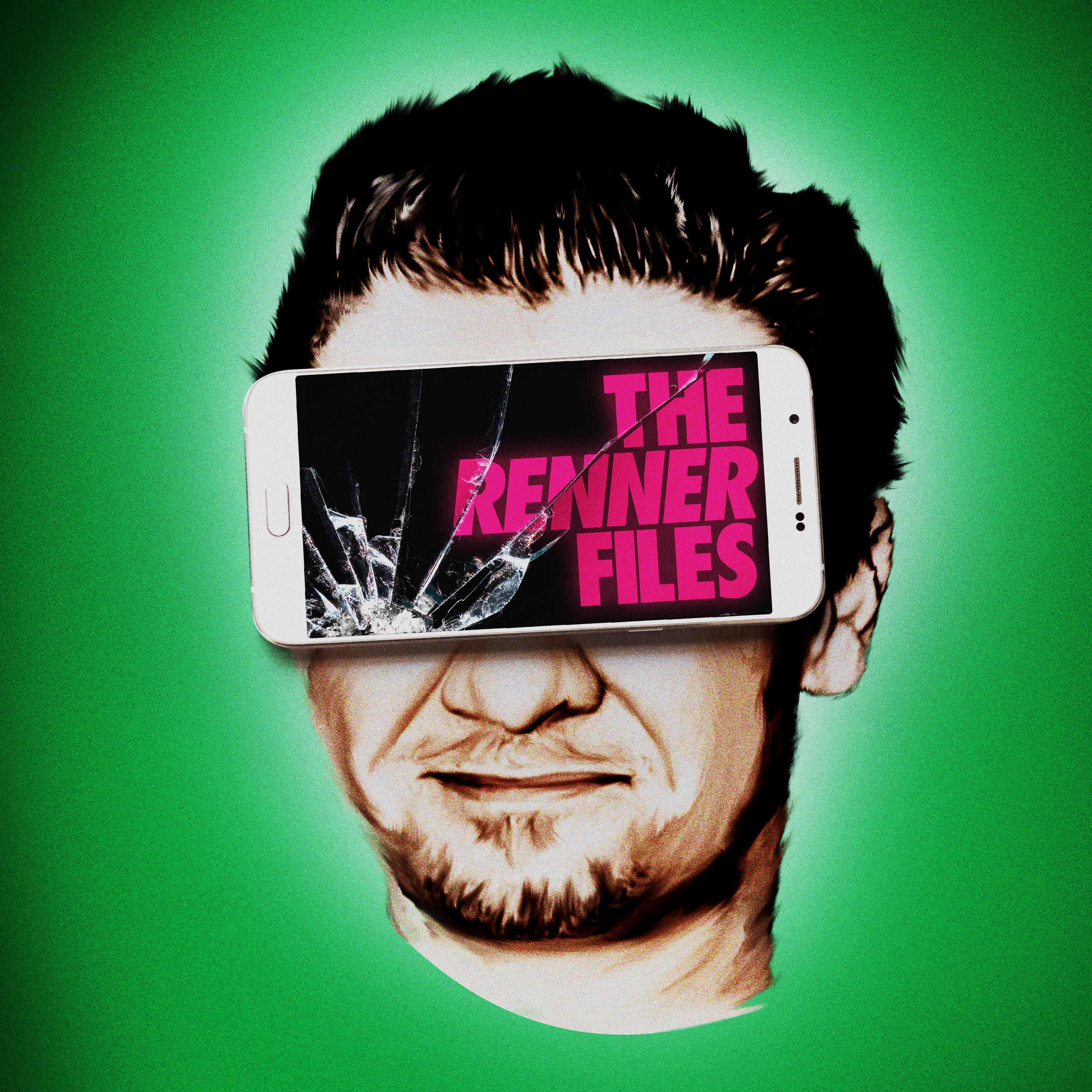
Transkriptio käsittelee julkkissovellusten nousua ja kehitystä 2000-luvun lopulta lähtien. Alkuvaiheissa sovellukset olivat usein turhia "novelty"-tuotteita, kuten Mariah Careyn äänentunnistuspeli tai William Shatnerin sanoista koostettava runosovellus. Myöhemmin sovellukset monipuolistuivat: Tom Hanks lanseerasi kirjoituskonesimulaation, kun taas monet julkkikset (kuten Kim Kardashian) julkaisivat brändättyjä emoji-sovelluksia. Menestyksekkäin kategoria olivat kuitenkin mobiilipelit, joista Kim Kardashian Hollywood teki yli 74 miljoonaa dollaria ensimmäisenä vuonna ja loi trendin, jota seurasivat muun muassa Nicki Minaj ja Britney Spears -pelit. Sovellukset käyttivät usein freemium-mallia, jossa sisäiset ostot tarjosivat etuja. Vaikka monet sovellukset olivat lyhytikäisiä, ne palvelivat brändin vahvistamista ja fanien sitouttamista. Poikkeuksena oli Trent Reznorin Nine-Inch Nails -sovellus, joka keskittyi aidosti yhteisön rakentamiseen ilman rahastusta. Yhteenvetona julkkissovellukset olivat monimuotoinen ilmiö, jossa turhat hupipelit sekoittuivat brändäykseen ja harvinaisiin aidosti faneja palveleviin projekteihin.
Jaas, taas kauppuille menossa? -Mitä sitä läkertaa. Pilissipumpu on veneeseen. -Oh, oh, oh! Aika, aika luksus. Yleensähän ne laitetaan miesluoillaan, mutta miksi ei veneeseen voisi vähän rentoozaa. -Mhm. Etkä miettiin jotain ipaa, taistauttia. Mä tiedä pareen erikoiseraa, jotka voisi sopia sulle. Esistyy tyhjennyspumpu. Vedelle. Ai joku laittiin. - Maakaud - kylkuvain viisi jälkeen tärkeä. - Voidan cyber�i fluff performs nauttaisitode seaweed ko within collegesin osa vuoden ainää. - Katsotaan ei ole kertaa. Järminenäärä on tärkeää, että järminenä on tärkeää, että se on erittäin ja muistaa, että järminenäärätössä on tärkeää. - Mutta jos järminenäärätössä on tärkeää, että on tärkeää? - Tämä on tärkeää, että järminenäärätössä on tärkeää, että järminenäärätössä on tärkeää. - Järminenäärätössä on tärkeää, että järminenäärätössä on tärkeää. - Sä kertetään, että järminenäärätössä on tärkeää. - What other celebrity apps have come and gone long forgotten to time? - In this episode, we speak their name. - This is The Runner Files. - Welcome to episode 3, the herstery of celebrity apps. - What was the first celebrity app? - The tale of celebrity apps begins with one person. Singer, songwriter, record producer, actress and philanthropist with a 5-octa vocal range, also known as The Voice, Miss Mariah Carey. - The first ever celebrity-based app was Mariah Carey's 2009 iPhone app, Mariah Careyoki. - That's a pun on Mariah Carey and Careyoki. - Mariah Careyoki cost 399 to download and used cutting-edge voice recognition software to judge how well fans knew the notes and lyrics to four Mariah Carey songs. - Beyond allowing you to essentially play guitar hero with your mouth to Mariah Carey songs, the app served no other purpose. - Multiple bizarre and unnecessary novelty apps followed in the footsteps of Mariah Careyoki. Take Shitoetry, an app launched in 2012, that lets users compose poems with a digital William Shatner recites. - William Shatner, as in the sci-fi legend best known for playing Captain Kirk in Star Trek. - Here's how it works. William Shatner has pre-recorded over 1800 words for you to write poetry with. He records them with three different intonations like this. - Absolutely. - Absolutely. - Absolutely. - And you, the poet or rather the Shitoet, choose which performance best serves your poem. - It's like the note tab where celebrities write the apologies they post on Instagram. But instead of a blank page, you're writing on a freakish technical or mosaic of William Shatner's face. - Here's an example of a finished poem written using Shitoetry. This Shitoom is ranked number 8 on the official Shitoetry website. - Fire up the magical weed and see the amazing dragon. - So beautiful, so immediate. It really puts me in the mind of someone so blazed that they're hallucinating mythical beasts. The Joltee audio reminds me of the tech I had at age 11. When I used my turquoise iMac to catfish adult men in chat rooms pretending to be Paris Hilton. It wasn't just Mariah Carey and William Shatner. The Holy Trinity of Celebrity Novelty Apps was completed by none other than Tom Hanks. In 2014, America's sweetheart Tom Hanks released his app, Hanks Writer. That's Hanks spelled with an X for unspecified reasons. The Hanks Writer app is best described as a typewriter simulation app, turning your iPad keyboard into a virtual typewriter. So when you type, you hear the classic evocative click-clack. It sounds like this. It's the perfect app for someone who loves the sound of typewriters. Someone like Tom Hanks. - There's a percussive quality to writing sometimes. If the drums are the backbone of any rock and roll band, the sound of a typewriter is the sound of productivity. Hanks Writer lets you turn ordering on GrubHub into a beautiful jazz song. It's like cosplay for pretending you're a drunk writer in the 50s. When it launched, Hanks Writer was the most popular app in the United States. This may have been because the app was free to download. Hanks Writer utilized a freemium model, where an app is offered free of charge, but offers in-app purchases that expand the product's functionality. What additional features could a typewriter simulation app offer? Hanks Writer offered various kinds of typewriters that made various subtly different typewriter-y sounds. A package bundle of all of the typewriter options went for $9.99. Why is Tom Hanks selling a bundle of digital typewriter sounds in the first place? Clearly, you're not a Tom Hanks fan. Because true Hanks heads know you can't say Tom Hanks without thinking typewriters. Is that because of the Hanks Writer app? Hanks Writer was actually predated by Hanks' delightful 2013 essay. "I am Tom. I like to type. Hear that?" I still don't feel like I should have known about Tom Hanks' love for typewriters. You must have been sleepwalking through 2017, which was a fertile time for Tom Hanks and typewriters. That year, Hanks debuted his short story collection, Uncommon Type, in which each story involves a typewriter. My collection of short stories comes out on October 17th if you read it, I hope you enjoy it. Hanks also appeared at the documentary, California typewriter, alongside fellow typewriter enthusiast, John Mayer. The revolution will be typewritten. So even though the novelty VR typewriter app seemed random and bizarre, it was actually an organic extension of Tom Hanks' evolving brand as a typewriter enthusiast. Let's just say that Hanks has a personal collection of over 250 typewriters. If loving typewriters is wrong, Tom Hanks doesn't want to be typewriters. And Tom Hanks isn't the only celebrity hijacking our keyboards. Many stars have taken it upon themselves to release their own branded emoji apps. Why text a free emoji to communicate your feelings when there's a plethora of copyrighted pay-walls celebrity emojis you could use to convey any specific emotion? It may be more convenient to use the emojis already available in your messages app. You may wonder how many keyboards you can click and swipe between just to send a single text. And you may need a wrist brace to tamp down your carpal tunnel. But think of how awesome you'll look once you pay $199 to download Kim Kardashian's Kim Moji. Your friends will be seething with jealousy once you start funding their messages with tiny artistic renderings of Kim Kardashian crying. Kim Kardashian's giant ass or a second angle of Kim Kardashian's giant ass. Announcing a pregnancy? Why not break the news by sending your friends and family a likeness of a pregnant black China from her Chimoji app? Do you have a friend who won't stop uploading Instagram stories of your hangouts? Why use your words to set boundaries when you could text them a "just moji" of Justin Bieber and a trucker hat holding a sign that says no photos? Celebrities like the Bebes Kim K and Black China use their emoji apps to poke fun at their public image. Bieber even had a "just moji" that referenced the 2013 incident where he peed in a mop bucket. All this self-awareness puts a fun spin on the fact that celebrity emoji apps are blatant advertising, invading the only "ad free space we have left." Our text messages. So remember, while it may seem more convenient to use free emojis, celebrity branded emojis are more fun and more profitable for your favorite stars.
Plus, they turn your private communications into subliminal messaging. Why not go ahead and decimate your available phone storage by downloading all of your faves? Zane Malik Zane Moji, Charlie Sheen Sheen Moji, Jimmy Fallon Jim Moji, Albert Einstein Einstein Moji, the list goes on and on. It almost seems like the whole appeal of celebrity novelty apps is that they serve no purpose. Think of a novelty app as a big mouth billy bass. It's silly, it makes you smile once or twice, and it's a waste of money. But not all celebrities were content with releasing digital big mouth billy basses. Some took it upon themselves to release something more practical. A workout app. Why settle for a regular exercise routine when you can have one that's aggressively branded by a swole celebrity? Mike Ryan Philippe, who launched his app Become in 2017. According to their mission statement, the Become app allows fans from the comfort of their phone to stop idolizing and start living like their favorite celebrities. And the way the app tells you to stop idolizing Ryan Philippe is by giving you every specific detail about his wellness routine so you can try to become him. The app's target demographic was men over 40 who want to stay fit and look young. Unfortunately, the app shut down. While it's hard to say exactly why, the takeaway here is never start a business that relies on the narrow demographic of fit men over 40 who love Ryan Philippe. The next celebrity with 5% body fat to follow in Philippe's Fitbit tracked footsteps was none other than Chris Hemsworth, who plays the mythological god Thor in Marvel movies. His app is called Center by Chris Hemsworth, that center with no e. With Center by Chris Hemsworth, you're able to set a goal and log your progress as well as find recipe ideas and exercise videos that are released weekly. It was developed by a dream team of Hollywood trainers, professional stuntmen, former Navy seals, and Elsa Pataki. Who is Elsa Pataki? Most people know her as Chris Hemsworth's wife, but more importantly, she's a Spanish actress who once received a castle from Adrian Brody. What do you mean, received a castle from Adrian Brody? Oscar winning actor and Halle Berry Kisser, Adrian Brody, once gifted Center by Chris Hemsworth's Elsa Pataki, a castle. More specifically, a 19th century central New York farm that he would later remodel to look like a castle. Center by Chris Hemsworth is subscription based. It costs $20 a month or $120 for a full year, which is actually a steal considering how many photos you get of Chris Hemsworth posing in a great tank top at the gym. For some people, a glorified cardboard cutout of Chris Hemsworth teaching proper squat form isn't enough. Some people want celebrities to manage their sleep cycles. In 2016, the rock launched the rock clock, an alarm clock app that featured ringtones sung by the rock. It sounded like this. Good morning sunshine. Yeah, that's what the rock just said. Open your eyes up. Get your candy ass out of bed. An alarm clock app makes perfect sense for the rock. As he told Graham Norton, he famously wakes up at 4 in the morning to exercise before work. 4 o'clock in the morning. Yes, I used to do that. Over the past couple of years, I would get up at like 345 and get all my work in and then we'll go to set because we got to be on set very early hours. There's a lot of fans who've had a lot of inspiration out of that. Oh, great. I don't want to wake up when you wake up, but I do want to wake up early. And that morphed into an idea that we had and we created an app and the app is called the rock clock. You don't get arms the size of legs by waking up at a socially acceptable hour. But the rock clock didn't just feature the rock doing the Jack Johnson impression. Every morning, rock clock users also received original videos of the rock, like this one, which he filmed while driving his pickup truck. Good morning from the south. Good morning from my pickup truck. Gorgeous Georgia. It's no secret that these pointless apps were successful, but even the combined star power of the rock, Tom Hanks and Zayn Malik, was no match for the undisputed queen of celebrity apps. An undeniable superstar who disrupted the entire digital industry with a game. Before she made millions off of tummy concealing thongs, Kim Kardashian West made millions off of a mobile game. We'll be right back. Hi, I'm Ben Esler. You might know me as the actor who plays Jeremy Renner on the Renner files. You might think an amateur unauthorized investigative podcast about the Jeremy Renner app makes itself, but that's not the case. It required hundreds of hours of research, interviews, editing and reading and writing shit poetry. Thank you. As delightful and useful as these novelty celebrity apps have been to my life, when the public enlarged thinks about celebrity apps, they think about mobile games. That's because of Kim Kardashian Hollywood, which was a phenomenon when it launched in 2014. For any straight men listening, the premise of Kim Kardashian Hollywood was to drop players into the celebrity world and challenge them to get to the A list. In other words, you have a little sexy avatar, and Kim Kardashian's avatar periodically pops in to give you advice and tell you your shoes are cute. My personal favorite aspect of the app was how the loading screen gave the tip. Reading famous people will get you more fans too. In addition to shamelessly advising you to be a starfucker, Kim Kardashian Hollywood also offered an app purchases. Like Hank's writer, it utilized a freemium model, but instead of selling typewriter sounds, it sold its own form of digital currency, called K-stars. I personally spent tens of dollars on K-stars to buy additional energy because my avatar kept getting too tired from photo shoots to attend her club appearance in Puntamita. But others spent more. Like celebrity hairstylist Eddie Cook. I'm Eddie and I'm not proud to admit this, but I've spent over $100 in the Kim Kardashian app. While Kim Kardashian Hollywood supplied free looks, they weren't satisfying for a professional like Eddie. It was basic looks, I feel like a ponytail maybe. It was all black, there was no blonde or any of the color moments we've had throughout the years. It was just basic and not that fun. If you didn't spend money, your avatar looked like a small town librarian. But if you ponyed up for K-stars, your avatar could look like Miss Kimberly Noel Kardashian West herself. You could even buy outfits that were like designer, quote unquote, like if she wore like a ball main dress that was very memorable, that would become available on the app. And so if you wanted to like wear the fashion versus like the basic, you know, pumps that you're getting with the app for free, it's like a U again had to shell out money to level up your vibe. In some ways, the app reflected the harsh realities of life. There's no ugly people, there's just poor people. But in other crucial ways, it was not like life at all. But these digital purchases couldn't be used in the real world. Each time I spent money, I like felt literal pain in my spirit and in my soul at what I was doing. What's even sadder is neither Eddie nor I actually made it to the game's a list. So not only did the game mirror my actual real life failures, but Kim also charged me money for it. You were not alone. Boom Mobile, the company behind the game, claimed that Kim Kardashian Hollywood generated $1.6 million during its first five days on the market. And its first year, the game made over 74 million dollars.
$1 million. Is this what opened the celebrity app floodgates? It inspired many imitators. Glue mobile was behind multiple celebrity mobile games that, in my opinion, appear to be the same game, cheaply repackaged around another star. After Kim Kardashian Hollywood came Nicki Minaj the Empire, Katy Perry Pop, Britney Spears American Dream, and the simply titled Kendall and Kylie. Those apps sadly never reached the same levels of success as Kim Kardashian Hollywood. Glue's CFO, even called Katy Perry Pop one of their biggest disappointments. In 2015, Glue mobile pivoted. They released Sniper X, a first-person shooter game starring an animated version of Crank Star Jason Statham. Also known as Rosie Huntington Whiteley's Hot Balled Husband. Sniper X's premise is Agro, macho, and pro-military interventionism. Welcome to Spear and the Sniper X program. We'll start by taking on Scorpion and terrorist group dealing with weapons of mass destruction. Who knew taking down imaginary terrorists could sound so sexy? But glue mobile knew its users weren't always in the mood to play a celebrity game rooted in star-fucking or politically charged phasology. So in 2016, Glue launched Restaurant Dash, a mobile game built around Gordon Ramsay, best known as the Mean Chef from Kitchen Nightmares who yells a lot. Cunt Dash allows you to create a chef avatar and run a burger joint in San Francisco. In the game, Gordon Ramsay's avatar praises you when you're doing well, and a voice that evokes an absentee British father being forced to interact with his children. Instead of K-stars, in Restaurant Dash money buys you candles on dining tables, sue chefs to prep your sauces and salads, or even little outfits for your personal chef avatar. Little outfits translated to even bigger sales. Glue claimed the app generated a million dollars in revenue by day 53. It begs the question, "What numbers would my personal favorite game, Marricade National's Magical Mystery Mall, be making if it were released today?" Now we're getting into celebrity branded PlayStation games from the 2000s. What's next? Britney Spears' Game Boy Dancebeat? Drew Carrey's Cambio and The Sims? It's not celebrities fault that we're willing to spend real money on anything they slapped their names and faces on. But at the very least, I expect the personally branded apps I'm paying for to work. Sadly, that's not always the case. I get from writer Isabella Beaton-Harn, who played the Britney Spears version of Kim Kardashian Hollywood. I closed the app for a couple hours, and upon reopening it, I was met with horror. My clothes, my hair, and even my skin pigment had evaporated, leaving me a nippleless mannequin perched at my table in starbeans and completely unaware of my plate. That's starbeans. The generic version of Starbucks, a key game location for Britney Spears, American Dream. Fortunately, no one else seemed to be aware of it either. Side note, pretty sure this happened because my phone has no available space, so the app decided not to download my skin and clothes, but still, horror. But what's a small nipple malfunction compared to stacks and stacks of real-world cash? From typewriter VR to counterterrorism, the celebrity app possibilities were endless. Where did Jeremy renter fit in? Jeremy renter's app was a different beast entirely. His app was far more powerful than the rock clock or Chris Hemsworth's BMI calculator. What's more powerful than charging your fans for content? Relying on them to produce content and still making them pay for it. What's the idea behind the community-based app? Like the Jeremy renter app? If Jeremy renter is the unlikely face of a community-based app gone wrong, then the face of a community-based app gone right is just as unlikely. It turns out there's actually a celebrity besides Kim Kardashian who's released a successful app. It's no understatement to say that apps change Trent Rezner's life. That's Trent Rezner, the frontman of Nine-Inch Nails. Trent Rezner, the visionary dark god of 90s industrial raiderock, the black-haired Zaddy behind the social network score. That Trent Rezner is also an app god. In 2009, Rezner created a Nine-Inch Nails app to get closer to his fans. The app even included an ahead of its time GPS-enabled feature called nearby, where you could see what other Nine-Inch Nails fans were near you. Think of it like Grindr, but for Nine-Inch Nails fans. But for Rezner, the app wasn't about using visionary gay hook-up technology to get money from his fans. He saw the app as an opportunity to revolutionize the music industry. He used it to reach his fans directly and cut out the middleman. According to Rezner, whose voice here is portrayed by actor Dan Milstein. Anyone who's an executive or record label does not understand what the internet is, how it works, how people use it, how fans and consumers interact. No idea. As an artist, you are now the marketer. Rezner has a deeply loyal fan base, who he could have easily charged money to buy Rezstars or something, but he did the opposite. The app was a digital grunge utopia, where Rezner's streamed free music had a fan forum, a video feed, and image gallery podcasts, even a place to upload your own remixes of Rezner's music. And it was all completely free. Rezner's experiment was so successful that it ultimately helped him make more money off record sales than ever before. He gave his fans everything they could ever want for free, and in return, they bought his albums. The fans did even more than that. Nine-inch nails super fans moderated the app for free, governed by a deep sense of respect for each other and their dark overlord, Trent Rezner. I wish our country's democracy functioned as well as the Nine-inch nails app. Trent Rezner is a visionary. He has an Academy Award for the social network score. He gave Marilyn Manson his big break. He became the chief creative officer for Beats Music. Not to mention, he's hot as hell. If I were Jeremy Renner, and I heard Trent Rezner and Kim Kardashian were making super successful apps, I'd be salivating for my own piece of the pie. And Jeremy Renner wasn't the only celebrity salivating. Around the same time that he launched his community-based app, Taylor Swift launched the Swift Life, which was released by Gloomobile. How successful was the Swift Life on a scale of Renner to Rezner? Although Taylor got less flak than Jeremy Renner, her app actually suffered a similar fate. The Swift Life started out simple enough, offering tabojis and the opportunity to connect with like-minded Swifties or even Taylor herself. But the Swiftie Haven was plagued with issues. Some fans complained that the app not only took up a lot of phone storage, but also drained their phone's battery. Taylor Swift did very little promotion for the Swift Life, and a few weeks after its launch, she seemed to disappear from it entirely. What's the point of being on the Taylor Swift app without Taylor Swift? And worst of all, the Swifties didn't get along as well as nine-inch nails fan. Were there heated debates about the merits and pitfalls of the reputation era? If only it were that simple. Apparently, the app was overtaken with political infighting. After Trump's inauguration, Swifties on the Swift Life pitted Hillary Clinton against Donald Trump, Democrats against Republicans, and even shared homophobic ramblings. As a Swiftie myself, this makes me so sad. It must have made Taylor Swift sad too, because the Swift Life shut down in early 2019. Not too long before Jeremy Renner's app folded. So the Swift Life suffered the same fate as the Jeremy Renner app. But the poster child for failed celebrity apps isn't Taylor Swift. It's Jeremy Renner. Why would Jeremy Renner partner with an app company best known for working with Indonesian celebrities? A company with an American clientless, so eclectic, it has to be heard, to be believed. Next time on The Renner Files. Call me Chong, you live now.
And the reason I'm at this location is because it's the one location in my house where I got a decent internet service. The Renter Files is written and narrated by Caroline Goldfarve and Sarah Ramos. It was edited by Emo Zoo and mixed by Adrian Lilly. It was produced by Sarah Ramos and Emo Zoo. With original music by Evan Gordon. Thanks to Ben Esler, who plays the role of Jeremy Renter throughout this series. Additional thanks to Isabella Bidenharn and Dan Bilstein for additional voice acting. And special thanks to Eddie Cook for speaking with us.
Podcast Summary
Key Points:
Julkkissovellukset nousivat suosioon 2000-luvun lopulla ja 2010-luvulla, usein tarjoten turhia tai omituisia kokemuksia (esim. Mariah Careyn laulupeli, William Shatnerin runosovellus).
Monet sovellukset perustuivat freemium-malliin, jossa ilmaisen latauksen jälkeen sisäiset ostot tarjosivat lisäominaisuuksia (kuten Tom Hanksin kirjoituskonesimulaatio tai Kim Kardashianin pelin virtuaalivaluutta).
Menestyneimmät julkkissovellukset, kuten Kim Kardashian Hollywood -peli, loivat valtavia tuloja ja inspiroivat monia jäljittelijöitä, vaikka monet epäonnistuivat.
Sovellukset vaihtelivat täysin turhista "novelty"-sovelluksista käytännöllisempiin (kuten harjoitus- tai herätyssovelluksiin), ja niiden tarkoitus saattoi olla brändin laajentaminen tai fanien läheisemmäsistä saaminen.
Joissakin tapauksissa, kuten Trent Reznorin Nine-Inch Nails -sovelluksessa, painopiste oli aidossa yhteisön rakentamisessa ja välittäjien ohittamisessa, toisin kuin pelkässä kaupallisessa hyödyntämisessä.
Summary:
Transkriptio käsittelee julkkissovellusten nousua ja kehitystä 2000-luvun lopulta lähtien. Alkuvaiheissa sovellukset olivat usein turhia "novelty"-tuotteita, kuten Mariah Careyn äänentunnistuspeli tai William Shatnerin sanoista koostettava runosovellus. Myöhemmin sovellukset monipuolistuivat: Tom Hanks lanseerasi kirjoituskonesimulaation, kun taas monet julkkikset (kuten Kim Kardashian) julkaisivat brändättyjä emoji-sovelluksia.
Menestyksekkäin kategoria olivat kuitenkin mobiilipelit, joista Kim Kardashian Hollywood teki yli 74 miljoonaa dollaria ensimmäisenä vuonna ja loi trendin, jota seurasivat muun muassa Nicki Minaj ja Britney Spears -pelit. Sovellukset käyttivät usein freemium-mallia, jossa sisäiset ostot tarjosivat etuja. Vaikka monet sovellukset olivat lyhytikäisiä, ne palvelivat brändin vahvistamista ja fanien sitouttamista.
Poikkeuksena oli Trent Reznorin Nine-Inch Nails -sovellus, joka keskittyi aidosti yhteisön rakentamiseen ilman rahastusta. Yhteenvetona julkkissovellukset olivat monimuotoinen ilmiö, jossa turhat hupipelit sekoittuivat brändäykseen ja harvinaisiin aidosti faneja palveleviin projekteihin.
FAQs
Ensimmäinen julkkissovellus oli Mariah Careyn vuonna 2009 julkaistu iPhone-sovellus nimeltä Mariah Careyoki, joka oli karaoke-tyylinen äänentunnistussovellus hänen lauluihinsa.
Shitoetry-sovellus antoi käyttäjien luoda runoja digitaalisesti nauhoitetuilla sanoilla, joita William Shatner luki ääneen kolmella eri intonaatiolla.
Hanks Writer oli suosittu, koska se simuloi kirjoituskoneen käyttökokemusta iPadilla, ja se oli ilmainen lataa freemium-mallilla, jossa lisäominaisuuksia voi ostaa.
Kim Kardashian Hollywood -pelissä pelaajat nousivat julkkisten maailmassa A-listan tasolle avatarillaan, ja peli käytti freemium-mallia, jossa virtuaalista valuuttaa (K-tähtiä) voi ostaa.
Center by Chris Hemsworth on kunto- ja hyvinvointisovellus, joka tarjoaa harjoitusvideoita, reseptejä ja tavoitteiden seurantaa kuukausimaksulla.
Julkkisemojisovellukset olivat suosittuja, koska ne tarjosivat brändättyjä emojeita julkkisten kuvilla, joiden avulla käyttäjät saattoivat ilmaista itseään humoristisesti tai viitata julkisiin tapahtumiin.
Chat with AI
Loading...
Pro features
Go deeper with this episode
Unlock creator-grade tools that turn any transcript into show notes and subtitle files.
 PodcastTranscript AI