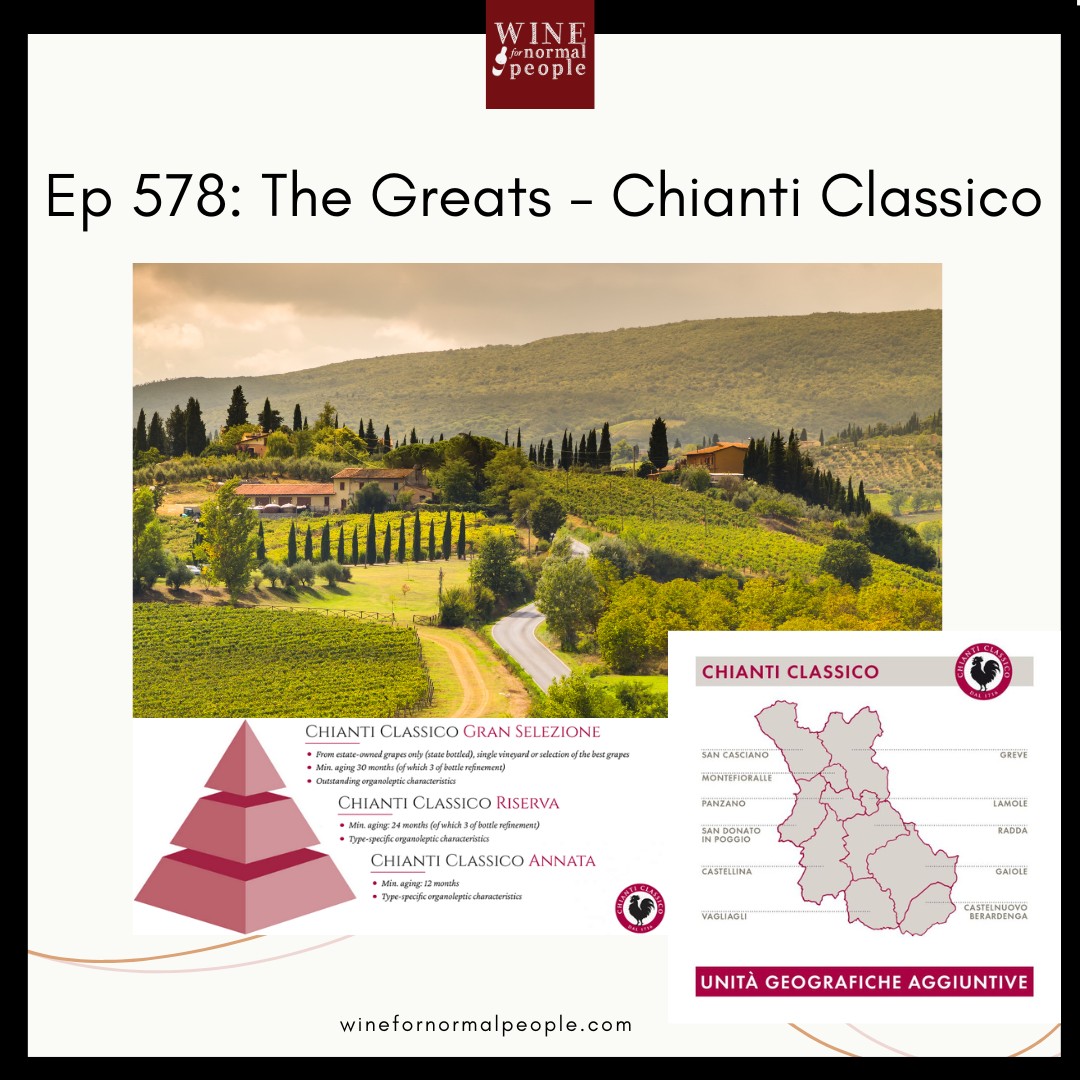
This podcast episode focuses on Chianti Classico, a prestigious Tuscan wine distinct from generic Chianti. It originates from a historic, high-altitude area between Florence and Siena, symbolized by the black rooster from a medieval legend. The wine's history includes the 1716 Medici Edict, which legally defined the region, and Baron Bettino Ricasoli's 1872 recipe blending Sangiovese with Canaiolo and Malvasia to soften tannins. In the 20th century, a consortium was formed to protect its identity, but post-war overproduction and competition from Super Tuscans led to a quality decline. A revival began with the Chianti Classico 2000 project, a 16-year study that improved clones, viticulture, and winemaking. Chianti Classico is emphasized as a food wine due to its acidity and structure, with categories like Annata and Gran Selezione reflecting aging requirements. The episode highlights the region's unique terroir, historical significance, and journey from crisis to quality restoration.
[music] Welcome to Wine for Normal People, the podcast for people who like wine, but not the snobbery that goes with it. I'm your host Elizabeth Schneider, author of the Wine for Normal People book and certified wine dork. This episode is brought to you by my sponsor Wine Access, an online store for wine lovers who want unique bottles you can't get locally. At Wine Access, every bottle is chosen by a consensus of a team of sommeliers and wine experts. So you're getting a wine with a story, a place, and a reason for being offered. These are unique wines at all price points and a big bonus. If you want me to pick out wines for you, join my wine club and you'll get six bottles four times a year for 150 bucks a shipment, which includes shipping. Go to wineaccess.com/normal and listen in the middle of the show for more details. I'm so excited for this show. Any opportunity I have to be transported in a way to Italy and specifically Tuscany, which is the place that my love of Italy started, because I studied abroad in Florence, my junior year of college. And I just kind of kicked off this lifelong love affair with Italy where I've wound up leading tours of patrons through Italy. I'm going to Sicily in a month to do that. I just really love it. So having the opportunity to talk about Italy to study it, even some of the technical details of Kianti Classico, which is the subject of this great podcast, I feel so excited and moved by it. It's always really fun for me when I have a topic like that not to say that I don't love everything that I do shows about, but this really has a special place in my heart. I want to jump in because there is a lot of information. I do want to remind you before we get into this as I do with many of the shows on the greats. A large part of the greats series is the history. It is how this place got to where it is today. And then we talk about also the terroir. It's really a two full thing. Why the ones are great from a technical standpoint, the land and all the people making it and all of that kind of stuff. But the history in the greats is the really big deal. And that's the difference between this series and some others. So if you don't love history, this may not be the show that you're going to love the most, but I will tell you there are some fascinating twists and turns in the history of Kianti Classico. And it is really important to understand the distinction between Kianti and Kianti Classico, which I will go over after I do two things. First, I need to give patron shout outs. And I think all of the current patrons and I always thank the new patrons who have committed for a year. It really means a lot to me. And I'm looking forward to getting to know all of you. So we will give it shout outs. The list is short this time. Andrew J Ashley J Rachel M John S Christiana L David L and Jason D who Jason's been around for a while. So Jason, welcome once again to the community. I guess something must have happened with your membership. But anyway, thanks for rejoining again. If you want to join patreon PAT R E O N dot com slash wine for normal people. I also am going to give a shameless plug. I am teaching the great red wines of Italy. Kianti Classico is absolutely in that class. These are not cheap wines, but this will be a huge education on burrollo, brunello, Kianti Classico, Amorone and Tarasi. And we will also touch on Sagrantino de Montevaco and Barbarasco, of course. If you're interested in taking that class sign up at wine for normal people dot com slash classes. Sorry about the shameless plug. Let's get to Kianti. Here's the thing. Kianti Classico and Kianti are two very different things. Kianti Classico is a misunderstood denomination de origine controlata e garantita, the DOC G. Kianti is much more of a generic wine. Kianti Classico is the traditional high altitude vineyards on the best soils. The place where wine making got started in Tuscany and we'll talk about the really important thing that you look for on the bottle, which is the black rooster. That's how you know it's a Kianti Classico. Besides the fact that it also says Kianti Classico. So I want you to think about these as two very different wines. I'm not talking about Kianti. Kianti is not a great Kianti Classico is the great Kianti Classico's capitals are sienna in the south and Florence in the north. The area is shared between the provinces of these two municipalities. There are more than 340 producers of Kianti Classico. There is certainly no lack of choice. Kianti Classico is 71,800 hectares or 177,500 acres. It is quite large. If you've seen pictures of Tuscany, if you've been to Tuscany, you know that it is so beautiful and it is so unique. But the thing that you should know is that it's also extremely diverse. Kianti Classico does the worst job of any historic denomination of telling people about its main feature and how it is distinguished from Brunello di Matocino or Vino Norelle di Matociciano. It is different because Kianti Classico's main feature is altitude. It also has a diversity of soils from which producers can blend because these soil types in a very short distance change and shift. So you can grow San Jovezae on one plot and have heavier more tannic wines. And then you can grow it on another one on different soils and have it be more elegant and acidic. And then you can blend the two for a perfect wine. The other thing that I will say about Kianti Classico that is so very important. You can't just pop and pour a Kianti Classico. Remember this is a wine that just said the grapes are grown at elevation. If that's true, you're going to get a hit of acidity. San Jovezae is also a very acidic grape, a little less so when it's the Brunello clone, but the clones in Kianti Classico have a lot of acid. Kianti Classico is a food wine, 100%. I would even go as far as to say I don't think you should be drinking it unless you have a nibble next to you. It doesn't have to be a lot of food, but it has to be something to cut some of that acidity and some of the tannin and some of the finer wines. Kianti Classico also has a couple of different types of wines. There is anata or just Kianti Classico from the current year, current vintage. It has to be aged a year. I'll get to the age in criteria later. There is Kianti Classico Gran Celetzione and I will get to all of the criteria for that top tier wine for the producers. They all have different restrictions and we will discuss them. I do, as I said in the greats, always drill down into the history. If you recall, Tuscany was the heart or the seat of the atrustkins, that ancient civilization that was so sophisticated. We know that they were the first to identify the region as a place that was good for grapes. When they fell from power, the Romans came in and they further developed the agriculture. They actually started growing olives here as well, which is great. They make such great olive oil in Tuscany and great olives. And wine from Kianti was mentioned in manuscripts and chronicles and historical documents from 1200 on. But the middle ages was when we started to see a big uptick in the plantings. I'm going to talk about the legend of the black rooster now because this happened in the middle ages. This is the reason why you see a black rooster on every bottle of Kianti Classico. So in the middle ages, Florence and Sienna hated each other. They're still not big fans of each other. But they really hated each other and they were warring constantly. Pisa was a side bit player too, but really it was Florence and Sienna. And they had a border dispute for control of the Kianti territory, the territory's midway between the two cities. So they said, okay, we're going to establish a definitive boundary. And they came up with this extremely logical system, which I know we would all do today if we could. They decided that two nights, a Florentine night and a C&E's night, we're going to set off from their cities at dawn. They could leave as soon as the rooster crowed. This was very customary because like nature always defined things back then. And the boundary of each city limit would be set at the point where they met. Here's the deal. They've quickly figured out in Florence that the choice of the rooster was more important than the horse in the night. If you can get your rooster to crow a little bit earlier than the C&E's rooster, you were going to get to set out faster. The C&E's chose a white rooster. The Florentines chose a black rooster. The Florentines being crafty and very strategic. They shot that black rooster in a dark chicken coop. They starved it. And they did this for so many days that when they took out the black rooster, it nearly died. And then it started crowing because it was so starving. It wasn't even dawn. So the Florentine night set out immediately. The C&E's night had to wait until dawn for his rooster to crow as normal. The C&E's night only rode 12 kilometers before he met the other night. So the Florentines bested the C&E's and owned most of the territory of Chianti for much of history. In 1384, that black rooster came to protect Chianti's wine production. They created a political and military league. And they put the black rooster on a gold background as an emblem of Chianti. Now this was political and military, but I'm giving you the history of the black rooster in the sense that this is something that has always been part of Chianti. It is emblematic of Chianti because of this legend. In 1398, Chianti started to appear in documents, referring to a specific wine. Now it was probably a white wine, we think, but it later became red with San Jovezae as the lead grape. By the end of the Middle Ages, huge areas were devoted to the cultivation of vines in the hills of Chianti Classico. This was really important from an economic standpoint and from a status standpoint, international fame, Chianti Classico became known. At this point, it was not called Chianti Classico, it was just Chianti because there was only a small, original area. This is the difference between Chianti and Chianti Classico. This is the original area from the 1300s, the 1200s, from before that. The original area that was farmed was just known as Chianti. In the 14th century and throughout the Renaissance, the Medici were merchants and bankers and they ruled. One of the things that was very important to the Medici besides architecture and arts and literature was wine. And so the Medici invested in vineyards and encouraged others to invest in vineyards in Chianti, which the Medici, their seat of power was Florence and they owned most of Chianti great time for wine under the Medici. In 1716, the Grand Duke of Tuscany, Causimo the Medici, the third came out with the Medici Edict. This named the best zones for growing vines. It was called the Chianti story co, I'll give you a quote from the document, for Chianti it has been determined and so be it from Sparaluzzo to Greve, from there to Panzano with the entire Podesta Ria of Rorada, which contains three thirds, namely Rada, Gaioli and Castellina reaching up to the border of the state of Siena. This was in 1716, they also established a group to oversee production, shipping, fraud control, wine, trade. This was a precursor to today's consortio. Chianti as a delimited area is the oldest legally defined area in the world by law. Now Toccai has a claim on this and port also claims this Chianti takes the crown. Although we had the place set and this is today's Chianti Classical, the original area by 1716, we did not have a recipe. So people were just making wine from whatever grapes were local. It was extremely flexible varied from place to place. They were using basically the same grapes, but the wine didn't have a lot of consistency. It was in 1872 that a guy named Bettino Ricazzoli and there's still Ricazzoli 1141 today because they've been around since 1141. They have an ancient castle. It's amazing. When I take the patrons on the Tuscany trip, we go to Ricazzoli because it is so beautiful, so historic. Bettino Ricazzoli was a prominent nobleman and he was a wine maker and he was a scientist. He loved to tinker. He liked to play. And so he decided he was going to come up with the absolute best formula for wine. I mean, he was doing a lot of other scientific experiments too. And if you go to Ricazzoli, they'll show you some of the things in the museum that he worked on. Very smart guy. But in 1872, he decided that the Ricazzoli formula for Chianti was 70% San Jovese at that point. It was called San Jovetto, which was the local clone of Chianti, 15% Canneolo, Nero and 10% Malvasia, Bianca. And then you could use some other local grape varieties, funny that colorino, which is an important component of the wine today was not included in Ricazzoli's recipe. 10% was Malvasia Bianca. The inclusion of that white grape and it's extremely floral. It has a lot of aroma, but the inclusion of white grapes, both Malvasia and some of the other local grape varieties, was to soften the tannins of San Jovese and make the wine drinkable when it was young. And it was a great idea because back then, the wine making was not where it was today. So doing things to soften tannins, we didn't really understand microoxygenation. We didn't understand longer periods of time in oak barrels, not pressing the grapes so hard that you got these harsh tannins from the skin. Adding white grapes was a great way to cut the San Jovese. This recipe from Ricazzoli was set for about 100 years, told about the 1970s. It was the foundation of Chianti's identity. It was about balancing the acidity and the tannins of San Jovese with the fruitiness of the Canneolo, the aroma of Malvasia, but it was a very different wine. It's not the wine that we had today. If we jump forward to 1924, there was huge demand throughout Europe. There were neighboring areas that were outside the zone from that 1716 Medici Edict. And those neighboring areas called their wines, Oso Chianti, Chianti style. They were later sold as Chianti, but they were not from the delimited zone. So in May of 1924, 33 producers founded the consortium for the defense of Chianti wine and its mark of origin. This is the first consortium of wine producers in Italy. Today, actually, it's still there. It's just the consortium of Chianti. Today, it incorporates the growers. It incorporates wine makers. It incorporates bottles. 90% of production is represented in the consortium. And that 1924 Edict was very, very important. They didn't really mind the shock, though, because the idea that Chianti was this delimited area started to really be chucked out the window. It was such a problem that 1932, there was a decree from the government that said that wine from the oldest part of the Chianti region could put on the bottle classical. And so, it was the second time that the wine was sold in the second half of the Chianti region. It was the second time that 1932, the second half of the Chianti region was sold in the second half of the Chianti region. In my opinion, the only really great subzone of regular Chianti D.O. C.G. But still, it has nothing to do with the wines of Chianti Classico. The terroir is completely different. As things got too big, sort of got away from the heart of the region. Obviously, something that is out in the Appanines and east of Florence has nothing to do with Chianti Classico. After World War II, wine makers were all about quantity of equality. This is the story in all of Europe. They just needed to get back on their feet and people wanted wine so they started mass producing wine. Then it was often sold in straw-covered bottles known as fiascoes. If you know Chianti, you know what the fiasco is. In 1967, the Denomenazio Nendio Originic Controleta, the D.O. C. system started in Italy. It mandated that Chianti wines follow production standards, including the use of at least 70% San Gervese and the white grape varieties that basically took recosalies formula and they codified it in the D.O. C. system. But Chianti Classico, the classic area, was still a sub-delimitation of the D.O. C. of Chianti. It did not have its own set thing. Now we have again in the 1970s an over-zealous market, over-planting of high-yielding clones, over-production, the prices and the reputation plunged. If you think of Chianti as a lake-colored, weak kind of throwaway wine, this is where that comes from. It comes from the 1970s. And out of this, I don't want to be too dramatic, but out of basically the re-wination of what Chianti originally was, this wine that had a lot of complexity and had these really unique sites, they decided they were just going to overplant and overproduce. This is when the super-tuskin movement emerged. This was in the 1970s. While Chianti was expanding its borders using high-yielding clones, not caring about the reputation, prices plunging, that you were using that straw-covered bottle, there were producers like Antenora with Tingenello, like Sasakaya. We had these wines starting to emerge, which used grapes that were outside of the DOC. Now a lot of these were in bulgurie, which is way far west of Chianti Classico, but it was a challenge to the supremacy of Chianti. At this point, Chianti really sunk into the doldrums. It did not have the status. Super-tuskin wines were the big thing. And shortly after that, Brunella di Montecino emerged as a huge player in the market as well. These wines were bolder. They had more oak. Now Brunella di Montecino only uses one grape, and it is a San Joveza clone. But there's a lot more warmth than Montecino, so between the richness of Brunella di Montecino and the boldness of the super-tuskin wines with their oak and their cabernet, Sauignon and Merlot and Serramp. We had a real crisis for Chianti. To compete, they started planting a lot of bordeaux grapes and using a lot of new oak to try to win over the critics. Instead of using San Joveza and the Botti, which are the large oak casks made of Slovenian oak, Slovenian oak is from Croatia. In the 1980s and 1990s, it seemed like they were going to just abandon San Joveza and forget about the history and legacy here and really go to try to compete with the super-tuskins. But that didn't last for very long, because in 1987, Chianti Classico, which again, Chianti Classico was a subarea of the general Chianti. The consortio Vino Chianti Classico started a project in 1987 called Chianti Classico 2000. This project was a collaboration with the University of Florence and the University of Pisa. This was in response to both the super-tuskin crisis, the fact that there had been overplanting, the fact that the reputation had sunk, the fact that the producers of Chianti Classico, the historic area needed to start to grow. They needed better plant material to replant the vineyards. They just didn't know what to do. So they collaborated with the universities. They started experimental vineyards and sellers. They put in meteorological stations, which are so important today in vineyards to figure out when to pick what's going to be happening within the vineyard. This experiment lasted 16 years, and the outcome was fantastic, because out of Chianti Classico 2000, and of course it was called 2000 because they wanted to get this on the road by 2000, they didn't quite get there. But they realized that they needed to select better rootstock to match the soil. They needed to have higher planting densities. They needed to do more soil management, because as I will explain in a second, Chianti can have steep slopes. So you want to limit the erosion. They needed to do better vine training. They needed better clones of San Jovese, of Canneolo, of Malovacia Nera, of Colerino. They studied 239 clones. They picked seven new clones of San Jovese, one of Canneolo, as best for the wines. So by 2003, we had all of this great research, but I am going to retrench a little bit. I need to go back to 1996. It was at that point that the consortium of Chianti Classico separated. They petitioned the government and said, "We do not want to be part of Chianti anymore," and they became their own DOCG. And this was a huge thing for them, because now they have the freedom to make their own rules. They got rid of white grapes. It wasn't mandatory to use them. You could use them. They allowed Chianti Classico to be used with a minimum of 80% San Jovese. They allowed French grapes to compete with the supertascans, but they limited it to 20%. They also allowed people to make 100% San Jovese if they wanted. This wasn't until 1996. But what I'd like to say is that all along through this thread, we have a big distinction between Chianti, of which Chianti Classico was part. And Chianti Classico, they had different goals, they had different ideas, and they have really different terroir and different needs. Historically speaking Chianti Classico is the great, as I've already said. In 2014, the consortium of Chianti Classico introduced the Gran Celetzione Classification, I've already mentioned that, we'll talk about that later. And today, we see so much progress. Finally, there's a lot of excitement in Chianti Classico about organics and sustainable practices, and reducing their yields about these better clones and matching them to soil type. They've done so many soil studies. There are a lot of different styles, but they conform to the D.O. CG. There's now a little bit of a move away from some of the French grapes away from Cabernet, Sauvignon, which can take over a blend. So raw can be used in small quantities, Cabernet, froncan small quantities. Really now we just see Merlot being kind of a backup grape. And Merlot really does reflect the terroir of Chianti Classico interestingly enough, so it may continue to be used at least in some of these wines just because it is a nice smoothing out of San Jovese, which can have some sharp edges because of the acidity. Look, we know there's still a branding issue, and a lot of people when they see Chianti, it doesn't matter. They're not looking at Classico or regular Chianti, it doesn't matter. They just think of it as cheap and simple. If you've had a Chianti Classico or Chianti Classico reserve recently, you would know that's absolutely not the case. But if you didn't previously look for that distinction between Chianti and Chianti Classico, just remember that Black Rooster story, and that should make you recognize what you are looking for, because you're always going to be looking for Chianti Classico, most of the regular Chiantis are not worth our time. We're going to take a quick break from Chianti Classico to tell you about my exclusive sponsor, which carries Chianti Classico on their site, wineaccess.com/normal, is how you will get to wineaccesses site. If you've ever stood in the wine aisle in the Chianti section, looking at all of the wines not knowing what to get, wineaccess is going to help you narrow it down. It's like having your own personal Somalye. Their team of experts taste thousands of bottles a year, less than 1% make the cut. Every bottle that they send you isn't just good, or they post on the site isn't just good. It's unique, it's special. These are wines. You'd have a hard time finding in stores, they always have a story behind them, which they include in the materials that you get when you get your shipment. And if you want your own personal Somalye to be me, I actually have a wine club with wineaccess. I can fulfill that for you. I select a theme, then I work with the team to come up with the best wines that represent what I'm trying to show you in terms of a learning objective, maybe it's wine, just a spain, maybe it's wines of France, whatever it is, I try my best to give you something that you can learn from. And I get you the most classic examples and the best part, six bottles, four times a year, $150 a shipment, which includes shipping. I include a letter telling you why I selected the wines. I do tasting videos to guide you through the wines. It's a great deal. It's a great club. Wineaccess.com/normal to sign up today that is wine ACCES.com/normal, go other site and browse the wines or join my wine club. Also, I will remind you, if you are enjoying this podcast, if you enjoy the greats, I am doing the great reds of Italy class. This is a little different from some of the other classes I do. We're generally speaking. The wines are affordable, they're around $20. These are expensive wines. You don't have to buy all of them, but you will learn about the distinctions and differences between Barolo and Amorone and of course, Kian Di Classico. These are unbelievable wines. They're important for you to know about also offering wines of California, wines of Germany, the food and wine pairing classes coming up the sparkling wine class at the end of the year. WineForNormalPeople.com/classesGetOnIt today. Also, Patreon, PATRON, I've already given my pitch at the beginning, but I'm reminding you again. If you want to join, it's just $21 a year at the lowest level for the year. It's something I take very seriously, and if you join, you kind of get white glove service. I will interact with you, I will answer your questions, and you get this great community of wonderful people to boot. Patreon.com/wineForNormalPeople. Now let's get back to the show. Alright, let's talk about what makes this wine great from a land perspective. Because San Jovese, the main grape in Kian Di Classico, reflects the terroir beautifully. It is such a grape of place. It doesn't even travel very well. I mean, it does well in other parts of Italy, but only in Tuscany. Does it show these amazing qualities? So let me explain why Kian Di Classico is so special. It is in the center of Tuscany. It includes parts of Florence, and now parts of Sienna actually more vineyards are in Sienna now than in Florence. I'm sure that the people in the Middle Ages would be really bad about that. Specific municipalities are included. So there are many, you might have heard of some of them. So I'm going to name them. There's Greve in Kian Di Castellina in Kian Di Rada in Kian Di Gaiol in Kian Di. Those are the areas that are 100% included in the Classico zone. Then we have parts of San Casano Val de Pesa, Tava Rnelli Val de Pesa, Barbarino Valbelsa, and Castell Nouveau Verradenga. So those are areas that are only partially included, but the main ones really are Greve, Castellina, Rada, and Gaioli. Those are the names you'll hear over and over and over again. Those are really the big traditional areas of Kian Di Classico. I named those because I wanted to segue into the fact that now those are areas. Those are specific municipalities that have been traditionally making Kian Di Classico for centuries. And now finally, the Kian Di Classico Consortio has decided to subdivide the production zone into more discrete areas, the ones I just named. Why? Because there's a sense of place. These places do have different elevations. They have different aspects. They have different soils. They are trying to do what a lot of people are doing all over Italy, especially coming up with a map of where are places that have distinguishing features and make different wines. This is going to give the wines more of a sense of place for us. We'll know we might like Gaioli better than Rada or Castellina better than Greve. The Pideo, the protected designation of origin, that's the EU scheme. Of course they use DOC system in Italy, but the Pideo wines are allowed to have additional geographical units. So they subdivided Kian Di Classico into these UGA's Unita Geographic Ajutive. These are additional geographic units, siphoning the area into more homogenous parts, delimiting the Kian Di Classico production area, historical significance, renown significance in terms of volumes produced. This was important for the Kian Di Classico Consortium to make sure on behalf of the growers and wine makers and producers that they were able to make these distinctions that people might be interested in. I'm interested in them. Especially in Kian Di where elevations can change, soil types can change. I think it matters a lot. If you want a fuller body Kian Di Classico, you might be looking in a different place than if you want something that's lighter body. So right now they're working on full approval of the production regulations. As of right now, the UGA's can only be used on bottles of Gran Celet Sione, the Estates top tier. I keep saying I'm going to explain it. I swear I'm going to explain it soon. But I do want to talk about the lay of the land, Tuscany, and if you've ever been there in the summer, which I would not advise, by the way, you'll know that the climate is continental. It is very cold in the winter time. It can snow. There's definitely frost risk. And it is dry and hot in the summer. It can get up to 35 degrees Celsius, which is 95 degrees Fahrenheit. There can be drought conditions, but because of the altitude, there are huge diurnal temperatures shifts at altitude. It's much cooler. The day night temperature swings make it a lot cooler. The grapes have an opportunity at night to chill out to hoard the acidity. And that slows down the growing season. Now the weather is more unpredictable, warmer growing season temperatures. So you have earlier harvest now, but those swings and that lengthening of the growing season usually is going to help Sandra Vese. Of course, now the length is coming from the spring, not the fall. The end break is earlier. They also do have rain here. They have ample rain here. They don't have eight inches of rain. They have 32 to 35 inches of rain or 800 to 900 millimeters. It comes in late fall and spring mainly. It gets into the soil. It stays there. There's a lot of clay in the soil here, but it can be an issue. There are rather steep hillsides here. So if the rain is torrential, the ground has a hard time absorbing it. So they do have some issues with that. They have issues with erosion on the hillsides if the rain is torrential. So that's where things like cover crops are going to come in to stop that erosion. Emergency irrigation in drought years is allowed by the document of the D. O. C. G. And if we talk about land, just the shape of Kianti Classico, it's kind of shaped like a rectangle. Now, I mean, I don't know. It's kind of like an oval or rectangle. But the Kianti mountains are in the east. You have the Greve River in the north and then the Peza and Elsa rivers in the west and in the south, the Ombrone and Arbia rivers. So it's flanked by water and also by mountains. It's essentially a plateau because the base elevation, the bottom elevation of Kianti Classico is 200 meters or 650 feet. And then it climbs to 600 meters or more, which is almost 2000 feet. And there's a lot of hills here too. That's what makes those pictures so beautiful when you see pictures of the Tuscan countryside. But what that means for wine is that there's a variety of exposures. So it used to be more south facing slopes when the climate was a little bit cooler. Now, there's a variety of plantings. They plant things on all sides of the hill. That's going to help add acidity that might be lacking in some of the south facing sites in warmer years. There's also a lot of forest area. Nearly two thirds of the land is covered by trees, pine and oak chestnut cypress. That is fantastic for biodiversity. It helps limit frost by warming things in the winter time. And when it's very hot, it almost acts like an umbrella. And it cools down and absorbs some of the heat. It's going to cool things in the summertime and warm things in the winter time. So those forested areas, not just great for biodiversity, but also for temperature regulation and in a changing climate. We need it badly. One of the things that people will talk about constantly when they talk about Kianti Classico is the soil type. It's hard for me to say this every time I go to Kianti Classico, it's a little bit confusing and I try to pick up a little bit more than what I got before. The soils can vary significantly. And there's a lot of different terroir. It's hard for me to say that one of these has one very strong type of wine and one has another strong type of wine. So I'm really getting this information from actually recosily who did a giant study on soil. And from the consortio, which talks about some of the different soil types, but it is difficult to say that one specific soil type is representative in the wine. Maybe with the UGA's, maybe they'll start to get very specific with the type of soil. Sometimes on the back, they'll tell you what soils. So I'm going to tell you what conventional wisdom says these wines taste like from the specific soil types. First you have schist clay. This is called galestro. Galestro soil. So schist clay. These are thin soils. They can impart a lot of mineral notes to the wines. It's really great for San Jovets and they tend to promote very good tan and complexity. Now in my experience, wines that are grown on schist, although that's always a big controversy. De schist actually do anything. We know granite makes wines very acidic limestone more aromatic, sometimes acidic, but schist the jury still out. But here with galestro, we do know that it makes wines with good tan and lots of complexity in their bit minerally. Calestro is another type of soil. It's limestone and calcareous clay and it's rocky. These are extremely complex wines. They have elegance. They have acidity balanced against some significant tan in from that limestone calcareous clay rock albarez a soil. Aranabii. This is sandy rocky soil. Low organic matter. It's good for complex San Jovets, but because the soils are light, sometimes you get more ripeness and a higher ABV. Then you also have marine deposits. So sand and rocks. These are allegedly smooth, spicy wines with good minerality, good acidity. There's also silty areas with clay that make complex wines with a lot of tan and then there's all the combinations together. The beauty of all of these soil types is that you can grow things on all of them and then you can blend them together to have a really complete wine. Because it's not like one huge vineyard is going to just have one soil type. Usually it's going to vary within vineyard. You might have the top that's galestro and then a little bit farther down. You might have albarez a. The soils vary a lot so these wines can be beautifully balanced. The grapes San Jovets is the main grape. In Chianti Classico, San Jovets can be 80% to 100% of the blend. You can make a Chianti Classico that's 100% San Jovets and many do. There are other red grapes up to a maximum of 20% native varieties like Caneola Nero, Chili Jolo, Colorino, Folia Tondo, Malvacian Nera, Mammolo and Pugniatello. And then major international varieties, Cabernet Front Cabernet Sauvignon, Marello, Sarat. All of these grapes are allowed in Chianti Classico. There are some regulations on viticulture. It's pretty strict. It has to be a hillside location, has to have the right orientation approved by the DOCG and it has to have a maximum altitude at this point of 700 meters or 2300 feet. You're not allowed to go any higher than that now. That may change with climate change. We'll keep an eye on that. One of the things that they specify in the wine lot, vineyards with wet soils, vineyards on valley floors, vineyards that are mainly clay soils, cannot be part of the Chianti Classico DOCG. And you can't make Chianti Classico unless the vineyard is at least three years old and then even in that third year, you are only allowed to harvest 40% of the possible yields. They're trying to get more intense flavors. A lot of times, young vines do not have the intensity of flavor that older vines have. You also cannot have Chianti Classico and Chianti DOCG status. You have to pick one or the other. That is written in the law. Density is preordained yields. If you overproduce beyond the permitted yield, you'll have to declassify your extra wine to Toscana IGP, which is the larger Tuscanine wine area. The grapes have to be sorted. Chianti Classico has to be a minimum of 12% alcohol. They are ensuring ripeness of these grapes. It's important when you have a cooler site. We want to make sure these grapes get ripe and that's regulated by the DOCG laws. Most are going to use cover crops in the vineyards because it prevents erosion. And it's very healthy and add some nutrients to the soil that it may lack. A lot of places have done soil studies. And they pick cover crops that are going to enrich the nutrients that the soil needs. So it really helps. There's Fava beans that a lot of people use because they add more nitrogen to the soil. So they have just gotten so sophisticated. It's amazing. I'm going to get to the wine making now. There are a lot of strict wine making rules you have to produce within the production area. There's a couple exceptions. Some are grandfathered in if they fall outside the zone. Oak is not required. You have an aging criteria. Only bottle ages required. So that's kind of interesting. You can keep it in a concrete egg or an amphora or stainless steel tank for as long as you want. All good producers put the wine in some oak barrel. Usually a combination of barique, so smaller oak and these huge botti, the big, big salivonian oak, the traditional casks that they used to use. The small casks have more contact with the wine so they can impart some flavor. Also they can smooth the tannins through transfer between grape tannin and oak tannin. The larger casks allow for slower oxygenation over time. The wine stays fresh, but little by little the tannins mellow out. So the air gets in through the staves. And that's how you get a more mellow wine. There are three different types of wines. There is key anti-classico, DOCG. This is released starting from October 1st of the year following harvest anytime after that. It is permitted to be released. It has to be 80% sans javaise with a maximum 20% of those red grapes that I listed only red are allowed 12 months of aging. It doesn't have to be an oak. It doesn't even have to be in bottle just 12 months of aging. The idea behind key anti-classico, DOCG. It is a lighter red color. It has fruity floral notes. It's savory. It's a little bit tannic. It has nice acidity. Really want you to think about that. Kianti Classico food wine. Absolutely, bring it out with food. They are drink now wine. So Kianti Classico has been aged. They can age really good Kianti Classico can age maybe even five to eight years. The minimum alcohol is 12% for a Kianti Classico. That's just basic Kianti Classico. We'll move to Reserva for many years, before 2014. This was the highest classification. There was just Kianti Classico and Kianti Classico Reserva. Same grapes, 80% on Jerveze, 20% maximum of those authorized red grapes. But here, the aging criteria is two years. 24 months. These wines have to be aged. Again, most reservas, these are really top quality wines. They're aged in a combination or just in one or the other of Barrique and very large barrels. Some now are doing Amphora and Concrete Eggs and other aging vessels. But three of the months of those 24 months must be in the bottle before you release a Reserva. Why? Because if you put the wine in the bottle, that's the final blend. You're not going to pop the cork and start adding things and there's not going to be anything else. This is the wine that we are going to drink. They feel that three months in the bottle is enough to have the wine come together and rest. Then it is ready for us to drink. So it is a gift that they give us to do those three months in the bottle. These are a little bit darker. With age, they turn lighter. Such a Vesy doesn't hold color really well. It's like Nebiollo in that way. So it might turn orangey, bricky red with age. And since this wine is not being released to you until at least two years after it's been aged, it may be a little bit lighter. And if it's been aged longer and the vintage is older, it's going to be pretty light versus Kianti Classico, the regular one. These are much more intense. They have bigger flavors, more complex, a little bit better vineyard. Sometimes there's a hint of oak if they use newer oak barrels or a stronger toast. Generally speaking, a stronger tan. And these wines are meant to lay down. They're good for laying down for 10, 15 years. A Kianti Classico Reserva, a really good one can go a couple decades and it will continue to gather complexity and some of those tertiary flavors, some of the earthiness and spiciness that you get in an older wine. So again, 20, 25 years, not unheard of for a Reserva. I will say this in the category of it seems obvious, but let's just be sure nobody does this. Within the regulations, there is a provision that states, and I'm quoting, Kianti Classico Gran Celetzione and Kianti Classico Reserva wine may not be bottled in the Fiasco Toscano, the straw wrapped bottle. I think that's great. Obviously, they're making their mark. They're saying, okay, if you want to do regular Kianti Classico in the Fiasco is what it's called, then go ahead. But for the Reserva and Gran Celetzione, absolutely not. Finally, the newest category which came around in 2014, Kianti Classico Gran Celetzione. This is meant to be the top of the top in Kianti Classico wines. This is like the Tet de Covey in Champagne. The consortia wanted to give producers a chance to take their best sites and make wine that had characteristics that only that place could display or a combination of sites that only those places could display. The category came about because as I mentioned before, super Tuscan wine, Saticaia, Masetto, Ornalaya, Tignanello, left Kianti Classico behind. They felt that Reserva was not enough to compete. They needed something else. Those wines, the super Tuscans like Masetto and Saticaia and Brunello di Montecinos wines fetch huge prices. They get big scores, they get lots of attention. Meanwhile, Kianti Classico was not even in the running or consideration for being one of the great wines of the world. You might not even know that a lot of people consider it a great wine of the world. But Kianti Classico, at that point, was kind of ill-defined. This Gran Celetzione category was made to inject new life into the region and showcase the absolute best the producers could do. It is a little bit more restrictive. They have to be a minimum of 13% alcohol for grapes. As of the 2027 vintage, the wines have to be at least 90% San Giavese. Right now, you can do 80% San Giavese with the maximum 20% of those red grapes that I listed. But in 2027, it will have to be 90% San Giavese with the maximum 10% of the indigenous red grapes only. You are not permitted to use French grapes, no cap, no cap fronque, no merlot, no sara in Gran Celetzione. Because this is supposed to feature the best of the best of this traditional area of Kianti Classico. These should be the representations of this traditional area. It has to be from a state-owned grapes only. It can be single vineyard, it can be a selection of the best grapes. I'm going to say that some of the bigger and less ethical producers took this and ran with it. They took a whole bunch of their San Giavese and indigenous grapes, and they qualified because they were within the Kianti Classico zone and made a huge amount of wine. Now, this was a real cheat, and it was upsetting to a lot of the producers of Gran Celetzione. These are supposed to be small production, highly prestigious wines, but there were some people and you'll see them on the shelf that made cheap Gran Celetzione wines, not fair to the rest of the consortio, but some of the larger producers went their own way. Minimum aging of these wines is 30 months, again, three have to be in bottle. You can add one of those UGA's on the labels. So you might see Gravee and Kianti or Gaiole, you might see Rada. So this is the opening bid. The UGA's will be allowed on other Kianti Classicos, but for now it's only on Gran Celetzione. These wines are something very special when they're good. They are dark in color. Of course, they lighten up with time. Two and a half years, aging. By the time it gets to you, some of them hold these wines much longer, and these wines have all of the things that San Jovese is known for when it's at its best. Dark fruit and red cherry fruit and sour cherry fruit, dark flowers. Orange peel notes, such a lovely citrus note sometimes in San Jovese, which is unexpected, especially the zest of an orange or lemon. Spiciness, those black pepper notes or white pepper sometimes, mushroom, earth, black tea, potting soil, they are balanced with the acidity and the tanning. These are meant to age. These are for long term aging. They are delicious when they are made well by great producers and great sites. Are there problems with Gran Celetzione? Well, I mentioned one. There's some people abusing it. Some also argue that it's not that well-defined versus reserve. They're also worried it's going to cannibalize the reserve of business. Now, I looked at some sales figures and that is absolutely not true. It's not happening, but it is a fear of the wine makers. Some of them also say, well, you're trying to compete with Brunella di Montecino, which is naturally a bigger softer wine because it's much warmer in Montecino and these supertuskins. Instead of just making it a show of terroir, we're at elevation. We have wines that have higher acidities. You're making these oaky, bold wines that fit the criteria, but they're not distinctive in the way that they're supposed to be. There is some argument against Gran Celetzione, but about 130 producers are on board with it. They're making their own Gran Celetzione wines. I think it's probably fun for them to have a little bit of creativity and take some of these things from great sites and baby them and give them care. They're small lot wines, generally speaking, and they do cost a pretty good amount of money. Just to wrap up, as I told you, when you see Chianti Classico, all wines are required to have the Gallow narrow trademark on the label if you're part of the Chianti Classico consortium. Quark is actually required for all bottles that are more than 250 milliliters. You will not see a screw cap on Chianti Classico, and that's mostly so that you can have microoxygenation. These wines can age. What is the future for Chianti Classico? I am excited for it. I see the producers having lots of passion. I see people feeling like they want to do more, that they really want to express their place. They have pride of place, they pride of history. I think the Unitagio Grafica, Joutive, the UJs are going to be important if they can make the case through the bottle that these are distinctive as they've done in Barolo and somewhat in Barbarasco. Then we're going to have a really great distinction between, okay, I want a fuller Chianti Classico, so I'm going to have one from this place versus this place. And that's going to be really important. So that Terroir focus because they've got the land. I mean, I've already explained there's so many different soil types. I think they're making great decisions. I don't think they've done enough to break out from Chianti. They have not taken the marketing step that they need to to get away from Chianti and really talk about them being the classic region. Gran Celetione and these UJs are definitely a start. What else can they do? I'm not quite sure but they are definitely doing a great job. So I feel a lot of passion for Chianti Classico because I love the wines. The history is simply amazing. Again, for most of the history, it was just this small area until it started to expand, but then they've reclaimed it with their own DOCG. This pride of place, the history, the fact that the wines are so tasty and they go so well with everything from meat to tomato-based dishes to lentils and beans soups. They're so great for fall and winter fare, so versatile. They're great with food. I would serve a Chianti Classico usually over a brunello with food almost any day. Brunello is great if you're sipping the wine, if you have a more simple food because brunello is so big and it is complex and velvety and lovely, but Chianti Classico really shines with food. So next time you're planning your Italian dinner party, you might want to think about grabbing Chianti Classico, Chianti Classico Reserva or Gran Selezione. And that, my friends, is the great series Chianti Classico. I hope that I have inspired you enough to go out and try these wines. There's a lot of great flavors. Watch your producers always, but you know what? There are some bigger producers, fun-todd-y, recausley. I mean, there are bigger producers that people know, Volpaya. These are bigger names, but they do make great wines. So don't be afraid to buy one of those. I'd probably stay away from some of the bigger brands, but these other brands are making fantastic wines. So don't be afraid of them. And if you get a chance, if you have one place to go in the world, I would highly recommend a trip to this region of the world. One of the most beautiful, some of the best food, some of the greatest hospitality, especially for us as wine lovers, it's history in a bottle. And with that, this has been another episode of Wine for Normal People. Thank you so much for listening, and we will catch you next time.
Podcast Summary
Key Points:
Chianti Classico is distinct from generic Chianti, originating from a historic, high-altitude region in Tuscany marked by the black rooster symbol.
Its identity evolved through key historical milestones, including the 1716 Medici Edict, Baron Ricasoli's 1872 recipe, and the 1924 consortium formation.
The wine faced crises from overproduction and competition (e.g., Super Tuscans) but revived through the Chianti Classico 2000 project, focusing on quality, terroir, and Sangiovese clones.
Chianti Classico is a food-friendly wine, characterized by acidity and tannins, with aging categories like Annata and Gran Selezione.
Summary:
This podcast episode focuses on Chianti Classico, a prestigious Tuscan wine distinct from generic Chianti. It originates from a historic, high-altitude area between Florence and Siena, symbolized by the black rooster from a medieval legend. The wine's history includes the 1716 Medici Edict, which legally defined the region, and Baron Bettino Ricasoli's 1872 recipe blending Sangiovese with Canaiolo and Malvasia to soften tannins.
In the 20th century, a consortium was formed to protect its identity, but post-war overproduction and competition from Super Tuscans led to a quality decline. A revival began with the Chianti Classico 2000 project, a 16-year study that improved clones, viticulture, and winemaking. Chianti Classico is emphasized as a food wine due to its acidity and structure, with categories like Annata and Gran Selezione reflecting aging requirements.
The episode highlights the region's unique terroir, historical significance, and journey from crisis to quality restoration.
FAQs
Chianti Classico is the original, historic wine-growing area with high-altitude vineyards and strict quality standards, while Chianti is a broader, more generic designation covering a larger region with less stringent requirements.
Look for the words 'Chianti Classico' on the label and the emblem of a black rooster, which signifies it is from the traditional, delimited region.
The black rooster is a historic symbol from a medieval legend about a border dispute between Florence and Siena, representing the traditional Chianti Classico region and its heritage.
The primary grape is Sangiovese, often blended with other local varieties like Canaiolo Nero, Colorino, and sometimes small amounts of white grapes such as Malvasia Bianca for balance.
Due to its high acidity and tannins from Sangiovese grapes grown at elevation, it pairs best with food to balance these characteristics, making it ideal for meals rather than solo drinking.
The Medici Edict of 1716 by Grand Duke Cosimo III legally delimited the Chianti area, making it one of the oldest legally defined wine regions in the world.
Chat with AI
Loading...
Pro features
Go deeper with this episode
Unlock creator-grade tools that turn any transcript into show notes and subtitle files.
 PodcastTranscript AI