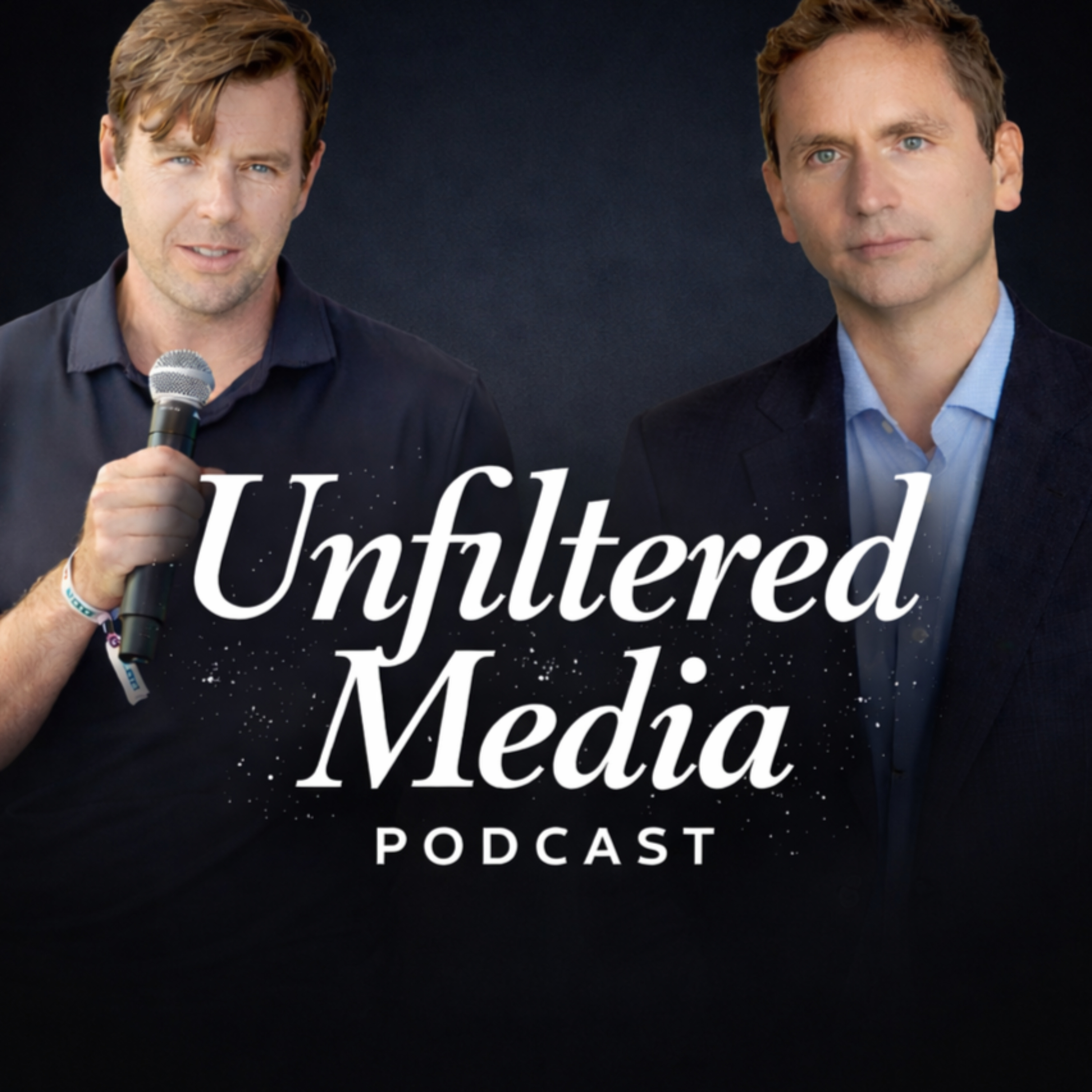
The Great Ad Spend Shift: Why Meta, Amazon & programmatic are reshaping media
from Unfiltered Media Podcast
37m 8s
In this podcast, Sean Wright from Guideline discusses Meta’s ad spend trends and the broader media ecosystem. He notes that while Meta continues to dominate, with revenue growing 21% on average after scandals, Guideline data shows a slowdown in brand spend, likely due to expensive AI tools that fail to deliver returns for large advertisers. In contrast, SMBs embrace these tools despite lacking independent verification of metrics. The top three platforms (Meta, Google, Amazon) capture most ad spend growth, leaving thousands of publishers struggling for residual dollars, which harms market balance. Wright highlights a shift toward programmatic buying, with streaming inventory moving from 82% direct sold to a projected 40-60 split globally. This trend reduces publisher control and margins. In the DSP market, Amazon has surged to nearly 20% market share, while Trade Desk holds steady, and long-tail DSPs decline due to agency consolidation. Wright suggests that publishers should invest in measurement and direct relationships rather than cost-cutting, which undermines their ability to compete with platforms. He emphasizes the need for transparency and human touch to counter Meta’s black-box approach, but notes that pressure for profitability often prevents such investments. Overall, the ecosystem faces a race to the bottom, where value extraction at minimal cost threatens content quality and market diversity.
Hello, welcome to the Media Unfiltered podcast. As you can see this week we are not joined by Ian Whitaker. He is no doubt off doing something marvelous at an event in the UK and he can't make it today. But we have got a very worthy substitute which is Sean Wright who is the Chief Insights and Analytics Officer at Guideline. Today we're going to talk about Meta's spend and in fact spend across the entire ecosystem. Guideline is an incredibly interesting thing. It's because it's able to take away the SME spend and actually analyse exactly where brands are putting their money. Sean has had a glittering career, he's worked publisher and brand side and now he's in the murky world of data and informing publishers, brands and the middlemen exactly what's going on in the market. So Sean, obviously start here but you've just come from NBC or you've been in the seat of a guideline for a year now. How have you found working from the data side, advising companies what they shouldn't be doing? You were TV side, you're probably pulling your hair out there and now you're at the data side showing the facts to all these companies and how you finding it. Well, firstly I think if it's any indication for where folks tuning in on video we can see how much my hair was pulled out at the time at NBC's. I did not mean to make that joke. Oh, it's fine. It's fine. I've come to terms with at certain point I will just continue to bald. Unfortunately, I don't have your head of hair so that's certainly a disappointment. But yeah, I would say in the first year-ish or so, a few things have emerged as being interesting on the side of the fence. You're a lot more free to talk about the data and talk about where the trends are, what you're seeing. As a publisher, you always have to be a little guarded in terms of like, especially from a TV streaming perspective where the dollars are going. So it's a bit freeing in terms of who you can have conversations with, what you see in the trends. You can kind of be a little more true to what the data is telling you. Now to your point, our data tells us a specific story around hold coes, very large independence. It's not the whole market, but it is a good chunk of it that at least you can kind of point to different directions and try to get into the trends a little bit more. So that's been a really exciting transition for me in terms of just thinking about what I can talk about and who I can talk about it with, which has been pretty cool in my time here. Now I think talking about one of the frustrating parts of it is that you can actually see what's going on with spend and data. And I think a big problem that the entire media ecosystem has is the colossal amount of spend that the top three media owners or platforms are taking out the market. I just posted a PCS day from Omar Oaks, which was, which really highlighted it from the UK market's perspective. You're seeing this crazy growth in ad spend, but it's being eaten up by three companies. So it's a bit of a misnomer seeing this growth. I think on that chart, if I remember seeing it correctly, the fifth on that chart, you couldn't even see it relative to the access of the three that you had posted for that exact recent, right? It's like, it's not just that the three are getting it. It's that it is the three. And then it's literally thousands of other publishers fighting for scraps. Yeah, fine. The scraps. And if you have three quid of spend, three pounds, three UK pounds of spend, two of that is going to the major platforms. And that's not a good situation for the clients, for the publishers, for having a balanced media ecosystem. And if you look at Canada and some other markets, they're actually assessing the economic impact of their local economies, what this happens when all this money seeps out of the market. So it's not a good situation to be in. And I think one of the frustrations that you've got at the moment is when you're looking at all the meta scandals, there's been a lot in the last 18 months to two years. I know they've had scandals prior to that, but there's been a particular focus on it now. And what I'm trying to do, I'm trying to use your data to see what brands are doing. I understand that SMEs don't understand a lot of this. What's going on? And they need to target local community. So I get why they're spending on these platforms. But for brands, they're seeing this moral dilemma. And they're still growing their spend. You know, I posted recently that again, using your data, I'm looking at the last three years, meta has able to push through these scandals and get continue to grow within major clients. What have you seen over the last three to five years? What's your view on that? And do you see it changing in the next couple of years? Not a way one side of the bet that you have versus the other. I know that you're favoring of this might be the watershed moment. But at least in terms of what we can see from our data, it seems like a lot of the status quo. Two points to that is one, we took a look at the meta scandals literally going back to 2009, where we looked at our ad spend, the historic trend. We looked at earnings. And we want to see, does any of this slow down every time from the very first scandals to more recently with the lawsuit in California? Essentially no. It continues to power through revenue, kind of channeling eins since he's not here. We'll talk a little bit about earnings. But basically in the quarter after these scandals hit revenue is still up average 21%. And then when you look at our own data, you know, you look at ad spend or ad revenue specific on those like big agencies, it still holds at 17%. Basically through and through from, you know, 20 2009 to kind of present. Oh, what is interesting that I would highlight is is we are seeing a slow down in our spent. And so then it begs the question to your point of like, what are brands making the decision on? What I would actually highlight and what my hypothesis is is when you actually look a little bit at when we started to see a slow down in our data, it was really around the time that meta really pushed for their like AI everything tools, whether it's, you know, placing a campaign, doing ads, mixing in flight. And the interesting thing right is that we start to see that diverge from some of the earnings that they talk about in terms of, you know, ad revenue up 21%. And we're seeing slow down. So what I think is happening is is maybe the scandals are going to be kind of the last now in the coffin, the straw that broke the horses back, whatever metaphor you want. But I actually think is also at play is a lot of these AI tools are driving up costs, not necessarily giving the return odds, I'd spend that a lot of these big brands expected to see from meta. And that might be the cause of slow down because a lot of these big brands, right, they have very sophisticated operations in terms of buying ads, optimizing in flight and meta tools out of the box before the whole AI thing was actually pretty, pretty good, right? But we're hearing anecdotally from some of the bigger brands versus SMBs. It's like, well, we've added on these layers of complexity. It's not necessarily giving us more juice for our squeeze. This feels like we're just kind of throwing money at something that we can't really understand because it's a black box versus the SMBs anecdotally for what we've heard seem to love it because it's like I can literally just point click enter a prompt and my ad runs and I'm done. And yes, it cost me a little bit more. But I'm one of, I am the same person who does our new business outreach, our marketing and like our product stuff, right, versus that these big operations. That might be, you know, a person, a team of 20. So that is some of the diverging that we're seeing in our data, especially of late, right, in the last quarter. But basically meta continues to outperform the market in every single one of the places where we look, whether it's, you know, you mentioned this a little bit in your, in your LinkedIn post too, right? But you look at Australia, you look at, you know, the UK, US, it's typically, you know, four to eight points higher from a percentage growth percentage growth and the overall market. So clearly, there is still money flowing there from an agency perspective is just slowly slowing down. Yeah, it's interesting that you mentioned Australia because it's actually down 1.6%. So it's a minus figure, but it's a bit of a misnodent because the whole market was down. So it actually outperform the market. So it looks like a real positive, and I know I've got a bias with this. I know I set up that question poorly. It should be from a sort of negative perspective, but I'm pretty passionate about this subject. And I think that comes through with my, with my narrative. But you mentioned a couple of things there. The SMBs that I talk to a lot don't know that the platforms cut the books in terms of their, their measurement platforms. They don't know it's not independently and pretty much rigorously sort of put together with, with independent oversight. They have no idea. So they believe the stats they get. Why wouldn't they? They don't know what we know in terms of how marketing works. And then you also talk about like major brands have very sophisticated measurement systems. They do know, right? And they should, they should also know a bit better. And I think what's interesting about these AI tools is not just the tools that they're providing them. It's actually the lack also of customer service in just came from New Zealand, for example. They have two employees in that market. So they're not even servicing large clients with humans. You need to spend an awful lot of money to get that. Do you think that's an opportunity for other media owners to actually work directly with clients in place where, where meta are just not doing that now? Yeah. I mean, for sure. Right. I think it's part of an opportunity. I do, I do, maybe not worry is the right word. But I, I kind of get a lot of the publishers press for right now that they're under immense pressure from the markets to say you need to be more profitable. You need to increase your revenue to be more profitable. No, no, other, other publishers. Yeah. So like, yeah, Meta is doing just fine. Although there is some concern around how much money they're throwing towards CapEx, which is a separate conversation, which is just like an eye popping figure. It's like
like all of the infrastructure built in the United States in the past like 100 years, and that it's like a few data centers, and you kind of weigh them, and it's like it's about the same, and you're like, "This is wild." Yeah. But yeah, so I think it is certainly an opportunity. The challenge that I am seeing is there's this push for profitability, and so a lot of the multinational publishers that could fill the space, and should, right? Either from a local market, human touch, are being asked to make cuts across the board in order to kind of maintain those lesurables of profitability that you see from the metas, the Googles, it's this race to the bottom of how much value can you extract at the bare minimum of costs, and historically publishers haven't operated in the space, they would historically spend a lot of money on content to get you to watch, to get excited, and content costs money, and so then trying to service that content, all of that, it kind of adds in, and so it's a different business model, but there's an expectation that they are somehow supposed to be the same, which I think is a separate issue, 'cause it also robs us of very good content, it robs us of this, I don't wanna sound nostalgic, right? But that glory days of golden TV error of these movies that punch through, that you're seeing less and less of, which is a separate issue. I totally agree, and the imagery in Ian, as mentioned this before, but the optics of cost-cutting doesn't look good for brands, it doesn't put faith in your products, and this is the wrong time to be doing that, they need to invest in not only your mentioning the content side of things, but also the frameworks, the measurement systems, the feedback loops to compete with the platforms, they need to be like the platforms, they need to be make it easy to buy, they need to control that, they need to have the feedback loops in place. We can criticize the platforms, all we like for the societal damage and all the rest of it, and for having these black boxes, but they're highly effective, and TV needs to, not just TV, but all media needs to act like them in order to take back spend, and the cost-cutting now, it doesn't sound, it's very short term focused, and I'm super surprised that we're seeing too much of that from the TV ecosystem. So, looking at. - I was gonna jump on the cost-cutting thing, right? 'Cause I think that that's an interesting piece, because there's also this element where the traditional publishers are moving towards DSPs to try to transact programmatically, because it's simple, it's easy, right? But it adds in some ways extra cost, 'cause for every DSP or for every publisher to list their inventory on there, what used to be a dollar that they would get from a direct sale, now might be $0.75, $0.80, $0.82. But it's the shift where everyone is moving that way. So, look at our data, and kind of globally, it might have been from a streaming perspective, we'll just focus in on that. If you go back a couple of years, streaming collectively was 82%, a direct sold, and very little of it was programmatic. By the end of this year, it's likely globally, 4060, in the US, it's probably closer to 50/50, in terms of leaning programmatic. And so, it's this huge shift towards, okay, well, we'll just enable our inventory, so people can buy it when they want. But to your point, it gives up control, it lessens the ability to kind of monetize, but it also means that when you do monetize, you're also just making less money. So, it's this kind of onward cycle, and then the problem too, is like, if you're on a DSP as a buyer, I can see what you're priced, and I can see what everyone else is priced, and if I'm under pressure as a brand to be like, "Look, you need to deliver 1.12 on a row-ass perspective." Well, I can get there a lot faster by just throwing some kind of nameless impressions towards something that's $4.80, then whatever might be over here for $18.25. I think I might just do the four bucks, and even if it's wasted impressions, and even if it's not good, if I'm getting enough clicks, and I can kind of prove out my return, easy, easy enough said and done. So, to your point too, on the investment from a measurement perspective, it's this whole closed loop conversation that just seems to be perpetuating and driving the market forward, despite things that we know about where those impressions are going, or what it means from a content viewability engagement perspective. These are both known things, and it's also still happening. Now, you just hit something there, this is a topic that's completely my jam, which is the tech challenge to TV companies. Now, in good faith, most TV networks in different countries, the US, Canada, Australia, and others, built these lovely programmatic ecosystems, and they did it for the right reasons, right, to be simple to buy, to make their inventory accessible, and to all these buyers out there. And you know what, it just didn't pan out on that, it's the same buyers, typically, buying, but through this complicated network of technology, which added a tremendous amount of cost and opacity, and what that allowed for was huge margin leakage, which we've seen. Do you know the US is one of the worst for it? So we saw it with like a mid-rates for a CTV inventory, came down from $25 to about $10 in about 18 months, as colossal. If TV companies can actually ring fence quality, how it's traded, and demonstrate that through its measurement and all the rest of it, they actually maintain the supply and the control, and they can maintain pricing, you can prove that in different markets. There is a lot of talk now about removing tech from the middle. I mean, we decimated programmatic display. Let's be honest, we harmonized an impression, but based on this technology, what are you seeing in the DSP? Let's call it the DSP Wars, just to start with, let's ignore SSPs in the rest of it. But the DSP Wars are really heating up, right? We've got all this news from Trade Desk. You've got Amazon on a charge of DV360, still lap is still growing. What you guys actually track DSP spend within these major hubgo groups and Indies. So what's happening from your perspective? Yeah, it's good question. So I would say there's kind of two ways we track it, is we could either see it first flow through like a agency trade desk, and then ultimately onto a DSP, or in many cases, we could say it kind of bid directly through the DSP, down to also even understanding how much of this is coming through a private marketplace, a PMP, or like pure open market, right? So we can't really good insight in places where like historically to your point have been, you know, not to repeat it, but a black box, right? Something very hard to see. And so it's interesting, right? If we look at our global data, there are essentially four players that capture or used to capture around 75% of market share, and are now about 85% market share. And those are Google, primarily DV360, Trade Desk, Yahoo, and Amazon. Yeah. What's interesting is globally, if you look at kind of what's happening in our data over the last, say, teen months, Amazon went from a distant force under 10% of market share in terms of what we have line of sight into, to now just being a hair under 20%. So they are escalating very quickly in the market, but what's interesting is like, I think the whole narrative is like, is trade desk getting their clock cleaned. And at least in terms of what we can see, is kind of trade desk is not moving. It is essentially growing at exactly the market rate, so it is holding on market share for the last two-ish years. But what is losing significantly, again, within this whole, co-mid-market kind of view that we have, is really a lot of those longer tail. So like the M IQs of the world, the teeds of the world, the stack adapts, have really started to kind of lose market share. And to your point, my guess is that this is less of a function of anything about the product itself, and more about agency dynamics. So kind of finding the right partners to build those relationships, to kind of set up the right deals, and kind of then establish a more seamless way of working between these DSPs. And it's a lot harder to do that if you're chasing 50 long tail DSPs to do a couple of bids here based on what your clients want, et cetera. So we are seeing that shift, and we are definitely seeing Amazon growing leaps and bounds globally. And again, diverging a bit, 'cause the US market, I would actually put into a separate box relative to what we're seeing globally. Yeah, so Amazon, sorry, in the US, you're looking at 100 plus DSPs, right? And then if you compare to the UK, there's actually quite a few in the UK. You're still looking at around about 50, let's say. But they're all, all the markets are consolidating. You know, enough senior data, it's consistent throughout, even though the US is an outlier, 'cause you have strange DSPs that operate in weird farmer verticals, for example, but you just don't have that in other markets. It is a fairly American thing to have anything farmer-related for sure. It is, but this whole narrative, because they're growing in importance and size, the thought that TV must go through them, I just think is absolutely incorrect, right? If you look at Reddit, for example, they launched their own. They launched their own DSP. They're doing just fine. And I think television needs to control the narrative, they need to control the conversation with brands sell directly and also control the fees. So they need to trade directly as much as they can, believe they need all this tech. And I think this tech is causing them problems, because like I said, it's creating supply and it's creating supply of questionable content. And as you said, you know what? Price determines the success, particularly on Rohas and ROI. And if your inventory is compared to low price medium and they believe it's still delivering the same, guess what, you'll go cheaper. So Amazon are basically easy, everyone's launched because they're going to,
agencies and offering it for less, right? And it's the only way to buy Amazon, isn't it? So that's working really, really well. You said something really interesting there about trade desks. There's been lots of news from major halcos come out about it. Why are the major halcos talking about trade desks now and sort of giving them a bit of a hard time press? What's happening now? Trying to reap between the lines, but I'd like you to illustrate why you think that's going on. Yeah, I would maybe for the sake of all parties, probably keep it to the lines of what I can read as well. But I would kind of highlight what we're hearing right is on one side you have the agencies saying the trade desk is not being a good partner. They have historical comment. They've bullied us. They have really high take rates. Basically, they're asking for a lot more money on our inventory. And you know, that made sense five years ago when they were the only game in town, but there's now a lot of players. And so you can't throw your market weight around anymore. You are being not transparent of like where our bids are going. We don't know exactly what's happening. Right. So we're hearing a little bit of that. And on the flip side, you know, the trade desk is kind of throwing back and saying, well, like you guys are basically skimming off the top. You are kind of putting some stuff in the market that's not really a fair assessment of trade desk. This is more of like your operational issues. You guys need to figure this out. We've always been the same partner that we've always been crazy. And so like it is, I mean, it is to be fair, it is pretty well. I don't think in the 10-ish years I've been in media that I've seen it as heated that explicitly that they've just trade up leech memos to the trades and been like, here, this is what we're saying internally about trade. But they're all doing it. Everyone does it. So yeah, to say to say to trade desk and it's clear what's happened prior to that is Amazon's come in and offered cheaper fees. Okay. Is this just an excuse just to switch DSP and make it public? I mean, at least anecdotally, yeah, right? Like it's probably a lot of excuse of getting out of deals, going different ways, yeah, parting ways and going to Amazon. Again, in our data, it seems to be despite all of the rhetoric, at least through Q1, right? We're essentially like a month and a half behind. Trade desk is still at least holding. Now that being said, we do see pretty diverging trend. So globally, it still seems to be doing well. Let's call it like 12-30% growth for Q1. In the US, though, it has basically come to pretty low single-digit growth. So a lot of what we are hearing and seeing might be concentrated also to specific markets. But also from a growth perspective, right? We're not seeing the global growth offsetting the slowing in the US just in terms of weighing the markets, both in terms of what we have a line of sight into and to your point on the entire programmatic landscape of the US is just more complicated. There's a lot more dollars flowing through there than elsewhere. So we are seeing some pretty strong diverging trends, but it's still not enough to move the needle, specific to trade desk. Okay, so so trade desk just to just to cap that off is it's pretty flat, you'd say, however, dv360 Amazon are growing. So it kind of looks a bit bad because they should be growing at the same pace if you're sort of comparing them together. Would you say that? Yeah, it's not like they're actively losing so much as like everyone has just started to run faster. Yeah, for enough. So one of the things that we reference a lot is looking at can streaming income or data sales replace lost linear dollars. It hasn't happened. And actually what's happening a lot is we've shifted quite a lot of budget to streaming at the expense of linear. Despite the fact that linear still in the US delivers something like 89% of all the available ad impressions yet we've shifted close to 35, 38% of our spend to streaming, but it's not quite offsetting the dollars. And that's that's globally, isn't it? So do you see that? What's the challenge there? Because at the moment, TV companies around the world, what they are doing is jacking up the rates for streaming, bevod, ctv, what everyone would call it and compensating with discounts on linear. I call it robbing p at paypal. I think it's very short term strategy. I think because what's happened actually is linear hasn't declined in the way that it was predicted 1015 isca. It just hasn't. It's still enormous and hugely valuable. I think TV companies should blend them and sell audiences personally. And obviously they need to figure out how to apply the data in the same way to dig to dig to dig those that can do just to linear. What's what's happening there from your side? What are you seeing? What are you seeing from the different markets? Because obviously the US is obviously going to be different to Europe. What are you seeing from the major spending groups that you guys represent? Yeah. So one, just in terms of near and dear to my heart, kind of from my background, I also agree not just because of my backgrounds, but also the data that there just seems to be. Brands are kind of like jump ship immediately kind of following COVID of like, we're moving all of our dollars out of linear, which then you look at like where the add impressions are, the amount of consumption that still happens on like an old school set top box is out like incredibly high. And again, not just the US, but like globally of all of the different markets, right? Well, you are seeing kind of chord cutting and shifting, but like it's not nearly the rate of where the dollars float out of, right? Like brands were like, I need to get out of here. This isn't cool, but like there's still so much consumption that's happening on, you know, on the TV screen for old school linear kind of thing. Yeah. That it's surprising me to see how fast the move was when you kind of marry up dollars versus consumption. Yeah. And so I think you know as well, do not do not do know as well. Sorry, this topic drives me effing crazy, but linear is being traded as as cheap as YouTube in some markets. Yeah. That's how how how how fashionably is fallen, which is I think is crazy, by the way, but anyway, carry on. I mean, that's that's a little bit of why you aren't seeing the one to one of like as the dollars leaf linear and they're not going over streaming. A lot of it's a pricing pressure. Yeah. You you look at pricing data, which we have live side into on linear to your point. Some of the stuff on like cable or like, you know, the paid TV channels in in the UK, right? All of it. It's like for USD five USD in some cases from like an equivalentized CPM perspective. Shreaming players in those same markets are 22 25 bucks. So for like an advertiser that like, look, I literally just moved dollar off of TV in order for me to just kind of equivalentize this. You guys are like five X on this stream. I I'm going to go to YouTube. And so what we're seeing is actually part of it is that the strategy to try to move, you know, the TV companies trying to move people into their streaming services are almost like cutting their nose despite their face. Because as they're kind of trying to force these shifts, they're also trying to price up in a way that it's not really economical for brand. And they're like, no, I'm just going to I'll take that same dollar I spent on cable last year and I'll move it to YouTube for, you know, 480, you know, five bucks. And so we are seeing, you know, first and foremost, this pricing dynamics. And it's and it's not just US specific, right? In the US, we estimate roughly about 25 cents for every dollar that leaves the linear market ultimately ends up being placed back on on streaming in the UK. It's actually a little bit less. It's like 15 pence for every pound. And then in Canada, it kind of sits right in the middle. It's about, you know, 20 to 20 cents of Canadian dollars for every one Canadian dollar spent. So there's this kind of recoup problem that they're having. But to your point, I am I wouldn't say bullish, but I am hopeful for TV because one of the things that I've personally been watching a lot of is the tradeoff cost, the cord cutting economics. It used to be that it was a no brainer to cut your cable subscription, to cut your TV subscription and just move over to one or two streaming services. But now with even with ad supported in most of these, you know, markets we cover, it's almost synonymous between what you might pay for the top streaming services and what you would just keep your TV subscription. And in many countries too, right? There's even more robust free free air TV. Then there is in the US. So it's even the economics of trading is even more skewed. So again, I'm kind of hopeful given the complexities of like now I need to subscribe to eight different services to watch four different shows. And at a price point that isn't really economical, I am hopeful that TV can kind of come back and try to to make a little bit of fight again. It's over time it will kind of naturally decay, but I don't think at the rate that people had assumed that like TV is over, TV is dead, which we're just not seeing that. No, and the US is obviously a very different market to US and Canada different to the rest of the world where you pay for a pay TV service in order to get a linear service, which carries ads. Obviously those linear services are already available in all those countries for free. It's, you know, part of these sort of aerials or mandate, if you like. And those those sort of super aggregation deals are occurring. So where I am, I get my TV service from from Tell us for example, and it bundles in all my streaming services and it's super cheap and I get all my channels with it as well. So you're right. I'm mindful of that. It's just the bit that you mentioned prior, which was actually the investment in content and ensuring you know, there's a lot of competition for eyeballs out there. Typically viewership is pretty solid in terms of the premium stuff, which is streaming to broadcast, but for broadcast to continue or the traditional companies, they need to improve the quality of the content, frankly, because people will go to where there's decent programming that there is no doubt about that. I think Peacock's a good example and I'm working in the Nordics market at the moment. TV 4 had a very or Swedish market was very early in broadband penetration and they had huge competition from streamers, but TV 4, the main commercial broadcaster is actually the largest stringering that market today. So. And you can see Peacock becoming a really big player as well, you know, once they have time to catch up. So these things will come around, weren't they, Sean? Like, like I say, I'm pretty bullish too, based on that sort of data that we're seeing. Yeah, for sure. Yeah, I'm very hopeful that this is kind of just maybe the midpoint in the streaming wars. No, I've kind of seen the headlines of like, the streaming wars are dead, Amazon, enough like stuff like that. But I think we're actually just at like a midpoint because a lot of companies are just starting to figure out their own models both in terms of like content costs, revenue that I think we're very much still in play in terms of figuring out what this looks like for the next couple of years. Yeah, I totally agree. Those who keep saying it's over are incentivized probably to say that and it's all absolute nonsense. So you have a particular launch, and she was really interesting. In the US and Canada, you actually monitor digital CPMs, which is really interesting because you can actually see what people are paying for format based on platforms as well. And you can really break it down in a granular fashion. I use that data myself to see what prices and what people are actually paying for. I saw them. I'm really interested to see if people are paying more for social media because of just the sheer increase in demand. Because social actually, in a lot of cases, isn't increasing in viewership, right? You know, look at Facebook, for example, meta, they grew what? Just under 4% but they grew sales by 22%. So they're probably growing that by price increases. And you can actually see that with your data. Now you've got the CPM data in the UK. We love doing this, but are you seeing any differences between the North American market, the two cool ones, Canada and the US and the UK, when you can actually now see this granular spend data? Yeah, here's where I would say there's some kind of interesting nuance, currency exchanges and all of that. But what's fascinating is for these kind of cycling to the top of our conversation, right? The big three. It's almost as though they are line priced kind of globally. There's very little variability in terms of what we're seeing in the CPMs, right? The CPMs that we're seeing for like Facebook in the US or Canada or the UK are all in that like, earn 50 cents to like $5 range, with very little kind of variability over time. But when we kind of zoom out from just the digital players and get more into like the local nuance, I would actually say that like the most fascinating thing that I've seen in the data so far is how underpriced streaming is in the UK relative to their other competitors in other countries. So if we think about like not that peacock is an international, right? But like peacock is still primarily a US service. Yeah. Relative to what they're getting from a CPM perspective in the US versus like a ITDX. There's definitely room for the UK publishers to grow from a, if we're looking at kind of country comparisons on a streaming basis. And that's actually one place where we've seen an interesting divergence in terms of like uniqueness, whereas like the US and Canadian markets have kind of frended pretty similar in terms of pricing across our different ad formats. But the UK, I would say that that kind of stands out in terms of there's some opportunity to grow in terms of pricing. Or they could keep it low and be ultra competitive. It's up to them. But if we are trying to do these like intermarket comparisons, the UK specific publishers seems like there's a bit more of a ceiling compared to the US specific folks or the Canadian specific folks that I thought was particularly interesting. And again, it makes sense if you think about how the agencies interact, right? Like these big multi-national digital players like a Facebook meta, you know, they operate globally. And they have kind of a massive singular business model. So it makes sense that like there isn't that much variability by country. Whereas a lot of these more unique publishers that are country specific do have to kind of operate and more so figure out what works for them within each of the countries we can see. And then looking at the actual like some of the interesting things that these companies are offering, you know, like in-stream and then you've got creative stuff. Where's the biggest price hike that you're seeing in that in that entire digital space when you can look at the actual digital CPMs that you're seeing? Yeah, I would actually say the flip it. Instead of price hike, I would say that probably the fastest decline that we've seen has been, you know, video OTT CPMs. That has kind of gone from being a very strong CPM. Again, let's talk, you know, by marketed varies, but anywhere from like 25 to 30 dollars equivalent, that has basically come down almost 30, 40% in the last 18 months. And a little bit of what we talked about, right? A lot of that is shifting programmatically. So there's this race to bottom. There's a lot more ad publish or, you know, former S VODs that are now saying we're offering advertising. So you've seen the huge influx of inventory. So it's the kind of classic supply and demand. But that's an area where we've just seen CPMs tank and what's fascinating is like if you look at a chart of all of our countries, there's almost this like downward line from an average CPM perspective in digital, solely because of that phenomenon. There's just so much of our of our spend that we can see that sits in that like video streaming OTT product that it's kind of bringing the collective markets down for those kind of two, you know, two considerations, right? Is the influx of ad inventory. So the more demand or more supply. And also for the folks coming into the market, you know, Amazon aggressively came into the market kind of at a lower price premium than some of the other players. So they kind of were able to drive the market down. And then the shift to programmatic is also just kind of moving the price points down as well. So it's actually creating this downward pressure that we're seeing in the UK kind of in the US. Now when you say OTT ad enabled, you're talking about CTV including LongTow, correct? Yes, I would say, you know, OTT would probably be anything that would really kind of flow through from like a streaming app perspective net of like I open up YouTube and I watch kind of classic YouTube shorts on a TV set. So what I'd argue there is that it's almost a false narrative that we're increasing supply because it all supplies the same. And that's the problem with the ad tech ecosystem is that it doesn't discern between the two and then you end up competing on price. And you can't compete with LongTow fast and bevot. It's going to have a different price point. Yeah. And also be highly programmatically enabled, right? You're talking, you know, bevots fast are all 70, 85% of the total inventory is transacted programmatically. Absolutely. This is what we can see in our data. So it's all just a volume play. Yeah, I'm biddable too, which is, you know, what I say to TV companies is the death of your business if you do, if you move biddable for your inventory. Look, we've covered a lot here. It's been an absolutely fabulous conversation. That's great. In would say this is definitely not investment advice. Sean, thank you very much for joining me. Thanks for listening. Have a go.
Podcast Summary
Key Points:
Sean Wright, Chief Insights and Analytics Officer at Guideline, discusses Meta’s ad spend and the broader media ecosystem, noting that data reveals trends more freely than from a publisher’s perspective.
The top three media platforms (Meta, Google, Amazon) capture the vast majority of ad spend growth, leaving thousands of other publishers fighting for scraps, which threatens a balanced ecosystem.
Despite ongoing scandals, Meta’s revenue continues to grow (averaging 21% post-scandal), but Guideline data shows a slowdown in brand spend, possibly due to costly AI tools that don’t deliver expected returns for large brands.
Small and medium businesses (SMBs) often rely on Meta’s unverified metrics and lack independent measurement awareness, while major brands have sophisticated systems but may be reconsidering spend due to rising costs and lack of customer service.
The programmatic shift is driving consolidation among DSPs (e.g., Amazon growing to nearly 20% market share, Trade Desk holding steady), with long-tail DSPs losing ground due to agency dynamics and complexity.
Summary:
In this podcast, Sean Wright from Guideline discusses Meta’s ad spend trends and the broader media ecosystem. He notes that while Meta continues to dominate, with revenue growing 21% on average after scandals, Guideline data shows a slowdown in brand spend, likely due to expensive AI tools that fail to deliver returns for large advertisers. In contrast, SMBs embrace these tools despite lacking independent verification of metrics.
The top three platforms (Meta, Google, Amazon) capture most ad spend growth, leaving thousands of publishers struggling for residual dollars, which harms market balance. Wright highlights a shift toward programmatic buying, with streaming inventory moving from 82% direct sold to a projected 40-60 split globally. This trend reduces publisher control and margins.
In the DSP market, Amazon has surged to nearly 20% market share, while Trade Desk holds steady, and long-tail DSPs decline due to agency consolidation. Wright suggests that publishers should invest in measurement and direct relationships rather than cost-cutting, which undermines their ability to compete with platforms. He emphasizes the need for transparency and human touch to counter Meta’s black-box approach, but notes that pressure for profitability often prevents such investments.
Overall, the ecosystem faces a race to the bottom, where value extraction at minimal cost threatens content quality and market diversity.
FAQs
Guideline is a company that analyzes ad spend across the entire media ecosystem, removing SME spend to show exactly where brands are putting their money. It provides data-driven insights to publishers, brands, and intermediaries.
Meta's scandals have historically not slowed its revenue, which grew an average of 21% in quarters following scandals. However, a slowdown in Guideline's data may be due to AI tools driving up costs without expected returns, rather than scandals alone.
The top three media platforms are capturing the vast majority of ad spend growth, with two of every three UK pounds going to them. This leaves thousands of other publishers fighting for scraps, which harms the media ecosystem's balance.
Publishers moving to programmatic via DSPs are earning less per dollar, as direct sales yielded $1 but programmatic may yield only $0.75-$0.82. This shift also gives up control and reduces monetization, creating a cycle of lower revenue.
Four DSPs—Google (DV360), Trade Desk, Yahoo, and Amazon—now capture about 85% of market share, up from 75%. Amazon has grown from under 10% to nearly 20% in recent months, while Trade Desk is holding steady and long-tail DSPs are losing share.
SMBs often lack awareness that Meta's measurement platforms are not independently verified, so they trust the provided stats. They also appreciate the simplicity of Meta's AI tools, which allow them to easily run ads without sophisticated operations.
Chat with AI
Loading...
Pro features
Go deeper with this episode
Unlock creator-grade tools that turn any transcript into show notes and subtitle files.
 PodcastTranscript AI