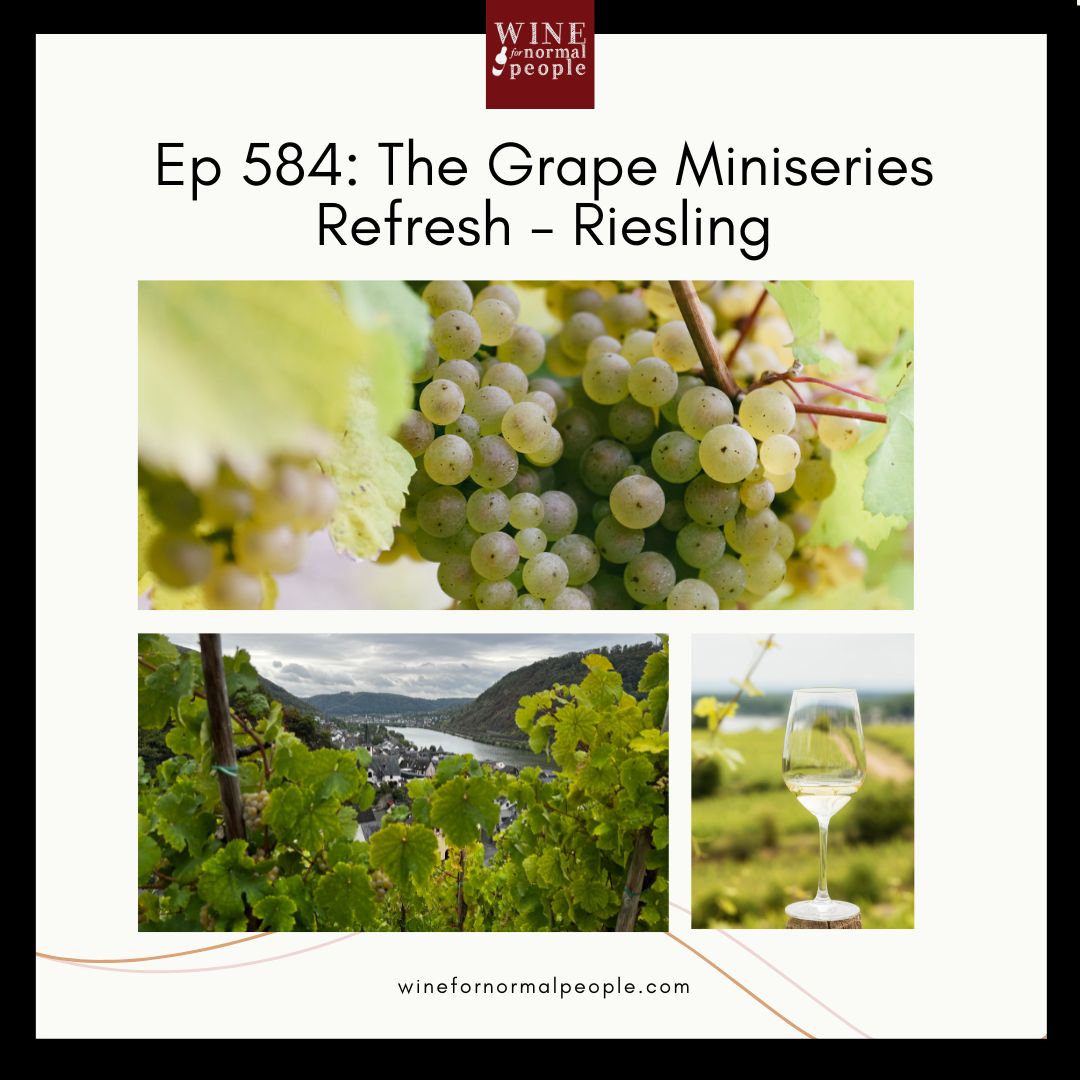
The podcast episode focuses on Riesling, highlighting its significance as a versatile and historically important grape. Host Elizabeth Schneider shares her personal connection to Riesling, describing it as the wine that sparked her passion. The grape originated in Germany, with a genetic background involving wild vines and crossings, such as with Traminer and Gouais Blanc, which contribute to its aromatic complexity. Riesling is known for its high acidity and range of styles, from dry to sweet and sparkling, making it adaptable to various foods and preferences. It thrives primarily in cool climates like Germany, Austria, and Alsace, requiring long ripening periods and specific conditions to develop its characteristic flavors, such as peach, lime, and floral notes. In warmer regions, it can lose acidity and aromatics. The episode also addresses the petrol note in Riesling, explaining it as a natural compound influenced by sunlight and aging. Winemaking emphasizes preserving natural aromas through techniques like stainless steel fermentation, with careful harvesting to balance acidity and sweetness. Riesling's global spread is attributed to German immigration, with successful cultivation in areas like the Finger Lakes and parts of Australia, though it remains less common in warmer New World regions.
[music] Welcome to Wine for Normal People, the podcast for people who like wine, but not the snobbery that goes with it. I'm your host Elizabeth Schneider, author of the Wine for Normal People book and certified wine dork. This show is brought to you by my exclusive sponsor Wine Access, the place to discover your next favorite bottle. They have such an amazing selection and incredible values, plus free shipping on orders of $150 or more. And you can join my Wine Club and get 6 awesome bottles for just $150 or times a year per shipment. That includes shipping also. Go to wineaccess.com/normal and listen in the middle of the show for more details. Halloween is behind us, my favorite holiday. Some of you caught my ghoulish pictures and the pictures if you are on Patreon of my crazy house. I love Halloween, very sad to see it go, but the holidays are almost upon us. I cannot believe it. A couple of things, some shameless plugs. First of all, you can gift a Patreon membership if you go to patreon.com/winefornormalpeople to one of your loved ones. And you can also buy a gift certificate for classes. I've noticed some people doing that already. Winefornormalpeople.com/classes. Also don't forget the food and wine pairing class is coming up. That's great right before the holidays and the sparkling wine class. I'm going to put up this week right before New Year's. I'm always excited to teach that. This week I have decided to do the refresh of one of my all time favorite grapes. And really once you get me talking about reasling, it's kind of hard to get me to shut up. So hopefully I can be tight on this show and not tell you every single detail that I want to tell you about reasling forever and ever. I do that in the reasling around the world class, but I will try my best to keep my enthusiasm and for this refresh of reasling, which I haven't done in years and years, maybe even a decade since I've done a refresh on reasling. So we will get to that. I need to thank the patrons who have joined for a year. Not too many this time. Svetta B Richard S and P Torrey W Nate F McKay H and Riley K. Thank you all so much for joining. I see that at least one of you has already started interacting on the community page. And that is awesome. And the most important thing is to get involved in the chat. Of course to sign up for the local meet up groups tons of stuff going on in Chicago, and Houston in LA in San Francisco. We have all these meet up groups going on all over the place, get on Patreon. So patreon.com/wind for normal people. Okay, let us talk about reasling because there's a lot to cover. Let me explain to you why I love reasling so much. It was the wine that got me into wine. Everybody has their aha moment. Everybody has the wine that gets them into wine. Reasling was that moment for me. It was in a class I took at the Boston Center for adult education with a guy named John Miller who worked at a distributor. I owe him so much I've never been able to find him because of course he has the most common name in the entire world. But he taught this wine class at the Boston Center for adult education and introduced me to all of these wines, including a trim-bock reasling from Allzoss. And that was the wine that I very clearly remember saying, how is this wine? That is crazy. I always thought wine tasted like what my kids say. It tastes like wine. But this was really different. And at that point, I fell in love with reasling. I fell in love with wine and then I started to be able to really hone in on things that I hadn't before. So reasling is a really important great for me. I probably wouldn't be here today doing what I do if it wasn't for that Allzoss reasling. And John Miller, if anybody knows him in Boston in the early 2000s. Thank you. Thank you. Thank you. Here's the thing about reasling that I love also. It is so versatile. Like I can't get sick of it. If I get bored of one style, I can go to another style. There's great acidity in this grape and in these wines. So it cleans your mouth out. Leaves it refreshing. But if you want something a little softer, I've got options for you there too. There is a ton of flavor in these wines. If you want something to go with spicy food, you have the option of going off dry. If you want a dessert wine, you can go sweet. If you want a sparkling wine, you can have the sparkling wines from Germany, the sex. So there is so much there. Reasling is not a huge grape though. 51,000 hectares or 126,000 acres globally. All the planets of reasling around the world are less than half of the plantings of Bordeaux. Primarily concentrated in, yeah, you guessed it Germany. It accounts for about 45% of the total area according to the international organization of Vine and Wine. Reasling has an amazing history. It is a combination of wild vines and ancient varieties. And in 2006, there was an Austrian scientist named Ferdinand Renier. He did a DNA analysis and his findings were that the original reasling grape was probably frost resistant, had small berries. That's probably why it was very flavorful. Probably it was selected from wild grapes in the Rhine. Then when people planted this wild grape, it likely had a spontaneous crossing because there's no record of it being crossed on purpose with the grape traminer, which is also known as 7-ion. Traminer is related to Gavirtsch traminer. And then as that grape was growing, it was later crossed with guet blanc. Guet blanc and again, not sure if this was intentional or happened in the vineyard as well. 7-ion or traminer is related to Gruenerfeltliener, Sauvignon blanc, Shenen blanc. So reasling is related to those grapes. And then through guet blanc, which is the parent of Chardonnay, of Game, of Alagote, such an important grape. It still exists today and it doesn't have a lot of personality. But once it crossed with Pino, it became these unbelievable grapes, Chardonnay, Game, of Alagote. Reasling is related to all of those grapes I just mentioned through its parent. Guet blanc added acidity and disease resistant traminer added a lot of aromatics. So all of this plus the ancient grape created the reasling that we know today. Reasling has probably been around for a very long time. But it was first mentioned in 1435 in Germany. And it was in an invoice for purchase of reasling vines from account near Rangau. Rangau, we will talk about later, but it is an incredibly important part of the history of reasling. It is not too far away from Frankfurt if you're thinking where is it located. The modern spelling for reasling came about a hundred years later in 1552. It was growing in the Rhine. It was growing in the Mosul Valley. There also was a red reasling. And that actually might have even been the forerunner to the reasling we have today. It's unclear if there's no way to tell. All we do know is that reasling has always been high quality. It was never a grape that was put down or not cared for. It has always been something that the church and the aristocracy maintained so that they could have access to it. It was a really important part of this high end wine culture. Schloss Johannesburg, the Benedictine Abbey planted it as the only grape in 1720. That is why if you see on a bottle, Johannesburg reasling, that is real reasling. So that is the name for a reasling. That's the old name for reasling before they drop the Johannesburg part. They planted about 300,000 reasling vines, ripped up everything else. This in the Rhine Gau was such an important part of German culture that reasling became the grape of Germany starting in 1720. And then at Schloss Johannesburg again, this place is so important. If you ever go to the Rhine Gau, please go to Schloss Johannesburg. It's a beautiful property. So historic. They do a great job with talking about the history of reasling. They started making spate lacer. That is late harvest wine. Now it's kind of an interesting story in the 1775 vintage. The bishop had to decide when the grapes were going to be harvested and they sent a messenger, that messenger may or may not have had potentially a trist that held him up. So by the time they harvested the grapes were spate lacer or late harvest. And that was a great creation for a reasling and for German wine culture because later on all of the sweet wines as they waited and delayed the harvest later and later and later they wound up getting some really interesting wines out of that. They refined the concept of selectively harvesting reasling bunches or individual grapes at varying stages. So again, like I said, increasing levels of ripeness. So it started with spate lacer or late harvest. Auslacer select berries. And then you get into some of the really sweet wines like beer and Auslacer select berries late harvest and truck and beer and Auslacer dried select berries late harvest, which is unbelievable wine. And so expensive and very, very hard to make. Anyway, in the late 1700s aristocrats in Germany took a page out of Schlusschenheim's book and they started replanting to reasling also because Auslacer is so close to Germany, especially to the Fals region. It became popular in Alsace now this happened until the Germans came in and saw that Alsace reasling was very soft and round and consistent every year and made Alsace a producer of bulk wine. So it didn't pose any competition or unfavorable comparison to the German reasonings when the French took it back over it went back to reasling and back and forth and back and forth. Allzost now makes beautiful reasling as I said, it's the wine that got me into wine. German immigration took reasling across the globe South Australia in the 1850s as well as California in the 1850s 1871 in Washington state in the United States. It spidered out so German immigration in the 1800s spread the grape around by the early 20th century reasling was so famous that the prices were on par with Burgundy and Bordeaux royalty loved it. And then you have the wars and the depression and then mass production and hybrids to try to get that production back up and then the horse sort of left the barn because as things were not great in Germany in the rebuilding the name of reasling was not protected. So it was used in a lot of grape names to make these grapes seem prestigious so you had Ola's reasling and Pearl reasling and Lofke reasling and Welsh reasling none of those is actual reasling like the grape I just described they're all different grapes. It is very confusing and in some ways it's meant to confuse because they want you to have the halo effect of reasling and thinking that it is related to this grape which most of the time these grapes are not they're completely different and they have nothing to do with reasling so again that's why I said Johannesburg reasling is actual reasling the rest of these are different grapes. Let's talk about reasling in the vineyard as you can imagine it's relatively cold hardy if you think about the places that it grows in Germany in the finger lakes of New York in parts of Australia up at elevation it's cold hardy what it needs is warm sites in cold climates to ripen in warmer climates it's considered early ripening in cooler climates it's considered late ripening so Germany considers it. It's not how many considers it a later ripening grape but Australia considers it an early ripening grape so it really does depend on where you're growing it for the most part there are only pockets in the New World which I will discuss when we talk about places that the grape grows the New World has been pretty unsuccessful because much of the New World is pretty warm and that just can't work for reasling unless there is a mitigating factor and this is why there are a couple spots in Australia. There are spots in Australia that have done great work with it New Zealand is coming on strong you have some spots in California in Washington state the finger lakes there are not a whole lot of places you can go reasling successfully and have it be the grape that it should be in a warm climate it's going to ripen too early it'll be dull it's not going to have all those beautiful aromatics the jasmine flower the peach notes the lime anything there's so many different notes in real life. It notes in reasling but you won't have that the acidity will be lower it will taste kind of flat so warmer climate reasling doesn't work in the cool climate first of all reasling loves cooler climates because it gets dormancy in the winter really needs that dormancy needs to go to sleep in the winter time but it has hard wood and that's going to make it relatively cold resistant it's going to bud later in these cooler climate so it'll be resistant to late frost. And as long as you grow it in the sunniest most sheltered sites in the coolest places and you give it sun exposure and it loves the steep vineyards because it gets direct sunlight the grape will be happy and thrive in Mosul which is one of the most incredible places I've ever been there are slopes that are 60 degrees 70 degrees grade you are going to have this unbelievable reasling that comes out of this because the sun exposure and the steepness and the types of soils that are great for reasling in general small clusters small berries now this can be an issue because it is susceptible to rot unless that rot is botritis or noble rot which changes the character of the grape desicates it and then makes these unbelievably delicious sweet wines but if it's a bad year and it's very rainy and you don't have those cooling afternoon breezes because what botritis needs is a humid morning followed by wind or something to dry off the grapes in the afternoon then you have rot and that's going to be a problem the latitude the climate the soil will determine the character of reasling but one thing reasling needs regardless of where grows is a long slow ripening period and it needs to be low yielding low yields will produce good quality high yields will not this is the story with every grape I'm just repeating myself over and over again but you know I feel like I have to say for the reason it needs that long slow ripening is because reasling develops aromas only at the end of the ripening phase so if it doesn't have time to build and build and build it won't have the types of flavors that we would expect out of the traditional homes germany austria alzas and then some bordering nations are some in althoati j there's a little bit around and hungry and places like that but for the most part it's germany austria and alzas that are the traditional homes for reasling in the u.s now its finger lakes there's some in Oregon Washington northern California Canada high altitude sites in South America in South Africa in Australia in New Zealand anything that's got high altitude and has very cool nights it's going to work let's talk petrol or gasoline note this is something that is in reasling if you like reasling you might want to get used to this or you're going to have to try to avoid it so let's talk about what that petrol notice from it's a compound that's identified as TDN I'm not going to try to say it is trimethyl dihydro something it is formed when there is a lot of sunlight there is warmth and there is water stress during the growing season and the reasling grape less do you think that this is a mirage or you know as people have said that maybe it's a flaw the reason grape has five times more TDN than any other grape variety it can be found in shardinay and in some young block and in other grapes but reasling has five times more of it the human detection thresholds for TDN are very low so at least half of us can sense it and that is saying a lot of the same thing and that is saying a lot fruity and floral notes in young wines can mask it but it's generally always there reasling builds the precursors of TDN after veration after the color change when you get these hard berries the hard green berries and they turn into softer grapes that are going to eventually become the grapes that we put into the wine these precursors are called carotenoids they're bound and they come out during fermentation and express themselves even more after bottling and the longer the wines in the bottle the more TDN expresses itself in the wine so if you don't like the petrile note make sure you have a very young wine make sure that it is something that is fruity and very fresh it is a device of aroma people either love it or hate it if you hate it how can you avoid it? Well cork and synthetic cork can absorb some of the TDN in the wine so you may want to look for things with a cork closure rather than a screw cap closure reasling from cooler climates or places with less sun exposure which is hard to find these days because even Germany is experiencing hotter sunnier dry years and it's that drought that really can be the problem in developing TDN you're going to have less TDN in cooler climates you really probably want to avoid Australian wines and you want to avoid old wines the Australian wines tend to have a lot of sunlight they have higher levels of TDN old wines always have higher levels of petrol or TDN that explains hopefully what we're dealing with when we talk about petrol reasling is so influenced by terroir it has transparency as we've already mentioned it's sensitive to sun exposure it's sensitive to water and drainage it doesn't mutate that easily so clones are not a big issue it's more about where it's growing climate and soil and latitude Germany is at about 50 degrees north latitude so here you got to maximize the sun steep south facing slopes to ripen and then something like Eden and Claire valleys at 38 degrees south latitude and south australia you need high altitude that mitigating factor good drainage and very cool nights so big big diurnal swing wine making in order to get those great aromas you are going to have to have full ripeness ripeness it used to be difficult but with climate change now you can get fully ripe grapes and you can ferment them to dryness the decisions that are made in wine making are used to maximize natural aromas in the bottle this is an awful lot like pino noir you're looking for full ripeness to get developed aromas and decisions made to maximize natural aromas in the bottle stainless steel usually is the choice for fermentation especially for younger less expensive wines it's going to promote freshness very clear beautiful flavors if you want more complexity for some of the older wines maybe for some of the wines that are later harvest in Germany and in all sauce they will use large neutral wooden barrels now most of them are steamed they also put other wines younger wines or blends like adels veeker in a barrel to make sure there is no wood note before they put in these very nice wines what the wood does is it adds complexity it smooths out some of the acidity it is really just for the top top wines and that small micro oxygenation is going to add texture to the reason of fullness there is some new oak being played with and fouls and boden and Germany but it's warmer you have more fruit you have more alcohol still not really a preferred method for reasoning not only is it important for them to maximize aromas it's also important for wine makers to gauge the line between acidic and tart especially in cool climates you have to pick at the right time all the work with reasling is really done in the vineyard if you pick at the right time you will have the right amount of acidity and sugar to balance out if not you may need to add sugar to balance the wine and I'm going to talk about the sweetness and how reasling get sweet now but there's other things in wine making that matter are they going to macerate add some skin contact that may add some more structure or tannin to the wine will they stir the leaves or the dead yeast cells to give a toasty note they usually do that to give the reasling a little bit more body a little more character the type of yeast use so important many people use indigenous yeast some just use what they call workhorse yeast yeast that don't add any flavor they just get the fermentation done how much sulfur dioxide do people use sulfites or something that people really have straight away from we don't see excessive sulfite use however in a white wine you absolutely need sulfites I'm sorry natural wine people to kill the bacteria my carburel spoilage is a thing and if you don't use a little bit of sulfur dioxide you're going to wind up with spoiled wine so there's that some of them also leave carbon dioxide in the wine they bottle the wine fresh while it's still fermenting or add carbon dioxide to the wine to keep it a little spritzy usually it is that it's bottled early and that's why I have some spritz in your reasling there's some carbon dioxide from the fermentation screw cap can help keep freshness it can help reduce the need for extra sulfites it can also in some cases help with aging although the jury is still out on that but more and more people are using a special for young wines screw cap let's talk about sweet wines I've already mentioned if your wine is out of control in terms of acidity the way to balance that out is to add sugar but if you are skilled wine maker even if there's high residual sugar in the wine it should still taste refreshing and light and beautiful we're looking at things that are off dry to sweet and how did they get sweet so there's two ways you can do this the first thing is that you can chill the wine down or add a lot of sulfur dioxide to kill the yeast and stop the fermentation that will leave natural sugar in the wine you filter out the yeast and then you have your reasling you can also add what's called sus reserve sus reserve is usually from the same lot that you are fermenting you will save some of the juice from the vineyard you will not ferment it you will keep it sweet and then you will just sterilize it so that it doesn't re ignite a fermentation once you add it to the dry or already fermented and that will add some sweetness to the wine that is actually the preferred method these days instead of stopping fermentation some reaslings are made from botrata grapes some reaslings are made as ice wine so this is when the first hard frost comes you pick very very quickly if the nighttime temperatures are minus six degrees Celsius or lower it's usually January or February sometimes the water inside of the grapes will freeze they'll squeeze it out which left is the sugars from the grape and then they'll press those sugars and that's how you get ice wine also very expensive and labor intensive to make so those are the ways you make sweet reasling because people think that all reasling is sweet which is just not true at least 50% of German reasling is not sweet almost all all sauce reasling is not sweet half of finger lakes reasling is not sweet so there's a misconception about reasling because of reputational damage done after the war and people associate reasling with sweet wines and it's not actually even reasling that they associate with sweet wines is German wine that they associate with sweet wines because there was a product right after the war called leab from it which was mostly the Mueller turgaugh grape and it was sweetened that's what people think they think that that was reasling it wasn't and so reasling even though it's this noble grape with a long legacy and there's so many dry versions of it people still think of it as a sweet wine but I don't want you to think of it that way all right we'll take a step away from this super dark fast on reasling can I get more excited about it I don't think so to remind you to become a patron on patreon I can't do the show without the patrons I would not be able to survive and do this I would have to find something else to do so really is very important to join patreon p-a-t-r-e-o-n dot com slash wine for normal people if you like the show and you want to continue to see it go and if you want to get together with other wine lovers in your area you have to join patreon in order to do that there's also a ton of other bonuses and benefits you can go on trips you get hang out to get all sorts of things I'm doing I hang out on Croatian Sicily with everybody this week it's well worth it if you want to get more involved or if you just want to support the word you can try out a wine for normal people class they are two hours long with tons of information and a very fun community people are usually saying I cannot believe how fast that went by there are some sold out classes on the site right now but I'll be posting some more wine for normal people dot com slash classes and don't forget I offer gift certificates if you want to get your loved one the chance to take a class also you can give to a patron membership and you can also get a gift card to wine access I get to work with such a great team on the wine access wine for normal people wine club that's why you should join by going to wine access dot com slash normal the team I work with no quality each quarter I give them a theme and they come back to me with a list of proposed wines that I try and then they go into the wine club and the goal of the club is to give you great wines at a great price that are going to teach you about a region or place everything I choose is meant to be a typical example of what wines from that specific place tastes like quarterly shipments of six bottles for $150 that includes shipping the wine comes with a letter from me about why I chose the wines and what to look for while you taste and you can easily add wines to your shipment you get 10% off all wine access purchases if you are part of the club go to wine access dot com slash normal wine ACC ESS dot com slash normal and sign up today now let's get back to the show in order to combat this the international reasling foundation yes there is a international reasling foundation created a scale for communication about about reasling so that producers could easily put something on the back of the bottle for us not everybody does it but it helps it has a scale from dry to sweet it's a mathematical calculation it has to do with the ratio of sugar to acidity there are dry wines there are medium dry wines medium sweet wines and sweet wines and this is based on the pH when they're putting where the reasling falls it's actually exact because it is based off of where the pH is if a wine says it's dry it's going to be dry and if it's medium dry then it will have some sugar in it and you're going to notice that so you can look on the back of a bottle of reasling to see if the IRF scale is there the international reasling foundation scale is there many people do use it some don't but you can also tell sometimes by the alcohol levels so lower alcohol levels below 11 11 1/2% are going to have some sweetness and them that could be from the dilution from the source of our also stopping fermentation early so that the wine is left with sugar and not a lot of alcohol so that's a little hack on reasling to see if it's dry or sweet also place all so generally has dry wines false generally has dry wines bottom generally has dry wines so these are places to look for dry reasling if you're interested in trying that all the flagship wines that I'm mentioning Germany all sauce Australia finger lakes Austria which has exploded in terms of quality of the reasling these all have different characters but there is a similarity that runs through so I will talk about the aromas and flavors and then as I speak about each of the different places I'll talk about what you can expect from each of those individual regions generally speaking to be pretty pale in color sometimes it might have silver highlights or green highlights when it's young it might be very yellow in a sweet wine if it's an aged wine it could be amber or dark yellow as is the case with many aged wines it's going to get darker with time darker with sweetness and be fairly light in its use might have a little spritz in it as I mentioned before with carbon dioxide don't think it's bad if it has spritz in it and you're not a regular drinker let me just say reasling is not shy in aroma you will always have tons of aroma in any reasling that you get and those are almost very but some things that you might see are peach or pear apricot lime lemon leechy which is more common in your main but sometimes you'll find it in reasling tropical fruit like pineapple orange or orange blossom sometimes black current interestingly Washington state to me always has a black current note yes that's what you find in caverny seven young and caverny fronks so it's really interesting in a reasling frankly if you put it in a black last you might actually think it was caverny seven young other things it can smell like minerals and water fall in a minerals a lot of you don't like that term but just think about a waterfall or wet pavement or a fountain that kind of outdoor minimally rocky smell outdoor waterfall smell jasmine gardenia so strong sometimes green herbs honey white pepper and spice of course petrol we talked about already sometimes it can be nutty or smoky textures reasling should have acidity if you have a reason and it does not have acidity to balance the sugar or to balance all that fruit flavor the why maker has completely failed it can be fresh it can be full bodied it can almost be oily and texture but it better have acidity to balance that out that's the hallmark of reasling high acidity and tons of aroma without that not a good recently reasling makes every type of wine sparkling sweet ultra sweet off dry dry wines it can do everything and it makes some of the longest lived wines in the world because of that high acidity and because sweetness can act as a preservative all right let's talk about where this is grown I've already mentioned Germany a lot but I'm going to give some detail on it and then we will talk about food parents and then we will be done with our reasling refresh Germany is in central Europe the wine regions are in the southwest corner of the country near the French border along the Rhine and its tributaries and the Rhine is really helpful because it can retain some daytime heat it can radiate that heat at night and this is really important at wine regions that go from 47 degrees north latitude to 51 degrees north latitude it can be cooler although climate change has definitely made more consistent vids and Germany it still can be cool 24% of Germany is planted with the most important grape in Germany and Germany is the most important place in the world for reasling top wineries Rhine gal mozzle fals the Nuh and Rhine has said I said this but after World War 2 Germany had to get back on its feet with wine Germany was a beer culture so wine was not a huge priority the government made some very wonky wine laws that did not help with quality reasling they were churning up very cheap stuff the laws made it so that quantity was more important than quality in the 1980s producers started to focus more on reasling on top vineyard sites they focused on quality and of course the top producers always continue to do this but it made it easier once there was a movement towards it they restricted yields they made an effort to get better reasling out and to show once again how great reasling is the German wine and Germany has done a great job in improving the image of reasling it's just that still the average consumer not you guys is kind of behind in thinking that reasling is sweet all the time it's just not true in Germany you have a continental climate with some influence from the Gulf Stream the summer months can be warm enough to ripen grapes and especially now like I said with climate change sometimes there's not enough water and it can be very hot but it does cool down at night you have steep sloping valleys of the Rhine and mozzle rivers and the tributaries the are the not the are the rure the necker river all around 50 degrees north latitude again you have that air flow from these large rivers and you're going to have some warmth from the Gulf Stream that's going to moderate the temperature fluctuations and keep a more steady temperature that allows for very long growing season in general in Germany you have slate in the mozzle and run of Rhine gal that's going to create very interesting flavors spiciness and then there's also sandstone and limestone there's a lot of soils because you have rivers here that are moving particles volcanic soils in some spots great drainage heat retention from the slate which is really important to successful ripening it's going to keep those vines warm during the cooler nights also if you've got slate and some of these other soil types it's pretty infertile soil that means you're going to have a lot of water that means you're going to have lower yields which will for reasling make the wines more aromatic and minimally and flavorful in general in Germany still want south or southwest facing slopes to get more direct sunlight the best vineyards are generally on slopes with 30% grade or more vineyard steepness and southern exposure create an ideal situation for German wines plus that proximity to the river for light reflecting off the water to assist photosynthesis air flow all of that vineyard site is so important from place to place it's like burgundy you're going to have a very very different flavor depending on where the vineyard is it's extremely hard to farm in Germany the top producers for their top wines are going to age in those oak barrels that are steamed for that micro oxygenation most of the general wines are going to be qba or quality tats vine bestimta on bagabita they're from one of the 13 regions these are great wines that are just from basically the larger regions use the French model it might be something like coach de ron as opposed to gion doss instead of the village the qba wines are from this state so from Mosul or from Rangau or from whatever the region is they have a classification for wines it's called the pretty cat classification wines with distinction this has to do with ripeness levels they're taking another look at this but if you see cabinet those are light wines made from ripe grapes that reasling will generally have lower alcohol but often be dry spake lesa is late harvest usually just means that they're fully ripened grapes sometimes that reasling will be dry sometimes it will be sweet osla is made from fully ripened bunches selectively harvested and that means that each berry is looked at before it goes into the wine when these wines are dry oh my gosh they are so good some of the best reasling I've ever had has been dry osla again hard to find but so unbelievable and many times it is sweet and then you have beer and osla is a full-bodied fruity wines from over ripe grapes sometimes affected by botritis and truck and beer and osla is a concentrated made from botritis grapes that are almost dried to reasons to talk about the differences Mosul the most famous reasling and considered the best reasling in the world today 62% of what is in Mosul is reasling and these are all small plots about 50 degrees north latitude the vineyards are going to rise up from the banks of the Mosul river and its tributaries it's a sheltered location it's a moderate climate even though it's so high up in latitude and it has a long growing season half of the vineyards are in slopes with 30 to 70% grade at south southwest exposure these are the top vineyards they are getting direct sun these are the most labor intensive vineyards in the world each vine is staked into the ground individually it has to be visited at least seven times a year the slate in the Mosul is going to give nutrients and warmth to the grapes there's almost no top soil just slate and that poor soil means aromatic wines and sometimes a little bit of the that slady spicy taste there's also some gray wacky which is gray sandstone in the Mosul that's going to give you some stony notes as well in general Mosul has that jasmine flower and then lemon orange lime peach apricot honey honey suckle herbs and it can have low alcohol or can have higher alcohol higher alcohol generally means that it's dry even when it's sweet it can appear to be drier than it is because of the high acidity these balancing forces are very important with reasling rine gal 77% of the vineyards are reasling and why shouldn't they be Schloss Jahan's burgers in rine gal this is the first place to make a full commitment to reasling 50 degrees north latitude one long hillside on the northern bank of the rine the best vineyards are facing directly south or southwest it's almost like God or whatever you believe in turned the rine to make this perfect south facing slope this is a really premium making area vineyards are on sharp slopes anywhere from 20 to 60% grade also slate here with a combination of other soils with chalk and sand gravel great for drainage elegant wines almost everything that is made in rine gal is reasling the thing about rine gal reasling versus mosoah reasling even though it has strong flavors the fruit and the minerality is more restrained when these wines are young so sometimes they can taste a little tart with a rocky stony note and in the sweeter wines they may be a little peachy but if you give them and it's strange but I talked to all the producers about this when I visited it's about six years for rine gal reasling and then all these flavors start to come out that fruit the minerality the character so rine gal is more wine for tomorrow than today and it's usually around six years that it hits its stride you can try it I promise you I love the wines of rine gal but they're different from mosoah mosoah is giving you something right away rine gal takes a little time and then it's great faults false was horrible bulk wine forever the restructuring of the 1980s raised the quality these to be called palatinate that was the English name for faults reasling especially has always had a strong presence here but now it's about a quarter of the plantings and growing faults between a forest and the heart mountains which is a continuation of all sauces Vosemounts and these wines especially in the middle heart region of faults are excellent the wines are similar to all sauces is one of the warmest sunniest dryest German regions ripeness is not an issue so you wind up with dry wines that have a full body that are similar to all sauce but with that German edge so maybe a bit more acidic in the German tradition less plush and lush that's more for the French style peach apple sweet lemon herbal notes so good faults wines are delicious you can get that out of bottom a little bit farther south to other great regions for reasling the na which has pretty strong acidity grapefruit lime citrus notes and some floral notes not all the wines of not are great it gets its reputation from one producer called done off those wines are excellent but they are different from some of the wines of not so don't think that just because not is on the bottle that it's going to be great some of them are quite simple and then there's Ryan has and Ryan has and is the largest producing region in Germany this is where leave from Elch comes from it's across from the Ryan gal but it doesn't have the same slopes some of these wines are fantastic especially from the red slate areas near sign so you can find that those wines are excellent but most of them are just simple wines do not confuse Ryan gal and Ryan has and Ryan gal is the really high quality area Ryan has in is the bulk area unless you get it from some specific vineyards let's move to France all sauce dry wines they can be off dry they also have late harvest wines and down to our deep or selection the ground noble these wines are rich and full so this isn't northeast France on the German border 47 and a half degrees north to 49 degrees north in this 75 mile 121 kilometer long strip you have a semi continental climate dry sunny warm conditions there is a rain shadow from the Boge mountains that protects it from Atlantic storms but makes it one of the driest regions in France that low rainfall means that it's going to decrease yields and be really great for the wines and because we have some mountain vineyards or foothills sites you have cool nights good and a slow ripening of grapes which means you will have lots of beautiful aroma and flavor and you will build acidity over time in the reasling sometimes there is a humid fall that's going to enable botritis for those late harvest but in general all sauce has this beautiful site with warmth and altitude to keep the vines cool there's forest surrounding the vineyards are going to get some cooling influences we don't have a river nearby the Rhine is pretty far away 13 different soil series they don't have slate here more granite limestone volcanic soils sandstone and that comes in all sorts of different textures that's going to change the profile of the reasling but in general if you just get an all sauce aocopalocione origin control a reasling usually they will knock on through malalactic fermentation because the flavors the richness of the reasling is enough you don't want over the top notes you want that steely acidity under all of these jasmine gardenia orange zest notes lemon grass nuts then oftentimes in aulzost you will get a flinty note sometimes petrol notes dry and acidic wines but with an opulent French flair I think that's the big difference and aged aulzost reasling will have petrol and smoke notes with less fruit if you don't like that petrol note aulzost aged wines generally have that younger wines often do not Austria so interesting these wines are dry or sweet they have a system very similar to the German predicate system so they do make pure analysis and truck and beer analysis are out of reasling they also make it out of grunner but they do make it out of reasling these reaslings tend to be fuller body than German versions they're softer they have strong acidity they're somewhere between all sauce and German wines so they lay right in the middle 48 degrees north latitude mostly reasling is growing in the Danube Valley west of Vienna Nido Storike is the area that has 89% of Austria's reasling plantings reasling production in Austria is really small it's only about 5,000 acres or 2025 hectares and about 5% of white production the global reputation for Austrian reasling is there it is one of the world's greatest reaslings I love Austrian reasling partially because it's nearly always dry and I prefer dry reasling it's full body can look for it from Comptal Cremstal or Vakau they also have some in Karnantom in Thurman region in Trisenthal in Vine Vertel these are secondary regions but I have seen some stuff on the shelves in the US from those secondary regions because they're looking for more affordable reasling and that would be more affordable than the premier regions of Cremstal and Vakau and Comptal Austria the reason it can make such great reasling mild damp Atlanta climate hits the continental panonian climate and then you get hot sun and cooler nights so big big diurnal swings especially the end of the growing season where reasling is gathering all of its flavor outstanding wines especially when planted on stony terraces with great exposure to sunlight same sort of flavor stony and rocky earthy flinty with citrus and floral notes peach but it's softer than what you'll find in German reaslings just a little bit warmer in Austria in the new world in Australia German immigrants settled in the Claren Eden valleys and brought to the east and they planted it at first in the barossa valley and it failed miserably but as they moved up the hillsides and realized that they needed cooler climates for this great and they could find them at altitude the Eden and Claire valleys wound up being great for reasling Eden Valley the vineyards right 450 to 500 meters or about 1500 to 1600 50 feet and the vineyards get a lot of direct sun if it gets too hot reasling will shut down it'll stop photosynthesis but it will have an opportunity to hoard its acidity and maintain some of the flavors and slow down the growing at night different flavor so Eden Valley you have more of this what they call like electric lime some people think it tastes like a tennis ball citrus herb floral character very high acidity very petroly toasty notes over time it is later and probably better young than Claire Valley reaslings the best ones can age a decade out of Eden Valley Claire Valley is at 400 to 500 meters as well so the vines are at about the same altitude they have soft soils they are fragile Claire Valley makes more age worthy reaslings these are citrusy and lime with orange they have high acidity Claire Valley is going to be a little bit fatter and less acidic than Eden Valley and reasling is a bit more age worthy when from Claire Valley Yara Valley and Victoria western australia Margaret River great southern these are all areas in Australia that make great reasling the finger lakes in New York the final benchmark for reasling and this is really only in the last maybe 50 years that this is true but these are aromatic reaslings it's only about 8% of plantings but the focus for finger lakes is on reasling 42 and a half degrees north latitude because it is continental it would be too cold in the finger lakes to grow grapes except that they have these very deep lakes which moderate the micro climates in the winter time warm air is coming off the lakes from the bottom of the lake and in the summertime they release cool air the vineyards are on slopes that go down to the lake cold air flows down through the vineyards and that allows the cold air to drain away more easily because the vineyards are on slips they have low me silti gravelly soils with shale and clay and limestone these are glacial soils these lakes were formed by glaciers terrific for reasling they make all sweetness levels but one of the things that I love about finger lakes is that they have this very pure almost mineral water note to them they have sometimes a little salinity white flowers they can be steely sometimes they can be luscious depending on the producer and the vineyard but this very like almost avion fiji water type note to the reasling is always very prominent I feel probably more on the apple e tropical fruit notes than on the lime citrus notes but it varies they run the gamut from sweet to dry in the finger lakes the United States also has reasling producers in California not as many many are softer watery summer lovely summer just very simple and summer getting acidity from a bag instead of natural acidity washington has some nice wines usually their dryer off dry michigan has some lovely reaslings they are improving Colorado state up at altitude some interesting things coming out of there Canada Niagara and some in Okanagan later body with lemon and herb notes high acidity very hard to get if you're not in Canada so I'm sorry they're not discussing it more food pairings with reasling well reasling is as versatile as they come so you can have the sweeter wines with sweet desserts smoked cheeses or or after I winds with spicy food so spicy Indian spicy Chinese food spicy Thai food great with sweeter or after I winds sushi and sashimi are awesome with after I winds also because the salt plays off of that off dry note goat cheese onion that's very common in all sauce great for dry wines that are richer in body or off dry wines lighter style fish and creamy sauces breaded fish fresh shellfish with citrus ceviche fish tacos great for the dry and then Kormas coconut curries things that are a little richer it sounds like it's too complimentary and it might be over the top they go really really well with those fuller styles from austria and Alsace and from false and reasling is so versatile you can have the sparkling wine with fried foods you can have it with anything reasling is really the ultimate wine I know I wax poetic about it if you have not given it a chance in a while pick up a bottle from Austria or from Alsace that is dry and just see how you feel about it I think that you will find that it is a really good on trade into the world of reasling probably better than Germany Germany can be tough can be hard because there's too much detail on the labels really once you learn how to read them but these are easier to approach reaslings so if you want to give dry reasling another shot look at Alsace reasling look at Austrian reasling and see if you can make a connection or start to like this wine if you have previously written it off it's something that you don't like reasling is a very well-steamed wine people who are in wine love reasling so it is not shameful to love reasling I just also want to say that because I feel like there's a stigma attached to it and people say oh you like sweet wine if you like these drier styles please know that you are in good company I don't know if you think I'm good company but there's lots of other people in wine who think reasling is awesome so if you don't agree with me reasling is a top notch great nobody would argue with that so give it a try if you haven't before that is the reasling recipe I concentrate a lot more on Austria this time because I think it's evolved a lot since last time I did this show finger lakes as well so hopefully you got some good new information and with that this has been another episode of wine for normal people thank you so much for listening and we'll catch you next time [Music]
Podcast Summary
Key Points:
Riesling is a versatile, high-acidity grape with diverse styles from dry to sweet and sparkling, originating from Germany.
It has a complex genetic history involving wild vines and crossings with Traminer and Gouais Blanc, contributing to its aromatic profile.
Riesling thrives in cool climates with long ripening periods, requiring specific conditions to develop its characteristic flavors and avoid issues like excessive petrol notes.
The grape's quality is highly influenced by terroir, with traditional regions including Germany, Austria, and Alsace, and success in select New World areas like the Finger Lakes and parts of Australia.
Winemaking focuses on preserving natural aromas, often using stainless steel or neutral oak, with careful harvesting timing to balance acidity and sweetness.
Summary:
The podcast episode focuses on Riesling, highlighting its significance as a versatile and historically important grape. Host Elizabeth Schneider shares her personal connection to Riesling, describing it as the wine that sparked her passion. The grape originated in Germany, with a genetic background involving wild vines and crossings, such as with Traminer and Gouais Blanc, which contribute to its aromatic complexity.
Riesling is known for its high acidity and range of styles, from dry to sweet and sparkling, making it adaptable to various foods and preferences. It thrives primarily in cool climates like Germany, Austria, and Alsace, requiring long ripening periods and specific conditions to develop its characteristic flavors, such as peach, lime, and floral notes. In warmer regions, it can lose acidity and aromatics.
The episode also addresses the petrol note in Riesling, explaining it as a natural compound influenced by sunlight and aging. Winemaking emphasizes preserving natural aromas through techniques like stainless steel fermentation, with careful harvesting to balance acidity and sweetness. Riesling's global spread is attributed to German immigration, with successful cultivation in areas like the Finger Lakes and parts of Australia, though it remains less common in warmer New World regions.
FAQs
Wine Access is the podcast's exclusive sponsor, offering a wide selection of wines with great values and free shipping on orders of $150 or more. You can also join the host's Wine Club to receive 6 bottles quarterly for $150, including shipping.
You can gift a Patreon membership at patreon.com/winefornormalpeople or purchase a gift certificate for classes at winefornormalpeople.com/classes. These are great options for wine enthusiasts.
Riesling is versatile because it offers a range of styles from dry to sweet, including sparkling options, and pairs well with various foods. Its high acidity provides a refreshing finish, making it adaptable to different preferences.
The petrol note in Riesling comes from a compound called TDN, which develops with sunlight, warmth, and water stress. To avoid it, choose young, fruity wines from cooler climates or those with cork closures, as screw caps may retain more TDN.
Riesling thrives in cool climates with long, slow ripening periods, such as Germany, Austria, and Alsace. In warmer regions, it requires mitigating factors like high altitude or cool nights to develop its characteristic aromas and acidity.
Riesling was first mentioned in 1435 in Germany and became prominent in 1720 when Schloss Johannisberg planted it exclusively. It spread globally through German immigration in the 1800s and was once as prized as Burgundy and Bordeaux wines.
Chat with AI
Loading...
Pro features
Go deeper with this episode
Unlock creator-grade tools that turn any transcript into show notes and subtitle files.
 PodcastTranscript AI