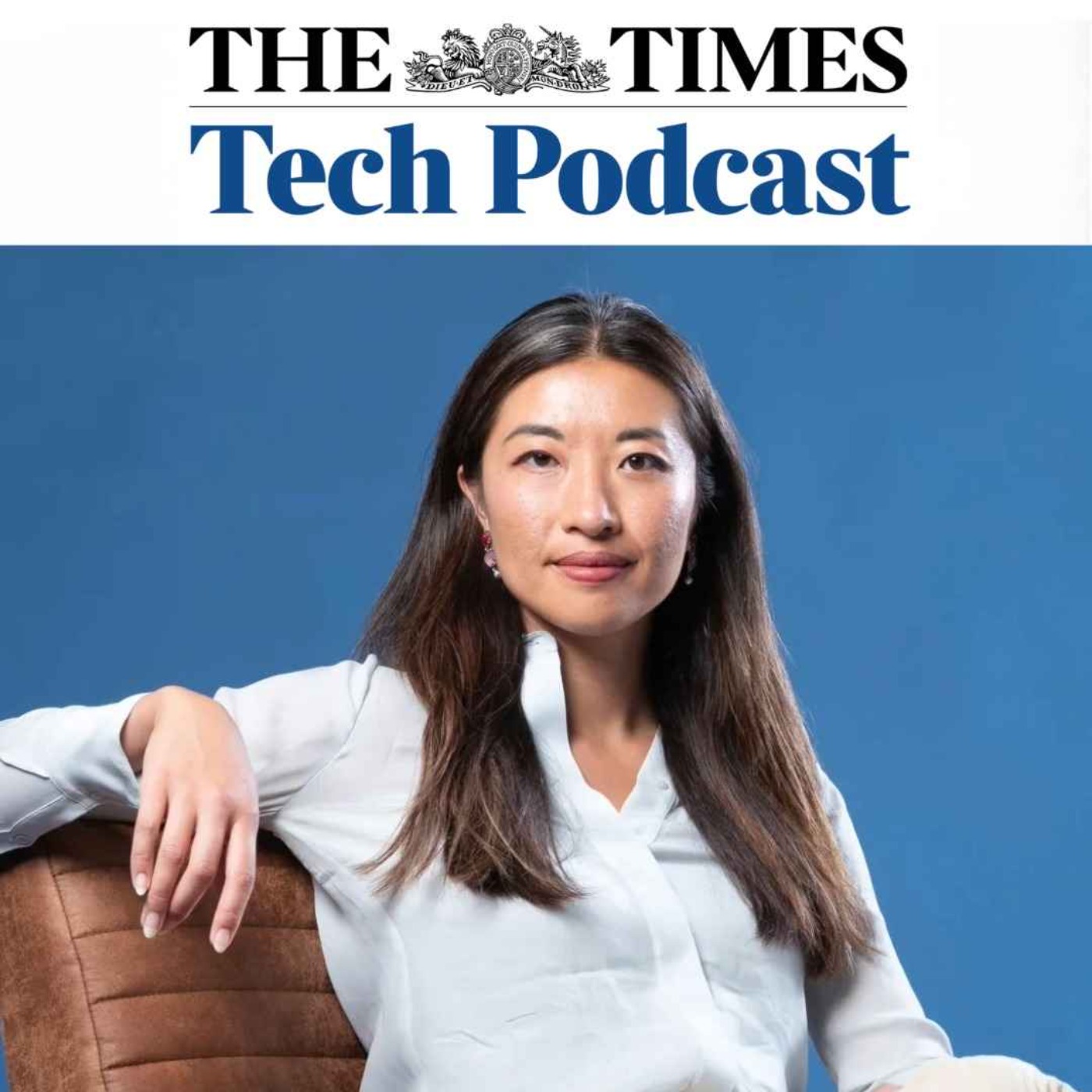
The future of social media according to Bluesky's COO & Trump 'saves' TikTok
42m 55s
The transcription covers a tech podcast discussion highlighting OpenAI's aggressive growth strategy, including a significant partnership with AMD for chips and efforts to become an all-encompassing "super app" through integrations with services like Spotify. Despite massive revenue and user growth, the company remains unprofitable. The conversation then shifts to concerns about an AI investment bubble, with the Bank of England warning about stretched valuations and risky capital deployment in startups. Additionally, Donald Trump's unexpected support for TikTok is noted, as he aids a deal for U.S. buyers to acquire the app with security measures, though Chinese involvement in the algorithm persists. The podcast also promotes the upcoming Times Tech Summit and briefly mentions the decentralized social network Blue Sky as an alternative to major platforms. Throughout, themes of rapid technological change, market speculation, and the influence of key figures like Sam Altman are emphasized.
(piano music) - You're missing out on something quite big, which I don't wanna make you feel sort of homesick for Britain, but Mike Golibella fish, who is the retailer to her, which means she gets the best presents. She gets sent amazing things. - Yeah. - Guess what she got in the post today, which she's given away to the desk. - I'm imagining some kind of sweet treat that Brits think is awesome, but it's actually nasty. I mean, no one can get their head around this. T-bags, flavoured like mince pies. - That is so disgusting. - It's just wrong on many levels. - Hello and welcome to the Times Tech podcast with Danny and the Valley, Silicon Valley. - Danny Forson, actually, and Katie in the city, the city of London. - Yes, I am. Katie Prescott here in the city of London. - We should say before we get going today, also, the Times Tech Summit is almost upon us. - Yeah, yeah, two weeks on the 21st of October, I can't believe it. It's coming around incredibly fast. And we've got such an extraordinary liner. And one of the joys of our job is getting to put this together and bringing together some of the biggest themes in tech and some of the most interesting people as well. So we've got everything from what's going on in the world of social media with Nick Clegg, formerly of Mattur, the world of energy, which is obviously dominating our lives at the moment when we're looking at how we're gonna power AI and what's going on there. So we've got Rolls Royce, the boss of Call Weave that you're gonna be speaking to. - Yeah. - And then we've also got Jimmy Wales. He'll be really interesting. The founder of Wikipedia. - I'm so fascinated to talk to him. He's in a way like, defined the last quarter century of the web, at least, you know, how you find information. So I'm sure he has many thoughts on where we're going now. - And then there's this still kind of unfinished issue of what's going on with AI and copyright. All of the information that goes into AI to power the technology, who owns it, the various court battles that are going on. And I've got an interview with the Chief Executive of News Corp, our organization. - Yeah, Robert Thompson. He's been leading the charge on all this. - Really has been. Sewing and wooing, I think he puts it. - I love it. You should come on down October 21st. It's gonna be great in London. Katie and I are gonna be emceeing it. - And if you can't come in person, register to watch online. - So Katie, last week we were talking about Braggawatts. If you missed that episode, you should go back and give it a listen. Very interesting. - You should explain Braggawatts. This is the term for bragging about the amount of power you've got in your data center. - How many gigs do you got, bro? - Yes, that's Braggawatts. There you go. It's a thing. But this week it is all about Gigawatts and a Trump TikTok twist, which is gonna set us up for our big interview with Rose Wang, who is the COO of Blue Sky. Remember them? - Yes. And they continue to kind of grow in the shadow of it all. So I can't wait to hear from her. - Really interesting business, obviously, spiked in the wake of the Donald Trump election. And what I wanted to know is really where it's gone from then. And her idea, she put it, is that they are the social network trying to prove that the future doesn't have to belong to billionaires, which maybe someone should tell your friends instead of Kimberly. - Yeah, they'll have some views on that. - But before we get to that promise of having a much better time on Blue Sky, which is at Rose's word somewhere, there have been some very, very big moves in AI and microchips again this week. Open AI on maneuvers yet again. - So open AI is Sam Altman and Lisa Sue, CEO of AMD, the chip giant, both friends of the pod. - By which we mean they've been on the pod. - Yes, therefore they are friends for life, friends for life. - I'll be FF's. - They've struck a massive new partnership. So AMD agreed to supply six gigawatts or Braggawatts, worth of AMD chips over the next few years, just put that into context. That's more computing power than what many countries use. That's more power than you would need to power all of London, for example, and not just that as part of the deal, open AI could buy up to 10% of AMD if they meet certain milestones, which again is just extraordinary because startups don't buy shares of gigantic companies. That's not a thing that happens. - Listed businesses. - Yeah, with over $300 billion. - You say that this happened a couple of Mondays ago when Nvidia announced this $100 billion deal with open AI, supplying open AI with chips, 10 gigawatts worth. And it was really interesting that this happened so quickly after because it seemed to signal as well that open AI is really hedging its bets when it comes to who it buys its chips from. So Nvidia is undisputedly the market leader in AI processes. But by also doing such a big deal with AMD, it feels like there could be challenges to that now. - I mean, that's what we talked about with Lisa when she was on the part, it was like they've created their own line of GPUs. They were very confident in their capabilities. And then weeks later they have this big deal with open AI. What does this mean for open AI? Because this is a company that, keep in mind, four years ago, it was valued at $14 billion. Now, as of its last share sale, it's worth 500 billion due the math. It's a lot, 40x in three or four years. So it's world's biggest startup just kind of out of nowhere. And it's kind of taking this everything, everywhere all at once, approach of trying to turn itself into this kind of the sun in the digital universe. So they've launched SOAR 2. - The video app. - Yeah, deep fake generating video app. They just announced Instant Checkout inside the app with some commercial partners. So you never have to leave the app to buy things. They've got the AMD deal. And now it's also struck deals recently with some other external apps like Spotify and Zillow, the US version of Right Move, to again, be able to use those apps to book travel, put together playlists all within the app. You kind of step back and it's quite extraordinary. I mean, I don't know if anybody at Open AI ever sleeps. - Just trying to get its hands on as much as it can in terms of compute power, which is why I guess I also had no choice but to diversify away from Nvidia because it just cannot get the volume of chips that it needs to make all this happen as it slowly eats the internet like Pac-Man. - Exactly. And what's really interesting is that Altman's trying to turn it into like the super app, which is really like the kind of holy grail for all of these big tech companies, whether it's Meta. So I mean, that is Elon Musk's big idea with X is that you have this app where you can pay for things, you can search for things, you can create all this stuff like you never have to leave. And it's interesting that it's this startup, which is always the way it goes. The kind of comes out of nowhere and says, "Okay, yeah, you guys have three or four billion users. We're just gonna do this from scratch by leveraging this entirely new technology." So it'll be interesting if they can kind of pull it off. - Going for it, but still not turning a profit. Yes, it's revenue is extraordinary. It's a 15 billion a year. - Something like that in there and out up to 800 million users. - Yeah. - Which is just up 100 million from the 700 million they reported probably two months ago. So really extraordinary growth. - Extraordinary growth. - Losing lots of money. And so you wonder how they're gonna pay for all of this. - Goes back to what we were saying before. It's like this kind of circular business model where they'll like raise a bunch of money from a company that they then buy chips from, like Microsoft or by cloud services from. So you have the roster of the largest companies on the planet being like, yeah, we'll keep giving you money as long as you keep buying our stuff and they're growing in the meantime. So it's a question of like, if it were in the music stops, where do all the partners sit down? Are they gonna be chairs for everybody? - But it does say a lot, doesn't it, for Sam Altman's diplomacy and OpenAI success that he's managing to forge all of these deals with the top players seemingly without pissing too many people off. I mean, he obviously did that in all my still with Microsoft right at the beginning. They're trying to rearrange that relationship at the moment. - Yeah, yeah, yeah. - But it's quite something to do a deal with Nvidia and then do a deal with Nvidia's biggest rival three weeks later. - Whenever I see all this stuff, whenever I see what OpenAI is doing and how fast they're doing it and at the scale they're doing it, it reminds me of that quote, which I asked Sam about when he was on the potter this year was from that amazing New Yorker profile of him 10 years ago when he was much less well known, running wide-combinator, toying with a run for the California governorship. People like, who is this guy? And his mentor was like, he is very good at becoming powerful, which was just like this interesting statement that has always stuck with me. And you're just like, yeah, he's pretty good at this. He said some nasty things about Donald Trump and then Trump gets elected. And in the first week, there's Sam Altman at the White House announcing Project Stargate, this $500 billion data center deal. And you're like, he is good at what this thing that he is doing. - Dreading the tightrope and navigating that madly political world. Well, you were talking about valuations and bubbles earlier and this feels like it's just building up ahead of steam as a theme, I didn't want to say that the bubble's about to burst, but it does feel like it's something everyone is worried about at the moment. And the Bank of England's weighed in on it here. That the Financial Policy Committee has said that big tech valuations are stretched. Basically, it's just issued a really strong warning that a bubble could cause a massive threat to markets. - If you look at the top 10 most valuable companies
I think eight of them are directly or tangentially in this AI bubble and they are multi-trillion dollar companies that make up an ordinate amount of like the value of the S&P 500, which is where people have the retirements. And so you can see like, you know, a bubble popping is a serious thing. And also Jeff Bezos said, basically, yeah, there is a bubble. Sam Altman has said, yes, there is a bubble. But there's also the signal, there's been like, this is just how it goes. And bubbles actually can be quite useful. They can be very destructive, obviously, when it goes pop. You know, the telecom bubble born of the internet, all of these companies laid thousands of miles of fiber way before people ready for it. All those companies went bankrupt, but eventually all got turned on and that's why the internet then grew. But, you know, for the people making those bets, they lost tons of money. There's going to be some massive losers, but I do think there is an argument to be made that bubbles can be quite useful because so much money goes in and so much of brain power goes into these ideas, these tools, these companies that things do emerge from the ashes. But it's fascinating that the Bank of England is talking about it just feels like it is becoming more and more of a worry. And yes, you might need the fiber in the long term, but trying to manage that disruption while it's going on. It's a scary thing. What is the thing that you've seen in Silicon Valley that's made you kind of worried or that's set off an alarm bell? I may do think maybe a bubble is here. - It's my inbox. It's every day. - It's my inbox. Go on. - It's the five companies who have said, new AI company doing this, new AI company doing that. There are dozens and dozens and dozens of like service startups. The world doesn't need all of them. The world probably needs, you know, a handful. Whether that's, you know, AI recruiting companies, AI therapy bots, some of these therapy bots which are completely unregulated, but they're being rolled out anyway. It's like it's just going a thousand miles an hour and literally every day you get another press release, another offer of a CEO of a new company and you're like, does the world need you? - I spoke to VC here the other day. And she was saying that what's worrying her is the amount of American money being deployed in the UK to startups with very little due diligence and with what she described as a spray and prey attitude. And seeing that, she said, made her nervous. There was a sense that investors just coming in and just trying to put bets on different things, hoping something's gonna pay off. And it is the model, but in a very frenzied, perhaps non-courcious way. - Totally. The idea is if you get one of them, if you get one of the ones that goes to the moon, then it does all the other money you've invested, doesn't matter. - And there's a sense that AI's happening really quickly and so we wanna get in there at the bottom as soon as we can. - Speaking of kind of like manias and wild times. I wanted to just mention one of my favorite all-time guests on the podcast, back when it was called Danny and the Valley, a woman named Dr. Phyllis Gardner because she just passed away at age 75. - Wow, that's quite a big call. One of your favorite guests. She must have been amazing. - She was fantastic. She was a professor at Stanford in the medical school there. She had advised on a bunch of startups. She'd helped launch a bunch of startups. She was extremely well-respected, like done it all, seen it all. And she really came to prominence because she was one of the first people who called out Elizabeth Holmes at Theranos. That was like this obviously huge scandal out here. She raised hundreds and hundreds of millions of dollars of Elizabeth Holmes days for something that was basically not real. This kind of blood testing app. And Phyllis Gardner, she just saw right through her. So when the all kind of came out, I reached out to her. I didn't know her. And she said, come on over. And so I met her at her house. I sat on her couch with her little dog. - Aww. - And she was just like so spiky. And she was so angry about Elizabeth Holmes and what she had done for female entrepreneurs. - Interesting. - She was angry at all of these, in her words, basically old men who were taken in by an attractive young woman telling a good story. But she was one of the ones from the very beginning who was like, this does not look right. This is not possible scientifically, et cetera. And people didn't listen. - I think she's a sociopathic lot. And a narcissist. And for me, I don't give her any leeway. I don't think she was naive. I think she was a liar from day one with grandiose schemes. She just led these men on and she had a charm. - Wow. She's punchy. - Super punchy. She was just great. But what was interesting and what reminded me of this, I saw I saw that she passed away. And in the obituary in the New York Times, they quote liberally from Danny in the valley. She was absolutely a friend of the pod. The world needs more fullest gardeners, especially in the world of mad social media. - And AI and bubbles on that subject. Our last kind of news story I want we should cover before we get to today's interview. TikTok. There was an unexpected post this week from none other than the president of the United States, Donald Trump. He, just a couple days ago, put out his first post on TikTok since 2024, in which he said, basically to young people, you owe me big. - I can't keep up with the saga. I'm just saying. But yes, young people, you owe me big for saving TikTok. But you could also say TikTok now owes him big because the US government is getting a multi-billion dollar fee for sorting this deal out, which is just, yes, another example of Trump running the White House, like a business. - The where's our finders fee? - Sorry, but he's just like, he's done it. - It's the White House finders fee. - He just sorted out a group of US buyers to buy the app. The deal hasn't gone through yet, but it includes data and security safeguards to address all of the worries that politicians have had about security, but also allowing bite dance, which is TikTok's Chinese pair and toner, which is why we're in this pickle in the moment over the Chinese ownership is still gonna be involved. - One, this is a huge reversal obviously because three years ago, Trump was the one who said, this is a national security threat, we need to ban it. And you talk to people in the defense establishment, they're like, look, this is used by 170 million people in America is become one of the largest news sources, especially for younger generations. The whole thing is run on an algorithm that was designed in China with oversight from the Communist Party. And oh, if you just pull the lever a little this way and press a button that way, we can kind of shape or manipulate opinion on any number of big social issues. And so people are like, this is basically the largest sia up in the history of sia ups, but then along the way, Trump realized, oh, actually, this is actually quite helpful me during the last election. There's a lot of pro-Trump content. And so there's a real sense that like, actually TikTok has helped me out. This is a great thing. And so all of a sudden, like he changes his tune and he's helped do this deal, but it's so strange because it's a bunch of billionaire backers who are going to buy the company. It appears China has said, we've kind of reached an outline of a deal, but nothing's been approved yet, but it looks like it would be $14 billion, which is less than half of what was expected by like market experts. Lots of questions still to be answered, but it's just quite extraordinary. - Particularly around the Chinese ownership of it. As I understood it, before this, Beijing didn't want to lose the algorithm. It was on the protected list, their export protected list. Now it seems that the algorithm is going to be copied and applied in the US. - They copy the algorithm and then I think they kind of retrain it. So it's kind of they de-China-fi it, theoretically. - De-China-fied algorithm, but same addictive algorithm, the young people who are grateful to Trump hope. - But I just do think it's interesting that it's like the big news organizations, television news organizations are kind of crumbling before our eyes and then you have TikTok. 170 million people, one of the primary news sources in the country now. And it's being bought by a bunch of billionaires. - Yeah, so talking about social media brings us very, very neatly to this week's guest. And it's an interesting one because Blue Sky is also trying to rewrite the rules around social media, but trying to completely do the opposite thing and pull away from the tech bros. - It was kind of conceived as a project actually at Twitter when Jack Dorsey, one of the Twitter's co-founders was still there back in 2019. And then it's since been turned into this fully independent decentralized social network. And they say it means that you own your feed, you own your data, you can even build your own algorithm. It's a very different approach. I saw it for years as kind of a science project. - Yeah, wasn't that interesting, but I mean, they've got a lot of people on it now. And I'll be interested to see if they can continue to grow in the shadow of all these, as we've just been talking about these giants. - Yeah, they certainly capitalized on the backlash against some of the social media companies against X, owned by Elon Musk and his political stance. And what people felt about Facebook as well. Now they've got about 38 million users. It's CEO Rose Wang who I spoke to when she was coming through London told me they're actually turning down ad money. But. When I sat down with her, I started by asking the million dollar, maybe billion dollar question that I'm sure is on everyone's mind when it comes to Blue Sky. The big question everyone wanted to know when I said that you were coming in today is, Blue Sky, does anybody still use it? Because you have this huge surge in growth after the US election where people were migrating, looking to find a different platform and alternative to X, and you have this extraordinary growth, but it feels as a user anyway that that's tape it off. If you talk about engagement in terms of top line follower numbers, it's hard to compete with some of these large platforms that have been around for 10-20 years with the hundreds of millions, billions of users they have. But what I like to urge people to do is look at ratios. What are the likes you're getting per followers you're having? How many replies are you getting for the followers you're having? And what we're seeing across Blue Sky is the engagement is higher because it's real people who want to have real conversations, and there's lots of diverse communities that are popping up on Blue Sky that's not just happening in the main feed. And so if you are somebody who's really interested in nature, there's five to 10 really large nature communities on Blue Sky that are thriving. If you're interested in, let's say, Glastonbury, for example, Glastonbury moved their live feed this year from X to Blue Sky. And so it can seem when you're comparing top line numbers, like, oh, maybe there aren't as many people on Blue Sky, but if you're actually looking at the engagement, the conversation, these are happening in these cozy corners where their community led in community driven. And so the users who want a more human curated experience where they're not getting AI slop in this one feed, they're having a much better time on Blue Sky. But did you see it's off to that spike in numbers, a significant drop off? Was it sort of people experimenting, dipping that toe in the wool to try and get out and then retracting? Yeah. So the interesting thing about these, like, growth numbers is it tends to follow how most social media has grown is there's sometimes exogenous events and you have big growth numbers come in and then you reach a new steady state. And then it happens again. And so for Blue Sky, it wasn't just the November elections that brought users to Blue Sky. When X was banned in Brazil, for example, 4 million Brazilians came onto Blue Sky August of last year. And then February of last year, it was a million Japanese users who came onto Blue Sky. And it's very much a migration from X that you're saying, rather than from other platforms. We're actually seeing the migration from X threads, Facebook, Reddit, because if you really look at Blue Sky, it's not an ex alternative. It's a community platform where there's over 100,000 different feeds that users have created themselves. And so what we're seeing is that lots of people who are hungry for diverse opinions, who don't want to play one status game on one feed where either you are the poster that has the most polarizing post that breaks out, that you actually get reach and get engagement. And then if you are not that, then you don't get any engagement. Versus on Blue Sky, what we're seeing is that there's these cozy corners where like the kid literature community is finding their own people and their feed. And if you're only used to the one feed where the action is happening, then maybe it seems like, oh, this isn't as lively as what's happening on that one feed on X or threads. But if you are somebody who really wants to go make friends and explore your diverse interest, people are having a much better time on Blue Sky. So how many uses do you have at the moment? We have about 38 million users. Well, if you don't mask, as we believe, X, I think has 600 million monthly active uses. You know, there's millions of followers on X and threads. But when you look at the engagement numbers, and on Blue Sky, it's not just, hey, are people engaging? There's many more reactions, but not only that, the clicks on articles can be sometimes three to four times higher than even the likes on the posts. What for Blue Sky, I think it's really about discovery of what's happening when it's just your one algorithm status game. Oftentimes, it's you're just being fed exactly what the algorithm thinks you want. And it really no longer becomes more discovery, but more of feeding you slop that they want you to believe. If you slop a few times, I want to come back to that, but it might be a sensible perhaps you to describe Blue Sky and how you work. Because I keep reading about it being a decentralized network, an open source social network, you talked about a lack of an algorithm. How do you explain it to your average person on the street who doesn't understand that kind of terminology? Yeah, I think Blue Sky is your choose your own adventure, social media experience. So what does that look like? We're not anti-algorithms. In fact, what we've done is we've given users the power to make an algorithm as powerful as the TikTok algorithm. But the idea is. Interesting. Well, I think that's the question is, do we give control to users where we believe that over time users will make a choice that's best for them? Or do we decide that from the top down of what's dangerous or not dangerous? And we think what's more dangerous is top down decision making rather than having lots of innovation and users choosing which experience they prefer. So what does that look like if I am a. I think you two are children's books. If I want to start a community around that, how do I do it? And what does it look like on the platform? How do people find me? On Blue Sky, there, as I mentioned, over 100,000 different feeds that users have created. So it's much more like a subreddit plus X experience than just an X alternative. And so there were many activities that happened around kid literature in the past on other platforms where they would do art drops where they're looking for new illustrators for books. And what they were finding is that it was basically much harder to organize around those communities because the algorithm wouldn't serve it to the people who followed them, right? You have to hope and pray that you make. When you make a post on these other platforms that it actually reaches your audience. On Blue Sky, what we've provided is a notification system where if you subscribe to a certain account, you will absolutely get every notification from that account. But also, we have a feature called Starterpacks. And Starterpacks really help people who don't know what community to join or how to find their community. We rely on the work of community curators and builders who put together a list of followers and feeds for certain communities. And all you have to do is when you land on that Starterpacks, you can just click follow all, follow those feeds, and you get that curated onboarding experience. So I guess the obvious question then is what's the business model and how do you make money from this? Right now, we are funded by VC because what we care about is growth and retention that users are having good time. We're not looking to monetize. So yet to turn a profit? We have yet to make revenue. Yet to make revenue? Interesting. Okay. That's a purposeful decision. Because. You can see it's happy with that. They are because if we took the money that is being offered right now, I have so many brands in my inbox asking, "Hey, can we give you money?" And it's a discipline to say no. Because if we chose to take on advertising, then it forces us back into the one algorithm worlds where what we do is sell eyeballs to advertisers. The more eyeballs, the more time spent, the more money they spend. We think that that's exactly what drove social media to, as I mentioned, the slop over and over again is because the incentives are not aligned with users. Who are they serving? They are serving their profit. They're not serving the people. And so Blue Sky was built to serve the people and give users choice. And so my belief is that the way to change the equation is looking at who actually brings value to the platform, which are publishers, like the Times, content creators, users who are posting really funny memes, etc. And what we hope is that in the future, brands and users can pay content creators directly, can pay publishers directly. And you'll take a cut of that? And we'll just take a tiny cut just like Substack. I see. How interesting. And you've got other ideas for monetization, though. We have lots of ideas for monetization, but I think that for us, we like to follow where the ecosystem is going. And so if we see that, let's say, shopping becomes a really large part of Blue Sky, then we will go and support shopping in a more native way. But we don't want to go and build a system that incentivizes the wrong type of behavior. And so we're very careful about how we approach monetization. Because if, for example, we just said yes to all the brands in my inbox, then that must be quite hard. I'm not making revenues like go away. And I think that's part of the discipline that the team needs to have, which is, if we really were about making money, maybe we wouldn't have started Blue Sky in the first place. But for many of us who are at Blue Sky, what we see is a world where there are only about three to five platforms now. And these platforms are run by centralized parties and billionaires who might align their own interest with certain political parties. And then what you end up getting over time is state controlled media if there's only three to five platforms. And so
But what we want to prevent is that possibility. We want to always be able to have other communication channels for the smaller and diverse communities to exist, and that's imperative for democracy to exist. This very interesting inflection point where you're considering essentially how you are going to make money on the platform. One of the things I was reading about was that you might be a payment processing service in some ways. Still under consideration is what you mean by the shopping link. So exactly, I think it means that when we're thinking about how users are paying other users or how brands are paying other users, there still needs to be a payment network under the hood. And so the question is, is that the direction for us to move in or is there another direction? At this time, we're not thinking so deeply about monetization. Most social media companies don't think about monetization until much later in their life. Because what social media really is is a society. You want to build a really healthy society where users are having a great time building their own experiences, building their own communities. And once they are able to figure out where the value for them comes from, I think that's where then money naturally follows the value. It is really interesting that you keep using the word slop to describe other social media sites. Is that how you see X since Elon Musk took it over? Do you think it has just become slop? I'm using the words that users use. And so in some ways, I'm reflecting the experience that they have, which is right now social media feels more like media than social, where you don't really have a relationship with the person you're talking to. And there's a complete context collapse of what's happening. And in fact, you don't even know if the content is AI or not AI. And so I think that there is this feeling that people have a hard time putting their words to, they call it doom scrolling. They call it slop. But it's a general feeling of, I am here because they figured out the addictive nature of the algorithm to keep me hooked. But I'm not actually happy with the experience I'm having. And so I think when we look at the 38 million users on Blue Sky, all of these people are organic users who came to the platform. We've spent no money acquiring these users. And we're also the first social media platform to really have grown from nothing in the last 10 to 20 years because that cold start problem where you start a new social network without any relationships, without any content. It becomes really hard to build a network over time. And we believe that the reason why people have come over is because they're looking for a human curated experience. They're looking to talk to real people and they want to know what is real information and not. So Blue Sky is focused on how do we help fix some of the context collapse problem on these other platforms? And maybe what someone deems as slop, somebody else thinks is entertainment. And so it's not up to me to decide, again, it's up to the users to decide. You're being delightfully diplomatic about this. As you said saying, what users think rather than what you think of a Vex as it is now. But your roots are very entangled with Twitter's because you were spawned by it essentially. So what I would say is we're entangled in the sense that in 2019, Jack Dorsey tweeted about Blue Sky as an idea. But Jack received the inspiration for Blue Sky from a paper called Protocols Not Platforms written by our board member Mike Maznick. And Mike Maznick is a tech journalist who in 2015 noticed that there's a big problem with big tech. We put a lot of promise in tech connecting the worlds. But what ended up happening is when you have an advertising system that drives eyeballs to one feed, the incentives then become completely misaligned with what users want. What do you think of how Elon Musk has run X over the past three years now since he bought it? And what's happened to the platform? I think that the way that we see it is that Elon Musk taking over Twitter is exactly the reason why Blue Sky needs to exist, which is that overnight one person can completely turn around a society of hundreds of millions of people just because he wants to because he owns it. It's not for me to say whether this is right or wrong because right now the world is quite divided. And lots of people feel unheard. And so there are people who very much believe and resonate with what Elon Musk is espousing. Great. They have a home for that. But what about everybody else who doesn't? And that's what we're afraid of is if you only have three to five platforms that are controlled by billionaires, then where's everybody else? How do we have a voice? And so the way I see it is what Elon Musk taking over Twitter provided the opportunity for Blue Sky to grow into a new network because there was clearly so much discontent that we were able to gain so many more users overnight. What appears to have happened though is you have this extraordinary fragmentation now between the right and the left. And Blue Sky has a reputation as a very liberal platform. And how much does that worry you and how do you think about that political split? I think that sort of media tends to be a reflection of society. And society is fragmented and it's going to be hard for any sort of social media platform to go fix the problems in society. But I think what's so interesting about Blue Sky is people only think about Blue Sky as the main Blue Sky app. But what has happened now is that there's all these technical terms that talk about how Blue Sky is decentralized. All that means is that you have choice. And so what has happened is there's now a photo sharing app built by one German developer on Blue Sky called flashes. There is now a TikTok competitor built by two engineers in Seattle called Skylight. And so to them. And over time what we're seeing is that there's actually lots of different apps that can exist. In fact what we do though is we share content. So if you post something on flashes it can also show up in Blue Sky. And so maybe right now we're in a world that's fragmented. And so we as a team of Blue Sky maybe can't bring everyone together in one app. But we believe that we can bring everyone together in our shared content network. And so if someone wants to go build purple sky or some other client or other app that brings together a different voice we very much welcome that. And I think that's the beauty of Blue Sky is society tends to fragment and bundle and unbundle throughout time. And we want to allow for that flexibility where today maybe we're more fragmented and people can exist in different communities. And they can share the same content network but ultimately it's kind of like sitting at different tables at a restaurant. You know you want to sit at different tables today. But in 2015 that was a time when everyone wanted to be in one place. And I believe that we're going to get there again in society. Okay so you do think that eventually you'll get different political viewpoints coalescing in the same place. Absolutely. Because it's not just politics that define who we are as people. So it's difficult to see how you'll attract the right wing when you've got someone like Elon Musk running X who is such a messiah for so many people with that political viewpoint. And I think that's fair but I also think that it's depending on one person to have the same viewpoint as you. And so you can be very happy with your king up until your king decides that he believes something else. And then what are you going to do? Right and so what we do trust is that people will change. Their viewpoints will change. And that's exactly how Blue Sky was built was you don't trust us. We as the team could also change but trust our infrastructure. That's open source that can't lock people out. And if you want to leave you can easily leave with your followers and your data to go somewhere else because you believe that they're providing a better experience for you. And so what we're building is a much more democratic system that can outlast the like current political wins that will change over time. I'd like to end just by talking about politics. What's it like running a social media company like yours which has got a reputation for being liberal and left leaning under Donald Trump who not his own social network but obviously had one of his accolades at the time former recollection say running another one. Running a social media company is much more like governance than people I think expect because what you had the power to do is to dictate how speech works. And we've seen how much speech and distribution of speech can impact elections and thus impact regulation and our daily lives. And then ultimately I think we cannot control the tides of politics but what we can provide is an open source communication structure that no one can shut off. That is what we have built. If the Blue Sky app, if the Blue Sky company goes down tomorrow the protocol is always going to be there. It exists now. The app code is out there and someone can copy and paste it and recreate it overnight. And so what we believe is how do we build infrastructure that outlasts these changing wins and that's all the best that we can do is hope for the best and prepare for the worst.
It's fascinating. Isn't she really interesting? I do like that idea that most of the internet is open source, right? If you've created this protocol put it out in the world and then everybody can take it and make it what they want and kind of tweak it and change it or whatever I do think that is quite valuable. The framing I like is she was talking about social networks as societies basically. Yeah I think oftentimes people like well online versus offline. It's like it's all just a real world, right? And these are like gatherings of lots of people and with very real consequences. So I'm thinking of it that way as opposed to like you know which has been the traditional like online We're doing all the stuff for you online, but then they kind of their responsibility stops at the digital door and I think that's clearly been shown to be completely fallacious that standpoint. It's nice to hear someone running one of these companies even if it's small to be thinking in that way. And she said that as well that running a social network was more like governance than you'd expect which is absolutely right when you look at some of the issues that social networks have to grapple with. It is almost like running a country online. Totally. I mean you mentioned it there you know it is very liberal generally. You know if you're a conservative you're not really going to go there because you people like well I get shouted down on blue sky. You know just like people would say I go to X I don't like it there because it's now it's very you know a lot of right wing content or whatever but it is just kind of depressing that like it's all so partisan. And she seemed to think that that would change and that people would come and sit at the same table I think is the expression she used at some point but it is hard to see how that happens at the moment because it does feel like we're actually going completely the opposite direction. You want to hang out with people who share your views maybe IRL but also online as well. I mean the crazy thing is it's like social media is such a wild experiment that we're living through basically the entire world entire internet going public in the west is online and has access to all these communities. And I remember talking to an investor out here years ago and he's like in the early days of social media it was like we are going to get everybody online. It's going to be so amazing and then you fast forward 10 years and they're like oh my god everybody's online like make it stop. How do we manage this exactly and they end up having to be to police it and you throw the algorithm in there to be like we're going to funnel these people over here we're going to funnel you over here and it's just it's really hard to kind of kind of like deescalate in a way in that context I appreciate people trying stuff like this where it's like you know it's a different approach. I'm glad you got to hear her. Yeah that was really good before we go tech pod at the times at code at UK ideas feedback anything you know fun sound effects AI poems tech pod at the times that code at UK we'd love to hear from you. Bye bye.
Podcast Summary
Key Points:
OpenAI's rapid expansion includes a major chip deal with AMD, partnerships with apps like Spotify, and the launch of new features, positioning itself as a potential "super app" despite significant financial losses.
Concerns about an AI investment bubble are rising, highlighted by warnings from the Bank of England and investors about overvaluation and risky, rapid funding in startups.
Donald Trump reversed his stance on TikTok, facilitating a deal for U.S. buyers to acquire it with security safeguards, while Chinese ownership and algorithm control remain contentious issues.
The podcast promotes the upcoming Times Tech Summit, featuring speakers like Nick Clegg and Jimmy Wales, and discusses the growth of the decentralized social network Blue Sky.
Summary:
The transcription covers a tech podcast discussion highlighting OpenAI's aggressive growth strategy, including a significant partnership with AMD for chips and efforts to become an all-encompassing "super app" through integrations with services like Spotify. Despite massive revenue and user growth, the company remains unprofitable. The conversation then shifts to concerns about an AI investment bubble, with the Bank of England warning about stretched valuations and risky capital deployment in startups.
S. buyers to acquire the app with security measures, though Chinese involvement in the algorithm persists. The podcast also promotes the upcoming Times Tech Summit and briefly mentions the decentralized social network Blue Sky as an alternative to major platforms.
Throughout, themes of rapid technological change, market speculation, and the influence of key figures like Sam Altman are emphasized.
FAQs
The Times Tech Summit is an event featuring discussions on major tech themes and speakers like Nick Clegg and Jimmy Wales. It is scheduled for October 21st in London, with an option to watch online.
OpenAI has partnered with AMD to supply six gigawatts worth of AMD chips over the next few years, diversifying its chip sources beyond Nvidia. The deal also includes a potential for OpenAI to buy up to 10% of AMD if certain milestones are met.
The Bank of England's Financial Policy Committee has warned that big tech valuations are stretched, posing a potential threat to markets if a bubble bursts. This concern arises as many top-valued companies are tied to the AI sector.
Blue Sky is a decentralized social network where users own their data and can build their own algorithms. It aims to offer an alternative to traditional platforms by emphasizing user control and independence from billionaire-owned tech giants.
Donald Trump reversed his previous call to ban TikTok, now supporting a deal where U.S. buyers acquire the app with security safeguards. He claims credit for saving TikTok, citing its usefulness during elections, despite earlier national security concerns.
'Braggawatts' refers to bragging about the computing power or energy capacity of data centers, often used humorously in tech circles to highlight competitive claims about infrastructure capabilities.
Chat with AI
Loading...
Pro features
Go deeper with this episode
Unlock creator-grade tools that turn any transcript into show notes and subtitle files.
 PodcastTranscript AI